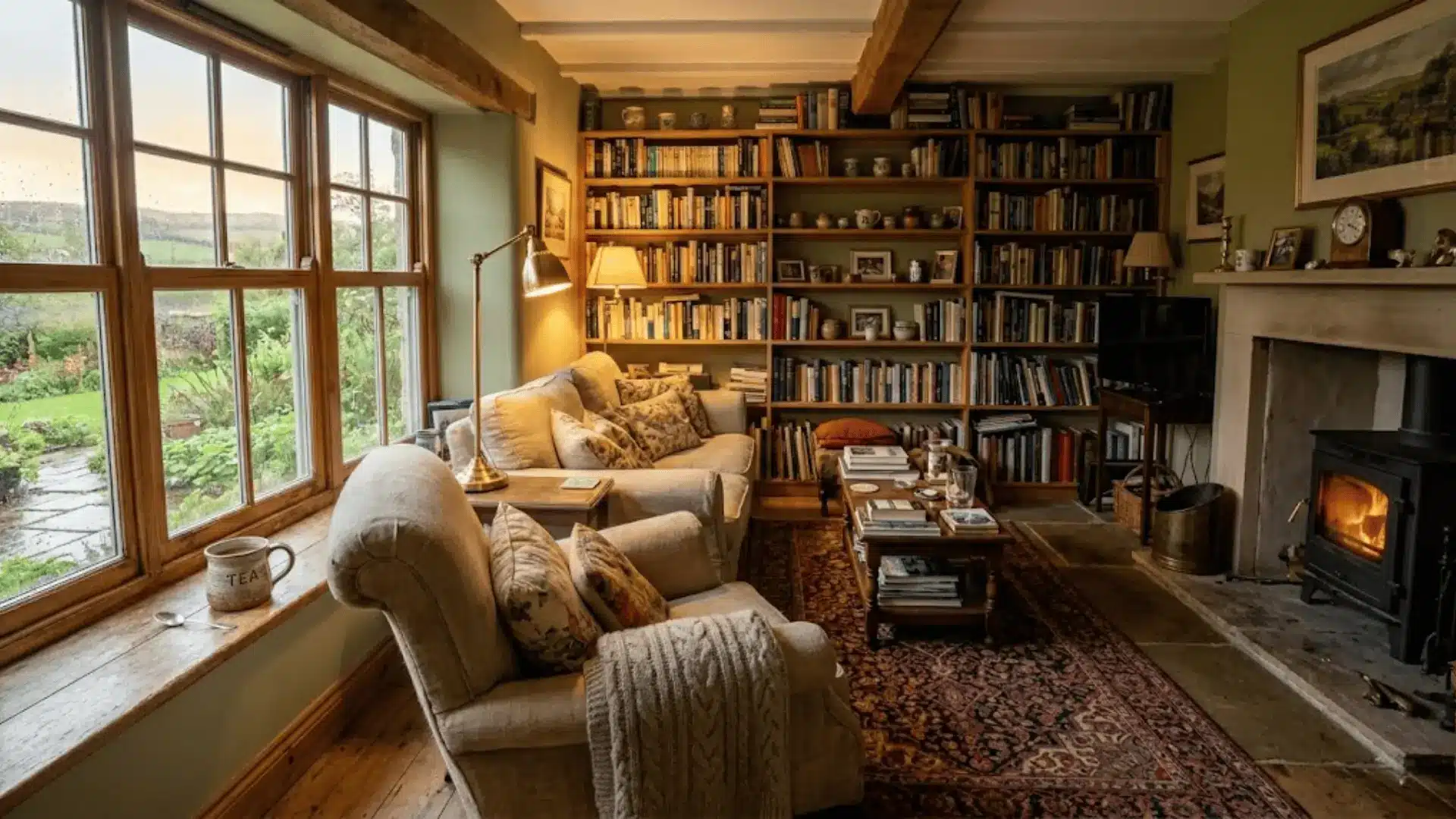
If your idea of a perfect afternoon involves a worn armchair, mismatched floral cushions, and a cup of tea by a rain-streaked window, English cottage style was made for you.
It’s the kind of decorating that feels less like a trend and more like a feeling, rooted in warmth, imperfection, and the quiet charm of countryside living.
And right now, people everywhere are falling back in love with it.
We’re covering the key design elements, room-by-room ideas, and budget-friendly ways to bring that cozy, storied look home, so you know exactly where to begin.
English Cottage Style: Cozy, Collected, and Better With Age
English cottage style traces its roots to the countryside homes of rural England, where rooms were dressed for living, not showcasing.
What makes it so enduringly appealing is how layered and collected-over-time it feels, like a space that quietly gathered character over decades rather than being styled in an afternoon.
Vintage pieces sit comfortably alongside functional everyday decor, and nothing feels too precious or too perfect.
That’s really the heart of it: comfort always comes before perfection, and every worn edge, faded fabric, and mismatched corner is entirely welcome here.
Key Elements of English Cottage Style Interiors
English cottage style isn’t built around a single statement piece or a perfectly curated mood board. It comes together slowly, through layers, textures, and details that each carry a little bit of history.
1. Vintage & Antique-Inspired Furniture
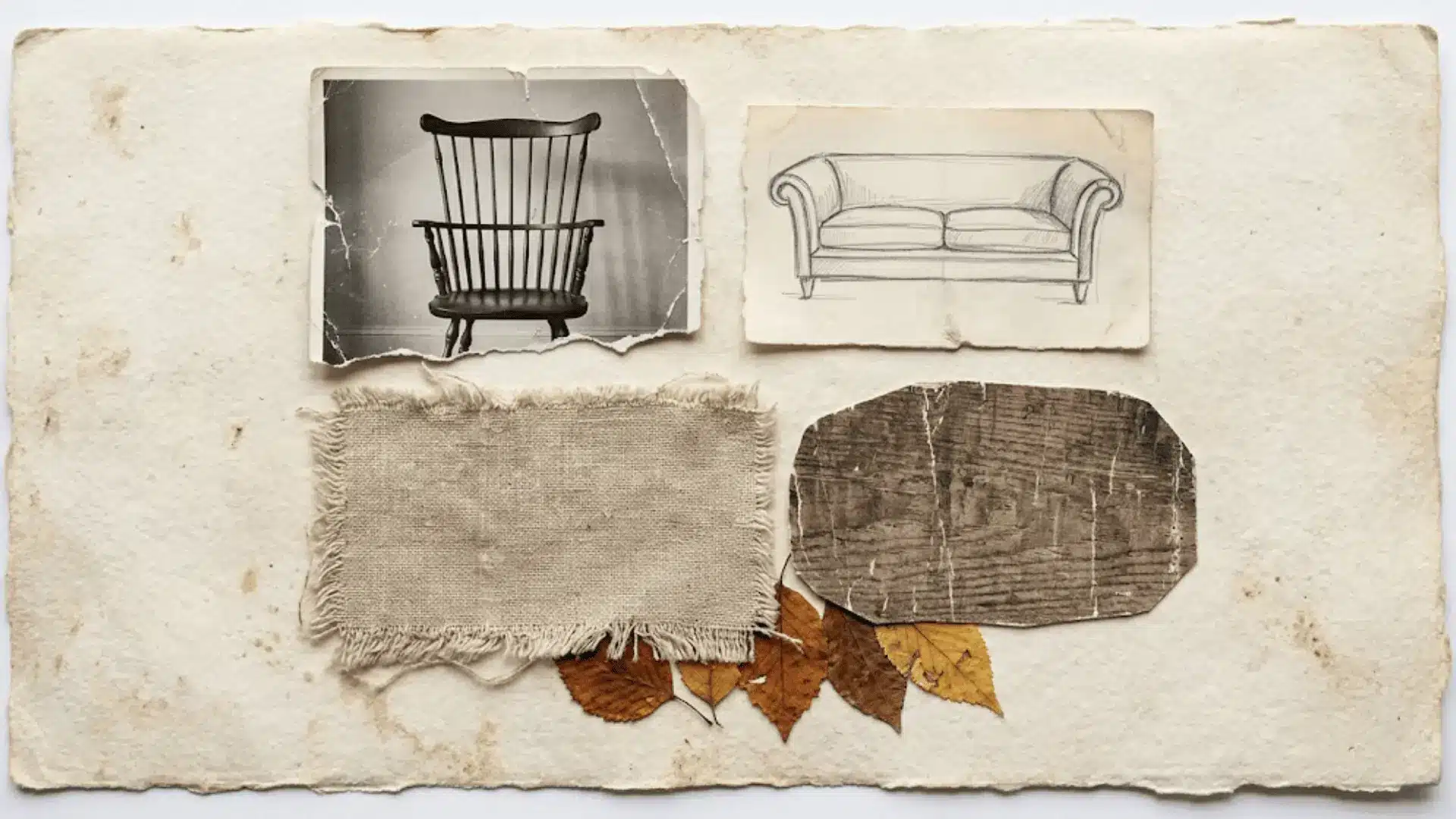
Windsor chairs, roll-arm sofas, and distressed wood tables are the quiet backbone of this style. What sets cottage interiors apart is that nothing looks like it was bought as a set.
Pieces look gathered over the years, maybe a chair from a market, a side table passed down, a bookshelf that’s seen better days. That mismatched, well-loved quality is exactly the point.
2. Layered Patterns & Florals
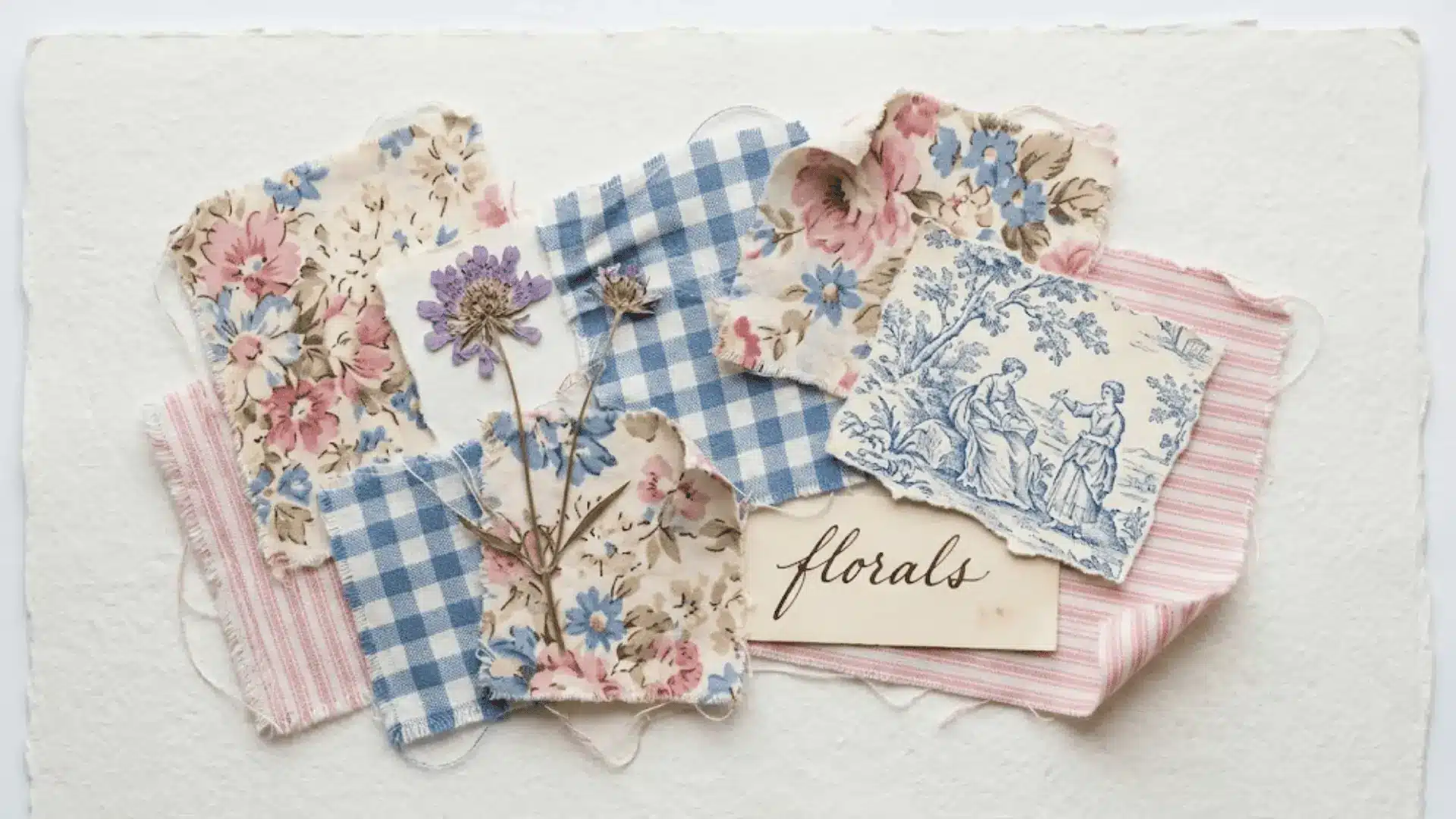
Florals, gingham, stripes, toile, and then some more florals. Mixing patterns isn’t a mistake here; it’s the whole idea. A floral cushion on a striped sofa against a toile curtain sounds like a lot, and it is, in the best possible way.
The more layered it feels, the more cottagey it reads. Minimalism has its place, but that place is not here.
3. Soft, Muted Color Palettes
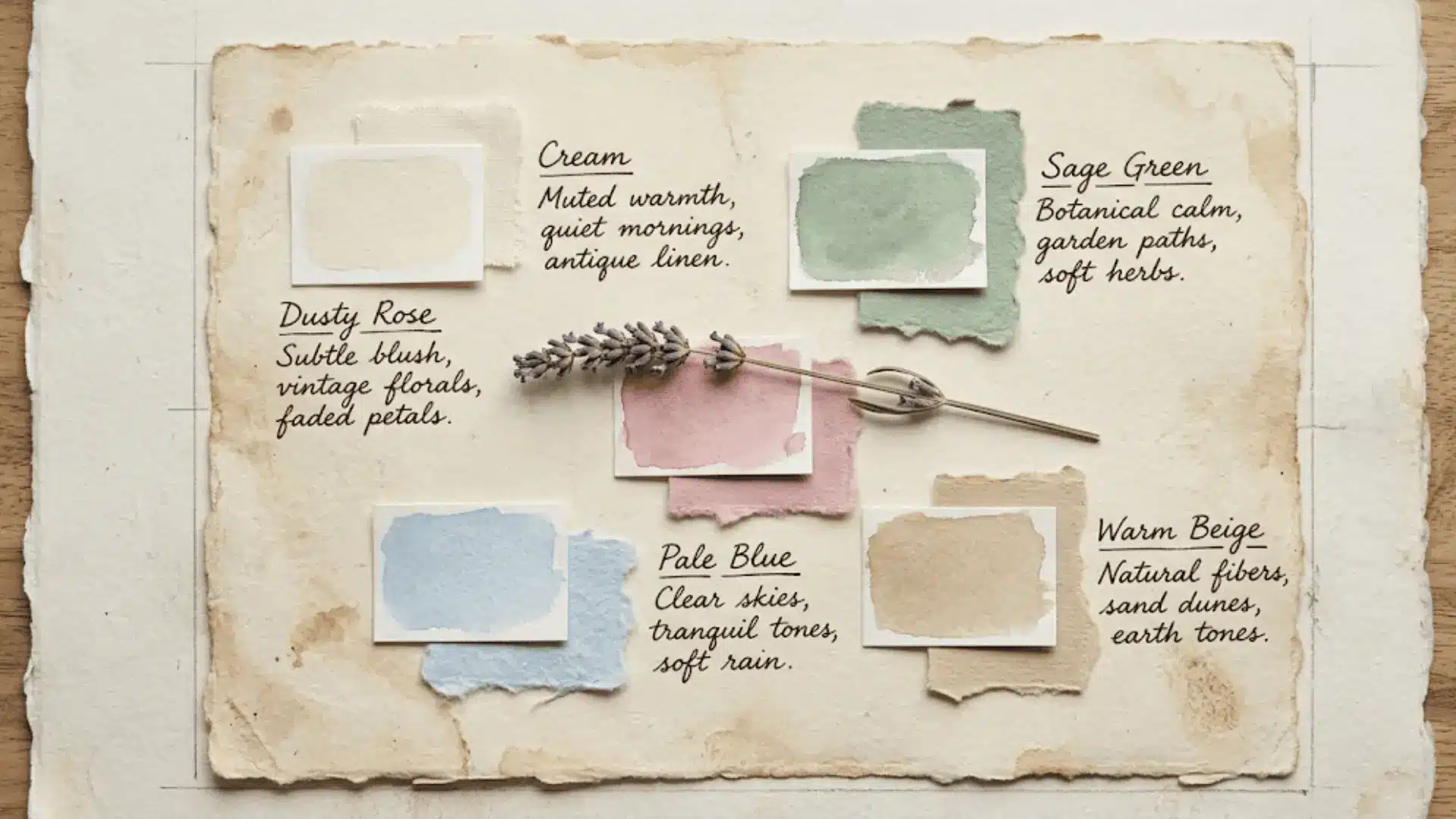
Cream, sage, dusty rose, pale blue, and warm beige do most of the heavy lifting in a cottage interior.
The palette stays gentle and easy on the eye, with occasional deeper accents like terracotta or forest green to keep things from feeling too washed out. Think of it as a watercolor painting that somehow became a room.
4. Natural Materials & Rustic Details
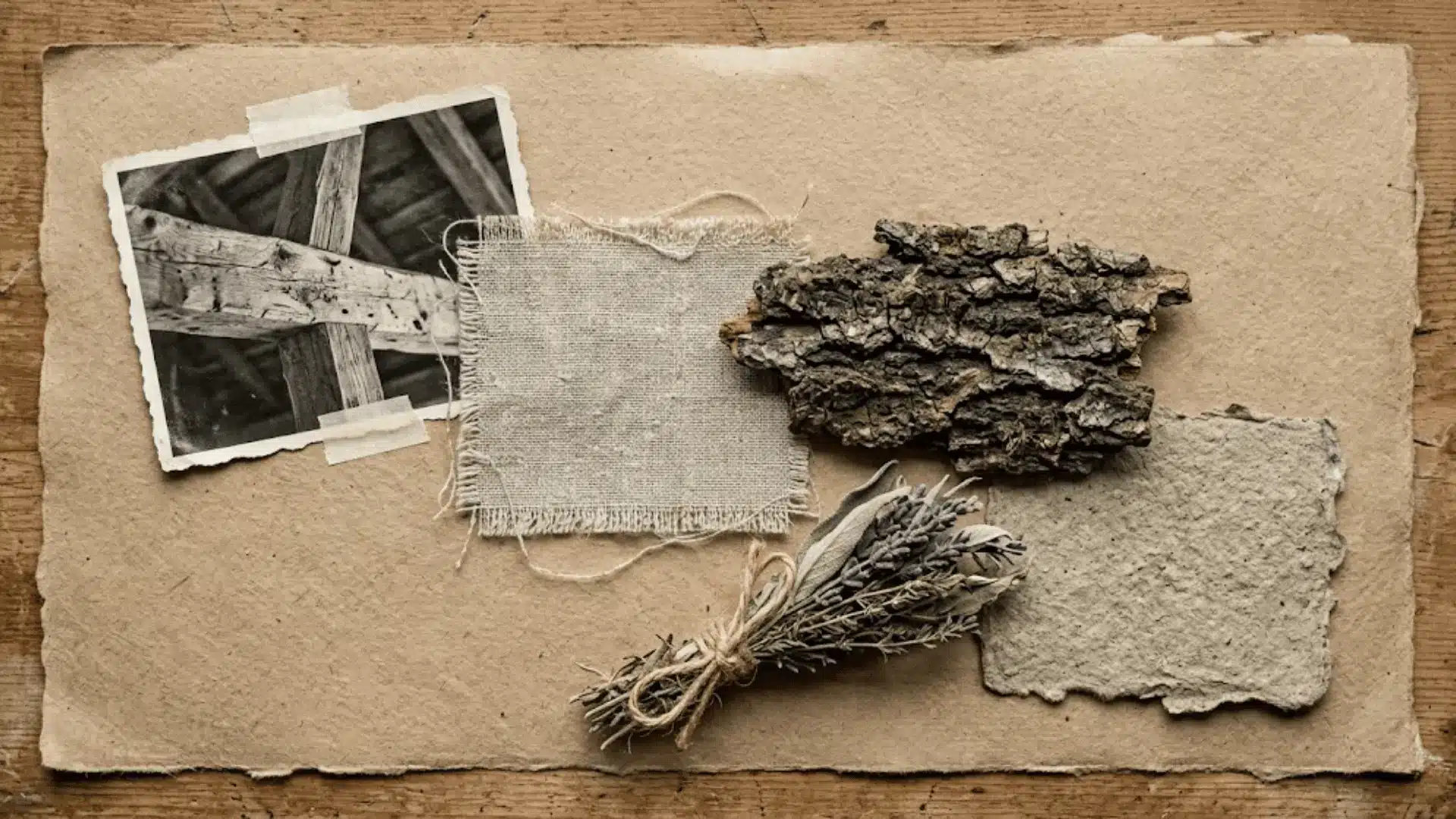
Linen curtains, cotton throws, stone floors, and worn wooden surfaces all belong here. If the home has exposed beams or a fireplace, even better, as these architectural details anchor the whole aesthetic instantly.
Natural materials bring texture and quiet warmth that no amount of decor shopping can fake.
5. Cozy, Lived-in “Clutter”
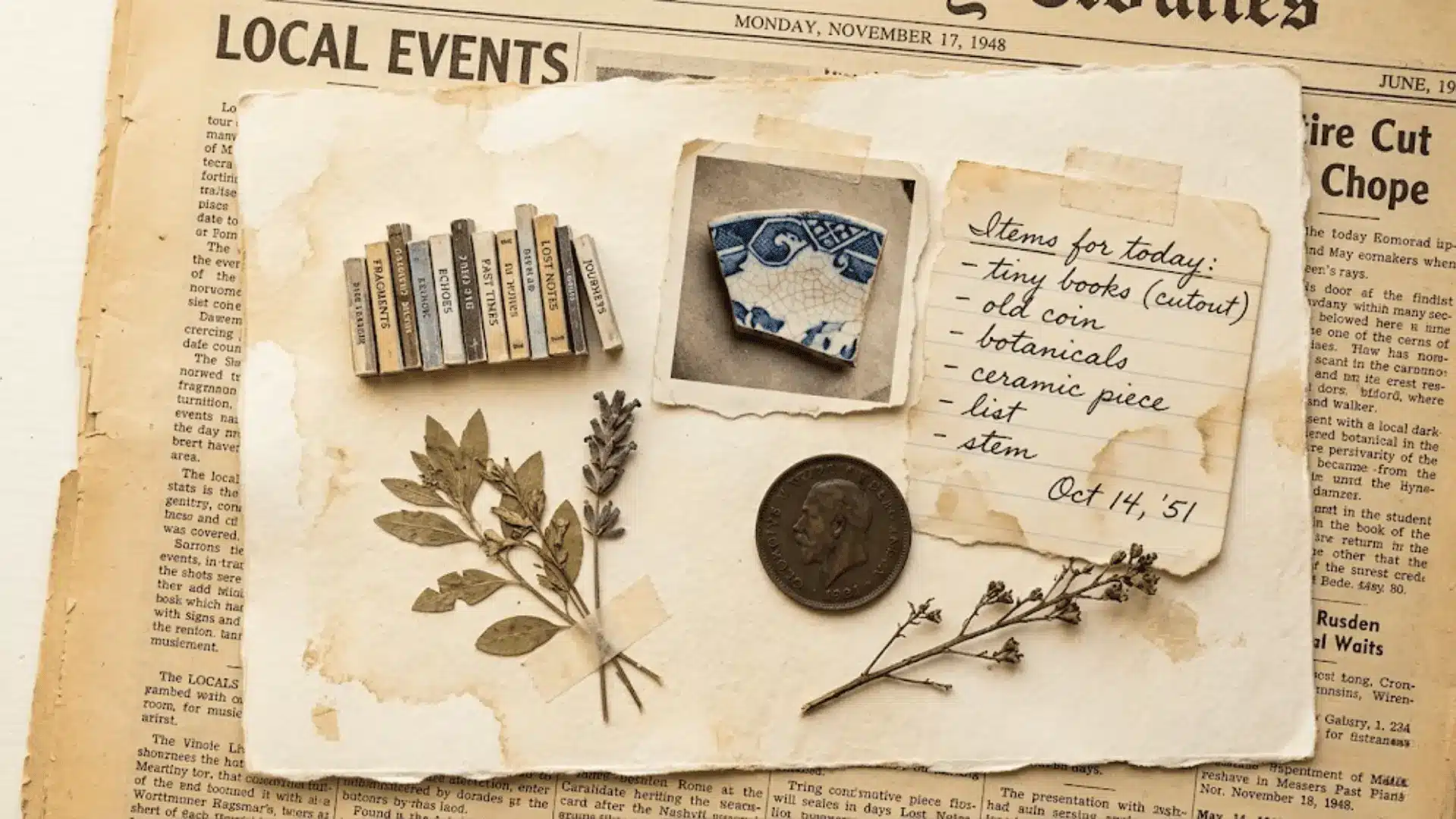
Stacked books, collected ceramics, layered trays, and little objects with stories behind them are what give cottage interiors their soul.
The difference between clutter and charm mostly comes down to intention. When things are displayed with some thought, the fullness of a room feels curated, not chaotic. It’s abundance, styled softly.
How to Create an English Cottage Style Home?
Pulling this look together doesn’t require a countryside manor or an unlimited budget. It’s really about building up slowly, one layer at a time.
- Step 1: Paint walls in cream or warm white to create a quiet, neutral base that lets textures and layers do the talking.
- Step 2: Bring in vintage character through thrifted furniture and flea market finds, mixing older pieces with what you already own.
- Step 3: Layer textiles generously, cushions, throws, and curtains in florals, stripes, and soft patterns that complement without matching perfectly.
- Step 4: Prioritize comfort with soft seating and warm lighting, carving out cozy spots like a reading corner or a draped window seat.
- Step 5: Finish with purposeful accessories, books, fresh or dried florals, and small collected objects, displayed openly and without overthinking it.
The beauty of the English cottage style is that it rewards patience. Every piece you add should feel like it belongs, not because it matches, but because it fits.
English Cottage Style by Room
Every room in a cottage-style home tells a little story of its own. Here’s how to carry that warm, layered aesthetic through each space without it feeling repetitive or overdone.
1. Living Room
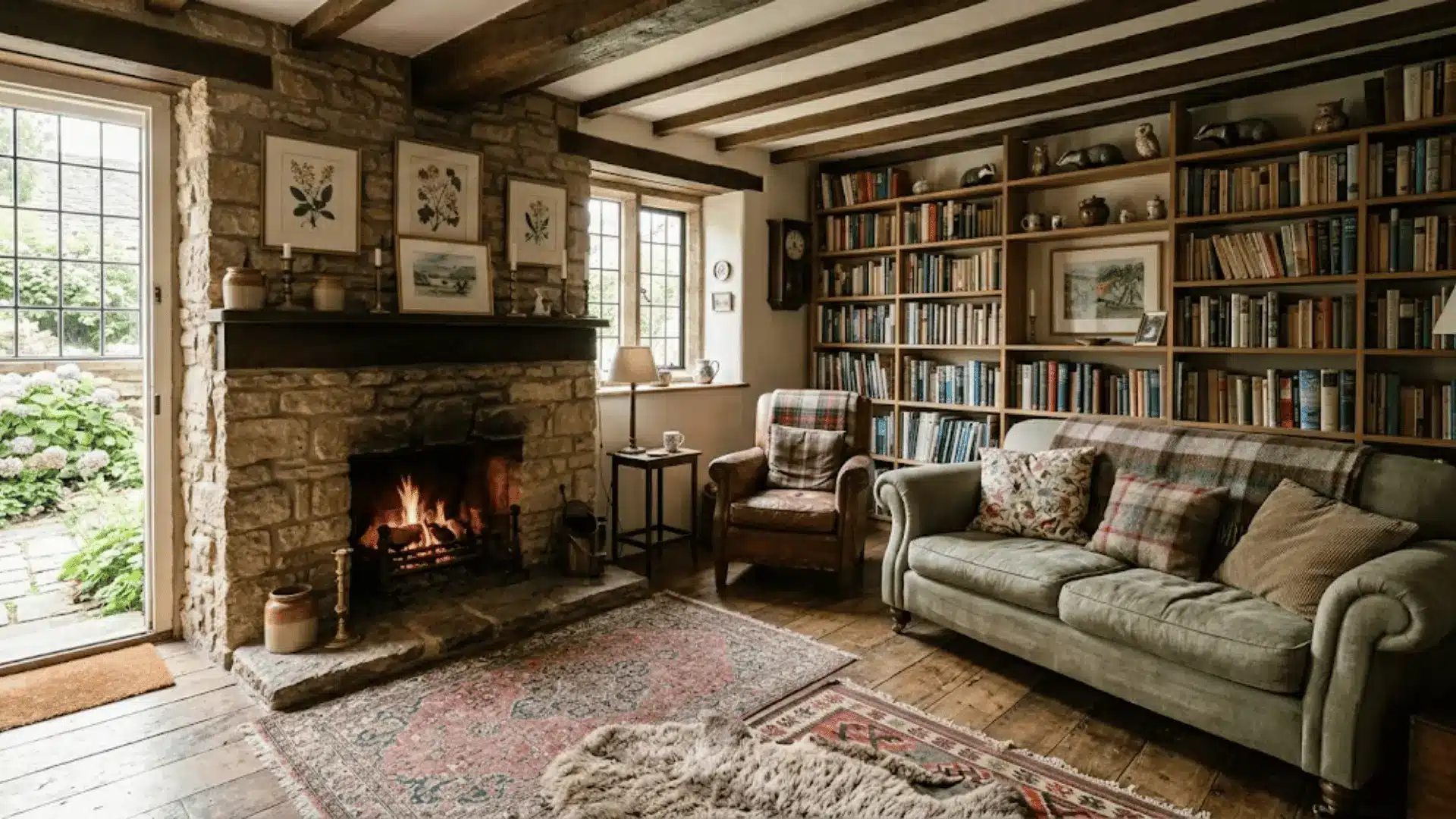
The living room is where the English cottage style really gets to breathe. Anchor the space around a fireplace if you have one, layering rugs and soft seating nearby to draw people in.
Bookshelves stacked with well-read paperbacks, a few ceramics tucked between them, and vintage decor scattered across surfaces all add to that collected, lived-in warmth that defines the style.
2. Kitchen
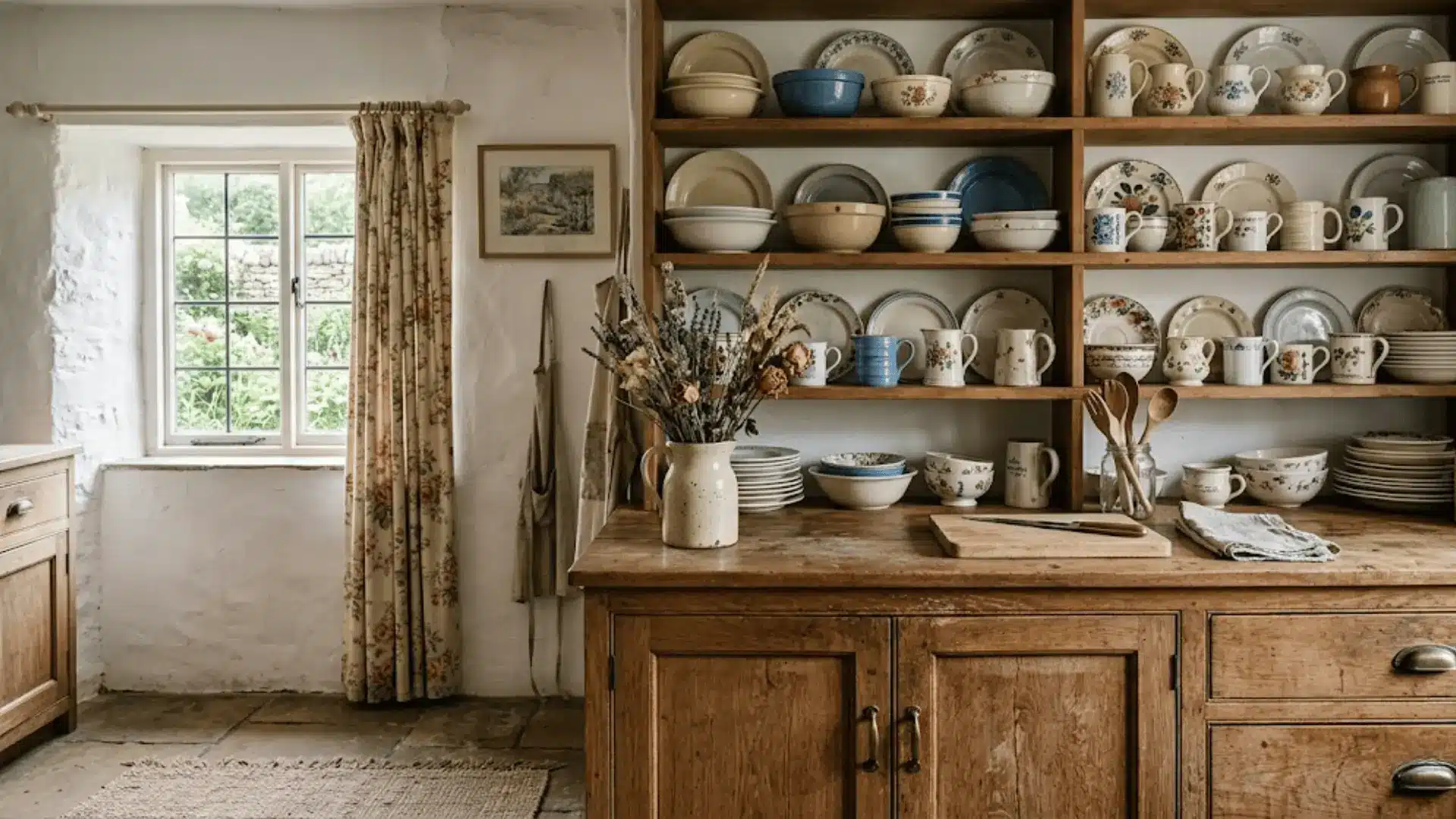
A cottage kitchen leans into imperfection beautifully. Open shelving displaying mismatched crockery, rustic wood cabinets with visible grain, and a window dressed in floral curtains or a botanical wallpaper panel all contribute to the aesthetic.
Nothing needs to be uniform or brand new. The more it looks like it came together gradually over time, the more authentically cottage it reads.
3. Bedroom
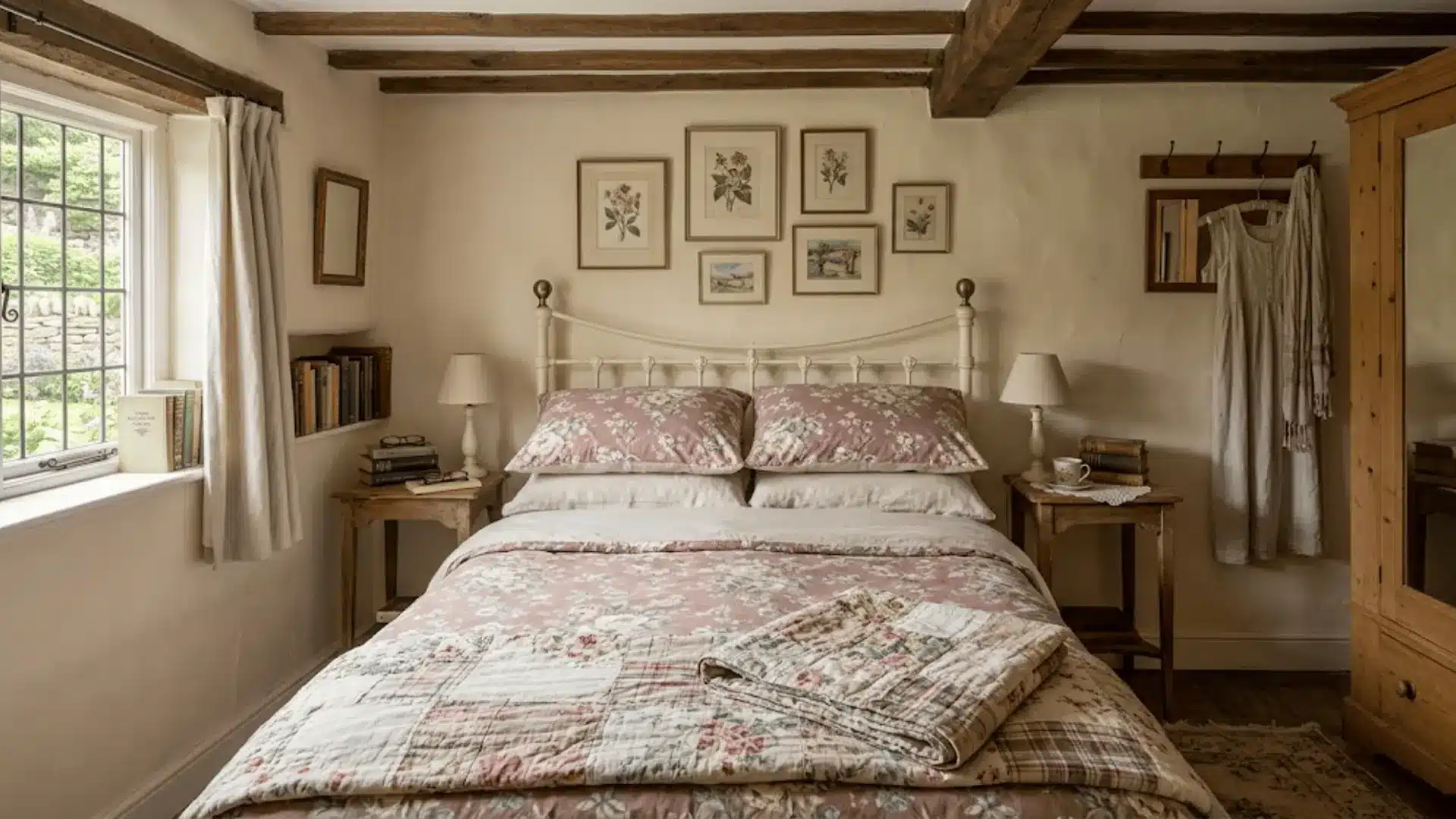
The bedroom is where softness takes over completely. Floral bedding in muted, dusty tones layered over linen sheets sets the mood, while antique bedside tables and a mismatched lamp or two add quiet character.
Pile on the layers, an extra throw, a few cushions in varying fabrics, a draped quilt at the foot of the bed. It should feel like the coziest place in the house.
4. Bathroom
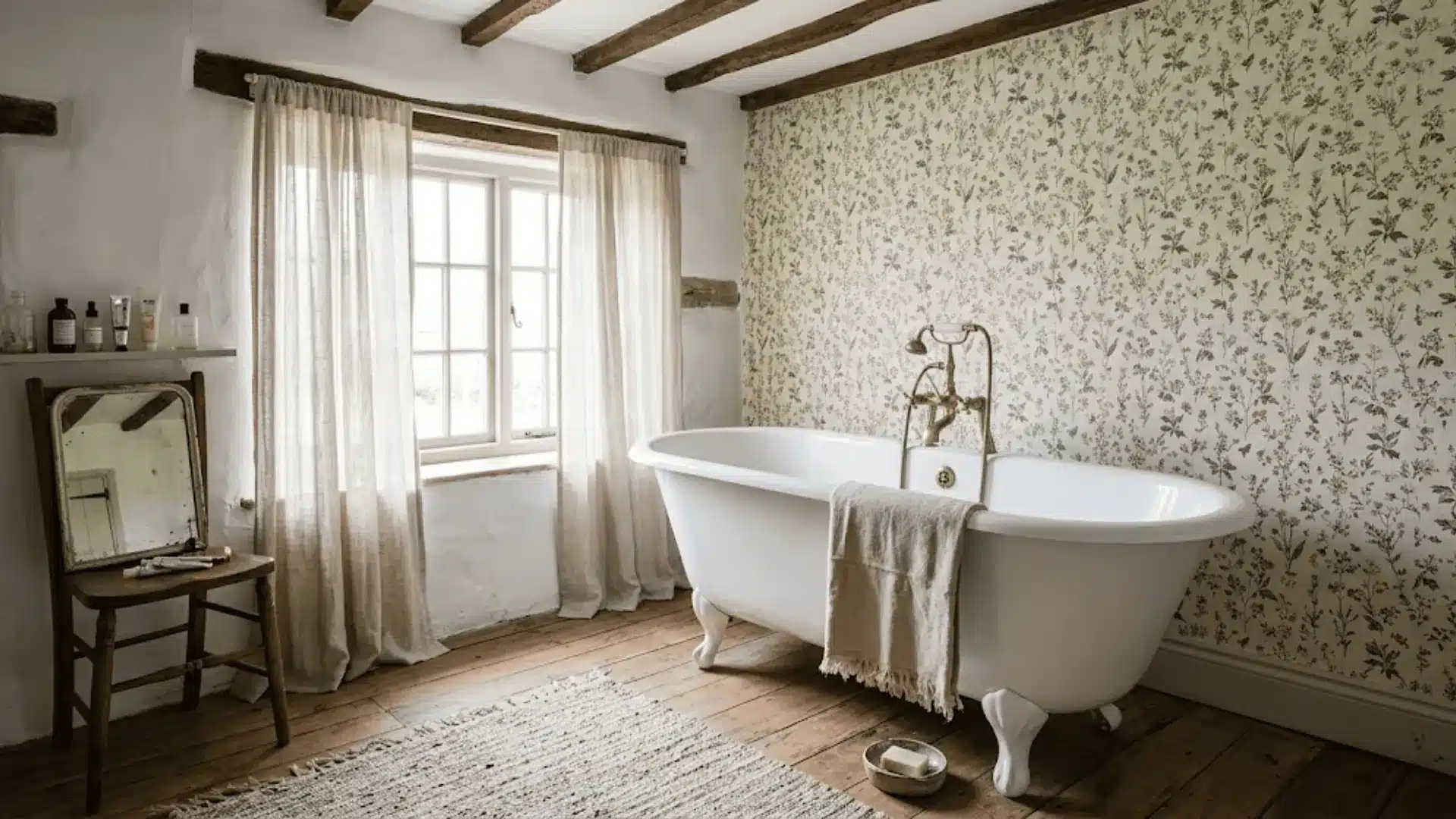
Even the bathroom deserves a little cottage charm. A clawfoot tub is the dream centerpiece if the space allows, paired with vintage-style fixtures in brushed brass or aged chrome.
Patterned wallpaper, even just on a single wall, adds personality without overwhelming a smaller room. Linen hand towels, a small ceramic dish, and a dried floral arrangement complete the look with very little effort.
English Cottage vs. Cottagecore vs. Farmhouse
These three styles often get lumped together, and while they share some overlap, each one has a pretty distinct personality.
Here’s a quick side-by-side to help tell them apart.
| Style Features | English Cottage | Cottagecore | Farmhouse |
|---|---|---|---|
| Mood | Warm, traditional, deeply layered | Whimsical, dreamy, fantasy-driven | Clean, open, rustic-modern |
| Furniture | Vintage and antique-heavy | Mismatched, romantic, foraged | Shiplap, reclaimed wood, minimal clutter |
| Patterns | Florals, toile, gingham, stripes | Florals, mushrooms, botanical prints | Simple checks, neutral solids |
| Colour Palette | Cream, sage, dusty rose, muted tones | Soft greens, blush, earthy whimsy | White, grey, warm beige, black accents |
| Textiles | Layered linens, velvets, worn fabrics | Flowing cotton, lace, and handmade pieces | Linen, cotton, burlap, simple weaves |
| Inspiration | Rural English countryside homes | Romanticized nature and slow living | American rural and working farmsteads |
| Feel | Lived-in and collected over time | Curated and aesthetic-forward | Polished and purposefully understated |
Common Mistakes to Avoid
English cottage style has a very forgiving aesthetic, but there are a few missteps that can tip it from charmingly cozy into just plain chaotic. Keep these in mind as you build the look.
- Cluttering Without Intention: Every object should earn its place; random accumulation reads as mess, not charm.
- Ignoring Color Harmony: Layering patterns works beautifully only when the underlying palette stays cohesive and grounded.
- Buying Everything New: Brand-new pieces lack the soul this style runs on; thrift, inherit, and hunt before you shop retail.
- Chasing Perfection: Overly styled, matchy-matchy spaces kill the lived-in quality that makes cottage interiors so appealing.
- Rushing the Process: This is a style that builds over time; trying to finish it all at once is where it starts to look forced.
The goal is a home that looks like it gathered itself naturally over the years, not one that was assembled in a weekend. Give it time, trust the layers, and let imperfection work in your favor.
The Closing Note
Decorating with English cottage style is less about following rules and more about following what feels right.
A worn chair that catches the afternoon light, a shelf that’s slowly filling up with things you love, curtains that move a little in the breeze. That’s really the whole idea.
Start small, layer slowly, and let the space grow into itself.
The most beautiful cottage interiors aren’t the most expensive ones; they’re the most personal.
We’d love to know which element you’re excited to try first; drop it in the comments below!
Frequently Asked Questions (FAQs)
Can You Create an English Cottage Style in a Modern Home?
Absolutely, the architecture matters far less than the details. Focus on layering textiles, bringing in vintage pieces, and choosing warm, muted tones, and the feeling translates regardless of the bones of the space.
What Colors Define the English Cottage Style?
The palette leans into soft neutrals and gentle pastels, think cream, sage, dusty rose, and pale blue. These tones work together quietly, creating a backdrop that feels warm and unhurried rather than stark or bold.
Is English Cottage Style Cluttered or Minimal?
Neither, really. It’s intentionally layered, which means every object has a place and a reason for being there. The fullness of a well-done cottage interior feels curated and personal, not overwhelming or accidental.