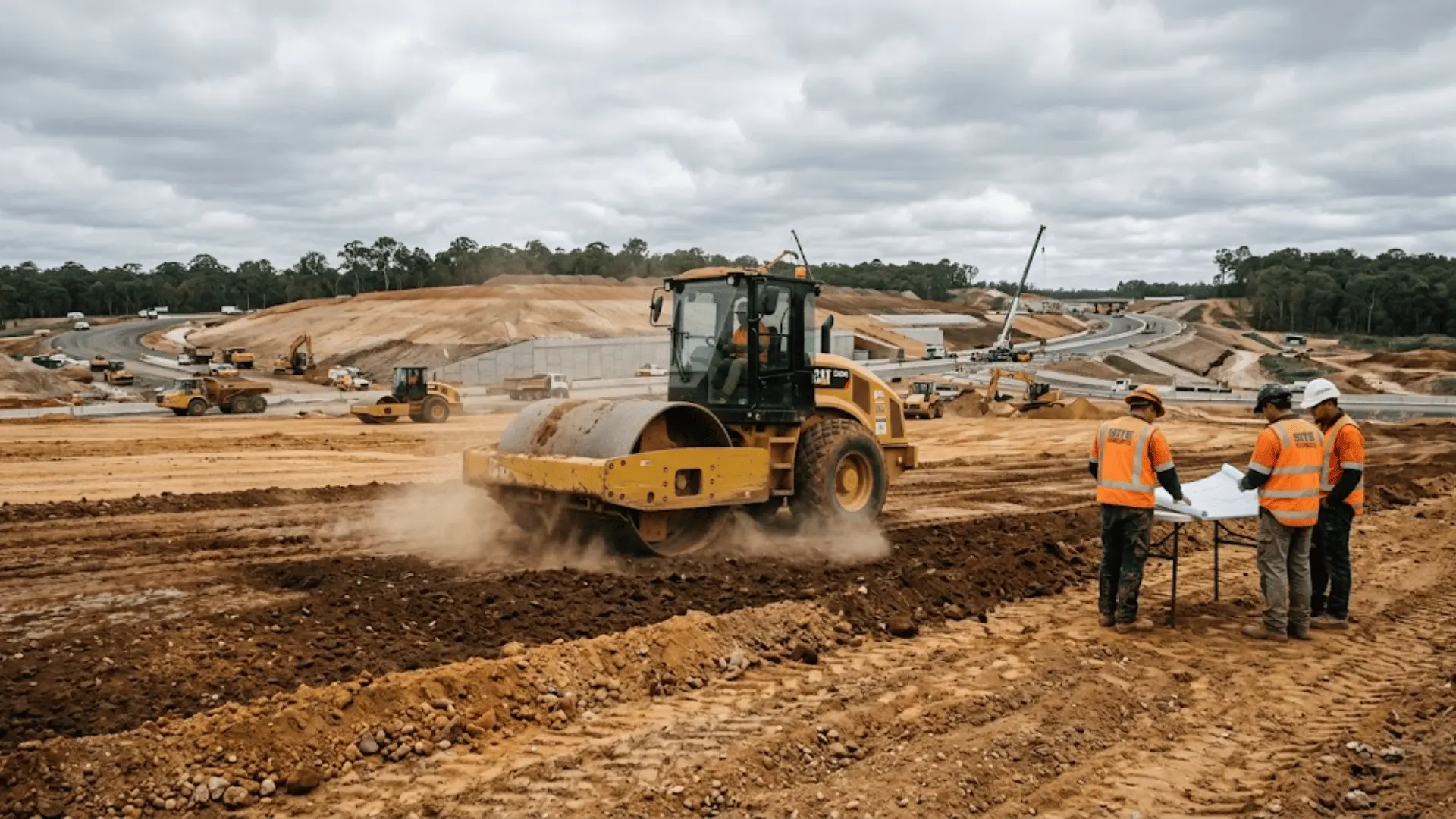
Soil is the silent foundation beneath everything we build, grow, and depend on.
When it’s weak, unstable, or poorly structured, even the most carefully designed structure above it can shift, crack, or collapse over time.
Soil stabilization is essentially the process of strengthening that foundation, making it more durable, load-bearing, and reliable through mechanical or chemical treatment.
From highways to farmlands to high-rise foundations, stable soil is what keeps our built world from quietly sinking into itself.
What is Soil Stabilization?
Soil stabilization refers to the process of altering soil properties to improve its engineering performance, whether through physical, chemical, or biological means.
While often used interchangeably with ground improvement, stabilization specifically targets the soil’s intrinsic characteristics, whereas ground improvement broadly covers structural reinforcement techniques.
The core objectives include:
- Increasing load-bearing strength
- Reducing compressibility so the soil doesn’t deform under pressure
- Improving long-term durability against weathering and moisture
- Controlling the natural shrink-swell behavior that makes certain soils unpredictable
Together, these goals create ground that’s genuinely buildable.
Why is Soil Stabilization Necessary?
Not all soil is created equal. Some naturally retain moisture, some crack under load, and others shift with every season.
Understanding what makes soil problematic, and what happens when those problems go unaddressed, is what makes stabilization not just useful but necessary.
| Problem | Cause | Consequence |
|---|---|---|
| Low Bearing Capacity | Weak soil composition | Foundation cracks |
| Moisture Sensitivity | Poor water retention control | Road deterioration |
| Erosion and Instability | Wind, water, and traffic stress | Landslides, slope failure |
| Poor Drainage | Waterlogging and soil saturation | Rising maintenance costs |
Types of Soil Stabilization Methods
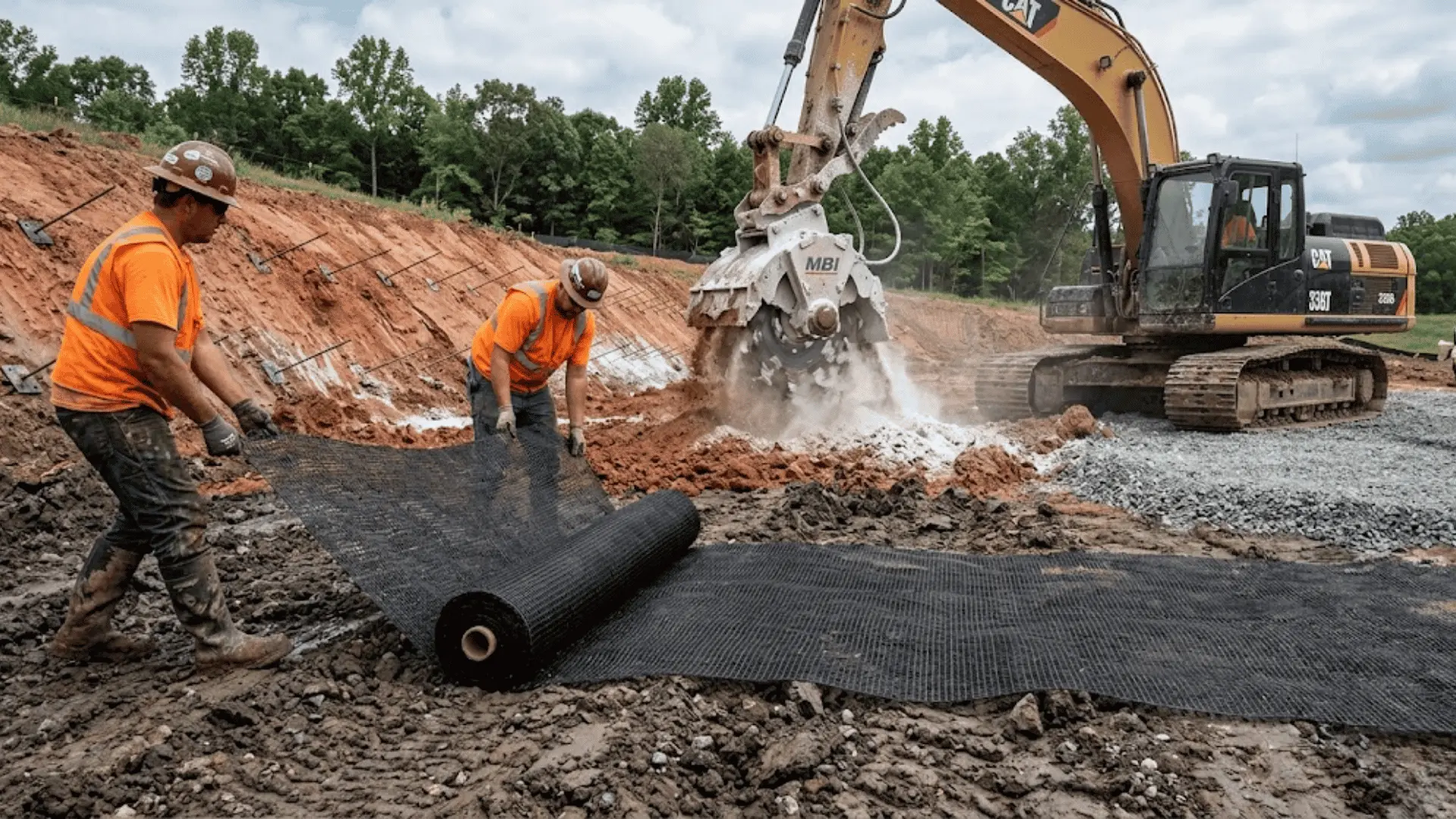
Soil stabilization draws from a wide range of methods, each suited to specific soil conditions, project demands, and environmental considerations.
Here’s a breakdown of what each approach involves and where it works best.
1. Mechanical Stabilization
Mechanical stabilization improves soil purely through physical means, no chemicals involved.
It works by redistributing soil particles to increase density and load-bearing capacity, making it one of the most straightforward and widely used approaches in construction.
- Compaction using rollers and vibration to densify loose soil.
- Soil grading and blending to balance particle size and composition.
- Geotextiles and geogrids for reinforcement and tensile strength.
While cost-effective and simple to execute, mechanical methods have limitations in highly plastic or moisture-sensitive soils where physical force alone isn’t enough.
2. Chemical Stabilization
When soil needs a deeper fix, chemical stabilization steps in.
It works by triggering reactions between stabilizing agents and soil particles, fundamentally improving bonding, strength, and long-term durability.
| Method | Best For | Limitation |
|---|---|---|
| Cement Stabilization | High-strength base layers | Brittle under heavy stress |
| Lime Stabilization | Expansive clay soils | Ineffective in sandy soils |
| Fly Ash Stabilization | Low-cost, large-scale projects | Slower strength gain |
| Bitumen Stabilization | Road and pavement subgrades | Temperature-sensitive |
| Polymer-Based Stabilizers | Erosion-prone, moisture-sensitive soil | Higher material cost |
3. Physical Stabilization
Physical stabilization focuses on structural containment, using engineered materials and systems to hold soil in place rather than altering its composition.
- Geosynthetics like geogrids and geotextiles distribute load and prevent soil migration.
- Retaining walls and barriers hold back lateral soil pressure in slopes and embankments.
- Soil nailing and anchoring reinforce unstable ground by inserting tensile elements deep into the soil mass.
4. Biological Stabilization
Biological stabilization takes a greener route, using living systems to bind and protect soil naturally. It’s especially effective for slope protection and erosion control in environmentally sensitive areas.
- Vegetation and root systems bind soil particles and reduce surface erosion.
- Microbial stabilization uses bacteria to improve soil cohesion, an emerging and promising method.
- Eco-friendly slope stabilization combines plant cover with biodegradable reinforcement materials.
5. Advanced and Specialized Methods
For challenging soil conditions where conventional methods fall short, advanced techniques offer targeted, high-performance solutions.
| Method | How It Works | Best Application |
|---|---|---|
| Thermal Stabilization | Heat or freezing alters soil structure | Permafrost and frost-prone regions |
| Electrical Stabilization | Electric current drives out moisture | Fine-grained, saturated soils |
| Lime-Pozzolana Methods | Lime combined with industrial waste | Sustainable large-scale projects |
Soil Stabilization Techniques Explained
How stabilization is carried out matters just as much as which method is chosen. The approach depends on soil condition, site accessibility, and project budget.
In-Situ Stabilization
In-situ stabilization treats soil directly on-site, without excavation or removal. Stabilizing agents are mixed into the existing soil using machinery, making it a significantly faster and more cost-effective approach for large areas.
It works well when the soil is structurally workable but needs performance improvement, and it reduces both material waste and transportation overhead, which makes it a practical first choice for most civil and infrastructure projects.
Ex-Situ Stabilization and Soil Replacement
Ex-situ stabilization involves removing soil from its original location, either treating it elsewhere before returning it or replacing it entirely with stronger, more suitable material.
Soil replacement, a subset of this approach, requires full excavation and backfilling, making it the most resource-intensive option.
However, when ground conditions are severely poor or chemically incompatible with stabilizers, it remains the most reliable path to a structurally sound foundation.
Materials Used in Soil Stabilization
The effectiveness of soil stabilization largely depends on choosing the right material for the right soil. Each stabilizing agent brings distinct properties that target specific weaknesses in soil composition and behavior.
| Material | Type | Best For | Key Advantage |
|---|---|---|---|
| Lime | Chemical | Expansive clay soils | Reduces plasticity and moisture sensitivity |
| Cement | Chemical | Weak, loose soils | Rapid and high strength gain |
| Fly Ash | Chemical | Large-scale, low-cost projects | Sustainable use of industrial byproduct |
| Bitumen | Chemical | Road subgrades and pavements | Strong water and weather resistance |
| Polymers | Chemical | Erosion-prone, moisture-sensitive soils | Flexible, long-lasting bonding |
| Industrial Waste Materials | Chemical | Variable soil types | Cost-effective and eco-conscious |
| Geosynthetics | Physical | Reinforcement and load distribution | Versatile across soil and climate conditions |
Benefits of Soil Stabilization
Soil stabilization doesn’t just fix weak ground; it actively improves how infrastructure performs, lasts, and impacts the environment around it.
The benefits span well beyond the construction phase.
Structural Benefits
Stabilized soil creates a stronger, more predictable foundation for everything built above it.
- Increased load-bearing capacity for heavier structures and traffic
- Reduced settlement and deformation under sustained pressure
- Improved long-term durability against wear and weathering
Environmental Benefits
Beyond performance, stabilization contributes to more responsible and sustainable land use.
- Reduced soil erosion from wind, water, and surface runoff
- Less dust and mud in and around active construction zones
- Better water management through improved drainage and reduced waterlogging
Economic Benefits
Investing in stabilization upfront significantly reduces what projects spend over time.
- Lower construction costs by working with existing soil rather than replacing it
- Reduced excavation needs saving time, labor, and material
- Longer infrastructure lifespan with fewer repairs and maintenance cycles
Applications of Soil Stabilization
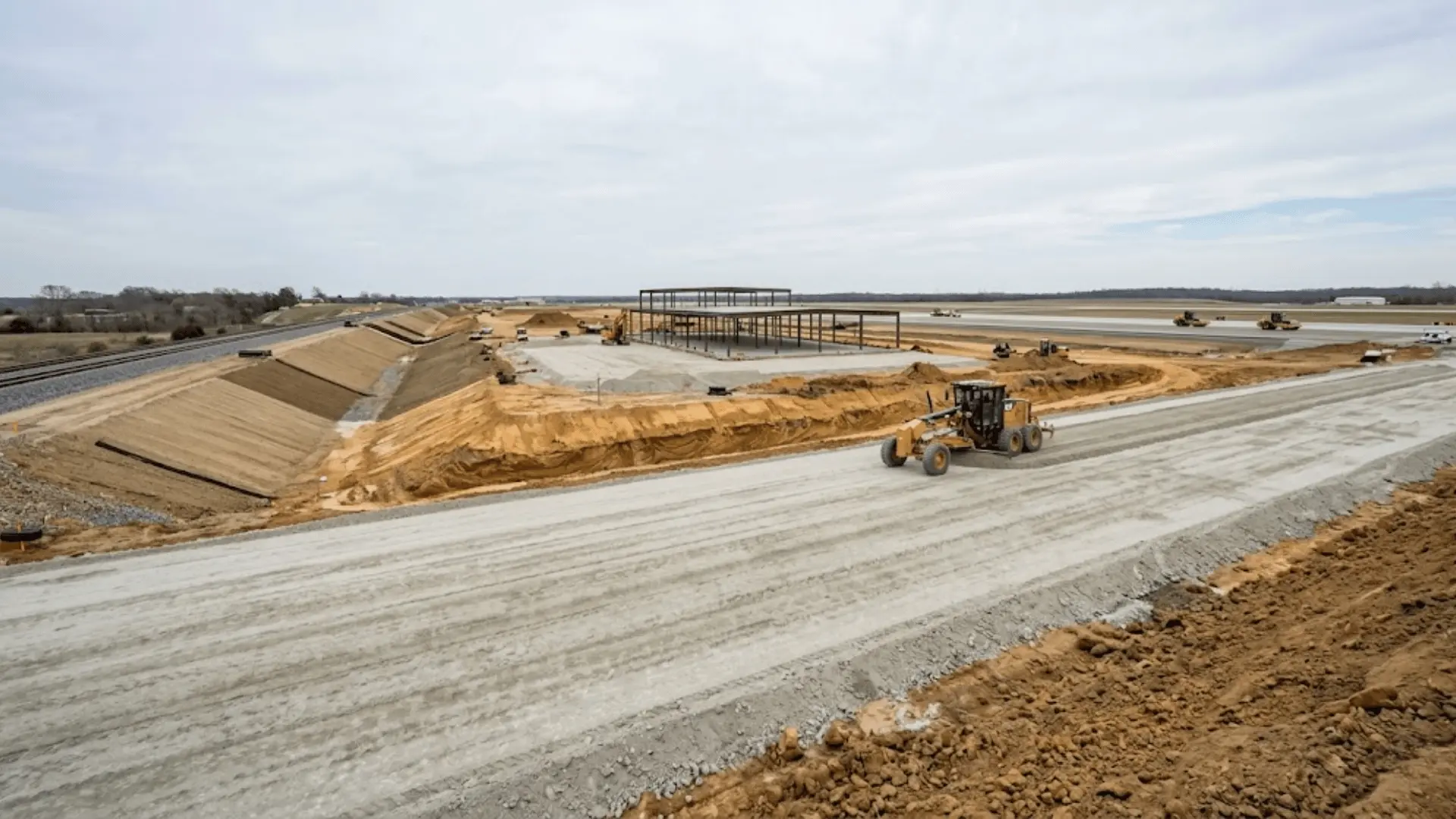
Soil stabilization finds its place across nearly every domain of civil and infrastructure development. Wherever ground conditions need to perform reliably under load, stabilization is part of the solution.
- Road and Highway Construction: Strengthening subgrades to handle heavy, continuous traffic loads.
- Railway Tracks: Ensuring stable, settlement-free ground beneath tracks and ballast.
- Building Foundations: Improving bearing capacity for residential, commercial, and industrial structures.
- Embankments and Slopes: Preventing erosion, slippage, and long-term slope instability.
- Airports and Runways: Creating firm, uniform ground capable of withstanding aircraft weight and movement.
- Agricultural Land Improvement: Improving soil structure for better drainage, root penetration, and crop yield.
From urban infrastructure to rural farmland, stabilized soil is what allows development to happen confidently and sustainably, regardless of what the ground naturally offers.
Factors Affecting Soil Stabilization Choice
Choosing the right stabilization method isn’t straightforward. Several site-specific and project-level factors shape what works and what doesn’t before any treatment begins.
| Factor | What It Influences | Why It Matters |
|---|---|---|
| Soil Type (clay, sand, silt) |
Method and material selection | Different soils respond differently to stabilizers |
| Moisture Content | Chemical reactivity and compaction efficiency | Excess moisture weakens bonding and reduces effectiveness |
| Load Requirements | Strength targets and material dosage | Heavier loads demand higher bearing capacity |
| Environmental Conditions | Durability and material compatibility | Temperature, rainfall, and exposure affect long-term performance |
| Cost and Material Availability | Feasibility and method choice | Budget constraints often determine the most practical approach |
Soil Stabilization Process
Every stabilization project follows a structured sequence to ensure the treated soil meets the required engineering standards.
Here’s how the process typically unfolds.
- Step 1: Assessing soil composition, moisture content, and load-bearing capacity before any treatment begins.
- Step 2: Choosing the right method and material based on soil type, site conditions, and project requirements.
- Step 3: Applying and thoroughly blending stabilizing agents into the soil, either in-situ or ex-situ.
- Step 4: Compacting the treated soil to the required density and allowing adequate curing time for strength development.
- Step 5: Verifying that the stabilized soil meets all structural and performance benchmarks before construction proceeds.
Getting each step right is what separates a stable, long-lasting foundation from one that fails under pressure.
Advantages and Disadvantages of Soil Stabilization
Soil stabilization offers real, measurable gains for construction and infrastructure, but it comes with its own set of trade-offs.
Weighing both sides helps in making more informed project decisions.
Where Soil Stabilization Delivers
When applied correctly, stabilization meaningfully improves how soil performs across a range of conditions and project types.
- Improved load-bearing strength and structural stability across soil types.
- Cost-effective over time with reduced maintenance and repair needs.
- Eco-friendly methods available that minimize environmental disruption.
Where It Falls Short
That said, stabilization isn’t without its challenges, and going in without accounting for them can affect both outcomes and budgets.
- Initial costs can be significant, especially for chemical or advanced methods.
- Requires technical expertise for correct material selection and application.
- No universal method exists; soil type and site conditions always dictate what works.
Future Trends in Soil Stabilization
Soil stabilization is moving toward smarter, cleaner, and more material-efficient solutions.
Nanotechnology is opening doors to particle-level soil treatment that dramatically improves strength with minimal material use.
Sustainable alternatives like bio-enzymes and industrial waste reuse are reducing the environmental footprint of traditional chemical methods.
Meanwhile, smart geotechnical solutions combining real-time monitoring with adaptive stabilization techniques are making it possible to respond to soil behavior as it happens, rather than after damage is done.
The field is steadily shifting from reactive fixes to proactive, data-informed ground management.
Wrapping Up
Ground conditions will always vary, but the ability to work with what’s there, rather than around it, is what makes soil stabilization such a valuable practice.
Highways built to last, farmland prepared for better yield, foundations that hold steady for decades; treated soil quietly does the heavy lifting behind every reliable structure.
As methods grow more sustainable and technology-driven, the future of construction quite literally rests on stronger ground.
If this helped you understand soil stabilization better, drop your questions or thoughts in the comments below.
Frequently Asked Questions (FAQs)
What is Soil Stabilization in Simple Terms?
Soil stabilization is the process of improving weak or unstable soil to make it stronger, more durable, and capable of supporting structures. It involves treating soil with mechanical, chemical, or biological methods, depending on the site conditions.
Is Soil Stabilization Expensive?
The initial cost varies depending on the method and scale of the project. Over time, stabilization tends to be more economical than repeated repairs or full soil replacement.
How Long Does Stabilization Last?
A well-executed stabilization treatment can last several decades with minimal maintenance. Longevity depends on the method used, soil type, and the environmental conditions the treated ground is exposed to.