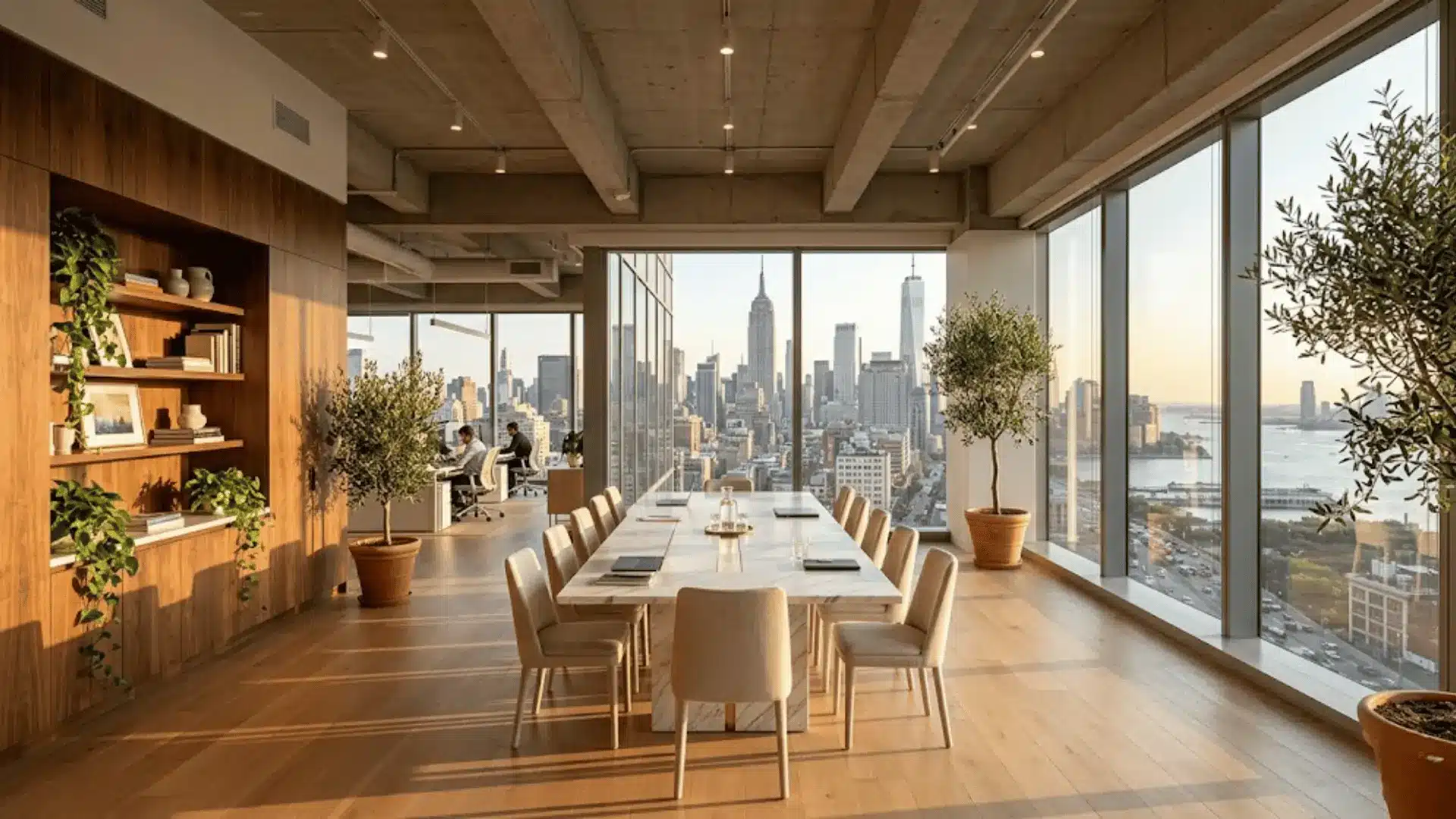
Commercial interior design is the art of shaping business spaces, think offices, retail stores, restaurants, and beyond, into environments that quietly do the heavy lifting.
A well-designed space builds your brand before anyone says a word, keeps teams focused, and makes customers want to linger just a little longer.
It sits right at the crossroads of functionality, aesthetics, and real business goals.
In this guide, we’re unpacking everything that goes into designing spaces that look beautiful and actually work.
What is Commercial Interior Design?
Commercial interior design is the process of designing spaces built for business, whether that’s a bustling office, a curated retail store, a cozy restaurant, or a healthcare facility.
Unlike residential design, which centers on personal comfort and taste, commercial design leads with functionality, brand alignment, and performance.
Every decision, from layout to lighting, serves a purpose beyond aesthetics.
It spans four core categories: corporate workspaces, retail and showroom environments, hospitality spaces like hotels and restaurants, and healthcare and institutional settings.
Each comes with its own rules, but all share one goal: spaces that work as well as they look.
Why is Commercial Interior Design Important?
Commercial interior design shapes how a business feels, functions, and grows. The space you create speaks before your team does, and its impact runs deeper than most businesses realize.
- Brand identity comes alive through thoughtful design choices, making your space an extension of who you are.
- Employee productivity rises naturally in environments designed around how people actually work.
- Customer behavior is quietly guided by layout, lighting, and flow, nudging people to stay, explore, and return.
- Comfort and accessibility make every visitor feel considered, which builds trust without a single word.
- Efficient navigation reduces friction, keeping both customers and teams moving with ease.
- Customer retention improves when a space feels good to be in, and people come back to places that feel right.
- Operational efficiency goes up when design and workflow are built around each other from the start.
When design and business goals are aligned, the space stops being just a backdrop and starts becoming an actual asset, one that quietly contributes to growth every single day.
Core Principles of Commercial Interior Design
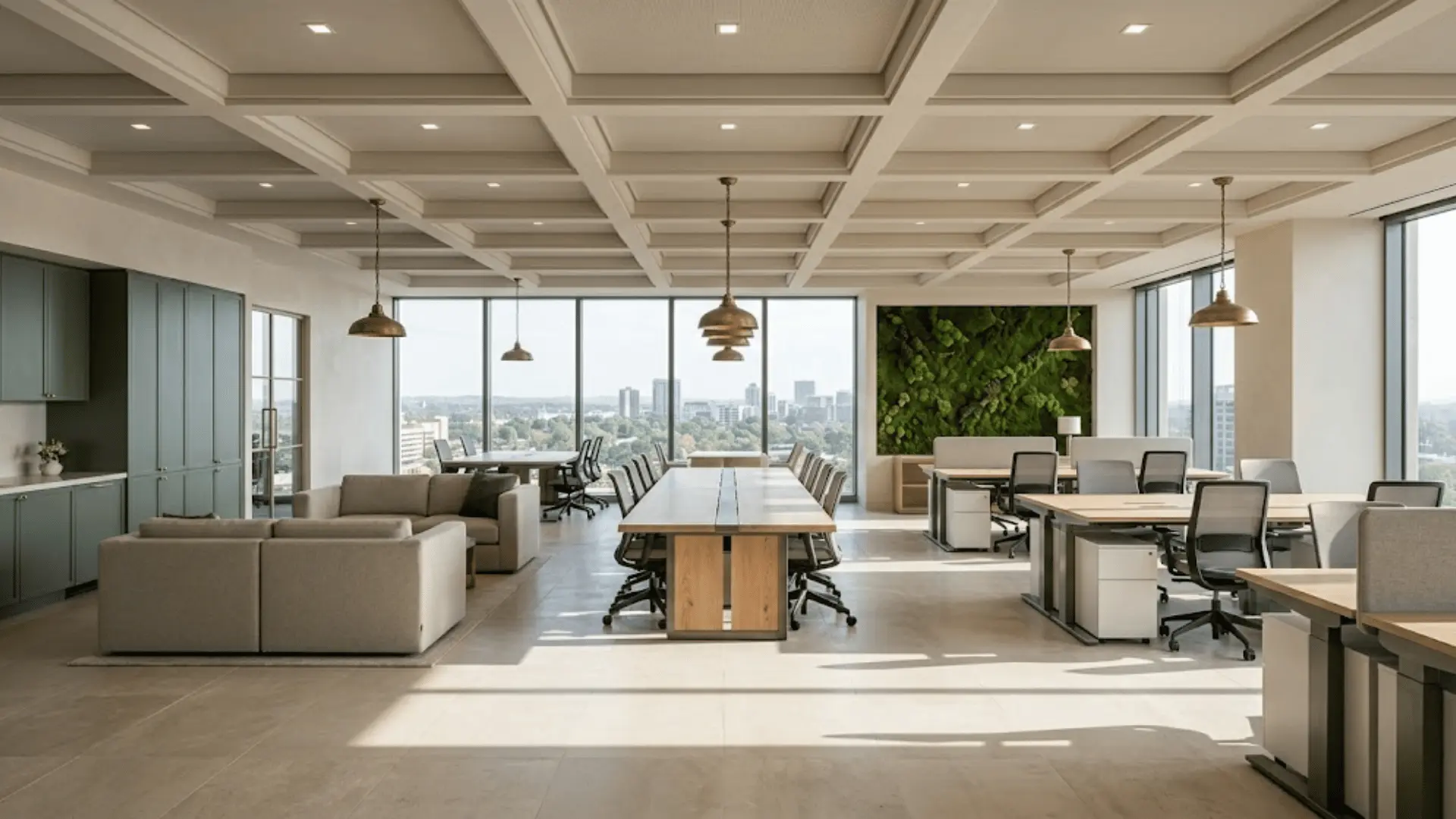
Great commercial spaces don’t come together by accident. They’re built on a set of principles that balance what a space needs to do with how it needs to feel.
1. Functionality
A beautiful space that doesn’t support how your business actually operates will always fall short. Every element, from furniture placement to room transitions, should make daily operations smoother and more intuitive.
Design here isn’t decorative, it’s structural. When functionality is prioritized from the start, everything else has a stronger foundation to build on.
2. Space Planning & Layout
How space is arranged determines how people move, gather, and work within it. Good layout design minimizes congestion, creates natural traffic flow, and makes sure every square foot is earning its place.
Whether it’s an open-plan office or a multi-floor retail space, thoughtful planning turns an ordinary floor plan into an experience that feels effortless to navigate.
3. Branding & Identity
Your space is one of the most tangible expressions of your brand. The colors on the walls, the materials underfoot, the fixtures overhead, all of it communicates something.
Strong commercial design ensures those signals are intentional and consistent, giving customers and employees an environment that genuinely reflects what the business stands for, without needing a logo in every corner.
4. Aesthetics & Visual Appeal
Good design finds the balance between beautiful and functional, because neither works well without the other. Visual appeal draws people in, sets the mood, and shapes first impressions.
But aesthetics that ignore usability quickly become a liability. The best commercial interiors are ones where beauty and practicality are so well integrated, you barely notice where one ends and the other begins.
5. Lighting Design
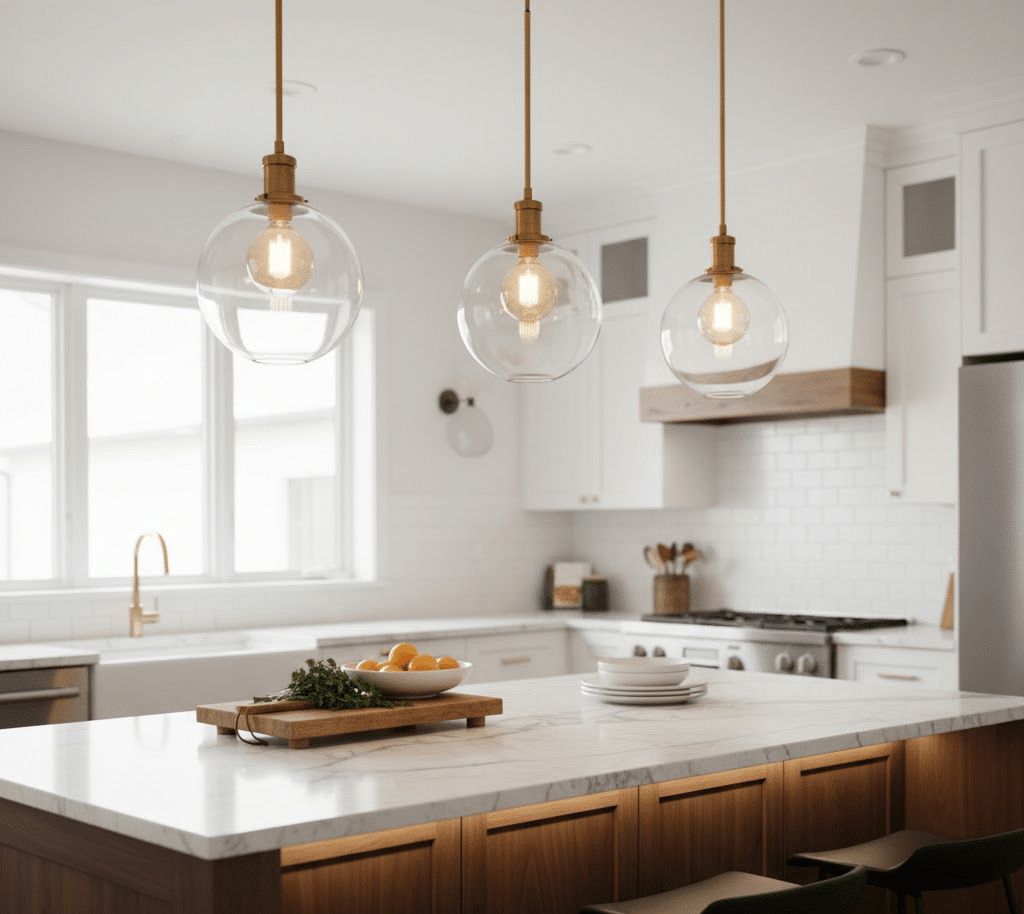
Lighting does far more than illuminate a room. Natural light lifts mood, boosts focus, and makes spaces feel open and alive. Artificial lighting, when done well, can replicate that warmth or create an entirely different atmosphere.
In commercial settings, lighting directly influences how productive employees feel and how long customers choose to stay.
6. Safety & Compliance
No design, however stunning, can overlook the non-negotiables. Building codes, fire safety regulations, and accessibility standards exist to protect everyone who walks through the door.
Compliance isn’t a creative constraint; it’s a baseline. Designing with safety in mind from the beginning saves time, avoids costly revisions, and ensures the space works for every single person who uses it.
Elements of Commercial Interior Design
Every design decision in a commercial space is a building block. These elements work together to create environments that feel cohesive, function smoothly, and leave a lasting impression.
- Furniture and fixtures set the tone for how a space is used, felt, and remembered.
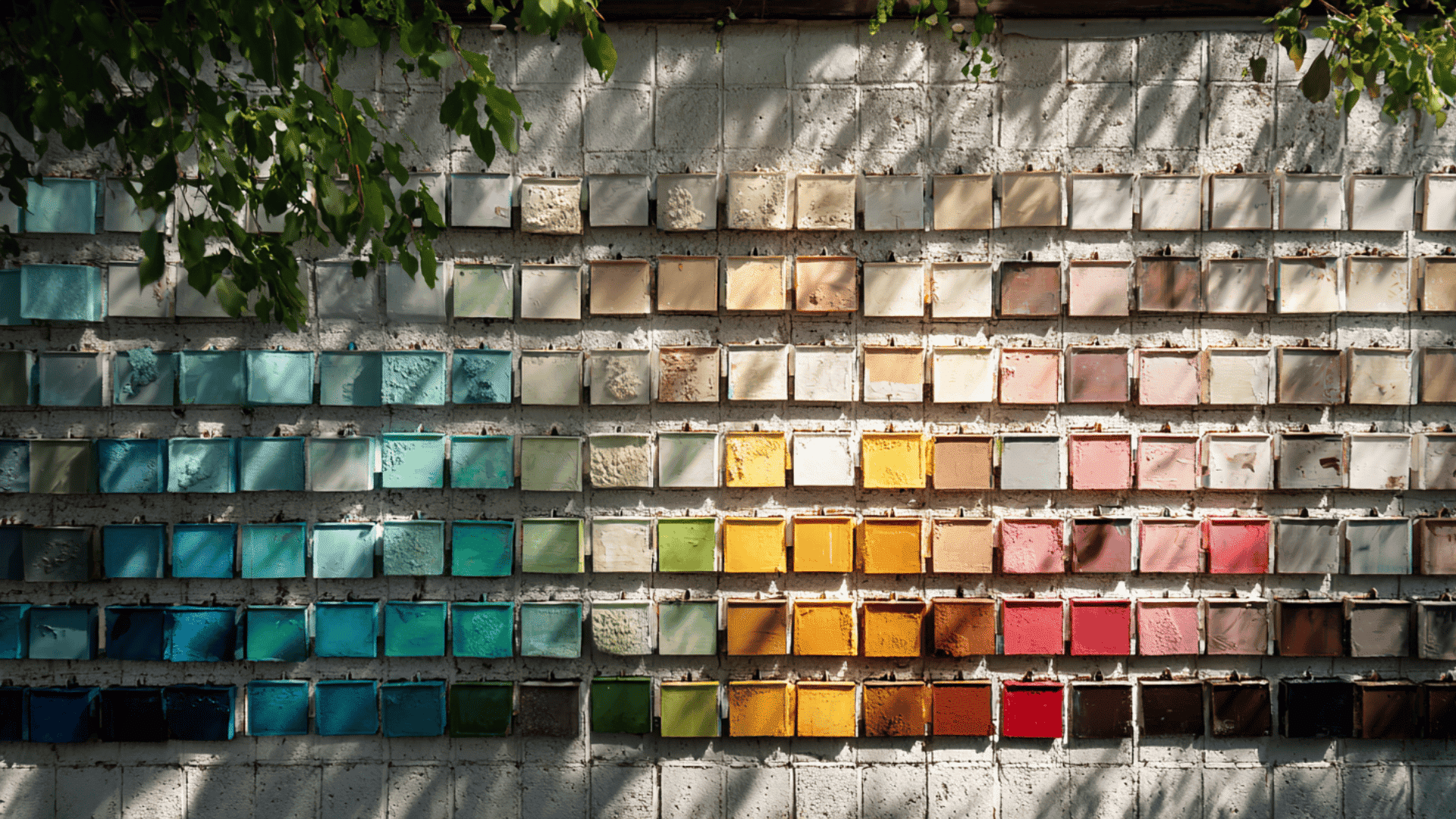
- Color schemes and materials shape mood and perception while keeping the brand palette consistent and durable.
- Lighting systems layer natural and artificial light to serve both function and feeling equally well.
- Flooring and finishes anchor the space visually while standing up to the demands of daily commercial use.
- Acoustics and sound control reduce noise fatigue and create environments where people can focus or connect.
- Technology integration keeps spaces functional, future-ready, and genuinely seamless to use.
When these elements come together with intention, the result is a space that doesn’t just look good on day one but continues to perform, adapt, and impress long after the doors open.
Types of Commercial Interior Design
Commercial interior design shifts shape depending on where it’s applied. Each space type comes with its own priorities, challenges, and design language worth understanding.
| Space Type | Core Focus | Key Elements | Design Goal |
|---|---|---|---|
| Office | Productivity & workflow | Ergonomic furniture, flexible layouts | Support how people work best |
| Retail | Customer experience | Visual merchandising, intuitive flow | Guide, engage, and convert visitors |
| Hospitality | Guest experience | Ambiance, comfort, sensory appeal | Make every visit feel memorable |
| Healthcare | Safety & wellbeing | Hygiene, accessibility, calming tones | Put patients and staff at ease |
| Educational | Functionality & flexibility | Adaptable layouts, collaborative zones | Enable focused and open-ended learning |
Step-by-Step: Commercial Interior Design Process
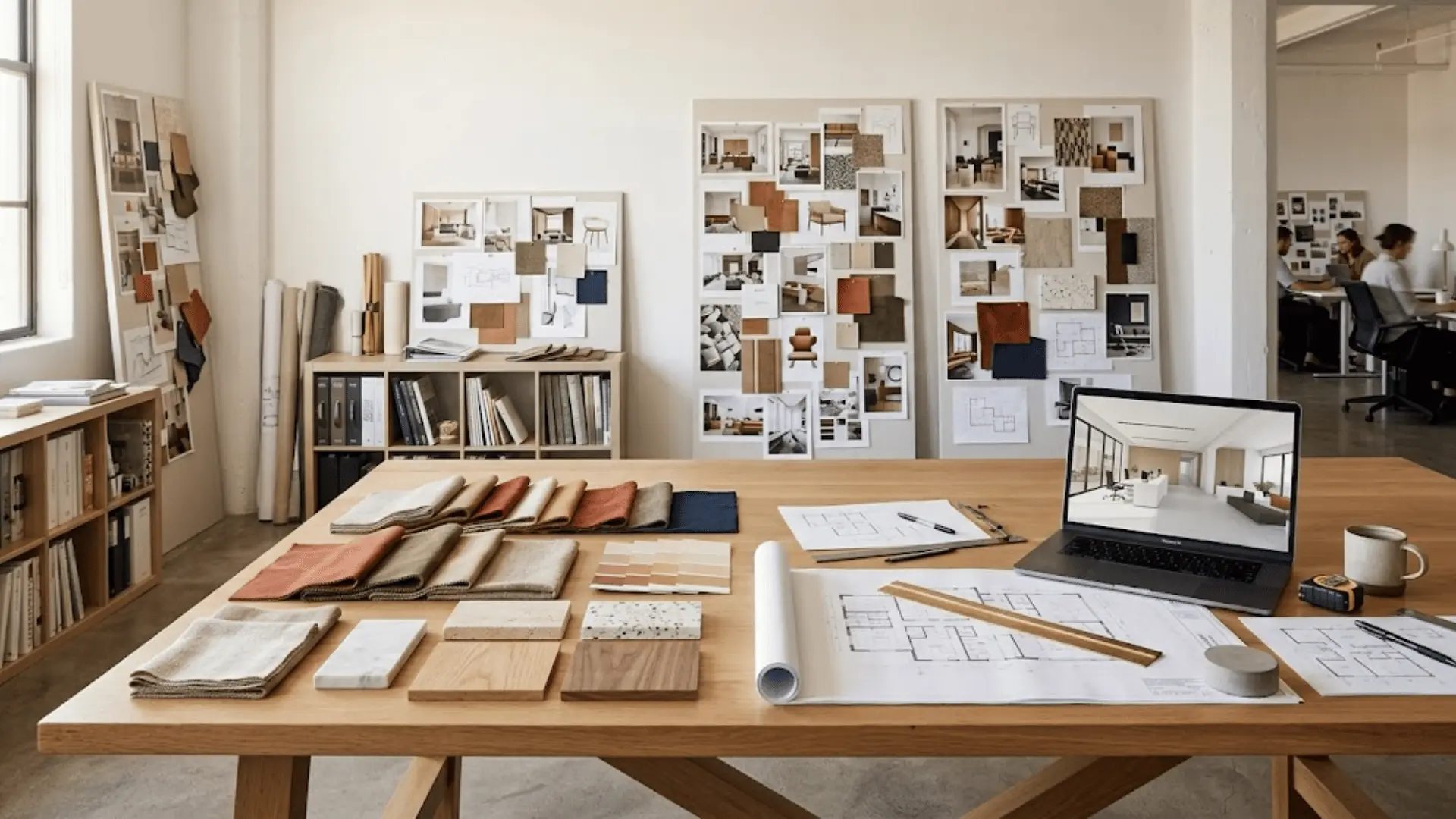
A great commercial interior doesn’t happen by chance; it follows a process. Each stage builds on the last, keeping the design grounded in business needs while reducing the risk of costly surprises down the line.
Step 1: Client Brief & Requirement Analysis
Everything starts with a conversation. A thorough brief captures not just what the client wants but why they want it, covering:
- Business goals and brand identity
- How the space will be used and by whom
- Budget range and project timeline
This ensures the design serves real operational needs from day one.
Step 2: Research & Site Analysis
Before concepts take shape, the space itself needs to be fully understood. This involves visiting the site, taking precise measurements, studying natural light patterns, and identifying structural constraints.
Research at this stage also includes studying target audience behavior and industry-specific design standards that should inform the approach.
Step 3: Concept Development
This is where ideas take their first visual form through:
- Mood boards capturing the overall look and feel
- Theme exploration and early layout sketches
- Material and color direction
It bridges the brief and the build, giving both designer and client a shared visual language before any commitments are made.
Step 4: Design Planning
With the concept locked in, the work gets technical. Detailed 2D floor plans and 3D renders are developed, materials and finishes are selected, and furniture layouts are mapped with precision.
This stage translates creative vision into a fully documented, buildable plan that contractors and vendors can actually work from.
Step 5: Execution & Project Management
This is where design meets reality. The designer coordinates closely with contractors, suppliers, and vendors to keep timelines on track and quality consistent.
Regular site visits, progress checks, and real-time problem-solving keep the vision intact as it moves from plan to physical space.
Step 6: Final Installation & Review
The last stage is about precision and sign-off. Furniture, fixtures, and finishing touches are installed, followed by a thorough quality review against the original brief.
Any gaps are addressed before handover, ensuring the completed space performs exactly as intended and is ready to be experienced from day one.
Key Features of Good Commercial Interior Design
Good commercial design has certain qualities that separate spaces that merely look good from ones that genuinely perform.
Here’s what consistently shows up in the best of them:
- Efficient space utilization ensures every square foot serves a clear, intentional purpose.
- Clear navigation makes movement through the space feel natural and effortless.
- Brand consistency runs through every material, color, and design choice in the room.
- Flexibility and scalability allow the space to grow and adapt as the business evolves.
- Comfort and ergonomics keep the people using the space feeling supported throughout the day.
When these qualities are built into the design from the start, the space stops feeling like an afterthought and starts feeling like a deliberate, well-considered extension of the business itself.
Commercial Interior Design Styles
Commercial spaces today draw from a wide range of design styles, each with its own visual language and functional strengths.
Choosing the right one comes down to the brand, the space, and the people it serves.
| Style | Defining Quality | Key Elements |
|---|---|---|
| Modern/Corporate | Clean and structured | Straight lines, neutral tones, minimalist detailing |
| Industrial | Raw and unfiltered | Exposed brick, concrete, metal fixtures, open ceilings |
| Minimalist | Simple and intentional | Clutter-free layouts, functional furniture, restrained palette |
| Contemporary | Current and adaptive | Trend-informed choices, mixed materials, evolving aesthetics |
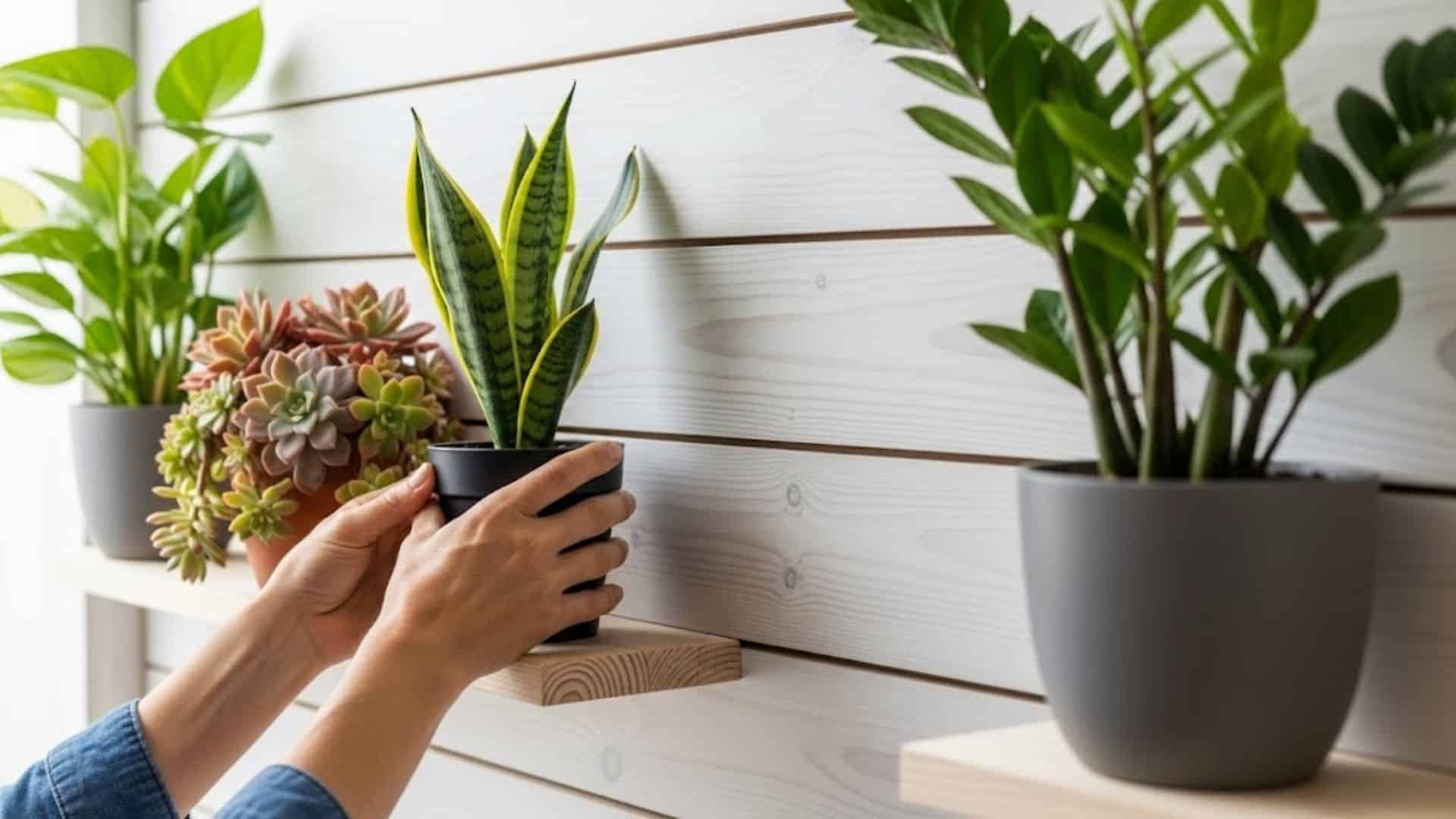
| Biophilic | Nature-rooted and calming | Indoor plants, natural light, organic textures, and materials |
Materials Used in Commercial Interior Design
The materials used in a commercial space do more than shape its appearance; they determine how the space holds up, feels, and functions over time.
Choosing the right ones is as much a practical decision as it is an aesthetic one.
- Wood, metal, and glass form the backbone of most commercial interiors, bringing warmth, structure, and openness, respectively, often used in combination to create visual balance.
- Sustainable materials like recycled content, low-VOC finishes, and responsibly sourced wood are increasingly becoming a design standard, reflecting both environmental responsibility and modern brand values.
- High-durability surfaces such as engineered stone, laminate, and treated flooring are built to withstand heavy footfall and daily wear without compromising on appearance.
- Acoustic panels manage sound absorption in busy commercial environments, reducing noise fatigue and making spaces more comfortable and productive for everyone in them.
The right materials don’t just complete a space, they carry it.
Benefits of Commercial Interior Design
Investing in commercial interior design pays back in ways that go well beyond aesthetics. The right space creates ripple effects across every part of the business.
- Better workflow and efficiency come naturally when a space is designed around how operations actually run day to day.
- Increased comfort and productivity follow when employees feel supported by their environment rather than working against it.
- Improved experience and engagement keep customers present, attentive, and more likely to return.
- Strong brand identity and perception build credibility and trust before a single interaction takes place.
Good design doesn’t just serve the space, it serves the business behind it.
Challenges in Commercial Interior Design
Commercial interior design comes with its fair share of constraints, and navigating them well is what separates good design from great design.
- Budget constraints require designers to make smart, prioritized decisions without letting cost compromises show in the final result.
- Space limitations push creativity, demanding layouts that feel open and functional even within tight or awkward floor plans.
- Regulatory compliance means every design choice must hold up against building codes, safety standards, and accessibility requirements.
- Balancing aesthetics and functionality remains the defining tension of commercial design; getting both right consistently is the real skill.
Challenges in commercial design are inevitable, but with the right approach, they often lead to the most considered and resourceful outcomes.
Trends in Commercial Interior Design
Commercial interior design in 2026 is being shaped by a shift in priorities; spaces are now expected to be responsible, intelligent, and deeply human.
Sustainable and eco-friendly design is moving from trend to standard, with materials and systems chosen for their environmental impact.
Smart offices are embedding technology seamlessly into the fabric of the workspace. Flexible and hybrid workspaces are replacing rigid layouts to accommodate how modern teams actually work.
And wellness-focused environments are bringing comfort, light, and calm to the forefront of every design decision.
Tips for Successful Commercial Interior Design
Getting commercial interior design right comes down to a handful of principles that the best designers never lose sight of.
- Prioritize functionality first because a space that doesn’t work can’t be saved by how it looks.
- Focus on user experience by designing for the people who will live and work in the space daily.
- Maintain brand consistency across every material, finish, and design choice in the room.
- Use lighting strategically to shape mood, direct attention, and support productivity where it matters.
- Plan for future scalability so the space can grow and adapt without needing a complete overhaul.
The best commercial spaces are built with intention, every choice deliberate, every detail earning its place.
The Bottom Line
Commercial interior design is ultimately about creating spaces that work as hard as the people in them.
When functionality, aesthetics, and brand identity come together thoughtfully, the results speak for themselves, through stronger teams, loyal customers, and spaces that genuinely stand out.
Starting from scratch or rethinking an existing space, the right design decisions can shift everything.
We’d love to know what aspect of commercial interior design resonates most with your vision. Drop your thoughts in the comments below!
Frequently Asked Questions (FAQs)
What Does a Commercial Interior Designer Do?
A commercial interior designer plans and designs business spaces to be functional, brand-aligned, and user-friendly. Their work covers everything from space planning and material selection to project coordination and final installation.
What is the Difference Between Commercial and Residential Design?
Residential design centers on personal comfort and individual taste, while commercial design prioritizes functionality, compliance, and business performance. The scale, regulations, and design goals are fundamentally different across the two.
How Much Does Commercial Interior Design Cost?
Costs vary widely depending on the size of the space, the scope of work, and the materials selected. It’s best to define a clear budget early in the process so design decisions can be made accordingly.
How Long Does a Commercial Design Project Take?
Timelines depend on the complexity and scale of the project. Smaller spaces can be completed in a few weeks, while larger, more involved projects can run anywhere from several months to over a year.