You’re not overreacting. Tree roots can contribute to foundation trouble, but most issues are manageable if you catch them early.
Start tonight with one simple step: walk your foundation with a flashlight. Look for hairline cracks, soil pulling away from the wall, downspouts dumping at the base, or doors that stick more at the end of a dry spell than after rain. Take a few photos for baseline. You’re already ahead of the problem.
You might notice: a stair step crack in brick, a gap between soil and foundation, or a slab that slopes slightly near that big oak.
Short Answer: Roots Dry or Swell Soil, Not Punch Through Concrete
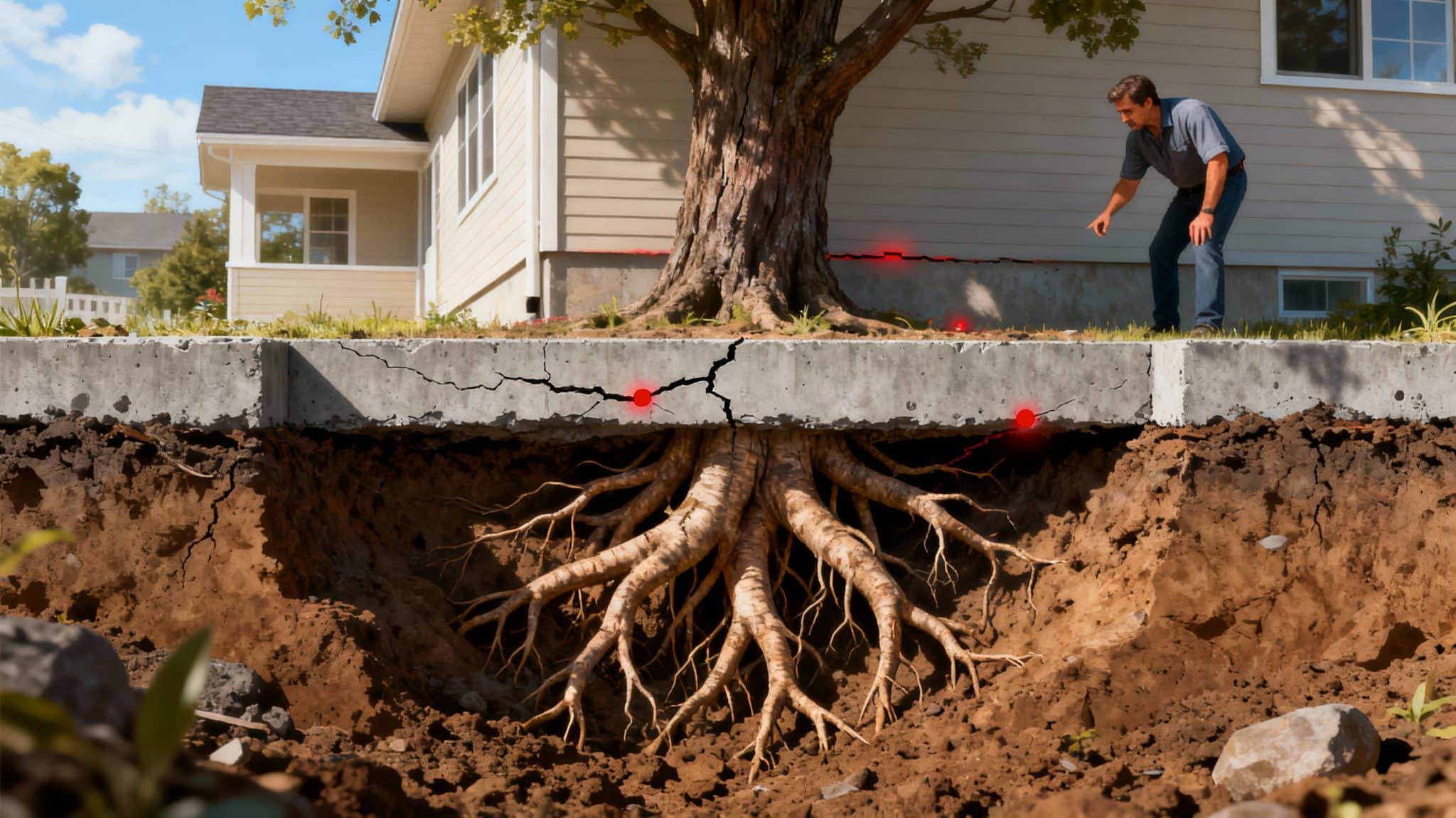
Yes, roots can damage foundations but not in the Hollywood way. Healthy poured concrete doesn’t get “punched through” by a root. Roots exploit existing cracks and, more often, change the moisture in the soil so it shrinks (or swells) and moves the foundation.
Quick disambiguation that trips up a lot of homeowners: both a thirsty tree and bad drainage can cause cracks. Clue to separate them: cracks that widen during drought point to soil drying (often tree related). Cracks that worsen after heavy rains point to drainage and swelling soils.
Tonight: 3 Quick Checks to Even Out Moisture at the Foundation
- Probe the soil 3-6 feet from the foundation with a screwdriver. If it only goes an inch or two in and the soil has pulled away from the wall, your perimeter is too dry. Fix: run a soaker hose 3-5 feet out from the foundation to even out moisture (not right against the wall). You’ll notice the top inch softening within 24-48 hours, and those gaps should begin to close after a couple of days without puddling.
- Watch your water. Are sprinklers or downspouts soaking one section and starving another? Fix: extend downspouts 6-10 feet and adjust any heads that wet the foundation line. Good sign: in the next rain, water moves away in a sheet, not a pool, and that corner stays consistent rather than spiking damp.
- Doors and windows. Note which ones stick now. If they’re worse late in a long dry spell and improve after a few days of rain, it supports a moisture movement story rather than an immediate structural failure.
Why This Happens: Roots Change Moisture in the Top 18–24 Inches
Most tree roots live in the top 18-24 inches of soil. In clay soils, when roots pull moisture from that layer, the soil contracts and the foundation settles unevenly. In wet spells, the reverse happens soil swells and can lift.
Roots also follow moisture into hairline cracks and utility chases, making small flaws bigger over time. Slab homes can develop voids if soil dries under parts of the slab while other parts stay supported, leading to cracks where loads concentrate. That’s why your fixes target even moisture and root direction, not just cutting roots.
Species and Distance: Risky Trees and Safe Distances
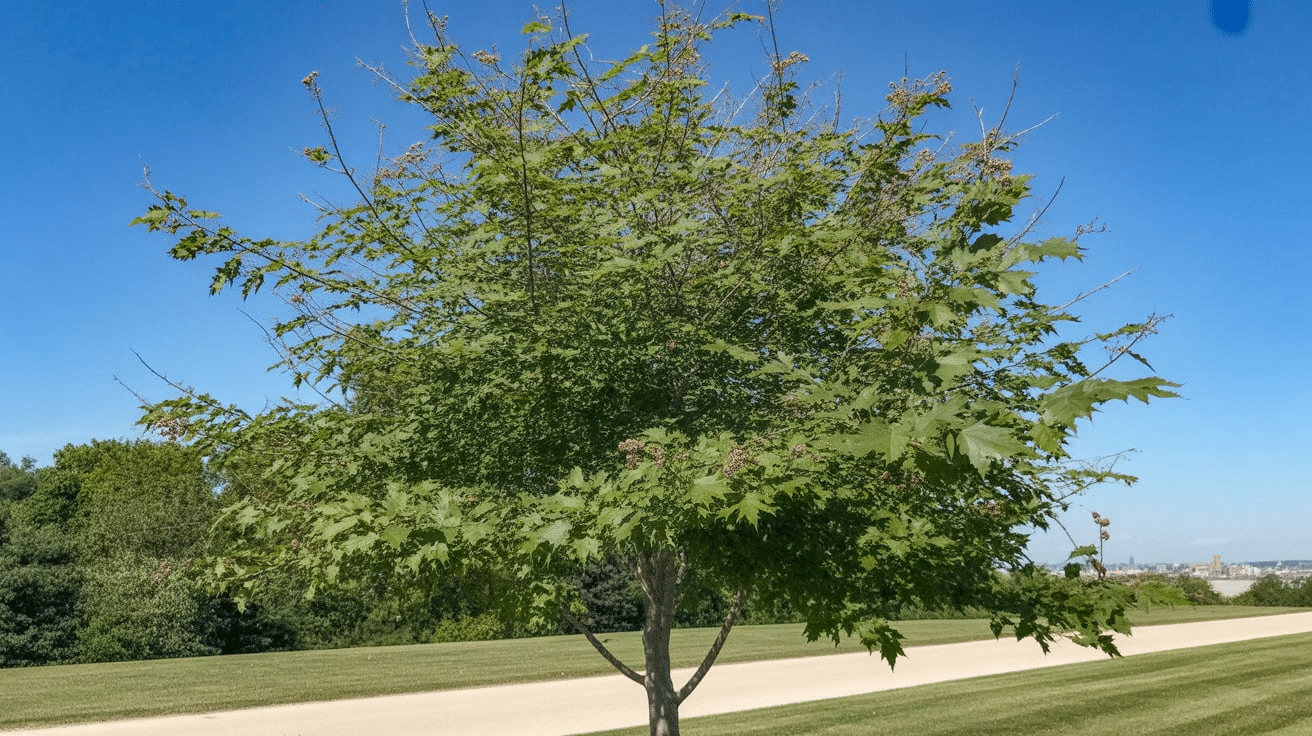
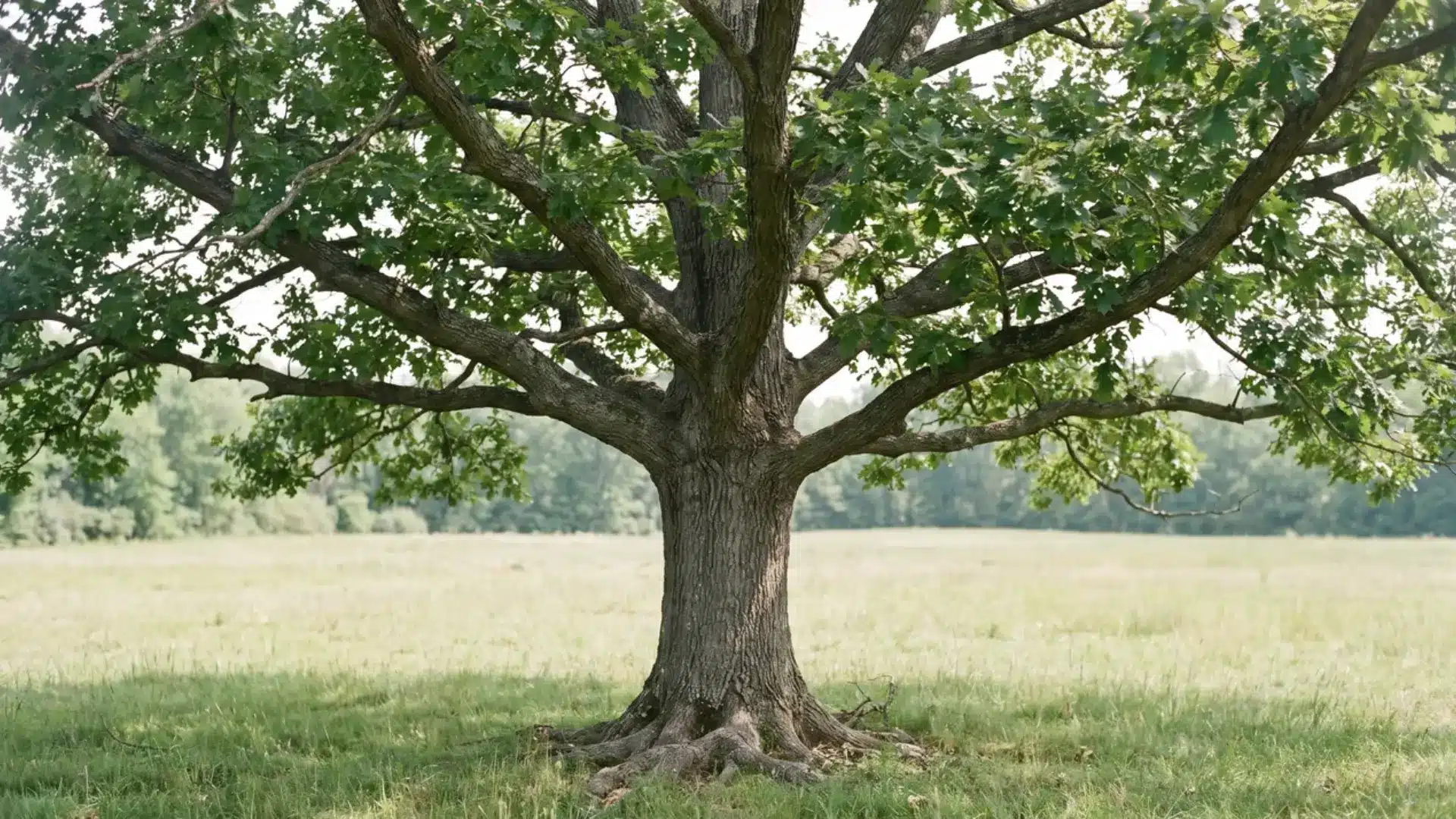
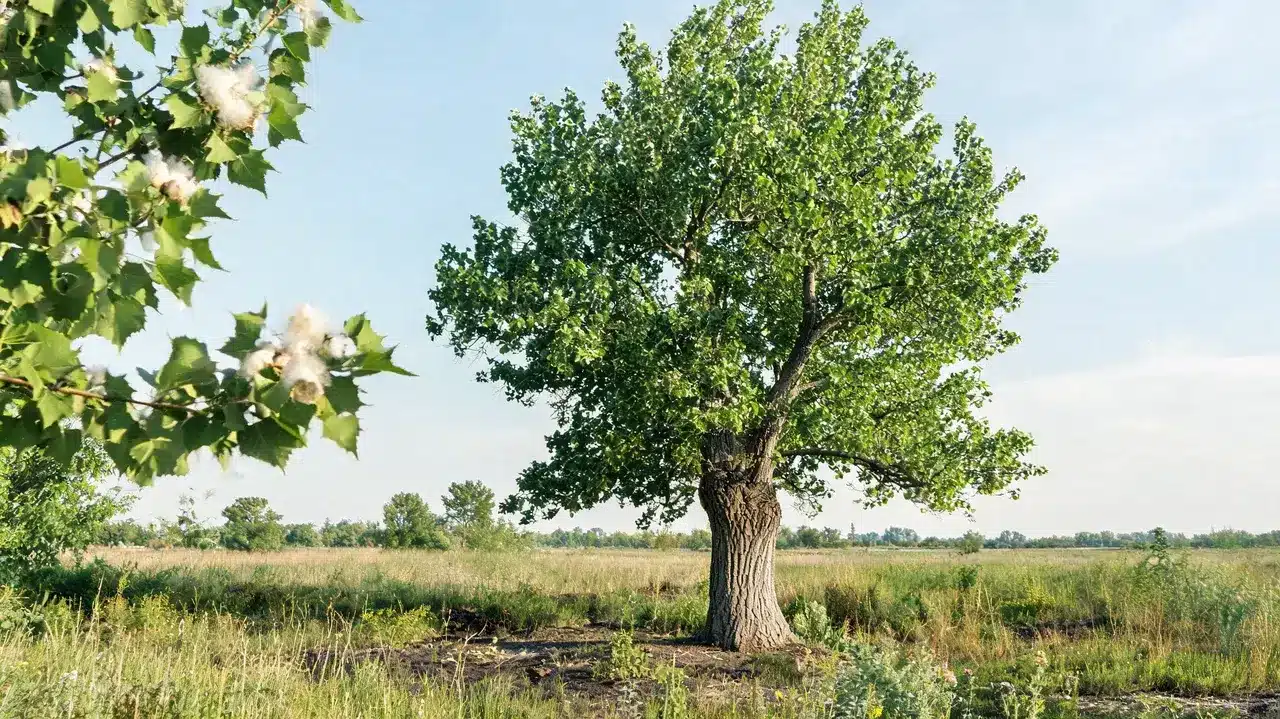
Some trees are simply thirstier and send out more aggressive lateral roots. High risk near foundations: willow, silver maple, poplar, cottonwood, and eucalyptus. Lower risk (with smart placement): dogwood, redbud, serviceberry, Japanese maple, and many ornamental crabs.
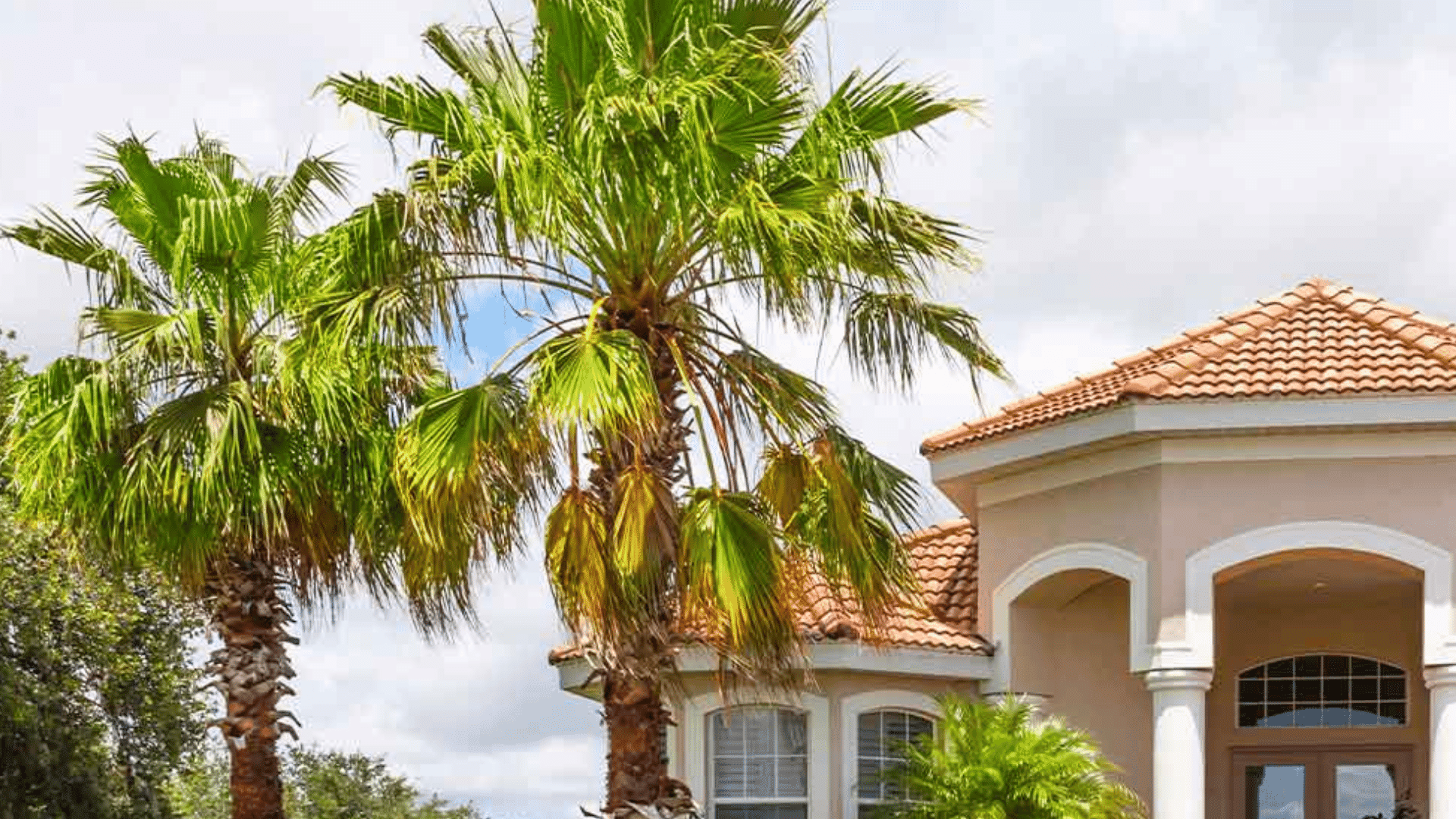
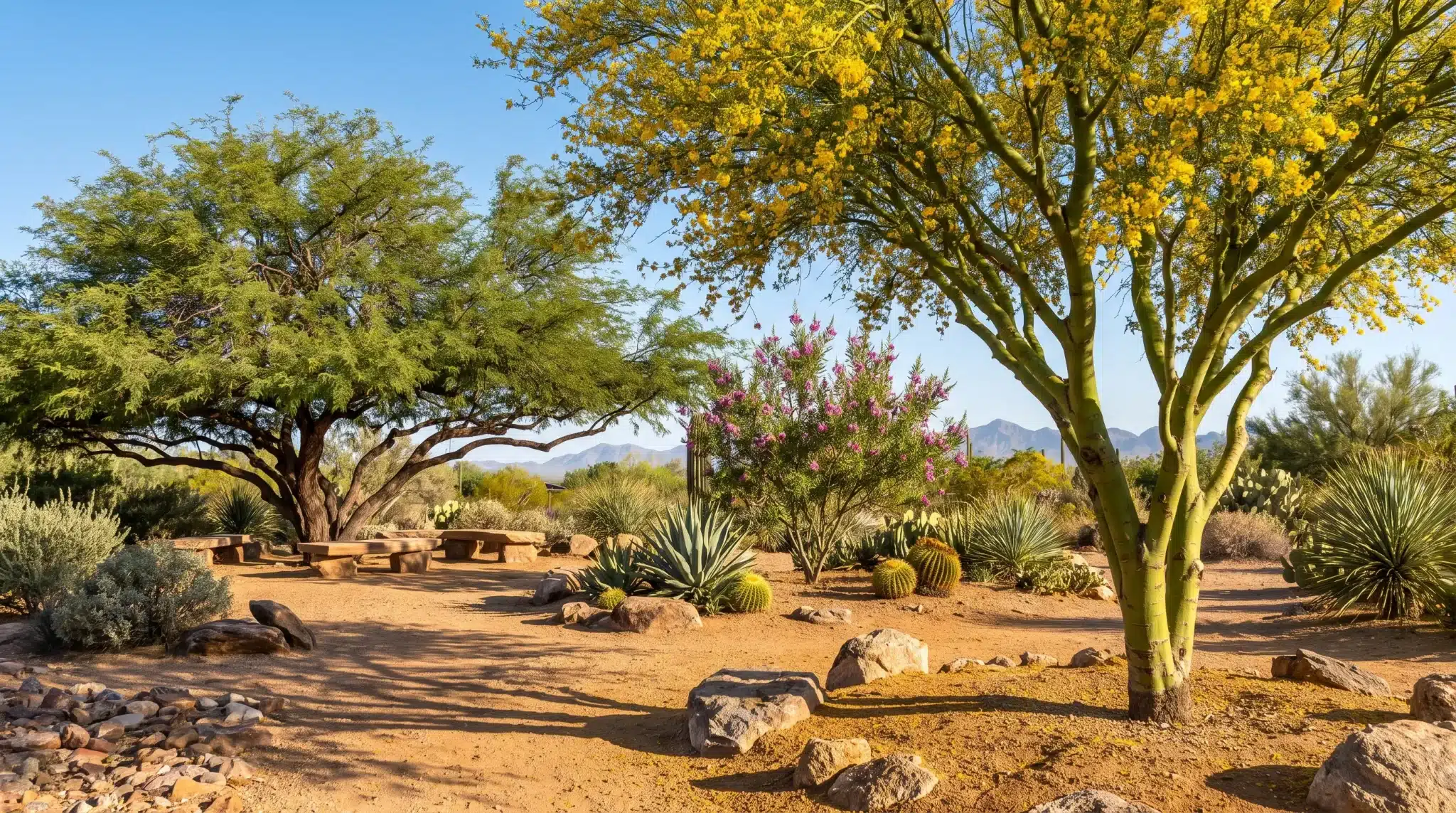
Rule of thumb: plant at least as far from the house as the tree’s mature height for front yard palm designs, with a practical minimum of 15-20 feet for most species and more for big drinkers. Distance matters a few yards more can dramatically cut the odds of intrusion.
Also consider soil: expansive clays raise the stakes. Sandy or loamy soils are more forgiving but not immune.
Root Barriers: Redirect Roots to Protect the Foundation
If you’ve got a keeper tree inside that comfort zone, a root barrier is the preservation first solution. It’s a vertical shield in the ground that turns roots away from the foundation while letting water pass.
What that looks like:
- A trench between the tree and the foundation, typically 24-36 inches deep, with a durable plastic or composite panel installed vertically.
- The barrier runs beyond the “width of concern,” not just a short segment, so roots don’t simply go around.
- Proper depth matters. Shallow barriers (about a foot) are often defeated as roots slip underneath.
Good candidates: valuable trees with no major damage yet, especially in clay soils where moisture control helps most. A chemical barrier fabric exists too, but it’s a pro level choice and not my first recommendation near foundations.
Pro tip: call 811 before digging, and have an ISA certified arborist weigh in, because cutting big roots close to the trunk can destabilize the tree.
Moisture Control and Monitoring: Stay Ahead with Even Watering
Even moisture beats trench warfare. Keep gutters clear and extend downspouts so water isn’t dumped at the base of one bay of wall. Use a soaker hose 3-5 feet out from the foundation during dry spells to prevent the perimeter from becoming the driest spot on your lot.
Avoid daily spritzing. Aim for deep, infrequent watering that keeps the upper foot of soil consistently moist, not soggy. Mulch beds help keep swings in check, but don’t pile mulch against siding or over weep holes.
Track cracks with a pencil tick mark and date, or a simple crack gauge. Note door behavior once a week. You’ll know you’re trending the right way when, in 5-7 days of even moisture, sticking doors behave more consistently and you don’t see fresh stair step cracks. Over 10-14 days, stable crack widths (no ongoing growth) and fewer soil gaps at the wall are good news.
Manage or Remove: Decision Guide Before You Cut
Removal is sometimes the right call but it’s not the default. Consider: species risk, distance, soil type, any signs of current damage, and your appetite for maintenance.
Preservation strategies (barrier + moisture management) excel when the tree is healthy, valuable, and the foundation shows mild, seasonal symptoms. Removal jumps to the front when a high risk species is within 15-20 feet on expansive clay, barriers aren’t feasible, or roots are already entangled with utilities or penetrating drains.
If you do remove a large tree, adjust watering for the first year. Soil can rebound (swell) without that tree’s daily water draw, shifting the foundation in the opposite direction.
We see this pattern in the vast majority of assessments: moisture movement does 90% of the damage. Roots are the driver only when proximity, species, and soil all stack against you. That’s why balancing water and redirecting roots solves more cases than a chainsaw.
Costs, Rough Estimates for Common Fixes
- Soaker hose + downspout extensions: $40-$150 total.
- Foundation drainage tune ups (regrading, extensions, minor swales): a few hundred to a couple thousand, depending on scope.
- Root barrier (installed): often $30-$70 per linear foot, more for tricky access or deeper digs.
- Arborist consult and selective root pruning: $200-$600. Complex cases more.
- Large tree removal near a home: palm tree removal costs often range from $1,000-$3,500+ depending on size, clearance, and crane needs.
- Structural engineer or foundation specialist evaluation: $300-$900, sometimes credited toward repairs.
Two closing facts to keep in your back pocket:
- Intact, well built concrete resists root pressure. It’s the soil moving and the existing weak points that cause most cracks.
- Distance and moisture consistency are your best fixes. You can keep the tree and the house with a bit of planning.
Whether you DIY or bring in help, we diagnose with moisture meters and soil probes at several depths, map root direction, and install deep root barriers that tie into your drainage plan. If you want a clear, low drama plan, we can usually assess within a week and prioritize what actually changes outcomes so you keep both the shade and the stability.