Cucumber and zucchini may look alike at first glance, but they are actually very different.
Many people confuse the two because both are long, green vegetables found in the produce section. Still, one is usually eaten raw and cool, while the other is often cooked in warm dishes.
If you have ever wondered which one is better for salads, grilling, snacking, or healthy meals, this guide will help.
Inside the Plant Family: Cucumber and Zucchini
Cucumbers and zucchinis may look similar in the grocery store, but they come from different plant groups and are used in different ways around the world.
Both belong to the gourd family, which also includes pumpkins, melons, and squash.
Cucumbers are mostly known for their cool, fresh bite and are often added to salads, sandwiches, and refreshing drinks.
Zucchini, on the other hand, is a type of summer squash that is popular in cooked meals and baked dishes.
Both are low in calories and easy to add to everyday meals. Even though they share a few similarities in appearance, each one brings something different to the table, especially when it comes to texture, flavor, and cooking styles.
Cucumbers vs. Zucchini: Breaking Down the Real Differences
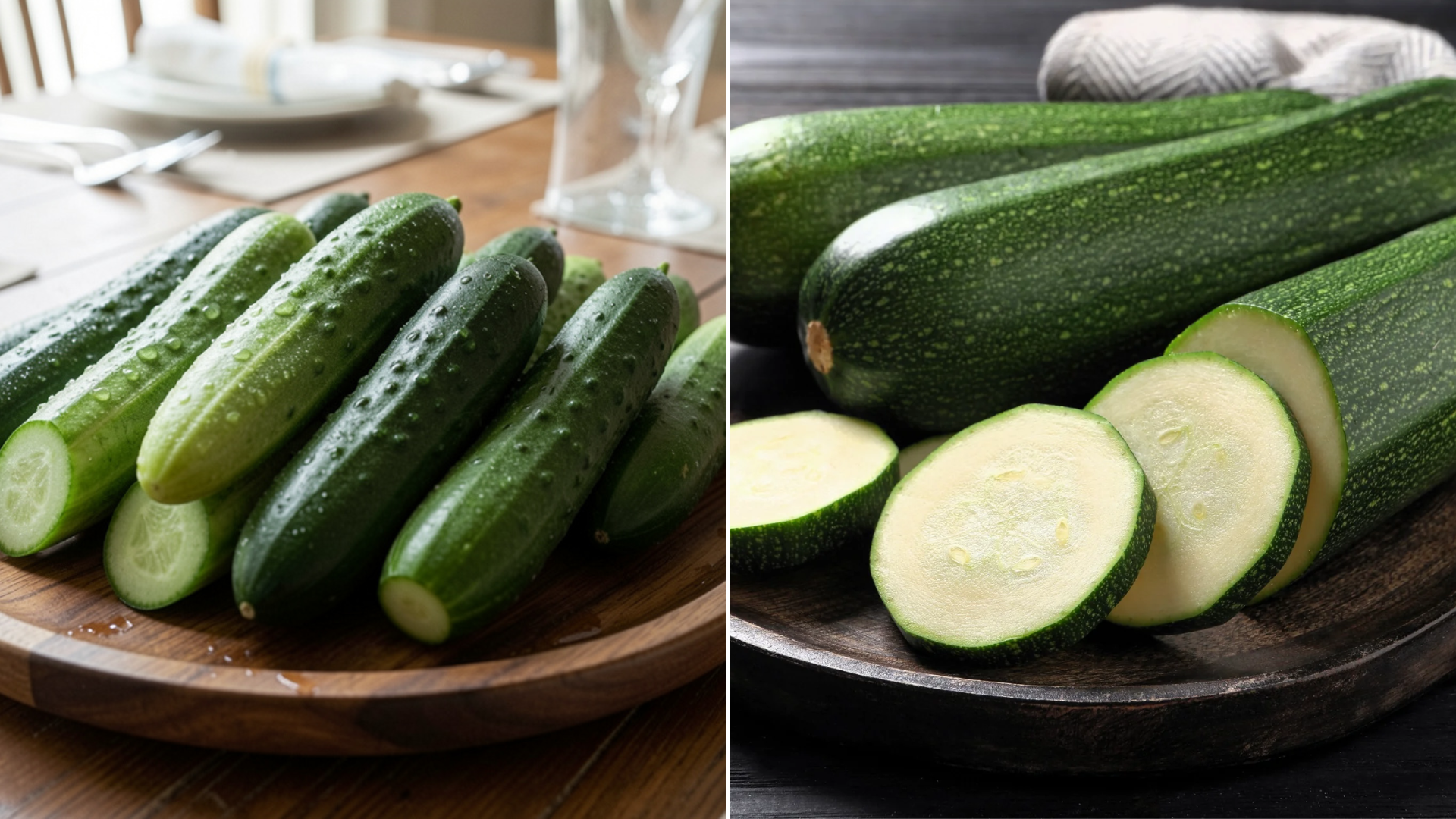
At first glance, cucumbers and zucchinis can look almost identical. But once you compare their appearance, texture, and flavor more closely, the differences become much easier to spot.
Physical Differences
| Feature | Cucumber | Zucchini |
|---|---|---|
| Skin Texture | Cool, waxy, or slightly bumpy | Smooth and dry |
| Inside | Watery with soft seeds | Firmer with small seeds |
| Shape | Usually evenly narrow | Often thicker at one end |
| Color | Bright to dark green | Deep green or light green |
| Feel | Crisp and fresh | Dense and slightly firm |
Taste and Texture Differences
| Feature | Cucumber | Zucchini |
|---|---|---|
| Taste | Cool and refreshing | Mild and slightly sweet |
| Texture Raw | Crunchy and juicy | Firm but softer |
| Texture Cooked | Turns soft quickly | Becomes tender and creamy |
| Best Served | Cold dishes | Warm dishes |
| Flavor Strength | Fresh and light | Absorbs spices and sauces well |
Cooking Uses and Best Recipes
Cucumbers and zucchinis are both popular in everyday meals, but they shine in different types of recipes. One is best for cool and crunchy dishes, while the other works great in warm and hearty meals.
Cucumber

- Fresh Salads: Cucumbers add a cool crunch to garden salads, pasta salads, and Greek salads.
- Sandwiches and Wraps: Thin cucumber slices make sandwiches feel lighter and fresher.
- Pickles: Cucumbers are commonly used for homemade pickles because they stay crisp after soaking.
- Infused Water: Many people add cucumber slices to water for a refreshing drink during hot weather.
- Yogurt Dips: Cucumbers work well in creamy dips like tzatziki because of their fresh taste.
Zucchini

- Grilled Side Dishes: Zucchini becomes soft and flavorful when grilled with olive oil and seasoning.
- Stir-Fries: It cooks quickly and mixes well with other vegetables and sauces.
- Zucchini Noodles: Spiralized zucchini is often used as a lighter swap for pasta.
- Zucchini Bread: Shredded zucchini keeps baked bread soft and moist without changing the flavor too much.
- Roasted Vegetables: Zucchini pairs well with onions, peppers, and tomatoes in oven-roasted dishes.
Can You Substitute Cucumber for Zucchini?
Yes, but only in some recipes.
Cucumbers are best used in cold dishes because they are crisp, watery, and refreshing. Zucchini works better in cooked meals since it becomes soft and absorbs flavors easily.
You can swap cucumber for zucchini in fresh salads, wraps, or light snacks. However, cucumber is not a good replacement in grilled dishes, baked recipes, or stir-fries because it releases too much water when heated.
For the best results, use cucumber in raw recipes and zucchini in cooked ones.
Nutrition and Health Benefits of Both
Both cucumbers and zucchinis are low in calories and easy to add to healthy meals. Even though they share some nutrients, each one offers different health benefits depending on how you plan to use them.
| Nutrition Point | Cucumber | Zucchini |
|---|---|---|
| Water Content | Very high and hydrating | High, but less watery |
| Calories | Very low | Slightly higher |
| Fiber | Lower fiber content | More fiber for digestion |
| Vitamin C | Small amount | Higher amount |
| Vitamin K | Good source | Good source |
| Best Use | Fresh snacks and hydration | Filling meals and cooked dishes |
| Texture in Meals | Crisp and light | Soft and hearty |
- Choose Cucumber For: Hydration, light snacks & fresh meals
- Choose Zucchini For: More Fiber, cooked recipes, extra nutrients
Both vegetables are healthy choices, and neither is truly “better” than the other. Cucumber is best for hydration and fresh dishes, while zucchini is better for filling meals and cooking.
The healthier option depends on what your body and recipe need most.
Storage Tips for Cucumber and Zucchini
Cucumbers and zucchinis stay fresh longer when stored the right way. Since both contain a lot of water, proper storage helps keep them firm and tasty.
- Keep Them in the Fridge: Store both vegetables in the refrigerator to help them stay fresh for several days.
- Avoid Washing Too Early: Extra moisture can make them spoil faster, so wash them only before using.
- Use a Produce Bag: A loose plastic or reusable produce bag helps protect them while still allowing airflow.
- Keep Away From Ethylene-Producing Fruits: Fruits like bananas and apples can make cucumbers and zucchinis soften more quickly.
- Check for Soft Spots: Remove any damaged pieces early so the rest stay fresh longer.
Conclusion
Cucumbers and zucchinis may look similar, but they each bring something different to the kitchen. Cucumbers are crisp, cool, and perfect for fresh meals, while zucchinis work best in cooked dishes and hearty recipes.
Knowing the difference can help you choose the right one for salads, snacks, grilling, baking, and more.
Both are healthy, easy to cook with, and simple to add to everyday meals. Hopefully, this guide made the cucumber vs zucchini comparison much easier to understand.
If you enjoyed this article, check out more food comparison guides and simple cooking tips to make meal planning easier and more fun.
Frequently Asked Questions
Can You Grow Cucumbers and Zucchini Together?
Yes, but give them enough space. Both plants spread out, and crowded plants can lead to poor airflow and fewer healthy vegetables.
Can Dogs Eat Cucumbers and Zucchini?
Yes, dogs can eat both in small pieces and plain form. Avoid seasoning, oil, or sauces.
What is the UK Name for Zucchini?
In the UK, zucchini is commonly called courgette. Both names refer to the same summer squash.