A cherry plum tree (Prunus cerasifera) is a deciduous member of the plum family, known for its early spring flowers and small edible fruit. Native to Western Asia and southeastern Europe, it has also become naturalized in other regions. It usually develops a rounded crown and grows around 6 to 8 meters tall.
Its plums may be yellow, red, or purple, while the leaves can be green or dark purple depending on the variety. Cherry plum is grown for fruit, hedging, ornamental planting, wildlife support, and as rootstock for other plum trees.
If you are considering growing one, here is what to look for, where to plant it, and how to care for it through the seasons.
Cherry Plum Tree Profile
Cherry plum (Prunus cerasifera) is a deciduous tree in the Rosaceae family and the genus Prunus. Native to southeastern Europe and southwestern Asia, it forms a rounded crown and is grown for early spring flowers, edible fruit, hedging, and ornamental planting.
| Plant Detail | Information |
|---|---|
| Family | Rosaceae |
| Genus | Prunus |
| Other Common Name | Myrobalan Plum |
| Mature Spread | Can spread wider than 8 meters |
| Growth Rate | Medium |
| Hardiness | Generally hardy in USDA Zones 5 to 8 |
| RHS Hardiness | H6 |
| Soil pH | Tolerates a range of acidic to neutral soils |
These basic details make it easier to understand how the species grows and what sets it apart from related trees. Its size, growth habit, and plant family also provide useful context before looking at identification features.
How to Identify a Cherry Plum Tree?
You can identify one by its early five-petaled flowers, oval, finely toothed leaves, small, round plums, and rounded growth habit. Flowers often appear on mostly bare branches, while foliage may be green or dark purple.
- Flowers: Small, usually with five petals
- Flowering time: Very early spring, sometimes from February in mild areas
- Leaves: Oval or elliptical with finely toothed edges
- Fruit: Small, round, and yellow, red, or purple
- Growth: Upright tree with a rounded crown
- Branches: Usually less thorny than blackthorn, though short sharp growth may occur
Cherry plum flowers are slightly larger than blackthorn flowers and usually appear earlier. Blackthorn also has strong, noticeable spines. European plums tend to have broader, more coarsely toothed leaves, with flowers and fruit often appearing in larger groups.
Types of Cherry Plum Trees
Cherry plum comes in green-leaved and purple-leaved forms, with differences in size, foliage, flowers, and fruit production. Some are grown mainly for fruit, while others are selected for their spring flowers and dark leaves.
1. Green-Leaved Cherry Plum
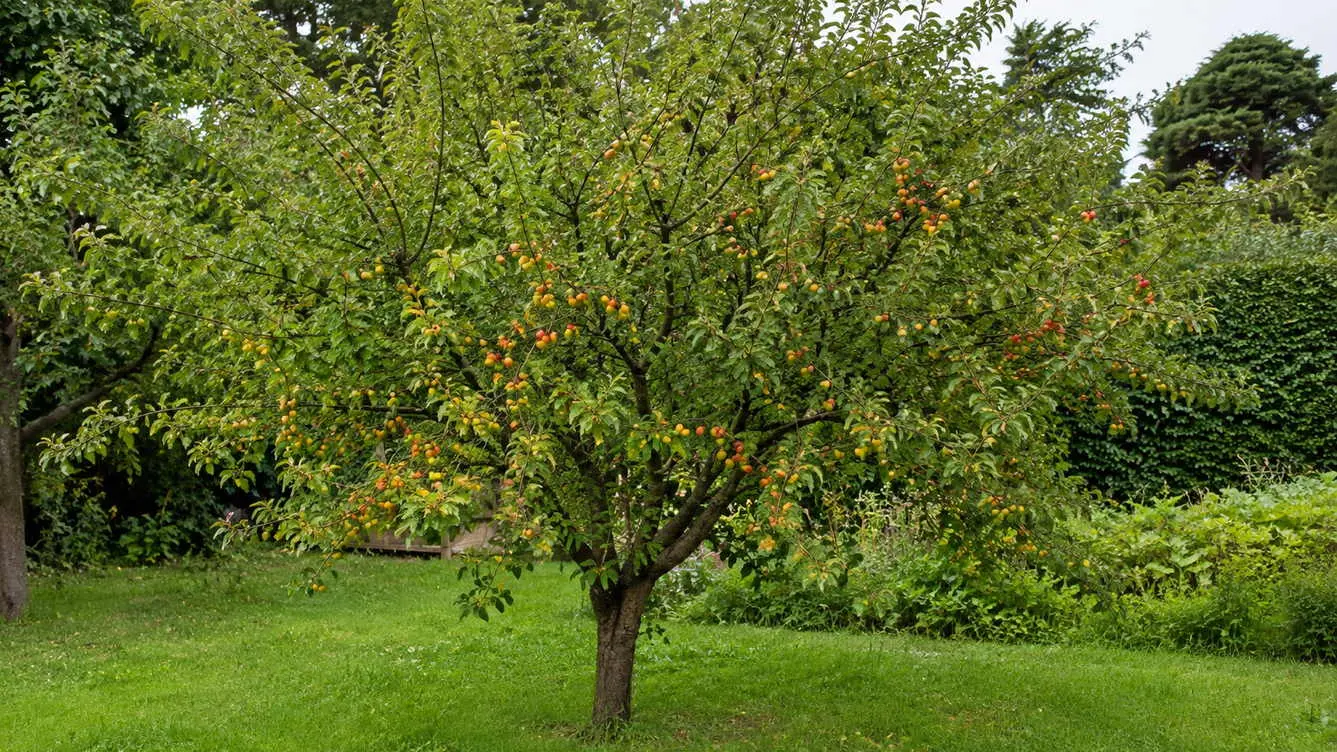
Green-leaved cherry plum is the standard form of Prunus cerasifera, with green, finely toothed leaves and small white flowers that open in early spring. It can produce edible red, orange, or yellow fruit about 2.5 cm long.
The tree develops an upright, rounded shape and can be used in gardens, mixed hedges, wildlife planting, or as rootstock for other stone fruits.
2. Purple-Leaved Cherry Plum
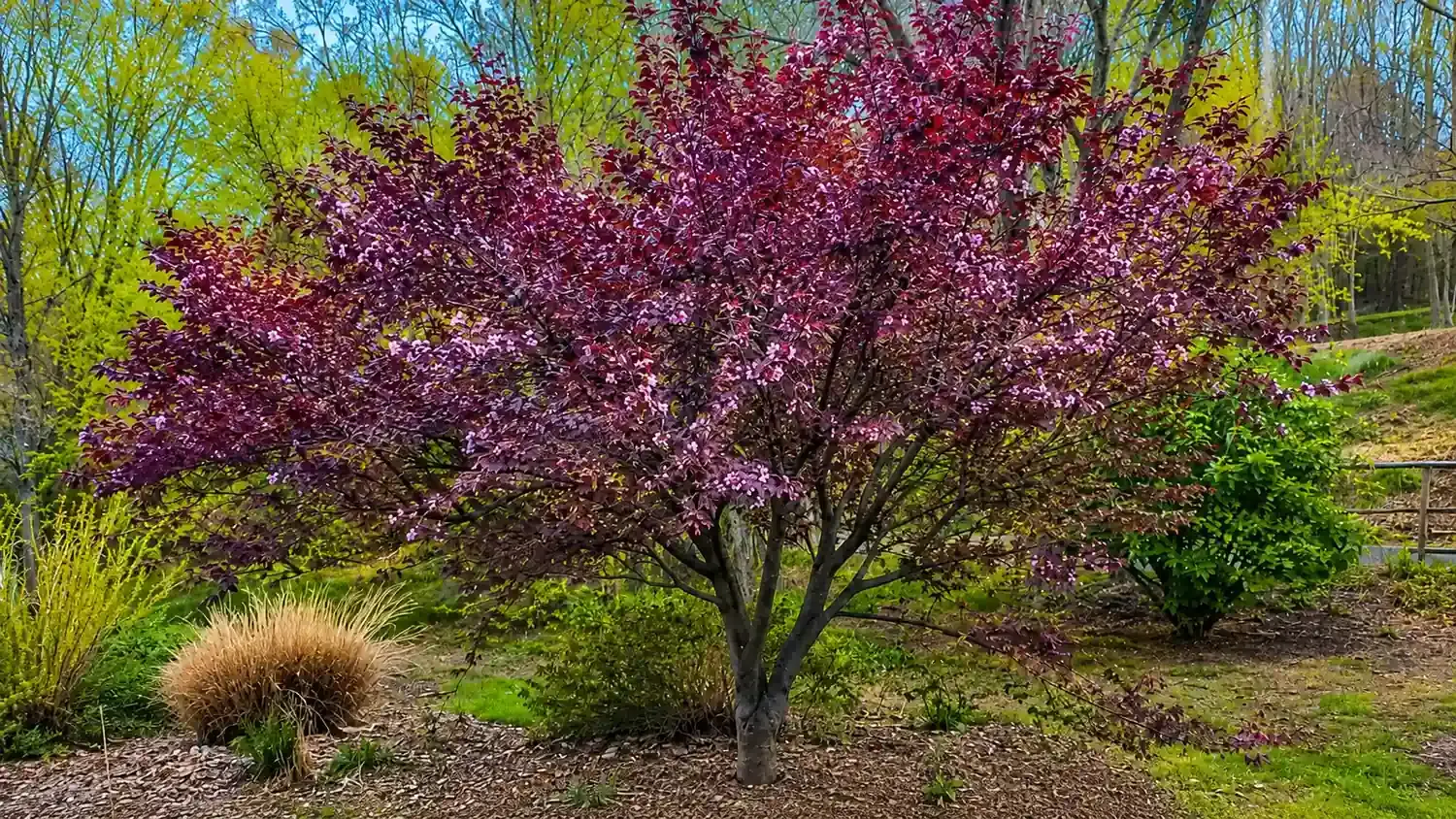
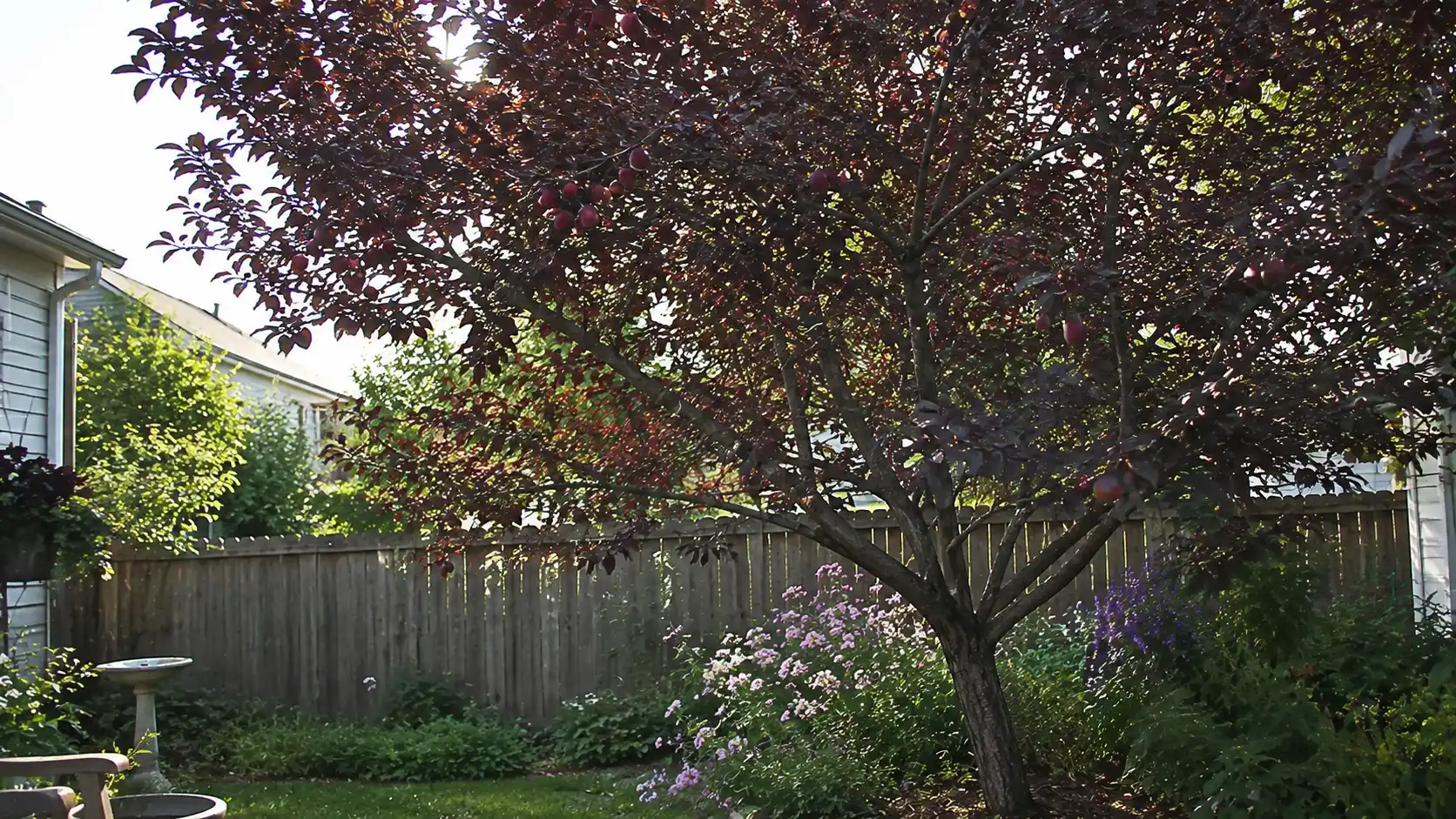
Purple-leaved cherry plums are ornamental forms of Prunus cerasifera, valued for their dark foliage and spring flowers. The leaves may emerge reddish before turning deeper purple, while the flowers are often pale pink.
Some forms also produce small edible plums. Full sun usually helps the foliage stay a stronger purple, making these trees useful where both seasonal flowers and darker leaves are wanted.
3. ‘Thundercloud’ Cherry Plum
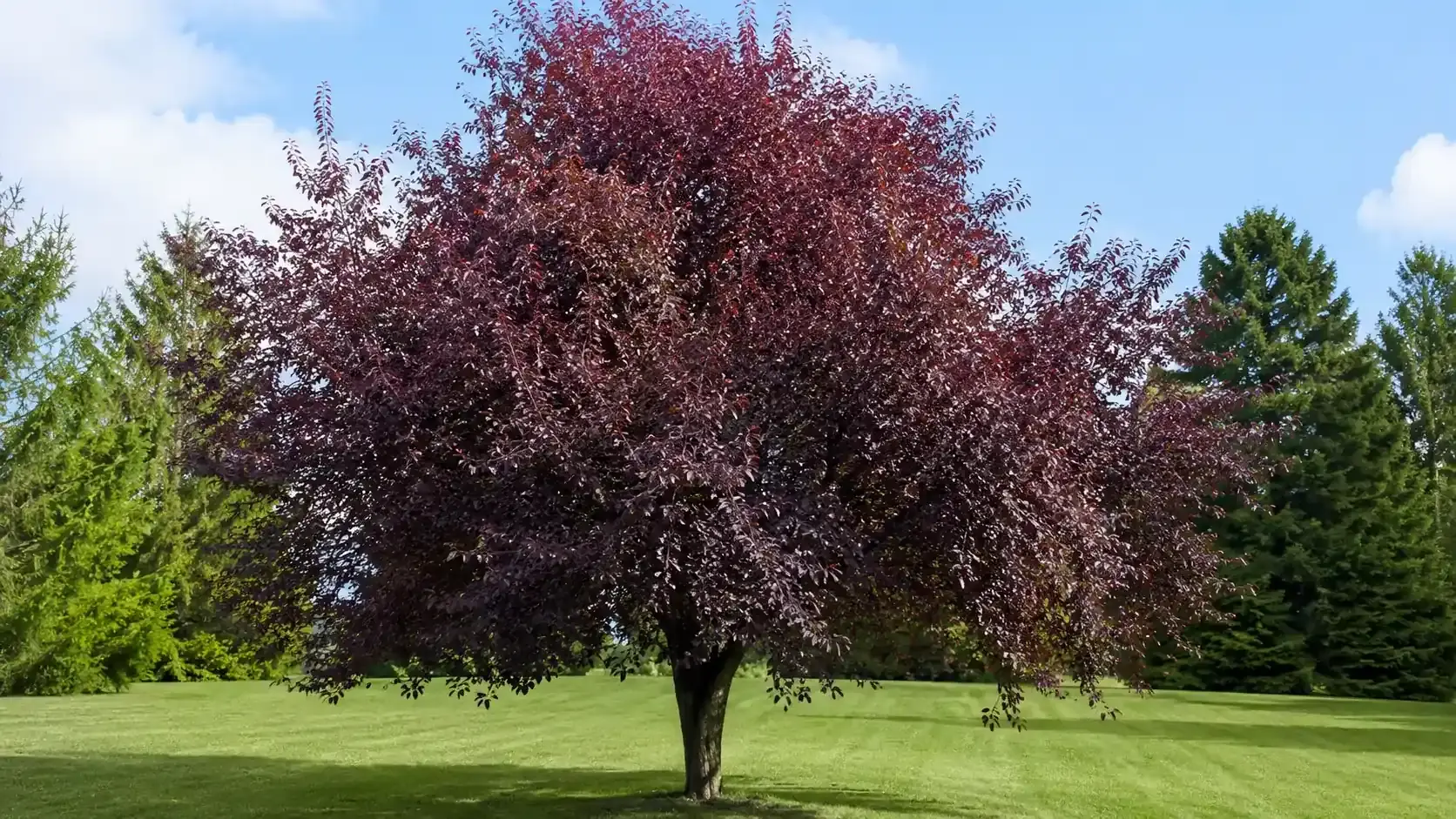
‘Thundercloud’ is a purple-leaved cultivar of Prunus cerasifera with a dense, upright-spreading habit. The North Carolina Extension Gardener Plant Toolbox lists it as maturing to about 25 feet tall and wide, with ruby-red young leaves that mature to dark reddish-purple.
Light pink flowers appear in spring, and small edible purple plums may follow. Full sun helps the foliage retain its deeper color through the growing season and supports steady, healthy growth.
4. Other Cherry Plum Cultivars
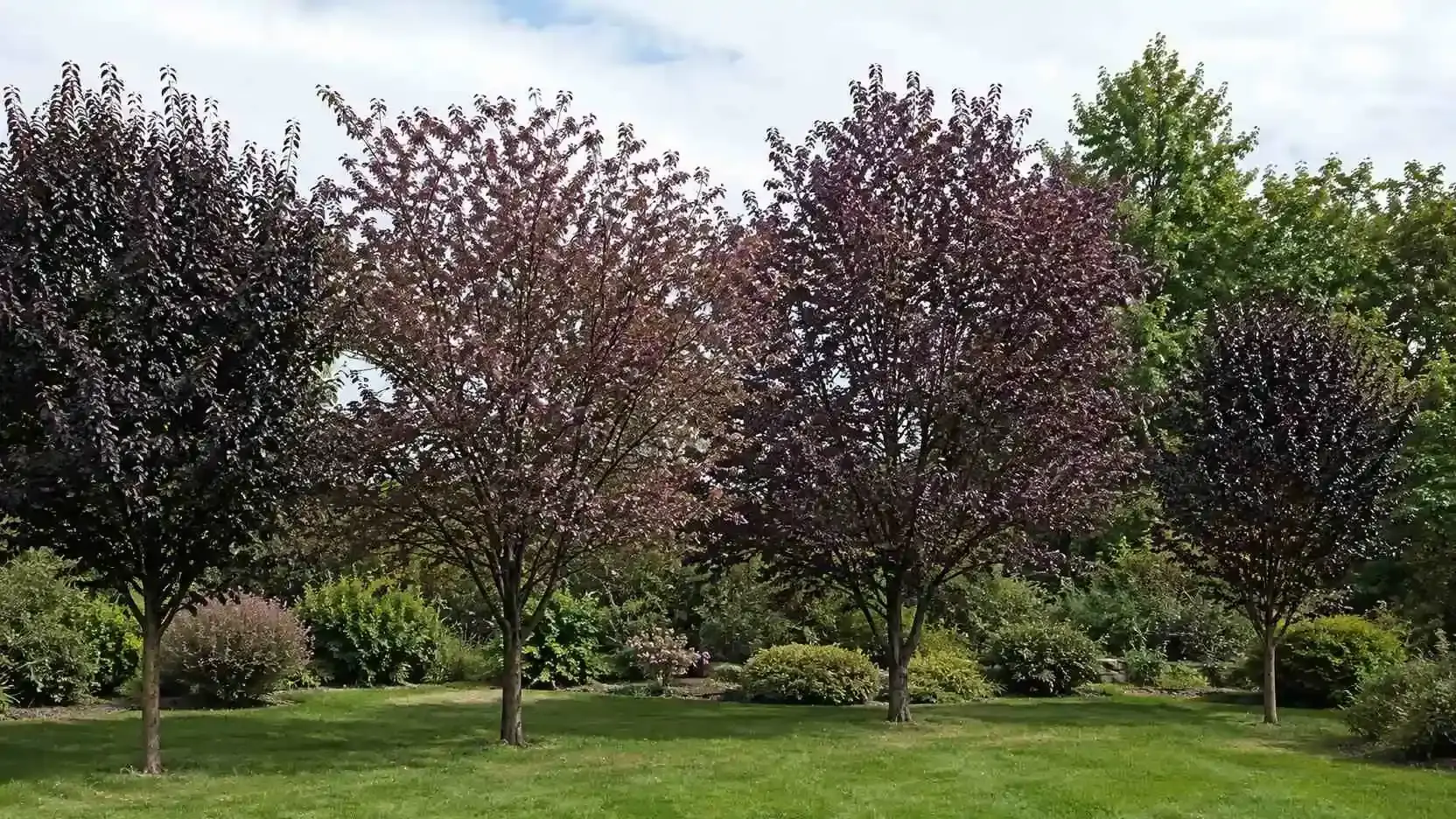
Several cherry plum cultivars offer different foliage colors, growth habits, and flowering traits. Nigra has deep purple-black leaves and pink flowers, while Pissardii is known for reddish-purple foliage and a more open growth habit.
Newport provides good cold hardiness and strong summer leaf color. Krauter Vesuvius has near-black foliage and pale pink flowers, while fruit production is uncommon compared with some other cultivars.
Where Do Cherry Plum Trees Grow Best?
Cherry plum grows best in a sunny or partly shaded position with fertile, well-drained soil. The University of Illinois Extension places its hardiness range at USDA Zones 5 through 8, and a sheltered site can help protect its early flowers from frost, while enough space allows the crown to develop without crowding nearby structures.
| Growing Factor | Suitable Condition | What to Avoid |
|---|---|---|
| Sunlight | Full sun or partial shade | Heavy shade |
| Soil | Fertile and well-drained | Waterlogged ground |
| Position | Sheltered where possible | Low frost pockets |
| Space | Room for a broad crown | Tight spaces near structures |
| Moisture | Regular moisture while young | Long dry spells after planting |
Choosing the right spot gives a young tree a good start. A sunny or lightly shaded, well-drained, sheltered position can support healthy growth, better flowering, and more reliable fruit production over time.
When and How to Plant a Cherry Plum Tree?
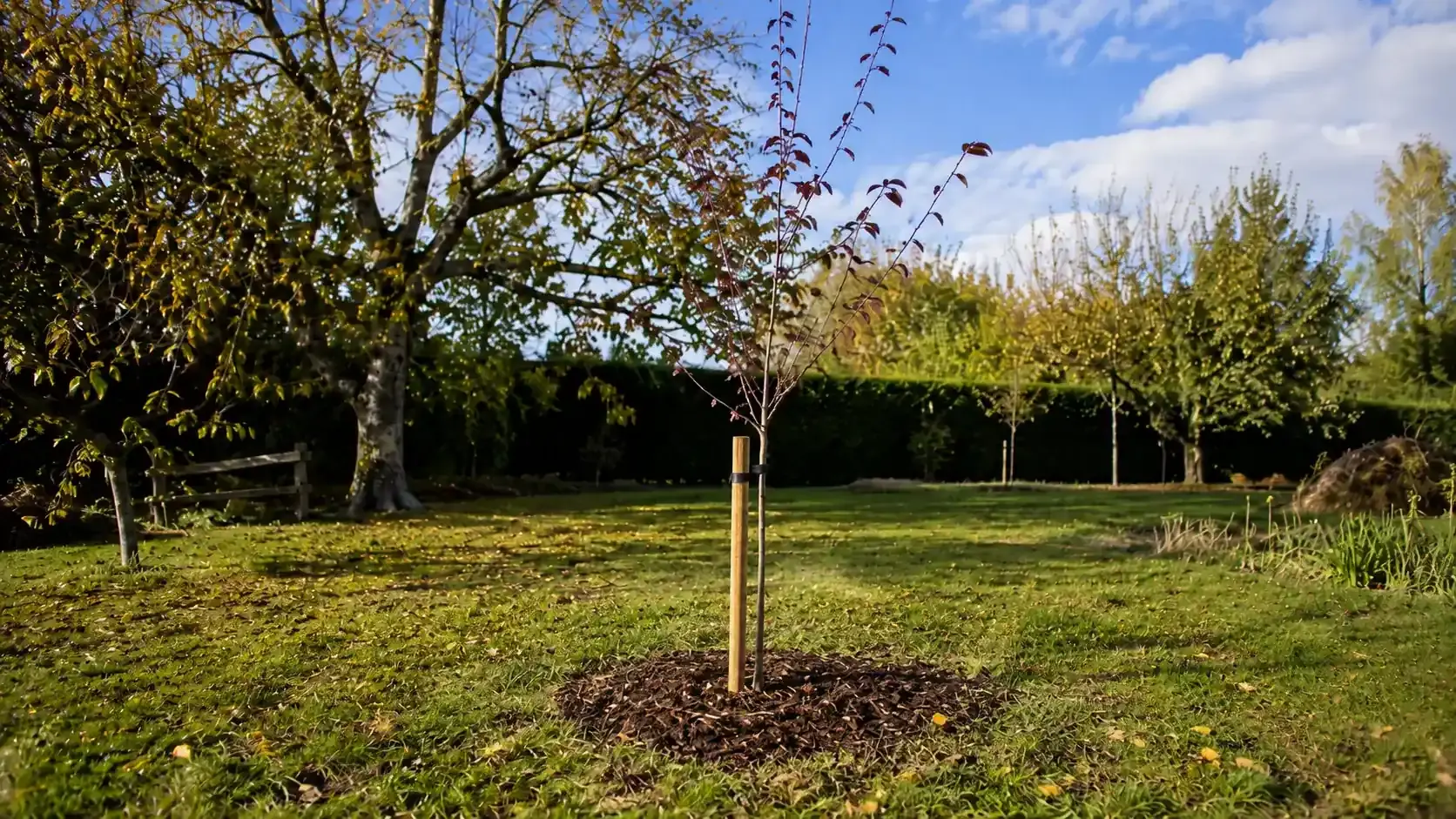
Autumn is a good time to plant a cherry plum, as roots can establish before spring growth. Late winter to early spring also works, while container-grown trees can be planted at other times with regular watering. The basic steps mirror general guidance for planting a tree correctly, though cherry plum has a few needs of its own.
Once you have chosen the right planting time and location, follow these steps to give the tree a strong start:
- Dig a hole wide enough for the roots to spread.
- Keep the top of the root ball level with the soil.
- Return the soil and firm it gently.
- Water the tree thoroughly.
- Add compost or chipped-bark mulch.
- Keep mulch away from the trunk.
- Stake the tree if it needs support.
After planting, keep the soil evenly moist while the tree settles into its new spot. Check the stake, mulch, and surrounding soil from time to time, especially during the first growing season. Good early care helps the roots establish well and gives the tree a stronger start for future growth, flowering, and fruiting.
How Do You Care for a Cherry Plum Tree?
Young trees need steady care while their roots become established. Regular watering during dry weather, annual mulching, and keeping grass and weeds away from the base help support healthy growth during the first few years.
- Watering: Water young trees during dry periods for the first two years. Soak the soil deeply every few days rather than watering each day lightly to encourage stronger, deeper root growth.
- Feeding and Mulching: Apply a 5-8 cm layer of well-rotted compost or organic mulch each year. This helps retain moisture, suppress weeds, and improve soil conditions. Keep mulch slightly away from the trunk.
- Pruning: Prune lightly and mainly in summer, when cuts heal faster in warmer, drier conditions and disease is less likely to enter through the wound. Remove dead, diseased, or crossing growth with clean tools, avoid heavy annual cutting, and keep the tree’s natural shape.
- General Maintenance: Remove dead or damaged growth and watch for signs of disease. Keep grass and weeds away from young trees, and use a sheltered location to reduce frost damage to early spring flowers.
With regular watering, a layer of homemade mulch, and seasonal care, a young tree can establish strong roots and stay healthy for years. Once mature, it usually becomes easier to manage and can produce attractive flowers and fruit.
When Are Cherry Plums Ready to Pick?
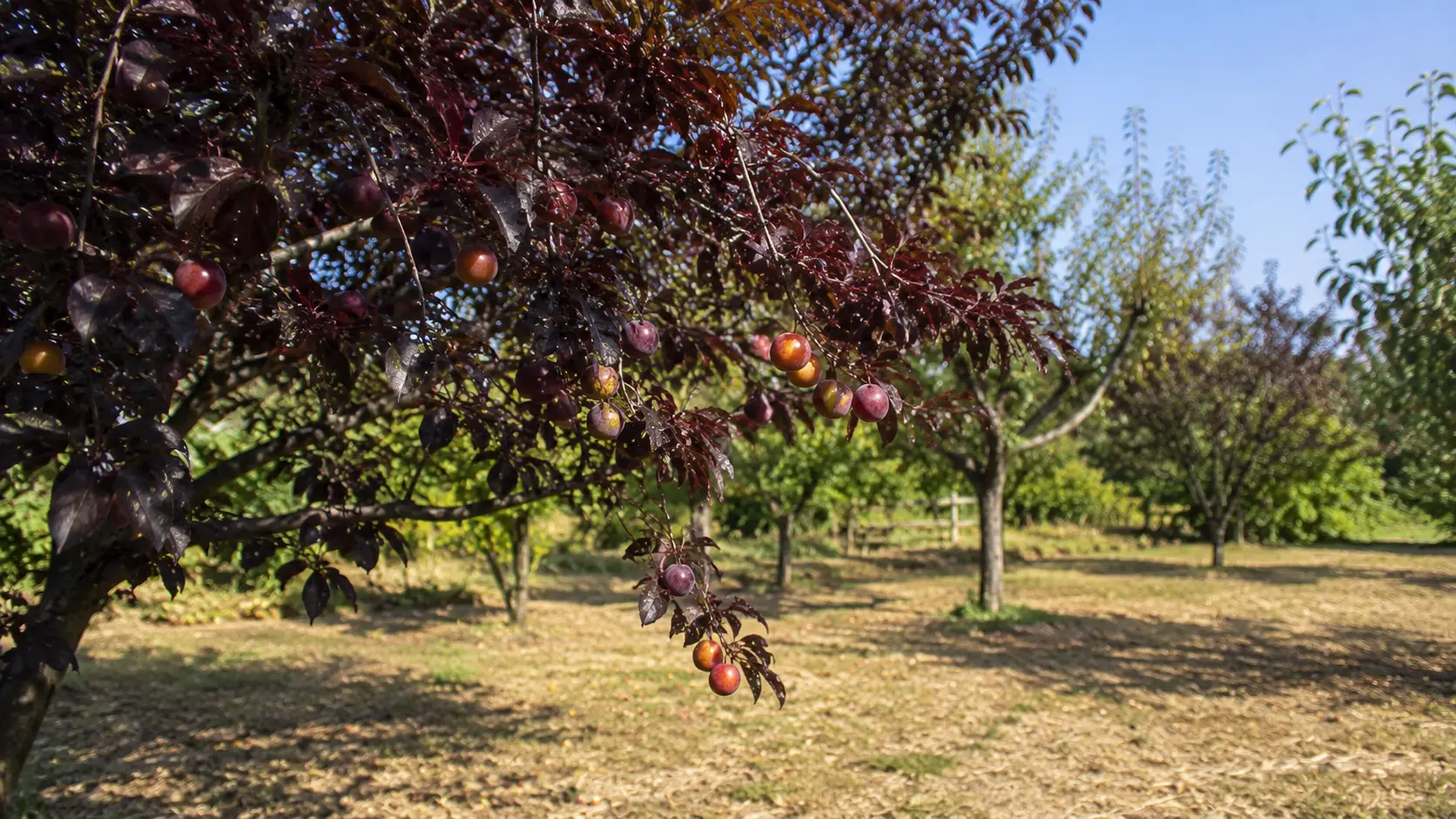
Cherry plums often ripen from midsummer onward, but timing can vary with climate, weather, and the individual tree. Color, softness, taste, and how easily the fruit comes away from the branch are better signs of ripeness.
| Ripeness Sign | What to Look For |
|---|---|
| Color | Fruit reaches its mature yellow, red, or purple shade |
| Texture | Flesh becomes slightly softer |
| Attachment | Ripe fruit comes away more easily |
| Fallen Fruit | Mature fruit starts appearing beneath the tree |
| Taste | Fruit develops more sweetness and a fuller plum flavor |
Ripe cherry plums can be very juicy, so handle them carefully to limit bruising. On purple-leaved trees, look closely, since the fruit can be easy to miss among the dark leaves.
What to Do With Cherry Plums?
Cherry plums can be eaten fresh or used in cooked dishes and preserves. Their flavor ranges from sweet to sharp, so tasting the fruit first can help you decide if it is better for eating, baking, jam, or chutney.
- Eat them fresh when the fruit is fully ripe, soft, and easy to remove from the tree.
- Make jam or jelly using ripe fruit, especially if you want to balance sweetness with a little natural tartness.
- Prepare chutney with sharper cherry plums, which pair well with sugar, vinegar, and warming spices.
- Bake with them in cakes, tarts, crumbles, pies, or other desserts where their juicy texture adds flavor.
- Stew or bottle them to preserve a larger harvest and enjoy the fruit later in the year.
- Use them in ice cream or other chilled desserts for a fresh, fruity flavor.
- Make fruit wine or infused drinks if you have plenty of ripe cherry plums to use.
You can also cook cherry plums into sauces or compotes and serve them with yogurt, pancakes, or desserts. Since sweetness varies between trees, taste the fruit before cooking and adjust the sugar to suit the final dish.
Common Cherry Plum Tree Problems
Cherry plum is generally hardy, but frost, silver leaf, bacterial canker, and poor fruiting can still cause problems. Checking the tree regularly and responding early to damaged flowers, shoots, bark, or branches can help limit further trouble.
| Problem | Signs or Effect | What You Can Do |
|---|---|---|
| Frost Damage | Flowers die, or little fruit develops | Choose a sheltered site away from frost pockets |
| Silver Leaf | Unhealthy or dying branches | Limit pruning and remove affected wood |
| Bacterial Canker | Damaged shoots or bark | Remove affected growth |
| Poor Fruiting | Few or no plums | Consider frost, tree age, and local conditions |
Most of these problems are easier to manage when caught early. Regular checks, careful pruning, and a suitable planting site can help reduce disease, limit frost damage, and support healthier fruit production.
Frequently Asked Questions
Are cherry plums edible?
Yes. Ripe cherry plums are edible and can be eaten fresh. Their taste ranges from sweet and juicy to tart. They also work well in jams, chutneys, baking, stewing, wine, and other preserves made at home.
Is cherry plum good for wildlife?
Yes. Cherry plum supports wildlife in several ways. Early flowers provide food for bees and other pollinators, while ripe fruit attracts birds and butterflies. Mature specimens also provide useful shelter and nesting spaces for birds.
Why do some cherry plums have purple leaves?
Some cherry plums have purple leaves because of their variety or cultivar. Types such as Nigra and Thundercloud are grown for their dark foliage, making them popular ornamental choices for gardens and other planted spaces.
Is cherry plum good for pollinators?
Yes. Cherry plum is useful for pollinators because its early spring flowers provide nectar and pollen when fewer plants may be blooming. Bees and other beneficial insects often visit the flowers during the flowering season.
Final Thoughts
A cherry plum tree can be a useful addition to your garden, offering early spring flowers, edible fruit, and shelter and food for wildlife. With the right planting spot, regular watering while young, proper mulching, and light summer pruning, it can stay healthy and produce fruit for years.
Paying attention to ripeness also helps you enjoy the fruit fresh or use it in jams, chutneys, desserts, and preserves. Checking your local hardiness zone before planting can help confirm whether a spot on your property suits this tree.
If you are ready to add a cherry plum to your garden, start with a sunny, well-drained spot, water it consistently while young, and prune each summer lightly to support strong, lasting growth.
Drop a comment below and tell me do you have a cherry plum or are you just planning a plantation.