Spring in the southern United States has a way of turning ordinary fields into something worth stopping the car for, and the bluebonnet flower is usually the reason.
Anyone who has driven past a hillside painted solid blue in March or April has probably wondered exactly what they were looking at and why it seems to show up everywhere at once.
Some years the color spreads for miles. Other years it barely appears at all, which only adds to the curiosity.
Let’s take a walk through what makes this wildflower so recognizable, how to tell it apart from similar plants, where it grows, and what it takes to get it blooming in a yard instead of just along a roadside.
What Is a Bluebonnet Flower?
Bluebonnet is a common name, not a single species. It refers to several wildflowers in the genus Lupinus, a group within the pea family Fabaceae. A plant earns the bluebonnet name mainly through its shape: a dense, upright flower spike lined with small blue and white blossoms.
Most bluebonnet species are annuals, completing germination, flowering, and seed production within a single growing season, though a couple of related species are perennial.
This is part of why bluebonnet fields look different from one year to the next, since the display depends heavily on how well the previous season’s seeds took hold in the soil.
The Angelo State University Natural History Collection notes that Texas alone recognizes several distinct species under the same common name.
Why Is It Called a Bluebonnet?
The name traces back to shape rather than color. It is commonly linked to the flower’s resemblance to the sunbonnets once worn for protection from the sun, particularly in the shape of the upper petal.
Related common names include buffalo clover and wolf flower, a nod to the genus name Lupinus, which comes from the Latin word for wolf.
That name grew out of an old, mistaken belief that the plants aggressively drained nutrients from the soil, when lupines actually enrich soil through nitrogen fixation.
Bluebonnet Species and Varieties
Bluebonnet is not one plant but a group of related wildflowers, and Texas alone is home to six species that carry the name.
| Species | Why It Matters |
|---|---|
| Lupinus texensis | Most famous Texas bluebonnet; deep blue blooms with white tips |
| Lupinus subcarnosus | Sandyland bluebonnet; the original 1901 state flower selection |
| Lupinus havardii | Big Bend bluebonnet; the tallest species, reaching several feet |
| Lupinus perennis | One of the few perennial bluebonnets; rare in Texas |
Depending on the species, plants range anywhere from about 6 inches to 4 feet tall, and they differ in range and bloom color as well, though most people picture only the most common one.
Other lupine species may also be called bluebonnets depending on region. According to the USDA PLANTS Database, Lupinus texensis is native to Texas, Louisiana, and parts of northern Mexico, and is the species most often planted along highways for its dense, uniform color.
The other species occur in different regions and habitats, with some having much smaller ranges than the widely recognized Texas bluebonnet.
How Bluebonnets Differ From Similar Wildflowers
A few other regional wildflowers share a similar blue color or upright shape, which can confuse at a glance. Leaf shape is usually the fastest way to tell them apart.
- Larkspur: Has fern-like lobed leaves instead of palmate leaves.
- Vetch: Grows as a sprawling vine with tendrils rather than an upright bush.
Learning to spot bluebonnets becomes easier when you focus on leaf patterns and growth habits. These details help you recognize this Texas wildflower as you walk fields and appreciate seasonal blooms.
How to Identify a Bluebonnet Flower
The traits below, covering flower shape, leaves, stems, and seed pods, apply across most bluebonnet species.
1. Flower Shape and Color
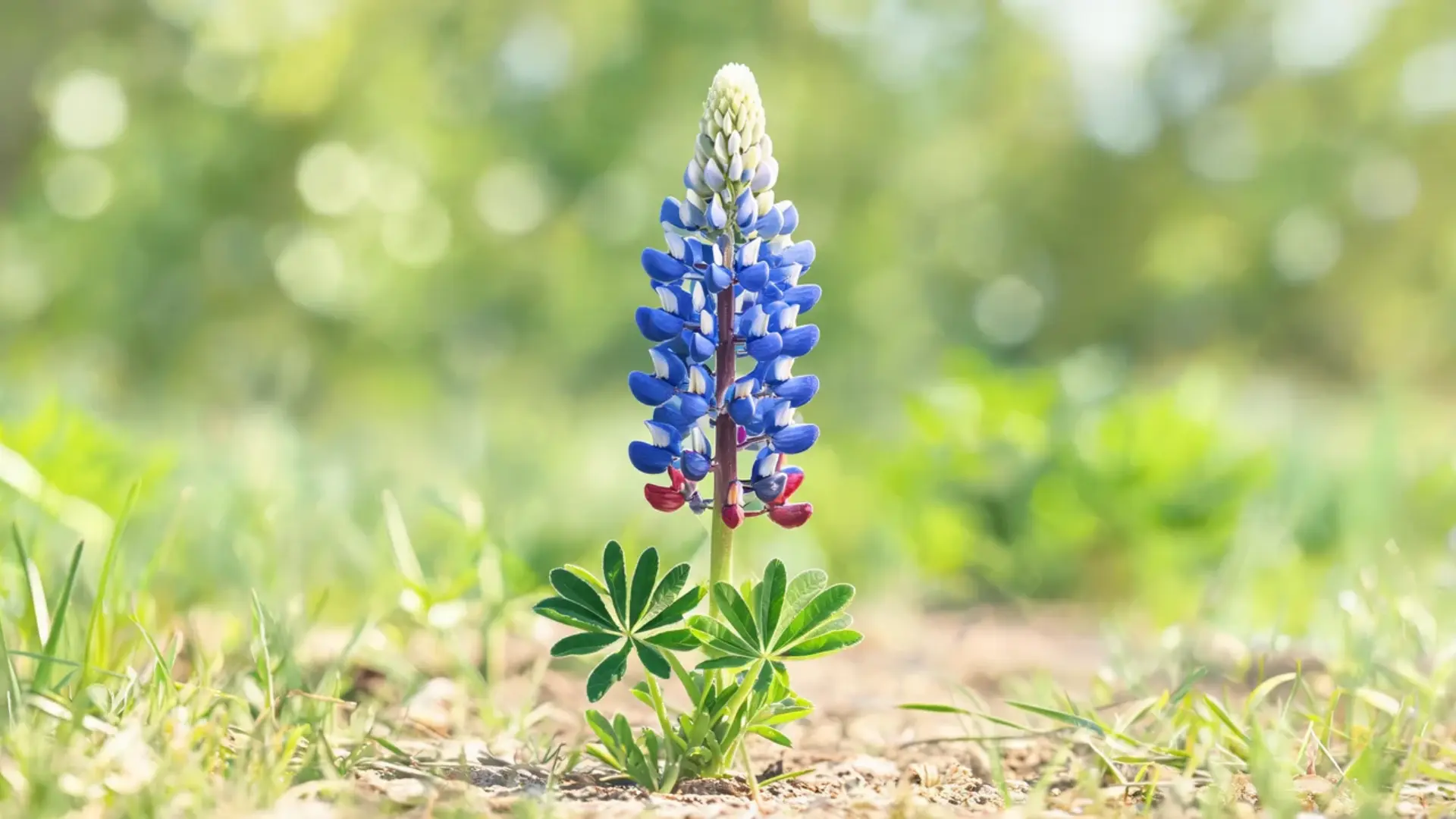
Each plant produces an upright spike packed with small, pea-shaped florets.
Flowers are usually blue with a white patch near the top of each bloom, though some species show purple, pink, or red variations instead, and that patch often shifts to red or magenta as the floret ages.
2. Leaves
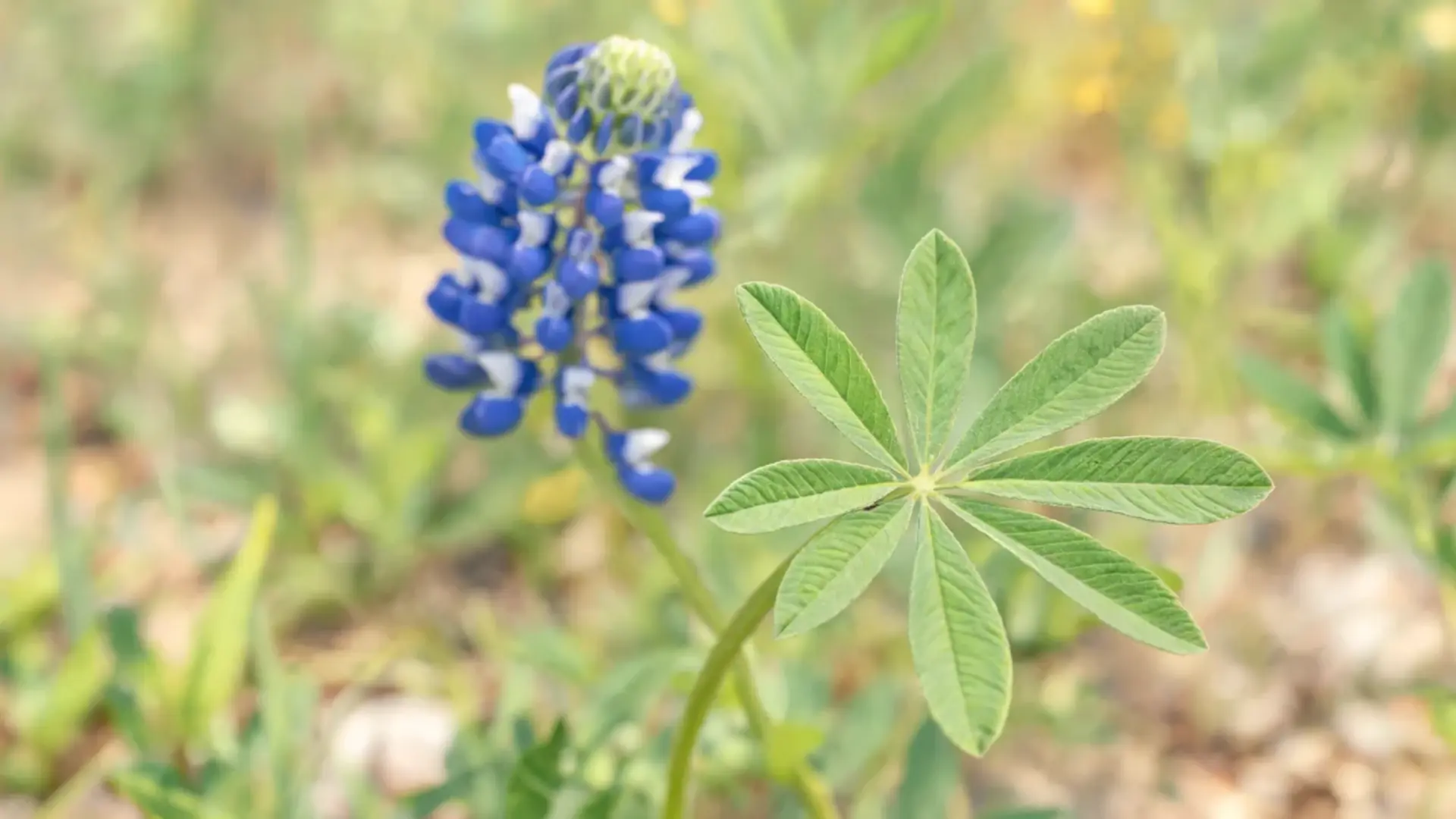
Leaves are palmate, meaning five to seven narrow leaflets fan out from a single point like fingers on a hand.
The foliage has a soft, slightly silvery texture from fine hairs covering the surface, and each leaflet tapers to a small, pointed tip.
3. Stem and Root
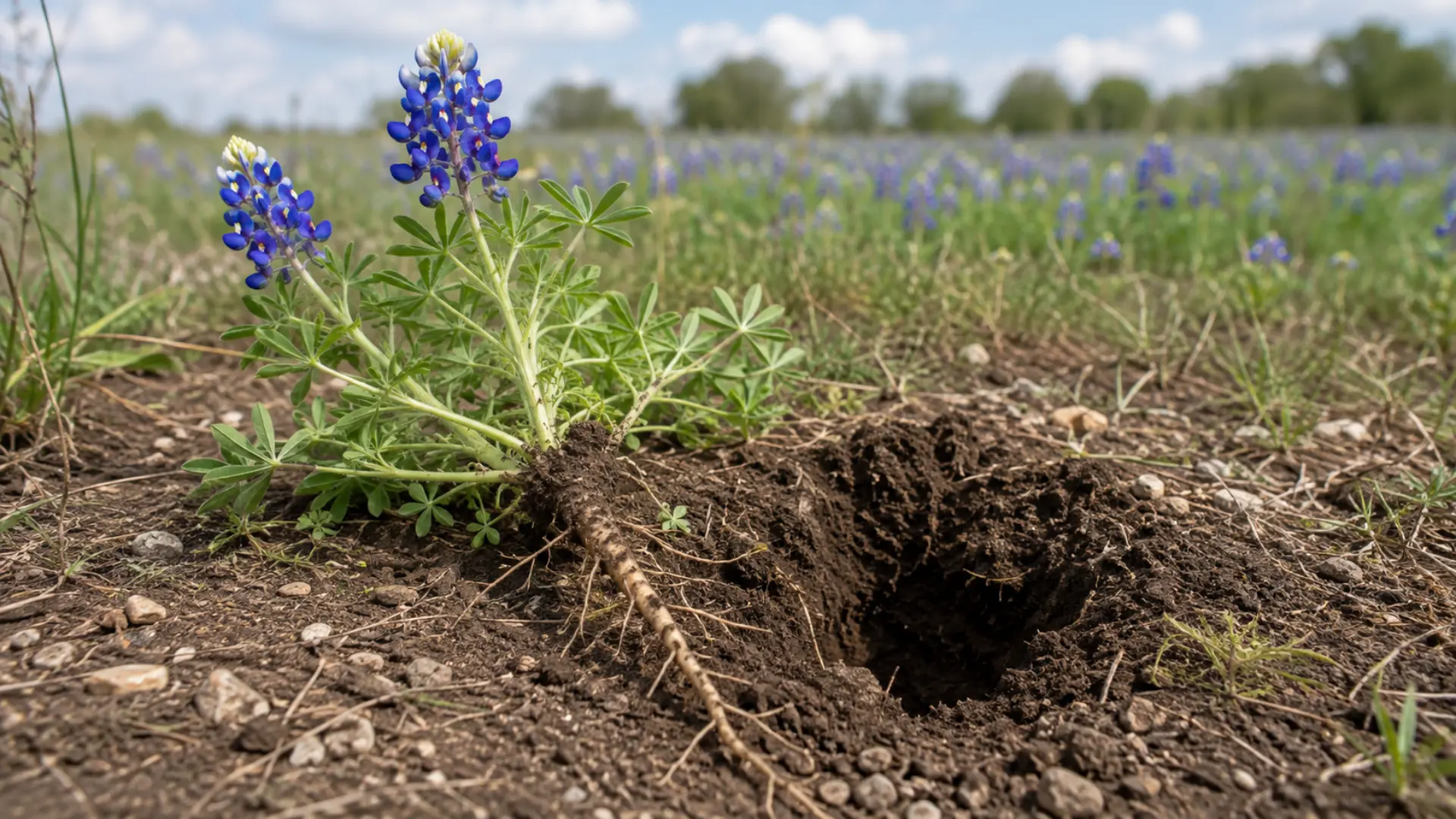
Bluebonnets grow low, branching stems that spread outward close to the ground, giving the plant a compact, bushy shape.
A single taproot anchors it firmly and reaches deep into the soil for moisture, which helps the plant handle dry spells once established.
4. Seed Pods
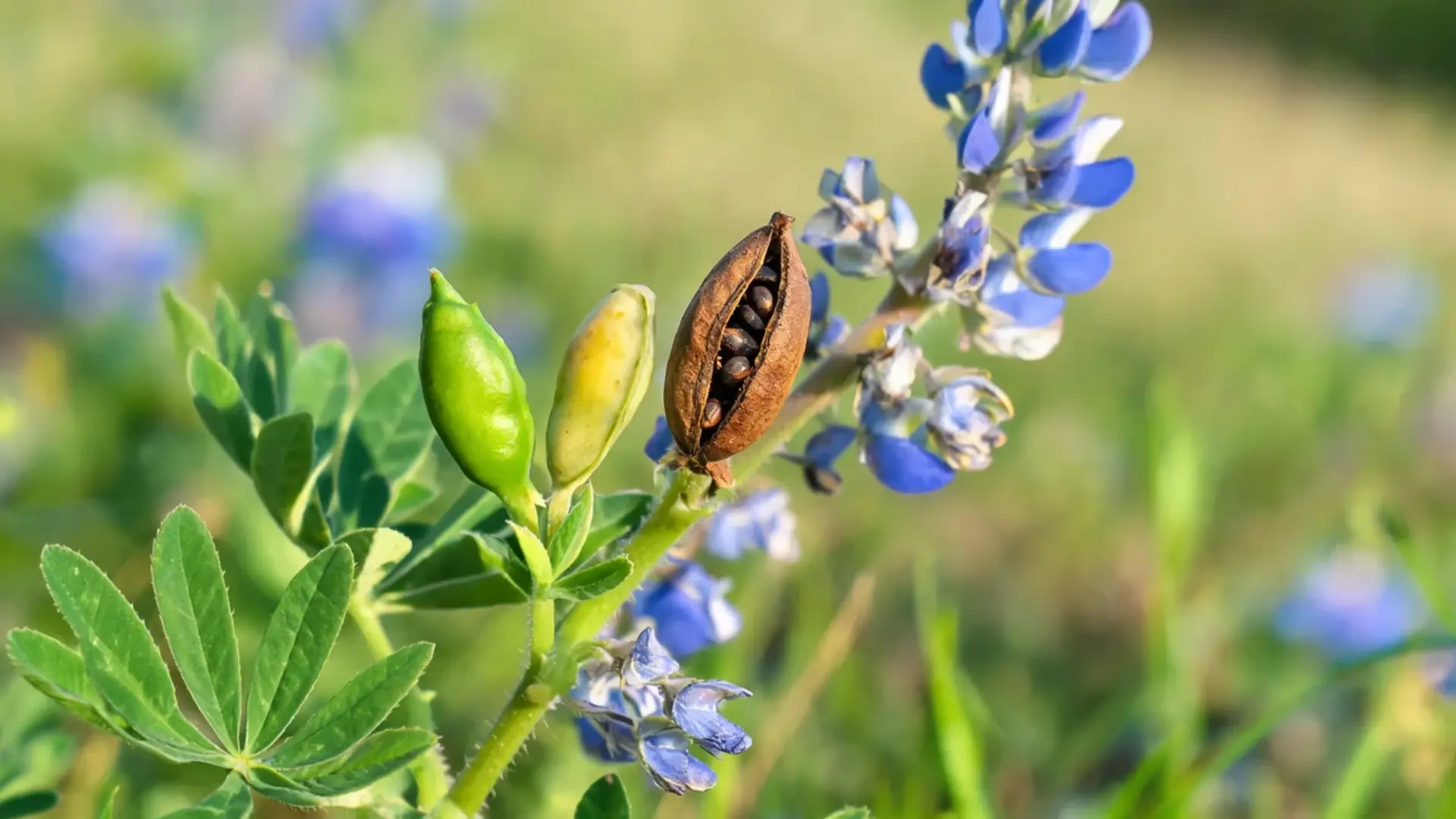
After flowering, pollinated blooms develop into small legume pods that resemble pea pods.
The pods shift from green to yellow to brown as seeds mature, then split open to scatter seed for the following season.
Where Do Bluebonnets Grow?
Bluebonnets favor open, sunny ground over shaded or wooded areas, which is why prairies, grasslands, and roadsides make up most of their natural habitat. Bluebonnets perform best in well-drained soils and generally tolerate poorer soils better than heavily enriched garden beds.
Native range centers on Texas, though related species extend into Louisiana, Oklahoma, and northern Mexico.
The U.S. Fish and Wildlife Service lists Texas lupine as present across Florida, Louisiana, Oklahoma, and Texas, with the heaviest concentration in the Texas Blackland Prairies and Edwards Plateau regions.
Bluebonnets can establish in soils too lean for many other flowering plants because their roots host nitrogen-fixing bacteria. This partnership converts atmospheric nitrogen into a form the plant can use.
Roadside plantings across Texas and Oklahoma expanded significantly through highway beautification efforts that began in the 1930s.
When Do Bluebonnets Bloom?
Bloom timing depends on species, latitude, and rainfall, with most bluebonnets flowering somewhere between late winter and late spring. In Texas, peak bloom typically falls in March and April, though far western species like the Big Bend bluebonnet can bloom into June.
Wet conditions in autumn tend to support stronger seed germination, which translates into denser blooms the following spring. Drought during that window can delay or thin the display instead.
Warmer regions tend to bloom earlier, while cooler or higher-elevation areas bloom later.
Bluebonnet seeds also carry a hard outer coat that can keep them dormant in soil for several years, so a single planting sometimes blooms unevenly across multiple seasons rather than all at once.
Other Gulf Coast bloomers, like morning glory, follow a similarly variable bloom pattern shaped by regional climate rather than a fixed calendar date.
How to Grow Bluebonnets
Bluebonnets are adapted to lean, sun-baked ground rather than rich garden soil, and matching those conditions is the key to a strong bloom.
| Condition | Requirement |
|---|---|
| Sunlight | Full sun |
| Soil drainage | Well-drained |
| Soil type | Sandy, loamy, clay, or limestone-based |
| Water needs | Low once established |
| Sowing time | Fall, for spring blooms |
| Seed preparation | Scarification improves germination |
| Fertilizer | Avoid rich or heavily fertilized soil |
Scarifying seeds, or lightly nicking the seed coat, speeds up germination after fall sowing. Rich soil works against the plant, since bluebonnets suited to leaner ground can bloom less when fertility is too high. Moisture consistency during germination matters here just as it does for grass seed, where over- or under-watering both hurt results.
Bluebonnet Ecology and Pollinators
Reproduction for this wildflower depends on more than just sun and soil, since pollinators play a direct role in how well each season’s seed crop turns out.
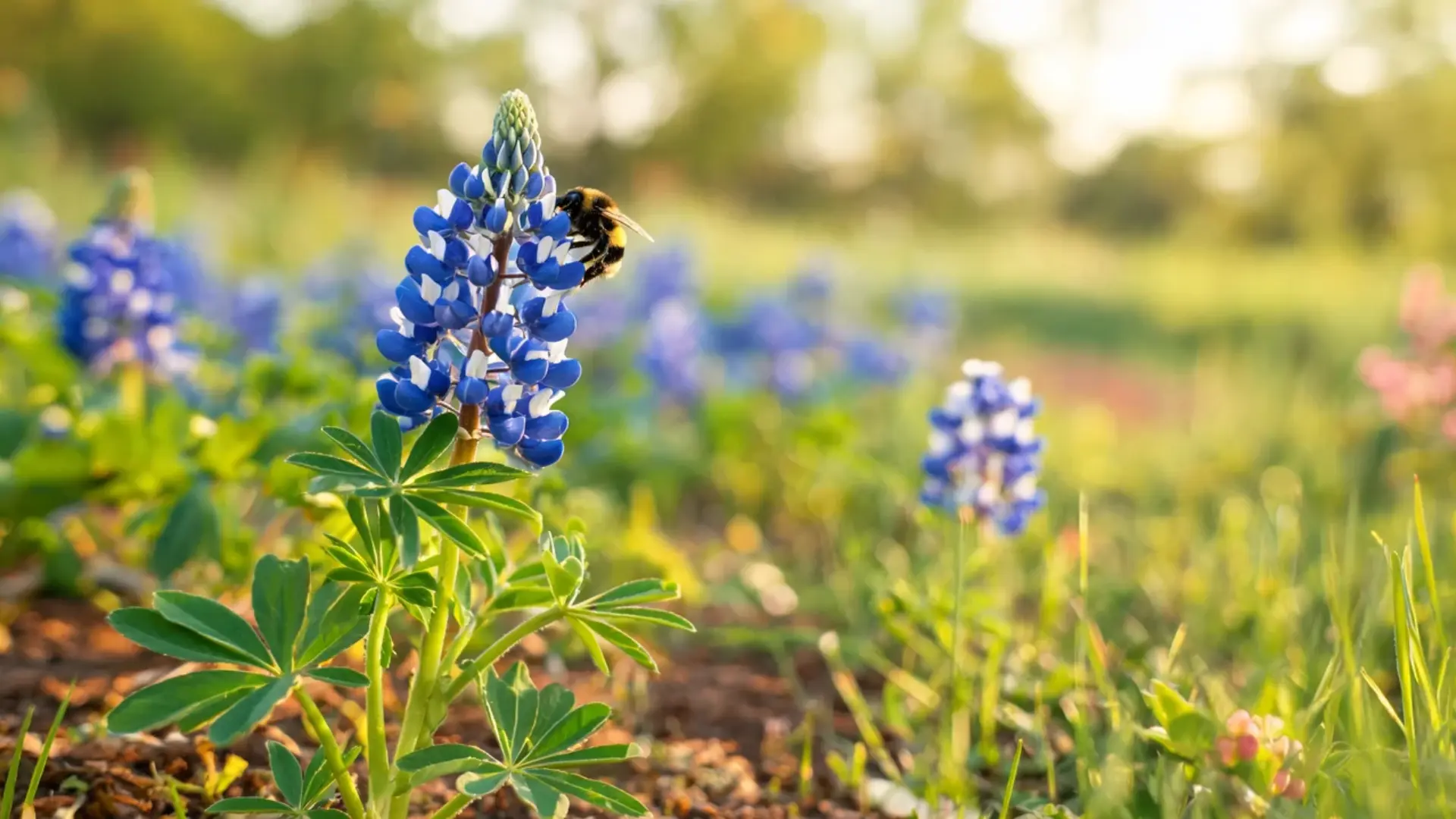
Bluebonnets rely entirely on insects for pollination rather than wind, which makes bee activity central to how the plant reproduces.
Bees visit the flower spikes for pollen and nectar, and as they move between blooms, pollen transfers from one floret to the next, supporting seed production for the next season.
Beyond pollination, bluebonnets support broader grassland ecosystems through their nitrogen-fixing root bacteria, which improve soil conditions for surrounding plant life.
Why Are Bluebonnets Associated With Texas?
The bluebonnet became the official Texas state flower on March 7, 1901, when the Texas Legislature chose Lupinus subcarnosus over other contenders, including the cotton boll and the prickly pear cactus, following a push from the National Society of the Colonial Dames of America.
Not everyone agreed the right species had won. Many Texans preferred the showier, deeper blue blooms of Lupinus texensis over the smaller, sparser flowers of Lupinus subcarnosus, and the debate continued for roughly seventy years.
In 1971, the Texas Legislature settled the disagreement by amending the law to include Lupinus texensis and any other bluebonnet species not already recorded.
The wording meant the designation was never locked to a single species, leaving room for the state flower definition to grow as more bluebonnets were recognized.
Frequently Asked Questions
Are bluebonnet flowers safe to touch or eat?
Bluebonnets are not considered dangerous to touch, but the seeds and other plant parts contain natural alkaloids that can cause illness if eaten. The safest approach is to keep pets, livestock, and children from chewing on the seed pods.
Do bluebonnets come back every year?
Many bluebonnets return through self-seeding rather than growing back from the same root system, since most species are annuals. A strong bloom one spring depends largely on how well the previous season’s seeds germinated and established in the soil.
Can bluebonnets grow outside of Texas?
Yes. Several bluebonnet species occur naturally in Louisiana, Oklahoma, Arkansas, and parts of northern Mexico. Gardeners in other regions can also grow bluebonnets from seed, though results tend to be less reliable outside the plant’s native climate range.
Are bluebonnets endangered?
No. Bluebonnets are not generally considered endangered, and several species remain widespread across their native range. Habitat loss and development can still reduce local populations, particularly for species with naturally smaller ranges.
Why do bluebonnet flowers have white tips?
The white patch near the top of each floret fades or turns red as the flower ages and loses fertility. This color shift helps pollinating bees identify which blooms still contain fresh, usable pollen.
Final Bloom
Spotting a bluebonnet gets easier once the basic shape clicks: the upright spike, the blue and white blooms, and those soft, fan-shaped leaves.
Once that pattern is familiar, picking them out along a roadside or across an open field stops feeling like guesswork. Timing a visit around peak bloom takes a little patience, since the window can be short and shifts slightly from year to year depending on the weather.
Spotted from a car window or grown at home from scarified seed, this wildflower tends to leave an impression. Drop a comment and let me know if you liked getting to know this wildflower.