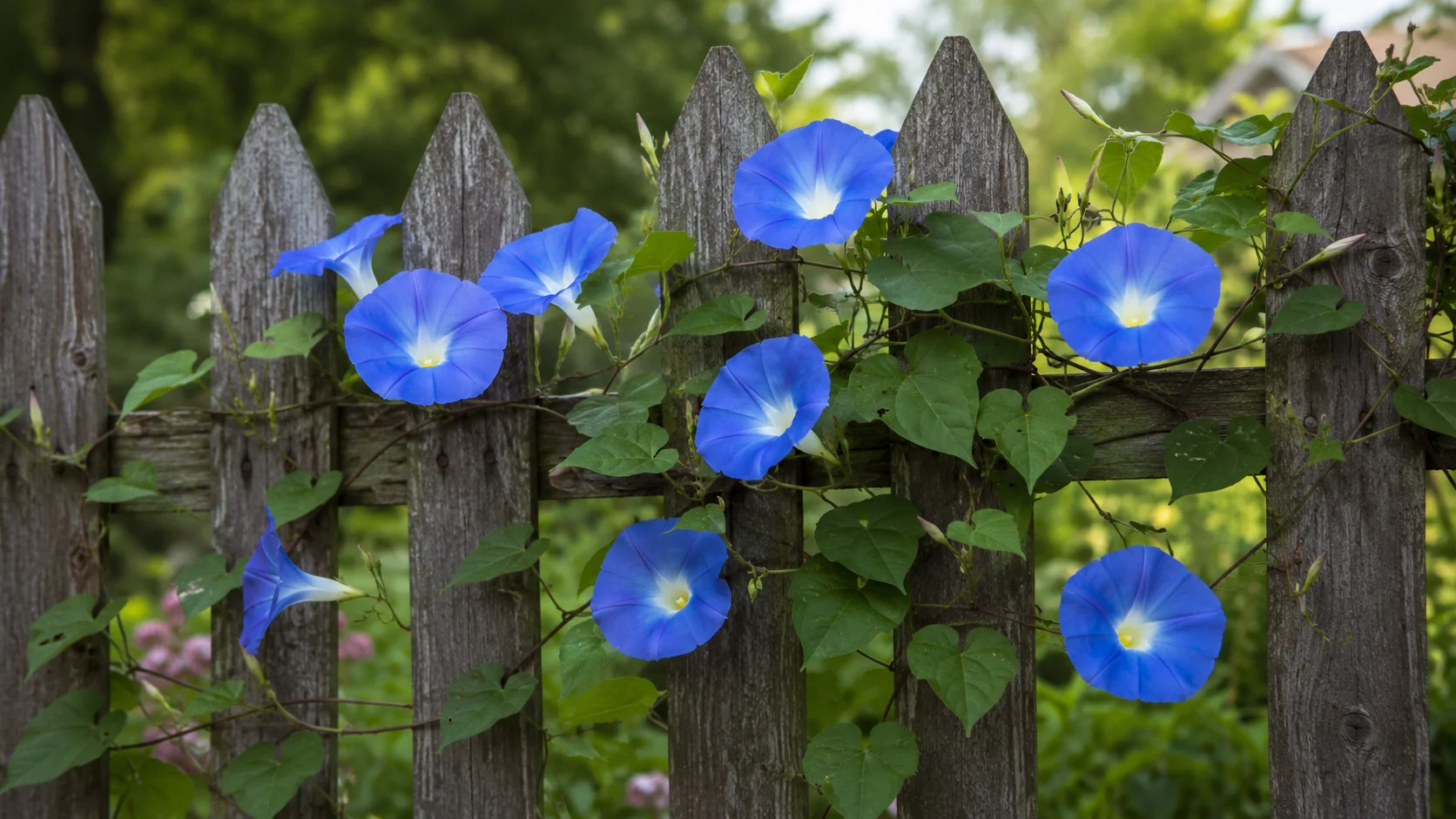
Morning glory is known for fast-growing vines, heart-shaped leaves, and colorful trumpet-shaped flowers that open early in the day. The name covers many Ipomoea species, so growth habits and winter survival can vary between plants.
Most garden types grow as annuals in cold areas, while some can return as perennials in warmer climates. If you are unsure what you have, check the species and your local winter conditions first.
Two questions matter most: are morning glories perennials, and when do morning glories bloom? You will also learn about common varieties, flowering patterns, history, planting needs, and simple care.
By the end, you should know what to expect from planting through the final blooms of the season.
About Morning Glory Plants
Morning glory is a common name for a large group of related flowering plants, most of them part of the Ipomoea genus described on the NC State Extension plant database. Their size, color, and growth can vary by species. The table below covers the main features shared by many garden types.
| Feature | What It Means |
|---|---|
| Plant group | Most garden types belong to the Ipomoea genus within the Convolvulaceae family. |
| Growth habit | Twining stems wrap around thin supports and may reach 6 to 15 feet. |
| Leaves | Many types have broad, heart-shaped leaves that fill space quickly. |
| Flowers | Trumpet-shaped blooms appear in blue, purple, pink, red, white, and mixed colors. |
| Bloom life | Each flower lasts one day, but fresh buds open through the season. |
| Garden value | The vines add height, seasonal cover, and nectar for visiting pollinators. |
Together, these features explain how morning glories grow and what space and support they need.
Are Morning Glories Perennials or Annuals?
Morning glories can grow as annuals or perennials, depending on the species and your winter climate. Most garden types act as annuals in areas that see frost, since cold temperatures kill the vine by season’s end.
In warm, frost-free regions, some types survive winter and return the next year from the same root system, behaving as true perennials in that climate. In colder regions, frost usually ends the plant’s life cycle each year.
This same perennial-or-annual confusion shows up with other garden favorites, and the reasoning behind spring bulb return patterns follows a similar climate-driven pattern.
However, morning glories often drop a large number of seeds before the first freeze arrives. These seeds can remain in the soil through winter and sprout the next spring in the same spot again.
This self-seeding habit can make an annual plant appear perennial year after year, even though the original root system is gone. The new vines you see come entirely from seeds, not surviving roots.
When Do Morning Glories Bloom?
Most morning glories bloom from early or midsummer until the first fall frost. The sections below explain when flowering starts, how each bloom behaves, and why buds may appear late.
1. When the Blooming Season Starts
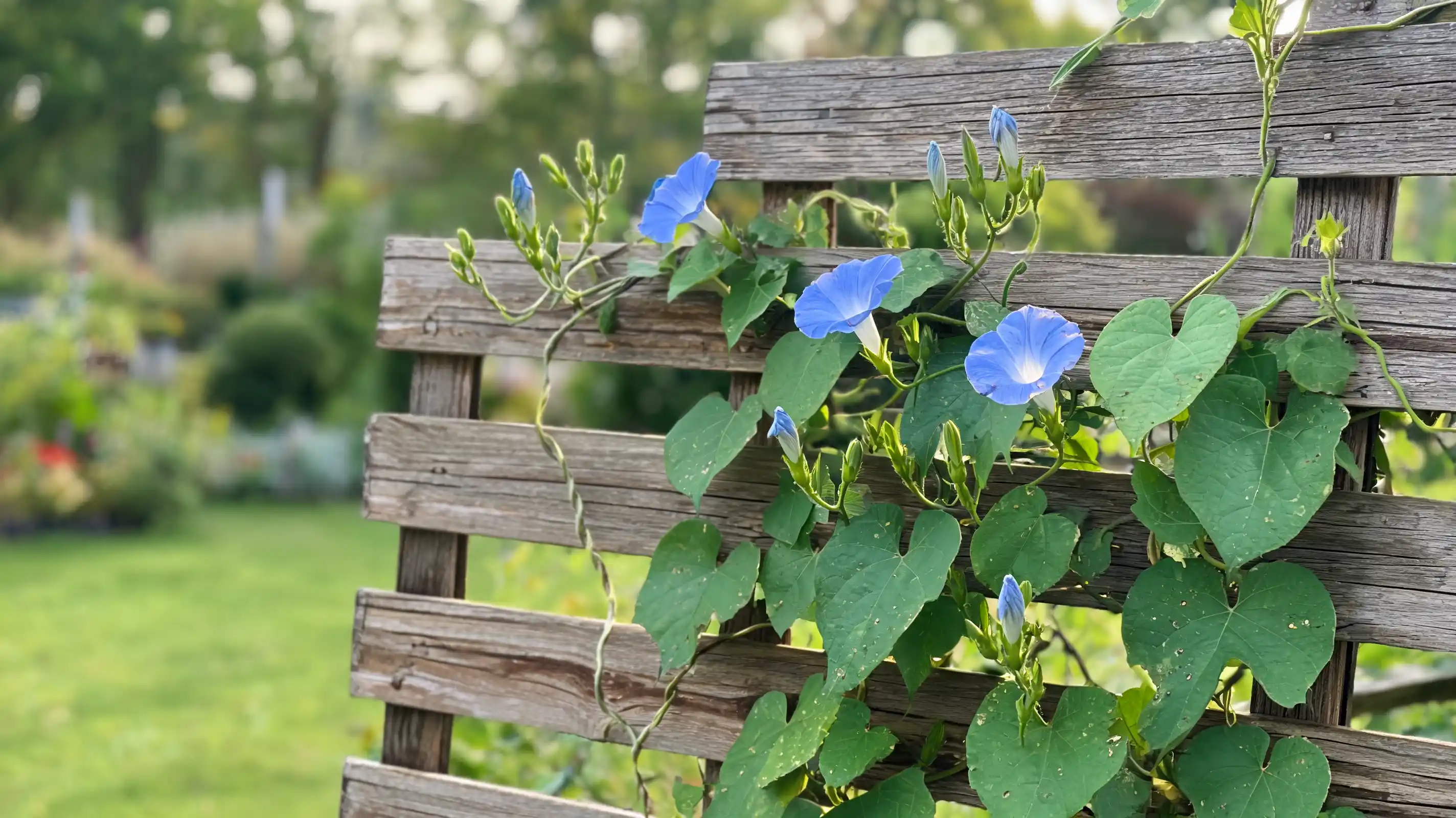
Use these time ranges as a quick reference. Weather and variety may shift them by several weeks.
- Fast varieties: First flowers often appear within two to three months of planting.
- Slower varieties: Some vines need three to four months before flowering begins.
- Season length: Fresh buds usually continue until the first fall frost.
Once flowering starts, new buds can keep forming for many weeks.
2. What Happens Each Day

Here’s what a single bloom cycle looks like, from open to close:
- Morning: Flowers open around dawn, when cooler air and softer light help petals stay fresh.
- Midday to afternoon: Rising temperatures cause blooms to fade and close.
- Cloudy or cool weather: Flowers may stay open longer than usual.
- Bloom lifespan: Each flower lasts about one day before closing for good.
- Next-day cycle: Healthy vines form new buds that open fresh the following morning.
This pattern repeats through the season, bringing fresh flowers each day.
3. Why Blooms May Be Late
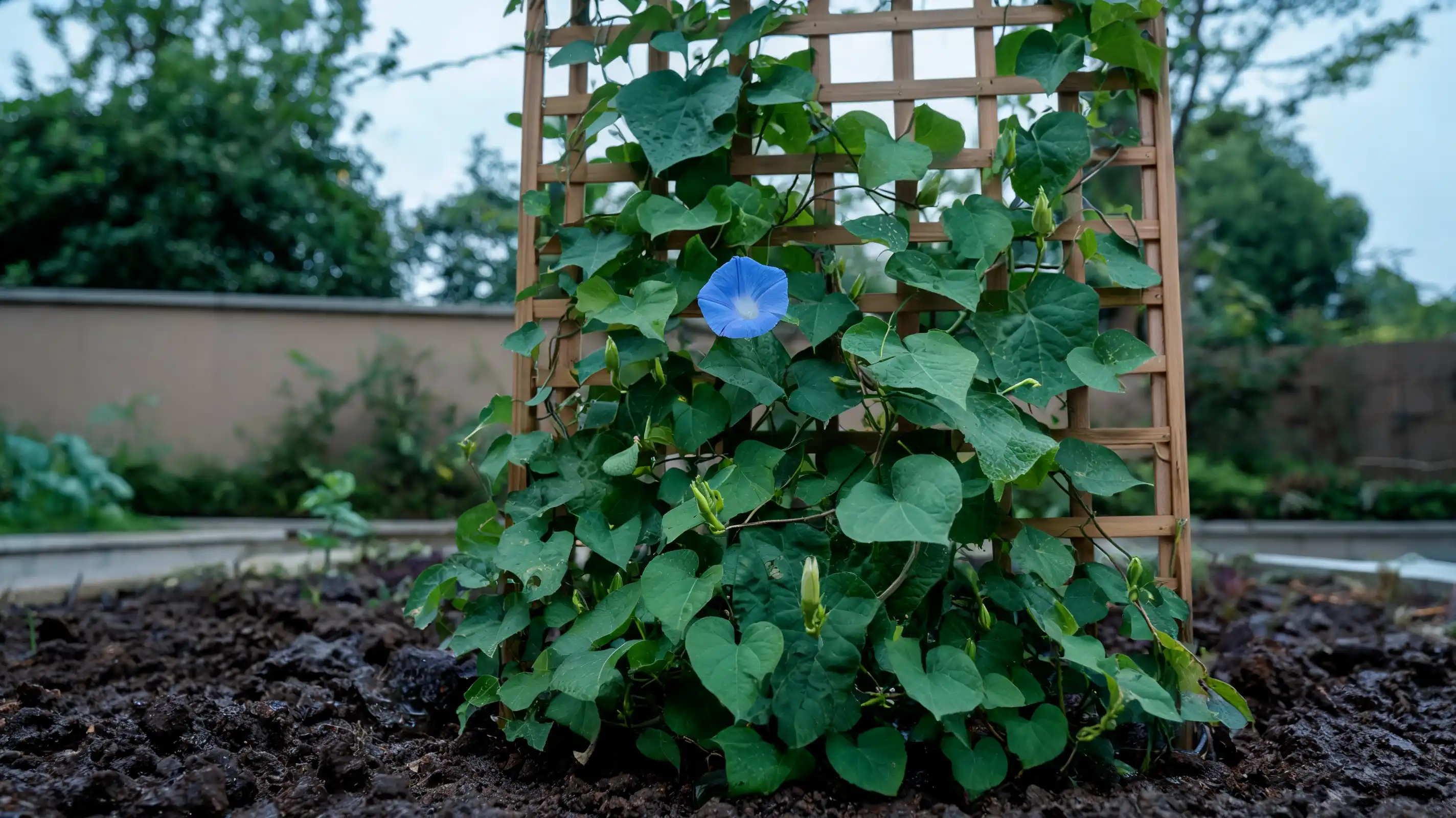
A leafy vine with no flowers usually has one main cause. Check these points before changing your care routine.
- Sunlight: Give the vine at least six hours of direct sun each day.
- Feeding: Too much nitrogen produces leaves instead of flower buds.
- Timing: Late planting or cool weather can slow the vine’s maturity.
- Drainage: Wet soil stresses the roots and may delay flowering.
Fix the most likely cause first, then wait several weeks for new buds. Knowing these timing patterns helps you spot delays early and support steady flowering until the season ends.
Popular Morning Glory Varieties
Morning glory varieties differ in flower color, vine length, and bloom timing. These four choices make those differences easier to compare before planting.
1. Heavenly Blue
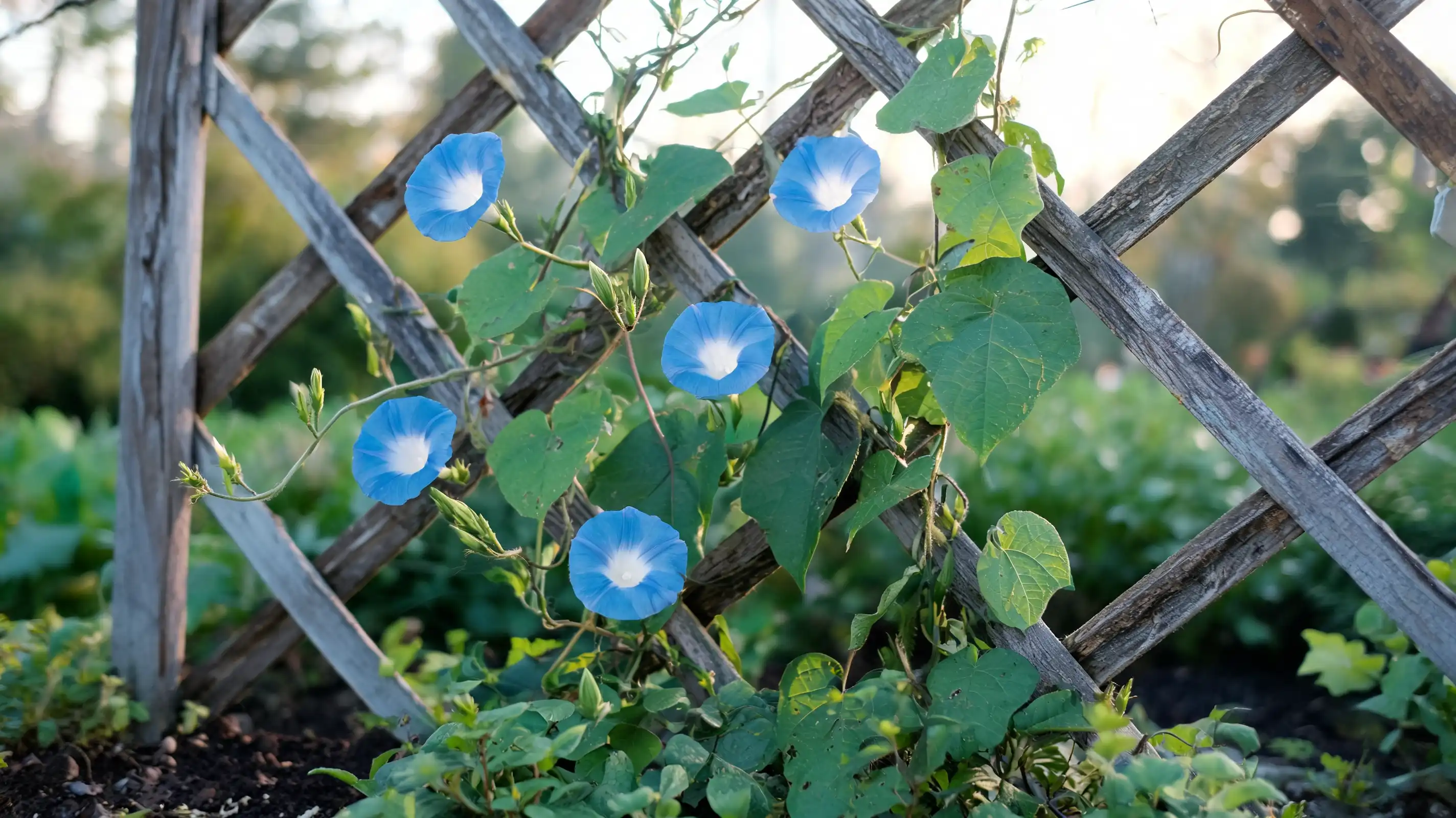
Heavenly Blue remains one of the most recognized morning glory varieties, prized for its clear sky-blue petals and small white throat.
Vines climb quickly and can reach ten to fifteen feet in one season with steady sun and sturdy support. Gardeners often choose it for tall trellises, fences, and arbors, where its bold color stands out against green foliage all summer.
2. Grandpa Ott
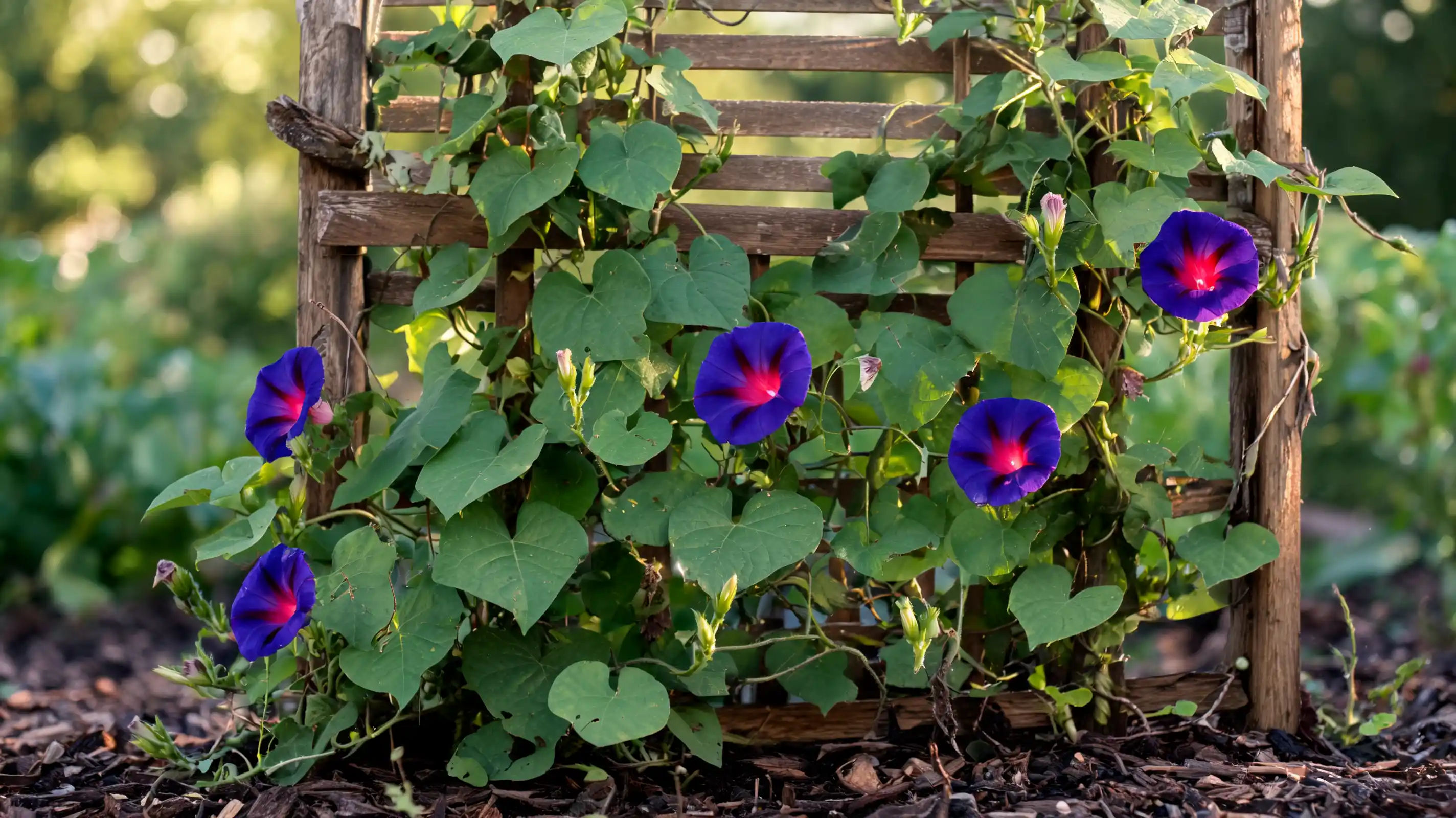
Grandpa Ott produces deep purple flowers with a magenta-red star at the center, carried on vigorous, fast-climbing vines.
This heirloom variety holds a notable place in seed-saving history, since it was the very seed that helped launch the Seed Savers Exchange decades ago. Give it firm, tall support, since its spreading growth can quickly cover a large trellis or fence.
3. Scarlett O’Hara
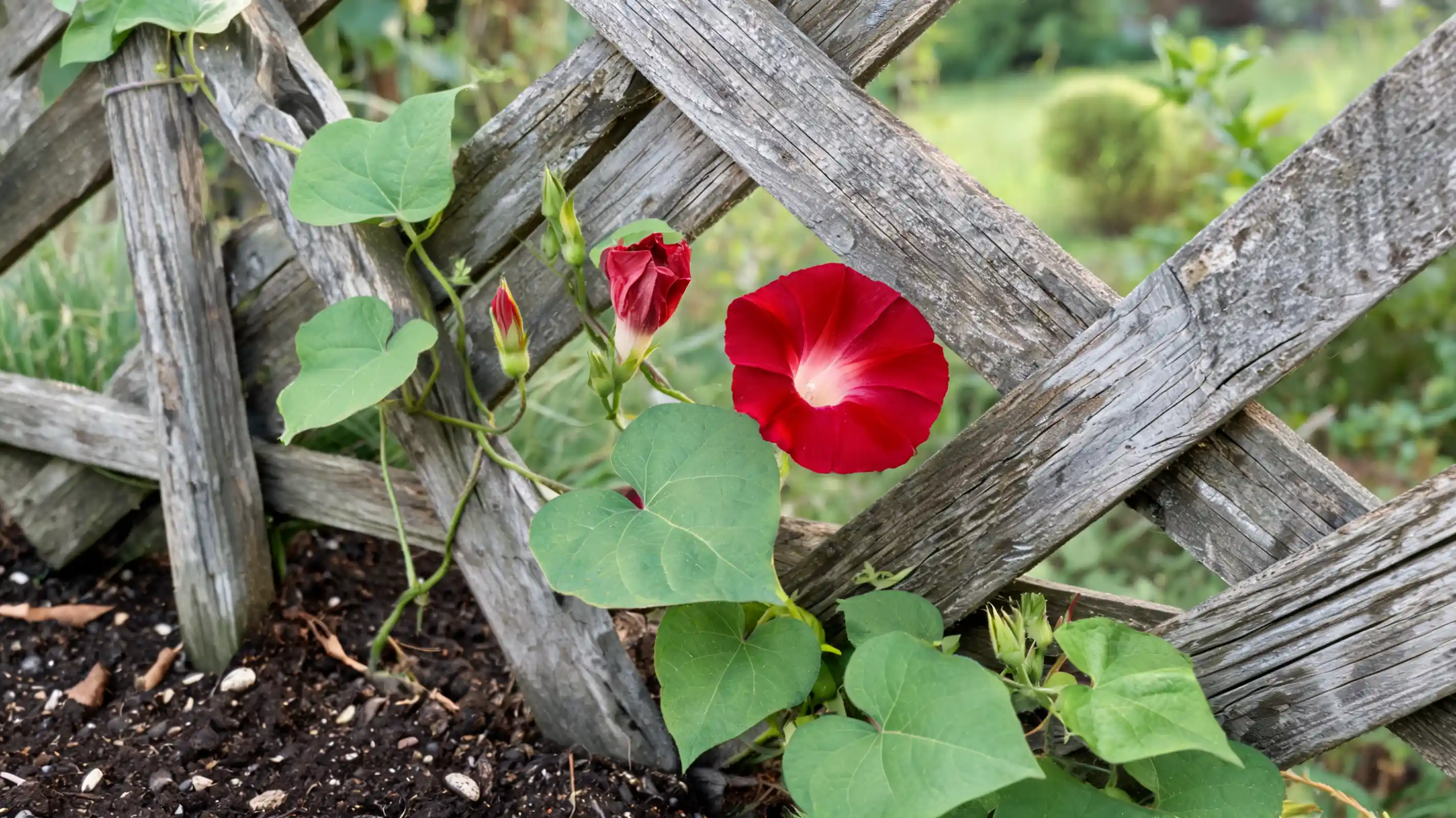
Scarlett O’Hara produces large, crimson-red blooms on a strong, fast-climbing vine that flowers reliably from midsummer through the first frost.
The bold color holds up well against green leaves, making it a striking choice for fence lines and taller trellises around the yard. Give the vine full sun and sturdy support, and it rewards you with steady color for weeks.
4. Flying Saucers
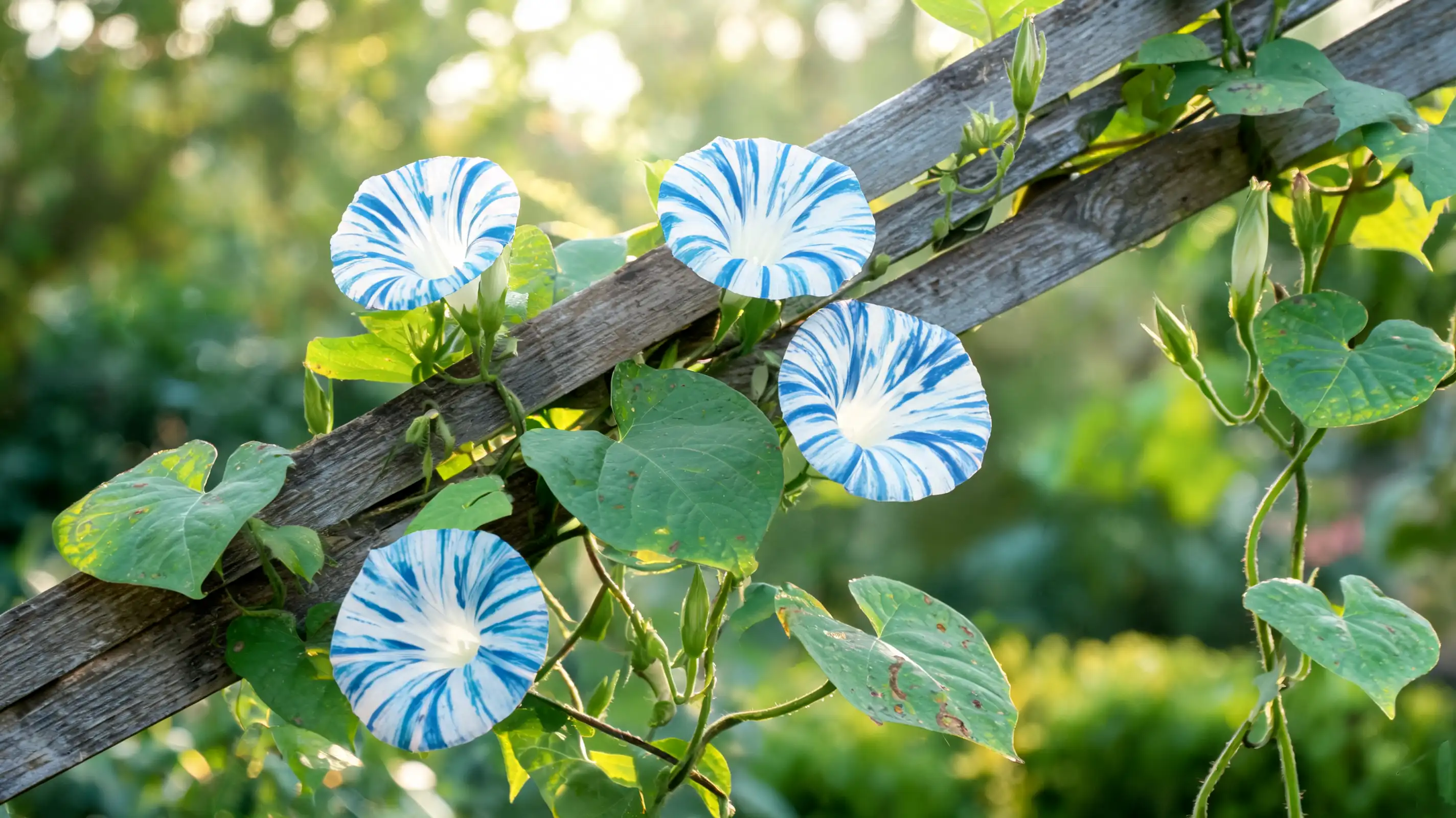
Flying Saucers is known for its blue-and-white striped petals, though the striping is not genetically fixed, so some seedlings from the same packet may bloom solid blue or solid white instead.
Its growth habit closely resembles Heavenly Blue, reaching similar heights with the same twining stems. Plant it along a tall trellis or fence where its unpredictable pattern gets fully appreciated.
History and Cultural Meaning of Morning Glories
Morning glories have served practical and cultural roles across Asia and the Americas for centuries.
In ancient China, seeds from certain species were used as laxatives. In Japan, growers valued these flowers for their many colors and patterns.
Mesoamerican communities mixed morning glory sap with other plant materials to make rubber balls. Aztec priests also used some species in medicine and religious ceremonies.
These past uses show that morning glories were more than garden flowers. They became part of medicine, craft, and cultural traditions.
How to Plant and Grow Morning Glories

Sow morning glory seeds after frost in a sunny, well-drained spot beside sturdy support. The steps below explain seed preparation, spacing, watering, feeding, and container care.
- Site and soil: Choose a spot with six hours of sun and well-draining soil. Avoid rich fertilizer that drives leaf growth.
- Support: Use a trellis, fence, arch, string, or narrow pole. Add wire or netting beside flat walls, similar to the setups gardeners use for vegetables grown on trellises in a vertical garden.
- Planting time and prep: Sow after frost danger passes. Nick one spot, then soak seeds for 12 to 24 hours.
- Depth and spacing: Plant each seed one-quarter inch deep and about 6 inches apart.
- Water and sprouting: Water well, then keep soil moist. Seedlings usually appear within one to three weeks.
- Ongoing care: Water during dry spells and add mulch. Use little fertilizer to protect flower production.
- Containers and seed control: Use a heavy pot with drainage and strong support. Remove seedpods to limit spreading.
These basics give the vine enough light, support, and moisture without forcing extra leaf growth. Once established, it needs little care beyond water, guidance, and seed control.
Expert tip: Add the support before planting. This keeps young roots safe and gives new vines something to climb immediately.
Morning Glory Care, Problems, and Safety
Morning glories need sunlight, moderate watering, good drainage, and little fertilizer. Watch for pests, leaf diseases, root damage, and toxic seeds. The table below shows common warning signs and the first action to take:
| Issue | Signs | What To Do |
|---|---|---|
| Aphids | Yellow or sticky leaves | Spray with water or insecticidal soap. |
| Leaf miners | Winding trails inside leaves | Remove badly damaged leaves. |
| Leaf spot or rust | Brown, black, or orange marks | Remove affected leaves and improve airflow. |
| Wilt or root rot | Wilting, weak growth, or soft roots | Improve drainage and remove infected plants. |
Safety note: Morning glory seeds are poisonous, especially when eaten in large amounts, as explained by National Capital Poison Center researchers. Keep seeds and seedpods away from children and pets.
Early checks, basic care, and safe seed handling can keep the vine healthy while reducing problems around your garden.
Frequently Asked Questions
How quickly can morning glories cover a trellis or fence?
Given full sun and steady water, morning glory can grow 6 to 15 feet in a single season, depending on variety and support. Many gardeners see a fence or trellis mostly covered within a couple of months of planting healthy seedlings.
Do morning glory flowers have a scent?
Most morning glory flowers have little to no noticeable scent, though some gardeners detect a faint, sweet note up close. Their close relative, moonflower, is the truly fragrant one, with strong-smelling white blooms that open at dusk instead of dawn.
Are morning glories resistant to deer?
Morning glory is often listed as deer-resistant, though a very hungry deer may still nibble new growth or tender shoots. Damage is usually light rather than serious, especially once the vine matures and grows past the seedling stage.
Can morning glories be grown as groundcover?
Yes. Instead of climbing a support, morning glory can be left to spread along the ground, where its dense, fast-growing foliage works well as a groundcover for banks, slopes, or bare patches that need quick, low-maintenance coverage.
Are sweet potatoes related to morning glories?
Yes. Sweet potato (Ipomoea batatas) shares the same genus and plant family as morning glory, though it is grown for its edible roots rather than its flowers. Both plants show the same twining stems and heart-shaped leaves typical of Ipomoea.
Final Thoughts
Morning glory is an easy vine to grow when it gets enough sun, support, and well-drained soil. Its flowers open daily from summer until the first frost. In colder areas, most vines die back, but dropped seeds may sprout the following spring.
This can make an annual plant seem perennial. Good results come from simple care. Keep the soil evenly moist, avoid heavy feeding, and give climbing stems room to spread.
Choose a variety that fits your space and growing season. Remove seedpods when you need better control, and check leaves for early trouble. Growing morning glory becomes easier once you understand its bloom cycle, growth habit, and seasonal behavior.