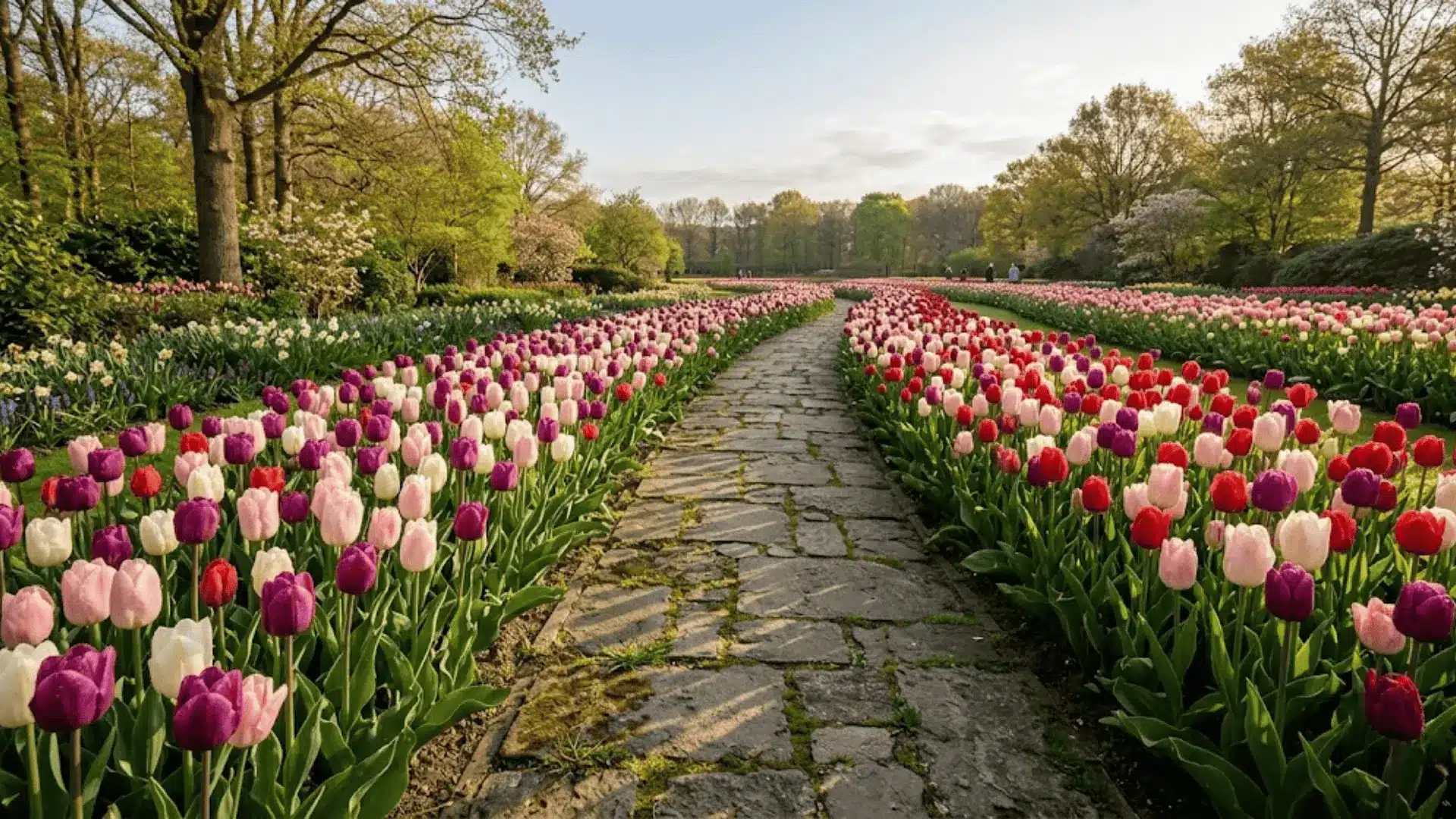
Tulips are the kind of flower that turns heads, lining garden paths or sitting pretty in a vase.
Plant a bulb, watch it bloom, and naturally, the next question is, will it come back? It is one of those things gardeners quietly wonder about every spring.
Tulips actually live in this interesting in-between space, not quite a loyal perennial, not fully a one-season wonder either.
The answer comes down to the variety you pick, the climate you are gardening in, and a little bit of how you care for them through the season.
So let’s get into all of it.
Tulips and the Returning Bloom Question
If you have ever planted tulips expecting them to show up faithfully every spring, you are in good company.
A lot of gardeners feel that quiet disappointment when the second season comes around, and the blooms just do not.
Here is what most people do not realize: many modern tulips are bred specifically for that stunning first-year bloom, big, bold, and showy, but not necessarily built for long-term repeat performance.
Once you understand that, it becomes a lot easier to set realistic expectations and actually build a care routine that works in your favor.
Are Tulips Perennials or Annuals?
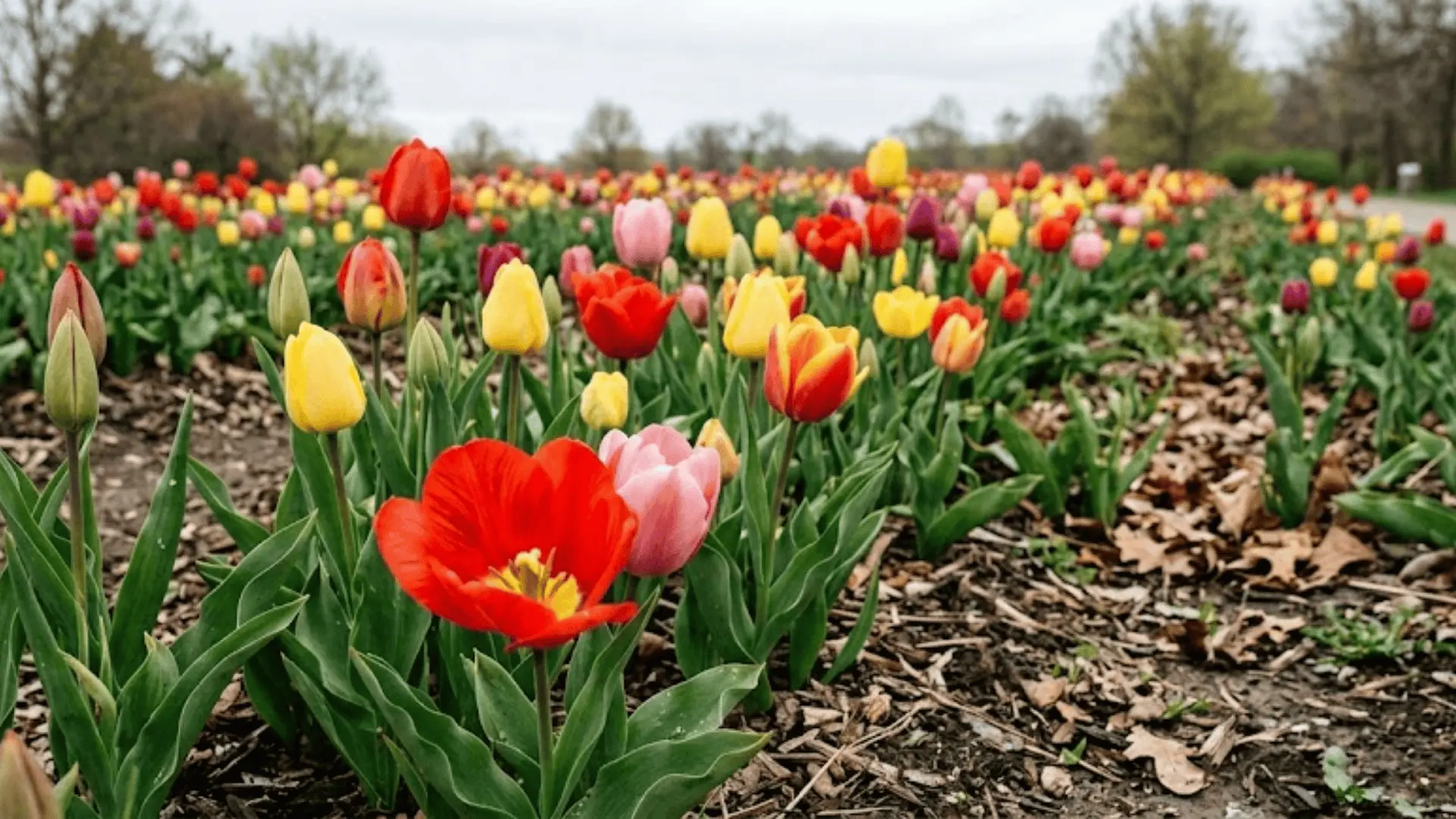
Tulips do not fit neatly into one box, and that is exactly where the confusion starts. The answer is a little bit botanical, a little bit practical.
The Botanical Answer
By nature, tulips are perennials. Their bulbs store energy through the growing season, go dormant over summer, and come back when conditions are right.
In the wild, across Central Asia, where they originally come from, they do exactly that, returning year after year. So technically, tulips are very much perennial plants.
The Practical Reality in Gardens
In most home gardens, though, tulips tend to behave more like annuals. Many varieties do not rebloom with the same energy, and when they do return, the flowers are often smaller and less showy.
Over a few seasons, some varieties stop showing up altogether, which is why so many gardeners end up replanting bulbs every fall.
Why There is Confusion?
A big part of this comes down to breeding. Modern hybrid tulips are developed with appearance in mind, prioritizing that first bold bloom over long-term performance.
Add to that the fact that most gardens do not mimic the cold, dry summers of their native habitats, and it makes sense why they struggle to return consistently.
Do Tulips Come Back Every Year?
Tulips can return, but it is never really guaranteed.
A lot comes down to the conditions you are growing them in and how well those conditions line up with what tulips actually need.
When Tulips Do Return?
Get these right, and your tulips have a good shot at coming back:
- Planted in well-draining soil that does not hold excess moisture.
- Grown in colder climates where bulbs get a proper winter chill.
- Foliage is left alone to die back naturally after blooming.
- Bulbs are healthy and strong, going into dormancy.
When Tulips Do Not Return?
These are the most common reasons tulips fail to show up the following season:
- Soil that retains too much water drowns the bulb.
- Warm climates that do not offer enough cold dormancy.
- Bulbs that were weakened or exhausted after the first bloom.
- Foliage cut too early, leaving bulbs without enough stored energy.
What to Expect Year After Year?
Tulips put on their best show in year one, big blooms, rich color, the works. From year two onward, blooms tend to get progressively smaller, and some bulbs may only push up foliage without flowering at all.
A handful might stop returning entirely. It is a gradual decline for most varieties rather than a sudden disappearance.
Tulip Types That Come Back Every Year
Not all tulips are created equal, and variety makes a bigger difference than most people expect. If reliable reblooming is the goal, picking the right type from the start is half the work.
Best Perennial Tulip Varieties
Some tulip varieties are naturally better at coming back season after season. These tend to be hardier, less hybridized, and more in tune with what tulips need to thrive long term.
| Variety | Bloom Time | Hardiness | Rebloom Reliability |
|---|---|---|---|
| Darwin Hybrid Tulips | Mid-spring | High | Very reliable |
| Greigii Tulips | Early-mid spring | High | Reliable |
| Fosteriana Tulips | Early spring | High | Reliable |
| Species (Botanical) Tulips | Early spring | Very high | Most consistent |
Tulips That Rarely Rebloom
These varieties are showstoppers in year one, but do not count on them for a repeat performance:
- Parrot Tulips: Heavily ruffled and dramatic, but that beauty comes at the cost of bulb energy and longevity.
- Double Tulips: Their dense, peony-like blooms are stunning but tend to exhaust the bulb after the first season.
- Triumph Tulips: A popular choice for cut flowers, though they rarely come back with the same vigor after year one.
What Affects Whether Tulips Come Back?
Tulips are not particularly high-maintenance, but they do have preferences. A few key conditions can make the difference between a garden that blooms again and one that needs replanting every single year.
1. Climate Conditions
Climate is probably the biggest factor at play here. Tulips are native to regions with cold, dry winters and warm, dry summers, and they perform best when gardens come close to replicating that.
Cold winters are non-negotiable for proper dormancy, while warm and humid climates tend to shorten a tulip bulb’s lifespan significantly.
2. Soil Drainage
Soggy soil is one of the fastest ways to lose a tulip bulb. Here is what to keep in mind:
- Bulbs sitting in waterlogged soil are highly prone to rot
- Well-draining soil is the single most critical factor for bulb survival
- Raised beds or sandy, loamy soil mixes work particularly well
- Avoid low-lying areas where water tends to collect after rain
3. Sunlight
Full sun is what helps tulip bulbs properly recharge after blooming.
At least six hours of direct sunlight give the bulb the energy it needs to store nutrients through dormancy and come back stronger the following season. Shaded spots tend to weaken bulbs over time.
4. Post-Bloom Care
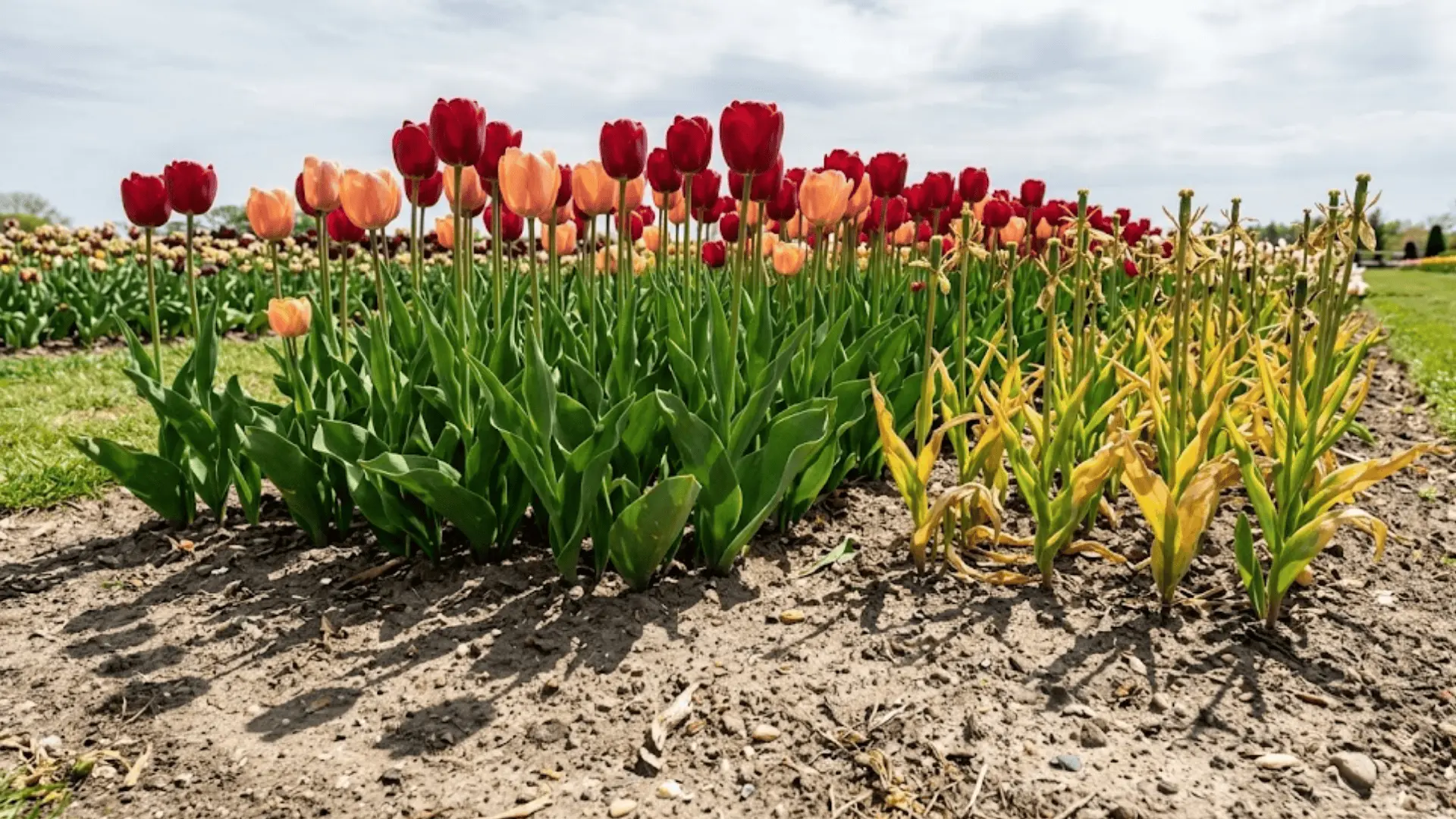
What you do after the flowers fade matters more than most people realize. Once blooming is done, the foliage needs to stay intact until it yellows and dies back on its own.
Those leaves are still actively feeding the bulb, storing energy that carries it through dormancy and fuels next season’s growth. Cutting them too early is one of the most common reasons bulbs do not return.
How to Make Tulips Come Back Every Year?
A little intentional care goes a long way with tulips. These are the habits that actually make a difference:
- Plant bulbs in fall, deep enough to protect them through winter, and in a spot that gets plenty of sun.
- Always let the foliage die back on its own; cutting it early starves the bulb of the energy it needs.
- Use sandy or well-aerated soil that drains easily and never lets moisture sit around the bulb.
- Fertilize lightly in early spring when shoots appear and again after blooming to support the bulb.
- In warm or humid climates, lift and store bulbs over summer to give them the dry dormancy they need.
With the right conditions and a bit of post-bloom attention, tulips have a much better shot at coming back season after season.
Tulips in Pots vs. Ground
Where you plant your tulips plays a quiet but significant role in whether they come back.
Here is how the two settings compare:
| Factor | Garden Beds | Containers |
|---|---|---|
| Rebloom Likelihood | High, especially with good soil and sun | Rarely reblooms, mostly a one-season display |
| Dormancy Quality | Natural and undisturbed through the season | Often inconsistent due to temperature swings |
| Moisture Control | Easier to regulate with a proper soil mix | Prone to waterlogging without careful drainage |
| Temperature Regulation | Soil insulates bulbs through cold months | Exposed to extremes, which weakens bulbs faster |
| Best Treated as | Perennial with the right care | Annual, replant fresh bulbs each fall |
Signs Your Tulips Will Come Back
Not sure if your tulips are gearing up for a return?
These are the green flags to look for:
- Bulbs that feel firm and solid after the blooming season are in good shape for next year.
- Foliage that stays green and upright after flowering means the bulb is still actively storing energy.
- Leaves that yellow and die back gradually, rather than suddenly, signal a healthy dormancy cycle.
- Soil that drains well and does not stay damp around the bulb keeps rot at bay.
- A full 6 or more weeks of natural die-back after blooming is a strong sign the bulb has recharged properly.
When most of these boxes are checked, there is a solid chance your tulips will show up again next spring.
Final Thoughts
At the end of the day, whether tulips come back really does depend on the little things: the variety you choose, the soil you plant them in, and the care you give them after the blooms fade.
They are not the most predictable flowers in the garden, but that is part of what makes them worth paying attention to.
Give them what they need, and they will surprise you.
Are your tulips perennials in your garden, or do you replant every season? Drop it in the comments, would love to know what has been working for you.