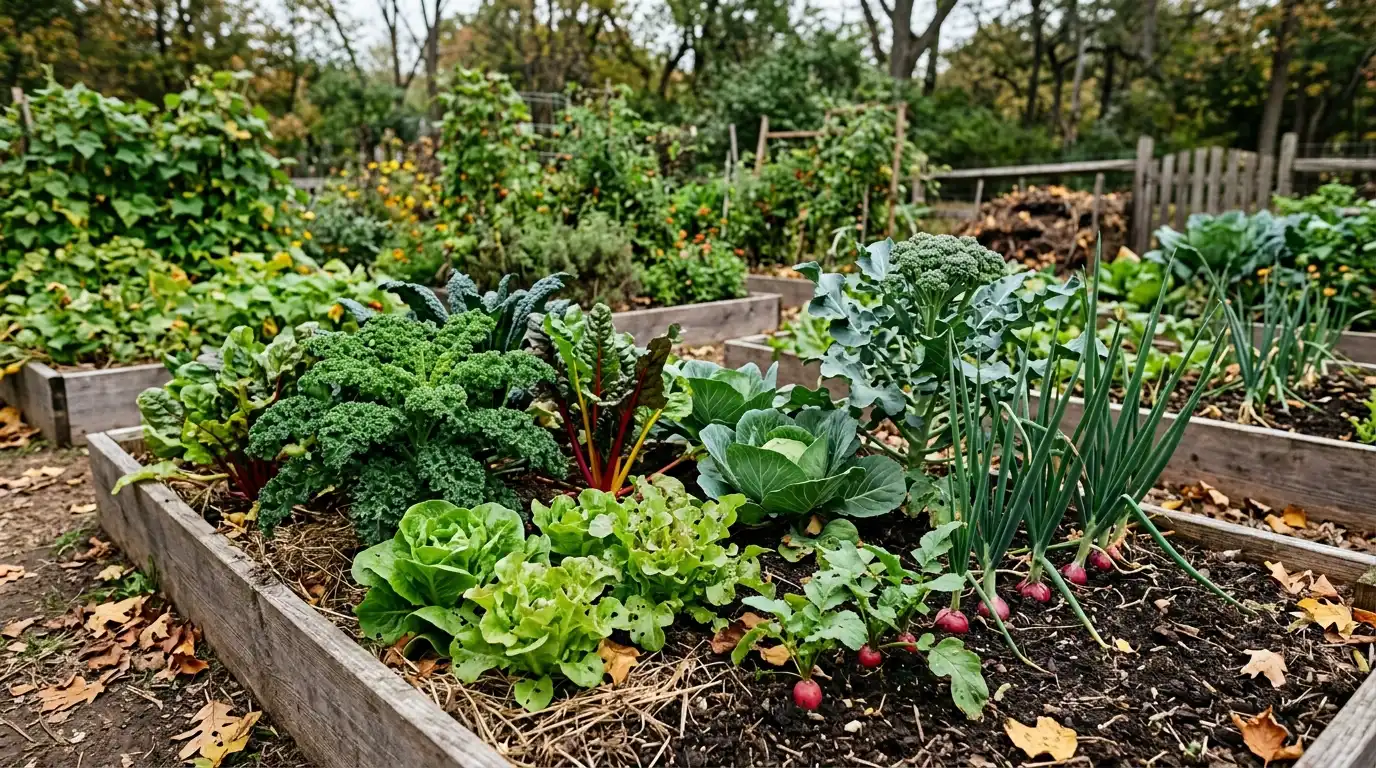
Fall planting can give you another harvest after many summer vegetables slow down. The best fall crops match your climate, available space, and time left to grow.
That short window is exactly when these crops earn their keep, giving you a second harvest before winter settles.
I have spent decades walking callers through this exact shift, and the short version is that timing matters more than almost anything else you will do in the garden this season.
Leafy greens, root vegetables, and cabbage family crops handle a Houston cool snap far better than tomatoes or peppers ever will.
Some crops are ready in a month. Others need the better part of a season. Here is how to choose the right ones for your yard.
How Should You Choose Crops for a Fall Garden?
Start with your target harvest date. Check the variety’s days to maturity and confirm when the packet starts counting.
Add about 14 days for slower growth during cool, short days. Then count backward from your planned harvest date.
Use the first frost as a deadline for tender plants. Hardy vegetables may keep producing later, while overwintering crops need strong roots before winter.
These labels describe the time remaining before your local first frost.
|
Planting window |
Time before first frost |
Most practical goal |
|---|---|---|
|
Early |
10 weeks or more |
Long roots and heading vegetables |
|
Middle |
6–10 weeks |
Mature greens and smaller roots |
|
Late |
Under 6 weeks |
Baby leaves, salad radishes, or overwintering |
In frost-free regions, follow local cool-season calendars and start after extreme heat eases.
What are the Best Fall Crops to Plant?
The best fall crops include leafy greens, root vegetables, brassicas, onions, peas, and cool-weather herbs. I placed a wide range of crop ideas in one list, beginning with quick-growing spinach.
Each entry explains the planting period, expected harvest time, and suitable planting method. You can compare these details and choose crops that fit your local fall season.
1. Spinach

- Best time: Use the middle or late window
- Harvest: Expect about 35 to 45 days.
- Method: Sow seeds outdoors.
Seeds often struggle when soil stays above 70°F. Wait for cooler soil or shade the row until seedlings appear. Keep the surface damp, since shallow seeds dry quickly.
Pick outer leaves first and leave the center growing. Choose baby spinach when only a few weeks remain.
If you want plant partners that make spinach even more productive, my spinach companion plants guide covers pairings that work well in Gulf Coast beds.
2. Leaf Lettuce

- Best time: Use the middle window.
- Harvest: Expect 40 to 60 days, with baby leaves available sooner.
- Method: Sow seeds or set transplants.
Loose-leaf lettuce suits fall better than slow, full heads in many regions. Heat can make leaves bitter or cause early flowering.
Offer afternoon shade on hot days. Remove it after seedlings settle and sunlight weakens. Cold tolerance differs widely among varieties. Read the packet before planning harvests beyond a light frost.
3. Arugula

- Best time: Use the middle or late window;
- Harvest: Expect about 30 to 50 days.
- Method: Sow seeds outdoors.
Arugula grows quickly and develops a milder taste during cool weather. You can gather single leaves or cut a young plant above its center.
That cutting method may allow another small harvest. Growth still slows as winter light fades.
Flea beetles often leave tiny holes in new leaves. Cover the row early, since damaged seedlings recover slowly.
4. Mustard Greens

- Best time: Use the middle or late window
- Harvest: Expect about 30 to 40 days.
- Method: Sow seeds outdoors.
Mustard greens provide peppery leaves for salads, sautés, and soups. Established plants tolerate light frost, though varieties differ.
Space seedlings closely for baby greens. Give mature plants the room listed on the packet.
Water steadily to keep leaves tender and support even growth. Pick older outer leaves before they become large and coarse.
5. Mizuna and Tatsoi

- Best time: Use the middle or late window
- Harvest: Expect 30 to 50 days.
- Method: Sow seeds or use transplants.
Mizuna produces narrow leaves with a mild bite. Tatsoi forms low rosettes that fit pots and raised beds.
You can pick both crops young if frost approaches early. Mature spacing gives tatsoi room to form its full shape.
Use light insect netting when flea beetles remain active. Secure every edge so pests cannot enter underneath.
6. Swiss Chard

Swiss chard handles light frost but may fail during deep winter cold. Its colorful stalks and leaves are both edible.
Pick the outer stalks while leaving the center untouched. The plant can then produce more leaves.
Use closer spacing for small greens and wider spacing for full plants. Follow the variety label for exact distances.
7. Kale and Collards

- Best time: Use the early window for full plants or the middle window for baby leaves
- Harvest: Expect 40 to 65 days.
- Method: Sow early or transplant.
Established kale and collards rank among the hardiest autumn vegetables. Light frost can improve their flavor.
Cold survival does not mean a small plant will produce enough food. Give transplants time to build a broad leaf canopy.
Gather the lowest leaves first. Keep the central growing point intact.
8. Salad Radishes

- Best time: Use the late window
- Harvest: Expect about 25 to 40 days.
- Method: Sow seeds outdoors.
Salad radishes are a safe choice when little growing time remains. Their small roots fit gaps left by summer crops.
Sow short rows every one or two weeks while your planting window stays open. Stop when a later batch cannot mature. Thin crowded seedlings promptly. Dry soil can make roots woody, cracked, or sharply flavored.
Not sure when to pull them? My guide on knowing when radishes are ready to harvest covers the signs to watch for.
9. Winter Radishes and Daikon

- Best time: Use the early or middle window
- Harvest: Expect about 50 to 70 days.
- Method: Sow seeds outdoors.
Winter radishes need more space and time than small salad types. Daikon and black radishes can form large storage roots.
Loose, deep soil helps long varieties grow straight. Hard layers may cause short or misshapen roots.
Do not use a salad-radish maturity estimate for these crops. Check the exact variety before setting your sowing date.
10. Carrots

- Best time: Use the early window
- Harvest: Expect about 60 to 80 days.
- Method: Sow seeds outdoors.
Carrot seeds germinate slowly and need steady surface moisture. Briefly covering the row can reduce water loss on warm days.
Check the row daily and remove any cover when shoots appear. Thin seedlings after they develop enough size to handle.
Stones and hard clods can split the roots. Light frost may make mature carrots taste sweeter.
11. Beets

- Best time: Use the early or middle window
- Harvest: Expect 50 to 60 days for full roots.
- Method: Sow seeds outdoors.
Beet roots and leaves are both edible. Each rough seed cluster may produce several seedlings.
Thin the extras so every root has enough room. Clean, tender thinnings can go into salads or cooked dishes.
Established beets may survive temperatures in the high 20s. Cold tolerance still changes with variety, plant size, and exposure.
12. Turnips

- Best time: Use the middle window
- Harvest: Expect about 45 to 60 days.
- Method: Sow seeds outdoors.
Turnips provide edible greens and roots from one planting. Small salad varieties mature before large storage types.
Keep moisture steady to support a smooth texture. Dry conditions can leave the roots tough or strongly flavored.
Late sowings may still supply tender tops when roots stay small. Check both parts during harvest instead of waiting for full roots.
13. Rutabagas

- Best time: Use the early window.
- Harvest: Expect about 80 to 100 days.
- Method: Sow seeds outdoors.
Rutabagas need a longer season than turnips. Northern gardeners often plant them during summer for an autumn harvest.
Cool weather can improve their flavor once roots reach useful size. Planting late usually produces leaves and undersized roots.
Give each seedling enough room after thinning. Choose a shorter-season variety when your first frost comes early.
14. Bok Choy

- Best time: Use the middle window
- Harvest: Expect about 30 to 60 days.
- Method: Sow seeds or set transplants.
Baby bok choy fits a shorter schedule than a full head. Warm weather can reduce quality or cause early flowering. Water evenly to keep the stems crisp. Sudden stress may slow growth during an already narrow window.
Flea beetles and caterpillars can damage young leaves. Use a sealed cover until pest pressure drops.
15. Kohlrabi

- Best time: Use the middle window
- Harvest: Expect about 50 to 60 days.
- Method: Sow seeds or use transplants.
Kohlrabi forms a round, crisp stem above the soil. It tastes mild when picked before that stem becomes old and woody.
Uneven watering can interrupt steady growth. A delayed harvest may also reduce tenderness.
Follow the packet spacing because mature sizes vary. Leaves are edible, though most gardeners grow the plant for its swollen stem.
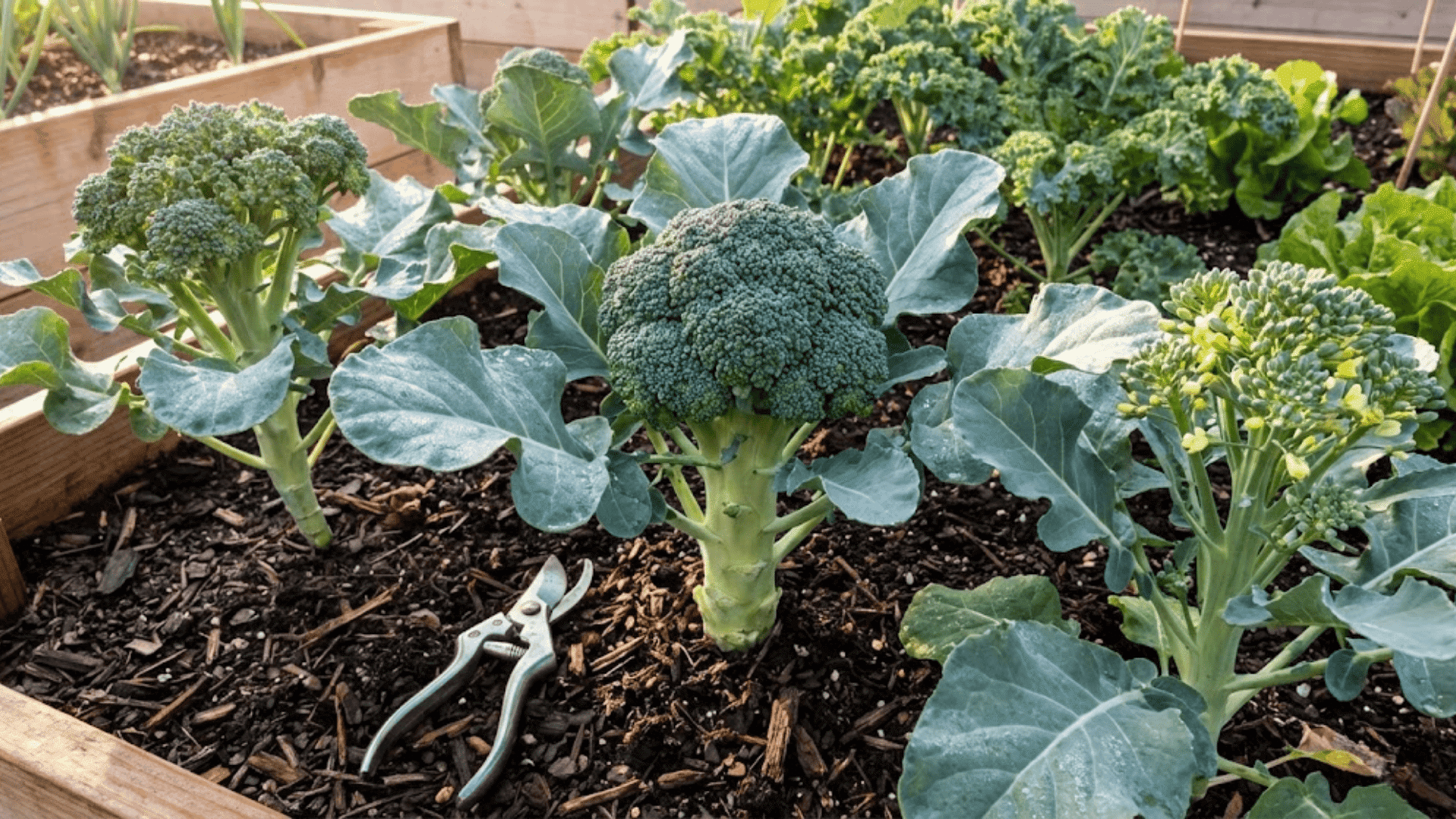
16. Broccoli

- Best time: Use the early window.
- Harvest: Many transplants need 50 to 70 days.
- Method: Set healthy transplants.
Broccoli needs steady growth before cold and weak light arrive. Most plants tolerate light frost after they settle.
Cut the main head while its buds remain tight. Some varieties later produce smaller side shoots.
Choose a fast type if your season is short. Row cover can block cabbage worms during the warm part of autumn.
17. Broccoli Rabe

- Best time: Use the middle window
- Harvest: Expect about 40 to 60 days.
- Method: Sow seeds outdoors.
Broccoli rabe produces edible leaves, shoots, and flower buds. It does not form one large head like standard broccoli.
Its shorter schedule suits gardens where heading broccoli would finish too late. Cool conditions also help limit a harsh taste.
Cut shoots before many flowers open. Leave lower growth untouched if you want a possible second picking.
18. Cauliflower

- Best time: Use the early window
- Harvest: Many transplants need 60 to 80 days.
- Method: Set healthy transplants.
Cauliflower reacts strongly to heat, drought, cold, and root stress. Those problems can prevent a firm head from forming.
Keep water steady and avoid damaging roots during planting. A locally tested variety gives you a better chance of success.
Some heads need their leaves folded over them. Follow the variety instructions for that step.
19. Cabbage

- Best time: Use the early window
- Harvest: Expect 50 to 90 days after transplanting.
- Method: Set transplants.
Small or pointed cabbages often mature before large storage types. Match plant spacing to the expected head size.
Keep soil moisture even as heads begin to tighten. Heavy watering after a dry period can split nearly mature cabbage.
Harvest when the head feels firm to the touch. Do not wait for cracks to appear around the outer leaves.
20. Brussels Sprouts

- Best time: Start very early, often during summer
- Harvest: Expect 90 to 120 days after transplanting.
- Method: Set transplants.
Brussels sprouts need the longest schedule in this list. Cool weather improves sprout quality after plants reach full size.
Small plants cannot catch up once winter light becomes weak. Set strong transplants out well before the season changes.
Pick firm lower sprouts first and move upward. Remove yellow leaves so air can pass around the stalk.
21. Green Onions

- Best time: Use the middle or late window
- Harvest: Expect about 50 to 70 days.
- Method: Sow seeds or set transplants.
You can pick green onions before they form bulbs. Some bunching varieties also survive winter in suitable climates.
Leeks need a long season and are usually established before fall. Use transplants instead of treating them as a quick late sowing.
Choose a type recommended by your state Extension office. Harvest young plants once their stems reach a useful size.
22. Garlic and Shallots

- Best time: Plant late, after the soil cools.
- Harvest: Dig bulbs the following spring or summer.
- Method: Set cloves or bulbs.
Plant garlic several weeks before the ground freezes in cold regions. In mild areas, you may wait until November or later.
Hardneck garlic usually suits cold winters. Softneck types often perform well in southern and coastal areas.
Use firm planting stock, place each clove upright, and choose well-drained soil. Do not plant grocery cloves without checking local disease advice.
23. Peas

- Best time: Use the early or middle window in mild regions
- Harvest: Expect 60 to 80 days.
- Method: Sow seeds outdoors.
Pea vines tolerate cool air, but hot soil may slow their start. An early freeze can arrive before flowers fill their pods.
Fall peas work best where mild weather lasts into late autumn. Pick a fast variety and provide a short trellis. Skip this crop when your calculated window cannot cover pod production.
24. Cilantro, Parsley, and Mâche

- Best time: Use the middle or late window
- Harvest: Expect about 30 to 70 days.
- Method: Sow seeds; parsley also accepts transplanting.
Cilantro grows better after summer heat passes. Parsley starts slowly but may survive winter with cover.
Mâche, also called corn salad, forms small rosettes during cold weather. It needs time to establish roots before light fades. Pick young leaves when a full plant cannot fully mature before winter.
What Can You Plant in September, October, and November?
Calendar months mean different things across the United States. Pair these suggestions with your local frost date and county planting calendar.
|
Month |
Cold or moderate regions |
Mild or frost-free regions |
|---|---|---|
|
September |
Fast greens, salad radishes, or established transplants |
Roots, greens, brassicas, and peas after heat eases |
|
October |
Garlic, shallots, and overwintering spinach |
Greens, roots, onions, garlic, and brassica transplants |
|
November |
Garlic in workable soil or protected overwintering plants |
Cool-season seeds and transplants allowed by local calendars |
A late planting may remain small through winter and resume growing in spring. Do not count it as an immediate harvest.
Fall Planting Examples From Various Selected U.S. States
Planting dates can differ within the same state. Elevation, coastlines, cities, slopes, and cold pockets all affect the first freeze.
The examples below provide starting ranges, not statewide deadlines. Confirm each date with a county Extension calendar and current forecast.
USDA hardiness zones do not supply first-frost dates. They measure average extreme winter minimums used mainly for perennial survival.
1. Minnesota and Maine
Many northern crops need planting from late June through August for a dependable fall harvest. Central Maine lists July 15 as the last date to plant carrots.
Its chart allows beets, broccoli, cabbage, spinach, and turnips through August 1. Minnesota also places many autumn roots and greens in midsummer.
Short-season varieties reduce early-freeze risk, while Maine dates may differ within the same county. Confirm timing through Maine Extension or Minnesota Extension.
2. Maryland, Pennsylvania, and Virginia
Slow brassicas often enter Mid-Atlantic gardens during midsummer. Faster leaves and roots can follow during late summer.
Mountain locations generally need earlier planting than coastal or urban areas. Use county frost records to narrow the range.
Compare Virginia Tech, Maryland Extension, and Penn State Extension before sowing.
3. Georgia, North Carolina, and South Carolina
Georgia’s main fall planting period runs from mid-July through September. Many cool-season vegetables also enter beds during September and October.
North Georgia dates are about two weeks earlier than middle Georgia dates. Far south Georgia may plant two weeks later.
North Carolina and South Carolina use separate coastal, Piedmont, and mountain calendars. Check Georgia Extension, NC State, or Clemson Extension.
4. Arizona and California
Arizona dates differ sharply between mountain areas and the low desert. Yavapai County commonly plants cool-season vegetables during September and October.
California timing changes by county, elevation, and distance from the ocean. Coastal and inland calendars may recommend different months for the same crop.
Use the University of Arizona fall vegetable schedule and a matching University of California county calendar
5. Oregon and Washington
Areas west of the Cascades may support autumn and winter harvests. Long-season vegetables still need summer planting before daylight falls.
A Pacific Northwest schedule may place Brussels sprouts in early July. Faster greens and roots can follow later.
Rain does not guarantee evenly moist soil, and poor drainage can damage roots. Slugs also remain active during mild, wet weather.
Use Oregon State University and Washington State University resources for west-side conditions.
How Can You Prepare and Protect the Garden?
Good preparation helps seedlings handle heat, insects, and changing moisture. Start after you remove the previous crop and check the soil.
Use this short checklist before sowing. Each task solves a separate problem without adding needless work.
- Clear debris: Remove diseased leaves, thick stems, and large roots.
- Check soil: Add lime or fertilizer only when testing shows it’s needed.
- Add compost: Spread ½ to 1 inch when the bed needs organic matter.
- Hold moisture: Water shallow seedbeds before the surface dries.
- Use covers: Seal fabric edges and keep plastic away from leaves.
Common covers may provide about 3°F to 5°F of protection. Anchor the edges and keep plastic away from leaves. Remove or vent covers during sunny days because trapped heat can damage cool-season leaves.
Frequently Asked Questions
What are the Easiest Fall Vegetables for Beginners?
Salad radishes, arugula, leaf lettuce, spinach, and mustard greens are the easiest fall vegetables for beginners because they mature fast and forgive minor mistakes. Most are ready to pick in four to six weeks, so you get feedback quickly instead of waiting months to see what worked. Start with a short row of two or three before committing to slower crops like broccoli.
Can Fall Vegetables Grow in Containers?
Yes, fall vegetables grow well in containers with drainage holes and enough depth for the roots. Lettuce, spinach, arugula, salad radishes, green onions, and compact kale all do fine in pots on a patio or balcony. Containers lose moisture and swing in temperature faster than garden soil, so check them daily and move them out of harsh afternoon sun.
Do Fall Vegetables Need Full Sun?
Most fall vegetables grow best with at least six hours of direct sun a day, though lettuce, spinach, and arugula can manage on four to six hours. Less sun usually means slower growth rather than a failed crop, so a partly shaded bed can still work fine. Root and heading vegetables generally want the fullest sun you can give them.
How Do You Start Fall Crops When Houston Soil is Still Hot?
Soil in Houston often stays above 85 degrees well into September, which can stop cool season seeds from germinating at all. Start seeds indoors under lights or in shade, then move transplants outside once a real cool front arrives instead of guessing by the calendar. For direct sowing, water daily and add a thin layer of mulch to keep the topsoil from baking.
Can Old Seeds Be Used for Fall Planting?
Old seeds can often still be used for fall planting, but germination rates drop the longer they sit in storage and vary by crop. Test a batch of ten seeds on a damp paper towel before planting the whole packet, then count how many sprout within the expected window. Replace any packet with poor germination rather than risk an empty row this late.
Final Thoughts
Successful autumn planting starts with a realistic harvest goal. The best fall crops are not simply the plants that survive the lowest temperature.
You need enough time for edible leaves, roots, stems, or heads to form. A local frost date and seed packet help you judge that window.
Use transplants for slow cabbage-family crops when summer space opens late. Choose baby greens or salad radishes when only a few weeks remain.
Garlic and shallots follow another schedule because their bulbs mature next year. Mild states can also plant much later than northern gardens.
I still jot my sowing and harvest dates down every year, and that habit alone has saved more than one fall garden.
Which fall crops are you planting this year? Share your state and crop choices in the comments.