You start your seedlings with care, so seeing tall, thin stems can be frustrating. If you are looking at leggy seedlings, you may ask whether they can recover. In many cases, they can, as long as the stems are still firm and healthy.
Many stretched seedlings can improve with simple changes, so you don’t need special tools or a complicated setup.
I’ll show you what causes weak growth and what you can change first. You’ll also learn when deeper planting helps and when restarting makes more sense.
The goal is simple: help you make calm, useful choices without overcorrecting or stressing young plants further.
What Are Leggy Seedlings?
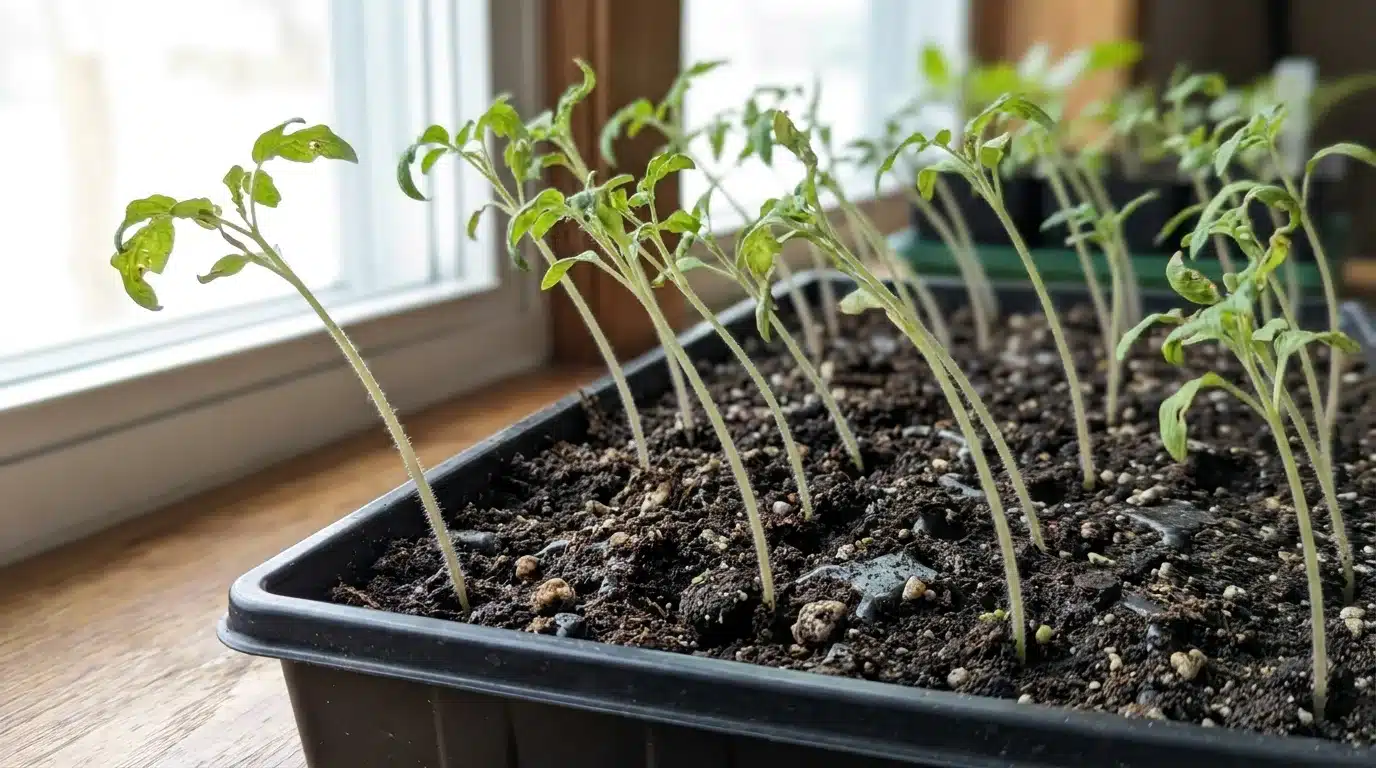
These seedlings have long, thin stems and wider gaps between leaves than healthy young plants. They may lean toward a window, look top-heavy, or fall over easily.
A healthy seedling usually has a shorter, sturdier stem and compact leaf spacing. I look at several signs together instead of judging by height alone.
A long but firm green stem usually points to stretching. A stem that is dark, soft, pinched, or water-soaked near the soil line may have damping-off.
Damping-off is a seedling disease that damages stems or roots and can cause sudden collapse. This difference matters because poor light needs a growing-condition fix, while damaged tissue needs a different response.
Why Do Seedlings Become Leggy?
Insufficient light is the main cause of stretched seedling growth. Heat and crowding can make it worse, while one-sided light mainly causes leaning. The University of Minnesota Extension also identifies low light as the main cause of tall, spindly seedlings.
|
Cause |
What you may notice |
|---|---|
|
Insufficient light |
Tall, thin growth |
|
Excess heat |
Fast, soft growth |
|
Crowding |
Plants compete for light |
|
One-sided light |
Stems bend one way |
|
Still air |
Very soft growth |
Weak, distant, or short-duration light can all cause stretching. Crowding can also block useful light and reduce airflow. I would check light first, then heat and spacing.
Before You Fix Stretched Seedlings, Check What Is Really Happening
Before changing anything, look closely at the stem, leaves, light, and soil. A tall seedling is not always a failed seedling, and several problems can look similar at first.
I usually check if the stem is firm, if new leaves are forming, and where the plant leans. That quick review can separate simple stretching from damage near the soil line.
It also helps you avoid making several changes at once. First, decide if light, heat, crowding, or moisture is the main concern. Then make one useful change and watch how the plant responds. This makes recovery easier to judge and reduces extra stress on young plants.
How to Fix and Prevent Leggy Seedlings
Fixing stretched growth starts with improving the conditions around each plant. I would check light first because poor lighting is the main cause. Next, look at excess warmth and crowding, which can make weak growth worse. Watering and airflow also help seedlings recover.
1. Give Seedlings More Light
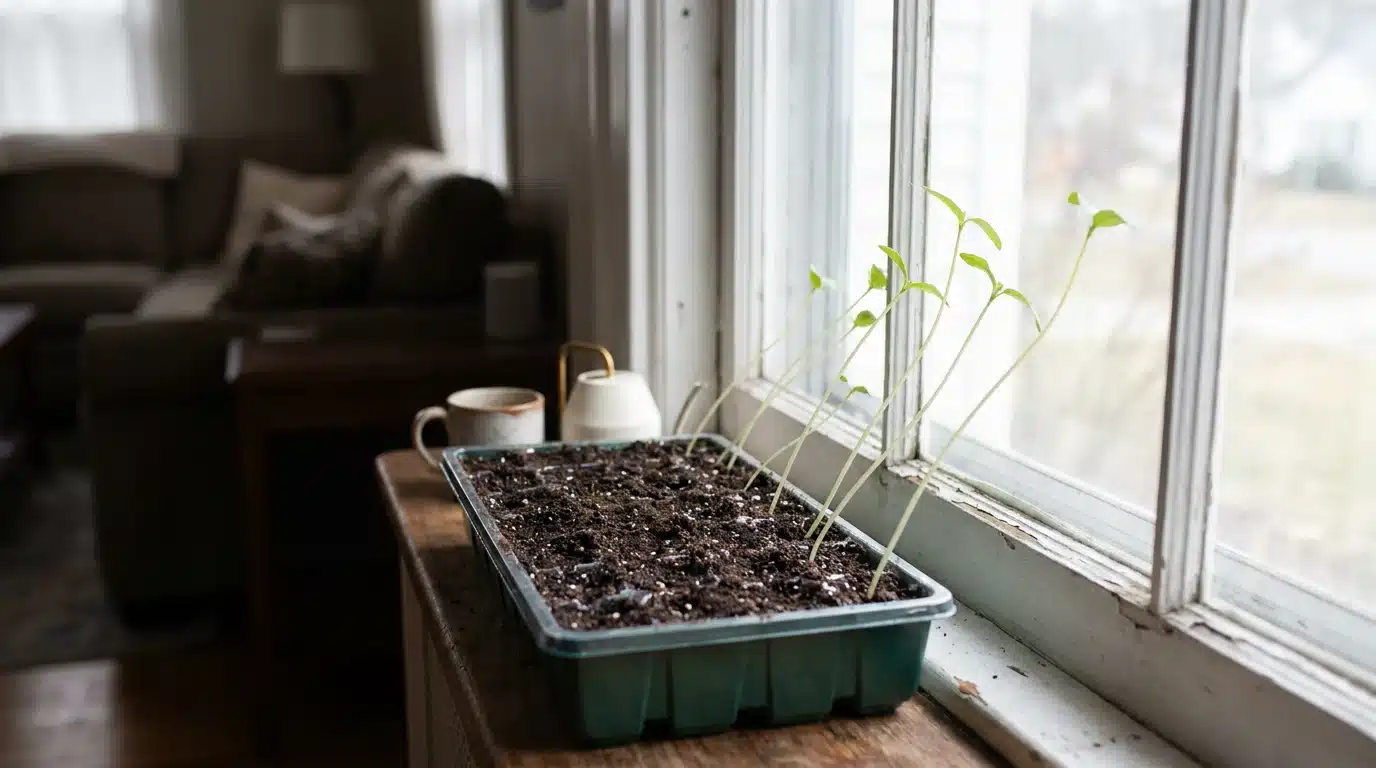
Start with light because weak light is the main reason seedlings stretch. A bright window may help, but indoor window light is often too weak or inconsistent.
Move the tray to a stronger source or add a grow light. Keep the daily schedule steady.
Watch the newest growth closely. Shorter gaps between leaves and firmer upper stems usually show that the lighting has improved.
2. Adjust the Grow Light Position
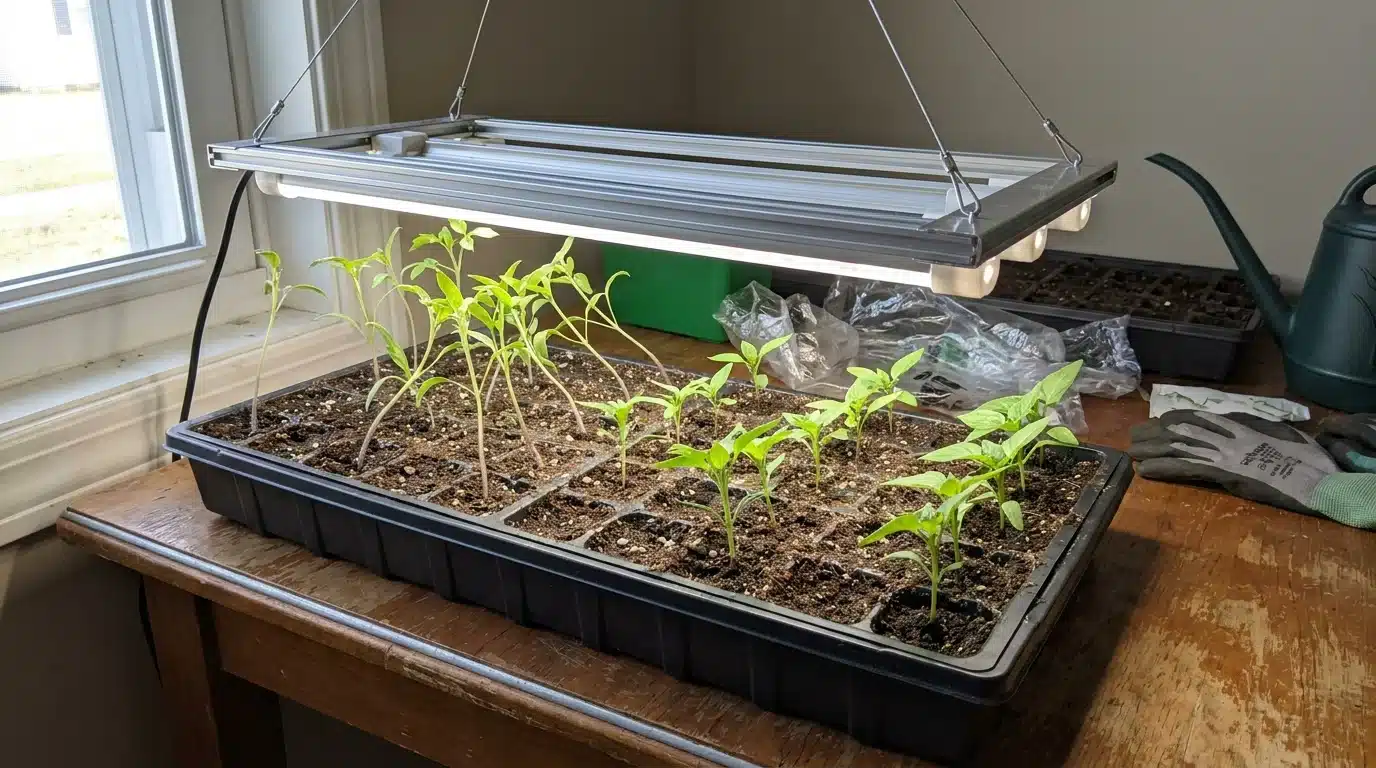
A grow light can still allow stretching when it sits too far above the plants. The right distance depends on the fixture, so follow the maker’s guidance.
Many indoor seedlings also need about 12 to 16 hours of light each day, followed by darkness.
Move the light gradually. If leaves curl, fade, or feel hot, increase the distance slightly and watch the next growth.
3. Control Excess Heat
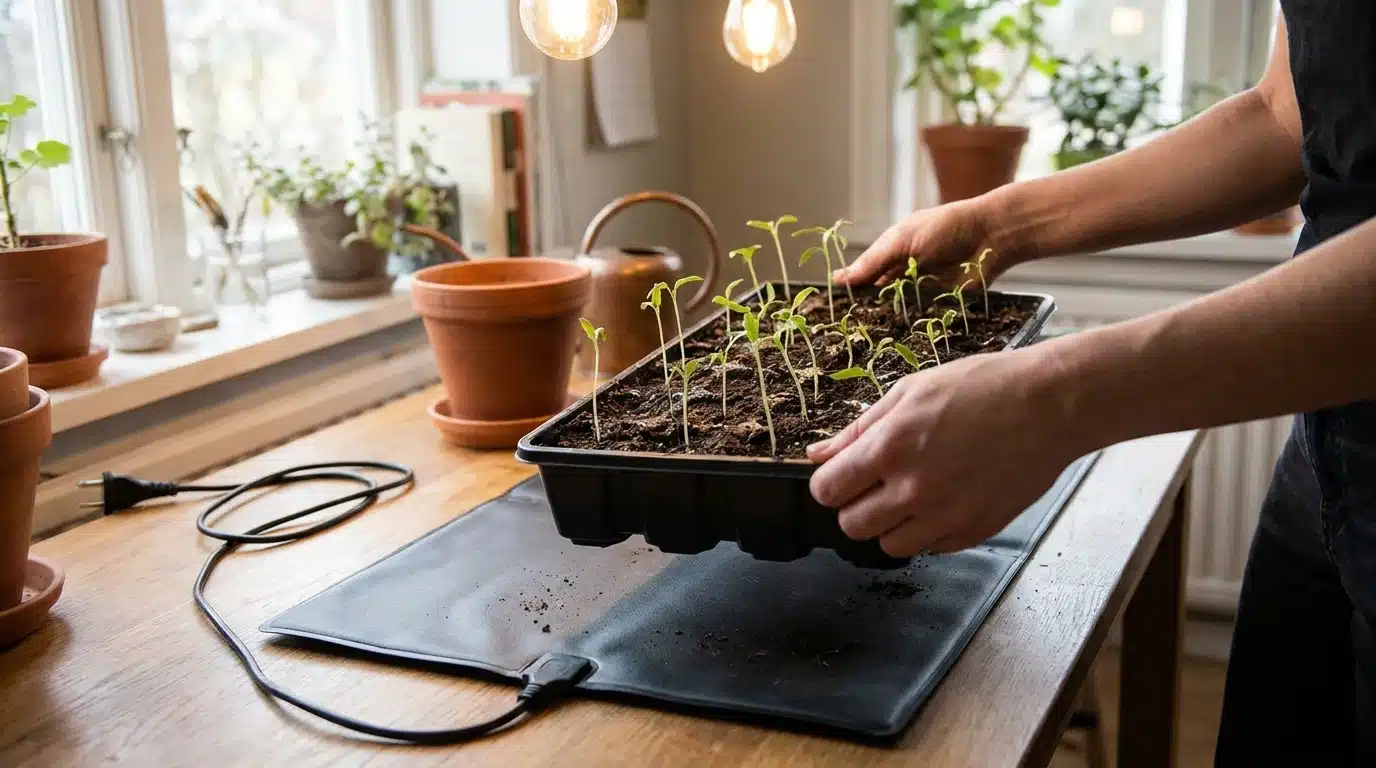
Too much warmth can speed stem growth before the plant becomes sturdy. This often happens when extra heat continues after germination.
Check the crop’s temperature needs and remove unnecessary heat when appropriate. Once most seedlings emerge, remove germination covers unless that crop needs continued humidity.
Keep trays away from hot radiators and overly warm windows to avoid fast, soft growth.
4. Improve Air Movement
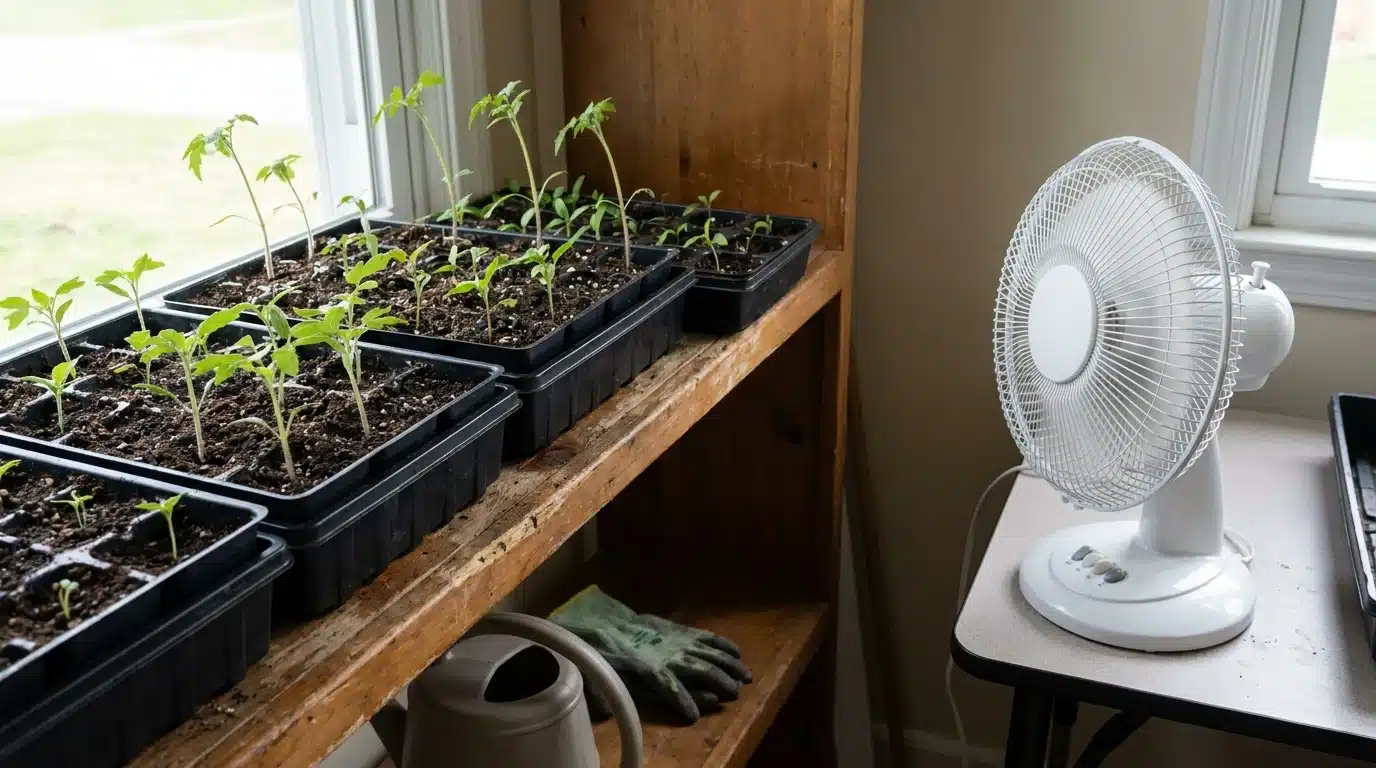
Gentle, intermittent airflow can help young plants adjust to movement and develop sturdier growth. I prefer light movement instead of a fan blowing hard across the tray.
Set the fan low and far enough away that leaves move slightly. Strong airflow can dry the mix quickly.
Check moisture more often, and stop if seedlings bend sharply or the soil dries too fast.
5. Water Without Keeping the Soil Soggy
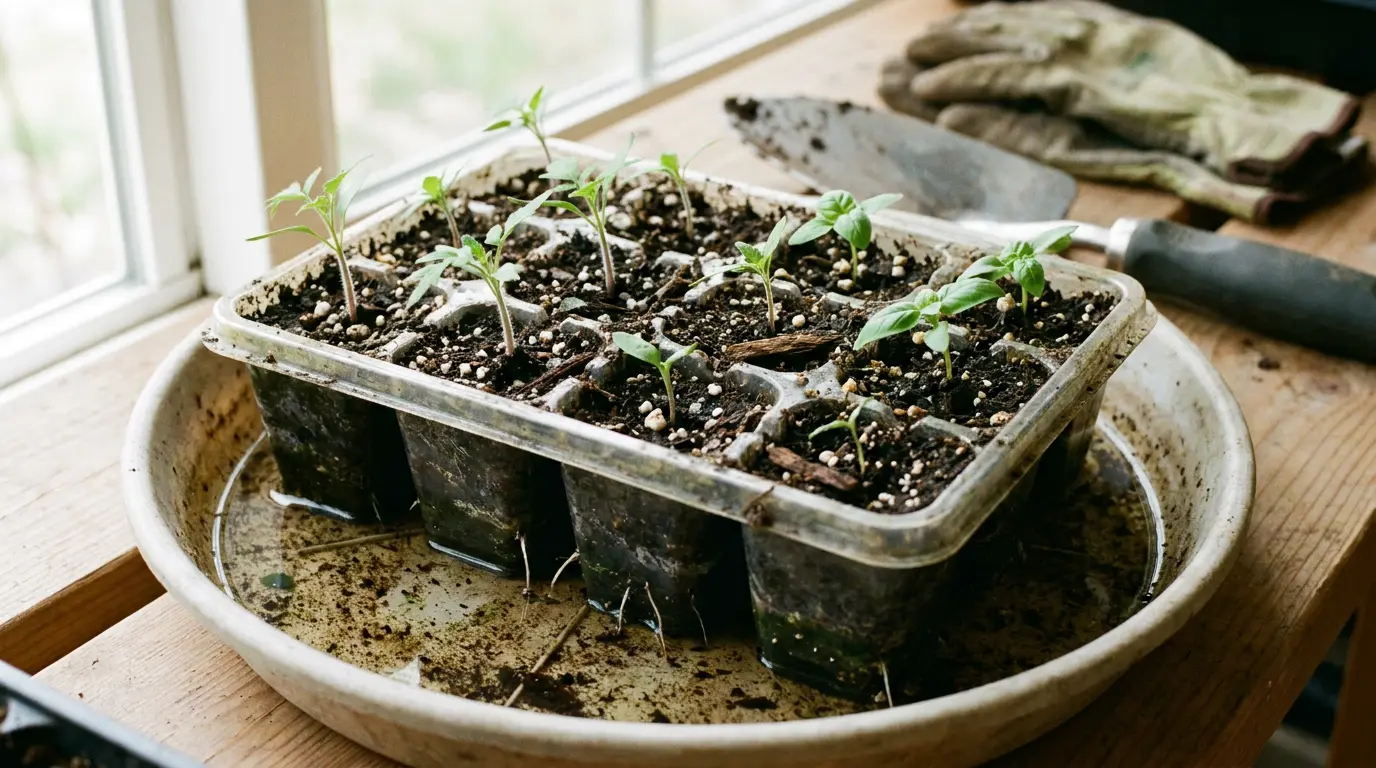
Watering usually doesn’t cause stretching on its own. However, poor root conditions can make weak seedlings collapse more easily.
Keep the mix evenly moist, not soaked. Water when the surface starts to dry, then let extra water drain away.
Do not leave pots standing in water. If you bottom-water, remove the tray afterward so roots don’t sit in moisture.
6. Thin Crowded Seedlings Early

Crowded seedlings compete for available light and can block airflow around one another. Plants in the middle of a tray may stretch more quickly.
Thin or move seedlings before their leaves overlap heavily. If roots are tangled, snip extras at soil level instead of pulling them.
Better spacing gives each plant clearer access to light and reduces competition as the tray fills in.
7. Rotate Window-Grown Seedlings
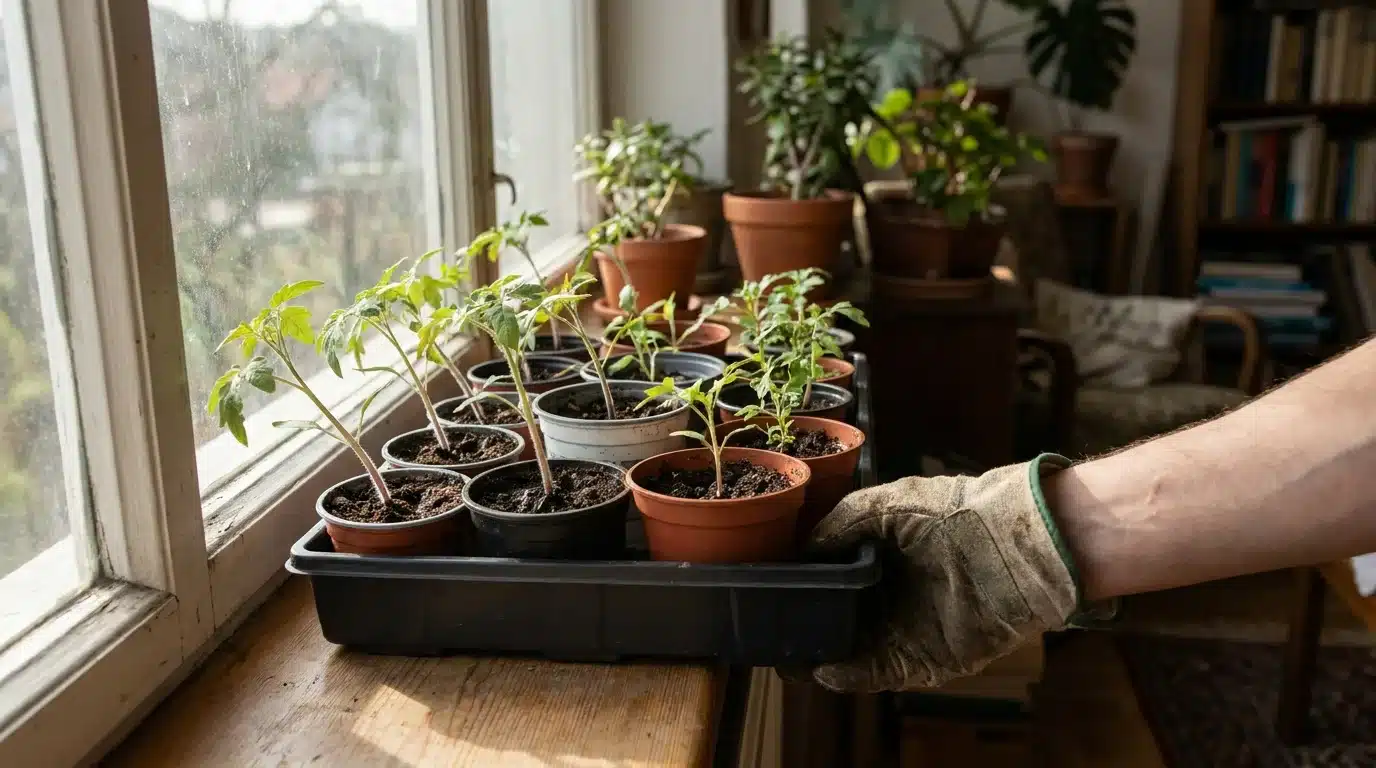
Plants near windows often lean toward the brightest side because the light comes mainly from one direction. Turning the tray can help balance that lean.
Rotate the tray a small amount every day or two. You don’t need to keep moving it throughout the day.
If the plants still stretch upward, rotation is not enough. The overall light level probably needs improvement.
8. Check Seedlings Every Day
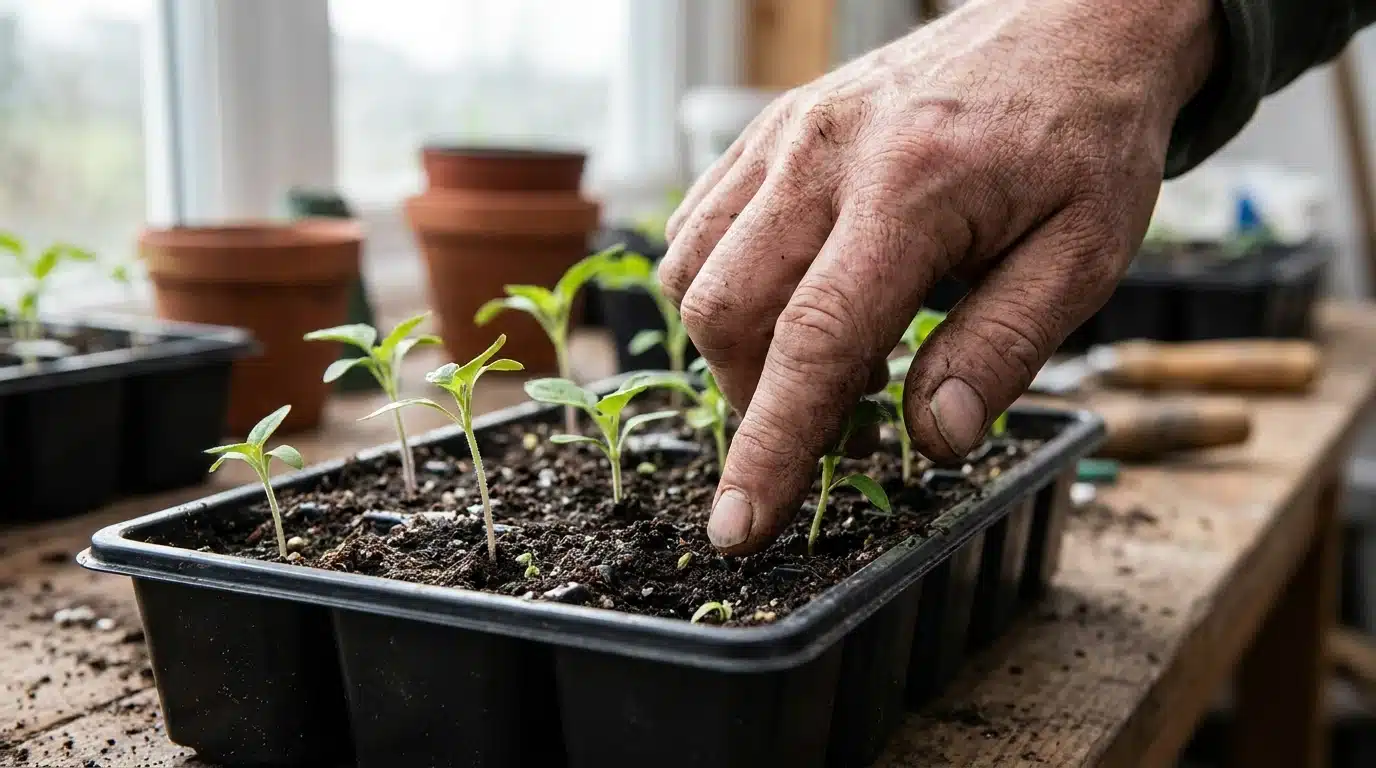
A quick daily check helps you catch small changes before the whole tray becomes weak. I look at stem height, leaf color, moisture, and direction.
Notice if lights shifted, leaves became crowded, or the mix stayed wet too long.
If something changes, make one simple adjustment and watch the response. Small corrections are usually easier to judge than several changes made at once.
Can You Bury Stretched Seedlings Deeper?
You can plant some seedlings deeper during repotting, but the safe depth depends on the crop. Similar problems can appear with tomato seedlings, where stretched growth, transplant timing, and early care decisions can affect how plants develop.
Before adding soil, check the plant type and make sure the stem is firm and healthy.
- Tomatoes: Bury part of the green stem while keeping leaves above the mix.
- Peppers: Follow the recommended planting depth for the variety.
- Brassicas: Use crop-specific transplant guidance before covering more stem.
- Damaged stems: Do not bury soft, dark, or rotting tissue.
Deeper planting can give a weak plant more support. It doesn’t replace better light, so fix the growing conditions at the same time.
Can Stretched Seedlings Recover, or Should You Restart?
Many stretched seedlings can recover when the stem stays firm, green, and actively growing. The old stem will not shorten, so judge progress by new growth. I check the growing tip, stem base, and roots before deciding what to do.
|
Seedling condition |
What to do |
|---|---|
|
Firm stem and healthy growing tip |
Keep it. The plant is still actively growing, and better light and care can help new growth become stronger. |
|
New compact growth appearing |
Keep it. Shorter leaf spacing and stronger new stems show that the plant is responding well to improved conditions. |
|
Bent but unbroken stem |
Support it if needed. A small stake or gentle support can help the plant stay upright while new growth develops. |
|
Dark, soft, or pinched stem base |
Remove it from the tray and check for damping-off. Damage at the soil line usually means the seedling needs more than a simple response to stretching. |
|
Severely snapped stem |
A major break can interrupt water movement and prevent normal recovery. |
|
Mushy, decaying roots |
Restart if the damage is widespread. Healthy roots support new leaves and stronger stems. |
If the plant is still healthy, correct the growing conditions and watch the newest leaves and stem sections.
Extra Habits That Help Prevent Leggy Seedlings
Good seedling habits start before stretching appears. A few small steps can reduce the chance of weak growth.
- Start seeds at the right depth: Seeds buried too deeply may struggle to emerge evenly, while planting too shallowly can expose young roots. Follow the seed packet instructions for planting depth.
- Avoid starting too early: Seedlings kept indoors too long can outgrow their space and become harder to keep compact before transplanting.
- Transplant at the right stage: Move seedlings when they are healthy and strong enough for outdoor conditions, rather than waiting until they’re crowded or stretched.
Frequently Asked Questions
Should I Pinch the Top of a Stretched Seedling?
Usually not. Pinching removes active growth and can slow recovery. Only pinch a plant when that species normally benefits from pruning at its current stage. If you are unsure, leave the growing tip alone.
Can I Move Recovering Seedlings Outdoors Right Away?
No. Harden them off first by slowly introducing outdoor sun, wind, and temperature changes over several days. This gradual adjustment helps indoor-grown plants adapt before you transplant them into their final outdoor spot.
Should I Fertilize a Weak Seedling?
Don’t add extra fertilizer just to strengthen a weak stem. Wait until true leaves appear if the mix has little nutrition. True leaves grow after the first seed leaves and resemble the plant’s normal foliage. Then follow the fertilizer directions.
Can I Stake a Weak Seedling Temporarily?
Yes. A small support can hold a healthy but floppy plant upright while new growth develops. Keep ties loose, avoid squeezing the stem, and remove the support once the plant can stand on its own.
Final Thoughts
Seeing a tray of tall, weak plants can feel disappointing, especially after you have watched every seed sprout. I would not rush to throw everything away.
With leggy seedlings, You need to focus on the newest growth instead of expecting the old stem to change. That keeps the process simple and makes each adjustment easier to judge.
Have you dealt with this problem before? Share what worked, what failed, or what you are still testing in the comments.