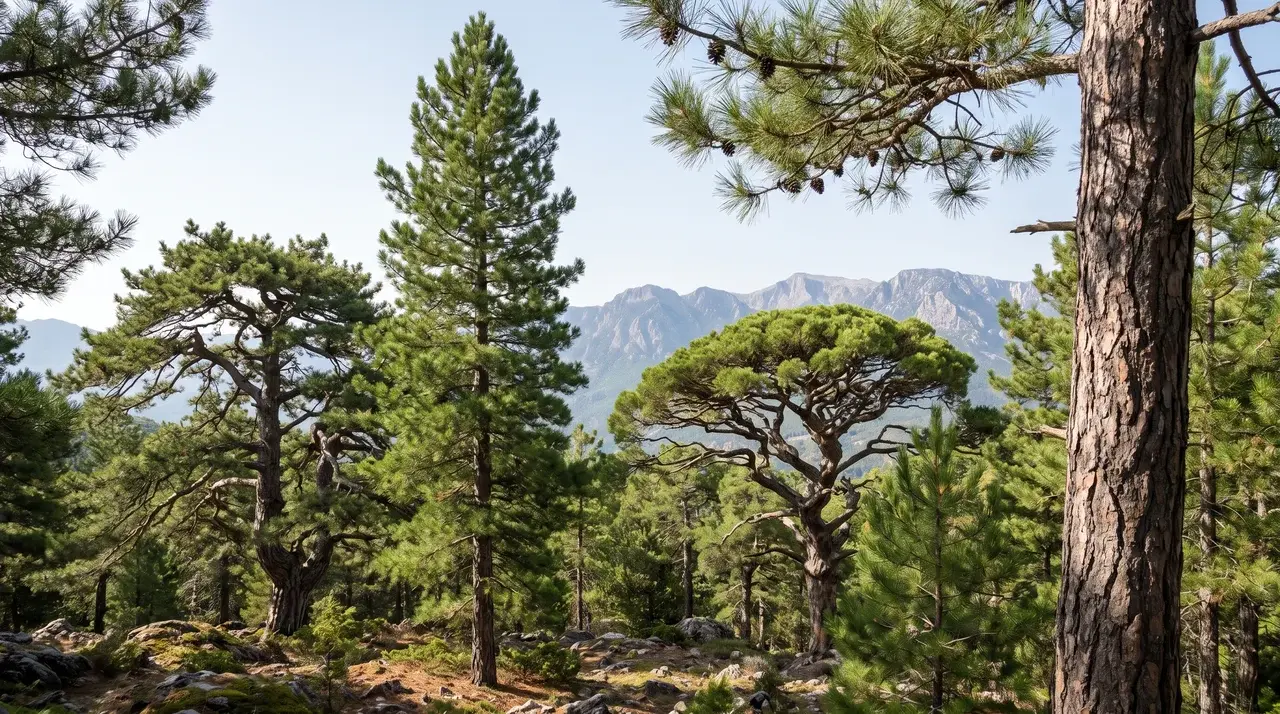
Pine trees may look similar at first glance, but their needles, cones, bark, and growth habits vary a lot from one species to another. Some stay short and rugged, while others tower over the forest canopy.
Looking at the different types of pine trees makes it easier to see how these evergreens are classified and what sets each one apart.
From Eastern white pine and ponderosa pine in North America to Scots pine in Europe and Montezuma pine in Mexico, each species carries distinct traits shaped by its home environment.
Let’s go through this list of pine species from around the world, with botanical names, native regions, heights, and simple features you can use to tell them apart.
History of Pine Trees
Pine trees have shaped forests and mountain landscapes for thousands of years, valued for timber, fuel, resin, landscaping, and edible seeds from certain species. They range from small, shrub-like plants to forest giants over 200 feet tall, with needles usually bundled in twos, threes, or fives.
All true pines belong to the genus Pinus, a needle-bearing type of conifer tree that reproduces through seed-bearing cones rather than fruit. Here are the core features that define pine trees and make them easier to recognize and compare.
- Plant type: Evergreen conifer
- Botanical genus: Pinus
- Leaves: Needle-shaped
- Needle arrangement: Usually bundles of 2, 3, or 5
- Seeds: Held inside woody cones
- Growth form: Small shrubs to trees over 200 feet tall
- Common uses: Landscaping, timber, windbreaks, wildlife shelter, and food
Pines are also monoecious: male cones release pollen, while female cones mature into the larger woody cones that hold the seeds.
Identifying Types of Pine Trees
Pine trees can look surprisingly similar at first glance, so identifying types of pine trees works best when you compare several features instead of leaning on only one. Needle arrangement is usually the strongest starting point, while bark, cones, crown shape, height, and native range help confirm the match.
The table below brings those clues together so you can compare them quickly.
| Feature | What to Check | Example |
|---|---|---|
| Needle Count | 2, 3, or 5 needles per bundle | 5: eastern white Pine, 2: red Pine |
| Needle Length | Short: 2 to 4 in, or long: 8 in plus | Longleaf pine can reach 18 inches |
| Bark | Smooth, flaky, fissured, or plated | Scots Pine has orange-red flaking bark |
| Cone Size | Small compact or large heavy cones | Sugar pine cones can exceed 20 inches |
| Crown Shape | Narrow, rounded, pyramidal, or umbrella shaped | Stone pine forms a broad umbrella canopy |
| Mature Height | Small tree to more than 200 feet | Bristlecone pine stays relatively small |
| Native Range | Region where the species naturally grows | Location helps narrow down similar species |
Once you have checked these features together, identifying types of pine trees gets a lot easier. Start with the needles, then use the remaining traits to rule out similar-looking species and confirm the best match. Pine trees grow across North America, Europe, Asia, Mexico, and Central America, and the species below are grouped by native region to make them easier to compare.
Types of North American Pine Trees
North America is home to some of the world’s tallest, oldest, and most commercially important pine trees. They grow in environments ranging from humid coastal plains to cold mountain forests.
1. Eastern White Pine
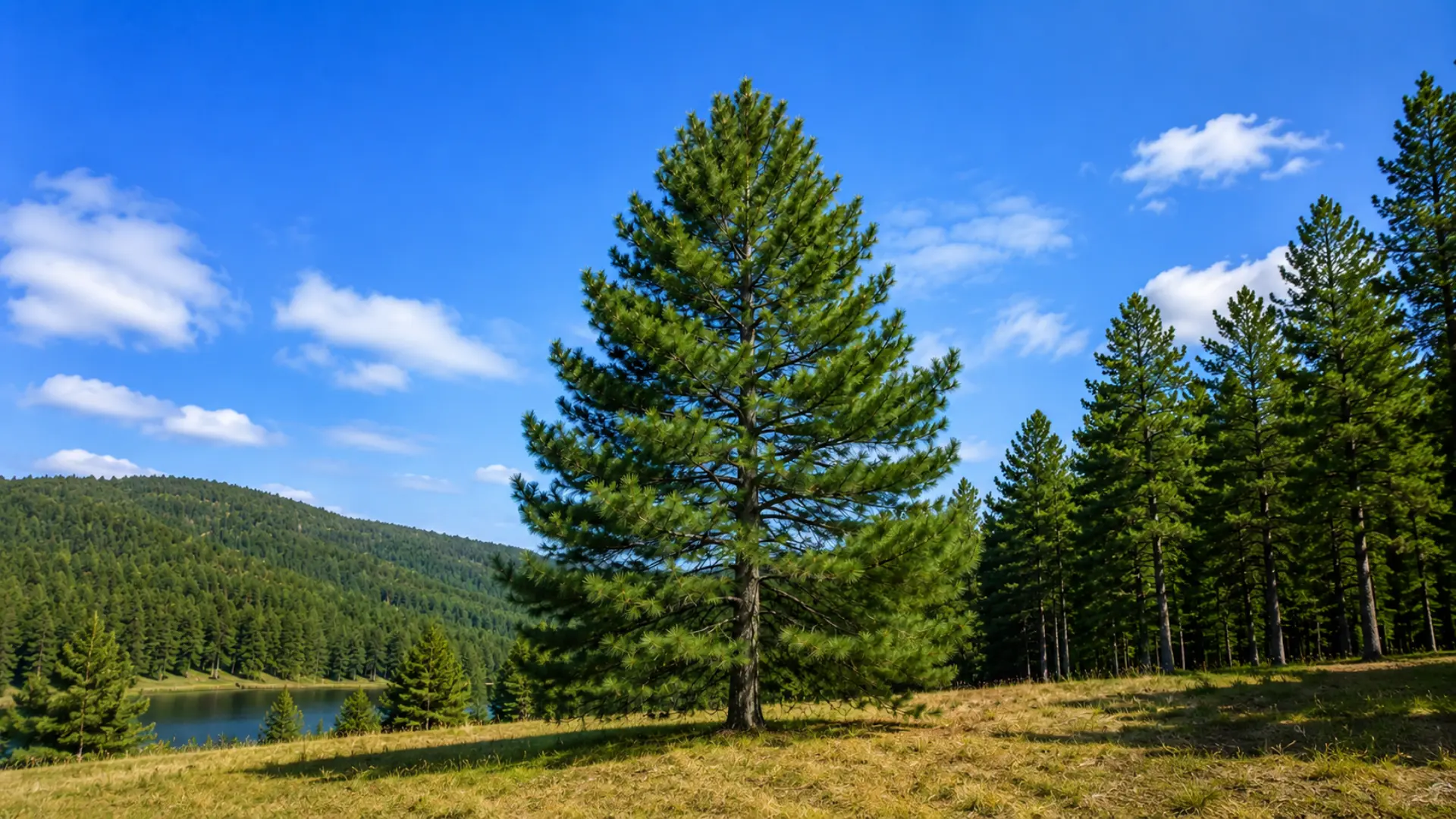
Eastern white Pine is among the most recognizable pines in North America and is widely valued for timber, landscaping, and Christmas trees. Its soft bluish green needles grow in bundles of five, creating a fine-textured look. The bark starts smooth and gray when young, then turns darker and more deeply fissured as the tree matures.
- Botanical name: Pinus strobus
- Native area: North America
- Height: 50-100 ft
2. Red Pine
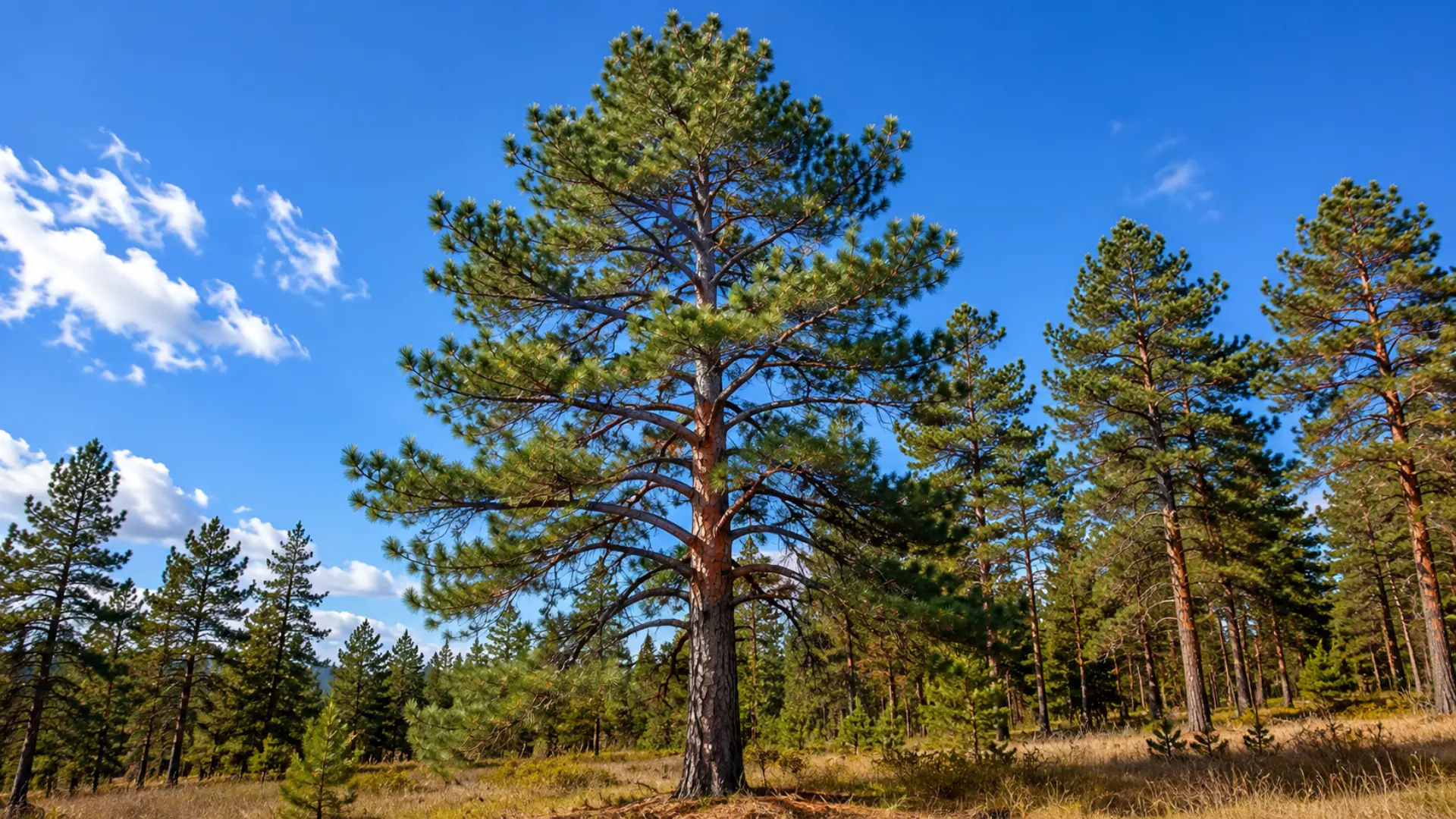
Red Pine is named for its reddish-brown scaly bark, which can also show pink or gray tones as the tree matures. Its green needles grow in pairs and usually reach four to six inches long, giving the branches a dense, full look. These paired needles and colorful bark are handy clues for spotting this northern Pine.
- Botanical name: Pinus resinosa
- Native area: Northern U.S. and Canada
- Height: 75+ ft
3. Pitch Pine
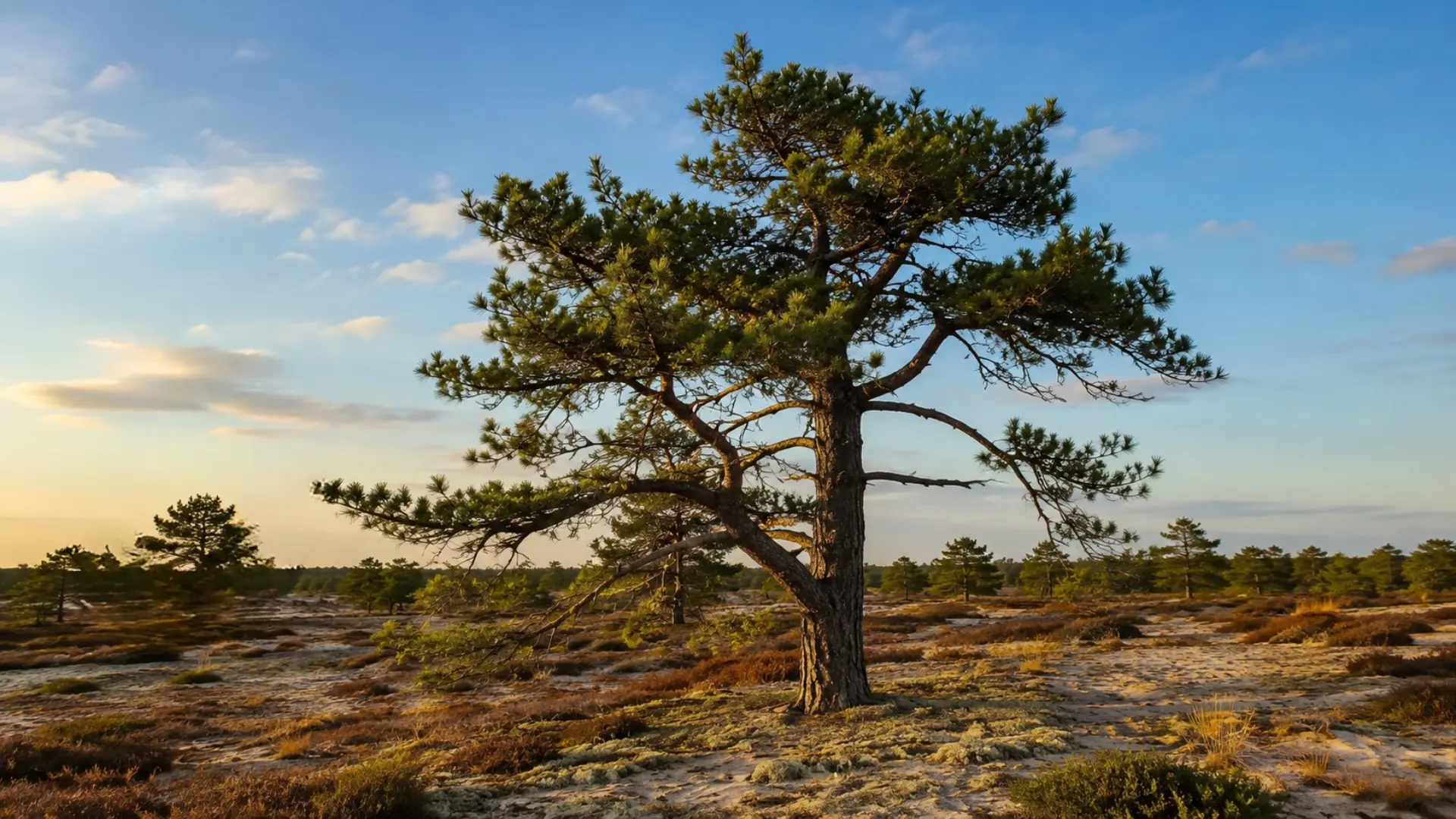
Pitch pine grows along the eastern seaboard of the United States, reaching south to northern Georgia. It is well adapted to sandy, shallow, and humid coastal soils where many other trees struggle to survive. This hardy species can tolerate tough growing conditions and may live for up to two hundred years, making it a notable eastern pine.
- Botanical name: Pinus rigida
- Native area: Eastern U.S. coast
- Height: ~100 ft
4. Virginia Pine
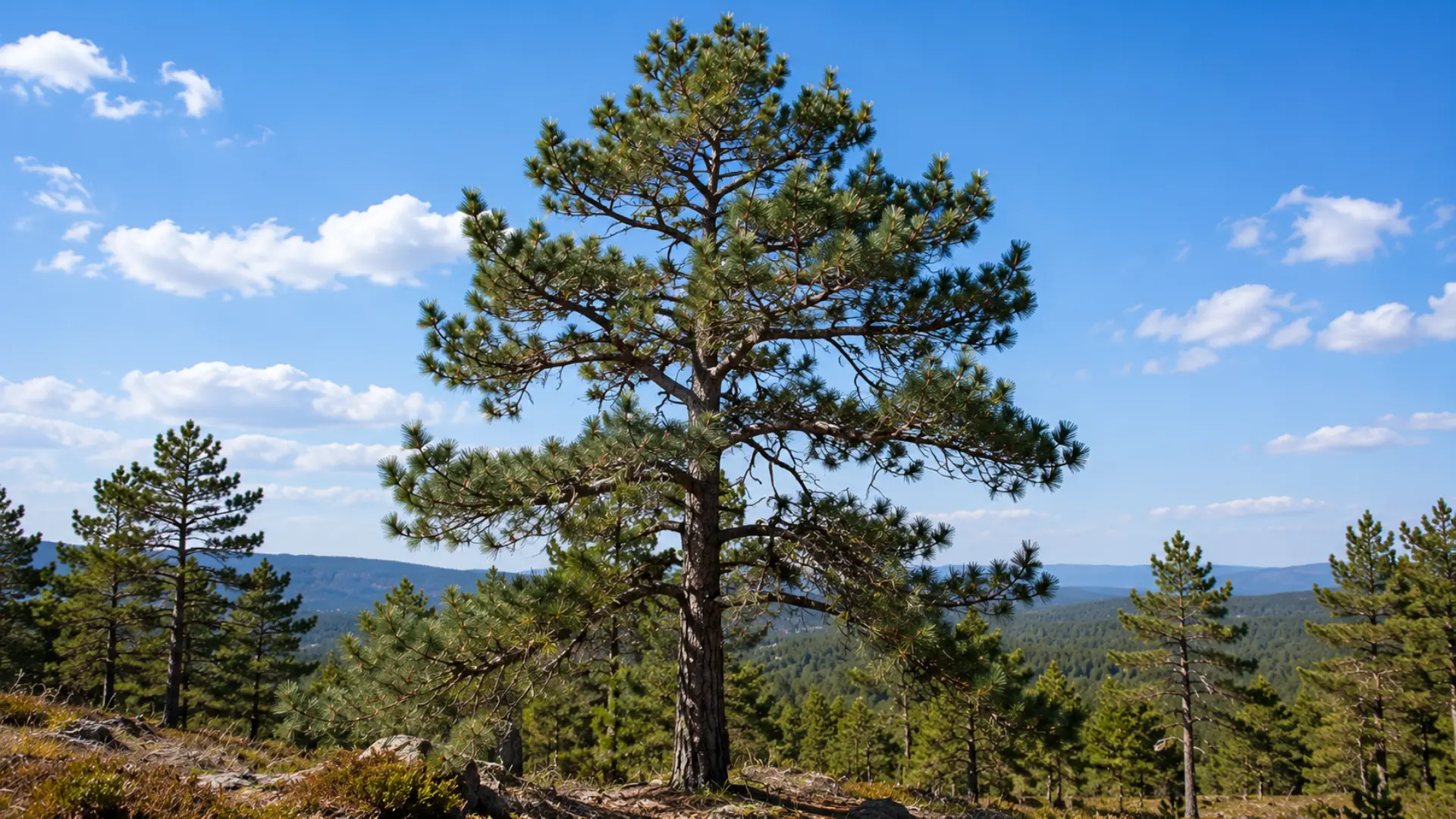
Virginia pine is a smaller pine species with a shape that changes noticeably as it matures. Young trees are usually pyramidal, while older trees develop a flatter crown.
Also called scrub pine or Jersey pine, this species draws butterflies, moths, and small mammals, making it a familiar part of many Mid-Atlantic woodland landscapes.
- Botanical name: Pinus virginiana
- Native area: Mid-Atlantic U.S.
- Height: 40-80 ft
5. Loblolly Pine
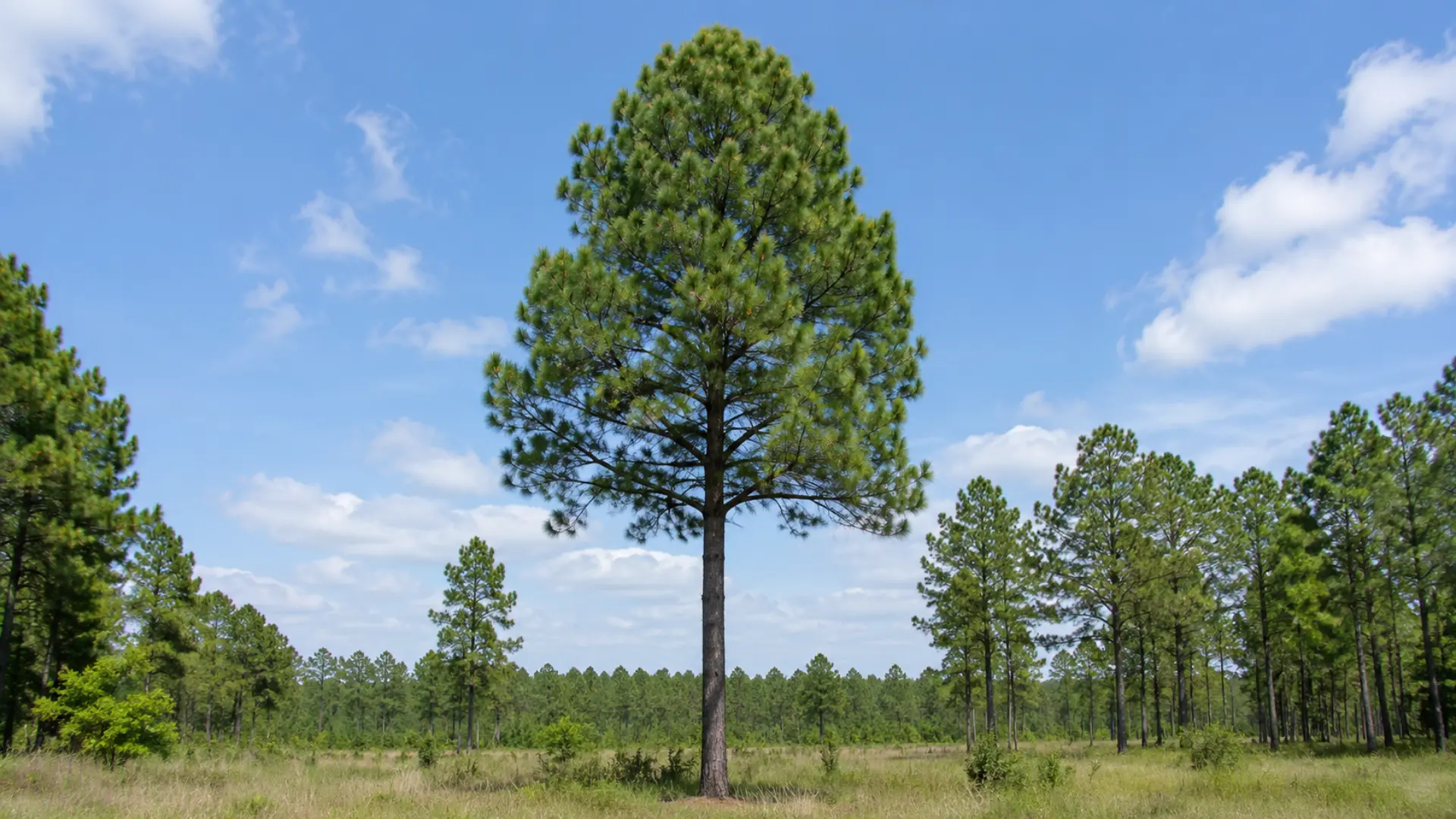
Loblolly pine is a fast-growing species found throughout the southern United States. It tolerates wet, acidic, and clay soils that many other pines do not handle well. Because of its rapid growth and flexibility, this tree is commonly used in reforestation projects and privacy screening wherever a tall, dense pine is needed in the landscape.
- Botanical name: Pinus taeda
- Native area: Southern U.S.
- Height: Up to 80 ft, spread 30-35 ft
6. Longleaf Pine
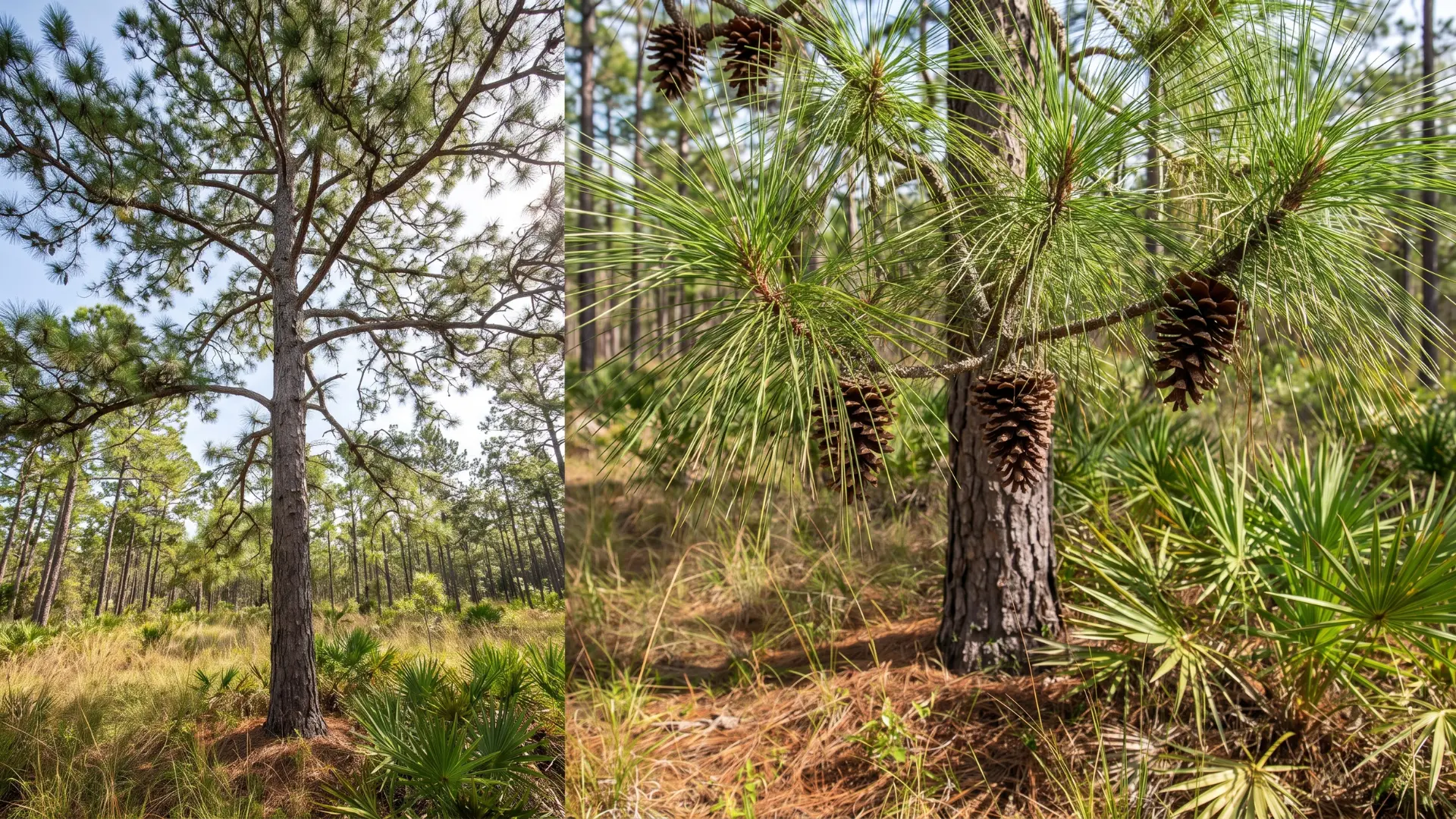
Longleaf pine is known for its long bright green needles and thick scaly bark, which give the tree a distinctive look. This southeastern species develops slowly and can take up to 150 years to mature.
It also forms an important part of the southeastern forest ecosystem where it grows naturally across the region.
- Botanical name: Pinus palustris
- Native area: Southeastern U.S.
- Height: 100+ ft
7. Shortleaf Pine
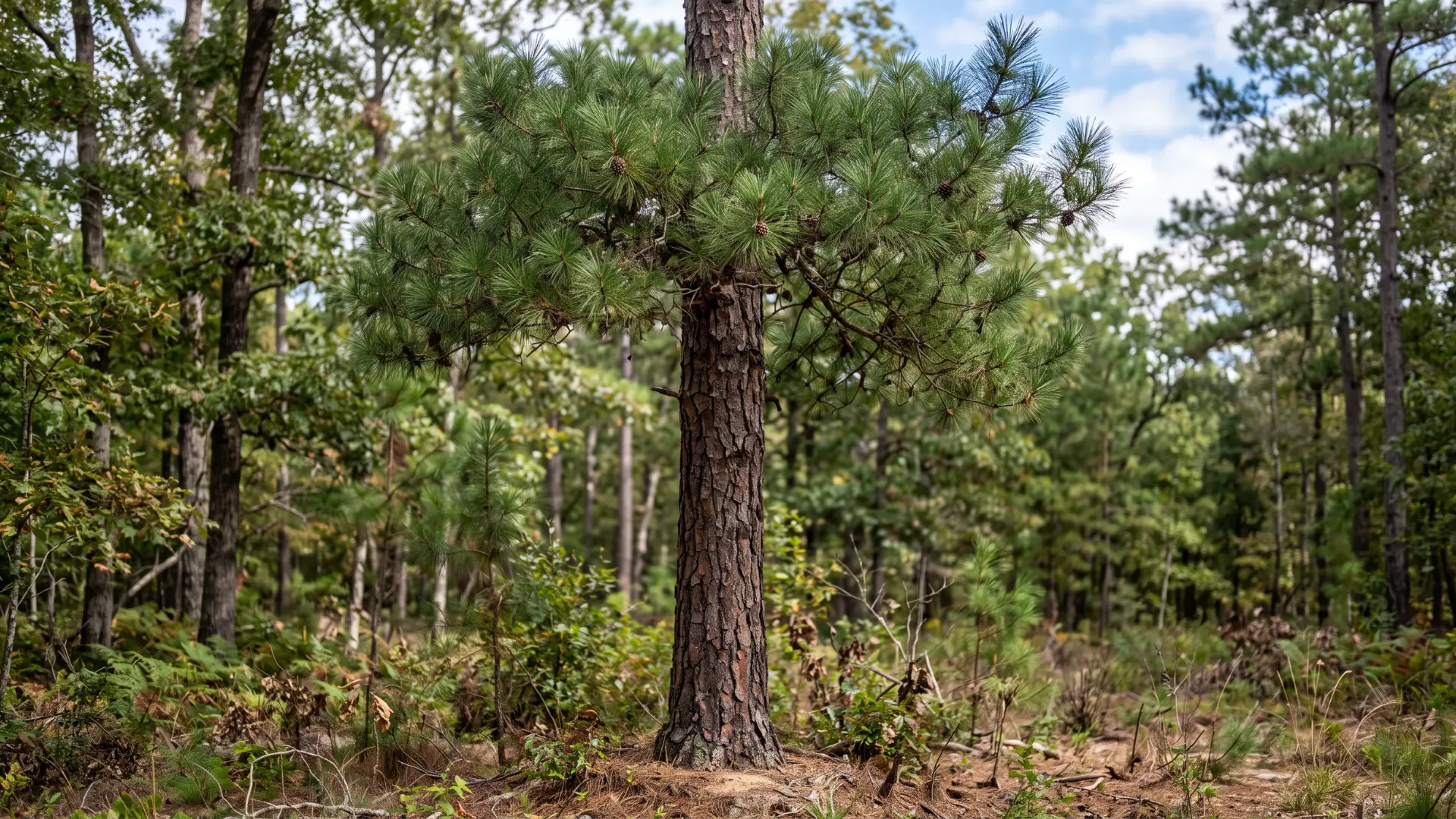
Shortleaf pine has the widest natural range of any pine in the southeastern United States, making it an important and widespread forest species. It is also one of the region’s major commercial conifers and is widely harvested for lumber and pulpwood. Its broad distribution and economic value make it a significant pine across southeastern forests.
- Botanical name: Pinus echinata
- Native area: Southeastern U.S.
- Height: 80-100 ft
8. Ponderosa Pine
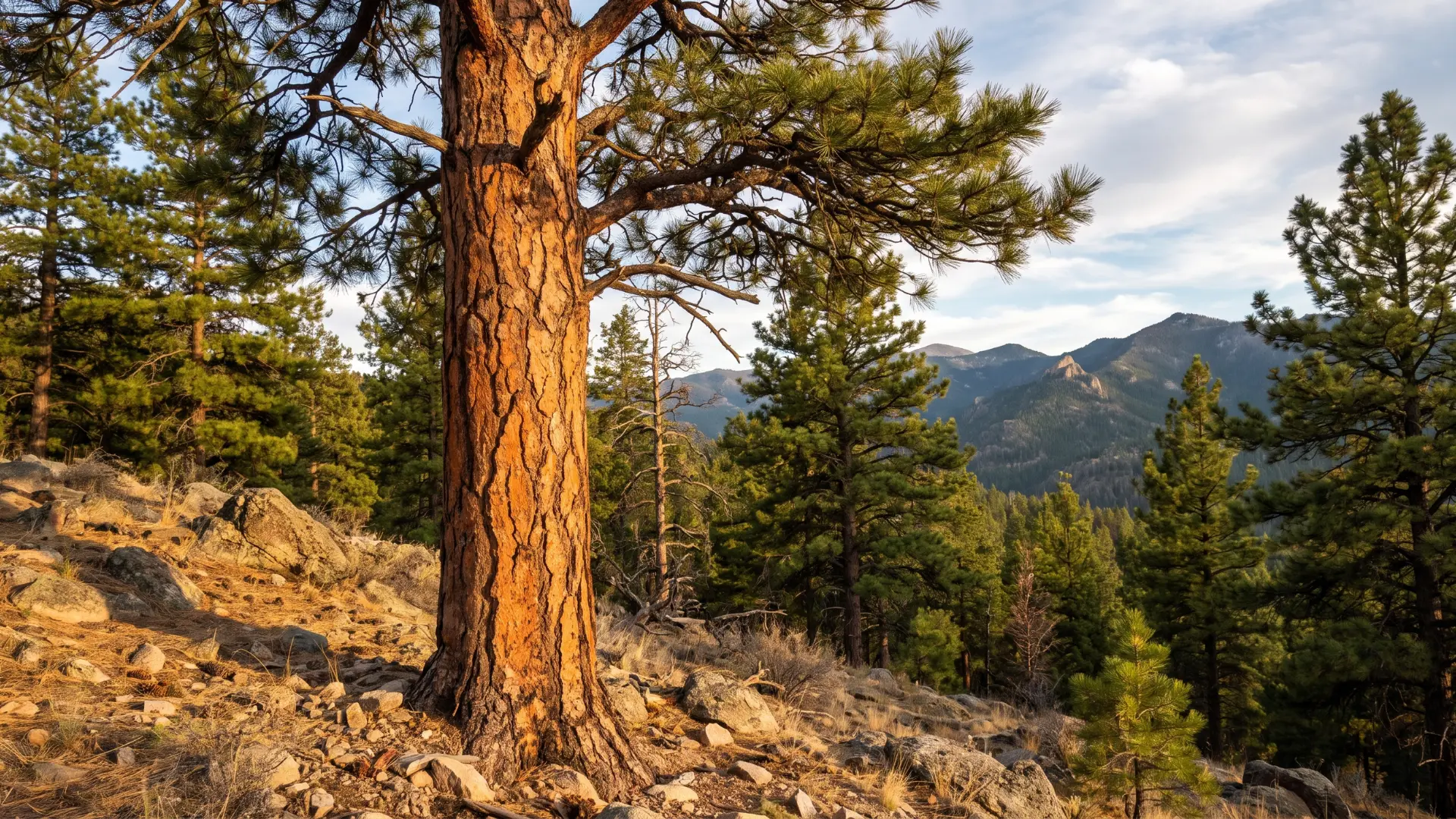
Ponderosa pine, also called western yellow Pine, grows across a broad range from southern Canada into Mexico. Mature trees develop rough, plate-like bark that gives the trunk a distinctive textured look.
Its needles commonly grow in bundles of three, which together with the bark and large size offer handy clues for spotting this widespread western Pine.
- Botanical name: Pinus ponderosa
- Native area: Western North America
- Height: 80+ ft
9. Lodgepole Pine
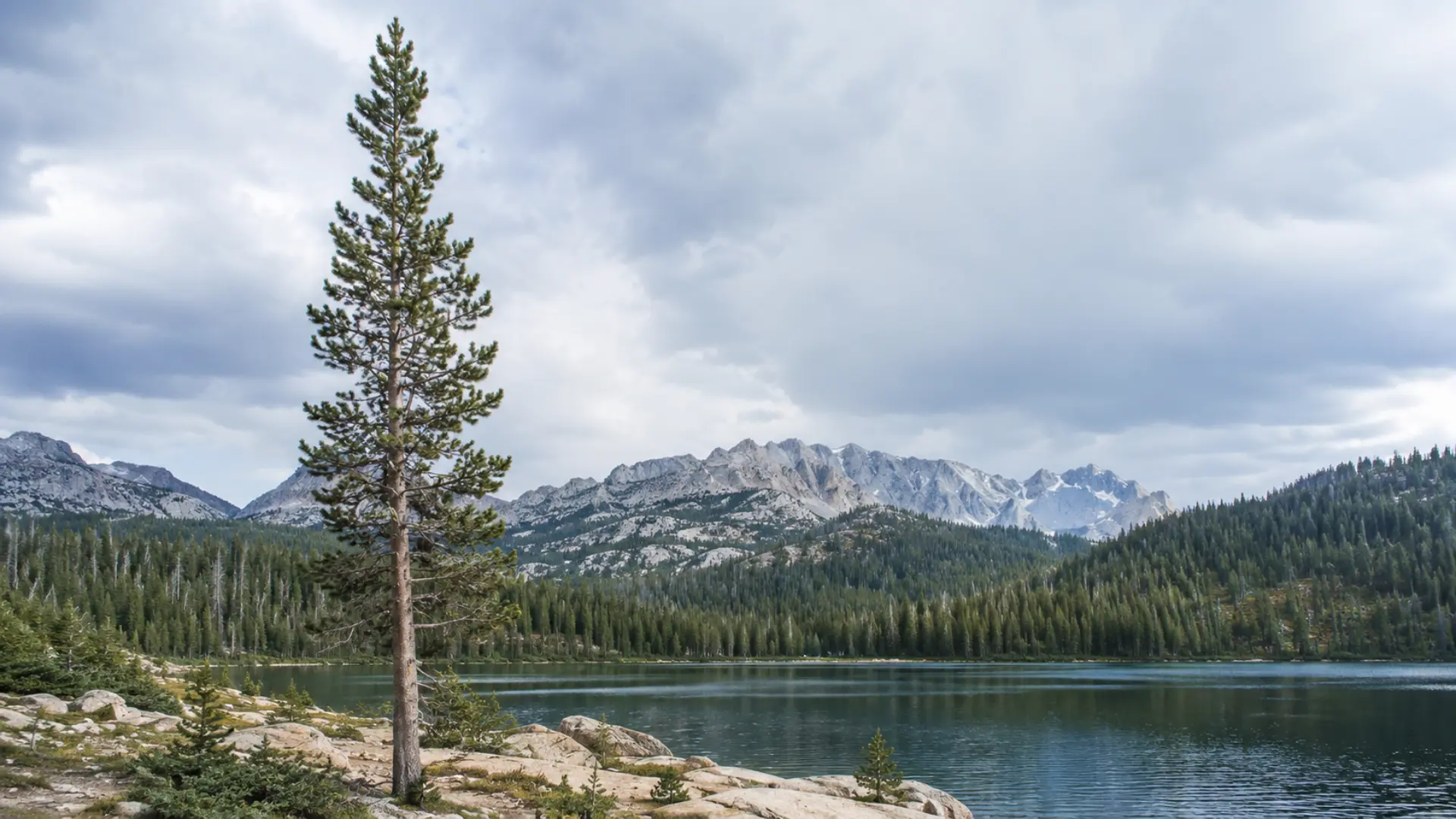
Lodgepole pine stands out for its slender trunk and narrow crown, which give the tree a tall, upright look. It tolerates a wide range of moisture conditions and grows fast for a mountain pine.
Although some trees reach impressive heights, many lodgepole pines stay smaller depending on the conditions of their western North American habitat.
- Botanical name: Pinus contorta
- Native area: Western North America
- Height: Up to 150 ft
10. Western White Pine
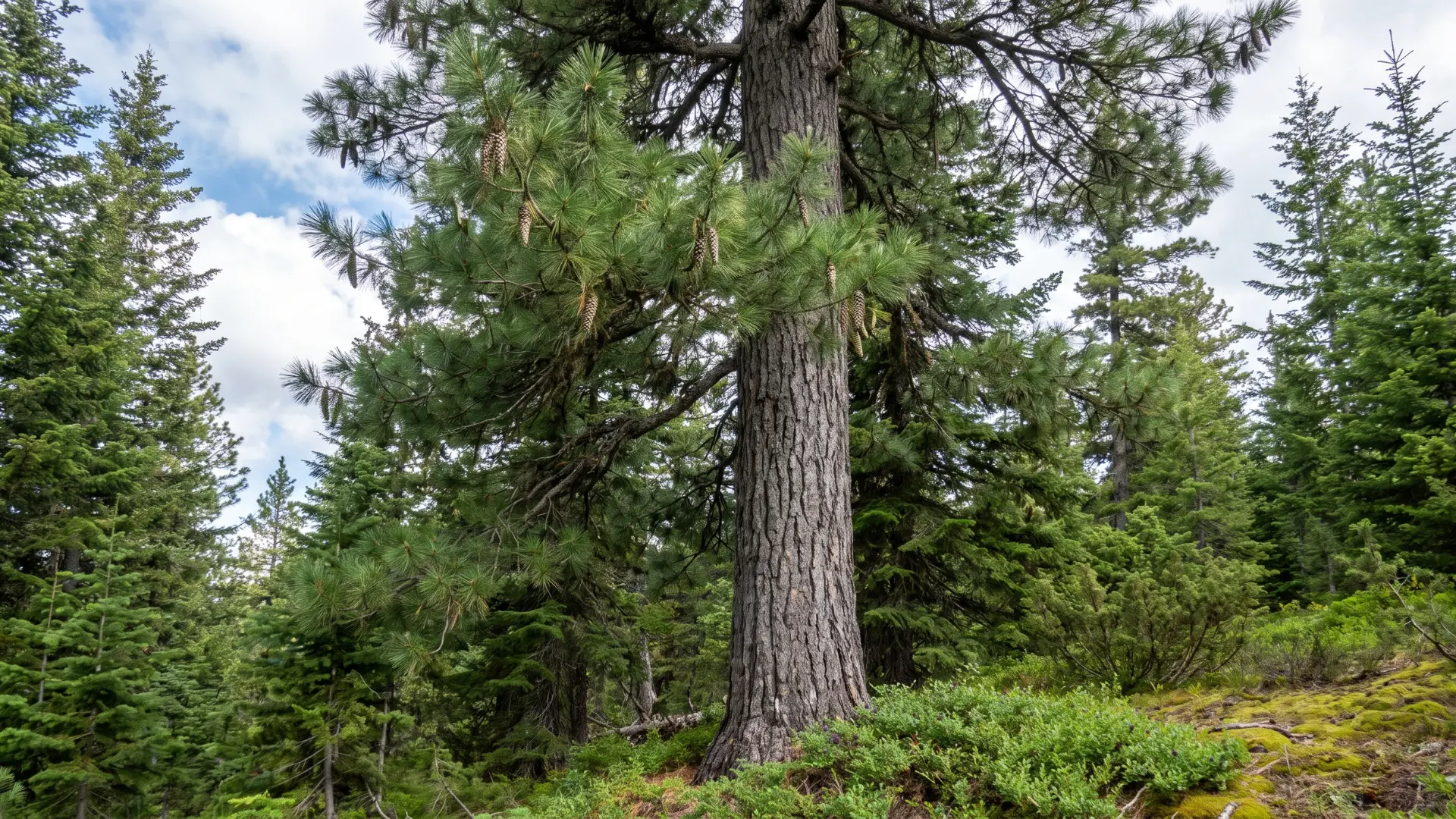
Western white Pine is a close relative of eastern white Pine and ranks among the largest pine species. Mature trees can occasionally grow beyond 150 feet, giving them a striking presence in western forests. It is also known as silver pine or Idaho white pine, names that reflect its close ties to the Pacific Northwest.
- Botanical name: Pinus monticola
- Native area: Pacific Northwest
- Height: Up to 150+ ft
11. Whitebark Pine
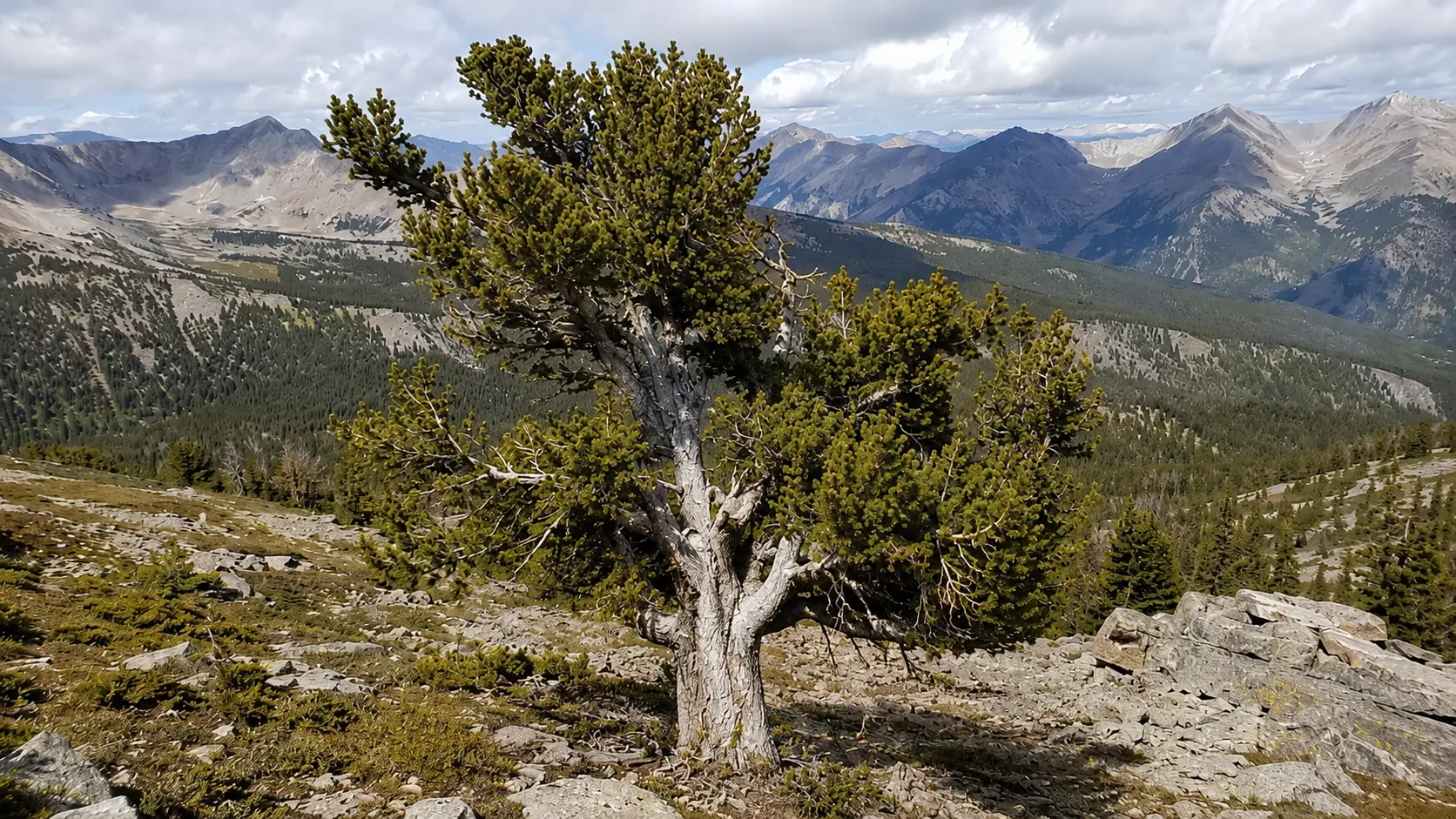
Whitebark pine is a rugged high-elevation species that grows near the tree line across western North America. Its exposed habitat often gives it a low, scrubby form compared with taller forest pines.
The species is rarely used in landscaping and is currently threatened in parts of its natural range, making it an important mountain pine to protect.
- Botanical name: Pinus albicaulis
- Native area: Western U.S. and Canada
- Height: 20-60 ft
12. Coulter Pine
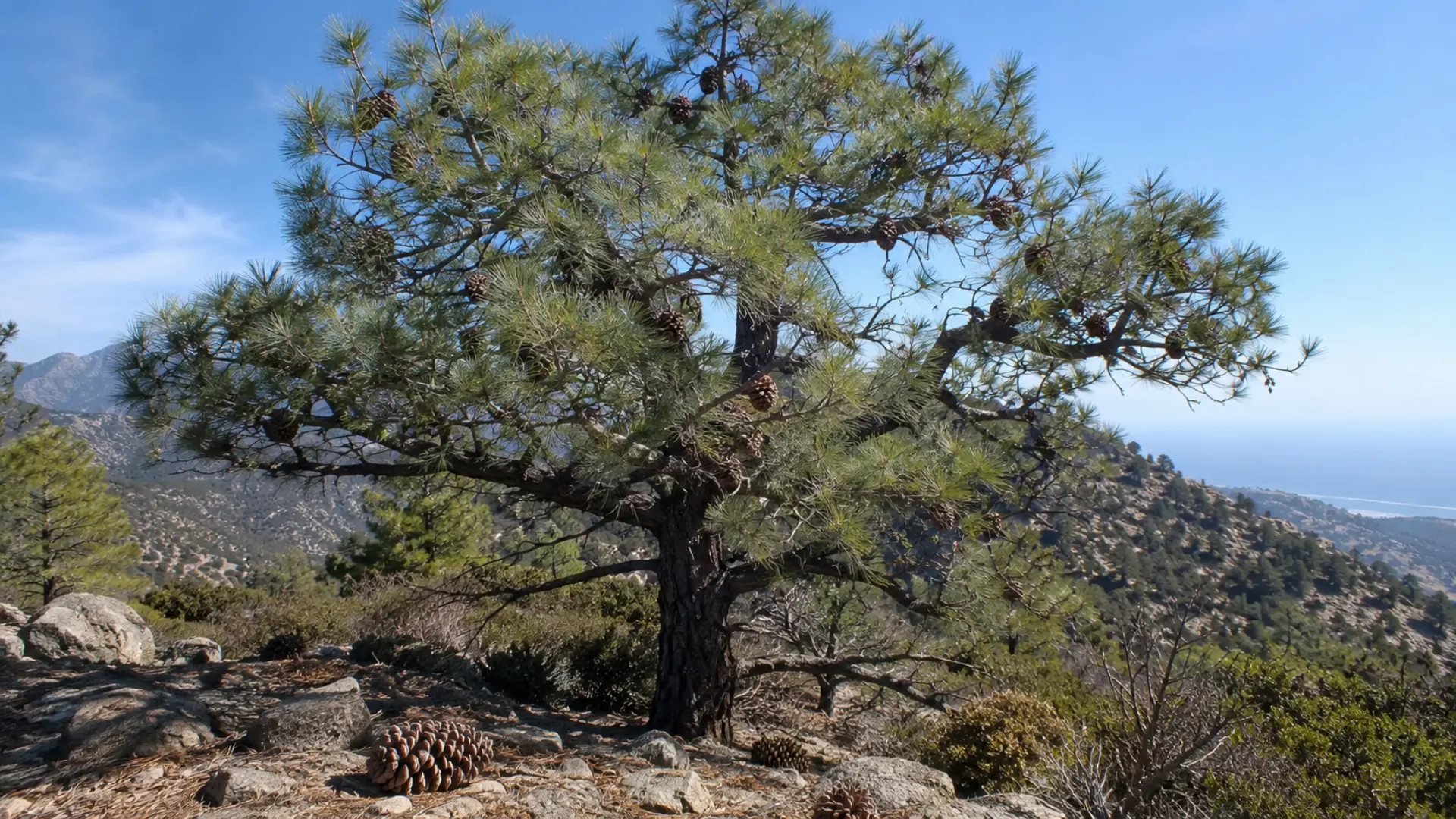
Coulter pine is native to coastal California and northern Baja California and is especially known for its exceptionally large, heavy cones.
The tree often develops an irregular open crown that adds to its distinctive look. These massive cones, combined with the open branching, make Coulter pine one of the easier species to recognize in its native range.
- Botanical name: Pinus coulteri
- Native area: California, Mexico
- Height: 40-100 ft
13. Great Basin Bristlecone Pine
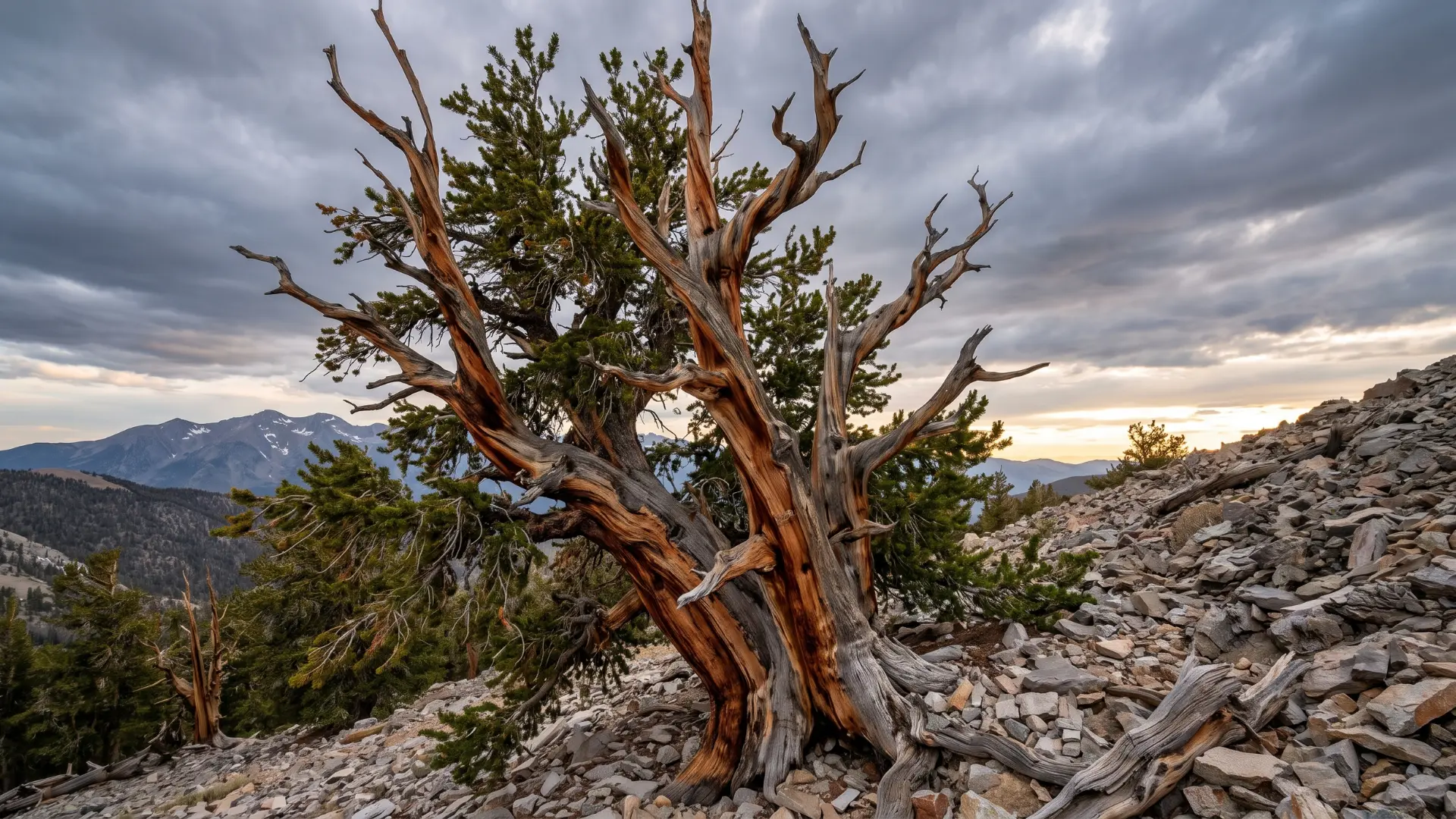
Great Basin bristlecone pine is one of the world’s longest-living non-clonal tree species. It grows extremely slowly on exposed rocky slopes where strong winds, harsh weather, and difficult terrain shape its look. Mature trees often develop twisted, irregular forms that reflect the severe, high-elevation environments in which this remarkable Pine can survive.
- Botanical name: Pinus longaeva
- Native area: California, Nevada, and Utah
- Height: Usually 40-60 ft
Types of European and Mediterranean Pine Trees
European and Mediterranean pine trees grow across a wide range of environments, from cold northern forests and rocky mountain slopes to warm, dry coastal regions. These species vary in their needles, crown shape, and tolerance to drought or cold, making each one well suited to its native landscape.
14. Aleppo Pine
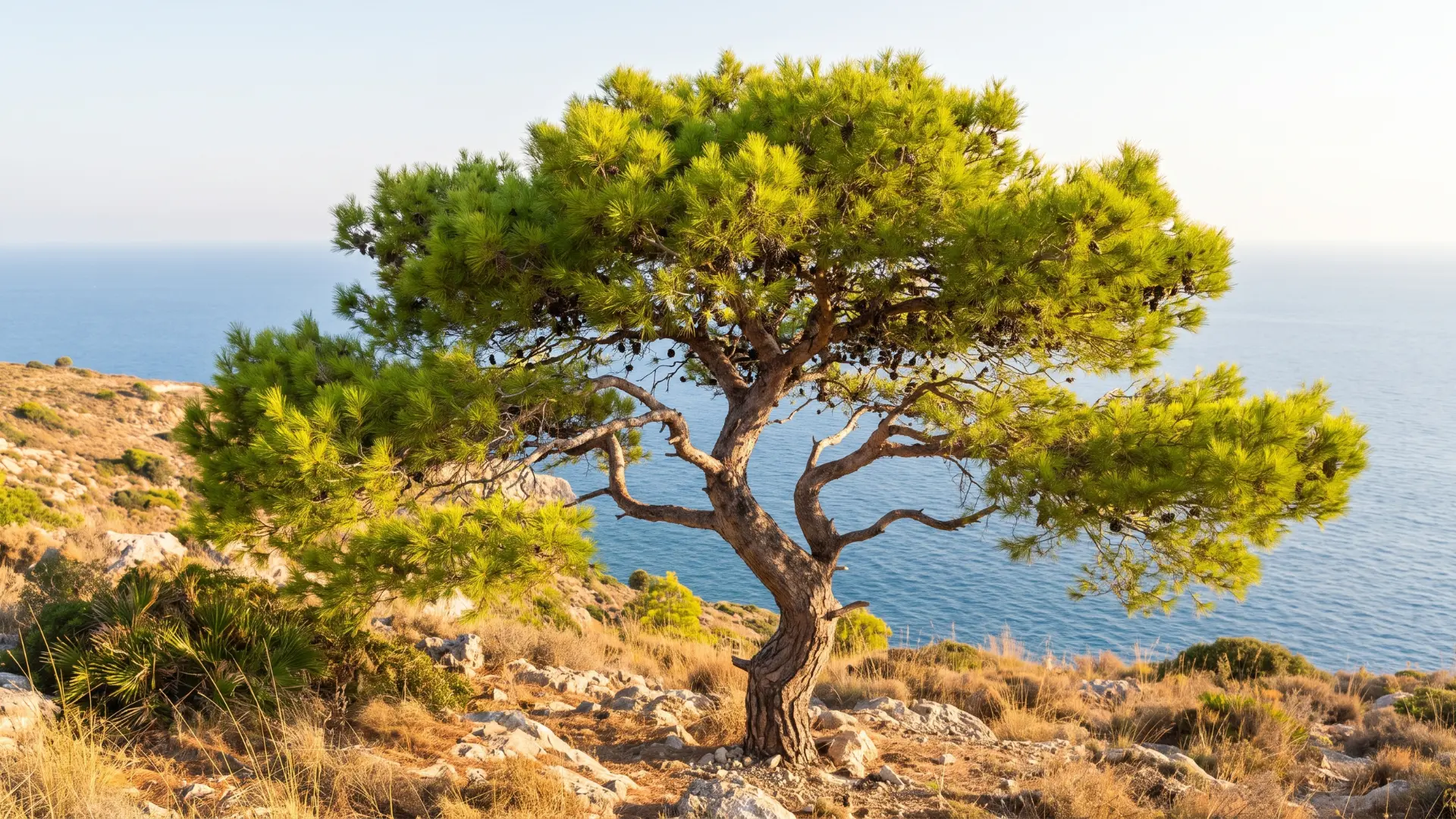
Aleppo pine is an extremely drought-tolerant species tied to the warm, dry landscapes of the Mediterranean region. It has light yellowish green needles and gray-brown bark, which give the tree a distinctive look. Also known as Jerusalem pine, this species handles hot, dry climates especially well, where many less tolerant trees would struggle.
- Botanical name: Pinus halepensis
- Native area: Mediterranean region
- Height: 30-80 ft
15. Austrian Pine
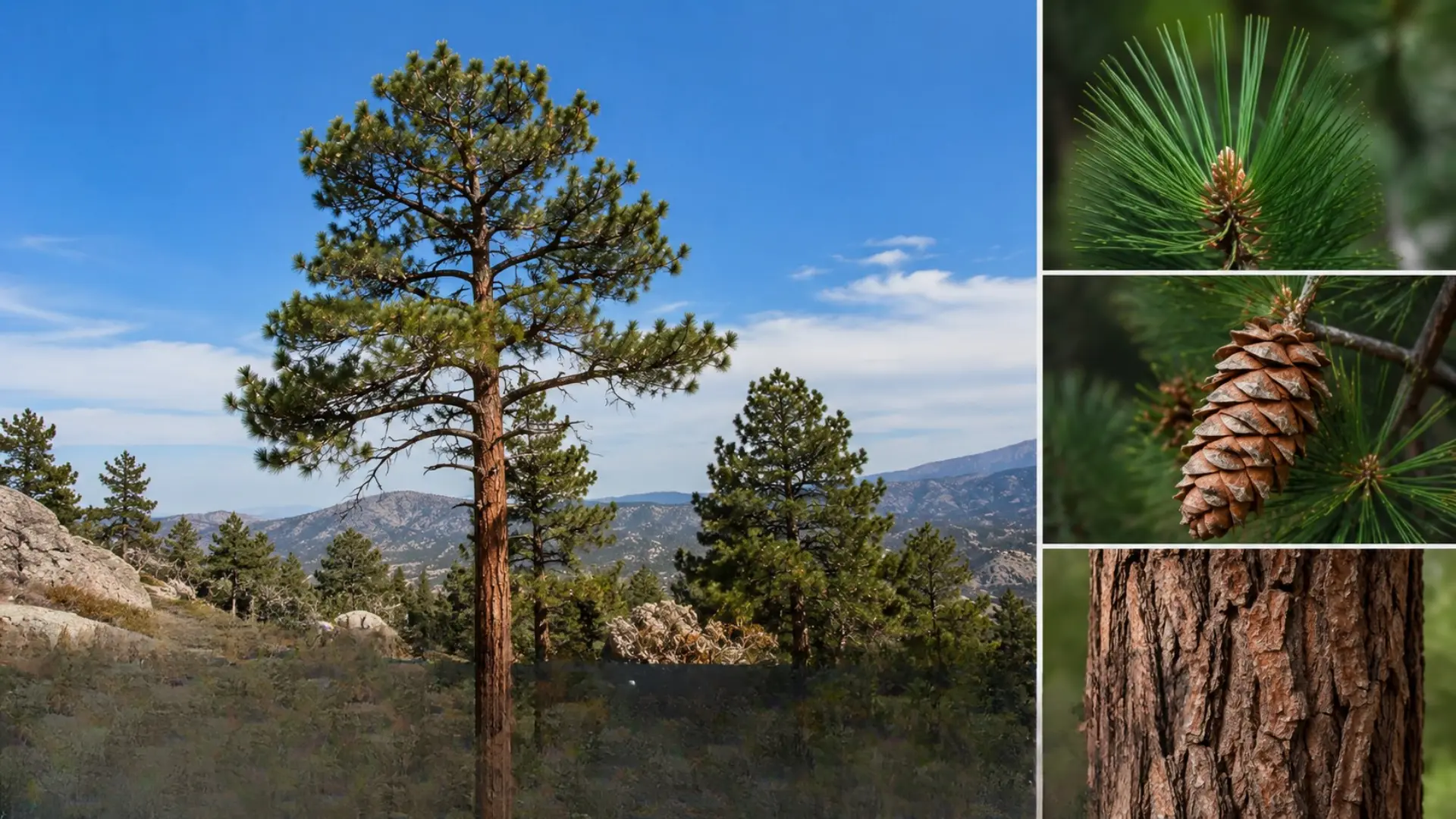
Austrian Pine, also called European black Pine, changes shape noticeably as it matures. Younger trees usually have a pyramidal form, while older specimens develop a broader, rounded crown. Its dense growth and tolerance of wind and salt have made it a popular choice for screening, windbreaks, and exposed landscape settings across many European regions.
- Botanical name: Pinus nigra
- Native area: Southern Europe, North Africa, Cyprus, Turkey
- Height: 40-100 ft
16. Maritime Pine
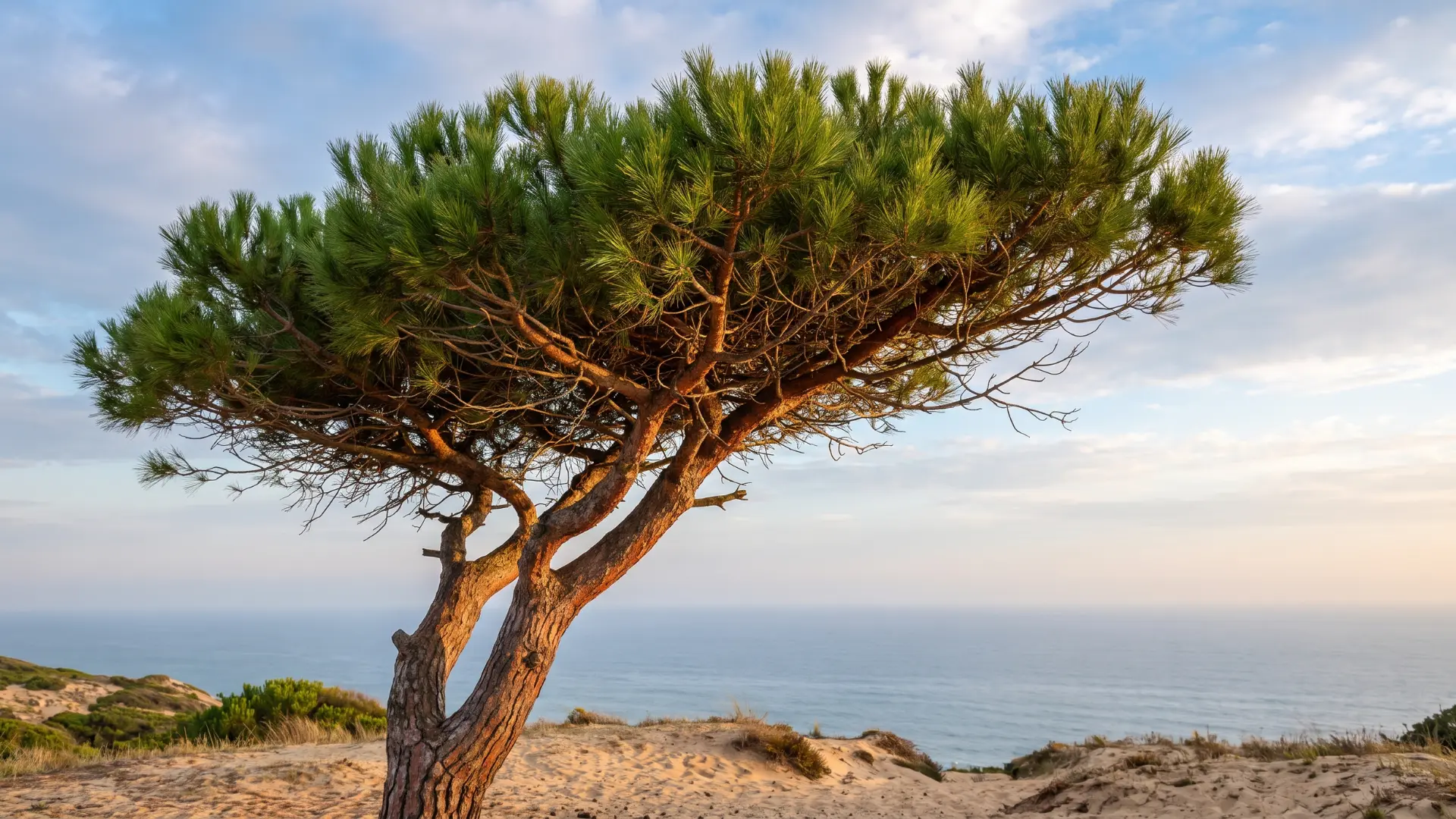
Maritime Pine is recognized by its thick red-brown bark and yellow-green needles, which create a bold textured look.
Native to southwestern Europe, the species carries real economic weight in France and Portugal. It is especially tied to the expansive Landes Forest in France, where maritime Pine has been widely grown and managed for many years.
- Botanical name: Pinus pinaster
- Native area: Southwestern Europe
- Height: Up to 130 ft
17. Stone Pine
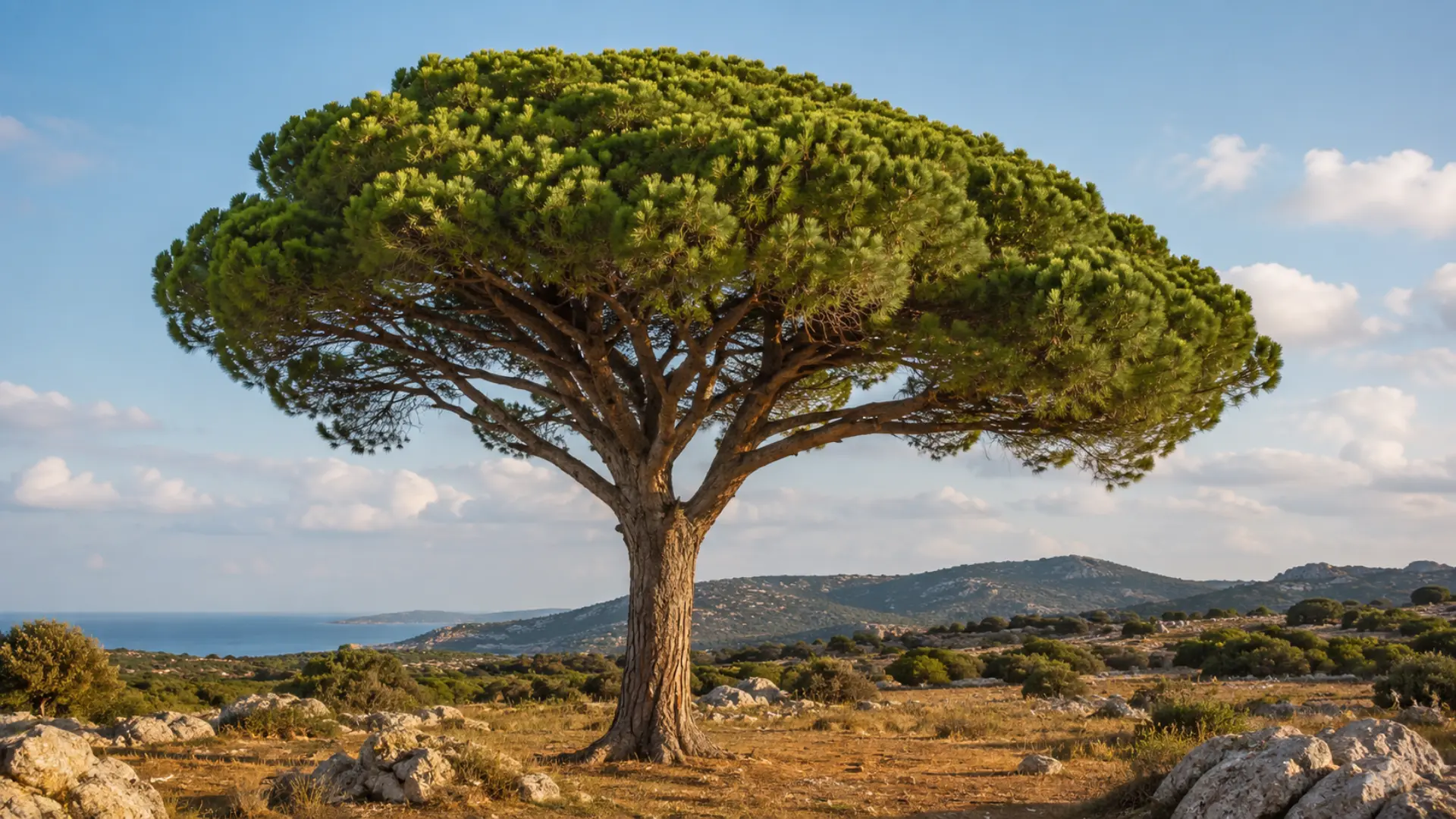
Stone pine is best known for the broad, rounded umbrella-shaped canopy that develops as the tree matures. This distinctive crown has made it a classic feature of Mediterranean landscapes. The species has also been cultivated for a long time for its edible pine nuts, adding both cultural and practical value to its recognizable look.
- Botanical name: Pinus pinea
- Native area: Mediterranean region
- Height: Usually 40-80 ft, occasionally up to 115 ft
18. Scots Pine
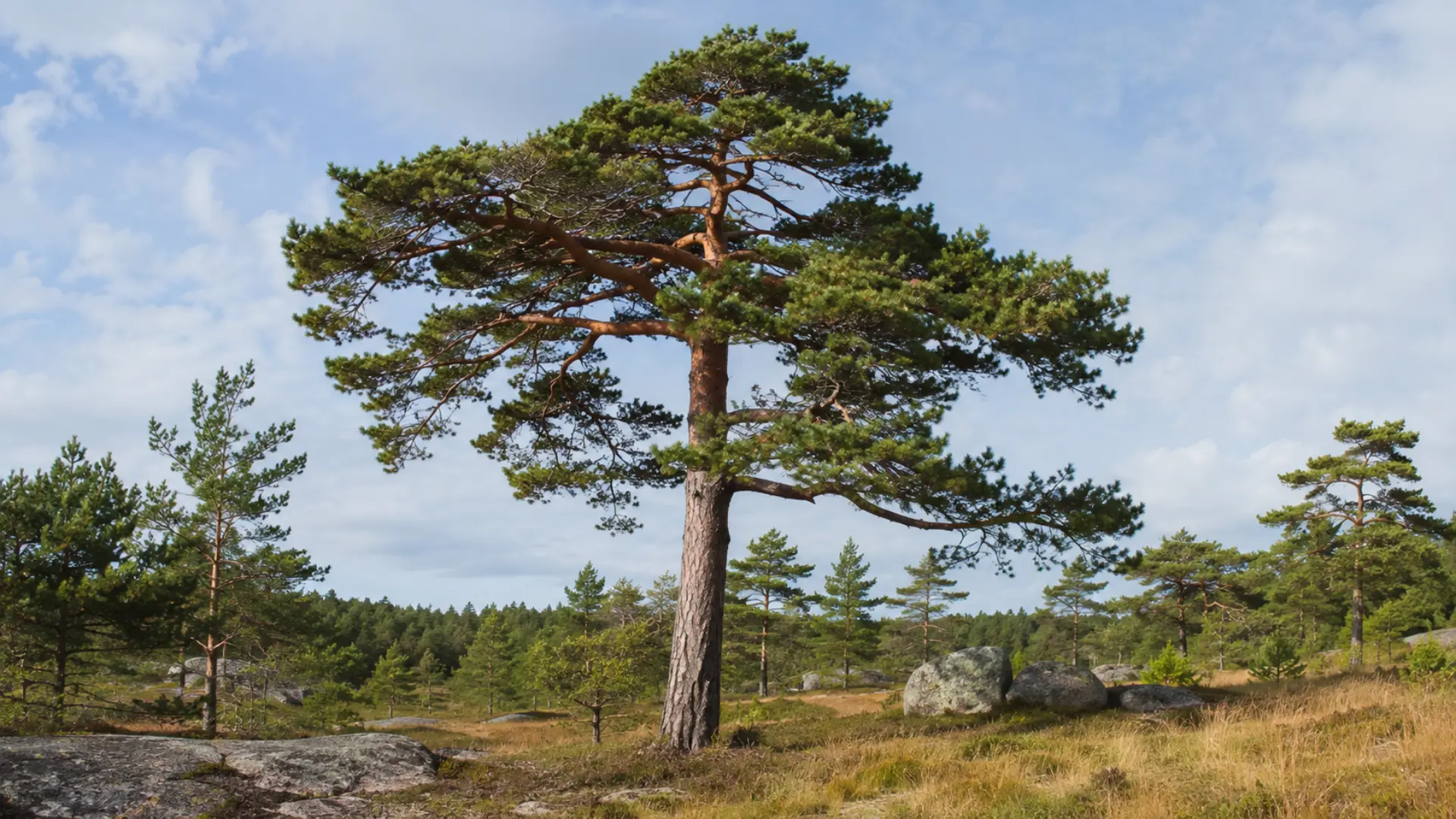
Scots Pine ranks among the most widely distributed and cold-hardy pine species. It is easy to spot by its thin flaking orange-red bark and short needles that are often slightly twisted.
The tree is also commonly sold as a Christmas tree, making this distinctive species familiar to people well beyond its broad native range.
- Botanical name: Pinus sylvestris
- Native area: Northern Europe to Asia
- Height: Usually 30-60 ft
Types of Asian Pine Trees
Asian pines include Himalayan forest trees, coastal species, valuable timber trees, and ornamental pines commonly used for bonsai.
19. Japanese Red Pine
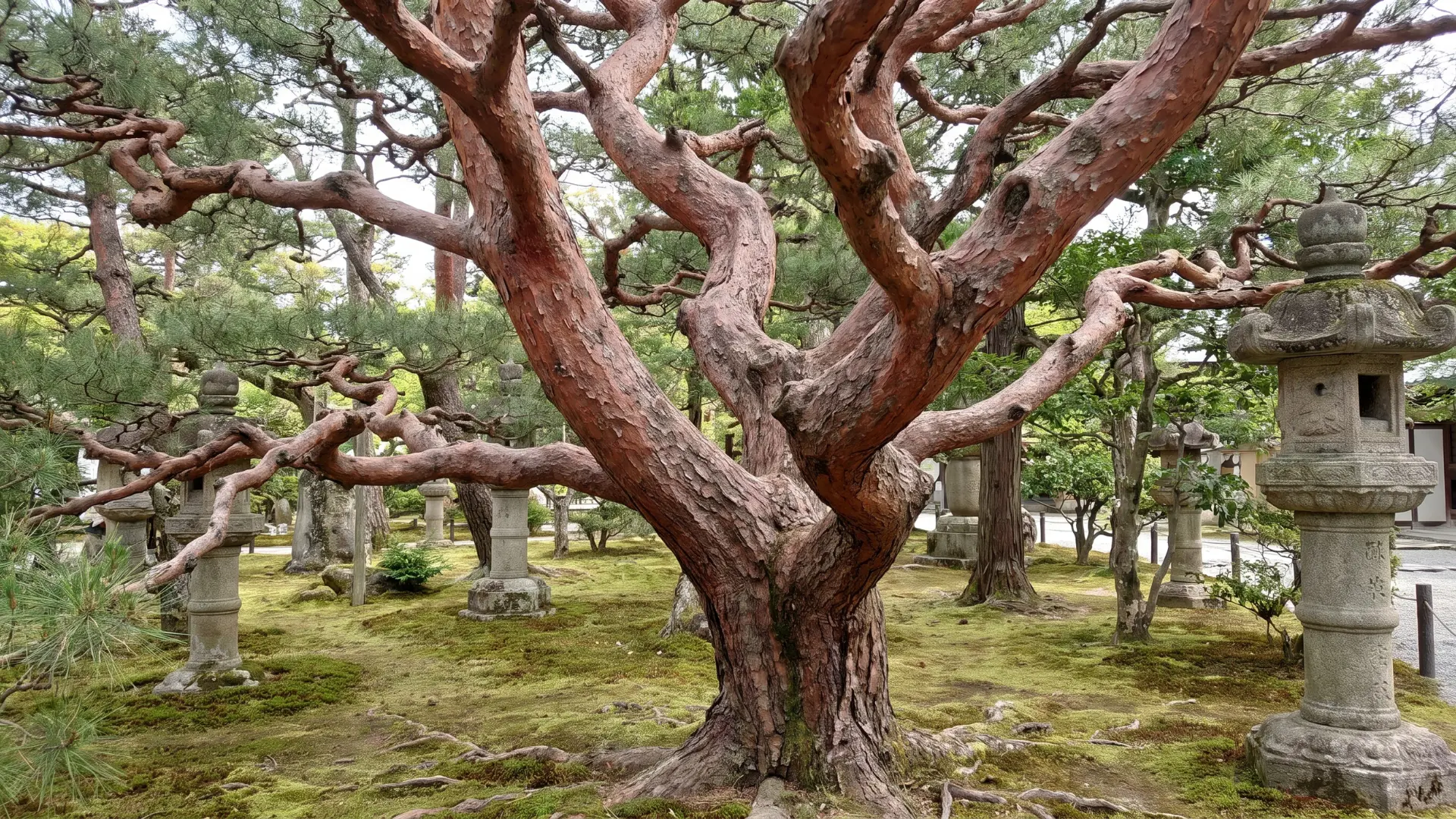
Japanese red Pine is among the most common native pine species in Japan. It has reddish flaking bark and slender, delicate needles that give the tree a lighter, graceful look. The species is also frequently trained as bonsai, where its fine foliage, distinctive bark, and natural form can be shown off on a much smaller scale.
- Botanical name: Pinus densiflora
- Native area: Japan
- Height: Usually 40-60 ft
20. Japanese Black Pine
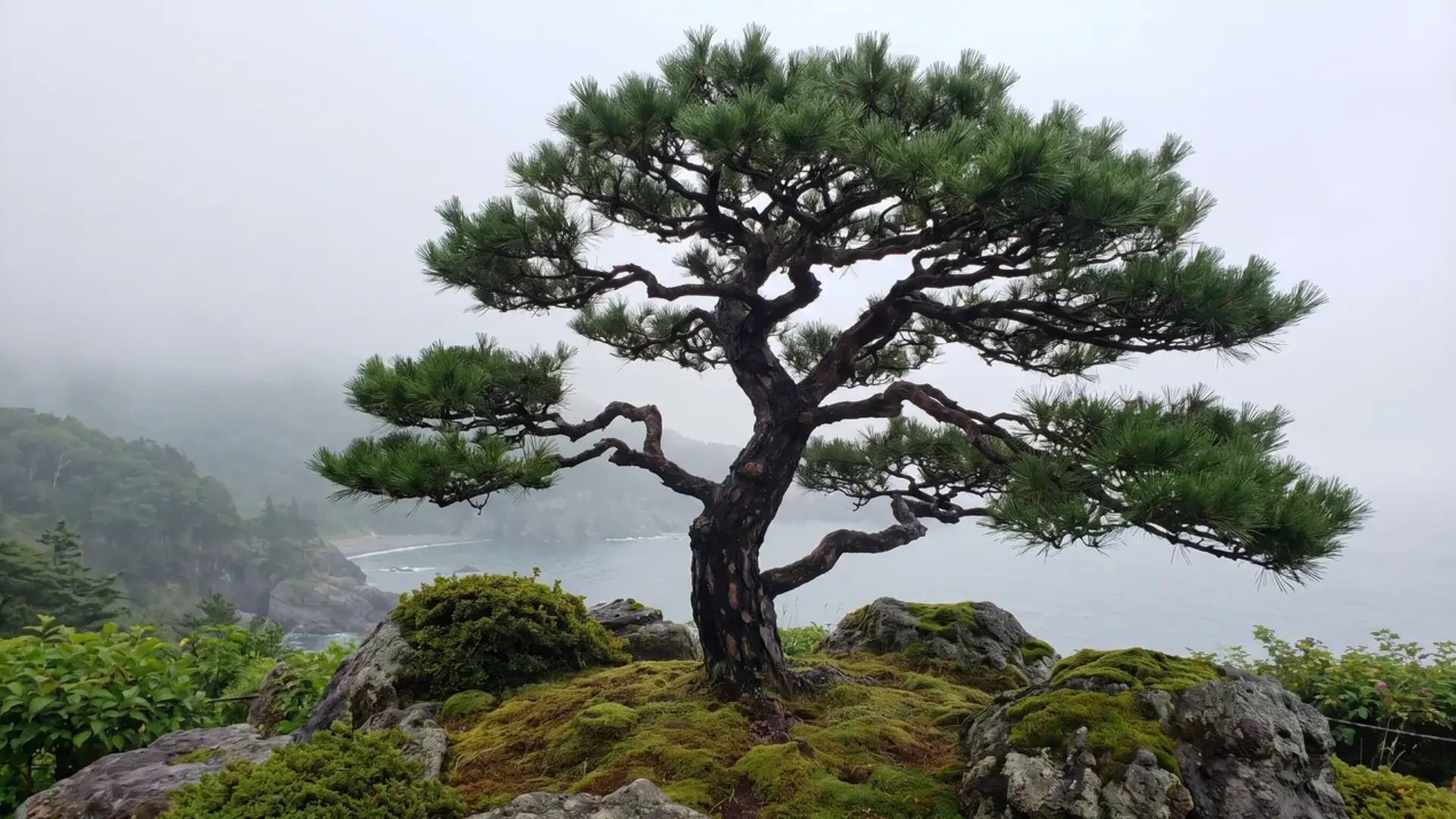
Japanese black Pine is a native Japanese species valued for its dense dark needles and strong visual character. It is widely used in landscaping and bonsai, where its rugged form is especially appreciated. The species also tolerates salt spray well, which has made it a common coastal windbreak in exposed areas close to the sea.
- Botanical name: Pinus thunbergii
- Native area: Japan
- Height: 20-60 ft
21. Chir Pine
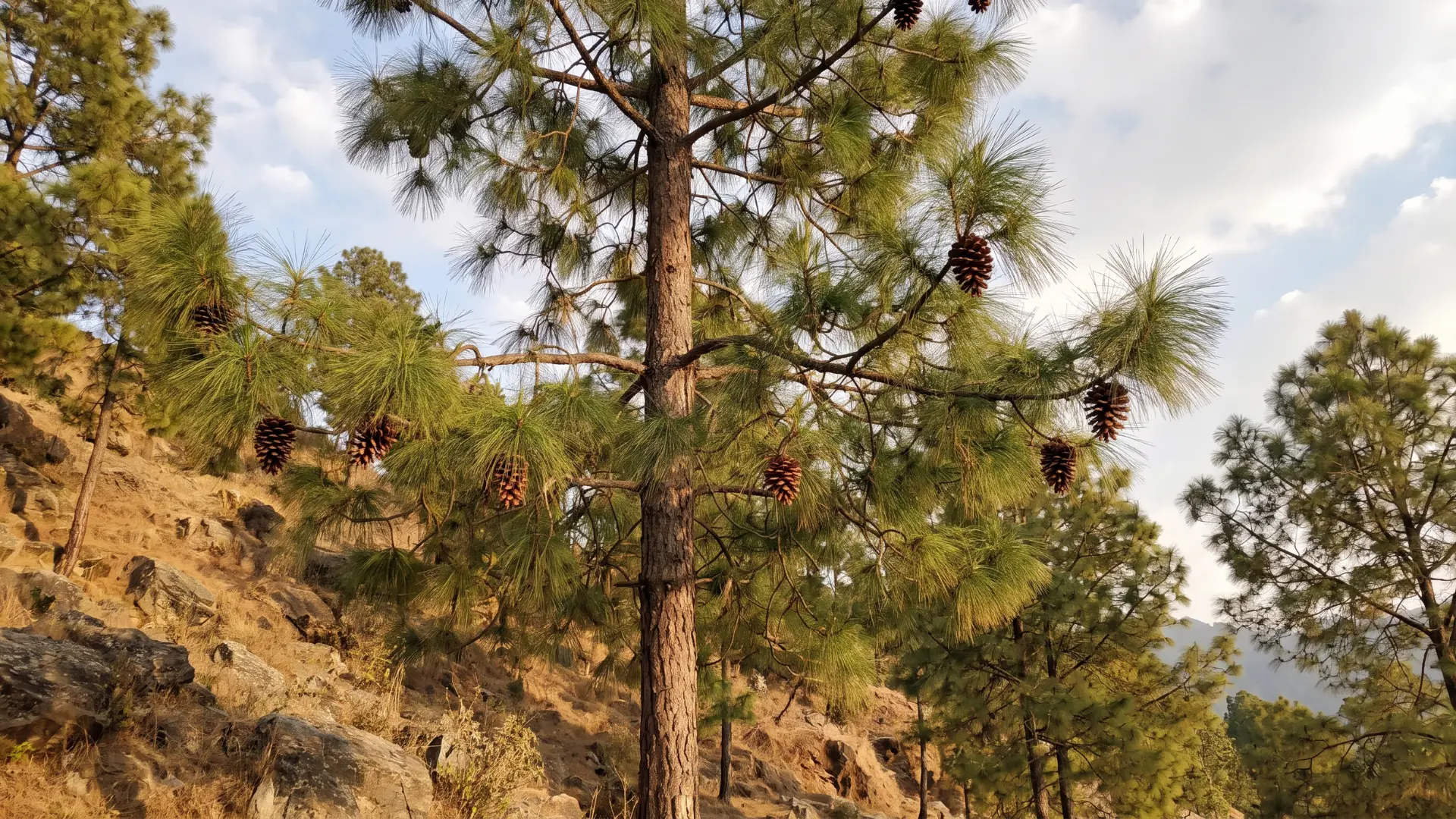
Chir pine is native to the Himalayan regions of Asia and can grow into a towering forest tree. It is known for long, fluffy-looking needle bundles that create a distinctive soft texture. Its thick, reddish bark deepens with age, adding another handy clue for recognizing this impressive mountain pine species.
- Botanical name: Pinus roxburghii
- Native area: Himalayan Asia: Afghanistan, Bhutan, China, India, Myanmar, Nepal
- Height: Up to 180 ft
22. Chinese Red Pine
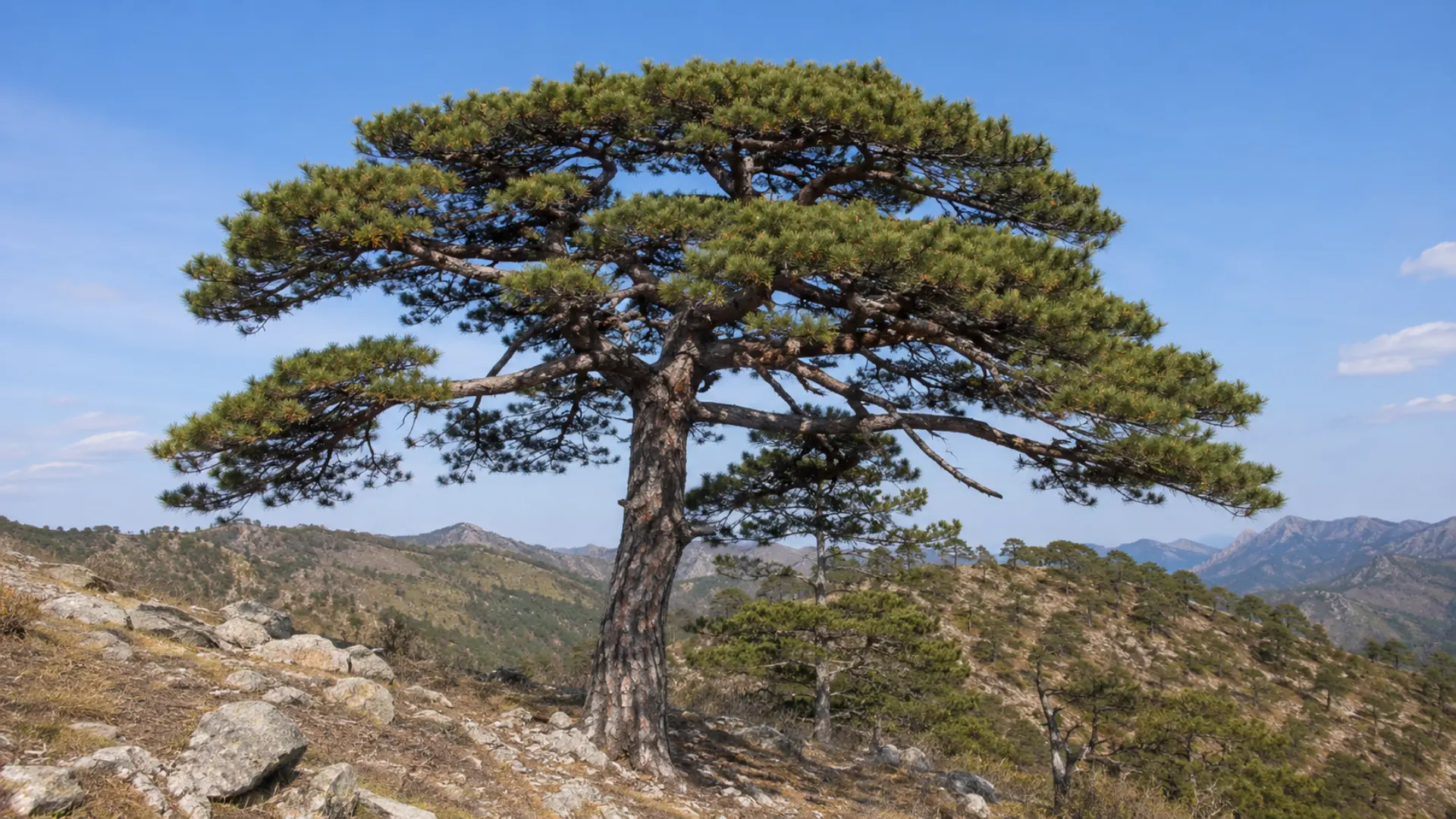
Chinese red Pine has gray-brown bark, dark green needles, and a distinctive flat-topped crown that separates it from many other pine forms. Native to China, the species develops a recognizable silhouette as it matures. Its combination of dark foliage, textured bark, and broad crown makes it visually distinctive within the mountain and forest landscapes where it grows.
- Botanical name: Pinus tabuliformis
- Native area: China
- Height: Up to 100 ft
23. Taiwan Red Pine
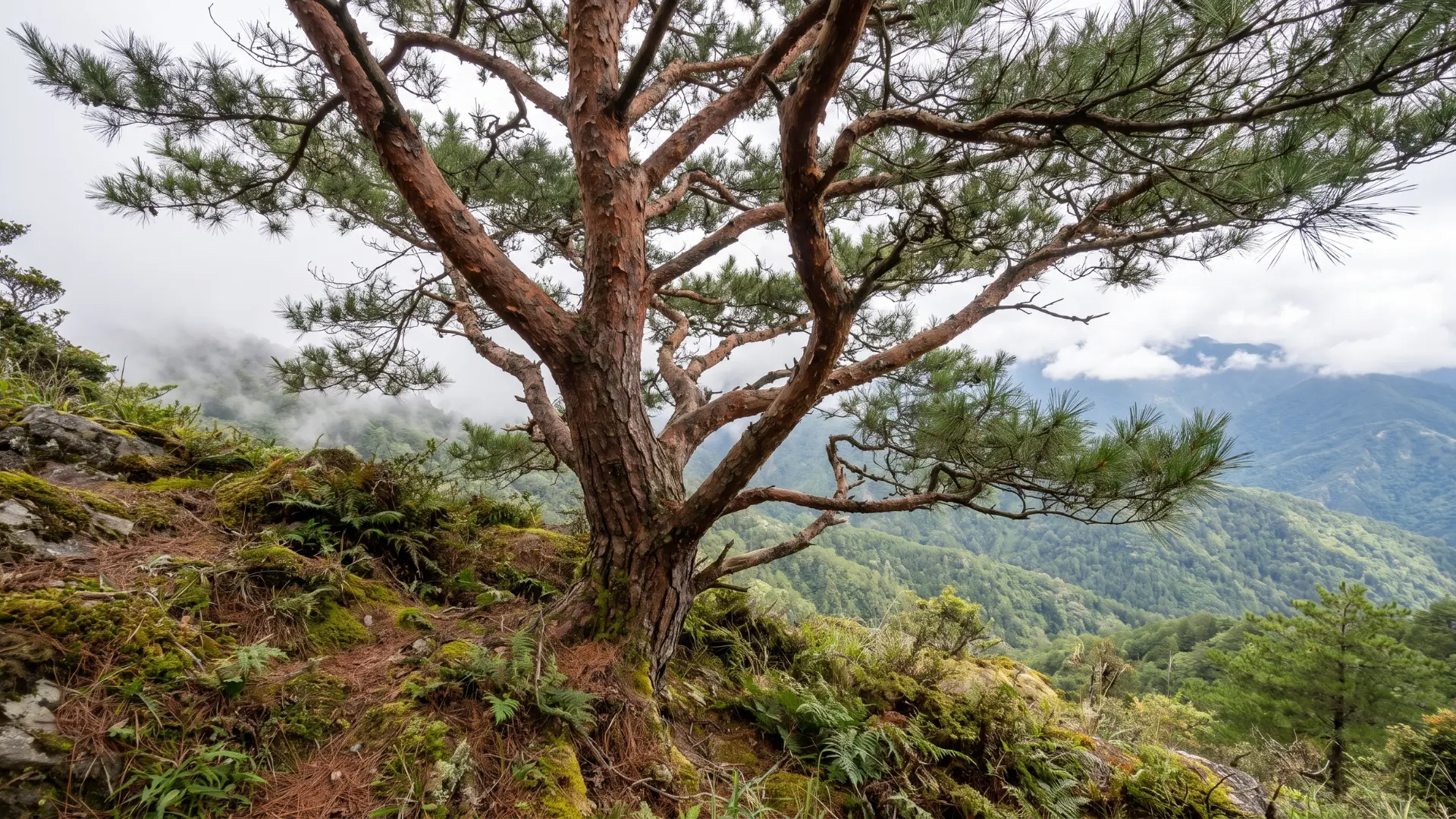
Taiwan red pine is an important timber species native to Taiwan, where it grows naturally in mountainous terrain. Its reddish bark is one of its most noticeable traits, while its moderate to tall growth gives it a strong presence in forests. Together, these features make the species a recognizable part of Taiwan’s mountain landscapes and forest communities.
- Botanical name: Pinus taiwanensis
- Native area: Taiwan
- Height: Up to 165 ft
24. Sumatran Pine
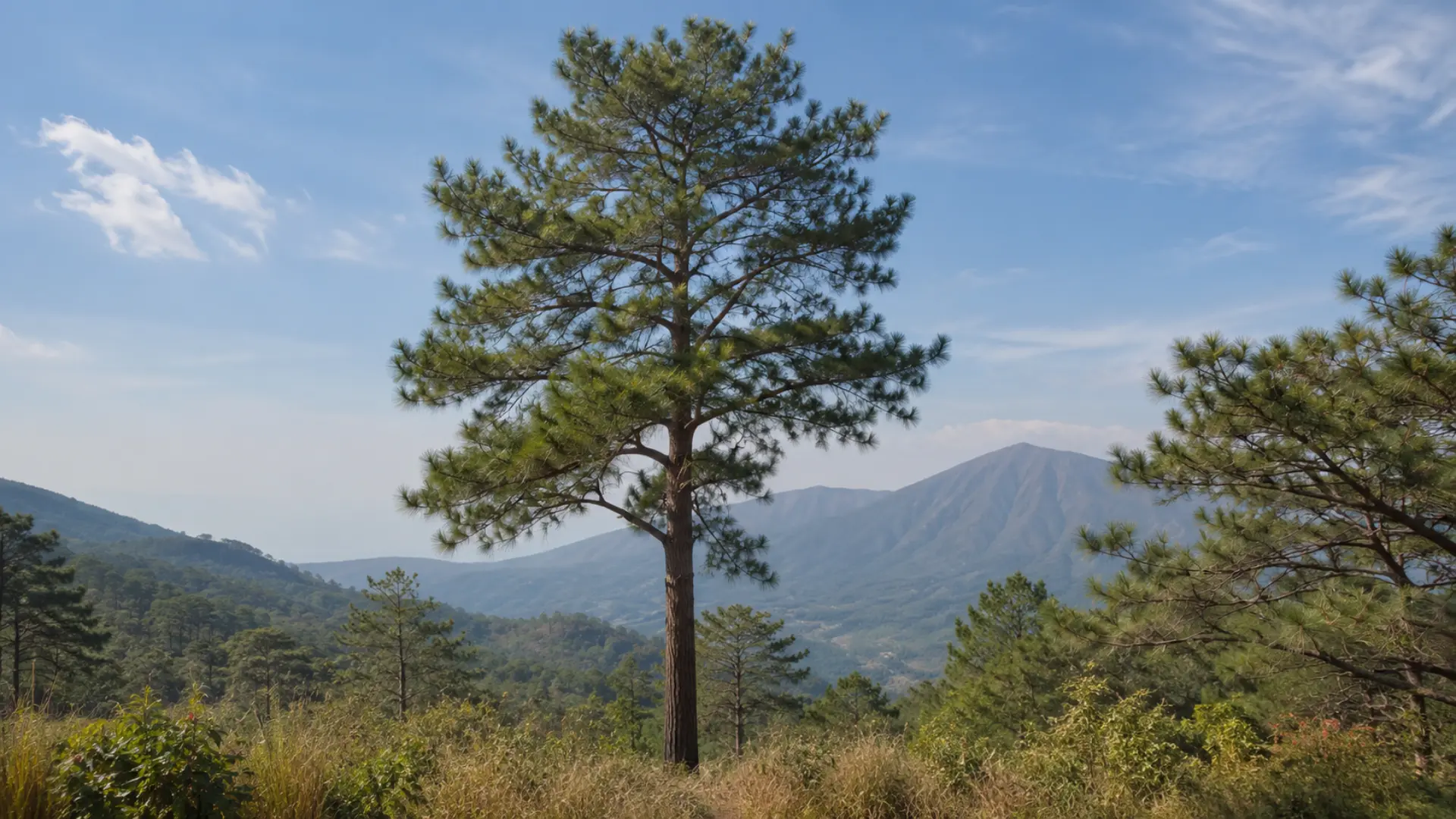
Sumatran Pine stands out for being the southernmost naturally occurring pine species in the world. It grows in South Sumatra, Indonesia, and has adapted to much warmer conditions than most other pines. Its ability to thrive in this tropical setting makes it unusual within a genus more commonly tied to cooler temperate and mountain environments.
- Botanical name: Pinus merkusii
- Native area: South Sumatra, Indonesia
- Height: Usually 100-165 ft, occasionally up to 230 ft
Types of Mexican and Central American Pine Trees
Mexico and Central America hold a wide variety of native pines, many of which grow in mountainous pine-oak forests.
25. Montezuma Pine
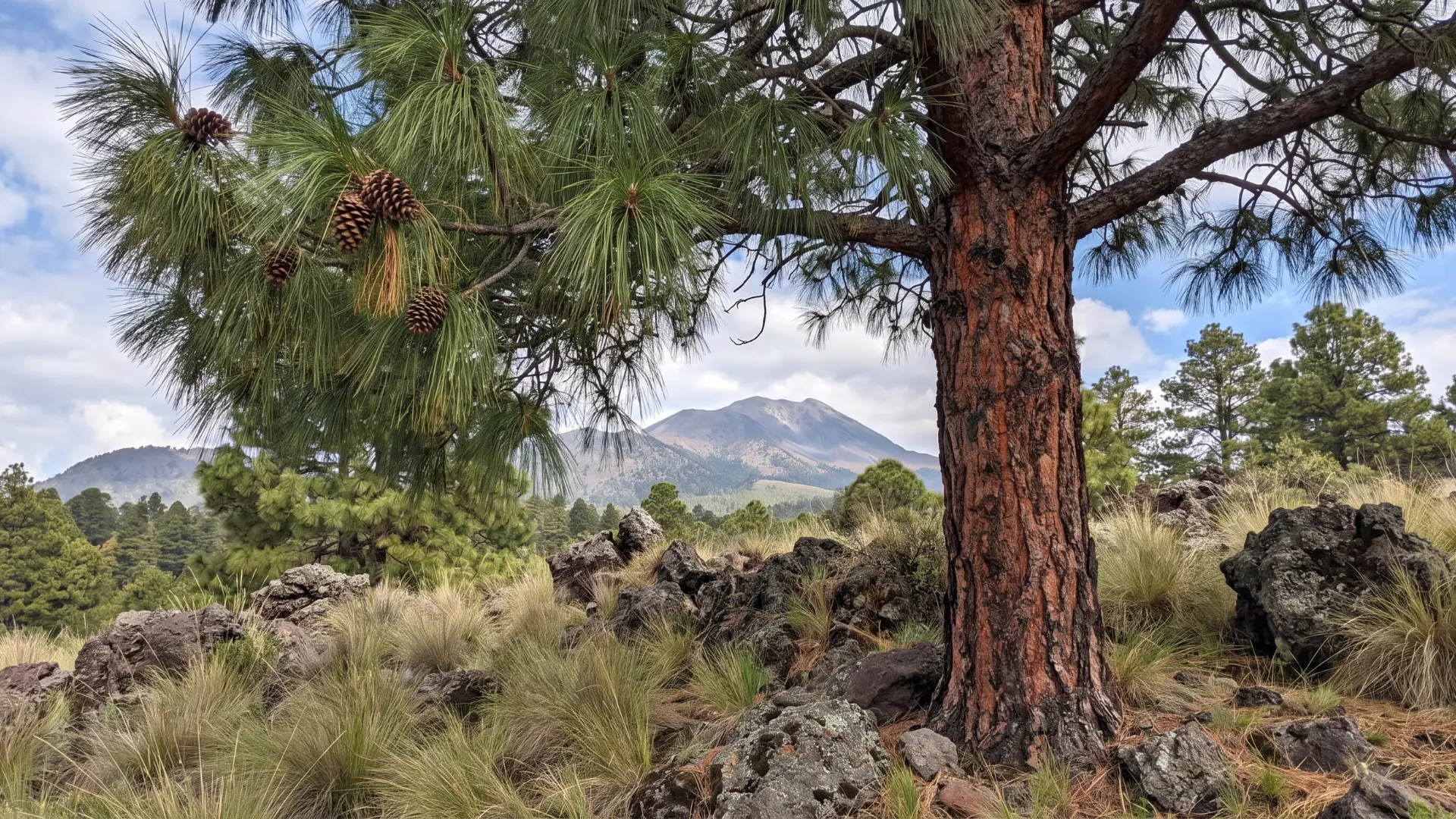
Montezuma pine grows across central Mexico and develops a distinctive form as it matures. Its crown becomes rounded and triangular, while the long drooping needles create a soft, slightly weeping look. This combination of crown shape and hanging foliage gives the species a recognizable silhouette in the mountainous landscapes where it naturally occurs across Mexico.
- Botanical name: Pinus montezumae
- Native area: Mexico
- Height: Up to 130 ft
26. Mexican Yellow Pine
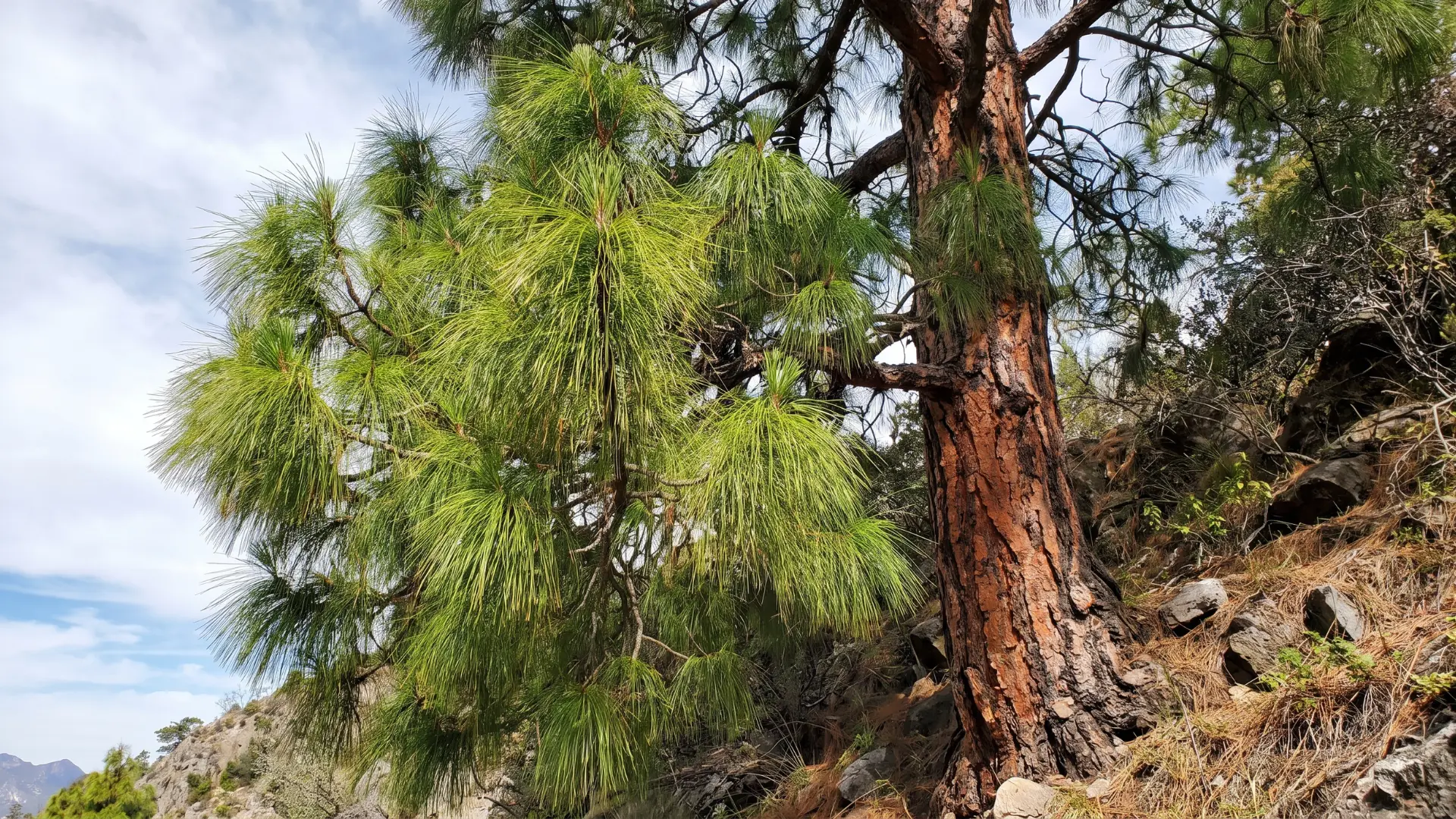
Mexican yellow Pine develops a long, straight trunk along with stiff needles and ovoid cones. It occurs across Mexico and parts of Central America, where it serves as an important forest resource. The species carries real value for timber and resin production, making it both visually distinctive and economically significant throughout much of its natural range.
- Botanical name: Pinus oocarpa
- Native area: Mexico, Guatemala, Honduras, El Salvador
- Height: Up to 115 ft
27. Apache Pine
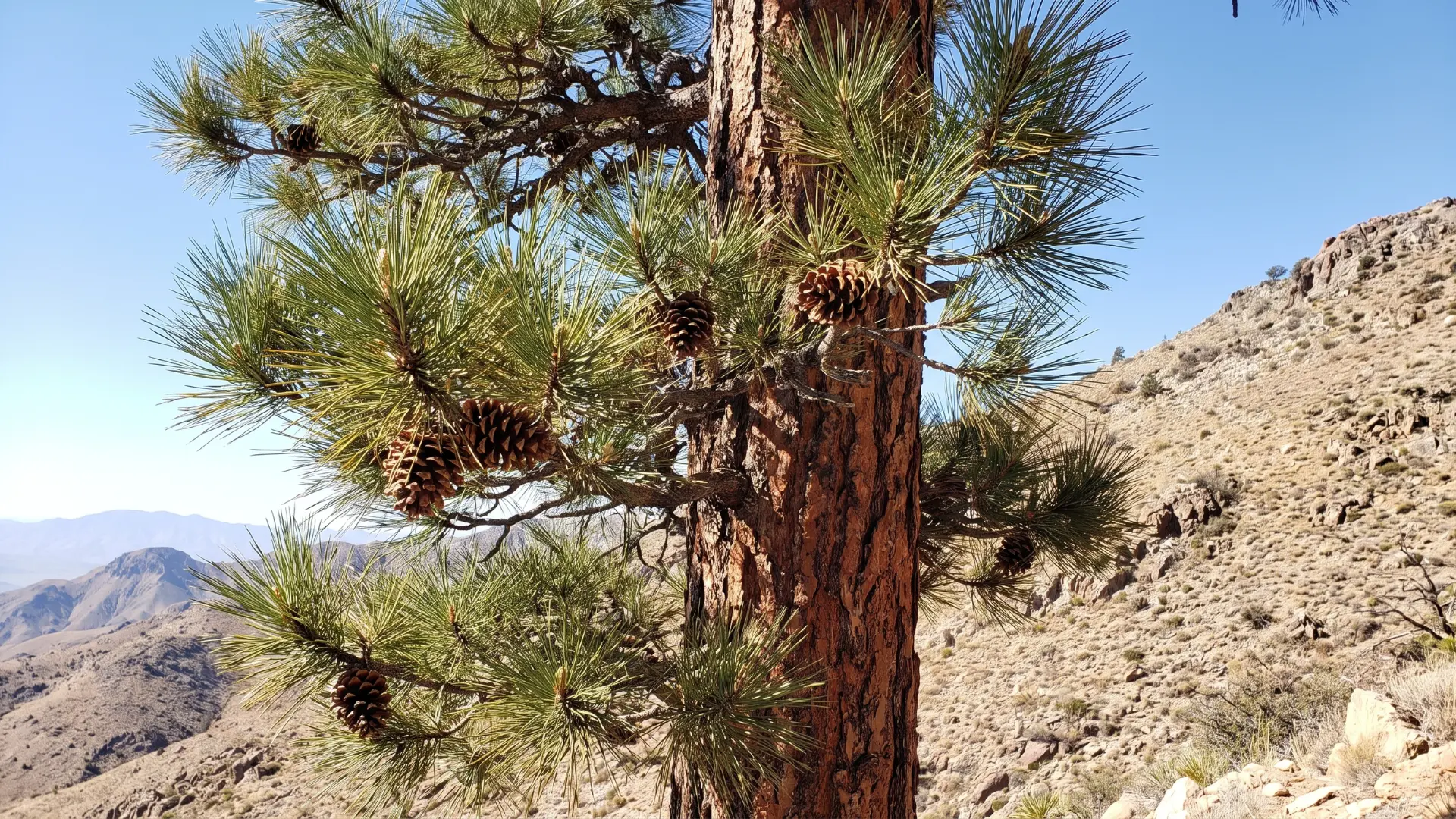
Apache pine, also known as Arizona longleaf pine, has dark brown bark, upward-curving branches, and dull green needles. The needles usually grow in bundles of three, giving you a handy identification clue. Native populations occur across Arizona, New Mexico, and northern Mexico, where the species grows naturally in mountain environments and open pine woodland settings.
- Botanical name: Pinus engelmannii
- Native area: Arizona, New Mexico, northern Mexico
- Height: 50-100 ft
28. Durango Pine
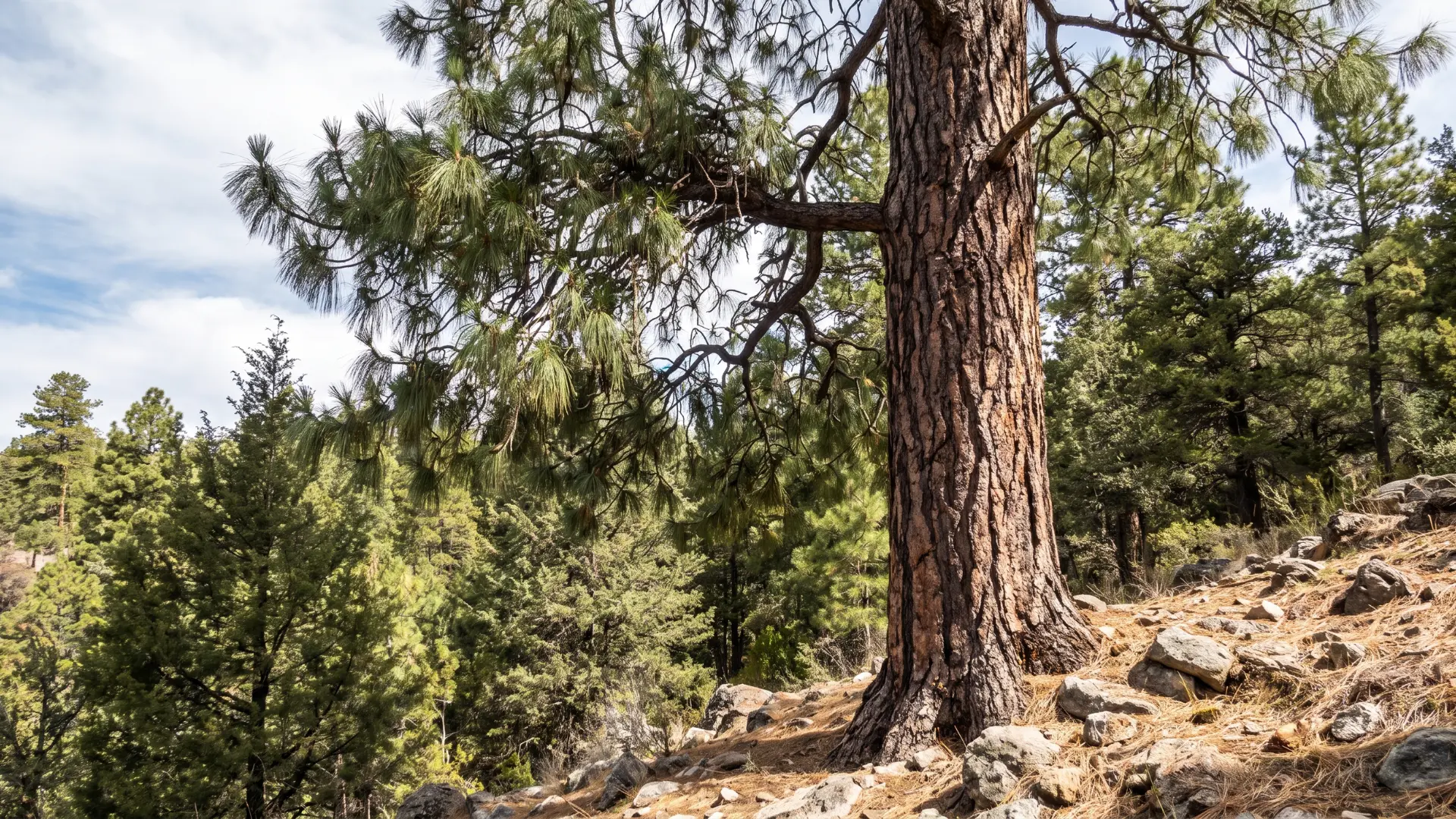
Durango pine is native to the Mexican states of Chihuahua and Durango, where it grows in mountainous forested terrain. It ranks among the taller Mexican pine species and can reach impressive heights. Its tall form lets it stand out prominently among surrounding trees, making it a notable part of the mountain forests it inhabits.
- Botanical name: Pinus durangensis
- Native area: Mexico
- Height: Up to 120 ft
29. Chihuahua Pine
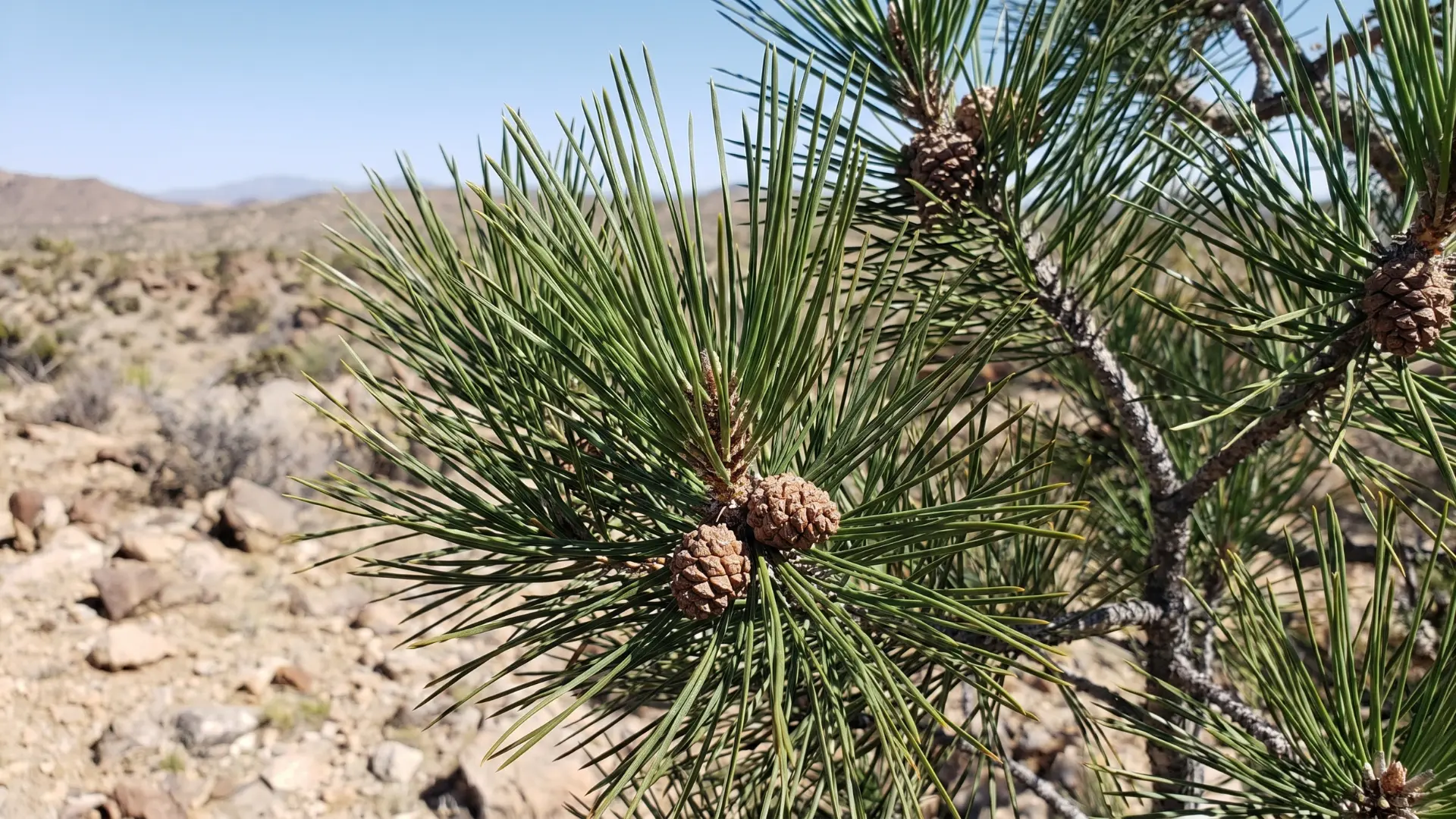
Chihuahua pine is an evergreen species found across parts of Mexico, Arizona, and New Mexico. It typically grows at moderate elevations, where it forms part of mixed pine-oak woodlands. Its broad regional spread across northern Mexico and the southwestern United States makes it a characteristic pine of these upland forest landscapes and mountain regions.
- Botanical name: Pinus leiophylla
- Native area: Mexico, Arizona, New Mexico
- Height: Usually 30-50 ft, occasionally up to 80 ft
Pine Tree Record Holders
Some pine species stand out for pushing the limits of age, size, and growth. From ancient trees that have survived for thousands of years to species with enormous cones and exceptionally long needles, these record holders show how diverse the pine family can be.
- Oldest living tree: A Great Basin bristlecone pine nicknamed Methuselah, estimated at more than 4,850 years old.
- Tallest Pine: A ponderosa pine named Phalanx in Oregon’s Rogue River-Siskiyou National Forest, measured at over 268 feet according to the USDA Forest Service blog.
- Largest cones: Sugar pine, with cones reaching up to 2 feet long.
- Longest needles: Longleaf pine, with needles up to 18 inches long.
These record-breaking pines highlight the extreme forms found within the genus Pinus. Their unusual age, height, cones, and needles also work as useful reference points when comparing species and getting a feel for how widely pine trees can differ in structure and growth.
Soft Pines vs Hard Pines
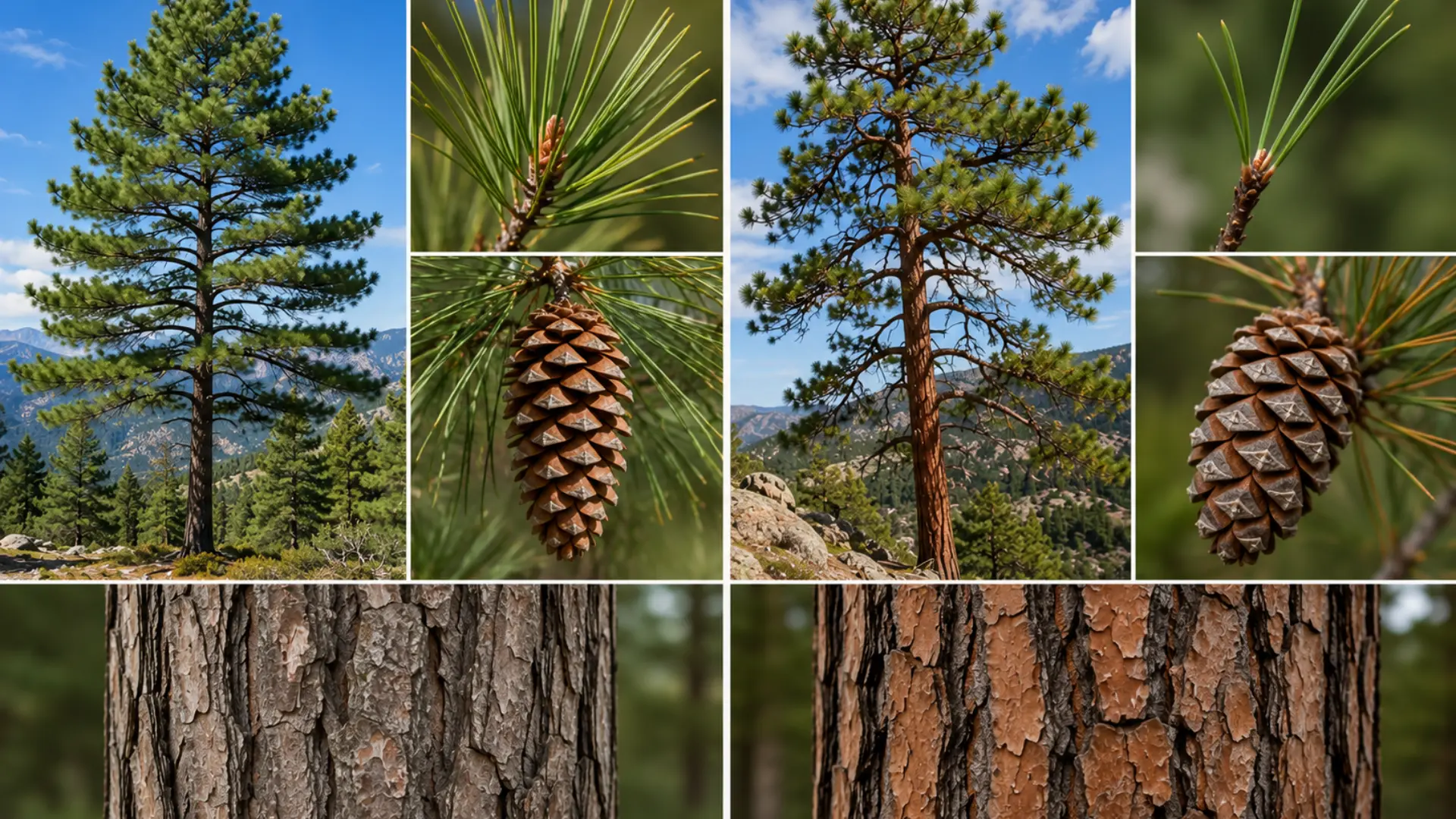
Botanists split pines into two main subgenera, and knowing which group a tree falls into gives you a shortcut for narrowing down its identity. Soft pines generally carry softer wood and needles in bundles of five, while hard pines have denser wood and usually carry two or three needles per bundle. The table below lays out how the two groups compare.
| Trait | Soft Pines | Hard Pines |
|---|---|---|
| Needles per Bundle | Usually 5 | Usually 2 or 3 |
| Wood Density | Softer, lighter wood | Denser, harder wood |
| Cone Scales | Thin, often lack a sharp prickle | Thicker, often tipped with a small prickle |
| Growth Rate | Often slower to moderate | Often moderate to fast |
| Example Species | Eastern white Pine, western white Pine, sugar pine | Red Pine, ponderosa pine, loblolly pine, Scots pine |
This split will not settle every identification on its own, but pairing it with needle count and cone shape gets you most of the way there. With this basic classification in mind, you are ready to look at common pine species from different regions of the world.
Choosing the Right Pine
Picking the right Pine starts with matching the tree to your space, not only its looks at the nursery. For small yards, dwarf and shrub forms such as mugo Pine or compact Scots Pine cultivars fit containers and tight beds without crowding the space.
If you need privacy and wind protection, dense growers like Austrian Pine, loblolly pine, and eastern white Pine build an effective screen within a few seasons.
Wildlife-friendly gardens do well with eastern white pine and ponderosa pine, since both feed and shelter birds and small mammals native to the area.
Beyond purpose, check the tree’s mature height and spread against your available room, since a pine that looks small in a five-gallon pot can eventually tower past your roofline.
How to Grow Pine Trees
Growing pine trees successfully starts with understanding the conditions they need to thrive. Most pines want full sun and well-drained soil, though each species has its own quirks, so weigh your climate, available space, mature tree size, soil conditions, and what you want the tree to do for your landscape before you commit to a spot.
- Choose a location with at least six hours of direct sunlight and enough space for the tree to reach its mature size.
- Make sure the soil drains well, since most pines do not tolerate constantly waterlogged ground.
- Dig a hole about twice the width of the root ball and plant the tree at the same depth it was growing in its container.
- Water thoroughly after planting and add mulch around the root zone without piling it against the trunk.
- Water regularly while the tree establishes, and give it deeper watering during extended dry periods.
After planting, staying consistent during the establishment period matters as much as the planting itself. Regular watering, good drainage, and proper mulching support root development and help a young pine settle in before it shifts into stronger long-term growth.
Common Problems When Growing Pine Trees
Pine trees are generally hardy, but unsuitable soil, moisture, pests, or environmental stress can chip away at their health over time. Regularly checking the needles, branches, bark, and overall growth helps you catch problems early, before they turn into something more serious.
| Problem | Possible Cause | What Helps |
|---|---|---|
| Yellowing Needles | Drought, poor drainage, too much shade, or general stress | Check soil moisture and light; older interior needles yellowing alone is normal |
| Poor Drainage | Waterlogged soil that weakens roots and limits oxygen | Improve drainage or amend the soil before replanting |
| Pests and Diseases | Insects or fungal infections, often when the tree is already stressed | Inspect needles, bark, and cones regularly, and treat promptly if found |
| Branch Dieback | Drought, root damage, disease, pests, or harsh weather | Prune dead wood and address the underlying stress |
| Slow or Weak Growth | Limited sunlight, poor soil, overcrowding, or unsuitable conditions | Reassess site conditions and consider a better-suited species |
Persistent discoloration, repeated branch loss, or noticeably weaker growth can point to a deeper problem worth addressing.
Checking your Pine regularly and dealing with stress early goes a long way toward preventing further damage. If symptoms keep spreading, it is worth having the tree looked at by a local arborist.
Frequently Asked Questions
What is the difference between a pine tree and a fir tree?
Pine needles grow in bundles of two to five bound by a papery sheath, while fir needles attach singly to the branch. Pine cones hang down and drop whole once mature, while fir cones stand upright on the branch and break apart scale by scale.
How fast do pine trees grow each year?
Growth speed varies a lot by species and site conditions. Fast growers like loblolly pine can add two feet or more per year, while slow growers like bristlecone pine might gain only about an inch of height across an entire century in tough mountain terrain.
Do all pine trees produce edible pine nuts?
No. Only a handful of species, including stone pine, sugar pine, and a few pinyon pines, produce seeds large enough to bother harvesting. Most other pines make small, thin-shelled seeds that are technically edible but too tiny or bitter to collect for food.
How long do most pine trees live?
Lifespan depends heavily on species and habitat. Many common landscape and forest pines live somewhere between 100 and 200 years, while a handful of mountain species, bristlecone pine especially, can survive for thousands of years thanks to their harsh, slow-growth environment.
Can you tell how old a pine tree is without cutting it down?
Foresters usually count growth rings from a small core sample, since each ring typically marks one year. Without sampling the tree, you can only estimate age by comparing trunk diameter against known growth rates for that species and the conditions at its site.
Final Takeaway
Exploring different types of pine trees shows how adaptable the genus Pinus can be. Each species reflects its native region, whether that means cold mountains, dry slopes, coastal forests, or warmer subtropical landscapes.
Instead of memorizing every Pine, focus on the features that stand out most clearly and use regional context to narrow the possibilities.
Pine trees are important parts of natural ecosystems and some of the most recognizable evergreens around the world. Found a pine you cannot identify? Snap a photo of its needles, cones, and bark, then compare it against the species covered here.
Drop a comment below and tell me which one you fancy the most.