Palm-lined streets, golden beaches, and warm sunsets have made California palm trees a symbol of the state. You’ve probably driven past dozens of tall, swaying trunks without ever wondering where they came from, since most look at home in any warm coastal city.
But are palm trees native to California? The answer is yes, though only one species belongs there: the California fan palm (Washingtonia filifera).
Most palms seen along Los Angeles boulevards, in coastal towns, at resorts, and in neighborhood yards were brought in from elsewhere and later became part of the state’s landscape.
Ahead, you’ll learn how to identify the California fan palm, where it grows naturally, and how it differs from non-native species like the Mexican fan palm.
Are Palm Trees Native to California?
California is famous for its tall palms, but most of them are not native to the state. A palm can grow well in the state’s warm climate without naturally belonging there. Understanding this difference explains why so many palms fill cities yet remain rare in the wild.
Only one species, the California fan palm (Washingtonia filifera), is native to California. The rest fall into different categories:
- Native: developed naturally in a region without human introduction
- Introduced: brought into the area by people
- Naturalized: introduced, but now grows and reproduces on its own without regular cultivation
This means a healthy palm growing in California is not automatically native. Many familiar urban species came from other parts of the world. These include Mexican fan palms, Canary Island date palms, king palms, and queen palms.
California fan palms grow naturally in desert environments across southeastern California, especially near springs and desert oases. The palms lining Los Angeles streets, mostly Mexican fan palms, were planted largely for landscaping and city beautification rather than being native California fan palms.
California Palm Trees: The Only Native Species
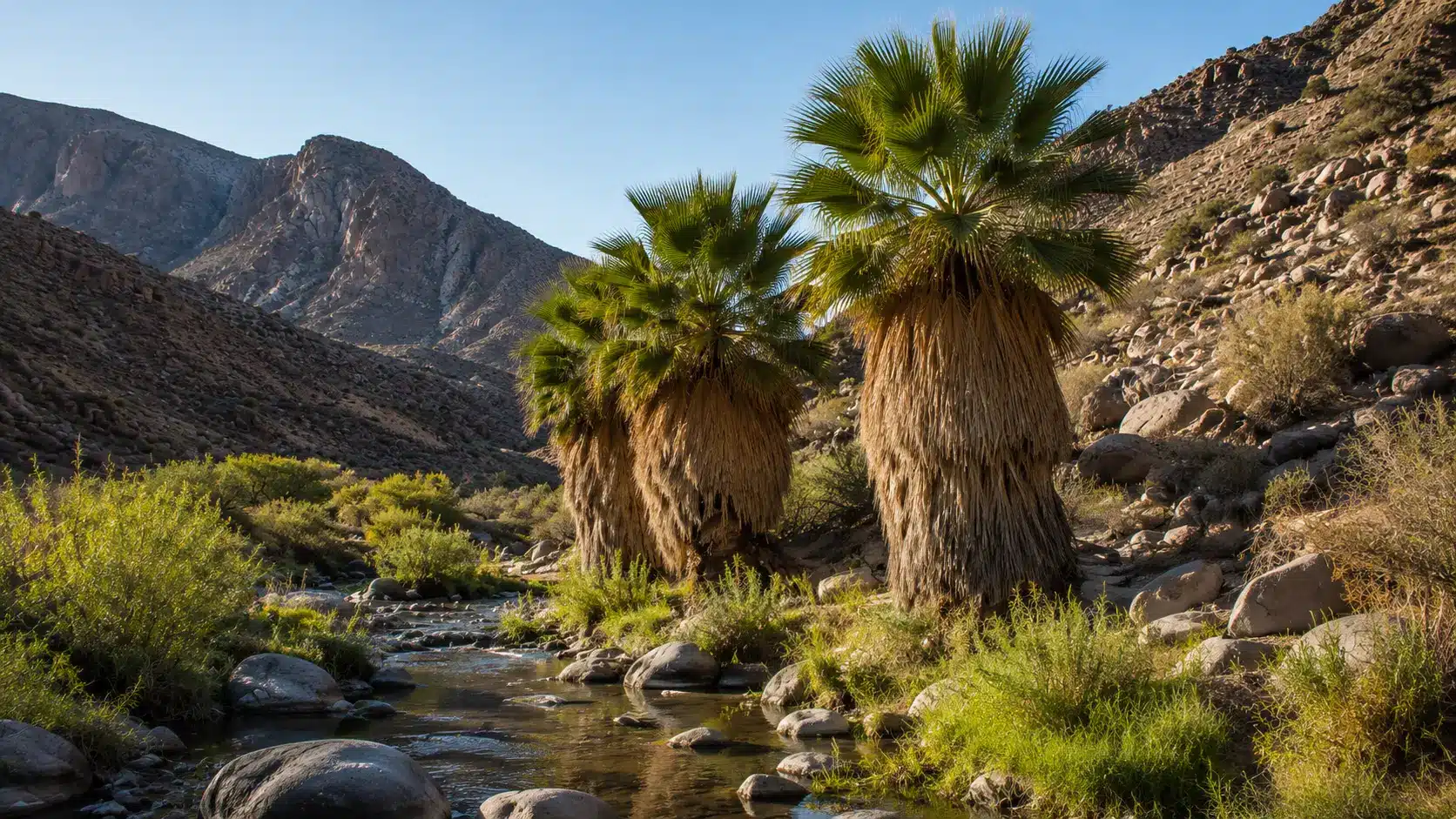
The California fan palm is more than a familiar desert tree. It is the only palm species native to California, and it has adapted to some of the state’s hottest and driest regions. Even so, it usually grows near dependable water sources.
| Feature | Detail |
| Common names | California fan palm, desert fan palm, petticoat palm |
| Scientific name | Washingtonia filifera |
| Native range | Deserts of the southwestern United States and Baja California |
| Natural habitat | Oases, canyon streams, springs, and seeps |
| Mature size | Usually 40 to 60 feet, sometimes taller |
| Light | Full sun |
| Soil | Well-draining soil; tolerates moderately alkaline conditions |
| Key feature | Broad fan leaves with fine, thread-like fibers |
California fan palms often grow around oases, springs, and canyon waterways where water is available year-round. Although they live in desert climates, they are not completely independent of water. They can handle intense summer heat and periods of freezing winter weather.
How to Identify a California Fan Palm
Palm identification is easiest when you compare several clear features together rather than relying on a single trait.
The California fan palm stands out from other species when you look at its leaf type, trunk thickness, crown shape, and natural growing location. Use the features below to confirm what you’re looking at.
1. Leaf Type
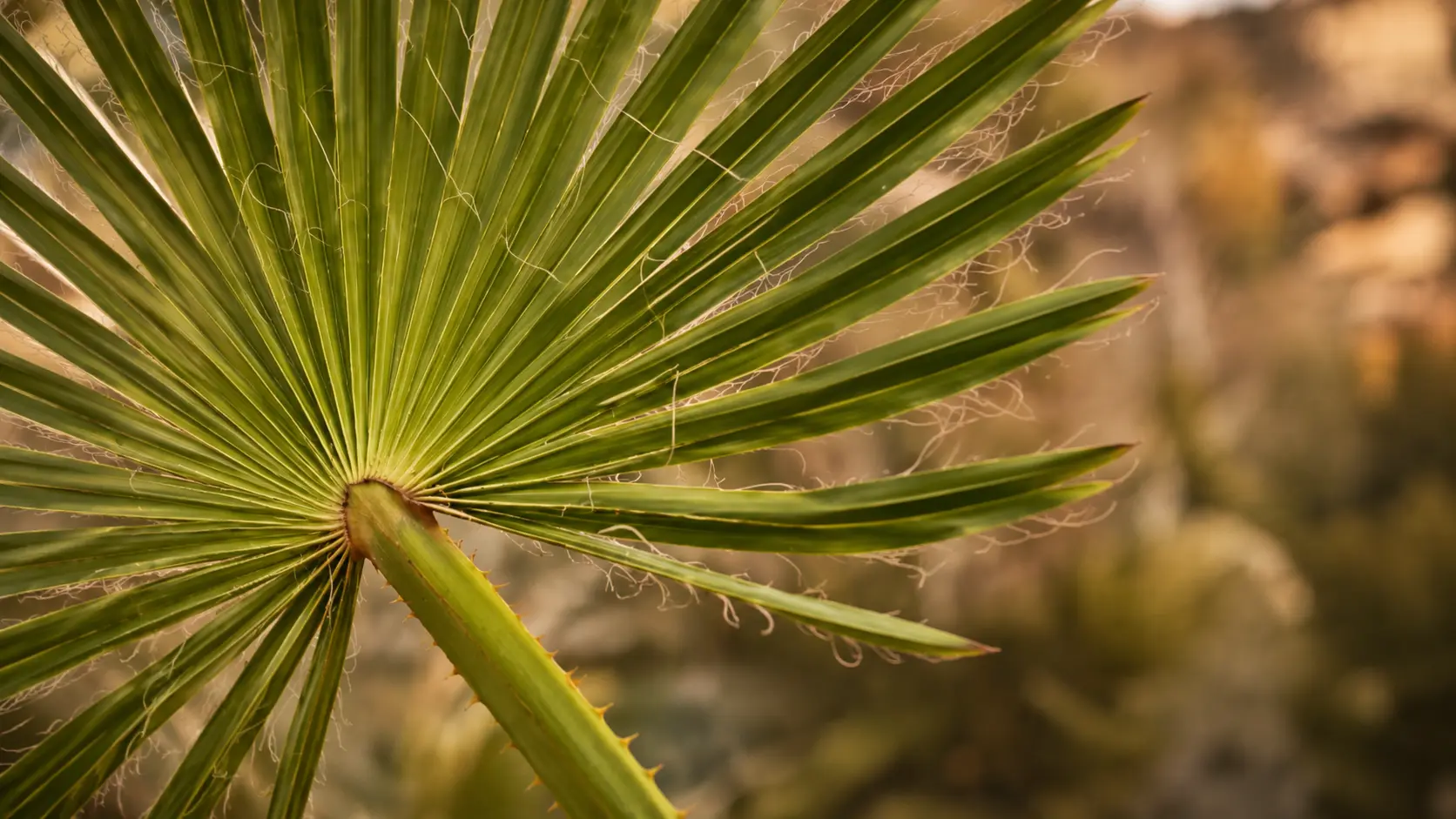
Leaf shape narrows identification fast. Palmate leaves spread out like a hand fan, a trait shared by both California and Mexican fan palms, so this alone won’t confirm a species.
Pinnate, feather-shaped leaves belong to date palms instead. What sets the California fan palm apart is its thread-like fibers running between leaf segments, plus small teeth along the petiole edges that help the frond catch water during occasional desert rains.
2. Trunk and Crown
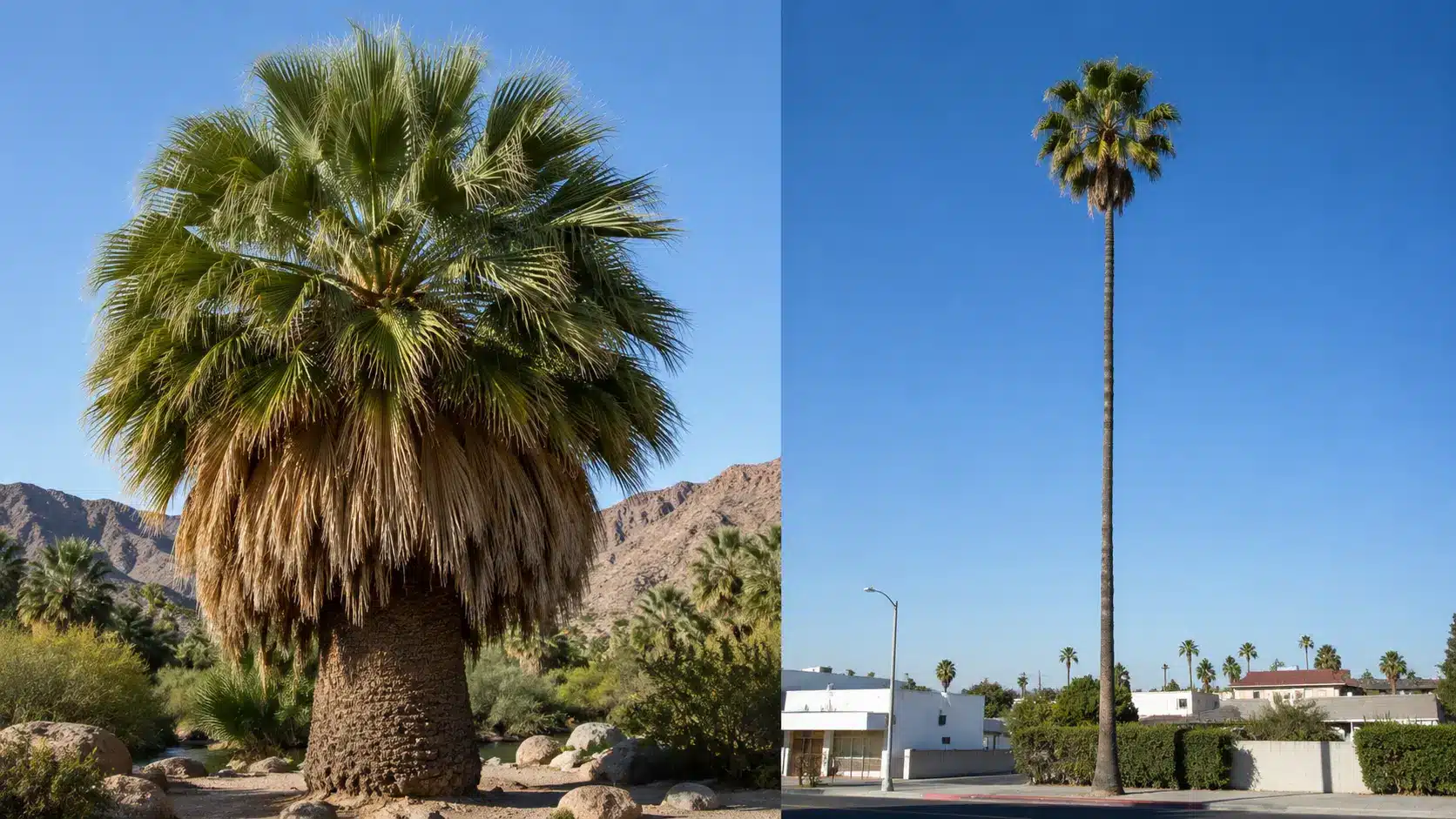
Trunk and crown shape separate these look-alikes fastest. California fan palms grow thick, sturdy trunks 1 to 2 feet wide, topped by a broad, rounded crown 10 to 20 feet across, with old fronds forming the shaggy “petticoat” skirt.
Mexican fan palms stay slender, rarely exceeding 6 inches thick, growing 70 to 100 feet tall with a narrow, compact crown built for city streets rather than desert shade environments entirely.
3. Growth Habit
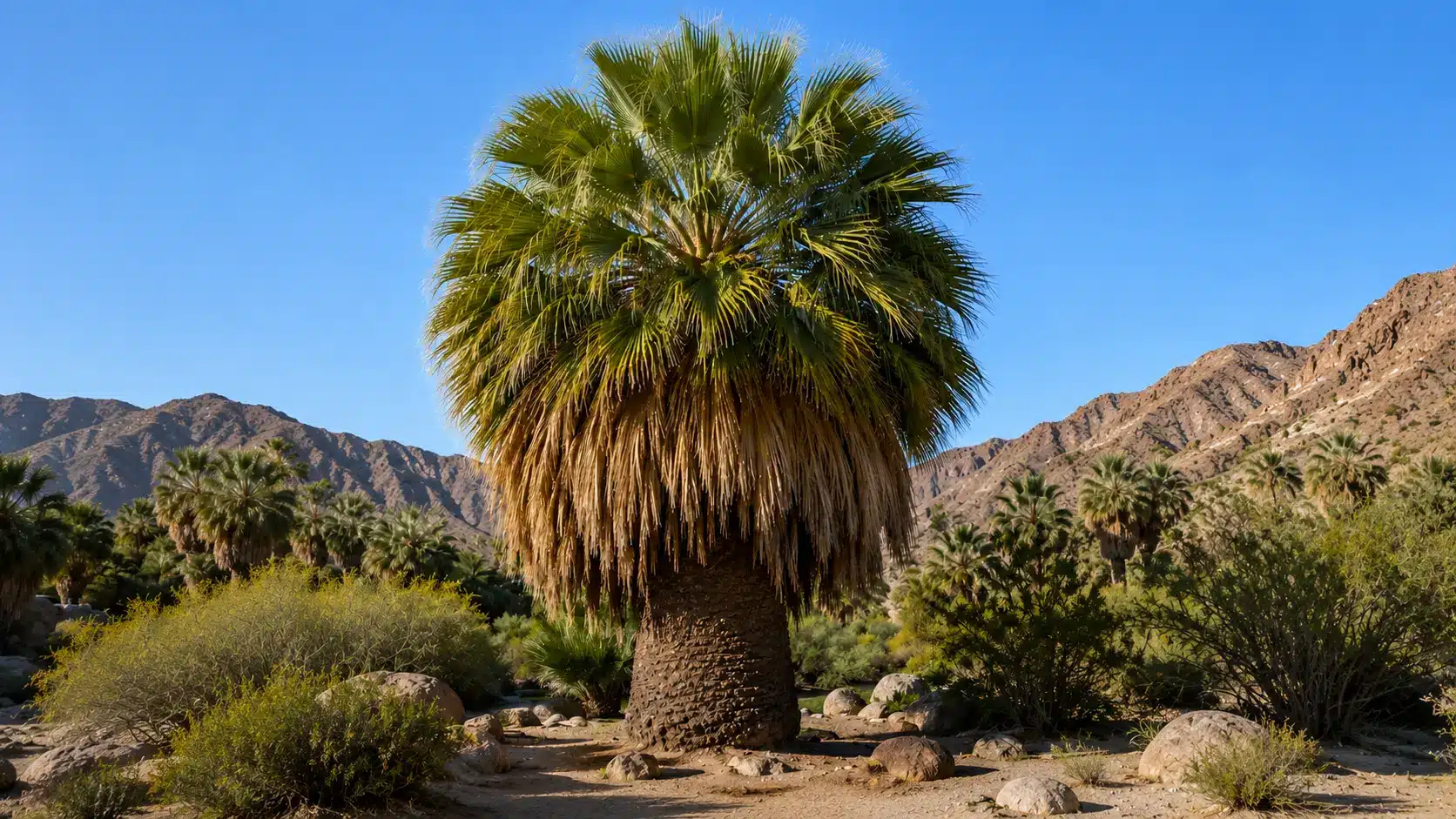
California fan palms grow as single, solitary trees with one sturdy trunk rising straight from the ground, both in the wild and in most landscape settings.
Some other desert palms, like the paurotis palm, which isn’t native to California, grow in clusters with multiple trunks sprouting from one base instead. This single-trunk growth pattern remains one of the most reliable field markers for the species when spotted in the wild.
4. Flower and Fruit
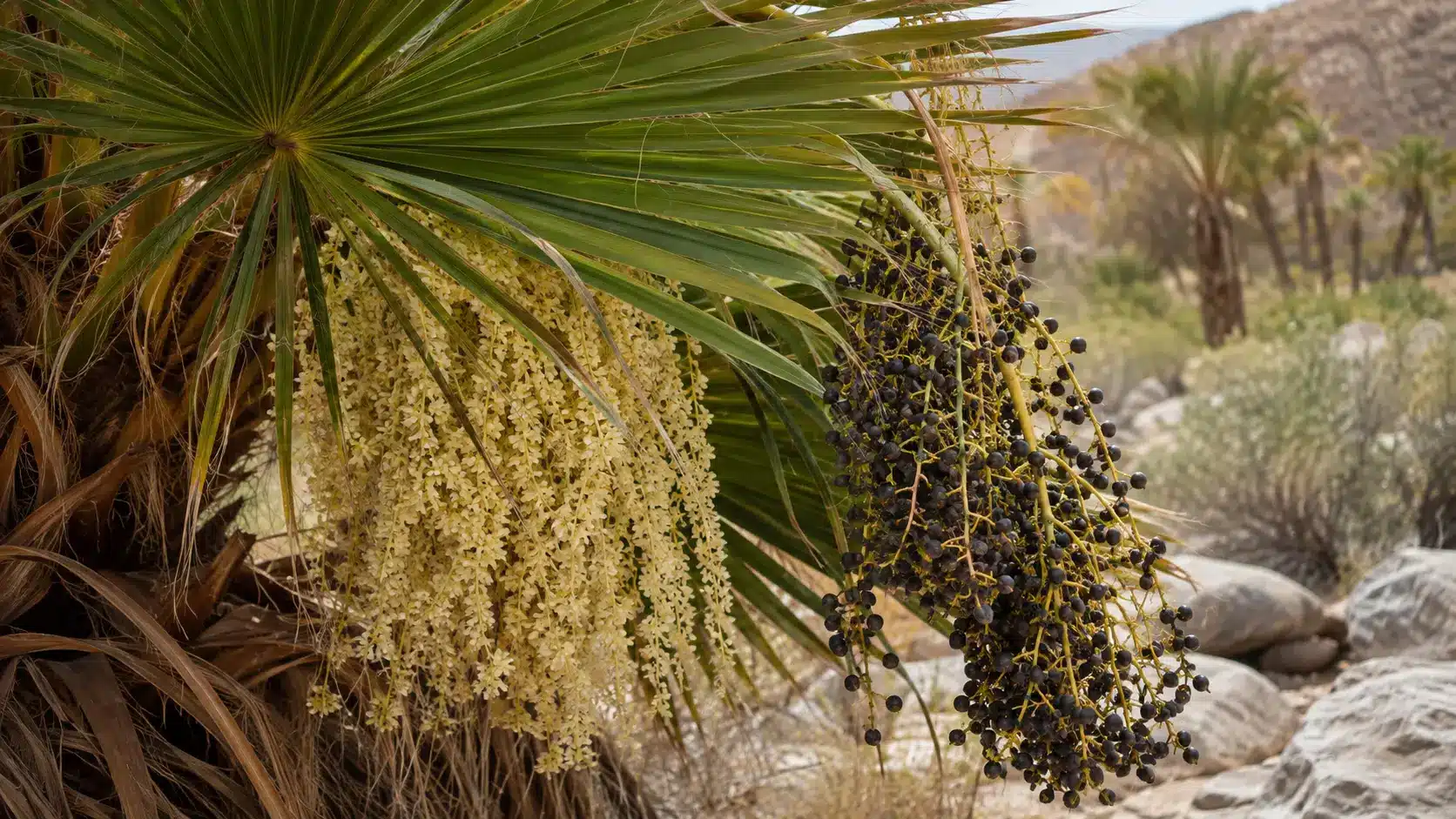
California fan palms produce clusters of small white or yellow flowers each spring, appearing along the fronds with a sweet fragrance, followed by small, dark, round fruits.
These details help confirm identification when combined with trunk, leaf, and location clues. Mexican fan palms also flower and fruit, but trunk and crown shape remain the more practical, faster way to tell the two species apart at a glance in the field.
Native and Non-Native California Palm Trees
California’s varied climate supports palms from many parts of the world, differing in origin, size, cold tolerance, and landscape use. Only the California fan palm, Washingtonia filifera, is truly native; most others arrived from Mexico, South America, Australia, Asia, the Mediterranean, and the Middle East, each suited to different conditions.
| Palm | Original Region | Common Use or Setting |
|---|---|---|
| California Fan Palm | Southwestern United States and Baja California | Native gardens and desert landscapes |
| Mexican Fan Palm | Mexico | Boulevards and tall skyline plantings |
| Canary Island Date Palm | Canary Islands | Large lawns, entrances, and formal landscapes |
| Date Palm | Middle East and North Africa | Resorts, rows, driveways, and desert landscapes |
| Queen Palm | South America | Tropical residential landscapes |
| King Palm | Australia | Pools and protected coastal gardens |
| Pygmy Date Palm | Southeast Asia | Patios, courtyards, containers, and smaller spaces |
| Mediterranean Fan Palm | Mediterranean Region | Multi-trunk accents and compact gardens |
| Windmill Palm | Asia | Cooler California regions and small spaces |
Matching a palm’s natural habitat to your climate zone and yard conditions is key. Coastal spots often suit a Queen palm, while inland or desert areas favor heat-tolerant choices like the Date palm or California fan palm. Checking water needs, mature size, and cold tolerance first avoids costly mistakes later.
Where Do California Fan Palms Grow Naturally?
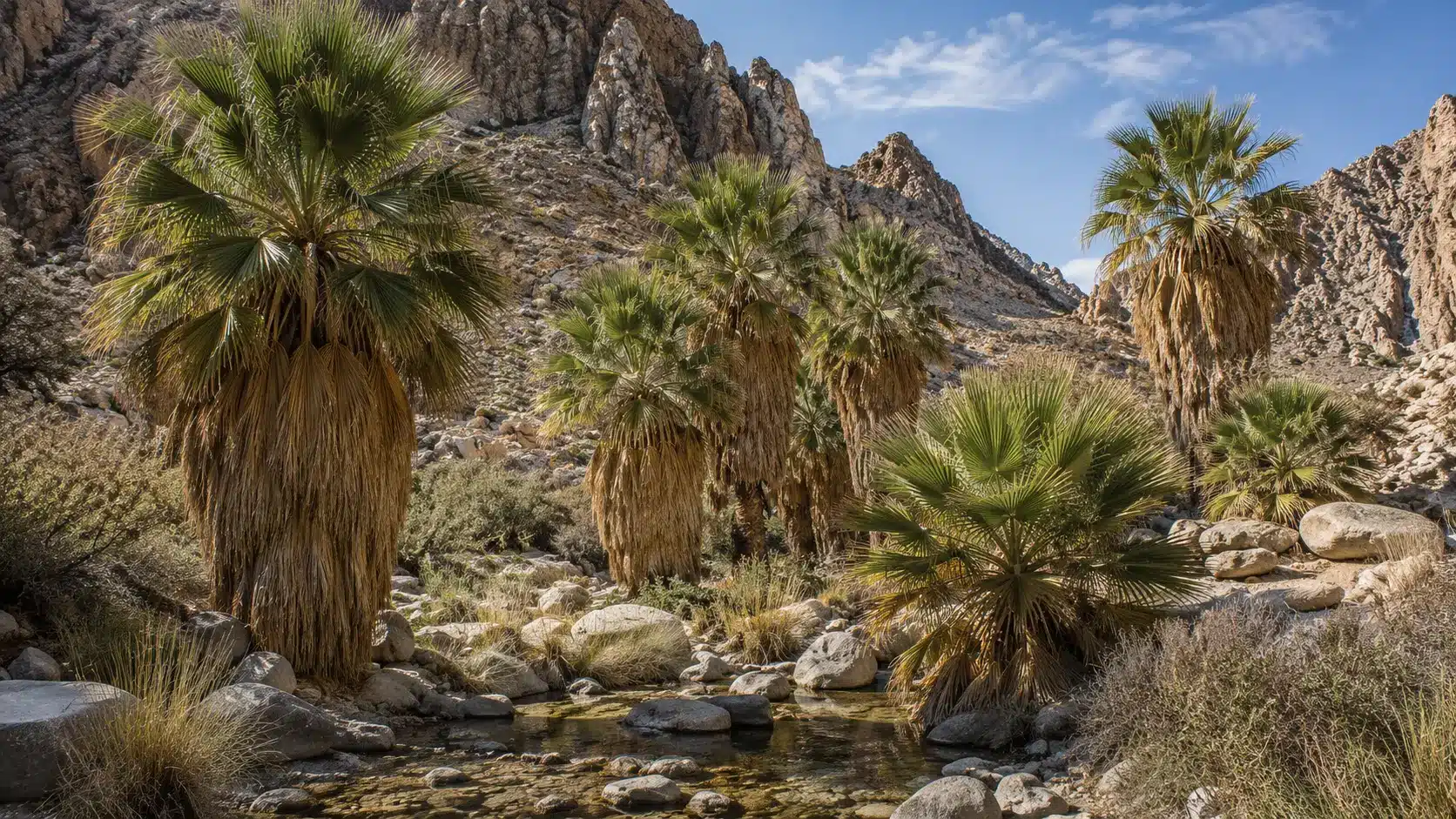
California fan palms grow in some of the driest parts of the state, but they still need dependable water. Most wild groves cluster in the Colorado Desert along the San Andreas Fault, according to the U.S. Forest Service, with additional scattered stands further north in the Mojave Desert.
In the wild, these palms gather around desert oases, canyon streams, springs, seeps, and places where groundwater rises close to the surface. Their presence often signals that water is available below ground. This explains how a desert palm can survive extreme heat while still relying on steady moisture.
A palm planted beside a city street or in a landscaped yard is not the same as a naturally occurring grove. Wild groves develop around reliable water sources and support a wider oasis habitat.
A few spots protect these natural groves, including several fan palm oases inside Joshua Tree National Park:
- Borrego Palm Canyon, Anza-Borrego Desert State Park
- Cottonwood Spring and the Oasis of Mara, Joshua Tree National Park
- Thousand Palms Oasis Preserve, Coachella Valley
These protected groves show how California fan palms depend on rare desert water sources. By respecting trails and preserving oasis habitats, visitors can help protect the palms, wildlife, and delicate ecosystems that survive in these dry regions.
Palm Care and Common Problems
Palm trees are easier to maintain when the species suits the local climate and planting conditions, whether you’re working from a full landscape plan or simple front yard palm tree landscaping ideas. Keep these care needs and common problems in mind:
- Choose the right species: Consider the palm’s mature height, crown width, water needs, frost tolerance, and resistance to wind.
- Provide enough space: Plant palms where their roots and full crown have room to grow without interfering with buildings, power lines, or nearby trees.
- Use well-draining soil: Soil that stays wet for too long can damage the roots and affect the palm’s overall health.
- Water correctly: Water needs vary by species. California fan palms tolerate dry conditions once established, but young palms still need steady moisture.
- Avoid excessive pruning: Remove fully dead or damaged fronds, but leave healthy green leaves in place. Over-pruning can weaken the palm and reduce its shade and shelter value.
- Plan for cleanup: Tall palms may drop fronds, flowers, and fruit, creating regular maintenance needs.
- Watch for warning signs: Yellow leaves, damaged fronds, trunk changes, or a thinning crown may point to water stress, poor drainage, cold damage, or another health problem.
- Manage dead frond skirts: Old fronds may remain attached to the trunk and form a thick skirt. This is natural for untrimmed California fan palms, but it may need careful management in developed areas.
With the right care, palm trees can stay healthy, safe, and attractive for years. Choosing a suitable species, providing proper water and space, and watching for early warning signs will make long-term maintenance much easier.
Environmental Value of Palm Trees
Native California fan palms are an important part of desert oasis ecosystems. Their groves provide shade, shelter, and habitat for birds and other wildlife, echoing many of the same benefits of palm trees that gardeners rely on closer to home. Because these palms often grow where groundwater reaches the surface, their presence can also indicate a dependable source of water in an otherwise dry landscape.
Palm groves also create cooler, protected spaces around springs and canyon waterways. These small oasis environments help conserve moisture, reduce heat, and support young plants, birds, insects, and other wildlife in the surrounding desert.
In cities and gardens, palms can provide shade, vertical structure, and nesting or resting space for some animals.
Native palms usually offer the strongest connection to California’s natural environment, while introduced species should be selected carefully based on their water needs, mature size, and long-term maintenance requirements.
Frequently Asked Questions
Are palm trees in California different than Florida?
Yes, the two states favor different species. California’s climate suits desert-adapted palms like the California fan palm, while Florida’s humid, subtropical conditions support more tropical species not commonly grown in California.
Are Mexican fan palms native to California?
No, the Mexican fan palm (Washingtonia robusta) is native to northwestern Mexico. It was introduced to California for landscaping and now lines many streets and boulevards, though it’s not part of the state’s native flora.
Are California fan palms drought-tolerant?
Yes, they tolerate desert conditions once established, but they naturally grow near oases, springs, and canyon streams. They rely on steady groundwater access even though they can withstand intense heat and periods without rain.
Can palm trees survive freezing weather?
Cold tolerance varies by species. The California fan palm handles brief freezing temperatures, while tropical species like king and queen palms are more sensitive to frost and need protection in cooler regions.
Final Takeaway
So, are palm trees native to California? Only one is. The California fan palm stands alone as the state’s only native species, shaped by desert oases, canyon springs, and centuries of groundwater.
Its thick trunk, broad fan-shaped fronds, and shaggy skirt of dead leaves set it apart from imported look-alikes like the Mexican fan palm, which lines most city streets today.
Most California palm trees across the state came from Mexico, the Canary Islands, and Australia, yet the true native thrives in pockets like Borrego Palm Canyon and Joshua Tree’s desert oases. Knowing which palms are native helps you pick the right species for your climate and landscape goals.
Drop a comment below and tell me if you live in California.