A warm spring day can make tomato planting feel safe, but seedlings need more than sunshine. Knowing when to transplant tomato seedlings helps protect young plants from cold soil, weak roots, and early stress that can slow the whole season.
I like to think of it as waiting for the plant and the weather to agree. You need safe nights, warmer soil, sturdy stems, and a short hardening-off period before those seedlings move outside for good.
You’ll learn the right timing, clear plant signs, outdoor conditions, potting-up needs, and early care after planting. By the end, you’ll know how to move tomato seedlings with less guesswork and fewer sad little plants.
What Are the Growth Stages of Tomato Seedlings?
Before moving tomato seedlings, you need to know what stage they are in. After germination, the first two leaves are called cotyledons. These are the seed leaves stored inside the seed. They look smooth and oval, not like real tomato leaves.
At this stage, the plant is still using its stored energy, so it is not ready for transplanting.
The key sign is true leaves. These are the serrated leaves that look like tomato plant leaves. Once a seedling has 2 to 3 sets of true leaves, it is stronger and better prepared for a move.
Below the soil, the root system is growing too. If seedlings stay too long in small cells, they can become rootbound, which slows healthy growth.
When To Transplant Tomato Seedlings: Plant Readiness And Outdoor Timing
Before planting outside, check both the seedling and the weather. A strong plant still needs warm soil, mild nights, and safe outdoor conditions.
1. Check The Seedling’s Age
Tomato seedlings are usually ready when they are 6 to 8 weeks old from germination. Age helps with planning, but it should not be the only sign.
Some seedlings grow faster under strong light, while others stay small in weak conditions. If the plant still looks thin, pale, or weak, give it more time before moving it outside.
2. Check The Seedling’s Size
A ready tomato seedling is often 6 to 10 inches tall, but size should come with strength. The plant should look compact, upright, and healthy.
A tall seedling with a thin stem is not better than a shorter, stronger one. If the seedling bends easily or looks stretched, it may need stronger light before transplanting.
3. Count The True Leaves
Look for 2 to 3 sets of true leaves before transplanting tomato seedlings. True leaves are the serrated leaves that look like a real tomato plant.
Do not count the first smooth seed leaves, called cotyledons. True leaves show that the seedling is making its own food and building enough strength for the next growing stage.
4. Check Stem Strength
A strong stem is one of the best signs of transplant readiness. The stem should feel firm, upright, and close to pencil-thick.
If it flops when touched, the plant may need more light or more time indoors. Leggy seedlings can still grow well, but they need deeper planting and support during the move.
5. Check The Roots
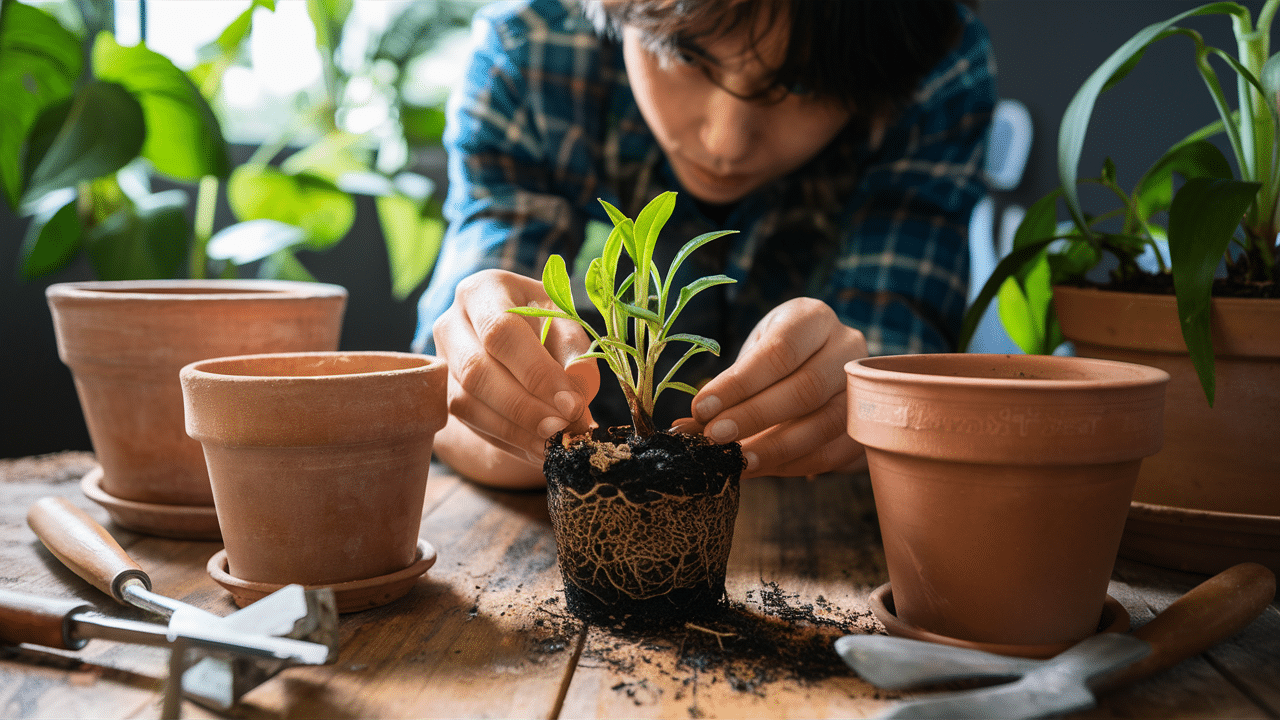
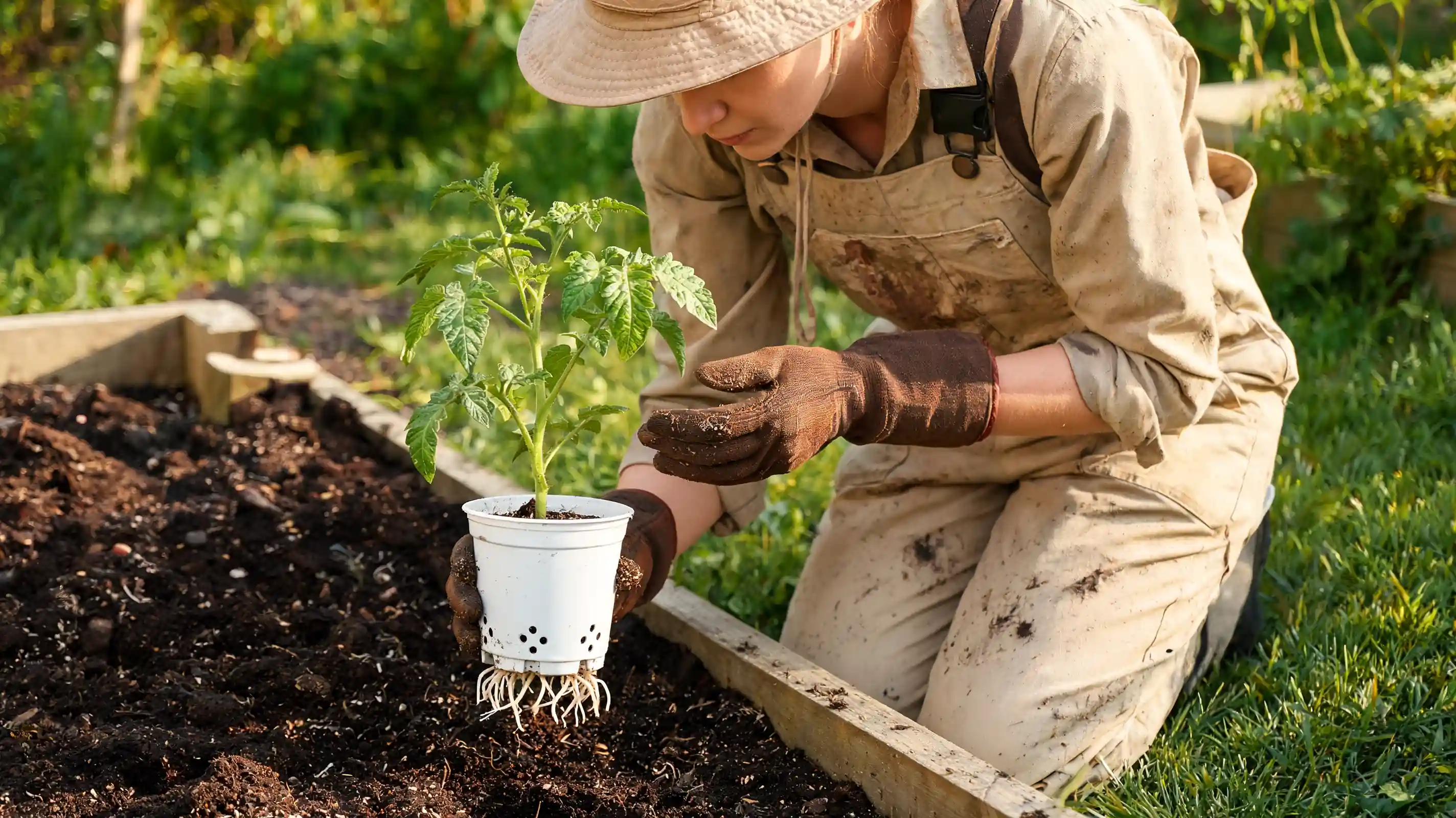
Roots matter as much as leaves and stems. Gently check the bottom of the container. If roots are coming through the drainage holes, the plant may be getting rootbound.
That means the roots are running out of space. A rootbound seedling should be moved soon, but handle it carefully so the root ball stays mostly together.
6. Check Soil Temperature
Outdoor soil should be around 60°F before transplanting tomato seedlings. Warm air alone is not enough because tomato roots grow in the soil, not the air.
Cold soil can slow root growth and leave seedlings sitting still after planting. Use a soil thermometer a few inches deep for a clearer reading before moving plants outside.
7. Check Your Last Frost Date
Your last frost date is the main outdoor timing guide. Tomatoes cannot handle frost, so planting too early can damage or kill young plants.
In most areas, it is safer to transplant 1 to 2 weeks after the last expected frost. This short wait gives the weather more time to settle and protects your seedlings.
8. Check Night Temperatures
Night temperatures should stay around 50°F or higher before tomato seedlings go outside full time. Cold nights can stress the plants, slow root growth, and delay healthy development.
A warm afternoon can be misleading if nights still drop too low. Check the weekly forecast before planting, especially in early spring when weather changes quickly.
Once these signs line up, transplanting becomes much less risky. Your seedlings can settle faster, grow stronger roots, and handle the garden better.
How to Harden Off Tomato Seedlings Before Transplanting
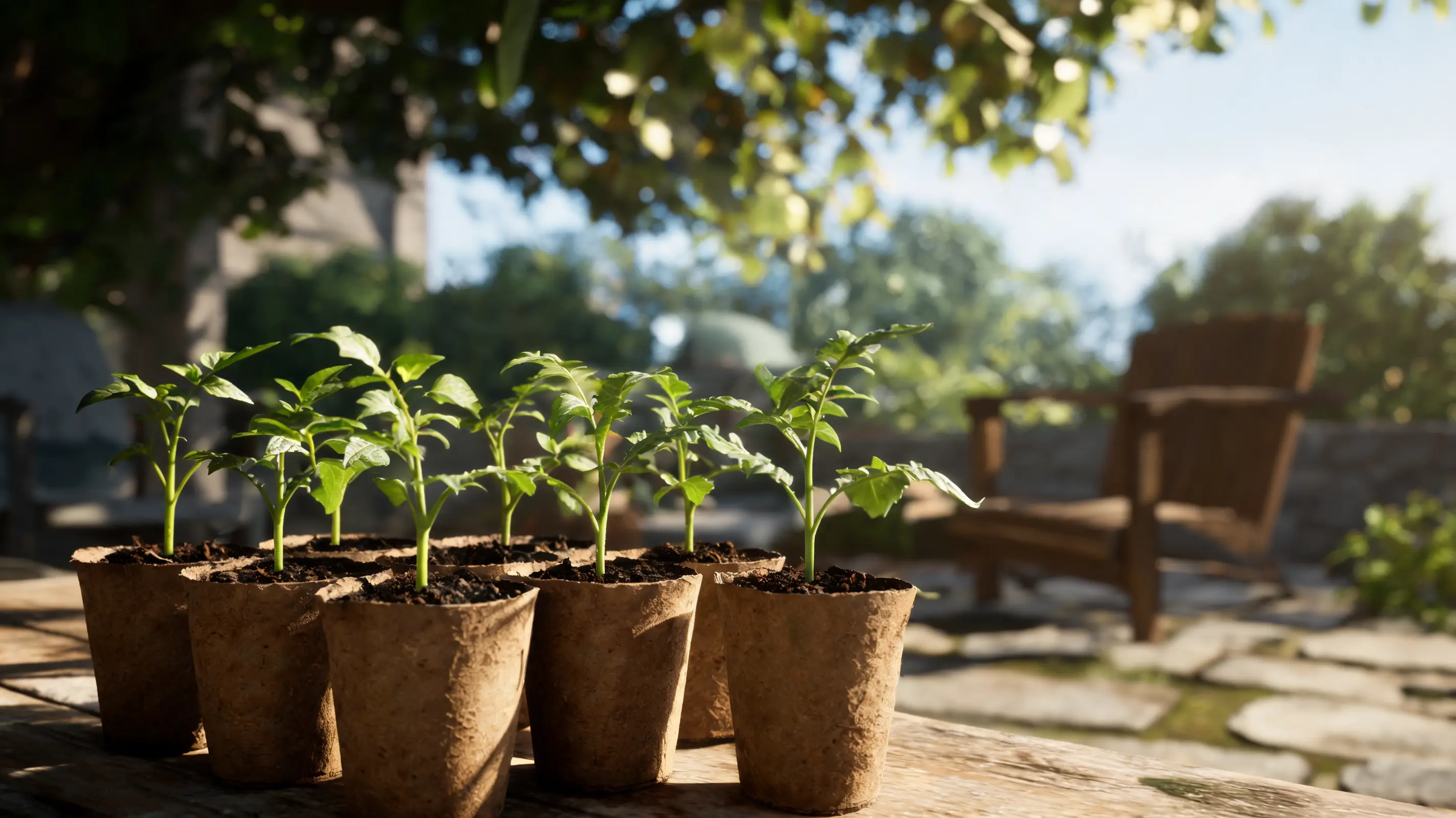
Hardening off means slowly helping indoor-grown tomato seedlings adjust to outdoor sun, wind, and temperature changes. Indoor seedlings have lived a soft life. The garden is brighter, windier, and less forgiving. A proper hardening schedule runs 7 to 10 days:
| Day | What To Do |
|---|---|
| 1 to 2 | Place seedlings outside in shade for 1 to 2 hours |
| 3 to 4 | Add gentle morning sun and bring them in later |
| 5 to 6 | Keep them outside longer, away from harsh midday sun |
| 7 to 8 | Let them spend most of the day outside in mild weather |
| 9 to 10 | Leave them outside longer if nights stay near 50°F or higher |
When To Pause Hardening Off: Pause the process if there is strong wind, heavy rain, sudden heat, or cold nights. Seedlings can handle gradual change. They do not need a backyard boot camp.
If you’re tight on time and need to compress this into 4 or 5 days, it can be done; just watch the plants closely for signs of stress and avoid exposing them to harsh afternoon sun in the early days.
Step-by-Step Guide to Transplanting Tomato Seedlings
Once seedlings are hardened off and outdoor conditions are right, move them carefully. A calm transplant helps roots settle faster and reduces early stress.
- Prepare the spot: Choose full sun and well-drained soil. Mix in compost, then water the bed lightly.
- Water seedlings first: Water containers about an hour before planting so the root ball holds together.
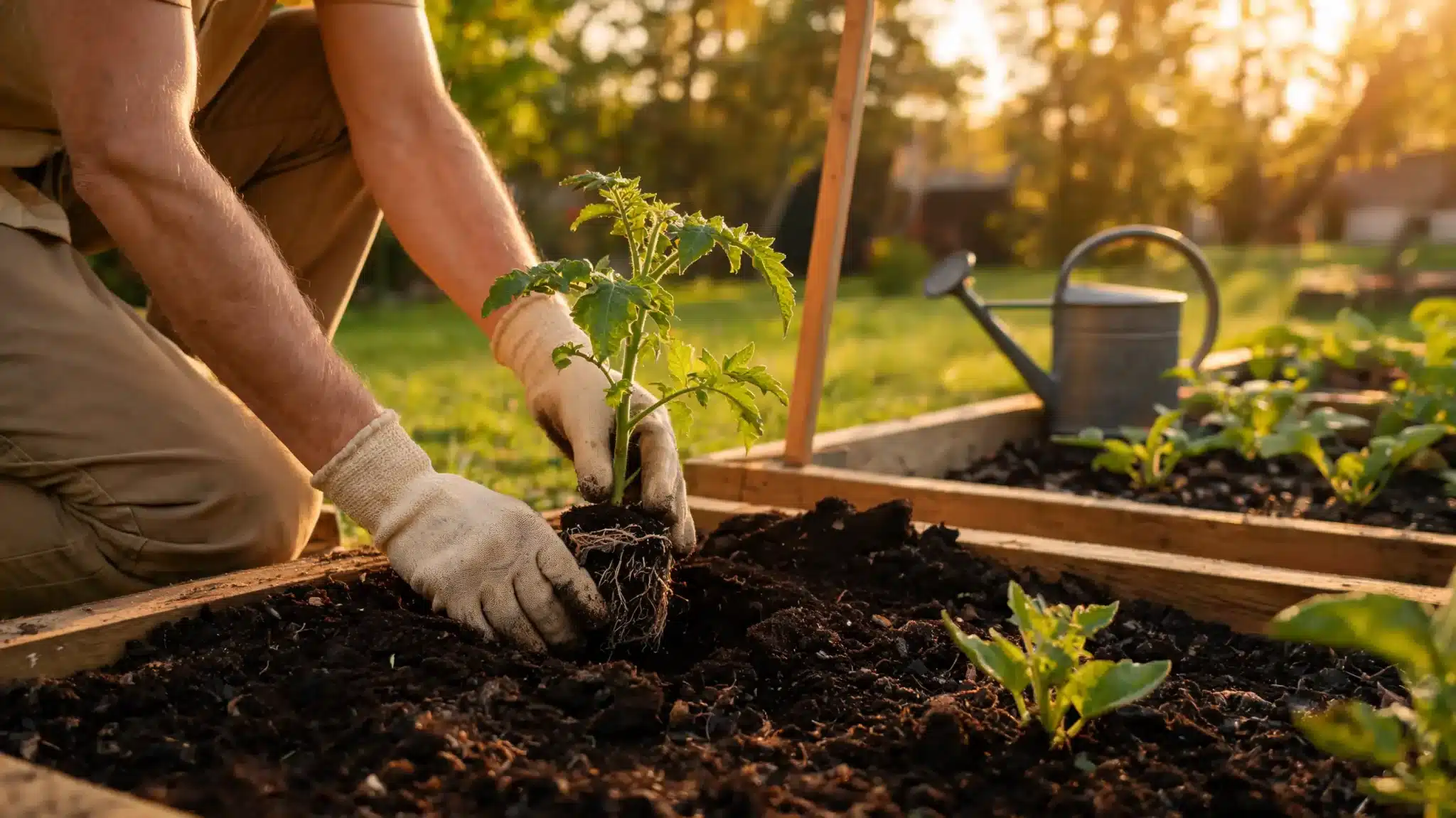
- Plant deep: Remove lower leaves and bury the stem up to the lowest true leaves.
- Handle gently: Slide the plant out by supporting the root ball. Do not pull the stem.
- Backfill and water: Press soil around roots, then water deeply at the base.
- Add support and mulch: Place a cage or stake now. Add mulch, but keep it off the stem.
| Tip: transplant in the evening or on a cloudy day. Doing it at midday under full sun adds unnecessary stress to an already disoriented plant. |
How Deep Should You Plant Tomato Seedlings?
Plant tomato seedlings deep enough to bury part of the stem. A common method is planting up to just below the first healthy set of true leaves. For leggy seedlings, a shallow trench can work well.
This is one reason tomatoes are forgiving. A stretched seedling is not a lost cause. Burying part of the stem helps the plant form more roots, which can support stronger growth.
Do not bury diseased or damaged leaves. Remove lower leaves cleanly before planting. Keep the top growth above the soil where it gets light and airflow.
Best Spacing For Tomato Seedlings
Tomato seedlings look small at planting time, but they grow fast. Good spacing gives each plant better airflow, root room, and easier access.
| Tomato Type Or Setup | Suggested Spacing |
|---|---|
| Staked plants | 18 to 24 inches apart |
| Caged plants | 24 to 36 inches apart |
| Large indeterminate plants | 30 to 36 inches or more |
| Containers | One plant per large pot |
When spacing feels a little generous, it is usually right. Tomato plants fill out quickly once warm weather and steady growth begin.
Transplanting In Garden Beds, Raised Beds, And Containers
Different growing setups warm and dry at different speeds. Check soil warmth, moisture, and root space before moving tomato seedlings into their final planting spot.
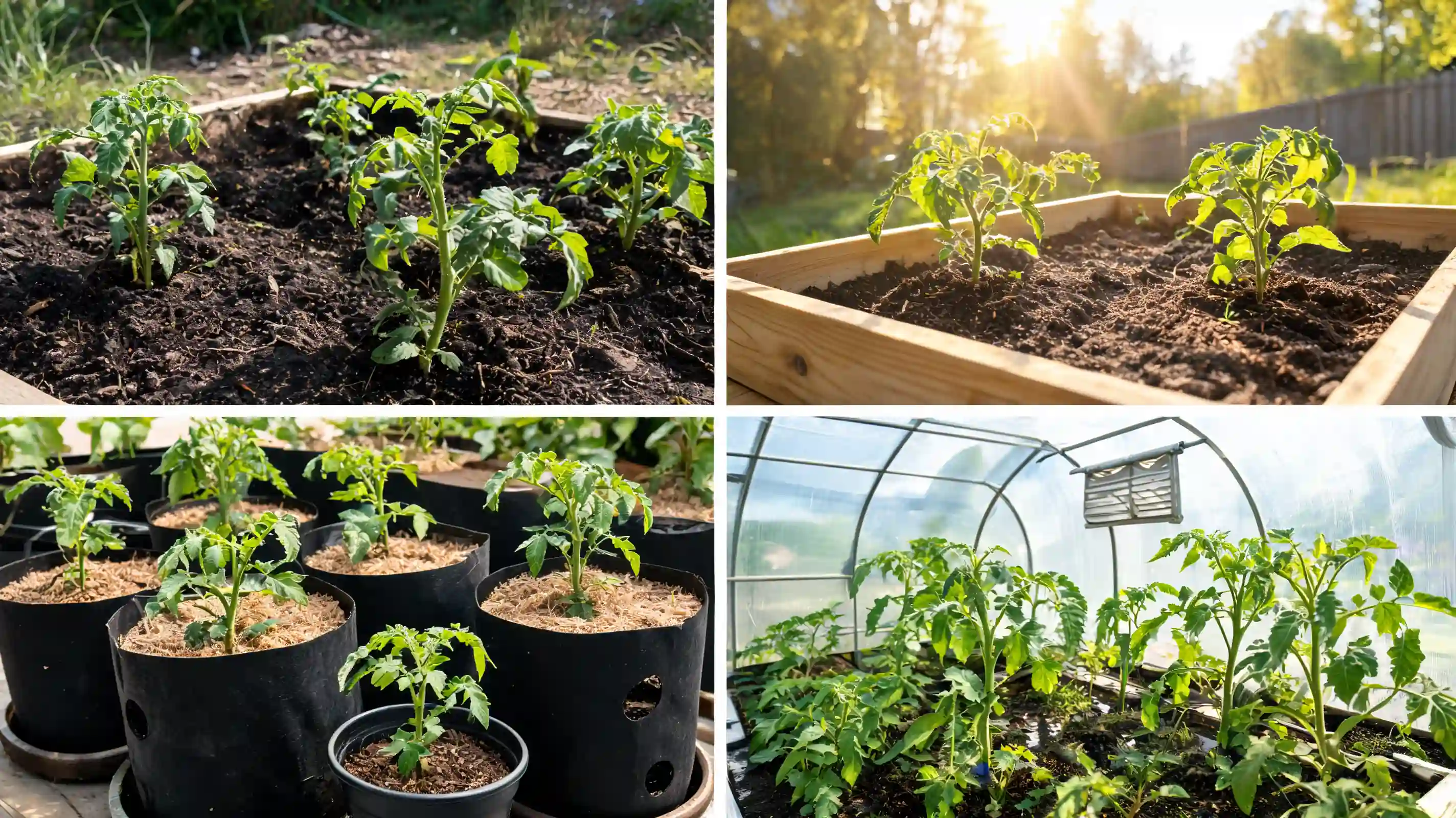
1. Garden Beds
In-ground beds often stay cooler in spring, especially if the soil is heavy or the area sits low. Wait until the weather feels stable and the soil is warm, not just the air.
Low spots can hold cold air longer, so check them carefully. Add compost before planting, and avoid working soil while it is wet.
2. Raised Beds
Raised beds usually warm faster than in-ground soil, which can help tomato seedlings settle a little sooner. The tradeoff is faster drying, especially during sunny or windy days.
Check soil moisture often after planting. If the top inch dries quickly, water at the base. Mulch later once the soil has warmed enough for steady root growth.
3. Containers And Grow Bags
Containers and grow bags warm quickly, but they also dry out faster than garden beds. Use a large container with drainage holes and enough room for roots.
A 5-gallon pot can work for compact tomatoes, while larger varieties need more space. Use quality potting mix, not garden soil, so roots get air and steady moisture.
4. Greenhouses And Polytunnels
Greenhouses and polytunnels can allow earlier planting because they hold extra warmth. Still, tomato seedlings need gradual adjustment if they were started indoors.
Check soil temperature inside the covered space, not just air temperature. Cold roots can still slow growth. Vent the space on warm days so plants do not overheat or stay too humid.
The best setup is the one managed well. Match care to the space, watch moisture closely, and give tomato seedlings warmth, support, and steady attention early.
What To Do Right After Transplanting
The first two weeks matter because tomato seedlings are still settling in. Steady care helps roots adjust without too much water, heat, or feeding stress.
- Water at the base: Water deeply after planting, then keep soil evenly moist. Avoid daily soaking because roots need air too.
- Watch the weather: Protect seedlings from cold nights, strong heat, or rough wind. Use temporary shade during sudden hot spells.
- Wait before feeding: Avoid heavy fertilizer right away. Let roots settle first, then feed lightly after 1 to 2 weeks.
- Mulch at the right time: Add mulch after the soil has warmed. Keep it away from the stem to prevent rot.
- Check plants often: Look under leaves, around stems, and near supports for pests, damage, or early stress signs.
These small checks prevent bigger problems later. A newly moved tomato seedling needs calm, steady care more than constant fussing
Common Mistakes That Hurt Tomato Seedlings
Small transplant mistakes can slow tomato seedlings for weeks. Most problems come from rushing the move, over-caring, or handling roots too roughly.
- Transplanting too early: Wait until soil stays near 60°F and nights are mild.
- Skipping hardening off: Give seedlings 7 to 10 days to adjust outdoors.
- Letting roots get bound: Check drainage holes once seedlings reach 5 to 6 weeks old.
- Overwatering early: Water deeply once, then let the top inch dry slightly.
- Fertilizing too soon: Wait 1 to 2 weeks, then use a diluted feed.
- Breaking the root ball: Support it from below and move it as one piece.
A careful transplant gives tomato seedlings a stronger start. Give roots warmth, space, and steady care, and they usually reward the patience.
What If Tomato Seedlings Look Stressed After Transplanting?
Some stress is normal. A plant just moved from a cozy pot to open soil may droop for a day. That is not always a crisis.
| Problem | Likely Cause | What To Do |
|---|---|---|
| Mild drooping | Normal transplant stress | Water evenly and wait |
| White leaf patches | Sunscald | Add temporary shade |
| Yellow lower leaves | Water stress or root adjustment | Check soil moisture |
| No growth | Cold soil or cold nights | Keep soil warm and avoid overwatering |
| Severe wilting | Root damage, dry soil, or heat | Shade and water at the base |
If leaves turn pale or scorched after hardening off, sun exposure may have increased too fast. Move more slowly next time. Tomato seedlings can recover from small mistakes, but repeated stress costs time.
Frequently Asked Questions
Should flowers be removed before transplanting?
Remove early flowers if the seedling is small or stressed. This helps the plant focus on roots and leaves first. A stronger root system supports better fruit later. Larger, healthy transplants can keep flowers if conditions are already stable.
Can tomato seedlings be transplanted twice?
Yes, tomato seedlings handle transplanting well when moved gently. Many growers pot them up once indoors, then plant them outside later. Keep each move careful, water before handling, and avoid disturbing roots more than needed during each step.
Why are tomato seedlings purple after transplanting?
Purple leaves often point to cold stress or trouble taking up phosphorus in cool soil. The plant may improve once soil warms and roots start working well. Avoid heavy feeding right away. Warmth and steady moisture usually help most.
Should tomato seedlings be pruned after transplanting?
Do not prune heavily right after transplanting. The plant needs leaves for energy while roots settle. Only remove leaves touching soil, damaged leaves, or buried lower leaves. Save bigger pruning decisions until the plant is growing strongly again.
Final Thoughts
Moving tomato seedlings at the right time gives them a better start before the real growing season begins. Once you know when to transplant tomato seedlings, the process feels much less like guessing. I’d focus on the basics first: true leaves, strong stems, warm soil, mild nights, and a steady hardening-off period.
You also need gentle handling, deep planting, good spacing, and calm aftercare during the first two weeks. These small steps help roots settle faster and reduce common problems like wilting, slow growth, and transplant shock.
Try these tips with your next batch of seedlings, then share what worked best in your garden in the comments or check out my other related blogs.