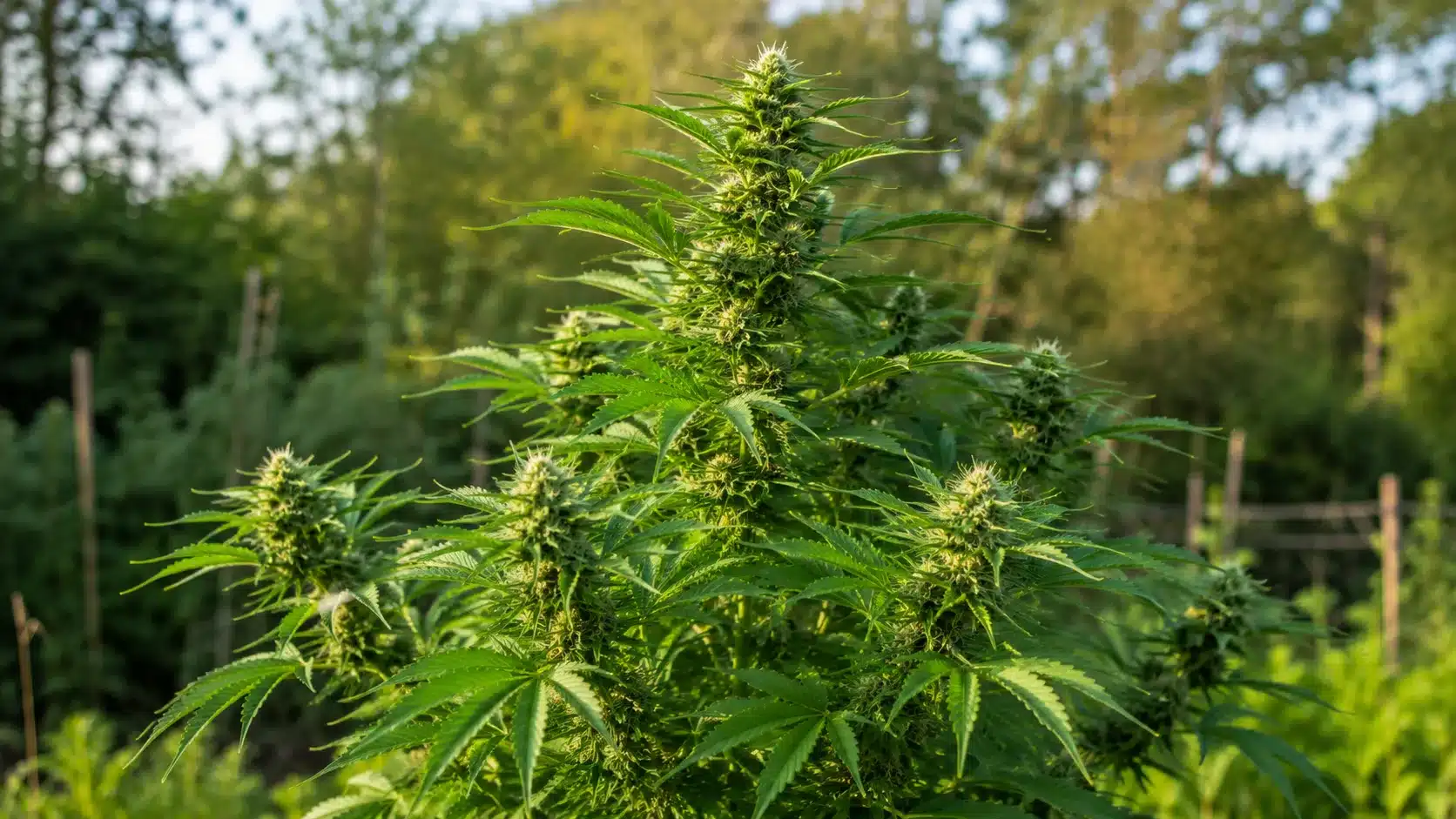
| Stage | Timeframe | What Happens | Key Visual Signs |
| Germination | 3 to 10 days | Seed cracks, taproot appears | White taproot, cracked shell |
| Seedling | 2 to 3 weeks | First leaves and roots develop | Cotyledons, small true leaves |
| Vegetative | 3 to 16 weeks | Fast leaf, stem, and branch growth | Large fan leaves, multiple nodes |
| Pre-Flowering | 1 to 2 weeks | The plant shows sex for the first time | Pistils or pollen sacs at nodes |
| Flowering | 8 to 11 weeks | Buds form and mature | White hairs, buds, trichomes |
| Harvest | Varies | Flowers cut, dried, and cured | Mature buds, darkened pistils |
Every cannabis plant moves through a predictable set of changes from seed to harvest. Understanding weed plant stages is the fastest way to stop guessing what your plant needs and start giving it exactly the right care at the right time.
The main stages are germination, seedling, vegetative, and flowering, though pre-flowering and harvest each deserve attention in their own right.
Most photoperiod plants take three to six months from seed to harvest, though that window shifts depending on genetics, your grow setup, and whether you are working with photoperiod or autoflowering varieties. Always check local laws before growing, since cultivation rules vary by state and country.
What are Weed Plant Stages?
Cannabis growth is a series of distinct biological phases, each with its own purpose, visual markers, and care requirements. Knowing which stage your plant is in tells you what it needs from lighting, nutrients, water, and environment right now.
Most growers use a four-stage model covering germination, seedling, vegetative, and flowering. A more complete six-stage model adds pre-flowering and harvest as separate checkpoints.
The cannabis life cycle follows a consistent biological sequence regardless of strain, grow method, or setup, which makes visual identification reliable once you know what to look for at each phase.
| Note: Autoflowering cannabis strains follow the same stage sequence but transition from vegetative to flowering based on age rather than a light cycle. Their total life cycle is typically 8 to 12 weeks from germination. |
The Cannabis Growth Stages, One by One
Each stage below has distinct visual signs, specific care needs, and its own failure points.
1. Germination
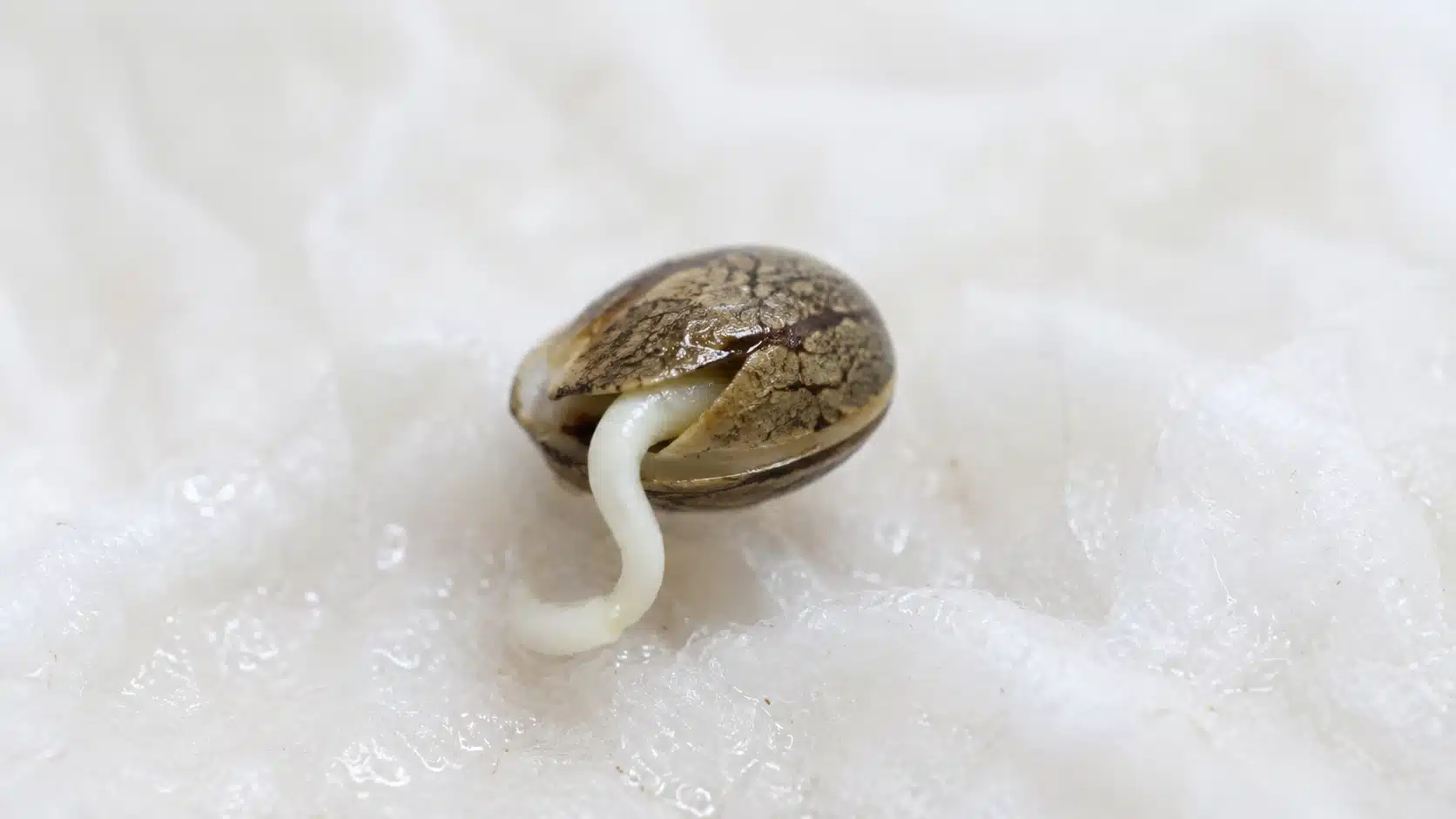
Moisture reaches the seed; the shell softens, cracks, and a taproot pushes downward. The plant runs entirely on stored seed energy at this point; no leaves exist yet.
- Optimal temperature: 70 to 85°F
- Most seeds show a taproot within 3 to 7 days; older seeds may take up to 10
A healthy taproot is firm and white. Brown discoloration or a mushy texture indicates overwatering or rough handling.
2. Seedling Stage
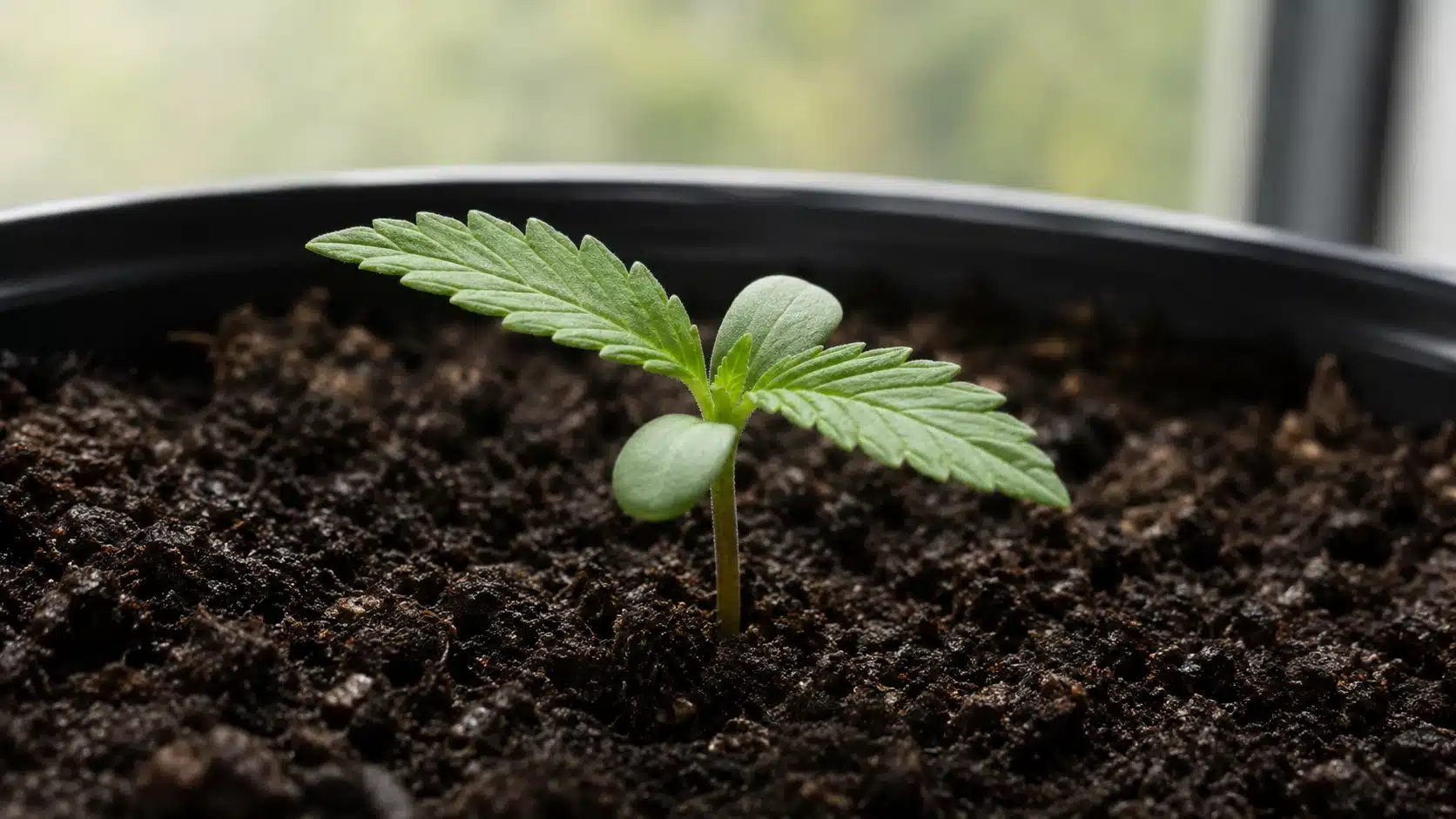
The taproot anchors, and then the plant pushes its first two rounded leaves, cotyledons, above the soil. These are embryonic leaves that collect light while the first real serrated leaves develop.
The stem is thin, the root system is small and sensitive, and the stage lasts 2 to 3 weeks. It ends when the plant has several sets of true leaves and a root system strong enough to support faster growth.
| ⚠️ Caution: Seedlings do not need added fertilizer for the first one to two weeks if grown in a quality medium. Overfeeding at this stage causes nutrient burn before the plant has roots strong enough to recover. |
3. Vegetative Stage
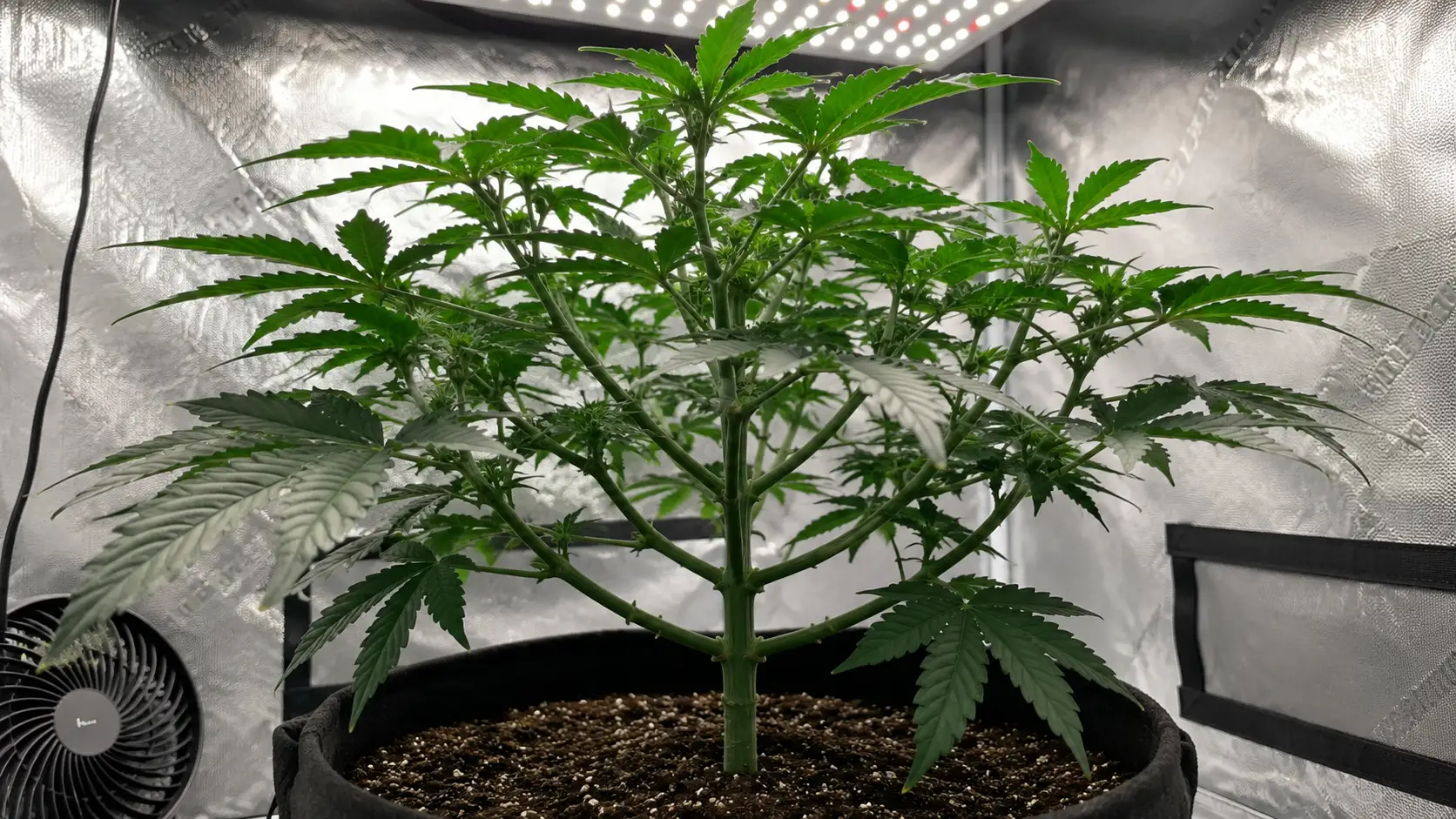
The vegetative stage is where the plant builds everything it will later use to produce flowers. Stems thicken, fan leaves expand, branches extend from each node, and roots push deeper into the medium.
- Multiple sets of large, serrated fan leaves develop rapidly
- Branching accelerates as new nodes form; plant height and width increase significantly
- No flowering structures present yet
- Indoor photoperiod plants stay in veg under long light periods, typically 18 hours on and 6 hours off
A plant that builds strong structure and full canopy coverage in veg enters flowering ready to produce dense, well-supported buds. A study in Frontiers in Plant Science (2024) found that nitrogen, phosphorus, and potassium interactions strongly affect cannabis vegetative growth, recommending 160 to 200 mg/L nitrogen, 30 mg/L phosphorus, and 60 mg/L potassium in a tested hydroponic setup.
4. Pre-Flowering Stage
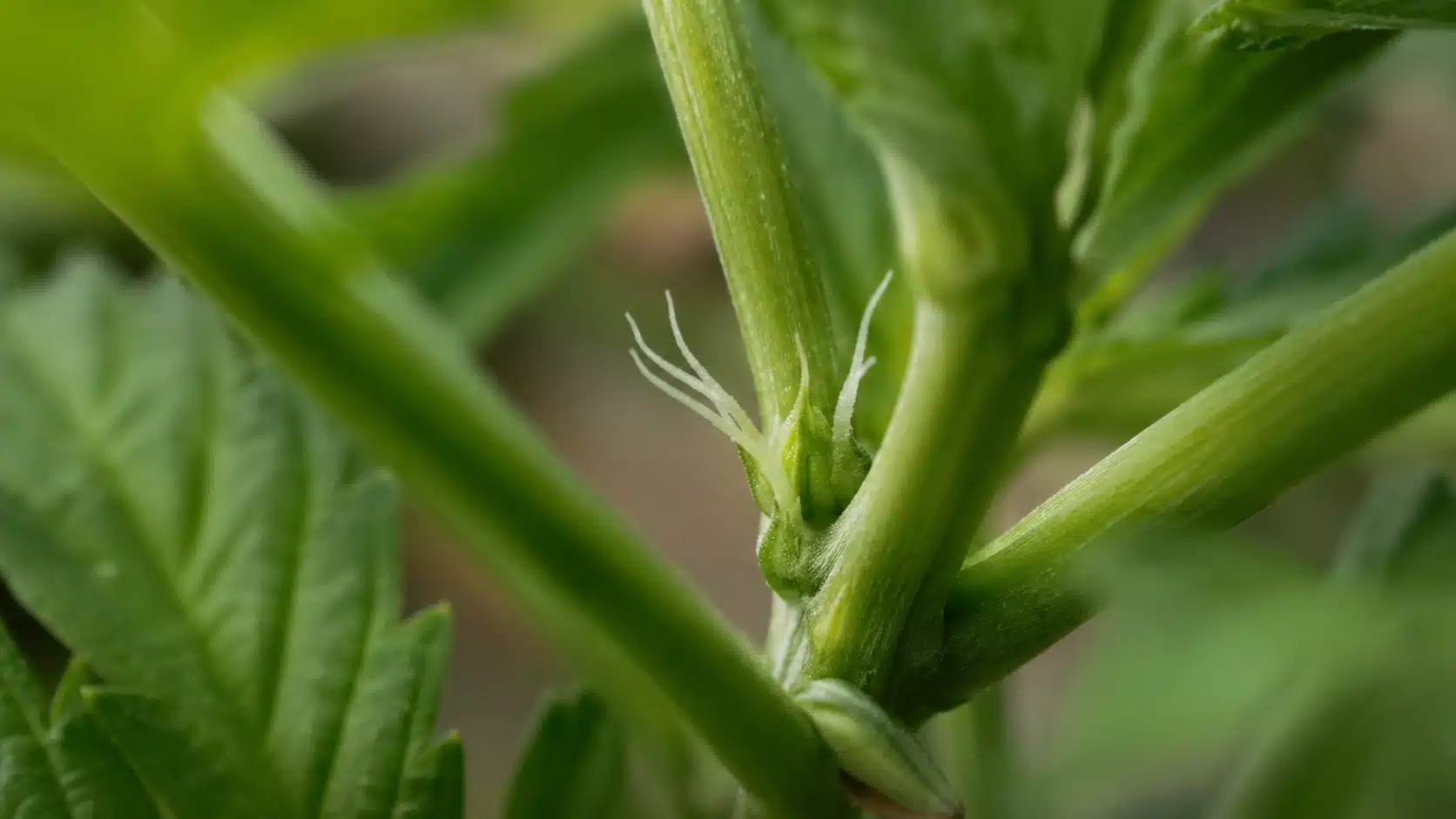
Pre-flowering is the short transition during which the plant stops producing leaves and shifts toward reproduction. This is the first point at which plant sex becomes visible.
- Females show a tear-shaped calyx with white, hair-like pistils at the nodes
- Males show small, round pollen sacs with no pistils
- Bud sites begin forming at branch junctions on female plants
- Lasts roughly 1 to 2 weeks before full flowering begins
Removing male plants before flowering prevents pollination, keeping females focused on resin-dense flower production. A PubMed-indexed study on Cannabis sativa confirmed that bract and solitary-flower development mark the start of the reproductive phase, triggered by a short-day photoperiod.
| 📝 Tip: Male plants typically show sex a few days before females. Checking nodes at the base of branches during pre-flowering gives you the earliest window to spot and remove them. |
5. Flowering Stage
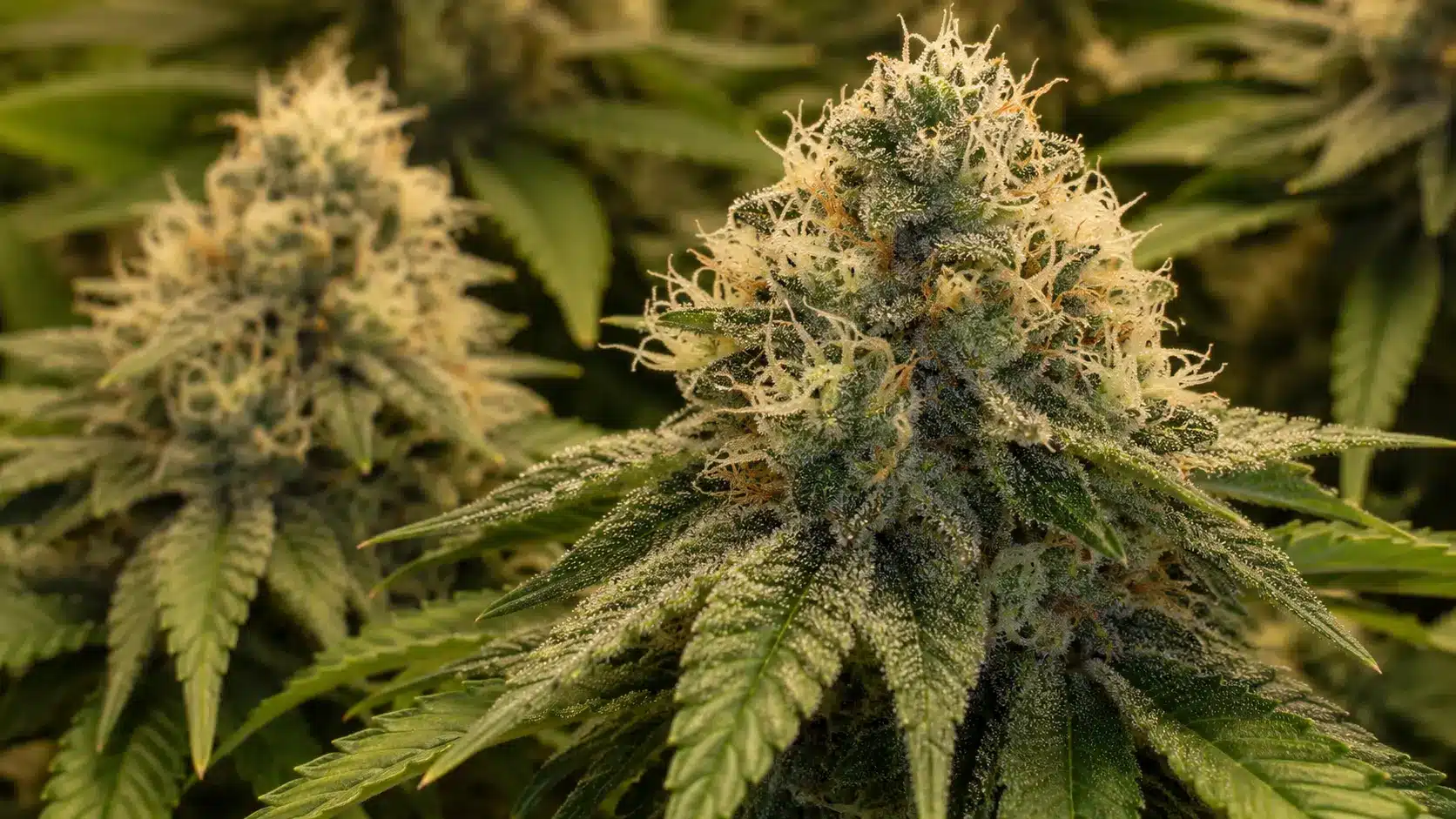
White pistils multiply across bud sites, resin glands called trichomes develop on flowers and surrounding leaves, and the plant puts almost all its energy into reproductive growth.
- Weeks 1 to 3: Rapid vertical stretch, white pistils appear at all bud sites
- Weeks 4 to 6: Buds gain size and weight, resin increases, smell intensifies
- Week 7 onward: Buds reach peak density, pistils darken, trichomes shift from clear to cloudy or amber
- Photoperiod plants flower when triggered by a 12/12 light switch indoors or shortening days outdoors; autoflowers begin flowering by age regardless of light schedule
A 2023 study in Plants (MDPI) confirmed 12/12 as the standard indoor flowering trigger and found that different photoperiods affected yield and cannabinoid levels by cultivar.
How to Tell What Stage Your Plant Is In
Visual signs are more reliable than counting days. Use this checklist to place your plant right now:
| Stage | What You See |
| Germination | Cracked seed shell, white taproot, no leaves |
| Seedling | Cotyledons open, fewer than 4 sets of true leaves, thin stem |
| Vegetative | Multiple large fan leaves, fast growth, several nodes, no buds |
| Pre-Flowering | Pistils or pollen sacs at nodes, no full buds yet |
| Flowering | Bud sites forming and stacking, white hairs multiplying, trichomes visible |
| Ready to Harvest | Buds full, most pistils darkened, trichomes cloudy or amber |
Multiple rows matching at once means the plant is mid-transition.
Indoor vs Outdoor vs Autoflower: How Stages Differ
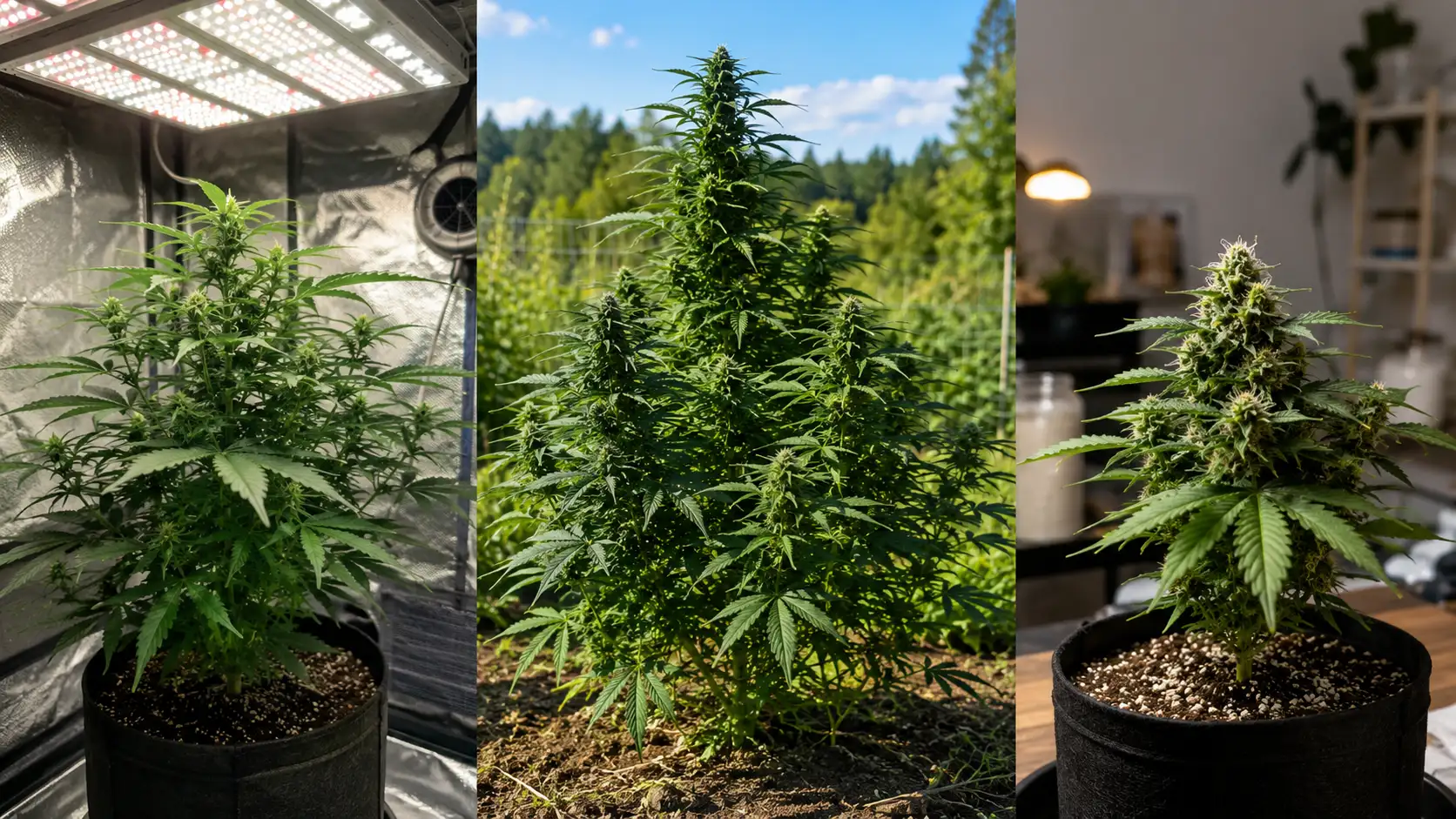
The biological stages are the same across all growth types, but what triggers each transition and how long each phase lasts differ by setup.
1. Indoor
Indoor growing gives direct control over the light cycle. Most photoperiod growers run 18 hours of light during veg and flip to 12/12 to start flowering, meaning the vegetative stage can be extended or shortened depending on target plant size.
2. Outdoor
Outdoor photoperiod plants follow natural daylight, germination and early veg in spring, structure-building through early summer, and flowering triggered naturally as days shorten in late summer.
Most temperate-climate plants reach harvest between September and November. Weather, latitude, and genetics all affect timing.
3. Autoflower
Autoflowering strains move through the same stages on a compressed, age-driven schedule. They shift from veg to flowering around 3 to 5 weeks after germination regardless of light, completing seed to harvest in 8 to 12 weeks. The trade-off is less control over veg length and generally smaller plant size.
What Can Go Wrong at Each Stage
| Stage | Common Problem | Most Likely Cause |
| Germination | The seed does not crack | Old seed, too cold, or too dry |
| Germination | Brown or mushy taproot | Overwatering or rough handling |
| Seedling | Tall, thin, stretching stem | Light is too far away or too weak |
| Seedling | Drooping or yellowing leaves | Overwatering or early overfeeding |
| Vegetative | Pale or yellowing fan leaves | Nitrogen deficiency or pH lockout |
| Vegetative | Burned leaf tips | Overfeeding or salt buildup in the medium |
| Vegetative | Stunted growth | Root restriction or pest pressure |
| Flowering | Airy or loose buds | Insufficient light intensity or heat stress |
| Flowering | Mold on buds | High humidity or poor airflow |
| Flowering | Hermaphrodite plant | Stress, light leaks during the dark period, or genetics |
The flowering stage poses the greatest risk since problems at that point directly affect the final product. Pay closest attention to humidity, airflow, and light discipline once buds start forming.
| ⚠️ Caution: Light leaks during the dark period in flowering can stress photoperiod plants enough to trigger hermaphroditism. Even brief exposure from a phone screen or a gap under a door can be enough to disrupt the cycle. |
Week-by-Week Cannabis Growth at a Glance
Timelines below apply to indoor photoperiod plants. Autoflowers progress faster through each phase.
- Week 1 to 2: Germination and early seedling. Taproot appears, cotyledons open, first true leaves emerge.
- Week 3 to 5: Seedling into early veg. More true leaves, root system filling the medium, stem beginning to thicken.
- Week 6 to 10+: Full vegetative growth. Fan leaves reach full size, branching accelerates, nodes multiply.
- Flowering week 1 to 3: Stretch phase. Rapid height increase, white pistils at all bud sites.
- Flowering week 4 to 6: Bud building. Weight and density gain, resin increases, vertical growth stops.
- Flowering week 7+: Ripening. Buds reach peak size, pistils darken, and trichomes shift to cloudy or amber.
A fast-finishing indica may hit harvest by week 7 of flowering; a sativa-dominant variety can run several weeks longer.
Trichomes: The Real Harvest Signal
Check stalked trichome heads directly on buds, not sugar leaves, for an accurate read. A jeweler’s loupe at 30x to 60x or a digital microscope gives you a clear view.
| Trichome Color | What It Means | Harvest Timing |
| Clear | Still maturing, cannabinoid production ongoing | Too early |
| Cloudy or milky | Peak THC concentration | Ready for most growers |
| Amber | THC degrading into CBN; more sedating effect | Late harvest, personal preference |
Frequently Asked Questions
Can you speed up the vegetative stage?
You cannot push the plant through veg faster than its genetics allow, but you can prevent slowdowns. Strong, consistent light, adequate root space, proper feeding, and stable temperatures keep the plant moving at its natural pace.
Do male cannabis plants go through the same growth stages?
Yes. Males follow the same germination, seedling, vegetative, and pre-flowering stages. The difference appears at pre-flowering: pollen sacs instead of pistils. Males typically show sex a few days earlier, giving growers a window to identify and remove them.
What happens if a photoperiod plant gets light during its dark period in flowering?
Light interruptions can disrupt flowering, slow bud development, and in some cases trigger hermaphroditism. Even brief exposure from a phone screen, an indicator light, or a gap under a door can cause problems in light-sensitive strains.
Is the harvest stage part of the cannabis life cycle?
Biologically, no — the plant is no longer growing after it is cut. However, drying and curing directly affect the quality of what you grew during flowering, so most growers treat it as the final stage of the overall process.
What does the pre-flowering stage look like on an autoflower?
Autoflowers show pre-flowering signs around 3 to 5 weeks after germination with no light schedule change. Visual signs are the same: small calyxes and white pistils on females, round pollen sacs on males, appearing near the nodes.
How does genetics affect flowering time?
Strain genetics sets the baseline. A strain bred to finish in 8 weeks will not stretch to 11 under the same conditions. Indica-dominant strains generally finish faster than sativa-dominant ones, though modern hybrids vary significantly within those categories.
Final Thoughts
Once you know what each phase looks like and what the plant needs during it, most of the guesswork goes away.
The growers who struggle most are not the ones with bad equipment or cheap seeds; they are the ones who treat every week the same regardless of what the plant is actually doing.
Germination needs patience. The seedling stage needs restraint. Vegetative growth rewards consistency. Flowering demands attention to detail.
Get those four things right at the right times, and the plant does most of the hard work on its own. Drop a comment below and let me know what you struggle with while growing.
Disclaimer: Cannabis cultivation laws vary by state and country. Always verify local regulations before growing. This article is for educational purposes only.
Sources
- Hesami, M. et al. “Morphological Characterization of Cannabis sativa L. Throughout Its Complete Life Cycle.” MDPI Plants, 2023. https://pubmed.ncbi.nlm.nih.gov/37896109/
- Rodriguez-Morrison, V. et al. “Moving Away from 12:12; the Effect of Different Photoperiods on Biomass Yield and Cannabinoids in Medicinal Cannabis.” Plants, MDPI, 2023. https://www.mdpi.com/2223-7747/12/5/1061
- “Mineral Nutrition for Cannabis sativa in the Vegetative Stage Using Response Surface Analysis.” Frontiers in Plant Science, 2024. https://www.frontiersin.org/journals/plant-science/articles/10.3389/fpls.2024.1501484/full