
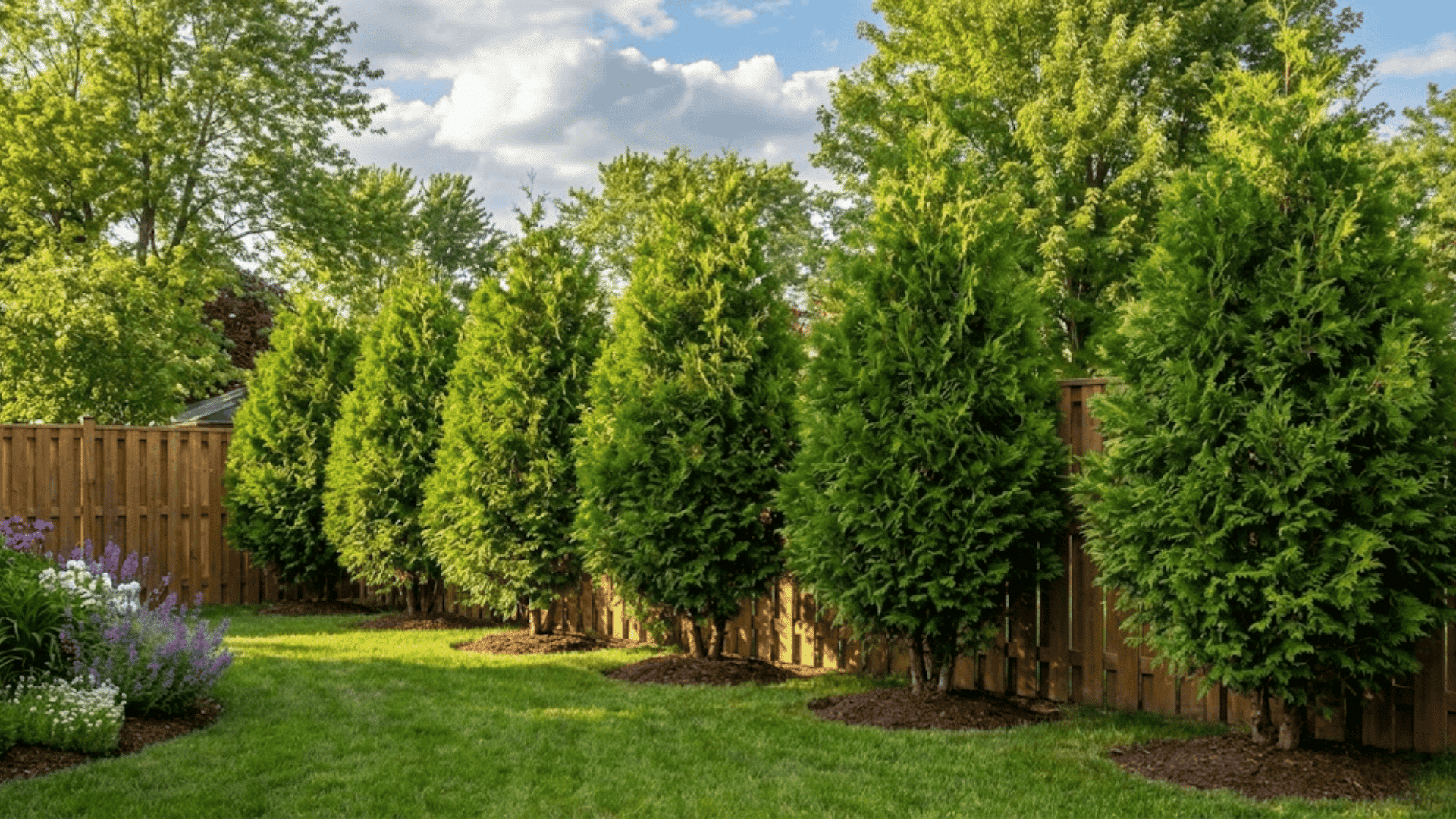
Emerald Green Arborvitae are the patient gardener’s dream: lush, evergreen, and steadily reaching skyward at a pace that’s neither glacial nor overwhelming.
If you’re wondering how fast do arborvitae grow, these versatile conifers develop at a moderate clip, making them a reliable choice when you’re craving privacy without the wait of slower-growing varieties.
Understanding the emerald green arborvitae growth rate matters because it shapes everything from your initial planting layout to how soon you’ll enjoy that cozy, secluded backyard you’ve been picturing.
We’ll walk through what influences their growth, what size to expect at different ages, and how to choose healthy specimens that’ll thrive in your space from the start.
What is an Emerald Green Arborvitae?
The Emerald Green Arborvitae, botanically known as Thuja occidentalis ‘Smaragd’, has earned its spot as one of America’s favorite privacy trees for good reason.
Its naturally narrow, pyramidal shape means you can plant them close together without constant pruning, while the rich evergreen foliage stays vibrant year-round.
Homeowners love that these conifers require minimal fussing once established, thriving in various climates across the country.
While the Green Giant arborvitae grows taller and faster, the Emerald Green offers a more compact profile that’s perfect for smaller yards and formal hedges where controlled growth matters most.
Emerald Green Arborvitae: Height and Width Per Year
Emerald Green Arborvitae typically add 6-12 inches in height and about 3-4 inches in width each year under ideal conditions.
Compared to their cousin, the Green Giant, which can shoot up 3-5 feet annually, Emerald Greens takes a more measured approach.
This steadier pace puts them in the slow-to-moderate grower category, which actually works in your favor if you’re working with limited space.
You won’t need to trim overgrowth often, as emerald green arborvitae grow at a rate that keeps a tidy, refined shape, making them ideal for formal hedges and compact landscapes.
Emerald Green Arborvitae Size at Different Ages
Planning your hedge layout starts with knowing what to expect as your arborvitae mature.
Here’s how these conifers develop from nursery stock to full-grown privacy screens.
Size at Planting: What You’re Actually Buying
Most nurseries sell Emerald Green Arborvitae in 2-3 foot, 3-4 foot, or 5-6 foot heights. These measurements reflect the current size rather than the tree’s age, since growing conditions vary at different nurseries.
A 3-foot specimen might be three years old or five, depending on how it was cultivated.
Starting with larger stock gives you an instant head start on privacy, though younger plants often establish faster and catch up within a few seasons once their roots settle in.
Growth Timeline: What to Expect Year by Year
Watching your arborvitae develop follows a predictable pattern, though individual trees may vary slightly based on care and climate.
| Timeline | Height Range | Growth Stage | What’s Happening |
|---|---|---|---|
| Year 1-2 | Minimal vertical growth | Establishment phase | Roots spreading, adjusting to new soil |
| Year 3-5 | +6-12 inches/year | Active vertical growth | Noticeable height increases begin |
| Year 5-10 | Steady upward climb | Hedge formation stage | Plants are filling out, creating a privacy screen |
| Year 10+ | 12-15 feet+ | Approaching maturity | Slowing growth, maintaining shape |
Mature Size: The Final Form
Once established, here’s what your Emerald Green Arborvitae will become:
- Height reaches 12-15 feet tall on average, though some specimens push toward 20 feet in optimal conditions.
- Width stays compact at 3-4 feet, maintaining that signature narrow profile without aggressive pruning.
- Near-full size achieved in 10-15 years, though they’ll continue growing slowly beyond that point.
- Lifespan extends several decades with proper care, making them a long-term landscaping investment.
What Affects Emerald Green Arborvitae Growth Rate?
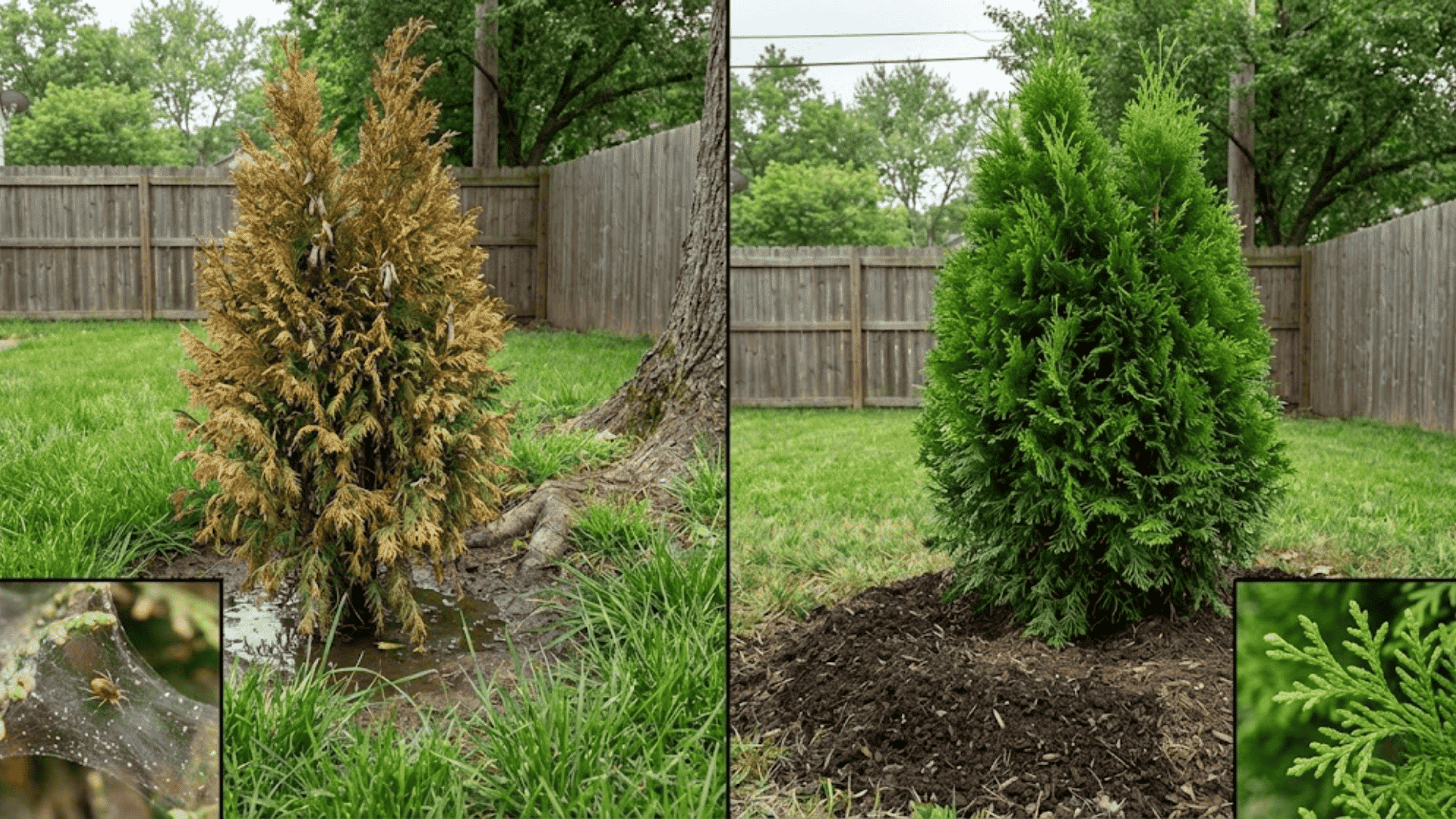
Your arborvitae won’t grow to their full potential unless certain conditions align. Understanding these factors helps you maximize the emerald green arborvitae growth rate in your specific landscape.
1. Sunlight Requirements
Emerald Green Arborvitae thrive in full sun with at least 6 hours of direct light daily. While they tolerate partial shade, you’ll notice slower, sparser growth, and the foliage may lose some of its vibrant color.
Trees planted in shadier spots typically add only 4-6 inches per year compared to 8-12 inches in sunny locations.
If you’re planting near buildings or larger trees, position them on the south or west side where they’ll catch the most rays throughout the day.
2. Soil Conditions: The Foundation for Growth
The ground your arborvitae sit in determines whether their roots can access the nutrients and water they need to thrive.
| Soil Factor | Ideal Condition | Why It Matters |
|---|---|---|
| Soil Type | Loamy, well-draining | Balances moisture retention with drainage |
| Drainage | Excellent (no standing water) | Prevents root rot and fungal issues |
| pH Level | 6.0-8.0 (slightly acidic to alkaline) | Allows optimal nutrient absorption |
| Organic Matter | Moderate amount mixed in | Supports healthy root development |
Poor drainage is the biggest soil-related growth killer. If water pools around the base after rain, consider amending with compost or planting on a slight mound.
3. Watering & Moisture
Getting the water balance right makes the difference between thriving trees and struggling ones.
- The first 2 years require deep watering once or twice weekly, especially during dry spells, to establish strong roots.
- Mature trees need supplemental water only during drought, as established roots reach deeper for moisture.
- Underwatering causes browning and stunted growth, while overwatering leads to root rot and yellowing foliage.
- Mulching around the base retains moisture and regulates soil temperature, supporting consistent growth.
4. Climate & Hardiness Zones
Emerald Green Arborvitae perform best in USDA zones 3-8, showing the fastest growth in zones 5-7 where temperatures stay moderate.
In colder zone 3-4 climates, expect growth closer to 6 inches annually as the shorter growing season limits development. Warmer zone 8 areas see good growth but may require more frequent watering during hot summers.
These trees handle cold exceptionally well but can struggle in regions with intense, prolonged heat above 90 degrees.
5. Fertilization & Care
Fertilizer can boost growth, but it isn’t always necessary. A slow-release, balanced fertilizer applied in early spring gives trees a nutrient kick for the growing season.
Over-fertilizing actually harms more than helps, causing weak, leggy growth that’s prone to damage. Most established arborvitae growing in decent soil don’t need annual feeding.
If foliage looks pale or growth seems sluggish, a soil test reveals any nutrient deficiencies worth addressing.
How to Make Emerald Green Arborvitae Grow Faster?
If you’re eager to speed up how fast do arborvitae grow without stressing your trees, a few strategic practices make all the difference.
- Plant in early spring or fall when temperatures are mild, giving roots time to establish before facing summer heat or winter cold.
- Apply 2-3 inches of organic mulch around the base to retain moisture, regulate soil temperature, and suppress weeds competing for nutrients.
- Space trees 3-4 feet apart for hedges, so each plant gets adequate sunlight and airflow without root systems battling for resources.
- Water deeply and consistently during the first two years, focusing on soil saturation rather than frequent shallow watering that encourages weak surface roots.
- Avoid heavy pruning during active growth periods since removing too much foliage forces the tree to redirect energy toward recovery instead of upward development.
Patience pays off with arborvitae. Pushing growth too aggressively with excessive fertilizer or water often backfires, creating weak stems and disease-prone trees that struggle long-term.
Emerald Green Arborvitae Spacing for Hedges & Screens
Spacing directly impacts how quickly you’ll achieve that full, private hedge you’re after.
For dense privacy screens, plant 3-4 feet apart center-to-center, allowing branches to intermingle while giving each tree enough room to access sunlight and nutrients.
If you’re using them as individual specimen trees in your landscape, space them 5-6 feet apart to showcase their natural pyramidal shape.
Closer spacing creates faster visual coverage but can slow individual growth rates as roots compete for water and nutrients.
Trees planted too tightly also suffer from poor air circulation, increasing disease risk over time.
Emerald Green Arborvitae vs. Other Arborvitae
Choosing between arborvitae varieties often comes down to balancing growth speed with your available space and aesthetic goals.
| Variety | Annual Growth Rate | Mature Height | Mature Width | Best For |
|---|---|---|---|---|
| Emerald Green | 6-12 inches/year | 12-15 feet | 3-4 feet | Compact yards, formal hedges, controlled growth |
| Green Giant | 3-5 feet/year | 30-40 feet | 12-15 feet | Fast privacy, large properties, windbreaks |
| Techny (Mission) | 6-10 inches/year | 10-15 feet | 6-8 feet | Cold climates, wider hedges, bronze winter color |
| American Arborvitae | 12-24 inches/year | 40-60 feet | 10-15 feet | Natural screens, rustic settings, native plantings |
If you need privacy tomorrow, Green Giant delivers. For tidy hedges that won’t swallow your yard, Emerald Green stays compact with vibrant foliage year-round and rarely needs trimming.
Why Your Arborvitae May Be Growing Slowly?
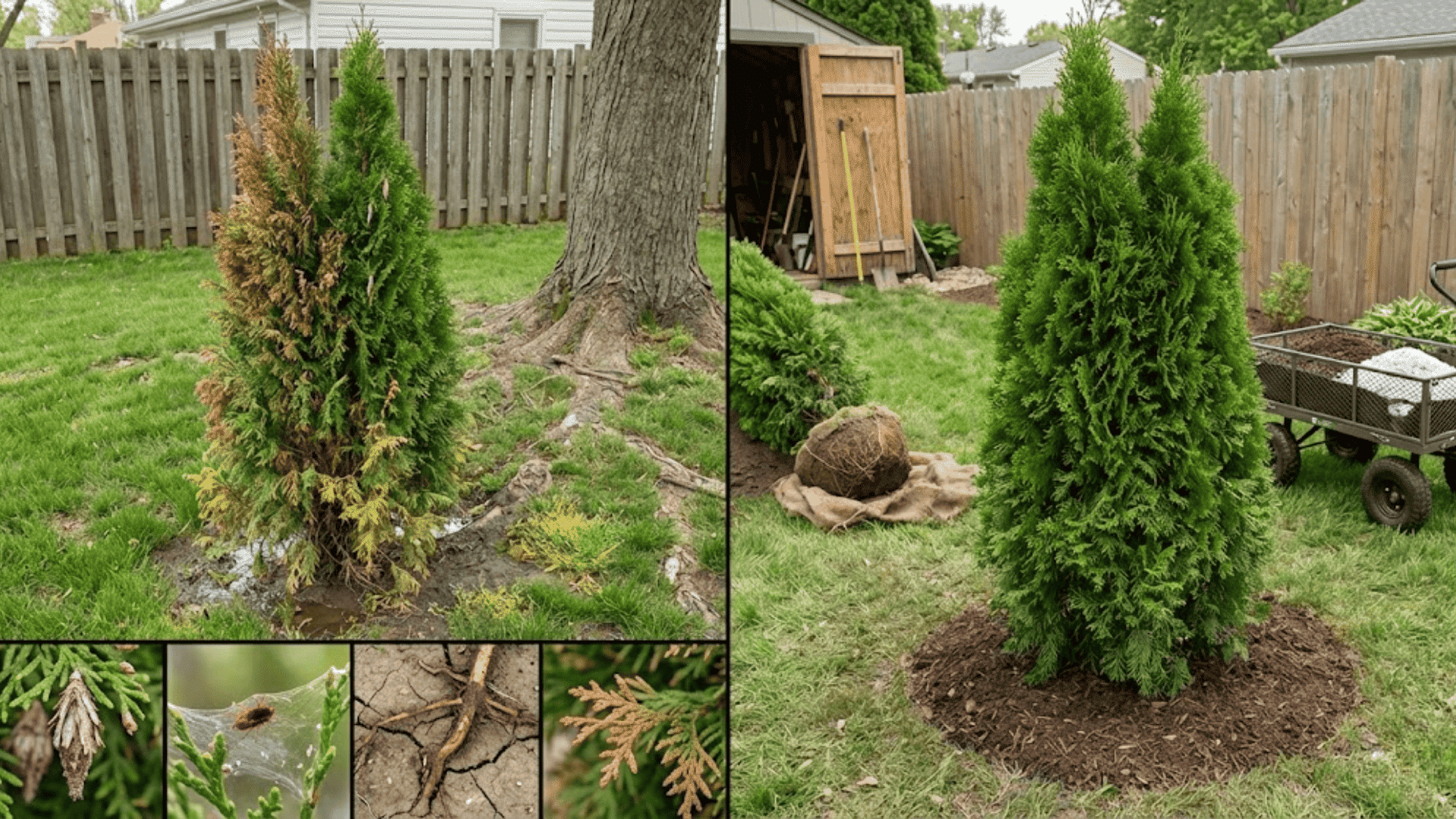
When your Emerald Green Arborvitae stalls out or barely adds height each season, one of these culprits is usually to blame.
- Transplant shock during the first year keeps trees focused on root recovery rather than vertical growth, especially if planted during hot or dry periods.
- Poor drainage and waterlogged soil suffocate roots and trigger rot, preventing nutrient uptake that fuels healthy development.
- Winter burn from harsh winds and sun scorches foliage on exposed trees, forcing them to spend spring regenerating damaged tissue instead of growing.
- Root competition from nearby trees, shrubs, or grass starves your arborvitae of the water and nutrients it needs for consistent annual gains.
- Pest infestations like bagworms or spider mites drain energy as trees fight off attackers, leaving little left over for new growth.
Most slowdowns are fixable once you identify the issue. Adjusting watering habits, improving soil conditions, or relocating competing plants often gets stalled trees back on track within a season or two.
Buying Emerald Green Arborvitae: What Size Should You Choose?
Selecting the right size and format at purchase affects both your upfront investment and how quickly you’ll see results in your landscape.
| Factor | Option 1 | Option 2 |
|---|---|---|
| Purchase Size | 2-3 feet ($30-$60, 90%+ survival) | 5-6 feet ($100-$200+, 75-85% survival) |
| Root Format | Container-grown (quick establishment, intact roots) | Balled-and-burlapped (larger sizes, needs extra watering) |
| Planting Season | Spring (full growing season ahead) | Fall (roots establish without heat stress) |
| Where to Buy | Local nurseries (climate-adapted stock) | Online: Fast Growing Trees, Nature Hills |
Look for vibrant green foliage, sturdy central leaders, and moist root balls. Stressed or clearance trees rarely recover their full growth potential, so prioritize healthy specimens from the start.
The Bottom Line
Understanding the emerald green arborvitae growth rate helps you plan smarter and set realistic expectations for your privacy hedge.
These reliable conifers won’t give you overnight results, but their steady, manageable pace means less maintenance and a refined look that lasts for decades.
Starting with nursery saplings or investing in larger stock both work well when paired with proper care and patience, rewarding you with that lush, evergreen screen you’ve been envisioning.
Have questions about your specific planting situation or tips you’ve learned along the way? Drop a comment below and let’s keep the conversation growing.

One Response
Thank you Randy,
This is the most indepth article I have found in my search for details for the Emerald Green arborvitae. Everything I needed to know was found here. Your knowlege of gardening and what the gardner needs to know before purchasing these beauties. I dont typically reply to articles but yours was exceptional. I will certainly look for your books. Thank you!