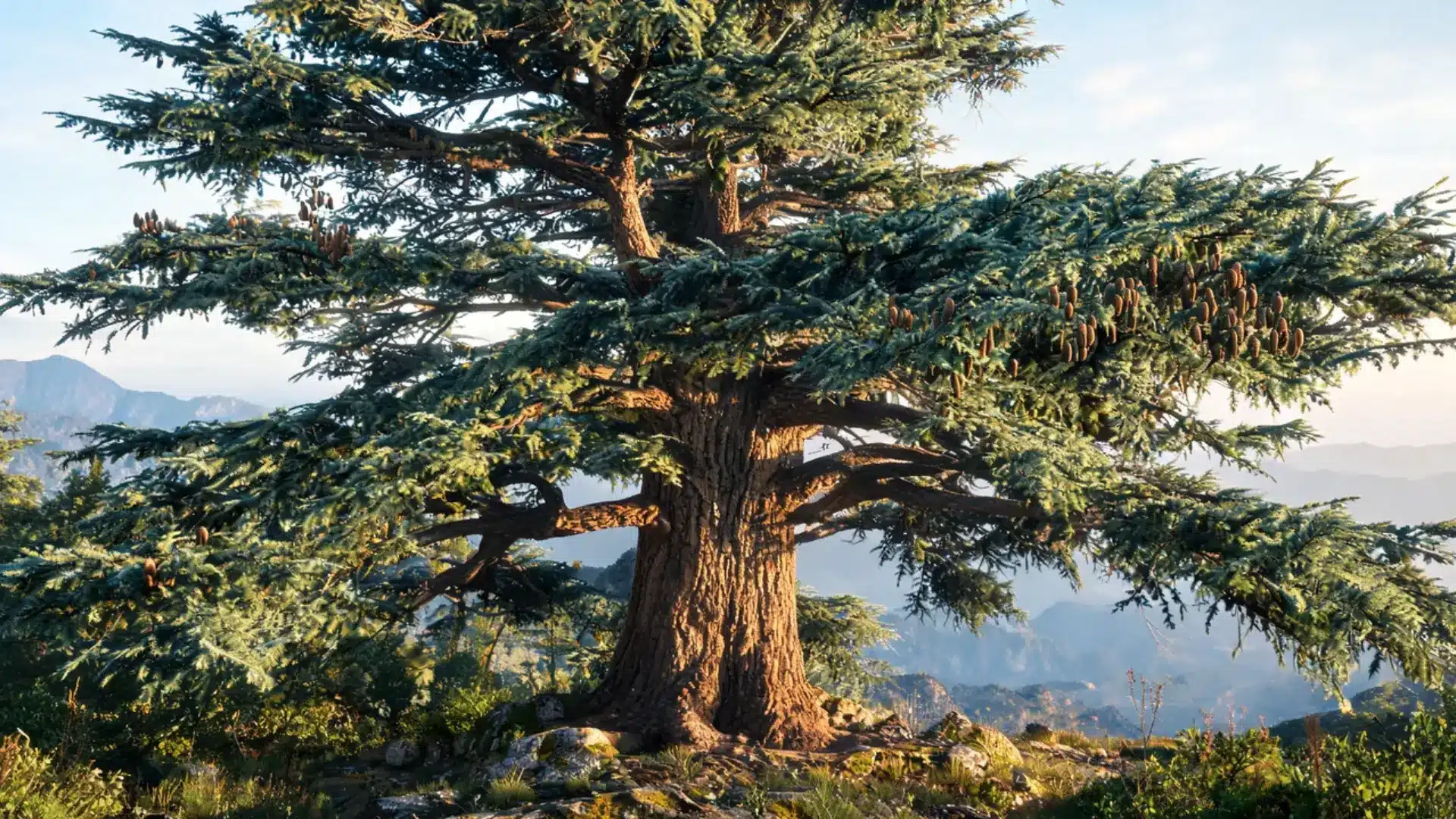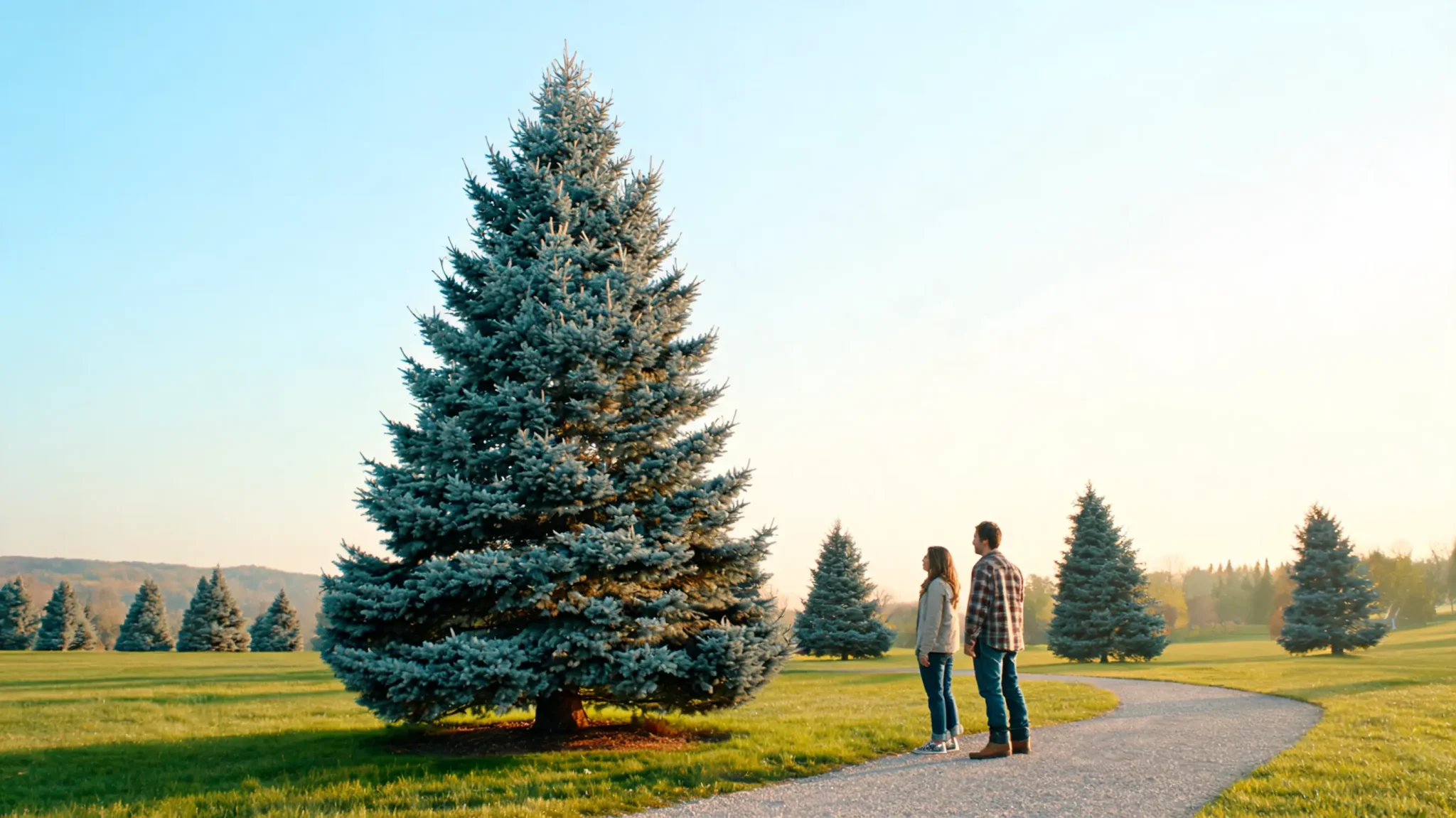
Picking the right spruce tree is harder than it looks. Dozens of species and cultivars exist, and many differ only in needle color, mature size, or growth rate, making it easy to choose one that outgrows its spot or struggles in the wrong climate.
Spruce trees belong to the Picea genus, which includes about 35 species that grow best in cooler climates. Types differ in height, shape, needle color, growth rate, and growing conditions, so some suit small yards while others work better as windbreaks or specimen trees.
Below, you’ll find several types of spruce trees, including natural species and selected cultivars, along with tips on identification, selection, planting, care, and uses, so you know which spruce fits your yard.
How to Identify a Spruce Tree
You can spot a spruce tree by its single, four-sided needles, downward-hanging cones, and cone-shaped form with a clear central trunk. These traits set it apart from pines, firs, and other types of coniferous trees.
| Feature | What to Look For |
|---|---|
| Needles | Grow singly instead of in bundles |
| Needle shape | Usually stiff, pointed, and four-sided |
| Twigs | Small woody pegs remain after needles fall |
| Cones | Usually hang downward |
| Tree form | Often cone-shaped with a clear central trunk |
| Needle color | Green, blue-gray, silver-green, or yellow-green |
| Branch form | Upright, narrow, dense, rounded, or weeping |
| Twig texture | Usually rough after needles are removed |
No single trait tells the whole story, so check needles, cones, and form together before you decide.
Natural Types of Spruce Trees
Spruce trees vary in size, shape, color, and climate needs. This list includes 10 natural species that grow in the wild. Cultivars are selected forms with traits such as smaller size, different color, or hanging branches.
1. Black Spruce
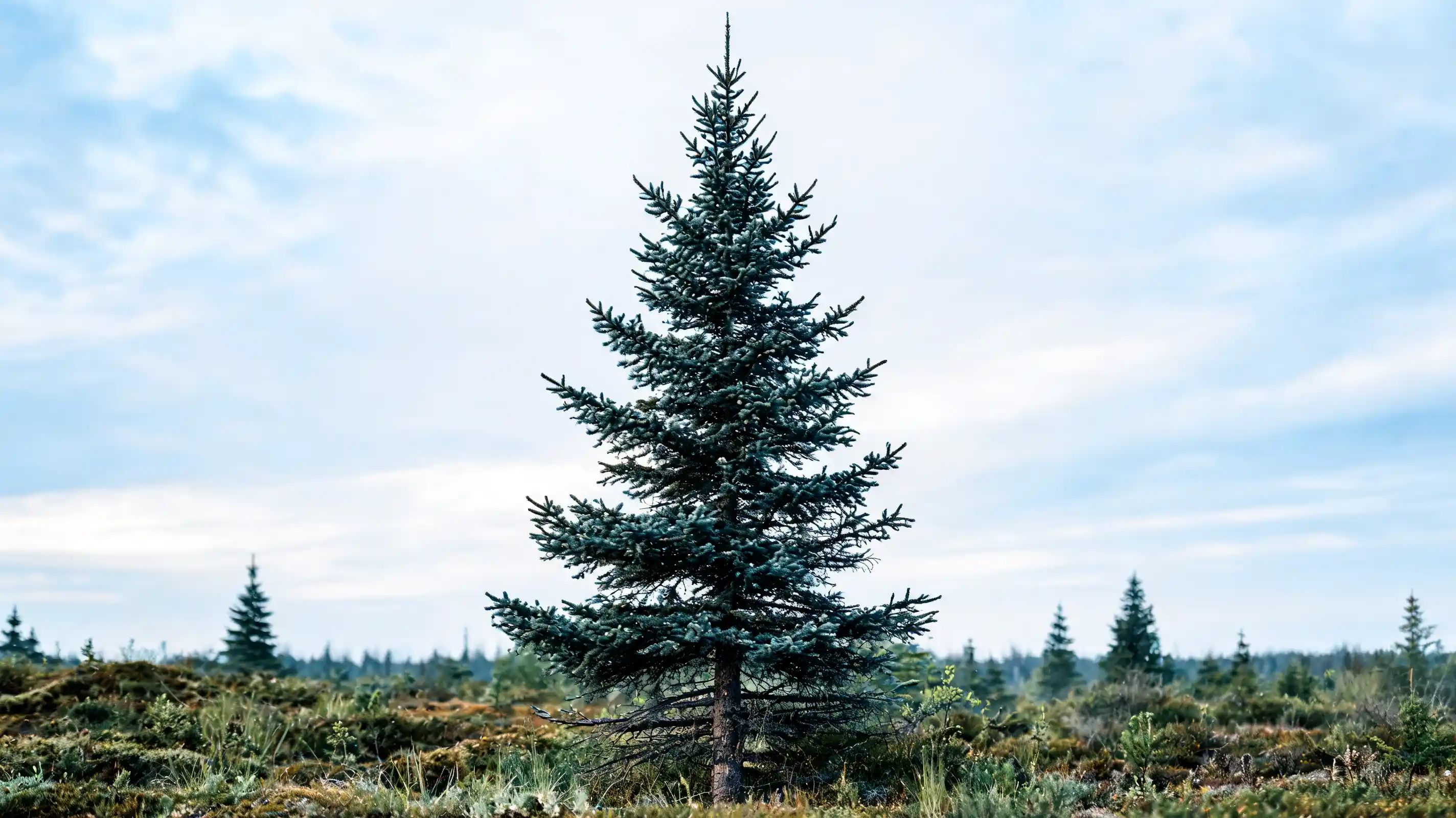
Short, stiff needles and a narrow, uneven crown make Black Spruce easy to spot in northern boreal forests, where it’s native to North America. This species prefers cold, consistently moist sites rather than typical yards, and eastern dwarf mistletoe can affect branch health over time.
| Botanical Name | Growth Rate | Mature Height | Native Area | USDA Zone |
|---|---|---|---|---|
| Picea mariana | Slow to moderate | 30–50 ft. | Northern North America | 3–7 |
2. Brewer Spruce
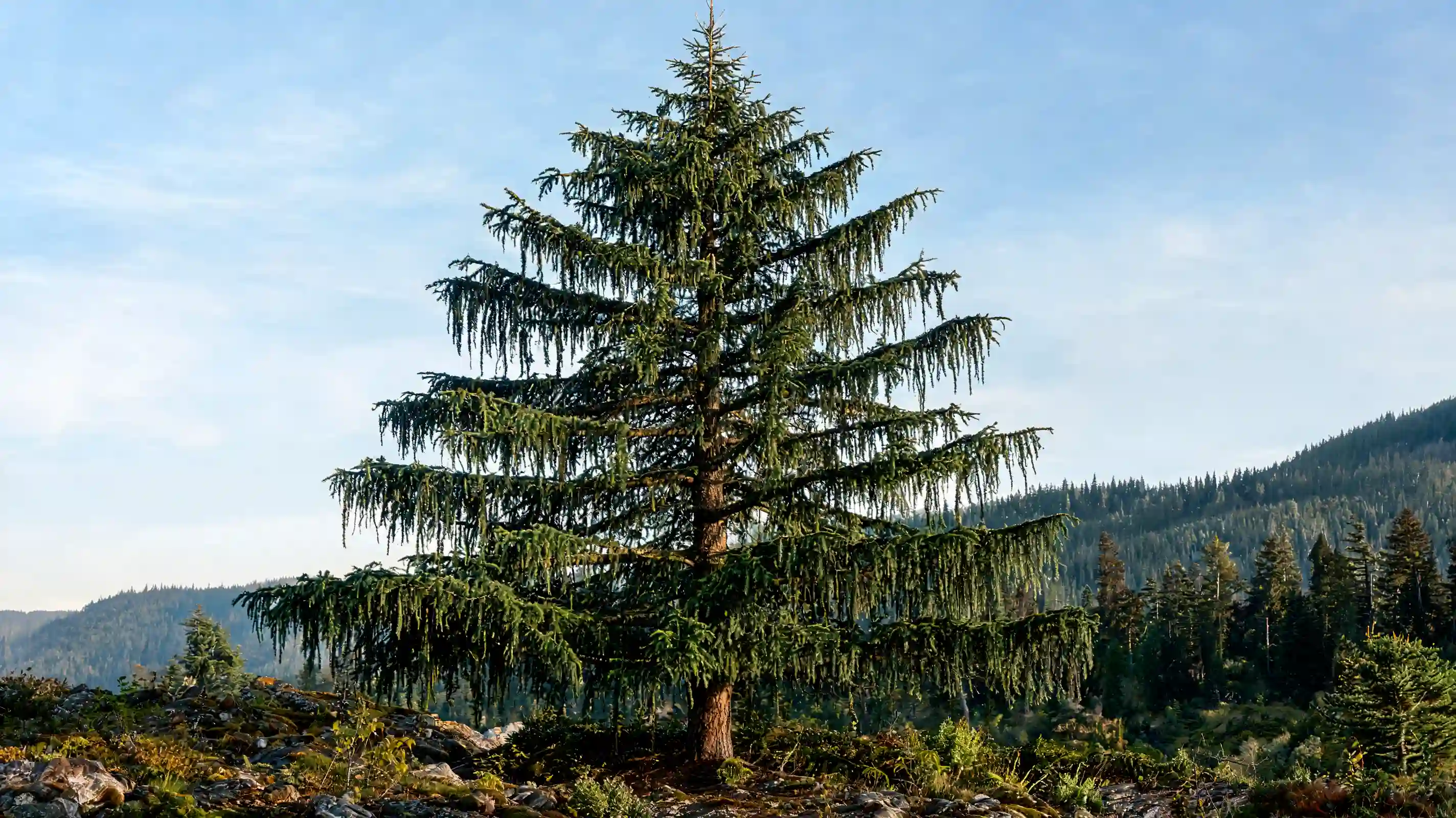
Brewer Spruce stands out for its long, hanging branchlets, often called weeping spruce, which drape softly from the branches. It grows best where cool, wet winters pair with warm, dry summers, and outside that narrow range, it can be difficult to establish and grow well.
| Botanical Name | Growth Rate | Mature Height | Native Area | USDA Zone |
|---|---|---|---|---|
| Picea breweriana | Slow to moderate | 30–50 ft. | N. California, S. Oregon | 6–8 |
3. Oriental Spruce
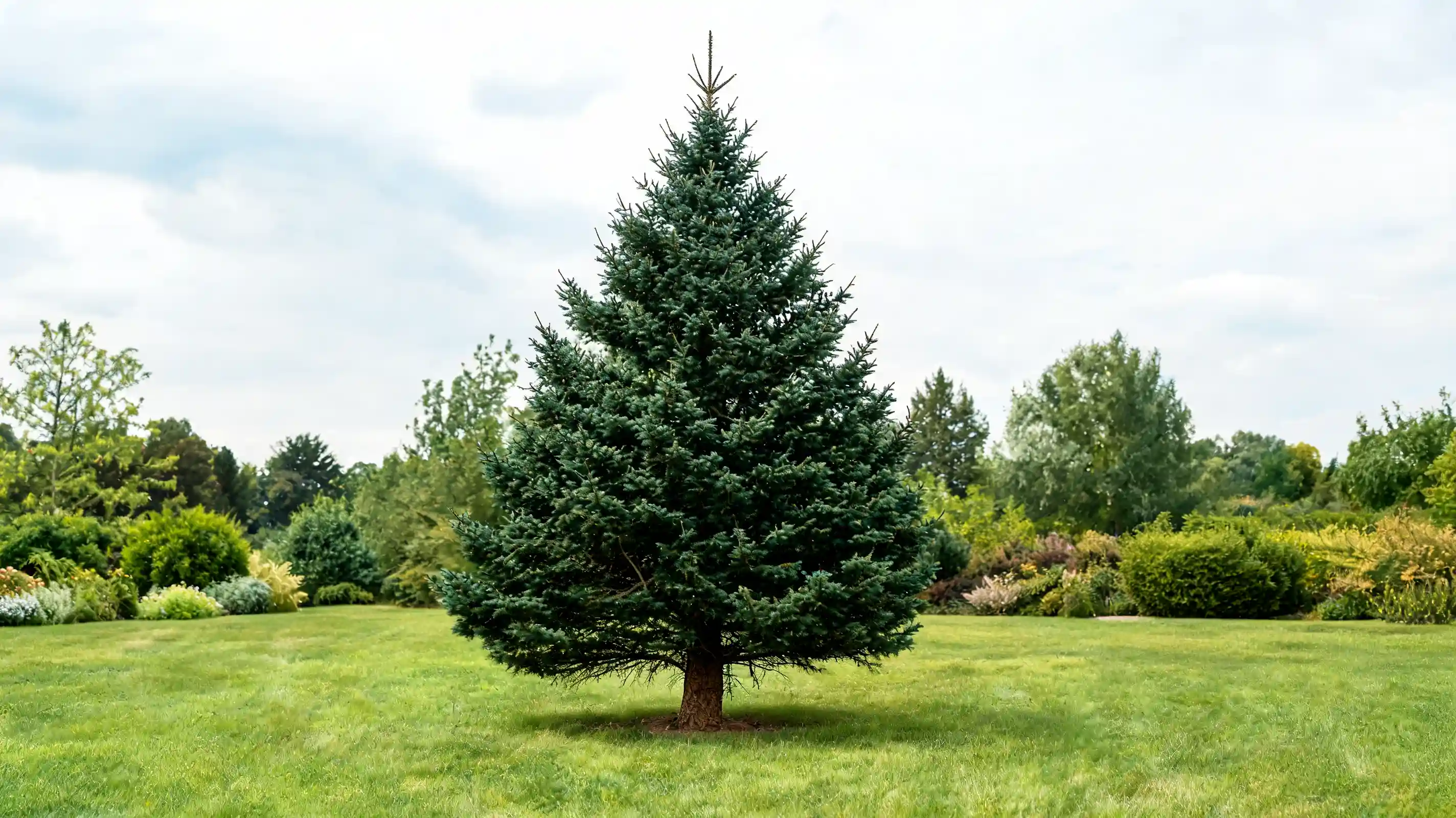
Very short, dark green needles cover the dense, slow-growing form of Oriental Spruce, giving it a neat, tidy appearance in the garden. It adapts to several soil types but needs shelter from strong wind, and dwarf, columnar, and yellow-needle cultivars are also available for smaller spaces.
| Botanical Name | Growth Rate | Mature Height | Native Area | USDA Zone |
|---|---|---|---|---|
| Picea orientalis | Slow | 10–35 ft. | Caucasus to Turkey | 4–7 |
4. Colorado Blue Spruce
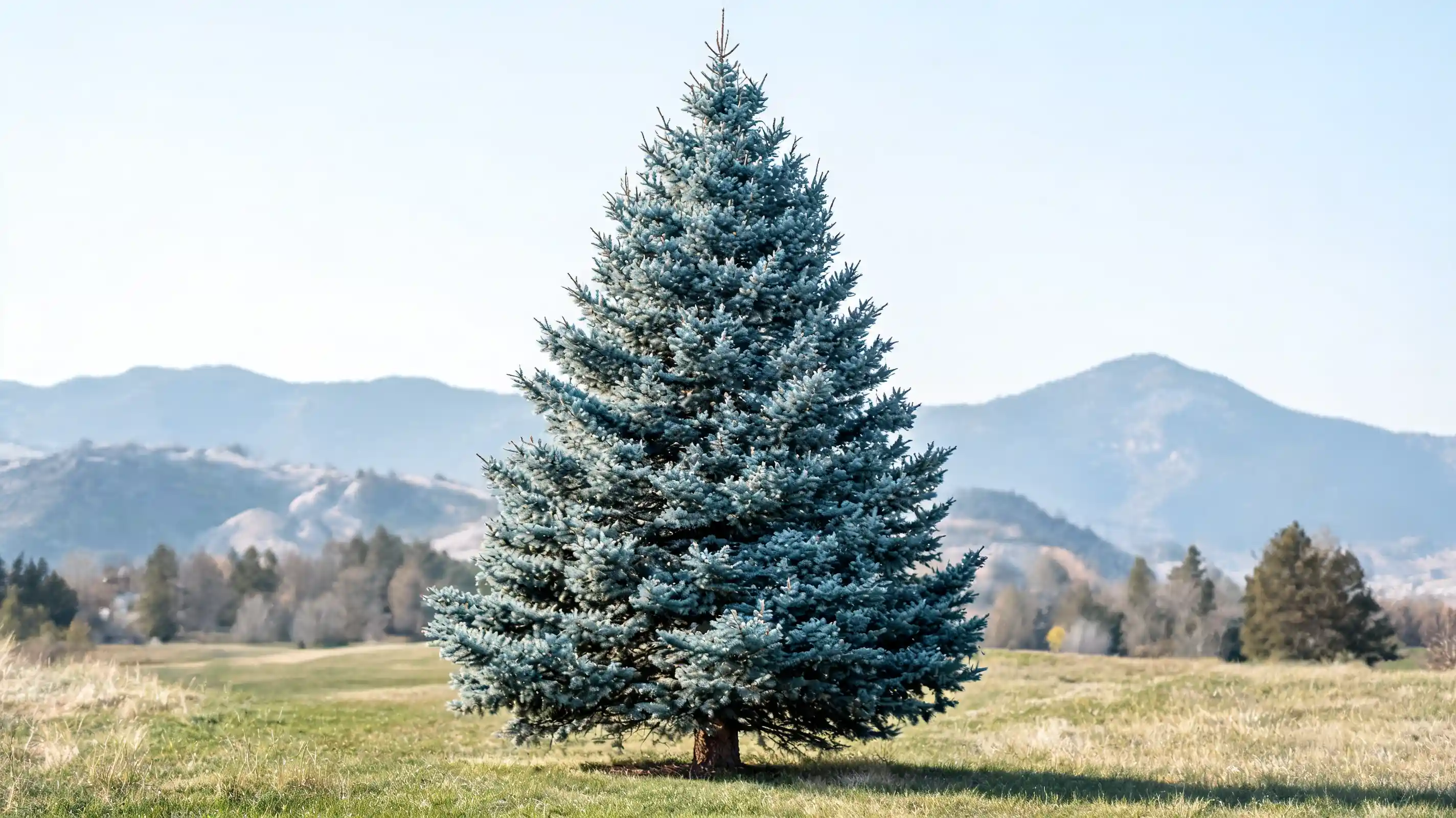
Colorado Blue Spruce stands out for its blue-gray to steel-blue needles and upright, cone-shaped form, which give it strong visual presence in any yard. In my experience, established trees handle dry spells well, and the blue spruce growth rate stays moderate, typically six to fifteen inches yearly.
| Botanical Name | Growth Rate | Mature Height | Native Area | USDA Zone |
|---|---|---|---|---|
| Picea pungens | Moderate | 30–60 ft. | Rocky Mountains | 3–8 |
5. Engelmann Spruce
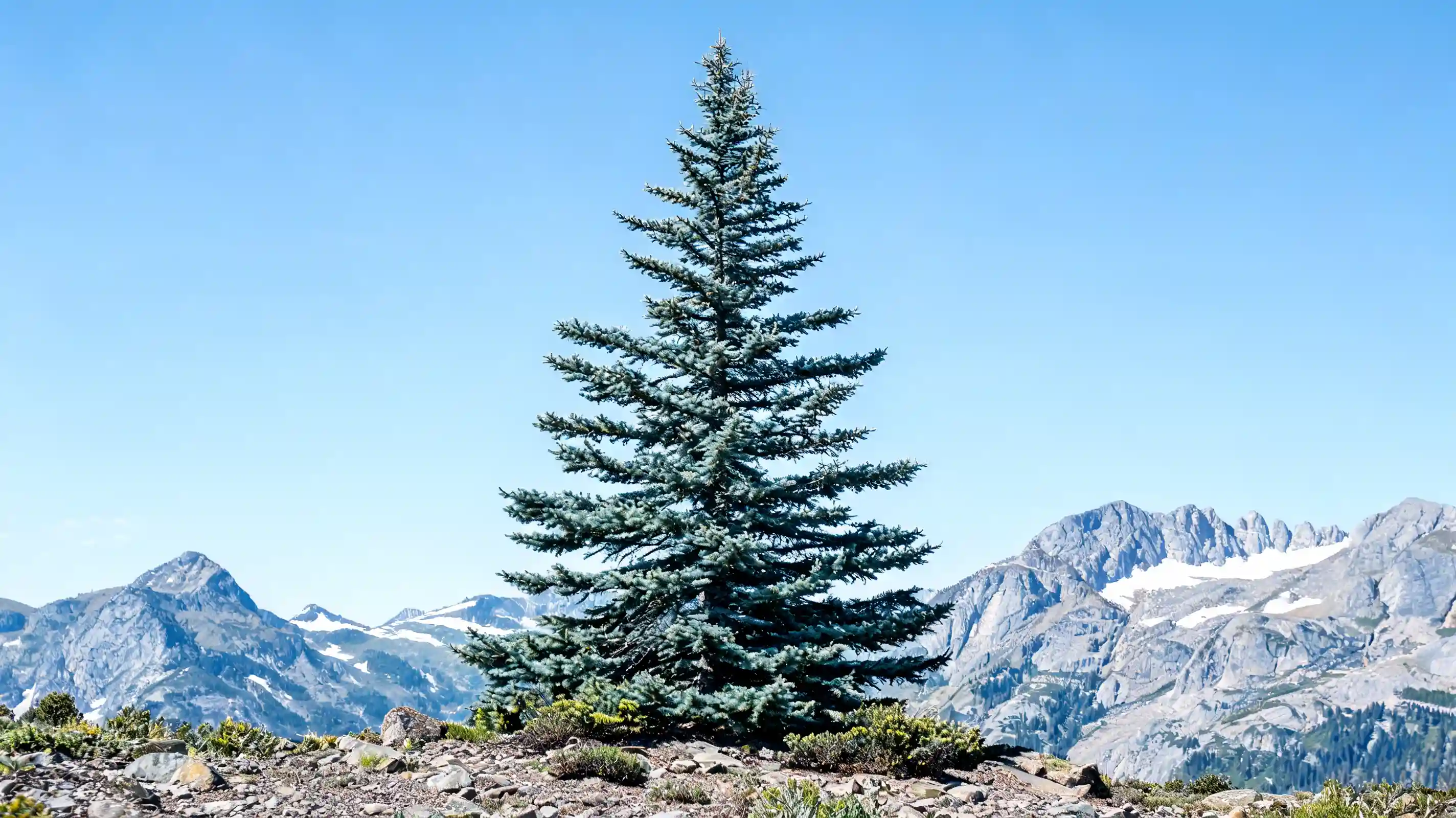
Blue-green needles and a narrow, cone-shaped crown help identify Engelmann Spruce in the wild, where it grows across western North America, often at high elevations. This species needs a cool, consistently moist climate to thrive, so it isn’t a strong fit for warmer, lower-elevation regions.
| Botanical Name | Growth Rate | Mature Height | Native Area | USDA Zone |
|---|---|---|---|---|
| Picea engelmannii | Moderate | 70–100 ft. | Western North America | 2–5 |
6. Norway Spruce
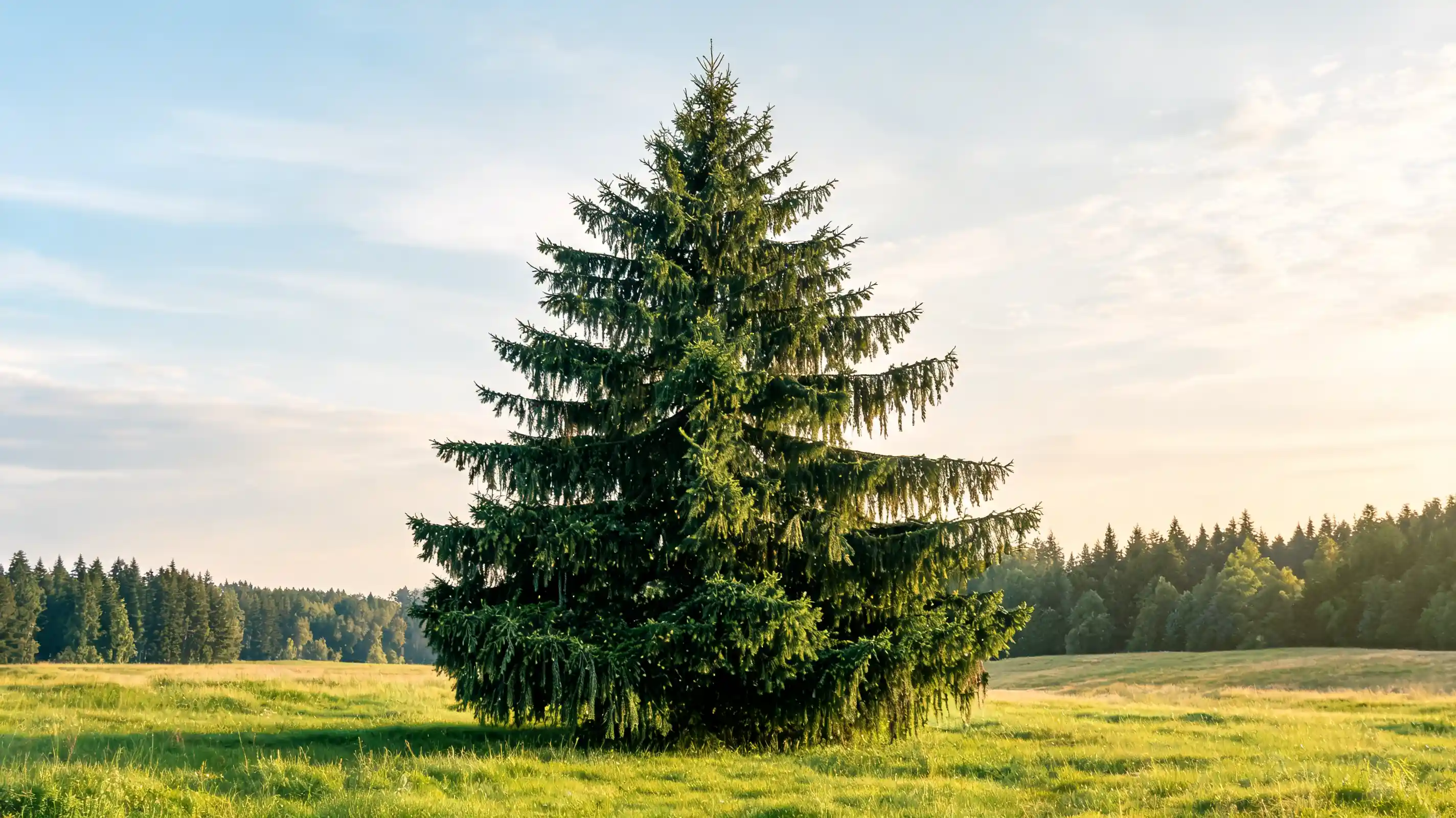
Dark green needles and hanging branch tips set Norway Spruce apart from other types, giving it a graceful, layered silhouette. It’s often used for privacy screens, windbreaks, and Christmas trees, though it’s worth checking local guidance first, since it’s treated as invasive in some areas.
| Botanical Name | Growth Rate | Mature Height | Native Area | USDA Zone |
|---|---|---|---|---|
| Picea abies | Fast (for spruce) | 40–60 ft. | Northern & central Europe | 2–7 |
7. Red Spruce
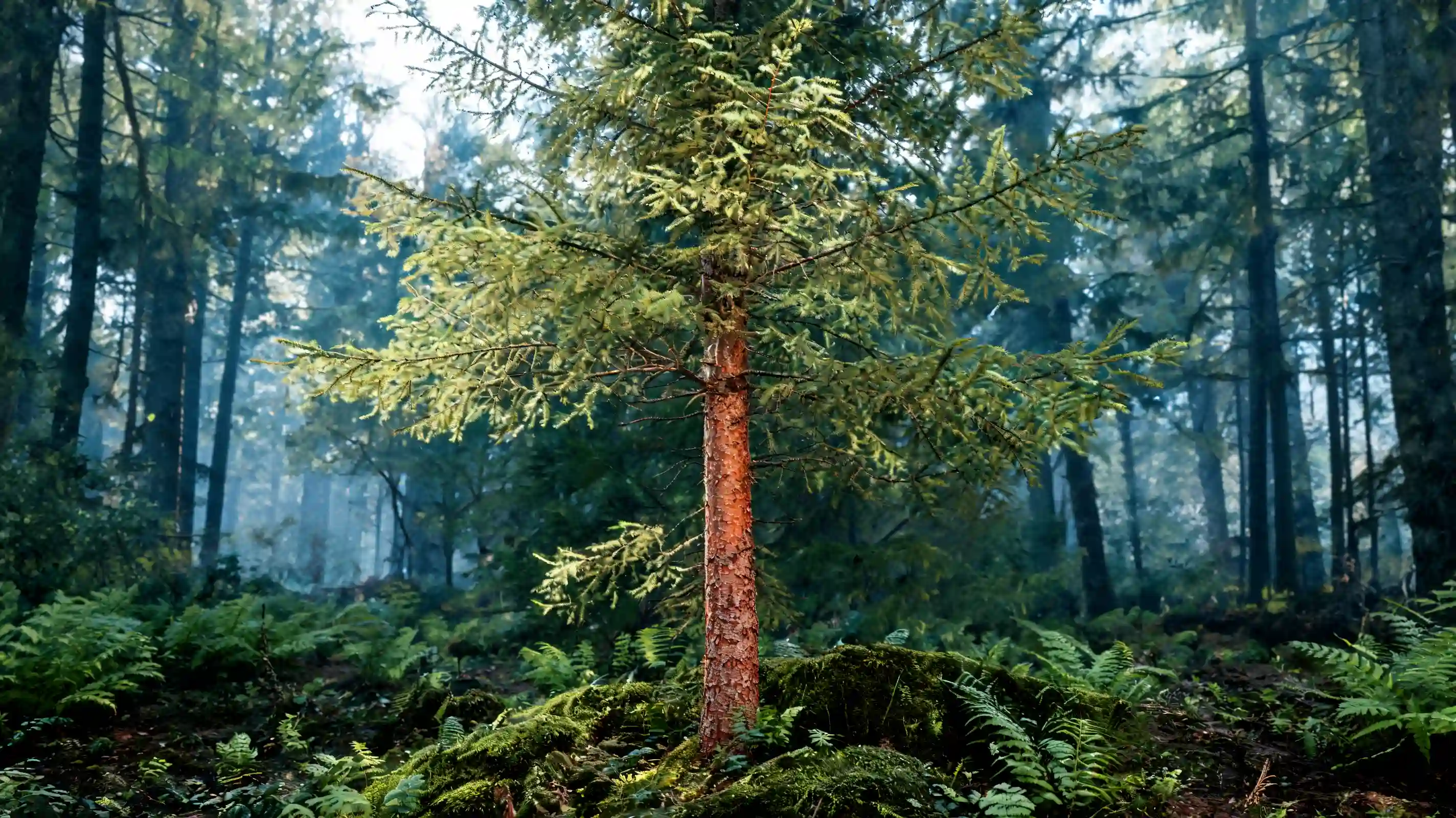
Yellow-green needles and reddish bark give Red Spruce its name and help distinguish it from similar species growing nearby. Young trees tolerate partial shade, though the species needs cool, steady moisture, and polluted air tends to hold this species back more than most other spruces.
| Botanical Name | Growth Rate | Mature Height | Native Area | USDA Zone |
|---|---|---|---|---|
| Picea rubens | Slow to moderate | 60–130 ft. | SE Canada, NE United States | 3–6 |
8. Serbian Spruce
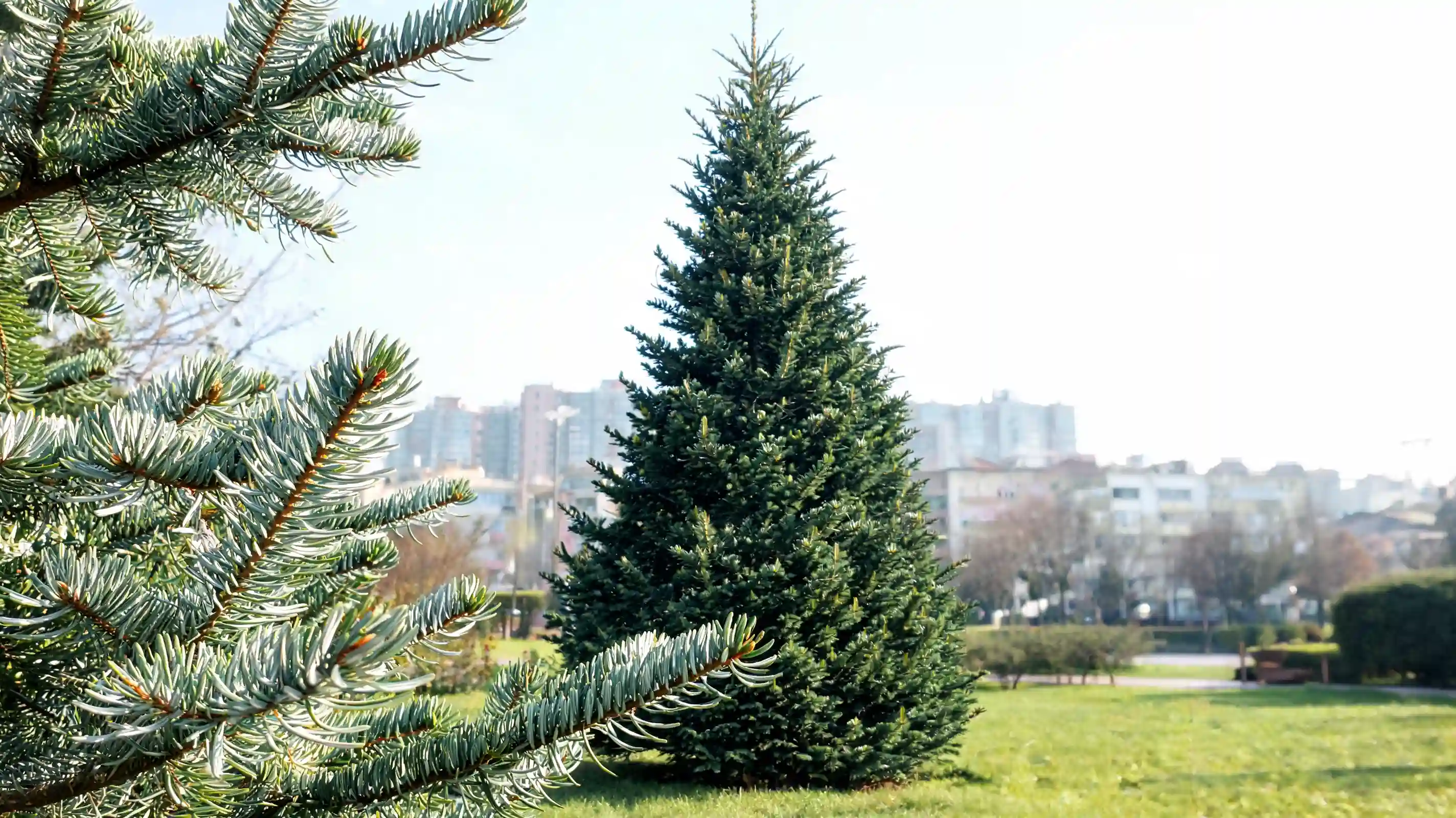
Dark green needles with silver undersides cover the narrow, upright form of Serbian Spruce, creating a striking two-tone effect from certain angles. Its shape fits neatly into tight yards and city settings, and it tolerates some drought, shade, and pollution better than many other spruces.
| Botanical Name | Growth Rate | Mature Height | Native Area | USDA Zone |
|---|---|---|---|---|
| Picea omorika | Moderate | 50–60 ft. | Balkans | 4–7 |
9. Sitka Spruce
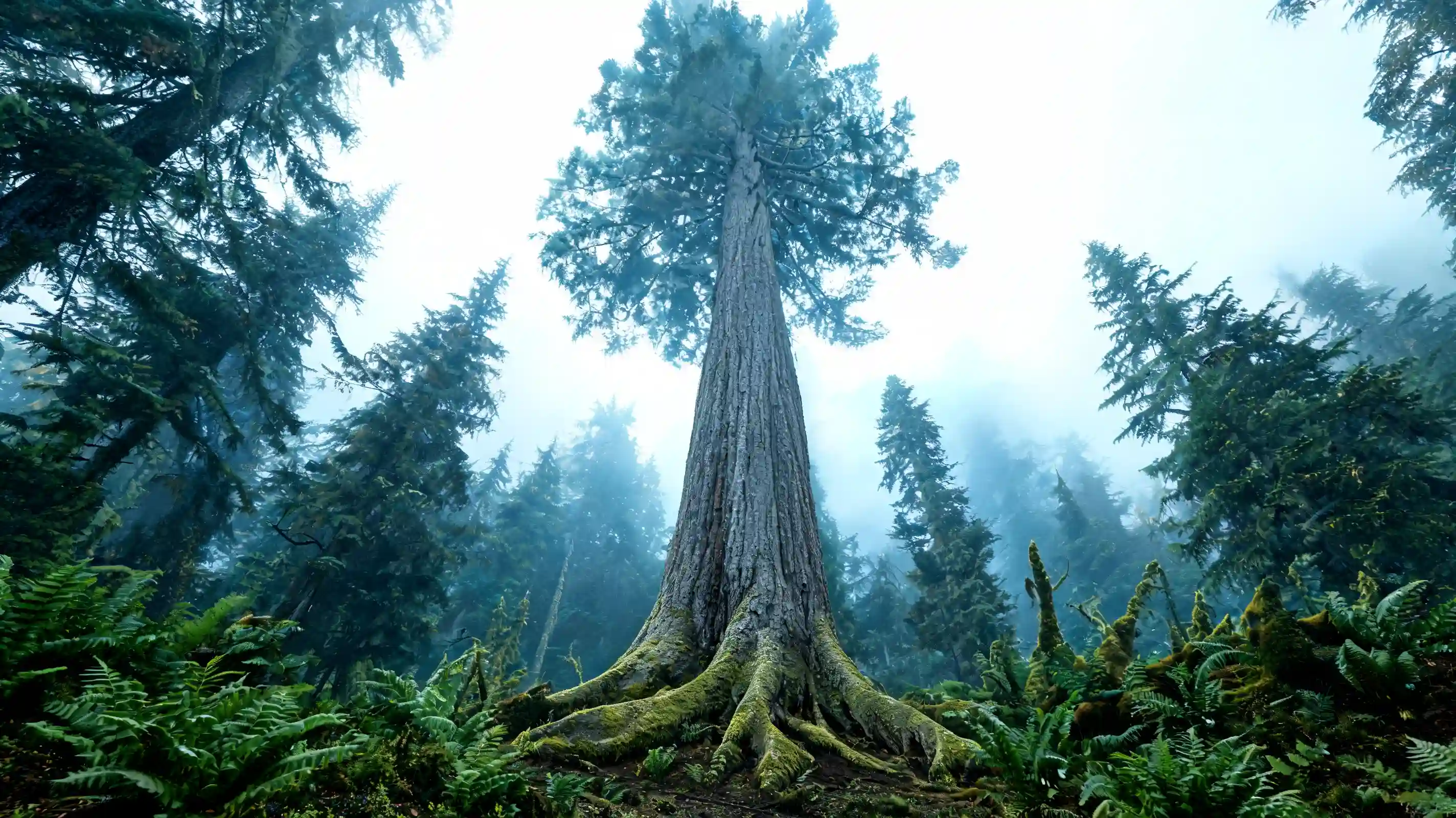
Few spruce species get as large as Sitka Spruce, with its sharp blue-green needles and massive trunk. It grows from Alaska to California, mostly along cool coastlines, and because of its size, this variety works best for timber and large landscapes instead of a typical yard.
| Botanical Name | Growth Rate | Mature Height | Native Area | USDA Zone |
|---|---|---|---|---|
| Picea sitchensis | Moderate to fast | 100+ ft. (up to 300 ft. wild) | Alaska to California | 6–8 |
10. White Spruce
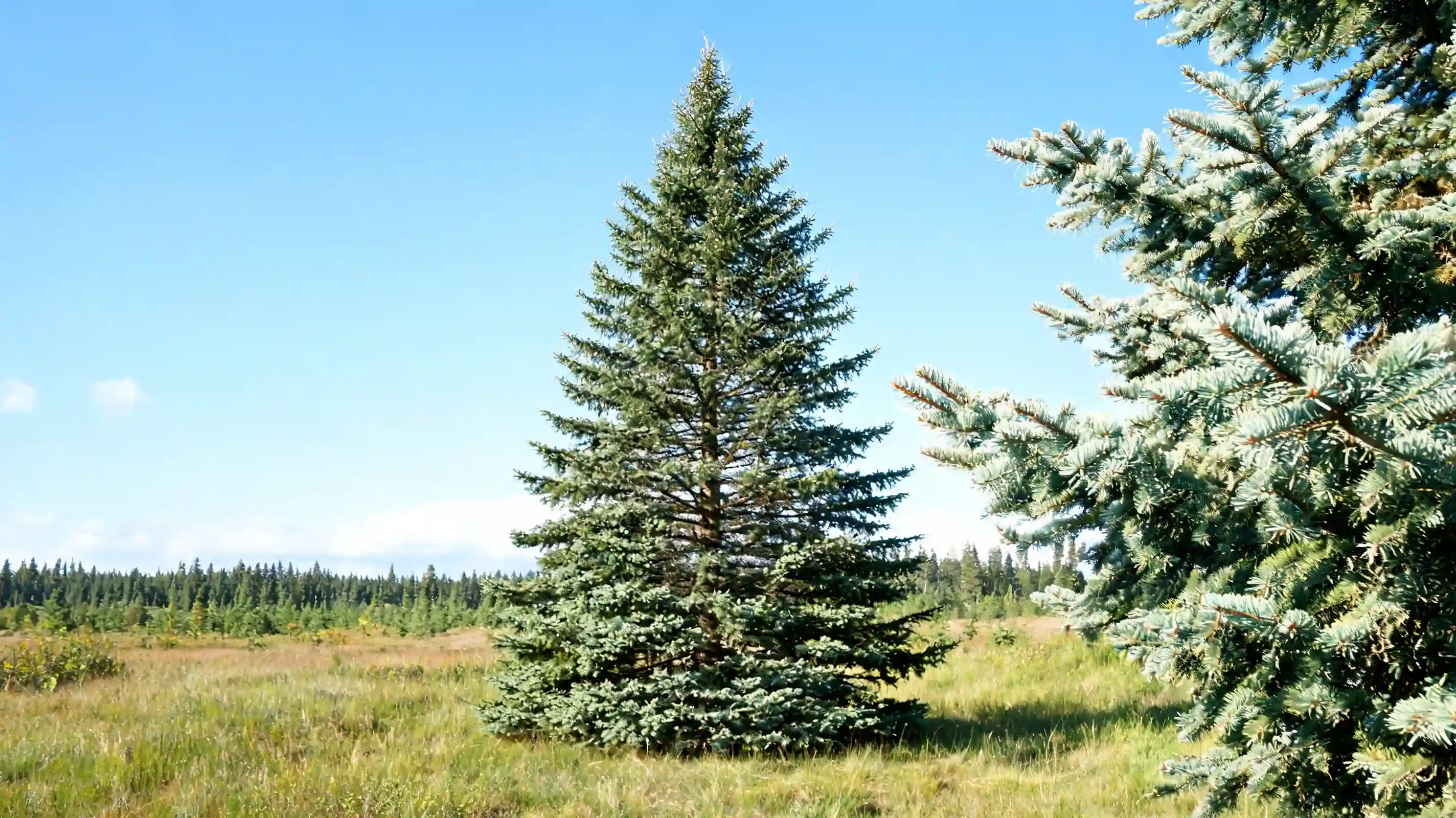
White Spruce has green needles with a pale, waxy coating and a dense, cone-shaped form that holds its color through winter. It’s very cold-hardy once established, making it reliable in northern climates, though city air quality is one weak spot to consider near busy roads.
| Botanical Name | Growth Rate | Mature Height | Native Area | USDA Zone |
|---|---|---|---|---|
| Picea glauca | Moderate | 40–60 ft. | Canada, N. United States | 2–6 |
Named Spruce Cultivars
These eight spruces are selected forms of natural species. They were chosen for traits such as size, shape, or foliage color.
11. Bird’s Nest Spruce
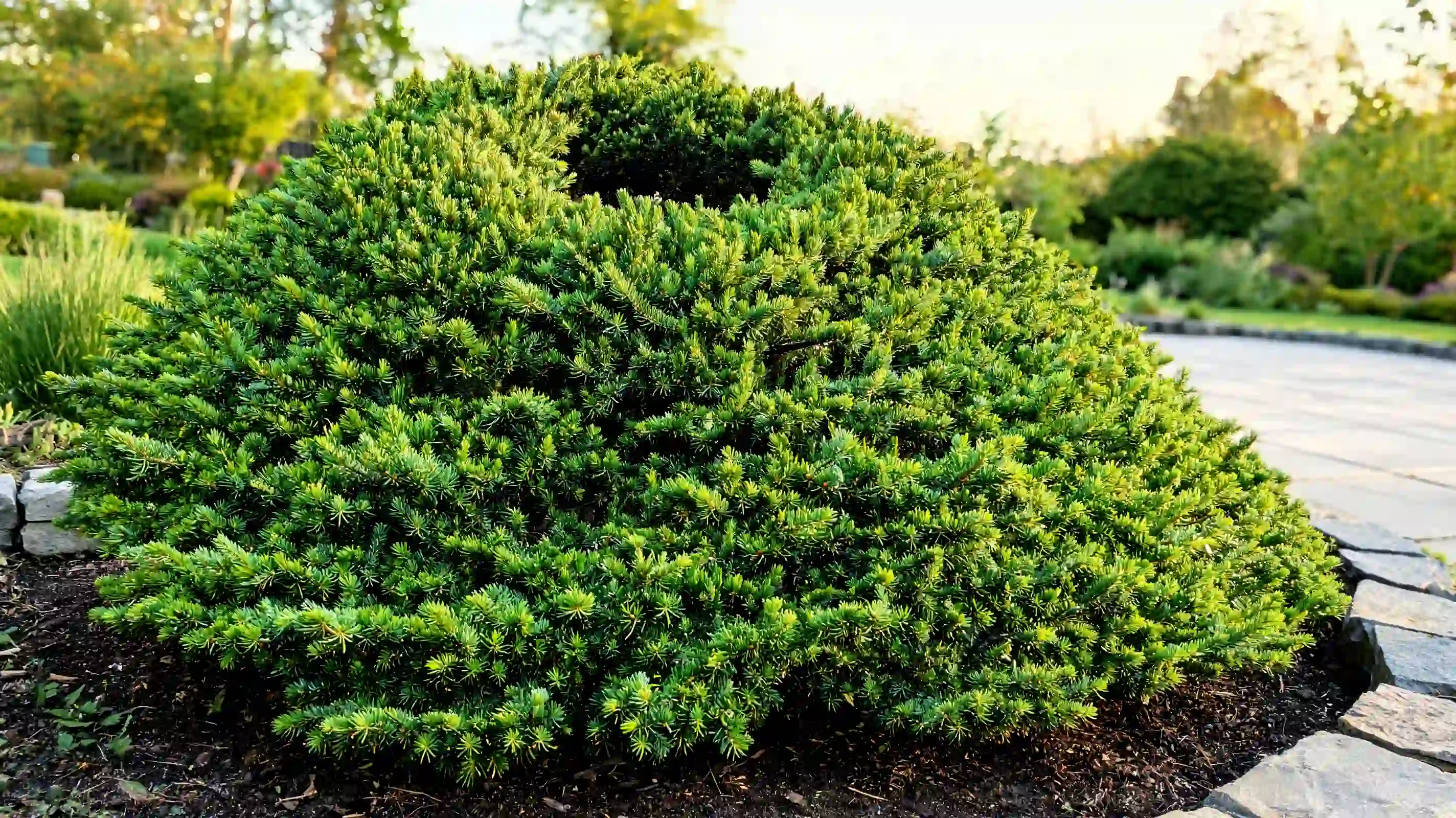
Bird’s Nest Spruce is a dwarf form of Norway spruce with a rounded, spreading shape and a shallow dip in the center that gives it a nest-like look. It works well in containers, borders, and patios, so plant it in full sun and leave room to grow.
| Botanical Name | Growth Rate | Mature Height | Parent Species Origin | USDA Zone |
|---|---|---|---|---|
| Picea abies’ Nidiformis’ | Very slow | 2–4 ft. | Northern & central Europe | 3–8 |
12. Dwarf Alberta Spruce
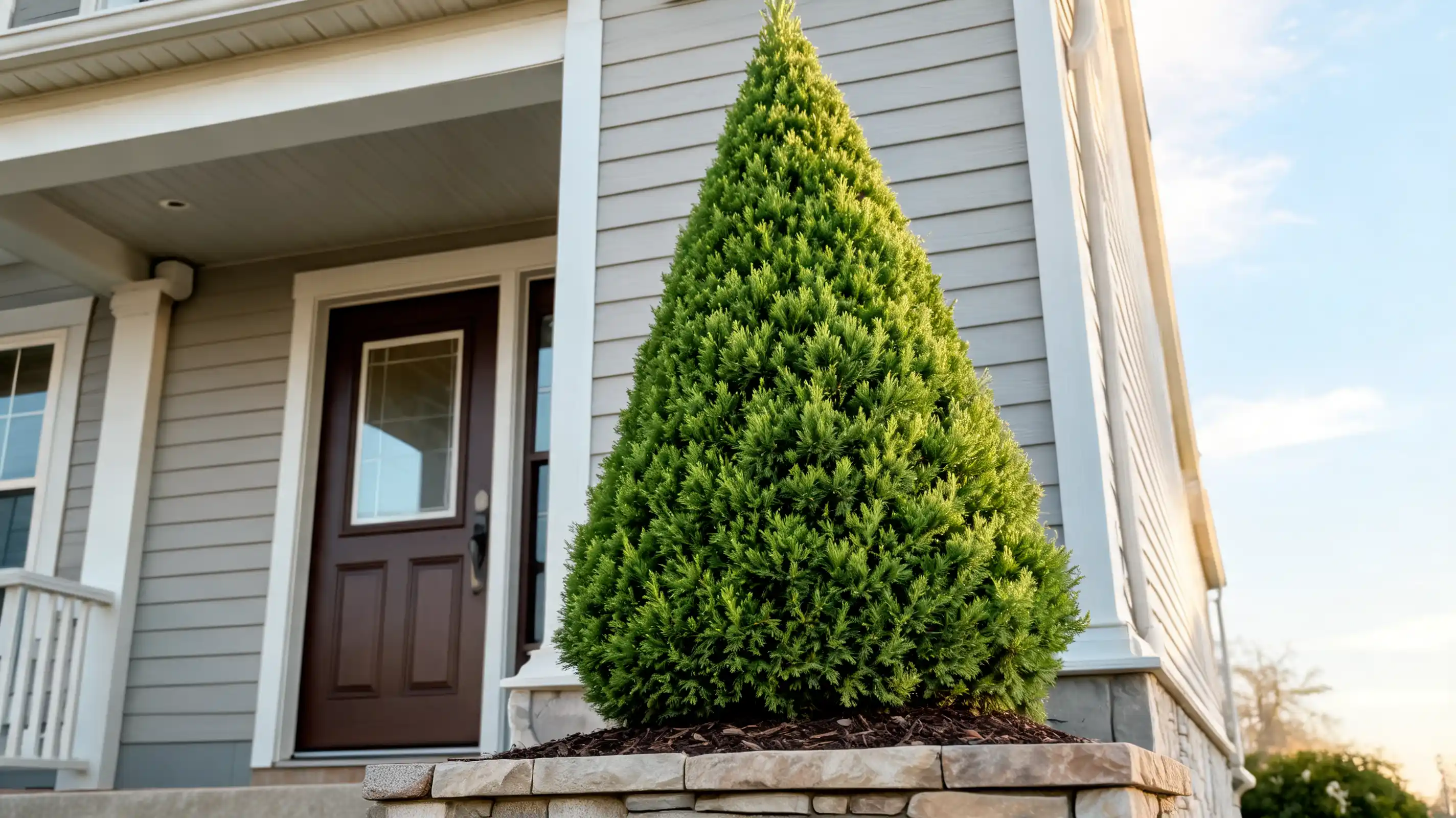
Dwarf Alberta Spruce is a compact form of white spruce with soft, bright-green needles and a dense, even cone shape that suits formal plantings and small entryways. It works well near doors, in containers, and in small yards, though spider mites and uneven shoots may need trimming.
| Botanical Name | Growth Rate | Mature Height | Parent Species Origin | USDA Zone |
|---|---|---|---|---|
| Picea glauca ‘Conica’ | Very slow | 10–13 ft. | Alberta, Canada | 3–6 |
13. Globe Blue Spruce
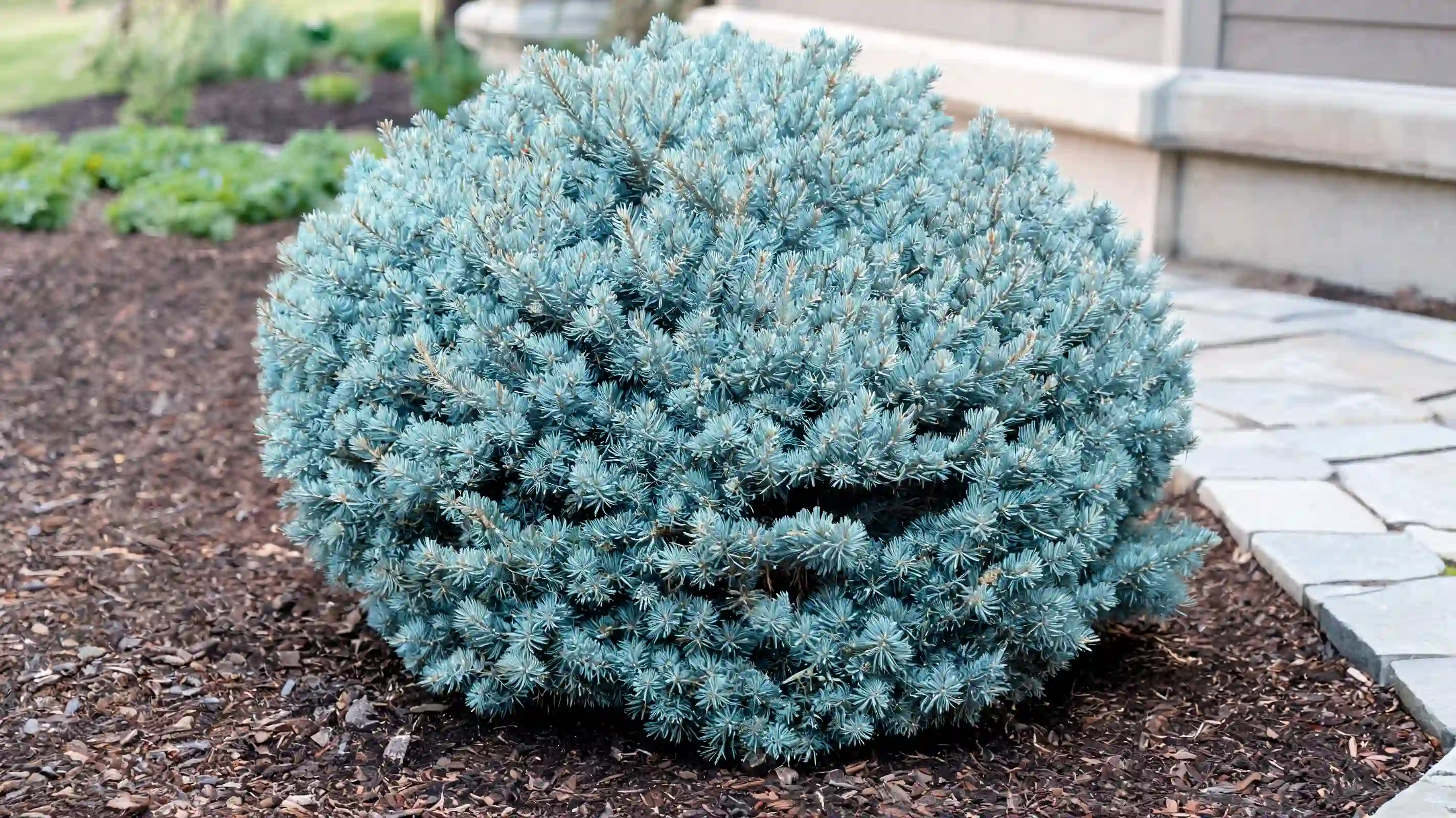
Globe Blue Spruce is a dwarf form of Colorado blue spruce with a rounded habit and dense, blue-gray needles that hold their color year-round. Its small size suits foundation beds and small gardens, so remove upright shoots as they appear to keep the rounded shape intact.
| Botanical Name | Growth Rate | Mature Height | Parent Species Origin | USDA Zone |
|---|---|---|---|---|
| Picea pungens ‘Glauca Globosa’ | Slow | ~5 ft. | North America | 2–7 |
14. Weeping Serbian Spruce
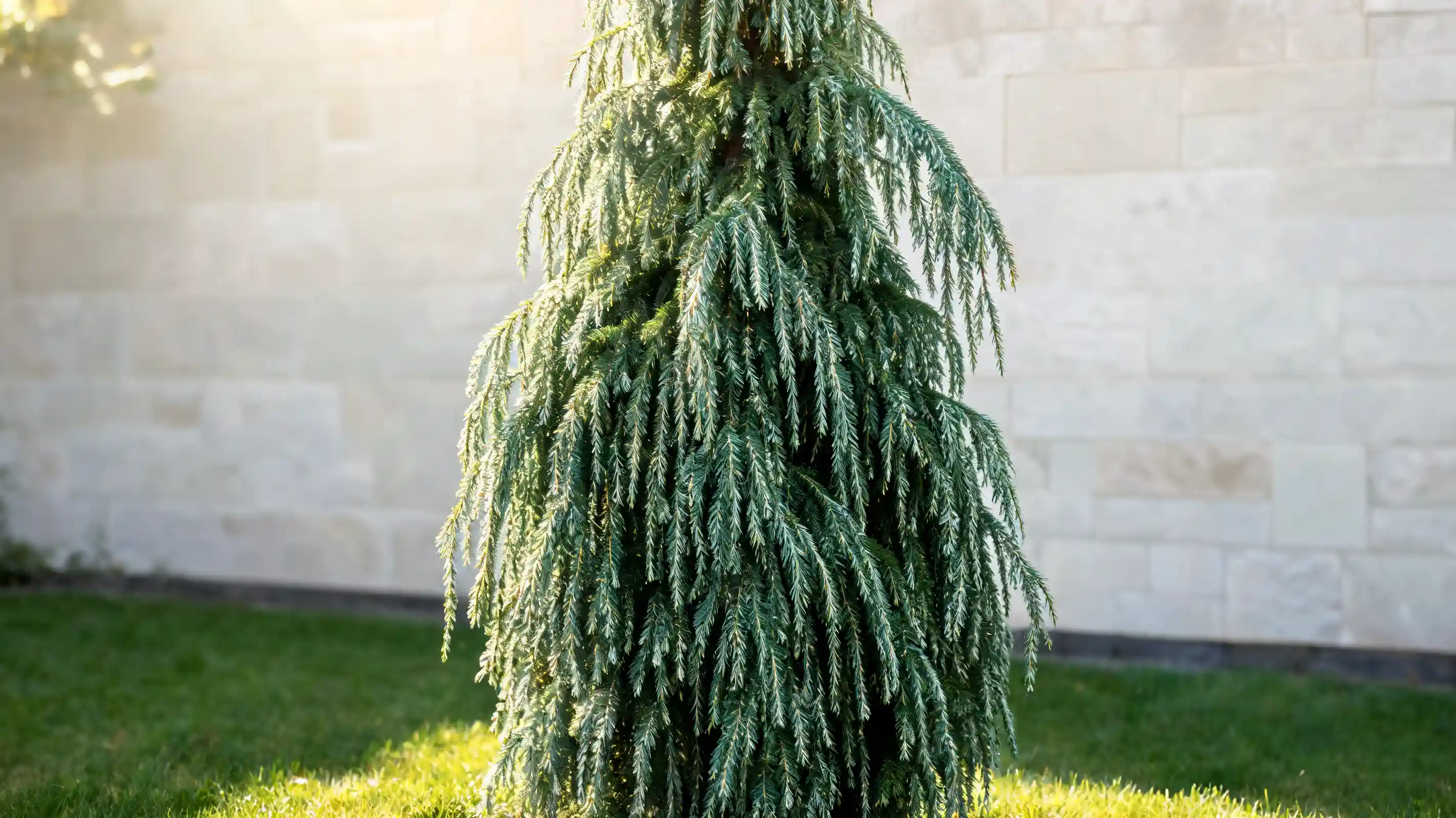
Weeping Serbian Spruce is a Serbian spruce cultivar with hanging branches and a narrow, columnar shape that adds vertical interest to any garden bed. This variety tolerates air pollution well, making it useful for city gardens, though it doesn’t perform well in hot, humid climates.
| Botanical Name | Growth Rate | Mature Height | Parent Species Origin | USDA Zone |
|---|---|---|---|---|
| Picea omorika ‘Pendula’ | Slow to moderate | ~15 ft. | Balkans | 2–7 |
15. Black Hills Spruce
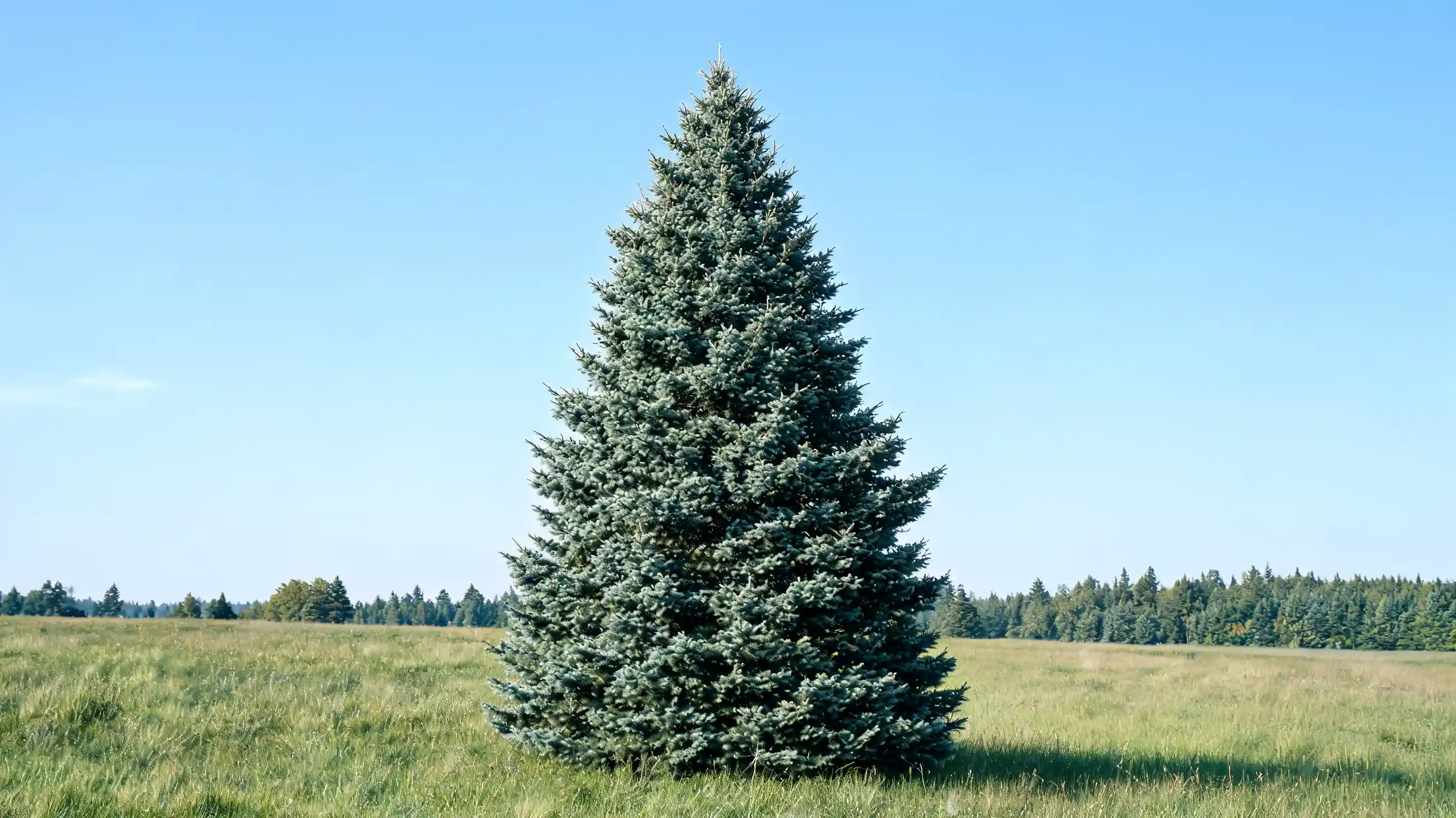
Black Hills Spruce has thick branching and a traditional cone shape that gives it a full, tidy look in almost any setting. It’s commonly used as a Christmas tree or windbreak, and rural or suburban settings suit it best, since heavy pollution tends to weaken its growth.
| Botanical Name | Growth Rate | Mature Height | Parent Species Origin | USDA Zone |
|---|---|---|---|---|
| Picea glauca ‘Densata’ | Slow | 20–25 ft. (up to 50 ft.) | Black Hills, South Dakota | 3–6 |
16. Fat Albert Blue Spruce
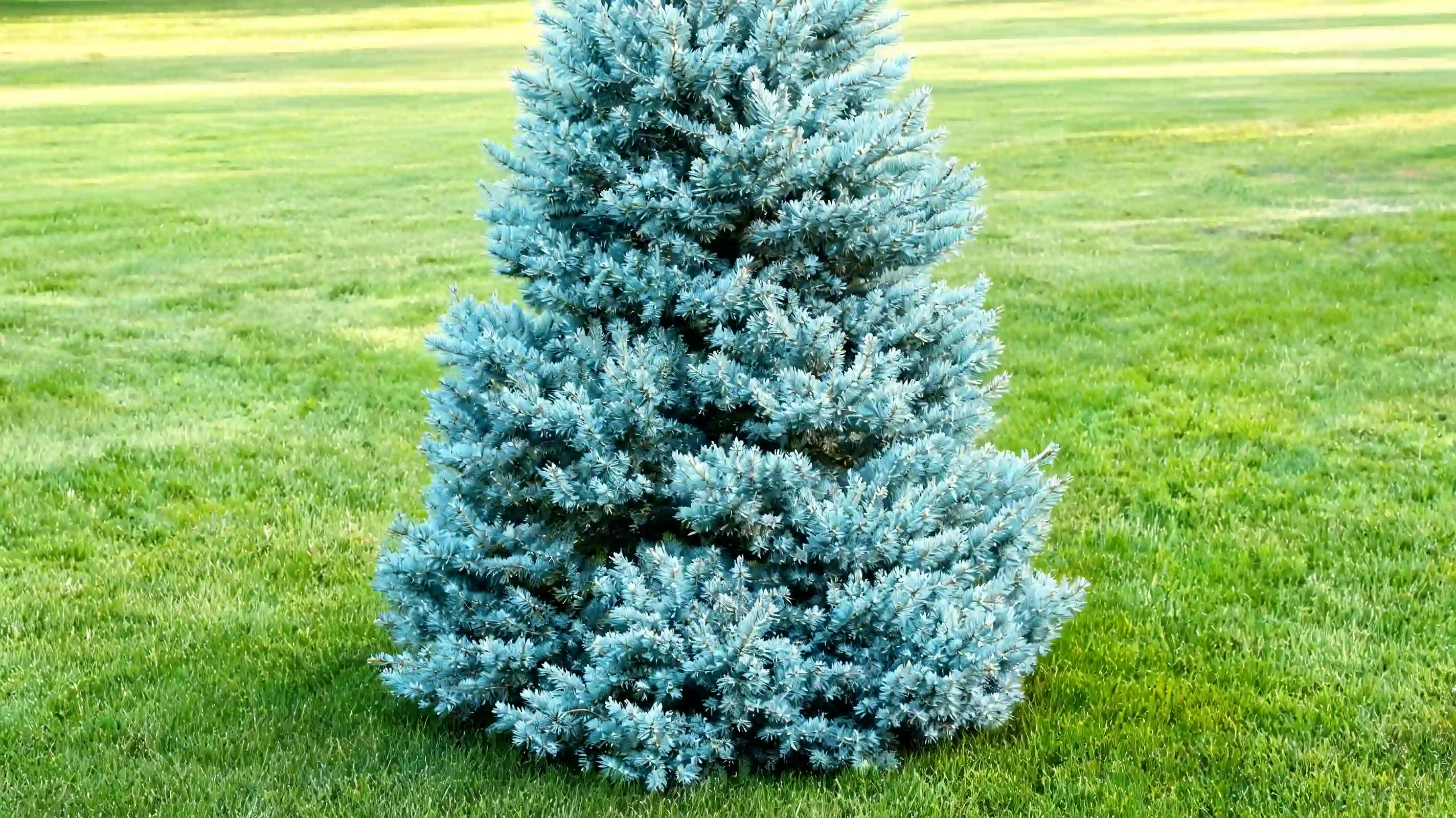
Fat Albert Blue Spruce has full branching and steel-blue needles, giving it a more compact, symmetrical form than the full species. Its manageable size fits medium yards and focal planting, though rust disease tends to be the bigger risk here, alongside occasional spider mite activity.
| Botanical Name | Growth Rate | Mature Height | Parent Species Origin | USDA Zone |
|---|---|---|---|---|
| Picea pungens’ Fat Albert’ | Slow to moderate | 10–15 ft. | North America | 3–7 |
17. Dwarf Black Spruce
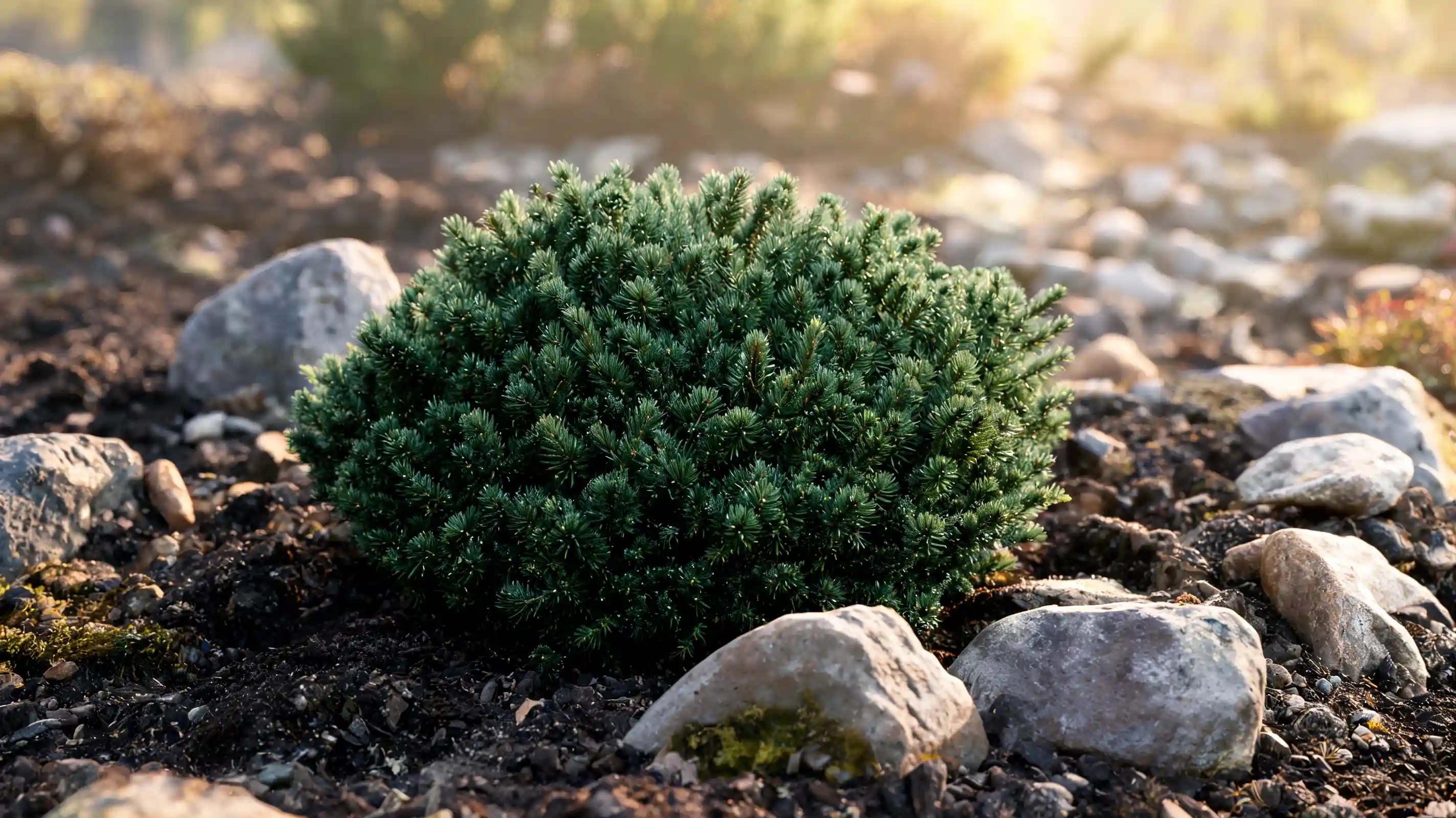
Dwarf Black Spruce is a small cultivar of black spruce that forms a low, rounded mound instead of the tall, uneven crown of the species. Its tiny size makes it useful in rock gardens and small spaces, so plant it in full sun to keep it healthy.
| Botanical Name | Growth Rate | Mature Height | Parent Species Origin | USDA Zone |
|---|---|---|---|---|
| Picea mariana ‘Nana’ | Very slow | 1–2 ft. | Northern North America | 3–7 |
18. Golden Oriental Spruce
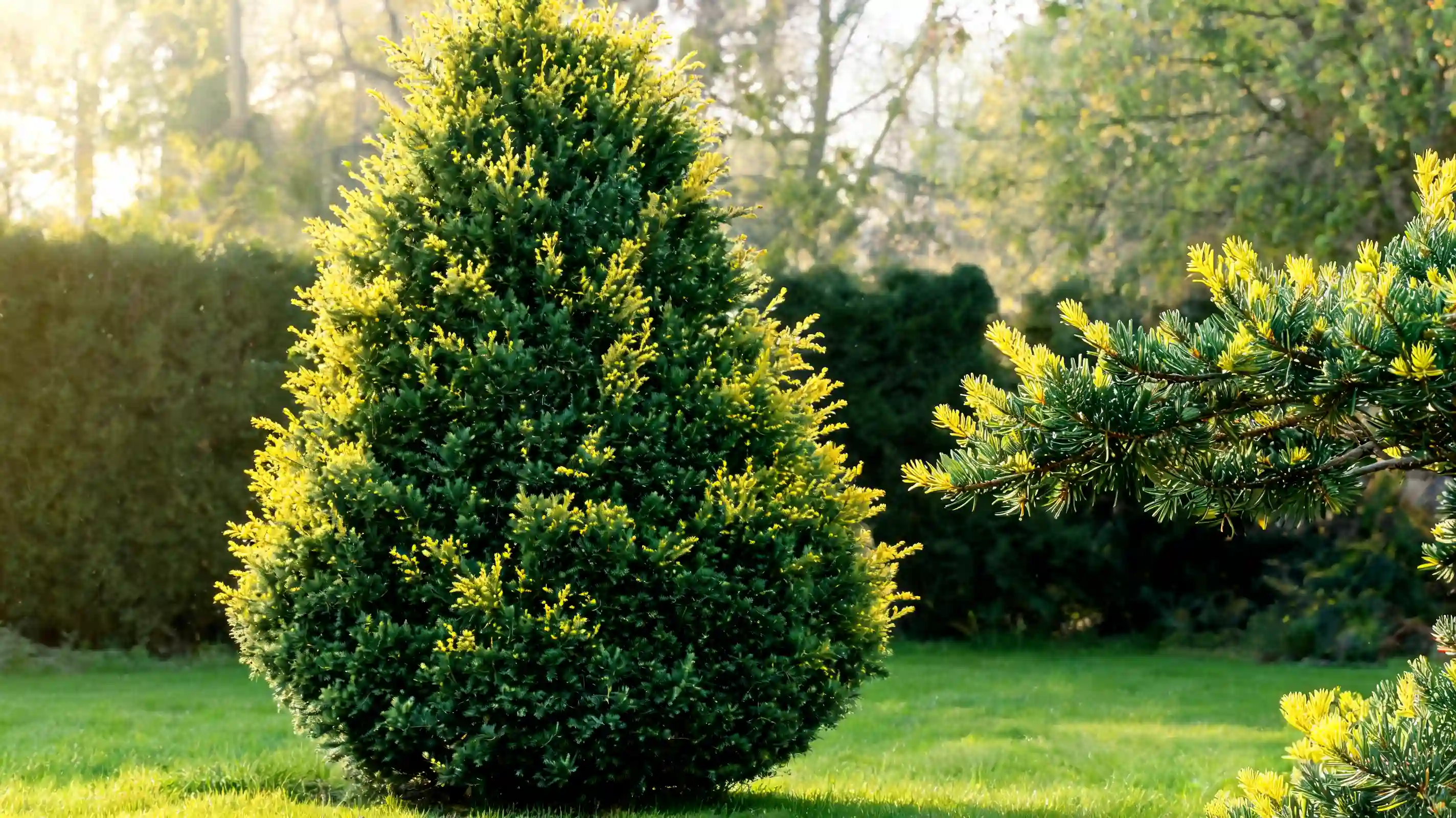
Bright-yellow new growth in spring sets Golden Oriental Spruce apart from its parent species, creating a strong contrast once older needles turn dark green. It’s typically used as a color accent or specimen tree, so give it full sun and enough space to reach its mature form.
| Botanical Name | Growth Rate | Mature Height | Parent Species Origin | USDA Zone |
|---|---|---|---|---|
| Picea orientalis’ Aureospicata’ | Slow | ~25 ft. | Caucasus to Turkey | 4–8 |
Together, these species and cultivars show how spruce trees differ in size, shape, color, growth, and use.
Common Uses of Spruce Trees
Different types of spruce trees can serve as privacy screens, windbreaks, focal trees, container plants, and wildlife shelter, and the uses below show how each tree’s size and form suit a different purpose.
- Privacy screens: Dense, tall species block views effectively.
- Windbreaks: Fast-growing types like Norway spruce shelter yards from wind.
- Ecosystem support: Spruces help with erosion control and carbon storage in forests.
- Lawn specimen trees: Colorado blue or Oriental spruce stand out on their own.
- Entryway planting: Dwarf Alberta spruce adds structure near doors.
- Foundation beds: Compact cultivars fit neatly against a house.
- Christmas trees: Norway, white, and Black Hills spruce are popular picks.
- Timber and paper production: Larger species like Sitka spruce support these industries.
- Wildlife food and shelter: Cones and dense branches support birds and small animals.
From privacy and wind control to small gardens and wildlife support, spruce trees serve many useful roles. The best choice matches the tree’s mature size and form to the space.
Blue Spruce Growth Rate
The blue spruce growth rate is moderate, with Colorado blue spruce adding about 6 to 15 inches each year under normal conditions. Growth can run faster during stronger growing years, especially with steady moisture, full sun, and well-drained soil.
A mature Colorado blue spruce can reach about 30 to 60 feet tall, with a spread of 10 to 20 feet at the base, figures that line up closely with data from Iowa State University Extension. Its eventual size matters when you choose a planting spot, since a small sapling can be misleading about the space it needs later.
I’d plan around the mature size rather than judging the tree only by its yearly growth. This helps prevent crowding later, blocked views, and branches pressing against nearby structures.
If faster screening is your main goal, Norway spruce grows faster than Colorado blue spruce, making it a stronger pick for quicker privacy.
How to Plant a Spruce Tree
Planting a spruce at the right time and depth gives the roots a better start, so follow these steps before and after you place the tree in the ground.
- Choose the season: Plant in early spring or fall.
- Pick the site: Choose full sun and leave enough room for the tree’s mature size.
- Check the ground: Use well-drained soil and avoid compacted or constantly wet areas unless the species tolerates them.
- Dig the hole: Make the hole wider than the root ball, but never deeper.
- Position the root ball: Set it level with, or slightly above, the surrounding soil.
- Water after planting: Water the tree thoroughly as soon as planting is complete.
I’d pay close attention to planting depth because this mistake is easy to make, since planting too deep can slow root growth for years.
How to Care for a Spruce Tree
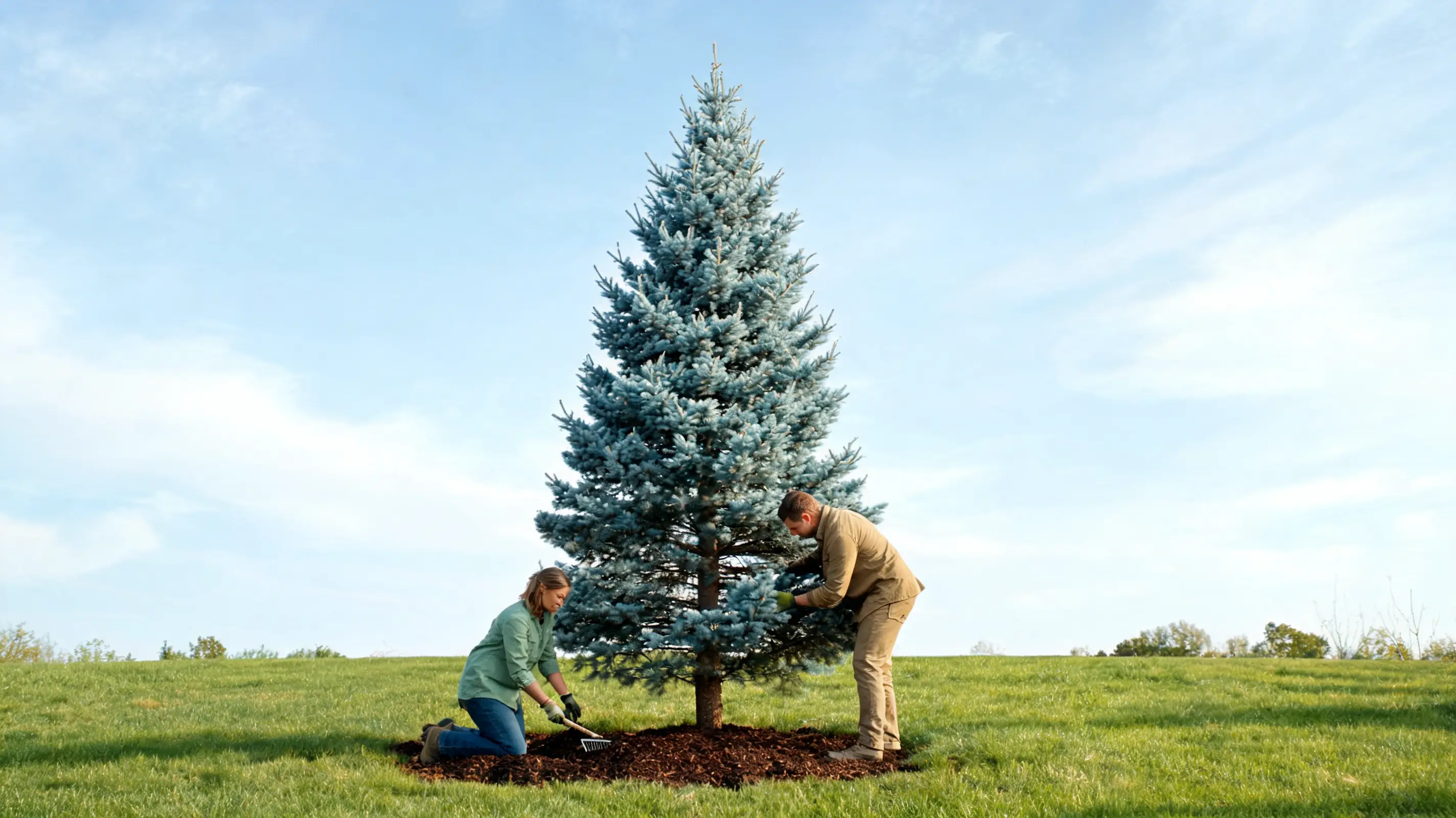
Spruce tree care mainly comes down to water, soil, mulch, feeding, pruning, and regular checks, and the table below shows what each part of care involves.
Penn State Extension identifies the spruce spider mite as one of the more common threats, especially on dwarf Alberta spruce and similar compact cultivars.
- Watering: Water regularly while roots settle, and deeply during long dry spells.
- Soil: Plant in well-drained, slightly acidic soil that doesn’t stay wet.
- Mulching: Apply 2 to 3 inches of mulch around the base, away from the trunk.
- Feeding: Fertilize only when growth looks weak, and avoid using too much.
- Pruning: Remove dead or damaged branches near winter’s end, avoiding deep cuts.
- Problems: Check regularly for spider mites, needle cast, bagworms, aphids, and rust.
I’d check soil drainage first if a spruce starts struggling, since for most spruce types, drainage can matter more than frequent watering.
Find the Right Spruce for Your Space
Choosing among the many evergreen tree options starts with your space, climate, and main goal: privacy, color, or a small accent tree.
| Your Need | Suitable Spruce Types | Main Reason |
|---|---|---|
| Very small garden | Dwarf black or bird’s nest spruce | Low and slow-growing |
| Small yard | Dwarf Alberta or globe blue spruce | Compact mature size |
| Narrow space | Serbian or weeping Serbian spruce | Narrow upright form |
| Privacy screen | Norway or white spruce | Tall and densely branched |
| Wet ground | Black spruce | Naturally suited to moist areas |
| Blue foliage | Colorado blue, globe blue, or Fat Albert | Blue-gray needles |
| Golden spring color | Golden Oriental spruce | Yellow new growth |
| Cold climate | White, black, Norway, or Engelmann spruce | Strong cold tolerance |
| Coastal property | Sitka spruce | Suited to cool coastal conditions |
Once you know your main need, such as privacy, color, or size, this table should point you toward two or three solid options to compare further.
Frequently Asked Questions
Do spruce trees produce both male and female cones?
Yes. Small male cones release pollen in spring, while larger female cones develop on the same tree and hold the developing seeds. Female cones mature over the growing season and release seeds in late summer or autumn.
Can spruce trees grow in warm and humid climates?
Most spruce trees prefer cooler climates and may struggle during long stretches of summer heat and high humidity. Serbian spruce tolerates warmer, more humid conditions better than many other types, though good drainage still matters for long-term health.
Are spruce trees toxic to pets?
Spruce needles are generally low-risk to cats and dogs. Eating a large amount may cause stomach upset, drooling, or vomiting. These symptoms are usually mild, but keep fallen needles cleared during the holiday season as a precaution.
Do deer eat spruce trees?
Deer usually avoid mature spruce trees because the stiff, sharp needles are unpleasant to eat and offer little nutrition compared to other browse. However, deer may nibble young growth or seedlings during harsh winters when other food sources become scarce.
Why do some spruce trees struggle in cities?
Air pollution can damage needles and weaken growth in sensitive spruce trees planted near busy streets. White, red, and Black Hills spruce tend to struggle most in these conditions, while Serbian spruce generally handles city stress better than most types.
Final Thoughts
The many types of spruce trees range from low-growing cultivars to towering forest species. This variety gives you options, but not every spruce suits every yard.
Your best choice depends on climate, mature size, growth rate, soil, and available space. Small yards may suit dwarf Alberta or bird’s nest spruce.
Norway spruce works well for privacy, while Colorado blue spruce provides blue-gray foliage. Before buying, compare the mature size with your available space.
A careful choice can prevent crowding, weak growth, and costly removal later. Which spruce are you considering for your yard? Drop a comment below and let me know.