Waiting for wisteria flowers can test anyone’s patience, especially when the vine is full of leaves but shows no blooms. Gardeners often ask when wisteria blooms, uncertain whether the plant is simply late, still too young, or held back by weather and care.
Wisteria typically blooms in spring across much of the United States. Some varieties flower before their leaves open, while others bloom only after new foliage appears. Local temperatures, sunlight, frost exposure, plant age, and pruning practices can each shift this timing by several weeks in either direction.
Below, you’ll get a clear picture of when each type should bloom, what factors may be delaying flowers, and the practical steps you can take this season to support healthier flowering.
Understanding the Wisteria Blooming Cycle
Wisteria rests through winter and resumes growth as spring temperatures rise. Depending on the type, flower buds may open before the leaves, alongside them, or after fresh foliage appears.
- Species or cultivar: Each type has its own growth pattern and may flower at a different stage of spring.
- Spring temperatures: Warm weather can start growth sooner, while cooler conditions may delay both buds and leaves.
- Leaf stage: Some wisterias bloom on bare stems, while others flower after new leaves begin to form.
- Plant age and propagation: Seed-grown vines often take longer to bloom than plants grown from cuttings or grafts.
- Sun and pruning: Full sun supports flower growth. Heavy shade or cuts made at the wrong time may reduce the number of blooms.
These factors often work together, which explains why nearby vines may not flower at the same time.
When Does Wisteria Bloom?
Bloom timing shifts with species, local weather, and each plant’s growth stage, so leaf stage often reveals more about a vine’s flowering cycle than dates.
1. Chinese Wisteria
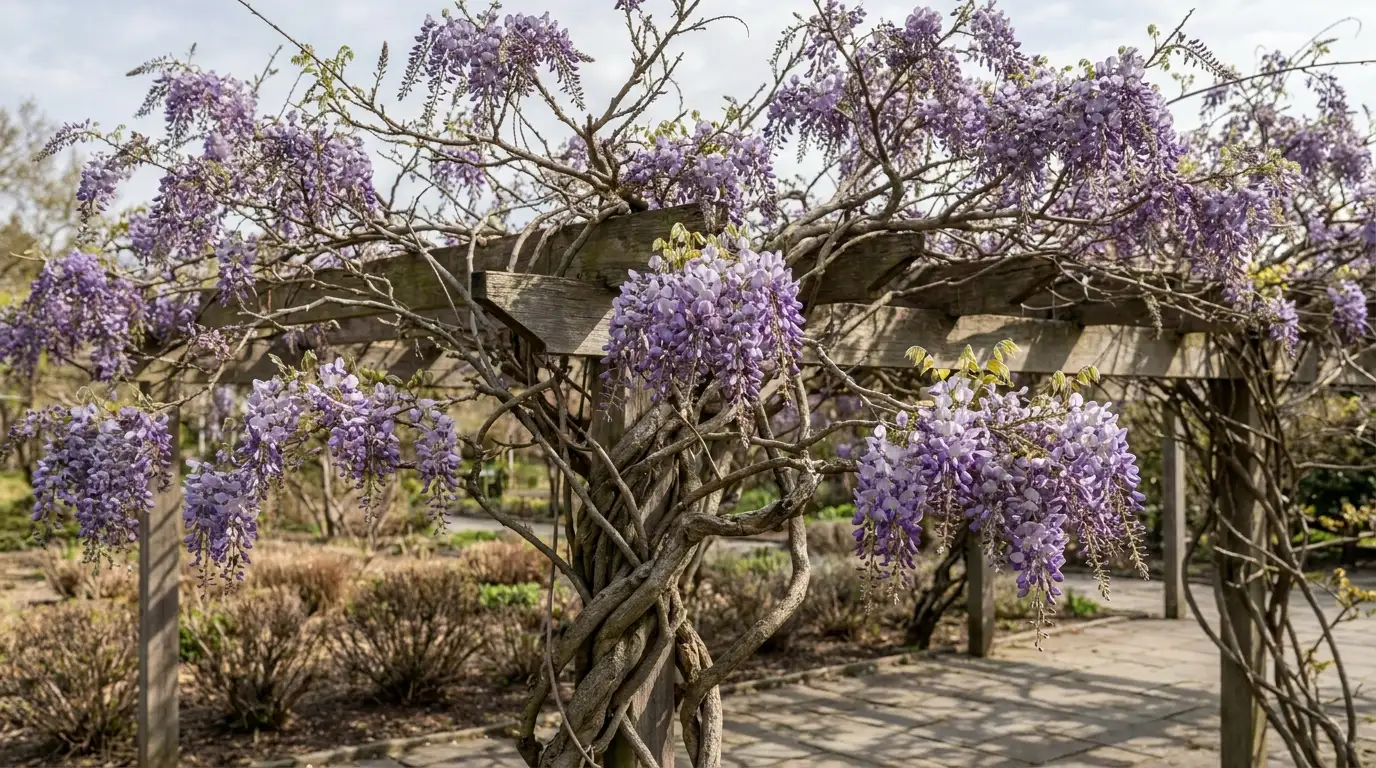
Chinese wisteria is often one of the earliest types to flower in spring. Its purple or white clusters tend to open at nearly the same time, creating a dense display across the vine.
The clusters are usually shorter and fuller than those of Japanese wisteria, making the flowers appear closely packed during peak bloom.
2. Japanese Wisteria
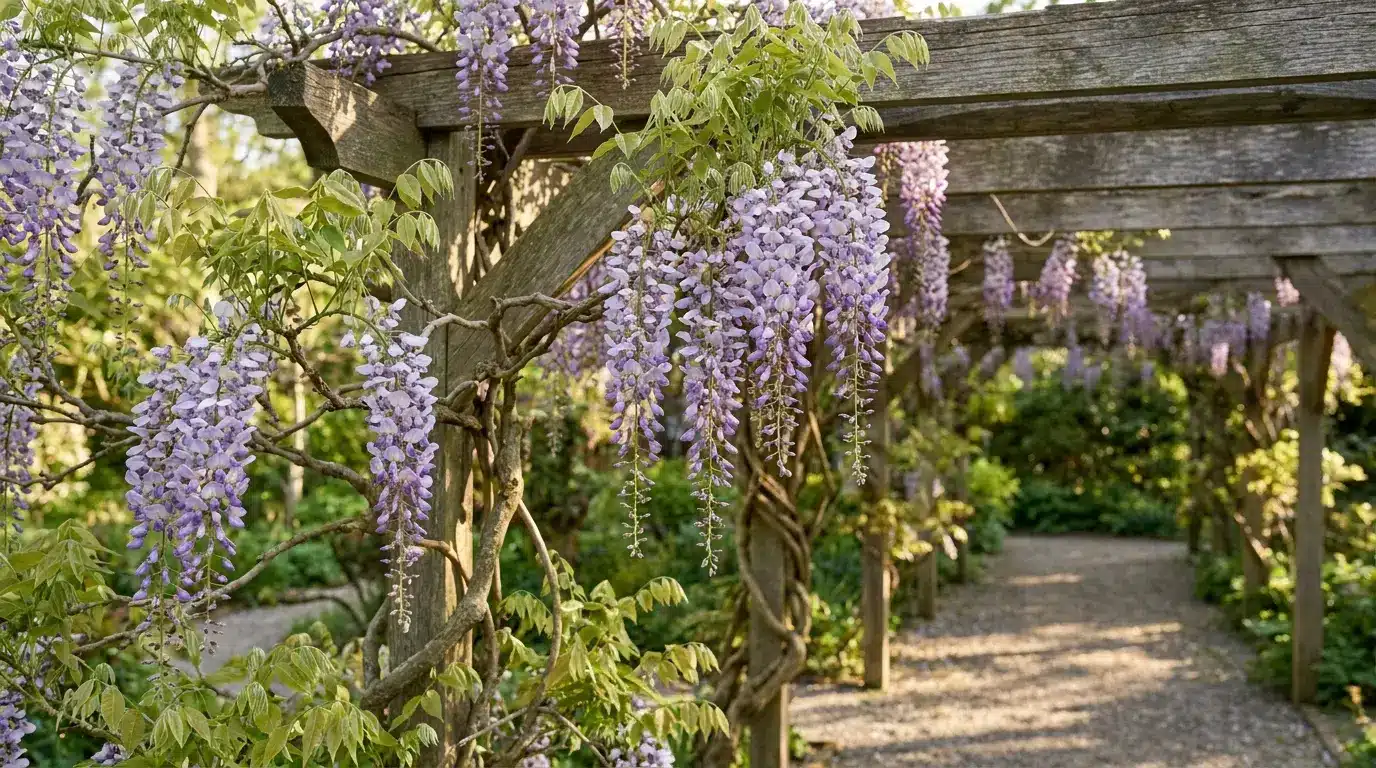
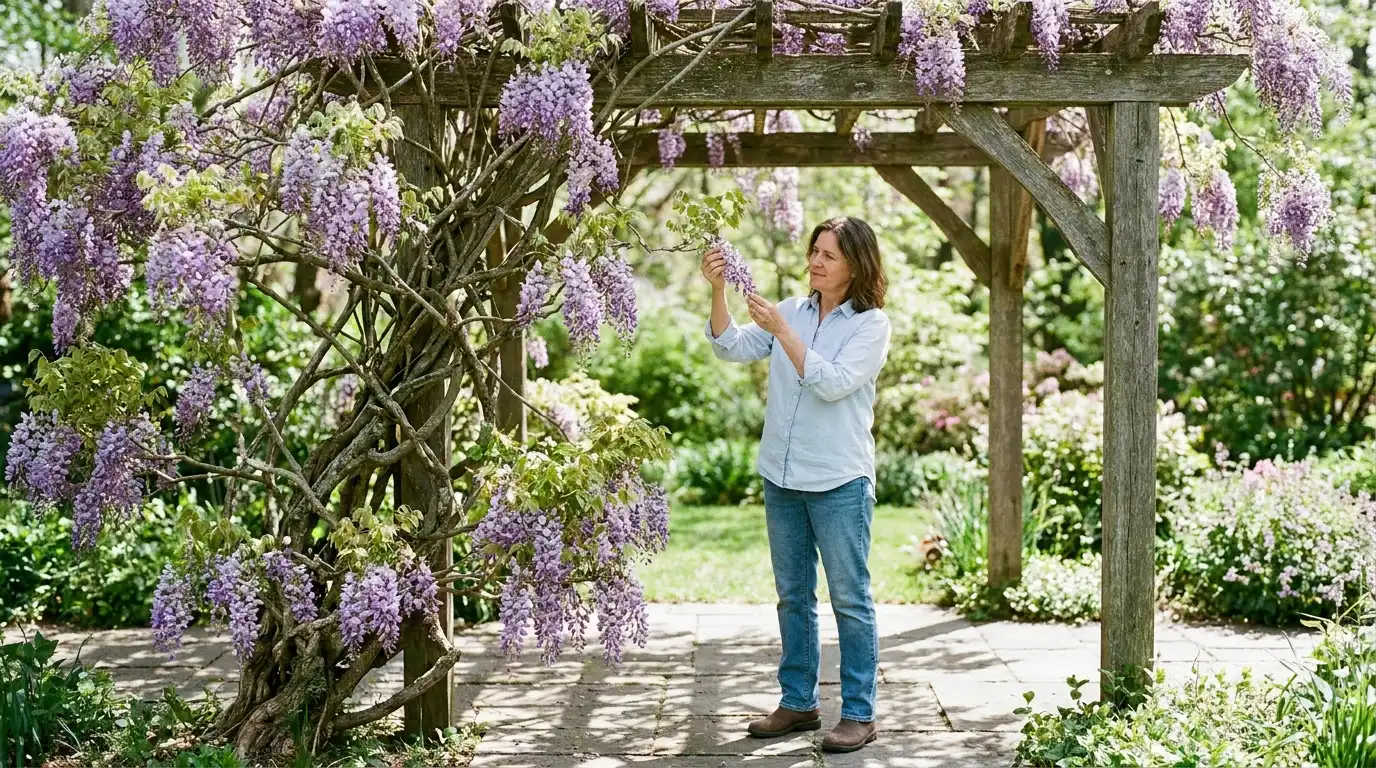
Japanese wisteria often flowers from mid-to-late spring and may continue into early summer. Its long flower clusters usually open gradually from the base toward the tip, so different parts of the same cluster may be at different stages.
The hanging blooms need enough space below the vine, which makes tall arches and sturdy pergolas a good fit as supports.
3. American and Kentucky Wisteria
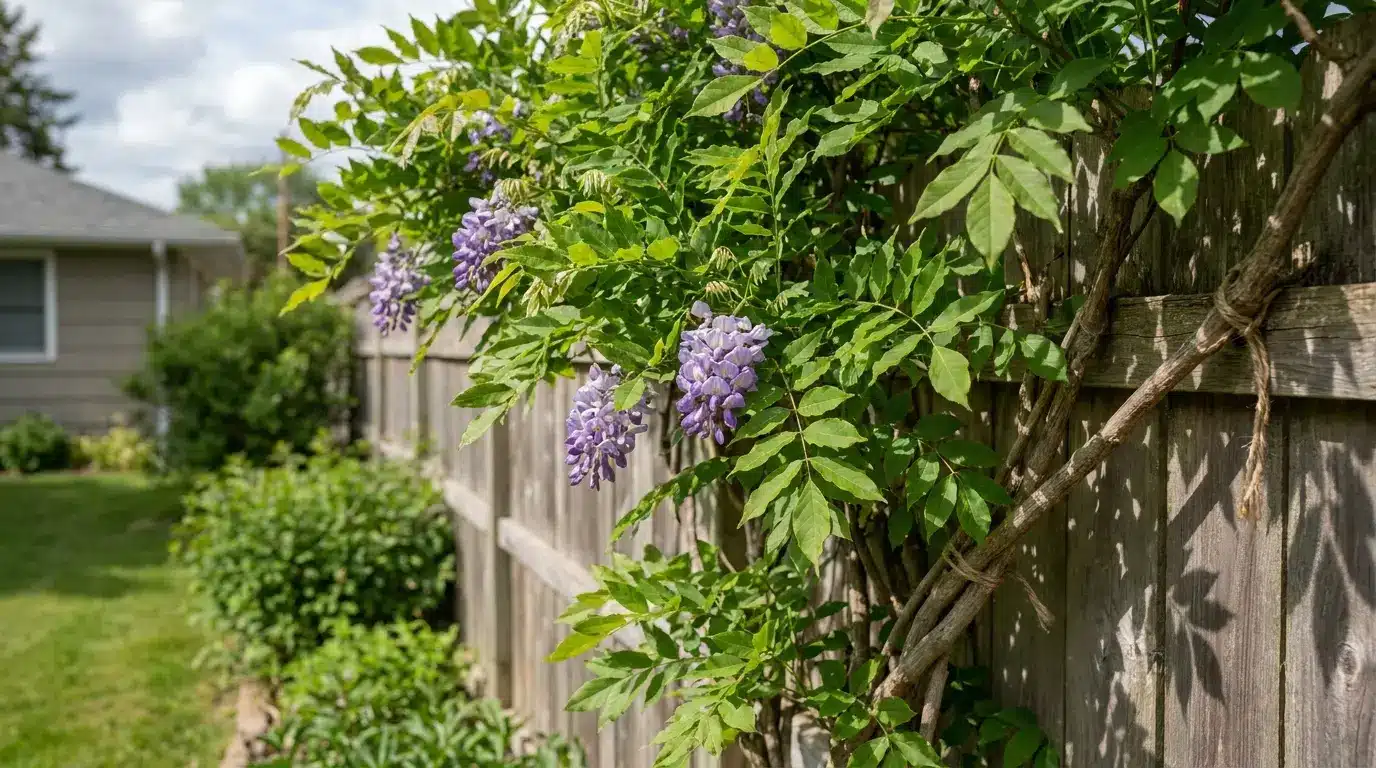
American and Kentucky wisterias usually bloom later than the Asian types. Their flowers often appear after the leaves have developed, placing the main show in late spring or early summer.
Kentucky wisteria may flower at a younger age than many other types. Some native cultivars can bloom again in summer, though the later show is smaller. These vines also grow less aggressively than Chinese and Japanese wisteria.
Chinese wisteria often blooms before its leaves open, Japanese wisteria may flower as leaves form, and North American types usually bloom after leaf growth begins.
How Climate and Location Change Wisteria Bloom Time
Two healthy vines can flower weeks apart because each yard warms at a different pace. Climate sets the broad season, while local conditions decide the exact timing.
- Warmer and cooler regions: Warm areas often see earlier blooms because spring heat brings the vine out of winter rest sooner. Cooler northern or high-elevation gardens may not see flowers until late spring or early summer.
- Sun, frost, and nearby surfaces: South- or west-facing spots, walls, and sheltered courtyards may warm sooner and help buds open earlier.
- Weather during flowering: Warm spells may speed bud opening, while long stretches of cold or rain can delay it. Once flowers open, strong wind, heavy rain, or sudden heat may shorten the display.
Expert note: Compare your vine with older wisterias nearby, since bloom times can vary from yard to yard.
Wisteria Bloom Time by Growing Zone
Growing zone offers a useful starting point for planning around wisteria’s flowering window, since it reflects how early spring arrives in your area, even though zones are based on winter low temperatures rather than exact bloom dates. Here’s a general breakdown by zone range.
| Growing Zone | Typical Bloom Window | What Blooms First |
|---|---|---|
| Zones 4 and 5 | May into early June | Chinese and Japanese wisteria open first; native types follow later in summer |
| Zones 6 and 7 | Mid-April through May | Chinese and Japanese wisteria dominate this window |
| Zones 8 and 9 | March into April | Chinese and Japanese types lead, with native American and Kentucky wisteria trailing into early summer |
Checking your area against the USDA Plant Hardiness Zone Map can help you set realistic expectations for when your own vine is likely to flower, though microclimates in your own yard, like a sheltered wall or a low-lying corner, can still shift timing by a week or two.
Why Wisteria Is Not Blooming on Schedule
A wisteria that misses its expected bloom period is usually responding to age, pruning, or growing conditions. The wrong response may create more leafy growth or remove future flower buds. Use these clues to choose one suitable next step instead of changing several parts of its care at once.
1. The Plant Is Still Too Young
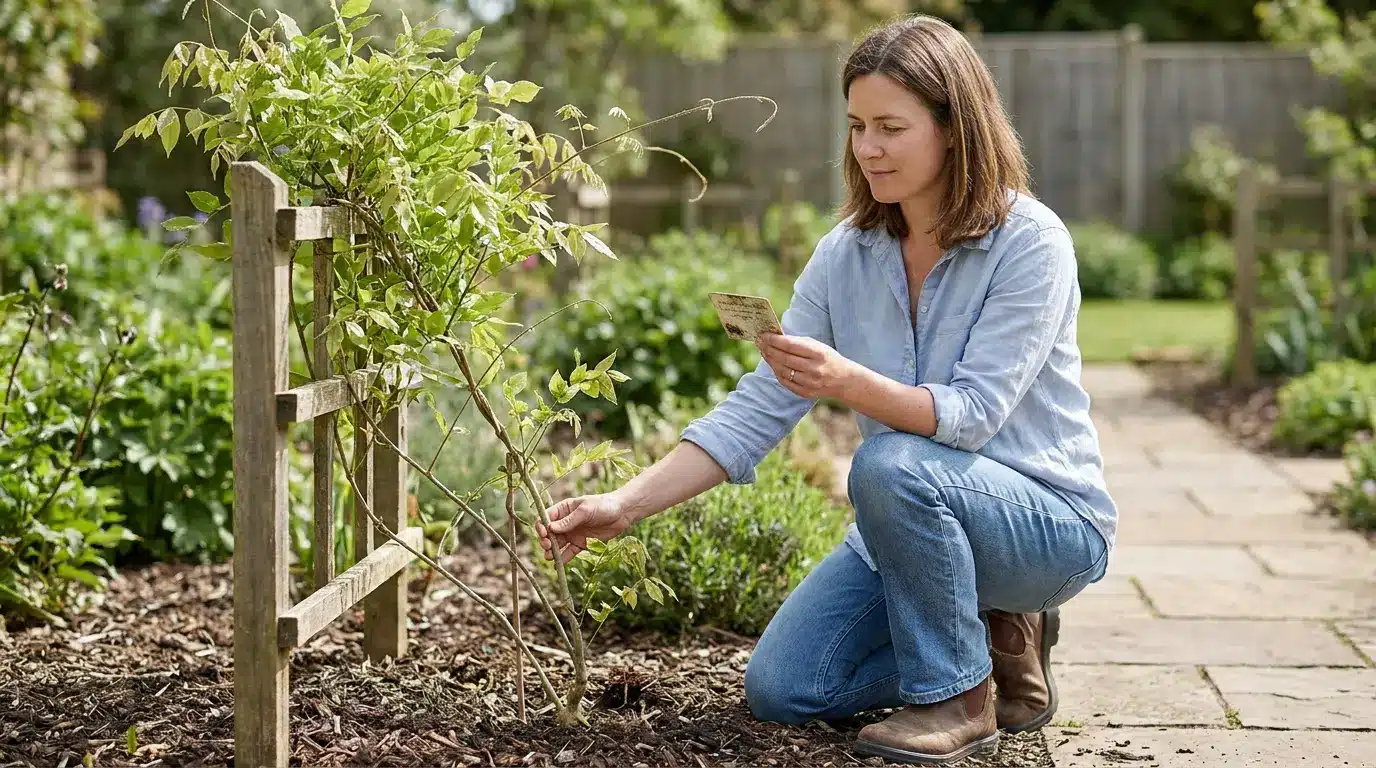
Seed-grown wisteria may take many years, sometimes more than a decade, to flower. The vine may look healthy and leafy but show no flower buds.
Action to take: Check the plant label and look for a swollen graft join near the stem base. Allow more time, or replace it with a named variety grown from a cutting or graft, preferably one already in bloom.
2. The Vine Was Pruned at the Wrong Time
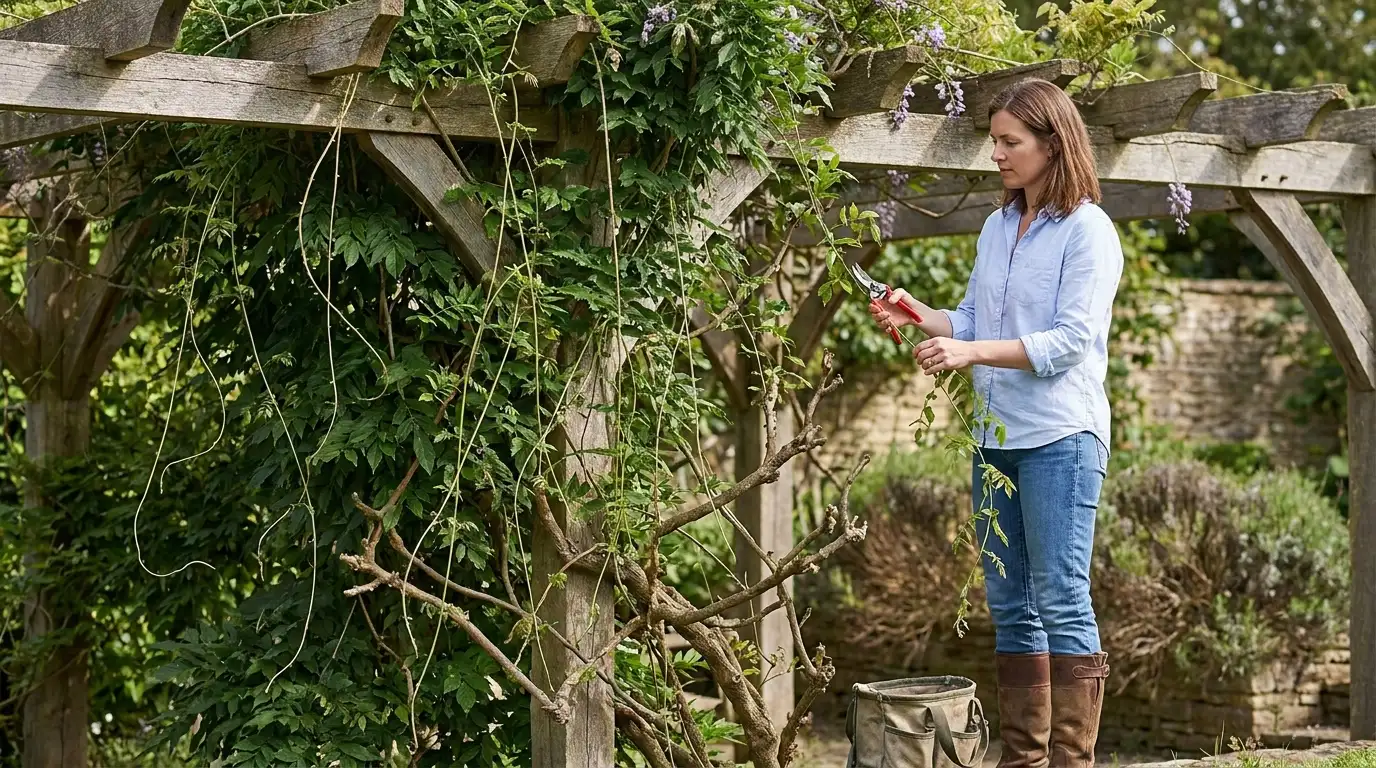
Pruning at the wrong stage may remove flowering spurs or cause the vine to produce more leaves. Long shoots may return quickly while spring buds remain scarce.
Action to take: Shorten new shoots after flowering in summer, then cut them back again during winter rest. Keep the permanent framework and short spurs, and avoid heavy pruning just before spring flowering.
According to RHS guidance on pruning shoots, long shoots should be cut back to five or six leaves after flowering, then shortened again to two or three buds during winter rest.
3. Growing Conditions Favor Leaves Instead of Flowers
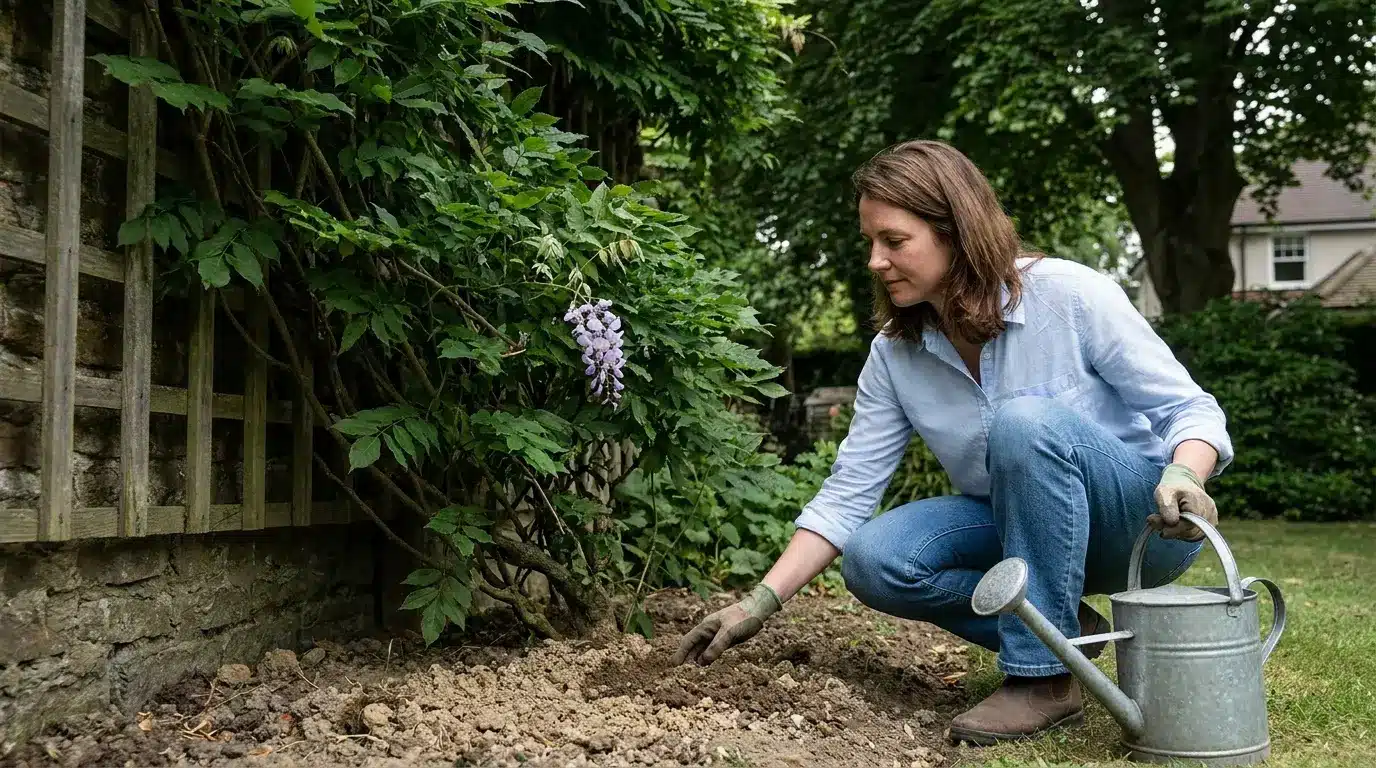
Deep shade, excess nitrogen, dry summer soil, or a late frost can reduce flowering. Thick leafy growth may point to shade or heavy feeding, while brown or fallen buds may show frost damage.
Action to take: Increase sunlight where practical, and stop high-nitrogen lawn feed near the roots, since the same pattern of lush growth producing no blooms shows up across many flowering shrubs, not just wisteria. Test the soil, water during long summer dry spells, and protect young or compact plants when late frost is expected.
Expert note: Root pruning should be reserved for a healthy, mature vine that still refuses to flower after these causes are corrected. Make only a few careful cuts around the roots in early spring. Treat it as a final measure, not routine care.
What to Do After Wisteria Finishes Blooming
Once the main flowers fade, a few timely steps will control new growth, protect nearby structures, and prepare the vine for its next flowering season.
- Wait for flowering to end: Avoid cutting while the main flower clusters are still open.
- Shorten side shoots: Cut long, whippy growth back to about five or six leaves from the main branch.
- Remove unwanted growth: Cut off suckers and shoots moving toward gutters, shingles, windows, or nearby trees.
- Train selected stems: Tie well-placed young stems to the main framework before they become hard and difficult to move.
- Check the structure: Look over the trellis, pergola, wires, brackets, and fasteners for strain or damage.
- Water during dry spells: Give the vine enough water when rainfall is low, especially during long periods of heat.
- Remove seedpods when needed: Take them off if children or pets often spend time near the plant, since the seeds are toxic.
If the vine looks worn out after a heavy bloom, the same kind of seasonal care after flowering ends that helps other flowering plants recover- light feeding, steady watering, and cleanup of spent growth- can help wisteria bounce back before it pushes new growth for the following year.
Mature wisteria becomes woody and very heavy, so its structure must hold the plant at full size, not just when it is young.
Frequently Asked Questions
How long do wisteria flowers stay in bloom?
The main flower display can last a few weeks, though timing varies by plant and cultivar. Cool, calm weather may extend it. Heat, wind, heavy rain, or frost can shorten peak bloom. A few scattered flowers may open before or after the main display.
Can wisteria bloom more than once a year?
Most wisterias produce one spring display. Some American and Kentucky cultivars may flower again in summer, but the later show is smaller. A second bloom depends on cultivar, age, sunlight, moisture, climate, and pruning, so treat it as a bonus.
Can wisteria bloom in a container?
Yes, container-grown wisteria can flower, especially compact cultivars or plants trained as standards. It needs a large pot, strong support, full sun, regular watering, and careful top and root pruning. Pots dry out faster, so these plants need more care.
Final Takeaway
Knowing when wisteria blooms helps you time care without relying on one fixed date. The species, leaf stage, and local conditions give you a better estimate of when flowers should appear.
If blooming is late, check the vine’s age, sunlight, feeding, and pruning before making major changes. These checks can help you find the likely cause without harming healthy growth.
Record the first open flower and leaf stage each spring so you can time next year’s care with greater confidence. Drop a comment below; let me know if your wisteria bloomed.