Spider mites are sneaky little troublemakers that have a way of showing up uninvited, especially when your houseplants are just starting to thrive.
They love warm, cozy indoor spaces just as much as you do, and once they settle in, they spread faster than you’d expect.
Catching them early makes all the difference, and knowing exactly what to look for puts you one step ahead.
Consider this your go-to resource for spotting spider mites on houseplants before they take over, and nursing your green babies back to health.
What are Spider Mites?
Spider mites are tiny arachnids, closely related to spiders and ticks, that survive by feeding on plant sap. They puncture leaf cells to extract nutrients, slowly draining the life out of your plants.
What makes them particularly tricky is how well they thrive indoors.
Warm temperatures and low humidity create the perfect breeding ground, and since most homes naturally maintain these conditions, houseplants become an easy target.
Without natural predators to keep their population in check, a small cluster can quietly multiply into a full-blown infestation before you even notice something is wrong.
How to Identify Spider Mites on Houseplants?
Knowing what to look for is half the battle when it comes to protecting your plants. These early warning signs can help you catch an infestation before it spirals.
If you want to go even deeper, this guide on early signs of spider mites is worth bookmarking before you work through the details below.
1. Tiny Moving Dots on Leaves
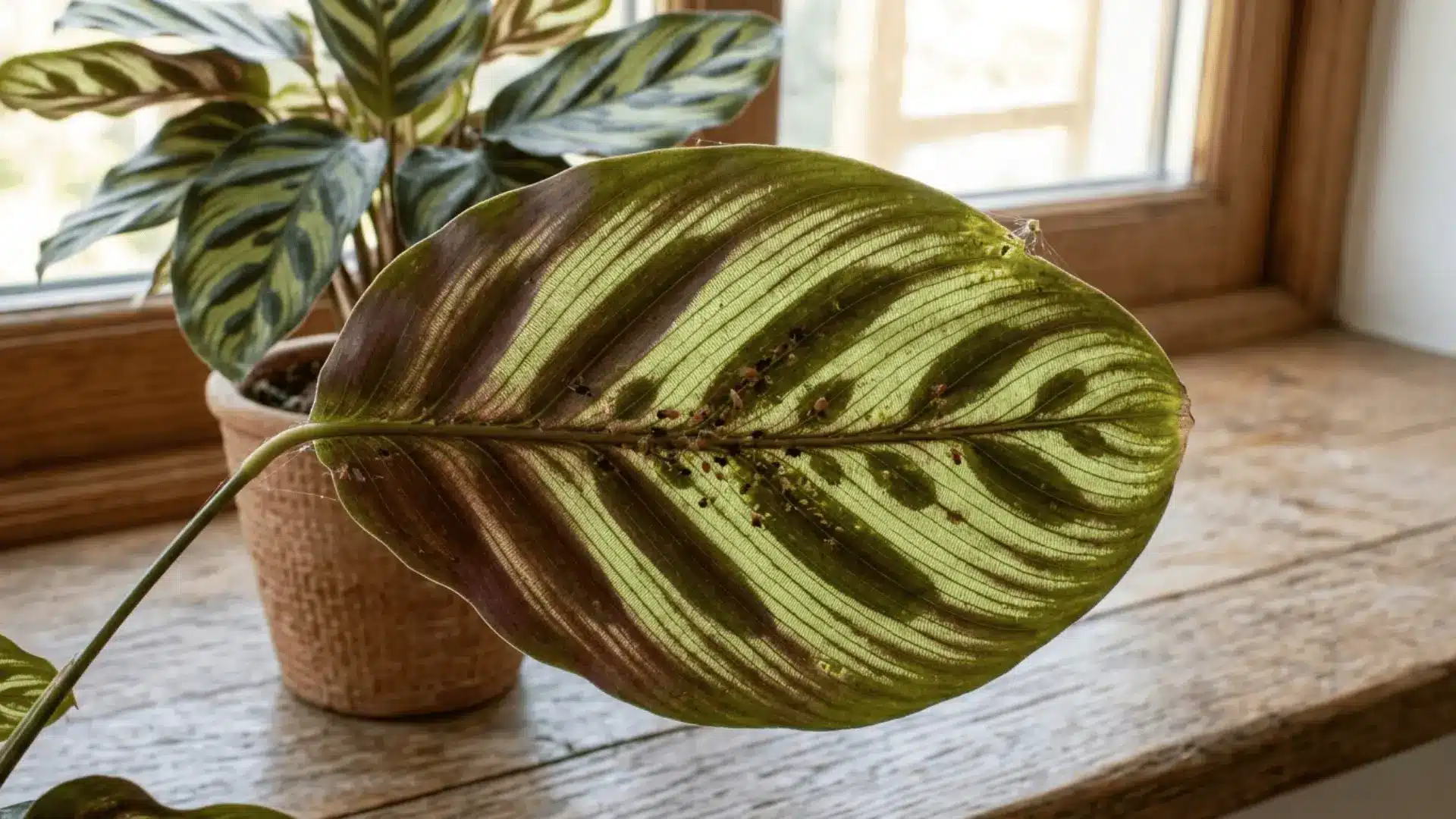
One of the first things you might notice is tiny red, brown, or yellow specks crawling across your leaves. They are almost too small to see with the naked eye, which is exactly what makes them so easy to overlook.
Grab a magnifying glass and take a closer look at the undersides of leaves, since that is usually where they like to hide and lay eggs.
2. Fine Webbing on Leaves and Stems
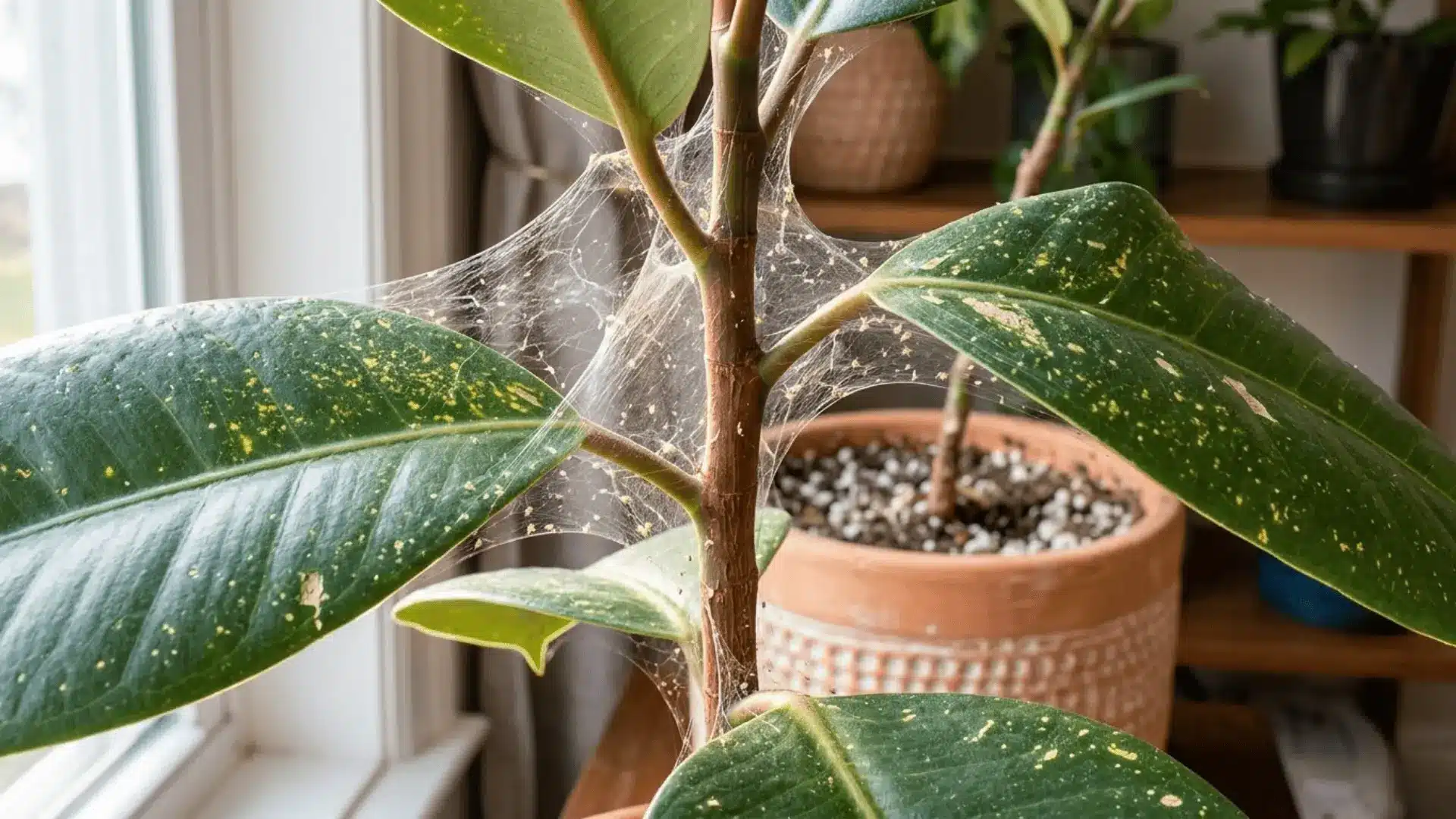
If you spot delicate, silk-like webbing stretching across your leaves or along the stems, that is a pretty clear sign the infestation has already settled in.
The webbing acts as their protective layer and nursery, keeping eggs safe while the colony grows. Seeing it usually means the mites have been quietly thriving for longer than you might expect.
3. Yellow or Speckled Leaves
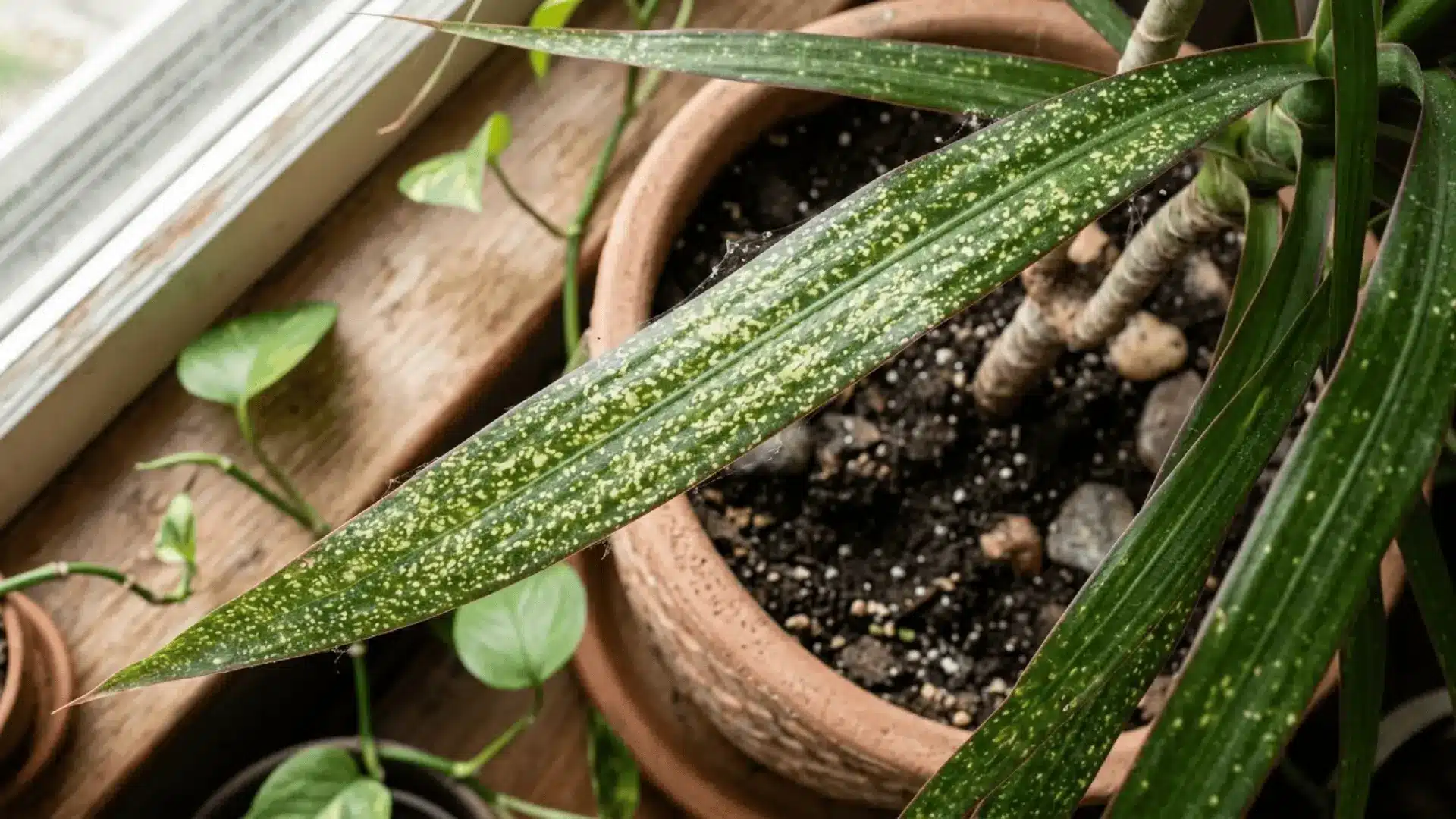
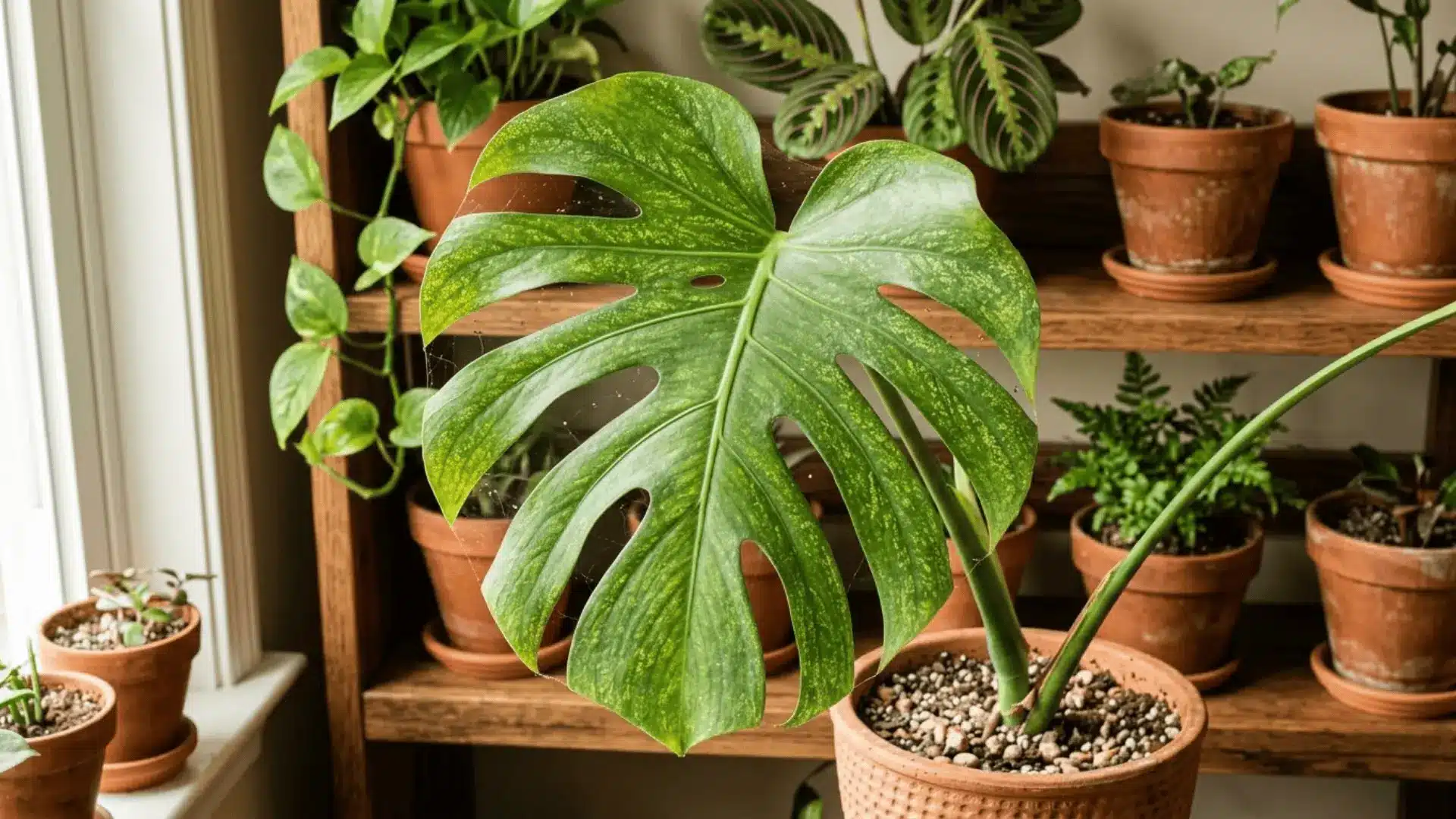
Spider mite feeding leaves behind small pale or yellow spots scattered across the leaf surface. This happens because they puncture individual cells to extract sap, causing the surrounding tissue to lose color and vitality.
If your plant looks dull, stippled, and a little lifeless without any obvious reason, spider mites are very likely the culprit worth investigating.
4. Leaves Turning Brown or Falling Off
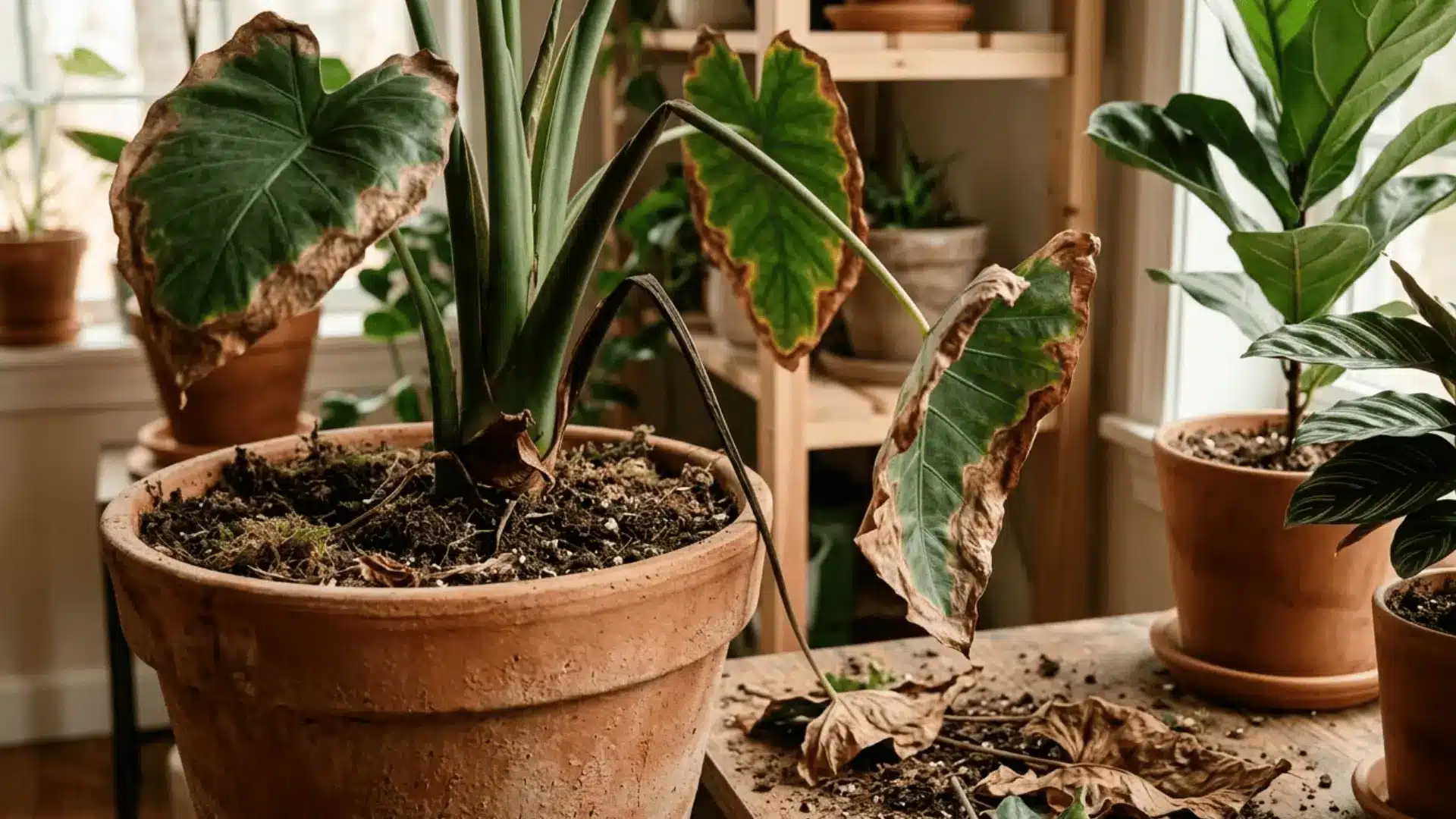
When the infestation reaches a more serious stage, the damage becomes much harder to ignore. Leaves start browning at the edges, curling inward, and eventually dropping off altogether.
The plant is essentially being drained of nutrients faster than it can recover, pushing it into a state of visible stress that needs your attention right away.
5. The White Paper Test
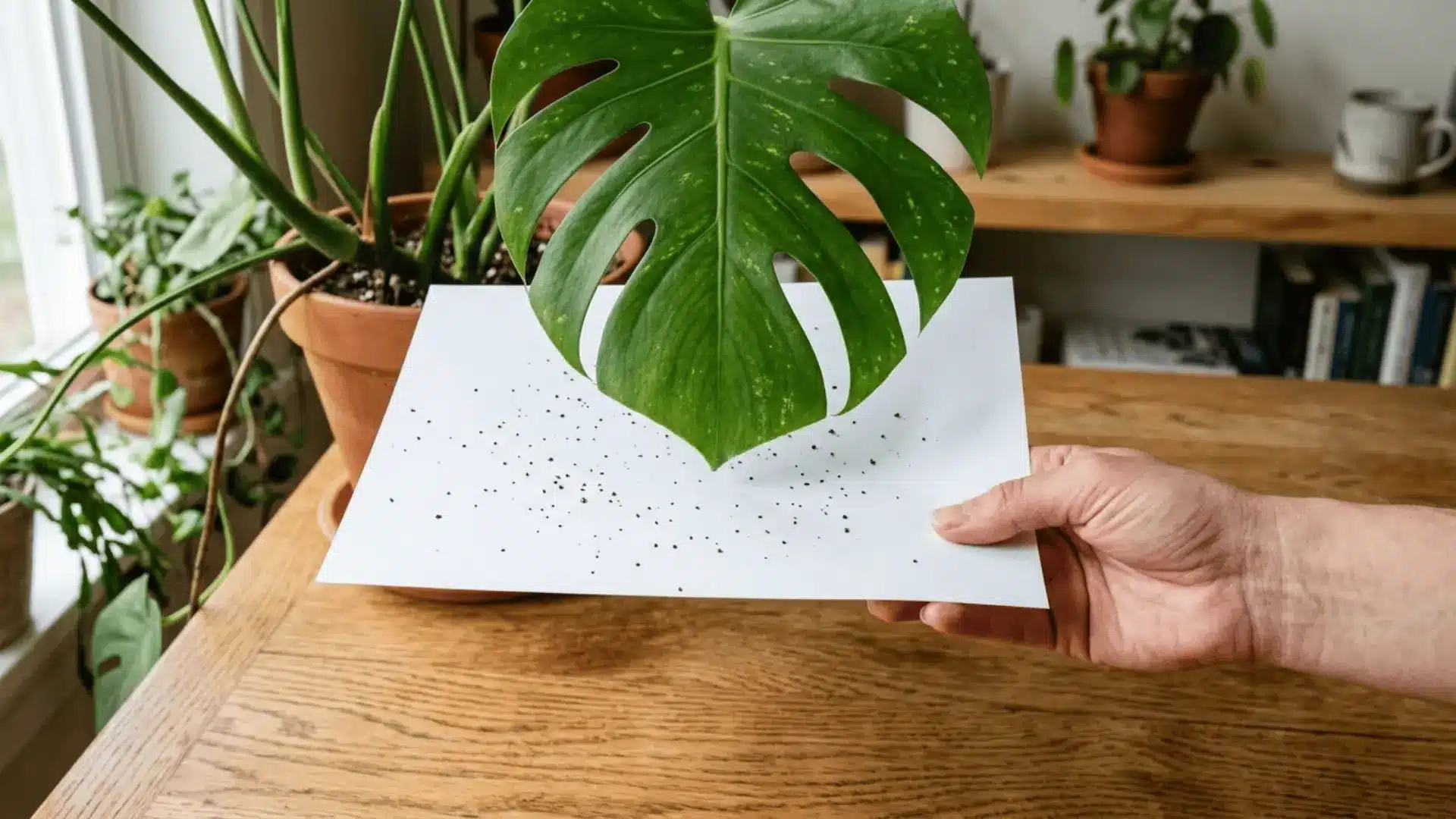
Not sure if what you are seeing is actually spider mites? Try this simple check:
- Hold a white sheet of paper under a leaf.
- Give the leaf a gentle shake.
- Look closely at the paper for tiny moving specks.
- If they are moving, you have got spider mites.
Common Houseplants That Get Spider Mites
Spider mites are not particularly picky, but they do have their favorites. Plants with large, soft leaves tend to be more susceptible since they offer an easier surface to puncture and feed from.
| Plant | Leaf Type | Vulnerability Level |
|---|---|---|
| Monstera Deliciosa | Large, broad | High |
| Ficus Elastica | Thick, smooth | Moderate |
| Dracaena | Long, soft | High |
| Calathea | Delicate, textured | Very High |
| Alocasia | Large, dramatic | Very High |
What Causes Spider Mites on Houseplants?
Spider mites do not just appear out of nowhere. Certain indoor conditions make your plants far more inviting to them than you might realize.
- Dry indoor air strips away the moisture that naturally deters mite activity.
- Warm room temperatures accelerate their reproduction cycle significantly.
- Bringing home infested plants introduces mites before you even notice them.
- Stagnant air with little to no circulation allows colonies to settle undisturbed.
- Overcrowded plants make it effortless for mites to spread from one plant to another.
Keeping an eye on these conditions goes a long way in making your indoor space a lot less welcoming for these unwanted guests.
How to Get Rid of Spider Mites on Houseplants?
Dealing with spider mites takes a little patience, but the right approach makes a noticeable difference. Working through these steps consistently gives your plants the best chance at a full recovery.
1. Isolate the Affected Plant
The very first thing you want to do is move the affected plant away from the rest of your collection.
Spider mites spread quickly through direct contact and even through air movement, so keeping them contained from the start prevents what could easily turn into a much larger problem across your entire indoor garden.
2. Rinse Leaves With Water
A strong stream of water is surprisingly effective at dislodging mites from the leaf surface. Take your plant to the sink or shower and rinse both the tops and undersides of leaves thoroughly.
This will not eliminate the infestation entirely, but it significantly reduces the mite population and gives your follow-up treatments a better chance of working.
3. Wipe Leaves With Soapy Water
Mix a few drops of mild liquid soap with water and gently wipe down every leaf using a soft cloth. Pay extra attention to the undersides where mites tend to cluster.
This method helps suffocate mites on contact and removes any residue or webbing left behind, making it easier to monitor new activity going forward.
4. Apply Neem Oil
Neem oil is a natural, plant-safe option that works by disrupting the mite life cycle rather than just killing on contact. Dilute it according to the label instructions and apply it evenly across all leaf surfaces.
It works best when used consistently and is gentle enough for most houseplants without causing any additional stress to already weakened foliage.
5. Use Insecticidal Soap
For more stubborn infestations, insecticidal soap sprays formulated specifically for houseplant pests are worth reaching for. They are effective at breaking down the mite’s outer coating on contact.
Spray thoroughly across the entire plant, making sure to coat the undersides of leaves where the heaviest activity usually lives.
6. Repeat Treatments Weekly
One round of treatment is rarely enough. Because mite eggs are resistant to most sprays, new mites can hatch and restart the cycle within days.
Committing to weekly treatments for at least a month ensures each new generation is dealt with before it has a chance to take hold again.
How to Prevent Spider Mites on Houseplants?
Prevention really is the kindest thing you can do for your plants. Increasing indoor humidity through a humidifier or simple pebble trays creates an environment in which mites genuinely struggle to thrive.
Before bringing any new plant home, inspect every leaf carefully, including the undersides, to avoid introducing pests unknowingly.
Making regular leaf cleaning part of your routine removes dust and early mite activity before it escalates.
Lastly, keeping your plants spaced out with good air circulation discourages the stagnant conditions that spider mites love to settle into.
Signs Your Spider Mite Problem is Getting Worse
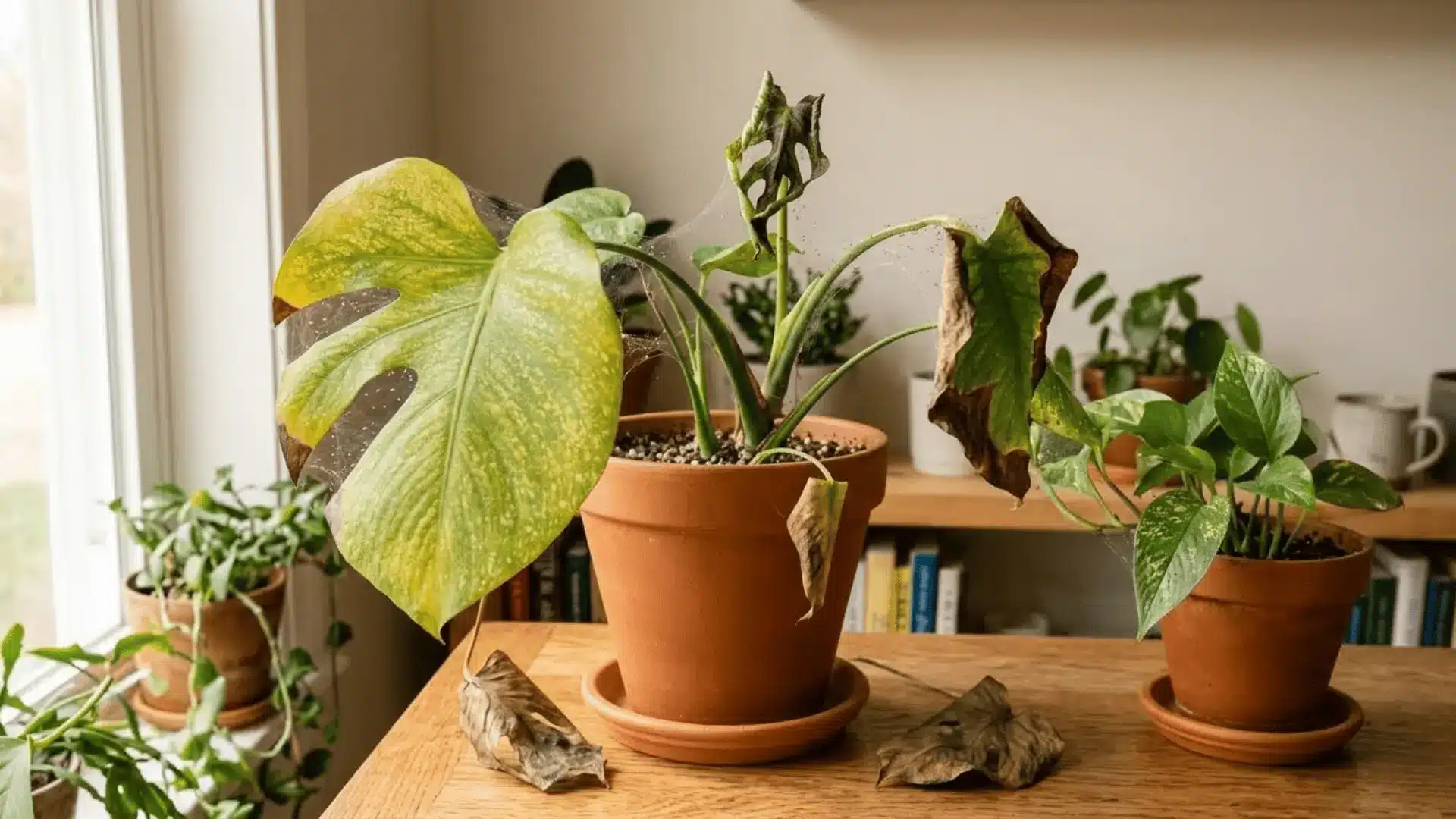
Sometimes, even with your best efforts, things can escalate quickly. Watch out for these red flags that tell you the infestation needs more urgent attention.
- Visible webbing has spread beyond a few leaves to entire stems and branches.
- Rapid yellowing or browning is appearing across multiple leaves simultaneously.
- Mites are visibly moving to neighboring plants despite isolation efforts.
- New growth is stunted or emerging already damaged and discolored.
- Leaf drop is accelerating faster than your treatments seem to be working.
If you are checking off more than a couple of these, it is time to switch to a stronger treatment and stay even more consistent with your care routine.
Final Thoughts
Caring for houseplants is such a rewarding experience, and running into spider mites does not have to derail it.
With the right knowledge and a little consistency, keeping spider mites on houseplants under control is completely manageable.
Check in on your plants regularly, stay ahead of the conditions that invite these pests in, and treat early whenever something looks off. Your plants are resilient, and so are you.
Have you dealt with spider mites before? Drop your experience or your go-to treatment in the comments below because someone else might need exactly what worked for you.
Frequently Asked Questions (FAQs)
What Do Spider Mites Look Like on Houseplants?
Spider mites appear as tiny red, brown, or yellow specks, often clustered on the undersides of leaves. In more advanced infestations, you will also notice delicate webbing stretching across leaves and stems.
Can Spider Mites Kill Houseplants?
Yes, they can, especially if the infestation is left untreated for too long. Continuous sap-feeding drains the plant of nutrients, eventually leading to severe leaf drop and decline.
How Fast Do Spider Mites Spread Indoors?
Spider mites can spread surprisingly fast in warm, dry indoor environments, moving between plants through direct contact or air movement. A small colony can multiply into a full infestation within just a few weeks.