Few trees can feed wildlife, improve desert soil, and cause trouble when planted in the wrong place.
Its far-reaching roots, small leaves, careful water use, and long-lived seeds help it survive heat and long dry spells.
In its native habitat, it adds nitrogen to the soil, gives shade, supports bees, and provides food and shelter for animals.
People have also used its pods, wood, bark, gum, and flowers for years. But in small or unsuitable spaces, its growth habits can create safety, cleanup, and crowding concerns.
Learn where mesquite works best, how to control it, and when removal makes more sense.
Mesquite Tree at a Glance
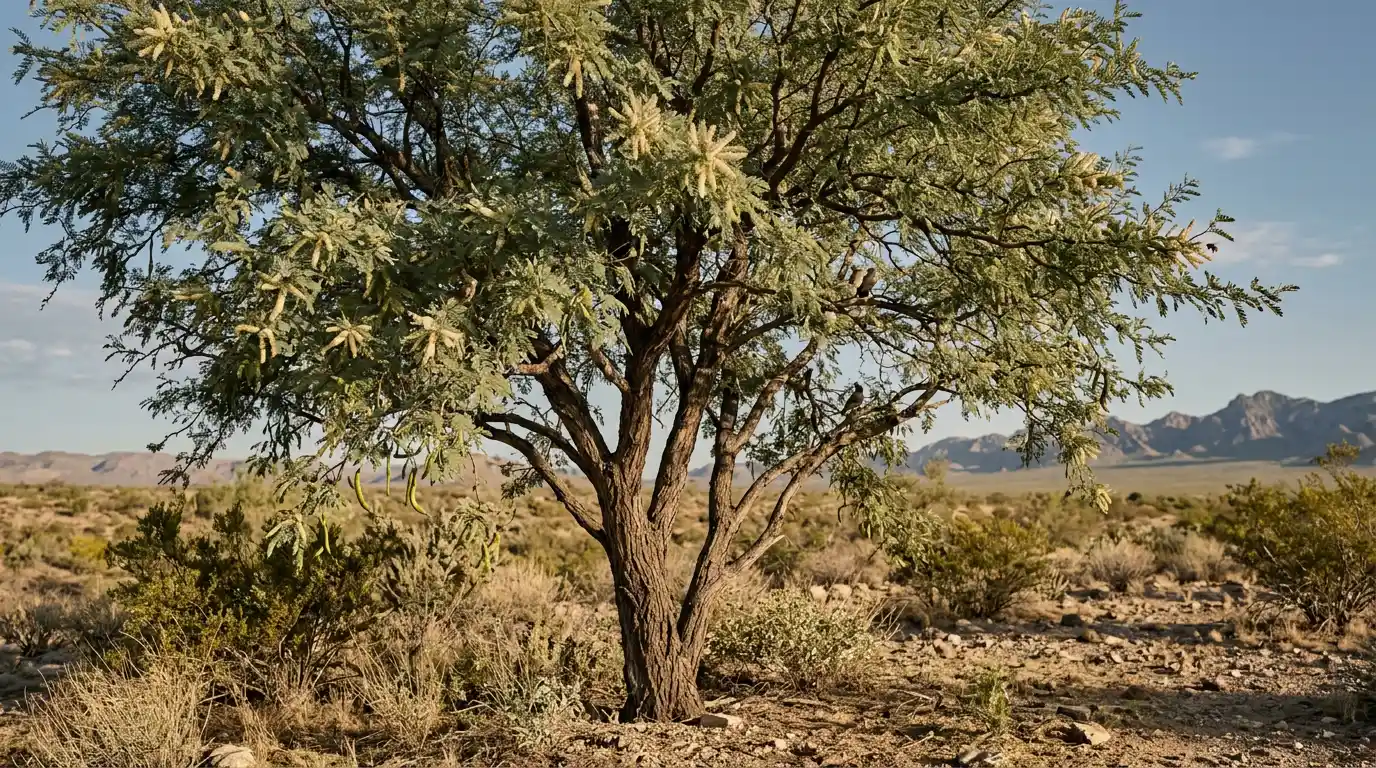
Mesquite is a drought-tolerant shrub or tree known for its far-reaching roots, small leaves, pale flowers, and bean-like pods. Its size and growth form change with soil, water, climate, and species.
| Plant feature | Key details |
|---|---|
| Plant family | Legume family, also called Fabaceae |
| Plant form | Multi-stemmed shrub or small to medium tree |
| Native range | Dry parts of North and South America |
| Common types | Honey, velvet, and screwbean mesquite |
| Typical height | A few feet to about 50 feet, based on species and growing conditions |
| Leaves | Small, feather-like leaflets |
| Flowers | Pale yellow, cream, or greenish flower spikes |
| Fruit | Long seed pods, often called beans |
| Roots | Taproot and lateral roots; depth varies with soil and water |
| Water needs | Low after the tree becomes established |
| Main benefits | Shade, wildlife food, pollinator support, and useful wood |
| Main concerns | Thorns, pod litter, wide roots, and dense spread |
Species and growing conditions can change these traits, so confirm the exact type before buying or identifying a tree.
The Mesquite Tree’s Role in Desert Ecosystems
Mesquite can improve desert habitat by changing the soil, feeding animals, helping pollinators, and creating cooler shelter. Its effect depends on where it grows and how dense the trees become.
- Soil fertility: Nitrogen-fixing bacteria in the roots enrich soil, aided by fallen leaves.
- Support for young plants: Shade and improved soil help grasses and seedlings establish.
- Food for desert life: Flowers feed bees, while pods feed birds, mammals, and livestock.
- Shelter and nesting space: Branches offer birds nesting sites and shade in the heat.
- Mesquite bosques: A bosque is a mesquite woodland near floodplains, washes, or groundwater.
- Habitat loss: Many historic bosques have declined from groundwater pumping and development.
The ecological effect of mesquite depends on its density, location, and the surrounding plant community, so no single spacing works the same way everywhere.
Common Mesquite Types and How to Tell Them Apart
Mesquite types can look similar, but their pods, leaves, bark, crown shape, and thorns provide useful clues. You may see both naming systems in use: older references use Prosopis, while newer classifications place these species in Neltuma or Strombocarpa. Both names are given below for clarity.
1. Honey Mesquite
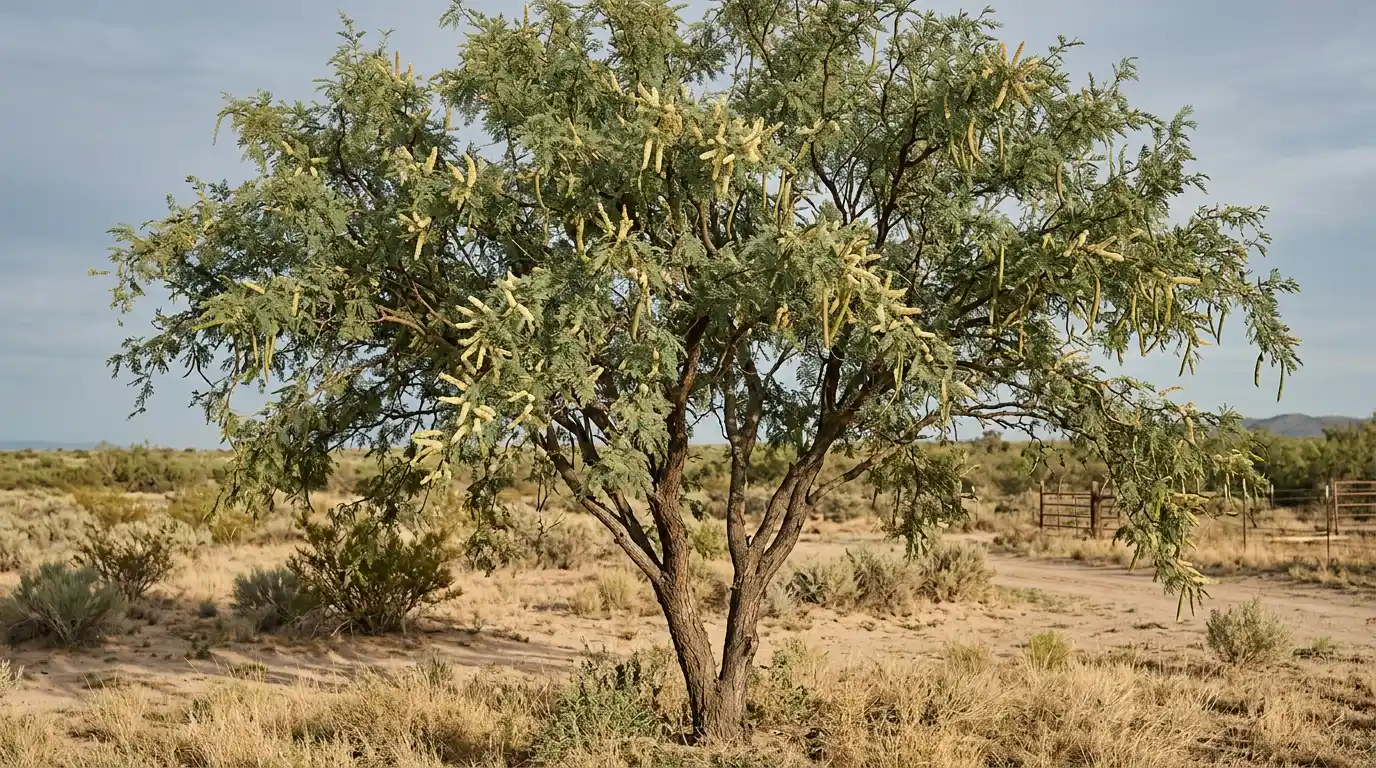
Honey mesquite (Neltuma glandulosa, formerly Prosopis glandulosa) grows across much of the Southwest and northern Mexico. It often has a spreading or slightly weeping shape, pale flowers, and long, straight pods. Bees visit its blooms for pollen and nectar.
Depending on soil and water conditions, it may remain shrubby or become a medium-sized tree. Some nursery selections have a neater shape and fewer thorns.
2. Velvet Mesquite
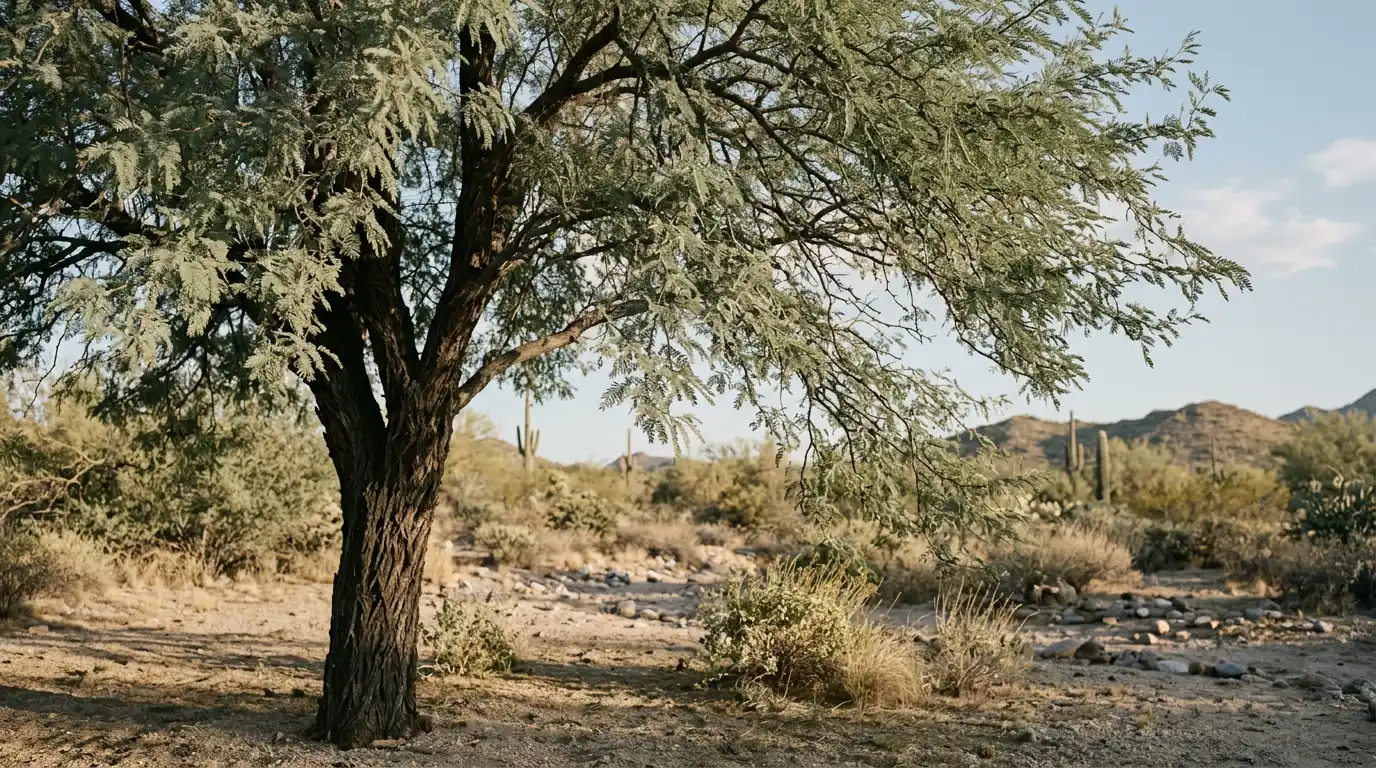
Velvet mesquite (Neltuma velutina, formerly Prosopis velutina) is strongly linked with the Sonoran Desert. Its gray-green leaves have fine hairs, while older bark becomes dark and rough. A broad crown provides filtered shade.
Trees in deep soil may grow large and live for centuries, while those on dry uplands stay smaller. Its dense, low branching gives this species some of the most complete shade among the three types.
3. Screwbean Mesquite
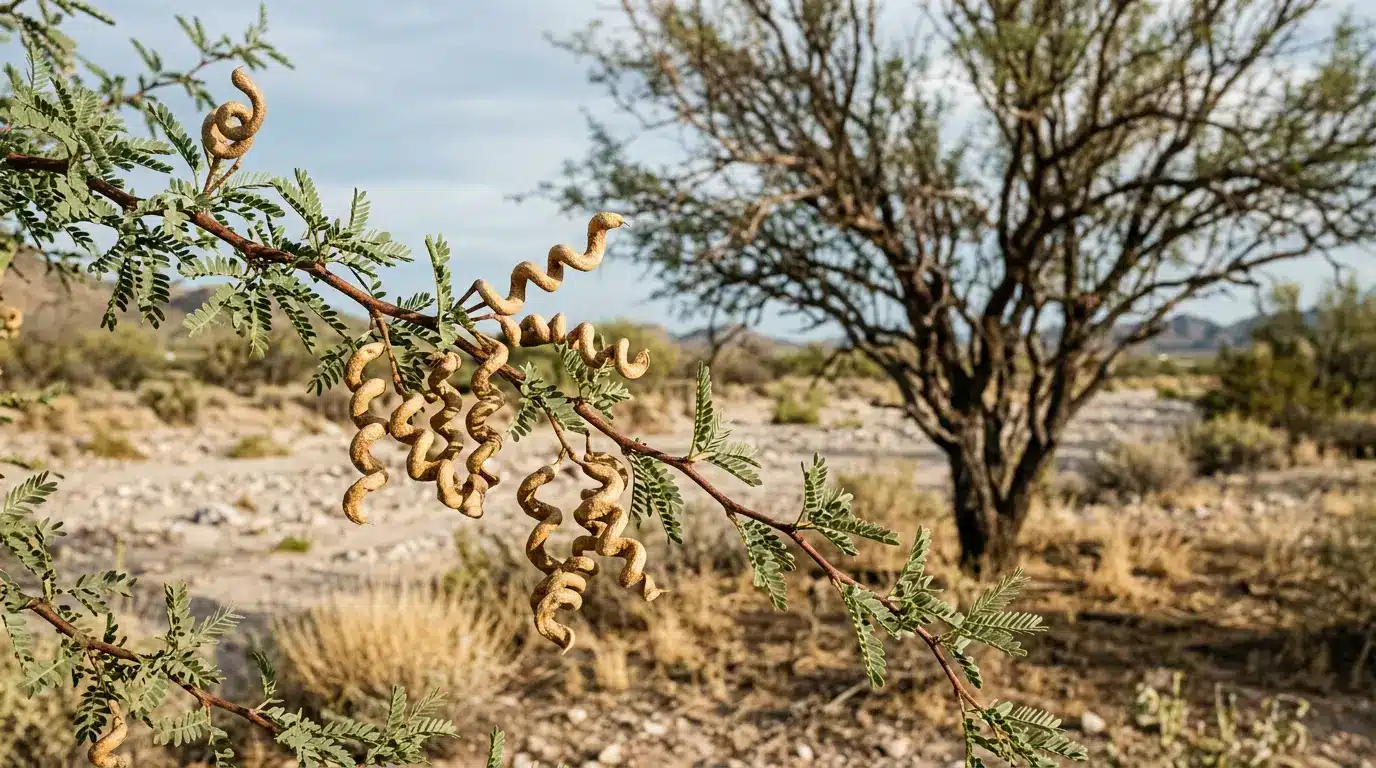
Screwbean mesquite (Strombocarpa pubescens, formerly Prosopis pubescens) is easy to recognize by its tightly twisted pod, which looks like a small spring.
It has smaller leaves and an open, vase-shaped crown. Without added water, it grows more slowly than many other mesquites.
It occurs in parts of the Sonoran and Chihuahuan deserts, including areas of Arizona, New Mexico, Texas, and northern Mexico.
How the Three Compare
| Feature | Honey Mesquite | Velvet Mesquite | Screwbean Mesquite |
|---|---|---|---|
| Typical size | 20 to 30 feet, spreading | Up to 25 to 30 feet, broad crown | 15 to 25 feet, smaller |
| Crown shape | Spreading, often weeping | Broad, dense, rounded | Open, vase-shaped |
| Pod shape | Long and straight | Long and straight | Tightly coiled, spring-like |
| Cold tolerance | Generally good; some types tolerate brief dips near 0°F | More frost-sensitive; damage is common below about 10°F | Generally good, similar to honey mesquite |
| Landscape suitability | Widely planted; can spread readily by seed | Best suited to true desert landscapes | Good near washes or spots with occasional extra water |
Cold tolerance and mature size can vary by nursery stock and local climate, so confirm details for your specific area before planting.
Argentine, Chilean, and hybrid mesquites are also common in landscaping, often chosen for faster growth or fewer thorns than native types. Because these planted forms may behave differently from native mesquites, including spreading more readily in some areas, it helps to confirm which type you have before planting or removing one.
How the Mesquite Tree Grows and Survives in the Desert
A mesquite tree survives dry desert conditions through its roots, leaves, seeds, and growth cycle. Each part helps the tree find water, reduce moisture loss, and wait through harsh periods until conditions improve.
1. Deep Roots and Flexible Water Use
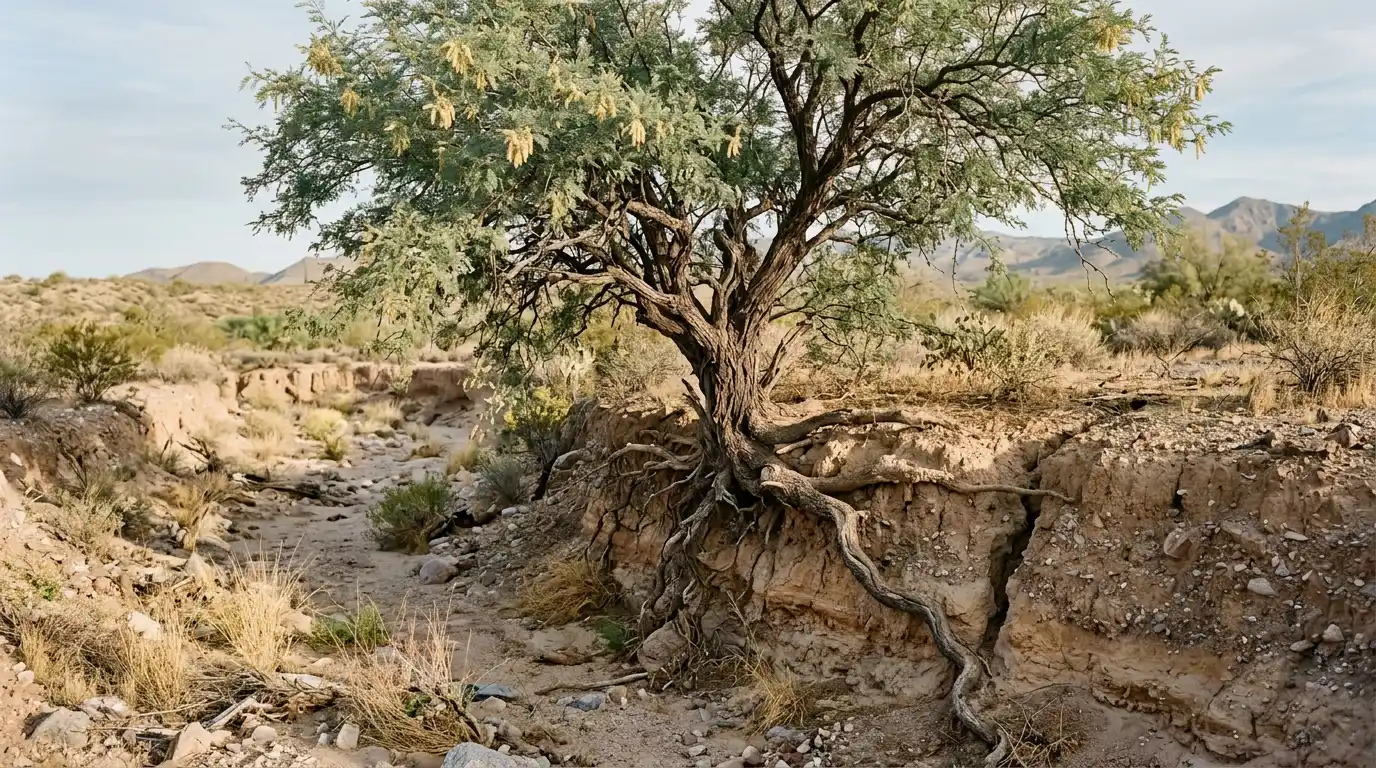
Texas A&M’s mesquite ecology research indicates that mesquite may use wide, surface-reaching roots to find moisture and can grow a taproot (a main root reaching straight down) when deeper water is available.
During longer dry periods, deeper roots may reach water lower in the soil. Root depth varies by tree because soil type, rainfall, and groundwater levels affect how far roots can grow.
2. Small Leaves, Drought Dormancy, and Heat Tolerance
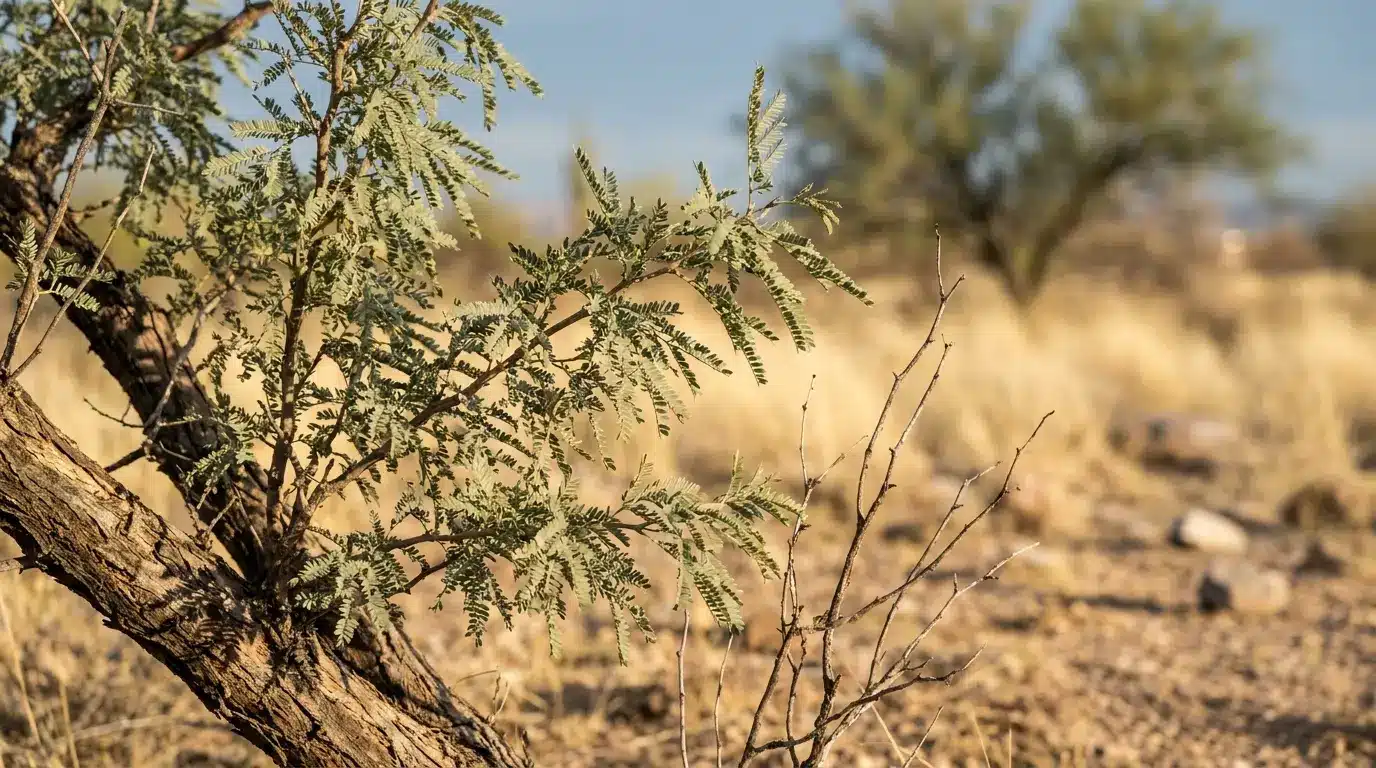
Its compound leaves contain many small leaflets, which limit the surface area exposed to hot, dry air. During severe drought or cold weather, mesquite may drop its leaves and slow its growth.
Trees in shallow, rocky, or cold sites often stay small, while those in deep soil with steady moisture may grow taller and produce fuller crowns.
3. Pods, Long-Lived Seeds, and Animal Dispersal
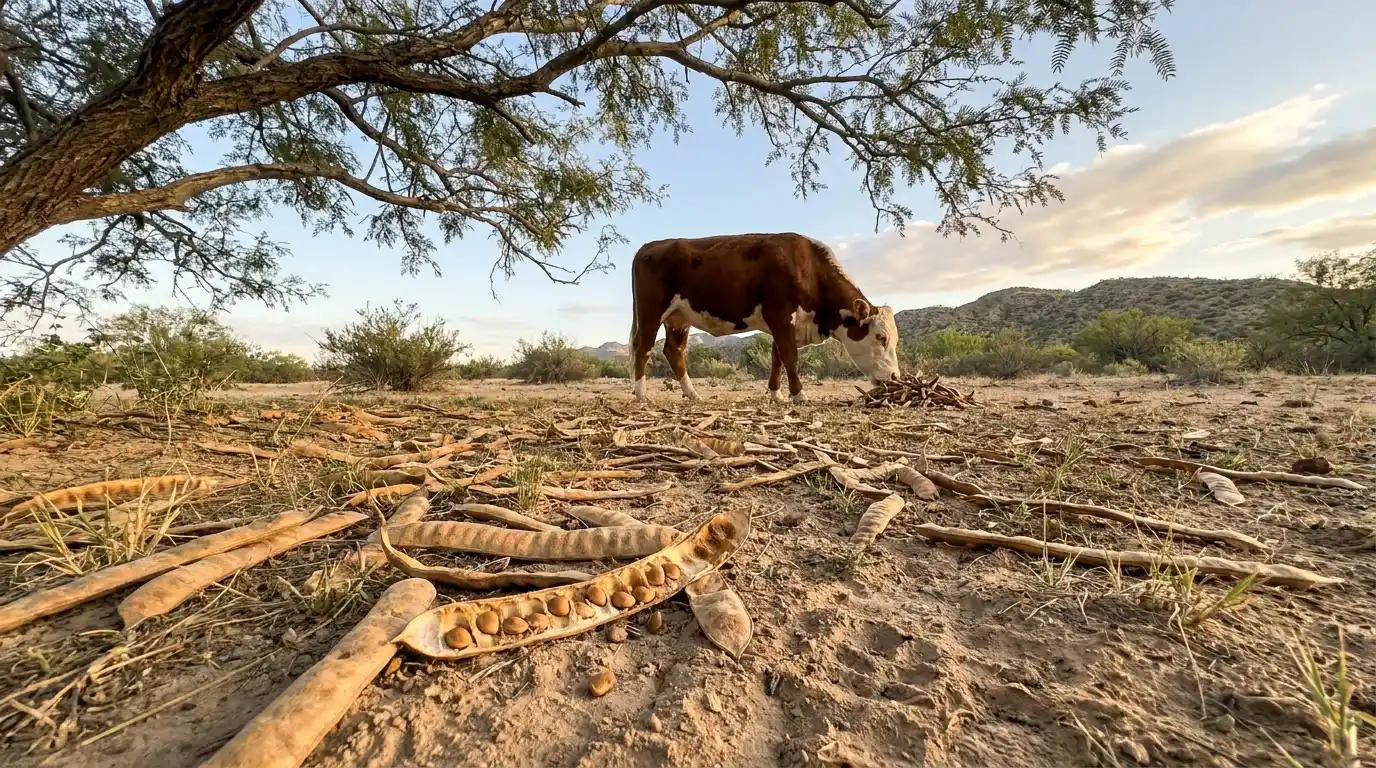
Mesquite flowers develop into sweet pods filled with hard-coated seeds. Cattle and wild animals eat the pods and spread the seeds in their waste. Digestion may scratch the seed coat (the seed’s hard outer shell), which can help water enter.
Floodwater can move seeds too. Young plants often take hold where soil is moist, grazing is heavy, or fires are rare.
How Native and Modern Communities Use Mesquite
Mesquite has supported desert communities for generations. Its pods, wood, bark, gum, thorns, and flowers have served as food, building material, fuel, tools, and sources for goods still made today.
- Pods for food: Southwestern Indigenous communities, including the O’odham and Cahuilla, ground dried pods into meal.
- Food during dry periods: Dried pods stored well, providing food when other sources ran scarce.
- Shelter and fencing: Strong trunks supported houses, fences, and ramadas, and fueled cooking fires.
- Tools and daily items: People shaped mesquite into bows, tools, and household objects.
- Bark and gum: Bark fibers made cord, while gum served as glue and coating.
- Honey and cooking fuel: Bees turn mesquite nectar into honey, and the wood fuels grilling.
- Wood products today: Craftspeople still use the hard wood for posts, flooring, and furniture.
Only gather pods from trees you can identify and from clean areas away from roads, sprays, and animal waste.
Mesquite Trees in Landscaping: Pros and Cons
Mesquite can work well in a large, dry yard, but only when its size and habits suit the space. Since its roots can extend well beyond the canopy, it helps to plan your landscaping around root zones before choosing a spot.
| Factor | Pros | Cons |
|---|---|---|
| Water and climate | Handles high heat and needs little water once established | Some types can suffer cold damage |
| Shade and wildlife | Gives filtered shade and supports local wildlife | Flowers and pods may need regular cleanup |
| Roots and space | Wide roots help it survive drought | They may compete with turf and nearby plants for moisture |
| Size and structure | A broad crown works well on open land | It can crowd patios, walks, play areas, and small yards |
| Thorns and seedlings | Thorny types can form a useful screen | Thorns may injure people or pets, while fallen seeds may sprout |
| Species and spread | Native types suit local habitat, while some hybrids have fewer thorns | Non-native types may reseed readily if pods aren’t cleaned up |
Before planting, check the mature spread, thorn level, pod cleanup, and cold tolerance of the type you choose. The right match can provide shade and wildlife value without creating more work than your yard can handle.
How to Care for a Mesquite Tree
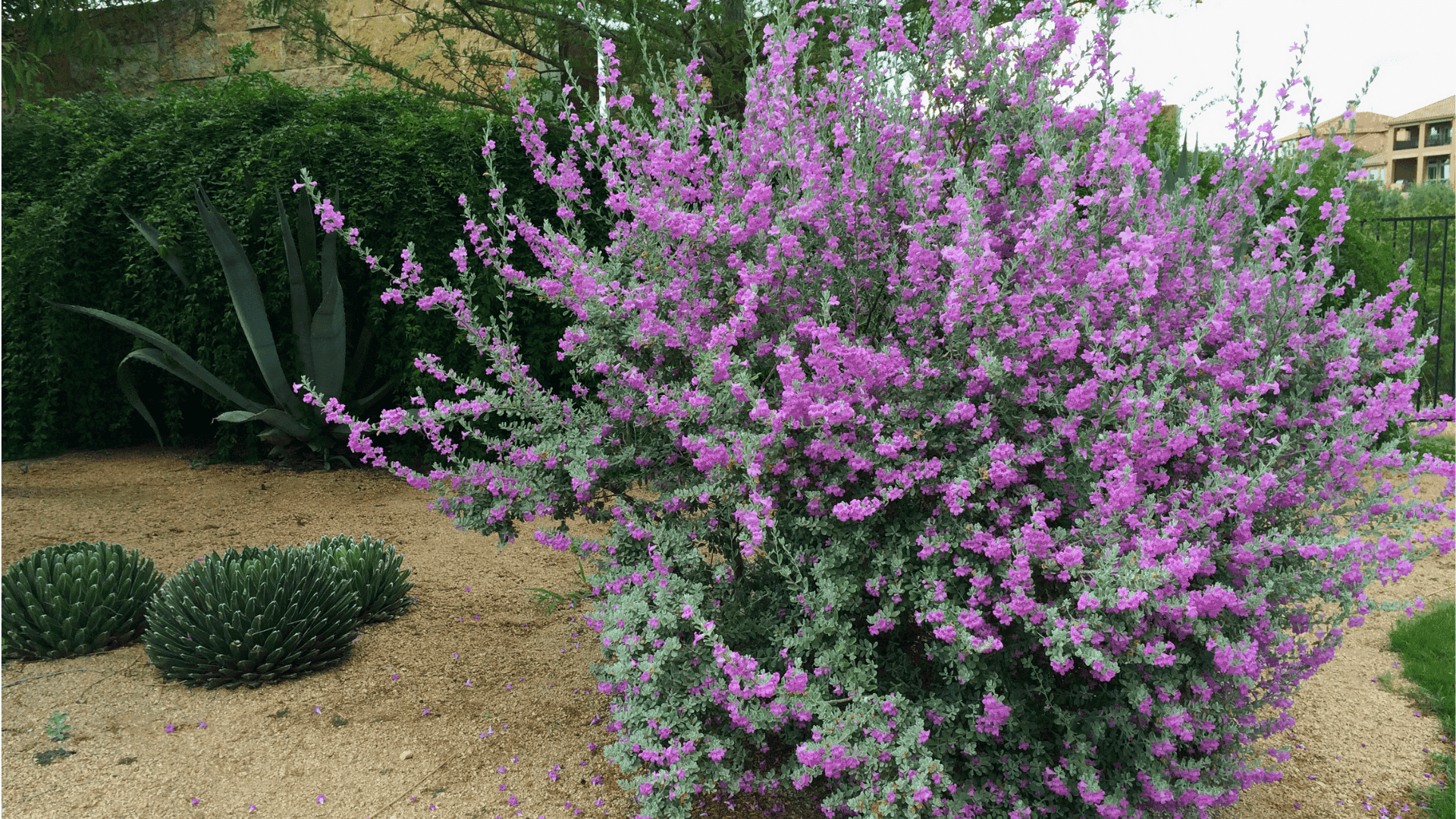
Care for a mesquite tree by watching its water, pruning, and fertilizer needs as it matures. If you like its toughness, a few other drought-tolerant plants can round out the same bed. These simple habits help keep the tree strong and balanced.
- Water new trees often: established mesquites need far less than young ones.
- Water beyond the trunk: move the watering zone outward as it grows.
- Avoid surface watering: frequent sprinklers can weaken root strength over time.
- Prune while young: remove weak or crossing branches without over-thinning the canopy.
- Limit fertilizer and water: too much of either invites cold damage.
- Watch for warning signs: heavy mistletoe, shelf-like fungi, dead twigs, or cracks.
- Assess insect damage: most mesquite bugs cause only minor, short-term harm.
Dark, leaking fluid, sometimes called slime flux, usually looks worse than it is and rarely threatens the tree’s structure. Shelf-like fungi at the base are more serious and often signal root decay.
Ask a qualified arborist to inspect major cracks, root decay, heavy mistletoe, or large dead limbs.
When Mesquite Becomes Invasive or Too Dense
Mesquite causes different concerns depending on where it grows. Within its native range, dense growth is usually called woody encroachment or brush expansion; outside that range, the same spread is often labeled invasive. Either way, thick stands can limit grass growth and land use.
- In native areas: open savannas help wildlife; dense stands can crowd grasses in some rangelands.
- In introduced regions: dense thickets can crowd out pasture.
- How it spreads: animals carry seeds, and overgrazing helps young plants take hold.
- Why removal is difficult: cut trees regrow, and buried seeds sprout later.
Remove young seedlings before they produce pods, check the area each year, and use control methods approved for your location and mesquite type.
Frequently Asked Questions
When do mesquite trees bloom?
Most mesquites bloom from spring into summer, often several times as new growth emerges after rain. Exact timing depends on the species, regional heat, rainfall, and how established the tree already is in its site.
Why isn’t my mesquite producing pods?
A young or newly planted mesquite may not produce pods yet, since flowering and fruiting often take a few seasons to begin. Stress from frost, drought during bloom, weak pollination, or limited flowering can also reduce or delay pod formation.
Do all mesquite trees have thorns?
Many mesquite species carry thorns, especially on young branches, though size and number vary between types. Some hybrids and nursery selections are bred with fewer thorns or none, though trees sold as thornless can still develop some as they mature.
Are mesquite trees evergreen or deciduous?
Most Southwestern mesquite species are deciduous or partly deciduous, dropping their leaves in response to frost or extended drought rather than a fixed calendar date. Some warm-climate species and hybrids stay semi-evergreen, keeping some leaves through mild winters.
Closing Takeaway
A mesquite tree earns its place where dry climate, open ground, and local ecology support it. Poor placement or unchecked spread can turn a useful tree into a long-term management issue, so it pays to plan ahead.
Before planting or removing one, check the tree’s mature width, thorn level, water needs, and local spread risk. Keep a healthy tree that suits your site, choose a better-matched type where space allows, or clear young unwanted growth early.
Have you dealt with mesquite on your own property? Share what worked for you in the comments below.