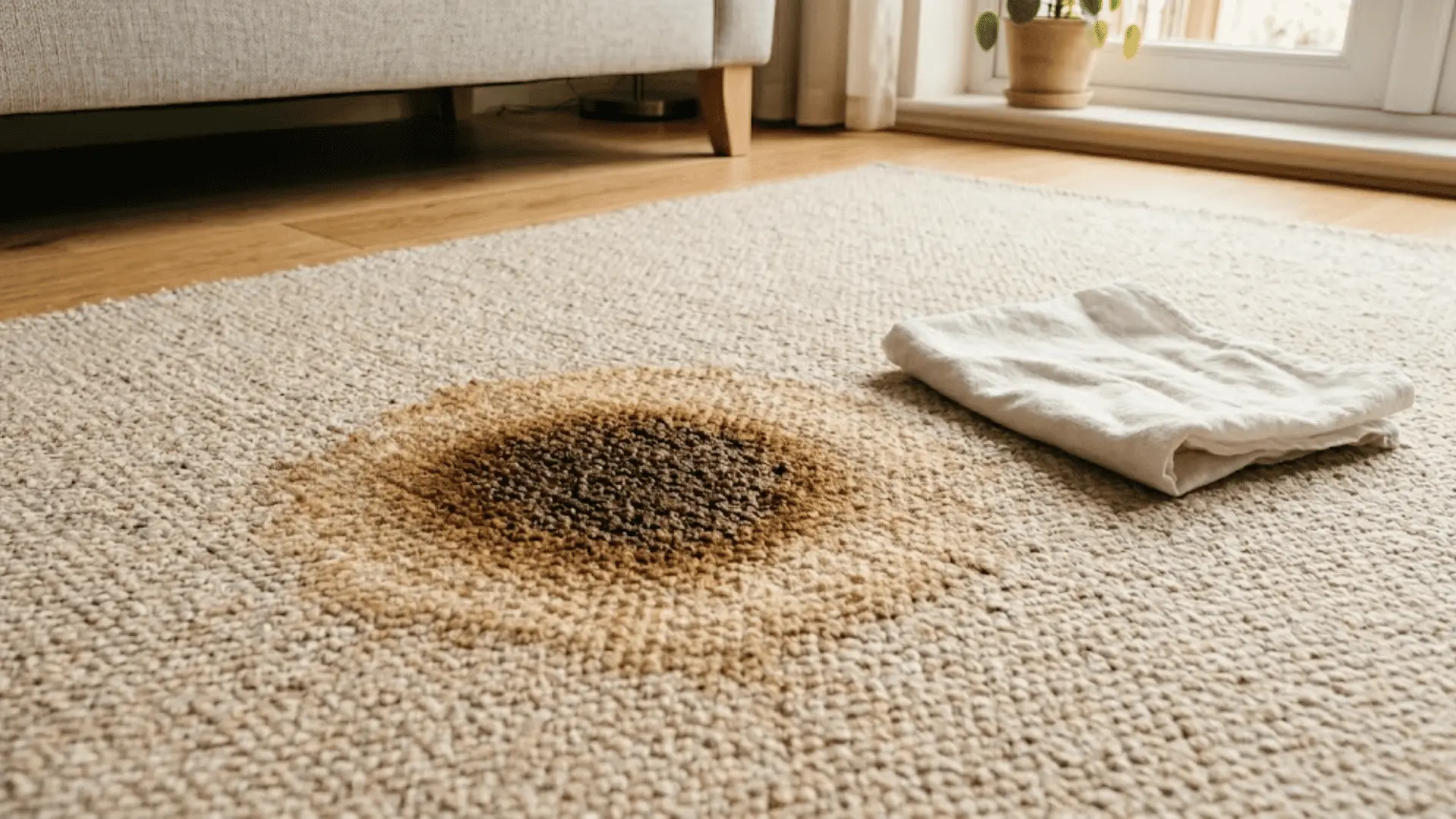
One second of distraction and suddenly there’s a coffee ring staring back at you from your carpet.
Frustrating, yes, but absolutely fixable.
Coffee clings to carpet fibers because of its natural tannins and oils, which make it feel permanent even when it’s not. And honestly, most people make it worse by scrubbing too hard or waiting too long.
Whether the spill just happened or has been sitting for days, the right approach makes all the difference.
From quick-response techniques to DIY cleaning solutions, here’s everything you need to get your carpet looking spotless again.
Why Coffee Stains are Hard to Remove?
Coffee stains are notoriously stubborn, and the chemistry behind them explains why.
Coffee contains tannins, natural compounds that latch onto carpet fibers and discolor them almost instantly. Add milk or cream to your cup, and you’ve introduced proteins and oils that sink even deeper into the weave.
Sugar leaves behind a sticky residue that keeps attracting dirt long after the liquid dries.
And if you wait too long to treat it, all of these elements bond further into the carpet fibers, making removal significantly harder.
Catching it early is everything, but even older stains respond well to the right treatment.
Supplies You’ll Need
Getting your supplies ready before you start makes the whole process smoother and faster.
Here’s what to keep on hand:
Basic Tools
- White cloths or paper towels
- Spray bottle
- Soft brush or spoon
- Fan or dry towels
Cleaning Solutions
- Cold or lukewarm water
- Mild dish soap
- White vinegar
- Baking soda
- Hydrogen peroxide (spot test first)
Step-by-Step: How to Remove a Fresh Coffee Stain?
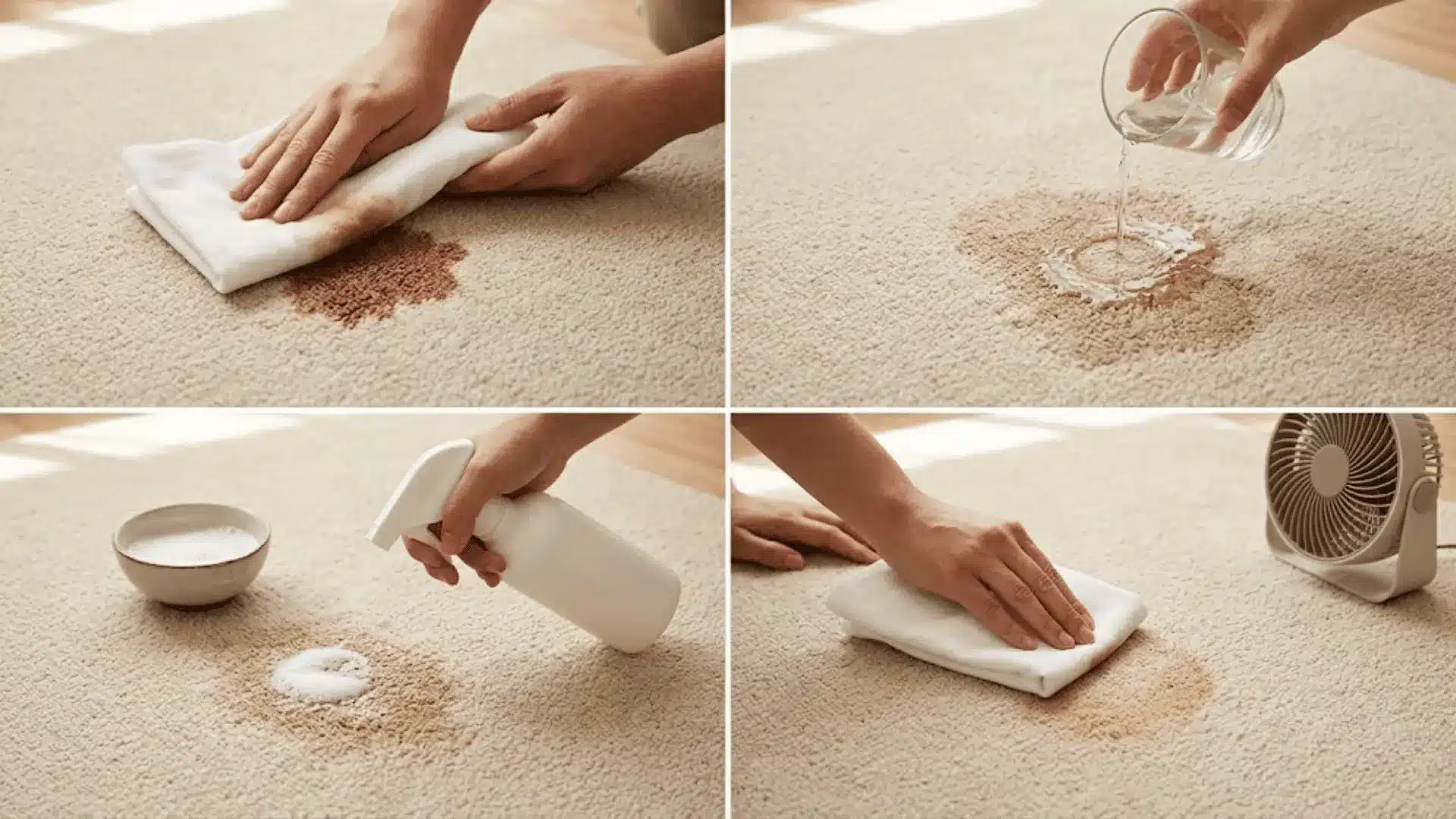
The faster you move on a fresh coffee stain, the better your chances of getting it out completely.
Follow these steps in order, and you’ll be surprised how much lifts right out.
Step 1: Blot Immediately
Grab a clean white cloth or paper towel and press firmly into the stain. The goal here is absorption, not spreading, so resist the urge to rub.
Rubbing pushes the coffee deeper into the fibers and makes your job harder. Keep switching to a clean section of cloth as it absorbs the liquid.
Step 2: Add a Little Cool Water
Once you’ve blotted out as much as possible, pour a small amount of cool water directly onto the stain. This dilutes whatever coffee remains in the fibers before it has a chance to set.
Avoid hot water since it can actually drive the stain deeper rather than loosening it.
Step 3: Apply Cleaning Solution
Mix a drop of mild dish soap with cool water, or go with a diluted white vinegar solution if you prefer something more natural.
Apply it lightly to the stained area and let it sit for a few minutes. You don’t need to drench the carpet; a gentle, even application is all it takes to start breaking down the tannins.
Step 4: Blot Again
Using a fresh cloth, blot the area again, this time working from the outer edge of the stain inward. This technique keeps the stain from spreading outward as you lift it.
Continue blotting with clean sections of cloth until you’re pulling up the cleaning solution along with the remaining coffee.
Step 5: Rinse and Dry
Dampen a clean cloth with plain water and blot the area to rinse out any soap or vinegar residue. Leftover cleaning solution can attract dirt over time, so this step matters more than it seems.
Finish by pressing dry towels firmly into the carpet and letting a fan run over it until the area is completely dry.
Step-by-Step: How to Remove an Old or Dried Coffee Stain?
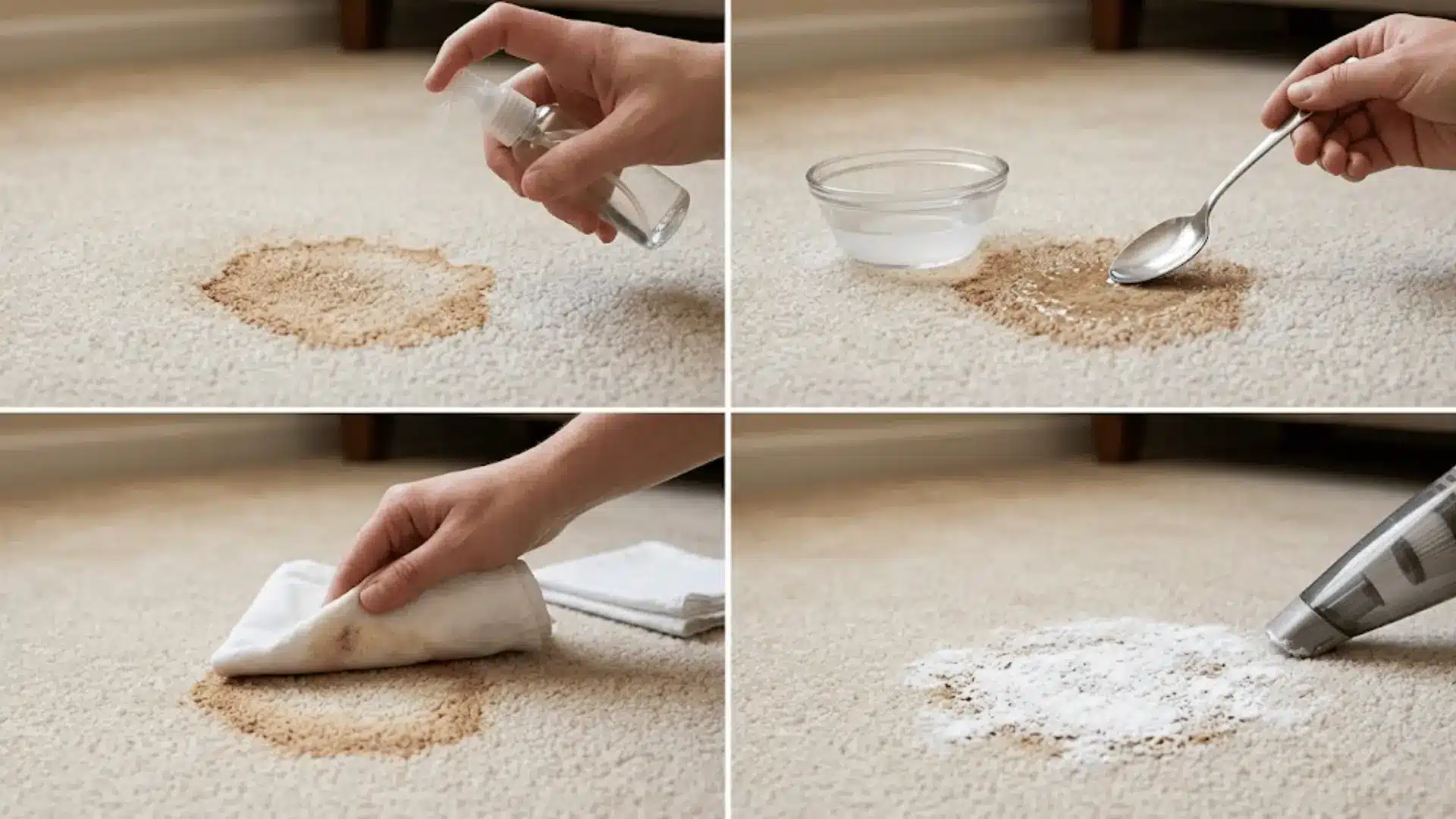
Dried coffee stains need a little more patience, but they’re far from hopeless. The key is rehydrating the stain first and then working through it in layers rather than trying to lift everything at once.
Step 1: Rehydrate the Area
Before applying anything, lightly mist the dried stain with plain water. This softens the coffee residue that has bonded into the fibers and makes it more responsive to cleaning.
You don’t want to soak the carpet, just enough moisture to loosen things up and give your cleaning solution something to work with.
Step 2: Apply Vinegar or Soap Solution
Mix equal parts white vinegar and cool water, or use a mild dish soap solution, and apply it directly to the rehydrated stain. Let it sit for several minutes so it can break down the dried tannins and oils.
The vinegar is especially effective here because its acidity works against the compounds that make old coffee stains so stubborn.
Step 3: Blot and Repeat
Using a clean white cloth, blot the area firmly, working from the edges inward. Older stains rarely lift in one round, so don’t get discouraged if the first pass doesn’t clear everything.
Reapply your solution, let it sit again, and keep blotting with fresh sections of cloth until the stain visibly fades.
Step 4: Use Baking Soda for Odor
Once the stain has lifted, sprinkle a generous layer of baking soda over the damp area and let it sit for several hours or overnight.
Dried coffee can leave behind a faint, stale smell that lingers even after the discoloration is gone. Vacuum it up thoroughly once it’s dry, and your carpet should smell as clean as it looks.
Best DIY Coffee Stain Removers
Most of the best coffee stain removers are already sitting in your kitchen.
Here’s a quick look at how each one works and when to reach for it.
| Cleaner | How to Use | Best For |
|---|---|---|
| Dish Soap + Water | Mix a drop of soap with cool water and apply gently | Most carpet types, everyday stains |
| White Vinegar + Water | Dilute equal parts and blot onto the stain | Tannin-based stains, natural fibers |
| Baking Soda Paste | Mix with a little water into a paste and press onto the spot | Stubborn or set-in marks |
| Hydrogen Peroxide | Apply sparingly after a patch test | Light or white carpets only |
How to Remove Coffee With Milk, Cream, or Sugar?
A coffee stain is already tricky on its own, but add milk, cream, or sugar, and you’re dealing with a whole different kind of mess.
Why are These Stains Different?
Plain black coffee is mostly water and tannins, but once you add dairy or sugar, the stain becomes layered.
Milk and cream introduce proteins and fats that bind to carpet fibers differently than tannins do, while sugar leaves a tacky residue that attracts dust and dirt long after the stain appears dry.
This combination means a simple blot-and-rinse rarely gets the job done fully.
Best Approach
Dish soap is your best starting point here since it’s specifically designed to cut through oils and fats. Work through it methodically and rinse well so nothing sticky is left behind.
- Step 1: Blot up as much of the spill as possible before applying anything.
- Step 2: Apply a mild dish soap solution directly to the stain and let it sit briefly.
- Step 3: Blot thoroughly from the outer edge inward, repeating as needed.
- Step 4: Rinse with cool water and blot dry to remove any soapy or sugary residue.
Coffee Stain Removal by Carpet Type
Not all carpets respond the same way to cleaning, and using the wrong method can cause more damage than the stain itself.
Here’s a quick guide to help you treat your specific carpet type with confidence.
| Carpet Type | What to Know | Key Tip |
|---|---|---|
| Synthetic Carpet | Most resilient and forgiving to clean | Safe for most standard cleaning solutions |
| Wool Carpet | Delicate fibers that react poorly to harsh products | Stick to mild soap and cool water only |
| High-Pile Carpet | Thick fibers trap moisture and take longer to dry | Always dry thoroughly to prevent mildew |
| Light Carpet | More visible staining and sensitive to strong cleaners | Patch test hydrogen peroxide before applying |
| Dark Carpet | Less visible staining, but still needs proper treatment | Avoid over-saturating to prevent watermarks |
Common Problems & Fixes
Even when you follow all the right steps, carpets can throw a few curveballs your way. Here’s how to handle the most common issues that come up after cleaning.
Problem 1: My Carpet Has a Brownish Ring Around Where the Stain Was.
Fix: Residue from the cleaner or diluted coffee is drying into the fibers. Go back in with plain cool water, blot thoroughly, and let it dry completely.
Problem 2: The Stain Disappeared When Wet, But Came Back After Drying.
Fix: This is wicking, where old residue travels up from the padding as it dries. Repeat the cleaning process and focus on longer, firmer blotting to draw it out fully.
Problem 3: There’s a Sticky Patch Where the Stain Was.
Fix: Too much cleaning solution or leftover sugar residue is sitting in the fibers. Rinse with cool water, blot until the stickiness lifts, and dry with a fan.
Problem 4: There’s Still a Faint Smell Even Though the Stain is Gone.
Fix: Moisture is likely trapped in the padding underneath. Sprinkle baking soda generously, leave it overnight, and vacuum thoroughly once dry.
What Not to Do?
A few wrong moves can turn a simple stain into a bigger problem. Avoid these common mistakes to keep your carpet safe during the cleaning process.
- Rubbing aggressively spreads the stain wider and pushes it deeper into the fibers.
- Hot water sets the stain rather than loosening it. Always start with cool or lukewarm water.
- Oversaturating the carpet forces moisture into the padding and leads to mildew and wicking.
- Mixing random cleaning chemicals can damage fibers or create harmful reactions.
- Skipping a spot test risks discoloration, especially on delicate or light colored carpets.
When in doubt, less is more. A gentle, methodical approach will always outperform an aggressive one when it comes to carpet care.
When to Use a Carpet Cleaner Machine?
Sometimes a cloth and a cleaning solution simply aren’t enough, and that’s when a carpet cleaner machine earns its place.
Here’s when it makes sense to bring one in.
| Situation | What It Does | Pro Tip |
|---|---|---|
| Large or Widespread Spills | Covers and extracts more evenly | Work in slow, overlapping passes |
| Reappearing Stains | Pulls residue out from deep padding | Repeat extraction until water runs clear |
| Deep-Pile Carpets | Reaches fibers manual blotting can’t | Go slow to allow full penetration |
| After Detergent Use | Flushes out soap buildup | Always finish with a plain water rinse cycle |
When to Call a Professional?
Some stains are simply beyond what home remedies can handle, and knowing when to call in a professional saves you from making things worse.
Consider reaching out if you’re dealing with any of these situations.
- A dried or set-in stain that hasn’t responded to multiple rounds of treatment
- Discoloration or bleaching on white or light colored carpets that needs careful restoration
- Expensive wool or delicate rugs where the wrong product could cause irreversible damage
- A large spill that soaked through to the padding and is showing signs of wicking or odor
Professionals have the tools and solutions to handle what household methods can’t, and for the right situations, it’s absolutely worth it.
How to Prevent Future Coffee Carpet Stains?
Prevention is always easier than cleanup. Switching to spill-proof mugs removes a lot of the risk right from the start, especially in high-traffic areas of your home.
Placing area rugs in spots where you regularly drink coffee adds a protective layer that’s far easier to clean or replace than wall-to-wall carpeting.
Keeping a small stain kit within reach, just a cloth, some dish soap, and a spray bottle, means you’re never scrambling when a spill happens.
And above everything else, treating spills the moment they happen is the single most effective thing you can do.
Wrapping Up
Knowing how to remove coffee stains from carpet takes a little patience, but it’s genuinely one of those things that gets easier every time.
Catching a spill early, using the right solution, and drying thoroughly makes all the difference between a permanent mark and a clean carpet.
Keep supplies handy, treat stains gently, and never rush the drying process. Carpets are more resilient than most people think.
Got a stain situation that gave you trouble, or a home remedy that actually worked wonders? Drop it in the comments below, someone else might need exactly that tip.
Frequently Asked Questions (FAQs)
Does Coffee Permanently Stain Carpet?
Not if it’s treated correctly and reasonably quickly. Even older stains respond well to the right cleaning method with a bit of patience and repetition.
Is Vinegar Safe for Carpet?
Diluted white vinegar is safe for most carpet types and works well against tannin-based stains. Always do a quick patch test in a hidden spot before applying it to a visible area.
Why Did the Stain Come Back After Drying?
This is called wicking, where residue from deep in the padding travels back up to the surface as the carpet dries. Repeating the cleaning process with longer blotting sessions usually resolves it fully.