
You know that moment when your zucchini plant is absolutely bursting with flowers, but somehow you’re still waiting for actual zucchini to show up?
It’s one of those garden puzzles that makes you wonder what you’re doing wrong.
Here’s what’s really happening: those flowers need to get together to make fruit, and sometimes the bees just aren’t pulling their weight.
Maybe the weather’s been weird, or there aren’t enough pollinators buzzing around your garden. Whatever the reason, your zucchini flowers are sitting there unfulfilled.
Good news, though: you can absolutely step in and play matchmaker yourself. Hand pollinating sounds fancy, but it’s actually one of the easiest garden tricks you’ll ever learn.
How Zucchini Pollination Works?
Zucchini plants produce two different types of flowers, and knowing the difference changes everything.
Male flowers grow on long, thin stems and show up first, while female flowers sit right on top of a tiny, baby zucchini.
That little squash at the base is your giveaway.
For fruit to develop, pollen from the male flower needs to reach the female flower’s stigma. In a perfect world, bees would handle this entirely, moving from bloom to bloom and spreading pollen as they go.
But when pollinators are scarce, or the timing’s off, those female flowers just sit there waiting, and that baby zucchini withers away instead of growing.
How to Tell Male and Female Zucchini Flowers Apart?
Here’s the thing about zucchini flowers: if you can’t tell them apart, you can’t pollinate them.
Luckily, spotting the difference is easier than you’d think once you know what to look for.
Think of male flowers as the pollen donors and female flowers as the fruit makers. They look similar at first glance, but there are some dead giveaways that’ll make identification second nature.
| Characteristic | Male Flowers | Female Flowers |
|---|---|---|
| Stem appearance | Long, thin stems that stand tall above the plant | Short stem with a small, swollen zucchini right behind the bloom |
| Center structure | Pollen-covered anther (looks like a thick yellow stalk) | Multi-part stigma that’s sticky and often pale |
| Timing | Show up first and usually outnumber females | Appear later in the season |
| What happens after blooming | Stay around just for the day, then fall off naturally | Will drop off along with the baby zucchini if not pollinated |
If you notice female flowers dropping without growing, that’s your cue that pollination isn’t happening. The plant won’t waste energy on unpollinated fruit, so it aborts them early.
When to Pollinate Zucchini?
Timing is everything when it comes to hand pollinating zucchini.
Early morning is your sweet spot, ideally between sunrise and mid-morning, while flowers are freshly open and pollen is at its stickiest.
Zucchini flowers only open for one day, and they tend to close up by afternoon, especially when it gets hot. You want dry, calm weather since moisture can clump the pollen and make it less effective.
Signs you need to step in and pollinate:
- Female flowers keep dropping with tiny, shriveled zucchini attached
- You see plenty of blooms, but zero fruitis developing
- Few bees or pollinators are visiting your garden
- Flowers are opening but closing unpollinated
Step-by-Step: How to Hand Pollinate Zucchini?
Getting your hands dirty with zucchini pollination sounds intimidating, but it’s honestly one of the most straightforward garden tasks you’ll ever do.
Once you’ve done it a few times, it becomes total muscle memory.
What You’ll Need
- Male zucchini flower (freshly opened with visible pollen)
- Soft paintbrush or cotton swab (if you prefer not to pick the flower)
- Clean hands or gloves (optional, but keeps things tidy)
Step 1: Identify an Open Male Flower
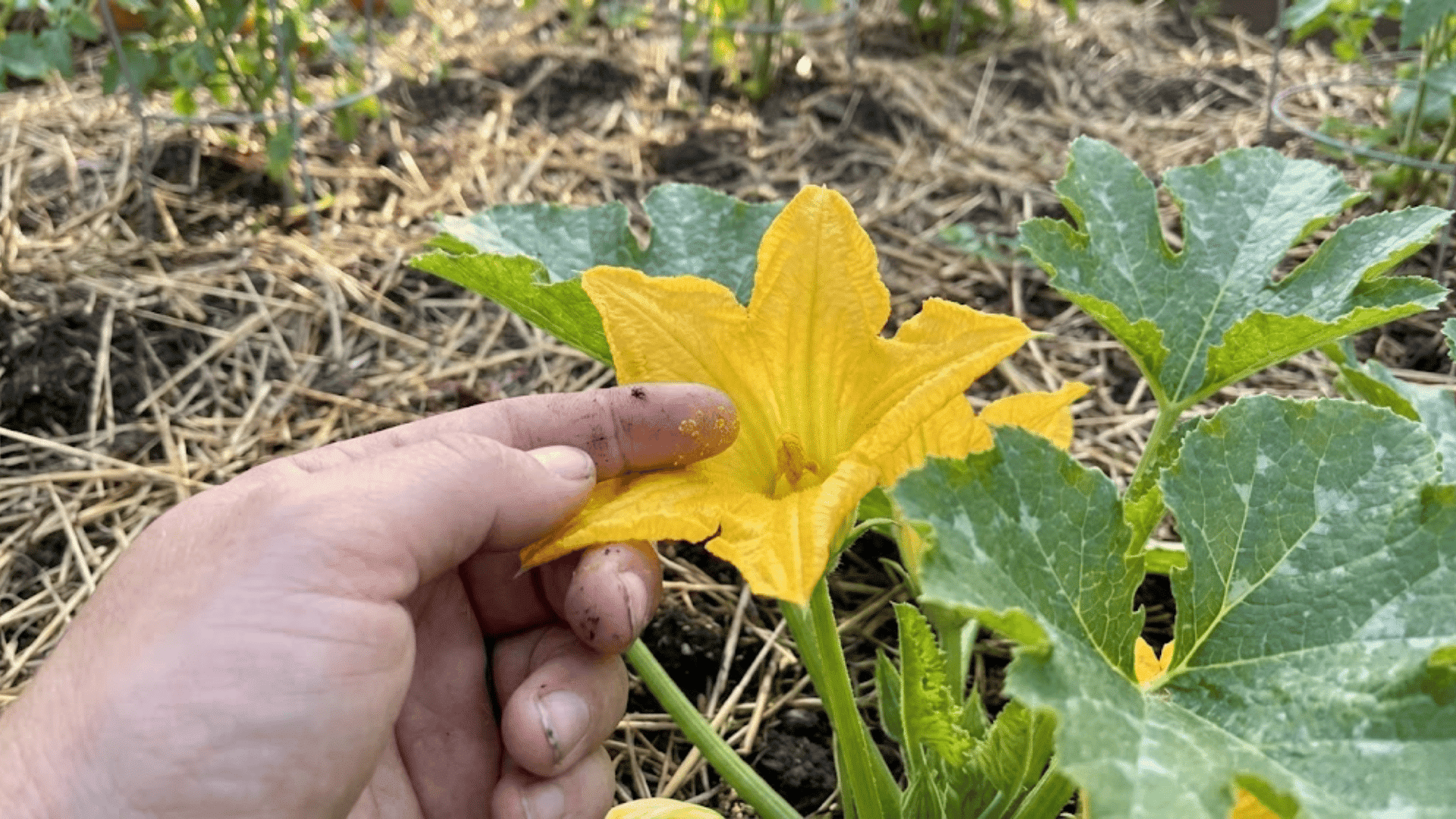
Look for a male flower that’s fully open with visible yellow pollen on the anther in the center. Gently touch the anther to see if pollen comes off easily. If it sticks to your finger, it’s ready.
You can either pluck the entire male flower and peel back the petals to expose the anther, or work with it while it’s still attached to the plant.
Step 2: Transfer Pollen to the Female Flower
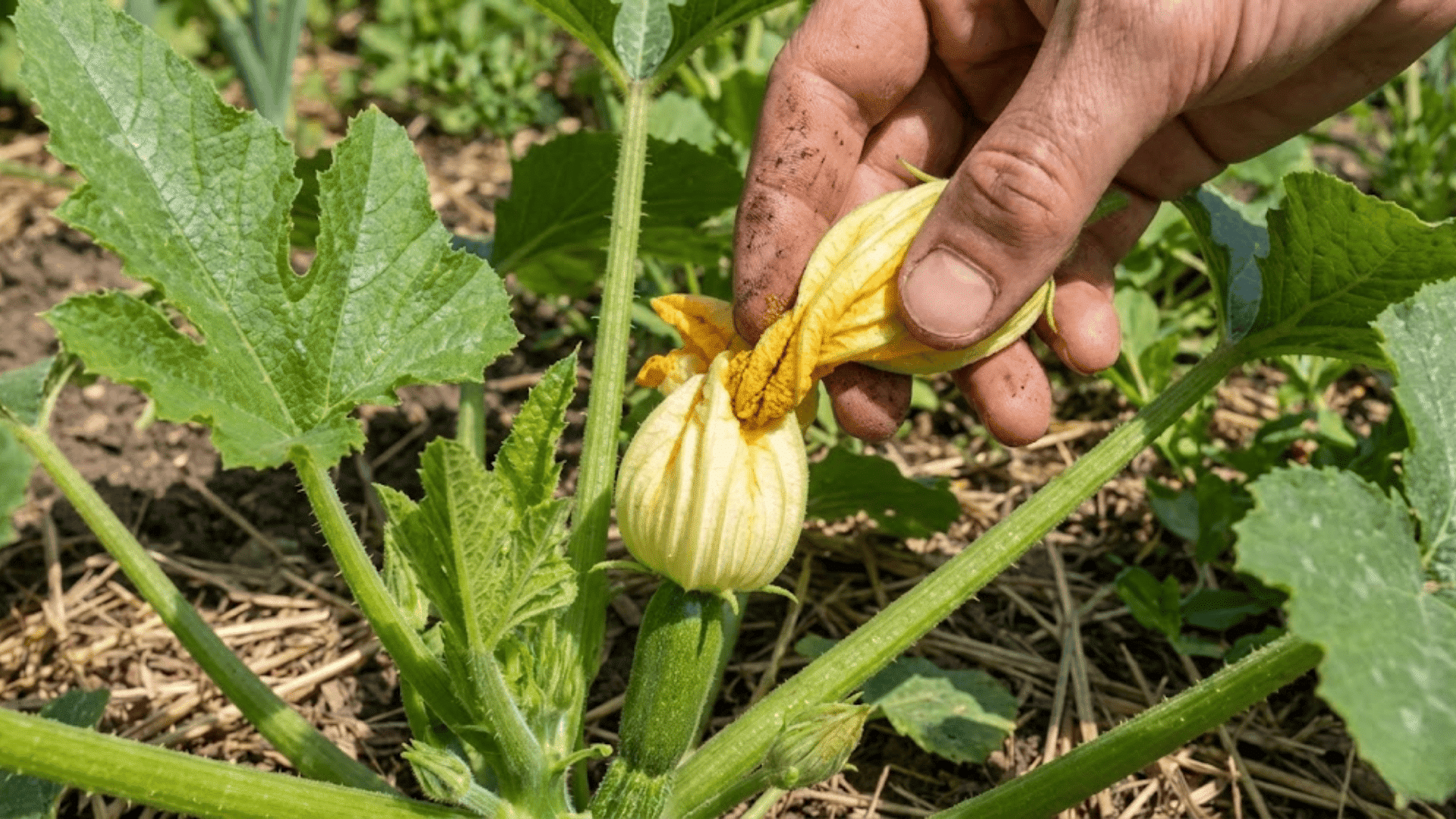
Flower-to-flower method: Take your male flower and gently dab the pollen-covered anther directly onto the stigma in the center of the female flower. Rotate it around to coat all parts of the stigma.
Brush method: Collect pollen on your brush or swab from the male flower, then carefully apply it to the female’s stigma. Either way works beautifully.
Step 3: Repeat for Better Results
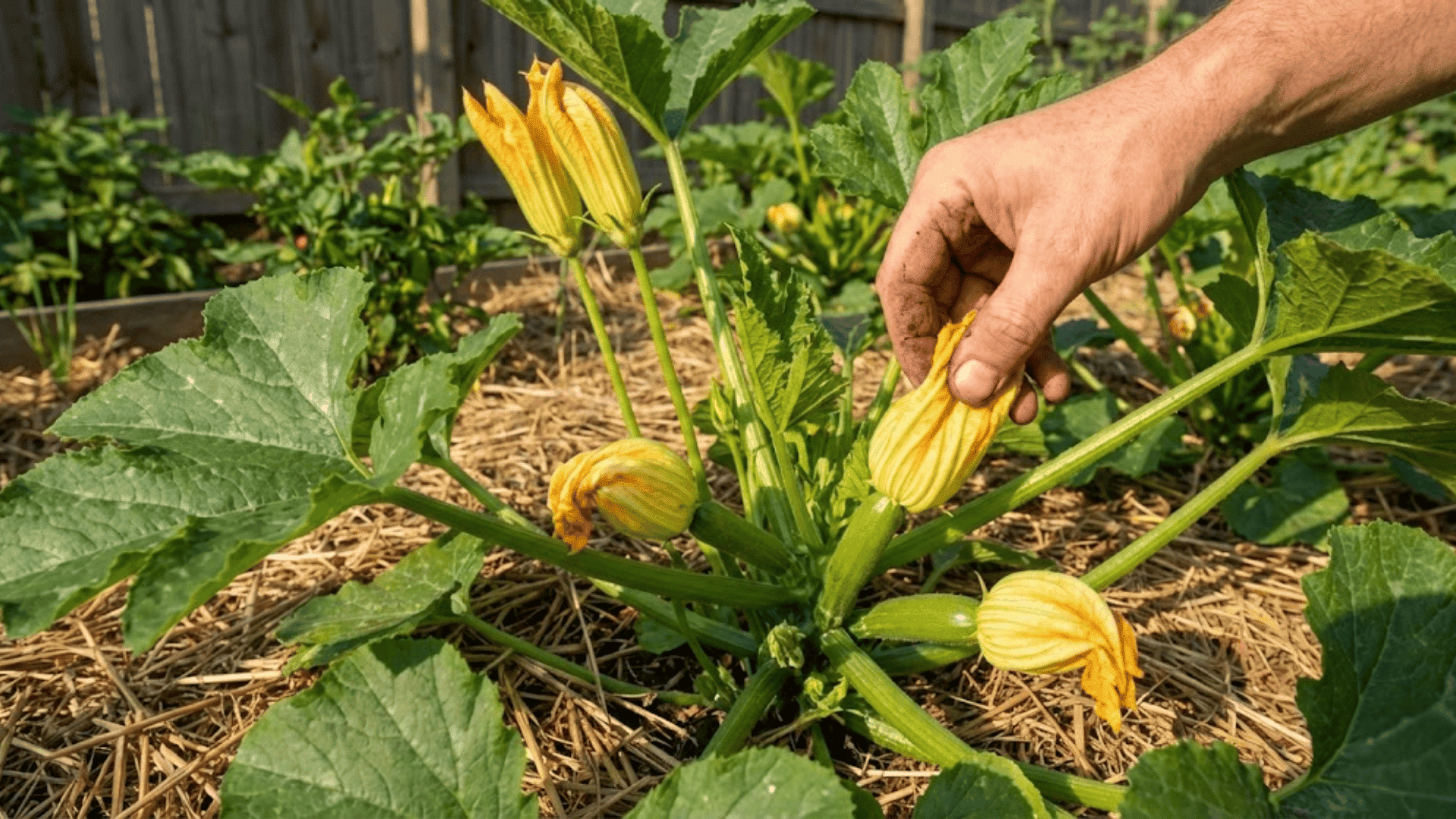
Don’t stop at one female flower if you’ve got multiple ready to go. Pollinate every open female flower you find that morning for the best harvest.
You might want to hand-pollinate daily or every other day throughout the blooming season, especially if pollinators are consistently absent. More pollination attempts mean more zucchini on your plate.
How Do You Pollinate Zucchini: Flower-to-Flower vs. Brush Pollination
Both methods get the job done, but they each have their moments to shine. Some gardeners swear by one over the other, while plenty alternate depending on what feels right that day.
Here’s how they actually stack up in real garden situations.
| Method | Pros | Cons | Best For |
|---|---|---|---|
| Flower-to-Flower | Direct transfer; no tools needed; easy to see contact with stigma | Wastes the male flower; messier; hard in tight spaces | Beginners; plenty of male flowers available; open plant layouts |
| Brush/Swab | Reuses male flowers; cleaner; reaches tucked-away blooms | Needs tools; pollen can fall off; less intuitive at first | Limited male flowers; compact gardens; tidier process preferred |
For absolute beginners, the flower-to-flower method wins because you can physically feel when you’ve made good contact with the stigma.
Once you’re comfortable with the process, switching to a brush gives you more control and flexibility, especially if male flowers are in short supply.
Signs Zucchini Pollination Was Successful
You’ve done the work, now comes the exciting part: watching for signs that your matchmaking paid off. Successful pollination shows itself pretty quickly if you know what to look for.
Within 24-48 hours:
- The female flower wilts and falls off naturally, leaving the baby zucchini behind
- The tiny zucchini at the base starts to look plump and firm instead of shriveled
Within 3-5 days:
- Noticeable growth in the zucchini, often doubling or tripling in size
- The fruit turns a healthy, glossy green color
Signs of failure:
- The baby zucchini turns yellow, soft, or brown and stops growing entirely
If pollination didn’t take, don’t beat yourself up. Just try again with the next batch of flowers. You’ll get better at reading your plant’s rhythm the more you do it.
Common Pollination Problems and Fixes
Even when you’re doing everything right, zucchini plants can throw you some curveballs. Most pollination hiccups have simple fixes once you figure out what’s actually going wrong.
Problem 1: Flowers Falling Off Before Fruit Develops
The Fix: Pollinate early in the morning when pollen is fresh, and coat the stigma thoroughly with pollen from multiple male flowers.
Problem 2: Zucchini Rotting at the Blossom End
The Fix: Water consistently and deeply, and transfer plenty of pollen during hand pollination to encourage strong fruit development.
Problem 3: Not Enough Male Flowers Blooming
The Fix: Be patient early in the season. Store pollen from male flowers in the fridge for a day or two if timing’s off between male and female blooms.
Problem 4: Heat Stress or Erratic Watering Disrupting Blooms
The Fix: Water deeply in the morning and use shade cloth during heat waves to protect blooms and extend the pollination window.
How to Improve Natural Pollination?
Hand pollination works wonders, but honestly, getting nature to do the heavy lifting is always the goal.
A few tweaks to your garden setup can bring pollinators flooding back so you don’t have to play matchmaker every single morning.
- Plant pollinator magnets nearby, like marigolds, lavender, sunflowers, and borage, to draw bees straight to your zucchini patch.
- Skip the pesticides, especially during blooming hours, since even organic sprays can harm or repel the pollinators you’re trying to attract.
- Provide water sources like shallow dishes with pebbles so bees and butterflies have a place to drink without drowning.
- Let some herbs flower instead of harvesting them all; basil, cilantro, and dill blooms are absolute pollinator favorites.
Once you’ve got a buzzing garden full of happy pollinators, your zucchini plants will pretty much take care of themselves. You might still hand pollinate here and there on slow days, but it won’t feel like a daily chore anymore.
Do You Need to Pollinate Zucchini Every Day?
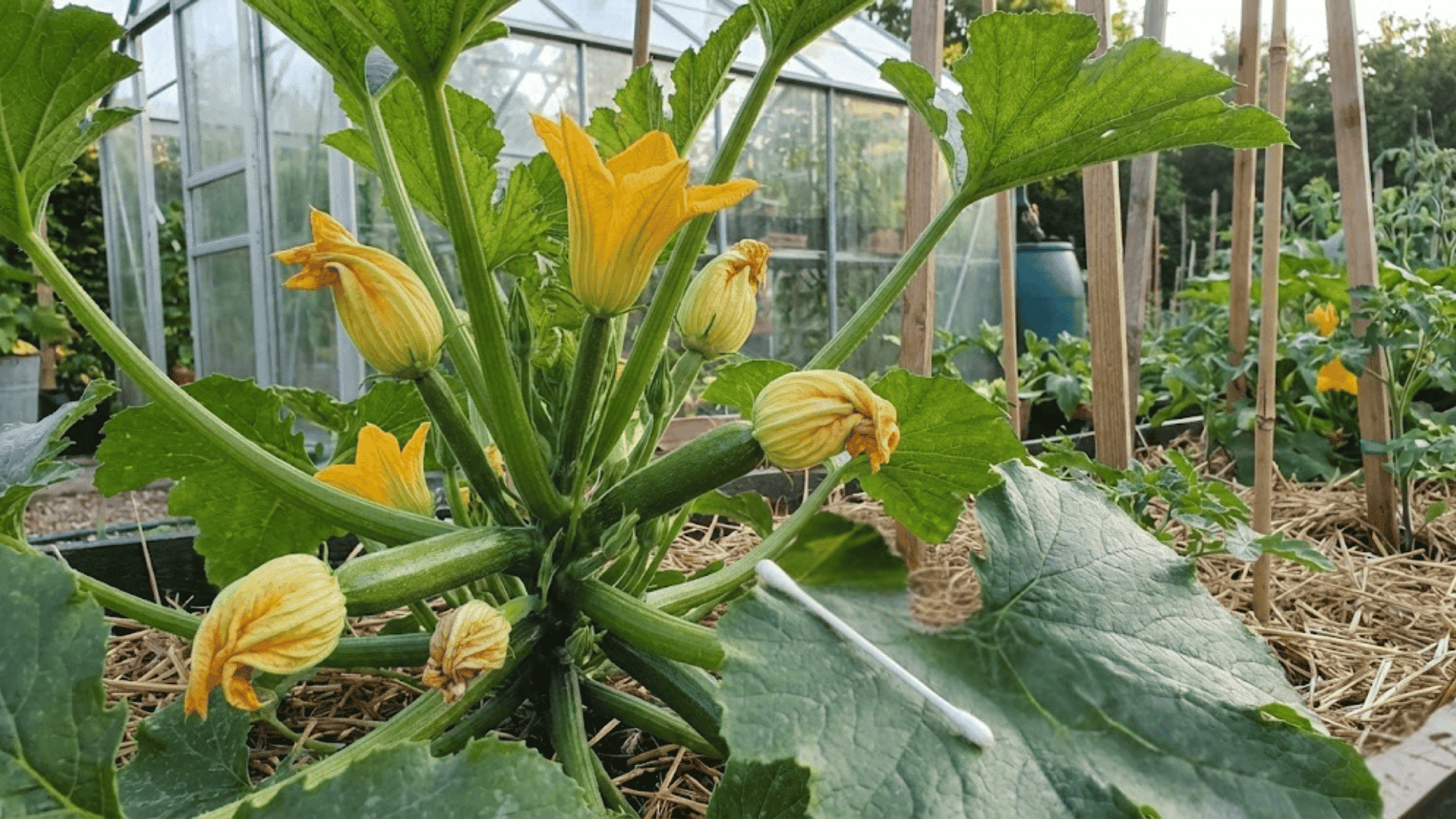
You don’t necessarily need to pollinate every single day, but it depends on your setup and how many female flowers are opening.
Outdoor plants with good pollinator activity might only need occasional help on calm or rainy days when bees aren’t around.
Indoor or greenhouse zucchini have zero natural pollinators, so you’ll need to hand-pollinate every time a female flower opens.
During peak flowering season, check your plants each morning and pollinate any fresh female blooms you find.
If you skip a day and miss a flower’s window, it’ll just drop off, so consistency pays off when you want a steady zucchini harvest.
Hand Pollinating Zucchini in Containers or Indoors
Growing zucchini in containers or indoors comes with its own quirks, and pollination is definitely at the top of that list.
Without natural pollinators passing through, you’re basically the only game in town for getting fruit to set.
- Enclosed spaces like balconies, patios, and greenhouses get zero natural pollinator traffic, so hand pollination isn’t optional.
- Container plants often produce fewer male flowers, making timing between male and female blooms trickier to catch.
- Check plants every morning during the flowering season since container zucchini flowers tend to close earlier than ground-planted ones.
- Use the brush method if your setup is cramped and flowers are hard to reach without damaging stems.
- Keep soil consistently moist but not waterlogged to prevent stress-induced blossom drop after you’ve pollinated.
Position your containers where they get morning sun but afternoon shade. This extends the pollination window and keeps flowers open longer, giving you more time to work your magic before the heat shuts everything down.
Wrapping Up
Hand pollinating zucchini might feel like extra work at first, but once you get into the rhythm, it becomes one of those satisfying little garden rituals you actually look forward to.
A few minutes each morning with your paintbrush or a plucked male flower, and suddenly you’re swimming in zucchini by mid-summer.
Dealing with missing pollinators, growing in containers, or just wanting to guarantee a bigger harvest?
Knowing how to pollinate zucchini puts you in complete control of your garden’s success. Have your own pollination tricks or zucchini growing tips? Drop them in the comments below.