Making your own laundry detergent sounds like a big project. It really is not. You need a few simple ingredients, maybe 20 minutes, and a container to store it in. That is it.
Store-bought detergent can run anywhere from $0.12 to $0.25 per load.
These recipes bring that down to as little as $0.04 per load, and you know every ingredient that goes into them. No mystery ingredients. No synthetic fragrances that linger on your kids’ clothes.
Just clean, simple formulas that families across the US have been using for years and swear by. If you have been putting this off because you think it is too complicated, this guide will change that.
Why Make Your Own Laundry Detergent at Home?
Store-bought detergents often contain synthetic fragrances, dyes, and VOCs (volatile organic compounds) that can irritate skin, trigger asthma, and cause other reactions.
The EPA has linked VOC exposure to headaches, eye irritation, and longer-term health effects. On top of that, manufacturers are not required by law to list every ingredient on the label.
Making your own detergent at home gives you complete control over what goes on your family’s clothes and what goes down your drain.
Key Ingredients in Homemade Laundry Detergent
Before picking a recipe, it helps to know what each ingredient actually does. Each one plays a specific role, and swapping them out without understanding that can leave your clothes less clean than expected.
| Ingredient | What It Does |
|---|---|
| Washing Soda (Sodium Carbonate) | Lifts stains, cuts grease, softens hard water |
| Baking Soda (Sodium Bicarbonate) | Neutralizes odors, brightens fabric |
| Borax | Boosts cleaning power, deodorizes (skip if skin is sensitive) |
| Castile Bar Soap | Plant-based cleaner, gentle on fabric and skin |
| Liquid Castile Soap | Same as bar, no grating needed |
| Fels-Naptha Bar | Laundry-grade soap bar works well for stain removal |
| OxiClean | Oxygen-based stain fighter, great for whites |
| Essential Oils (optional) | Adds natural scent; lemon brightens, lavender freshens |
| White Vinegar (rinse cycle) | Natural softener, clears soap residue |
Quick note: Washing soda and baking soda are completely different products. Do not use one in place of the other.
Method 1: Powdered Homemade Laundry Detergent
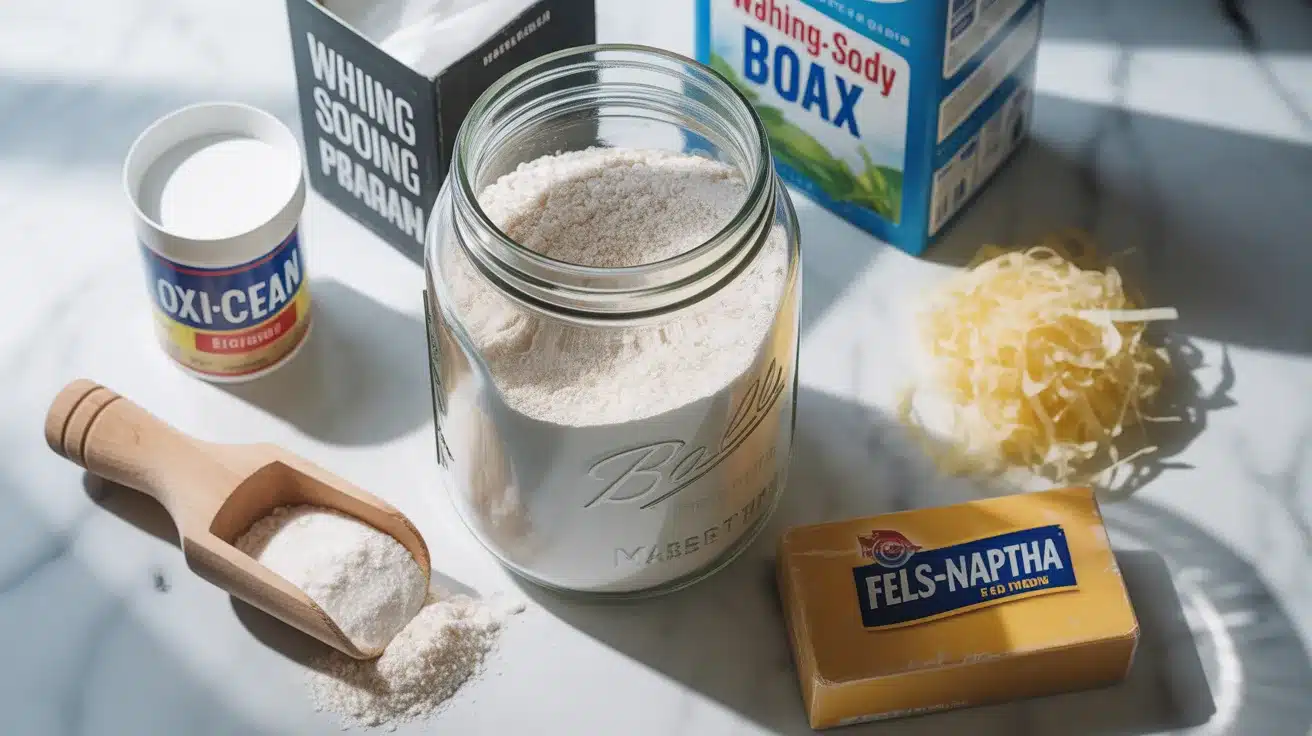
This is the most popular recipe for a reason. It is easy to make in a big batch, stores well, and costs almost nothing per load. One full batch can last a family of four close to a year.
Ingredients:
- 1 box Washing Soda (55 oz)
- 1 box Borax (65 oz)
- 3 bars Fels-Naptha or Castile Soap, grated
- 1 cup Baking Soda
- 1 container OxiClean, 1.3 lb (optional, for stain fighting)
Step 1: Grate the soap bar: Use a cheese grater or food processor to break the soap into very fine pieces. The finer they are, the better they dissolve during the wash cycle.
Step 2: Combine all dry ingredients: Pour the washing soda, borax, baking soda, and OxiClean into a large bucket or container. Stir until everything is mixed through.
Step 3: Add the grated soap: Fold the grated soap into the dry mix. Work through any clumps by hand until the texture is consistent throughout.
Step 4: Add essential oils if using: Drop in 20 to 30 drops of your preferred essential oil and mix well. Lemon and lavender both work well here. Skip this entirely if anyone in the house has skin sensitivities.
Step 5: Store and use: Move the mix into an airtight container. Use 2 tablespoons per standard load. For HE washers, 1 tablespoon is enough. Add it straight to the drum, not the dispenser, to avoid clogs.
Cost per load: around $0.04
Method 2: Liquid Homemade Laundry Detergent
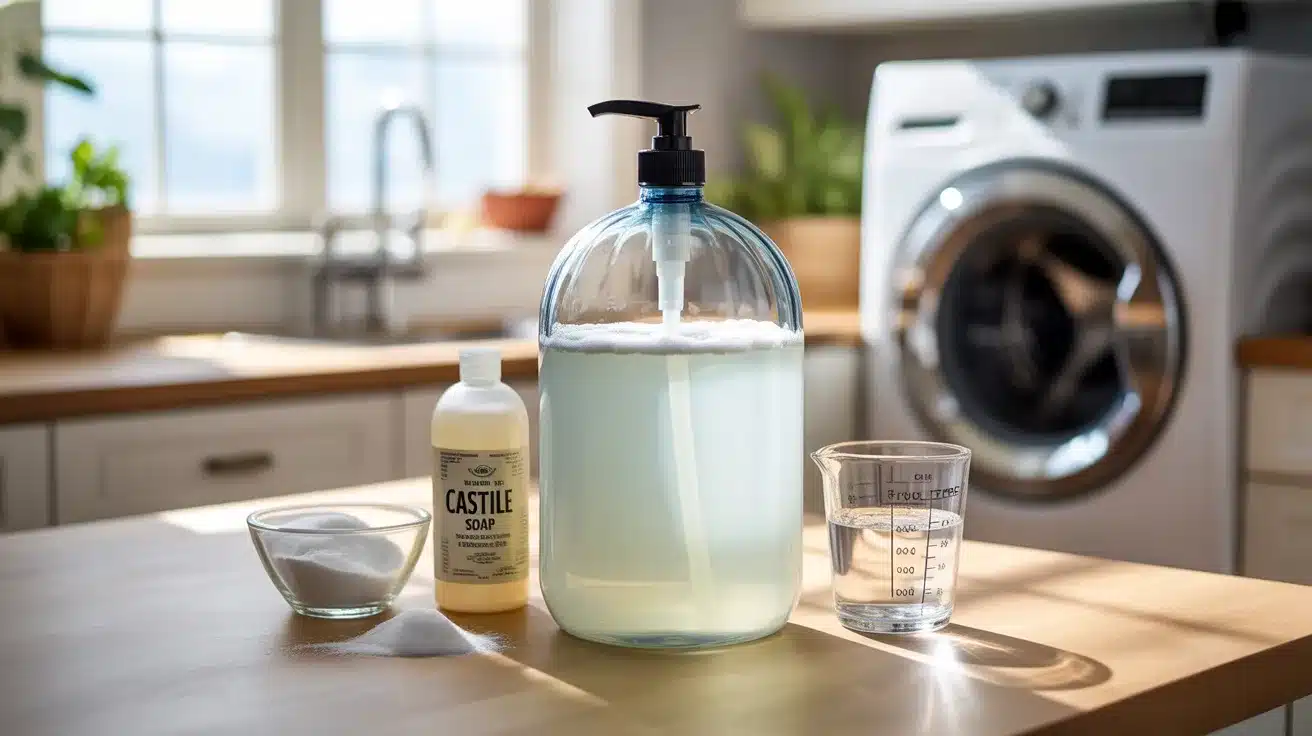
No grating, no dry mixing, no mess. This liquid version uses castile soap straight from the bottle. It takes slightly more prep time because you need to heat water, but the result is a smooth, ready-to-pour detergent that works in any machine.
Ingredients:
- 4 cups Liquid Castile Soap (Dr. Bronner’s is a widely used option)
- 4 cups Washing Soda
- 24 cups of water, heated to a low boil (about 1.5 gallons)
- 28 cups Cold Water (to fill the bucket)
- 10 to 15 drops Essential Oil (optional)
Step 1: Heat the water: Bring 24 cups of water to a low boil on the stove. You do not need a full rolling boil, just hot enough to dissolve the washing soda cleanly.
Step 2: Mix in the main ingredients: Pour the hot water into a 5-gallon bucket. Add the liquid castile soap and washing soda. Stir until both fully dissolve, and no powder remains at the bottom.
Step 3: Add cold water: Pour in the remaining 28 cups of cold tap water and stir again. The mixture will be thin and slightly yellow at this stage. That is normal.
Step 4: Add essential oils: Wait until the liquid has cooled for about 10 minutes. Then add your essential oils. Adding them while the mix is still hot causes them to evaporate before they do anything useful.
Step 5: Let it sit and gel: Put a lid on the bucket and let it rest for 24 hours. By the next day, it will thicken into a white gel. Stir or shake before each use. Use 1/4 cup per standard load.
Shelf life: Up to 1 month. Make smaller batches if you do not do laundry frequently.
Method 3: Borax-Free Homemade Laundry Detergent
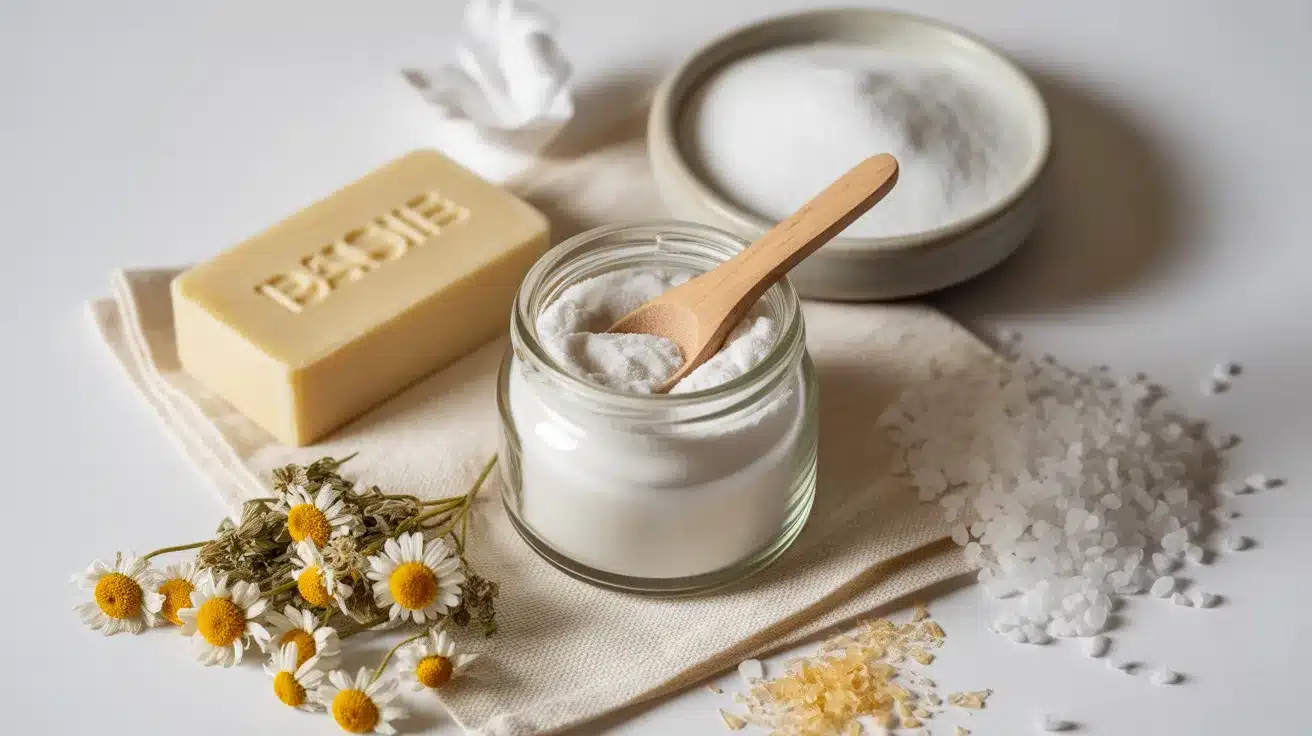
Borax works well as a cleaner, but not everyone wants it around. Some people experience skin irritation from it, and it is not safe for cloth diapers. This recipe skips it entirely. It is a good fit for babies, anyone with eczema or allergies, or anyone who just prefers to keep things simpler.
Ingredients:
- 1 cup Washing Soda
- 1 cup Baking Soda
- 1/2 cup Epsom Salt (magnesium sulfate)
- 1/2 cup OxiClean Free (no dyes or fragrance)
- 1 bar Unscented Castile Soap, finely grated
Step 1: Mix the base: Combine washing soda and baking soda in a large bowl. These two form the core of the recipe’s cleaning. Stir until fully combined.
Step 2: Add the Epsom salt: Pour in the Epsom salt and mix again. Epsom salt acts as a laundry booster, softening fabric and helping lift odors without adding any chemicals.
Step 3: Grate and add the castile soap: Grate the soap bar as finely as possible. Work it into the dry mixture using a spoon or your hands. Make sure there are no large clumps left.
Step 4: Add OxiClean Free: Stir in the OxiClean Free last. This adds oxygen-based stain-fighting power without any dyes or fragrances that could irritate skin.
Step 5: Store and use: Move the finished mix into a sealed glass jar. Use 2 tablespoons per load. For HE machines, 1 tablespoon is enough. Add directly to the drum. For an extra softening boost, add 1/2 cup of white vinegar to the rinse cycle.
Safe for cloth diapers: Yes. Unlike borax, this formula will not break down diaper fibers over time.
How Much Detergent Should You Use Per Load?
Less than you think. These recipes are concentrated, so using too much will leave residue on clothes and inside your machine.
For a standard top-loading washer, 2 tablespoons of powder or 1/4 cup of liquid per load is plenty. The machines need even less, around 1 tablespoon of powder or 2 tablespoons of liquid.
For large or heavily soiled loads, add a small extra scoop, but resist the urge to double it. More soap does not mean cleaner clothes.
Homemade vs. Store-Bought Detergent: Cost Comparison
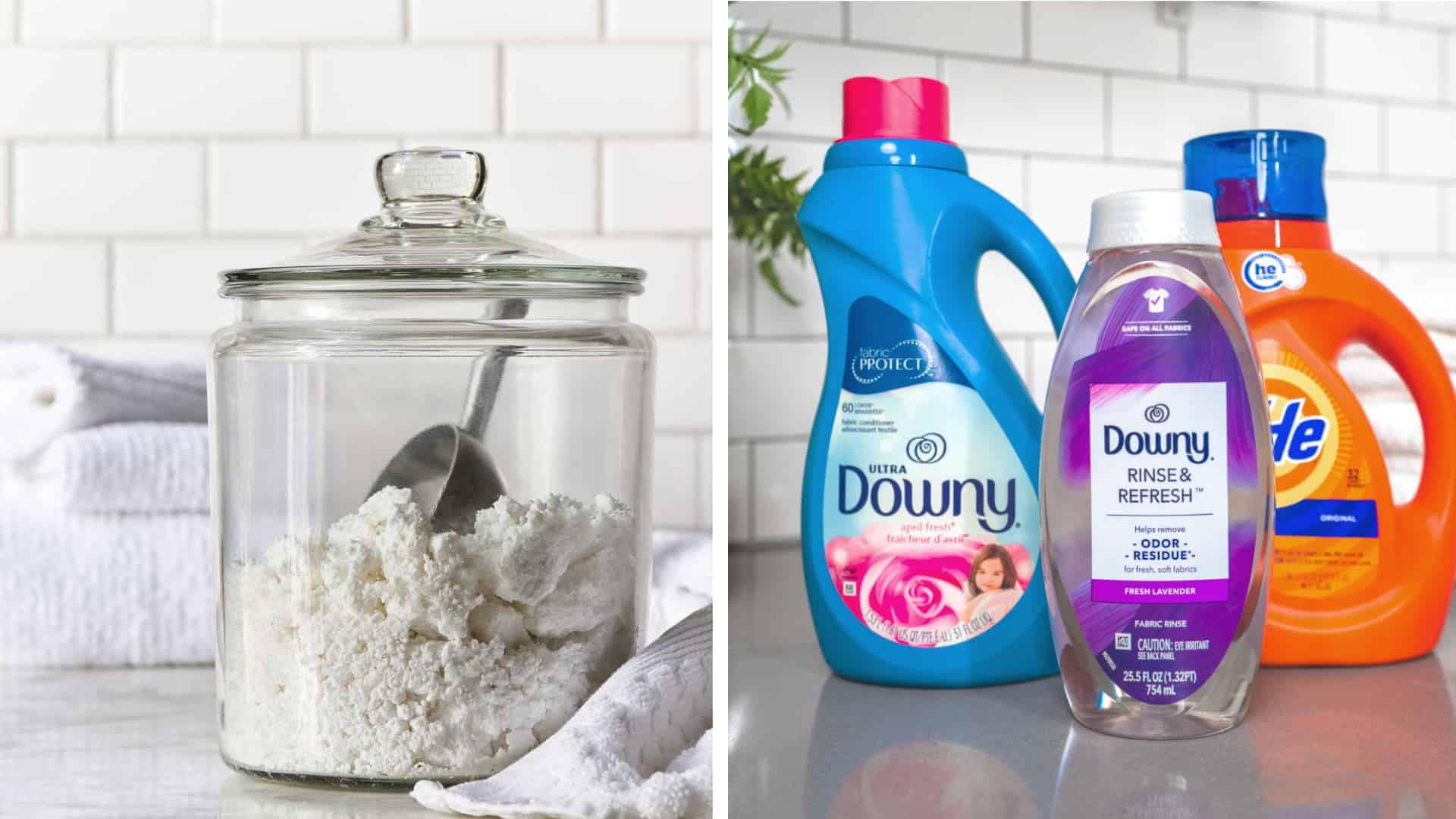
The price difference between homemade and store-bought detergent is real, and it adds up fast. Here is a straight comparison to show what that looks like over time.
| Feature | Homemade Powdered Detergent | Tide (Store-Bought) |
|---|---|---|
| Cost per load | $0.04 to $0.07 | $0.12 to $0.25 |
| Loads per batch | 280 to 500+ | 60 to 100 |
| Are the ingredients listed fully? | Yes | Not always required by law |
| Suitable for sensitive skin? | Fully customizable | Varies by product |
| HE washer safe? | Yes, when used correctly | Yes, for HE formulas |
| Plastic packaging per year | Minimal | Multiple jugs |
Tips to Boost Cleaning Power Naturally
Getting clean clothes from a homemade detergent is straightforward, but a few small habits make a noticeable difference. These do not require buying anything new.
- White vinegar in the rinse cycle: Pour 1/2 cup into the fabric softener slot. It removes soap residue from clothes and keeps your machine fresh inside. No vinegar smell is left on the fabric after drying.
- Hydrogen peroxide for whites: Add 1/2 cup to the wash alongside your detergent. It whitens without the harshness of chlorine bleach.
- Pre-treat stains before washing: Apply a small amount of liquid castile soap or hydrogen peroxide directly to the stain. Let it sit for 10 minutes, then wash as normal. This step alone handles most tough spots.
- Hot water for grease and oil stains: Warm to hot water works better than cold for cutting through grease, especially with borax-free recipes. Cold water is fine for lightly soiled loads.
- Wool dryer balls instead of dryer sheets: They shorten drying time, reduce static, and are reusable for hundreds of loads. Add a few drops of essential oil to the ball if you want a light scent on your clothes.
- Add OxiClean for extra stain power: If a load has heavy staining, sprinkle a tablespoon of OxiClean directly into the drum along with your detergent.
How to Store Your Homemade Laundry Detergent?
Powder detergent keeps for 6 months or more when stored in an airtight container in a cool, dry spot. A glass jar with a lid or a plastic bucket with a tight-fitting cover both work fine.
Liquid detergent has a shorter life, about 1 month, so make smaller batches if you do not go through laundry quickly. Shake or stir the liquid detergent before each use since the ingredients can settle.
Write the batch date and the amount to use per load on a label stuck to the container. Saves a lot of second-guessing later.
Summing It Up
Making your own laundry detergent is one of those things that sounds complicated until you actually do it. The powder recipe takes about 15 minutes and lasts for months.
The liquid version needs a bit more time but requires zero grating. The borax-free recipe is the gentlest option and works well for anyone with sensitive skin or young children.
All get clothes clean, cost a fraction of store-bought brands, and put you in full control of what touches your family’s fabric. Give one a try this week and see how it goes.
Which recipe are you planning to start with? Leave a comment and let us know.
Frequently Asked Questions
What Is the Best Homemade Laundry Detergent Recipe?
The powdered recipe with washing soda, borax, grated Fels-Naptha soap, and OxiClean costs around $0.04 per load, lasts hundreds of washes, and works in both standard and HE machines.
What Do Amish Use for Laundry Detergent?
Amish households traditionally use a simple mix of washing soda, borax, and grated bar soap, almost identical to the classic powdered homemade detergent that many families still make today.
What Is the Best Laundry Detergent for Eczema?
A borax-free recipe with washing soda, baking soda, and unscented castile soap works best, and adding white vinegar to the rinse cycle clears any leftover soap residue from the fabric.
How to Make 3 Ingredient Laundry Detergent?
Mix 1 cup of washing soda, 1 cup of baking soda, and 1 finely grated bar of unscented castile soap, then store in a sealed jar and use 2 tablespoons per load.