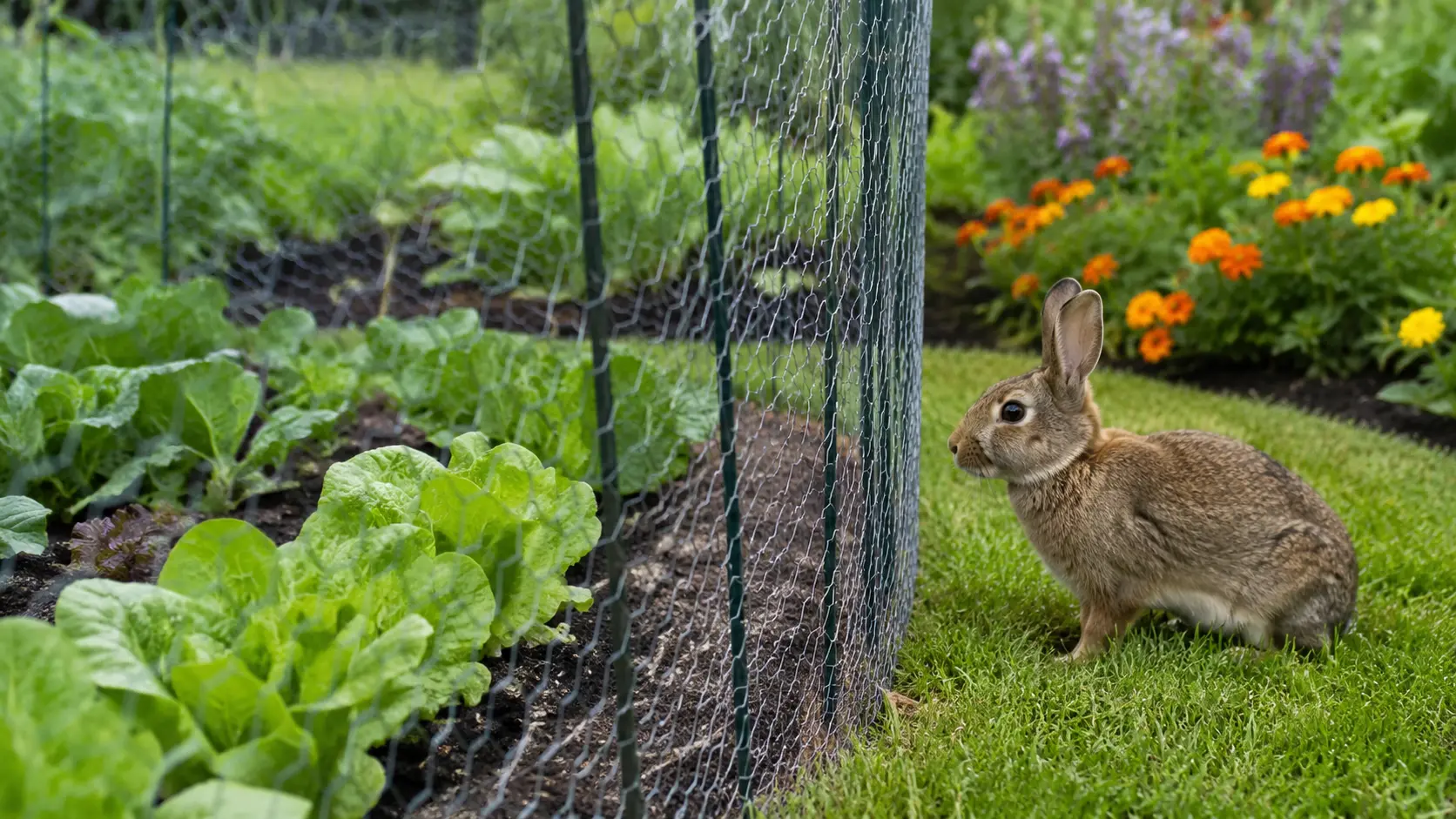
Rabbits may look harmless moving through the yard, but a single morning visit can wipe out a row of lettuce, clip off bean seedlings at the soil line, and leave your young flowers looking like they were trimmed with scissors.
If you want to know how to keep rabbits out of garden areas reliably, the honest answer is that one method alone rarely holds. Fencing is the most dependable starting point because it blocks physical access rather than trying to deter behavior.
Repellents, scent barriers, marigolds, and scare devices all add value, but they work best as backup, not as the main defense. A plan that combines barriers with smart planting and yard cleanup will do more than any single product on the shelf.
What Keeping Rabbits Out of a Garden Actually Means
The goal is not to clear every rabbit from the yard. Your garden can still grow well when rabbits remain nearby, as long as the most tempting plants are protected first.
Focus on lettuce, beans, peas, carrots, kale, spinach, and tender seedlings, since these are often the easiest targets. Rabbits feed close to the ground, slip through gaps as small as three inches, and dig under loose fencing when the base is not secured.
A strong rabbit-control plan should block access to key plants, make the bed feel risky as a feeding spot, and add extra cover for young growth. That may mean buried mesh, wire cloches, short grass, and steady checks after rain.
When each step has a clear job, your garden gets protection without chasing every rabbit or wasting effort on weak fixes during early-spring growth.
How to Tell Rabbits Are Damaging Your Garden
Before applying any method, confirm the damage is actually coming from rabbits. Guessing wrong wastes time and money. Signs that point to rabbit damage specifically:
- Clean, angled cuts on plant stems, as if made with a blade
- Seedlings were clipped very close to the ground and gone entirely
- Missing leaves on low-growing plants only
- Small round droppings near garden beds
- Shallow digging around the base of plants
- Damage concentrated at ground level
Rabbit damage differs from deer damage in a useful way. Deer tears and shreds at a higher level, leaving ragged edges. Rabbit cuts are clean and happen close to the skin.
Rabbits also tend to feed early in the morning, in the evening, or when the garden is quiet, so you may not see them directly, even when damage appears overnight.
The Best Ways to Keep Rabbits Out of Your Garden
The methods below are ranked roughly by reliability. Start with the ones that create physical barriers, then layer in scent and plant-based support methods for stronger results.
1. Install Rabbit-Proof Garden Fencing
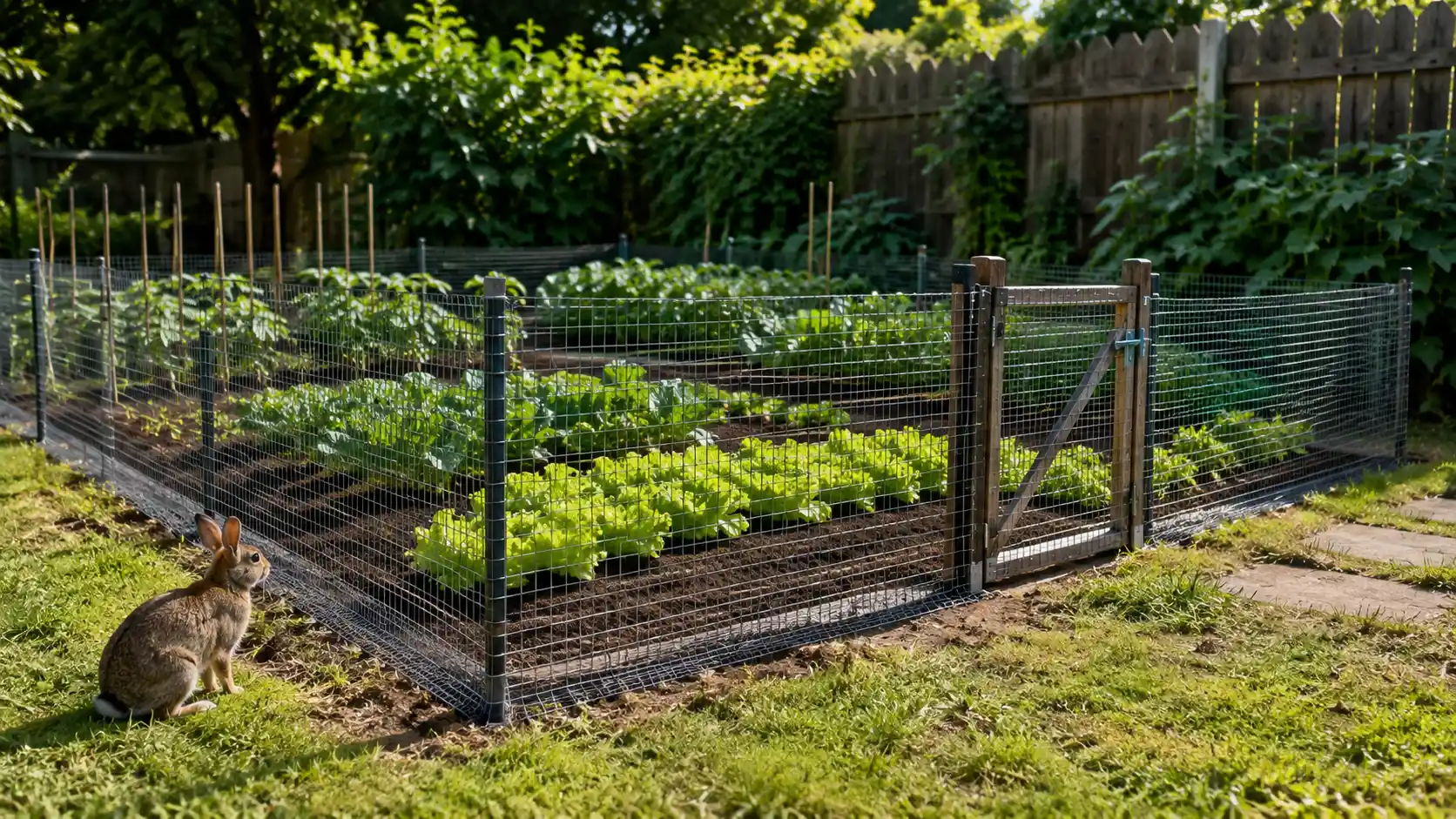
Fencing is the most dependable method because it physically blocks entry rather than relying on a rabbit choosing to avoid something. Use chicken wire or hardware cloth with mesh openings of one inch or less.
The fence needs to be at least two feet tall. Bury the bottom six to twelve inches underground and bend it outward in an L-shape to stop rabbits from digging underneath. Check gates and corners regularly, because gaps are found quickly.
2. Cover Seedlings and Young Plants With Mesh or Cloches
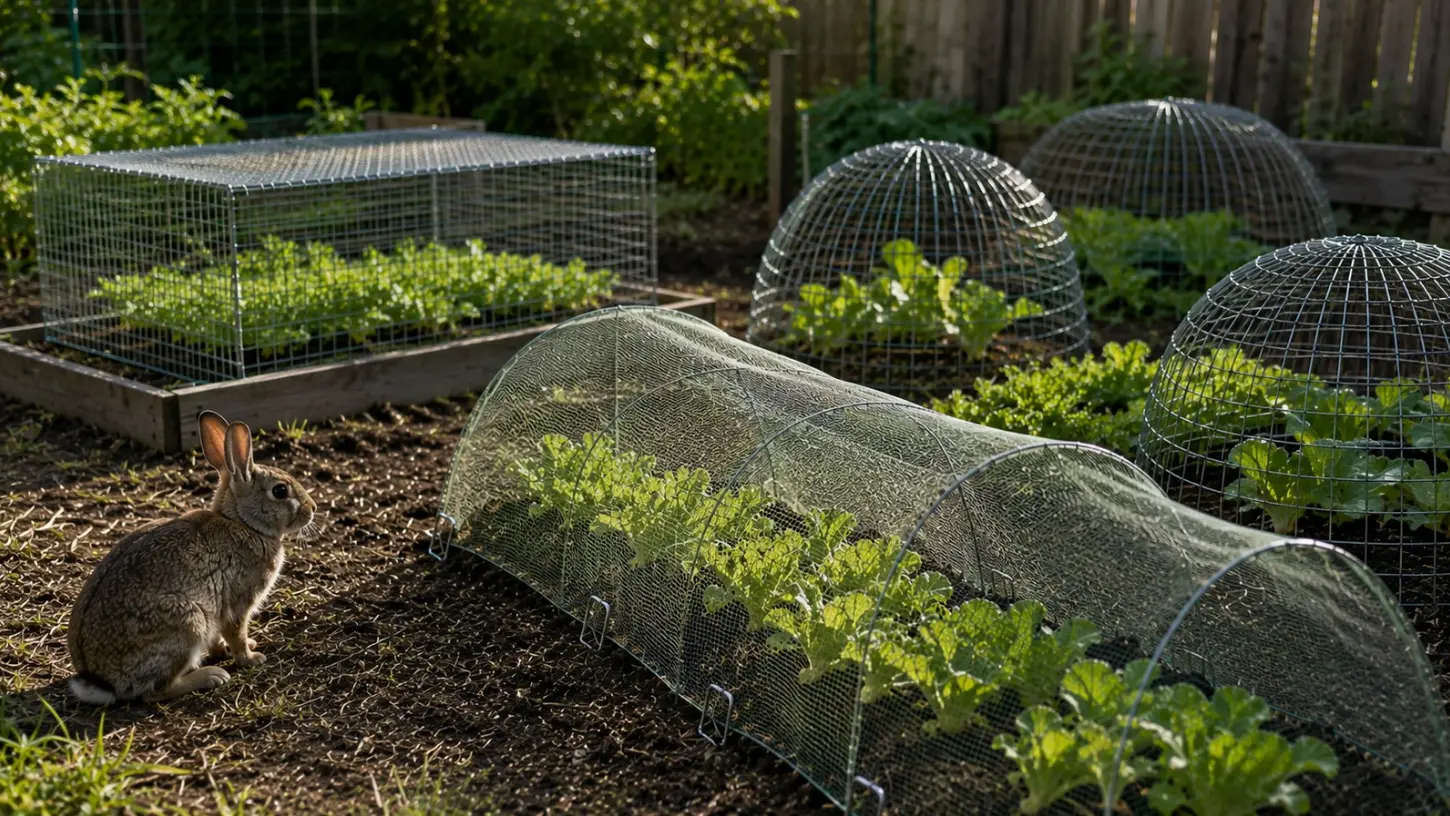
Young plants are the easiest targets, especially in the first few weeks after planting. Wire cloches, mesh tunnels, and small hardware cloth cages all work well as individual covers. Row covers can also help if pinned firmly at the edges.
Make sure covers are secured at the base so rabbits cannot nose underneath. Once plants are established and less tender, covers can be moved to protect the next round of seedlings.
3. Apply Rabbit Repellent Sprays
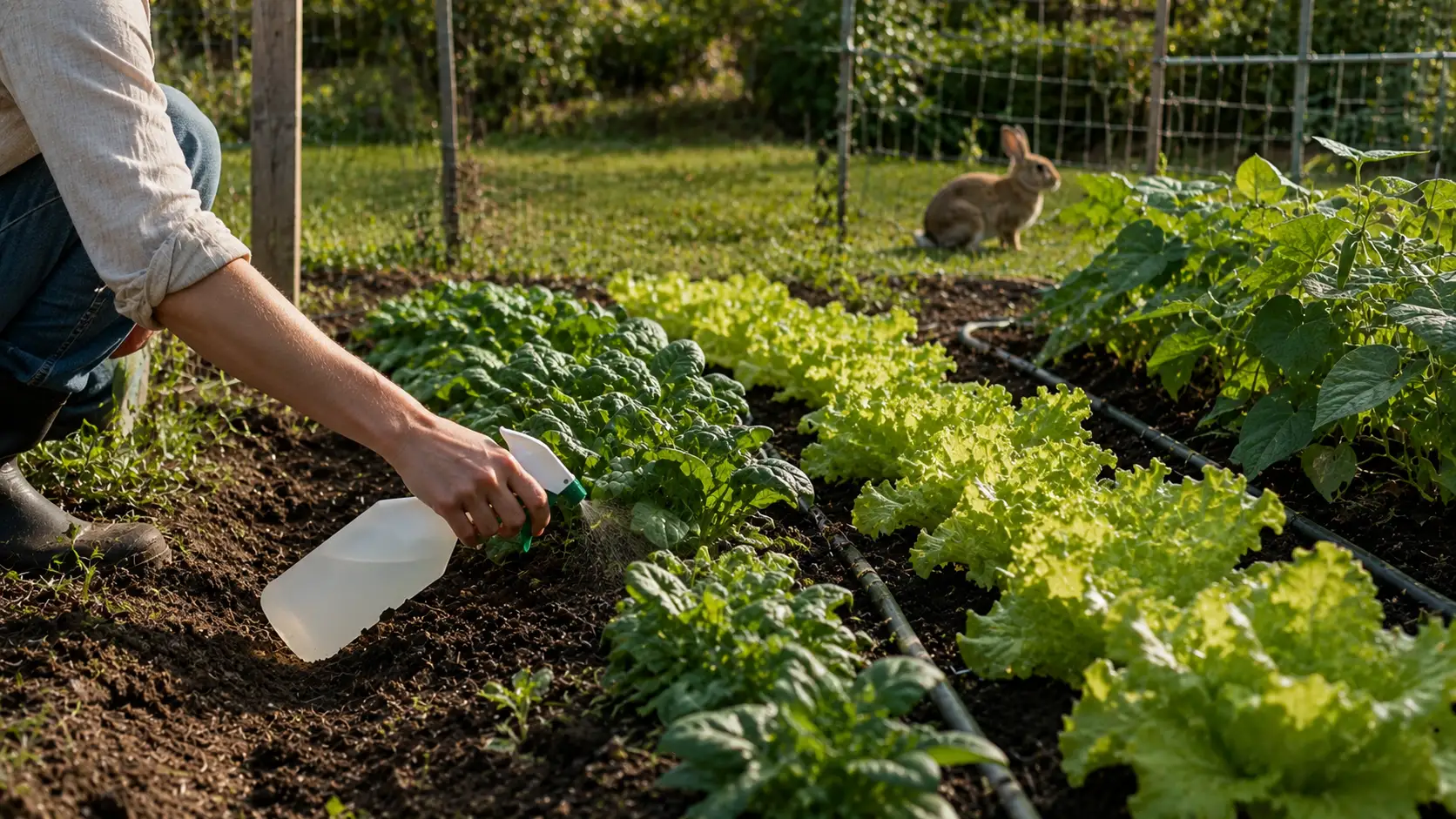
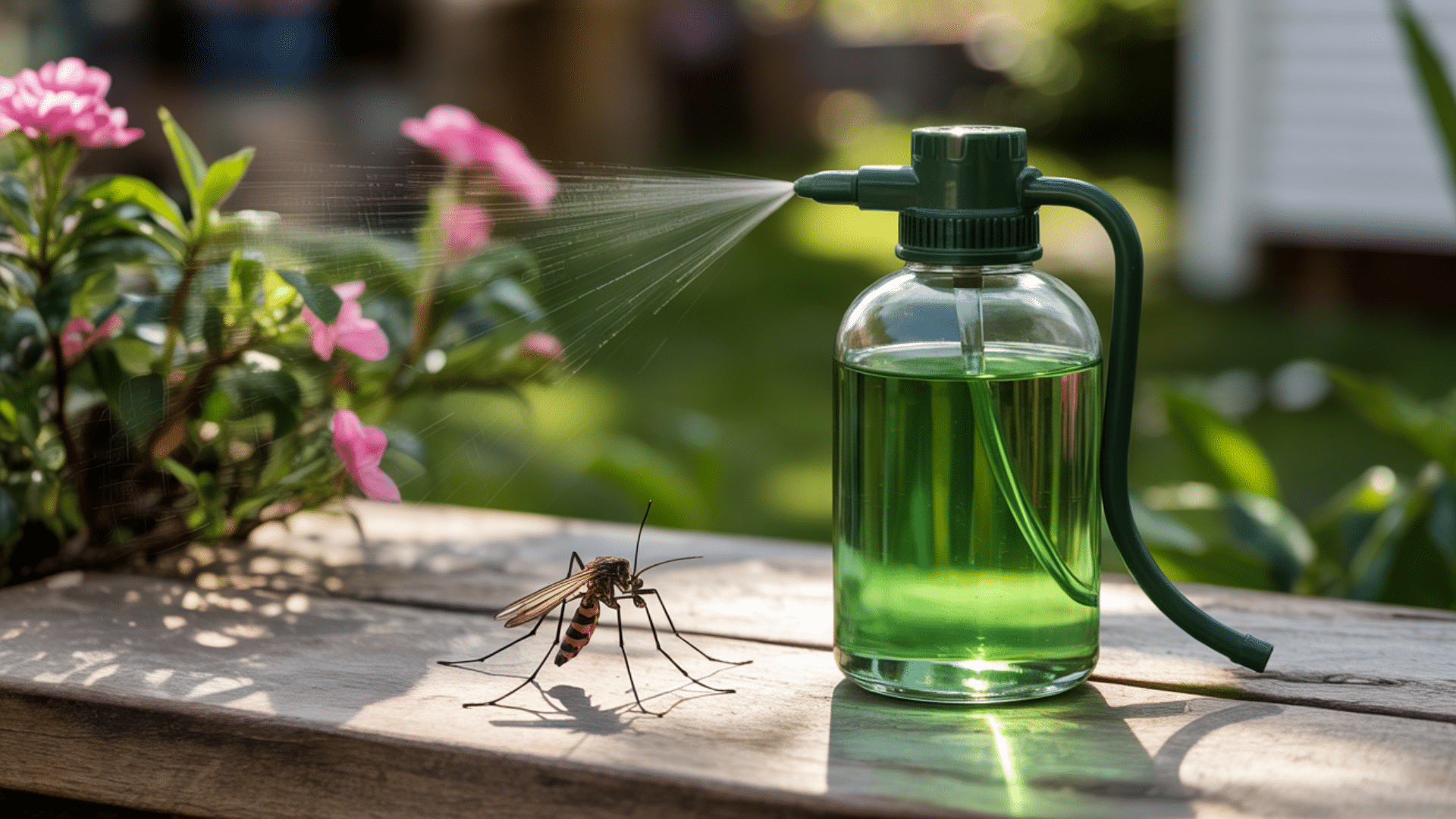
Rabbit repellent sprays work through smell, taste, or both. Commercial options often use egg-based formulas, garlic, or hot pepper as active ingredients. Apply around target plants, not just one corner of the garden.
Reapply after rain and whenever new growth appears, since fresh growth carries no repellent. Test homemade sprays on a small area first. Repellents are a solid support layer, but will not hold against a genuinely hungry rabbit on their own.
4. Try Strong-Smelling Deterrents Around Beds
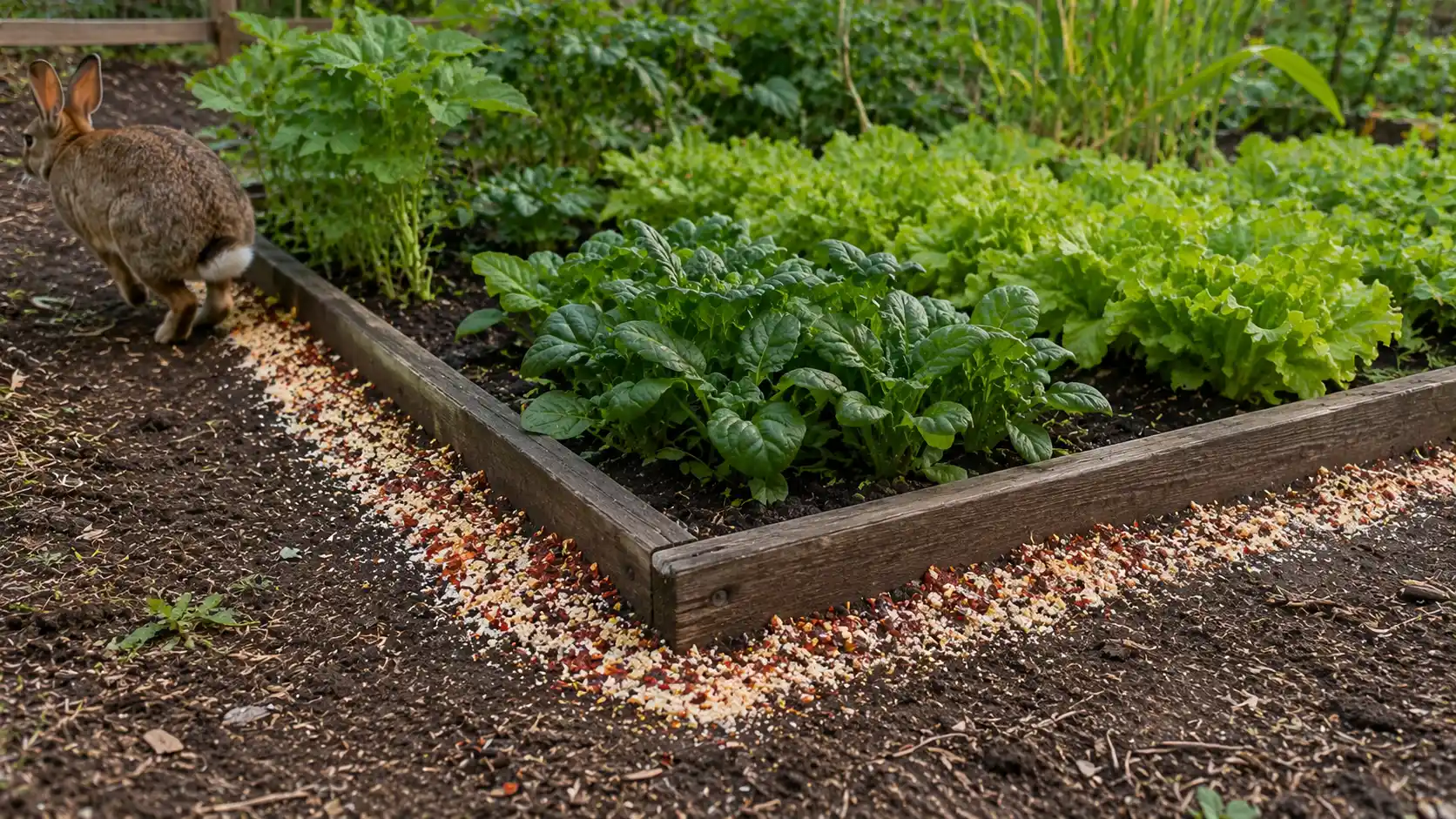
Rabbits have a keen sense of smell and consistently avoid certain scents. Garlic powder, crushed red pepper, black pepper, and predator scent products placed around garden edges reduce appeal. Keep the application light near edible crops and areas where children or pets spend time.
These deterrents need frequent reapplication after rain or wind, which makes them a practical backup layer around a fenced or covered garden rather than a primary solution.
5. Remove Hiding Spots Near the Garden
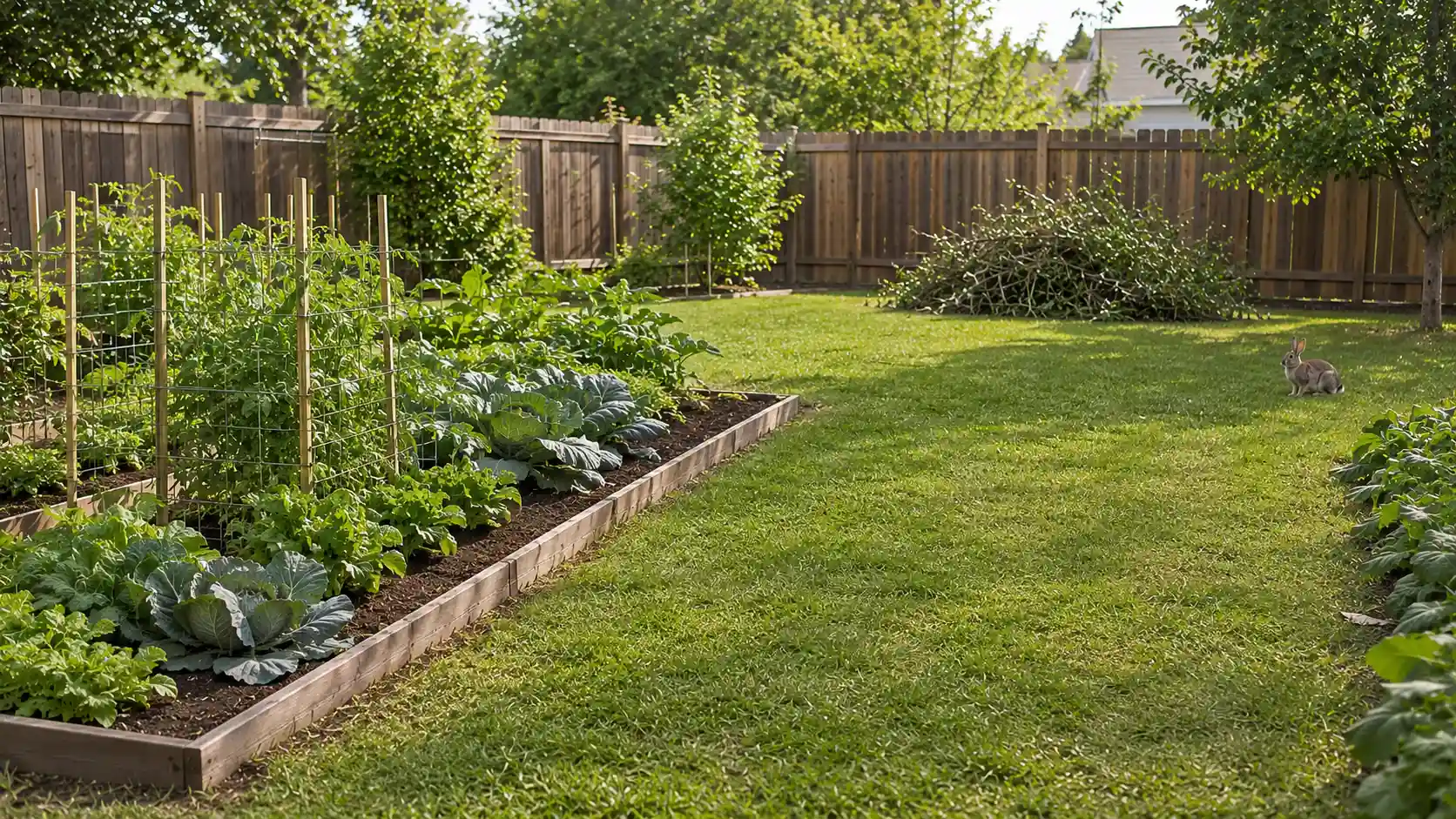
Rabbits prefer to feed close to shelter. Tall grass, brush piles, dense weeds, wood piles, and overgrown borders near garden beds make a yard significantly more appealing. Clearing these areas removes the sense of safety rabbits rely on between feeding visits.
Open, tidy surroundings make rabbits feel exposed, which reduces how long they stay near the garden. Doing this early in the growing season, before nesting begins, gives the best results.
6. Use Motion-Activated Sprinklers or Scare Devices
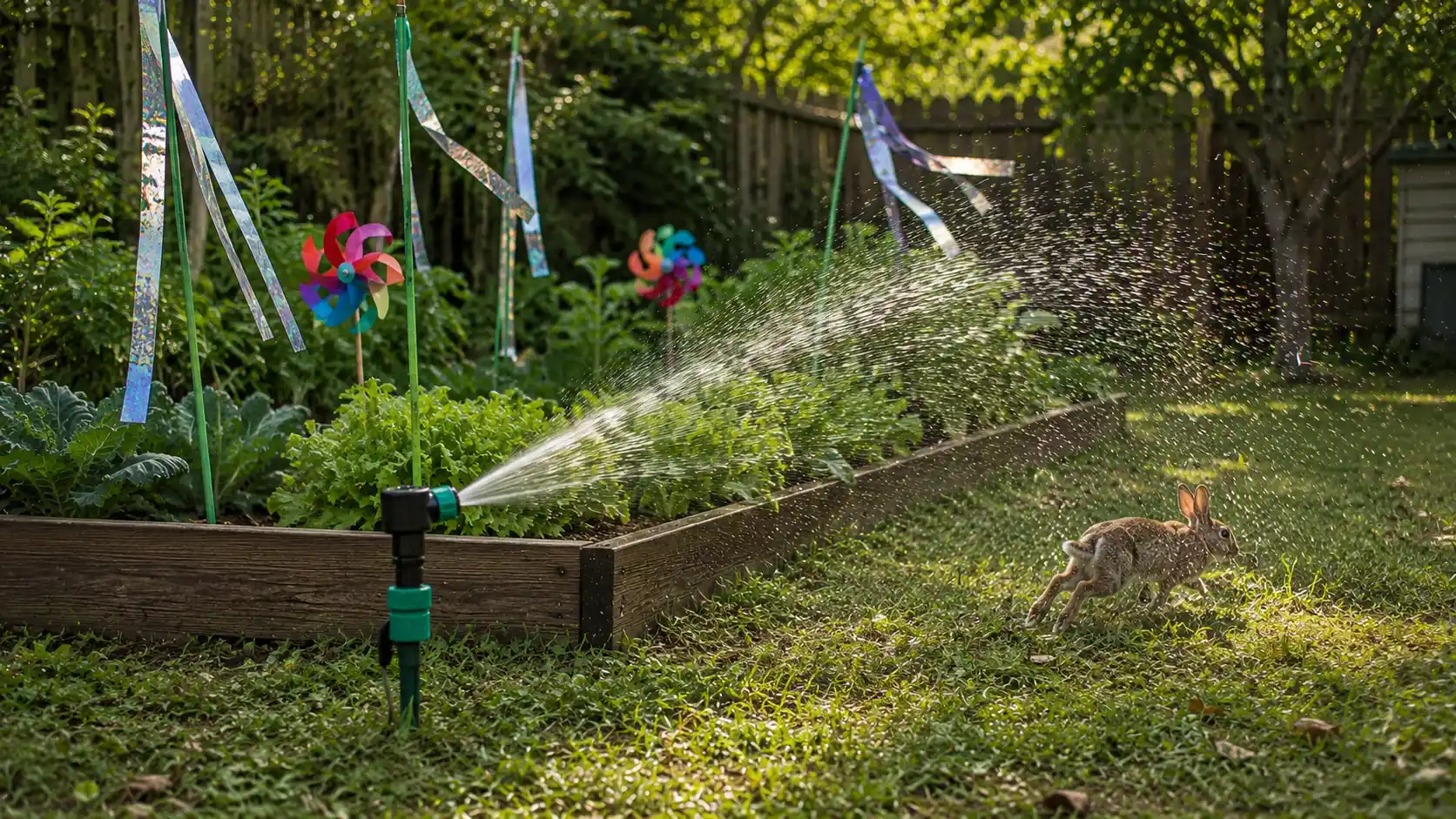
Motion-activated sprinklers are the most effective scare method because the response is unpredictable and unpleasant. Shiny moving tape, wind-driven pinwheels, and noise-based devices add short-term support.
The key limitation is that rabbits quickly adapt to stationary objects. Move scare devices to a new position every few days to prevent this. Best used as extra defense near high-value beds or in gardens where installing a fence is not practical.
7. Use Rabbit-Resistant Plants as a Border
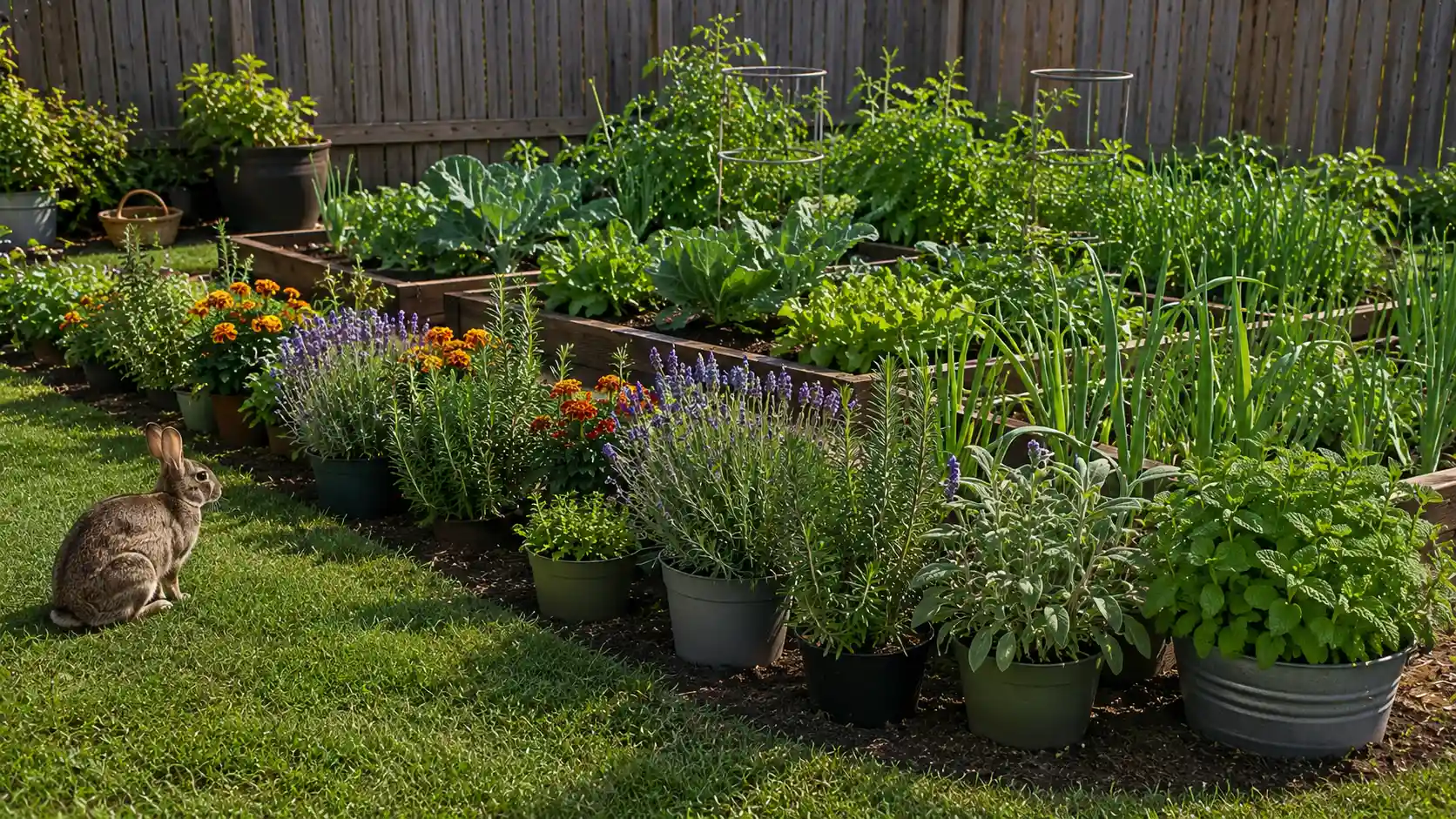
No plant is fully rabbit-proof, but some are consistently less preferred. Marigolds, lavender, mint in containers, garlic, rosemary, and sage all carry strong scents or textures that rabbits tend to avoid.
Planting these around bed edges adds a mild deterrence layer. A genuinely hungry rabbit will push past scent preferences, so border plants work best when combined with fencing or repellents rather than used as the only line of defense.
What Is the Most Effective Rabbit Deterrent?
Physical barriers work best because they prevent entry rather than relying on smell, taste, or surprise. Use the table below to determine which options to prioritize in your setup first:
| Method | Reliability | Best Role |
| Buried mesh fence or hardware cloth | Highest | Primary barrier |
| Plant cages and cloches | High | Seedling and young plant protection |
| Rabbit repellent sprays | Moderate | Backup layer around barriers |
| Scent deterrents and marigolds | Low to moderate | Support method, not standalone |
| Scare devices | Low to moderate | Short-term or extra defense |
Start with the highest-reliability option your space allows, then add covers or spray for support. My preference is to fix access first, then fine-tune smaller deterrents as needed weekly.
Do Marigolds Keep Rabbits Away?
Marigolds come up often in rabbit-control advice, and they do have some value, but their effectiveness is frequently overstated.
The strong scent of marigolds may discourage rabbits from spending time nearby, and some gardeners use them successfully as border plants around vegetable beds. Results vary noticeably depending on the level of food pressure in the area.
Marigolds should not replace fencing. A rabbit that is running low on other food sources will eat marigolds directly.
Think of them as a mild deterrent that adds something to a layered plan rather than a complete solution on its own. Marigolds work best when paired with a low fence, repellent spray, and mesh covers for seedlings.
| Note: Marigolds are most useful as part of a layered plan. Planted around the outer edge of a fenced bed, they add scent deterrence to a physical barrier. Used alone in an open bed, they offer limited protection. |
Smart Rabbit Control for Tricky Garden Spaces
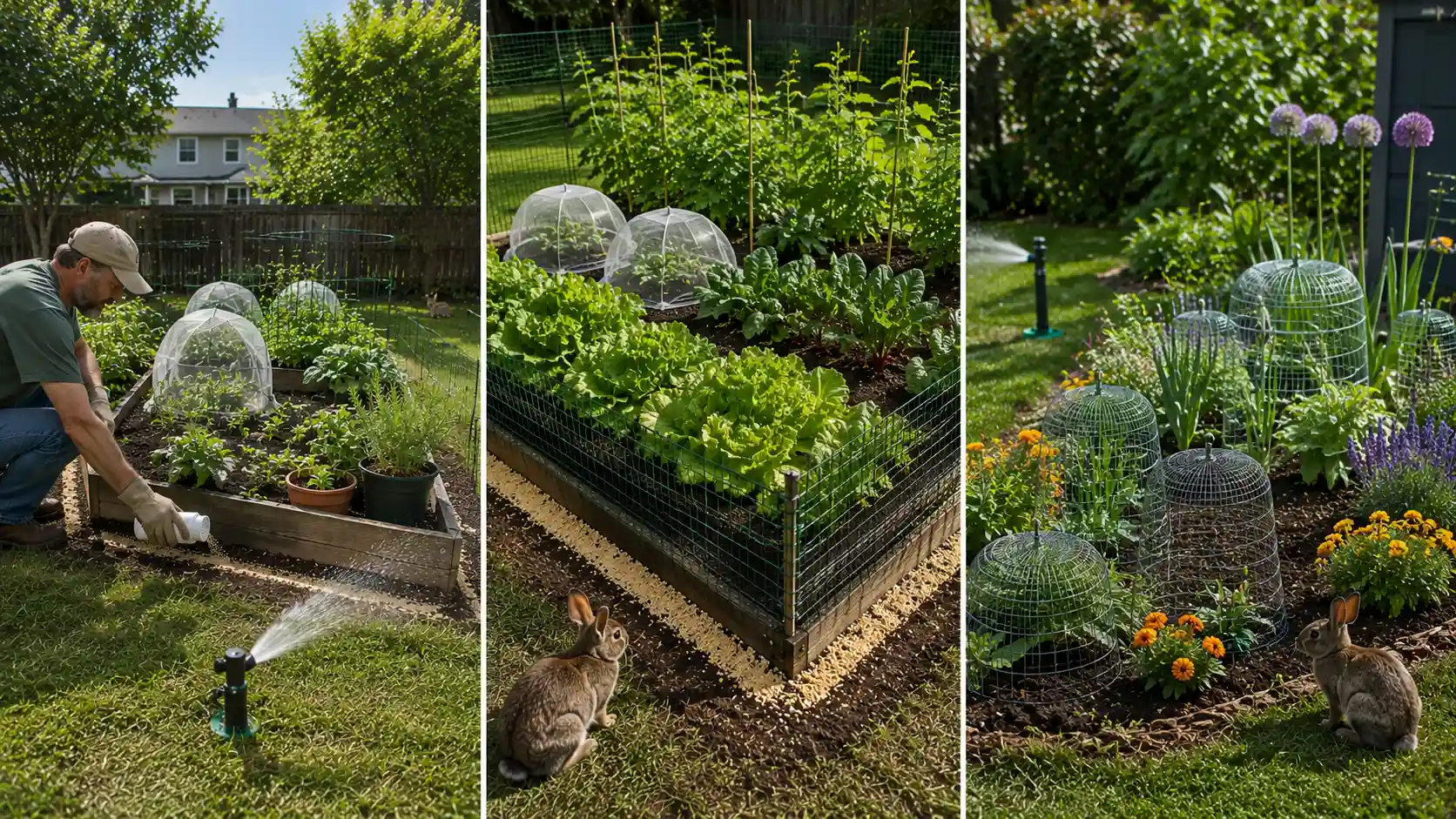
Some garden spots need a more careful plan because rabbits feed by plant type, cover, and access. Match your setup to the area, then keep each step simple and steady.
1. How to Keep Rabbits Out of a Garden Without a Fence
Fencing does not fit every space. Renters, front beds, small plots, and flower borders need simple steps that cut feeding damage without adding daily stress:
- Seedling mesh covers protect fresh growth before rabbits clip stems close to the soil.
- Raised-bed planting raises tender crops, making them less accessible to rabbits.
- Rabbit repellent spray is effective when applied regularly, especially after rain or watering.
- Tall grass removal cuts nearby cover, so rabbits feel less safe while feeding.
- Motion sprinkler placement adds sudden water and sound near active feeding paths.
No-fence methods need more upkeep than wire barriers, but they can keep damage under control. Combine several steps, stay consistent, and expect light nibbling on exposed plants.
2. How to Keep Rabbits Out of Vegetable Gardens
Vegetable beds attract rabbits because many crops are soft, low, and easy to reach. Greens, legumes, and root crops need protection as soon as seeds go in:
- Buried mesh fencing blocks entry and stops rabbits from digging under loose edges.
- Seedling cloche covers guard lettuce, beans, peas, and greens during early growth.
- The outer repellent line adds backup protection around the bed after planting days.
- Fence line cleanup removes weeds and grass where rabbits may hide nearby.
- Early crop protection prevents overnight damage before tender vegetables suffer key growth losses.
Vegetable beds need early action because one night of feeding can ruin young crops. Set protection before damage appears, especially around tender plants rabbits often visit first.
3. How to Keep Rabbits Out of Flower Beds
Flower beds are harder to protect because plants are often scattered. Rabbits usually target new shoots and buds, so early-season coverage matters most here:
- Young flower cages protect fresh stems until plants grow tougher and taller.
- Ornamental repellent spray helps protect non-edible flowers when used on schedule.
- Scented border plants make bed edges less inviting with marigolds, lavender, or alliums.
- Motion sprinkler setup adds quick pressure near feeding spots without permanent fencing.
- Fresh bud checks help catch damage before blooms are clipped or weakened.
Flower protection works best when you guard new growth first. Strongly scented plants can help, but hungry rabbits may still nibble them when other food is scarce.
When Rabbit Damage Needs Layered Protection
One method can work when rabbit visits are rare, but steady damage calls for a stronger plan. You may need layered protection if your yard sits near woods, open fields, brushy edges, or if you see fresh feeding marks each morning.
In that case, pair a buried mesh fence with wire covers for seedlings, repellent around the outer edge, short grass near beds, and rabbit-resistant plants along exposed sides. Each step fills a weak spot that another method may miss.
The fence blocks entry, covers guard soft growth, repellent adds taste or scent pressure, and cleanup removes safe hiding areas. My best rule is simple: if rabbits keep returning, stop relying on one fix.
Combine several steady steps to protect your garden from multiple angles.
| Note: If rabbits are nesting nearby, expect higher pressure in spring and early summer. Add extra protection during this period and check fencing and covers more frequently for gaps or damage. |
A Smarter Order for Rabbit Control
A planned order helps you stop rabbit damage faster because each step builds on the last. Start with proof, protect weak plants, then add barriers, repellents, and weekly checks next:
- Confirm the damage is from rabbits by checking for clean stem cuts, low feeding marks, and small, round droppings.
- Protect seedlings and high-risk plants first with mesh cages or cloches before adding other methods.
- Install garden fencing around vegetable beds or high-traffic areas when damage keeps recurring.
- Add rabbit repellent around the bed edges as a second layer, not the main fix.
- Remove hiding spots such as brush piles, tall grass, weeds, and wood stacks near beds.
- Plant strong-smelling borders with marigolds, lavender, garlic, or onions around exposed edges.
- Check garden gaps weekly for loose fencing, fresh digging, clipped stems, or new damage.
This order keeps effort focused and prevents wasted work. My best advice is to check often, fill gaps quickly, and protect new growth before rabbits return.
Common Mistakes That Make Rabbit Problems Worse
Most rabbit-control failures come from repeated habits, not bad products. Use this table to spot weak points, fix them fast, and keep your garden protection simple throughout the season:
| Mistake | Quick Fix |
|---|---|
| Relying only on marigolds for protection | Pair marigolds with fencing or mesh covers |
| Installing a fence without burying the bottom | Bury at least six inches, bent outward |
| Leaving gaps near gates and corners | Check and secure all entry points regularly |
| Forgetting to reapply repellents after rain | Schedule reapplication after every watering or rainfall |
| Protecting mature plants but ignoring seedlings | Cover seedlings from day one, not after damage appears |
| Leaving tall grass and brush near garden beds | Clear the surrounding area early in the growing season |
| Using scare devices without moving them | Reposition every few days to prevent habituation |
Fixing these mistakes makes each method work harder. My best rule is to block access first, protect seedlings early, and treat scent-based options as support only during peak feeding times.
Frequently Asked Questions
Do coffee grounds keep rabbits away from garden beds?
Coffee grounds have a strong smell but are not a reliable rabbit deterrent on their own. Some gardeners report mild results, but the effect is inconsistent. If used, apply them thinly around beds rather than in thick piles. Do not expect them to replace physical barriers or proven repellent products.
What smells do rabbits avoid most consistently?
Garlic, onion, hot pepper, lavender, mint, and predator-scent products are among the smells that rabbits tend to avoid. The limitation is that outdoor smells fade with rain, watering, and wind. Scent-based deterrents require frequent reapplication to remain effective, making them a supporting method rather than a reliable standalone solution.
Will vinegar keep rabbits out of the garden?
Vinegar has a sharp smell that may briefly deter rabbits, but it fades quickly outdoors and can damage plant tissue if applied directly to leaves or soil. Safer options include commercial garden repellents, hot pepper sprays, and physical mesh barriers. Vinegar is not worth the risk to the plant compared to purpose-made repellents.
Can rabbits jump over a standard garden fence?
Rabbits can jump, but a two-foot fence stops most of them in garden situations. The more common ways rabbits get in are through gaps, under the bottoms of unsecured fences, or through corners that have not been checked recently. Digging under and squeezing through are bigger risks than jumping over for most rabbit species.
How often should rabbit repellent be reapplied?
Most repellents need reapplication every seven to fourteen days under normal conditions. After rain, heavy watering, or a period of hot sun, reapply sooner. New plant growth has no repellent on it and should be treated as soon as it appears, since fresh unprotected growth is one of the most common points of entry for rabbit damage.
Are there any plants that rabbits will never eat?
No plant is completely safe from rabbits under all conditions. Rabbits have preferences, and strongly scented or coarse-textured plants are eaten less often, but hunger overrides preference. Lavender, rosemary, sage, catmint, and alliums are among the most consistently avoided, but treating any plant as fully rabbit-proof leads to gaps in the protection plan.
The Key Takeaway
After testing combinations of methods across different seasons, my clearest finding is this: barriers work, and scent alone does not. Keeping rabbits out of a garden consistently requires at least one physical method, whether that is fencing, mesh cloches over seedlings, or tall raised beds with added covers.
Repellents, marigolds, and strong-smelling plants all add value when used on top of a physical barrier, but they tend to fail on their own when rabbit pressure is real. Start by protecting your most vulnerable plants first.
Add the fence or covers before damage appears, not after. Then layer in repellents and scent deterrents to reinforce what the barrier is already doing. That sequence is what actually holds through the growing season. Drop a comment below and let me know if your rabbits left you alone.