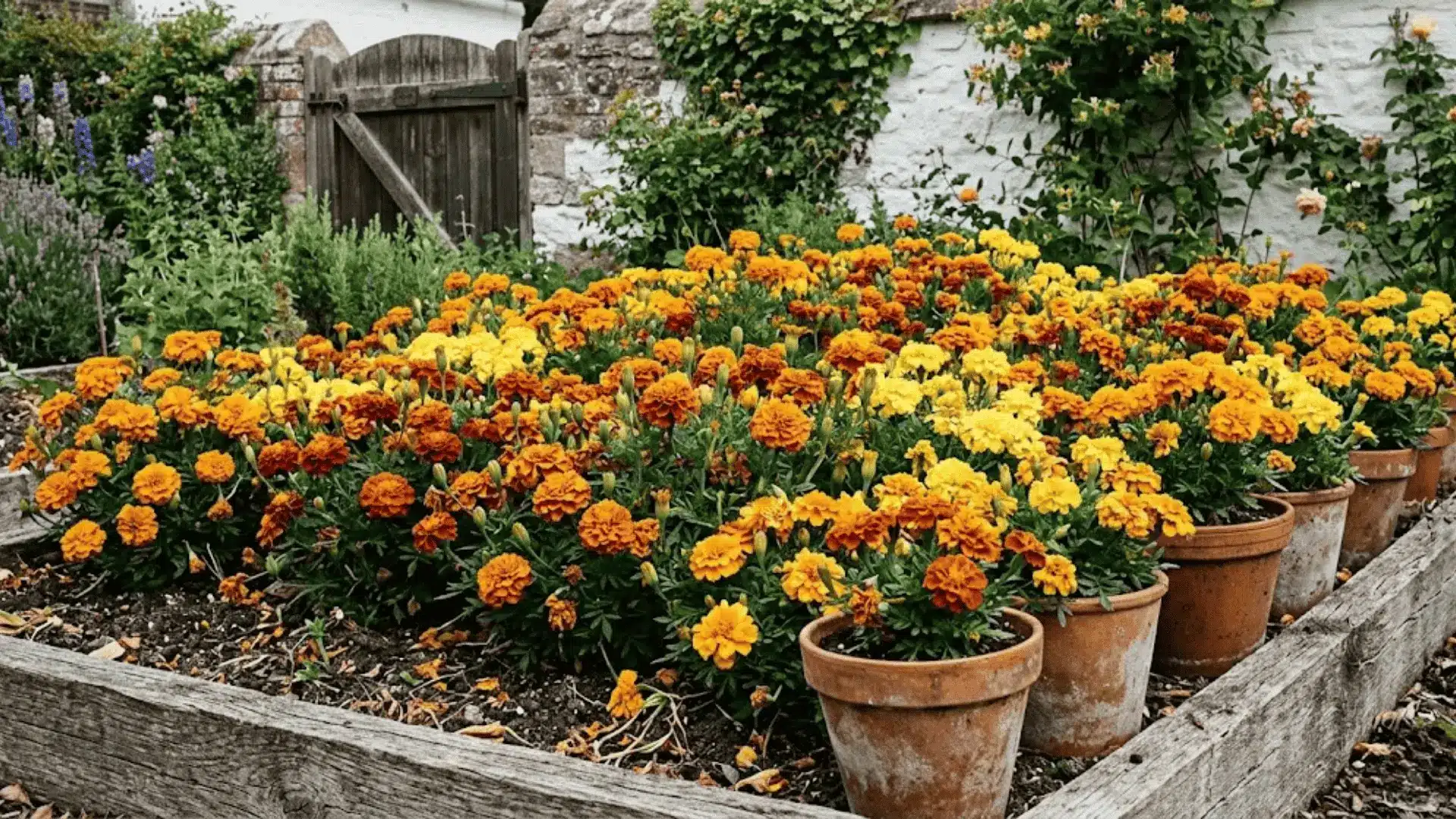
If you have ever wanted a garden that looks tended and loved without spending every weekend on your knees, marigolds are quietly your best friend.
They ask for so little and give back in the most generous way, blooming in warm, sunlit shades that make even a simple pot by the doorstep feel intentional.
Growing them well comes down to good soil, a little patience, and knowing what they actually need.
Here, everything gets covered, starting seeds, keeping them healthy through the season, avoiding the common slip-ups, and a few tips seasoned gardeners swear by.
Why Gardeners Love Growing Marigolds?
Gardeners keep coming back to marigolds for good reason. They grow fast, bloom for months, and practically take care of themselves once settled in.
Many gardeners also plant them alongside vegetables, and the pest-repelling quality is something the community genuinely swears by.
Over on the Square Foot Gardening forum, one gardener shared, “I plant marigolds throughout my garden and the only bug problem I have with my tomatoes is flea beetles.” They work beautifully as borders, too, adding color without demanding attention.
For beginners, especially, that reliable success rate is everything. It builds confidence in a way that fussier flowers just don’t.
Types of Marigolds: Choosing the Right One
With so many varieties out there, picking the right marigold really does make a difference. Here is a closer look at the three you will come across most often.
1. French Marigolds
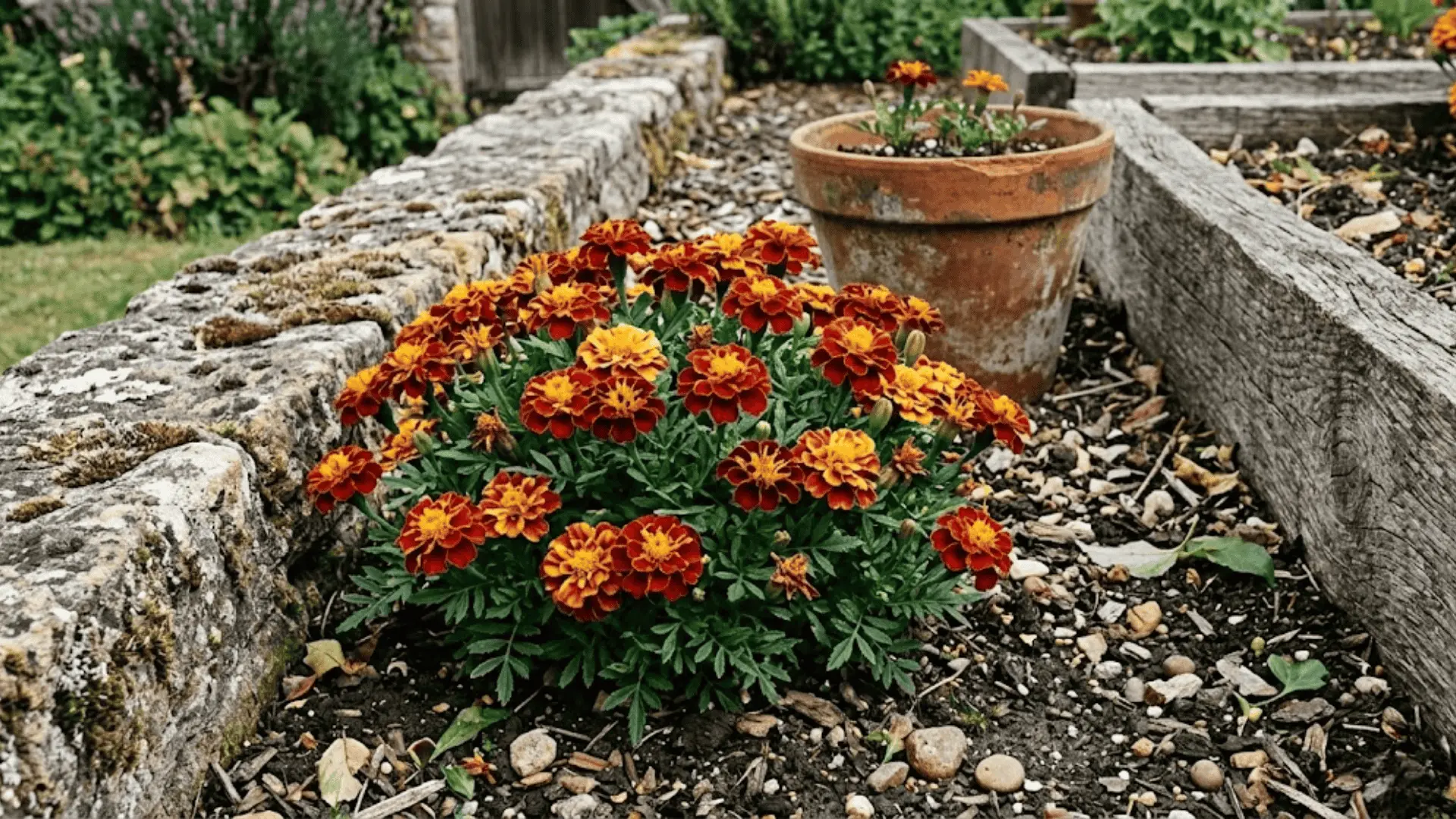
Scientific Name: Tagetes patula
Origin: Mexico and Guatemala
Compact, cheerful, and incredibly versatile, French marigolds are the ones most gardeners reach for first. They stay low and bushy, which makes them perfect for lining borders or filling containers with steady, season-long color.
They also happen to be among the most studied for pest-repelling properties, particularly against whiteflies, making them as practical as they are pretty.
2. African Marigolds
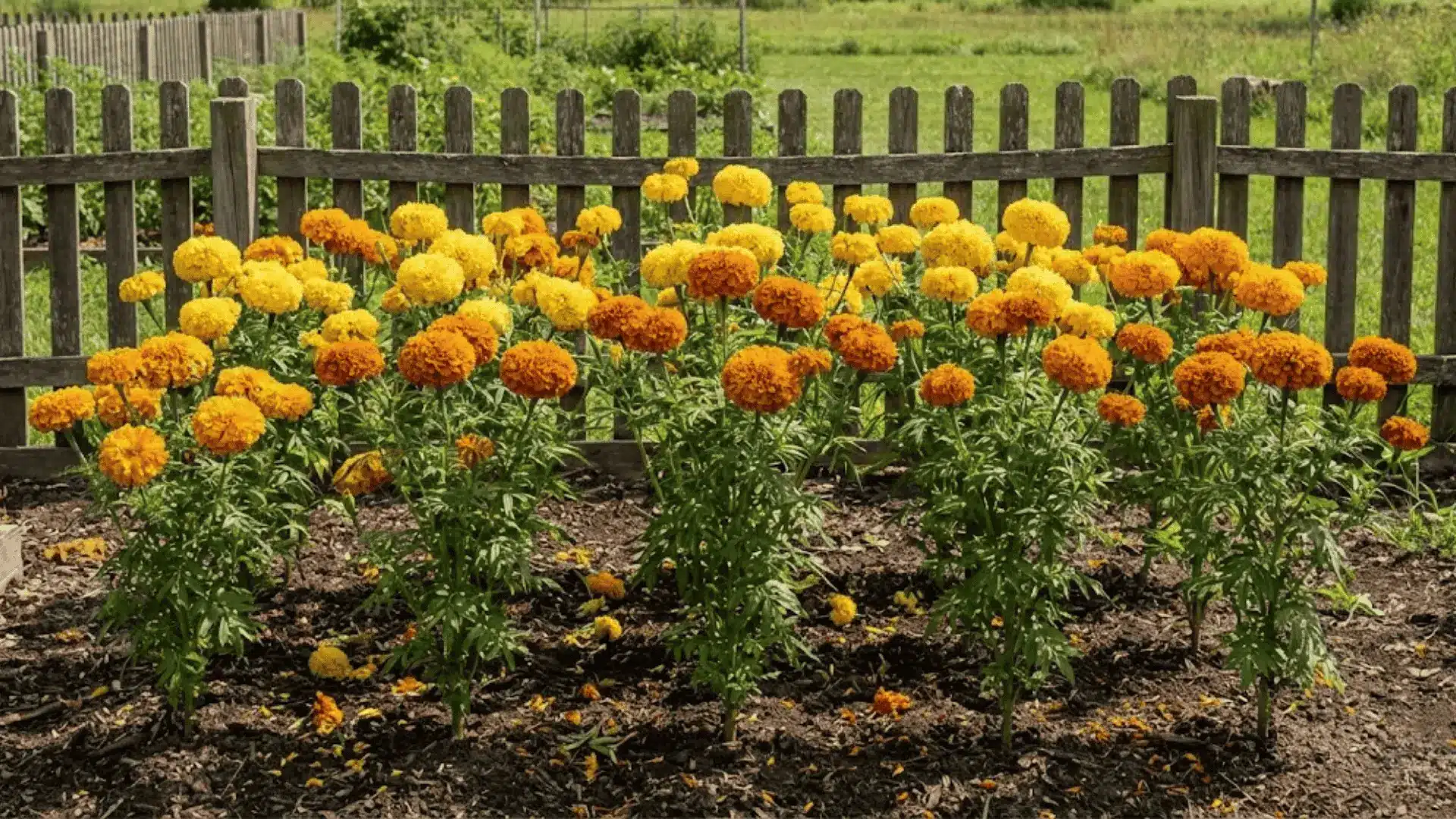
Scientific Name: Tagetes erecta
Origin: Mexico and Central America
If you want something that makes a real statement, African marigolds deliver. They grow tall and upright with large, densely petaled blooms in deep golds and oranges.
They are a natural fit for background planting, open landscaping, or anywhere you want bold vertical color. Just give them enough room and full sun, and they will put on a show all season.
3. Signet Marigolds
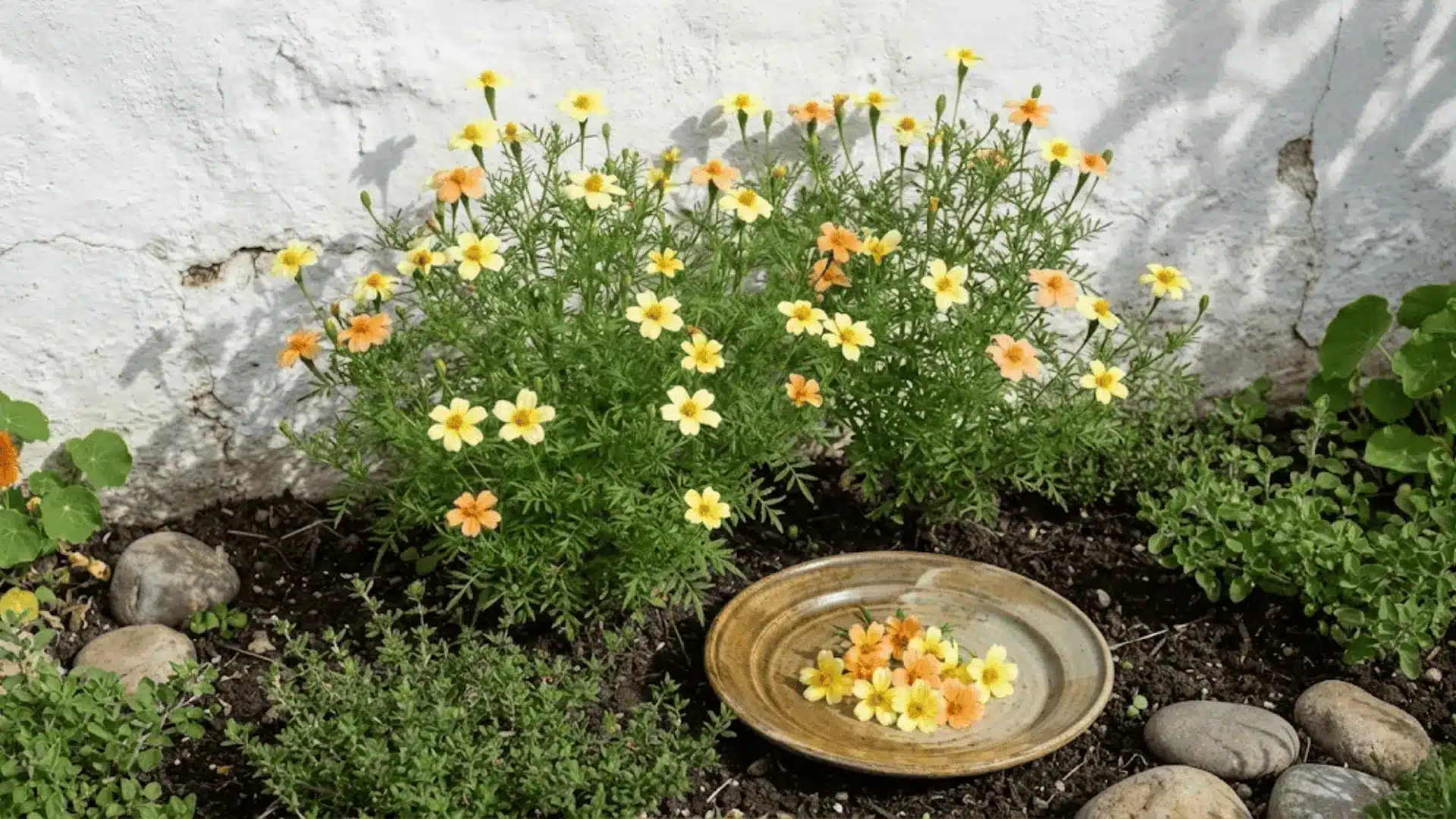
Scientific Name: Tagetes tenuifolia
Origin: Mexico and South America
Signet marigolds are the quiet, benign ones of the group. Their lacy foliage and small, daisy-like blooms have a citrusy scent that feels almost unexpected.
What sets them apart is that their flowers are fully edible, lovely scattered over salads or used as a garnish. They are a little more refined-looking than their cousins, and they handle heat surprisingly well.
| Feature | French | African | Signet |
|---|---|---|---|
| Height | 6–12 inches | 18–36 inches | 12–18 inches |
| Spacing | 6–9 inches | 10–12 inches | 8–10 inches |
| Bloom Size | Small–Medium | Large | Small |
| Best Use | Borders, containers | Landscaping, backdrops | Edible gardens, edging |
Step-by-Step: How to Plant Marigold Seeds?
Planting marigold seeds is one of those gardening tasks that actually goes the way it is supposed to. Follow these steps, and you will have blooms before you know it.
Step 1: Know When to Plant
Marigolds go in the ground after the last frost has passed and soil temperatures have settled around 65°F or warmer. Planting too early into cold soil slows germination and stresses young seedlings unnecessarily.
If you are unsure of your last frost date, the USDA Plant Hardiness Zone Map at planthardiness.ars.usda.gov is a reliable place to check.
Step 2: Decide Between Indoor Sowing and Direct Sowing
Starting indoors gives you a head start of about four to six weeks before the last frost, and germination typically happens within five to ten days in warm conditions.
Direct sowing is simpler and works just as well once the soil is warm. The tradeoff is mostly about timing; indoors means earlier blooms, outdoors means less fuss.
Step 3: Prepare Your Soil
Marigolds prefer loose, well-draining soil and are genuinely unfussy about nutrients. Rich, heavily amended soil can actually push them toward foliage over flowers. A basic garden mix or slightly sandy soil works beautifully.
If your soil is dense or clay-heavy, mixing in some perlite or coarse sand before sowing will make a noticeable difference in how well they establish.
Step 4: Sow at the Right Depth and Spacing
Press seeds about a quarter-inch deep into the soil, no deeper. Spacing depends on the variety: French marigolds do well at six to nine inches apart, while African marigolds need a little more room at ten to twelve inches.
Good spacing is not just about aesthetics; it keeps air circulating around the plants and significantly reduces the risk of fungal issues later on.
Step 5: Water Thoughtfully After Planting
After sowing, water gently and keep the soil consistently moist but never waterlogged. A light misting works better than a heavy pour at this stage, since seeds can easily be displaced or rot in soggy conditions.
Once seedlings emerge, ease back slightly and let the top layer of soil dry out a little between waterings. Marigolds are far more forgiving of dry spells than of overwatering.
How to Grow Marigolds Successfully?
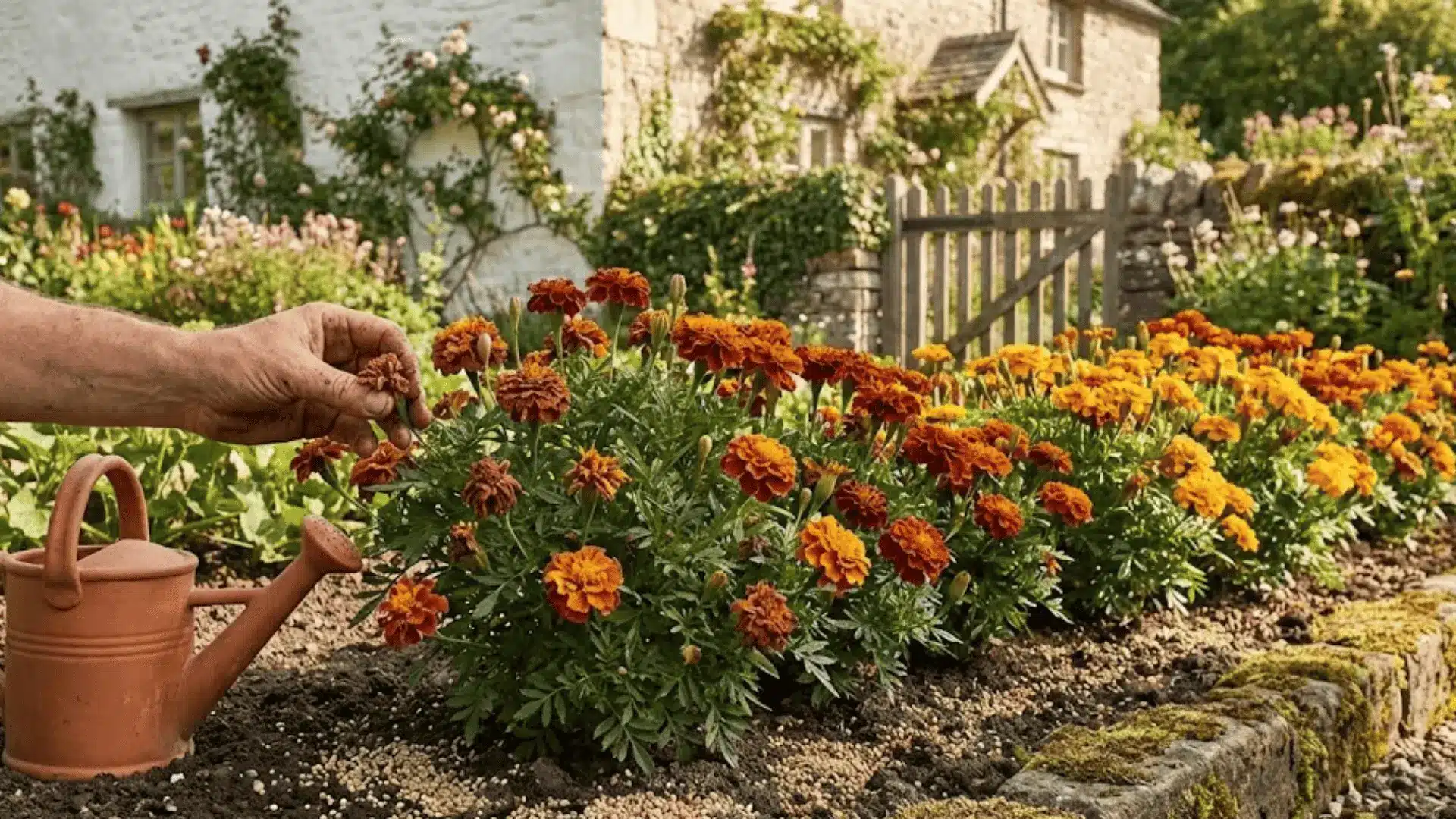
Once they are in the ground, marigolds are genuinely low-effort. A little attention to the basics below goes a long way in keeping them blooming all season.
Sunlight Requirements
Marigolds are sun-lovers through and through, and the more light they get, the better they perform.
- They need a minimum of six hours of direct sunlight daily to bloom consistently.
- Low light leads to leggy stems and noticeably fewer flowers over time.
- South or west-facing spots tend to bring out the best in them.
Watering Tips
Getting the watering right is less about frequency and more about knowing when to hold back.
- Water deeply but infrequently once established; marigolds handle dry spells surprisingly well.
- Always water at the base to keep foliage dry and reduce the risk of disease.
- Soggy soil is their biggest enemy, so when in doubt, underwater rather than over.
Fertilizing Marigolds
Marigolds are light feeders, and less really is more when it comes to fertilizing them.
- Excess nitrogen encourages lush leaves but noticeably cuts down on flower production.
- A single application of balanced, slow-release fertilizer at planting time is usually enough.
- A light mid-season feed only makes sense if growth looks visibly sluggish.
Deadheading for More Blooms
Regular deadheading is the one habit that keeps marigolds flowering generously all season long.
- Pinch or snip spent blooms just above the nearest set of healthy leaves.
- Skipping this causes the plant to shift energy toward seed production instead of new flowers.
- Even a quick pass every few days makes a visible difference in overall bloom density.
Real Gardener Tips & Experiences
Sometimes the best growing advice skips the textbooks entirely. Here is what everyday gardeners have learned from actual seasons in the soil.
Many gardeners are pleasantly surprised to find marigolds reseeding on their own year after year with zero extra effort.
Planting them alongside tomatoes remains one of the most talked-about combinations in hobbyist gardens, and the results people report are hard to ignore.
Container growing works well too, especially with French varieties, as long as drainage stays consistent.
The most common beginner mistake, shared almost universally, is overwatering young plants before they have had a chance to settle in.
One thread worth reading is this Square Foot Gardening community discussion where gardeners swap honest, seasoned experiences on growing marigolds alongside tomatoes, containers, spacing, and more.
Growing Marigolds in Pots vs. Garden Beds
Both work beautifully, but each comes with its own set of things to keep in mind. Here is a quick side-by-side to help you figure out what suits your space.
| Feature | Pots & Containers | Garden Beds |
|---|---|---|
| Best Variety | French or Signet | African or French |
| Container Size | At least 8–10 inches deep | N/A |
| Drainage | Drainage holes are non-negotiable | Amend clay soil with perlite or sand |
| Watering | More frequent, pots dry out faster | Less frequent once established |
| Balcony Friendly | Yes, compact varieties work well | Not applicable |
| Maintenance | Slightly higher | Lower once settled |
For balcony gardening, French marigolds in terracotta pots are a solid choice. They stay compact, handle urban heat well, and bring warm color to even the smallest outdoor spaces.
Do Marigolds Come Back Every Year?
Marigolds are annuals, meaning they complete their full life cycle in one growing season and do not return on their own roots.
The confusion usually comes from their self-seeding habit; they drop seeds at the end of the season that sprout the following spring, giving the impression they came back.
Whether this happens reliably depends on your climate. In warmer zones, self-seeding is fairly consistent. In colder regions, seeds may not survive a harsh winter.
Letting a few spent blooms stay on the plant at season’s end is the easiest way to encourage it.
Harvesting & Saving Marigold Seeds
Saving marigold seeds is one of the most satisfying parts of growing them, and it costs nothing for next season.
- Wait until the flower heads are fully dry and papery on the plant before harvesting.
- Pinch the base of the dried bloom and pull the seed cluster apart to separate individual seeds.
- Look for long, slender, black-tipped seeds; those are the viable ones worth keeping.
- Spread them on a dry paper towel for a few days before storing to prevent mold.
- Keep seeds in a labeled paper envelope in a cool, dry place until the next planting season.
Done right, one season’s worth of blooms can easily supply seeds for the entire following year.
Final Thoughts
Growing marigolds is one of those rare gardening experiences where the effort you put in feels genuinely proportionate to what you get back.
They are generous, forgiving, and quietly beautiful in a way that makes any space feel more alive.
A sprawling garden bed or a single pot on a balcony, there is a marigold variety that fits right in either way. We hope this makes the whole process a little easier and a lot more enjoyable.
Tried any of these tips yourself? Drop your experience in the comments below, we would love to hear how your marigolds are doing.