If you’ve ever had your glasses slipping down your nose during a Zoom call, a jog, or even while binge‑watching your favorite series, you know how frustrating it can be.
Loose glasses aren’t just an annoyance; they can affect your vision, comfort, and confidence. For anyone into DIY fixes, learning how to fix loose glasses at home can save time, money, and trips to an optician.
In this guide, I’ll cover everything from tightening screws with simple tools to reshaping plastic frames and adjusting metal nose pads.
Why Glasses Get Loose Over Time
Glasses go through more physical stress than most people realize. On and off the face multiple times a day, dropped occasionally, rested on top of the head, and sometimes carried loosely in a bag.
All of that daily movement gradually affects the parts that hold everything together. The most common reasons frames loosen include:
- Hinge screw wear: Small screws at the hinges gradually loosen due to the daily opening and closing. Heat from sunlight and warm environments can also cause metal frames to expand slightly, which speeds up loosening.
- Bent or stretched temple arms: Taking glasses off with one hand pulls one arm slightly outward each time. Over weeks, that asymmetric tension changes the shape of the arm and reduces how snugly it sits behind the ear.
- Worn nose pads: Silicone nose pads wear down and shift over time. Once they lose their grip position, frames start riding lower on the face.
- Frame material fatigue: Plastic frames are more susceptible to gradual shape changes under repeated heat and pressure. Acetate frames in particular can widen at the temples over months of use.
Understanding which of these applies to your frames makes the next steps much faster. Look at your glasses in a mirror and do a quick test: wiggle each temple arm. If one moves more than the other, the hinge screw on that side is the starting point.
DIY Glasses Adjustments at Home
Below, you’ll find methods to tighten, loosen, and realign glasses for comfort and stability.
Tools You Need for DIY Fixes
Many of these tools are inexpensive or already in a basic home toolkit.
| Tool | Purpose | Notes |
| Small Phillips or Flathead Screwdriver | Tighten hinge screws | Often included in glasses repair kits |
| Micro Tweezers | Hold tiny screws | Useful for dropping prevention |
| Hair Dryer | Heat plastic temples | Makes plastic malleable for reshaping |
| Post‑It Notes | Temporary nose pad grip | Quick on‑the-go fix |
| Silicone Ear Hooks | Prevent sliding | Fits over plastic or metal temples |
| Thread Locker or Nail Polish | Keep screws in place | Optional for metal frames |
1. How to Tighten Loose Glasses at Home
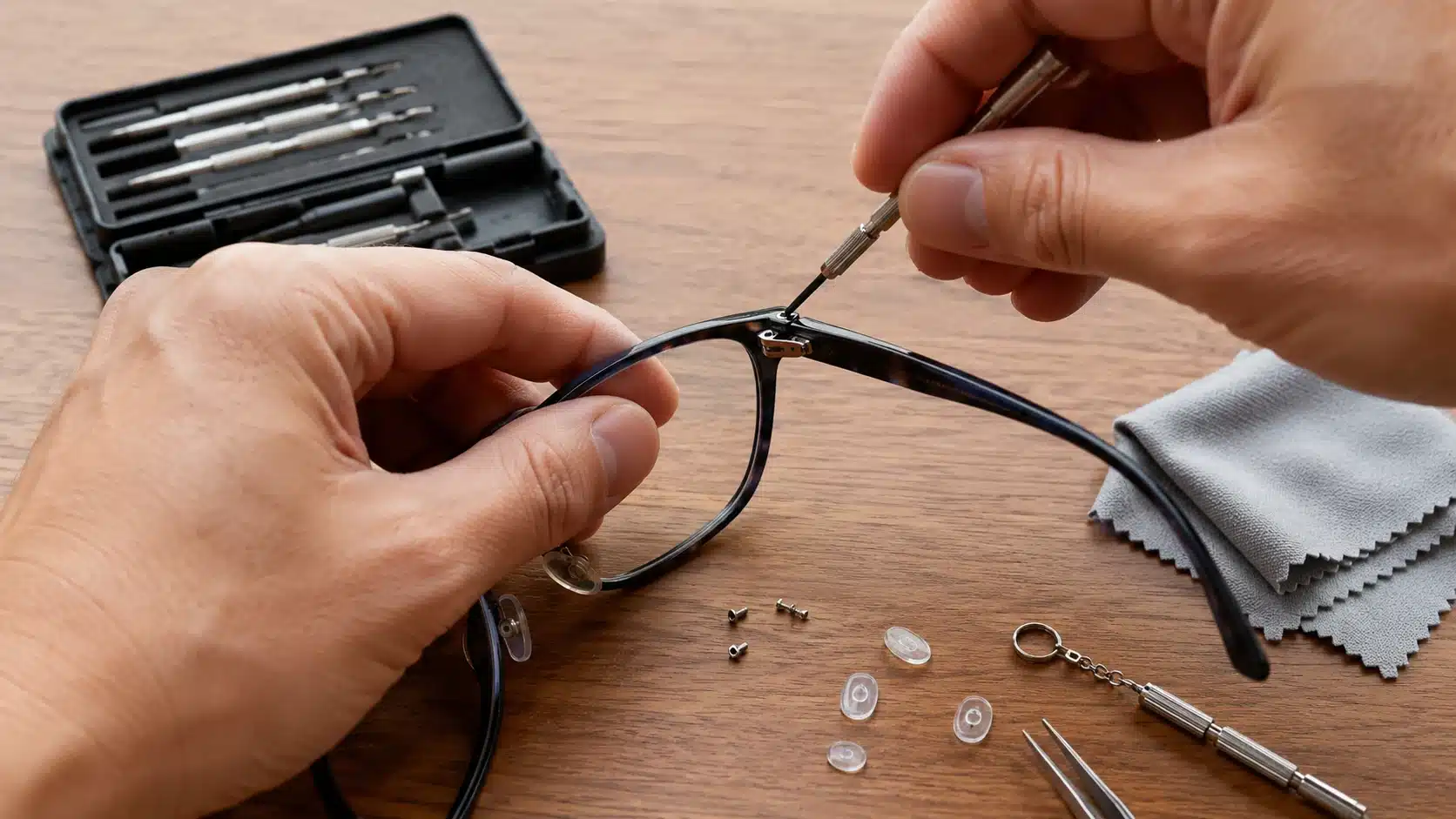
- Check Which Arm is Loose: Hold your glasses and gently move each arm. If one arm feels wobbly or moves separately from the frame, that is the side you need to tighten.
- Find the Small Screw: Look closely around the loose hinge area where the arm connects to the frame. You should see a tiny screw holding that part together.
- Choose the Right Screwdriver: Use a small flathead or micro screwdriver that fits the screw head properly. A correct fit helps prevent slipping, scratching, or damaging the lenses.
- Place the Screwdriver Carefully: Set the screwdriver tip into the screw head. Keep your hand steady because eyeglass screws are very small and easy to miss.
- Tighten the Screw Slowly: Turn the screw clockwise until it feels firm. Move carefully and avoid pressing too hard so you do not scratch the frame or lenses.
- Test the Glasses: Move the arm again to check if it still feels loose. If the arm no longer wobbles separately from the frame, your glasses are tightened properly.
2. How to Loosen Glasses That are Too Tight
- Use Warm Water: Turn on a faucet with warm water. The water should be hot enough to soften the plastic slightly, but not so hot that it damages the frame.
- Warm the Bent Temple Areas: Hold the bent parts of both temple arms under the warm water for about 30 seconds. Focus on the areas where the arms curve behind the ears.
- Place Glasses on a Flat Surface: Turn off the water and place the glasses on a clean, flat surface. This helps you control the frame while adjusting both sides evenly.
- Bend One Arm Outward: Hold one arm while it is still warm. Gently bend it outward and hold it in place for about 10 seconds.
- Repeat on the Other Side: Bend the other warm temple arm outward the same way. Avoid applying too much pressure, as plastic frames can snap or lose their shape.
- Try Them On: Wear the glasses and check the fit. If they still feel tight, repeat the process slowly until they sit comfortably.
3. How to Fix Crooked Frames
- Check if the Frames Are Uneven: Wear your glasses and look at how they sit on your face. If one side sits higher or lower than the other, the frame needs a small adjustment.
- Look for the Adjustable Metal Area: Check near the hinge or small metal connection point on the frame. This is usually the part that can be slightly bent to level the glasses.
- Hold the Frame Firmly: Grip the frame near the hinge with one hand. Keep it steady so you can control the adjustment without bending the wrong area.
- Make a Small Upward or Downward Bend: Use your fingers to gently bend the uneven side up or down. Move only a little at a time because too much pressure can snap or damage the glasses.
- Check the Balance Again: Place the glasses on your face or a flat surface to see if both sides look even. If one side still floats or sits too high, make another tiny adjustment.
- Repeat Until the Frames Sit Level: Keep making small changes and testing the fit. Once both sides sit evenly and the lenses look level, your crooked frames are fixed.
4. How to Adjust Nose Pads
- Protect the Lenses: Use a lens cloth to cover and protect the lenses while you adjust the nose pads. This helps prevent scratches during the process.
- Push Pads Inward: To narrow the space between the nose pads and lift the frame away from your cheeks, gently push both pads inward toward the center of the frame.
- Push Pads Outward: To widen the space or fit a wider nose bridge, gently push the pads outward away from the center of the frame. This can help the frame sit lower.
- Adjust the Pad Height: If the lenses sit too close to your face, pull the nose pads upward in a gentle hinging motion. Make small changes to avoid bending them too far.
- Check Both Sides: Make sure both nose pads stay symmetrical. Step back and visually check that each pad has the same height, angle, and spacing.
- Test the Fit: Try the glasses on and check how they feel on your nose and face. Move your head side to side and look down to make sure the fit is secure and comfortable.
With patience and careful adjustments, your glasses can feel custom-fitted without a trip to the optician, ensuring all-day comfort.
Quick Temporary Fixes When You Need Help Fast
Sometimes, you need your glasses to stay put immediately, even without tools. These short-term solutions are easy to implement and provide a reliable grip until you can make permanent adjustments.
| Temporary Fix | How It Works | Notes / Best Use |
| Silicone Ear Grips | Slip over temple tips to add friction behind the ear | Works on metal and plastic frames; reusable; inexpensive |
| Adhesive Nose Grip Pads | Stick to the frame bridge or the existing nose pads | Best for plastic frames without adjustable pads; provides extra friction |
| Post-it Note Trick | Fold a small sticky piece and press it onto the nose pads | Quick DIY fix; lasts a few hours; not elegant but effective |
| Hair Tie Loop | Loop a thin elastic around the temple tip behind the ear | Emergency fix; keeps glasses forward; uncomfortable for long wear |
| Optical Shop Adjustment | Professional tightening or minor repairs | Often free at Warby Parker, LensCrafters, or independent opticians; replacement parts $2–$10 |
These temporary fixes are simple, fast, and effective for keeping your glasses in place when time or tools are limited. They allow you to maintain comfort until you can perform a full adjustment at home or at an optician.
How to Prevent Loose Glasses From Recurring
Fixing loose frames is straightforward. Keeping them from loosening again mostly comes down to a few small habits that most people skip.
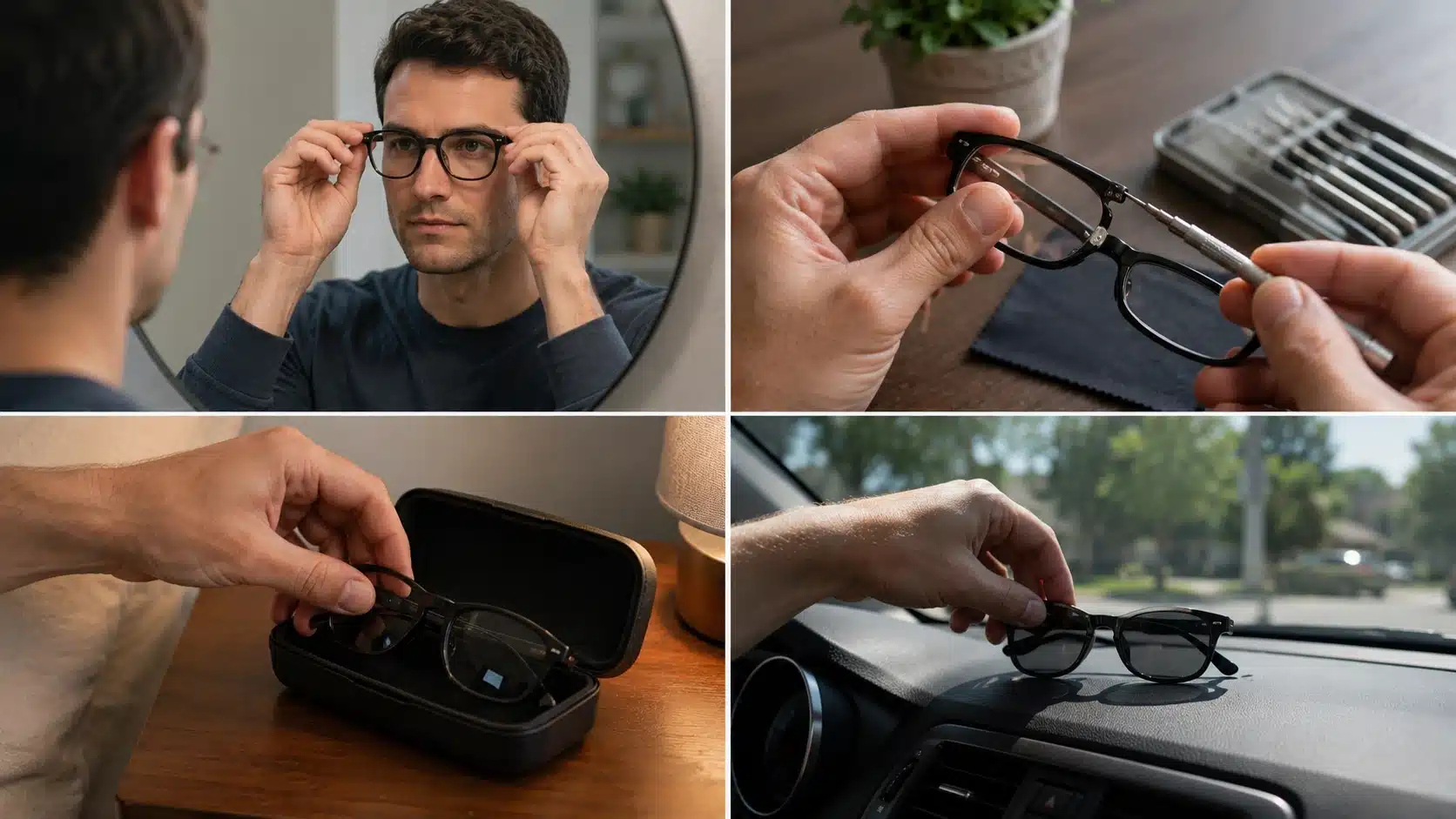
1. Use Both Hands to Remove Glasses
Taking glasses off with one hand is the single most common cause of asymmetric frame stretching. One-handed removal applies uneven tension to a single hinge each time, gradually pulling that arm outward.
Using both hands on the temples, pulling straight back, distributes the force evenly and significantly preserves the frame alignment.
2. Check Screws Every One to Two Months
Hinge screws loosen from vibration and movement, even when nothing dramatic happens to the frames. A quick check with a micro-screwdriver takes about 90 seconds and prevents the gradual loosening that can eventually cause an arm to swing freely.
Keep a small eyeglass repair kit somewhere accessible so the check does not require searching for tools.
3. Store Glasses in a Hard Case
Soft pouches protect lenses from scratches but offer no structural protection for the frame. A rigid, hard-sided case prevents arms from bending under pressure when glasses sit in a bag or pocket.
Consistently using a case at night and while traveling dramatically reduces the frequency of arm and hinge adjustments.
4. Avoid Leaving Frames in Heat
Plastic frames left in a hot car, on a dashboard in summer, or in direct sunlight for extended periods absorb enough heat to warp the temple arms and widen the frame shape.
Metal frames expand slightly in heat, which also loosens hinge screws faster. Keeping glasses out of high-heat situations between uses helps preserve the fit longer.
Frequently Asked Questions
Can I fix loose glasses if a screw has fallen out completely?
Yes. Use a replacement screw from an eyeglass repair kit, tighten it carefully, and add a small drop of clear nail polish to help keep it secure.
How do I know if a hinge is broken rather than just loose?
If tightening the screw doesn’t fix the movement or you see cracks around the hinge, the hinge is likely broken and may need professional repair.
Do silicone ear grips damage the temple arms over time?
No. Quality silicone grips are soft, removable, and generally won’t damage or leave marks on the frame.
Is it safe to use a regular household screwdriver on glasses screws?
Only if it fits perfectly. Using the wrong size can strip the screw head, making repairs more difficult.
Wrapping Up
Fixing loose glasses at home is both practical and satisfying for anyone who enjoys hands-on DIY solutions.
From tightening screws to reshaping temple arms and adjusting nose pads, small, careful adjustments can drastically improve comfort and stability.
Using temporary hacks keeps glasses functional during emergencies, while consistent maintenance prevents problems before they start.
Pair these adjustments with proper storage, gentle handling, and monthly inspections for long-term results.
If you have a favorite DIY tip or method that worked well for your frames, share it in the comments. Your experience could save others time, money, and frustration, helping fellow readers enjoy their glasses comfortably every day.