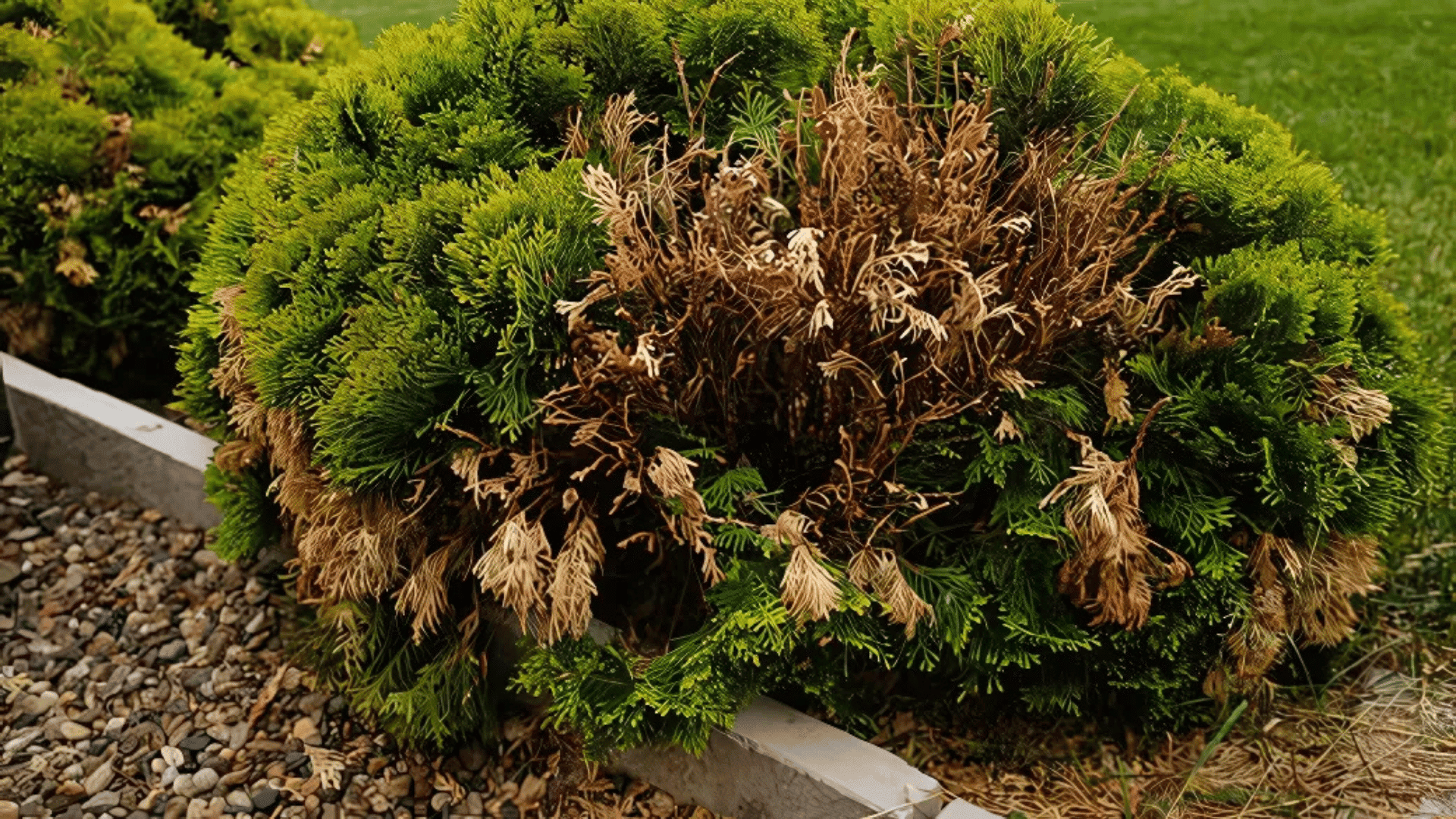
That pink stuff creeping along the bottom of your shower curtain? That is mold. And that white film halfway up? Soap scum. Neither is going anywhere on its own.
Cleaning a shower curtain takes less time than you think. No special tools. No professional help. Just a few things are already sitting in your kitchen cabinet.
This guide covers how to clean shower curtains made of fabric, plastic, or vinyl, and what to do about mold, hard water stains, and that stubborn yellow buildup. Step by step, no fuss.
How Often Should You Clean a Shower Curtain?
Wash your shower curtain and liner once a month to prevent grime buildup. If you shower less often, every two months works fine.
For a fabric curtain paired with a plastic liner, the outer curtain can go two to three months between washes, but the liner should still be cleaned monthly since it takes the most water contact every single day.
Why You Need to Clean Your Shower Curtain Regularly
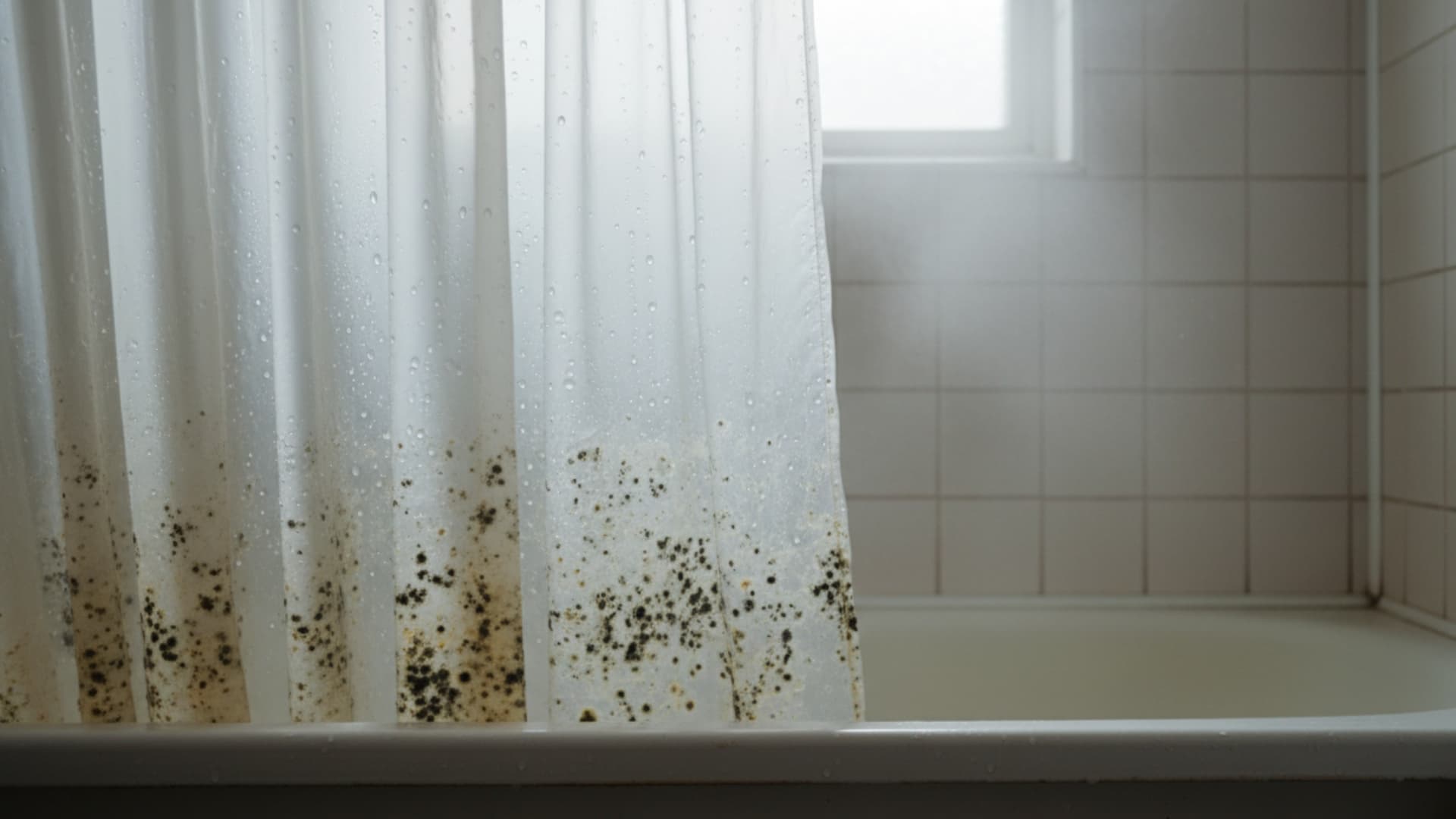
Your shower curtain looks like a small thing. It is not. Left uncleaned, it quietly causes two real problems.
Health risks you cannot ignore:
- Mold has been linked to millions of asthma and allergy cases across the United States. It makes breathing worse for people with COPD, respiratory conditions, and sensitivities.
- A musty-smelling bathroom is usually the first sign that mold has already taken hold of the curtain or liner.
- Bacteria and mildew thrive in warm, damp spaces, and shower curtains stay wet for hours after each use.
Damage to the curtain itself:
- Soap scum and hard water stains break down curtain material over time. Regular cleaning stops that buildup before it permanently wears the fabric or plastic down.
- A curtain that gets cleaned regularly lasts much longer, which means fewer replacements and less money spent.
What You Need Before You Start
Nothing here requires a trip to a specialty store. Most of these are probably already at home.
| Item | What It Is Used For |
|---|---|
| Mild laundry detergent | Washing fabric and plastic curtains |
| Baking soda | Scrubbing soap scum and removing odors |
| White vinegar | Breaking down mildew, soap scum, and mineral deposits |
| Soft brush or sponge | Scrubbing stains without scratching the surface |
| Microfiber cloth | Wiping down the curtain |
| Rubber gloves | Protecting hands during cleaning |
| Old toothbrush | Reaching rings, hooks, and seam edges |
| Spray bottle | Applying vinegar or a cleaning solution evenly |
| Bath towels | Balancing the washing machine load |
How to Clean Different Types of Shower Curtains
Each curtain material reacts differently to water, heat, and cleaning products. Here is what works for each one and what to avoid.
1. Fabric Shower Curtain
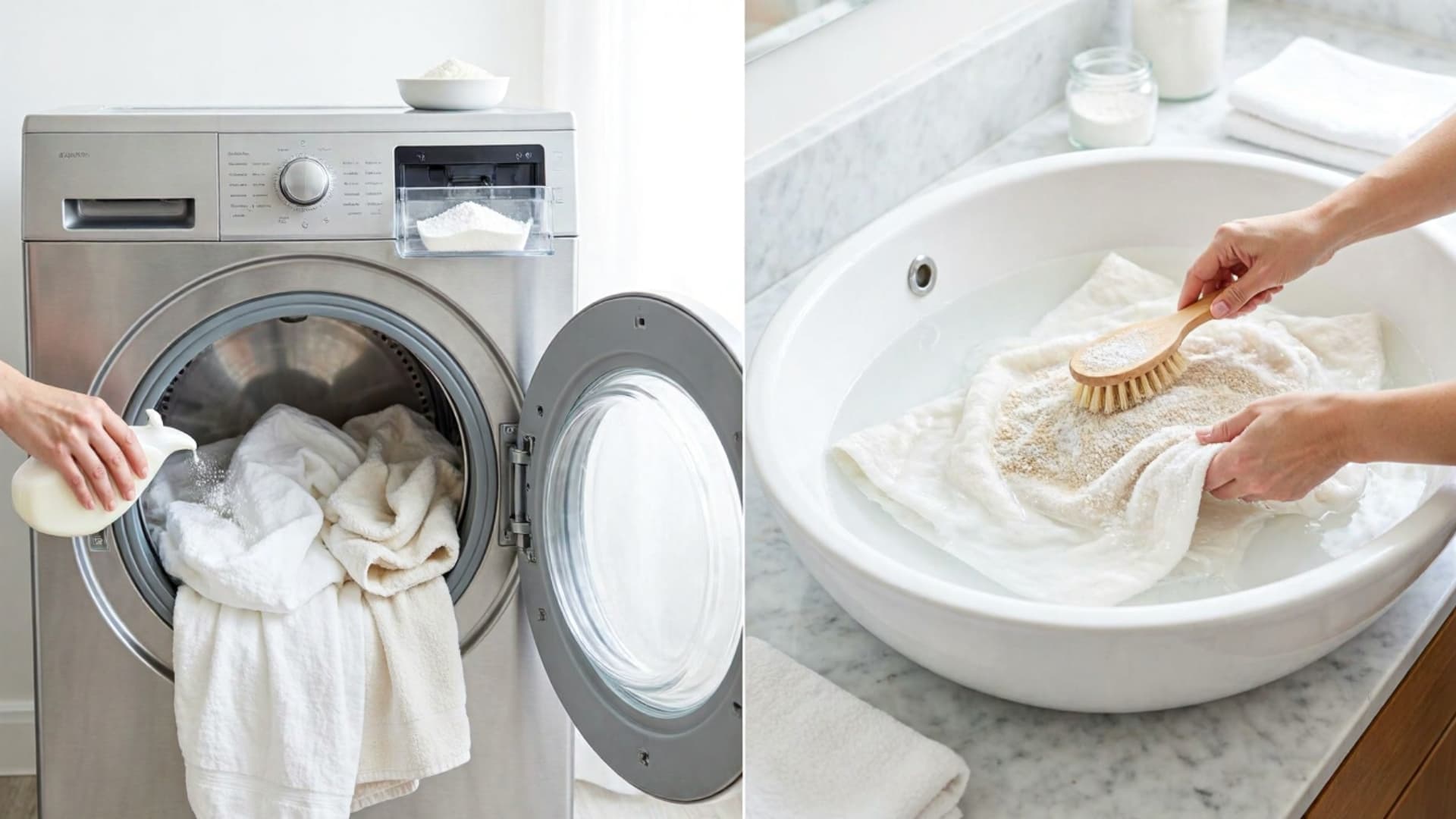
Fabric curtains are the most forgiving to wash. They hold up well in the machine and dry without losing shape.
Machine washing:
Before anything else, check the care label. Pre-treat any visible stains by rubbing a small amount of mild detergent into the spot and scrubbing gently with a soft brush.
- Remove the curtain from the rings
- Add a few bath towels to the washing machine along with the curtain to balance the load
- Use mild detergent and half a cup of baking soda
- Run a gentle cycle with cold water
- Add a little white vinegar during the rinse cycle if there is mildew or stubborn spots
Hand washing:
Fill a basin with cold water and add 1/4 cup of gentle detergent or baking soda. For stuck-on stains, apply a paste of baking soda and water directly to the spot, then scrub with a small brush. Let it sit for 30 minutes, then rinse with cold water and hang it up to dry.
2. Plastic or Vinyl Shower Curtain
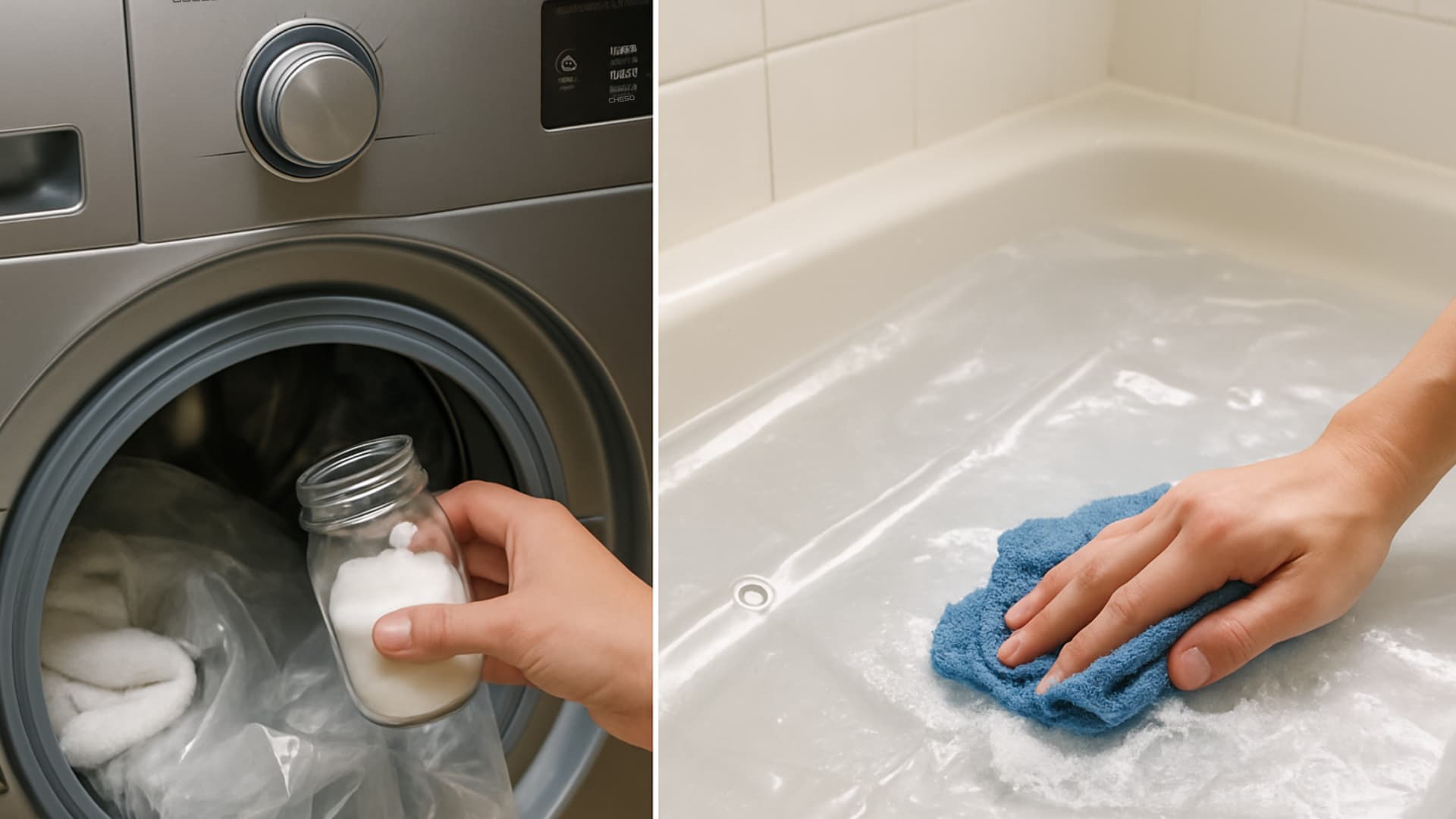
Plastic curtains need cooler water and a lighter touch. Heat warps or melts them fast.
Machine washing:
- Remove the curtain from its hooks or rings
- Place the curtain and a couple of bath towels in the machine
- Select a gentle cycle using cold or warm water, never hot
- Add half a cup of baking soda and a splash of vinegar to help remove odors
- Air dry only; the dryer will melt or shrink plastic curtains
Hand washing:
- Lay the curtain flat in the bathtub
- Sprinkle baking soda on a wet microfiber cloth and scrub the curtain all over
- Rinse with warm water and go back over any spots that are still dirty
- Shake off extra water and hang it back on the rod to dry fully
Cleaning without removing it from the rod:
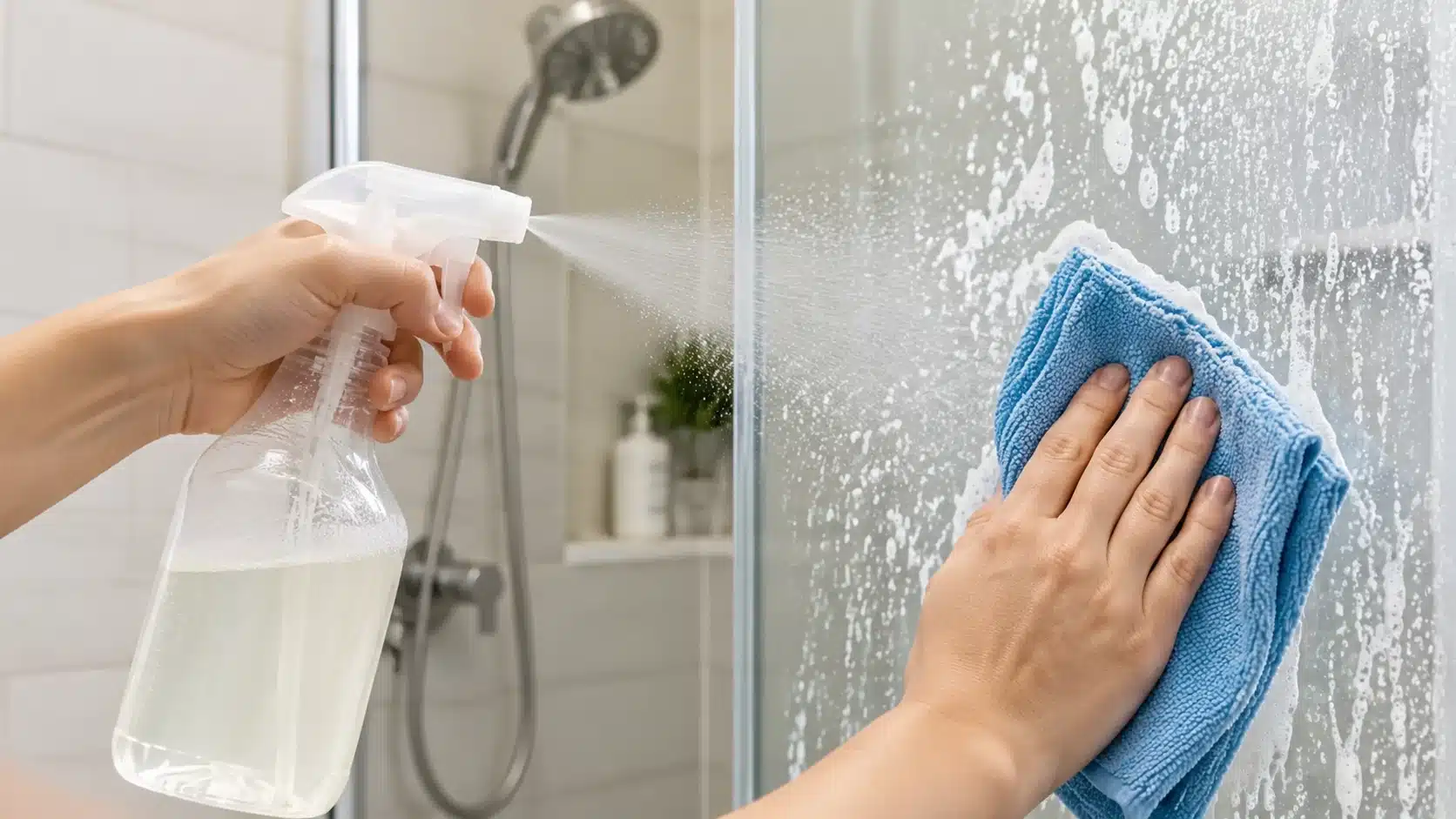
Mix one part vinegar with four parts water in a spray bottle. Shake it well and spray the curtain, paying extra attention to the bottom section.
Rinse from top to bottom using the showerhead, then let it air dry. Extend the curtain fully across the rod before spraying so every section gets covered.
3. Shower Curtain Liner
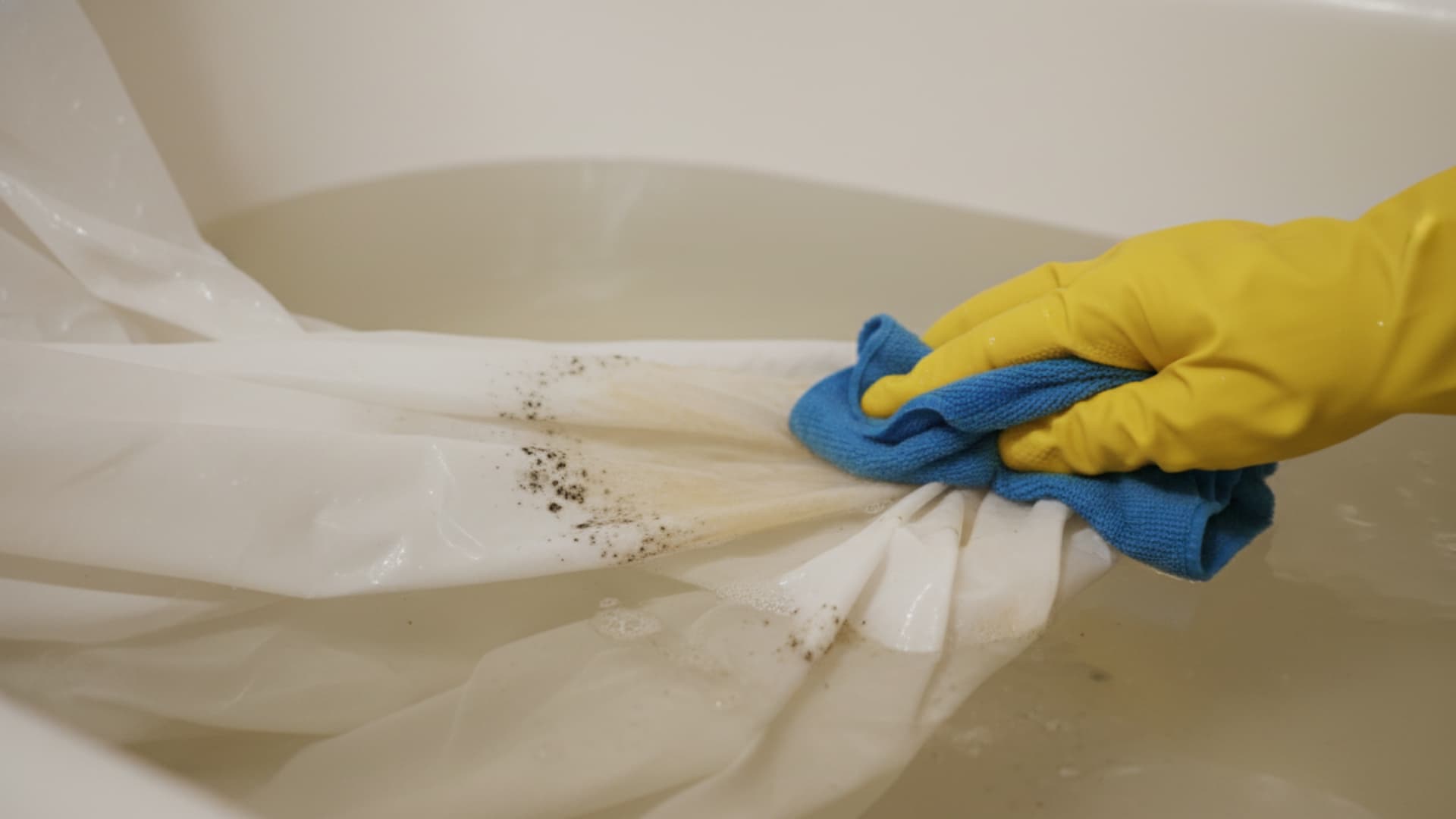
The liner sits closest to the water, which means it collects the most soap scum and mildew. It needs more frequent attention than the outer curtain.
Remove the liner from the rod and place it in a tub of warm water. Add 1/4 cup of baking soda and a sprinkle of laundry detergent. Scrub it with a microfiber cloth, then hang it back up to dry.
If it is machine washable, run a gentle cool cycle with mild detergent and a couple of towels. Skip the dryer completely.
How to Remove Specific Stains
Different stains need different fixes. Using the wrong method wastes time and can damage the curtain.
1. Mold and Mildew
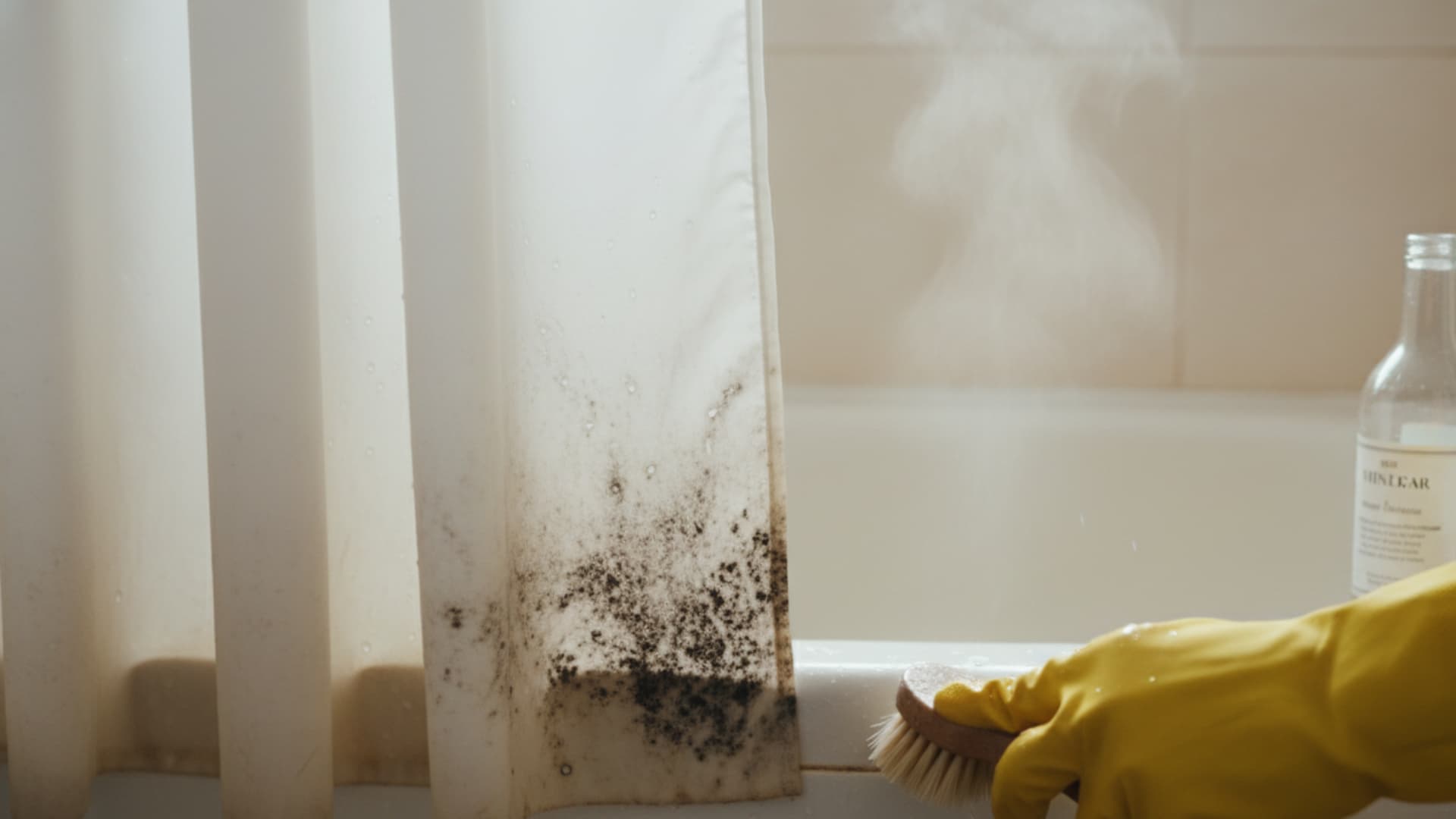
Mold forms fast in a damp, poorly ventilated bathroom. The bottom of the curtain is almost always the first place it shows up.
Fill a bathtub with warm water and add 1 cup of white vinegar or 1/2 cup of baking soda. Soak the curtain for 30 minutes. Scrub with a soft brush, paying close attention to the bottom edge.
If the curtain is machine washable, follow with a gentle wash cycle afterward. Hang it outside or over the rod to dry fully.
For tougher mold spots, mix equal parts bleach and water and apply it directly to the stained area. Scrub with a brush and rinse well.
Safety note: Never mix hydrogen peroxide and vinegar together. Combining the two creates a toxic gas.
2. Soap Scum
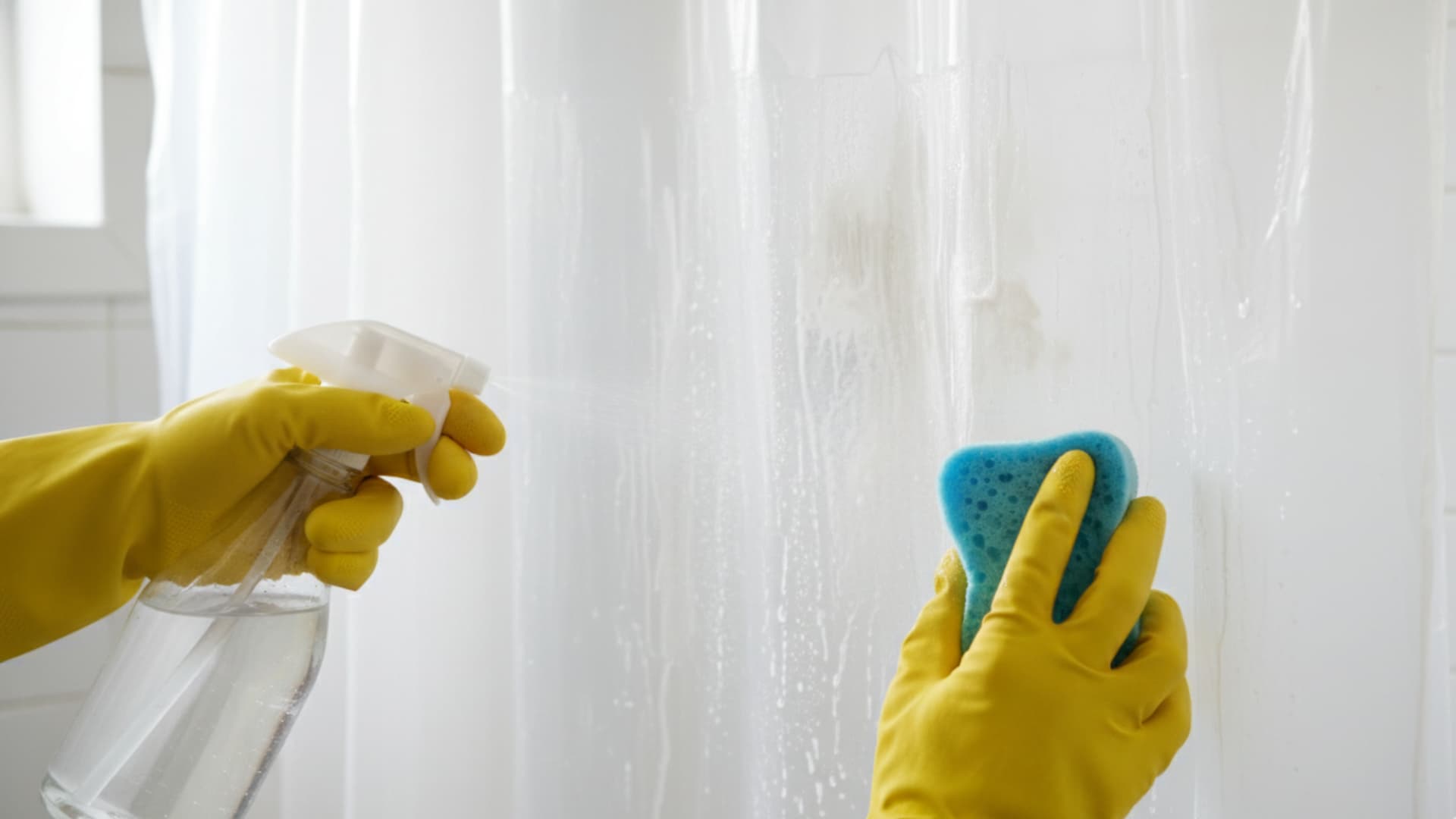
Soap scum is the white, filmy layer formed by leftover soap, shampoo, and body oils, mixed with water and minerals.
Mix equal parts vinegar and water in a spray bottle. Spray the inside of the curtain while it is stretched as flat as possible. Let it sit for a few minutes, then wipe the soiled areas with a damp sponge. Rinse with water. A baking soda paste works well as a mild scrub for spots that need extra work.
3. Hard Water Stains
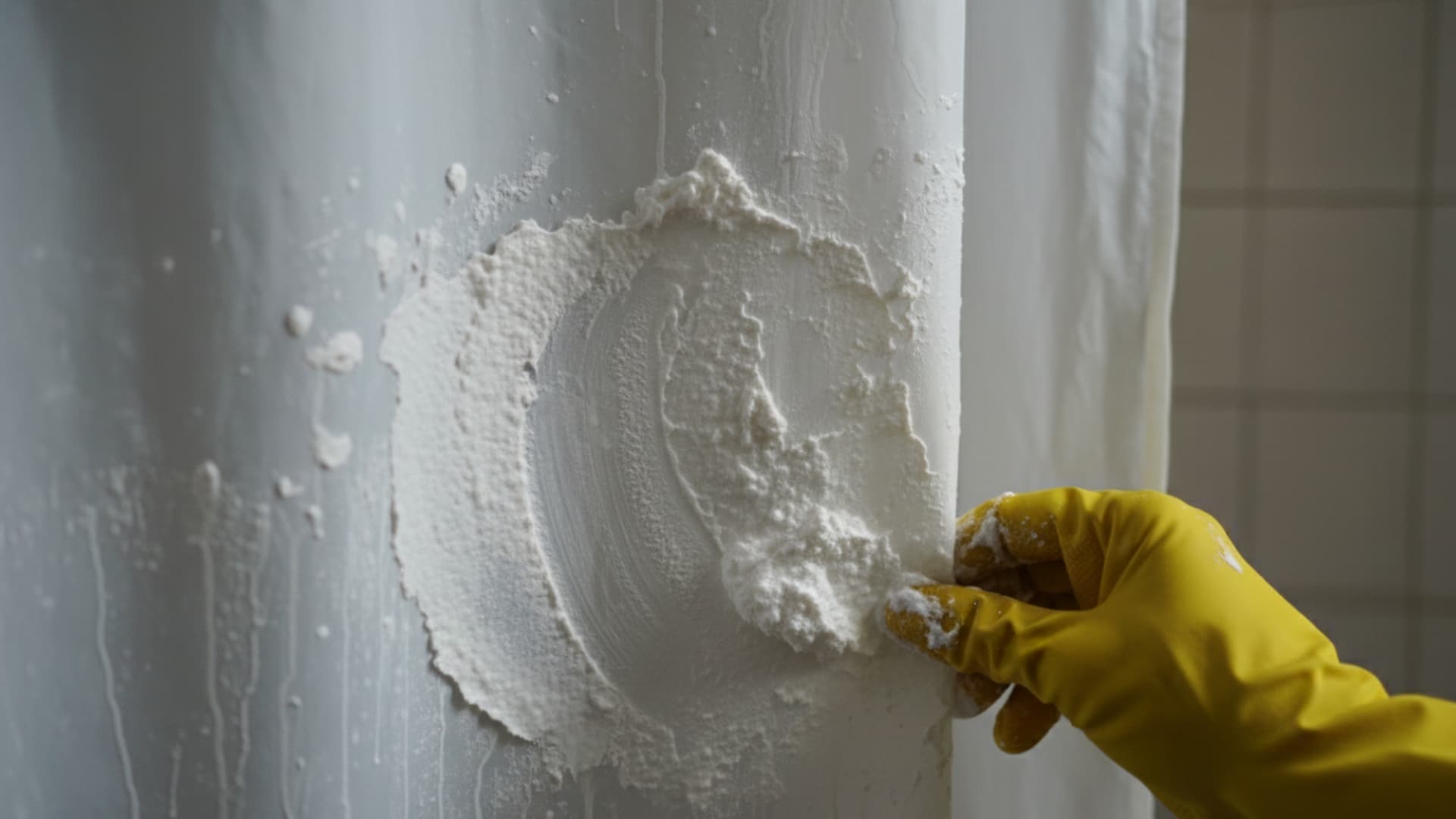
Hard water leaves cloudy, discolored patches caused by calcium, limestone, and magnesium that have settled in the water supply.
Make a paste using borax and lemon juice. Rub it into the hard-water spots, then let the curtain sit overnight. Machine wash the next day to clear out the paste and leftover grime.
If spots remain, repeat the process and wash again. For stubborn mineral deposits, a calcium, lime, and rust remover available at most grocery stores works well on these stains.
4. Yellow Stains and Discoloration
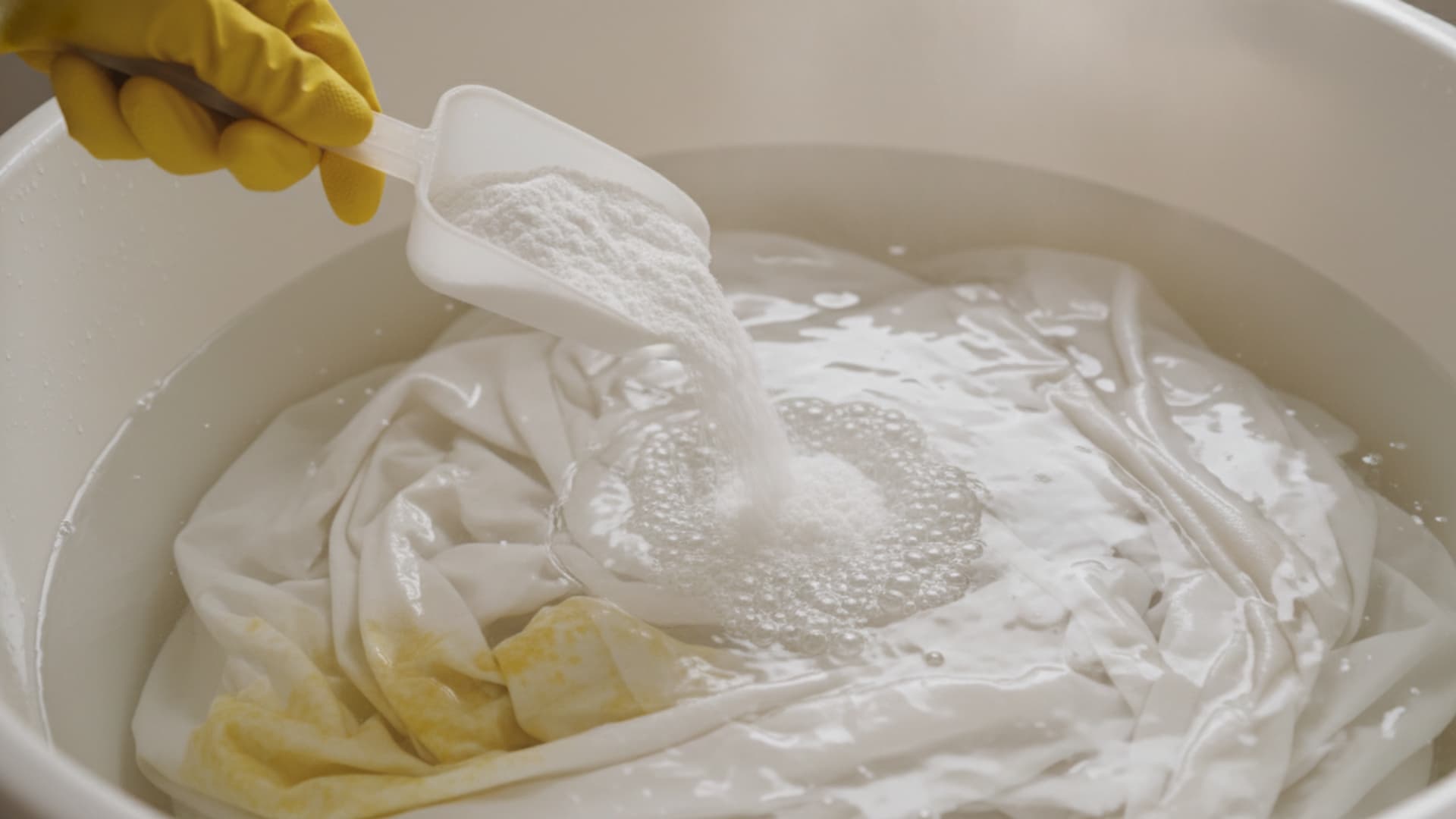
Yellow or brown staining on a white curtain usually means it is long overdue for a proper clean.
Find a bucket large enough to hold the curtain and add a large scoop of powdered oxygen bleach. Pour in a gallon of hot water and let the curtain soak for several hours.
Drain and check whether the stains have cleared. If not, soak a second time. Once the staining is gone, wash it in the machine following the care label. Hang to air dry when done.
Natural Cleaning Methods (No Bleach)
If you prefer to skip harsh chemicals, three things already in most kitchens do a solid job on their own.
Baking soda: Sprinkle it onto a damp cloth and scrub it directly onto the curtain. It works as a gentle scrub on soap scum and light mildew and pulls odors out of fabric or plastic.
White vinegar: Use 1/4 cup in place of laundry detergent in the washing machine. It cuts through soap scum, body oils, and mildew without leaving a residue. A weekly spray of diluted vinegar on the curtain also keeps buildup from forming between washes.
Hydrogen peroxide: Spray 3% hydrogen peroxide directly on the curtain liner two to three times a week to stop mold and mildew from forming. It dries clean, leaves no strong smell, and is safe on most curtain materials.
How to Clean Shower Curtain Rings and Hooks
Rings and hooks are easy to forget, but they pick up just as much grime, mold, and soap scum as the curtain itself.
Remove the plastic rings and soak them in a sink of hot, soapy water for around 30 minutes. Scrub with an old toothbrush, making sure to get into the small gaps where grime collects.
For metal rings that have started to rust, soak them in white vinegar overnight. Rinse well before reattaching them to the curtain and rod.
Signs It’s Time to Replace Your Shower Curtain
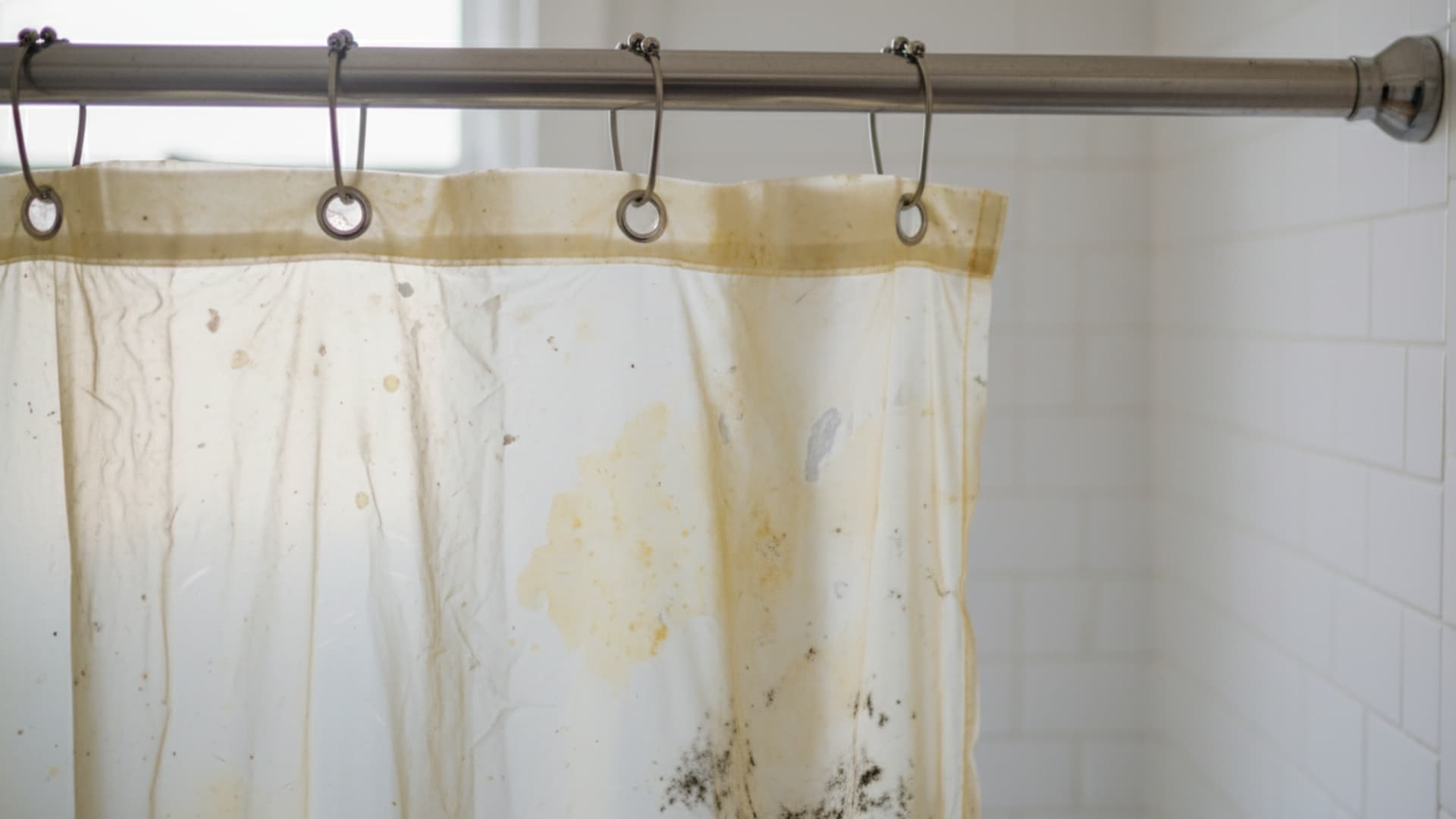
Cleaning can only go so far. These signs tell you it is time to let go and buy a new one.
- Mold or mildew keeps returning even after you have cleaned it multiple times. This usually means the material has absorbed it too deeply to remove.
- A persistent, musty smell that persists after washing indicates the odor has set into the fabric or plastic permanently.
- Visible tears, holes, or fraying along the edges or at the grommet holes means the curtain is letting water through.
- Permanent discoloration or staining that no amount of soaking has cleared up.
- Changes in texture, a plastic curtain that has gone stiff, crinkled, or sticky, or a fabric one that has thinned out significantly.
A basic liner is inexpensive. If it is past the point where cleaning helps, replacing it is the smarter call.
How to Keep Your Shower Curtain Clean Longer?
After every shower, leave the curtain fully open across the rod and keep the bathroom fan running for at least 15 to 30 minutes. This dries the curtain faster and stops mold from forming in the folds.
Once a week, spray the curtain with a solution of half water and half vinegar. In humid areas, doing this daily makes a real difference.
Wiping the bottom of the curtain with a dry towel after showering also removes extra moisture before it has a chance to sit and cause problems.
The Bottom Line
Cleaning a shower curtain takes about 20 minutes, but it makes the whole bathroom feel different. Mold, soap scum, hard water marks, all of it comes off with things you already have at home.
Pick the method that fits your curtain type, stay consistent with monthly washes, and give the liner and rings some attention too. That is really all it takes.
If you have a trick that works especially well in your bathroom, drop it in the comments below.