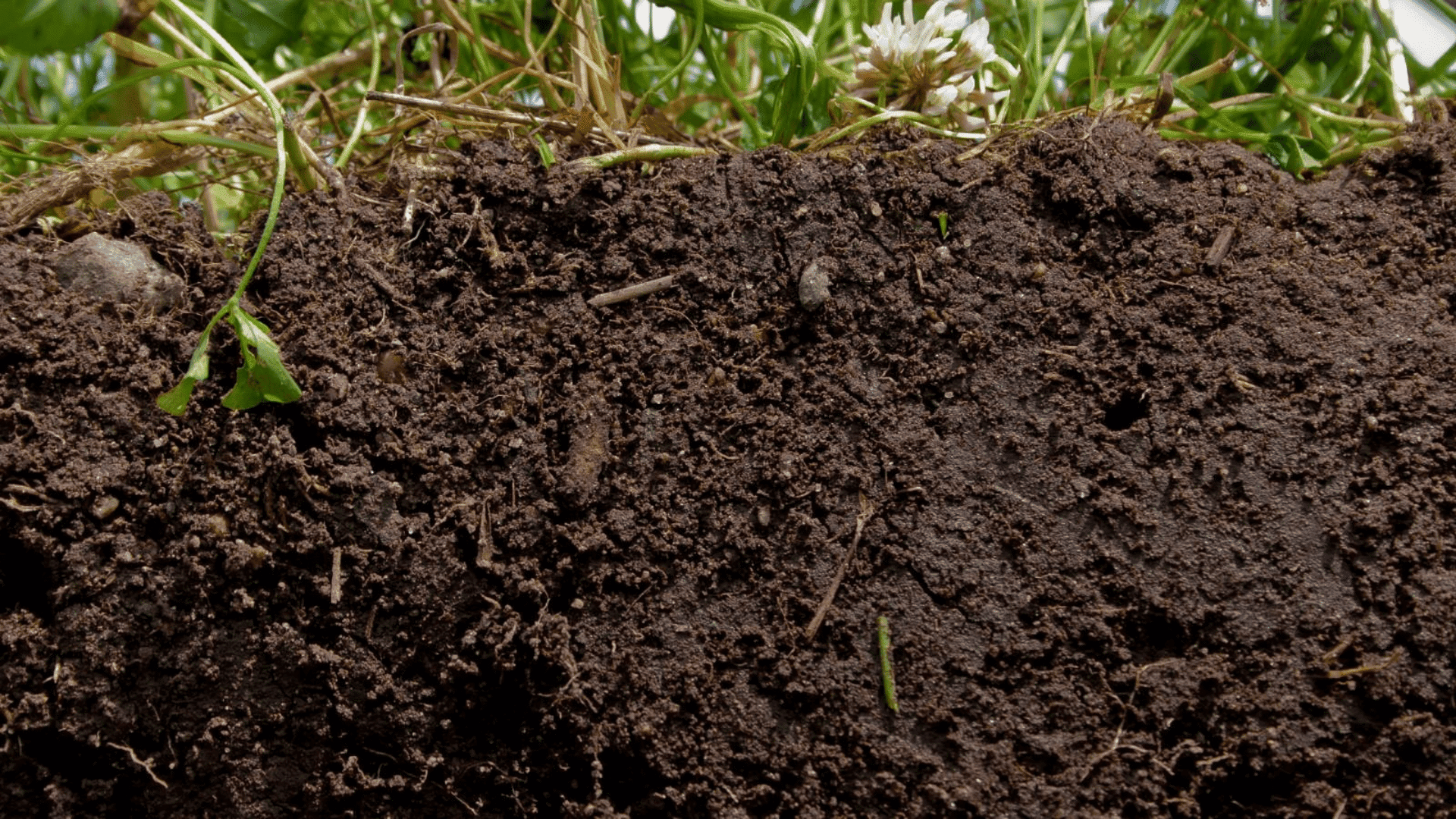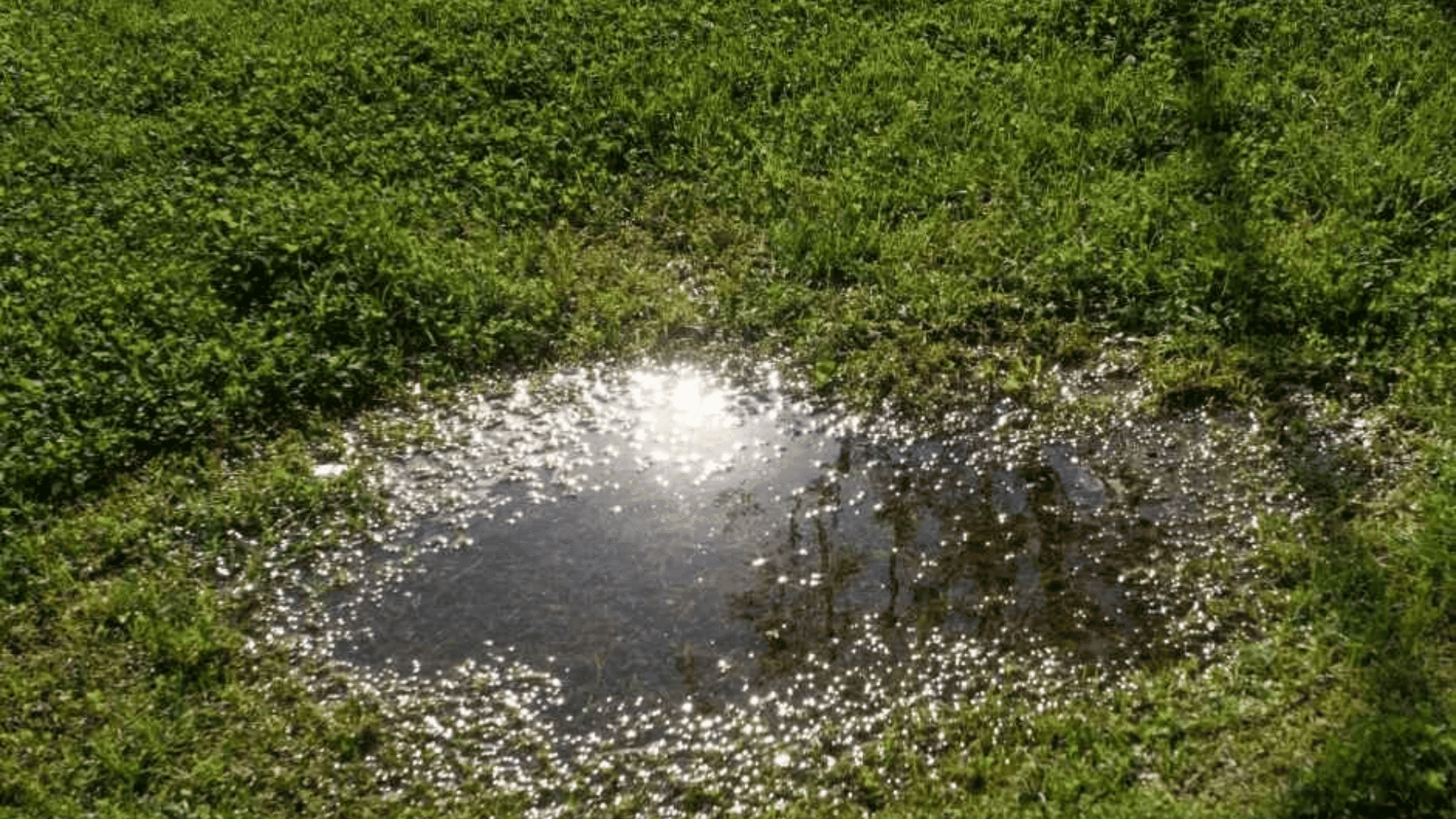
Your lawn usually warns you before it starts falling apart. Hard soil. Thin grass. Water sitting on top after rain.
I used to think those signs meant the lawn needed more fertilizer. Most of the time, the roots were trapped in tight soil.
That is why learning how to aerate lawn matters. Done right, it gives roots more room, helps water soak in, and supports thicker growth.
But timing still matters. If heavy thatch is blocking the soil, knowing the best time to dethatch lawn can save you from tearing up grass when it cannot recover. The key is checking the lawn before you start. That one pause keeps the job safer and cleaner.
Before You Rent an Aerator, Check What Your Lawn is Telling You
A lot of people rent an aerator because a neighbor did it. I get why. Lawn work spreads that way.
But your lawn should make the decision first. Aeration helps when the soil gets packed down, but it only works when the grass is ready to recover.
Check for these signs:
- Water pools after rain or watering
- Soil feels hard under your feet
- A screwdriver will not push into the ground easily
- Grass looks thin in busy lawn areas
- Bare spots keep coming back
- Fertilizer does not seem to help
- Kids, pets, or mowers use the same paths often
One sign alone does not always mean you need aeration. But if you see two or three together, your soil is probably too tight.
Before you rent the machine, also make sure the lawn is actively growing, the soil feels moist but firm, and you can water after the work.
If the lawn is thin but the soil is loose, overseeding may be the better first move. If the grass is brown from heat or drought, wait for better growing conditions.
Aeration Fixes Tight Soil, Not Every Lawn Issue
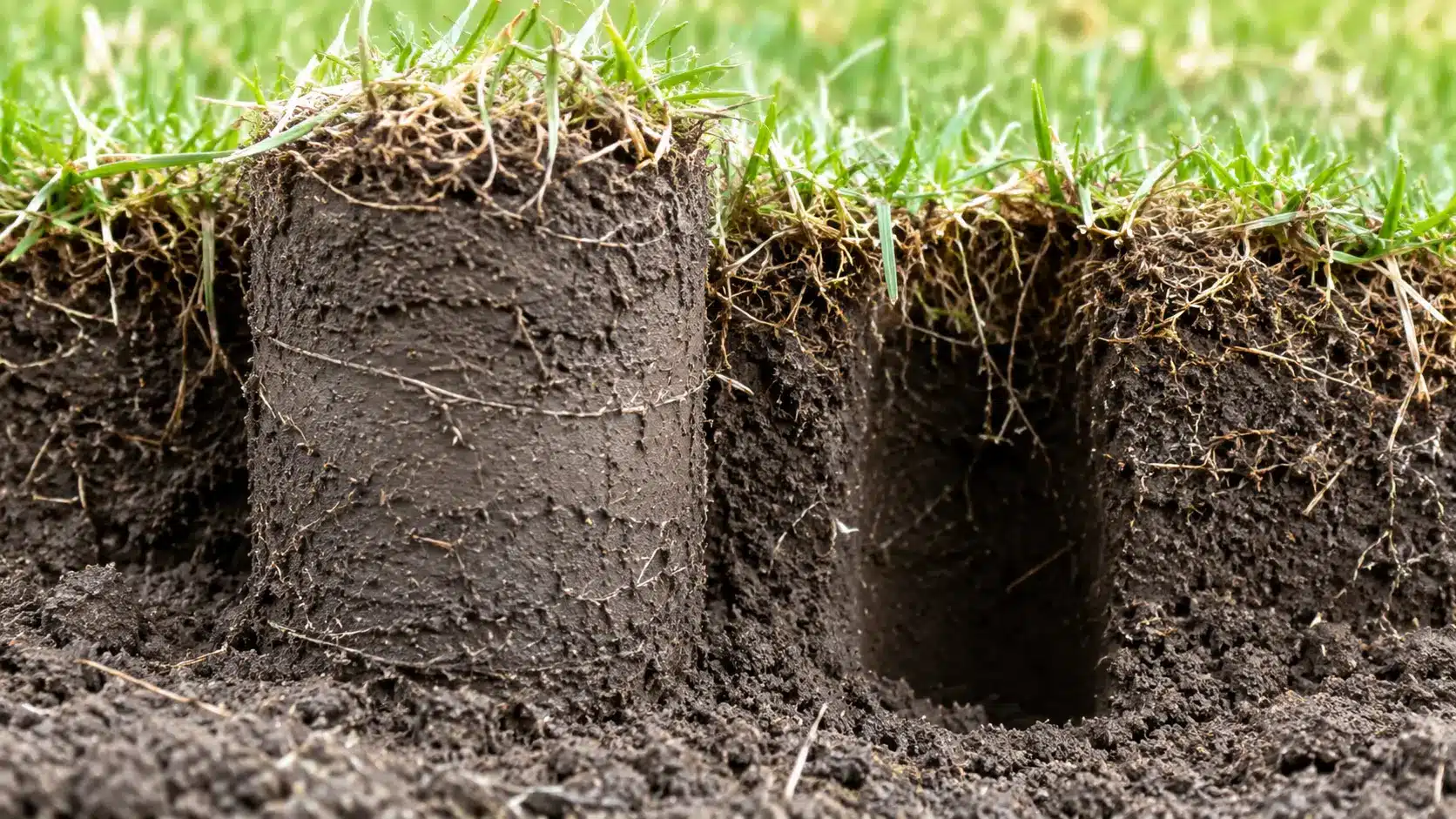
Aeration is useful, but it is not magic. I learned that the slow way.
If the lawn has disease, poor mowing habits, weak watering, or too much shade, aeration will not fix all of it. It solves one main problem: compacted soil.
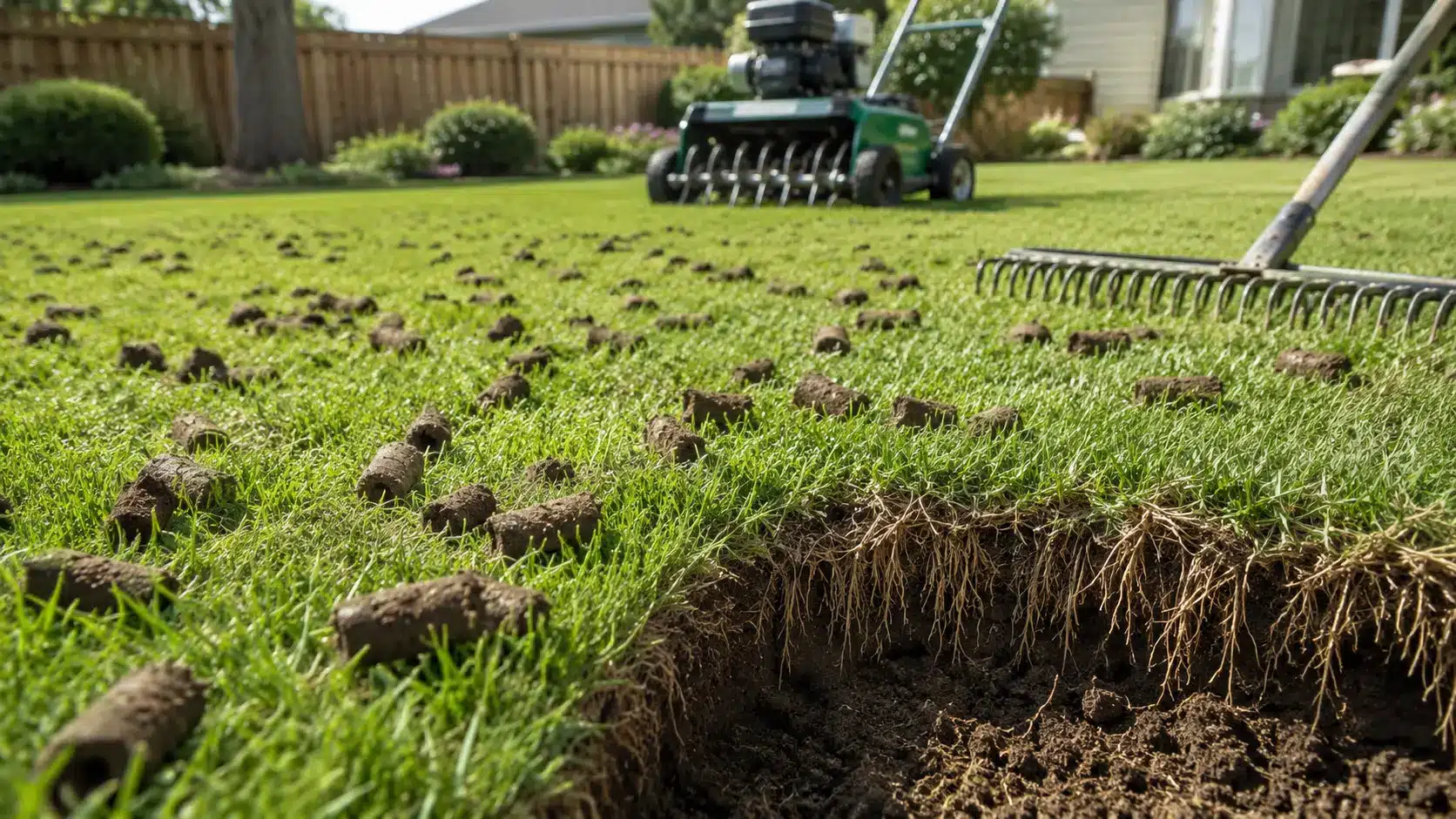
Core aeration pulls small plugs from the ground. Those holes let the soil loosen and give roots better access to air and water.
Dethatching is different.
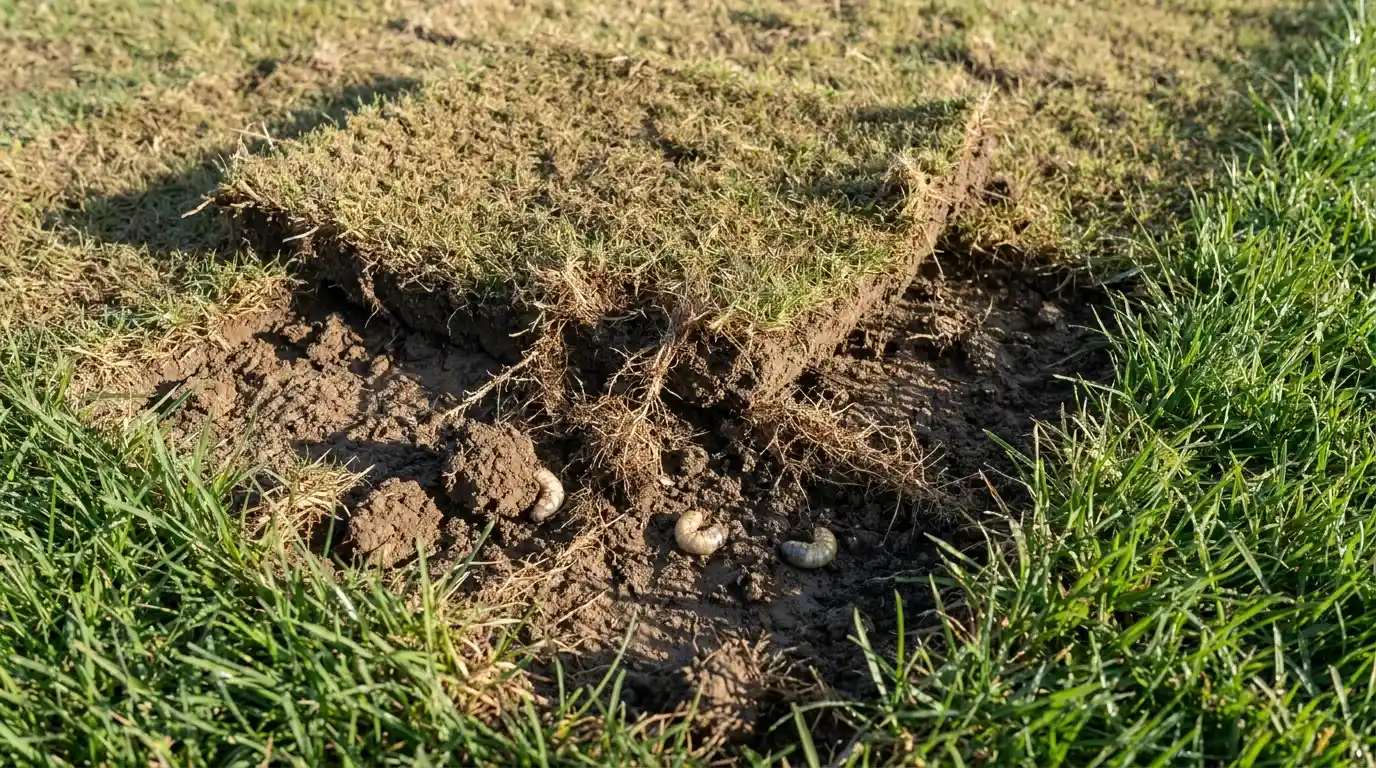
Thatch is the dead layer of stems, roots, and organic material between green grass and the soil. A little thatch can help protect the lawn. Too much blocks water and air.
Here is the simple difference:
| Lawn Problem | Likely Fix | What You Should Look For |
|---|---|---|
| Hard soil | Aeration | Water runoff, thin grass, busy lawn paths |
| Spongy surface | Dethatching | Thick brown layer near the soil |
| Thin lawn with open soil | Overseeding | Bare areas with loose enough ground |
| Heat-stressed grass | Wait | Dry, dull grass that is not actively growing |
If the soil is tight, aerate. If the thatch layer is thick, dethatch. If both are happening, dethatch first, clean up, then aerate.
Best Time to Aerate and Dethatch Based on Grass Type
The right time to aerate or dethatch is when the grass is growing well enough to heal. Timing should come from grass growth, not a free weekend.
Aeration creates holes and pulls plugs. Dethatching removes dead buildup near the soil. Both jobs add stress at first. That stress only helps when the lawn can recover fast.
Use grass type as your starting point:
| Grass Type | Best Time to Aerate | Best Time to Dethatch | Notes |
|---|---|---|---|
| Tall fescue | Late summer to early fall | Early fall or early spring | Fall is usually safer for recovery |
| Kentucky bluegrass | Early fall | Early fall or spring | Good timing helps with overseeding |
| Perennial ryegrass | Early fall | Early fall or spring | Avoid peak heat |
| Bermuda | Late spring to early summer | Late spring to early summer | Work only when it is growing well |
| Zoysia | Late spring to early summer | Late spring to early summer | Check thatch before removing it |
| St. Augustine | Late spring to early summer | Only if needed, and gently | Heavy dethatching can damage runners |
Cool-season grass usually does best in early fall. The heat has eased, growth is active, and roots can recover before winter.
Warm-season grass needs heat to grow well. Late spring through early summer is usually better because the lawn is waking up and spreading fast.
Do not aerate or dethatch when:
- The soil is bone dry
- The lawn is dormant
- Grass is under drought pressure
- Heat is intense
- New sod has not rooted
- The ground is muddy
- The lawn already looks weak
Soil should be moist, but not soaked. Water the lawn the day before if the ground is dry. If your shoes sink or the soil smears, wait.
Core Aerator or Spike Aerator?
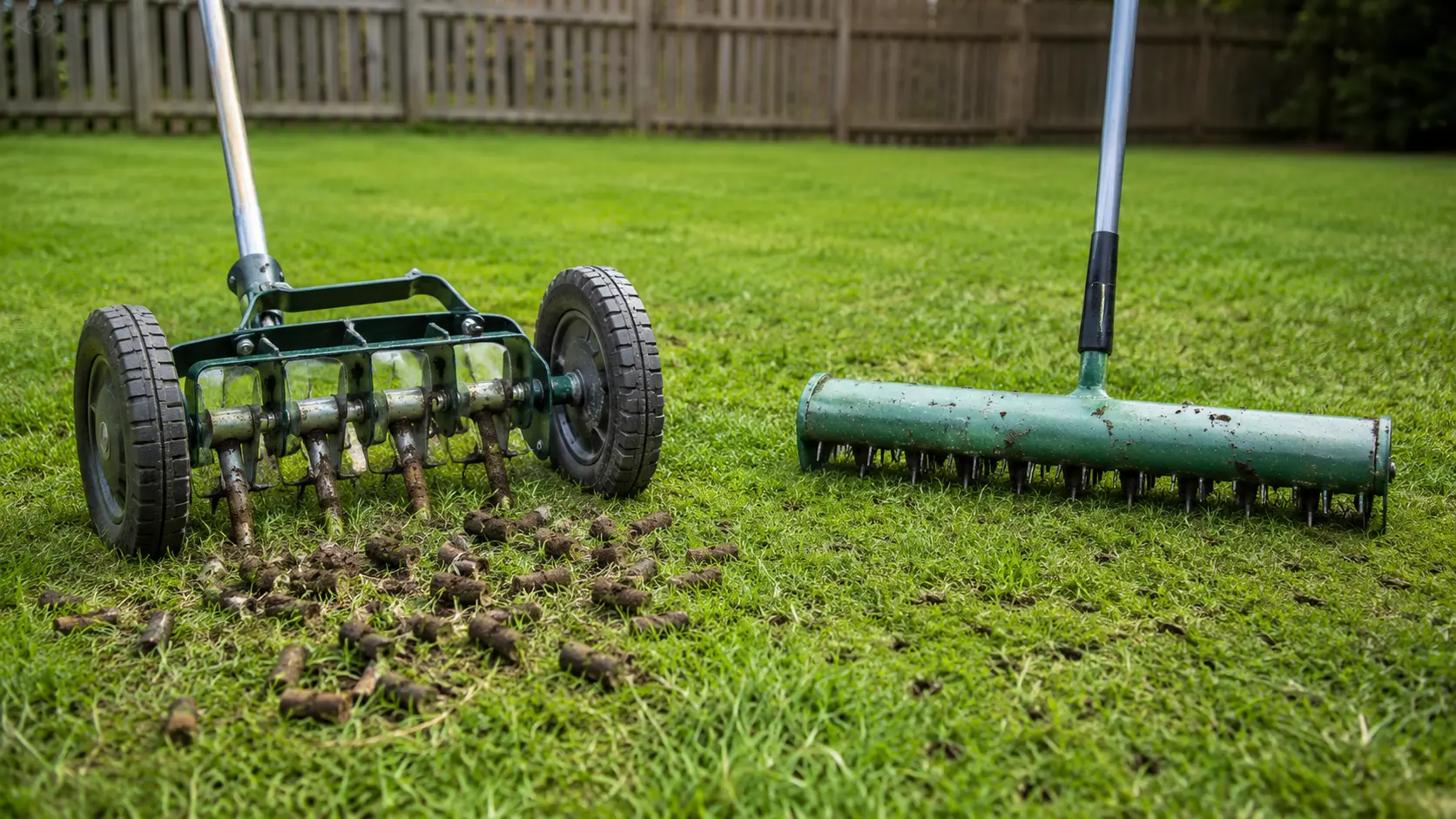
The tool matters because not every aerator solves compaction.
A spike aerator punches holes into the ground. That may look helpful, but it can press soil tighter around each hole. For real compaction, a core aerator is usually the better tool.
A core aerator removes plugs from the soil. That gives the ground space to loosen.
| Tool | Best For | Watch Out For |
|---|---|---|
| Core aerator | Compacted soil and busy lawn areas | Rental machines can be heavy |
| Spike aerator | Light surface opening | Can make the soil worse |
| Manual core tool | Small problem spots | Takes too much time for large lawns |
| Tow-behind aerator | Bigger yards | Needs enough weight to pull proper plugs |
| Lawn service | Large, uneven, or heavily compacted lawns | Costs more, but saves time and effort |
If your lawn is small, a manual core tool may be enough. If your whole yard is hard, rent a core machine or hire help.
I would not use spike aeration for heavy clay soil. It may give you holes, but it does not remove soil plugs. That makes a big difference.
How to Aerate Lawn Without Making a Mess of It
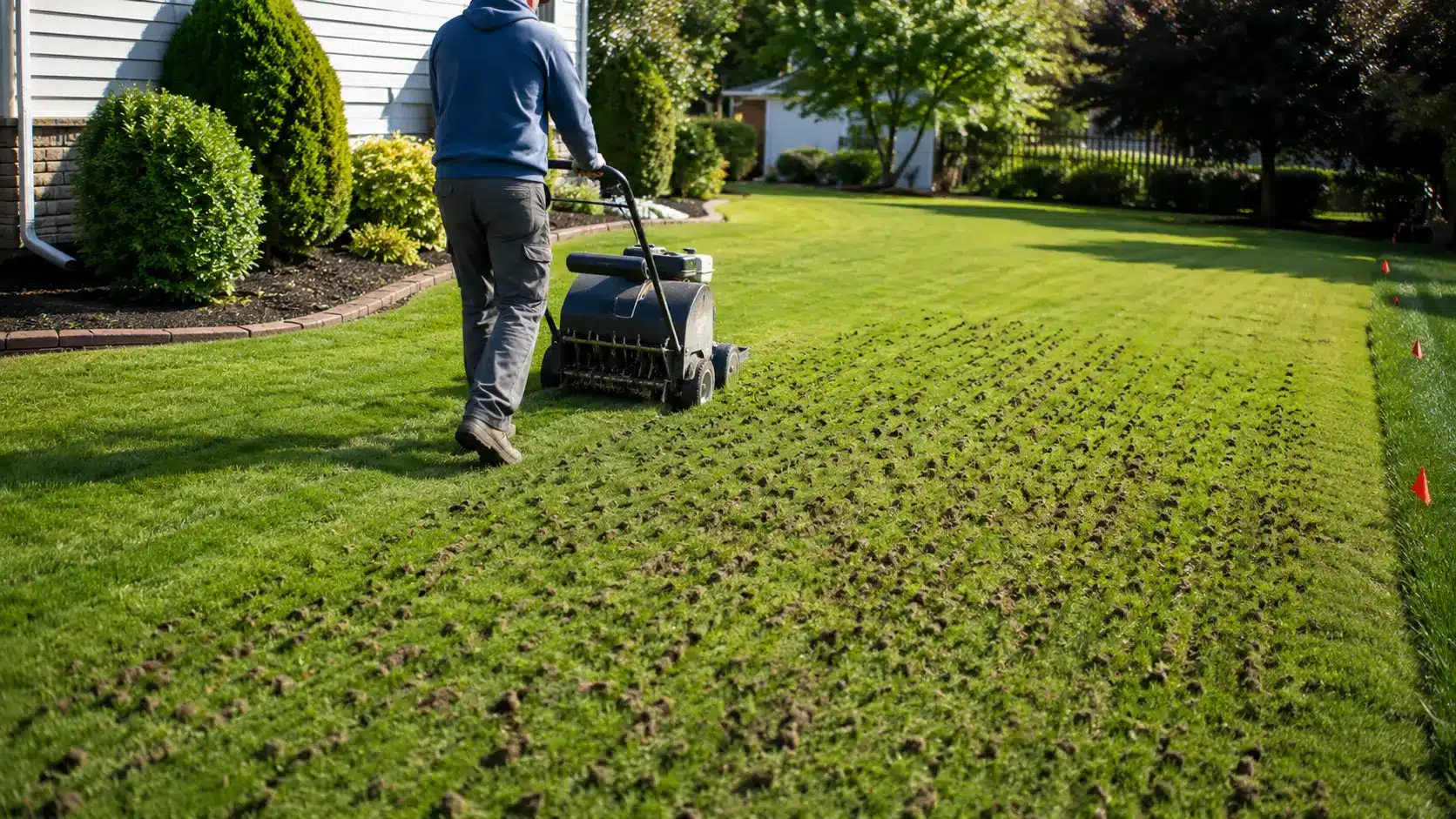
Aeration works best when you prepare the lawn first. Skipping prep can waste the whole job.
Before you aerate, do this:
- Mow the lawn slightly shorter than normal
- Water the lawn the day before if the soil is dry
- Mark sprinkler heads and shallow lines
- Pick up toys, hoses, sticks, and yard debris
- Check the weather so rain does not turn the yard muddy
- Plan your path before starting the machine
Then use the aerator in steady passes.
For light compaction, one pass may be enough. For hard soil, make a second pass across the first one. Do not rush. The machine needs time to pull plugs cleanly.
Leave the plugs on the lawn. They may look messy for a few days, but they break down and return soil to the surface.
After aerating, keep people and pets off the lawn for at least a few days, especially if the soil is soft or you added seed.
If You Need Both, Dethatch Before Aerating
If your lawn has a thick thatch layer, remove it before aeration. That clears the surface so the aerator can reach the soil better.
Do not dethatch just because the surface has a little dead material. Light thatch is normal.
Check it first:
- Cut a small wedge from the lawn
- Look between the grass and the soil
- Find the brown, spongy layer
- If it is thicker than about half an inch, dethatching may help
If you need both jobs, follow this order:
- Mow a little shorter
- Dethatch first
- Rake up loose debris
- Aerate after cleanup
- Overseed if the lawn is thin
- Water well after the work
I like this order because it makes each step work better. The surface gets cleared first, then the soil gets opened.
Mistakes Lawn Owners Usually Learn the Hard Way
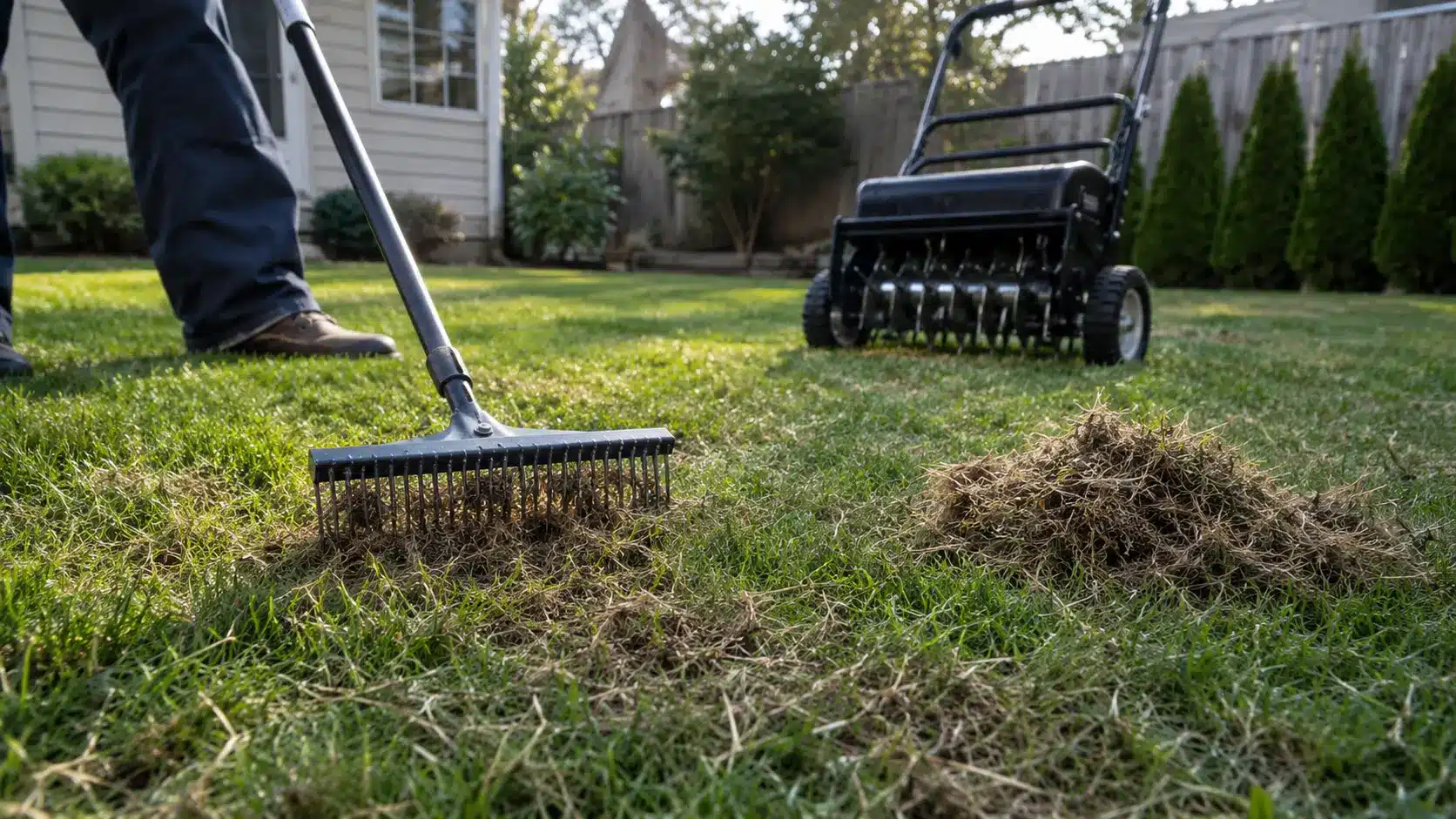
Most aeration mistakes come from rushing. I have made a few myself, and the lawn usually tells you later.
Avoid these:
- Aerating dry soil, then wondering why plugs barely come out
- Using spike tools on soil that needed core aeration
- Working during heat or drought
- Dethatching weak grass is too hard
- Skipping cleanup after dethatching
- Seeding without steady watering
- Expecting results overnight
- Repeating the same job every year without checking the lawn
The best advice I can give is simple. Read the lawn before you touch the machine.
If the grass is growing, the soil is moist, and signs of compaction are clear, aeration can help. If the lawn is weak, dry, or dormant, wait.
What to Do After Aerating
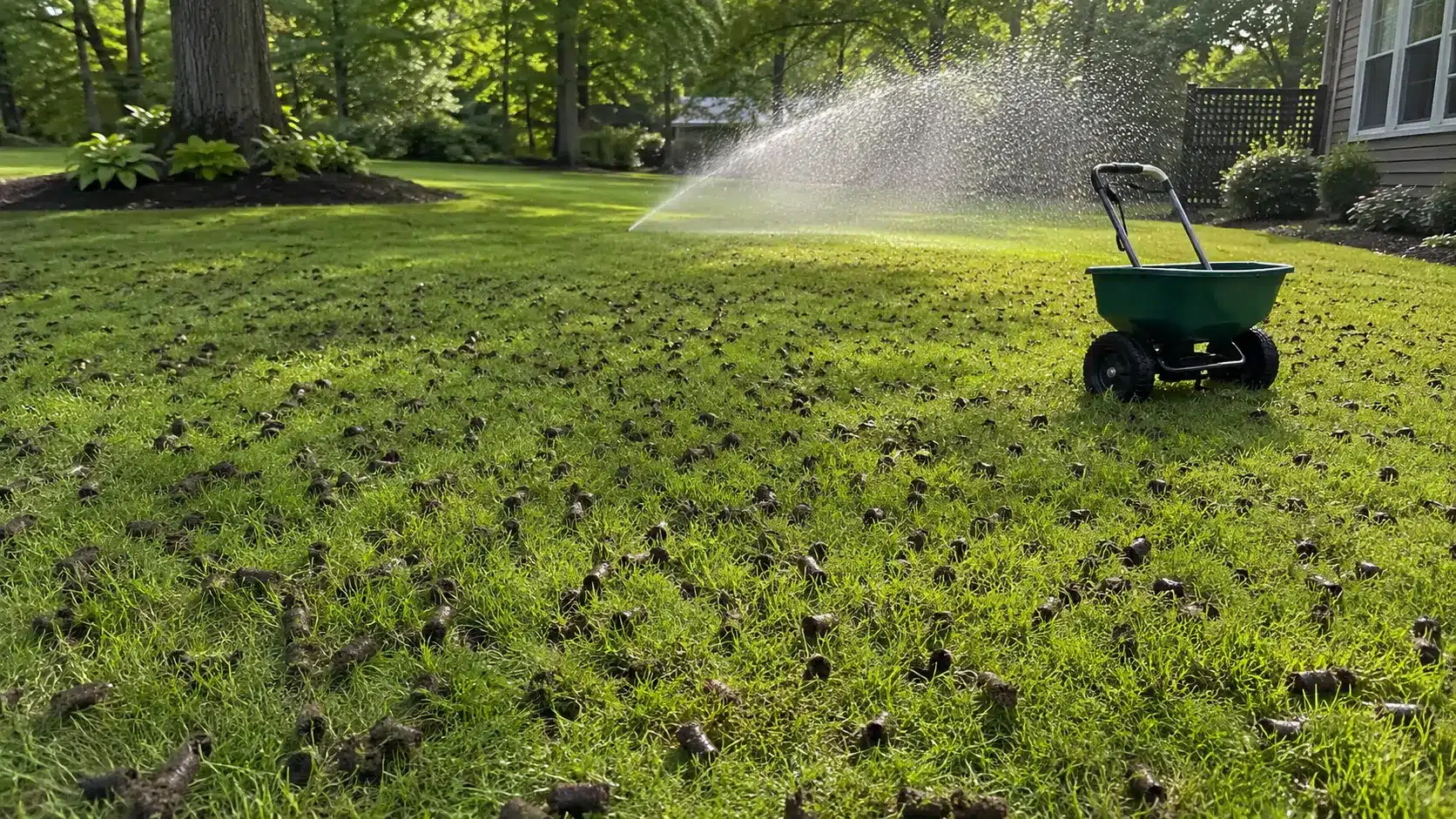
Aftercare decides whether aeration actually helps.
The lawn may look rough for a few days. That is normal. The goal is better root access and stronger recovery, not instant results.
After aeration, follow these tips:
- Leave the soil plugs in place
- Water deeply, but do not flood the lawn
- Keep foot traffic low for a few days
- Overseed thin cool-season lawns in fall
- Fertilize during the active growth window for your grass type
- Avoid fertilizer during heat, dormancy, or drought
- Wait before mowing if the grass looks stressed
- Keep the new seed moist until it starts growing
If you overseed, watering becomes the main job. The seed will not do much if it dries out right after hitting the soil.
If you do not overseed, still water well. Moist soil helps plugs break down and supports root growth.
Frequently Asked Questions
Should I rent a machine or hire a pro?
Rent a core machine if your yard is small to medium and fairly level. Hire a pro if the lawn is large, steep, heavily compacted, or full of irrigation heads. The right choice depends on time, strength, and risk.
Can the work be done in spring?
Spring can work for cool-season grass if the lawn is growing and the soil is moist. Fall is usually safer because weed pressure is lower and roots recover better. Warm-season grass should wait until late spring or early summer.
Do the soil plugs need to be removed?
No, leave the plugs on the lawn. They break down over time and return soil to the surface. Removing them adds extra work and takes away material that helps the lawn settle after aeration.
Is it safe for St. Augustine grass?
Core aeration can help St. Augustine if soil is compacted. Be careful with dethatching because aggressive raking can tear runners. Use gentle care, work during active growth, and avoid it when the lawn is weak.
How soon can mowing start again?
Wait until the lawn looks steady and the soil is not soft from watering. For many lawns, that means a few days. If you overseeded, wait until new grass reaches mowing height before cutting.
Conclusion
Learning how to aerate lawn comes down to reading the yard before renting a machine. Hard soil, standing water, and thin traffic paths tell you a lot.
If thatch is blocking the surface too, knowing the best time to dethatch lawn helps you set the right order before aeration.
I have seen lawns respond well when timing, soil moisture, and aftercare line up. I have also seen rushed work make a tired lawn worse.
Check the grass type, test the soil, pick the right tool, then follow through with water and care.
Start with one small soil check today, and your next lawn job will make more sense. That small step can save a weekend of wasted work.