A healthy lawn starts with the right grass. Even two yards on the same street can have different soil, sunlight, drainage, and traffic, so the grass that grows well next door may not suit your space.
Different types of lawn grass also respond differently to heat, cold, shade, drought, and heavy rain. Some varieties need full sun and regular care, while others can handle partial shade, pets, children, or less frequent mowing.
Below, you can compare common grass varieties, including their climate needs, traffic resistance, and care level, so you can choose a grass that matches your yard and daily routine.
Benefits of Lawn Grass
A healthy lawn does more than improve the appearance of your yard. Lawn grass protects the soil, reduces erosion, and helps keep dust and mud under control. Its roots hold the ground together, while the grass surface slows rainwater and supports better drainage.
Grass also creates a cooler and more comfortable outdoor space. It absorbs less heat than concrete or paving, making lawns useful for relaxing, playing, and spending time with family or pets.
A well-maintained lawn can also reduce noise, trap airborne particles, and improve curb appeal. It provides a soft surface for everyday activities and creates a clean background for trees, flowers, and garden beds.
Choosing a variety suited to your climate, sunlight, soil, and maintenance routine helps you enjoy these benefits with less watering, mowing, and repair.
Warm-Season vs Cool-Season Lawn Grass
Types of lawn grass fall into two broad groups: warm-season and cool-season. Cool-season grasses grow best in northern regions and are most active in spring and fall. They handle cold winters but can slow down or brown out during hot summers.
Warm-season grasses grow best in southern regions and peak in late spring and summer.
They handle heat and dry spells well but often go dormant when temperatures drop. If you live in the transition zone, where summers run hot and winters run cold, tall fescue, zoysiagrass, or certain Bermudagrass varieties tend to work best.
Climate and seasonal temperature swings should be the first thing you weigh before picking a grass, and AgriLife Extension turfgrass guidance breaks these zones down by region if you want a closer look at what grows where.
Types of Lawn Grass for Cool-Season Climates
Cool-season lawn grasses grow best in areas with mild summers and cold winters. They are most active during spring and fall, and the right variety depends on your sunlight, soil, traffic, water supply, and maintenance routine.
1. Kentucky Bluegrass
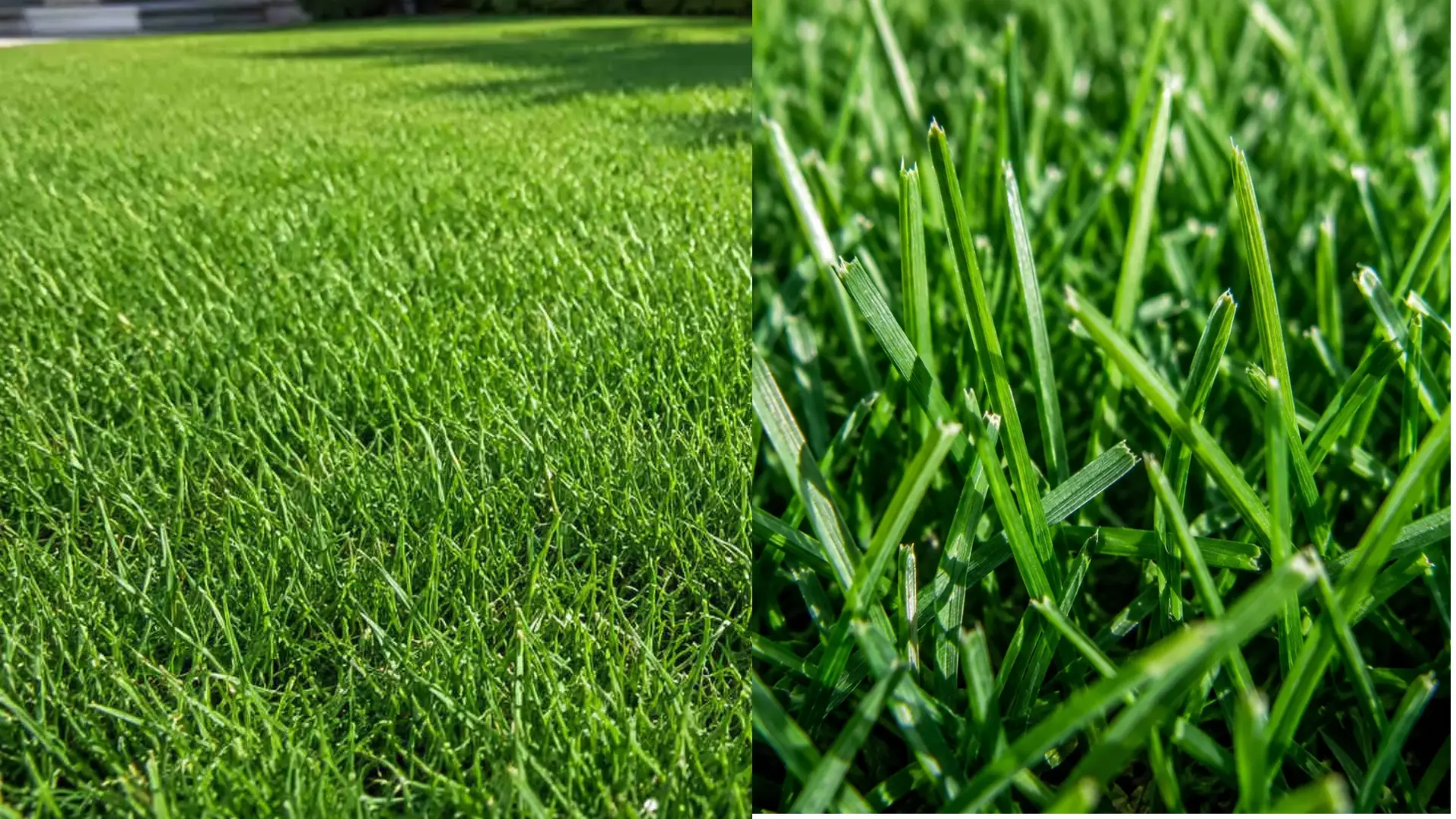
Kentucky bluegrass is one of the most popular choices for northern lawns. It forms thick, soft, rich green turf. Its rhizomes help fill bare spots and recover from moderate wear. However, it needs regular watering, feeding, and mowing, and may thin in heavy shade.
- Sun needs: Full sun to light shade
- Best climate: Cool northern regions
- Maintenance: High
- Establishment: Grown from seed or sod; seed takes 2 to 4 weeks to germinate
- Traffic tolerance: High
- Watch for: White grubs and, in humid heat, brown patch disease
2. Tall Fescue
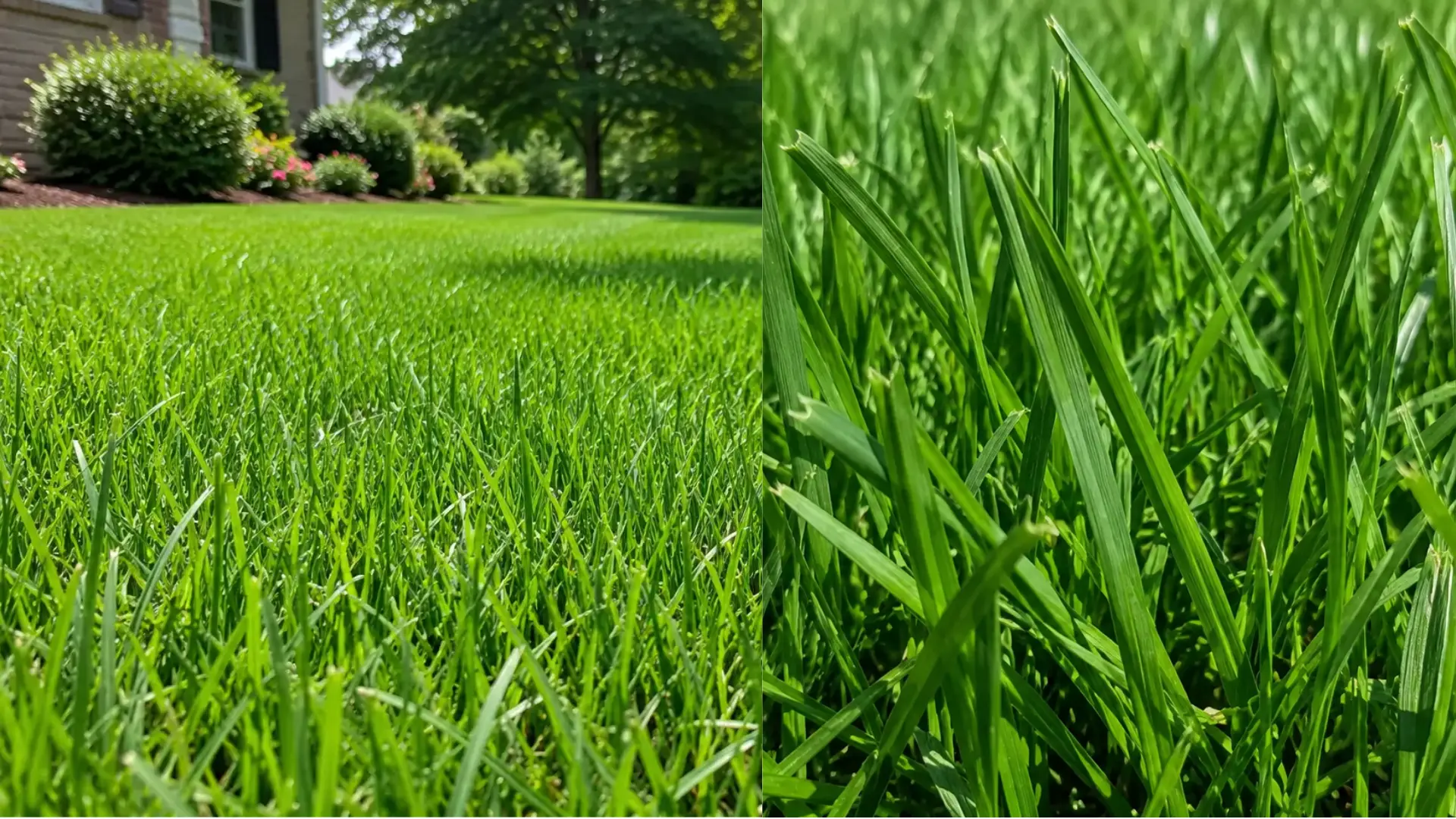
Tall fescue is a tough cool-season grass with deep roots that handle heat and dry conditions better than many northern grasses. Modern turf-type varieties have finer blades and grow well in full sun or partial shade. They also tolerate regular activity. However, tall fescue grows in clumps, spreads slowly, and may need reseeding in damaged areas.
- Sun needs: Full sun to partial shade
- Best climate: Northern regions and the transition zone
- Maintenance: Moderate
- Establishment: Grown from seed; fast enough for fall overseeding
- Traffic tolerance: Moderate
- Watch for: Brown patch disease in hot, humid stretches
3. Perennial Ryegrass
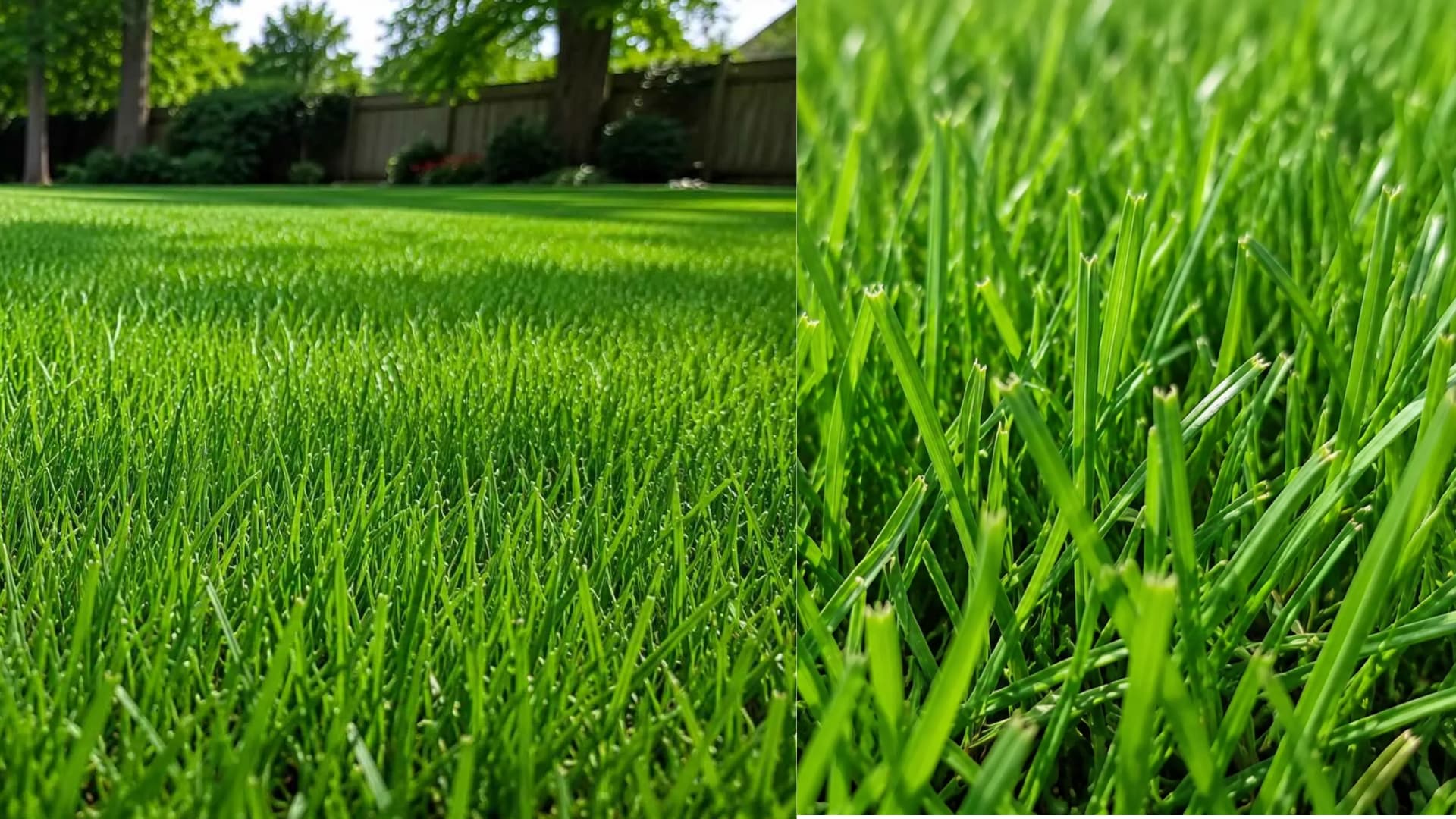
Perennial ryegrass is known for its fast germination. It is often included in lawn seed mixtures because it begins growing while slower grasses are still developing. It produces an attractive green lawn. However, it has limited spreading ability and may struggle during extreme heat, severe cold, or long dry periods.
- Sun needs: Full sun to partial shade
- Best climate: Cool and mild northern regions
- Maintenance: Moderate
- Establishment: Grown from seed; germinates in as little as 5 to 10 days
- Traffic tolerance: Moderate
- Watch for: Red thread and gray leaf spot in wet conditions
4. Creeping Red Fescue
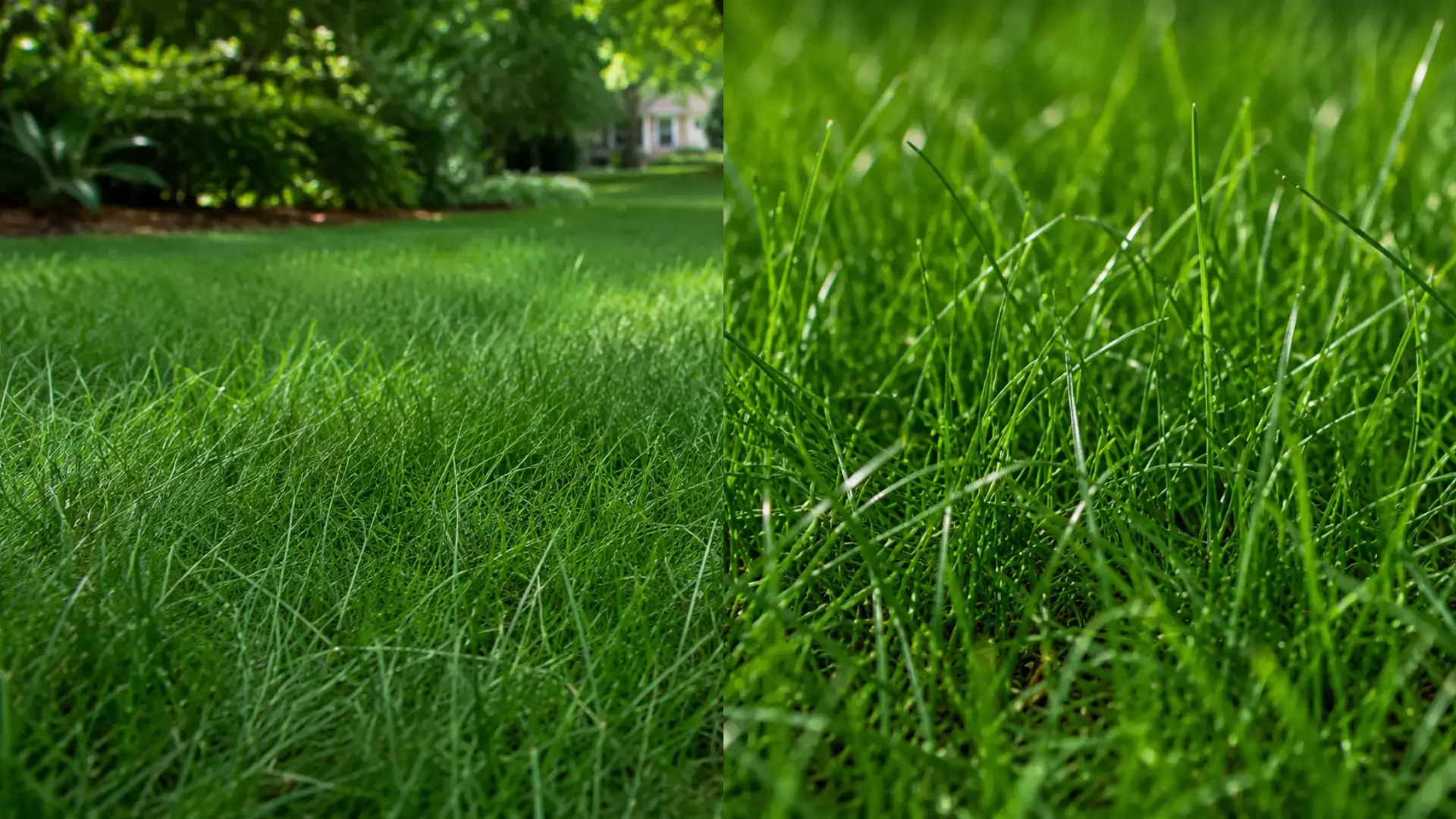
Creeping red fescue has narrow, soft blades and performs well in shaded northern lawns. It is commonly included in seed mixtures designed for areas beneath trees. Unlike many other fine fescues, it spreads slowly through underground stems. This helps it fill small gaps over time.
- Sun needs: Partial sun to shade
- Best climate: Cool northern regions
- Maintenance: Low
- Establishment: Grown from seed, usually blended with other fescues
- Traffic tolerance: Low
- Watch for: Occasional rust in poorly drained soil
5. Chewings Fescue
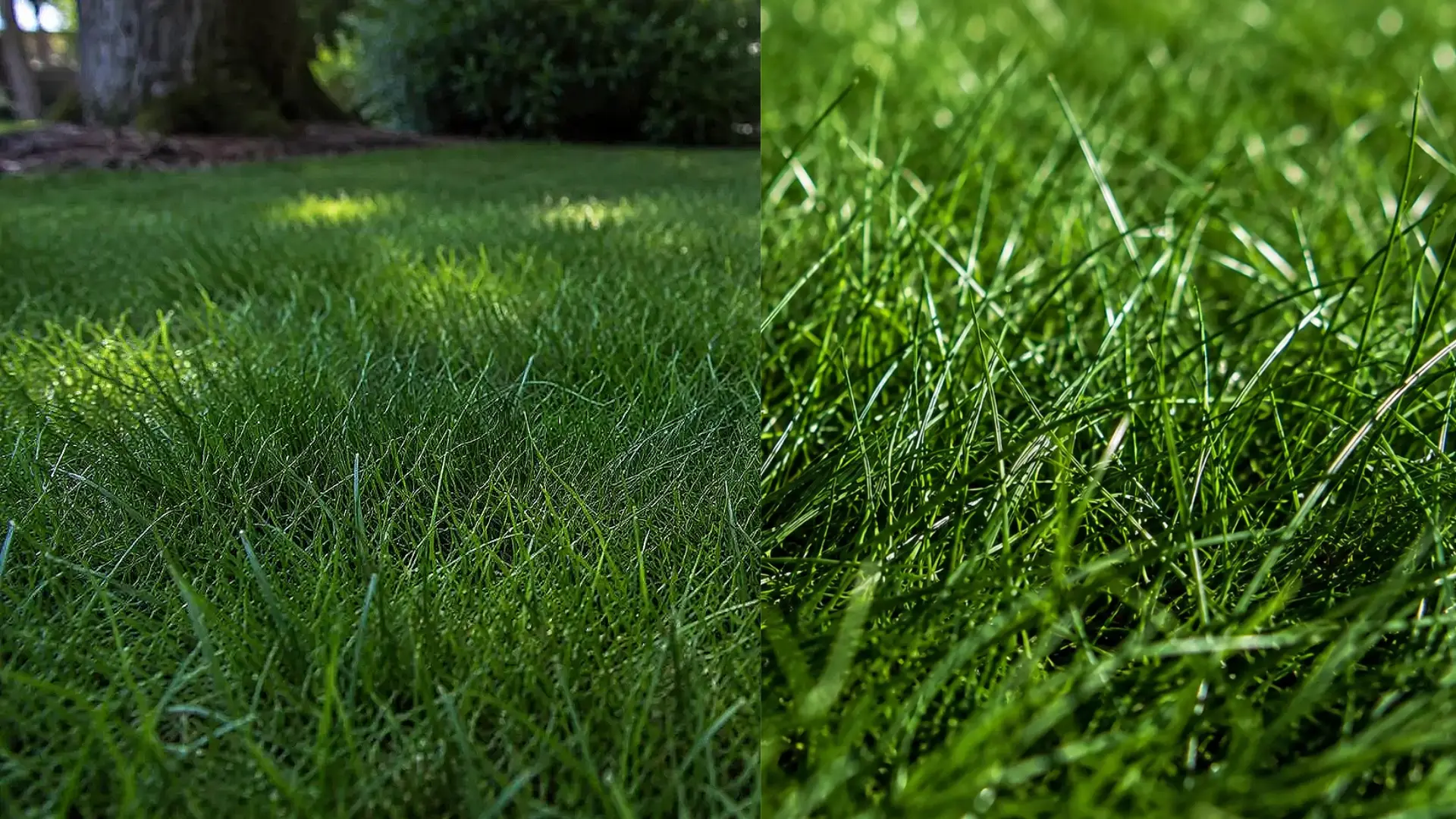
Chewings fescue is a fine-textured grass with narrow, upright blades. It forms dense clumps and is often used in shade-tolerant seed mixtures. It can grow in dry or low-fertility soil where more demanding grasses may struggle. However, it does not spread through runners, so damaged areas recover slowly. It is better suited to decorative lawns than busy play areas.
- Sun needs: Partial sun to shade
- Best climate: Cool northern regions
- Maintenance: Low
- Establishment: Grown from seed, often blended with red fescue
- Traffic tolerance: Low
- Watch for: Red thread in consistently wet soil
6. Hard Fescue
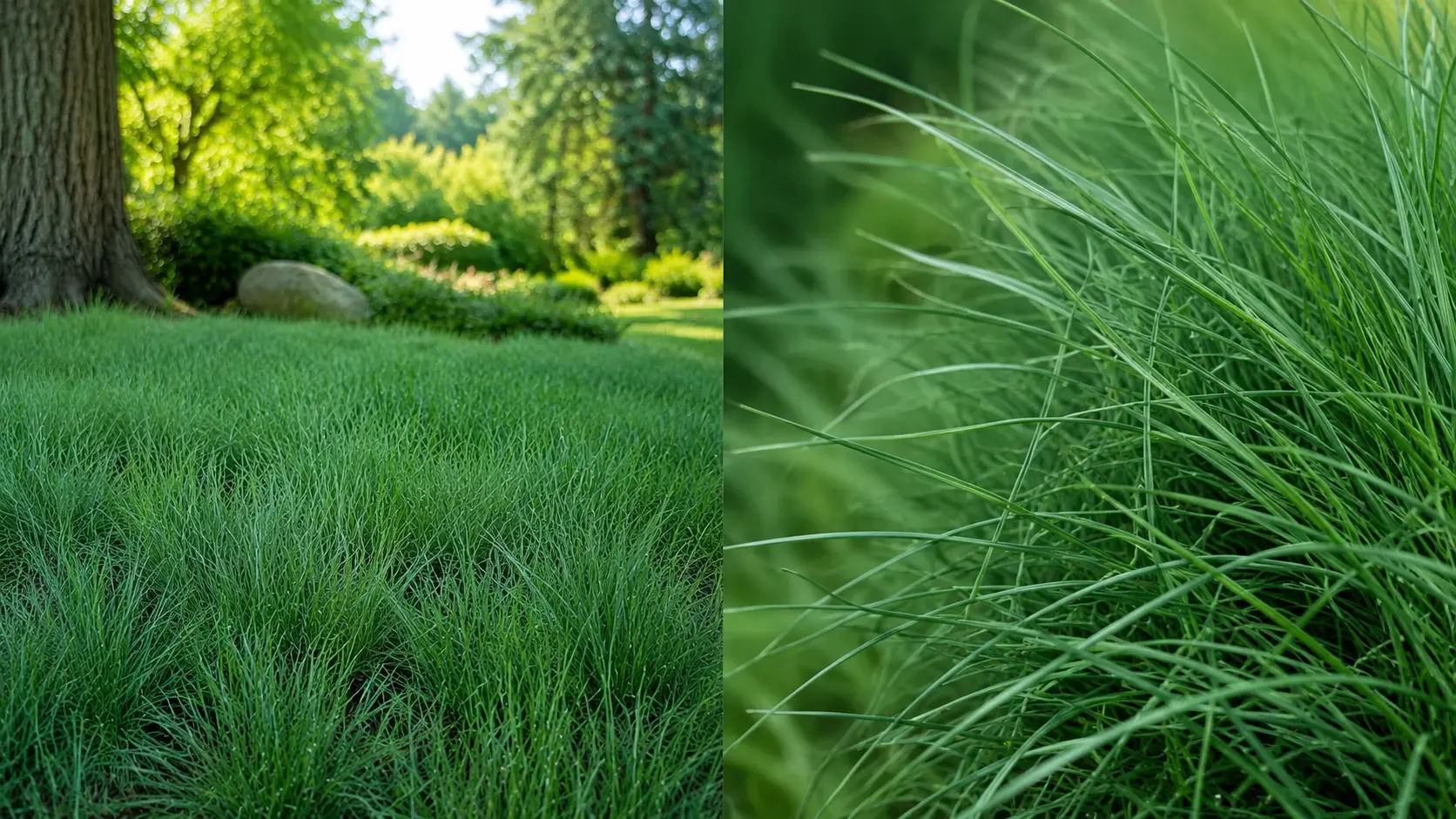
Hard fescue is a slow-growing grass that needs relatively little water, fertilizer, or mowing. It performs well in dry soil and areas with low nutrient levels. Its fine blades and blue-green color create a natural appearance. However, it establishes slowly and cannot recover quickly from heavy damage.
- Sun needs: Full sun to partial shade
- Best climate: Cool and dry regions
- Maintenance: Low
- Establishment: Grown from seed; slow to fill in, so seed generously
- Traffic tolerance: Low
- Watch for: Minor rust; otherwise fairly disease-resistant
7. Sheep Fescue
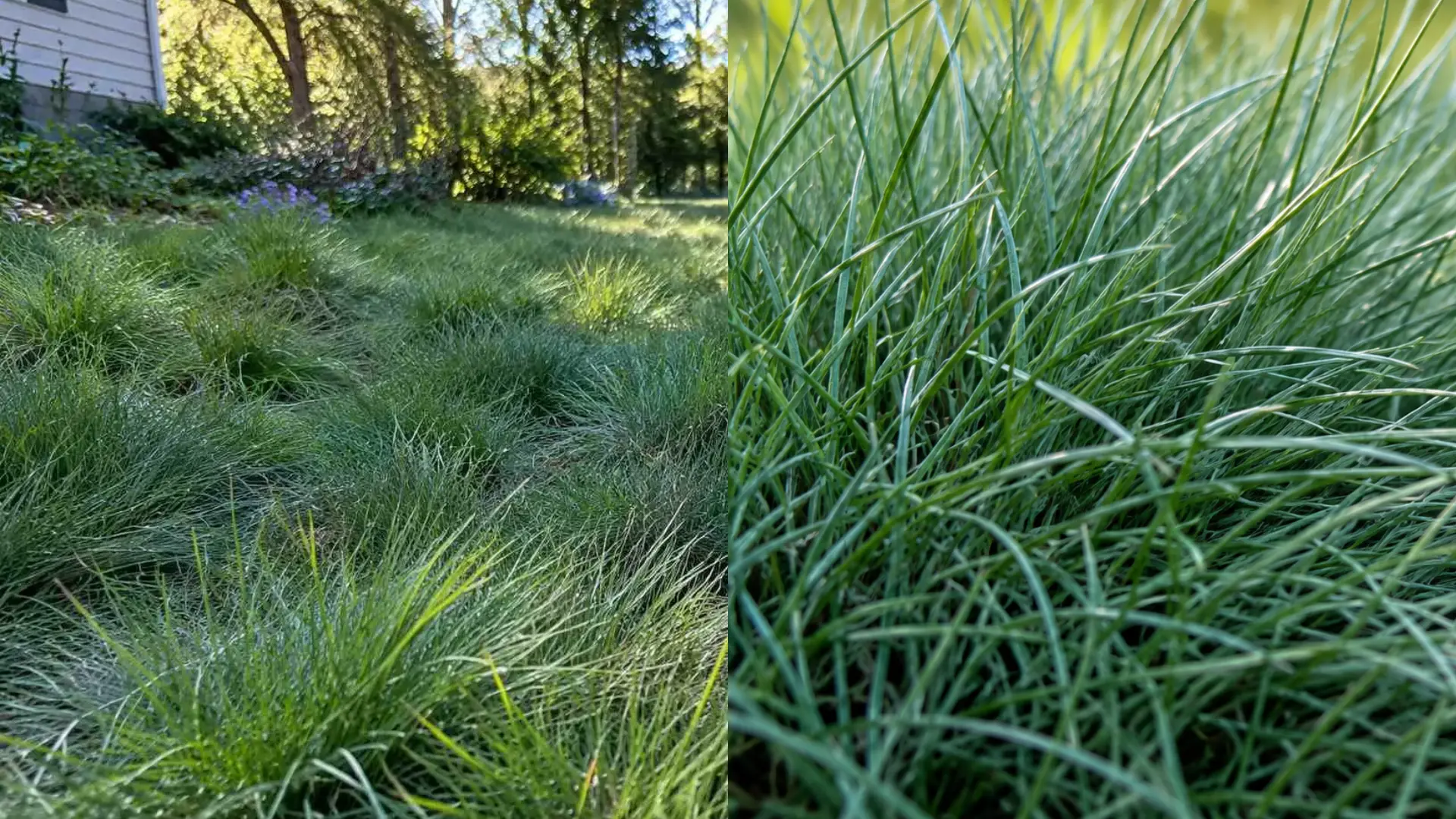
Sheep fescue has fine, slightly wiry blades and a natural, meadow-like appearance. It is often used in low-maintenance landscapes instead of formal lawns. It can survive with limited watering, fertilizing, and mowing. However, it does not create smooth, carpet-like turf and has poor tolerance for regular foot traffic.
- Sun needs: Full sun to partial shade
- Best climate: Cool regions
- Maintenance: Very low
- Establishment: Grown from seed; best for non-play areas
- Traffic tolerance: Very low
- Watch for: Very few disease issues; one of the hardiest fescues
8. Creeping Bentgrass

Creeping bentgrass forms fine, dense turf and tolerates very low mowing, making it common on golf greens. It handles foot traffic reasonably well when kept at a taller mowing height, but it thins out fast under heavy use at putting-green heights.
It also requires frequent watering, careful fertilizing, disease control, and specialized equipment, and it may spread into nearby lawns, so it is rarely practical for home use.
- Sun needs: Full sun to partial shade
- Best climate: Cool and humid regions
- Maintenance: Very high
- Establishment: Grown from seed or sod, usually by professionals
- Traffic tolerance: Moderate to high, depending on mowing height
- Watch for: Dollar spot and brown patch under a regular fungicide program
Types of Lawn Grass for Warm-Season Climates
Warm-season lawn grasses thrive in hot weather and grow most actively during late spring and summer. The right choice depends on your sunlight, soil, moisture, foot traffic, and maintenance routine, not simply the grass with the richest color.
9. Bermudagrass
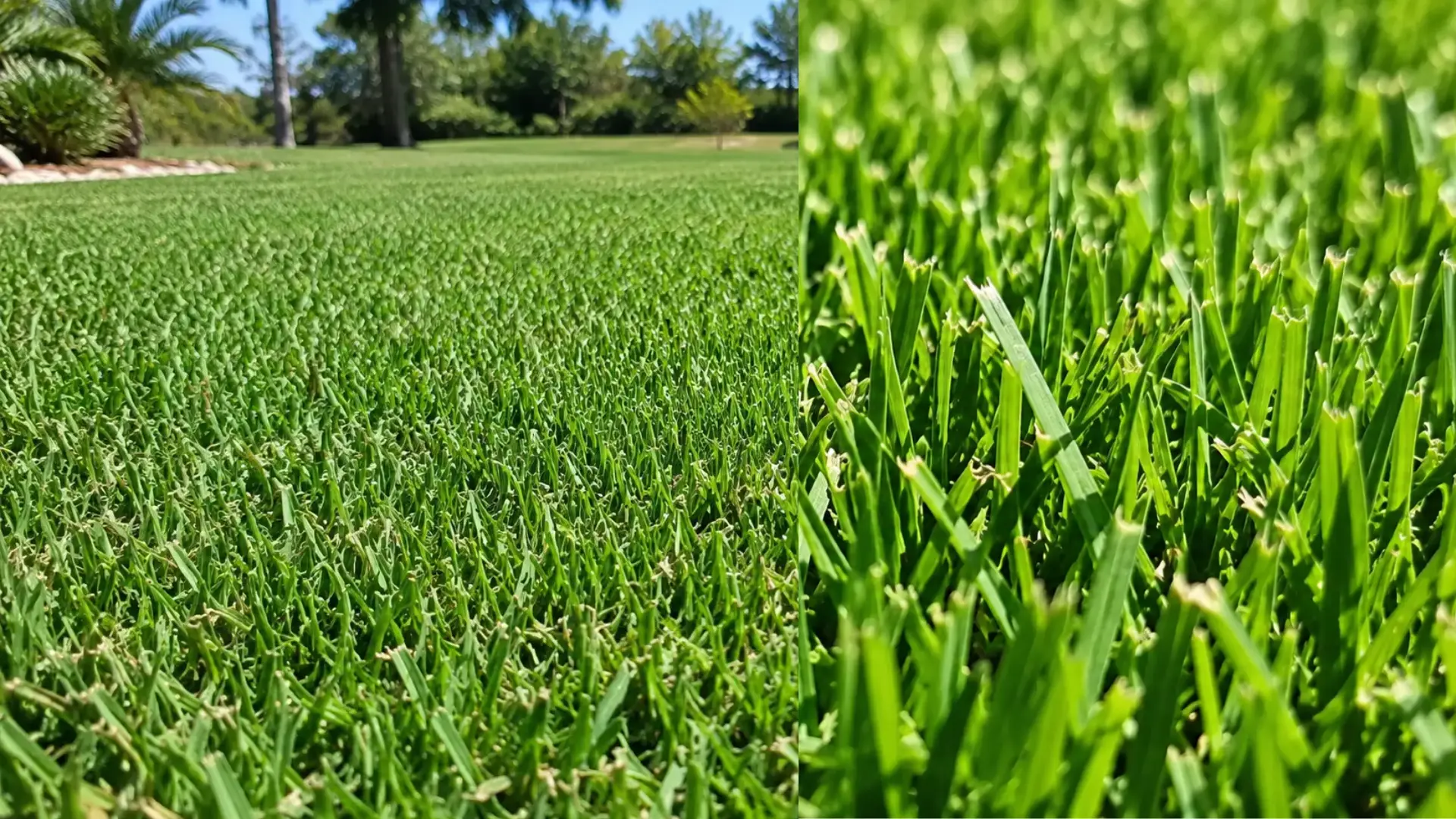
Bermudagrass is a fast-growing warm-season grass that handles heat, sun, and heavy use. It spreads through runners and underground stems, allowing quick recovery. However, it needs frequent mowing, performs poorly in shade, and may spread into garden beds.
- Sun needs: Full sun
- Best climate: Hot southern regions
- Maintenance: Moderate to high
- Establishment: Seed, sod, or sprigs; spreads fast once established
- Traffic tolerance: High
- Watch for: White grubs and fall armyworms
10. Zoysiagrass
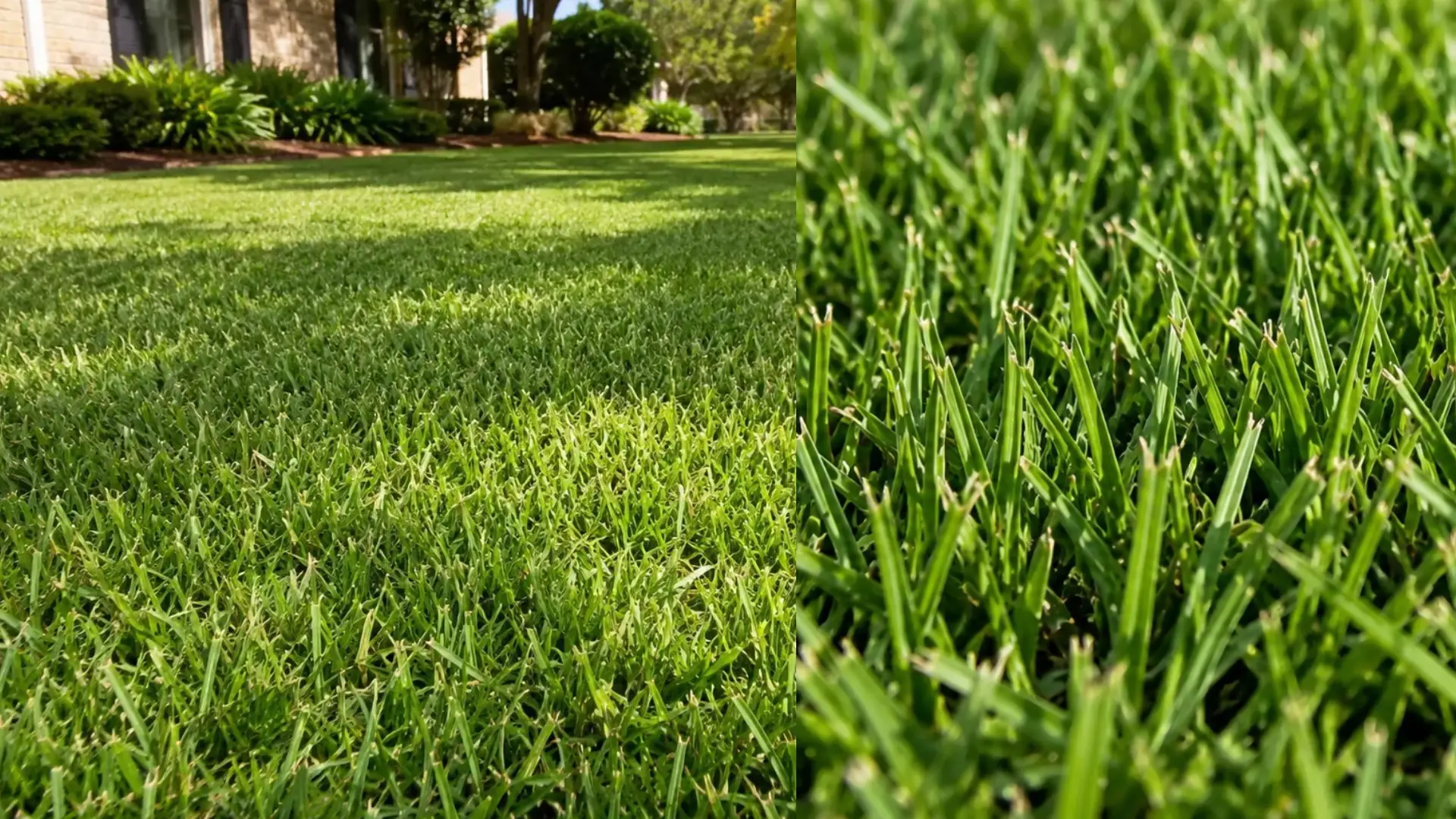
Zoysiagrass creates thick, carpet-like turf that can help prevent weeds. Once established, it handles heat, dry periods, and regular foot traffic well. It grows more slowly than Bermudagrass and may take time to cover a new lawn.
Its dense growth can also cause thatch buildup, so it is worth knowing when to dethatch your lawn before the buildup starts to smother new growth. Zoysiagrass becomes brown and dormant when temperatures fall.
- Sun needs: Full sun to partial shade
- Best climate: Warm regions and the transition zone
- Maintenance: Moderate
- Establishment: Sod or plugs are most common; seed exists but fills in slowly
- Traffic tolerance: Moderate
- Watch for: Chinch bugs and dollar spot
11. St. Augustinegrass
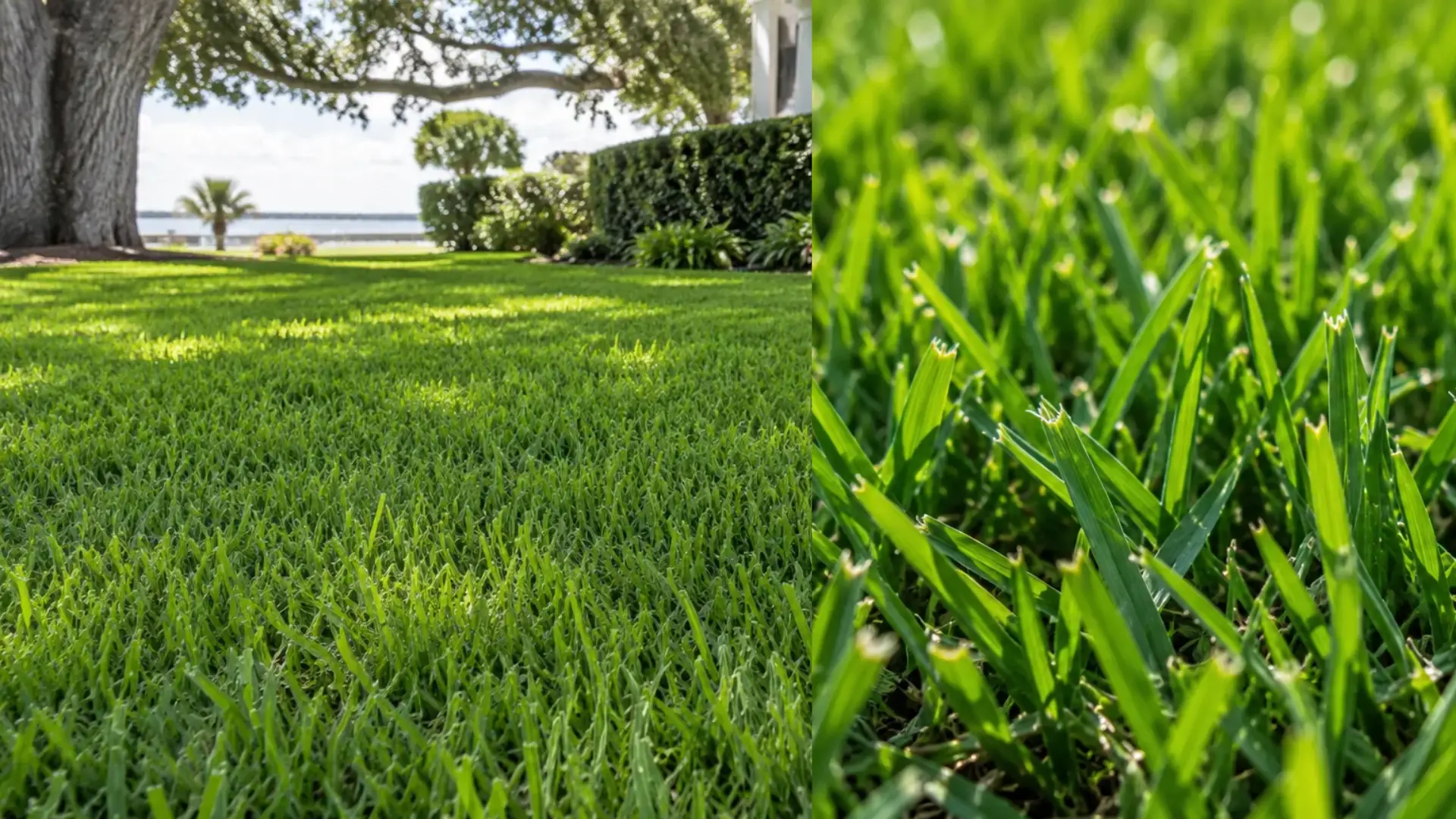
St. Augustinegrass has broad, coarse blades and creates thick lawn coverage. It is widely grown in warm, humid, and coastal areas. It tolerates partial shade better than many warm-season grasses and can handle some salt exposure.
However, a University of Florida publication on St. Augustinegrass notes that it has poor wear tolerance and does not hold up well to repeated foot or vehicular traffic; it also has poor cold tolerance and may need regular watering.
- Sun needs: Full sun to partial shade
- Best climate: Warm, humid, and coastal regions
- Maintenance: Moderate to high
- Establishment: Sod or plugs; rarely available as seed
- Traffic tolerance: Low to moderate
- Watch for: Chinch bugs and gray leaf spot
12. Centipedegrass
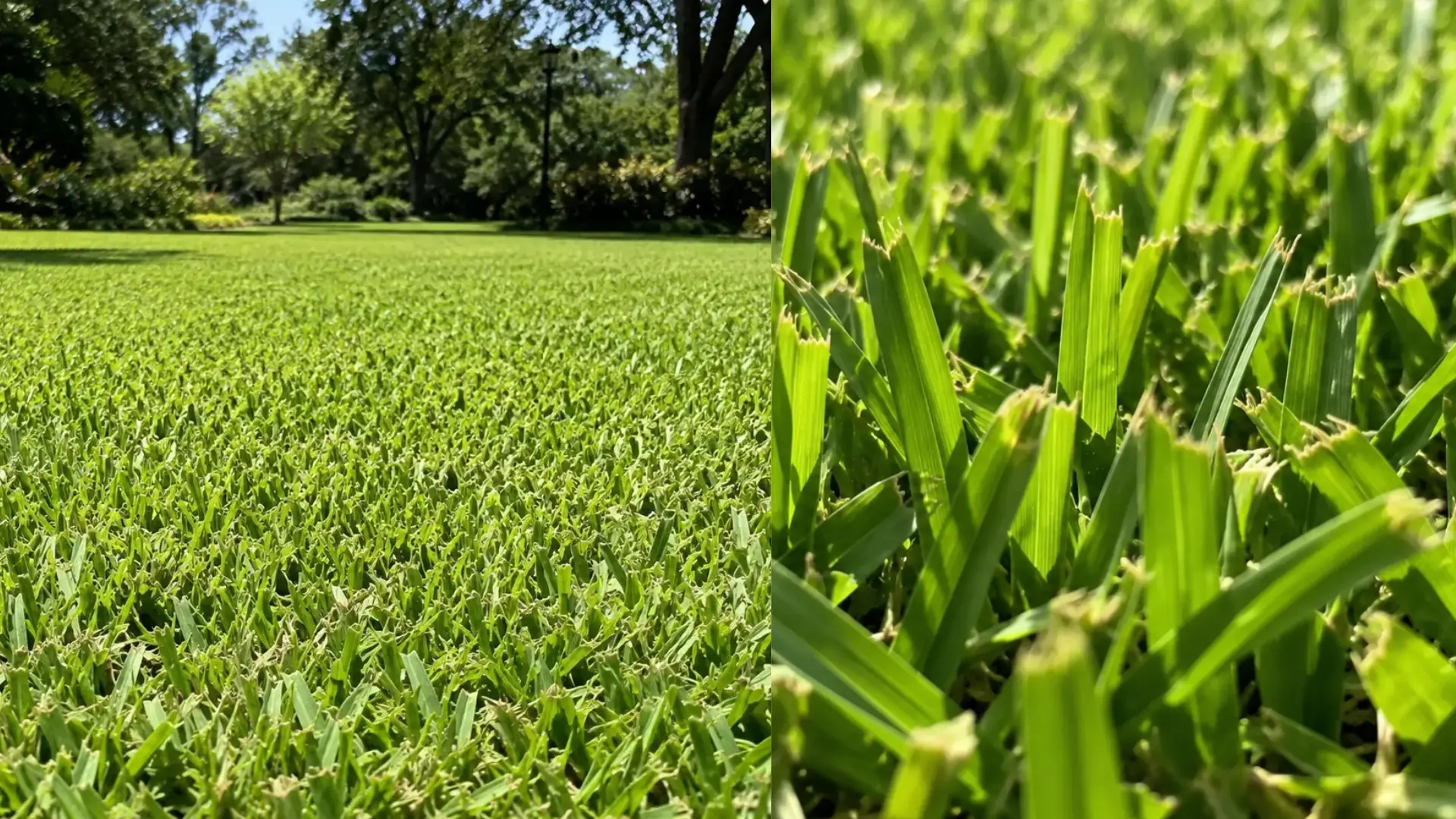
Centipedegrass is a slow-growing warm-season grass that needs less fertilizer and mowing than other varieties. It has a light green color and grows well in warm, humid parts of the Southeast. This grass can adapt to some low-fertility soils. However, it may get damaged by too much fertilizer.
- Sun needs: Full sun to partial shade
- Best climate: Warm and humid southeastern regions
- Maintenance: Low
- Establishment: Seed, sod, or plugs; seed is the slowest to establish
- Traffic tolerance: Low
- Watch for: Ground pearls and centipede decline
13. Bahiagrass
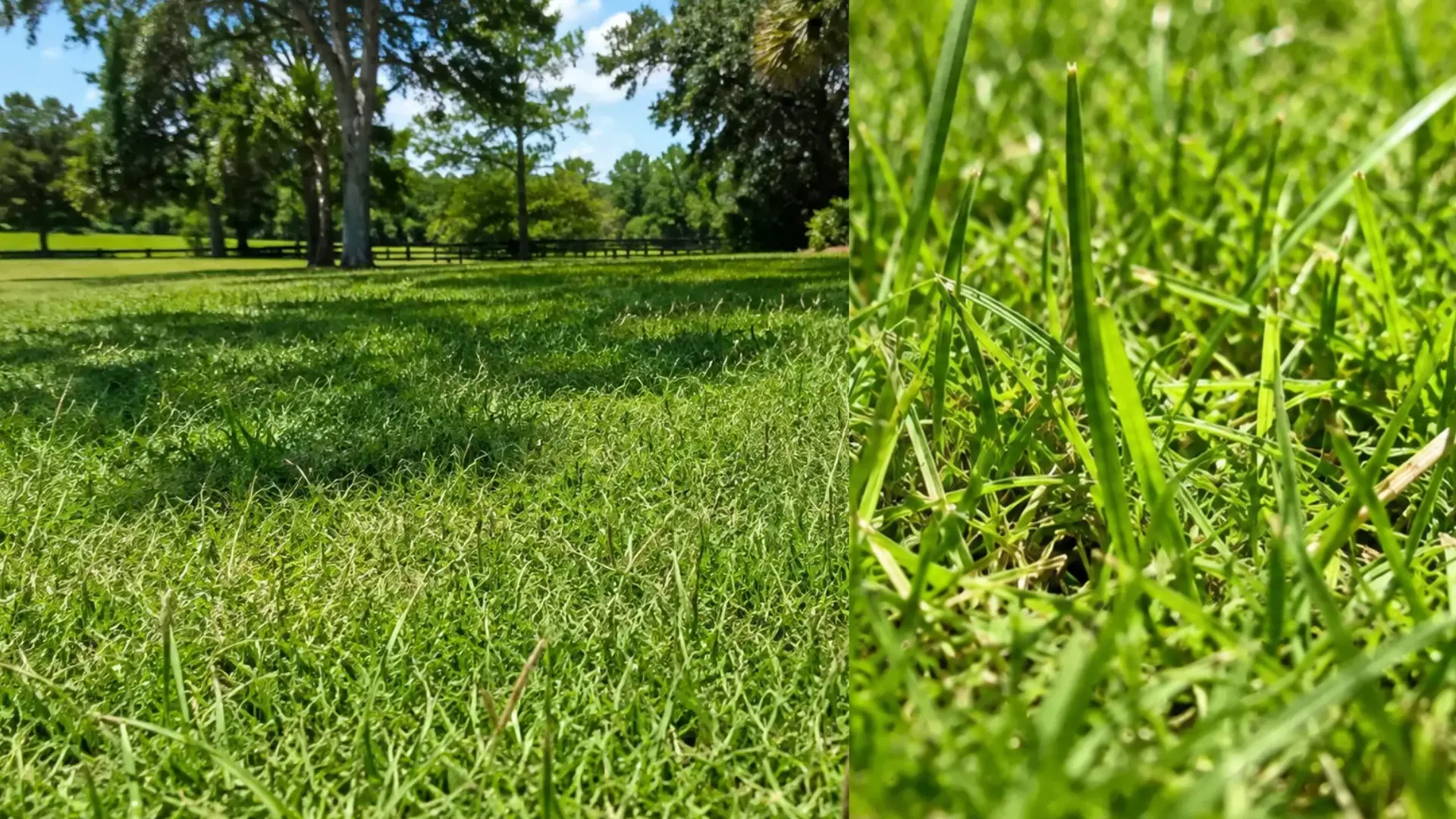
Bahiagrass is a strong, deep-rooted grass suited to hot southern regions. It handles drought well and needs less irrigation and fertilizer than many lush lawn grasses. Its coarse, open appearance is more practical than polished. It also produces tall seed heads that may return soon after mowing.
- Sun needs: Full sun
- Best climate: Hot southern and Gulf Coast regions
- Maintenance: Low
- Establishment: Grown from seed; deep roots take a season to mature
- Traffic tolerance: Low to moderate
- Watch for: Mole crickets occasionally; otherwise pest resistant
14. Buffalograss
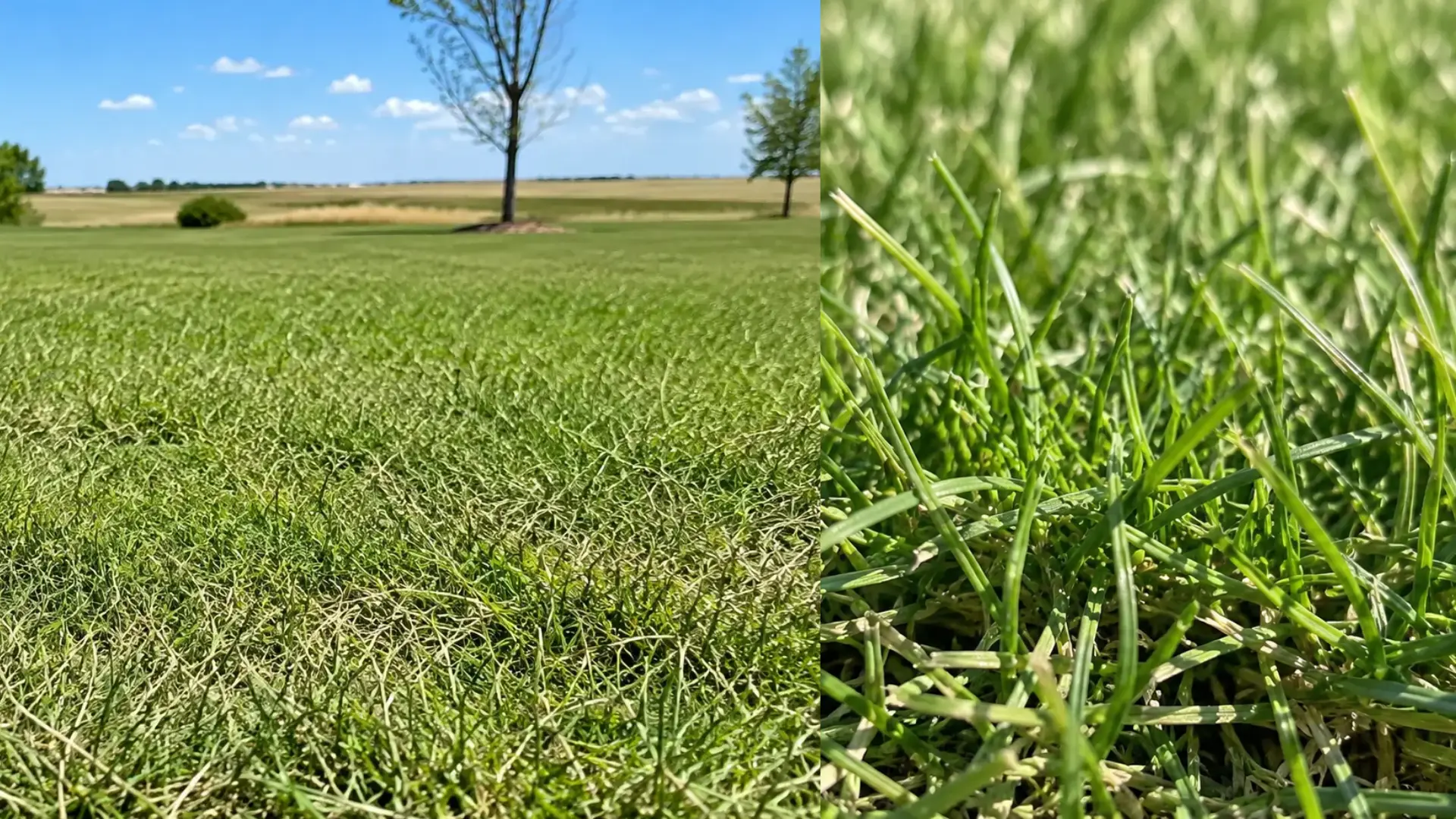
Buffalograss is a native warm-season grass suited to dry parts of the Great Plains, and once you know how to identify buffalograss by its wide, flat blades, it is easy to tell apart from finer-bladed lawns. Once established, it needs less water, fertilizer, and mowing than many common lawn grasses.
Its fine blades create a soft and natural-looking lawn. However, it requires full sun, establishes slowly, and may turn brown during cold weather or extended drought.
- Sun needs: Full sun
- Best climate: Dry Great Plains regions
- Maintenance: Very low
- Establishment: Seed, plugs, or sod; seed can take a full season to fill in
- Traffic tolerance: Low
- Watch for: Occasional chinch bugs; otherwise one of the hardiest options
15. Carpetgrass
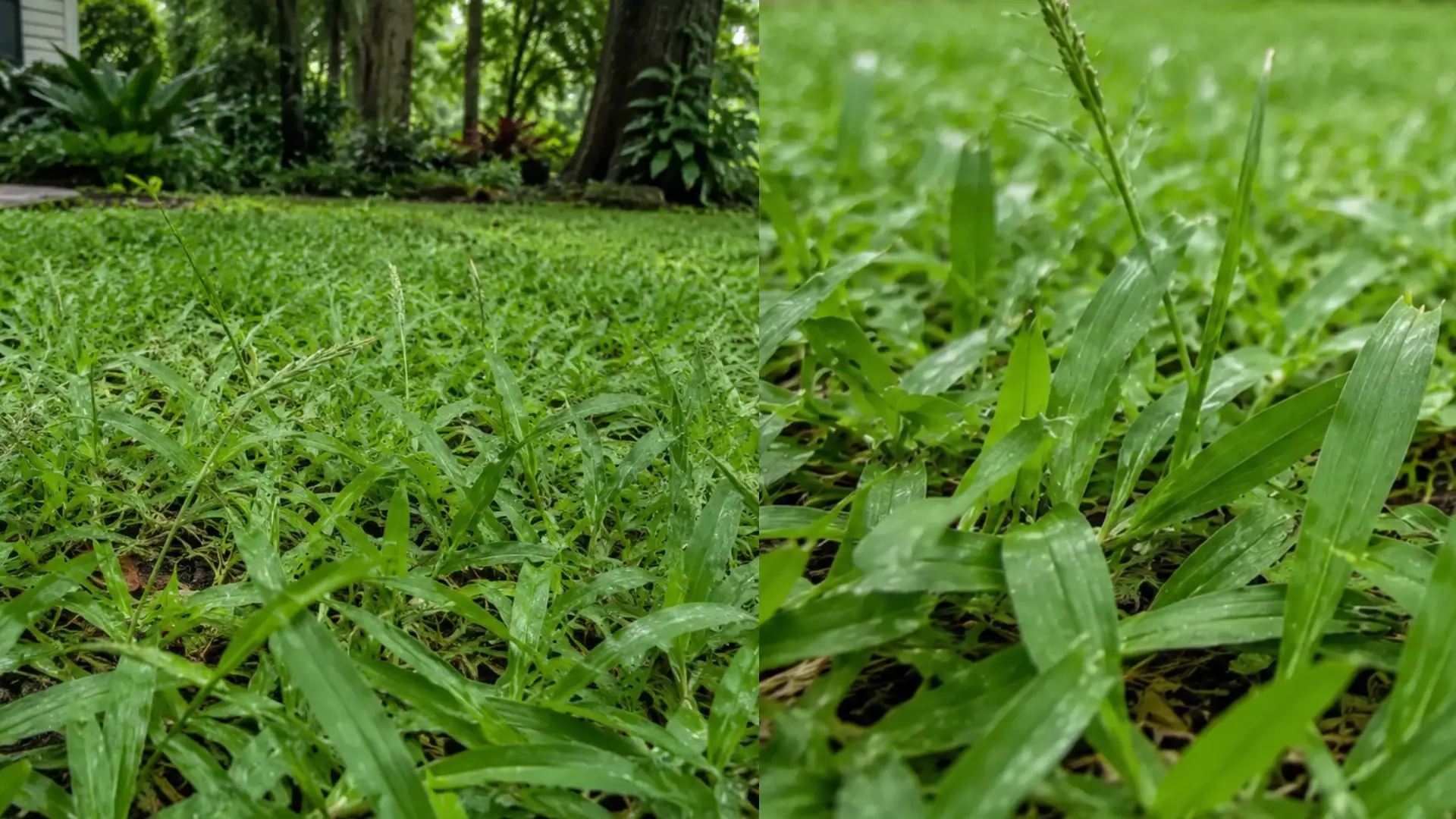
Carpetgrass grows in warm, wet areas where other lawn grasses may struggle. It tolerates moist, low-fertility soil and some shade. It creates a coarse lawn and produces frequent seed heads during active growth. Carpetgrass does not perform well during drought and may wear down in heavily used areas.
- Sun needs: Full sun to partial shade
- Best climate: Warm, wet areas
- Maintenance: Low to moderate
- Establishment: Grown from seed; suited to consistently damp soil
- Traffic tolerance: Low to moderate
- Watch for: Fungal issues in overly wet, poorly drained soil
How to Choose the Best Type of Grass for a Lawn
Choosing the right grass starts with understanding your lawn’s conditions. Climate, sunlight, soil, foot traffic, water needs, and maintenance all affect how well a grass variety will grow. Checking these factors first helps you choose grass that is easier to care for and more likely to stay healthy.
Start by identifying whether you live in a cool-season, warm-season, or transition-zone region.
Measure how much sunlight your lawn receives, since full sun usually means six or more hours of direct light each day. Consider how often children, pets, or visitors use the lawn, and choose a durable variety for busy areas.
You should also review your soil type, drainage, compaction, and pH before planting. Check local rainfall, irrigation access, water restrictions, and drought conditions. Finally, think about how much time you can spend mowing, watering, fertilizing, and managing pests.
A grass that matches your yard’s conditions will be easier to maintain and more likely to stay healthy through changing seasons.
How to Identify Your Lawn Grass
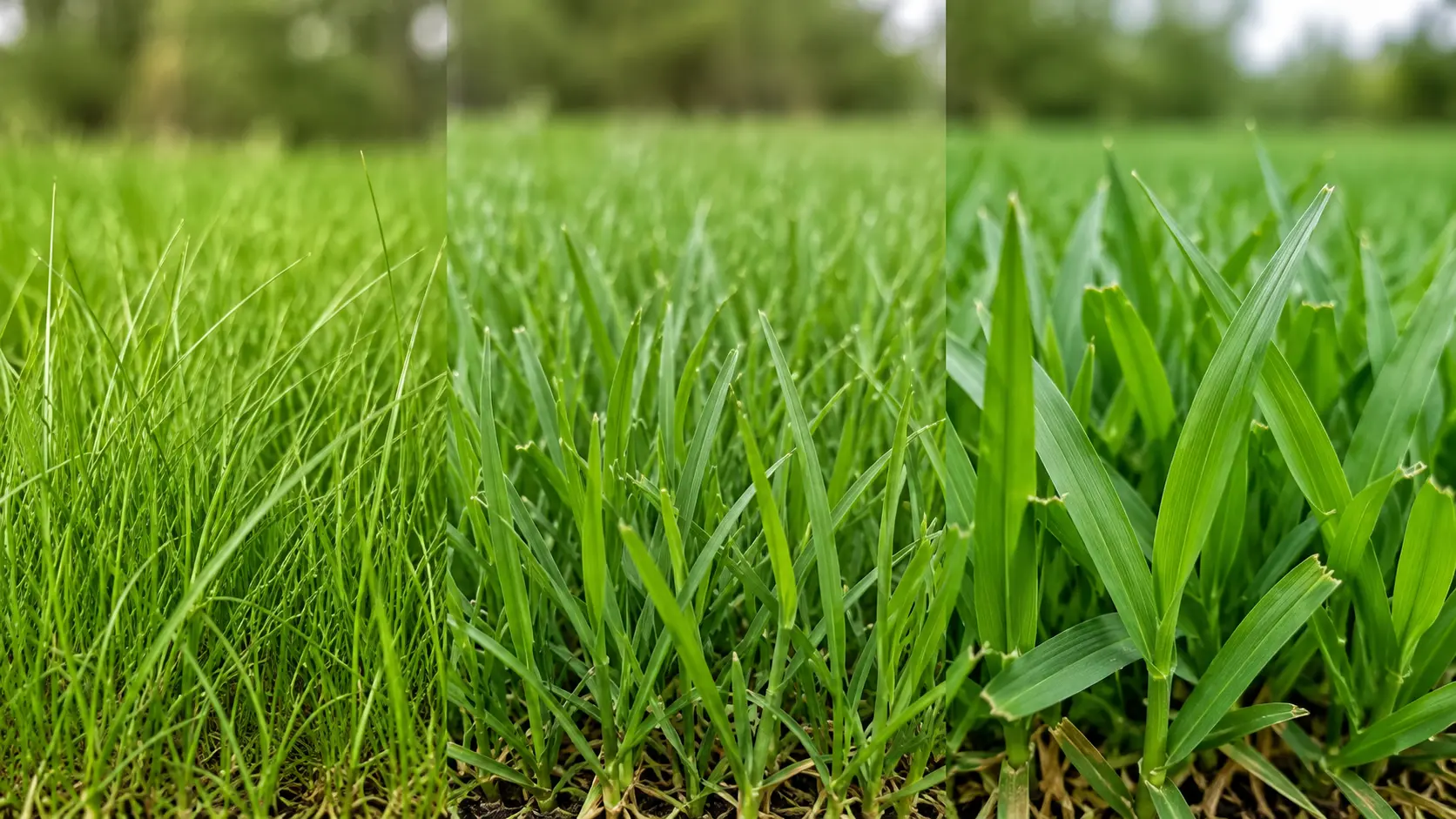
Knowing your grass type helps you choose the right mowing height, watering schedule, fertilizer, and weed control products.
- Check seasonal growth: Cool-season grasses grow most strongly in spring and fall, while warm-season grasses peak during summer. Winter browning is common in warm-season lawns.
- Examine the blades: Look at blade width, texture, and shape. Kentucky bluegrass has boat-shaped tips, perennial ryegrass has a glossy underside, and fine fescues have narrow blades. St. Augustinegrass has broad blades, while Bermudagrass has narrow, pointed ones.
- Check how it spreads: Tall fescue and perennial ryegrass grow in clumps. Kentucky bluegrass spreads through rhizomes, while St. Augustinegrass and centipedegrass spread through stolons. Bermudagrass and zoysiagrass use both.
- Look at color and texture: Kentucky bluegrass is dark green and soft, centipedegrass is lighter, bahiagrass is coarse, and creeping bentgrass is fine and dense.
- Ask an expert: Take clear photos and a sample to a garden center or extension office if you are still unsure.
Identifying your grass makes lawn care much simpler. Once you know the blade shape, color, texture, and growth habit, you can choose the right mowing height, watering plan, and fertilizer for the types of lawn grass already growing in your yard.
Common Mistakes When Choosing Lawn Grass
Choosing lawn grass without checking your yard’s conditions can lead to thin growth, bare patches, and higher care needs. The table below covers the most common mistakes and how to avoid each one.
| Mistake | How to Avoid It |
|---|---|
| Choosing Grass Only by Appearance | Weigh climate, sunlight, and growing needs before color and texture. |
| Ignoring Shade | Measure the sunlight under trees before choosing a variety. |
| Underestimating Foot Traffic | Pick a durable grass for lawns used by children, pets, or guests. |
| Expecting Drought-Tolerant Grass to Stay Green | Keep in mind it can still turn brown or dormant during dry stretches. |
| Choosing High-Maintenance Grass | Confirm you have time for the mowing and watering Bermuda, Kentucky bluegrass, or creeping bentgrass need. |
| Planting at the Wrong Time | Plant cool-season grass in late summer or early fall, and warm-season grass in late spring or early summer. |
| Ignoring the Seed Label | Check the species, cultivars, germination rate, and weed content before buying. |
| Overlooking Soil and Drainage | Test the soil and fix compaction or drainage issues first. |
Avoiding these mistakes can save time, water, and repair costs. Choose grass based on your climate, sunlight, soil, traffic, and maintenance needs rather than appearance alone, and it will grow evenly and stay healthy through the seasons.
Frequently Asked Questions
Which lawn grass needs the least mowing?
Buffalograss needs the least mowing, often just once every few weeks, thanks to its slow, low growth habit. Sheep fescue and hard fescue come close for cool climates, while centipedegrass is the top low-mow choice for warm, humid regions.
How long does new lawn grass take to grow?
Most grass seed germinates in 7 to 30 days, with ryegrass fastest at 5 to 10 days and Kentucky bluegrass slowest at 14 to 30 days. Expect light mowing within a month and full maturity in 6 to 12 months.
Why does lawn grass turn brown in winter?
Lawn grass turns brown in winter mainly from dormancy. Warm-season grasses like Bermuda and zoysia stop growing below 50 degrees Fahrenheit, and cool-season grasses like fescue can brown from hard freezes or dry winds. This is usually normal, not damage.
Which types of grass for lawn areas recover fastest from damage?
Bermudagrass recovers fastest, spreading through both runners and underground stems to self-repair within weeks. Zoysiagrass also recovers well, though more slowly. For cool climates, Kentucky bluegrass spreads via rhizomes to fill damaged spots, while perennial ryegrass establishes quickly from seed.
Final Takeaway
Choosing between different types of lawn grass starts with matching the grass to your climate, sunlight, soil, water supply, traffic, and maintenance needs. When comparing types of grass for lawn areas, focus on how each variety performs in your yard rather than choosing by color alone.
Cool-season grasses suit colder regions, while warm-season grasses handle heat more effectively.
Shade, drought, pets, and regular foot traffic can also affect your choice. The best type of grass for your lawn is one that can grow well with the care you can provide. Check your yard’s conditions today and choose a lawn grass that fits your space and routine.
Drop a comment below and let me know which grass you would like to grow.