That first coat is barely dry, and the roller is already calling your name.
I get it; that itch to keep moving is exactly where most paint jobs start going wrong.
Streaks, drag marks, that cloudy patch you cannot quite explain later- it usually comes down to timing, not technique. That is why knowing how long to let paint dry between coats matters more than it seems in the moment.
It is the difference between a finish that holds up for years and one that needs a redo within months.
What “Dry” Really Means Before You Grab That Second Coat?
Paint drying feels simple. It is not. Paint actually moves through three distinct stages, and mixing them up is exactly what wrecks a finish.
Dry to the touch is the first stage. The surface feels firm under a light tap, but the layers underneath are still soft and stay vulnerable to damage.
The recoat window comes next, and it matters most day-to-day. It marks the point where a fresh coat can go on safely: no dragging, no peeling, no trapped moisture beneath the surface.
Full cure happens much later. The paint hardens completely by this point and can handle scrubbing, heavy furniture, and daily wear without marking.
I had a client’s kitchen wall turn out streaky and uneven for exactly this reason. We confused a quick touch test with the actual recoat window, and the second coat dragged right through the first.
Why Waiting Between Paint Coats Makes Such a Big Difference
Skipping the wait between coats rarely saves real time. It just moves the damage further down the line:
- Prevents Lifting and Peeling: A second coat applied too soon pulls at the soft layer underneath, causing the paint to lift right off the wall.
- Stops Streaks and Roller Marks: Wet paint dragged over wet paint leaves visible lines that no amount of touch-up can fully erase.
- Lets Solvents Fully Evaporate: Trapped moisture underneath a fresh coat leads to bubbling and soft spots that show up days later.
- Improves Color Depth and True Finish: Paint needs time to settle before another layer goes on, and that settling is what gives color its real, even tone.
- Protects Adhesion Between Layers: Each coat needs a stable base to grip onto, and rushing that bond weakens the entire paint job over time.
Every one of these issues traces back to timing, and the numbers behind that timing come next.
How Long to Let Paint Dry Between Coats: The Full Breakdown
Every paint type follows its own timeline, and matching the wait to the product is what keeps a finish smooth instead of streaky.
Here is a clear breakdown:
| Paint Type | Dry to Touch | Recoat Time | Full Cure |
| Latex | 30 to 60 minutes | 2 to 4 hours | 14 to 30 days |
| Acrylic | 30 to 60 minutes | 2 to 4 hours | 14 to 30 days |
| Oil-Based | 4 to 6 hours | 24 hours | 7 to 30 days |
| Primer (Latex) | 30 minutes to 1 hour | 1 to 2 hours | Cures with topcoat |
| Primer (Oil-Based) | 1 to 3 hours | 2 to 3 hours | Cures with topcoat |
| Chalk/Furniture Paint | 30 to 60 minutes | 1 to 2 hours | 24 to 48 hours |
| Spray Paint | 10 to 30 minutes | 15 to 30 minutes | 24 to 48 hours |
One quirk worth flagging: Most spray paints have a tricky middle window. Recoating right away or waiting a full day both work, but the hours in between can cause wrinkling.
Treat this chart as a baseline, not a substitute for the label. Recoat times shift by brand and formula, so it’s worth checking how different paint brands compare before assuming every can behaves the same way.
Factors That Affect Paint Dry Time The Most
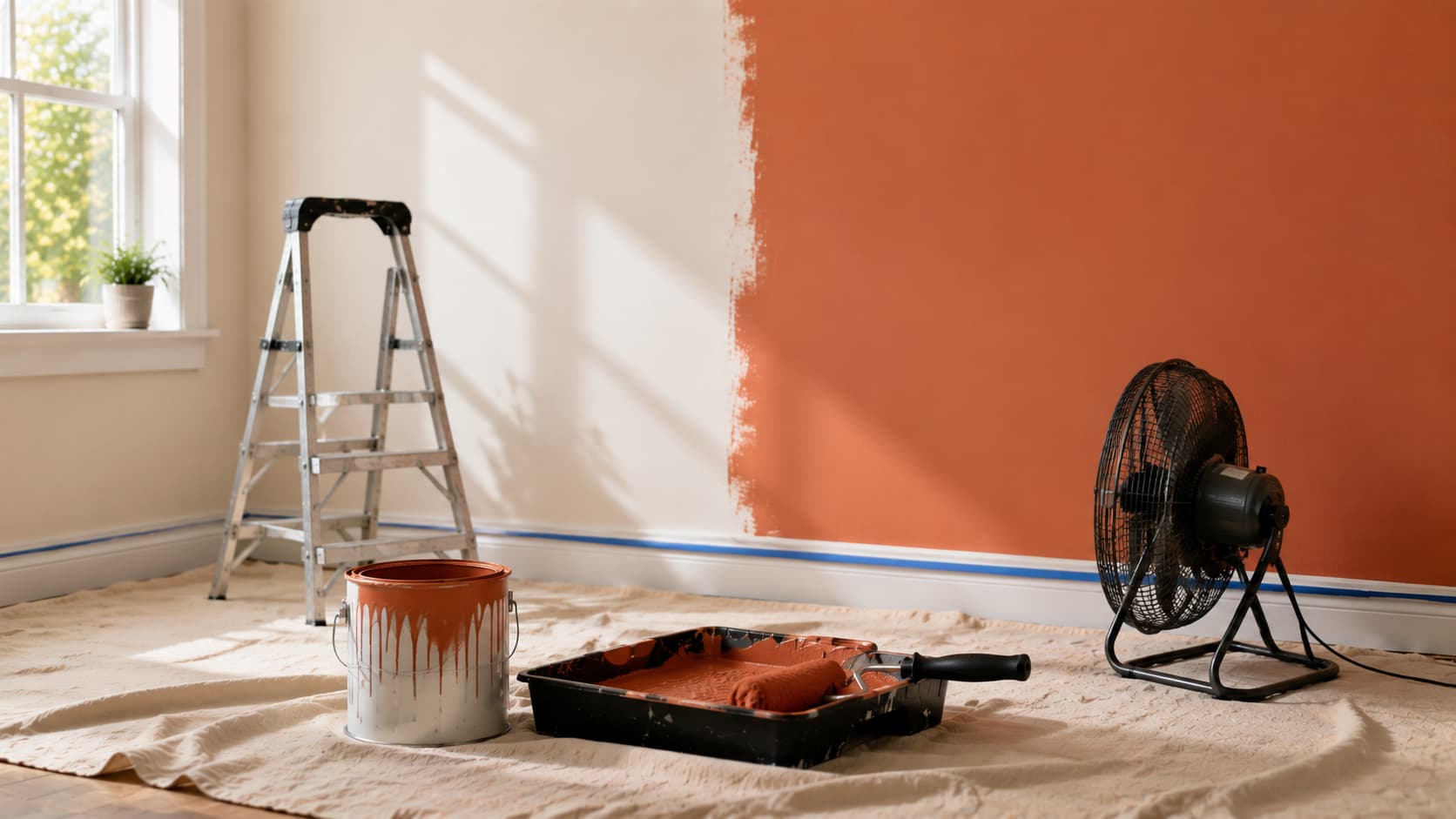
The chart above works as a baseline, but real-world conditions shift those numbers more than most people expect.
Here is what actually speeds up or slows down drying in a given space:
1. Paint Type And Sheen
Different formulas dry at completely different speeds, and sheen adds another layer to that. Flat and matte finishes dry fastest since they contain less binder.
Semi-gloss and high-gloss paints take longer because the extra resin needs more time to level out and harden.
Weighing semi-gloss against a satin finish often comes down to durability versus a softer look, but that added shine is exactly what slows the recoat clock.
Quick Check: Check the label for the exact recoat time since formulas vary by brand, and match sheen to the room.
2. Coat Thickness
A thick coat might look like it covers better in one pass, but it dries far slower than two thin ones.
Extra thickness traps solvents underneath the surface, extending both dry time and recoat time. Thin, even coats consistently outperform thick ones in both drying speed and final finish quality.
Quick Check: Load the roller evenly instead of soaking it heavily, and watch the bottom edge of each wall for drips as you go.
3. Temperature
Paint dries through evaporation, and temperature controls how fast that process happens. Ideal conditions sit between 65°F and 85°F.
Anything colder slows evaporation significantly, sometimes doubling the wait time between coats.
Quick Check: Use a room thermometer instead of guessing by feel, and add an hour or two of buffer time.
4. Humidity
Moisture in the air competes directly with paint trying to release its own moisture.
High humidity slows drying dramatically, sometimes stretching a two-hour recoat window into four or five hours. Low humidity speeds things up but can cause paint to dry unevenly, especially on larger walls.
Quick Check: Run a dehumidifier a few hours before painting, and avoid starting right after rain or on a foggy morning.
5. Ventilation and Airflow
Moving air pulls moisture away from a painted surface faster than still air ever could.
A cracked window or a fan pointed away from the wall can cut drying time noticeably. Airflow matters just as much indoors as it does for exterior painting projects.
Quick Check: Open a door or window on the opposite side of the room, and give basements or closed spaces extra time regardless of the season.
Why Houston and Gulf Coast Humidity Changes the Math?
None of the ranges above assume a Houston summer. I have painted through July afternoons on the Gulf Coast where outdoor humidity sits above 80 percent before the can even opens, and that changes the math on every wall.
A recoat window that runs 2 to 4 hours in a controlled setting can stretch to 6 to 8 hours in a closed-up Houston house during peak summer humidity.
Add a rainy stretch during hurricane season, and interior walls near exterior doors or bathrooms can take even longer to feel truly ready for a second coat.
Randy’s Rule for Gulf Coast Paint Jobs: Run the air conditioning and a fan in the room for at least an hour before starting, and add 30 to 60 minutes onto whatever the can recommends anytime outdoor humidity pushes past 70 percent. It costs almost nothing and saves the redo.
Cooler months, roughly November through February along the coast, are usually the easier stretch for interior painting in this region since humidity tends to run lower and temperatures sit closer to that 65°F to 85°F sweet spot.
What Painters and DIYers on Reddit Say About Wait Times?
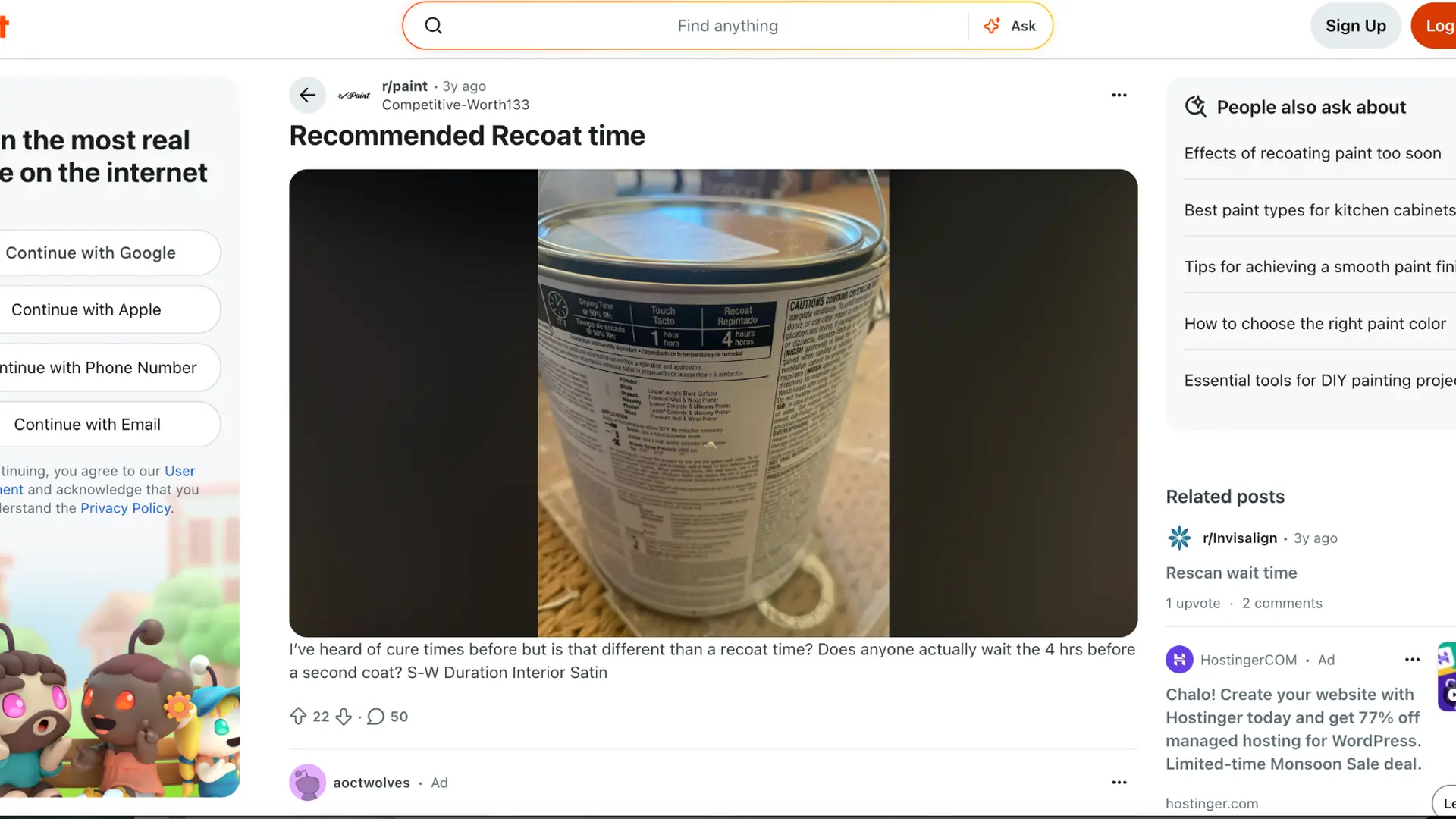
A Reddit thread on recoat times pulled in painters, DIYers, and everyone in between, and the debate splits into two clear camps.
Some commenters, especially professionals, admit they rarely wait the full time listed on the can. A few say they recoat within an hour and never see problems.
Others push back hard on that approach. They point out that skipping the wait risks bubbling, peeling, and a weaker bond between coats, even if the surface feels dry.
Humidity comes up constantly. Several painters say they always add extra time in damp conditions, regardless of what the label promises.
One detail stands out across replies: dry to the touch and ready to recoat get treated as two very different things by anyone with real experience. Confidence varies across the thread, but caution wins more often than experience.
Drying Times for Different Painting Projects
General paint type answers the basics, but the actual project changes the math. Surfaces, exposure, and paint formulas used for each job all shift the timeline:
| Project Type | Dry to Touch | Recoat Time | Full Cure | Practitioner Note |
| Interior Walls | 30–60 minutes | 2–4 hours | 14–30 days | Standard latex timing works fine |
| Furniture/Cabinets | 2–4 hours | 24 hours | 14–30 days | Enamel needs the full wait |
| Exterior Siding/Fences | 1–2 hours | 24 hours | 30 days | Weather changes this fast |
| Trim And Doors | 2–4 hours | 12–24 hours | 14 days | Semi-gloss always runs slower |
| DIY/Craft Projects | 20–30 minutes | 1 hour | 21–30 days | Thin layers matter most here |
| Ceilings | 30–60 minutes | 2–4 hours | 14–30 days | Flat finish speeds things up |
| Metal/Railings | 1–2 hours | 24 hours | 7–14 days | Rust-blocking paint runs slower |
| Decks/Patios | 1–2 hours | 24–48 hours | 30 days | Foot traffic needs full cure |
| Bathroom Walls | 1 hour | 4–6 hours | 21–30 days | Humidity extends every stage |
Painting a bathroom vanity calls for that full 24-hour wait between enamel coats, since the finish needs to cure hard enough to handle water splashes and daily hand contact.
Every project type follows the same core rule underneath these numbers: thinner coats and stable conditions beat rushing every single time.
What Happens If You Apply the Second Coat Too Soon?
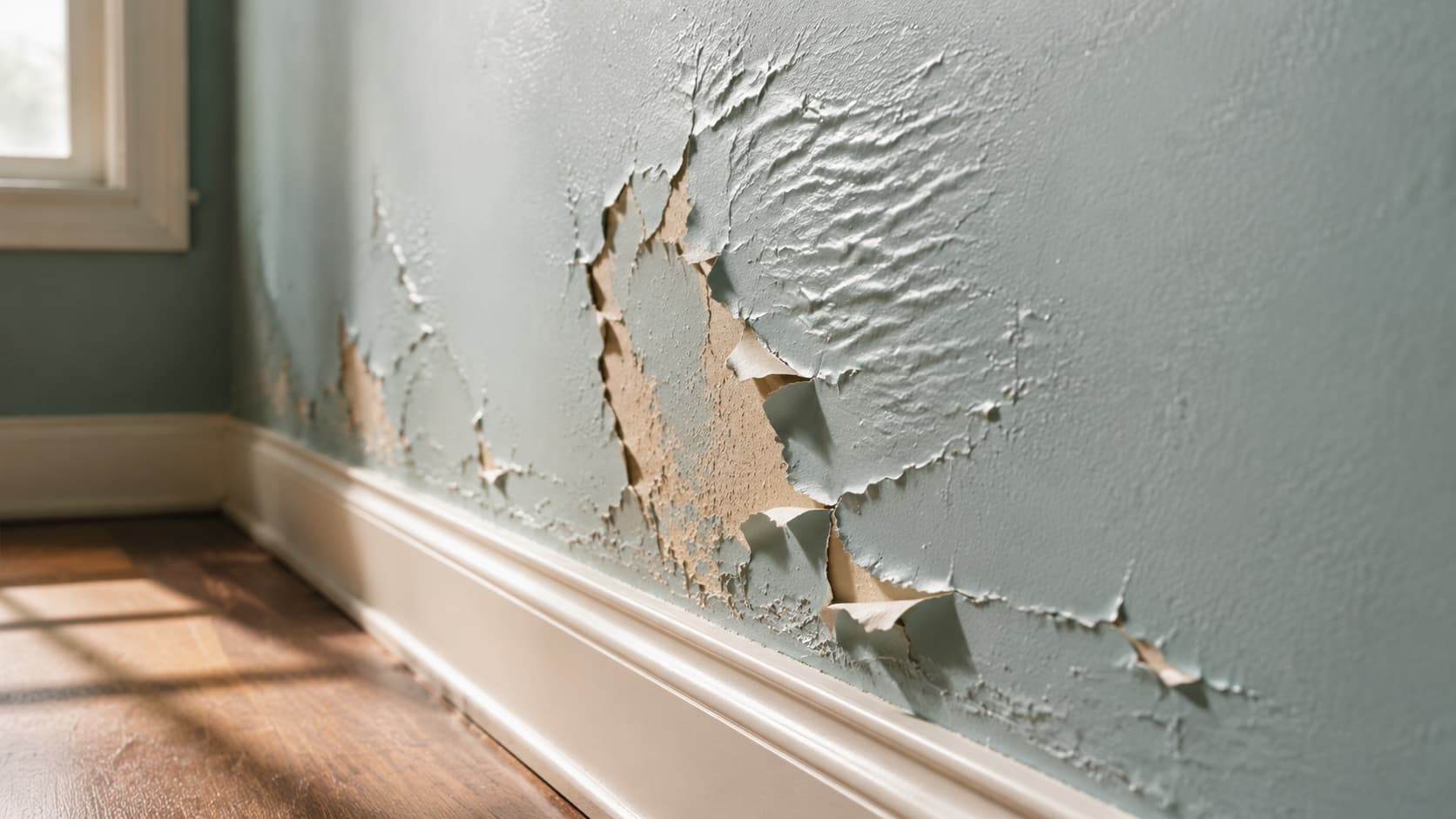
A rushed second coat rarely announces itself right away. The trouble usually shows up hours later, once the wall looks finished but starts telling a different story.
Peeling is the most common result, especially along edges where the roller pressed hardest against a still-soft first layer. Wrinkling comes next, leaving a texture that feels rough no matter how carefully the paint went on.
A cloudy or streaky finish often points to trapped moisture underneath, solvents that never got the chance to fully evaporate before getting sealed in.
The bond between coats also takes a hit, weakening the entire paint job even when the surface looks fine at first glance.
None of these problems show real damage until the paint dries completely, which is exactly why the wait matters more than it seems in the moment.
Common Paint Drying Mistakes You Need to Avoid
Most drying problems trace back to the same handful of habits, and skipping them makes every other step in this manual work better:
- Applying Thick Coats: A heavy coat looks efficient in the moment but traps solvents underneath, extending both dry time and recoat time.
- Ignoring Humidity: Skipping a humidity check leads to guessing, and guessing almost always means recoating too early in damp air.
- Painting In Direct Sunlight: Direct sun dries the surface too fast while the paint underneath stays wet, causing cracking and uneven texture.
- Closing The Room Immediately: Sealing off a freshly painted room traps moisture inside, slowing dry time and inviting a stale, tacky finish.
- Mixing Incompatible Paints: Combining oil-based and water-based products without the right primer causes poor adhesion and a finish that never fully hardens.
- Painting Over Uncured Primer: Primer needs its own recoat window, and skipping that wait weakens the entire bond before the topcoat even goes on.
- Skipping Manufacturer Instructions: Every can lists dry and recoat times for a reason, and ignoring the label is the fastest way to repeat every mistake above.
Avoiding these mistakes does more for the final finish than any drying hack ever could.
Frequently Asked Questions (FAQs)
How Many Coats Of Paint Does A Wall Need?
Most walls need two coats for even color and coverage. Dark color changes or stained surfaces sometimes need a third coat for a solid finish.
Can You Sand Between Coats Of Paint?
Sanding usually is not necessary if coats go on within the recommended window. Light sanding helps only when the surface feels rough or shows visible imperfections.
Does Paint Color Affect Drying Time?
Darker, more pigmented colors can take slightly longer to cure fully compared to lighter shades. Dry time and recoat time stay roughly the same across colors.
Can You Use A Hair Dryer To Dry Paint Faster?
A hair dryer can speed surface drying on small spots but risks uneven texture. It’s better suited for touch-ups than full walls or furniture.
Why Does Paint Smell Longer Than It Takes To Dry?
Lingering odor comes from solvents still evaporating beneath the surface, even after paint feels dry. Good ventilation reduces smell faster than drying time alone.
Final Words
Every streak, bubble, and peeling patch traces back to one decision: how long to let paint dry between coats.
Getting that timing right rarely feels exciting in the moment, but it’s the difference between a paint job that holds up for years and one that needs a redo within months.
Temperature, humidity, paint type, and patience all play their part, and none of them are worth skipping for the sake of finishing faster.
Drop a comment with the paint type used for the last project and how long the wait actually ended up being.