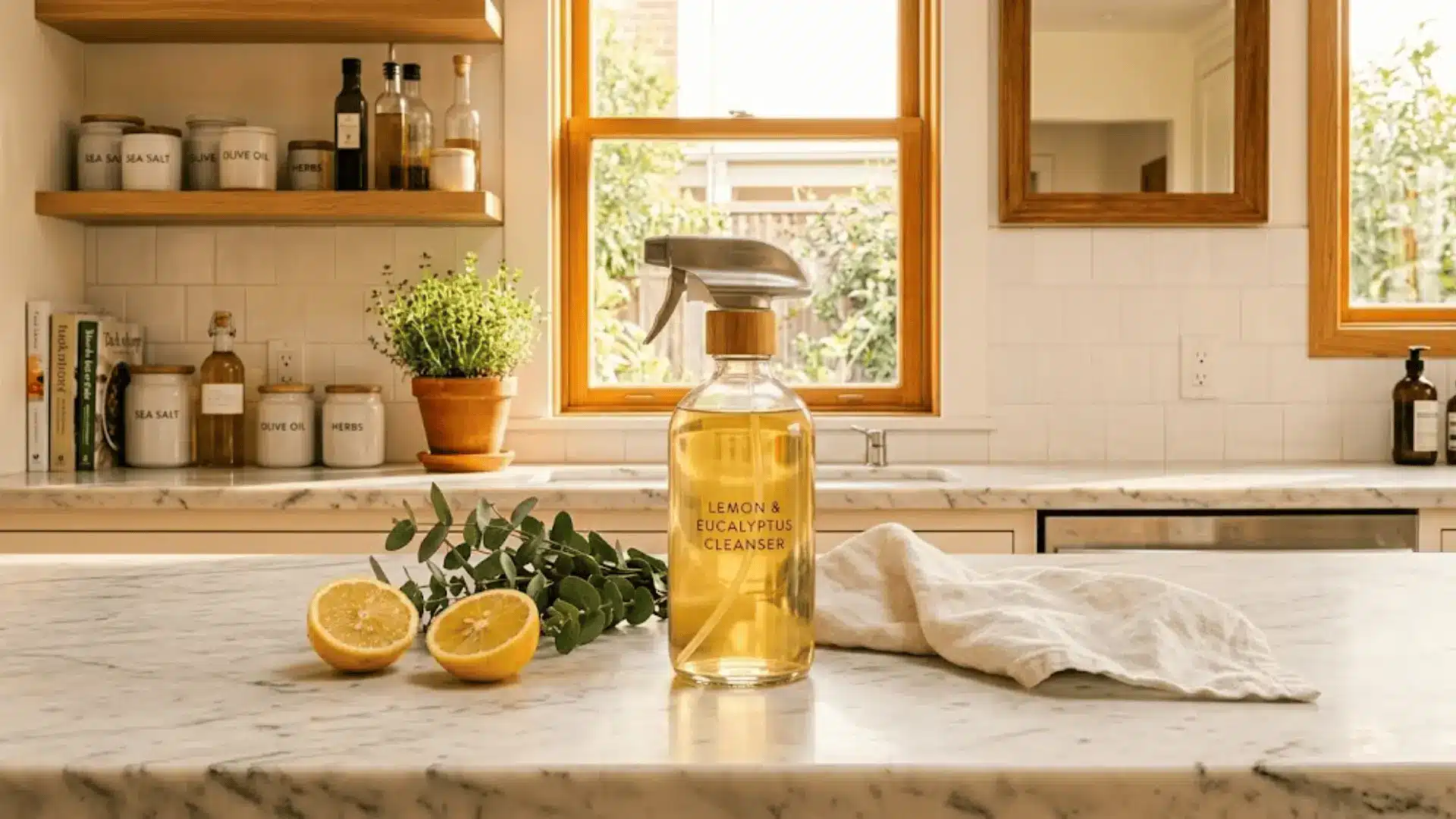
What if your cleaning routine could smell like a spa day and actually work? Forget the eye-watering fumes and ingredient lists you can’t pronounce.
Making your own homemade cleaning spray is honestly one of those small life changes that just makes sense, cheaper, gentler, and kind of fun to customize.
Your kitchen counters, bathroom tiles, greasy stovetops, a good homemade all purpose cleaner handles every corner of your home with ease.
Let’s get into exactly how to make one you’ll genuinely love using.
Cleaning Sprays You Actually Want to Use
Store-bought cleaners come loaded with chemicals that linger on your surfaces long after you’ve wiped them down.
A homemade cleaning spray skips all of that, giving you something genuinely safe around kids, pets, and food prep areas.
And the ingredients? Probably already sitting in your pantry.
White vinegar, castile soap, and essential oils go a long way without burning a hole in your budget. Plus, fewer plastic bottles piling up means you’re doing something quietly good for the planet, too.
Simple, affordable, and surprisingly effective.
How Homemade Cleaning Sprays Actually Work?
These sprays aren’t just water with a nice smell. They clean because the ingredients genuinely do something.
Vinegar cuts through grease and grime by breaking down mineral deposits and residue at a molecular level.
Baking soda neutralizes odors rather than masking them, and lemon brings natural antibacterial properties alongside that fresh, clean scent.
Where they shine most is in everyday surface cleaning, quick countertop wipe-downs, and light stains that haven’t had time to set.
For regular home maintenance, a well-made homemade all-purpose cleaner is honestly all you need.
What Goes into a Good Homemade Cleaning Spray?
Every great cleaner starts with the right ingredients. These are the ones that actually pull their weight, each bringing something specific to the mix.
| Ingredient | What It Does | Best Used For |
|---|---|---|
| White Vinegar | Breaks down grease, mineral deposits, and bacteria | Countertops, glass, tile |
| Baking Soda | Neutralizes odors and gently scrubs surfaces | Sinks, stovetops, tubs |
| Lemon Juice | Natural antibacterial with a fresh scent | Kitchen surfaces, cutting boards |
| Castile Soap | Lifts dirt and grime without harsh chemicals | General all-purpose cleaning |
| Essential Oils | Adds fragrance and boosts antibacterial properties | Any spray for a custom scent |
| Distilled Water | Prevents mineral buildup in your spray bottle | Base for all recipes |
Homemade Cleaning Spray Recipes Worth Bookmarking
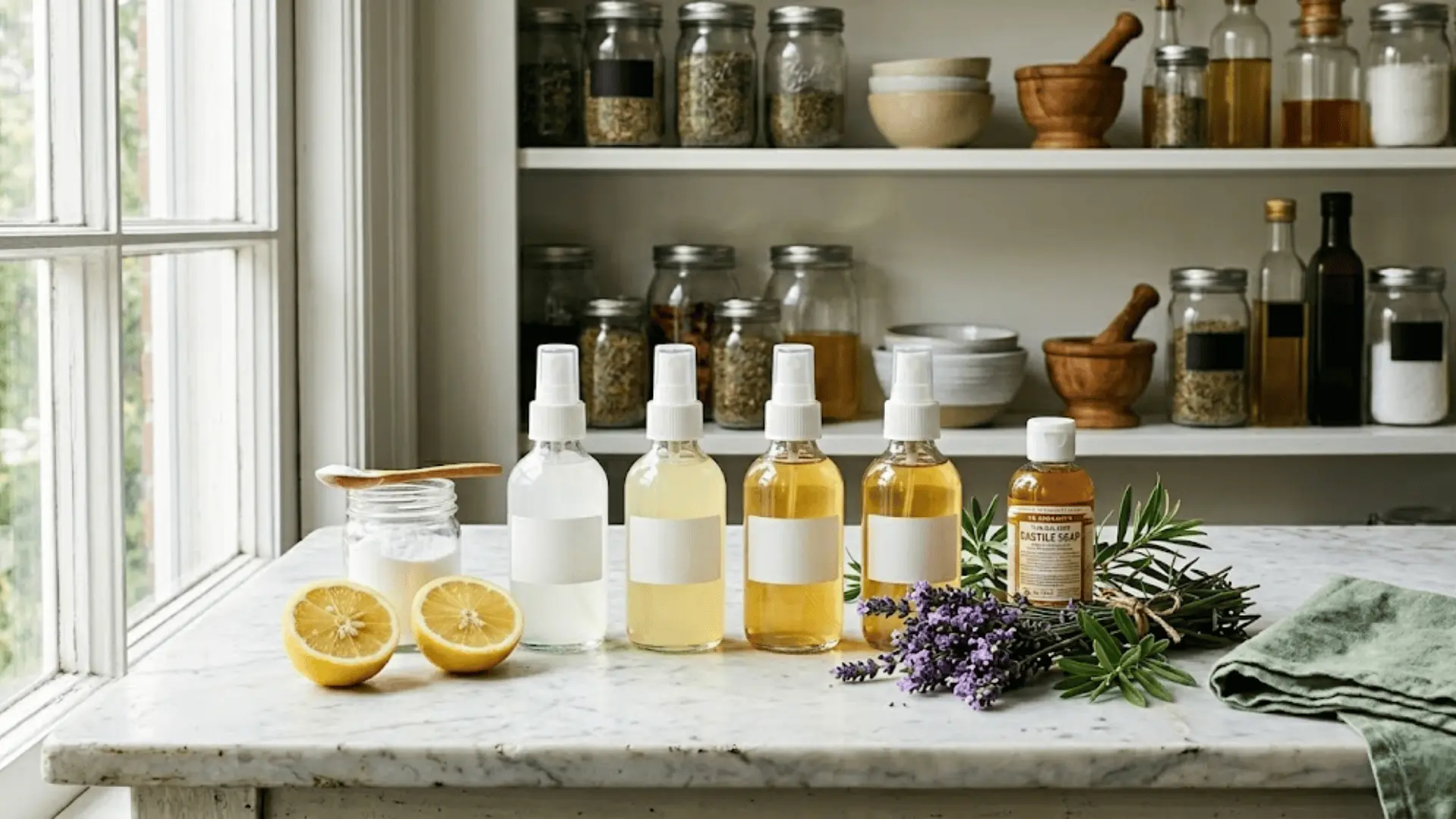
Pick your favorite and mix it up in under five minutes. These recipes are simple, effective, and easy to adjust based on what you have on hand.
Recipe 1: Basic All-Purpose Spray
The everyday go-to for countertops, stovetops, and general surfaces.
- Step 1: Add one cup of white vinegar to your spray bottle.
- Step 2: Pour in one cup of distilled water.
- Step 3: Add ten drops of your preferred essential oil.
- Step 4: Shake gently and spray away.
Recipe 2: Lemon Fresh Cleaning Spray
Great for kitchens where grease and food residue build up quickly.
- Step 1: Combine one cup of water with half a cup of lemon juice.
- Step 2: Add a teaspoon of castile soap.
- Step 3: Drop in five to eight drops of lemon essential oil.
- Step 4: Shake well before each use.
Recipe 3: Soap-Based Gentle Cleaner
A softer formula that works beautifully on delicate surfaces and everyday messes.
- Step 1: Fill your spray bottle with two cups of distilled water.
- Step 2: Add one tablespoon of castile soap.
- Step 3: Mix in ten drops of lavender or tea tree oil.
- Step 4: Shake gently and use on any surface that needs a light clean.
Recipe 4: Baking Soda Boost Spray
Bring this one out for tougher grime, stubborn stains, and lingering odors.
- Step 1: Dissolve one teaspoon of baking soda in a cup of warm water.
- Step 2: Add half a cup of white vinegar slowly to avoid fizzing over.
- Step 3: Pour in one tablespoon of castile soap.
- Step 4: Add your preferred essential oils and transfer to a spray bottle.
How to Use Your Homemade All-Purpose Cleaner?
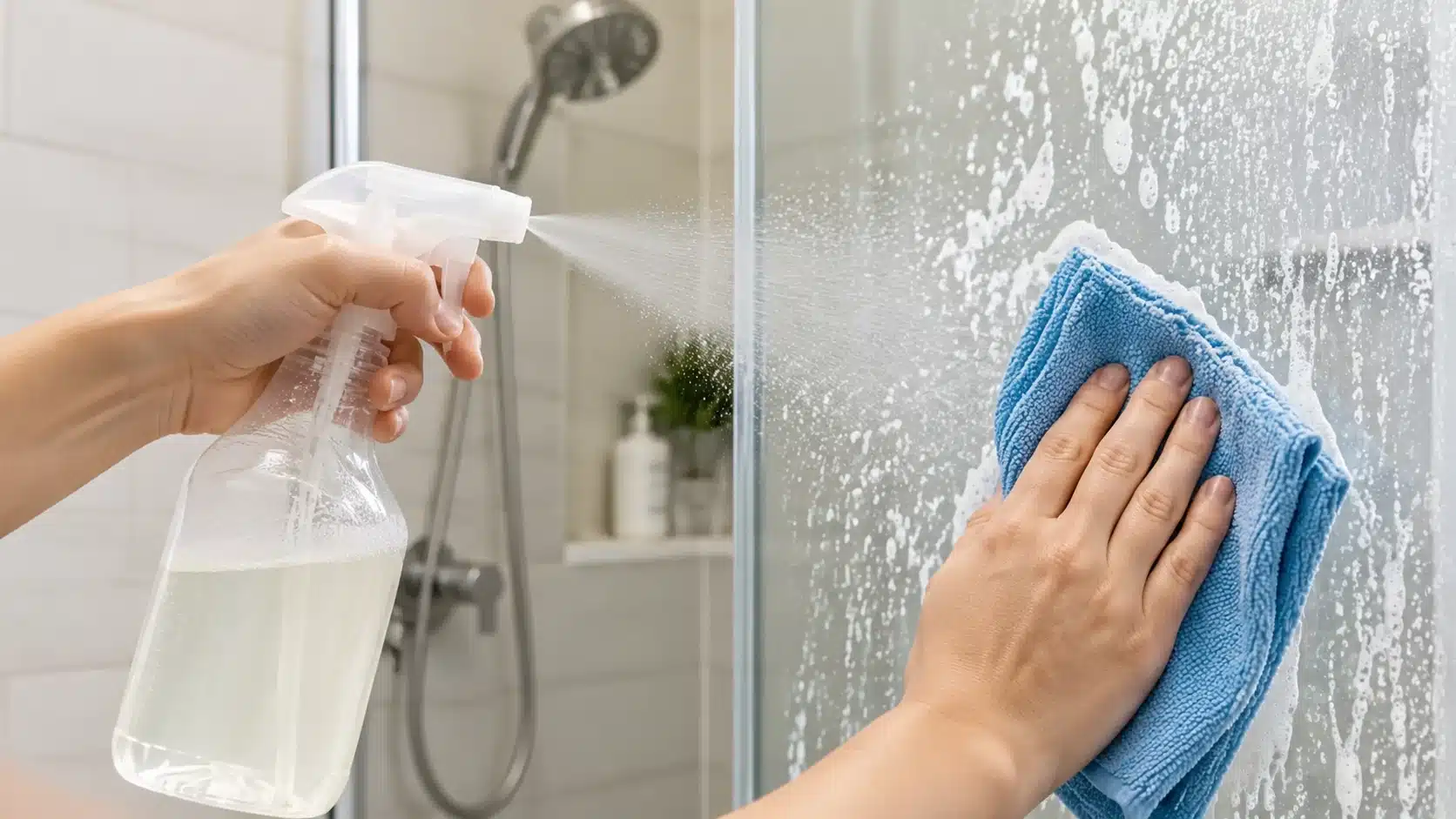
Your homemade cleaning spray works beautifully on kitchen counters, glass, tiles, and bathroom surfaces, basically anything that sees daily use and needs a quick refresh.
Spray, let it sit for a minute, then wipe clean.
Where you want to be careful is with natural stone surfaces like granite and marble. Vinegar is acidic enough to slowly dull and damage the finish over time. Stick to a soap-based formula for those instead.
A little awareness of what you’re cleaning goes a long way with any homemade all-purpose cleaner.
A Few Safety Tips Before You Start Mixing
Homemade cleaners are gentle by nature, but a little caution still goes a long way. Keep these in mind before you start spraying everything in sight.
- Never mix vinegar with bleach, as the combination releases toxic fumes.
- Always label your bottles with the ingredients and the date you made them.
- Store sprays in a cool, dark place away from direct sunlight.
- Keep everything out of reach of children and pets.
- Do a patch test on new surfaces before going all in.
A well-made homemade cleaning spray is safe, simple, and genuinely effective as long as you treat it with the same care you would any other cleaning product in your home.
What People are Actually Saying About Homemade Cleaning Sprays?
Real users swear by a few small tweaks that make a big difference.
Adding essential oils like lavender or eucalyptus takes the scent from sharp and vinegary to genuinely pleasant. For glass and mirrors, straight vinegar diluted with distilled water consistently gets the cleanest, streak-free finish.
Speaking of which, distilled water over tap is a game-changer for avoiding those annoying white streaks left behind.
For more honest, firsthand experiences, this Reddit thread on cleaning products people have ditched for homemade alternatives is a great rabbit hole to fall into.
Homemade vs. Store-Bought Cleaning Sprays
Both have their place, but knowing what sets them apart helps you make a smarter choice for your home.
Here’s a quick side-by-side look.
| Factor | Homemade Cleaning Spray | Store-Bought Cleaning Spray |
|---|---|---|
| Ingredients | Natural, simple, and recognizable | Often chemical-based with additives |
| Cost | Budget-friendly, uses pantry staples | Pricier over time with repeat purchases |
| Customization | Fully customizable scents and strengths | Fixed formula, no adjustments possible |
| Effectiveness | Great for daily cleaning and light messes | Stronger for heavy-duty or disinfecting tasks |
| Eco-Impact | Fewer plastic bottles, less waste | Contributes to single-use plastic waste |
| Convenience | Takes a few minutes to mix | Ready to use straight off the shelf |
| Frequency of Use | May need reapplying for tougher grime | One application often does the job |
Wrapping Up
Making your own homemade cleaning spray is one of those small shifts that quietly improve your whole routine.
Your home stays clean, your space smells exactly how you want it to, and you’re not reaching for anything harsh or unnecessary.
Once you find your go-to recipe, it just becomes second nature.
Give one of these a try this week and see how it feels. We’d love to know which recipe won you over or if you’ve got a twist of your own. Drop it in the comments below!