Step into a tight bath, and notice how a wall-hung sink lets the floor breathe—that’s the floating-vanity effect. By lifting storage off the tile, you gain visual square footage, easier cleaning, and a shot of modern style. Homebuyers notice it, designers swear by it, and when built in solid wood like the collections from Willow Bath & Vanity, it outlasts many floor units.
In the pages ahead, we’ll share ten ideas that solve real small-bath problems while staying stylish. You’ll learn how ultra-slim models clear walkways, mirror pairings double visual depth, and under-cabinet glow turns a midnight trip into a spa cue.
To keep things simple, the ideas fall into three bite-size groups:
- Slim-footprint fixes (space first)
- Visual-expansion tricks (eye first)
- Hybrid & DIY moves (function and flair)
Skim to the segment that matches your biggest headache, or read straight through and mix-and-match. Either way, expect punchy insights, zero fluff, and clear next steps—ready to help you reclaim those precious inches. Let’s float.
Slim-Footprint Fixes
Small bathrooms rarely have unused floor, so our first mission is to shave every spare inch from the vanity’s footprint without stealing comfort. The three ideas below shrink depth, claim awkward corners, and lighten storage. Each move frees room to turn around, towel off, and breathe.
1. Slim & Chic: The 15-Inch-Deep Vanity
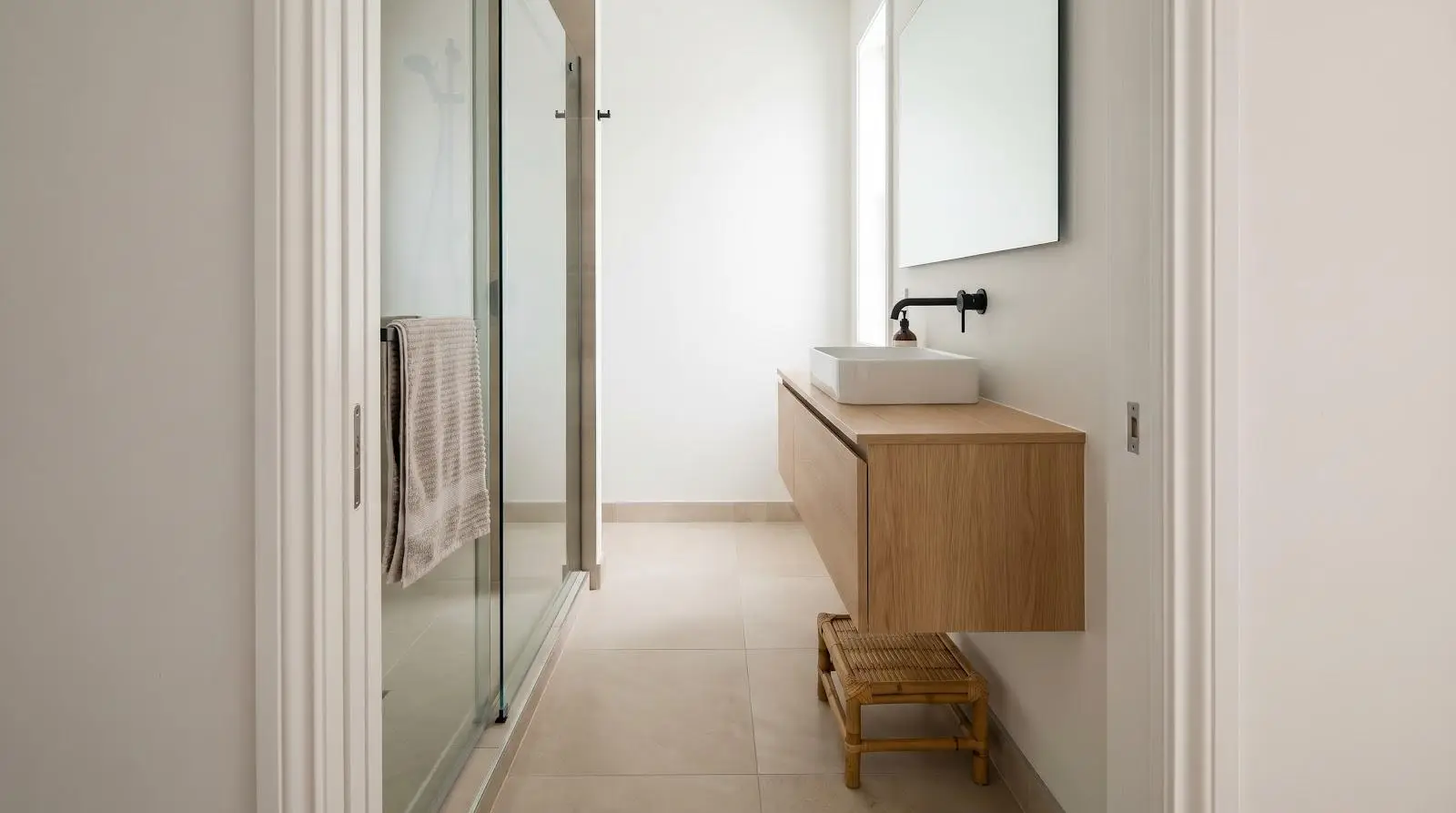
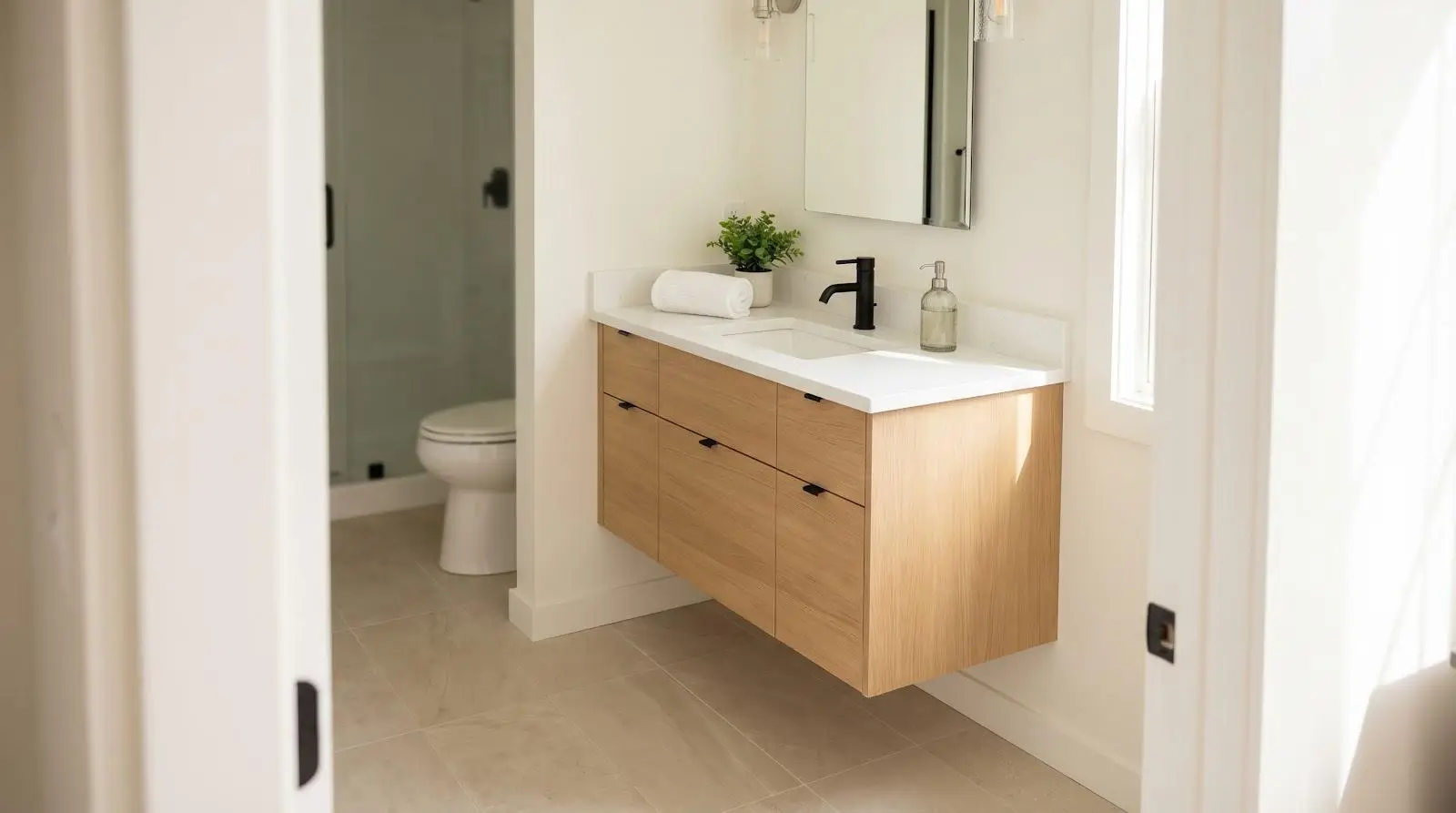
Imagine walking into a five-by-eight bath where the cabinet projects only 15 in. (about 38 cm). Your hip no longer bumps a drawer pull, and the room feels less hallway, more haven. Manufacturers now offer vanities this shallow because city remodels demanded it, and the 2025 U.S. Houzz Bathroom Trends Study shows that 11 percent of renovators choose a floating model for tight walkways.
Why it works is simple geometry: depth equals intrusion. Trim 5 in. along a 48-in. span and you reveal nearly 2 sq ft of visible floor—space for a step stool, hamper, or just easy movement. Pair the shallow cabinet with a compact rectangular sink and a wall-mounted faucet. The faucet clears deck space, and the slimmer basin still corrals everyday splashes. Finish with one large mirror instead of a medicine cabinet to reflect light without adding thickness.
2. Corner-hugging vanities
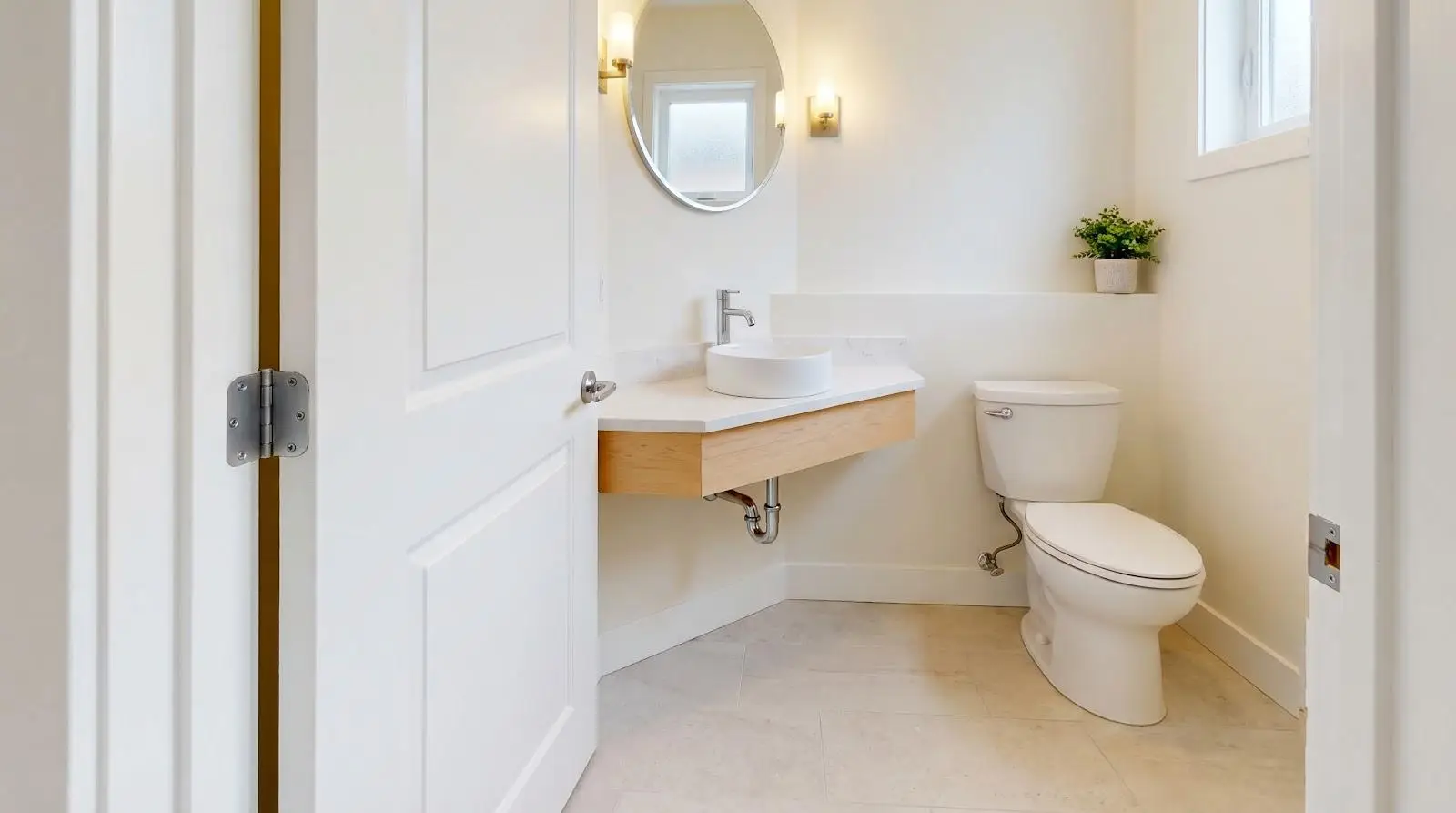
When a door swings inches from the toilet, a straight-on vanity blocks traffic. Swinging the cabinet into the corner turns dead space into a working wash zone while leaving the center aisle clear. Corner units often run 18–20 in. on the diagonal yet steal almost no corridor width. Floating the box magnifies the effect—the tile that shows under it tricks the eye into thinking the room widened. For ultra-tight powder rooms, a triangular stone top with a petite round basin feels sculptural rather than compromised.
To install, set stud blocking on both walls, add an L-shaped cleat inside the frame, and hide plumbing with a chrome tailpiece that doubles as accent metal.
3. Open-shelf lightness
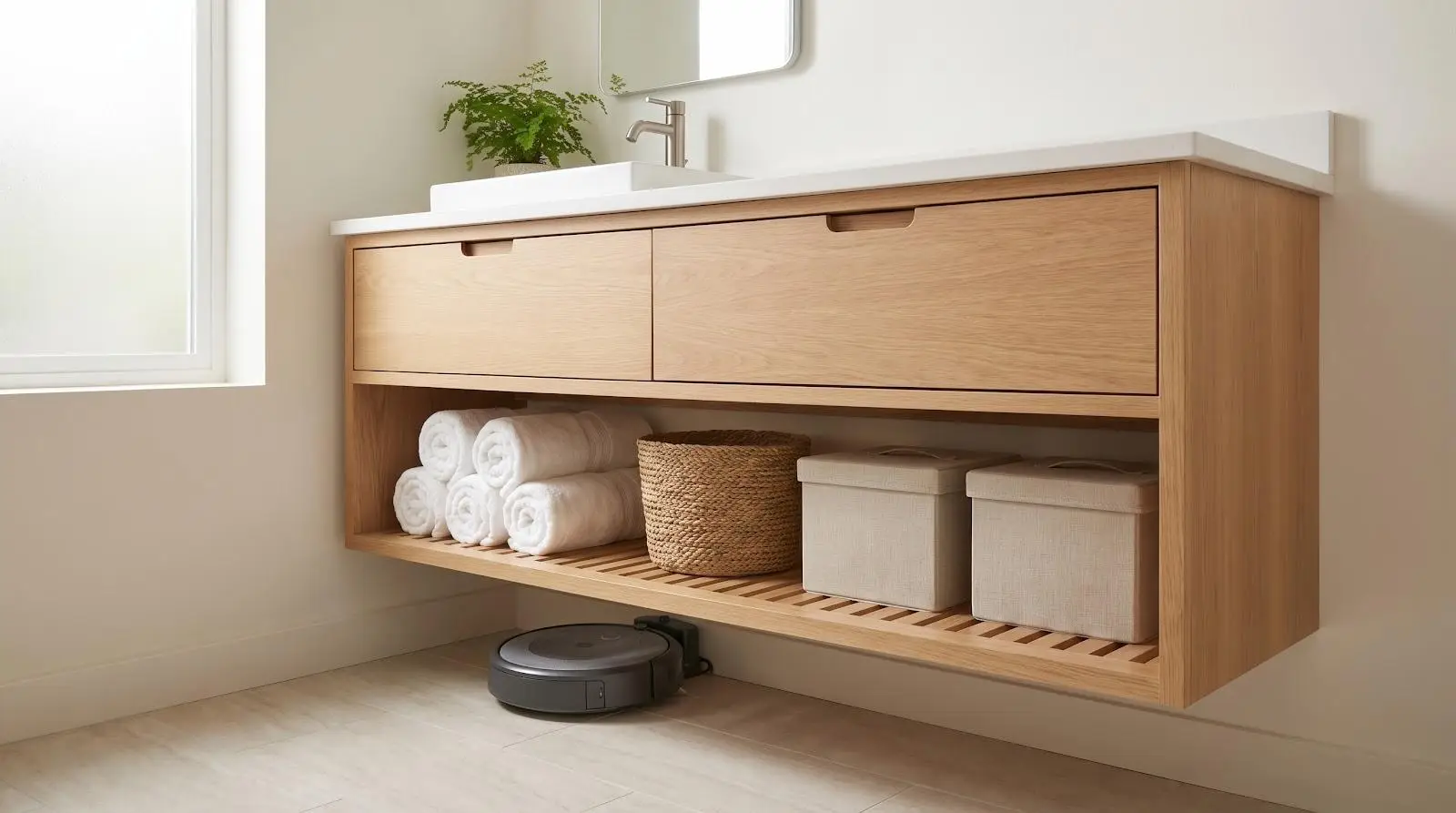
Storage matters, but big boxes crush a small room. An open-shelf floating vanity splits the difference by putting drawers up top and a slatted shelf below. The shelf welcomes rolled towels or a seagrass basket—items that look intentional, not cluttered—while the continuous floor line carries under the cabinet. Designers love the spa vibe; homeowners love that a robot vacuum still fits underneath. Choose a finish that echoes other wood in the room. If you worry about mess, tuck grooming gear into matching lidded bins.
Putting it to work
- Tape the planned depth on the floor, then step back, turn sideways, and swing the door. If the outline feels generous, the layout works.
- Confirm stud locations now—floating hardware demands solid backing.
- Order fixtures together so faucet reach, sink size, and cabinet depth play nicely on install day.
Ready for optical illusions? Next, we’ll show how mirrors, contrast, and a touch of light make any bath look larger than its blueprint.
Visual-Expansion Tricks
4. Mirror-wall magic: float and reflect
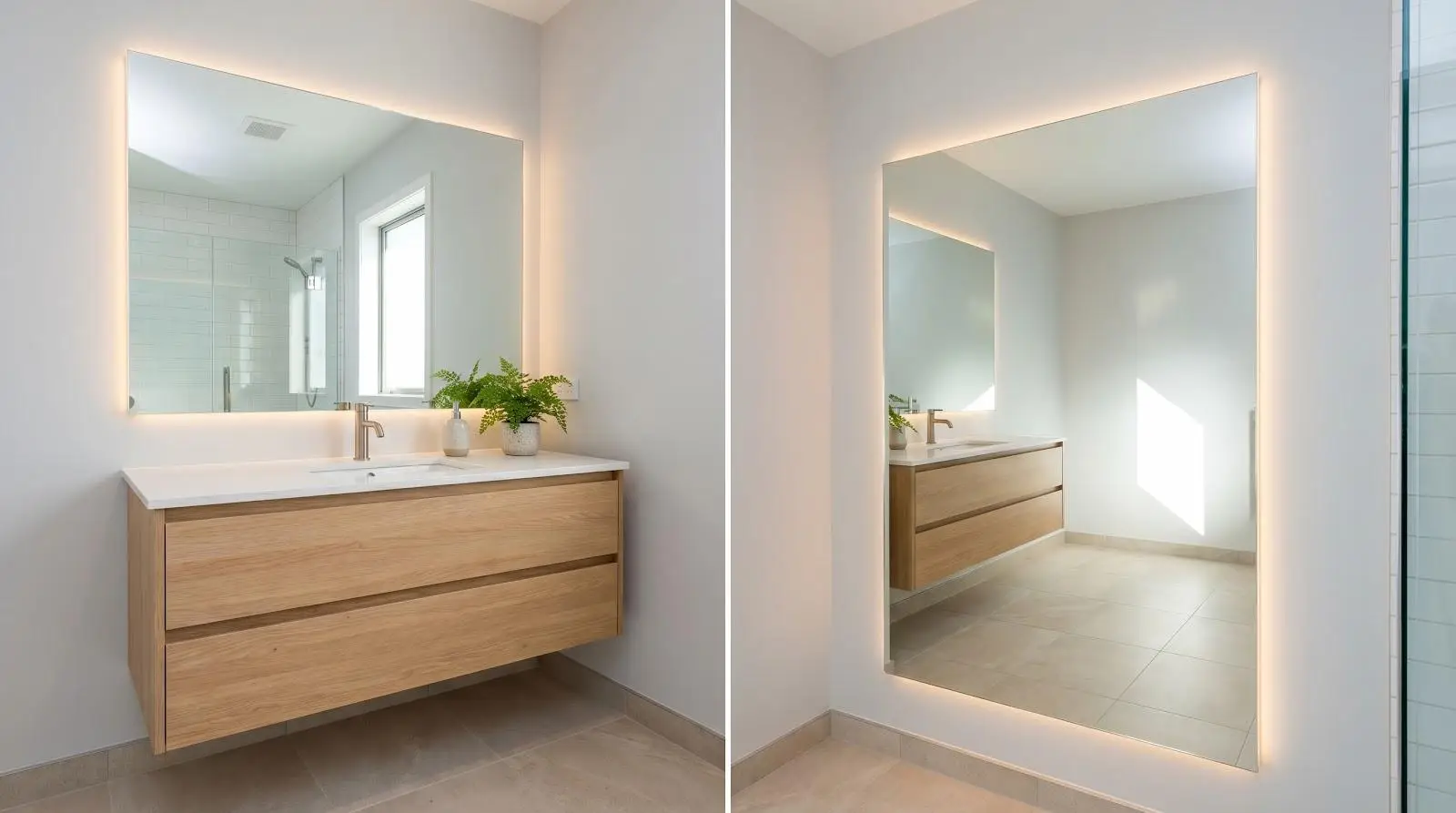
A floating vanity already shows extra floor, but pairing it with one oversize mirror multiplies the gain. When glass spans the full vanity width—or the whole wall—it bounces light to every surface, echoes tile lines, and doubles the sight-line to the far corner. The brain reads that reflection as added depth, so the room feels almost twice as large without moving a stud.
Pros lean on this combo in boutique hotels because it works at any budget. Mount an affordable frameless sheet flush to the backsplash or invest in a custom panel that climbs to the ceiling. Either way, keep edges tight to the wall so no bulky frame interrupts the illusion.
Install the vanity first, then center the mirror so its bottom edge sits just above the faucet base. The continuous reflection makes the cabinet appear to float again inside the glass, creating an infinity-pool effect for your bathroom. Want extra flair? Tuck a low-profile LED strip behind the mirror perimeter. The halo erases harsh shadows and provides a gentle night-light.
5. Bold Contrast: Black Vanity, Brass Hardware
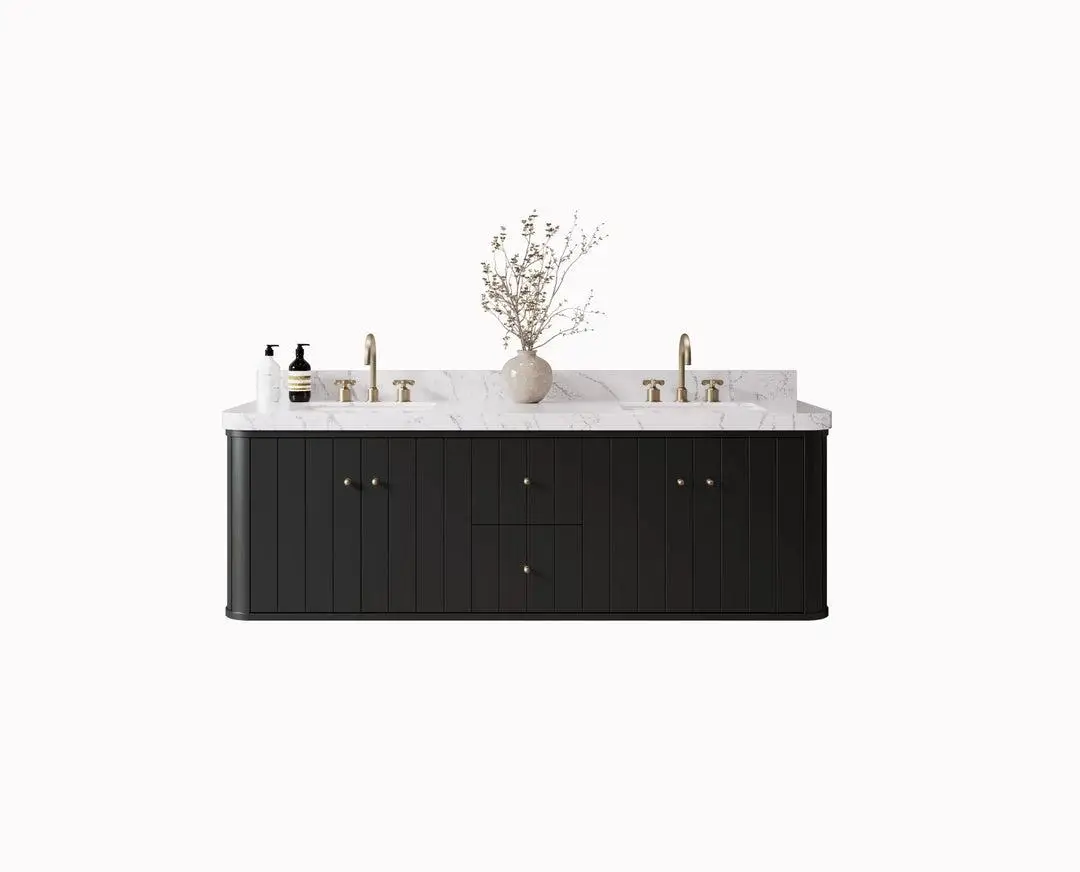
Matte black floating vanity with brass hardware in a small white bathroom
White walls open a room, but one dark feature pushes them even farther by sharpening every edge. Enter the matte black floating vanity. Hanging it 6 in. (about 15 cm) above the floor keeps the piece from swallowing space; instead, the cabinet hovers like a modern sculpture.
Pair that black finish with warm brass pulls or a champagne-gold faucet to harness the oldest design sleight of hand, contrast. The bright metal catches light while the dark face recedes, so your eye reads depth where none exists. Product specs for Willow Bath and Vanity’s Houston Floating vanity confirm the combo: the 72-inch matte-black cabinet ships with brushed-gold hardware already installed, giving remodelers the high-contrast look without aftermarket swapping. Houzz trend photos show over half of the top bathroom images feature a bold black element, proving that dark accents can make even a compact space feel luxurious.
Practical wins follow the style points. Matte black hides water spots better than glossy paint, and brushed brass masks fingerprints that chrome highlights. Choose soft-close drawers so hardware lines stay tight and silent. Keep surrounding finishes calm—white, pale oak, or soft gray tile—so the vanity remains the single dramatic note. Add a stem of greenery or a textured hand towel on a matching brass hook, then step back to see a small bath with big-shot confidence, all from one floating rectangle of shadow.
6. Under-Vanity Lighting: Add a Gentle Hover
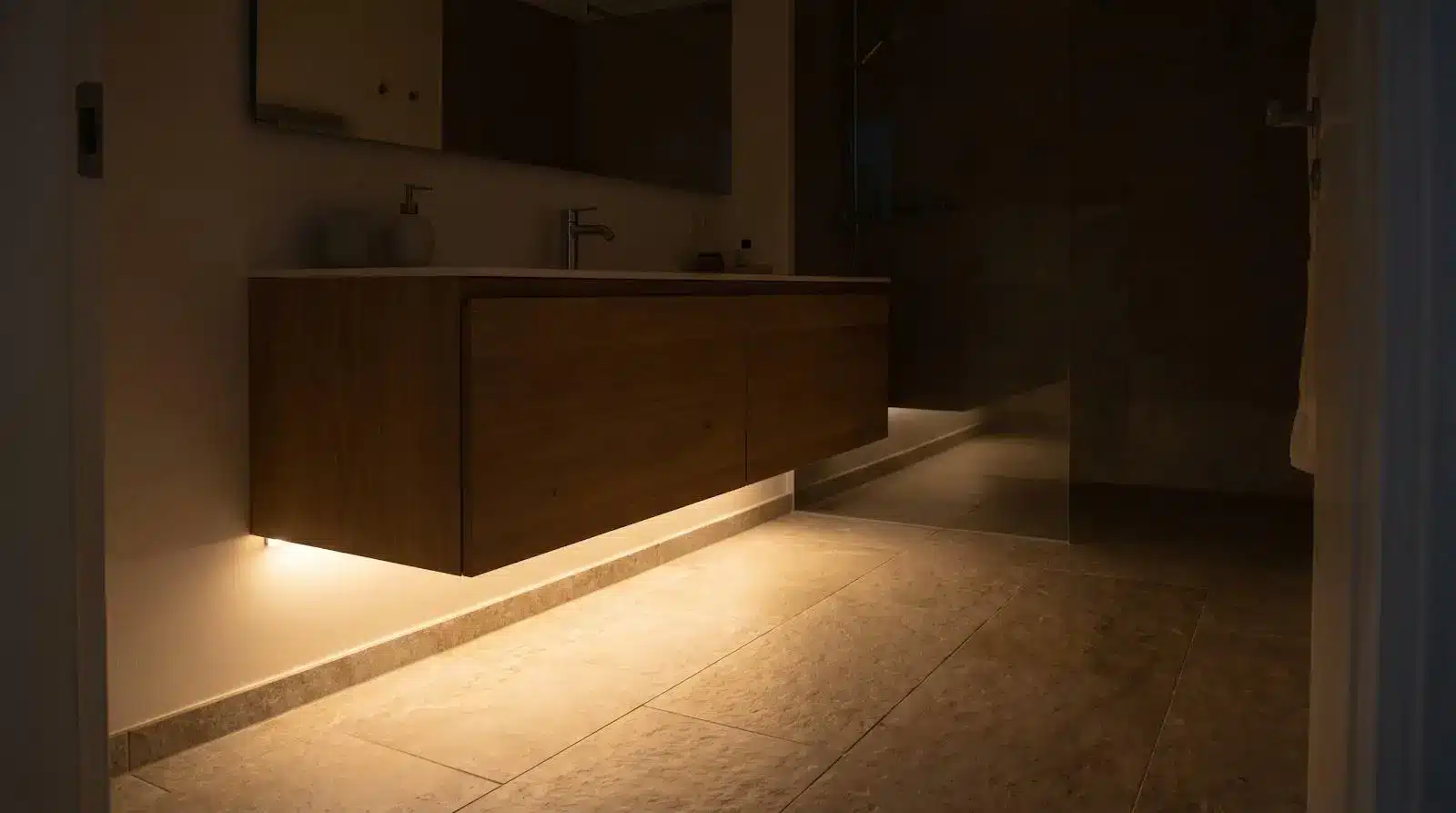
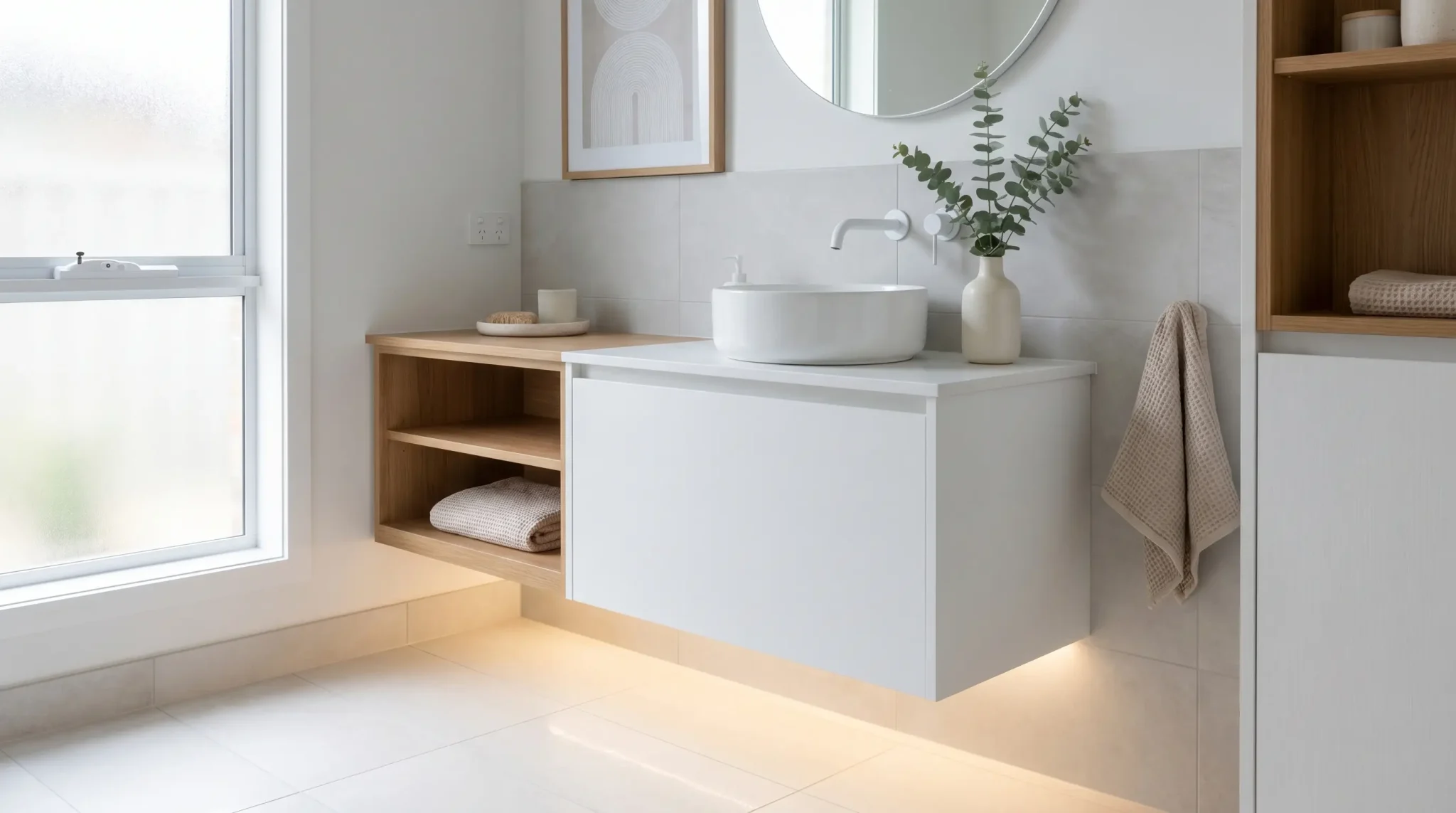
Switch off the ceiling bulb and watch a warm ribbon of light skim across the tile. That glow comes from an LED strip tucked below the vanity, and it serves two jobs: it doubles as a night-light and makes the cabinet appear weightless. Light that grazes the floor pulls your gaze outward, blurring boundaries so the room feels wider. Designers flagged this move in 2026 trend lists, and owners love the practical upside—no more fumbling for a switch at 3 am.
Installation is a weekend task. Stick a low-profile LED tape along the cabinet underside, hide the driver in a rear drawer cavity, and route the cord through a grommet to the nearest outlet. Add a motion-sensor plug so the strip turns on only when someone enters. Total cost lands near thirty dollars and an hour of careful measuring.
Choose a warm 2 700 K color temperature so the light flatters skin and pairs with natural wood tones. If the vanity sits higher than 8 in. (about 20 cm), angle the strip slightly inward to avoid glare on the floor. The payoff is pure atmosphere: a small bath that now feels like a boutique suite, soft, spacious, and unmistakably modern.
Conclusion
From ultra-slim cabinets to glow-enhanced mirrors, each of these ten floating vanity ideas frees floor space and amplifies style. Pick one or combine several, and your small bathroom will gain the breathing room—and the polish—of a much larger retreat.