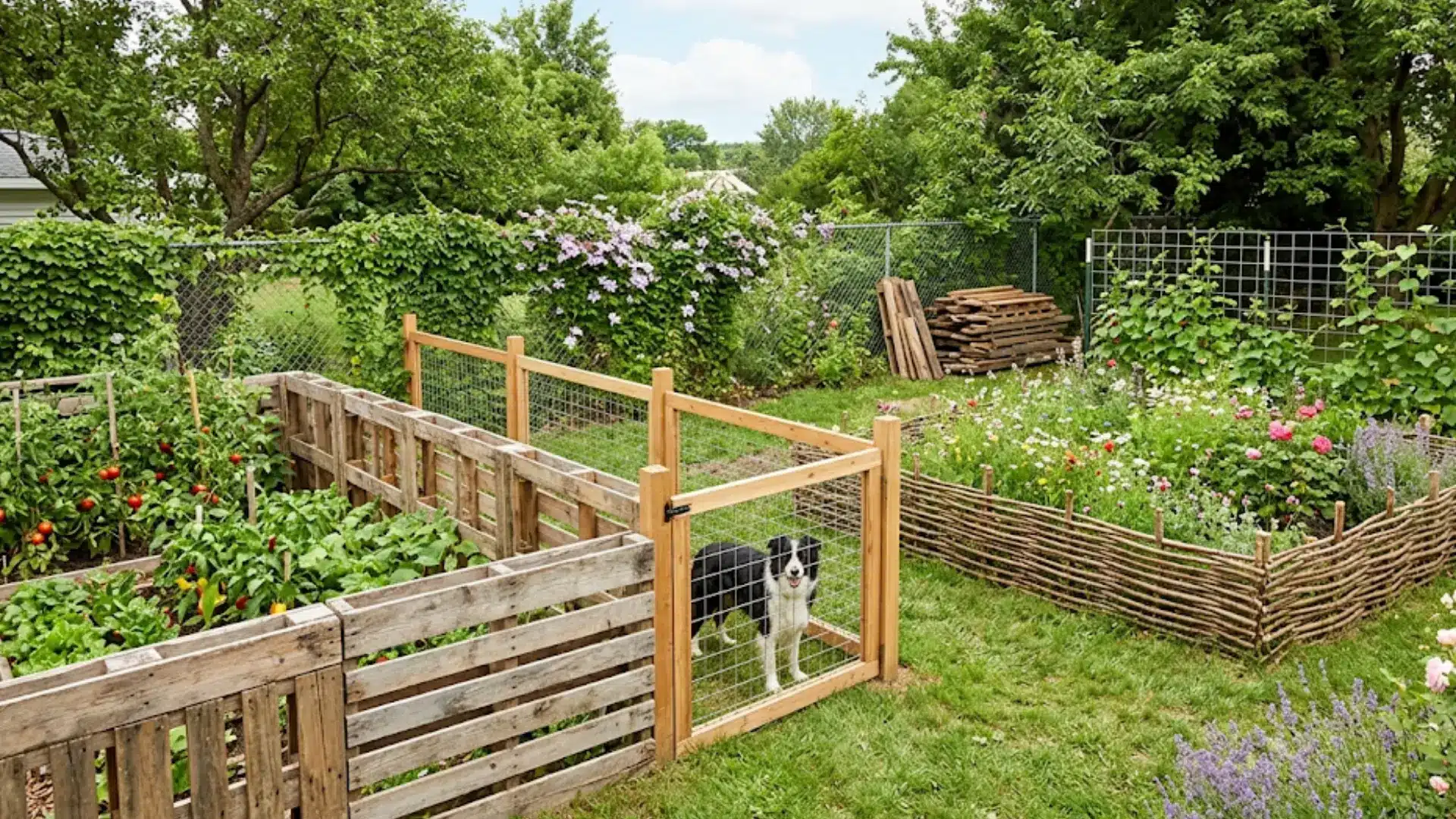
A good fence should protect your yard, not punish your wallet. I know how fast a simple fence project can turn into a long receipt of posts, panels, gates, tools, hardware, and last-minute extras.
You want privacy, safety, and a cleaner-looking yard, but you also want to keep the cost realistic. The hard part is knowing which materials are worth buying and which ones only look cheap at first.
These DIY fence ideas will help you compare affordable options before you spend money on the wrong setup. You will learn which fences work best for privacy, pets, gardens, small spaces, and curb appeal.
I’ll also share where you can save, where you should not cut corners, and how to choose a fence that fits your budget, skill level, and space.
Start Smart With The Right DIY Fence
Before you choose a design, think about what your fence needs to do and how much work you can realistically handle. Some DIY fence ideas are best for saving money, while others offer more privacy, greater durability, or a cleaner look.
Pallet fences are useful for gardens and rustic yards because they can be built with low-cost or free wood. Wood and wire fences cover more space for less, making them practical for pets, gardens, and open boundaries.
Wattle fences are even cheaper if you have branches or trimmings. If you already have fencing, a chain-link upgrade may be smarter than rebuilding.
Bamboo screens and lattice panels work well for patios and garden areas, while corrugated metal and horizontal slats cost more but offer stronger privacy and long-term value.
Affordable DIY Fence Ideas For Every Yard Need
These affordable DIY fence ideas work for privacy, gardens, pets, small spaces, patios, and simple backyard boundaries.
The best choice depends on your budget, how much privacy you need, how strong the fence must be, and whether you are building from scratch or upgrading something you already have.
Many low-cost materials can solve multiple problems, so choose based on use, height, spacing, durability, and maintenance, much like deciding between rocks vs mulch before you buy anything.
1. Pallet Fence
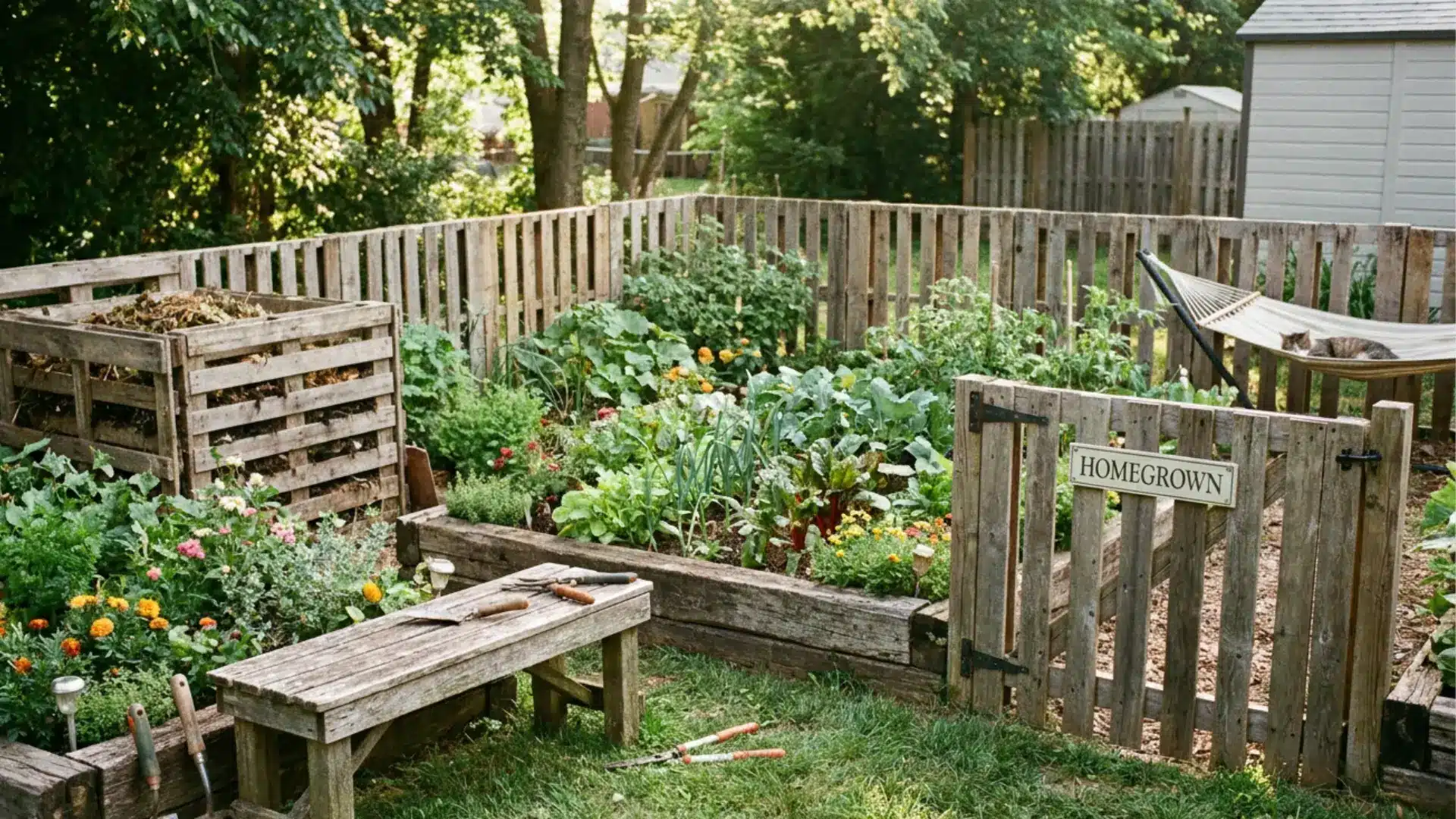
A pallet fence is a smart, low-cost choice if you can find clean, safe pallets nearby. You can break the pallets apart for boards or use full sections to make a rustic garden fence, compost enclosure, privacy screen, or small backyard boundary.
It works best for gardens, rustic yards, compost corners, and smaller privacy areas. The biggest budget advantage is that pallets are often free or very cheap. Before you build, check each pallet for safety markings, loose nails, splinters, rot, cracks, weak boards, and other damage.
2. Wood and Wire Fence
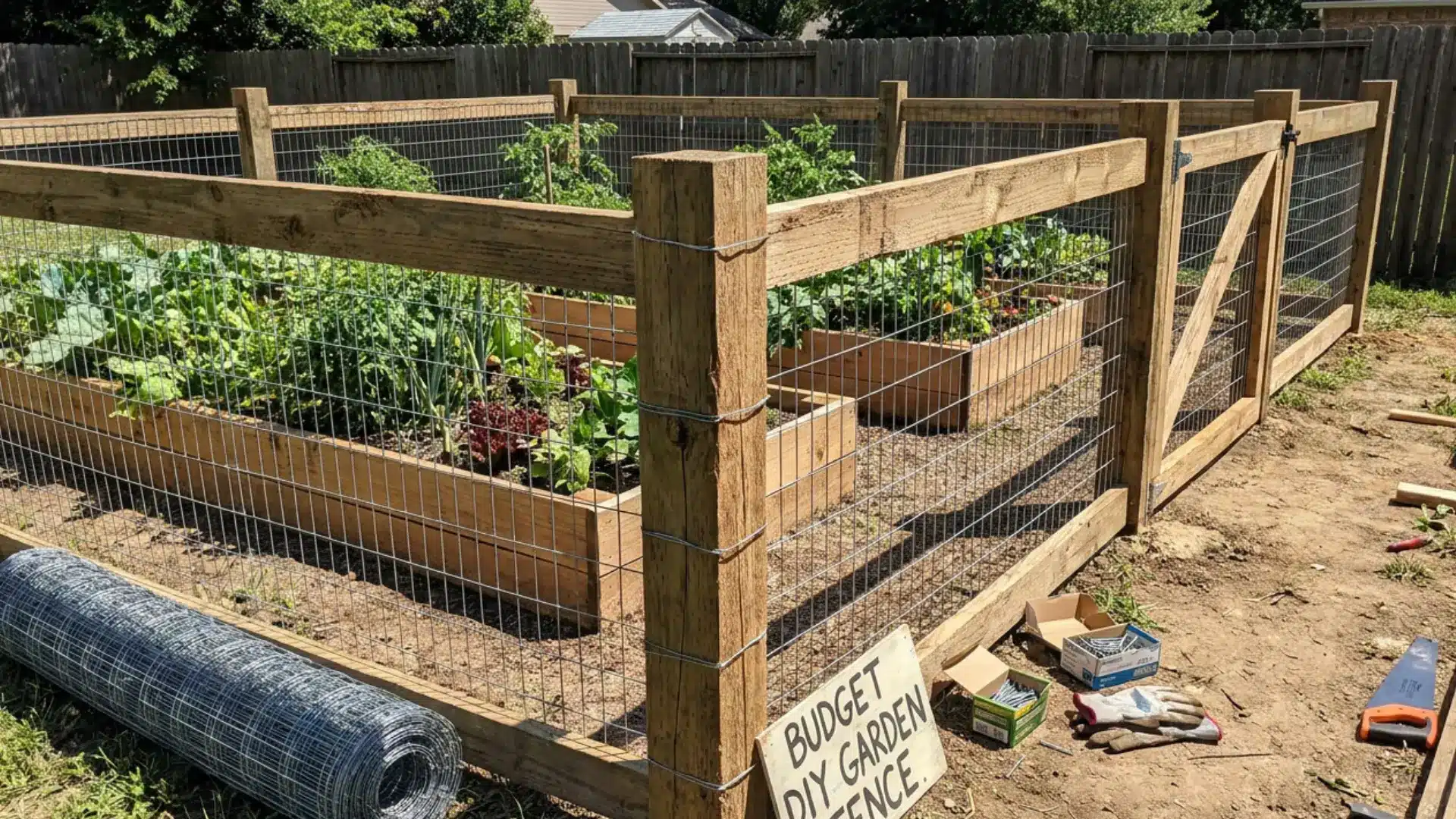
A wood-and-wire fence uses wooden posts or a simple wooden frame with wire mesh. You can use welded wire, chicken wire, or cattle panels, depending on strength needs.
This is a smart low-cost option for pets, gardens, chickens, vines, and open boundaries. It costs less than a full wood fence because wire covers more space with less lumber.
To keep it practical, choose the right wire strength, check spacing for pets, and add plants, fabric, or a privacy screen if you need more cover.
3. Wattle Fence
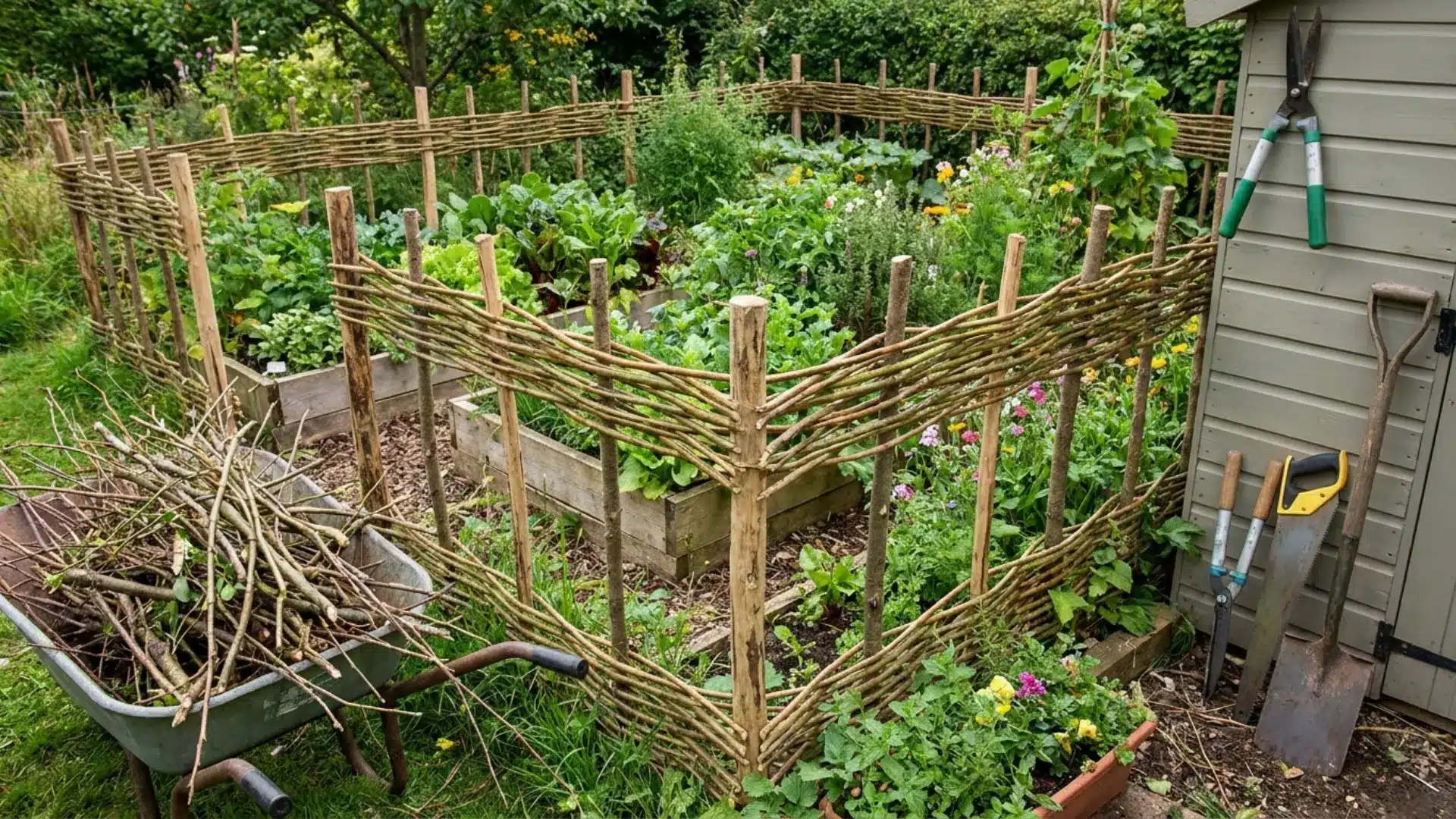
A wattle fence is made by weaving flexible branches between upright stakes. It is one of the lowest-cost options if you have access to branches, brush, trimmings, willow, hazel, or other bendable wood.
This type of fence works well for garden borders, cottage-style planting areas, vegetable beds, and decorative edges. It has a natural look and can be built with very little bought material.
Secure the stakes well, use flexible branches, and avoid wattle fencing where you need strong privacy, pet control, or long-term security.
4. Reclaimed Wood Fence
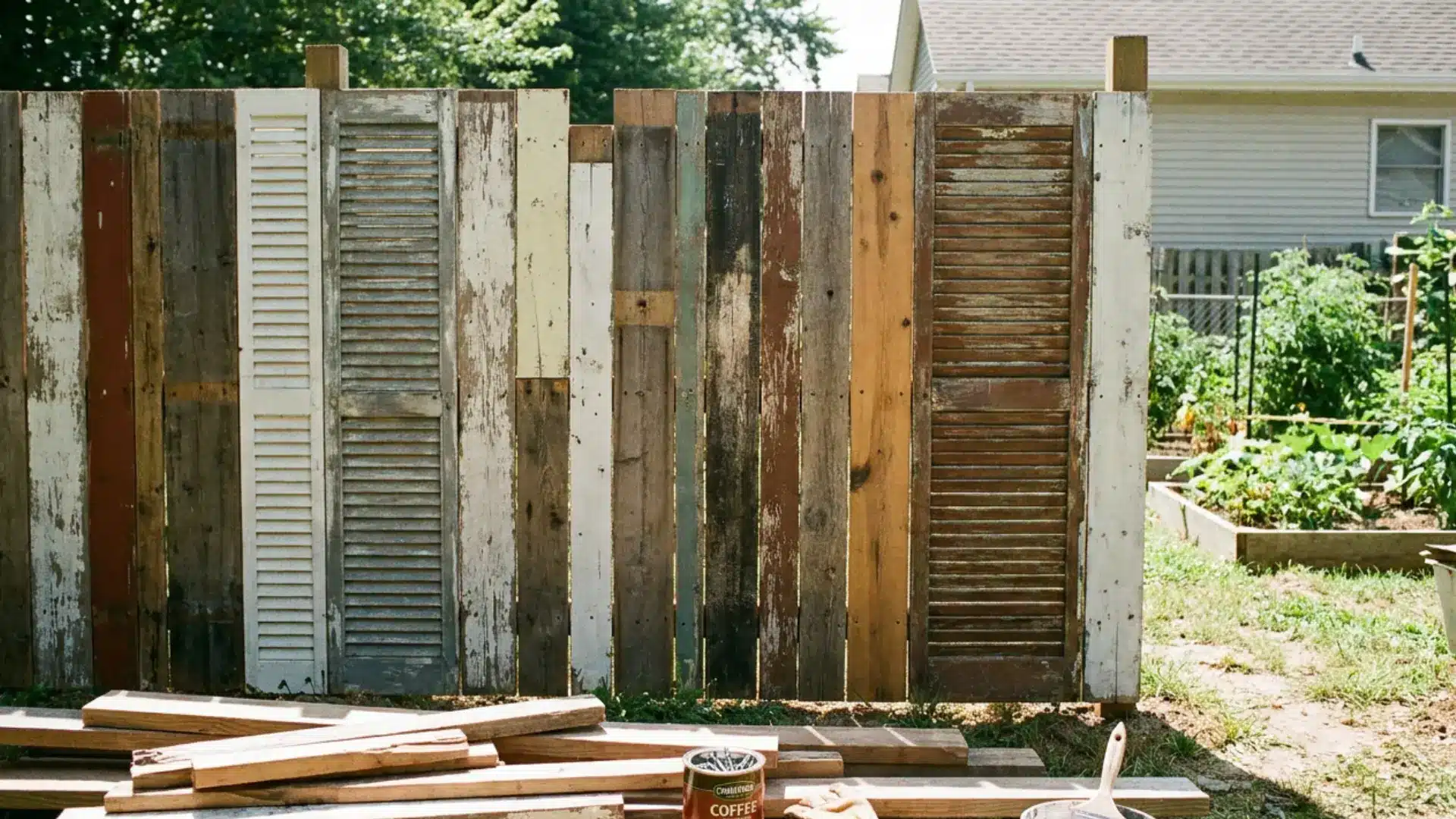
A reclaimed wood fence uses old fence panels, leftover lumber, shutters, doors, salvaged boards, or other reused wood. It works well for rustic privacy, creative backyard screens, and low-cost fence projects with character.
The biggest budget benefit is avoiding the cost of buying all-new boards or panels. It can also make mismatched materials look intentional when stained or arranged well.
Before using reclaimed wood, check for rot, warping, exposed nails, pests, weak boards, and unsafe old paint.
5. Chain-Link Fence Upgrade
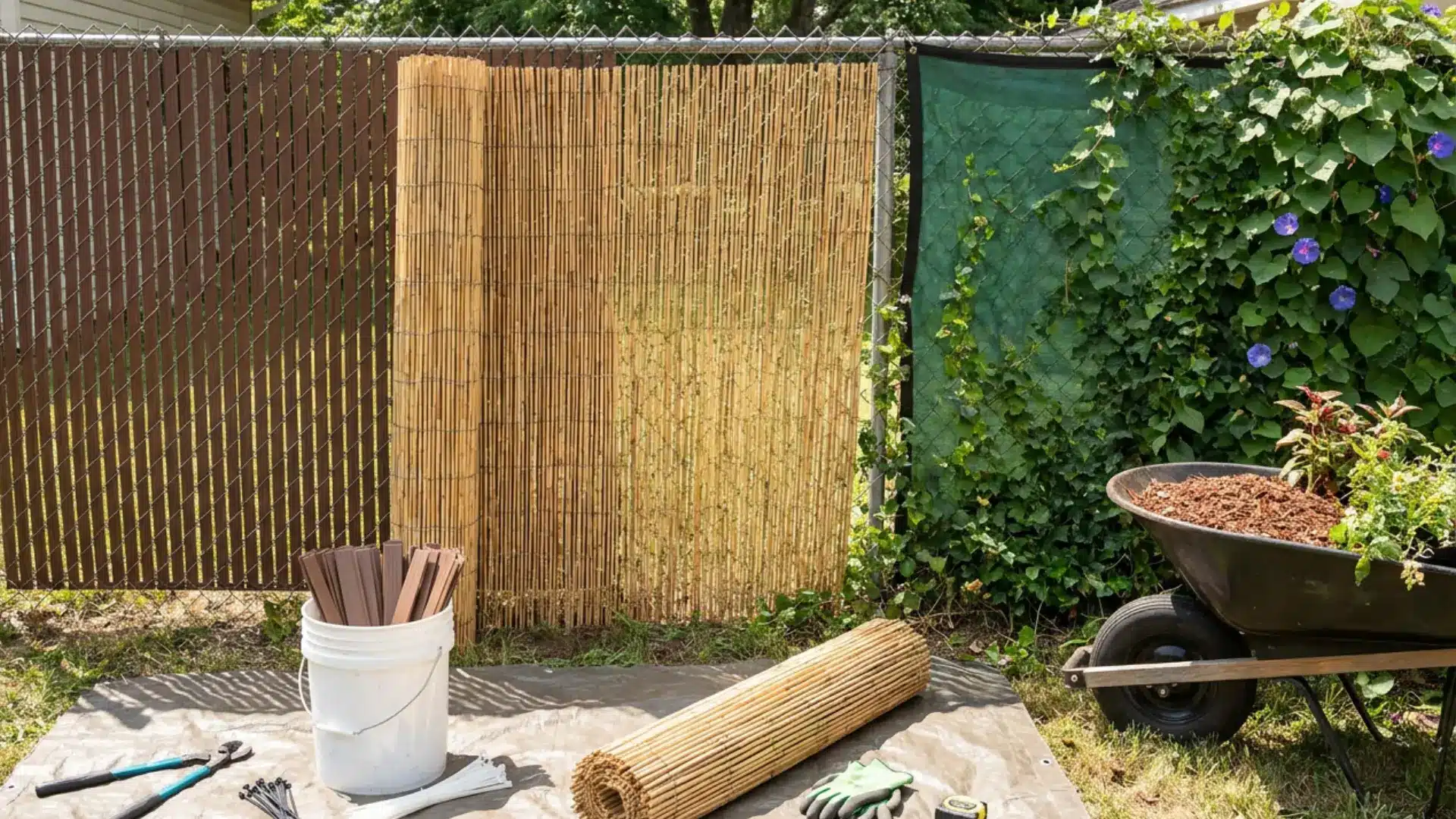
A chain-link fence upgrade is a good choice when you already have a sturdy fence but need more privacy or a better look. You can add privacy slats, bamboo rolls, vines, fabric screens, faux greenery, or paint.
This works well for existing fences, pet areas, side yards, renters, and quick privacy upgrades. It is usually cheaper than replacing the whole fence.
Before adding anything, make sure the chain-link fence is strong enough to support the extra weight of screens, rolls, or plants.
6. Chicken Wire Garden Fence
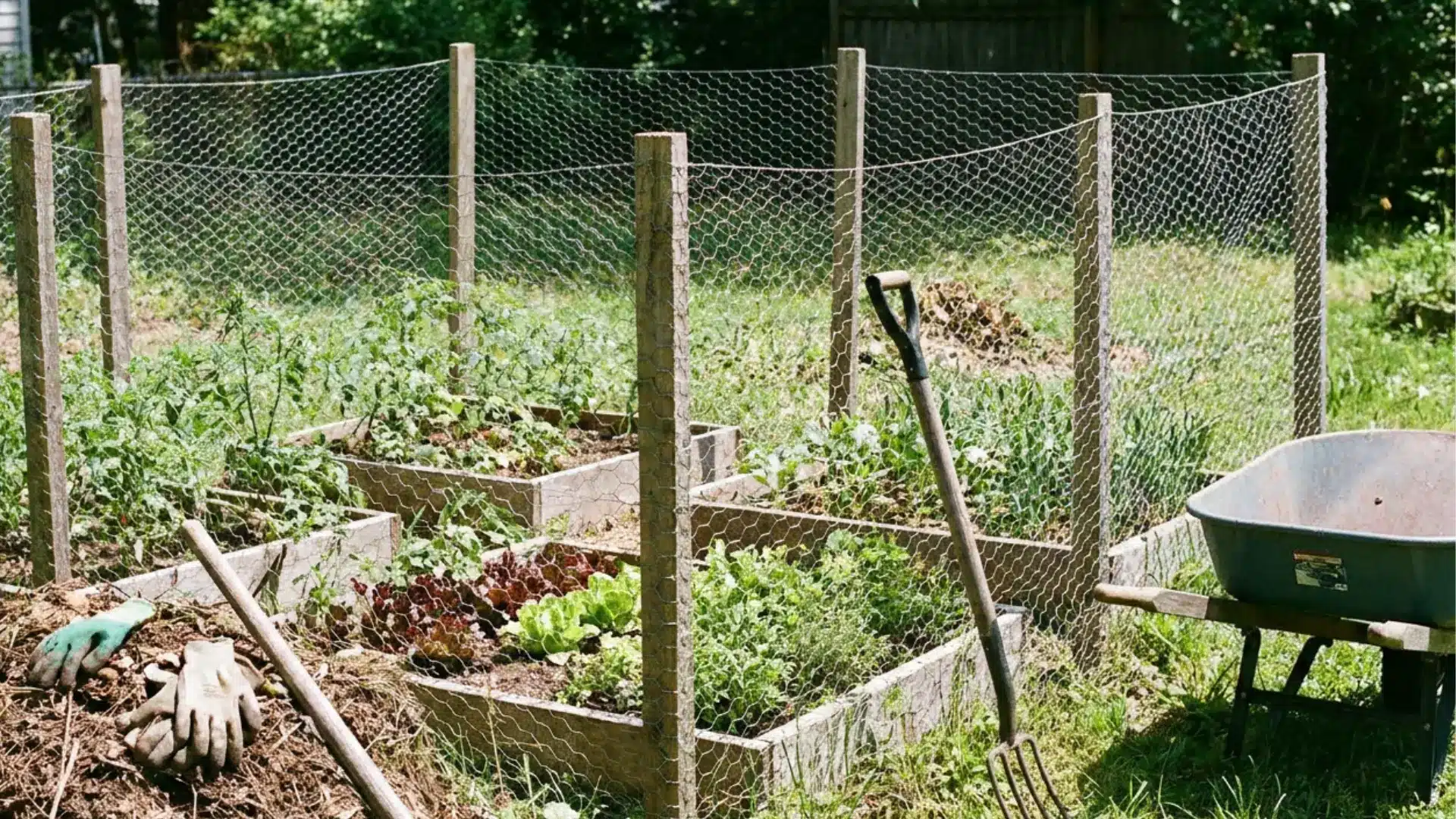
A chicken wire fence is simple, lightweight, and affordable. It works best around vegetable beds, small garden plots, compost areas, and backyard chicken spaces.
It helps protect plants from small animals without needing tall panels, heavy posts, or expensive lumber. Because it is easy to cut and attach, beginners can handle it with basic tools. Its main limits are low privacy and limited strength.
Use stronger posts for longer runs, and check the wire spacing against the pests or animals you want to block.
7. Cattle Panel Fence
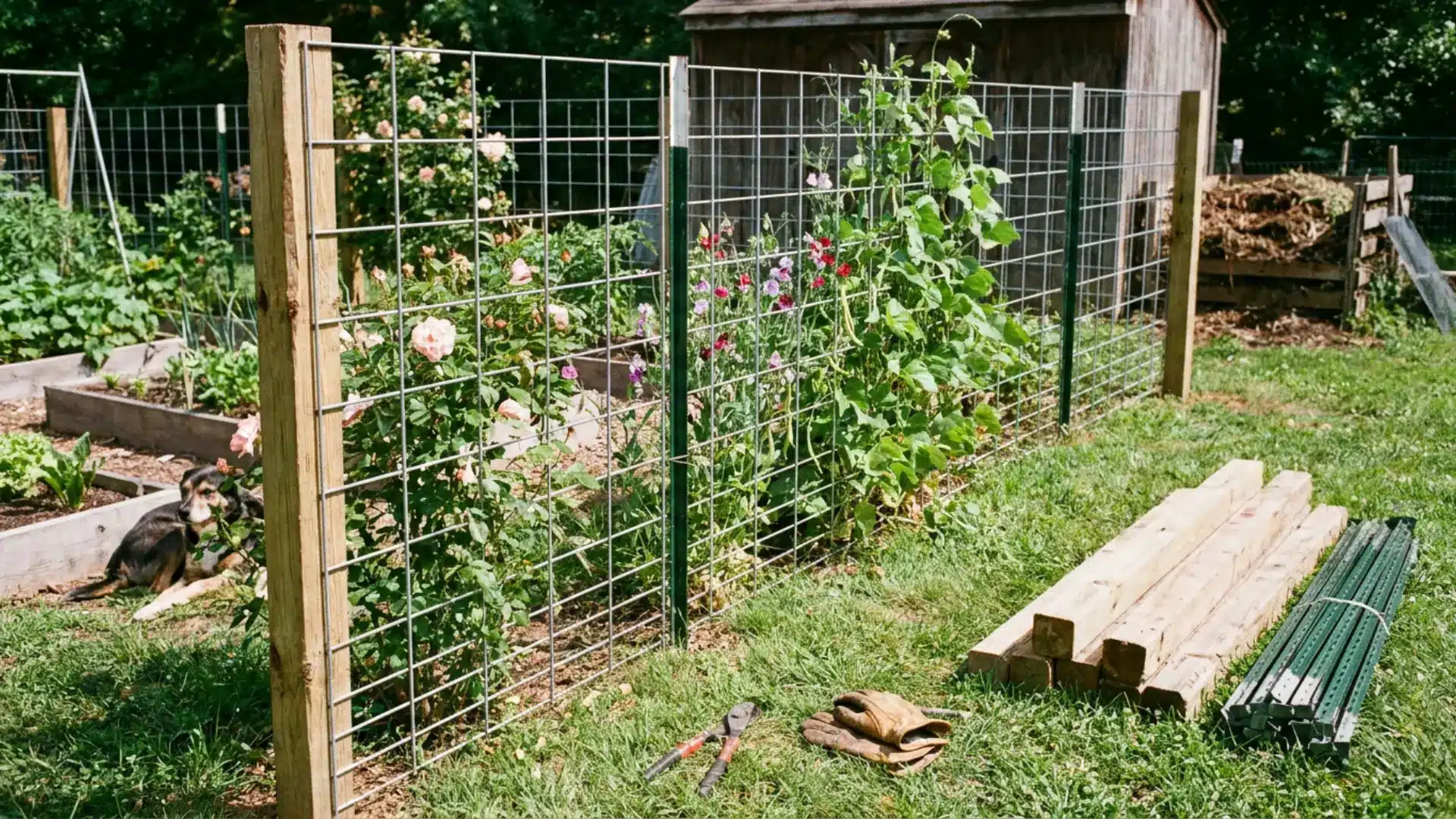
A cattle panel fence is stronger than chicken wire and works well for gardens, dogs, vines, and simple boundaries. The panels are rigid, durable, and useful for providing structure without building a full wood fence.
They can also support climbing plants, making them useful for vegetable gardens and trellised areas. Cattle panels cost more than chicken wire, but they usually hold their shape better and last longer.
To control cost, pair them with T-posts or simple wood posts.
8. Bamboo Privacy Screen
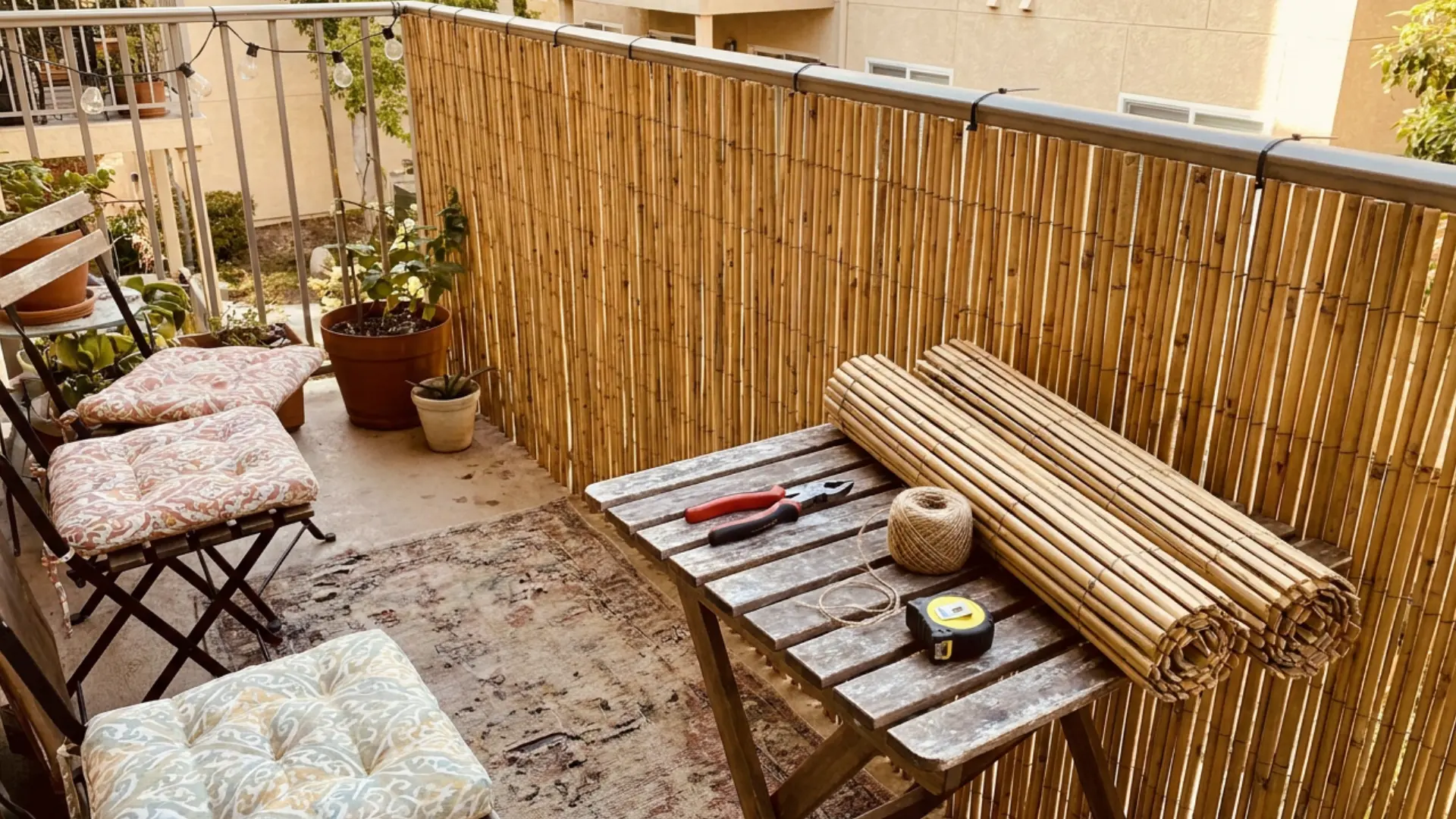
A bamboo privacy screen is useful when you want quick privacy without building a full fence. Bamboo rolls or panels can attach to balconies, patios, chain-link fences, existing wood fences, or simple post frames.
It works well for renters, small yards, side yards, and seating areas. Bamboo is usually cheaper and faster to install than a new board fence.
Secure it tightly with strong fasteners, especially in windy areas, because loose bamboo can sag, bend, shift, or wear out faster.
9. Lattice Fence
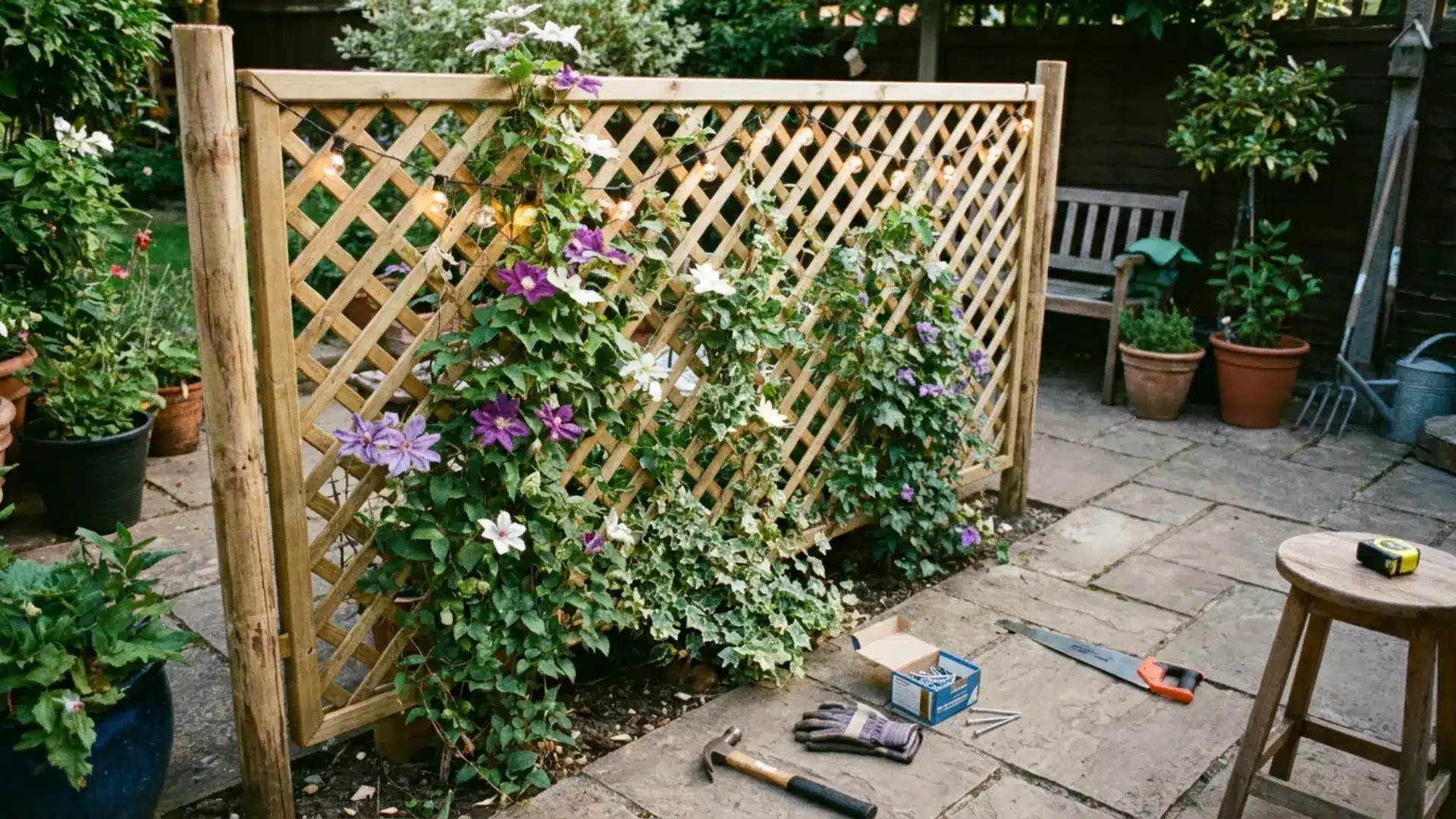
A lattice fence is affordable, decorative, and useful for partial privacy. It works well around patios, gardens, walkways, narrow yards, and existing fences.
You can use it as a fence panel, fence topper, privacy screen, or support for climbing vines and flowers.
Lattice is lighter than full wood panels, which can make installation easier and cheaper. It does not block views completely, so it is best when you want filtered privacy. Add plants, fabric, or backing if you need more coverage.
10. Split Rail Fence
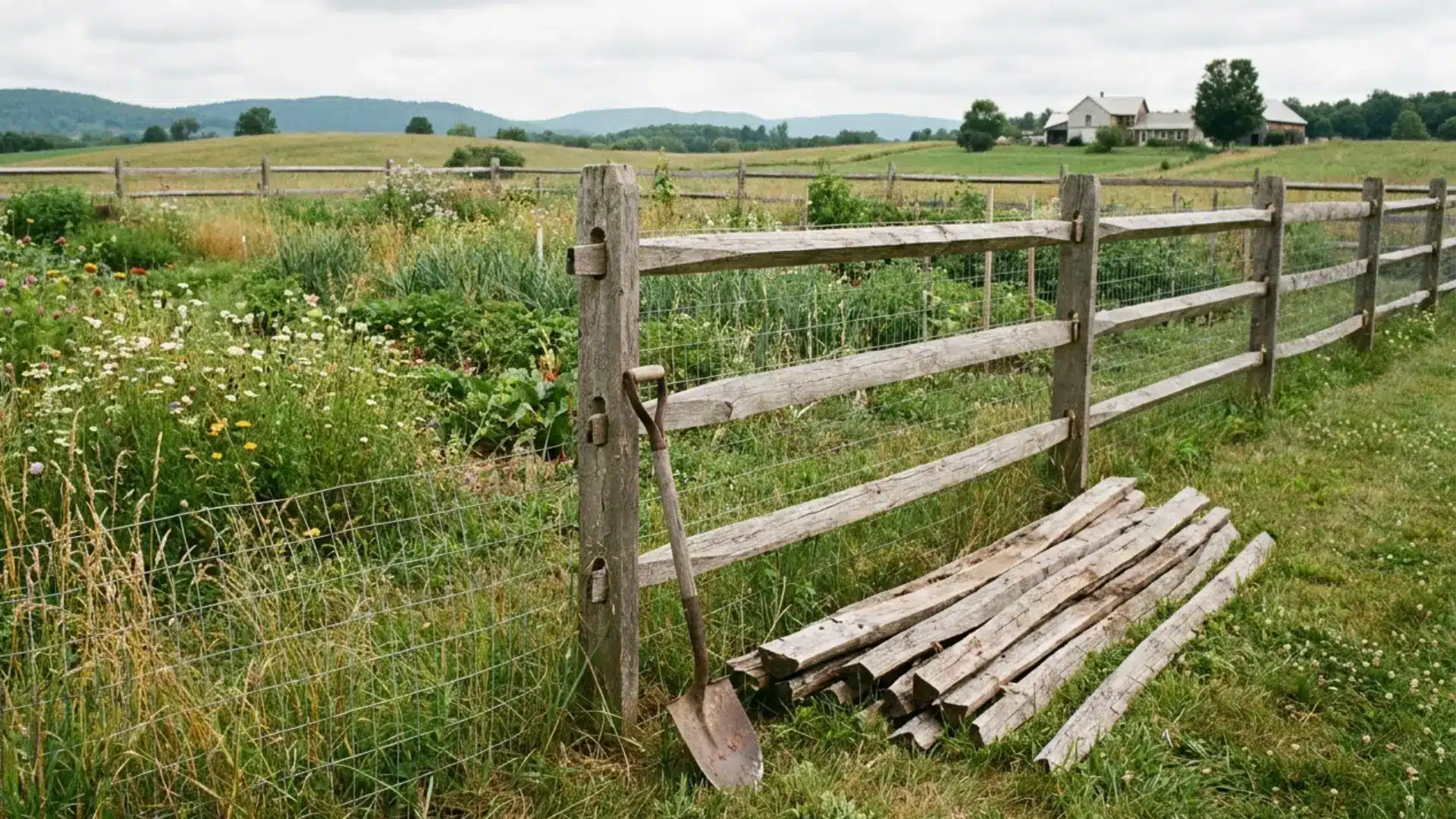
A split rail fence is a budget-friendly choice for marking large areas without using a lot of material. Because the rails are spaced apart, it uses less wood than a solid privacy fence.
It works best for rustic yards, front boundaries, large gardens, open landscapes, and areas where you need definition rather than privacy.
It is not ideal for small pets or full security by itself. If you need containment, attach wire mesh to the inside while keeping the simple rail look.
11. Horizontal Slat Fence
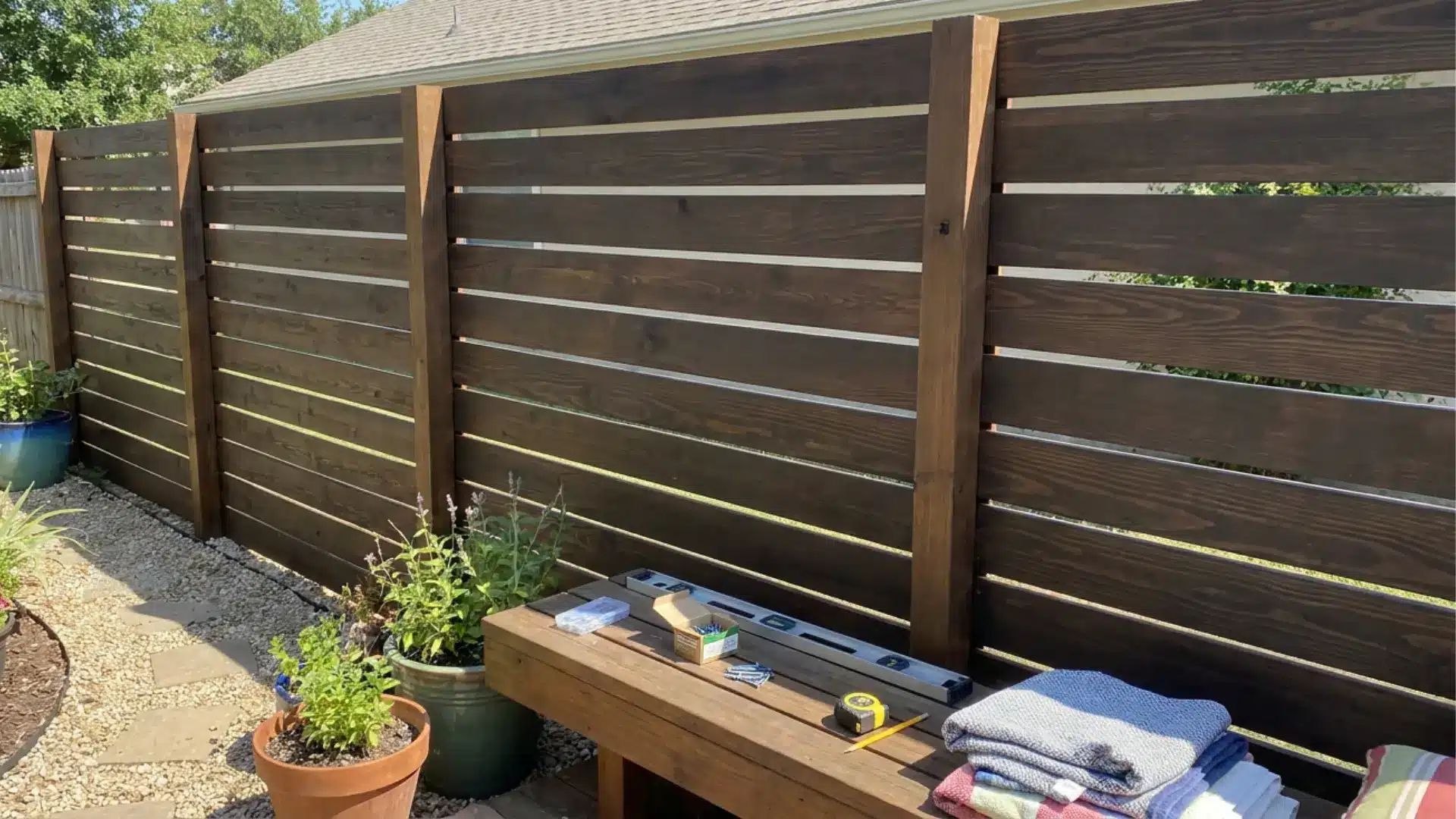
A horizontal slat fence works well when you want privacy with a modern look. Boards can be placed close together for stronger coverage or spaced slightly apart for airflow and light.
Wider boards may reduce the number of pieces needed, which can help control cost. This option works best for patios, backyard privacy, outdoor seating areas, and visible spaces where appearance matters.
It usually costs more than wire or pallet fencing, but less if you build only the areas where privacy is needed.
12. Corrugated Metal Fence
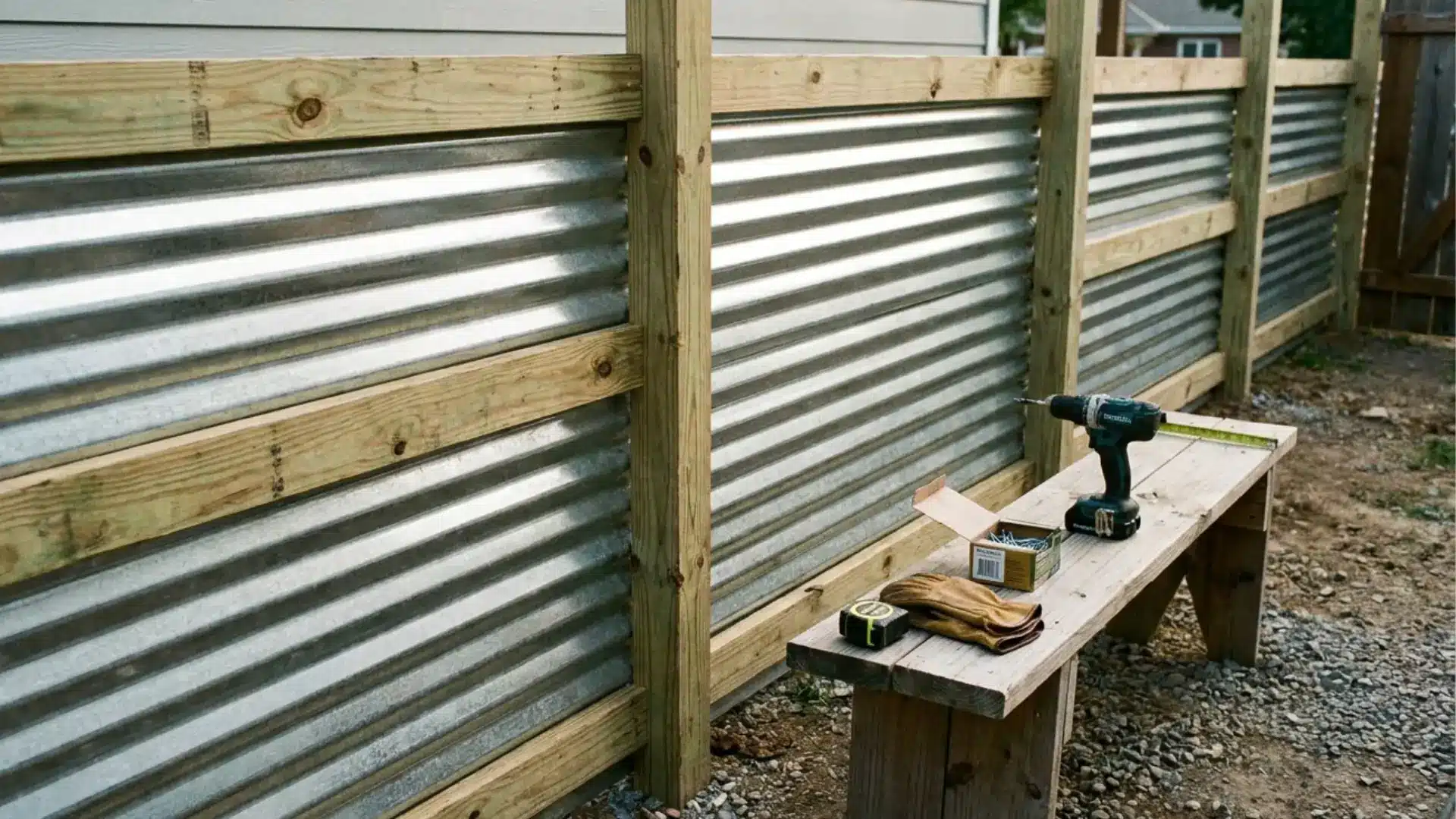
A corrugated metal fence provides strong privacy with fewer pieces than a full-board fence. It works well for modern yards, side yards, utility screens, and areas where you want a durable barrier.
To keep costs down, use wood mainly for posts and framing rather than building the entire fence from lumber.
Metal panels can handle the weather better than some cheap wood choices, but edges should be cut and secured carefully. This option is best when you want privacy, strength, and a cleaner look.
13. Wood Slat Privacy Screen
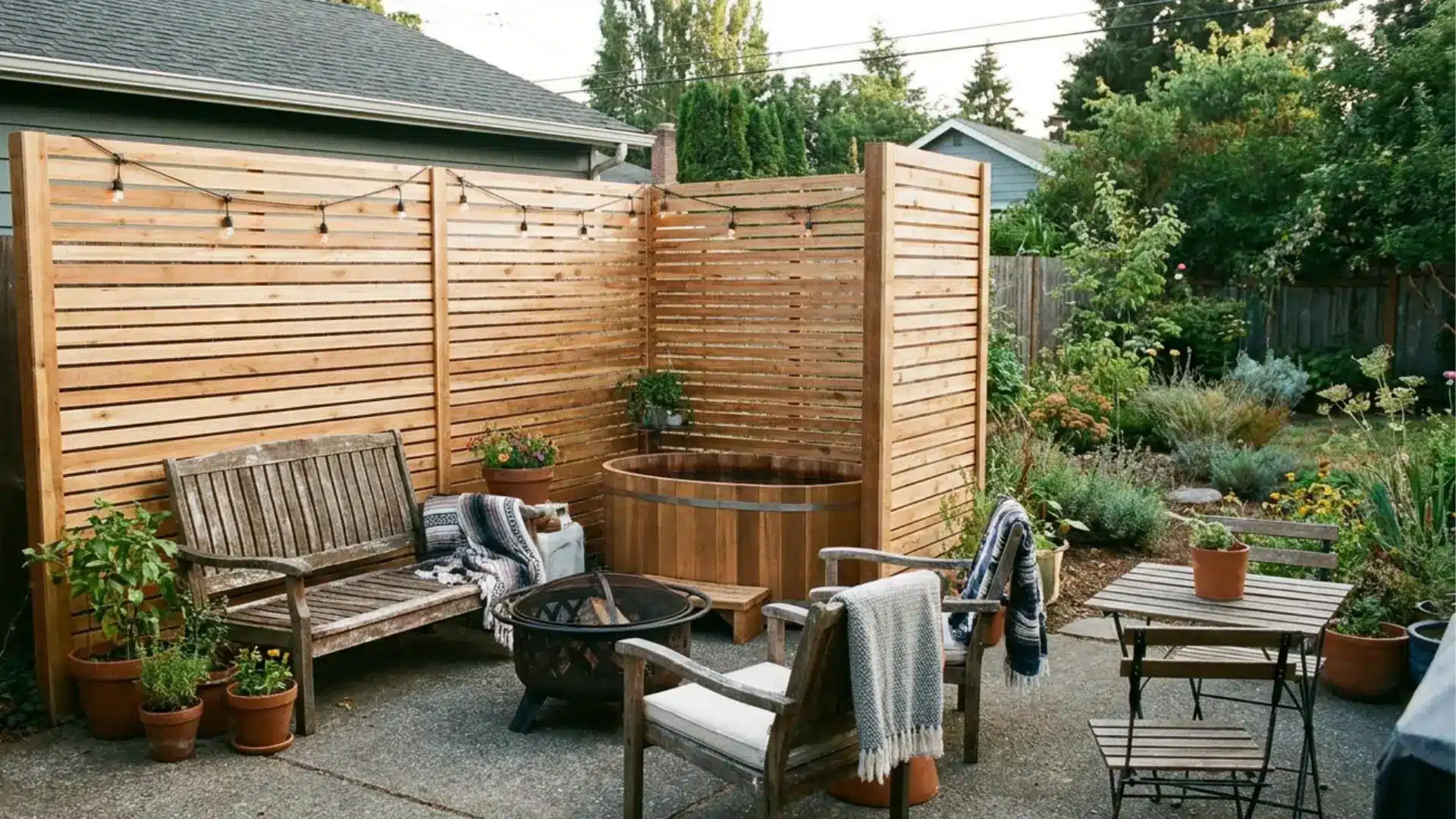
A wood slat privacy screen is a good option when you only need to shield one area instead of fencing the whole yard.
It works well around patios, hot tubs, decks, outdoor dining spaces, and seating areas. Because it covers a smaller zone, it can cost much less than a full privacy fence. You can adjust the slat spacing for more privacy or more light.
Include screws, tools, paint, concrete, rentals, and permits in your budget. Understanding topsoil vs mulch also matters if you plan to landscape around the fence at the same time.
14. Living Privacy Fence
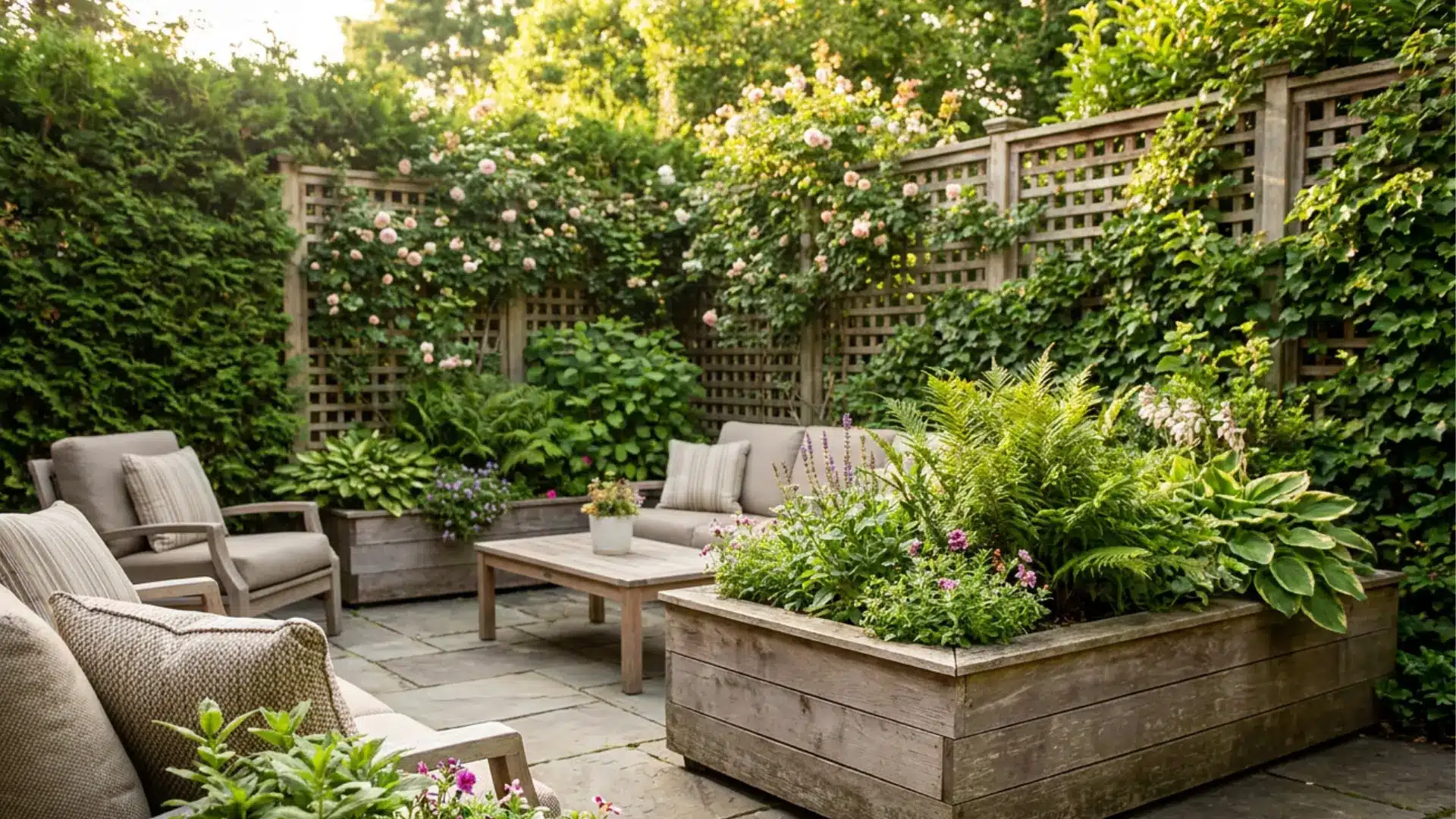
A living privacy fence uses shrubs, vines, trellises, planter boxes, or hedges to add cover over time. It can soften a yard and make a fence feel less harsh, especially when combined with ground cover, though it’s worth understanding dyed mulch safety before laying anything around the base.
This option works well around patios, garden edges, existing fences, and seating areas. The upfront cost can be low if you start small, but plants need time to provide full privacy.
Budget for soil, planters, trellises, watering, trimming, and replacement plants if some do not grow well.
15. Welded Wire Dog Fence
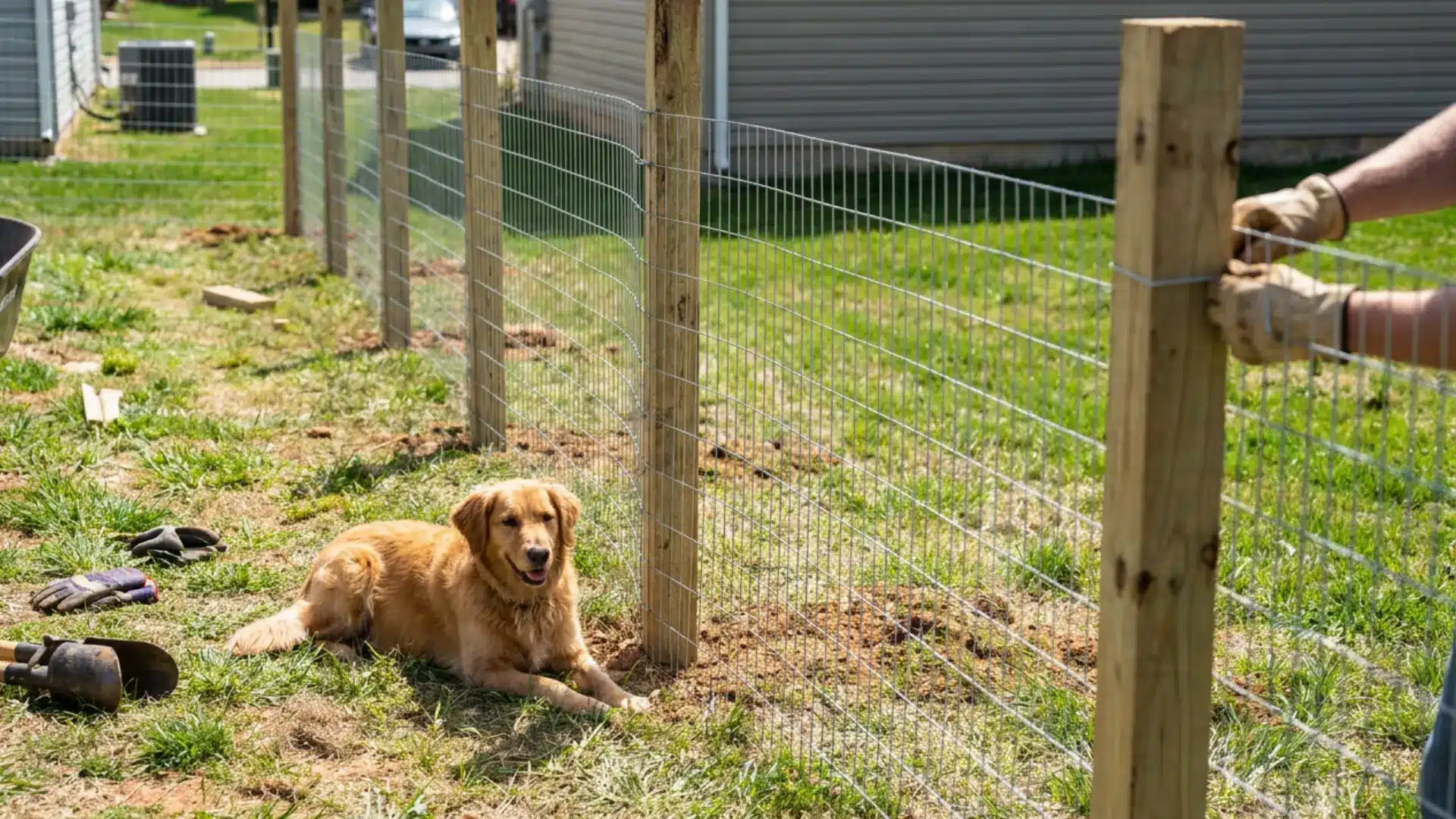
A welded-wire dog fence with wood posts is one of the cheapest and most practical dog fence options for medium and large yards. It is stronger than chicken wire and usually costs less than a full wood privacy fence.
It works well when you need containment but do not need full privacy. Choose wire spacing based on your dog’s size, and make sure posts are secure. The area inside a dog fence is also prone to grass-eating bugs when the lawn gets stressed. For extra privacy, add fabric, vines, or bamboo later.
16. Chain-Link Dog Fence
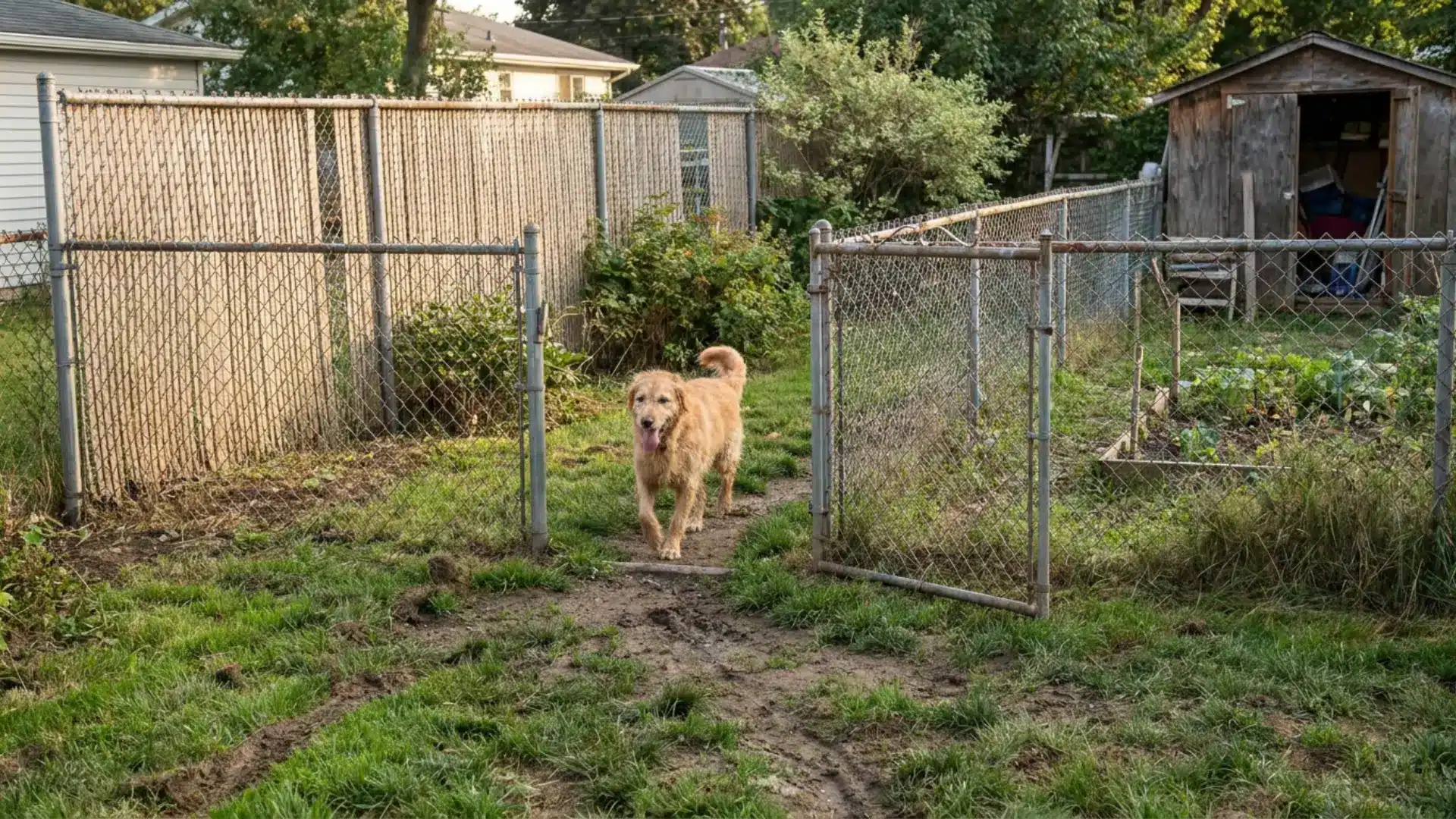
A chain-link dog fence is practical, durable, and usually more affordable than many solid privacy fences. It works well for dog runs, side yards, and larger pet areas because it is strong and widely available.
The main downside is that it does not provide much privacy on its own. You can improve it with privacy slats, fabric, bamboo rolls, vines, or faux greenery.
It is a good budget choice when safety and containment matter more than a solid wood look.
17. Freestanding Planter Fence
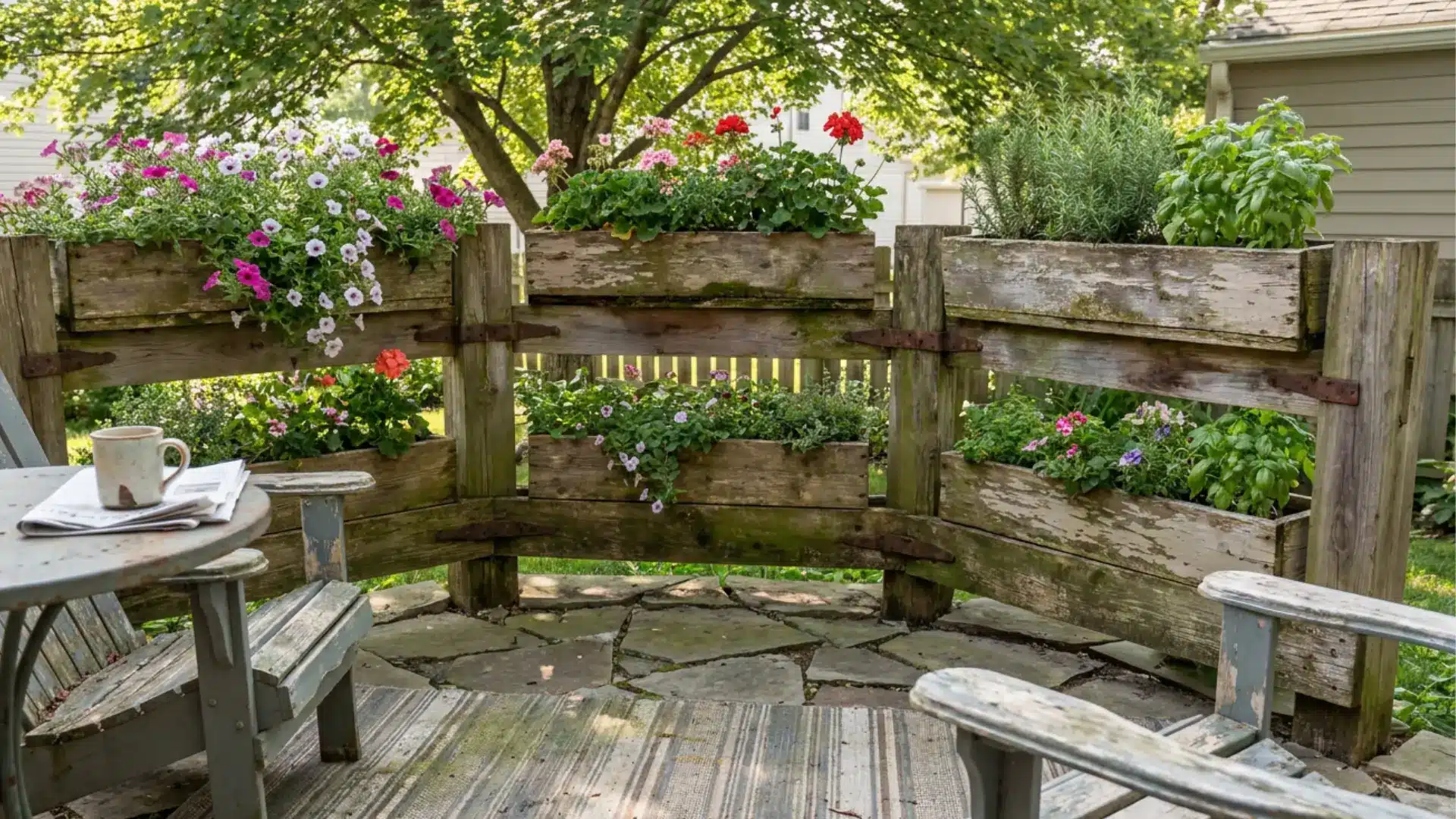
A freestanding planter fence creates privacy and structure without digging. It works well for renters, patios, balconies, small yards, and areas where permanent posts are not practical. The planter base supports the fence while adding space for flowers, herbs, or greenery.
This can cost less than a full fence because it covers only the area where privacy is needed. Use sturdy planter boxes, weather-safe panels, and enough weight in the base so the fence does not tip in the wind.
Cost Tips To Build A DIY Fence Without Overspending
Building a fence on a budget is not just about picking the cheapest material. The real savings come from planning the size, choosing the right fence type, reusing what you can, and spending only where strength matters.
These tips will help you build a useful, good-looking DIY fence without wasting money on extra materials, full-yard coverage, or unnecessary upgrades.
- Measure The Exact Area First: Measure only the space you truly need, including corners, gates, and slopes, to avoid overspending on extra materials.
- Fence Only What Matters Most: Instead of fencing the entire yard, focus on key areas like patios, gardens, dog runs, or privacy zones.
- Choose Budget-Friendly Materials: Use pallets, reclaimed wood, bamboo, chicken wire, cattle panels, or chain-link options based on your purpose and budget.
- Upgrade Existing Fence First: Strengthen what you already have with paint, stain, lattice, privacy slats, bamboo rolls, or climbing plants.
- Invest in Structural Strength: Spend more on posts, hinges, latches, and fasteners since they affect durability and safety.
- Mix Materials Strategically: Use better-looking materials in visible areas and cheaper ones in hidden sections to reduce total cost.
- Plan for Hidden Costs: Include screws, tools, paint, concrete, rentals, and permits in your budget to avoid surprises.
- Add a Small Buffer Only: Keep about 10% extra materials for errors, but avoid overbuying unnecessary stock.
- Build in Phases: Start with high-priority sections first, then expand the fence as your budget allows.
DIY Fence Mistakes To Avoid
DIY can save money, but some fence mistakes can make the project more expensive later. Use this table to spot planning issues before you start building.
| Mistake To Avoid | Why It Matters | What To Do Instead |
|---|---|---|
| Taking On Long Fence Lines Without Planning | Large projects take more time, labor, measuring, digging, and post setting than many people expect. | Measure carefully, price materials first, and consider building in sections. |
| Building Tall Privacy Fences Without Enough Support | Tall fences may need deeper posts, stronger bracing, and better wind support to stay secure. | Use sturdy posts, proper spacing, and stronger hardware for tall panels. |
| Ignoring Sloped Yards | Steep slopes can require custom cuts, stepped panels, adjusted post heights, or retaining work. | Plan for the slope before buying panels or cutting boards. |
| Skipping Shared Property Line Checks | Fences on shared boundaries may involve neighbor agreements, local rules, surveys, and placement issues. | Budget for soil, planters, trellises, watering, trimming, and replacement plants. Improving soil quality early gives living fences a much better start |
| Underestimating Complex Gates | Large, rolling, and driveway gates require stronger posts, better hardware, and careful alignment. | Budget for quality gate posts, hinges, latches, and bracing. |
| Digging Without Checking Utilities | Digging near gas, water, electric, cable, or irrigation lines can be risky and expensive if something is hit. | Call your local utility marking service before digging post holes. |
DIY fence mistakes usually become expensive when planning is rushed. Measure long fence lines carefully, support tall fences properly, plan for slopes, confirm property lines, budget for strong gate hardware, and always check utilities before digging.
When it May Be Better to Hire a Pro
DIY can save money, but some fence projects become costly when mistakes happen. A pro may be the better choice if the project involves long fence lines, tall privacy panels, steep slopes, shared property lines, complex gates, or utility-heavy areas.
Large projects require more measuring, digging, labor, and post setting than many people expect. Tall fences need deeper posts, stronger bracing, and better wind support.
Sloped yards may require custom cuts, stepped panels, adjusted post heights, or retaining work. Shared boundaries can involve neighbor agreements, local rules, surveys, and placement issues.
Large gates need stronger hardware and careful alignment, while digging near utilities can be risky and expensive.
Frequently Asked Questions
What is the easiest fence to build yourself?
No-dig panels, prebuilt panels, bamboo screens, lattice panels, and wood-and-wire fences are usually easiest for beginners. They need fewer cuts, simpler installation, and less digging than a full custom fence.
Is it cheaper to build a fence yourself?
Yes, building a fence yourself can be cheaper because you avoid labor costs. Your total cost still depends on fence length, material choice, tools, permits, posts, gate hardware, and installation method.
What is the best diy fence for dogs?
Welded wire with wood posts, chain link, cattle panels, or wood privacy fencing can work well for dogs. Choose based on your dog’s size, digging habits, jumping ability, and privacy needs.
Can I build a fence without digging holes?
Yes, you can use no-dig panels, post spikes, surface-mounted posts, planter fences, or freestanding privacy screens. These options work best for lighter fences, small spaces, patios, and temporary boundaries.
How can I make a cheap fence look better?
Paint it, stain it, add lattice, upgrade the gate, grow climbing plants, install solar lights, or use better-looking posts in visible areas. Small upgrades can make basic materials look more intentional.
How tall should a diy fence be?
A 2- to 3-foot fence works for borders, 3 to 4 feet suits gardens, 4 to 5 feet can work for dogs, and 6 feet is common for backyard privacy. Always check local rules.
Conclusion
A good fence starts with a clear purpose and a realistic budget. Once you know what you need most, it becomes easier to choose materials that fit your yard, skill level, and space.
These DIY fence ideas can help you compare affordable options, plan for privacy, protect pets, frame a garden, and avoid a full rebuild when a simple upgrade will do.
I would start by measuring the area, checking local rules, and choosing one fence style that solves your main problem first. You can always add more sections later.
Try the tips that fit your yard, then share your favorite idea or check out more outdoor projects.