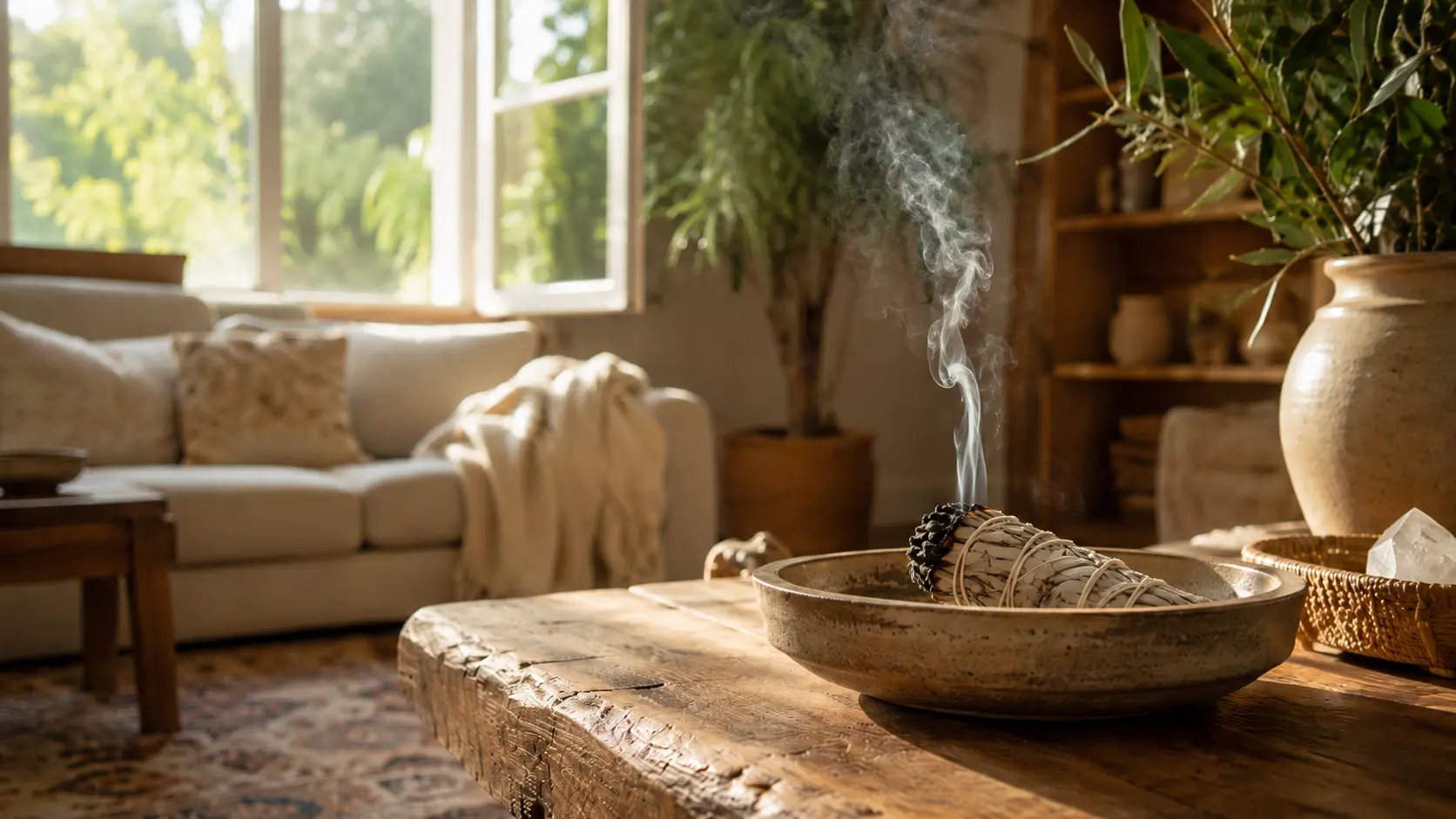
Burning sage to clear out heavy energy might sound like a small ritual, but it can genuinely change how a home feels day to day. If you have ever wondered how to sage a house, the process starts well before you strike a match.
It means prepping your space, deciding on a clear intention, and moving the smoke through each room with care.
This walkthrough covers cleansing your house with sage step by step, from choosing the right herb to closing out the ritual safely.
You will learn how to burn sage in your house, direct the smoke where it matters most, and finish the process in a way that leaves your living space feeling calmer and more settled.
What Is Sage Smudging?
Sage smudging is a practice that uses burning sage to cleanse a space through smoke. People often turn to it when they want to refresh the feel of a home, clear out heavy energy, or create a more peaceful environment.
Sage is one of four sacred medicines, along with tobacco, cedar, and sweetgrass, that hold deep spiritual and ceremonial meaning across many Indigenous cultures, as described by Encyclopedia Britannica.
Because white sage in particular has faced heavy overharvesting in the wild, with researchers at California State University Long Beach pointing to major population losses tied to urbanization and unsustainable harvesting, many practitioners now recommend buying cultivated sage from ethical or Indigenous-owned growers, or even growing native plants like sage in your own yard, rather than relying on wildcrafted sources.
Treating the practice with the same care and respect it holds in its origins matters just as much as the technique itself.
People commonly cleanse their homes after moving into a new place, following a stressful event or an argument, at the start of a new season, or any time a space feels stuck and needs a fresh start.
What You Should Know Before Cleansing Your House With Sage
A little preparation can make the process safer, smoother, and more comfortable. Before you begin, take a few minutes to check your space, think about the people around you, and choose the herb you plan to use.
- Check your smoke detectors: Make sure they are working properly. Keep them active, but avoid creating heavy smoke in a closed room.
- Consider everyone in the home: If someone has asthma, a respiratory condition, or smoke sensitivity, use extra ventilation or cleanse the space while they are away.
- Clear your walking path: Remove clutter from walkways, doorways, and passages so you can move safely through each room.
- Prepare enough space: Keep the area open and comfortable so you do not need to stop and move objects during the ritual.
- Choose your herb: Decide which herb you plan to use before you begin. The basic process stays similar, but each herb may burn at a different speed.
- Watch the burn time: Pay attention to how quickly the herb burns and keep a fire-safe container nearby throughout the process.
Once these basics are in place, you can move through the home with more focus and fewer interruptions. Careful planning also helps you manage the smoke safely while keeping your attention on the purpose of the cleansing.
Types of Sage and Other Smudging Herbs
Smudging traditions use a range of aromatic plants, not just sage. Each herb is valued for its scent, symbolism, and traditional purpose, from cleansing a space to encouraging calm, protection, focus, or emotional balance.
Some of these, like desert sage, are also easy to grow yourself if you want a low-maintenance native plant for your yard instead of buying wild-harvested bundles.
| Herb | Character | Best Used For |
| White Sage | Strong, distinct scent | The most common choice for house cleansing |
| Desert Sage (Sagebrush) | Milder than white sage | A gentler alternative, often used interchangeably |
| Palo Santo | Sweet, woodsy scent | Space cleansing (a wood, not a sage at all) |
| Sweetgrass | Sweet, grassy scent | Often braided and burned after sage, for inviting in positive energy |
| Cedar | Earthy, grounding scent | Grounding and protection in some traditions |
Any of these can work for cleansing your house. The steps below apply to a sage bundle, but the same basic process works with these alternatives too.
If you like the look of the plant itself, white sage’s soft, silvery-gray foliage is actually where the muted sage green you see in home decor and paint swatches gets its name.
How to Sage a House
Cleansing your house with sage involves a few simple steps: getting your home and supplies ready, setting your intention, lighting the sage, moving through each room, and letting it finish safely. Follow each step below to move sage smoke through your home with purpose.
Step 1: Prepare Yourself and Your Space
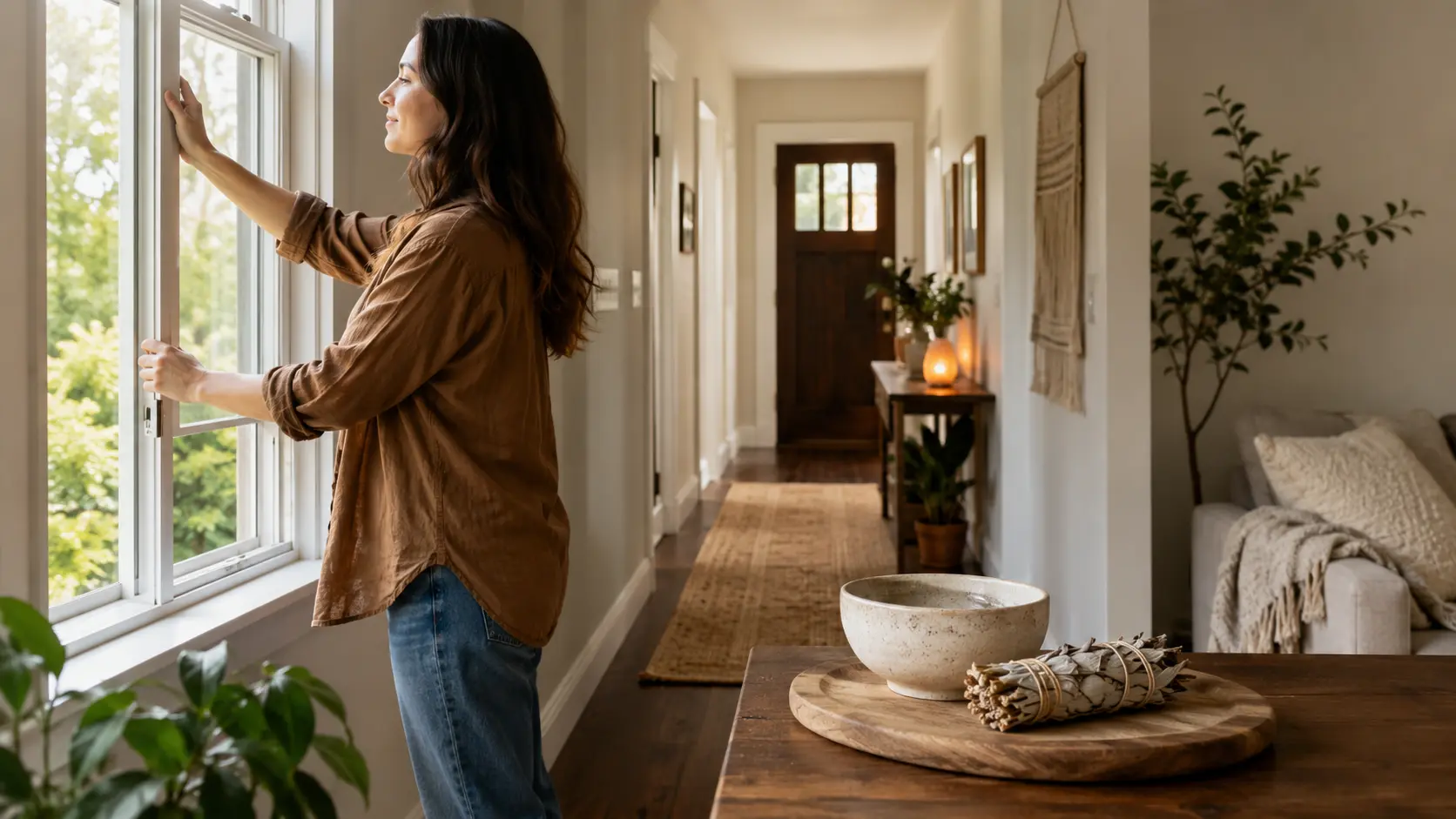
Start by getting the house ready. Open one or two windows so smoke can move out of the home, and clear clutter from hallways, doorways, and other places you will pass through.
Take a moment to settle yourself too. Sit quietly for a minute, breathe, and try to be calm and focused before you begin. This part matters because the ritual is not just about the smoke; it is also about the mood you bring into the space.
Step 2: Set Your Intention and Purpose
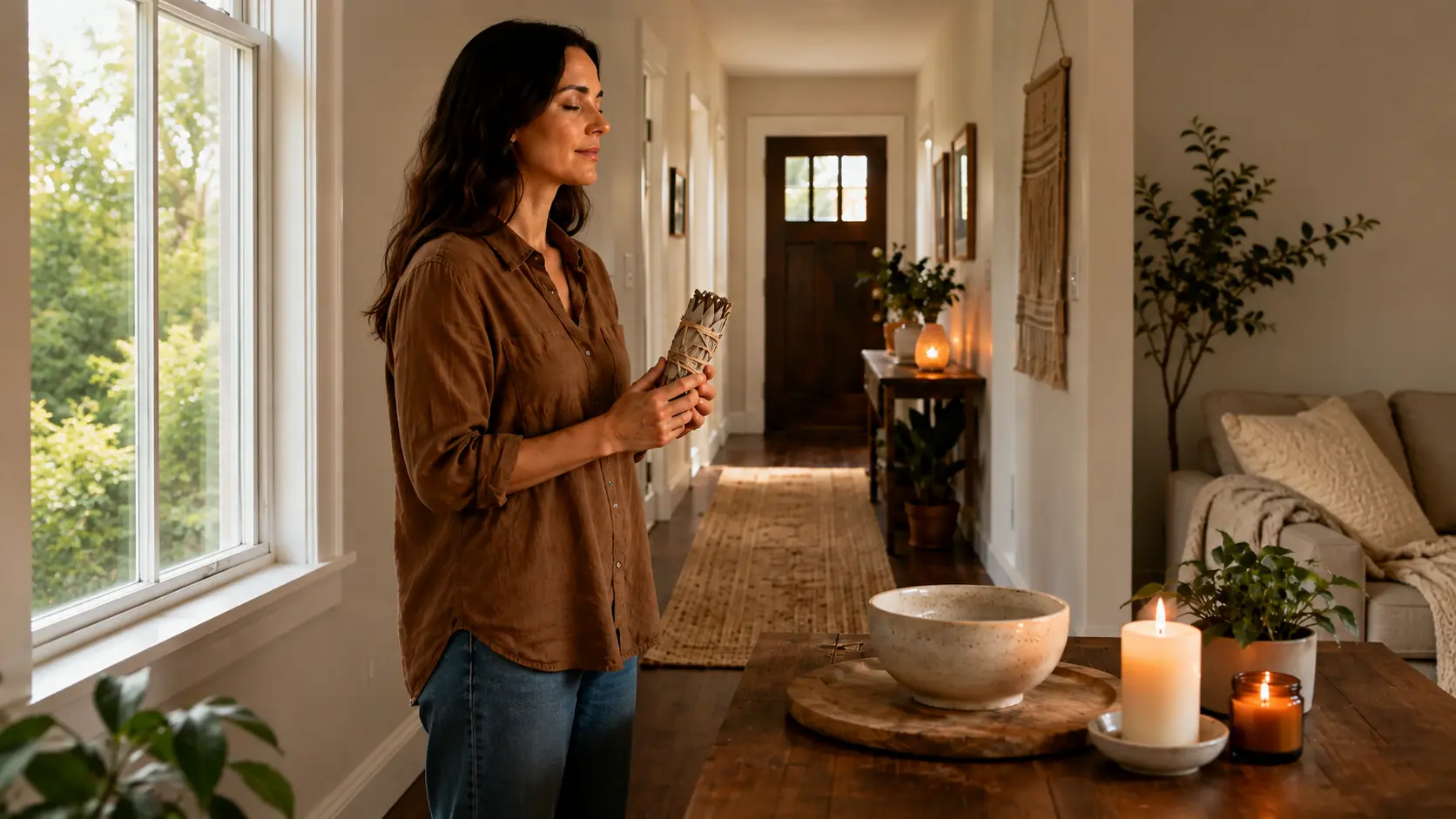
Before lighting anything, think about why you are doing this. Your intention can be simple, like wanting a calmer home, a cleaner feeling after an argument, or a fresh start in a new place.
You do not need a long speech. A short phrase in your mind is enough, such as:
- “I want this home to feel peaceful.”
- “I want to clear out what does not belong here.”
- “I want to bring in a lighter feeling.”
Keeping that purpose in mind can help the ritual feel steady and grounded.
Step 3: Light the Sage Bundle
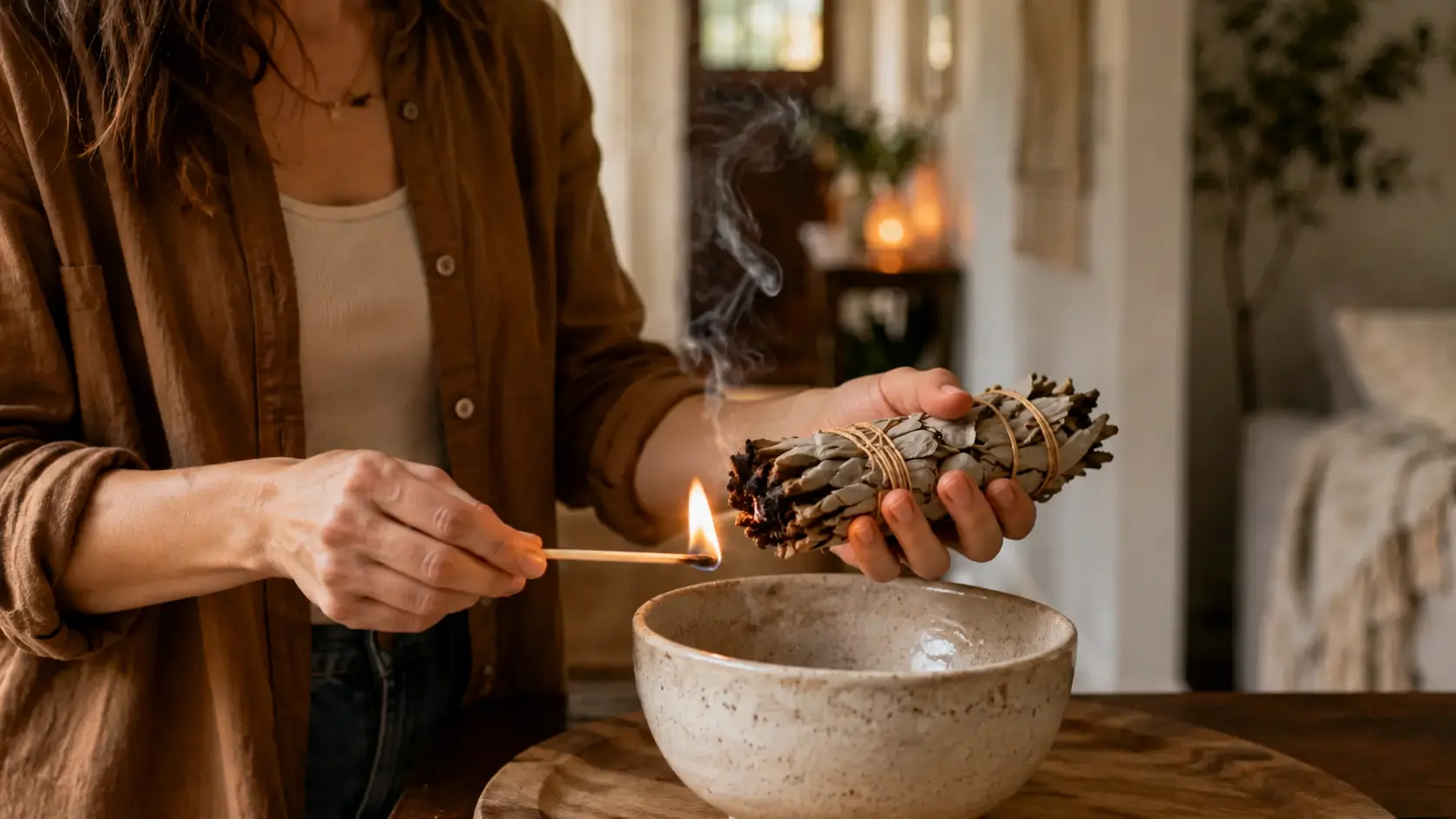
Hold the sage bundle over your fire-safe bowl and light the tip. Let the flame catch for a few seconds, then allow it to turn into smoke.
If the flame stays strong, gently blow it out so the sage smolders instead of burning like a torch. Keep the bundle angled downward over the bowl so ashes fall safely. Never leave it alone while it is lit.
Step 4: Cleanse Yourself First
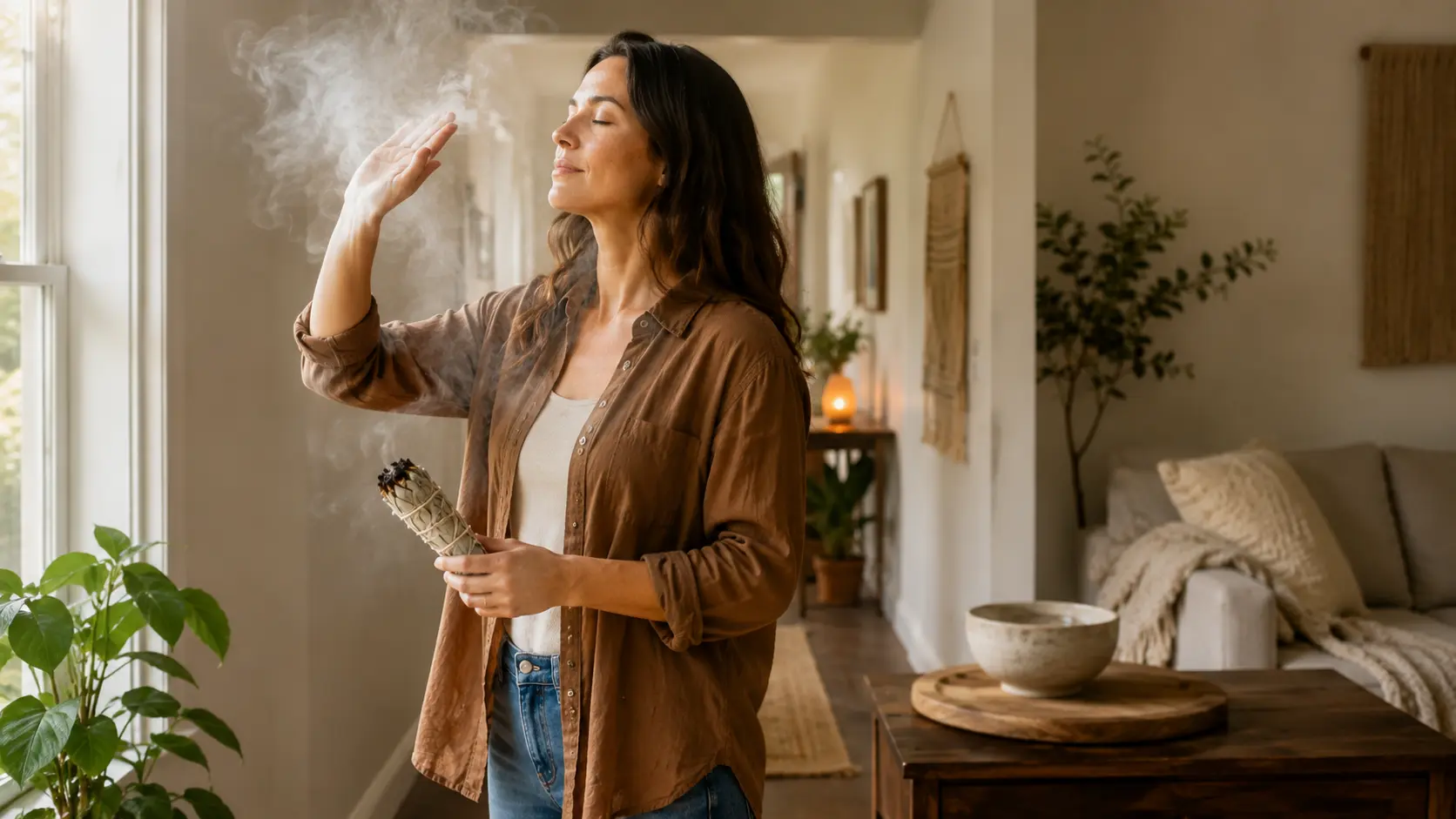
Before you move through the rooms, cleanse yourself first. Gently bring the smoke toward your body, starting near your feet and moving upward, or waft it around you in a slow circle.
This is often treated as a way to let go of what you have been carrying before you shift the feel of the house. Many people pause here for a breath or two, then continue once they feel ready.
Step 5: Smudge Each Room in Your House
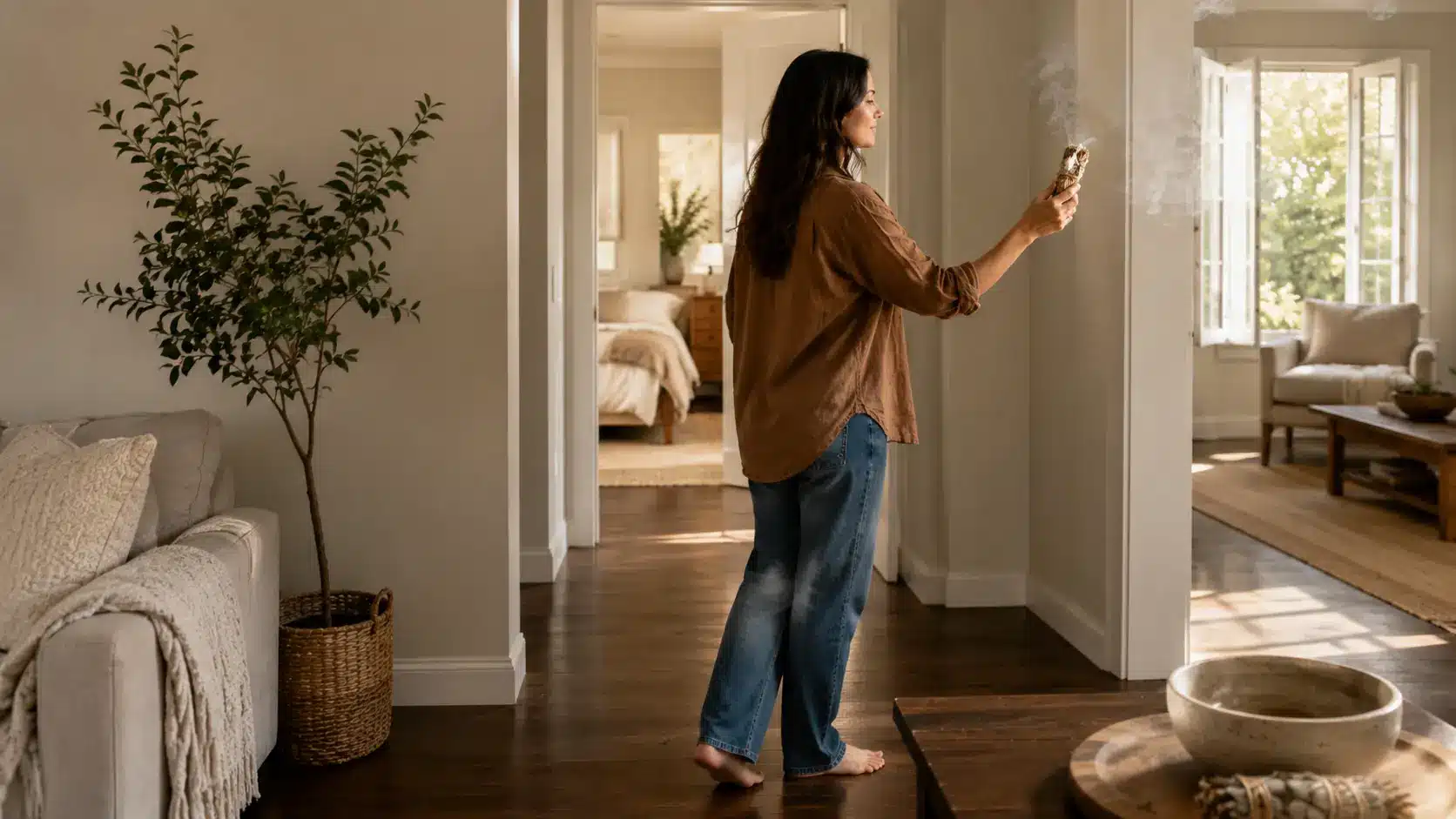
After cleansing yourself, begin moving through your home one room at a time. Walk slowly through each area while allowing the sage smoke to reach different parts of the room. Pay special attention to corners, doorways, windows, and areas where people spend time.
You can choose different ways to move through your home. Some people begin near doors and windows, moving clockwise toward the center of the room. Others start at the back of the home and work their way toward the front entrance.
Keep doors and windows open if possible to support airflow and allow the smoke to move through the space.
Step 6: Finish the Sage Cleansing Ritual
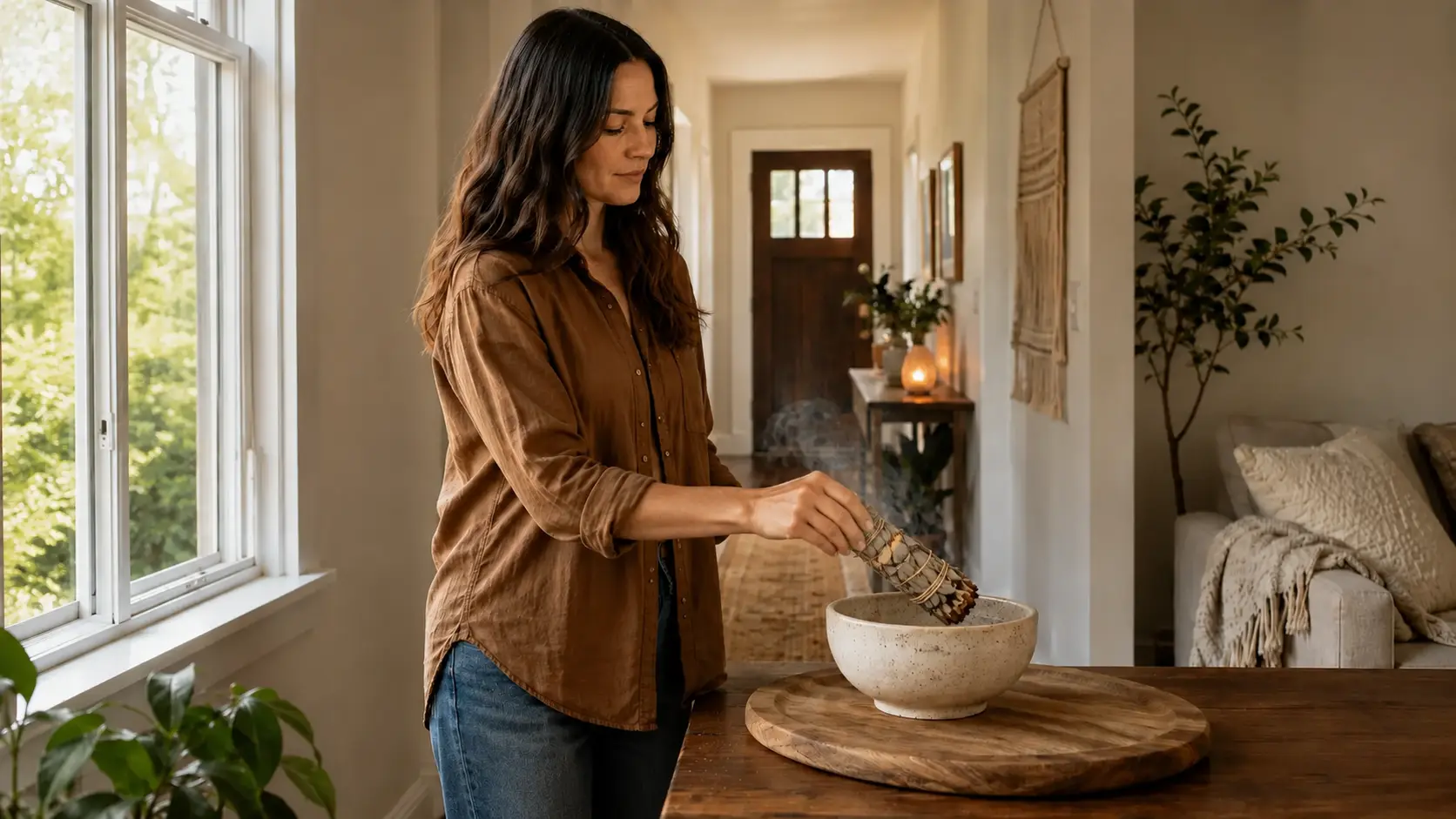
Once you have finished moving through your home, complete the ritual by allowing the sage to finish safely.
Place the sage bundle or bowl in a safe location and let it burn out naturally. Avoid leaving burning sage unattended, and make sure it is finished before storing it away.
Allowing the sage to finish marks the end of the cleansing process and completes the ritual.
What Is the Best Time to Sage Your Home?
There is no strict rule, but many people choose to sage when something has changed in the home. That may be after an argument, after moving in, at the start of a new season, or any time the space feels off.
You can also do it just for a quiet reset. Morning may feel best for some people, while others prefer evening when the house is still and less busy. The right time is whenever you can slow down and do it safely.
As for how often you should repeat the ritual, the right frequency really depends on what is prompting it in the first place, whether that is a simple weekly reset or one specific event that just happened in your home. Here is a rough breakdown:
| Frequency | What Prompts It | Suggested Approach |
| Weekly or Monthly | A regular reset, done on a set schedule | Open windows and focus on busy rooms. |
| After a Big Event | An argument, a move, a gathering, or a stressful stretch | Start with the affected room, then cleanse the rest. |
| Seasonally | Marking a fresh start at the change of season | Include it in seasonal cleaning or intention setting. |
| As Needed | Whenever the space feels stuck, heavy, or unsettled | Focus on rooms that feel heavy or unsettled. |
Treat this schedule as flexible rather than a strict rule. Pay attention to how your home feels, choose a time when you can move slowly, keep windows open, and make safety the main part of every cleansing session.
What People Discuss About Sage Cleansing
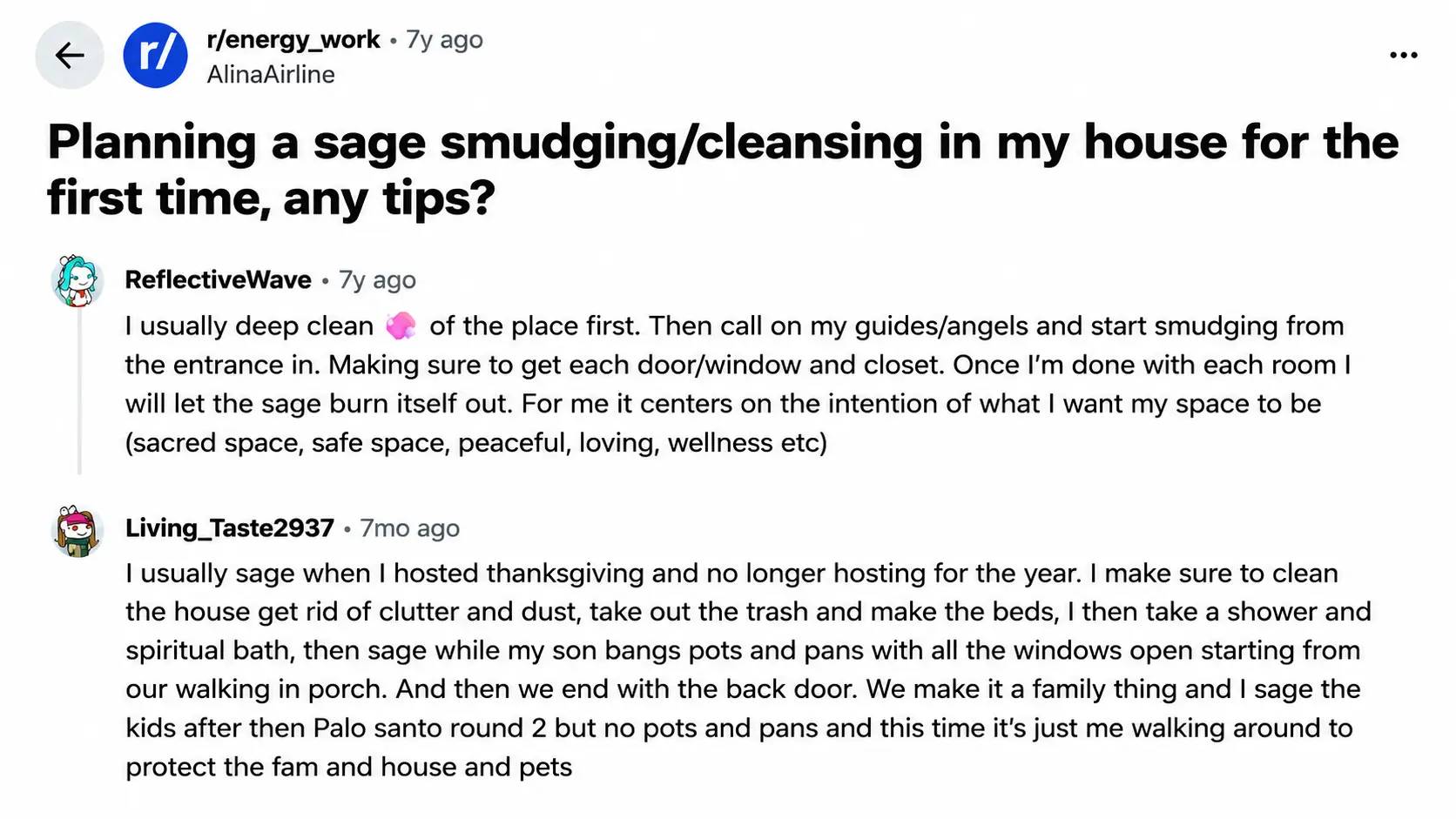
Many people turn to online communities like Reddit before trying sage cleansing for the first time. In one online forum discussion, users shared advice on preparing the home, choosing an intention, and using sage safely.
Beyond that thread, similar conversations often turn up a few recurring themes. Some add sound, like bells, clapping, or a rattle, or follow the sage with other scents such as sweetgrass or sandalwood to round out the feeling they are going for.
Others keep it simple and stick to the core steps. Either way, the most common piece of advice holds up across these discussions: keep the space ventilated, use a heat-safe container, and skip smoke cleansing around anyone with breathing problems or smoke sensitivity.
These tips line up closely with the steps above: clear the space, keep the smoke moving, and handle the flame with care throughout.
How to Avoid Smudging Mistakes
Most smudging mishaps come down to rushing or skipping a safety step. Here is what to watch for:
- Burning too much at once: heavier smoke can set off detectors or leave a strong smell that lingers for hours.
- Skipping the fire-safe bowl: ash can fall on carpet or furniture without one underneath.
- Rushing through rooms: moving too fast past corners and closets means those spots get less attention than open areas.
- Forgetting to crack a window: smoke needs somewhere to go, or it just recirculates through the house.
- Not keeping water nearby: a small dish of water or sand nearby makes it easy to put out the bundle fully if needed.
Avoiding these keeps the ritual calmer and the cleanup easier afterward. If you are also working on a native landscape at home, one option is Texas Sage, a hardy, drought-tolerant shrub that shares the sage name and silvery leaves but is a different species from the white sage burned in smudging.
Frequently Asked Questions
Is it safe around pets or children?
Yes, sage smudging is generally safe around pets and children if you take a few precautions. Keep burning sage out of their reach, ensure proper airflow throughout the home, and never leave a lit bundle unattended during the process.
How long does a cleansing ritual take?
A sage cleansing ritual can take a few minutes or longer depending on your home size and the number of rooms you want to cleanse. Move slowly through each area and complete each step with care.
What should you do after finishing the ritual?
Allow the sage to finish burning out completely on its own, then spend a few quiet moments sitting in the space. Many people use this time to reflect on their intention and enjoy the refreshed, calmer feeling of their home.
How do you store leftover sage?
Store unused sage in a dry, cool place away from moisture and direct sunlight. Keep it in a sealed container or bag to protect its quality and make it ready for future cleansing rituals.
Final Thoughts
Learning how to sage a house comes down to a few simple steps: preparing your supplies, clearing your home, moving through each room with intention, and finishing the ritual safely. Setting a clear purpose and handling the sage with care can help you create a calmer, more settled atmosphere in your living space.
If you are still working out how to cleanse your house with sage, start with proper preparation, good airflow, and a fire-safe bowl. Move at your own pace and choose whatever steps feel right for you. Ready to try it yourself? Gather your supplies, open a window, and begin.
Drop a comment below and let me know if you have any further questions about sage cleansing.