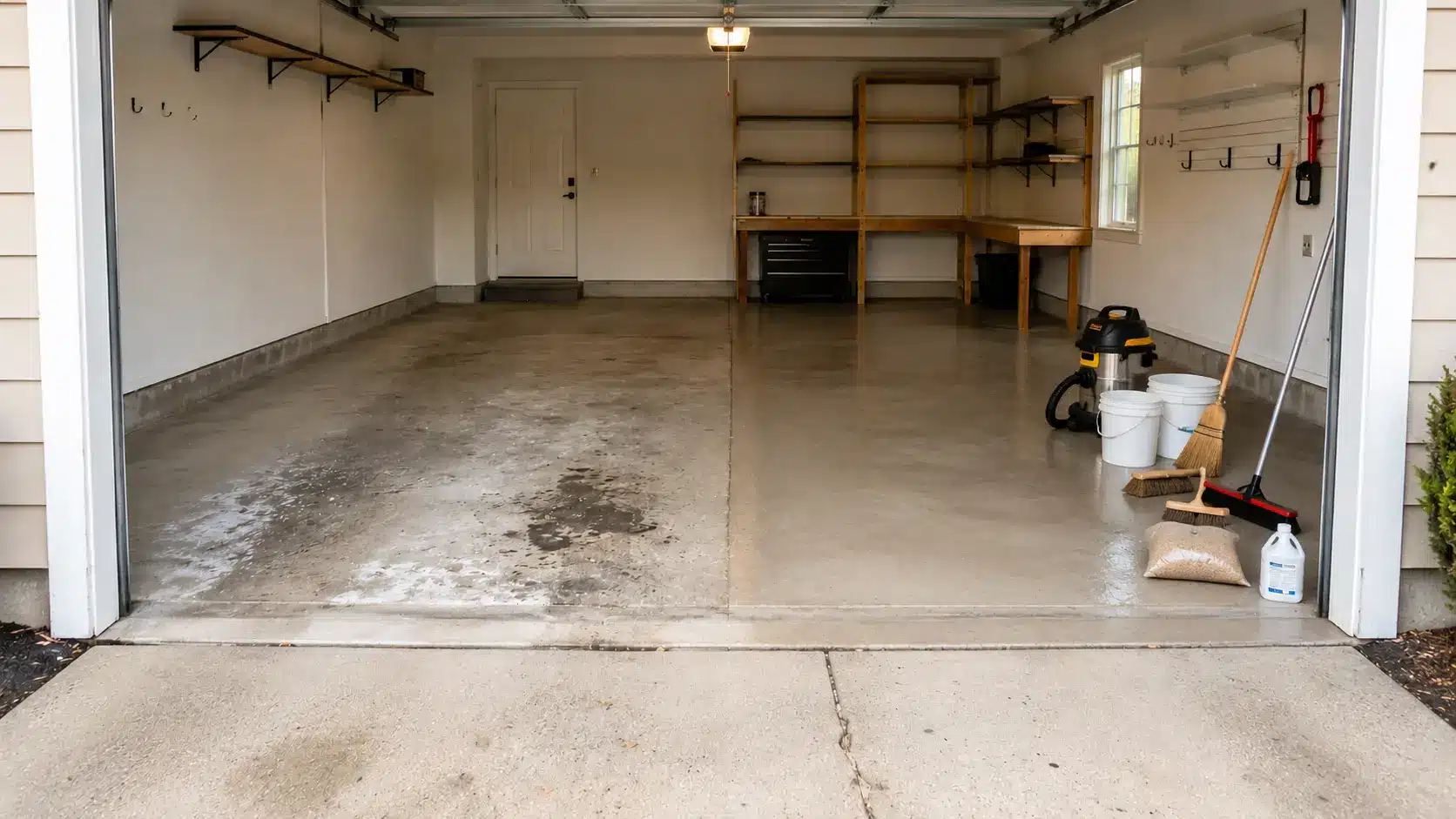
A garage floor collects things a broom can’t fully fix. Mud, road salt, oil drips, and fine concrete dust build up over time and bond to the surface. The result looks bad, but more importantly, it can become slippery and hard to work on.
Learning how to clean a garage floor doesn’t require special skills or costly tools. With the right prep and a clear method, most garage floors clean up in a couple of hours. The steps below explain how to clean garage floor surfaces of every type, from plain concrete to painted and sealed finishes.
You’ll learn how to identify your floor type, choose the right tools, treat common stains, clean with or without a pressure washer, and keep the floor cleaner between deep washes.
What You Should Know Before Cleaning Your Garage Floors
Before bringing out any tools, check the concrete for cracks, chips, and low spots common in older garage floors, since heavy water pressure on weak areas forces water deeper in and makes the damage worse.
Small cracks can be cleaned with a brush, but larger damage should be repaired before a full wash.
Next, identify what you’re dealing with: general dust and dried dirt come off far more easily than oil, grease, rust, or paint, so look the floor over first to see which spots need pre-treatment.
Finally, check for a floor drain. Garages without one need extra planning, since dirty water has to be squeegeed or vacuumed out rather than washed away, so know where the runoff will go before you start. Working through how to clean garage floor surfaces in this order, from inspection to drainage, keeps the rest of the job from turning into a bigger mess.
What Type of Garage Floor Do You Have?
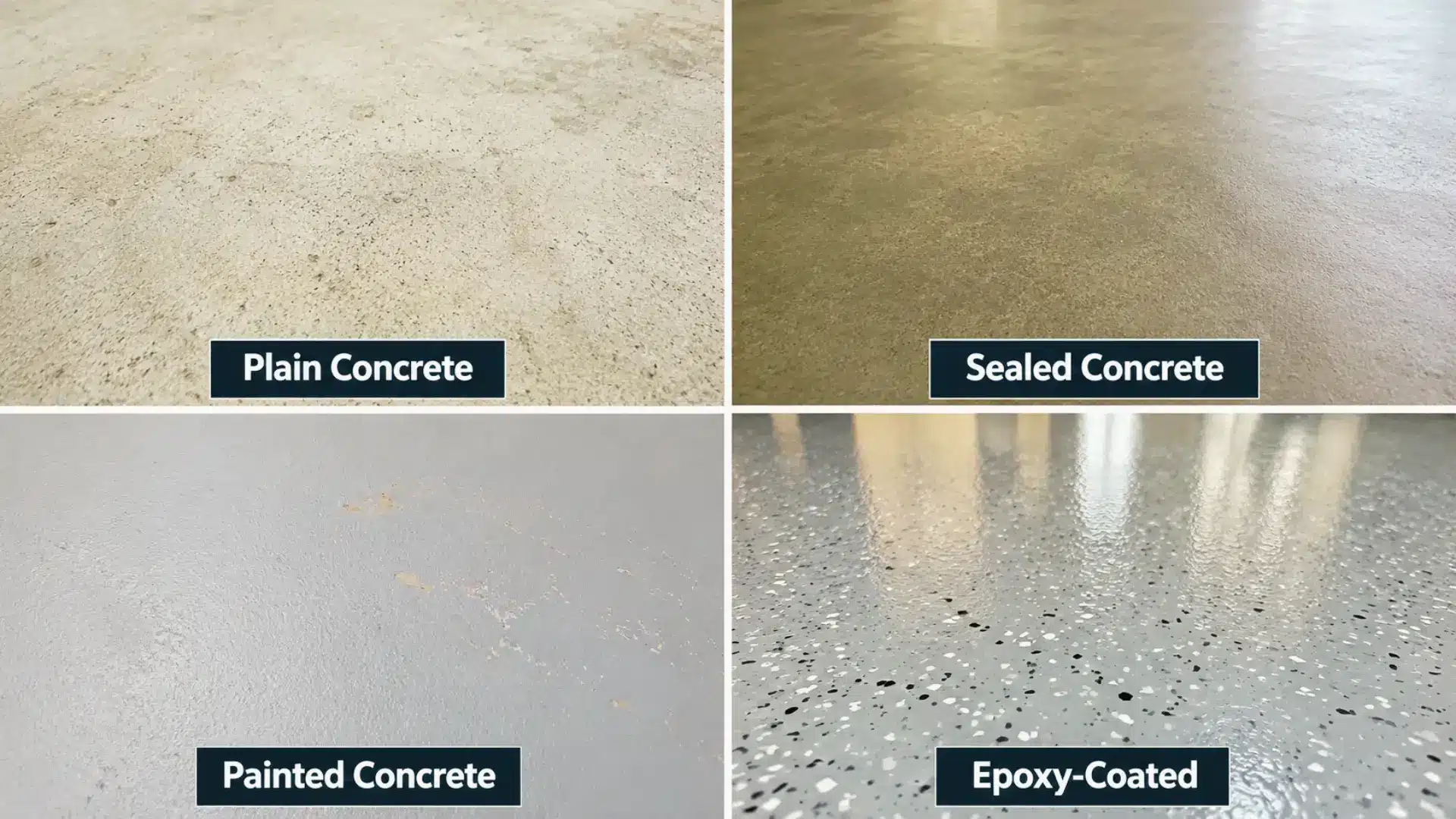
Not all garage floors clean the same way. Most are plain concrete, but some are painted, sealed, or coated with epoxy. Plain concrete handles firm scrubbing and standard cleaners well. Painted, sealed, and epoxy floors need softer brushes and gentler products, since strong chemicals can cause peeling or coating failure.
A clean, well-kept garage floor also tends to matter more once the driveway leading up to it gets attention too, the kind of exterior upgrade covered in these half-circle driveway ideas for small yards. If you’re not sure what you have, test any cleaner on a small hidden patch first.
| Floor Type | Cleaning Tools | Cleaners to Use | Watch Out For |
| Plain concrete | Stiff nylon brush | Standard concrete cleaner | Needs thorough rinsing; absorbs oil quickly |
| Sealed concrete | Soft brush or mop | Mild cleaner only | Harsh chemicals weaken the sealer |
| Painted concrete | Soft brush or mop | Gentle cleaner | Aggressive scrubbing causes peeling |
| Epoxy-coated | Soft mop or vacuum | Mild cleaner | Abrasive tools and strong solvents |
Match your cleaning method to your floor type, and you’ll avoid unnecessary repairs down the road. When in doubt, start gentle, test on a hidden patch, and work up to stronger tools only if the surface can handle it.
What You Need to Clean a Garage Floor
You only need a few basic tools:
- Stiff push broom: removes dirt, leaves, gravel, and dried mud.
- Deck brush: scrubs large areas and stubborn grime.
- Two buckets: one for cleaning solution and one for rinse water.
- Mild dish soap or concrete cleaner: handles general dirt and buildup.
- Concrete-safe degreaser: removes oil and grease stains.
- Garden hose: makes rinsing faster and easier.
- Floor squeegee or wet-dry vacuum: removes dirty water.
- Protective gear: rubber gloves, safety glasses, and closed shoes.
These essentials are enough for most garage floor cleaning jobs.
How to Clean a Garage Floor without a Pressure Washer
This method works for most plain concrete floors and takes roughly 90 minutes for a standard two-car garage. It requires no special equipment and is safe for painted and sealed surfaces when you use a soft brush and mild cleaner.
Step 1: Clear the Space
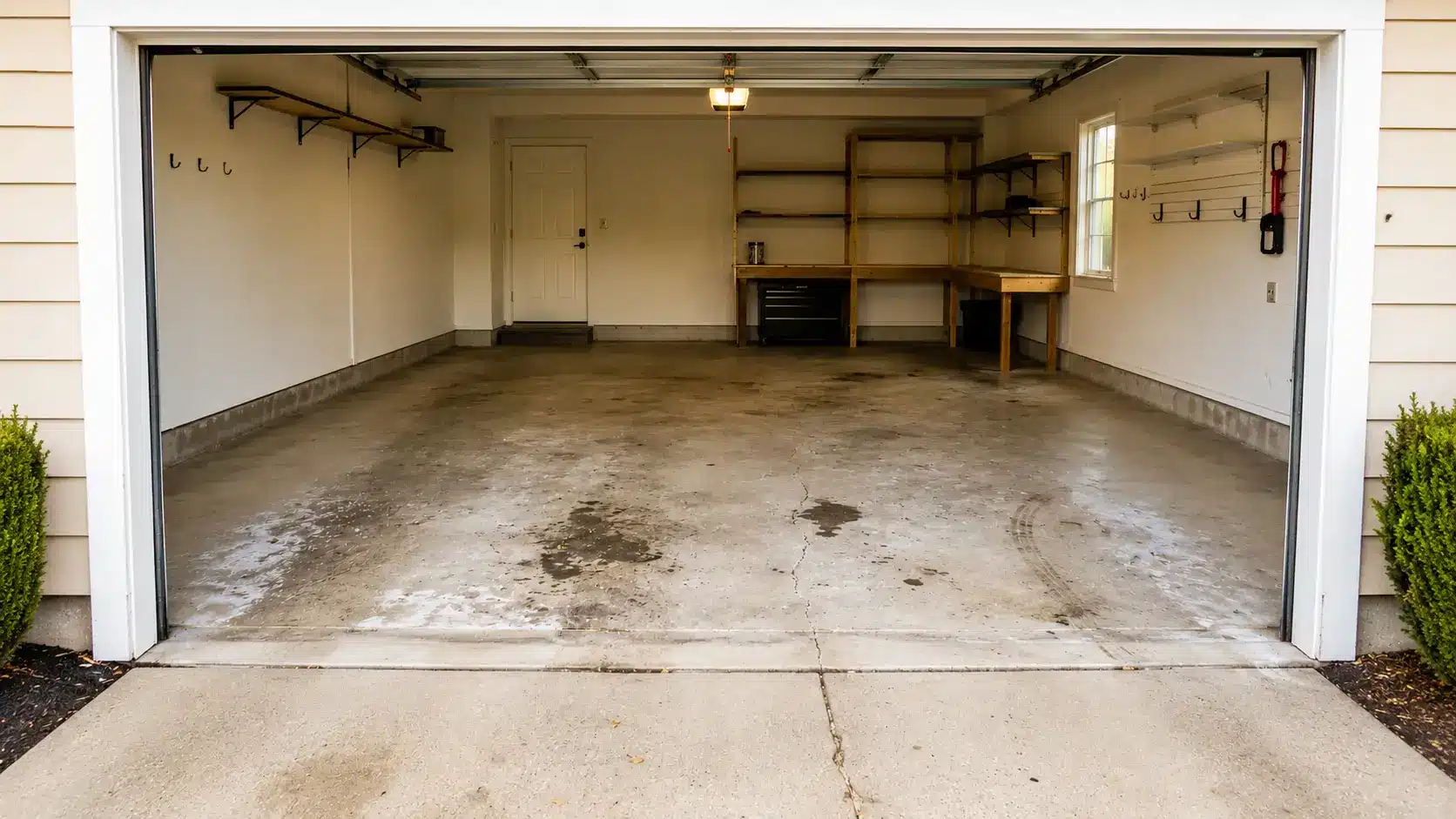
Move cars, bikes, storage bins, mats, and tools out of the garage. Uncover as much of the floor as possible, including the areas under shelves and workbenches. Place everything well away from the garage opening so it does not block the path for dirty water.
Once the floor is empty, look it over. Note oil stains, tire marks, dried mud, road salt, and any cracked or loose concrete. These areas will need extra attention in later steps.
Step 2: Sweep and Vacuum
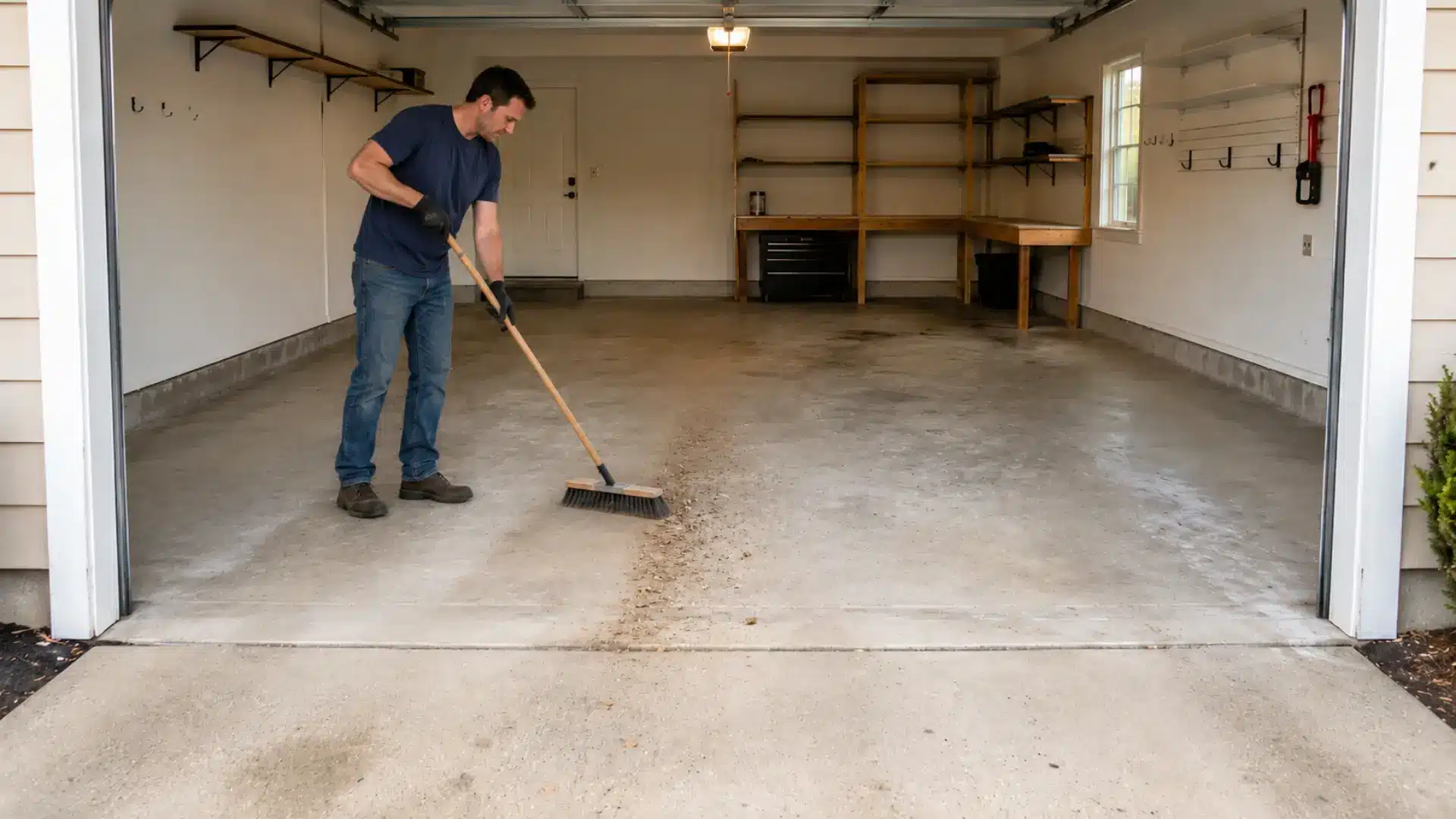
Start at the back of the garage and sweep toward the door. Work slowly, since fast sweeping sends dust into the air and back onto the floor. Pay close attention to corners, wall edges, and the tracks along the garage door.
After sweeping, go over the floor with the shop vacuum. Use the narrow attachment along cracks and wall edges. Fine concrete dust turns wash water cloudy very quickly if it’s not pulled up first.
Step 3: Treat Stains Before Washing
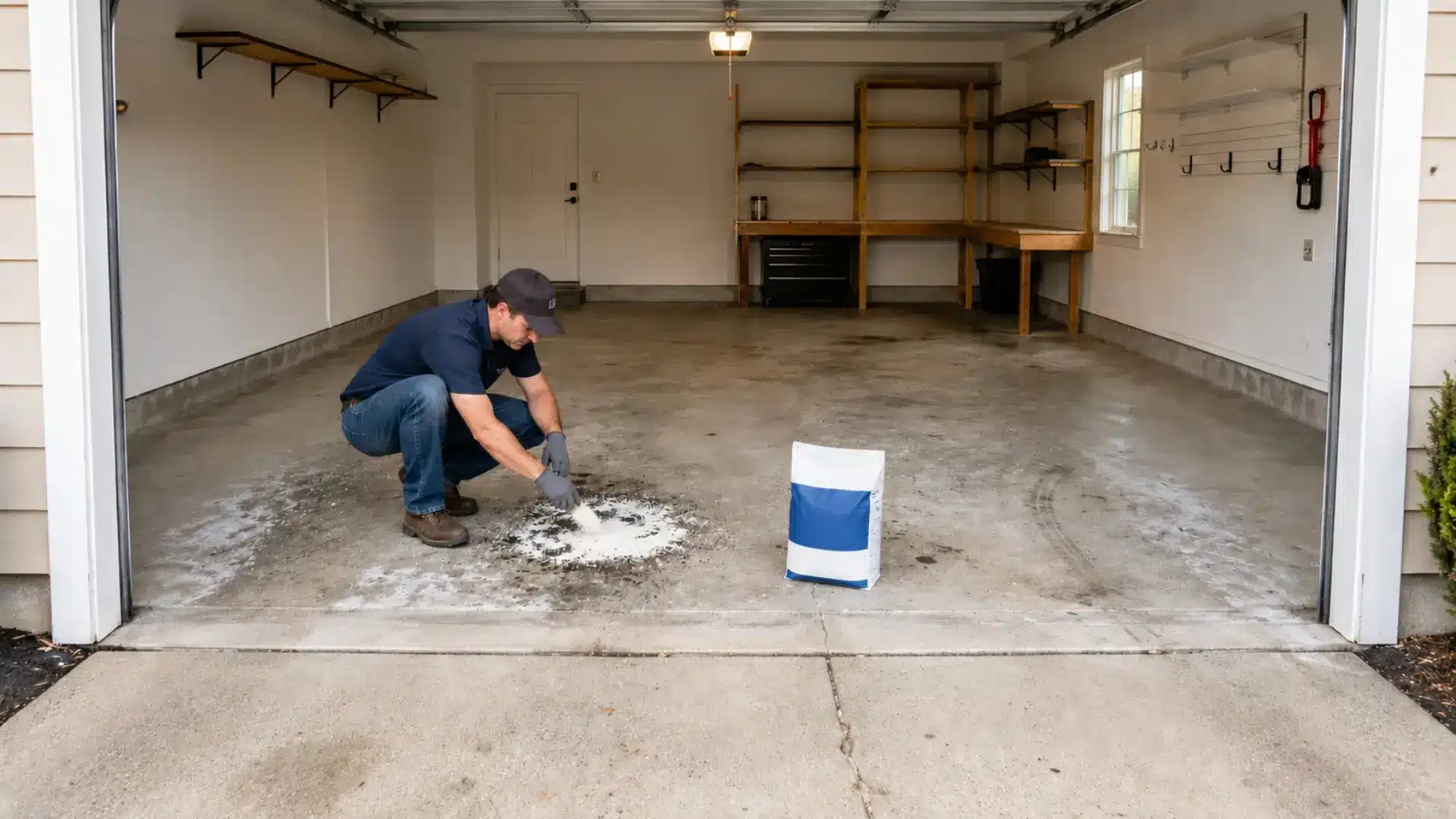
Treating stains before washing the full floor stops oily residue from spreading. For fresh oil or grease, cover with absorbent material, let it soak up, then sweep away.
For old oil stains, apply a concrete-safe degreaser, scrub with a nylon brush, and repeat if needed since it may only fade. Treat tire marks with degreaser and firm scrubbing, and rust with a concrete-safe rust remover. Road salt and dried mud usually lift with warm, soapy water.
Step 4: Mix Your Cleaning Solution
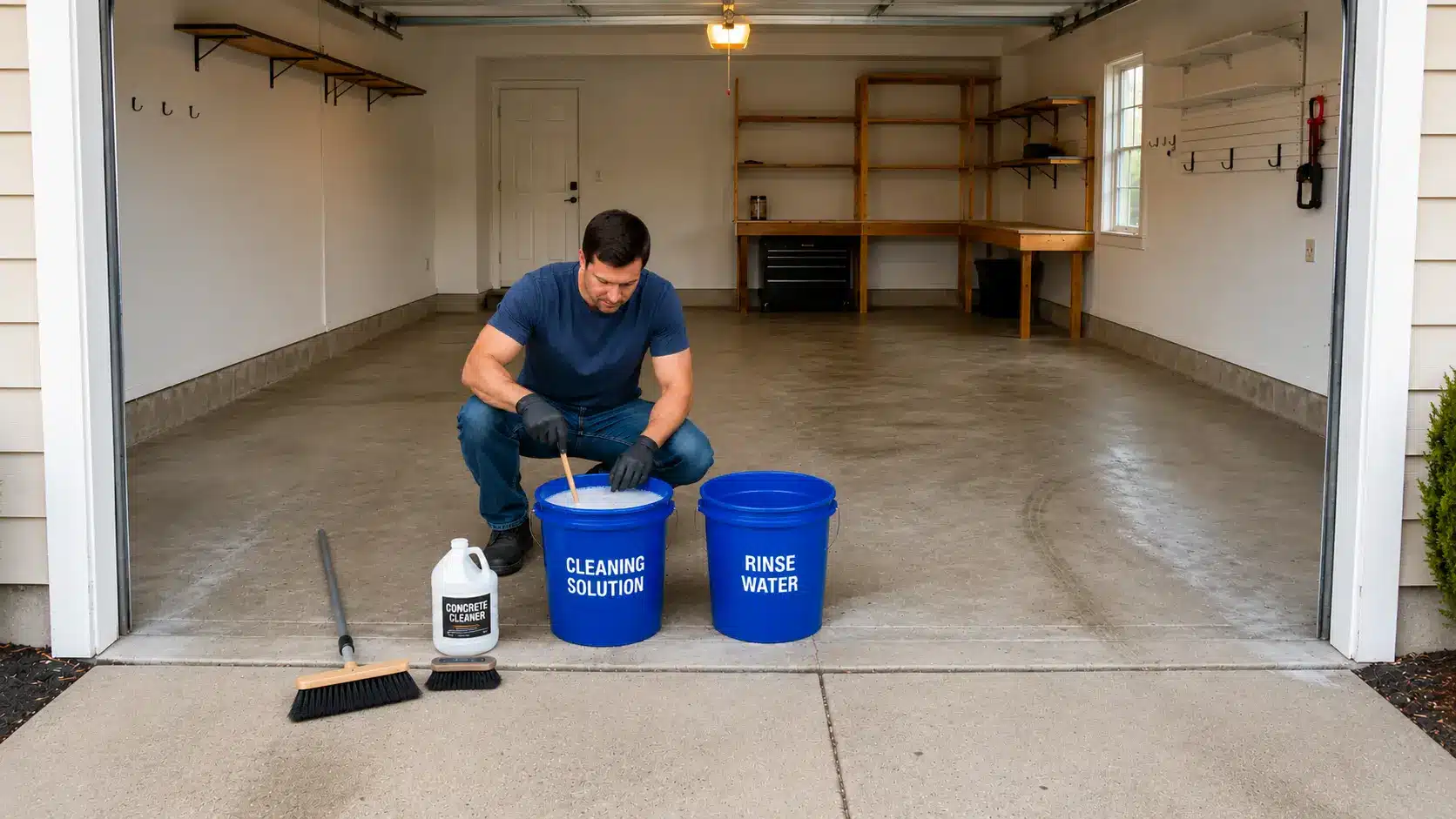
Fill one bucket with warm water and add about a tablespoon of dish soap per gallon. For heavier grime, use a concrete cleaner at the dilution listed on the label.
Don’t use extra soap. More soap means more residue and a stickier, harder-to-rinse floor. Use one cleaner at a time, since mixing household cleaning products, especially anything containing bleach or ammonia, can produce dangerous gases; the CDC warns against mixing household cleaners for exactly this reason, and an enclosed garage only makes the fumes harder to escape.
Step 5: Scrub in Sections
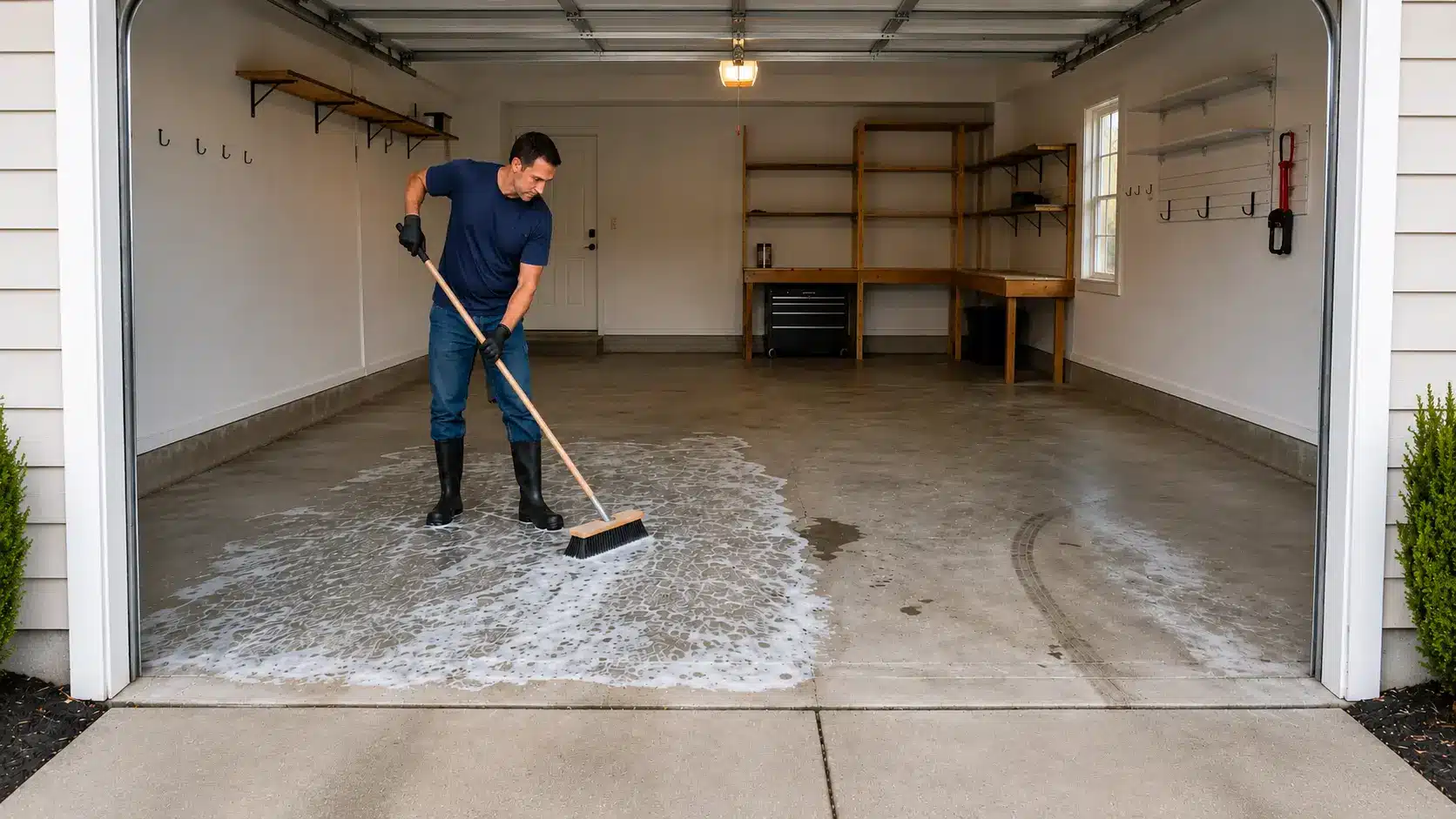
Start in the far corner and work toward the door, so dirty water moves in the right direction throughout.
Apply the cleaning solution to one section at a time, not the whole floor at once. Let it sit a few minutes to loosen the dirt, but keep an eye on it so it doesn’t dry out. Scrub with the deck brush using firm strokes in more than one direction.
This gets the bristles into the texture of the concrete rather than just across the surface. Spend extra time on parking spots and the area just inside the garage door. Use the hand brush for corners and tight spots.
Step 6: Rinse and Remove Dirty Water
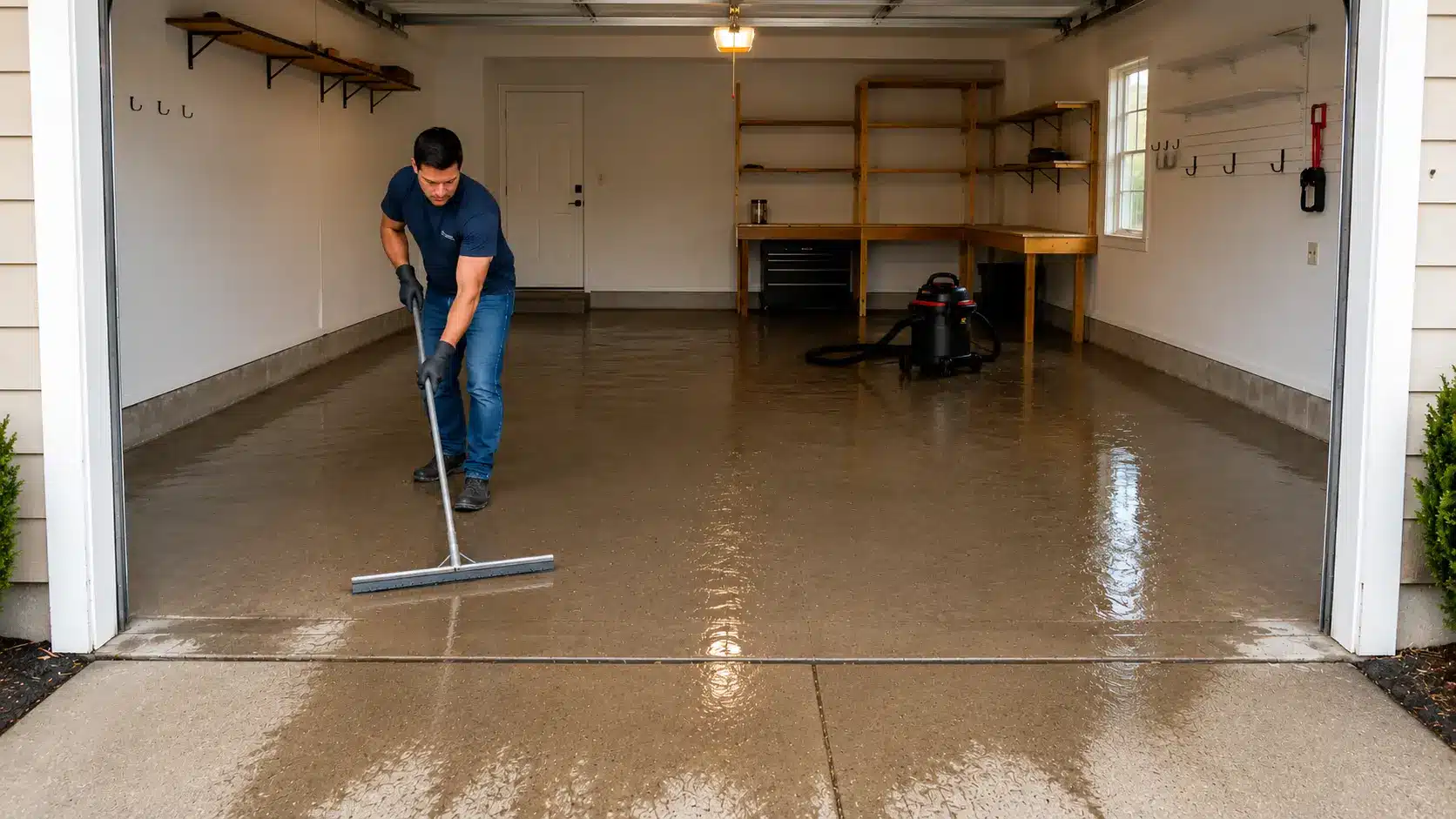
Rinse each section with clean water as you go, using a gentle spray or a bucket. There is no need to flood the floor, since excess water can reach drywall, soak into wood framing, and find its way to electrical outlets or stored items.
Use the floor squeegee to push dirty water toward the garage opening, working in long steady strokes from back to front. If the floor has low spots where water collects, use the wet-dry vacuum to pull it out.
Do not push water containing oil, grease, or chemical cleaners into the street or storm drain. Storm drains carry water straight to local creeks and waterways without any treatment, which is the concern behind the EPA’s stormwater runoff program. Collect contaminated water in the wet-dry vacuum and dispose of it according to your local waste guidelines.
Step 7: Dry the Floor Completely
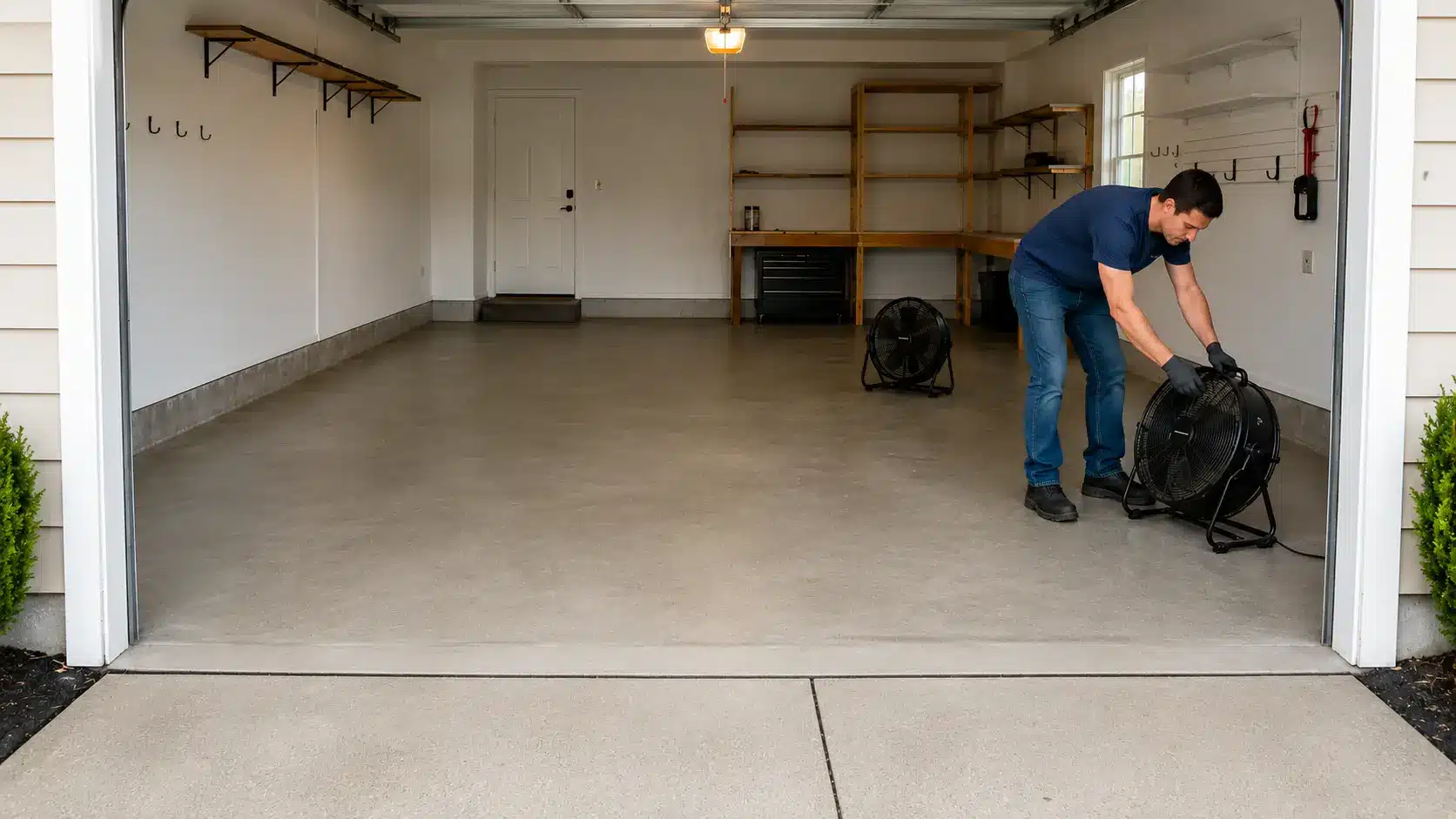
Once standing water is cleared, open the garage door and run a fan. On humid days, a second fan pointed at the floor speeds things up noticeably. Expect two to four hours of drying time, depending on temperature and airflow.
Don’t put anything back on a damp floor. Mats, boxes, and vehicles trap moisture underneath, which leads to mold and staining. Once the floor is fully dry, check for spots that may need a second treatment.
Handling Specific Stains
Different stains require different treatments. Using the same cleaner on every mark can waste time or damage the floor. Identify the stain first, then use the method in the table below. Always test a new product on a small hidden area before treating a large section.
| Stain Type | First Step | Cleaning Method | Notes |
| Fresh oil/grease | Cover with absorbent material | Sweep up, then degrease and scrub | Repeat if concrete still feels oily |
| Old oil/grease | Apply concrete degreaser | Scrub with nylon brush; vacuum residue | May only fade, not fully disappear |
| Rust | Apply concrete rust remover | Follow label; rinse thoroughly | Do not use metal brushes |
| Tire marks | Apply mild degreaser | Scrub firmly with deck brush | Old marks may be permanent |
| Road salt | Sweep first | Warm soapy water and scrub | Rinse well; salt residue causes damage over time |
| Paint | Check paint type | Latex: warm water and scrub. Oil-based: may need solvent-based remover | Test any solvent on a hidden area first |
| Dried mud | Sweep or vacuum dry | Warm soapy water; light scrubbing | Easier to remove than most stains |
Start with the mildest suitable method and repeat it before moving to a stronger product.
Fresh spills usually respond quickly, while stains that have soaked into porous concrete may require several treatments. Some older oil, rust, paint, and tire marks may become lighter without disappearing completely.
How to Clean a Garage Floor With a Pressure Washer
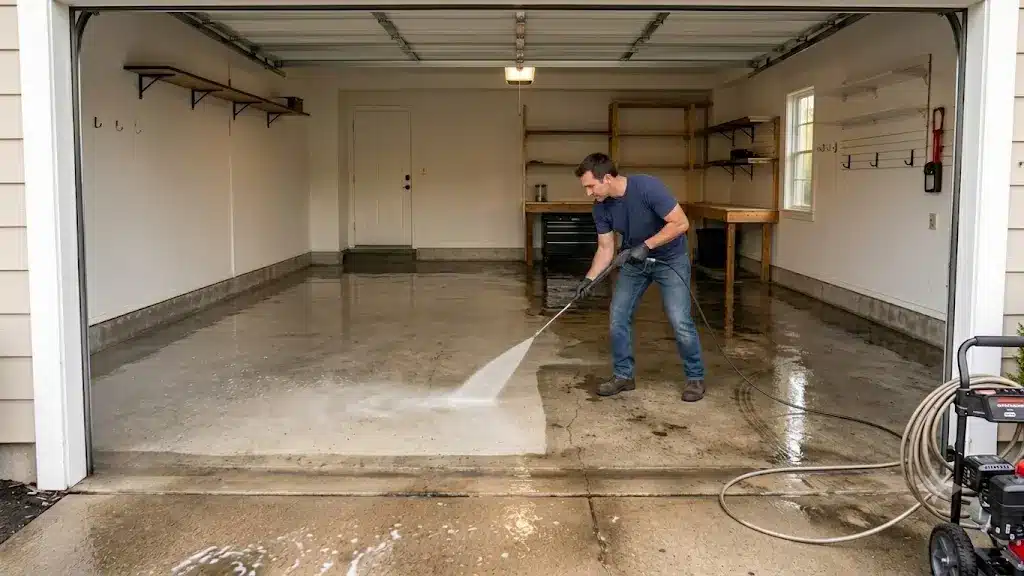
A pressure washer removes heavy mud, salt, and grime faster than hand scrubbing. Use it only on plain concrete in good condition. Painted, sealed, epoxy-coated, or badly cracked floors should be cleaned with a mild cleaner and brush instead.
- Clear and prepare the space: Remove vehicles, tools, and storage. Sweep and vacuum the floor, then cover drywall, cabinets, wood, and electrical outlets. Plan where the dirty water will go before you begin.
- Treat stains first: Absorb fresh oil spills and use a concrete-safe degreaser on older stains. Scrub and remove the residue before pressure washing.
- Test the machine: Use a wide spray tip and the lowest useful pressure. Test a small area first and stop if the concrete chips, flakes, or changes color. Wear gloves, safety glasses, and closed shoes.
- Wash the floor: Start at the back and work toward the door. Hold the nozzle at an angle, about 12 to 18 inches from the surface. Use slow, overlapping passes and keep the nozzle moving. Avoid cracks, chips, and expansion joints.
- Rinse and dry: Rinse with clean water, push runoff toward the exit with a squeegee, and vacuum puddles from low spots. Leave the garage open and run fans until the floor is fully dry.
Pressure washing speeds up a job that hand scrubbing would take much longer to finish, but the machine only does its part well when the floor is prepped, tested, and treated for stains first.
How Often Should You Clean a Garage Floor?
A little regular maintenance goes a long way toward keeping a garage floor manageable throughout the year. Staying on top of small, simple tasks means your annual deep clean stays short instead of turning into a long, messy weekend project.
| Frequency | Tasks |
| Every one to two weeks | Sweep high-traffic areas; clean up fresh spills immediately |
| Monthly | Vacuum corners and wall edges; check for new oil leaks under vehicles |
| Every 3 to 6 months | Wash dirty sections; remove built-up salt, mud, and grime |
| Once or twice a year | Full deep clean; declutter storage; inspect for cracks and moisture |
A steady weekly and monthly rhythm keeps grime from building up in the first place, which makes the twice-a-year deep clean feel more like a touch-up than a full project. Small, consistent habits protect the concrete and save real time.
How to Keep the Floor Cleaner Between Washes
A few simple habits reduce how often you need a full clean:
- Place absorbent mats under vehicles that have slow leaks, and replace them before they saturate.
- Use a doormat near the house entrance to catch grit and moisture before it spreads.
- Sweep every one to two weeks. A two-minute sweep prevents an hour of scrubbing later.
- Clean spills as soon as they happen. Fresh oil and automotive fluid are far easier to remove than stains that have had days to soak in.
- Store powders, soil, and lawn products in sealed bins. Bags sitting directly on the floor absorb moisture, split open, and leave stains.
- Use drip trays under paint cans, oil containers, and fluids. A cheap tray is much easier to clean than a stained floor.
- Get vehicle leaks fixed promptly. No cleaning routine keeps up with a car that drips regularly.
These small habits add up fast, cutting scrubbing time and stretching the gap between deep cleans considerably. Once the floor stays tidy, sealing it pairs nicely with the smaller upgrades in these DIY home improvement projects for every skill level.
What Garage Owners Say Really Works
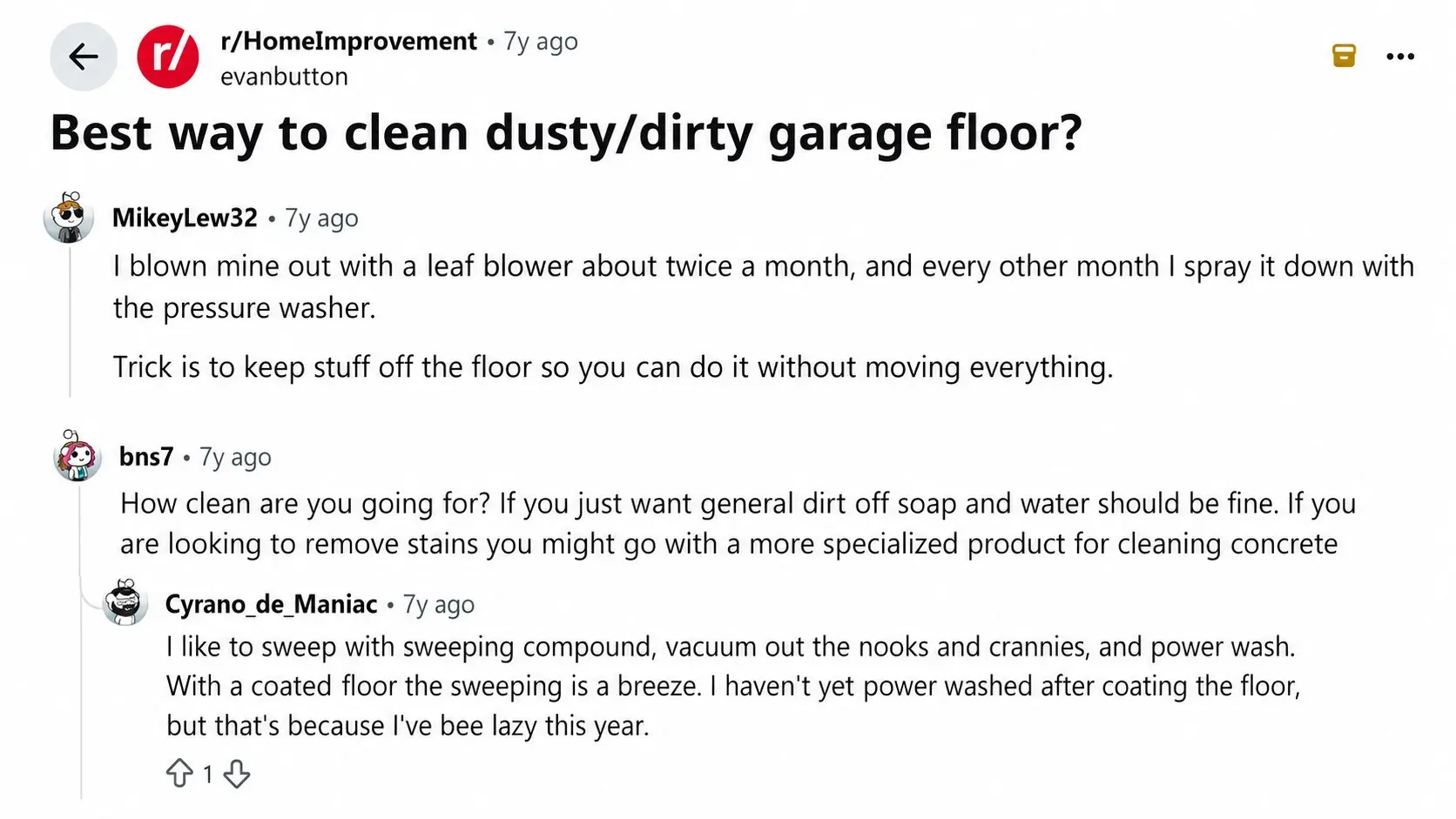
Product labels and step-by-step instructions only go so far. To get a feel for what actually works in practice, it’s worth looking at what homeowners are saying in this Reddit discussion on cleaning a dusty, dirty garage floor. A few practical points came up again and again:
Before adding water, sweep, blow, or vacuum away loose dry dirt, since wetting it too soon just turns dust into muddy residue that’s harder to clean. Warm soapy water and a plastic-bristle push broom handle most everyday grime without special gear.
In garages without a floor drain, a wet-dry vacuum set up for wet pickup collects dirty water properly. Pressure washing works well too, but plan where the runoff will go before starting, since it can pool near walls and stored items.
Keep storage off the floor with shelves or wall mounts to make sweeping easier.
Match the method to the problem: sweeping for dust, soap for general dirt, and a concrete-safe cleaner for set-in stains. Test any new product on a hidden patch first, and skip strong acids not rated for concrete.
These tips line up closely with the steps above: remove loose dirt before wetting the floor, keep runoff under control, and match the cleaning method to the mess. The main takeaway from people who’ve actually done this: there’s rarely one perfect method, just the right combination of prep, patience, and testing what works for your specific floor.
Mistakes That Make the Job Harder
Most cleaning mistakes on garage floors come down to rushing or using the wrong product. Knowing what to avoid saves time and protects the surface. Here are the most common ones:
- Skipping the dry-cleaning step: Water turns loose dust and grit into a muddy slurry that’s harder to remove than the original dirt. Always sweep and vacuum first.
- Using too much water: Flooding the garage pushes dirty water toward walls and creates a hazard near electrical areas. Use only as much as the job needs.
- Using too much soap: Extra soap leaves a sticky film that’s harder to rinse than the dirt you started with. Measure it out.
- Using wire brushes: Metal bristles scratch concrete and leave iron particles behind that rust and create new stains. Stick to nylon.
- Mixing cleaning products: Combining common household cleaners can produce harmful fumes. Use one at a time and rinse between switches.
- Putting items back too soon: Mats, boxes, and bins placed on damp concrete trap moisture underneath, leading to mold and staining. Wait for the floor to dry completely.
- Expecting old concrete to look new: Years-old stains that have soaked deep into the surface won’t fully disappear. A solid clean makes a real difference, but go in with clear expectations.
Avoiding these keeps the job cleaner, faster, and easier on both you and the floor.
Frequently Asked Questions
What is the best homemade solution for cleaning a garage floor?
Warm water mixed with a small amount of dish soap can handle most everyday dirt and dried grime. For tougher buildup, use a concrete-safe degreaser. Dilute it according to the label. Avoid highly acidic homemade solutions on concrete. Repeated use can gradually erode the surface.
What should I avoid using on concrete?
Wire brushes, bleach used too frequently, and strong acid-based cleaners can all damage concrete over time. Never mix cleaning products, and always rinse thoroughly after using any chemical cleaner.
How can I make my garage floor look better without spending much?
A thorough clean makes the biggest difference at no cost beyond time. After that, a basic concrete sealer or a coat of concrete floor paint costs relatively little and gives the floor a finished, uniform look that is also easier to maintain.
What can I put on the floor to protect it going forward?
Rubber or interlocking floor tiles protect the concrete underneath and are easy to lift and clean. An epoxy or polyaspartic coating seals the surface so spills stay on top and wipe away quickly rather than soaking in and staining.
How long does the floor need to dry before I can use the garage again?
Allow at least two to four hours with the door open and a fan running. On a cold or humid day, drying can take longer. Do not drive on the floor or place heavy items on it until the concrete is fully dry to the touch across the entire surface.
Final Thoughts
Cleaning a garage floor doesn’t have to be a big production. Once you know how to clean garage floor surfaces the right way, the method is simple: clear the space, sweep before any water touches the floor, treat stains directly, scrub in sections, and remove dirty water before it spreads.
Done on a regular schedule, keeping your garage clean stays manageable rather than something you dread once a year. Start with a sweep, handle the stains, and the rest takes care of itself.
Every garage floor is a little different, and what works for one stain or one type of concrete might need a small tweak for another. If you run into a stubborn spot or a step that doesn’t quite match your setup, drop a comment below with your questions, and I’m happy to help you figure it out.