Metal paint can look fine on day one and still fail sooner than expected. That usually happens when the surface, coating, and prep do not work together. Direct-to-metal coatings are made to bond straight to prepared metal while helping protect it from rust, moisture, and wear.
If you are trying to understand what they are, this answers the main question first: they are paint systems designed to protect and finish metal without always needing a separate primer.
I’ve kept the focus on what matters during a real project, including how these coatings work, where they are used, which types are common, and what to know before choosing options like Sherwin-Williams direct-to-metal paint.
What Are Direct-to-Metal Coatings and How Do They Work?
Direct-to-metal coatings, often calledDTM coatings, are specially formulated paint systems designed for application directly to properly prepared metal surfaces.
Unlike conventional paint, which may require multiple layers to achieve proper adhesion, a DTM coating is engineered to bond directly with metal while creating a protective and decorative film in a single system.
These coatings work by forming a durable layer that adheres tightly to the metal surface. The formulation typically contains adhesion-promoting components and rust-inhibitive pigments that help maintain the integrity of the substrate.
Once cured, the coating creates a continuous barrier film that separates the metal from environmental elements such as moisture, oxygen, and contaminants.
This protective film also provides a uniform finish, helping the surface maintain a clean and professional appearance while preserving the condition of the underlying metal.
Benefits of Direct to Metal Coatings
Direct-to-metal coatings are useful because they simplify metal painting while still giving the surface a strong, protective finish. They help save time, reduce extra steps, and support long-term surface care.
- Fewer coating steps: Many DTM coatings can be applied without a separate primer, so the process becomes faster and easier to manage. This is helpful when a project has many metal surfaces or limited time for work.
- Strong metal adhesion: These coatings are designed to adhere well to properly prepared metal surfaces. When the surface is clean and stable, the coating bonds better and is less likely to peel or lift early.
- Rust resistance: DTM coatings often include rust-inhibitive ingredients that help slow corrosion. This provides metal with better protection against moisture, oxygen, and everyday exposure when applied under the right conditions.
- Durable finish: Once dry, the coating forms a solid film over the metal. This film helps the surface handle regular wear, light impact, cleaning, and daily environmental stress.
- Cleaner appearance: DTM coatings help metal surfaces look smooth, even, and well-maintained. They can improve the appearance of doors, railings, frames, equipment, and other visible metal surfaces.
- Cost efficiency: Since DTM coatings can reduce the need for separate primers and extra coats, they may lower labor time and material planning. This can make larger metal painting projects easier to control.
Note: DTM coatings still need proper surface preparation. Dirt, oil, loose rust, or peeling paint can stop the coating from bonding well and may cause early failure.
Overall, direct-to-metal coatings work well when speed, protection, and finish quality matter. The best results come from choosing the right product and properly preparing the metal.
Main Types of Direct-to-Metal Coatings
Different direct-to-metal coatings are designed for different environments and performance requirements. Understanding the main types can help identify how each coating works and what characteristics make it suitable for specific metal protection needs.
1. Acrylic DTM Coatings
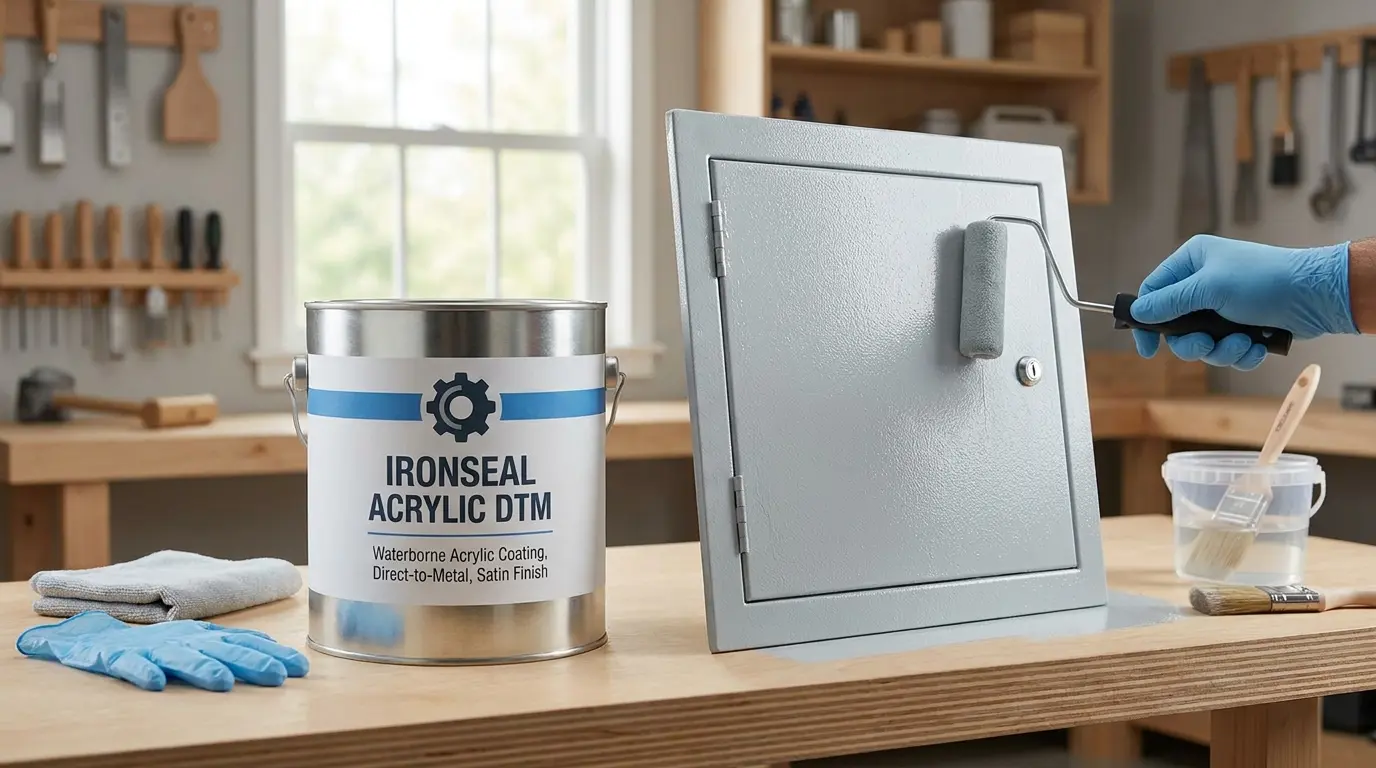
Acrylic DTM coatings are water-based and known for their fast-drying properties and smooth finish. They offer good adhesion to properly prepared metal surfaces and are often chosen for projects where low odor and easier cleanup are important.
These coatings also provide reliable color retention and weather resistance under normal exposure conditions.
2. Alkyd DTM Coatings
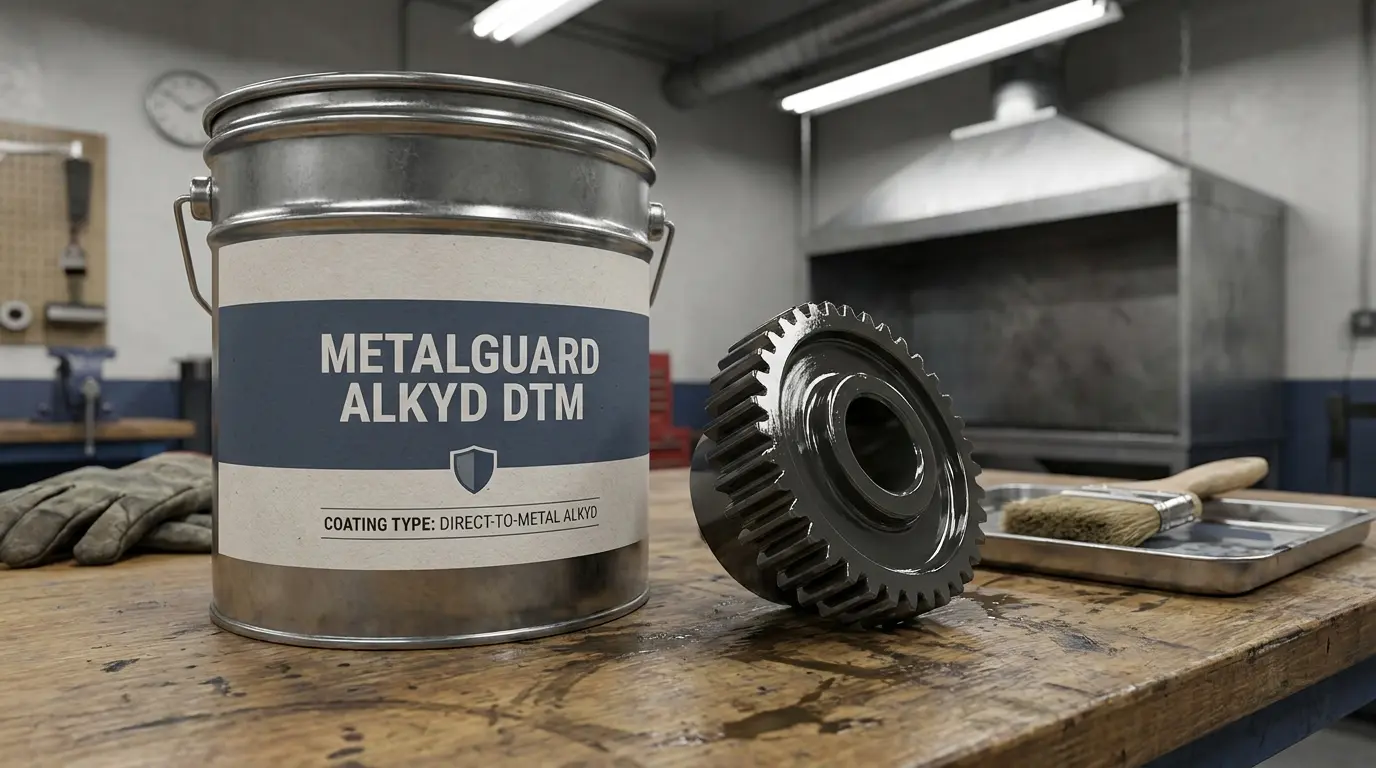
Alkyd DTM coatings are solvent-based coatings that create a hard, durable finish on metal surfaces. They are valued for their strong adhesion, smooth application, and ability to produce a uniform appearance
Alkyd formulations generally have longer drying times than acrylic coatings but are often selected for their toughness and finish quality.
3. Epoxy DTM Coatings
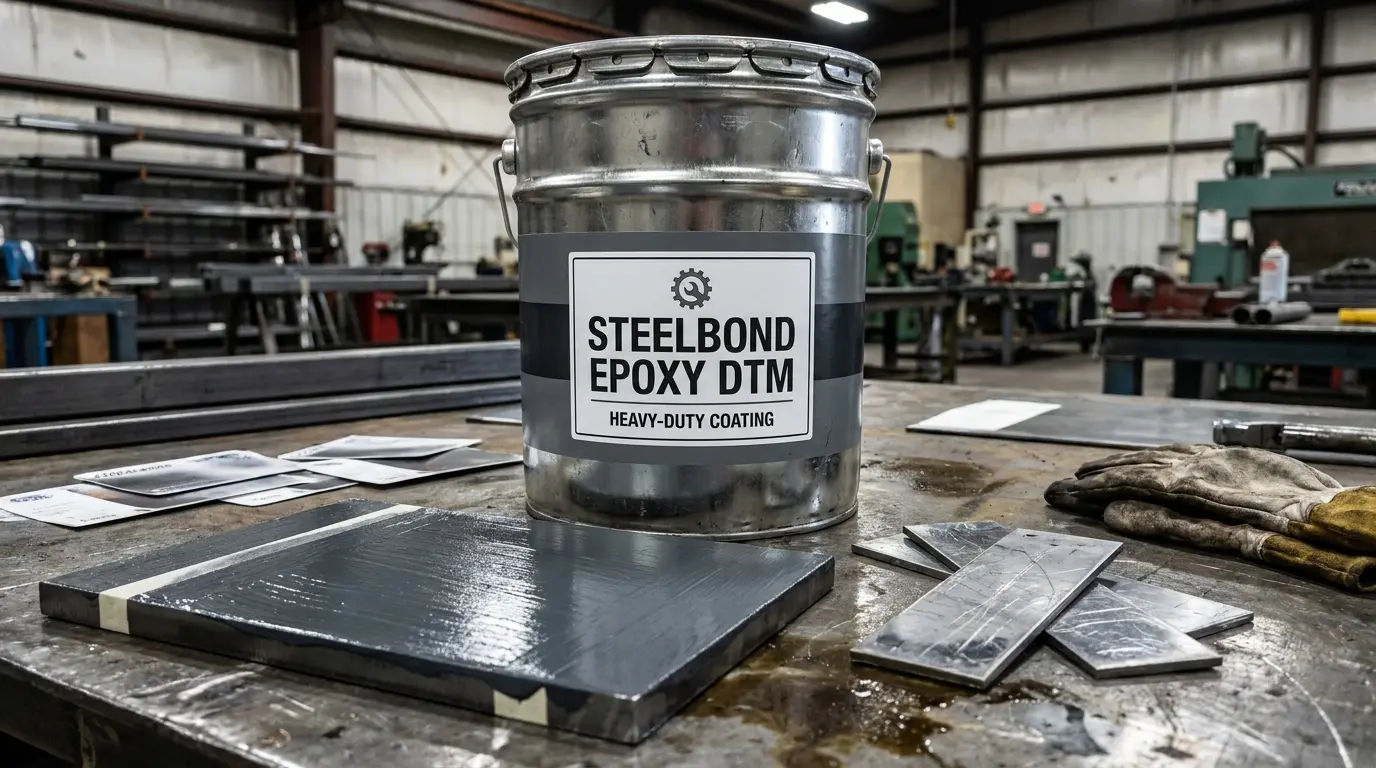
Epoxy DTM coatings are high-performance coatings formulated for demanding environments. They create a dense protective film that offers excellent adhesion and durability.
Epoxy coatings are known for their resistance to abrasion and harsh conditions, making them a common choice where stronger coating performance and long-term protection are required.
4. Polyurethane DTM Coatings
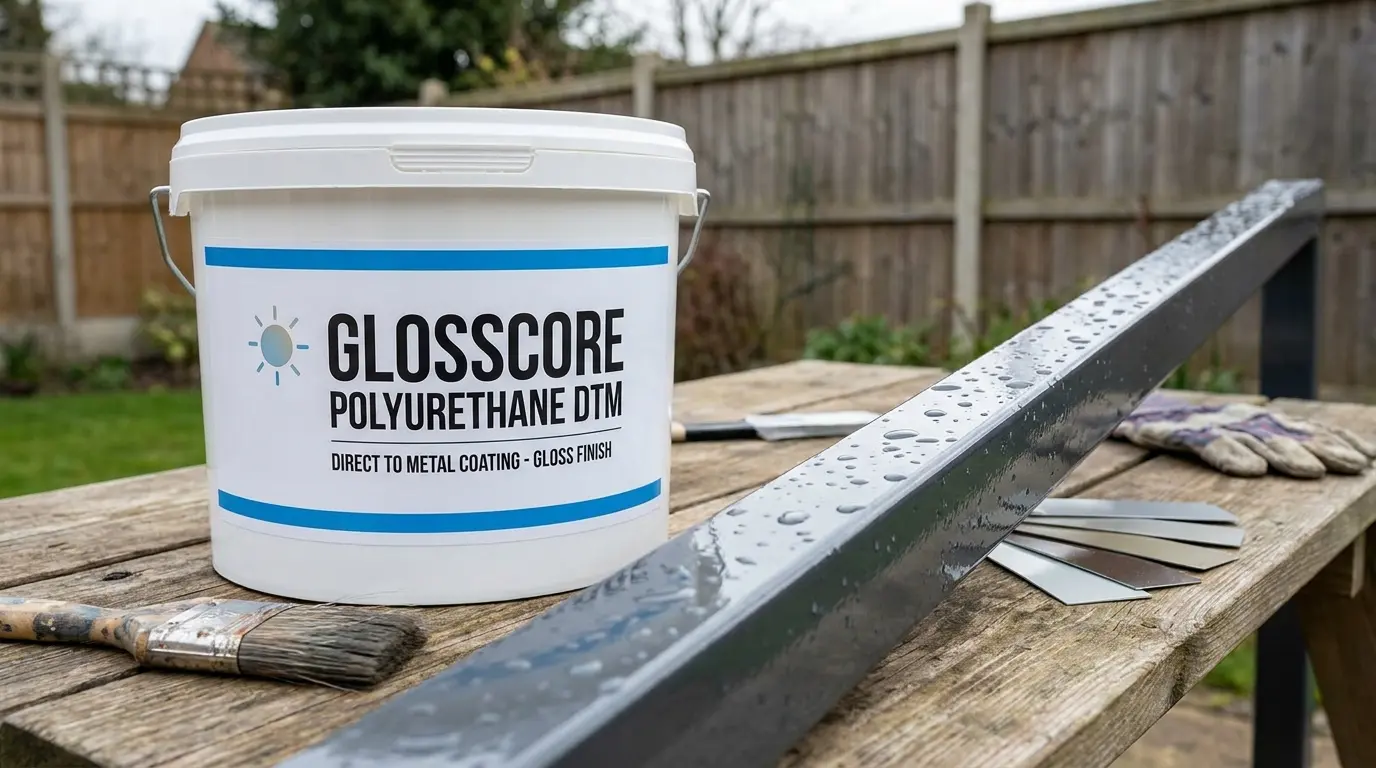
Polyurethane DTM coatings are recognized for their hardness, gloss retention, and long-lasting finish. These coatings form a durable surface that maintains its appearance over time.
They are often used when both protection and visual quality are important, providing a smooth finish with strong resistance to environmental exposure.
5. Water-Based DTM Coatings
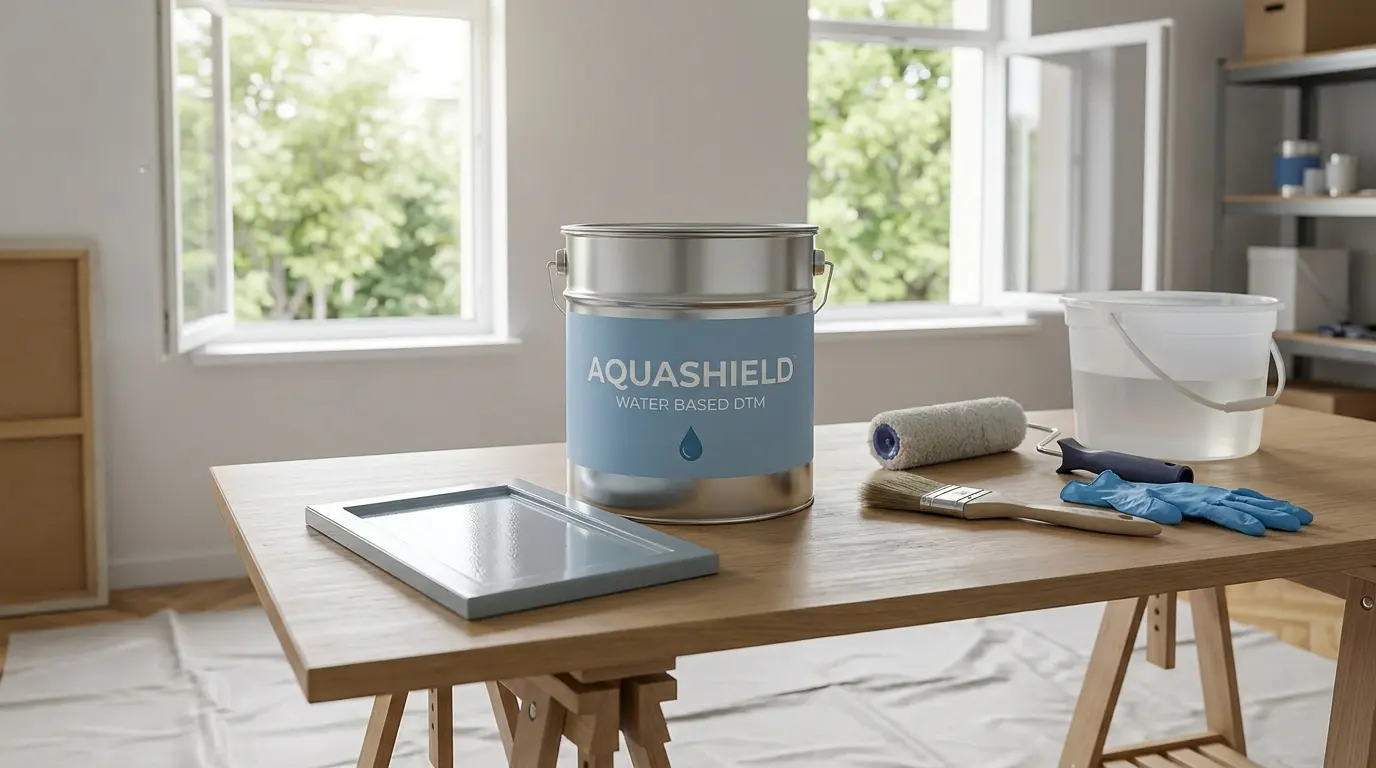
Water-based DTM coatings use water as the primary carrier instead of solvents. They typically have lower odor levels, easier cleanup, and quicker drying times.
These coatings are often selected for projects where environmental considerations, indoor application requirements, and user convenience are important factors during the coating process.
6. Solvent-Based DTM Coatings
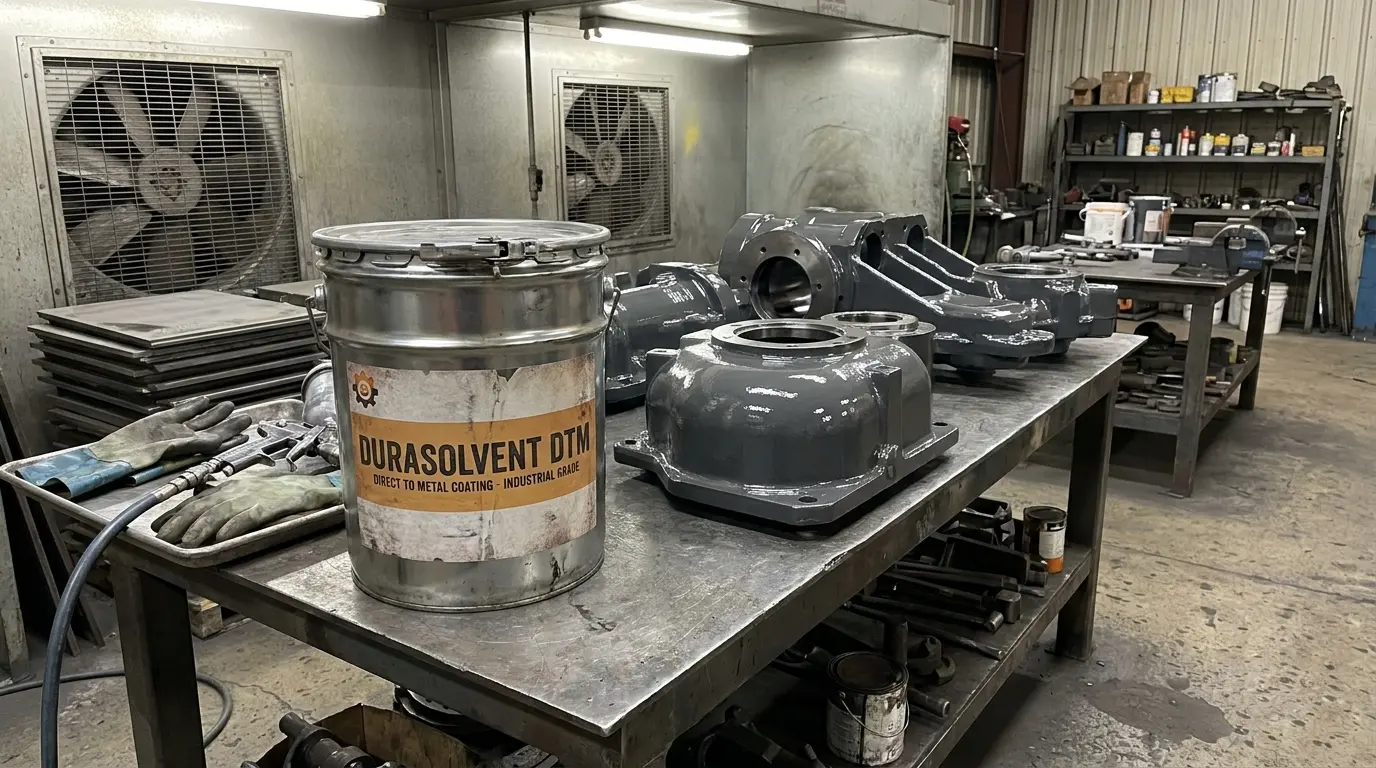
Solvent-based DTM coatings contain solvent carriers that help form a strong, durable coating film. They are often preferred in environments where a tougher finish and specific application characteristics are needed.
These coatings generally require additional ventilation during application and may have longer curing requirements than water-based alternatives.
Common Applications of Direct-to-Metal Coatings
DTM coatings are used in areas where metal needs a protective finish without a complex coating system. Their use depends on exposure, surface type, and project conditions.
| Application Area | Common Surfaces | Why It Is Used |
|---|---|---|
| Industrial | Structural steel, tanks, piping, valves, factory equipment, platforms, beams | Industrial surfaces face daily wear, moisture, cleaning, and impact. DTM coatings help form a durable protective film. |
| Marine | Vessels, offshore equipment, docks, ship parts, marine railings | Marine metal is exposed to saltwater, humidity, wind, and other weather conditions. DTM coatings help reduce surface damage when used in marine applications. |
| Automotive | Chassis, truck bodies, trailers, engine parts, and fabricated metal | Vehicle parts need tough coverage against vibration, road debris, moisture, and handling. DTM coatings help protect prepared metal. |
| Commercial and Residential | Metal doors, fences, railings, gates, window frames, outdoor furniture | Every day, metal needs easy upkeep because it is touched, cleaned, exposed, and seen often. DTM coatings help maintain its finish. |
| Infrastructure | Rail cars, bridges, handrails, steel doors, towers, sign supports | Public metal structures need long-lasting protection against weather, heavy use, pollution, and long-term exposure. |
These applications show how DTM coatings fit many metal projects. The right choice still depends on surface preparation, exposure level, and the coating’s technical limits.
Sherwin-Williams Direct-to-Metal Paint Options
Sherwin-Williams has several DTM coating options for prepared metal surfaces. These products vary by resin type, finish, exposure level, and project use, so the right choice depends on the job.
1. Acrolon™ 680
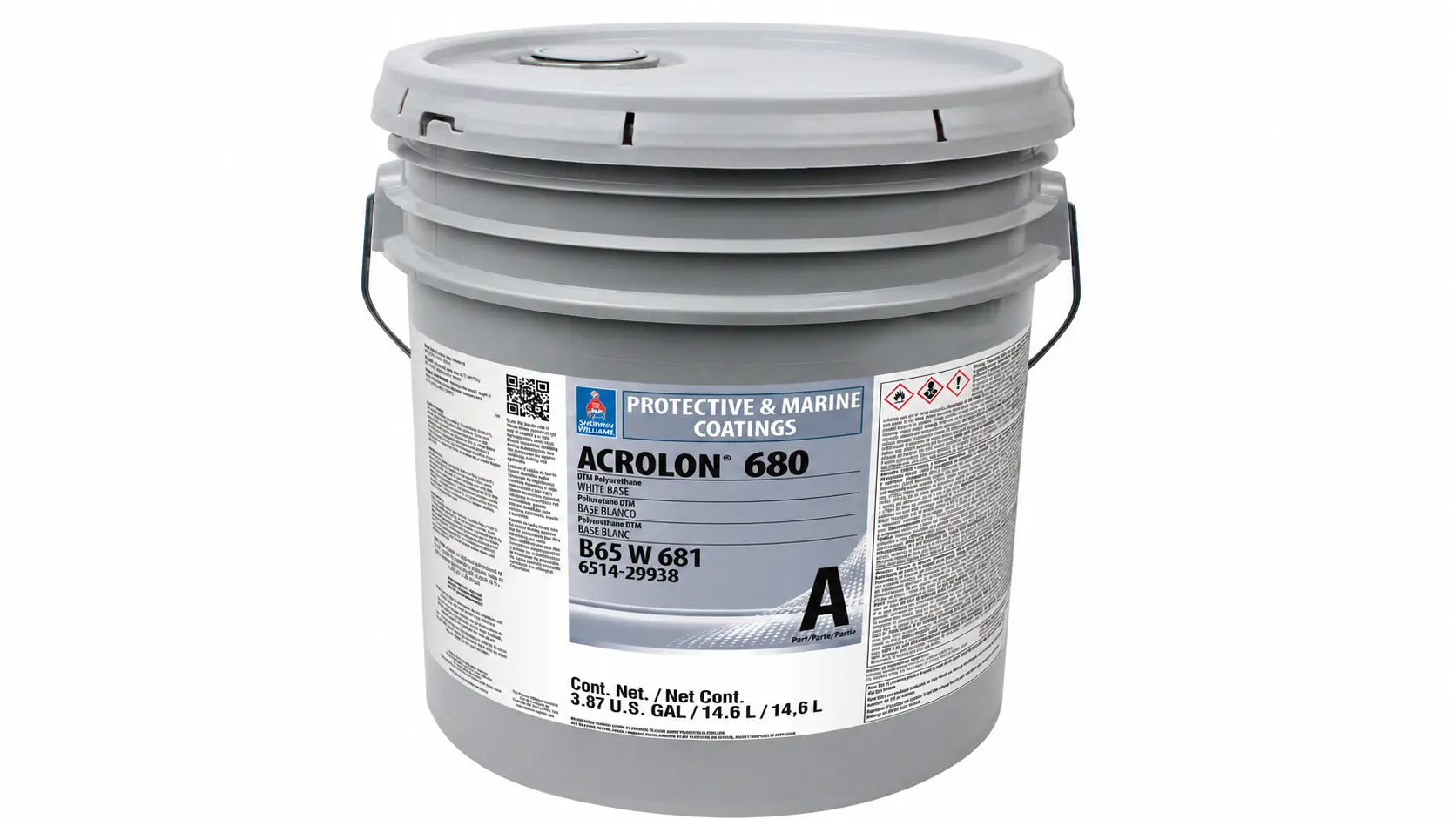
Acrolon™ 680 is a high-performance polyurethane DTM coating designed for industrial and marine-related assets. It offers single-coat coverage, strong adhesion, chemical resistance, a high-gloss finish, and strong color retention.
It is commonly used on tanks, marine vessels, structural steel, heavy equipment, valves, piping, and fabrication parts.
2. Sher-Kem® High Gloss Metal Finishing Enamel
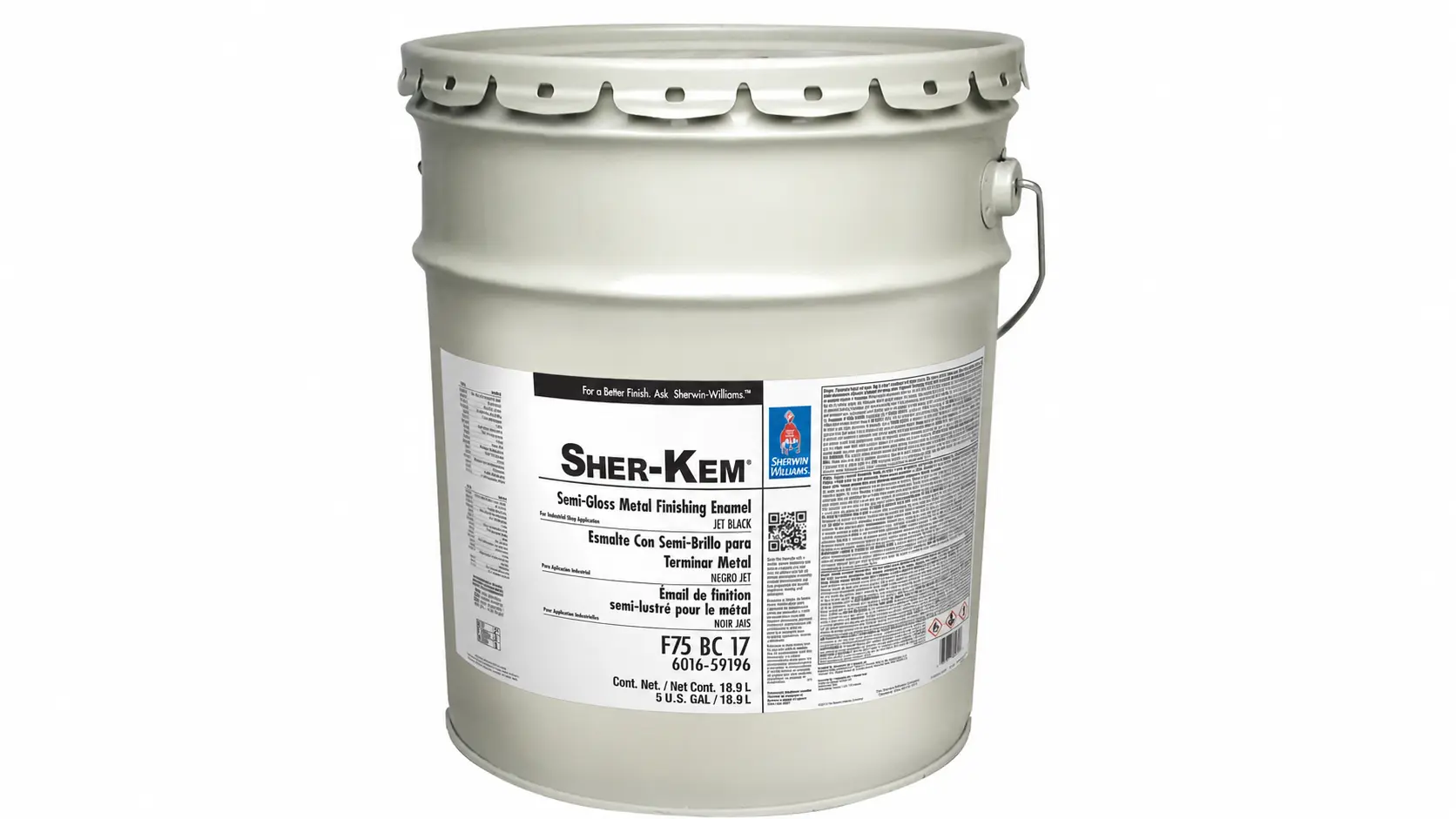
Sher-Kem® High Gloss Metal Finishing Enamel is a direct-to-metal alkyd enamel made to give metal a factory-applied finish.
It is designed for high color and performance in agricultural and construction equipment, trailers, and general metal finishing projects where a premium, long-lasting finish is required.
3. Pro Industrial DTM Acrylic
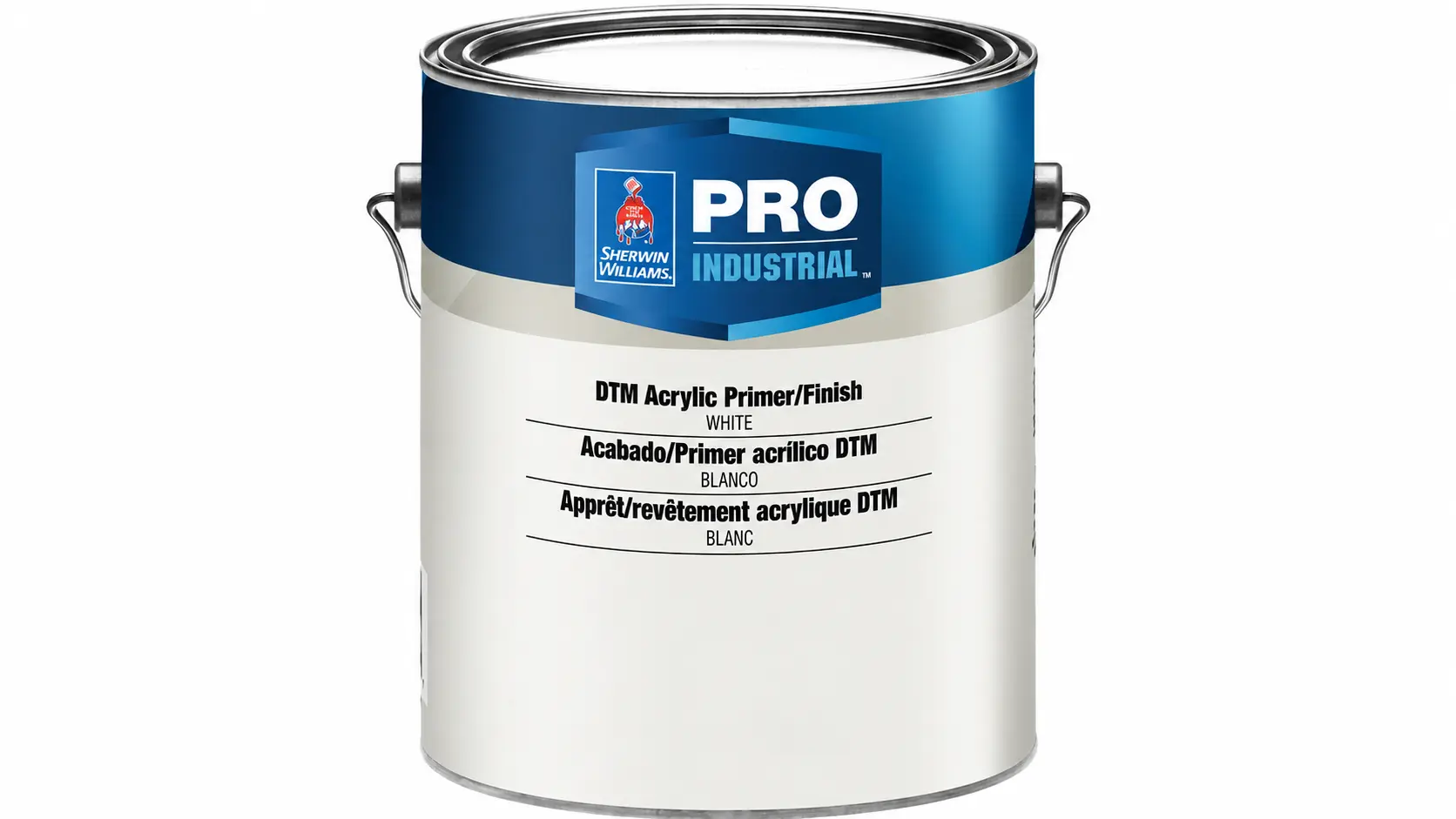
Pro Industrial DTM Acrylic is a water-based acrylic DTM coating made for interior and exterior use. It is designed for light-to-moderate industrial projects and can be applied directly over prepared substrates.
It offers corrosion resistance, moisture resistance, fast drying, and early rust resistance.
It can be useful for commercial metal surfaces, light industrial areas, and repainting work where easy application matters.
Sherwin-Williams direct-to-metal paint can work well when the product is well-suited to the surface and exposure conditions. Always check the product data sheet for prep, thickness, dry time, and limits.
Direct to Metal Coatings vs Primer and Topcoat Systems
Both systems protect metal, but they suit different needs. The right choice depends on surface condition, exposure level, project speed, and how long the coating must perform.
| Factor | DTM Coatings | Primer and Topcoat Systems |
|---|---|---|
| Best Use | Works well on clean, prepared metal in light to moderate exposure. | Better for harsh, wet, coastal, chemical, or heavy industrial settings. |
| Application | Combines primer-like bonding and finish in fewer steps. | Uses separate layers for stronger bonding and added protection. |
| Time and Cost | Saves time and may reduce labor by cutting extra coating stages. | Takes longer and usually costs more upfront due to extra products and labor. |
| Protection Level | Gives reliable protection for regular metal surfaces and maintenance work. | Offers stronger long-term corrosion protection in demanding conditions. |
| Common Projects | Doors, railings, frames, fences, and general metal repainting. | Bridges, marine equipment, chemical plants, tanks, and exposed structural steel. |
The best choice is not just the faster option. Match the coating system to the metal surface, exposure level, and expected service life.
How to Choose the Right Direct to Metal Coating
Choosing the right direct-to-metal coating becomes easier when each project detail is checked first. The metal type, surface condition, exposure, and application needs should guide the choice.
- Check the metal and surface condition: Identify whether the surface issteel, iron, aluminum, or galvanized metal, then look for rust, loose paint, oil, dust, grease, or mill scale.
- Review the exposure and performance needs: Check whether the metal is indoors or outdoors, in a humid environment, coastal, or exposed to chemicals, moisture, heat, abrasion, cleaning, or frequent handling.
- Choose the right finish and schedule: Pick the needed color, sheen, dry time, recoat time, and full cure time so the coating matches both appearance and project timing.
- Check job rules and application method: Review VOC limits, safety needs, ventilation, and whether the coating works best with a brush, roller, or spray equipment.
- Read the product data sheet: Use it to confirm surface prep, coating thickness, thinning, drying limits, and application conditions before starting.
- Ask when unsure: Speak with the supplier when the surface, exposure, or project conditions are unusual.
A coating that works on one surface may fail on another. The product label helps, but the final choice should match the real metal, exposure, and project conditions..
How to Apply Direct to Metal Coatings
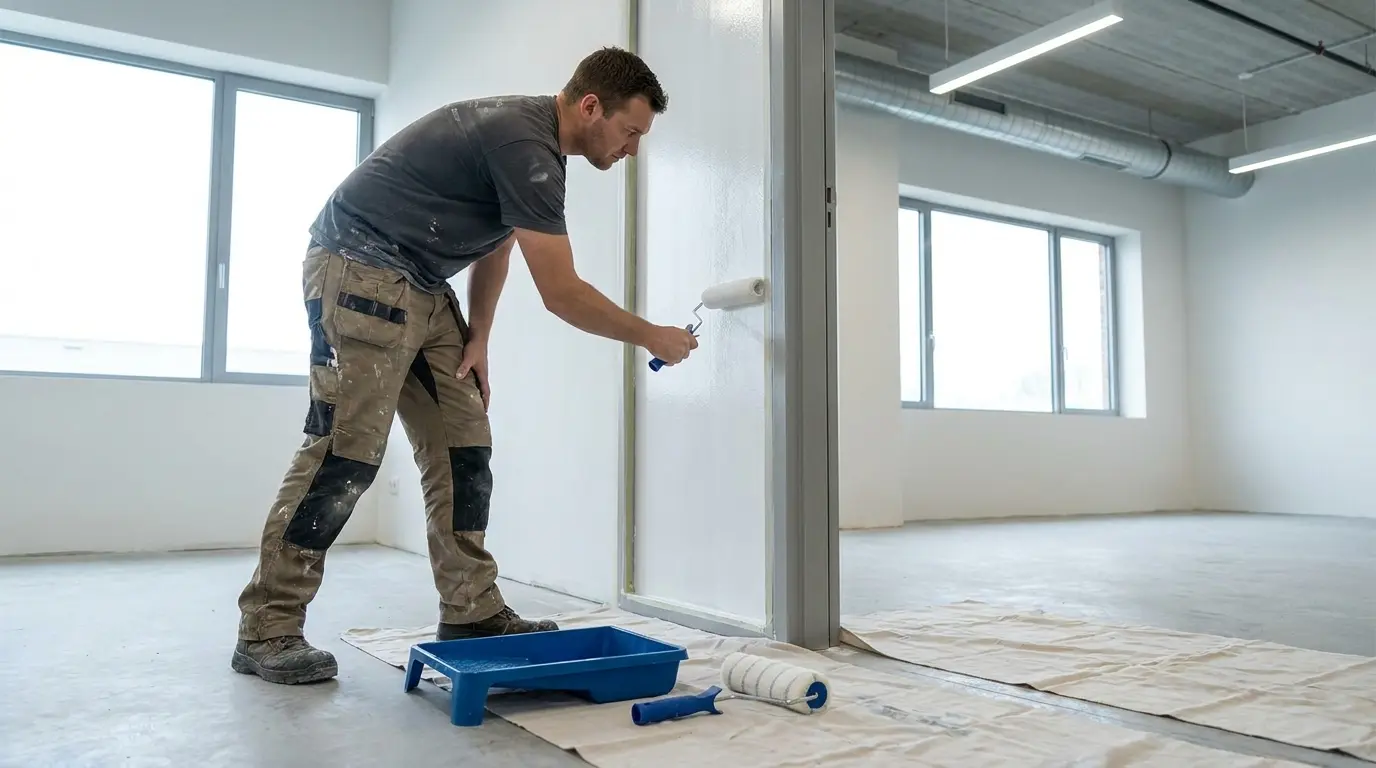
DTM coatings can be applied by brush, roller, or spray, depending on the product and project. Follow the data sheet closely.
- Clean the surface fully.
- Remove loose rust, dust, and peeling paint.
- Sand or abrade glossy areas.
- Stir the coating well.
- Apply the first coat at the recommended thickness.
- Let it dry for the required time.
- Apply a second coat if needed.
- Check edges, welds, corners, and seams.
- Allow full cure before heavy use.
Edges and corners need extra care because coatings often pull thin there. Spraying is faster for large areas, but brushes and rollers can work well for smaller jobs. Do not stretch the coating too thin. Thin coats may look fine at first, but they may not protect the metal properly.
Common Mistakes With DTM Coatings
Even good coatings can fail when the basics are missed. These mistakes are common, but they are easy to avoid with planning.
- Painting over dirty metal: Dust, oil, and grease block adhesion. The coating may peel, bubble, or wear away faster than expected.
- Leaving loose rust behind: Loose rust continues to spread beneath the paint film. It weakens the surface and can cause early failure.
- Ignoring dry film thickness: Too little coating means weak protection. Too much coating can cause drying and curing issues.
- Using the wrong product outdoors: Some coatings are not made for strong sunlight, moisture, or temperature swings. Exposure must match the product.
- Skipping the data sheet: The data sheet explains prep, thinning, dry time, and limits. Guessing can lead to poor results.
- Recoating too soon: A coating needs proper dry time before another coat. Rushing can trap solvent or moisture.
Mistakes with DTM coatings usually come from speed, not skill. Slow down at the prep and product-check stage, and the finish will hold up better.
Maintenance Tips for Painted Metal Surfaces
A coated metal surface still needs care. Small issues are easier to fix before rust spreads under the coating.
- Wash surfaces gently to remove dirt and salts.
- Inspect outdoor metal after heavy rain or seasonal changes.
- Touch up chips before bare metal stays exposed.
- Check welds, bolts, corners, and edges first.
- Keep harsh cleaners away unless the coating allows them.
- Recoat before the old film fully breaks down.
- Keep product details saved for future touch-ups.
Maintenance is especially important for railings, gates, equipment, and exposed steel. Small scratches can turn into rust spots when ignored. A quick touch-up at the right time can prevent a larger repair later.
Good coating work does not end after application. A little care helps the surface stay cleaner, stronger, and better looking for years.
Are Direct-to-Metal Coatings Worth It?
Direct-to-metal coatings are worth it when the job needs speed, protection, and a clean finish without a complex coating system. They are practical for many commercial, industrial, and maintenance projects.
They work best on prepared metal in light to moderate exposure. They are especially useful when labor time is critical, and the surface does not require a heavy-duty primer system.
Still, they are not the right answer for every metal surface. Severe corrosion, constant chemical exposure, marine conditions, or heavy abrasion may need a stronger coating plan.
The real value comes from choosing the right product and preparing the surface well. When those two steps are handled correctly, DTM coatings can save time while giving dependable metal protection.
Frequently Asked Questions
Can DTM coatings be tinted to custom colors?
Yes, many DTM coatings can be tinted, but color options depend on the product base, sheen, and brand system. Darker colors may affect heat absorption on exterior metal, so always confirm tint limits before final selection.
Can DTM paint be used on aluminum?
Some DTM paints can be used on aluminum, but not all. Aluminum can be slick and may need special cleaning or abrasion. Check the product label carefully, because certain coatings need a bonding primer first.
Is DTM coating safe for food-contact surfaces?
Most standard DTM coatings are not meant for direct food contact. Food-related areas need coatings approved for that specific use. Always check safety documents, local regulations, and manufacturer guidance before painting near food-processing surfaces.
Can DTM coatings be used in high-heat areas?
Only some coatings can handle high heat. Regular DTM paint may soften, discolor, or fail near hot pipes, engines, or ovens. Use a heat-rated coating when the metal surface reaches high temperatures during use.
How should leftover DTM paint be stored?
Store leftover DTM paint in a sealed container, away from heat, freezing, and moisture. Keep the label visible for future reference. Do not mix old paint into new work unless it still looks and performs properly.
Final Thoughts
Metal needs the right coating, not just a fresh coat of paint. I like DTM systems because they simplify many jobs without compromising protection. You now know how direct-to-metal coatings work, where they fit, which types matter, and why surface preparation makes such a big difference.
You also know when a primer-and-topcoat system may be the safer choice. Use this information before buying paint, planning labor, or repainting metal that already has wear.
If you are choosing a product, read the datasheet and match it to your actual conditions. Share your project questions in the comments or check related blog posts for more coating tips.