African violets can look fussy at first, but I think they are much easier to understand once you know what they like. You get soft leaves, bright little flowers, and a compact plant that fits well on a windowsill, desk, or shelf.
Good African violet care starts with a few steady habits. With the right care, your African violet can bloom for years, not just for one season.
I will walk you through watering, light, soil, pot size, feeding, humidity, pruning, and common problems, so you can read your plant with more confidence and help it grow well.
African Violet Care at a Glance
| Care factor | Recommendation |
|---|---|
| Light | Bright, indirect light for 10 to 12 hours daily |
| Water | Keep soil lightly moist, not soggy |
| Soil | Light mix with peat, perlite, and vermiculite |
| Temperature | 65°F to 80°F |
| Humidity | 40% to 60%, or higher if possible |
| Pot size | About one-third the width of the leaf spread |
| Fertilizer | Diluted liquid fertilizer regularly |
Can African Violets Grow Under Artificial Light?
African violets grow best near a bright window where they get plenty of indirect light but no harsh direct sun.
An east or north-facing window often works well because the light is gentle. If you place your plant near a south-facing window, use a sheer curtain to soften the sun and protect the leaves from burning.
African violets can also grow well under artificial light. A simple grow light can help if your home does not get enough natural light. Aim for 10 to 12 hours of light each day.
Keep the light close enough to support healthy growth, but not so close that it heats or scorches the leaves.
Signs of Too Little vs. Too Much Light
African violets grow best in bright, indirect light. When the light is not balanced, your plant will usually show it through the leaves, stems, or flowers.
- Few or no blooms: This often means the plant is not getting enough light to support flower growth.
- Leaves reaching upward: The leaves may lift toward the nearest light source when the spot is too dim.
- Long leaf stems: Stretched stems can mean the plant is reaching for brighter light.
- Pale or bleached leaves: This can happen when the plant gets too much strong light.
- Brown or crispy leaf edges: Harsh light can dry or burn the soft edges of the leaves.
- Reduced variegation: Variegated African violets may lose some color pattern when the light is too strong.
Once you spot these signs, adjust the plant slowly. Move it closer to soft light if it looks stretched, or farther from direct sun if the leaves look pale or burned.
Best Watering Methods for African Violets
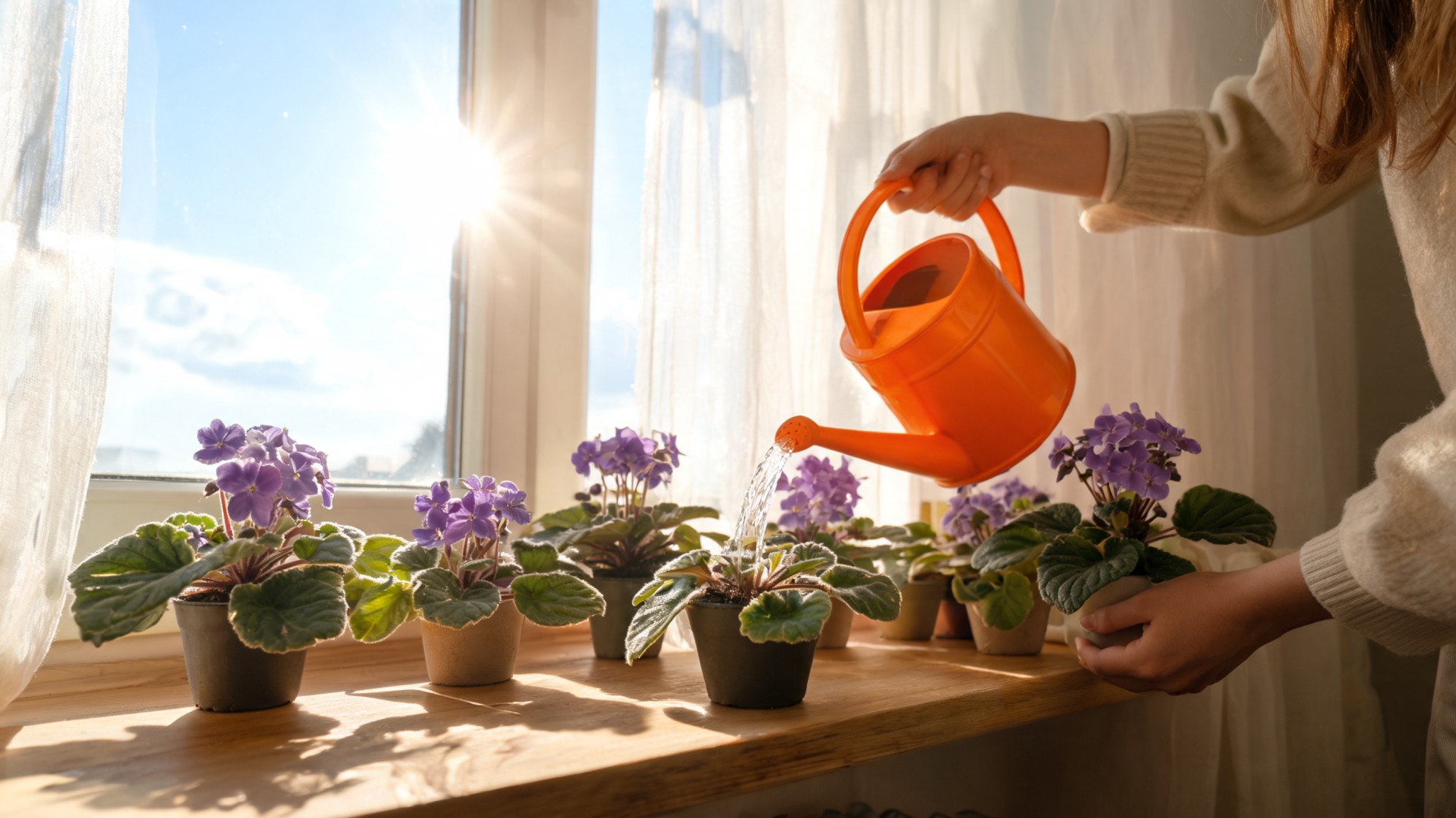
I’ve found that watering is where many people get nervous with African violets, and I understand why. Their leaves are soft, their crowns can rot, and soggy soil can cause trouble fast. The good news is that once you pick a method that fits your routine, watering becomes much easier.
1. Bottom Watering
Bottom watering is one of the safest ways to water African violets because it keeps water away from the leaves and crown. To do this, place the pot in a saucer or shallow bowl filled with room-temperature water. Let the plant sit for 15 to 30 minutes so the soil can draw up moisture through the drainage holes.
Once the top of the soil feels lightly moist, remove the pot from the water. Let it drain fully before placing it back in its outer pot or tray. This step matters because African violets like even moisture, but they should never sit in standing water for too long.
2. Wick Watering
Wick watering works well if you want a steady moisture system with less guesswork. A wick pulls water from a reservoir into the soil as the plant needs it. This helps keep the soil lightly and evenly moist, which African violets usually enjoy. The wick should touch the potting mix and reach down into the water below the pot.
This method works best when the soil is light, airy, and able to absorb water without becoming soggy. A heavy mix can hold too much moisture and raise the risk of root rot. Check the wick now and then to make sure it is still moving water properly.
3. Self-Watering Pots
Self-watering pots are a helpful option if you want more even moisture without checking the soil every day. These pots usually have a top section for the plant and a lower reservoir that holds water. The soil pulls up moisture as needed, which can keep your African violet from drying out too much between waterings.
Still, you should check the reservoir often. If it stays empty for too long, the soil can dry out. If old water sits there too long, it can become stale. Refresh the water regularly, and make sure the potting mix stays lightly moist rather than wet or heavy.
4. Top Watering
Top watering is possible, but it needs a careful hand. The goal is to water the soil only, not the leaves or the center crown. Use a narrow-spout watering can or squeeze bottle so you can direct the water under the leaves and onto the potting mix. Water slowly until the soil is evenly moist and a little water drains from the bottom.
If any water splashes onto the leaves or crown, blot it gently with a soft tissue. This method can help flush extra fertilizer salts from the soil, but it is riskier if the plant is full and hard to water without wetting the foliage.
Choose the method that feels easiest for you to maintain consistency with. I usually prefer the method that keeps the leaves dry, the soil evenly moist, and the roots well-aired. That balance is what keeps African violets healthy and blooming.
Best Soil for African Violets
African violets grow best in soil that holds light moisture without becoming heavy or soggy. I like to think of their soil as a balance between water and air. The roots are fine and delicate, so they need a mix that drains well but does not dry out too fast.
- Light potting mix: Use a loose, well-draining mix that allows water to drain easily.
- African violet mix: A ready-made African violet soil is a simple choice because it is made for their fine roots.
- Peat moss: Helps hold gentle moisture without making the soil too dense.
- Perlite: Adds air space and helps extra water drain away.
- Vermiculite: Holds light moisture and supports even watering.
- DIY mix: Use 1 part peat moss, 1 part perlite, and 1 part vermiculite.
- Dolomite lime: Add only if needed to help balance soil pH.
- Avoid garden soil: It is usually too heavy and can hold too much water around the roots.
- Best soil pH: Aim for about 6.0 to 7.0, though some growers use 6.5 to 7.5.
The right soil makes watering much easier. When the mix is light, airy, and slightly moisture-retentive, your African violet has a better chance of growing strong roots and producing steady blooms.
Best Pot Size for African Violets
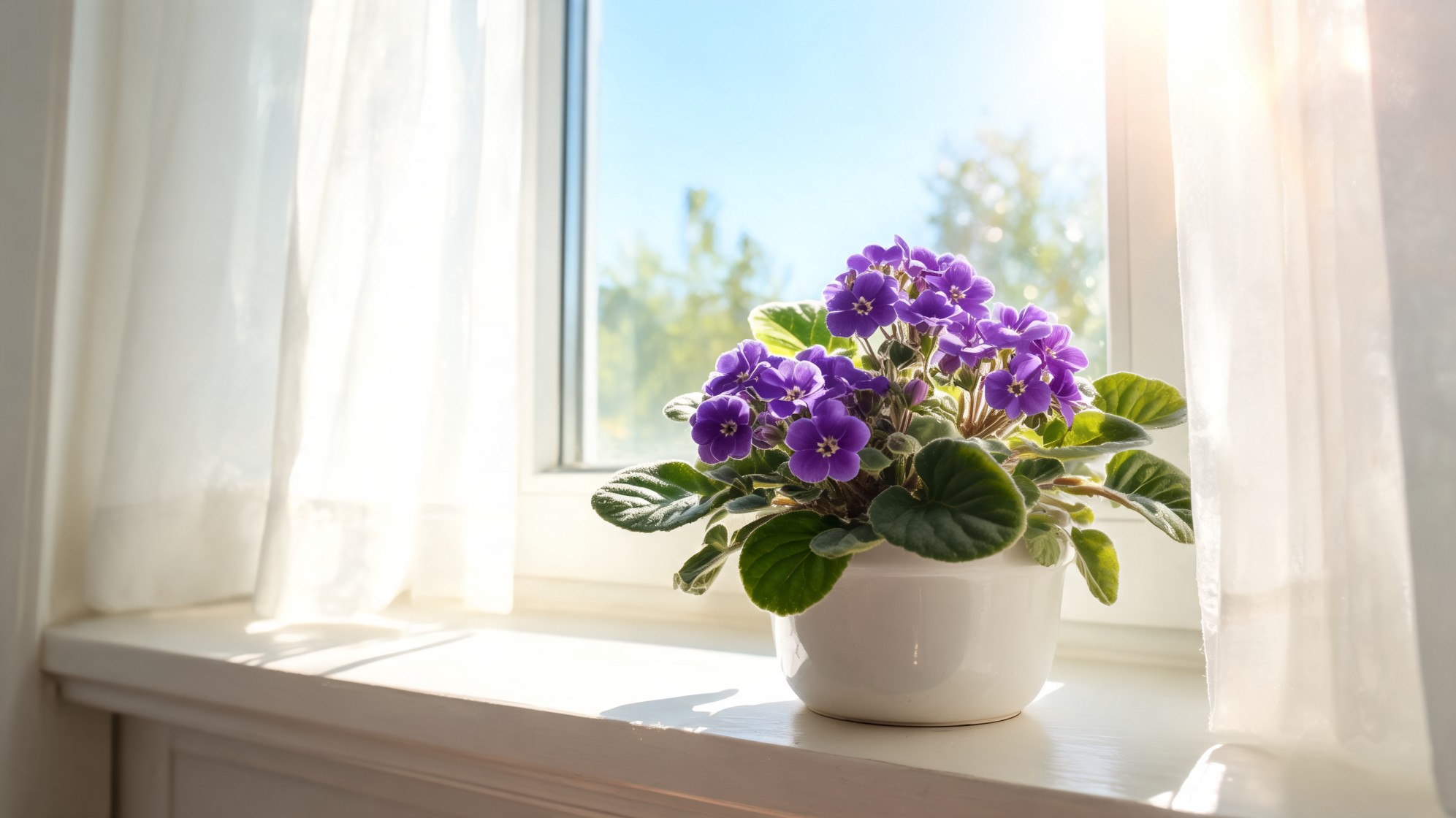
African violets usually grow and bloom better in small pots. They like being slightly rootbound, which means the roots fit snugly in the container. A pot that is too large can retain excess moisture around the roots, which can lead to root rot. Large pots may also encourage the plant to grow leaves rather than flowers.
A simple rule is to choose a pot that is about one-third the width of the plant’s leaf span. For example, if the leaves spread about 12 inches wide, a 4-inch pot is usually enough. Make sure the pot has drainage so extra water can escape after watering.
Temperature and Humidity Needs
African violets like steady indoor conditions. Sudden temperature changes or dry air can stress the plant, slow growth, and affect blooming.
| Care Need | Best Range or Method | What to Avoid |
|---|---|---|
| Temperature | Keep African violets between 65°F and 80°F | Cold drafts, air conditioners, and sudden temperature drops |
| Humidity | Aim for 40% to 60% humidity | Very dry air and misting the leaves |
| Humidity support | Use a pebble tray or humidifier near the plant | Letting water touch or sit on the foliage |
When the air stays warm, steady, and lightly humid, African violets are much easier to care for. Keep them away from drafty windows and vents, and avoid misting the leaves.
How to Fertilize African Violets
African violets bloom best when they get gentle, steady feeding. Use a balanced liquid fertilizer or one formulated for African violets.
Since their roots are delicate, dilute the fertilizer to half or quarter strength rather than using it at full strength. Feed during active growth, especially when the plant is producing new leaves or flowers.
Many growers feed lightly when they water, but it is still important not to let fertilizer salts build up in the soil. Flush the soil with plain water now and then, letting any excess water drain out completely.
Repotting once a year also helps refresh the soil, add new nutrients, and remove old buildup that may affect root health.
Pruning and Deadheading African Violets
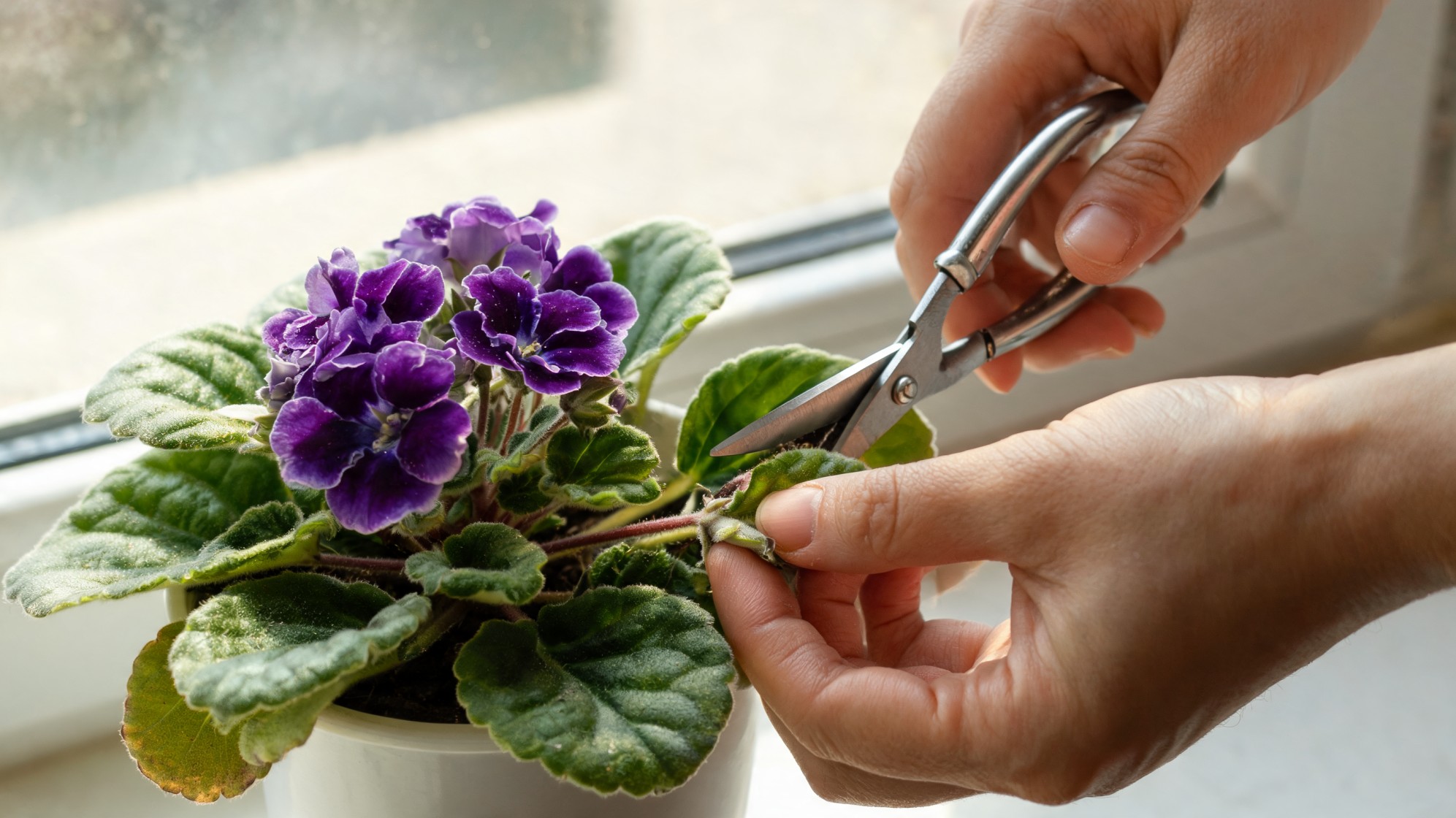
African violets do not need heavy pruning, but light cleanup helps them stay neat, healthy, and ready to bloom again. A few small trims can also improve airflow around the crown.
- Spent flowers: Remove faded blooms so the plant can put energy into fresh growth and new flowers.
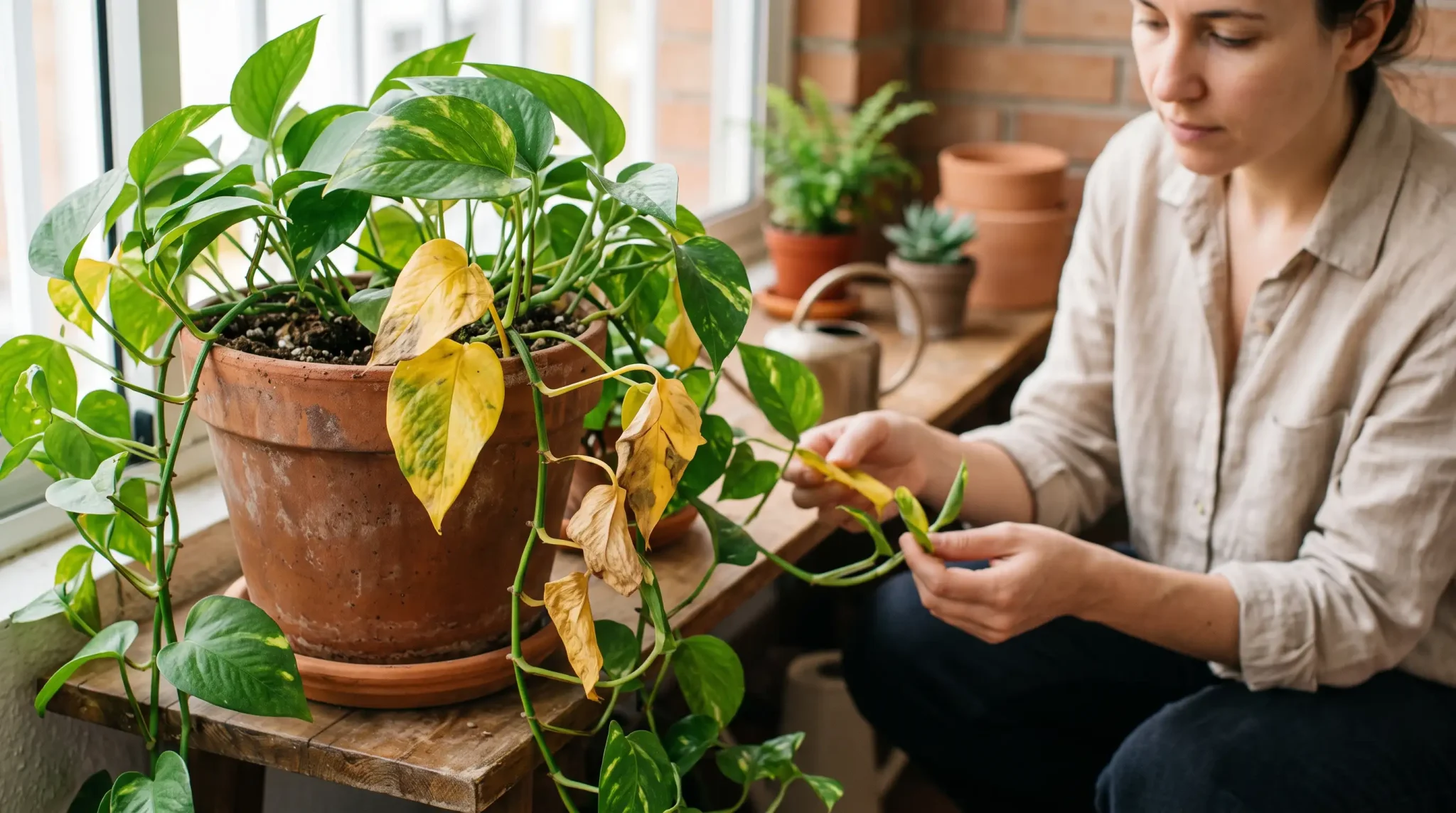
- Dead or yellow leaves: Cut off old leaves once they yellow, dry, or start to weaken.
- Damaged lower leaves: Remove broken, mushy, or spotted leaves near the base to keep problems from spreading.
- Clean crown: Keep the center of the plant open and free from dead bits, dust, or trapped moisture.
- Heavy pruning: Avoid cutting back too much unless you are reshaping the plant or repotting it.
Regular cleanup keeps your African violet looking tidy and helps reduce the risk of rot, pests, and disease.
African Violet Care by Season
African violets need the same basic care year-round, but small seasonal changes can affect light, watering, and growth. Adjusting your routine helps keep the plant steady through warmer and cooler months.
| Care Area | Spring and Summer | Fall and Winter |
|---|---|---|
| Light | Watch for stronger sunlight | Add grow lights if blooms stop |
| Watering | Water more often if the soil dries faster | Reduce watering if growth slows |
| Temperature | Keep away from harsh direct sun and heat stress | Protect from cold drafts |
| Feeding | Feed during active growth | Feed less if growth slows |
With a little seasonal care, African violets can stay healthy and bloom more often. Keep the light gentle, the soil lightly moist, and the plant away from sudden temperature changes.
Common African Violet Problems and Fixes
African violets usually show stress through their leaves, flowers, and soil. Once you know what each sign means, it becomes much easier to fix the problem before the plant gets worse.
- Yellow leaves: This can happen due to overwatering, older lower leaves, poor feeding, or insufficient light.
- Brown leaves: Often caused by underwatering, fertilizer burn, cold damage, or too much direct sun.
- Leaf spots: Usually caused by water sitting on the leaves or using water that is too cold.
- Drooping leaves: Can point to underwatering, overwatering, root rot, or cold shock.
- Root rot or crown rot: Often caused by soggy soil, poor drainage, or water sitting in the center of the crown.
- Powdery mildew: Improve airflow, remove affected leaves, and keep the foliage dry.
- Pests: Watch for mealybugs, aphids, and spider mites, especially around new growth and leaf joints.
Most African violet problems can be fixed by adjusting water, light, airflow, and temperature. Check the plant often so you can catch small issues early.
Frequently Asked Questions
How often should I water indoor African violets?
Water indoor African violets when the top inch of soil feels dry. Keep the soil lightly moist, not soggy. Use room-temperature water and let extra water drain fully. Bottom watering is often safest because it keeps water away from the soft leaves and crown.
Do African violets like full sun or shade?
African violets like bright, indirect light. Do not place them in full sun because strong rays can burn the leaves. Deep shade is also not ideal, as it can prevent blooming. A bright window with filtered light usually works best.
Are coffee grounds good for African violets?
Coffee grounds are not the best choice for African violets. They can retain too much moisture, disrupt soil balance, and increase the risk of root problems. Use a balanced African violet fertilizer instead. It gives cleaner, more reliable nutrients.
What is the fastest way to add nitrogen to soil?
The fastest way to add nitrogen is to use a diluted liquid fertilizer with nitrogen listed on the label. Apply it only as directed, and avoid overfeeding. For African violets, a gentle, balanced fertilizer is safer than strong nitrogen-heavy feeding.
To Sum Up
Good African violet care comes down to steady, thoughtful habits. When you give your plant bright indirect light, a small pot, airy soil, room-temperature water, and gentle feeding, you create the kind of balance it needs to grow and bloom well.
I like to treat African violets as plants that respond clearly when you pay attention. Drooping leaves, pale growth, dry soil, or fewer flowers all tell you something. Once you learn those signs, care feels less like guesswork.
Keep the leaves dry, protect the crown from rot, and adjust watering as the seasons change. You do not need a complex routine. You just need consistency.
With time, your African violet can become a long-lasting indoor plant that brings soft color, healthy growth, and fresh blooms year after year.