When homeowners and property managers look for a fence that delivers privacy without sacrificing style or durability, aluminum privacy fence panels are increasingly the top choice. They offer the clean, modern appearance of metal with none of the rust, warping, or heavy maintenance associated with traditional steel or wood fencing.
This guide breaks down everything you need to know before buying aluminum privacy fence panels from design options and material quality to installation factors and long-term performance so you can choose the right solution with confidence.
What Are Aluminum Privacy Fence Panels?
Aluminum privacy fence panels are solid or semi-private fencing sections designed to block visibility while providing long-lasting perimeter protection. Unlike picket-style aluminum fencing that allows airflow and visibility, privacy panels use tightly spaced or interlocking slats to create a visual barrier.
They are commonly used for:
- Backyard privacy
- Pool enclosures
- Commercial property boundaries
- Noise reduction
- Wind shielding
Because aluminum is naturally corrosion-resistant and lightweight, these panels outperform many traditional fencing materials in both longevity and ease of installation.
Why Aluminum Is Ideal for Privacy Fencing
Metal fencing is often associated with strength, but aluminum adds versatility that steel cannot match. Aluminum privacy fence panels are engineered for outdoor exposure without requiring constant upkeep.
Key advantages include:
1. Rust Resistance
Aluminum does not oxidize the way steel does, meaning it will not rust even in wet, coastal, or snowy climates.
2. Lightweight but Strong
Aluminum is much lighter than steel, making installation faster while still providing excellent structural integrity.
3. No Warping or Rotting
Unlike wood or vinyl, aluminum remains dimensionally stable in heat, cold, and humidity.
4. Low Maintenance
No staining, sealing, or repainting is required, just occasional washing.
5. Modern Appearance
Aluminum panels offer clean lines and contemporary styling that suits both residential and commercial spaces.
Common Types of Aluminum Privacy Fence Panels
Not all aluminum privacy fencing is built the same. The best option depends on how much privacy, airflow, and durability you need.
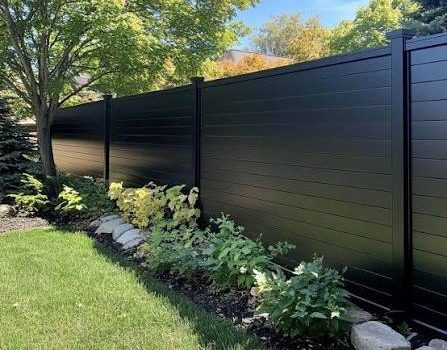
1. Horizontal Slat Panels
These use flat or tubular slats installed horizontally between posts. They provide a sleek, modern look and moderate airflow while still blocking direct views.
Best for:
Modern homes, patios, and decorative boundaries.
2. Vertical Privacy Panels
Vertical aluminum panels resemble traditional fencing but with solid coverage.
Best for:
Maximum privacy, property lines, and commercial security.
3. Louvered Aluminum Panels
These angled slats block direct visibility but allow airflow.
Best for:
Wind-prone areas, pool enclosures, and privacy screens.
4. Slide In Aluminum Panels
Slats fit tightly together with no gaps.
Best for:
Noise reduction, full visual privacy, and high-end installations.
Aluminum vs Other Privacy Fence Materials
When comparing fencing options, aluminum privacy fence panels consistently outperform many alternatives.
|
Material |
Privacy |
Durability |
Maintenance |
Appearance |
|---|---|---|---|---|
|
Wood |
High |
Low–Medium |
High |
Traditional |
|
Vinyl |
High |
Medium |
Medium |
Limited styles |
|
Steel |
High |
Very High |
Medium |
Industrial |
|
Aluminum |
High |
Very High |
Low |
Modern & versatile |
Aluminum offers the best balance between long-term durability, cost efficiency, and visual appeal.
Important Specs That Affect Longevity
Not all aluminum fence panels are created equal. Pay attention to these technical details when choosing your panels.
Aluminum Grade
Look for fencing made from 6000-series aluminum, which offers superior strength and corrosion resistance.
Wall Thickness
Thicker slats resist denting, bending, and wind damage better than thin stamped panels.
Powder Coating
A high-quality powder-coated finish protects against:
- UV fading
- Chipping
- Moisture penetration
- Scratching
This coating also determines how well your aluminum privacy fence panels will maintain their color over time.
Post Size and Anchoring
Strong fence panels are useless if the posts are weak. Larger aluminum posts with internal reinforcement increase wind resistance and panel stability.
How Aluminum Privacy Fence Panels Handle Weather
One of the biggest reasons buyers choose aluminum is its ability to handle extreme climates.
- Heat: Will not warp, crack, or soften
- Cold: Does not become brittle
- Rain & Snow: No rust or rot
- Salt Air: Ideal for coastal environments
- High Wind: Properly installed panels resist bending and blow-outs
Unlike wood or vinyl, aluminum does not expand and contract significantly, which means fewer repairs over time.
Installation Considerations
Aluminum privacy fence panels are easier to install than many other fencing systems, but quality installation still matters.
Panel systems:
Pre-assembled panels are faster but limit layout flexibility.
Modular slats:
Allow you to customize height, spacing, and airflow.
Most systems can be installed using:
- Concrete-set posts
- Surface-mounted posts for decks or hardscapes
Professional installation ensures proper alignment, spacing, and anchoring critical for wind resistance and visual appeal.
Where Aluminum Privacy Fence Panels Make the Most Sense
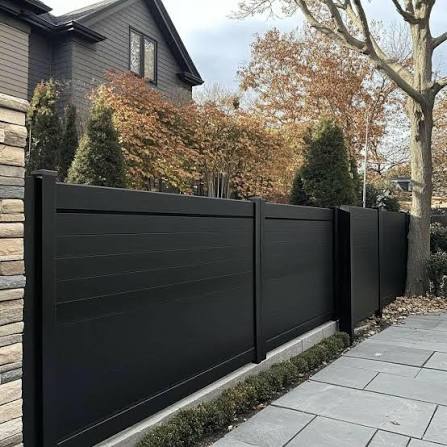
These panels are ideal when you need:
- Long-term outdoor durability
- A modern or architectural look
- Maximum privacy with minimal upkeep
- HOA-friendly clean designs
- Pool or yard enclosures
- Noise or wind reduction
They are especially popular for urban homes, contemporary properties, and commercial facilities where appearance and performance must coexist.
Cost vs Long-Term Value
While aluminum privacy fence panels cost more upfront than wood or vinyl, they are far cheaper over their lifespan.
You avoid:
- Rot replacement
- Repainting
- Rust repairs
- Warping and cracking
Over 10–20 years, aluminum becomes one of the most cost-effective privacy fencing options available.
Final Thoughts
Choosing the right aluminum privacy fence panels is about balancing privacy, durability, and aesthetics. Whether you want sleek horizontal slats, solid vertical panels, or breathable louvers, aluminum provides a long-lasting, low-maintenance solution that outperforms traditional fencing materials.
By understanding panel styles, material quality, and installation factors, you can invest in a fence that protects your space, enhances your property, and stays beautiful for decades.