For much of the past decade, interior design favoured restraint. Think seamless surfaces, minimal grout lines, and an emphasis on continuity over contrast. That instinct hasn’t disappeared, but it’s being joined by something else: a renewed appetite for texture, craftsmanship and subtle variation within otherwise pared-back spaces.
Rather than a return to highly decorative interiors, designers are introducing detail in quieter ways. Mosaic tiles are particularly suited to this shift. Their smaller scale creates texture and rhythm even when the colour palette stays restrained, giving a space depth without asking it to make a louder statement.
1. Why Smaller Tile Formats Create a Different Visual Effect
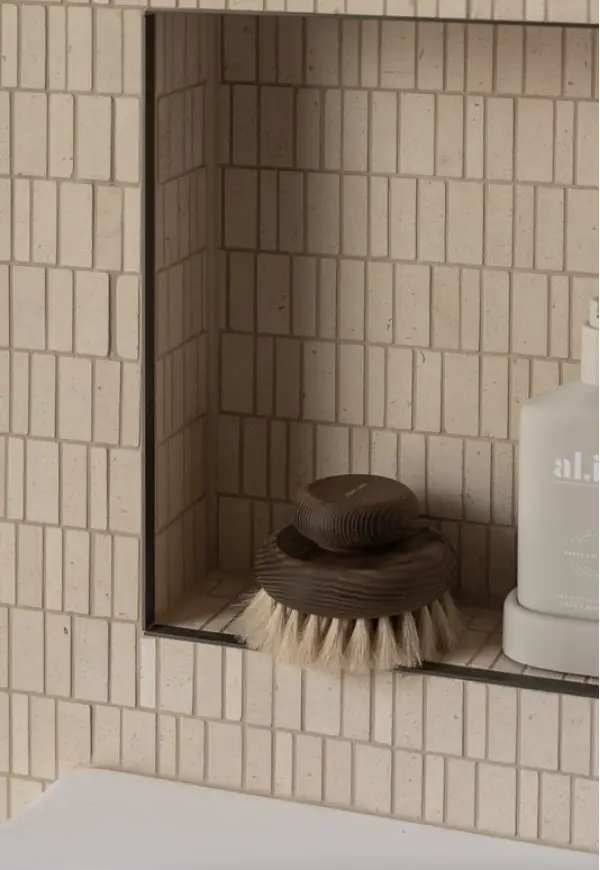
Scale changes how a surface reads long before colour or finish come into play. Large-format tiles minimise grout lines and read as a single continuous plane, which is exactly why they’ve dominated interior design over the past several years. Mosaics do the opposite: their repeated lines and smaller units introduce a visible rhythm and a level of surface texture that a single large tile can’t replicate.
This is the core design principle worth understanding, rather than treating mosaics as a passing trend. When an interior needs additional depth but doesn’t call for another colour or material, format is often the more elegant lever to pull. A mosaic surface adds that layer of complexity while staying entirely within the same tonal family as everything around it.
2. Using Mosaic Tiles to Highlight Rather Than Dominate
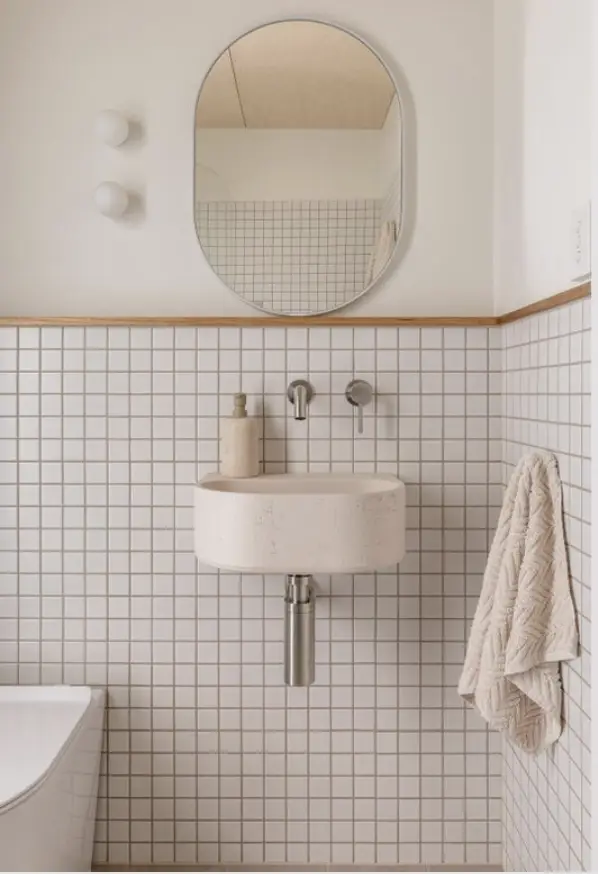
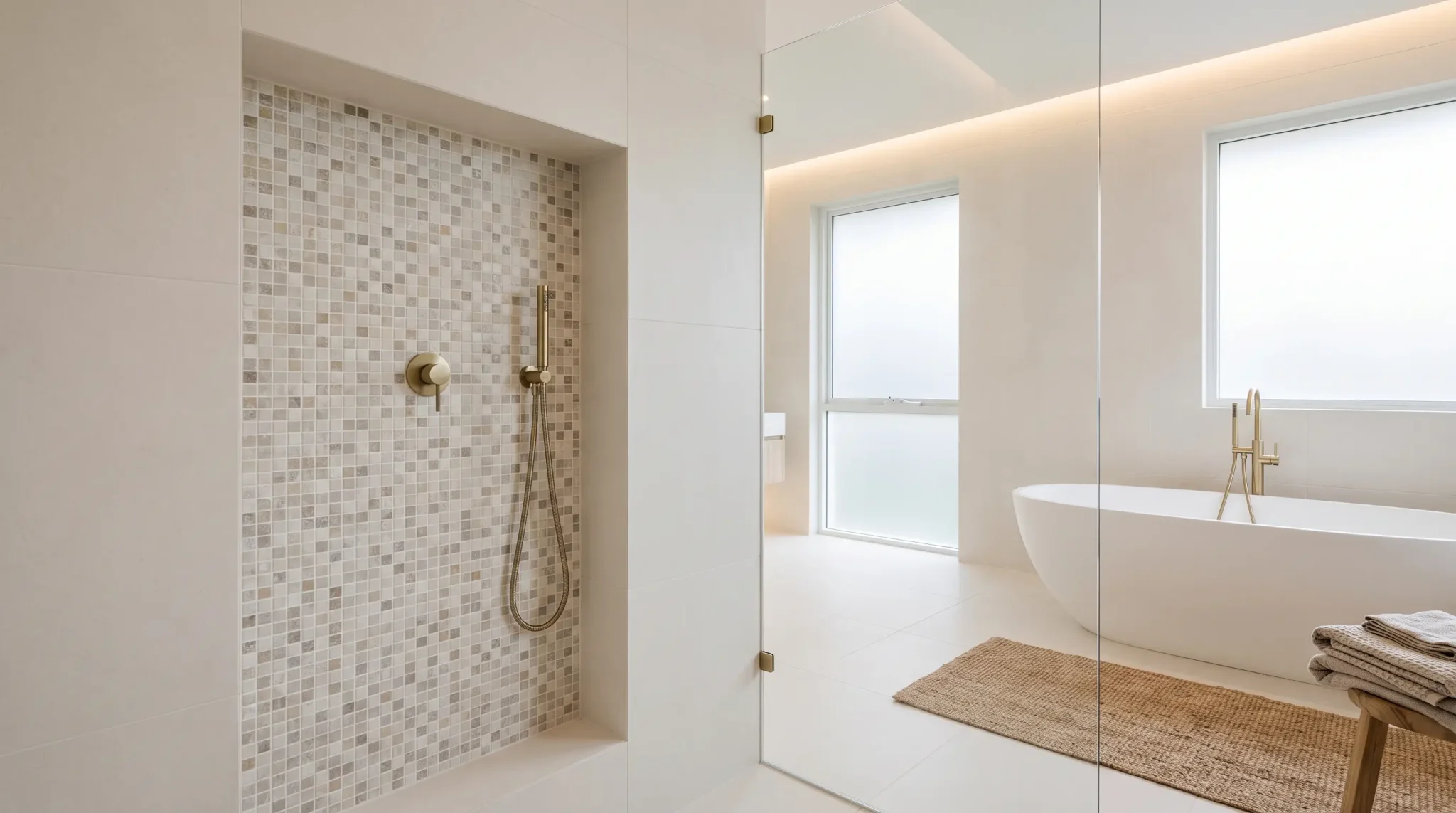
The mosaic feature wall, once the default application, has largely given way to a more restrained option. Rather than covering an entire surface, designers are now reaching for mosaic in smaller, more concentrated doses: a shower niche, a splashback, a section of vanity wall, and a bath surround.
Australian tapware and tile brand ABI Interiors reflects this shift in its mosaic tiles range. Smaller formats can be applied selectively within contemporary bathrooms and kitchens, introducing texture and variation to niches, splashbacks and wet areas without the mosaic becoming the dominant material in the room.
3. Designing Around Curves and Architectural Details
Mosaic tiles offer a functional advantage that’s easy to overlook amid the discussion of aesthetics. Because each piece is small, mosaic sheets can follow curves, rounded forms and complex geometry that a larger-format tile can’t accommodate without extensive cutting.
Curved shower walls, rounded kitchen islands, columns and bath surrounds all benefit from this flexibility. Where a large tile would require mitred joins or awkward cuts to wrap around a rounded form, mosaic follows the curve directly, which is part of why the format remains relevant well beyond its decorative appeal.
4. Material Matters as Much as Pattern
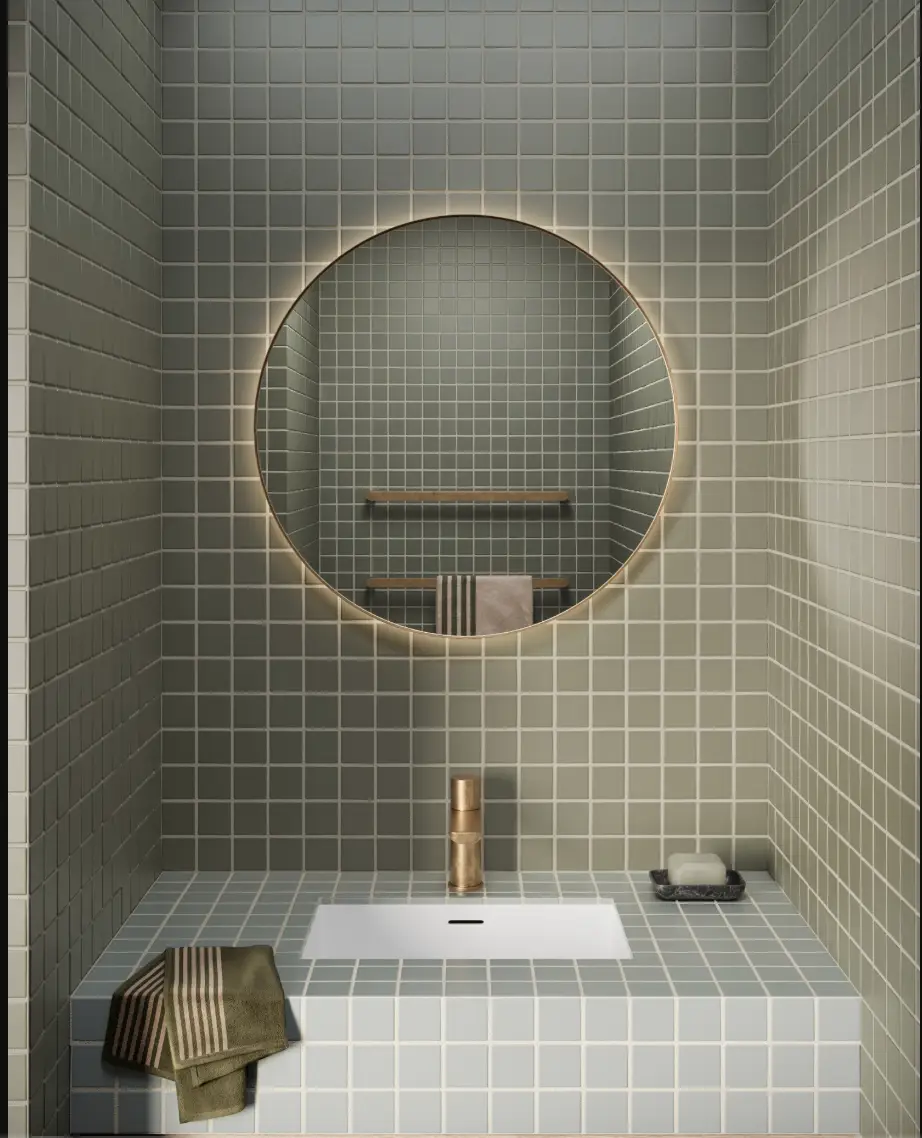
The character of a mosaic depends on more than its shape or layout. Natural stone introduces tonal variation and organic texture that shifts from piece to piece, while more uniform materials create a cleaner, more controlled surface. Grout colour changes the read again: a closely matched grout allows the individual pieces to blend into a single textured plane, while a contrasting grout makes each piece, and the pattern they form together, far more prominent.
Across its broader ABI tile collection, ABI Interiors brings together mosaic, natural stone and handmade tile finishes, giving designers the option to vary scale and texture while maintaining a cohesive material direction throughout a project.
5. Pairing Mosaic Tiles With Larger Formats
Mosaic rarely needs to work alone. In many of the most successful applications, it sits alongside a larger-format tile in a closely related tone or material, rather than introducing an entirely new colour into the space. A large neutral tile might run across the majority of a bathroom floor and wall, while a coordinating mosaic defines the shower niche or the vanity splashback.
This pairing reinforces the broader point that detail doesn’t require more colour or more materials. It simply requires a shift in scale within an established palette.
6. Where Mosaic Tiles Work Best
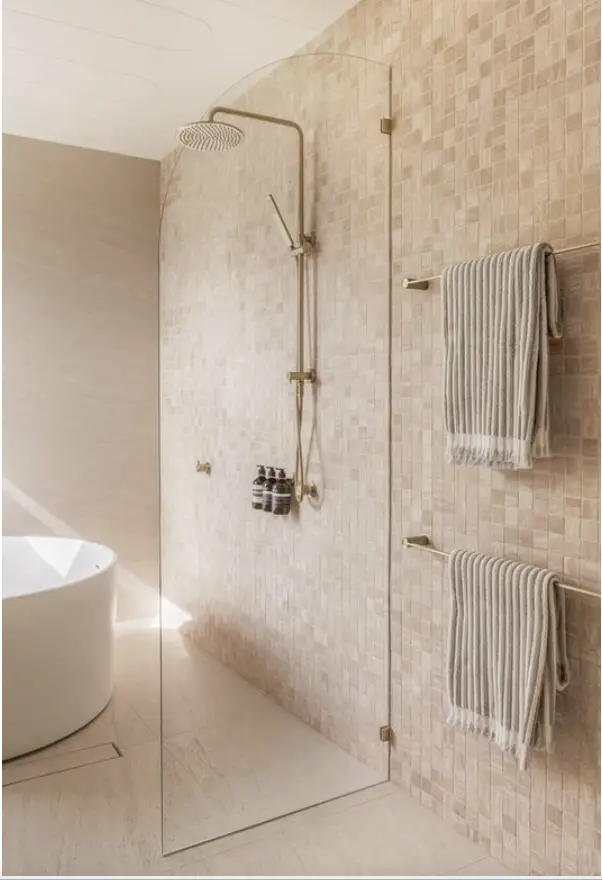
In practice, mosaic tends to perform best in bathrooms and showers, kitchen splashbacks, powder rooms, laundries, and tighter architectural moments such as niches and curved surfaces. Selected flooring applications can work too, particularly where a change in format helps signal a transition between zones.
Suitability always comes down to the individual tile, the substrate it’s being applied to, wet-area requirements, and the installation method being used, so it’s worth treating each application on its own terms rather than assuming one mosaic will suit every space equally.
7. Designing With Detail Without Creating Visual Noise
Mosaic tiles work best when they’re treated as part of the overall material palette, rather than as an isolated decorative statement. Their scale, grout lines, texture, and placement should relate to the surrounding materials, not compete with them.
The most successful applications often use mosaic as part of a broader material story, allowing changes in scale and texture to create interest while the overall palette remains cohesive throughout the home.
A Smaller Scale With a Bigger Role
The renewed relevance of mosaic tiles isn’t really about a return to decorative interiors. It reflects something more specific: a greater appreciation for material detail, craftsmanship and the kind of texture that rewards a second look rather than announcing itself immediately. Used with intention, a smaller tile format can carry a larger role in how a space is ultimately read.