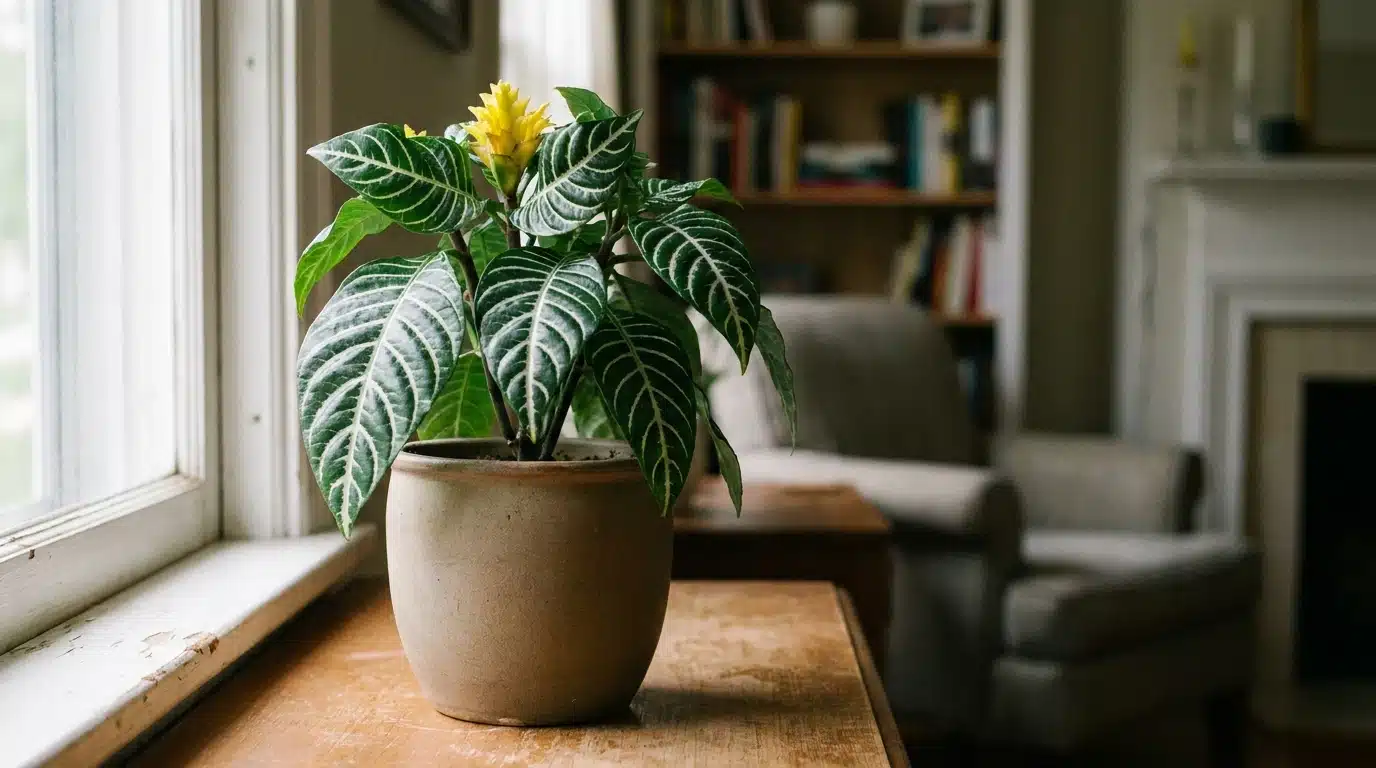
A zebra plant brings bold green leaves and bright yellow flower bracts to your space. It needs consistent conditions to stay healthy. Good zebra plant care starts with light, water, humidity, warmth, and drainage.
When one condition changes too quickly, the leaves often show signs of stress. Checking the soil and leaves before making changes helps you understand what the plant needs. A fixed schedule may miss changes in moisture, light, or seasons.
Proper care includes watering, light, humidity, soil, feeding, pruning, and seasonal adjustments. Common leaf problems can help you identify issues and choose a simple response.
The goal is to keep zebra plant care practical without making the routine complicated. Small adjustments often work better than frequent changes.
What Is a Zebra Plant?
The zebra plant, or Aphelandra squarrosa, is a tropical plant native to Brazil. It is best known for deep green leaves marked by bold white veins.
In its natural setting, the plant grows in warm, humid conditions with filtered light. These conditions explain why it prefers steady moisture, warmth, and higher humidity indoors.
Its broad leaves can lose moisture quickly when the air becomes dry. The fine roots need evenly moist soil, but they can suffer when water sits around them for too long.
Mature plants may also produce bright yellow flower bracts when light and general care stay consistent. Understanding these natural traits makes care easier because you can match your routine to what the plant needs.
What Does a Zebra Plant Need to Grow Well
A zebra plant reacts quickly when its surroundings change. Instead of treating every symptom separately, look at the whole care routine. The points below give you a simple way to judge what the plant needs without repeating each care step.
- Consistency: Keep its main growing conditions steady from day to day.
- Observation: Watch the leaves, stems, and soil for early signs of stress.
- Small changes: Adjust one care factor at a time so you can judge the response.
- Root health: Pay attention to drainage because healthy roots support the whole plant.
- Seasonal changes: Expect watering and feeding needs to shift as growth slows or speeds up.
These habits make zebra plant care easier to manage as the plant grows. The next section explains the main light, watering, humidity, and temperature needs in detail.
How to Care for a Zebra Plant
Daily zebra plant care is easier when you focus on a few steady conditions. Check the soil, leaves, light, and room temperature before making changes. Keep the plant in bright, indirect light and avoid moving it often. Humidity also matters because dry air can affect the leaves.
The sections below explain how to manage light, watering, humidity, and temperature in a simple, practical way.
1. Provide Bright, Indirect Light
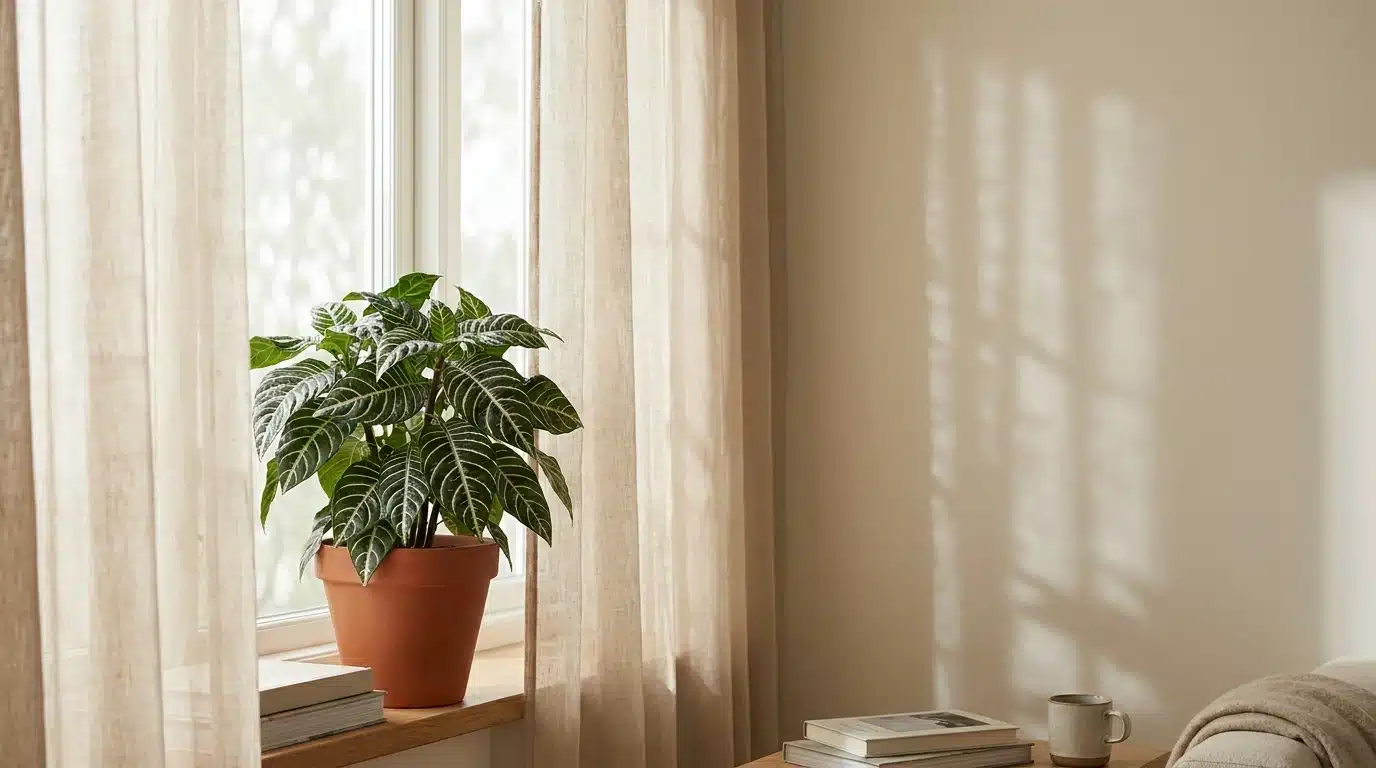
Bright, indirect light supports strong leaves and healthy growth. Harsh direct sun can leave pale or dry patches on the foliage. Use these signs to judge the light level.
- Too strong: Brown marks or faded patches may appear after direct sun.
- Too weak: Stems may stretch, and new leaves can grow slowly.
- Good position: Place the plant near a bright window with filtered light.
Move it gradually if the light changes. Sudden shifts can stress leaves adapted to another spot.
2. Water When the Soil Starts to Dry
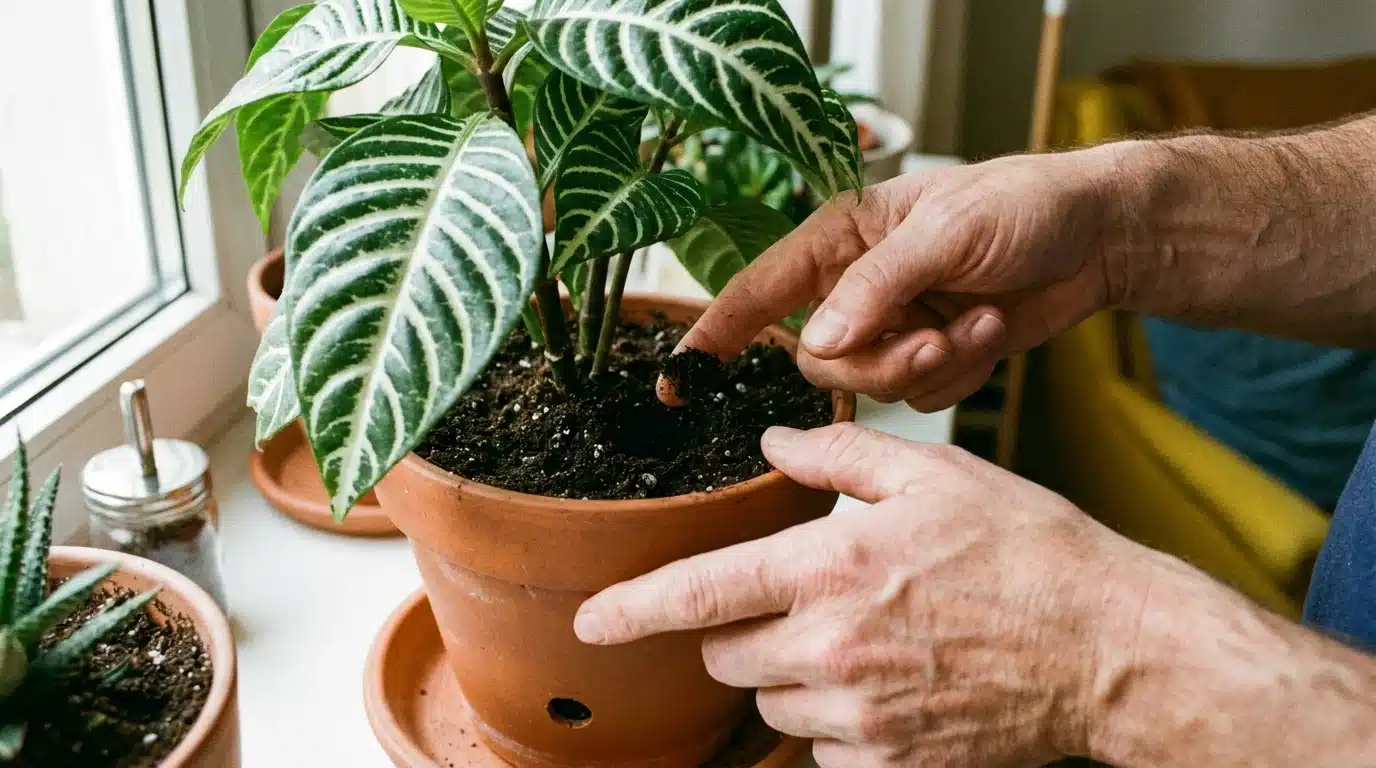
Watering works best when the soil stays evenly moist without becoming soaked. Check the soil moisture before adding more water. Use these signs to guide your timing.
- Topsoil: Water when the surface starts losing moisture, before the mix dries through.
- Drainage: Let extra water leave through the drainage holes.
- Saucer: Empty standing water after the pot drains.
- Season: Reduce watering as growth slows, but never let the soil dry completely.
This approach keeps root moisture steadier than a fixed schedule.
3. Keep Humidity High
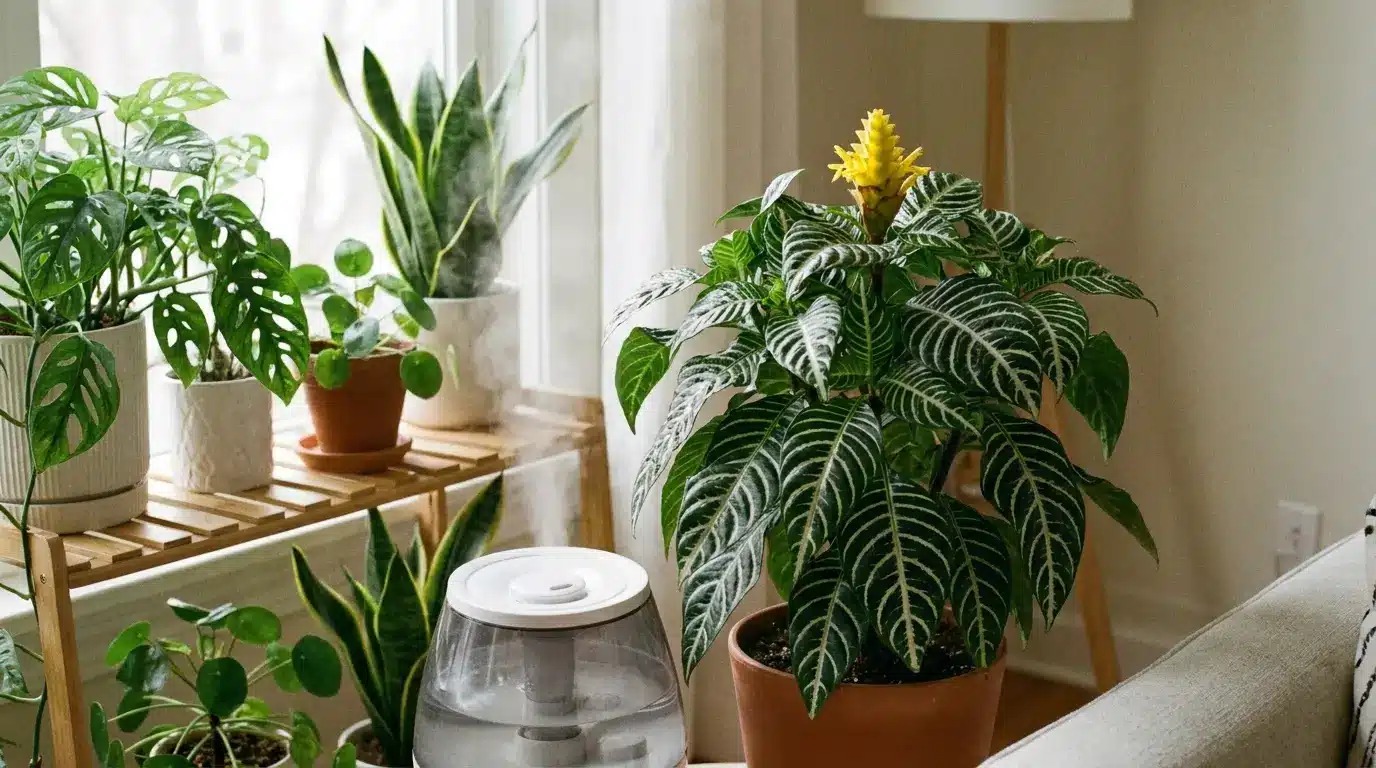
Humidity matters because broad leaves lose moisture quickly. Dry air can cause brown edges and weaker new growth. These options can help raise humidity.
- Humidifier: Use one nearby to keep humidity more consistent in dry rooms.
- Plant grouping: Keep several plants nearby to hold more moisture in the air.
- Airflow: Keep the plant away from heating vents and strong fans.
Watch new leaves after making a change. Healthy new growth gives a better signal than old leaf damage.
4. Maintain Warm, Stable Temperatures
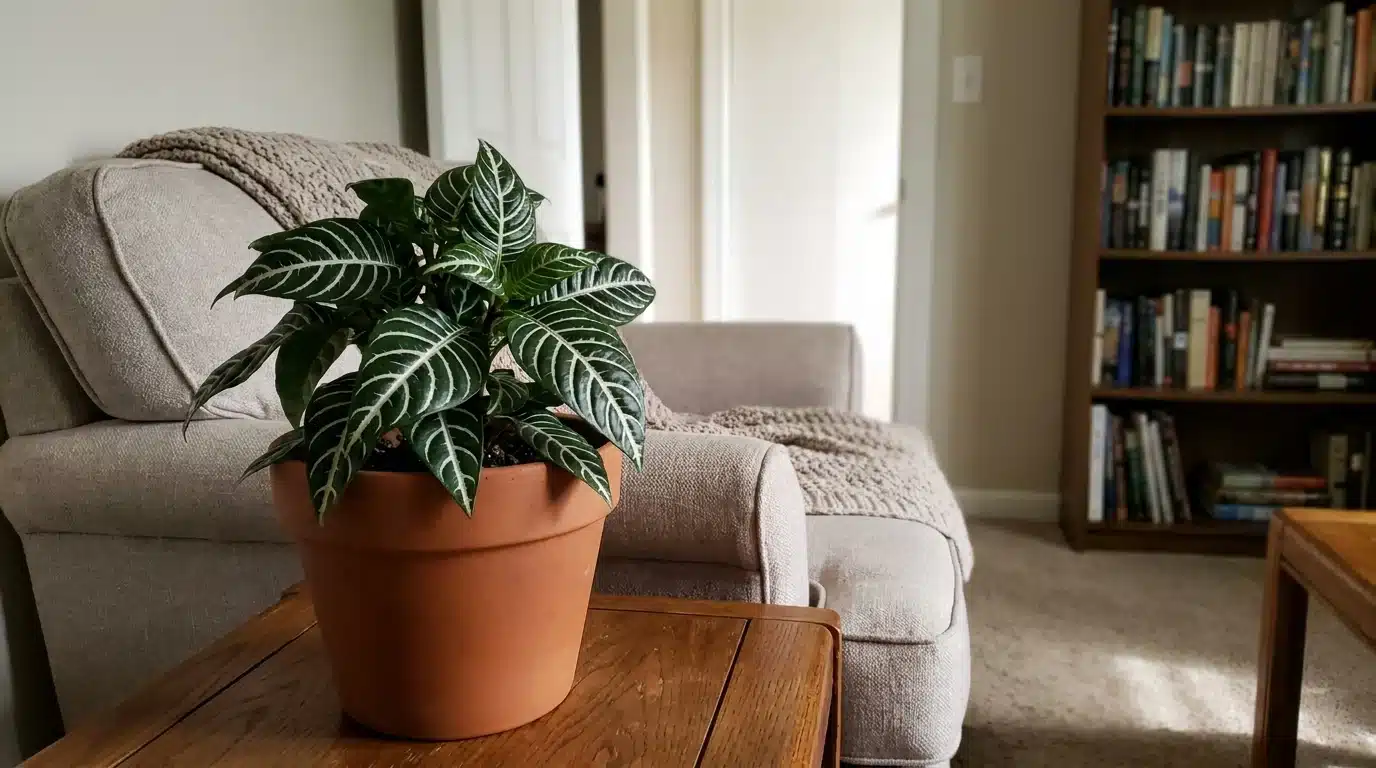
Zebra plants prefer warm, stable conditions and can react badly to cold drafts. Keep temperatures above about 65°F (18 °C). Check these common trouble spots.
- Cold windows: Keep leaves away from cold glass during winter.
- Cooling vents: Avoid direct airflow from air conditioners.
- Heating vents: Hot, dry air can lower humidity around the leaves.
- Room changes: Avoid moving the plant between very different temperatures.
Once you find a suitable spot, keep the plant there when possible.
Choose the Right Soil and Pot
The right soil should hold some moisture while letting extra water drain. Heavy soil can keep the roots wet for too long. The pot also affects how quickly moisture leaves the root area. Use the table below when choosing soil and a container.
|
Area |
What to do |
Why it matters |
|---|---|---|
|
Soil |
Use well-draining houseplant potting mix with added perlite. |
It keeps the mix airy while still holding some moisture. |
|
Pot |
Choose a container with drainage holes. |
Extra water needs a clear way to leave. |
|
Size |
Move up only one pot size when repotting. |
Extra soil can stay wet for longer. |
|
Repotting |
Repot when roots crowd the pot or reach drainage holes. |
Fresh soil and added space give the roots room to grow. |
Good soil and drainage make watering easier to control. They also reduce excess moisture around the roots.
Common Zebra Plant Problems and How to Fix Them
Care problems often appear first through changes in the leaves. Brown edges, yellowing, drooping, and leaf drop can point to moisture, light, or temperature issues.
I recommend checking the soil and recent care changes before reacting. Look at humidity, drainage, airflow, and signs of pests as well. The sections below explain the likely cause and the best response for each common symptom.
1. Brown or Crispy Leaves
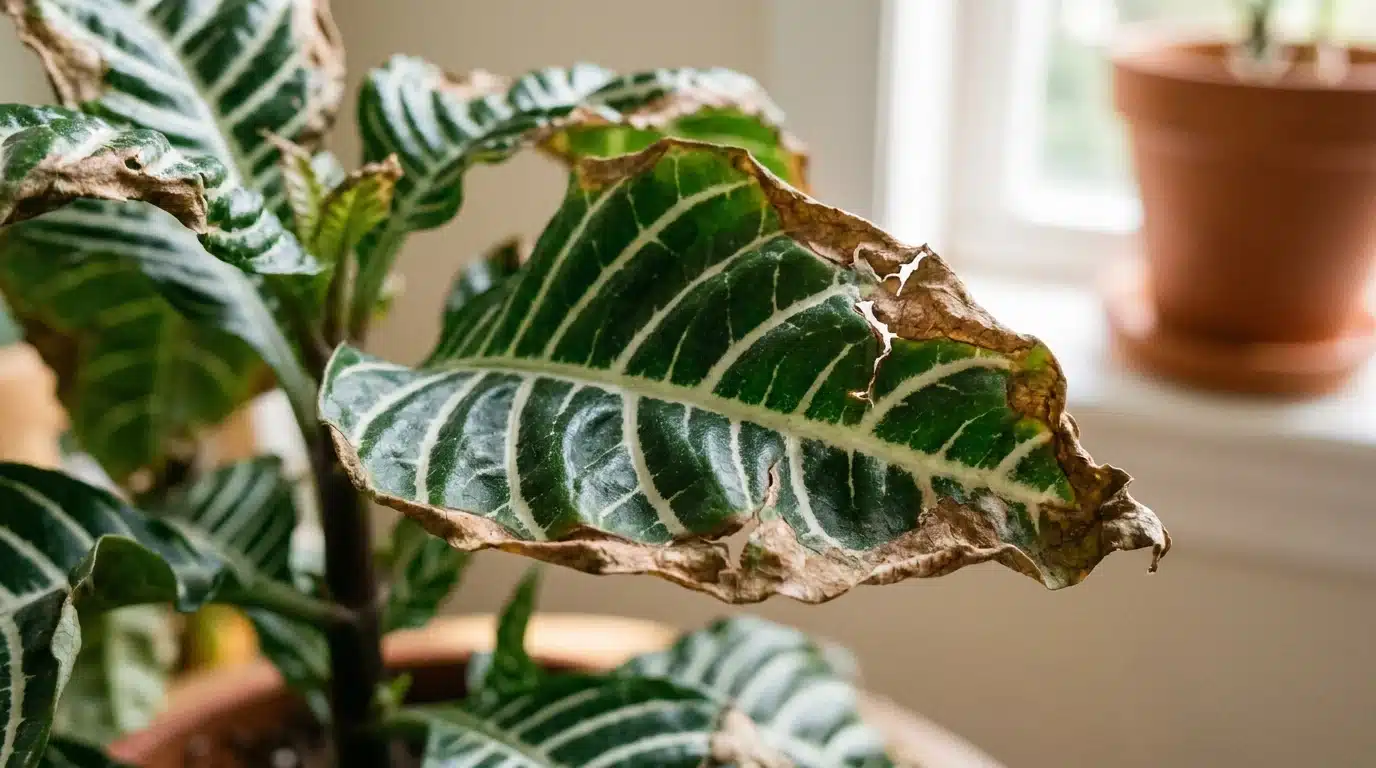
Brown or crispy edges often point to dry air, uneven moisture, or harsh direct sun. Check the growing conditions before trimming leaves. Start with these likely causes.
- Problem: Brown edges or dry patches appear on the leaves.
- Solution: Check humidity, watering habits, and direct sunlight.
Keep humidity steady and avoid letting the soil dry out too much. Move the plant away from strong sunlight if needed. Old brown areas will not recover, so judge progress by healthy new growth.
2. Yellow Leaves
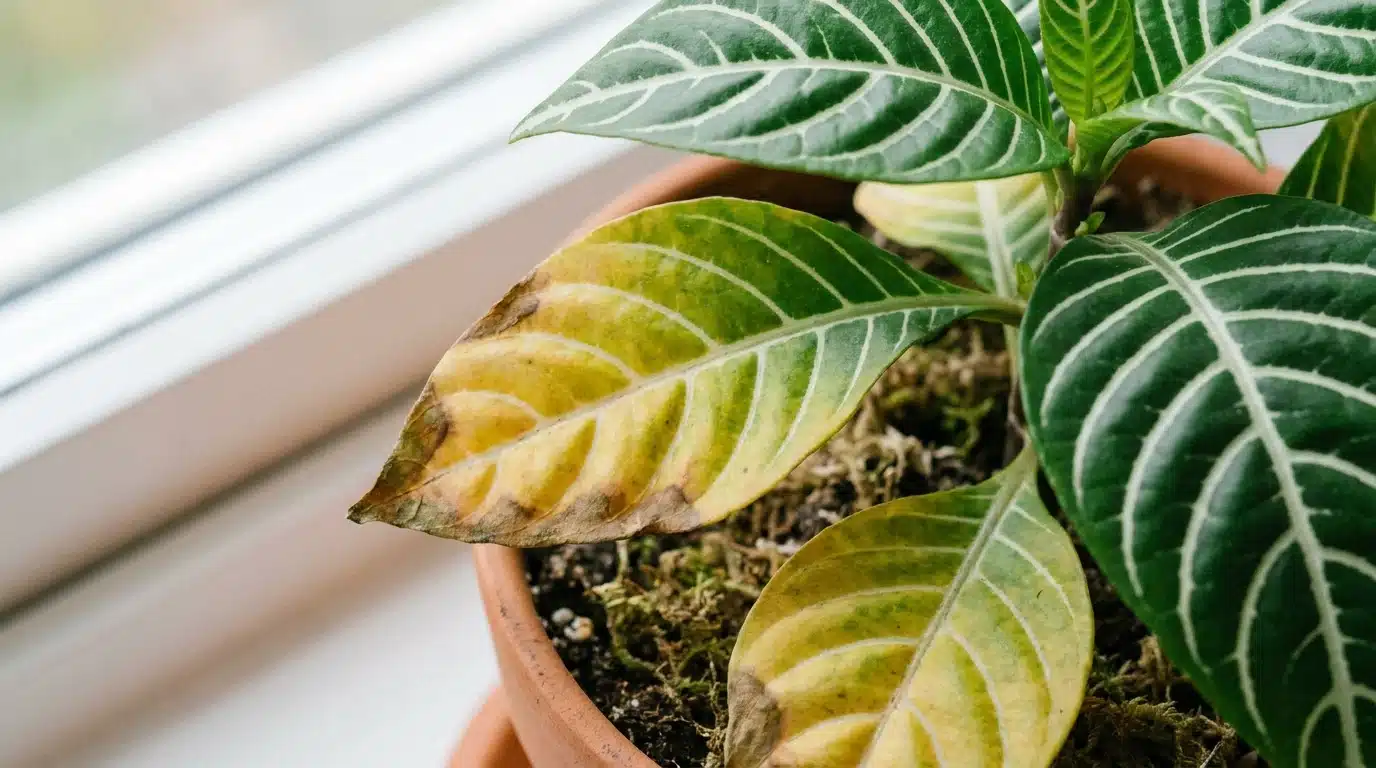
Yellow leaves often point to soil that stays wet too long, though one older lower leaf may fade naturally. Check moisture first. Use these signs to narrow the cause.
- Problem: Several leaves turn yellow or feel soft.
- Solution: Check soil moisture, drainage holes, and standing water.
Let wet soil drain before watering again. Make sure the pot can release extra water freely. If yellowing continues across several leaves, inspect the roots and review how often you water.
3. Drooping or Falling Leaves
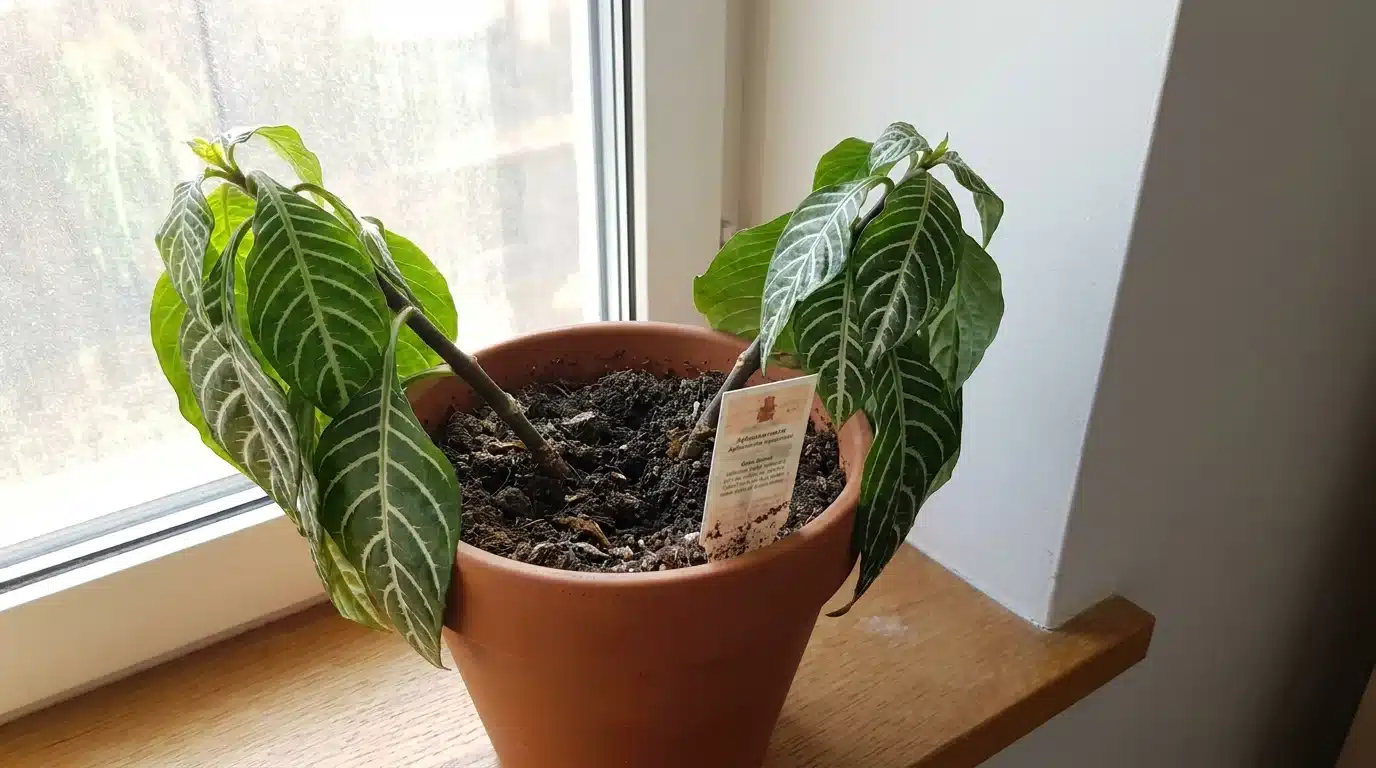
Drooping or falling leaves can come from dry soil, wet roots, cold air, or a sudden move. The symptom has several causes. Check these areas before adding water.
- Problem: Leaves become limp, droop, or begin falling.
- Solution: Check soil moisture, temperature, and recent location changes.
Feel the soil first, then think about recent changes around the plant. Correct one likely cause at a time. This helps you see what the plant responds to without making the issue harder to trace.
4. Common Pests
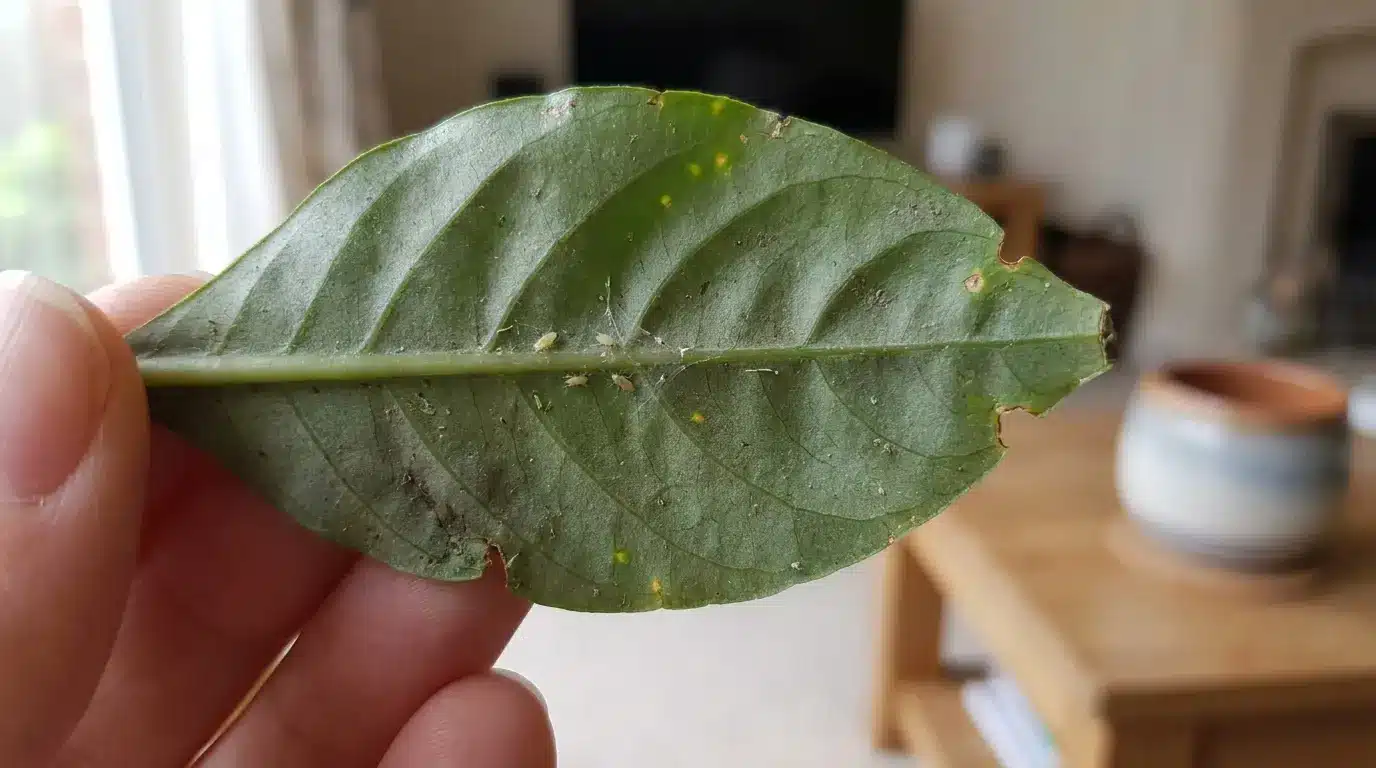
Spider mites, mealybugs, and aphids can affect zebra plants. Regular checks, suitable soil, and careful watering make zebra plant care easier. Look closely at leaves and stems.
- Problem: You see webbing, pale spots, sticky residue, or small insects.
- Solution: Separate the plant and treat the pests early.
Check both sides of each leaf and around stem joints. Gently remove visible pests before using a suitable houseplant treatment. Keeping the plant apart from others can reduce the chance of pests moving to nearby plants.
Feeding, Pruning, and General Maintenance
Feeding, pruning, and basic upkeep support healthy growth once light, water, and humidity are stable. These tasks should follow the plant’s condition.
- Feeding: Feed during active spring and summer growth. Use a balanced houseplant fertilizer as directed.
- Pruning: Trim long or weak stems when needed. Cut above a healthy leaf node.
- Faded flowers: Remove spent flower growth after the bracts finish. Use clean scissors around nearby stems.
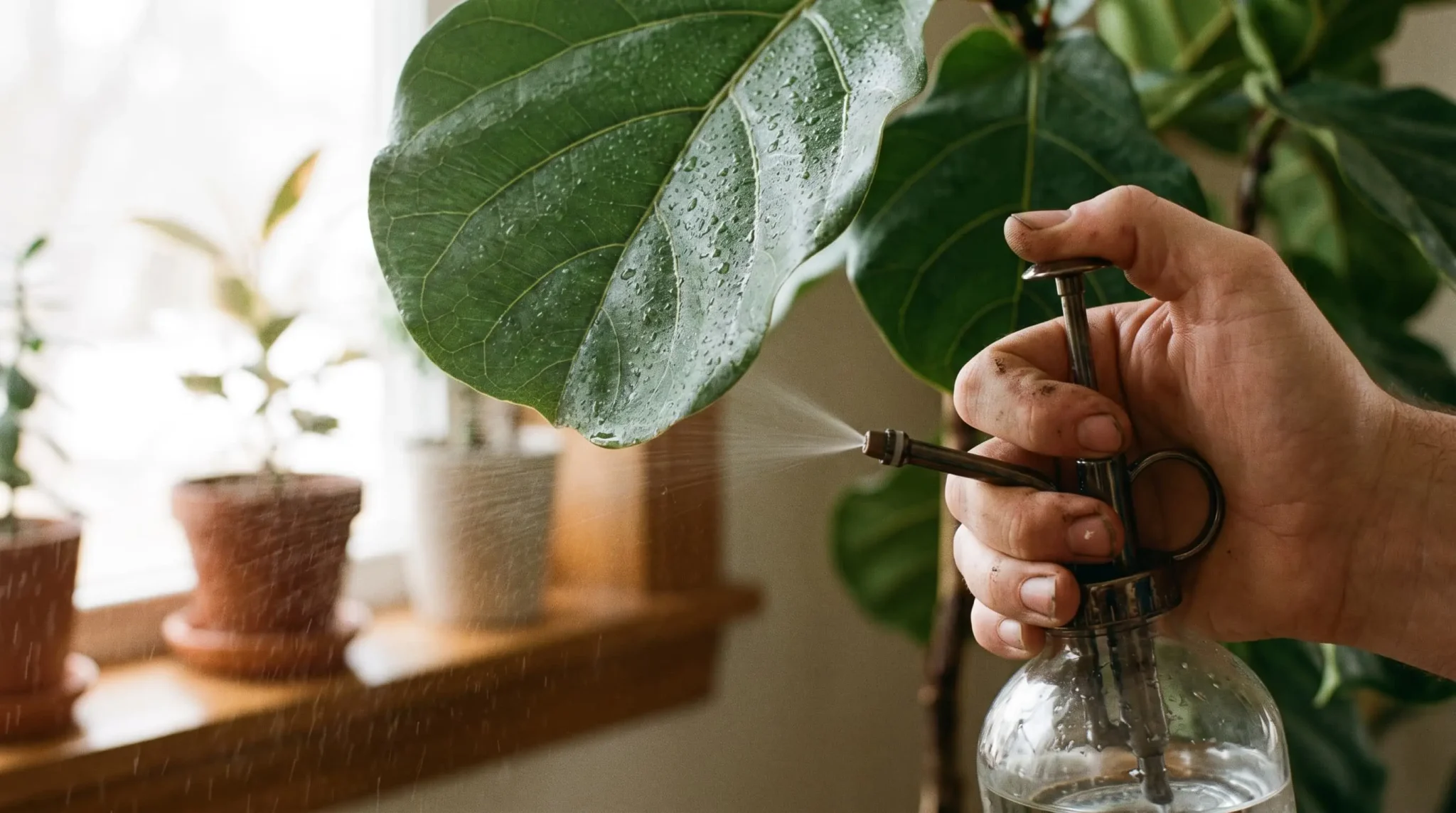
- Leaf cleaning: Gently wipe dusty leaves with a damp cloth. Clean leaves can take in light more easily.
- Repotting: Repot when roots crowd the container. Move up one pot size and use fresh soil.
Simple maintenance is usually enough. Avoid feeding or pruning when the plant is already stressed.
How to Adjust Care by Season
Seasonal changes can affect how quickly soil dries, how much light reaches the plant, and how fast new growth appears. Small routine changes can help. Use this table as a seasonal reference.
|
Season |
Common change |
Care response |
|---|---|---|
|
Spring |
New growth becomes more active. |
Check moisture more often and begin feeding if growth is clear. |
|
Summer |
Warm rooms may dry soil faster. |
Watch moisture and protect leaves from harsh sun. |
|
Fall |
Growth may begin slowing. |
Reduce feeding and watch how long the soil takes to dry. |
|
Winter |
Heating dries air, and windows can feel cold. |
Raise humidity and keep the plant away from drafts. |
Let the plant’s condition guide timing. Seasonal care should support its current growth pattern rather than follow dates alone each year.
How to Encourage a Zebra Plant to Bloom
A zebra plant may produce yellow flower bracts once it reaches maturity and has enough healthy growth. Blooming is not always immediate, even when the plant looks healthy. Focus on these factors instead of repeating the daily care routine.
- Plant maturity: Young plants may need more time before they are ready to flower.
- Active growth: New leaves and stems show that the plant has enough energy for flowering.
- Feeding timing: Apply fertilizer during active growth rather than during slower periods.
- Post-bloom pruning: Remove faded bracts and weak growth after flowering ends.
- Recovery time: Allow the plant to regain strength before expecting another bloom.
A healthy plant may not flower every season. Strong leaves and steady new growth are still good signs that your routine is working.
Frequently Asked Questions
Is a zebra plant difficult to care for?
A zebra plant needs more attention than some common houseplants. Steady moisture, warm temperatures, and good humidity make care easier. Checking the plant often helps you spot small issues before they affect new growth.
How long can a zebra plant live?
A zebra plant can live for several years when its growing conditions stay suitable. Its lifespan depends on light, watering, root health, humidity, and temperature. Consistent care can help it remain healthy for longer.
Can you propagate a zebra plant from cuttings?
Yes. Take a healthy stem cutting and place it in a moist, airy growing medium. Warm conditions and steady humidity can support root development while the cutting begins producing new growth.
How large does a zebra plant grow?
A zebra plant usually stays fairly compact when kept as a houseplant. Its final size depends on light, pruning, root space, and care. Older plants may become taller when growing conditions remain suitable.
Is a zebra plant safe for cats and dogs?
Yes. The ASPCA lists Aphelandra squarrosa as non-toxic to cats and dogs. Eating plant material can still upset a pet’s stomach, so keeping leaves out of reach is sensible.
Final Thoughts
Zebra plants respond best to consistent care and small changes. Check the soil, leaves, light, and room conditions before adjusting their routine.
Good zebra plant care depends on balance. Keep the soil lightly moist while allowing enough drainage and airflow for roots. Bright indirect light supports leaves and flowering. Humid air and warm temperatures help the plant grow steadily.
When a problem appears, change one care factor at a time. This shows how the plant responds and helps identify the cause. Regular checks, suitable soil, and careful watering make care easier. A schedule isn’t necessary because stable conditions and observation matter more.
Have you grown a zebra plant before? Share your experience or care questions in the comments.