The Crown of Thorns looks like a plant that needs a lot of work. Sharp thorns, bright blooms almost all year, and a name straight out of legend make it seem like a plant only expert gardeners can keep alive.
Good news: it’s one of the easiest plants you can grow. This succulent thrives on neglect, needs very little water, and rewards you with color even when you forget about it for weeks.
Here you’ll learn everything you need to grow a healthy Crown of Thorns, indoors or outdoors. This guide covers the right light, watering, soil, pruning, and propagation steps, plus simple tips to keep it thriving all year.
What Is a Crown of Thorns Plant?
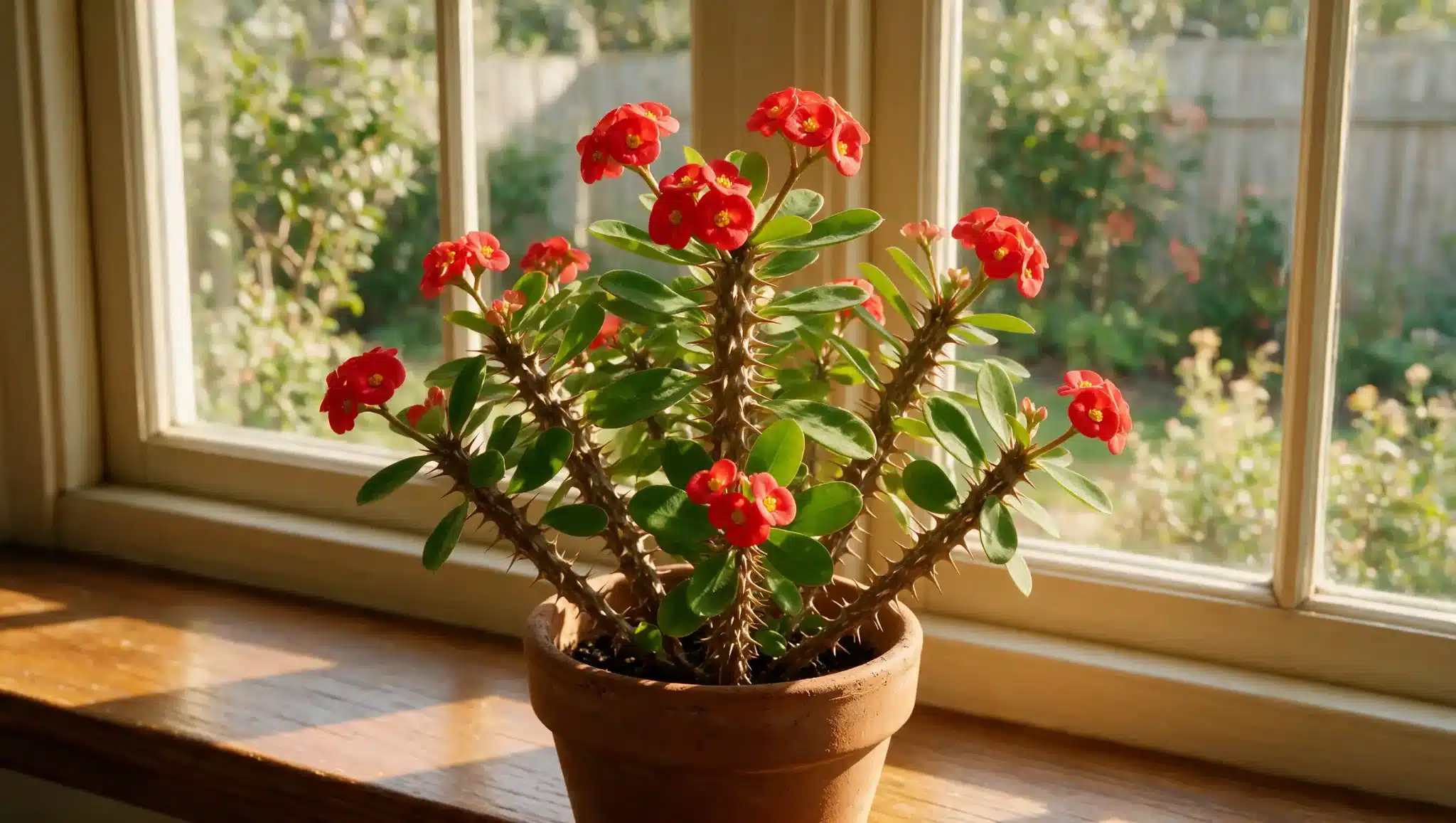
Crown of Thorns, known by its botanical name Euphorbia milii, is a hardy succulent shrub covered in sharp spines. It belongs to the spurge family, and North Carolina State Extension notes it is native to Madagascar and typically stays under 2 feet tall when grown as a houseplant. The plant gets its name from an old story.
Legend says its thorny stems were used to make the crown worn by Jesus at his crucifixion.
Small green flowers grow on the plant, but the real show comes from the colorful bracts around them. These come in red, pink, yellow, white, and orange.
Under the right care, Crown of Thorns can bloom almost all year. It grows slowly, stays compact, and handles neglect well. That makes it a popular pick for both indoor and outdoor gardens.
Popular Crown of Thorns Varieties
Crown of Thorns comes in a wide range of colors and sizes, so there’s a match for every taste. Some of the well-loved types include:
- Yellow Crown of Thorns: bright gold blooms, grows up to 3 ft.
- Red Crown of Thorns: bold red bracts with dark green leaves.
- Peach Crown of Thorns: soft peach flowers, compact at 2 ft.
- Variegated Crown of Thorns: cream-and-green leaves with pink blooms.
- Green Apple: rare lime-green flowers on a bushy plant.
- Sonia: rosy pink blooms, ideal for small spaces.
- Thai hybrids: large, dual-toned flowers in mixed shades.
No matter which one you pick, most varieties share the same easy-going nature: small in size, light on water, and generous with color.
That makes it simple to build a full collection without extra work, and if you want to round it out, a simple list of easy houseplants could help you cover several other low-maintenance options to pair with it.
How to Grow Crown of Thorns Indoors or Outdoors
Crown of Thorns is easy to please once you know its basics. This plant grows just as well in a sunny living room as it does on a patio, as long as you match its care to where it lives. Indoors, it wants strong light and a steady spot away from drafts.
Outdoors, it handles full sun and dry spells with ease, though it still needs protection when temperatures drop. Below is everything you need to keep it healthy and blooming, from light and water to soil, feeding, pruning, and growing new plants from cuttings.
1. Light Requirement
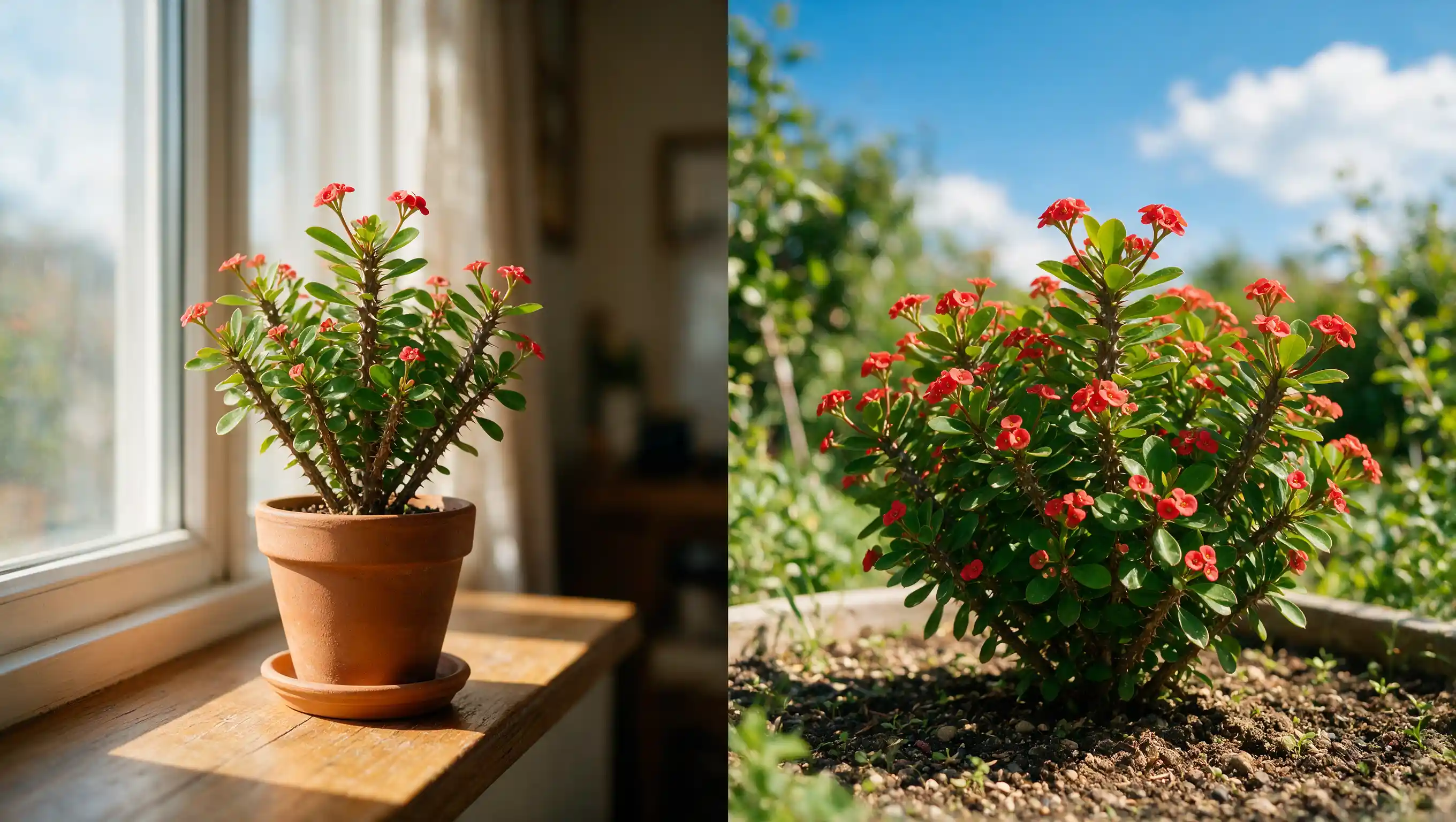
Light is what drives blooms on this plant, so getting it right matters more than almost anything else.
| Detail | Indoor | Outdoor |
|---|---|---|
| Hours needed | 6–8 hours of bright light | 6+ hours of full sun |
| Best spot | South or west-facing window | Open, sunny area like a patio or garden bed |
| Extra care | Rotate the pot now and then for even growth | Give afternoon shade in very hot climates |
| Watch for | Fewer blooms and stretched-out growth if light is too low | Leaf scorch if sun is too intense with no shade break |
Get the light right, and the rest of its care becomes much easier to manage.
2. Watering
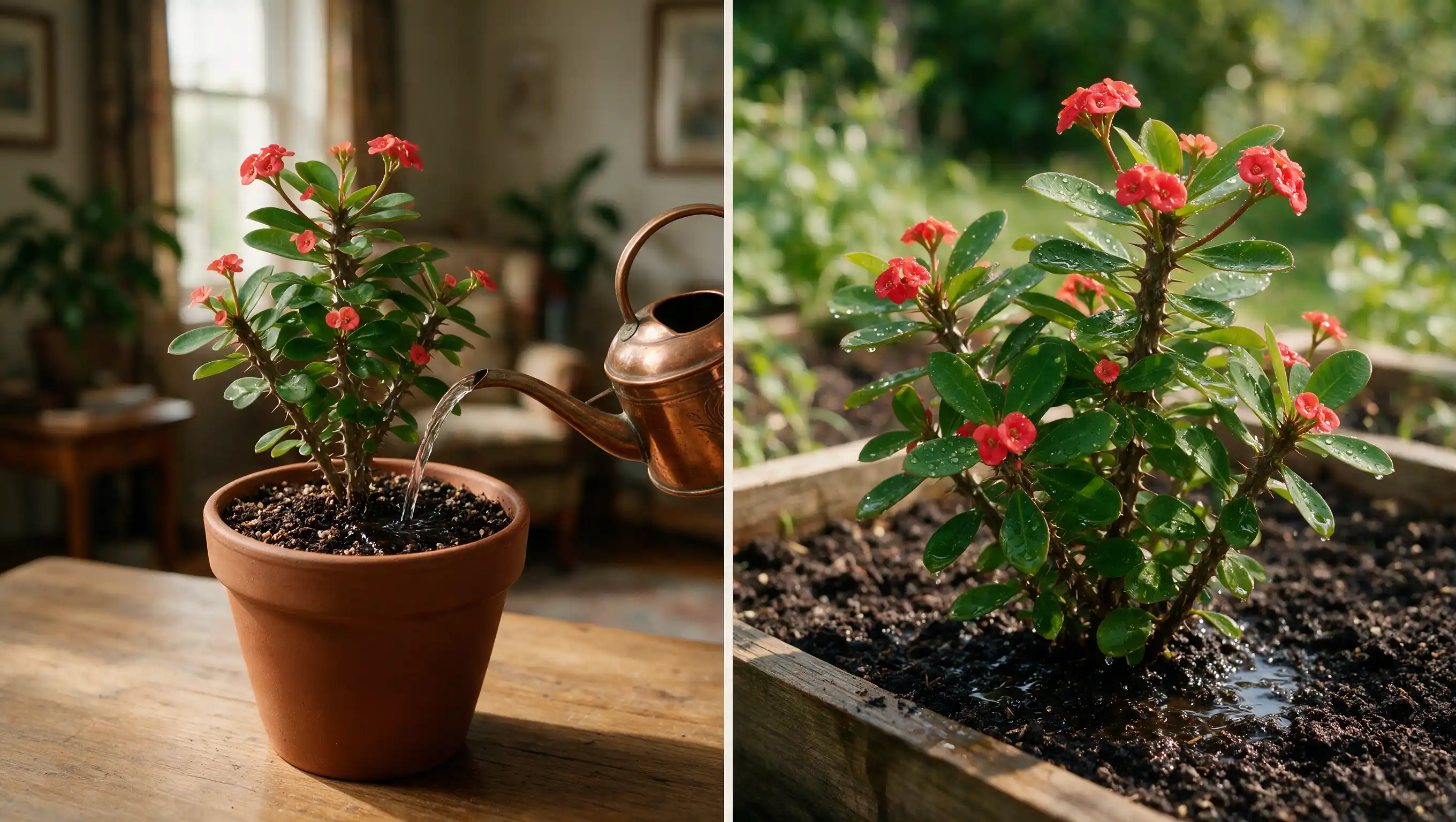
This plant would rather go dry than sit in wet soil, so less is often more here.
| Detail | Indoor | Outdoor |
|---|---|---|
| Method | Soak fully, then let soil dry out completely | Same soak-and-dry method |
| Spring & summer | Every 7–10 days | Every 7–10 days |
| Fall & winter | Every 3–4 weeks | Every 3–4 weeks |
| Extra care | May need slightly more water if indoor heating dries the air | Benefits from rainwater; clear dead leaves after wet spells |
| Watch for | Standing water leads to root rot | Poor drainage in garden soil can cause the same issue |
When in doubt, wait a few more days before watering again.
3. Soil & Fertilizer
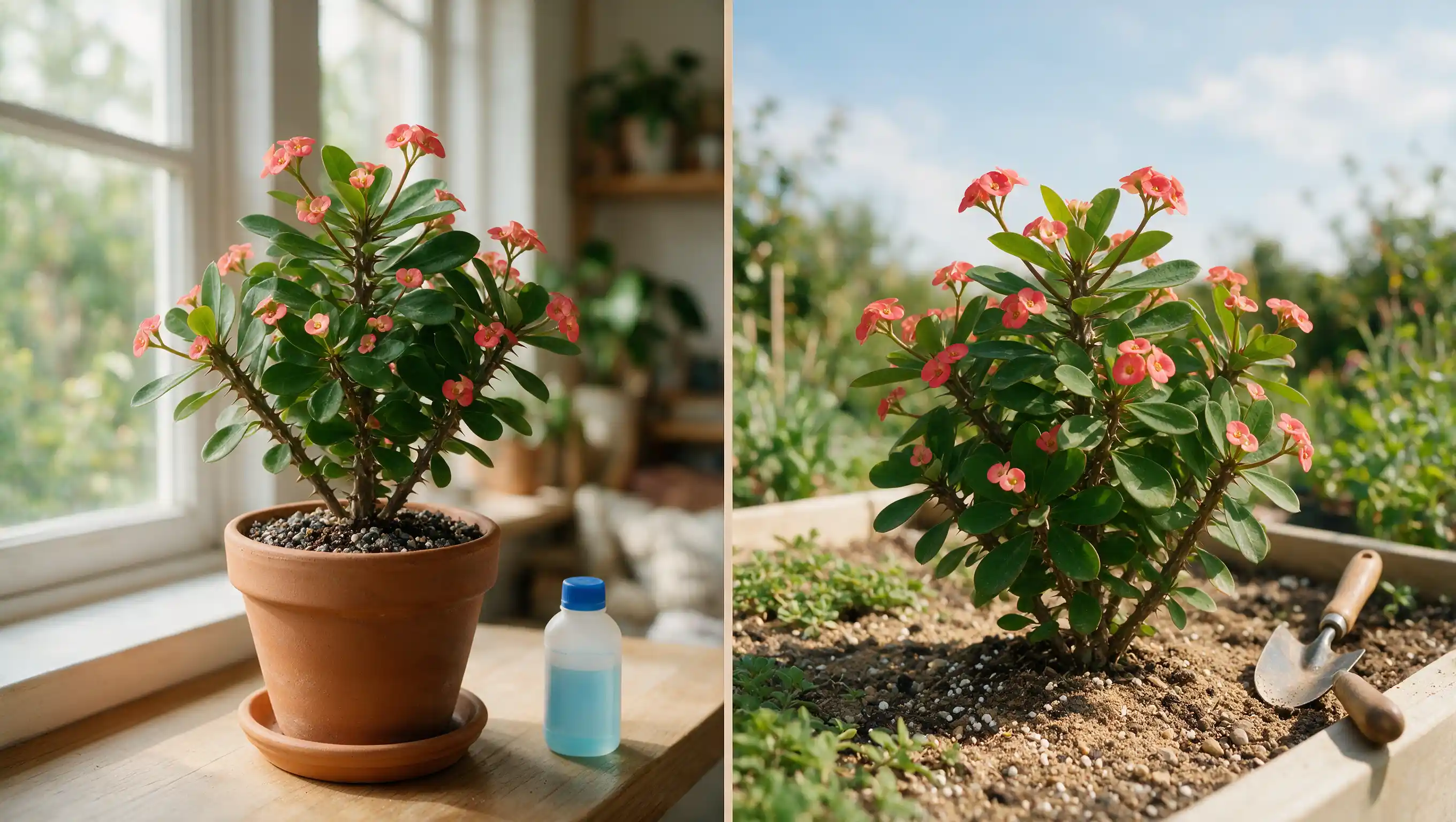
The right soil keeps water moving away from the roots, which is the key to avoiding most common problems. This same cactus or succulent mix works well for other thick-stemmed succulents too, including a jade plant, so it is worth keeping a bag on hand if you grow more than one.
| Detail | Indoor | Outdoor |
|---|---|---|
| Soil mix | Well-draining cactus or succulent mix | Same mix, with perlite or sand added for drainage |
| Soil pH | 6.0–7.0 | 6.0–7.0 |
| Feeding | Balanced, water-soluble fertilizer, half strength, once in spring | Same fertilizer and schedule |
| Watch for | Skip feeding in dormant months; feed damp soil only | Same, but avoid over-fertilizing, which can reduce blooms |
A little feeding goes a long way, so it’s best not to overdo it.
4. Temperature & Humidity
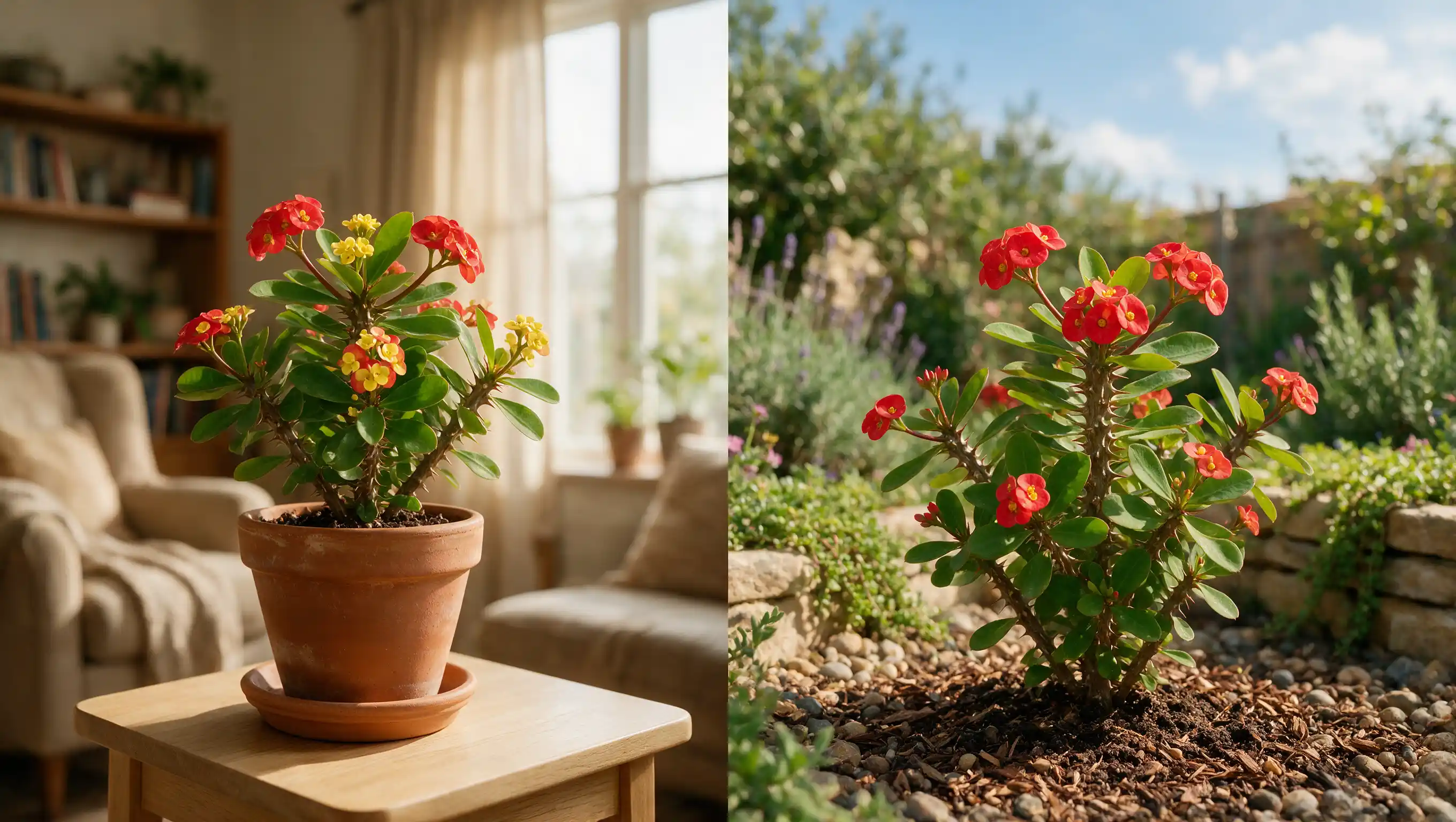
This plant enjoys the same comfort range most people do, making it simple to place around the home or garden. University of Florida Extension confirms it does not tolerate cold, wet soil or temperatures below 35°F, so container plants should come indoors well before the first frost.
| Detail | Indoor | Outdoor |
|---|---|---|
| Ideal range | 65°F–75°F | Thrives in USDA Zones 9–11 |
| Humidity | Tolerates low humidity; 30%–50% is ideal | Handles natural outdoor humidity well |
| Extra care | Keep away from cold drafts or heating vents | Protect from frost; bring pots inside below 35°F |
| Watch for | Sudden temperature swings stress the plant | Freezing temperatures can seriously damage or kill it |
Steady conditions, more than perfect ones, are what keep it thriving.
5. Pruning
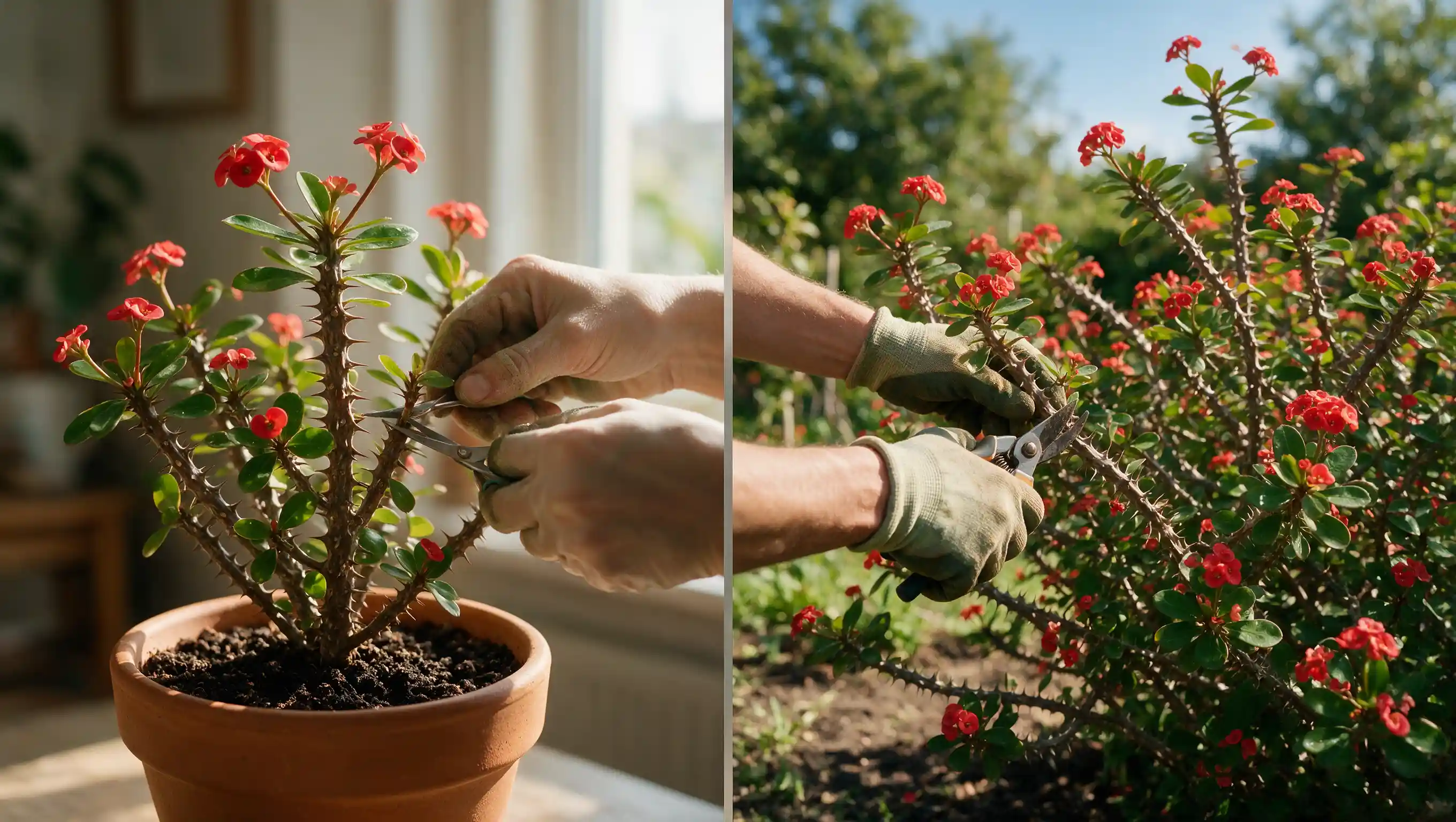
A little trimming goes a long way toward keeping this plant full and well-shaped.
| Detail | Indoor | Outdoor |
|---|---|---|
| Best time | Early spring, before new growth starts | Early spring, same timing |
| Tools | Clean, sharp scissors or shears | Same, plus gloves for larger outdoor stems |
| Method | Cut just above a healthy node | Same method; also remove overgrown stems for shape |
| Safety | Sap can irritate skin; spray cuts with water to stop flow | Same precaution, especially with larger plants |
Regular light pruning is easier on the plant than one big trim.
6. Propagation
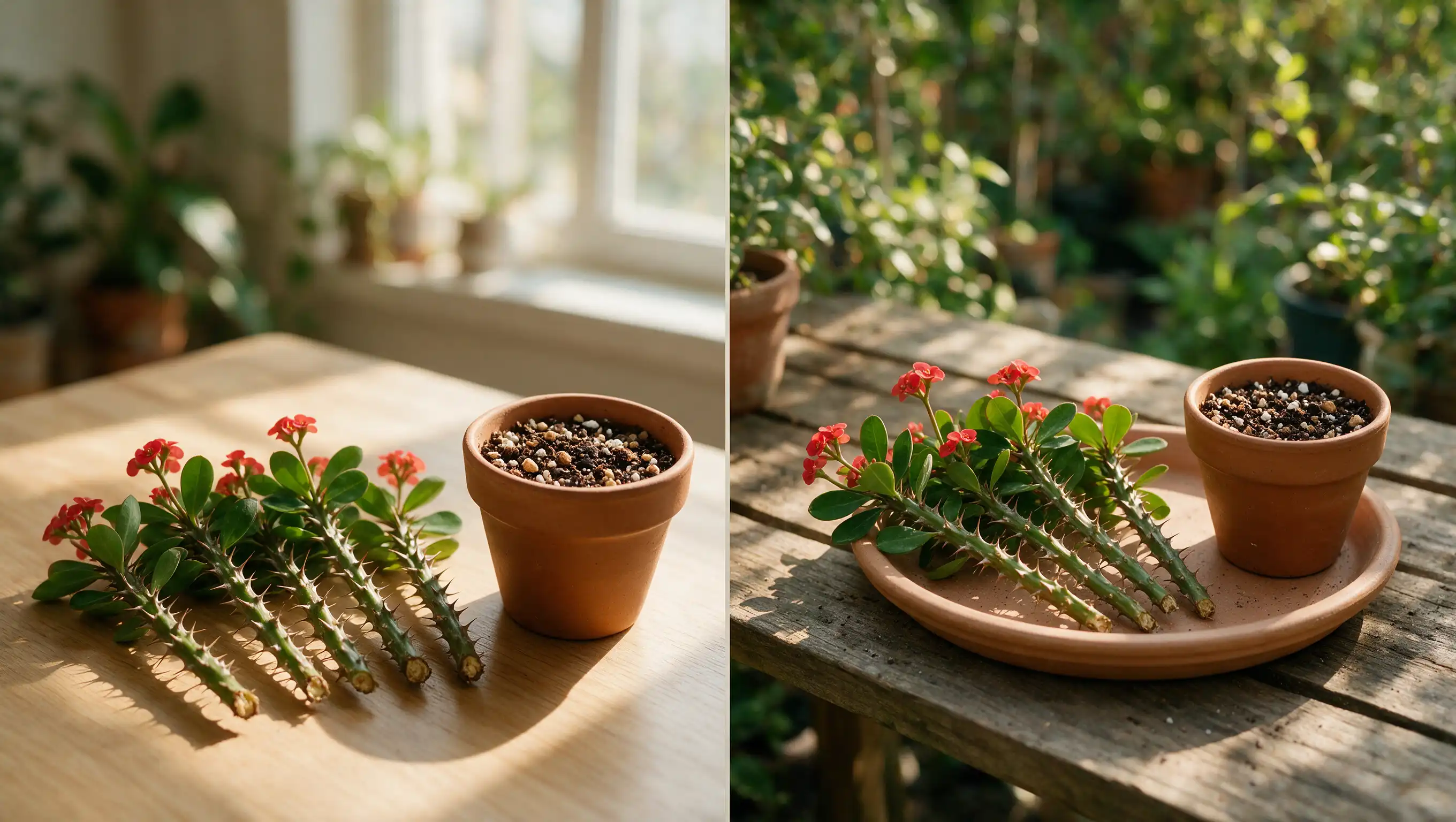
Growing a new plant from a cutting is simpler than it sounds, and it’s a great way to share this plant with others.
| Detail | Indoor | Outdoor |
|---|---|---|
| Cutting size | 4–6 inches from a healthy stem | Same size and selection |
| Dry time | 2–3 days to callus before planting | Same drying step |
| Planting | Well-draining mix, warm spot at 75°F–80°F | Same mix; place in a warm, shaded outdoor spot |
| Rooting time | 3–6 weeks | 3–6 weeks |
New leaf growth is the clearest sign that rooting has worked.
7. General Maintenance Tips
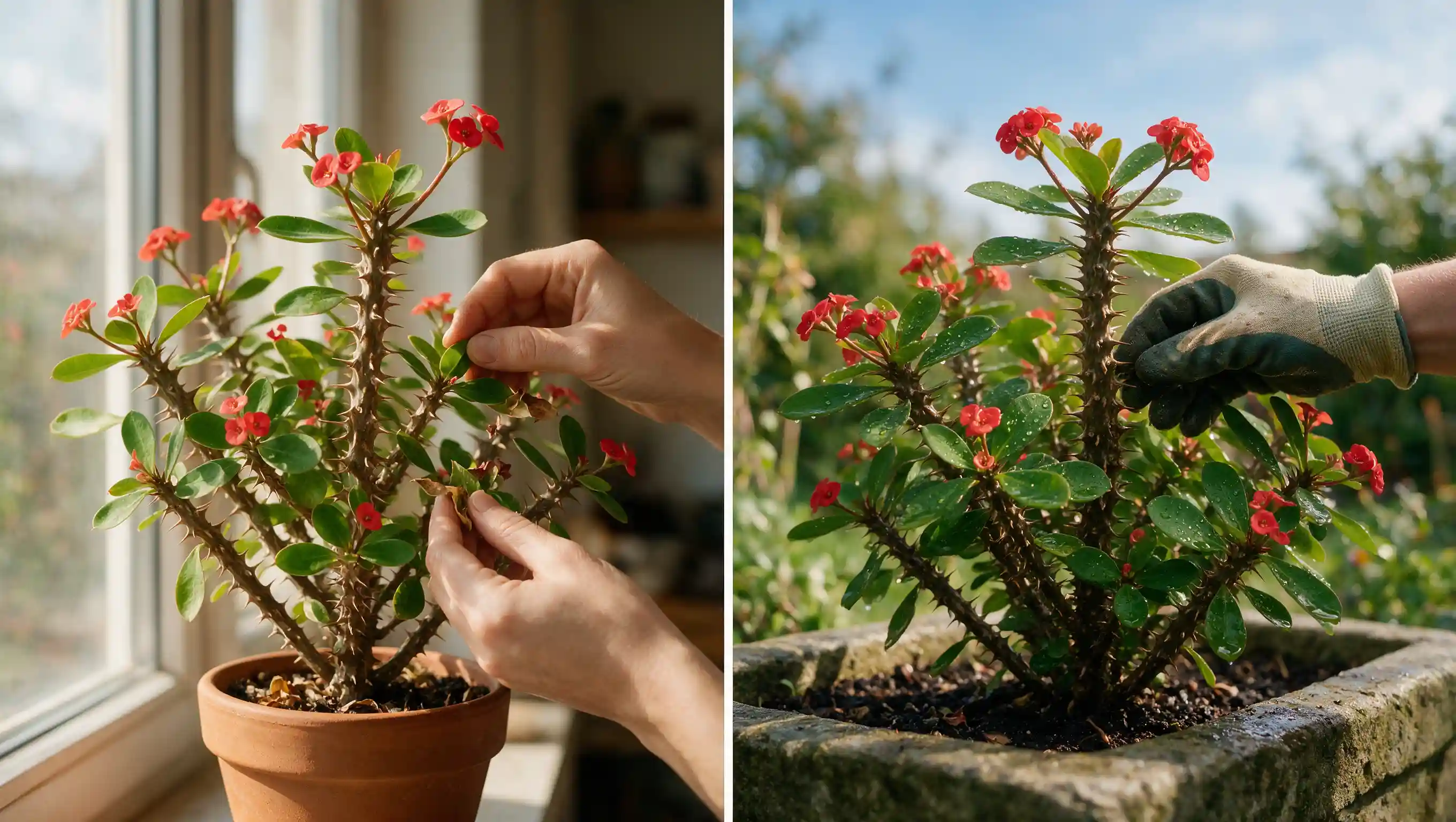
A few small habits keep this plant looking its best without much daily effort.
| Detail | Indoor | Outdoor |
|---|---|---|
| Pot size | Keep slightly snug; no rush to size up | Same, if grown in a container |
| Rotation | Turn the pot occasionally for even growth | Not needed in open sun |
| Pest checks | Look for pests near stems regularly | Same; watch closely after rain |
| Cleanup | Clear dead leaves as you spot them | Same, especially during humid or wet periods |
Stay consistent with these small checks, and the plant will need very little else from you.
Crown of Thorns Plant Care
Crown of Thorns is simple to care for once its basic needs are met, and this hardy succulent rewards steady attention with strong growth and long-lasting color. It thrives in bright light, ideally several hours of direct sun daily, and needs well-draining soil that never stays soggy for long.
Careful watering matters most, so let the soil dry out completely before watering again, since too much moisture around the roots can quickly lead to rot.
Keep the plant warm year-round, since cold drafts and sudden temperature drops can stress it, and provide light feeding during the growing season to support new stems and blooms.
Trim old or weak stems to keep a balanced shape and encourage fresh growth. Regular checks for pests, leaf changes, and soil condition catch small problems early. With steady care, Crown of Thorns stays healthy for years and keeps producing colorful bracts season after season.
How to Repot Crown of Thorns
Repotting isn’t something Crown of Thorns needs often, but doing it at the right time makes a real difference in how well it grows afterward, so here is what to know first.
- When to repot: Every two to three years, once the plant outgrows its pot. Spring works best, right before active growth begins.
- What you will need: A pot one size up with drainage holes, plus a fast-draining cactus or succulent mix. Gloves too, since the sap can irritate skin.
- The process: Loosen the plant from its old pot, check the roots for rot, and trim away damaged parts. Settle it into the new pot and press the soil down lightly.
- After repotting: Water sparingly at first, then give it a bright spot once it has settled in.
This plant bounces back fast once it settles into fresh soil, and a little patience is really all it needs.
Crown of Thorns Problems and How to Fix Them
Crown of Thorns rarely runs into serious trouble, but a handful of issues can still pop up over time, so this table breaks down the most common problems, their likely cause, and the simplest way to fix each one.
| Problem | Likely Cause | How To Fix It |
|---|---|---|
| Mealybugs, Spider Mites, Or Aphids | Pests settling on leaves or stems | Treat early with neem oil or insecticidal soap |
| Root Rot | Too much water sitting around the roots | Let the soil dry out fully between waterings and check the roots if the plant looks off |
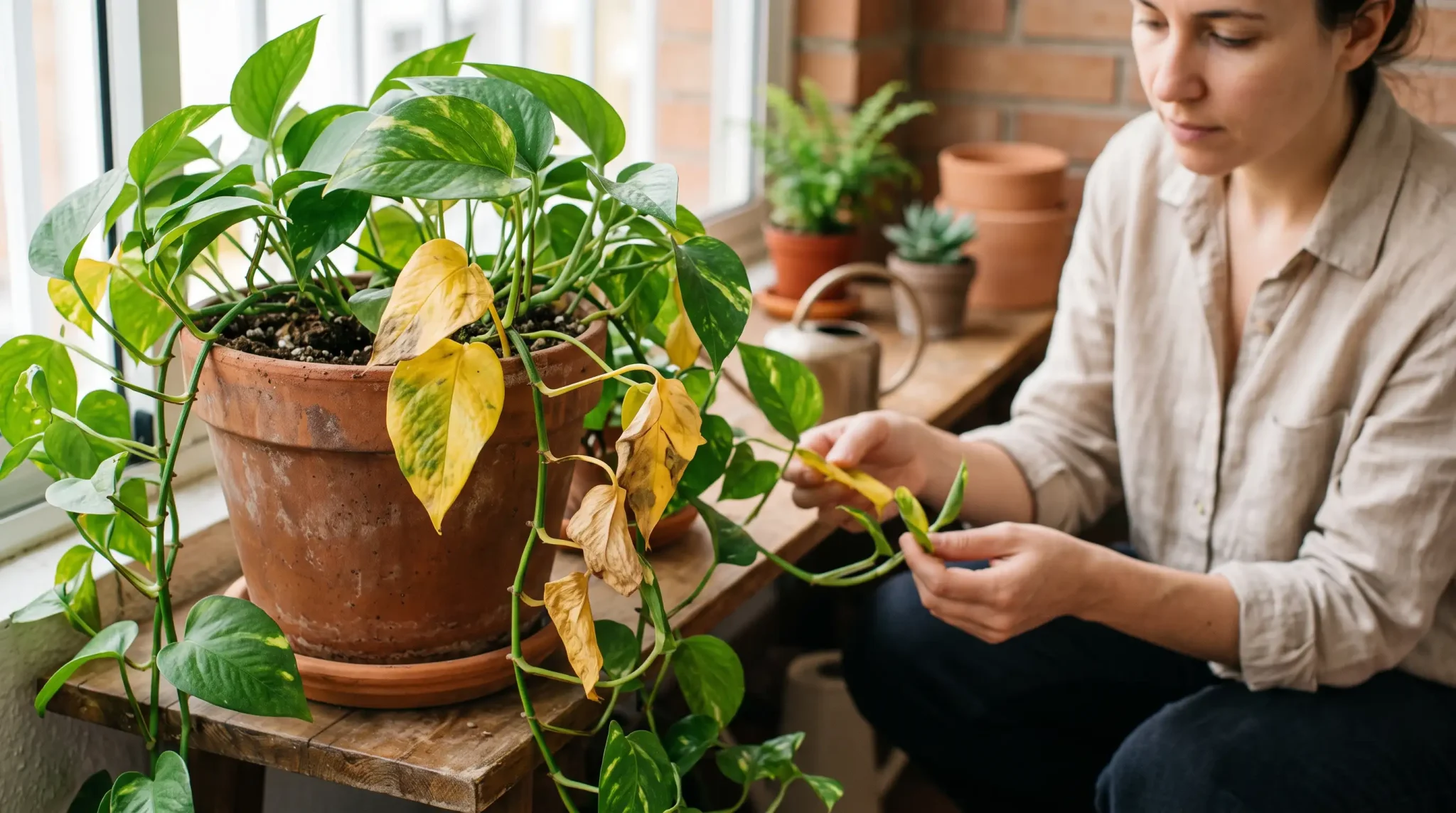
| Yellow Or Dropping Leaves | Overwatering, low light, or sudden temperature swings | Rule out each cause before assuming the worst |
| Plant Not Blooming | Not enough direct sun or too much feeding | Move it somewhere sunnier and ease up on feeding for a while |
| Brown Spots Or Stems | Sunburn or a fungal issue | Keep water off the leaves and give it shade during the hottest hours of the day |
Most of these issues clear up quickly once you catch them early and adjust light, water, or feeding, so keep an eye on the leaves and soil regularly, and your plant should bounce back without much trouble at all.
Frequently Asked Questions
Is Crown of Thorns Toxic to Pets or Humans?
Yes, it is mildly toxic. The milky sap can irritate skin and eyes on contact, and eating any part of the plant may cause an upset stomach in humans or pets. Keep it away from small children and curious pets, and always wear gloves when handling it.
Does Crown of Thorns Need a Rest Period Each Year?
Yes, it usually slows down in winter and enters a light dormant phase. During this time, growth pauses and watering needs drop. This rest period is normal and helps the plant recover before it starts blooming again in spring.
How Long Does a Crown of Thorns Plant Live?
With good care, this plant can live for several decades. Some can thrive for 25 years or more, continuing to bloom year after year. Steady watering, enough light, and occasional pruning all help keep it healthy over the long run.
Can Crown of Thorns Survive All Year Outdoors?
It can, but only in warm zones like 9 to 11. In cooler areas, it needs to come indoors before frost hits, since it cannot handle freezing temperatures. Outside these zones, it’s best grown as a houseplant.
Why Is My Crown of Thorns Not Blooming?
Poor flowering is often linked to low light or too much fertilizer. This plant needs plenty of direct sun and complete darkness at night to form buds properly. Check its light setup first before making other changes to its care routine.
The Bottom Line
Crown of Thorns proves that a plant can be low-maintenance and still put on a show. Give it strong light, let the soil dry between waterings, and use a mix that drains fast, and it will bloom for most of the year without asking for much else.
A little pruning keeps its shape neat, and propagation makes it easy to grow your collection or pass cuttings on to friends.
Whether it sits on a sunny windowsill or out in a garden bed, this plant handles neglect better than most and still comes back with color. Once you get the basics down, keeping it healthy becomes second nature.
Drop a comment below and let me know if you found this helpful.