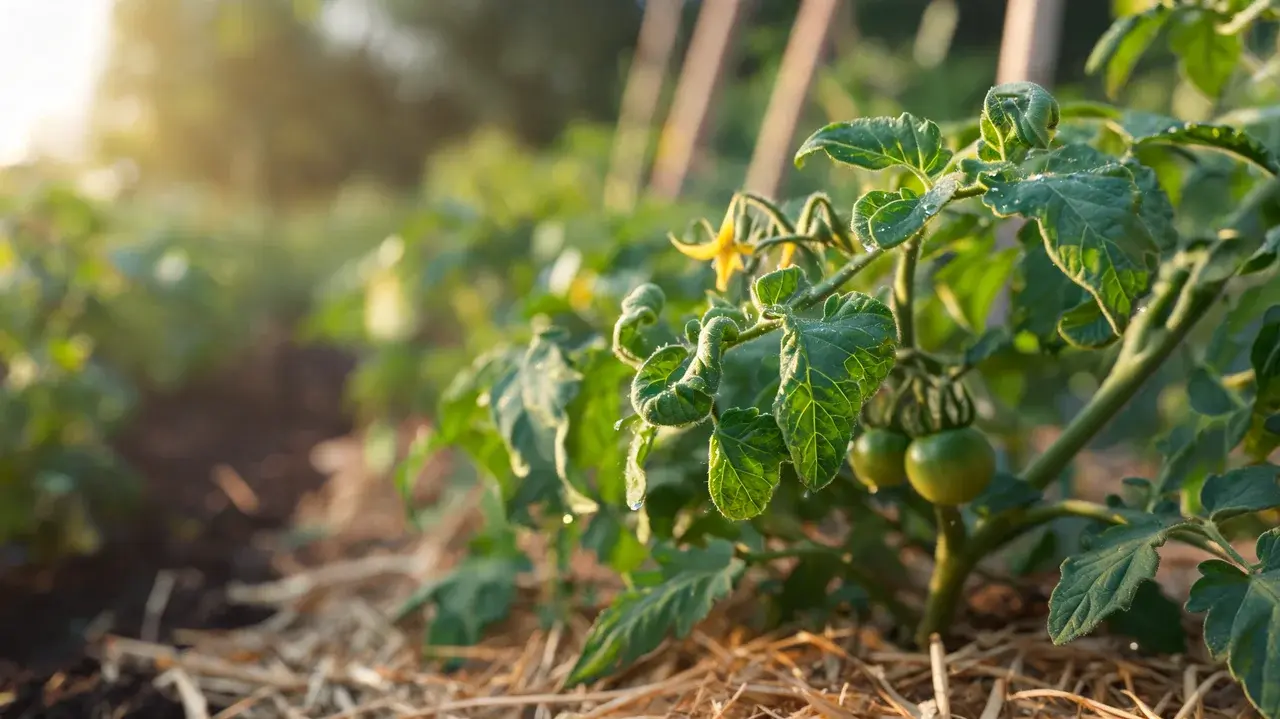
Tomato leaves curling can look alarming the moment you spot them. But in most cases, your plant is just working through a temporary stress. Before you reach for the hose, fertilizer, or a spray bottle, stop and look closely first.
What you do next depends on a few things. Check which way the leaves are curling. Look at any color change.
Notice how much of the plant is affected, and how healthy the rest of it looks. These small clues make a big difference in figuring out what’s actually going on.
Tomato leaves commonly curl due to heat, uneven watering, root stress, heavy pruning, excessive nitrogen, pests, chemical exposure, or disease.
Below, you’ll find each of these causes broken down so you can match what you’re seeing to what’s actually behind it.
Quick Tomato Leaves Curling Diagnosis Table
| What You See | First Response |
|---|---|
| Green lower leaves rolling upward | Check heat, moisture, pruning, and root stress |
| Curling during hot afternoons | Check soil moisture and add temporary shade |
| Curling after planting | Keep the soil evenly moist and allow time |
| Dark green, thick leaves | Pause feeding and check the fertilizer |
| Twisted new growth | Review chemical exposure and inspect the plant |
| Sticky leaves with small insects | Check leaf undersides and treat the pests |
| Yellow edges and stunted growth | Isolate the plant and seek local testing |
| Spots, powder, or wilting | Identify the added symptoms before treatment |
This helps you narrow down the likely cause, but a close, hands-on check of the plant is still the best way to confirm what’s really happening before you act.
What to Check Before You Treat the Plant
Once you’ve narrowed down the likely cause, work through these checks in order before you treat anything.
Check the Soil: Push a finger a couple of inches below the surface. Dry soil, standing water, or a sudden shift in moisture can explain a lot on its own. Don’t water just because the leaves are curled.
Inspect the Whole Plant: Compare older leaves to new growth, since whole-plant curling tells a different story than damage in one spot. Look for yellowing, spots, twisting, stunted growth, or changes in flowers and fruit.
Look for Pests: Check under the leaves and around soft new growth, since that’s where pests hide. Look for aphids, whiteflies, sticky residue, ants, or black mold. If you suspect broad mites, get the plant tested.
Avoid Random Treatments: Skip the fertilizer until you’ve confirmed that’s the cause. Hold off on pesticides unless you’ve spotted pests. Don’t pull the plant unless you’re seeing serious damage or clear disease.
Working through these four checks in order helps you avoid guesswork. It sets you up to treat the actual cause, not just the symptom.
Common Causes of Tomato Leaves Curling
Leaf curling can stem from weather, your care routine, chemical exposure, or disease. Notice the curl direction, color changes, and where damage appears on older or new leaves, then think back on watering, feeding, pruning, or spraying to match these clues to a cause below.
1. Physiological Leaf Curl
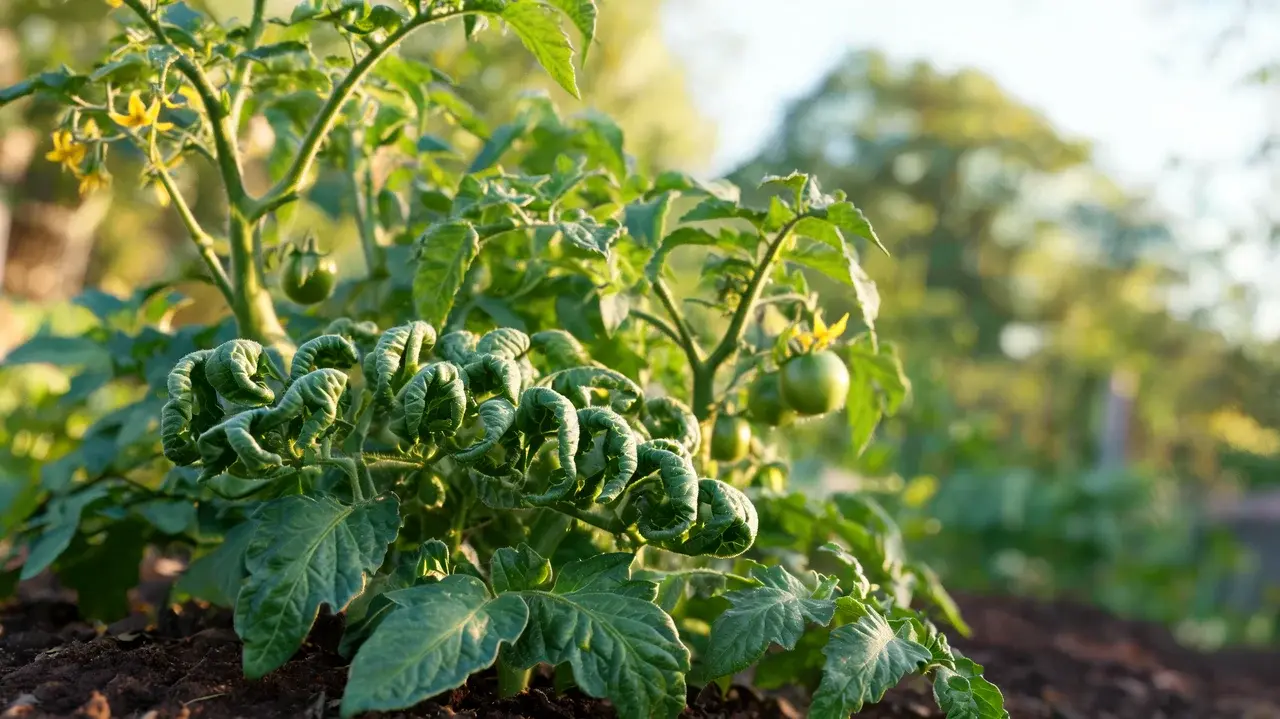
This is a moisture-saving response, not a disease; the plant is protecting itself, not breaking down. It usually starts on the older, lower leaves first, where they often stay green and roll upward instead of changing color.
Fruit production and new growth can stay normal through this, and some tomato types react more strongly than others, so one variety curling more isn’t unusual.
2. Heat Stress and Strong Sun
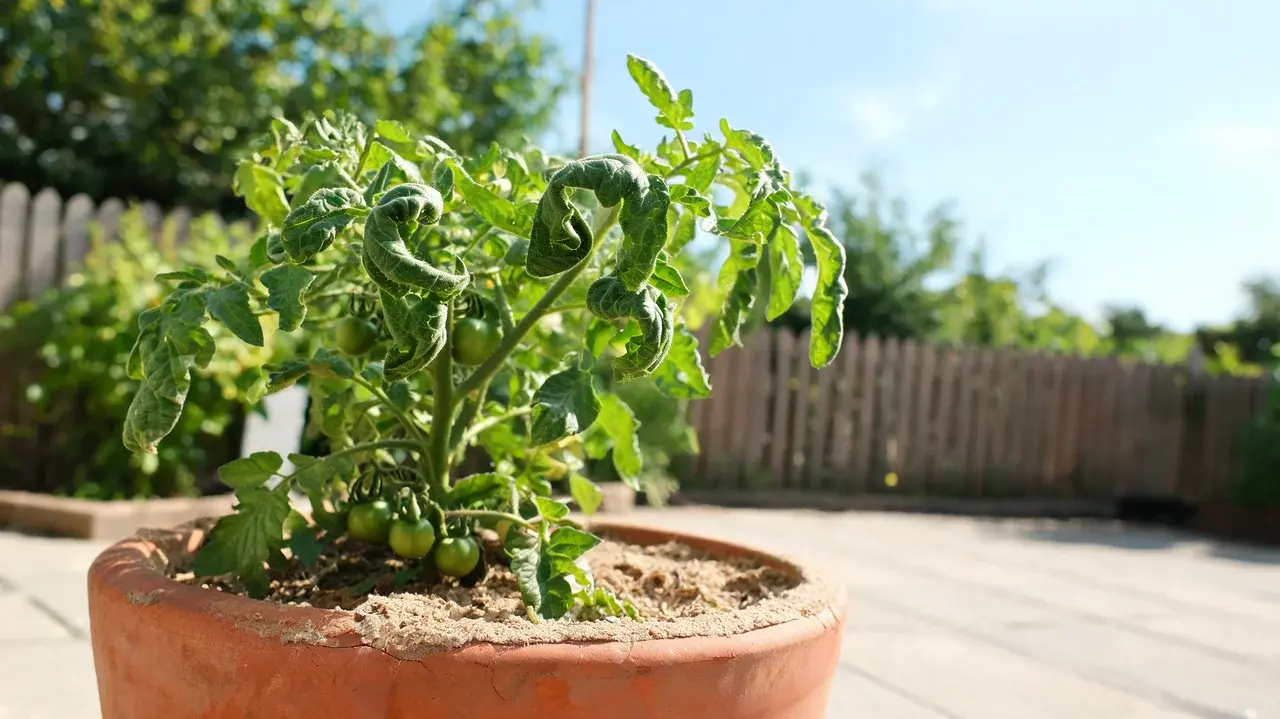
Curling often shows up during the hottest part of the day, as the leaves reduce their exposed surface to slow down water loss.
Plants in pots, raised beds, or on hot paved surfaces dry out faster than those in the ground. Mulching, watering earlier in the day, using shade cloth, and checking containers often can all ease the stress on a struggling plant.
3. Underwatering and Uneven Watering
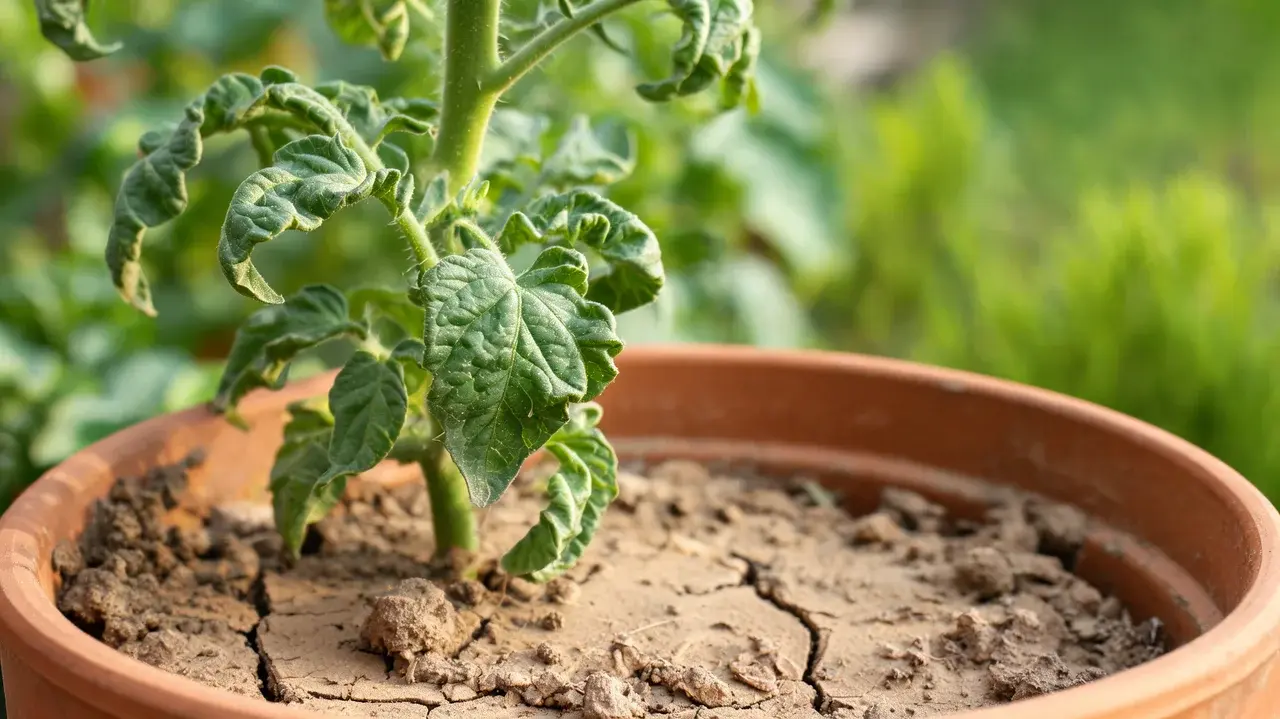
Dry soil makes it hard for the plant to replace the moisture it loses, and dry spells followed by heavy rain can add to the stress.
Container-grown tomatoes face a higher risk here, since pots dry out faster than garden soil. A steadier routine helps: water deeply, water in the morning, add mulch, and consider drip irrigation for consistent moisture.
4. Root Damage
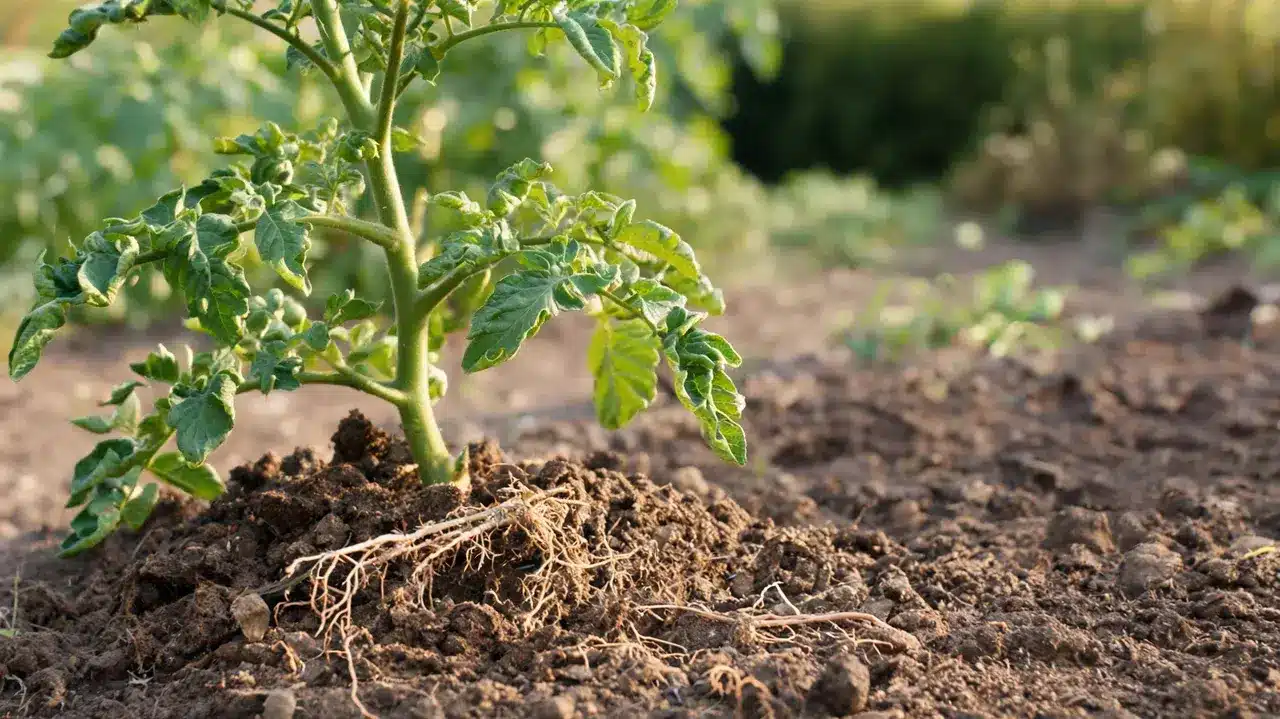
Aggressive weeding near the stem, pulling up nearby plants, or digging too close can disturb the surface roots your tomato relies on for water and nutrients.
This kind of disturbance is common and usually minor in the long run. Give the plant a few days to recover before assuming another cause is behind it.
5. Heavy Pruning
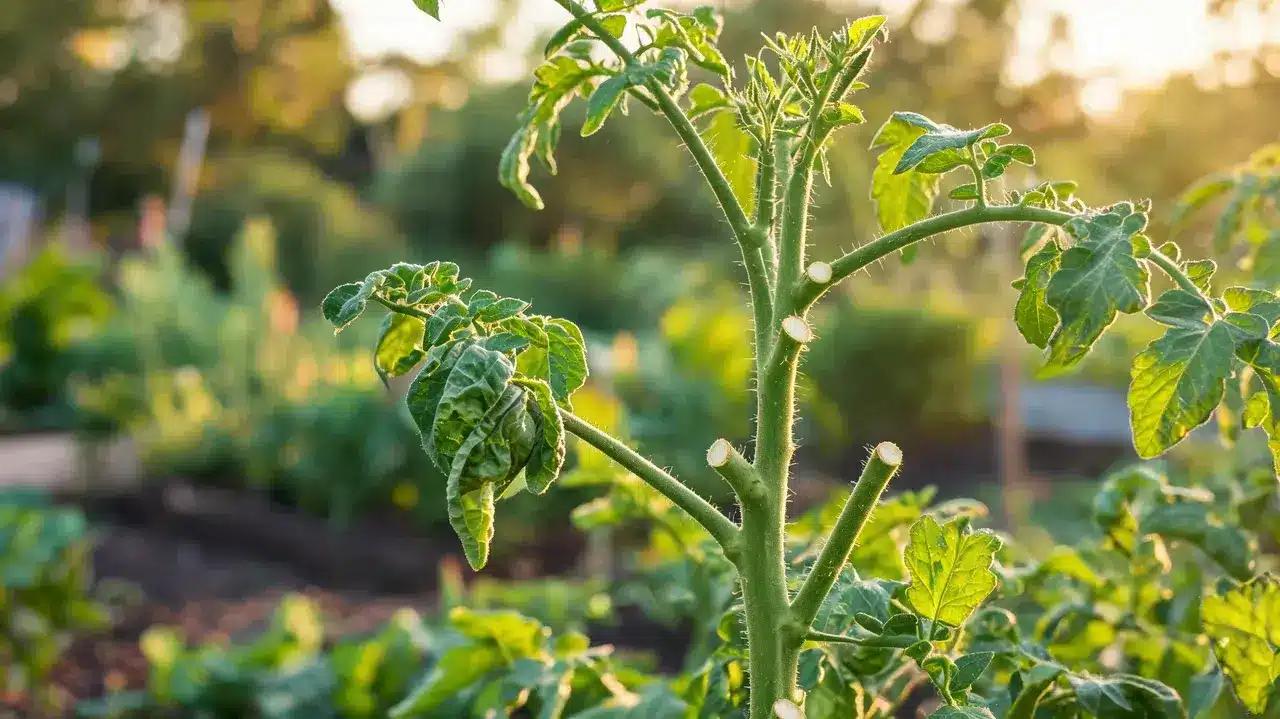
Removing too much growth at once puts the plant under stress, and curling afterward is a normal part of healing from that shock.
Prune small amounts over time instead of one big cut so that the plant can adjust more smoothly to the change. Watch the new growth, not the old damaged leaves, to judge recovery.
6. Transplant Shock
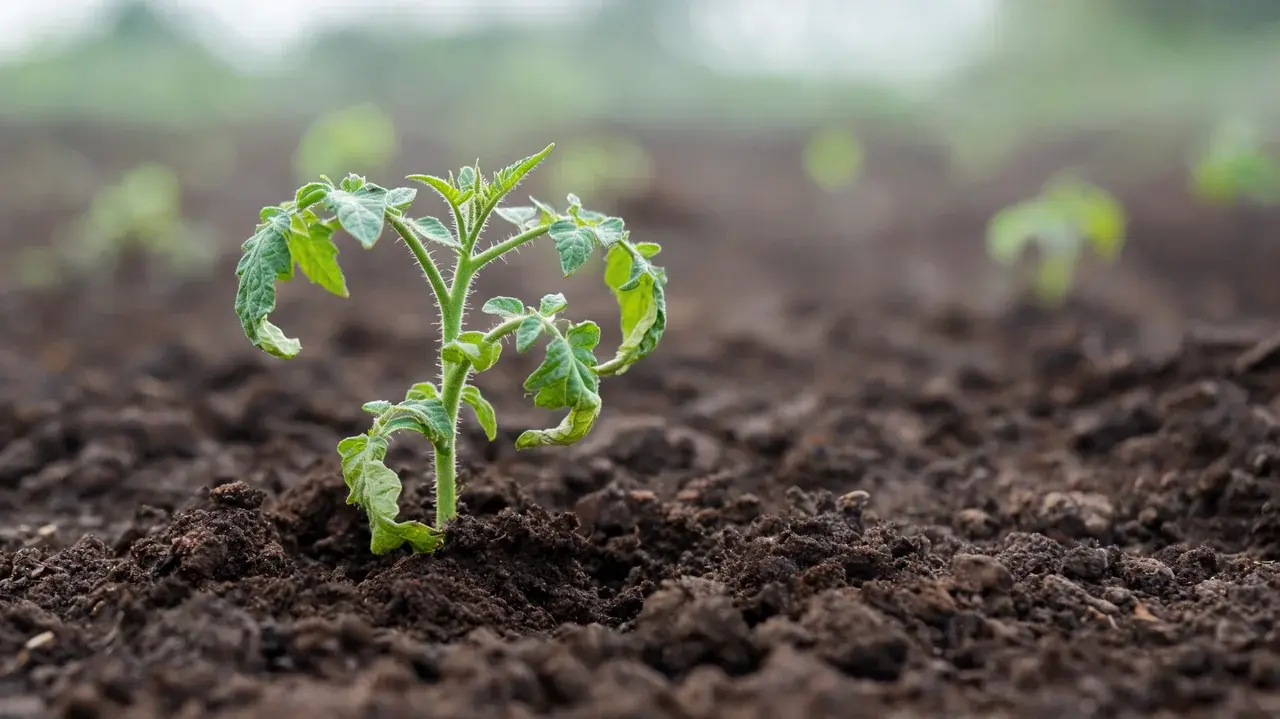
Curling that starts soon after planting is usually a temporary stress while the roots settle into their new spot in the garden. Keep the soil moist, but don’t soak it, since overly wet soil can slow recovery instead of helping it along.
Wait for healthy new growth before treating anything, rather than reacting to the curled leaves right away.
7. Too Much Nitrogen
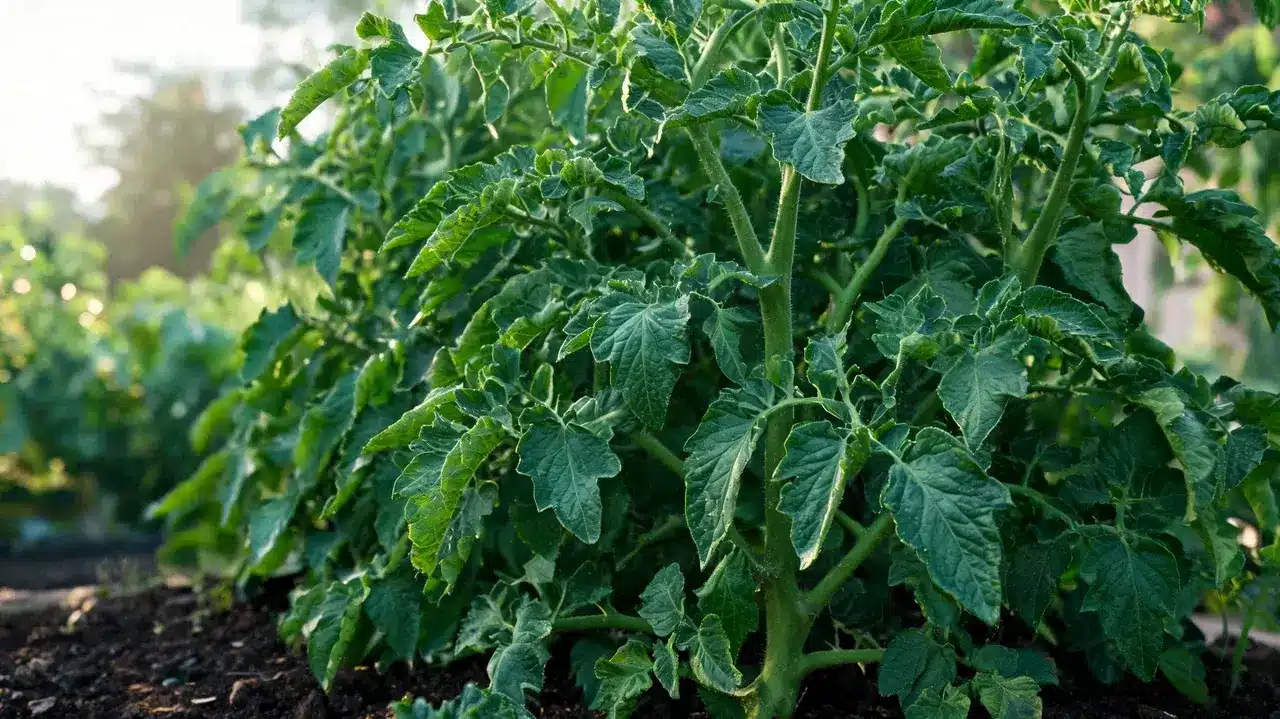
Too much nitrogen pushes the plant into fast, soft growth that the roots can’t keep up with. This often shows up as dark green, thick, or leathery leaves, and can reduce flowering if growth gets too heavy overall.
Stop feeding nitrogen, test the soil first, and return to balanced feeding once levels look normal again. Leaning on gentler natural plant foods instead of a heavy synthetic dose can make it easier to keep nitrogen levels in a reasonable range in the future.
8. Low Potassium, Phosphorus, or Calcium
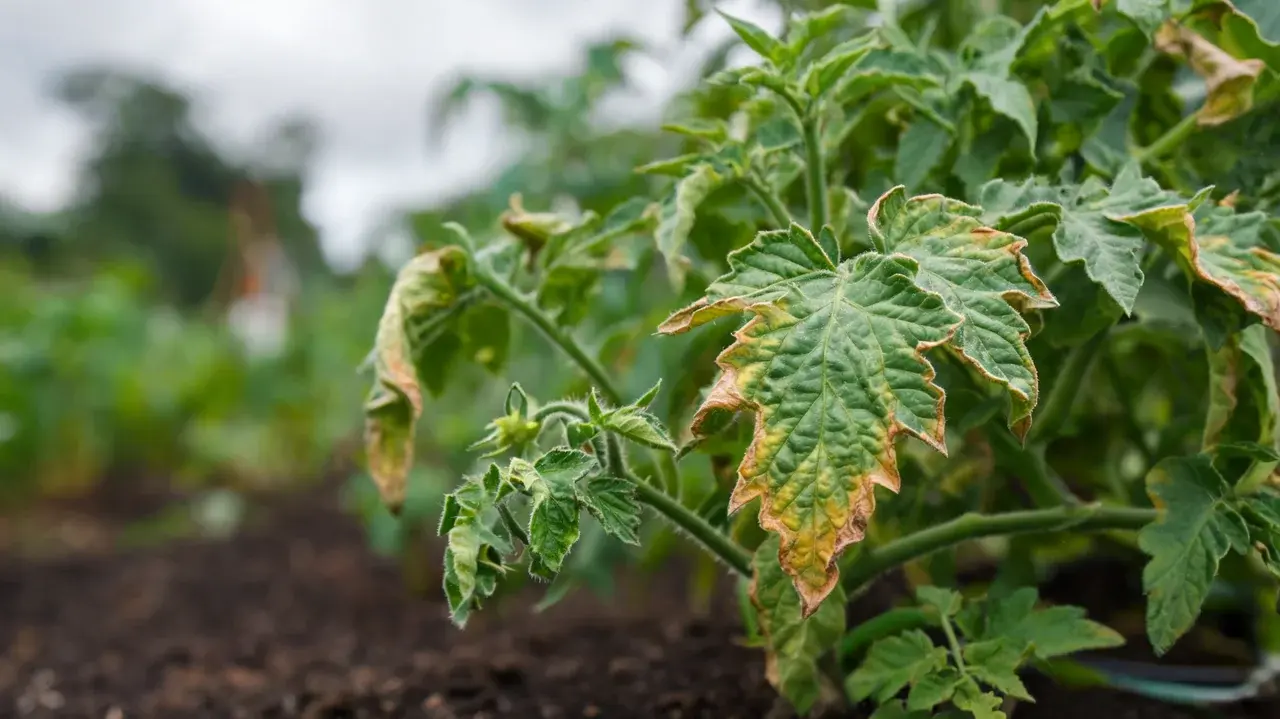
Curling paired with poor growth or yellowing may point to a nutrient shortage rather than water or heat stress alone. Scorched leaf edges often mean low potassium, while leaf distortion can mean low calcium instead.
Test the soil, add only what’s missing, and skip repeated feeding without test results to guide the next step.
9. Herbicide Damage
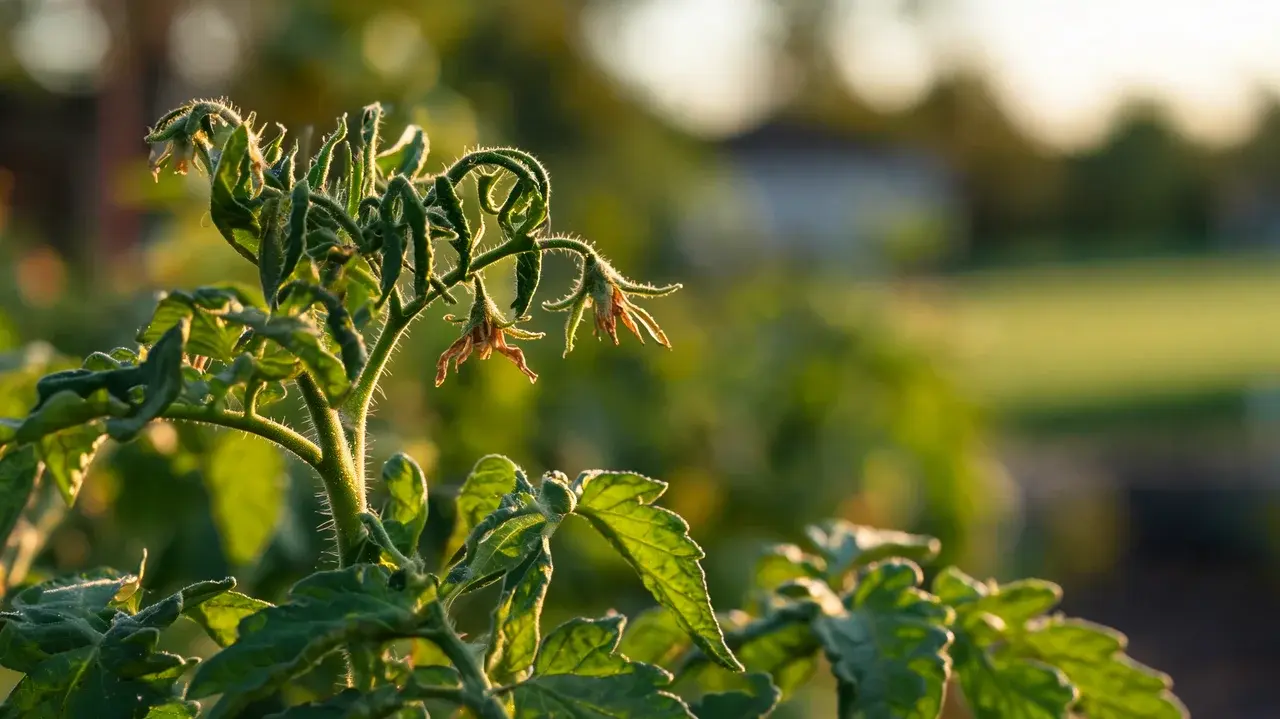
Tomatoes are especially sensitive to weed-control chemicals, and even a small amount can cause visible damage to the plant. Watch for twisted stems, misshapen new leaves, downward curling, and dropped blossoms together, not just one sign alone.
The chemical can drift from a nearby lawn or field, or arrive already mixed into contaminated compost, mulch, or manure. The EPA’s guidance on pesticide drift explains how easily airborne herbicide can travel well beyond the spot where it was applied.
10. Tomato Yellow Leaf Curl Virus
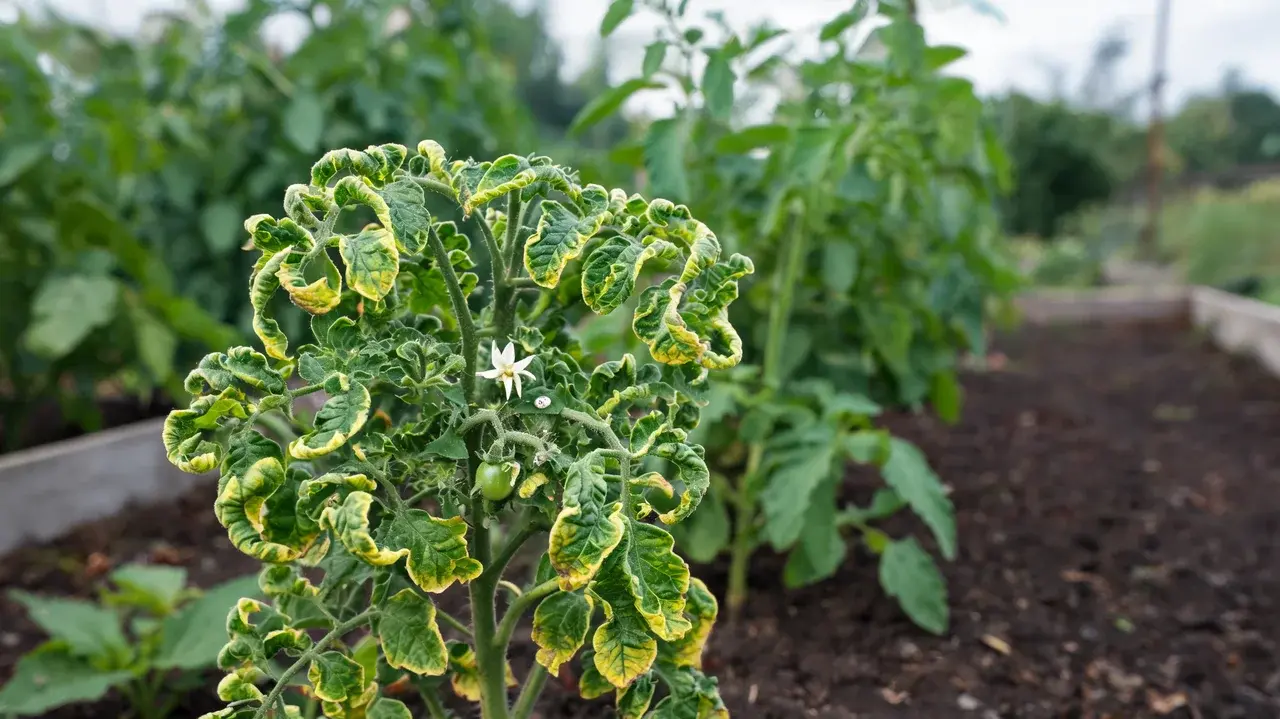
This is the disease most gardeners worry about when they see curled leaves, and it’s also one of the most misdiagnosed conditions out there. Watch for curling across much of the plant, along with yellow or blotched edges, stunted growth, and dropped blossoms.
Whiteflies are the main way this virus spreads from plant to plant in the garden, and the National Invasive Species Information Center tracks the silverleaf whitefly as one of the more aggressive strains behind that spread.
A few other viruses cause similar symptoms, including tomato leaf curl New Delhi virus, tomato mosaic virus, and curly top disease. Each one can look a lot like the others at first glance, making them difficult to tell apart. Testing through your local extension office is the only reliable way to confirm which one it is.
11. Bacterial and Fungal Problems
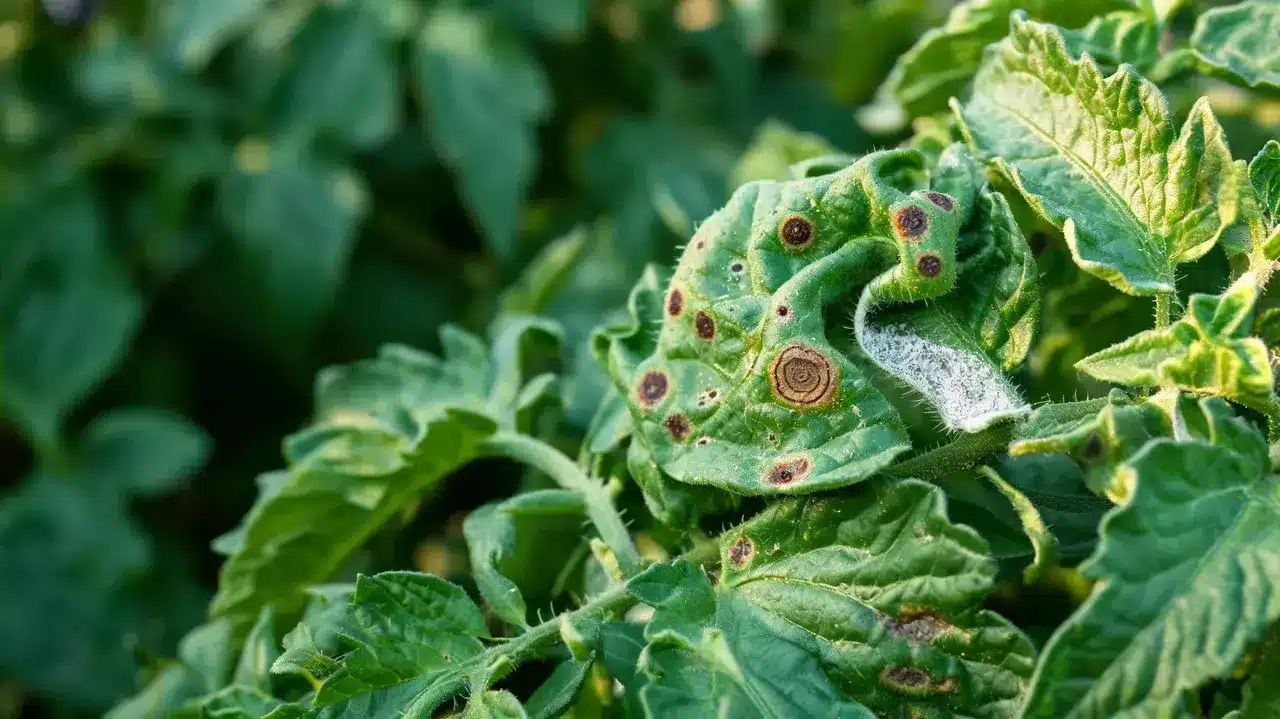
A few other conditions can cause curling too, though it’s usually paired with other symptoms on the plant. Bacterial spot brings spots or lesions, bacterial wilt causes sudden wilting, early blight starts with leaf spots that spread over time, and powdery mildew shows a white coating alongside leaf distortion.
Most of these causes trace back to a specific habit, soil issue, or organism, so a quick look at recent care and plant symptoms usually points you to the fix.
How Pests Affect Tomato Leaves Curling
Certain pests target tomato leaves directly, and each one leaves behind its own pattern of damage on the plant. Spotting the early signs of spider mites, aphids, or whiteflies makes it much easier to treat the actual problem rather than just the curling it leaves behind.
| Pest | Signs to Look For | How to Handle It |
|---|---|---|
| Aphids | Clusters on stems and leaf undersides: curled or yellow leaves, honeydew, ants, sooty mold. | Rinse off light infestations; use neem oil or insecticidal soap; remove heavy growth; support ladybugs and lacewings. |
| Whiteflies | Sticky residue, and they spread yellow leaf curl virus. Watch greenhouse plants closely. | Inspect undersides, use sticky traps, apply insecticidal soap or oil, remove infected plants. |
| Broad Mites | Distorted young leaves and flowers. Too small to see without testing. | Confirm through testing, treat once confirmed, judge recovery by new growth, remove damaged leaves. |
Matching the signs to the right pest helps you treat the actual cause, rather than guessing at a fix that may not work. A quick check under the leaves usually tells you which pest you’re dealing with.
How to Prevent Tomato Leaves From Curling Again
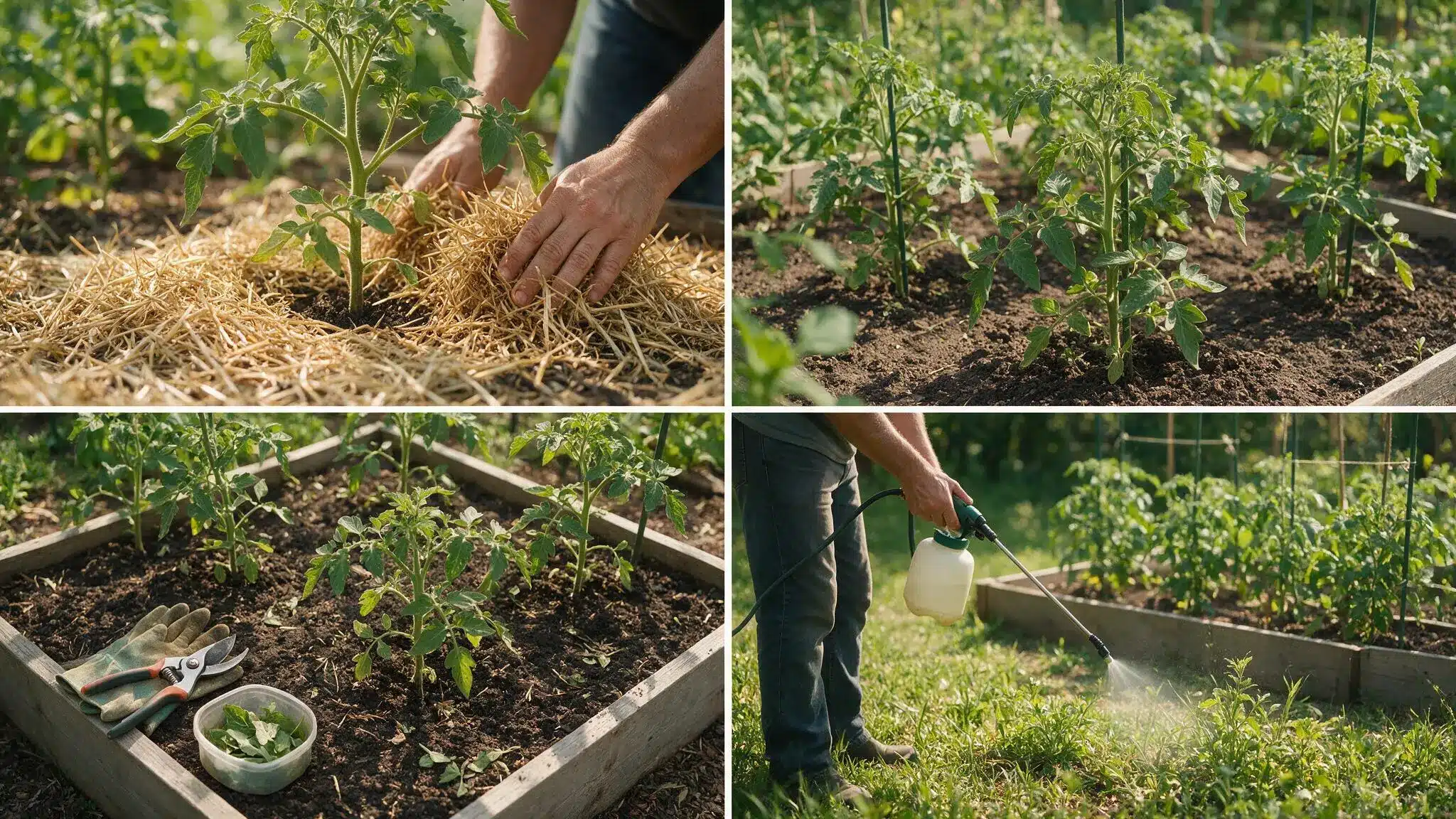
Most curling problems come back to the same few habits. A little consistency goes a long way toward keeping your plants steady.
- Keep moisture steady: Water deeply without letting the soil swing between dry and soaked.
- Use mulch: Keep the soil cooler and slow down moisture loss.
- Protect plants from high heat: Add temporary shade during severe conditions.
- Prune in small amounts: Avoid removing large sections at once.
- Protect the roots: Weed and dig carefully near the stem.
- Test before feeding: Add nutrients only when the soil or plant signs support it.
- Check compost and manure: Test uncertain material before adding it to your beds.
- Inspect plants often: Check young growth and the undersides of leaves for pests.
- Space plants properly: Allow airflow and reduce disease pressure.
Catching these signs early makes it much easier to tell a temporary stress from a real problem, before it has a chance to spread.
When Should You Remove the Tomato Plant?
Most curling doesn’t need removal. But a few signs mean it’s time to make that call, especially when a virus is confirmed or strongly suspected, curling covers the whole plant along with yellowing and stunted growth, or the plant stops flowering and producing fruit.
New growth that keeps getting worse, severe chemical damage with no recovery, or advice from a local plant specialist are also good reasons to remove it. These signs usually show up together, not in isolation, so it’s worth checking the whole plant before deciding.
On the other hand, keep caring for the plant if the leaves stay green, the curling follows heat, transplanting, pruning, or root disturbance, and it keeps growing and setting fruit as usual.
When in doubt, give it a little time. The new growth usually tells you what you need to know, more clearly than the curled leaves ever will.
Frequently Asked Questions
Will curled tomato leaves become flat again?
Leaves affected by physiological curl, heat, or transplant shock often flatten back out once conditions improve. Leaves damaged by pests, chemicals, or disease may stay curled, even after treatment, since the harm is already done.
Why do tomato leaves curl only during the afternoon?
Afternoon heat pushes the plant to slow water loss by curling its leaves. This is common on hot, sunny days. If the leaves open again once it cools down, it’s a normal, temporary response that usually needs no treatment.
Can overwatering cause tomato leaves to curl?
Yes. Too much water can stress the roots and lead to curling, much like drought does. Uneven watering, with dry spells followed by heavy soaking, often causes more curling than steady watering ever would over the course of a season.
Should damaged tomato leaves be removed?
Remove leaves that are severely damaged, diseased, or infested with pests. Leave mildly affected leaves in place if the plant still looks healthy overall, since they can still help support fruit production through the rest of the season.
To Sum Up
Tomato leaves curling isn’t one problem. They’re a symptom that points to several possible causes.
That’s why checking the pattern matters more than reaching for a quick fix. Look at the direction of the curl, the color of the leaves, and how much of the plant is affected before deciding what to do next.
Green, upward-curling leaves on a plant that’s still growing usually need steady care and a little time. Keep watering consistently, watch the weather, and let the plant settle.
Yellowing, twisted growth, or stunted plants deserve closer attention. Those signs point to something beyond normal stress, and they’re worth investigating before you decide on next steps.
Drop a comment below and let me know how it worked out for you.