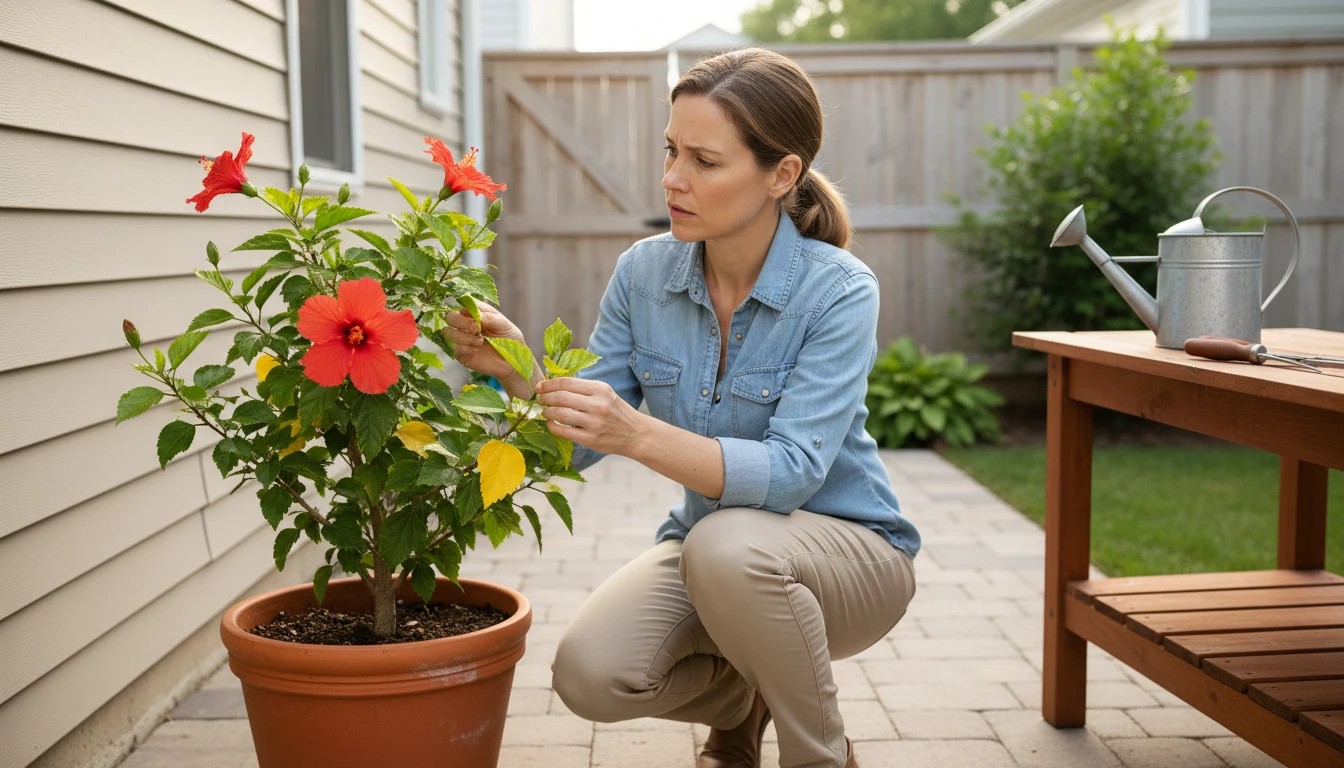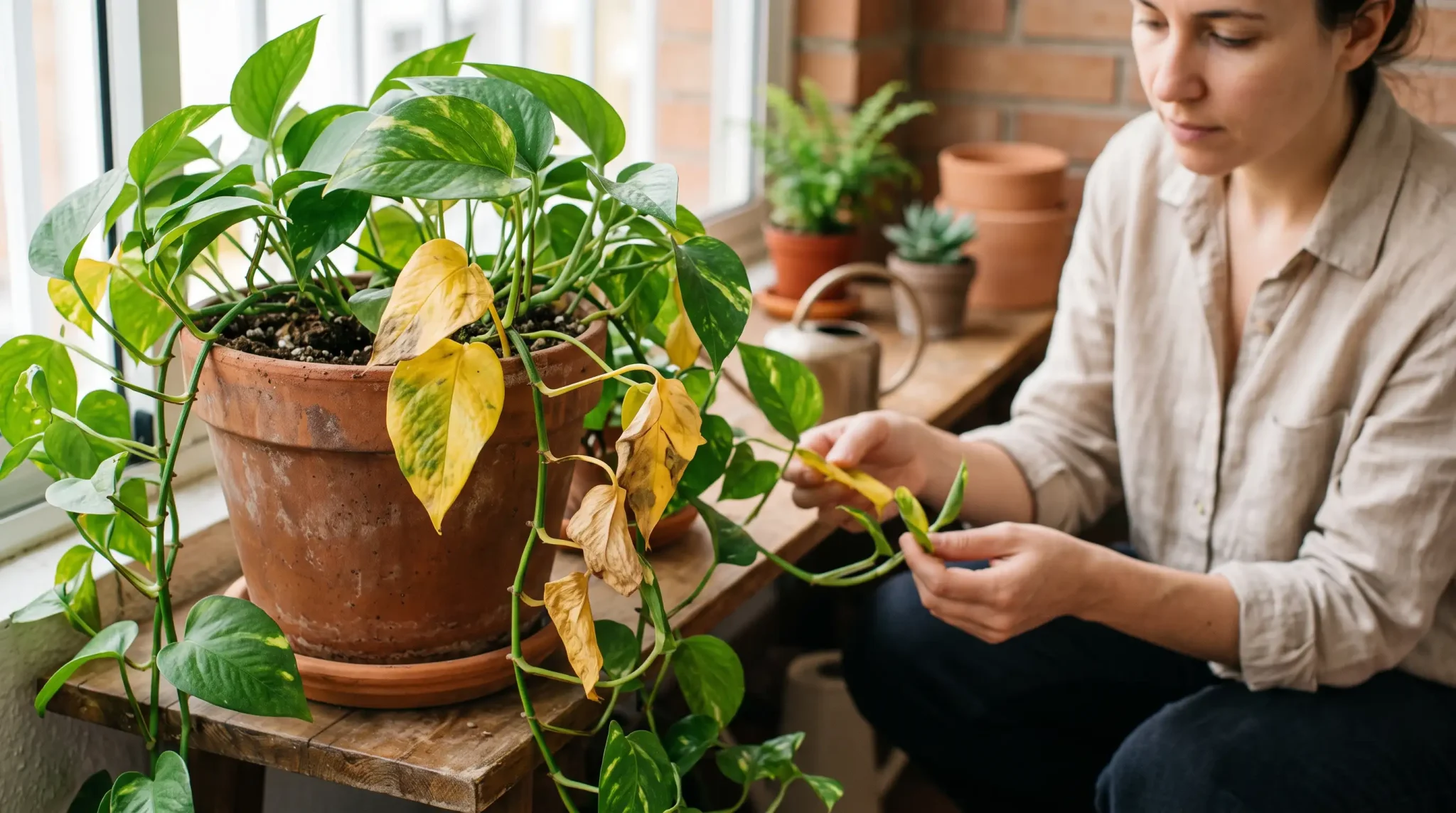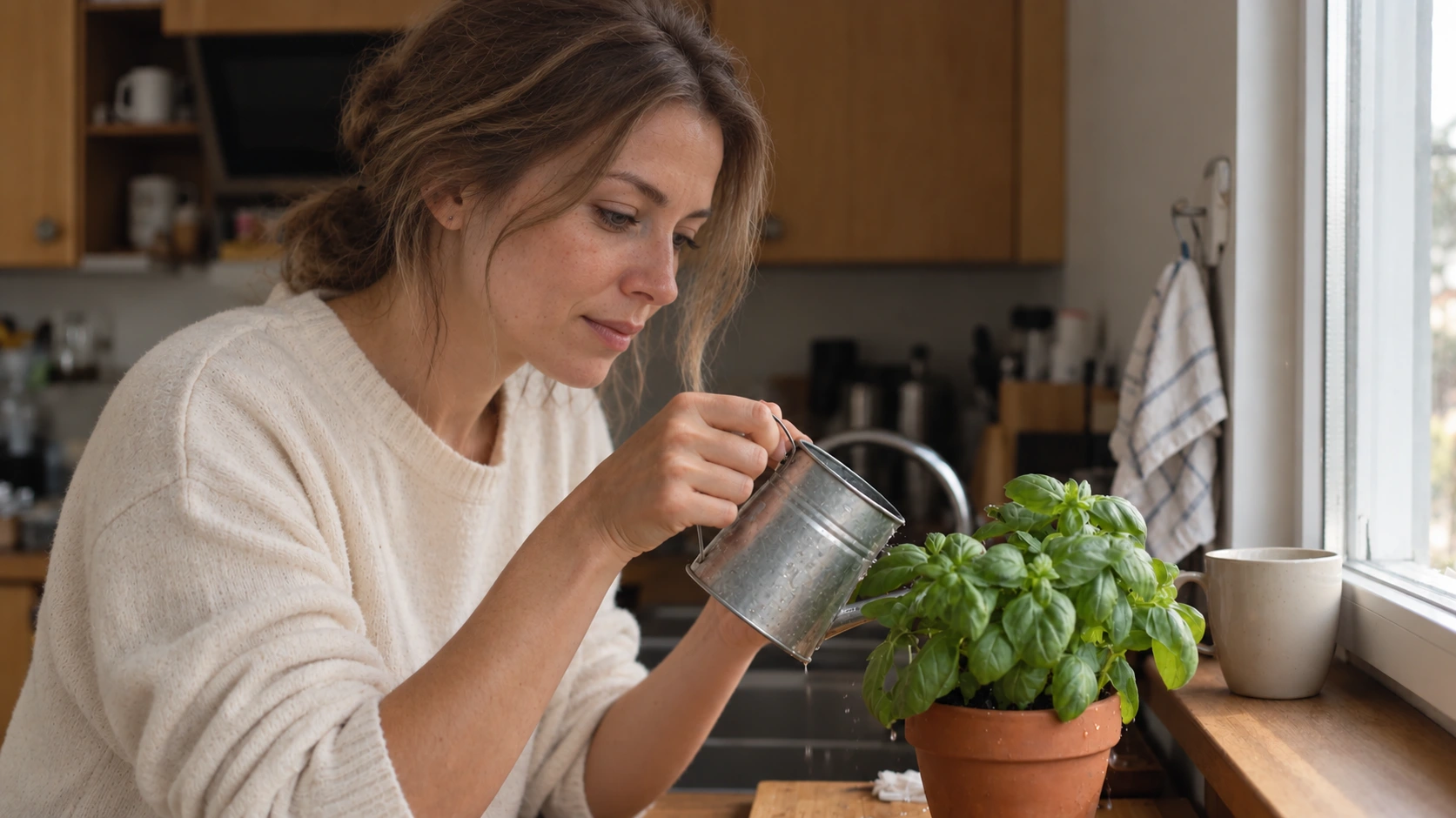
Every Gulf Coast gardener knows the moment. It is late June, the basil has gone from six inches to knee high in a month, the mint has escaped whatever you planted it in, and the rosemary needs a haircut it will not miss. You have already handed bundles over the fence to the neighbors. You have made pesto twice. The plants keep producing anyway, because along the upper Texas coast they simply do not stop.
Houston sits in USDA Zone 9b on the updated 2023 hardiness map, up from 9a, with a normal frost free stretch running from about February 14 to December 11. That is roughly 300 growing days. Add 50 inches of annual rain and Augusts averaging 94 degrees, and you have a climate that pushes herbs harder than most of the country ever sees. A surplus is not a sign you planted too much. It is what gardening here produces.
The question is what to do with all of it.
Why the Surplus Is a Gulf Coast Specialty
The long season is only half the story. The other half is that fall, not spring, is the better planting window here. Texas A&M AgriLife has promoted the second spring idea for years, and the logic holds up: plant in September or October and roots establish through a mild winter, well before the next summer arrives. Herbs set out in fall come through the cold already established and hit April running.
That means mint, oregano, thyme, and rosemary grow more or less year round in Harris County, while basil produces from April until the first real cold snap. Three or four plants that would make a modest herb bed in Ohio turn into a production line down here.
One thing worth settling before you amend anything. Coastal Houston gumbo is not the alkaline Blackland Prairie clay most national gardening advice assumes. Our coastal soils are the Lake Charles and Beaumont series, Vertisols running 45 to 60 percent clay, described in USDA soil surveys as neutral to acidic through the root zone. What they share with the inland clays is the shrink swell habit, cracking open in drought and sealing shut when wet. That drainage behavior, not pH, is what kills Mediterranean herbs here. A soil test through the Texas A&M Soil, Water and Forage Testing Laboratory settles the question for your yard rather than your region.
The Three Big Producers
Basil grows explosively in our heat, but classic Genovese types collapse to downy mildew, caused by Peronospora belbahrii, which first appeared in the United States in south Florida in the fall of 2007 and reached the Gulf Coast soon after. The fix is genetics. The Rutgers breeding program produced four resistant varieties that gave 46 to 99 percent control in replicated field trials: ‘Devotion’, ‘Obsession’, ‘Passion’, and ‘Thunderstruck’. ‘Amazel’ and the ‘Prospera’ line carry the Pb1 resistance gene and performed close to perfectly in the same research. Older tolerant varieties are far weaker, with ‘Eleonora’ managing only 26 to 34 percent control.
Treat resistance as an advantage rather than immunity. New races of the pathogen have already begun breaking single gene protection, so pair a resistant variety with wide spacing, drip irrigation instead of overhead watering, and morning harvests that let the foliage dry.
Mint has the opposite problem. It grows too well. Peppermint and spearmint both thrive here, and ‘Kentucky Colonel’ spearmint is the Texas standard for juleps and mojitos. Plant it in a container or a sunken bottomless pot unless you want it in the St. Augustine by next season. Watch for mint rust, which shows as orange pustules on the undersides of leaves and moves quickly in our humidity. Water at the base, thin the stand for airflow, and pull affected stems rather than trying to spray your way out.
Rosemary is the one that catches people out, and not for the reason they expect. Cold plays a part, but humidity and wet roots do more damage. The cultivars that survive here trace back to Texas horticulture history.
‘Arp’ was found in 1972 by the late Madalene Hill growing in the East Texas town of Arp; she sent it to the US National Arboretum, which released it after it came through minus 10 degrees. Its sport ‘Madalene Hill’, usually sold as ‘Hill Hardy’, is good to around zero. Unnamed nursery rosemary is often reliable only to about 20 degrees, which is why so many died in February 2021 when Winter Storm Uri put all 254 Texas counties under a freeze. Plant a named cultivar in a raised bed with plenty of grit and it will outlast the gardener.
What Most People Do With the Extra, and Where It Falls Short
Air drying works for rosemary and thyme, which hold little water in the leaf. It fails for basil and mint in our humidity, where high moisture foliage molds before it finishes drying. A dehydrator solves that, and freezing, whether chopped into ice cube trays or blitzed into pesto, holds basil flavor better than drying ever will.
Infused oils deserve a warning. Fresh herbs submerged in oil create exactly the low oxygen, low acid conditions Clostridium botulinum needs. Extension guidance from Oregon State and Penn State agrees on the handling: refrigerate fresh herb oils and use them within a few days, or follow a tested acidification method. Dried herb oils are the safer route.
Herb vinegars and herb salts are simple, shelf stable, and worth making. But every one of these methods handles leaf, and none of them handles volume. When you have cut back three feet of mint and taken a foot off the rosemary in the same afternoon, you are looking at a wheelbarrow of material that will not fit in the freezer and is headed for the compost pile.
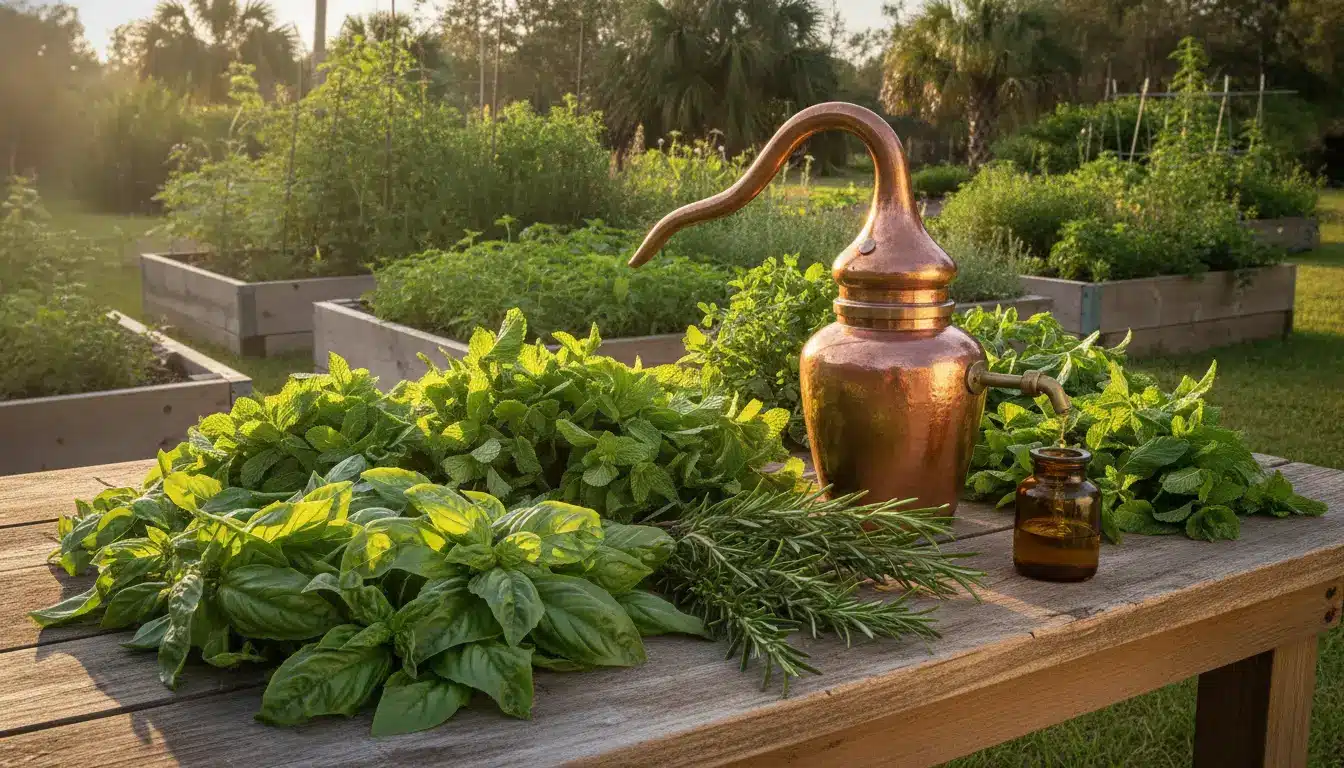
Gulf Coast gardeners often end up with far more mint, basil, and rosemary than they can use fresh. A copper essential oil distiller is an easy way to preserve all that abundance as concentrated oils you can enjoy year-round.
How the Process Actually Works
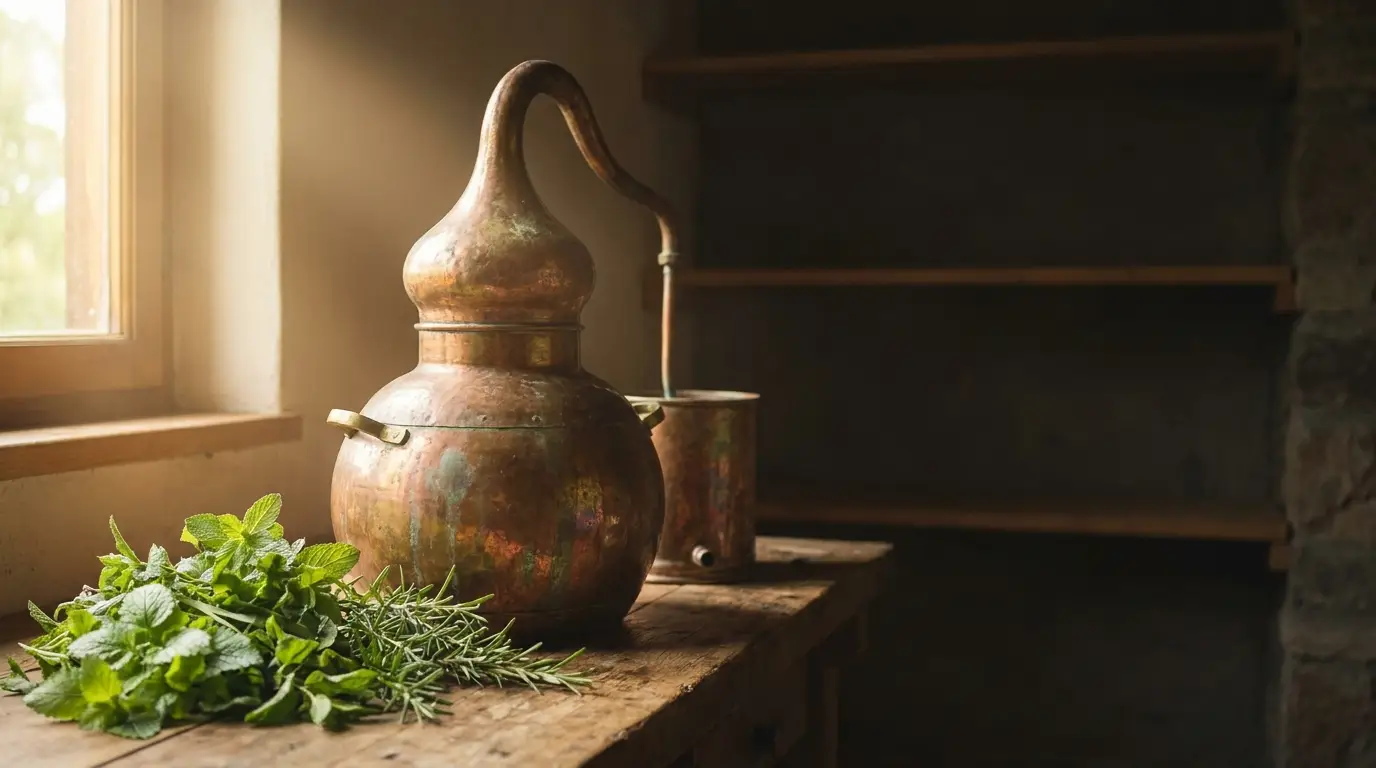
Steam distillation is straightforward once you see it run. Water sits in the bottom of the still, the plant material rests loosely in a basket above it, and rising steam carries the volatile oils up into a condenser where everything cools back to liquid. What drips out is a mixture of essential oil and aromatic water. In a Florentine flask the oil floats and separates on its own.
A copper alembic is the traditional design and the sensible one for home use. Copper spreads heat far more evenly than stainless steel, which prevents the scorching that ruins a run, and it binds sulfur compounds that would otherwise leave an off note in the finished oil. Home units come in 2, 5, 10, and 20 liter sizes. A 5 liter still is the usual starting point and handles a weekend cutback.
Fill the pot about 60 percent with clean water and pack the basket loosely so steam moves through the material rather than around it. Run cooling water through the condenser and keep the heat gentle. A slow, steady drip gives better oil than a fast one. Most runs continue until the distillate stops carrying any scent.
Whether to use fresh, wilted, or dried material depends on the herb, and this is where most beginners go wrong. Commercial peppermint is cut and left in the field for roughly 24 hours before distilling, which drops the water content and lets more leaf fit in the still. Rosemary responds well to about a week of shade drying, which in one study raised oil yield above fresh material. Basil is best run fresh or barely wilted. The short version: wilt the mint, dry the rosemary, distill the basil the day you cut it.
Setting Expectations
Be realistic about volume. Peer reviewed fresh weight oil content runs roughly 0.14 to 0.4 percent for mint, 0.4 to 0.5 percent for basil, and 0.3 to 0.8 percent for rosemary. Several pounds of material gives you a few milliliters of oil. For scale, commercial peppermint fields yield only about 50 pounds of oil per acre. Vendor charts run well above the published research, so plan for the low end.
The chemistry is worth having even in small amounts. Peppermint oil runs 40 to 53 percent menthol, spearmint is dominated by carvone at 50 to 80 percent, and rosemary splits into cineole and camphor types that smell noticeably different from one another. Cut mint just before it flowers, when carvone concentration peaks.
The hydrosol is the underrated half of the operation. It is the aromatic water left behind after the oil separates, and every run produces far more of it than oil. Use it as a linen spray, a room mist, a facial toner, or a light culinary flavoring. Refrigerated in clean glass, it keeps several months to a year. Watch for cloudiness, which means it has turned.
One legal note, since the same equipment does both jobs. Distilling essential oils and hydrosols requires no permit in the United States. Distilling alcohol at home does, and the penalties for skipping that step are not worth testing.
The Payoff
You will not get rich and you will not fill a shelf. What you get is a few milliliters of oil that smells like your own back yard, a bottle of hydrosol for the linen closet, and something to do with the July cutback besides hauling it to the curb. Store the oil in dark glass somewhere cool, where mint in particular holds up well over time.
Keep in mind that homemade oils are concentrated and untested. They belong in aromatics, cleaning sprays, and body care projects, not in food or drink, and they should stay well out of reach of children and pets.