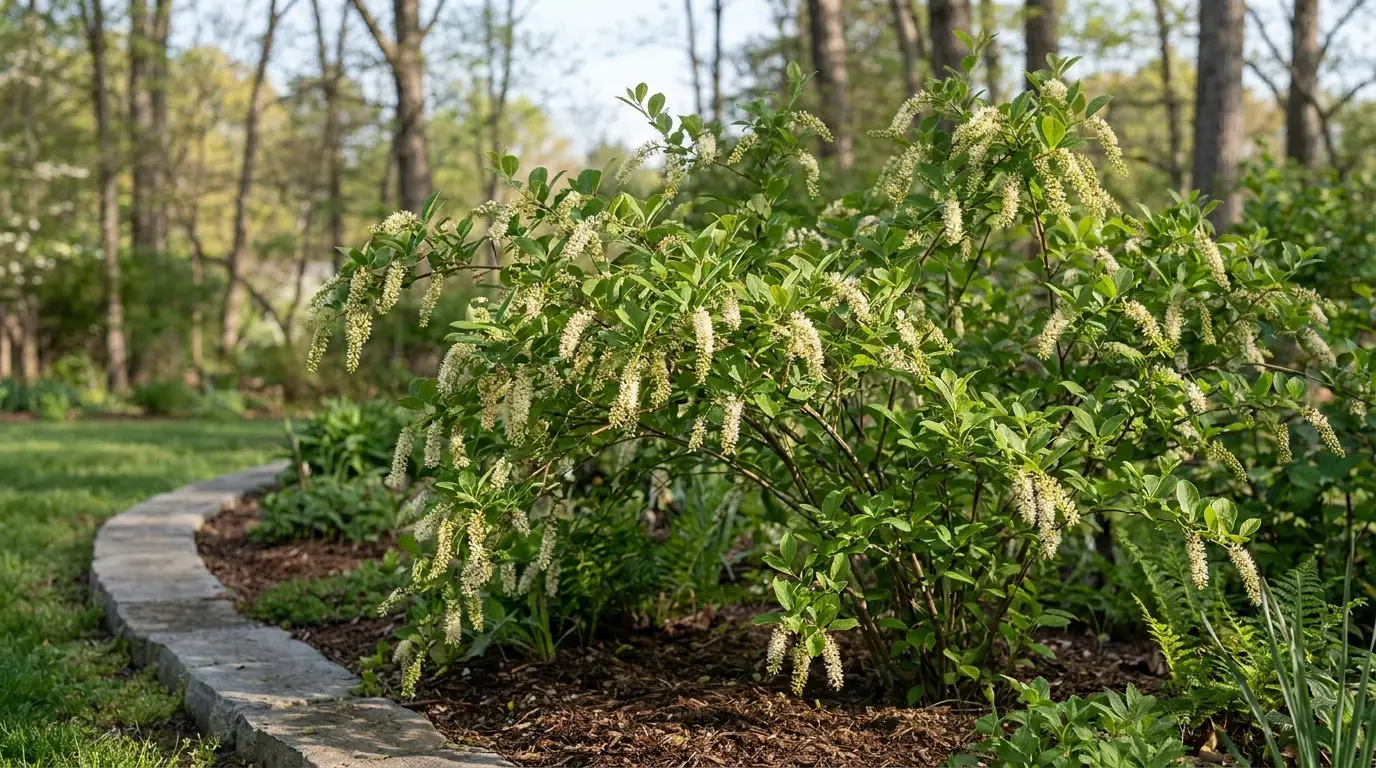
If you’ve been hunting for a shrub that gives your yard something special without demanding much in return, you’ve probably already come across Virginia sweetspire in your search results.
Maybe a neighbor’s yard caught your eye, or a nursery employee pointed you toward it after you mentioned a tricky, damp spot you didn’t know what to do with.
It shows up on a lot of low-maintenance shrub lists, and it’s easy to see why people keep bringing it up.
Either way, here you are, wondering if it’s actually the right fit for your yard. Let’s walk through what you’re getting into before you commit to planting one.
Virginia Sweetspire Quick Plant Profile
Virginia sweetspire is a woody shrub with a rounded shape and a steady spreading habit. Use this quick profile to check its main botanical details at a glance.
| Plant detail | Information |
|---|---|
| Botanical name | Itea virginica |
| Family | Iteaceae |
| Common names | Virginia sweetspire, Virginia willow, sweetspire |
| Plant type | Deciduous to semi-evergreen woody shrub |
| Native status | Native to eastern North America |
| USDA Zones | 5 to 9 |
| Typical size | About 2–8 feet tall, depending on whether you grow the species or a compact cultivar |
| Growth rate | Medium |
| Growth form | Rounded, arching, and suckering |
| Bloom Season | Late spring to early summer, depending on climate |
These basics help set expectations for space and shape. “Suckering” means new shoots sprout up from the spreading roots away from the main plant, which is what gives this shrub its colony-forming habit. Next, you can look at its traits and features that make the shrub easy to identify.
How to Recognize Virginia Sweetspire
Look at the stems, leaf pattern, flowers, fruit, and fall color together to confirm Virginia Sweetspire. Using several signs at once gives you a more reliable match than relying on one feature.
- Stems: Young stems are green or reddish purple. They grow upright, then arch outward with age.
- Leaves: Leaves alternate along each stem. They are oval or elliptical with finely toothed edges.
- Flowers: Fragrant white blooms hang in drooping, bottlebrush-like clusters, 2 to 6 inches long.
- Fruit and fall color: Small seed capsules follow the flowers. Leaves may turn orange, red, burgundy, or purple.
- Species check: Itea virginica is native and usually deciduous, unlike non-native sweetspires.
Expert tip: Check the shrub in multiple seasons. Flowers, leaves, stem color, seed capsules, size, and growth form can help distinguish native sweetspire from non-native sweetspires and swamp titi.
Where Is Virginia Sweetspire Native and What Is Its Natural Habitat?
Virginia sweetspire is native across much of the eastern and southeastern United States, according to Clemson Cooperative Extension’s plant factsheet. Its wild-growing sites explain why it handles wet ground and changing soil moisture so well.
- Native range: It grows from New Jersey to Florida, west through Texas, Oklahoma, Missouri, and southern Illinois.
- Common habitats: You may find it along stream banks, swamp edges, floodplains, and wet pine barrens.
- Wetland link: In much of its range, it’s classed as a wetland-associated plant that tolerates damp soil.
- Built-in tolerance: This helps explain its tolerance for clay, short floods, and shifting soil moisture.
A low or damp spot can suit this shrub, but check how long water remains after rain. Short flooding is usually fine, and established plants can also handle brief dry periods.
How to Grow and Care for Virginia Sweetspire
Virginia sweetspire grows best with steady moisture, suitable light, and proper planting. Timely pruning also supports fuller growth, stronger blooms, and fall color.
1. Light, Soil, and Climate
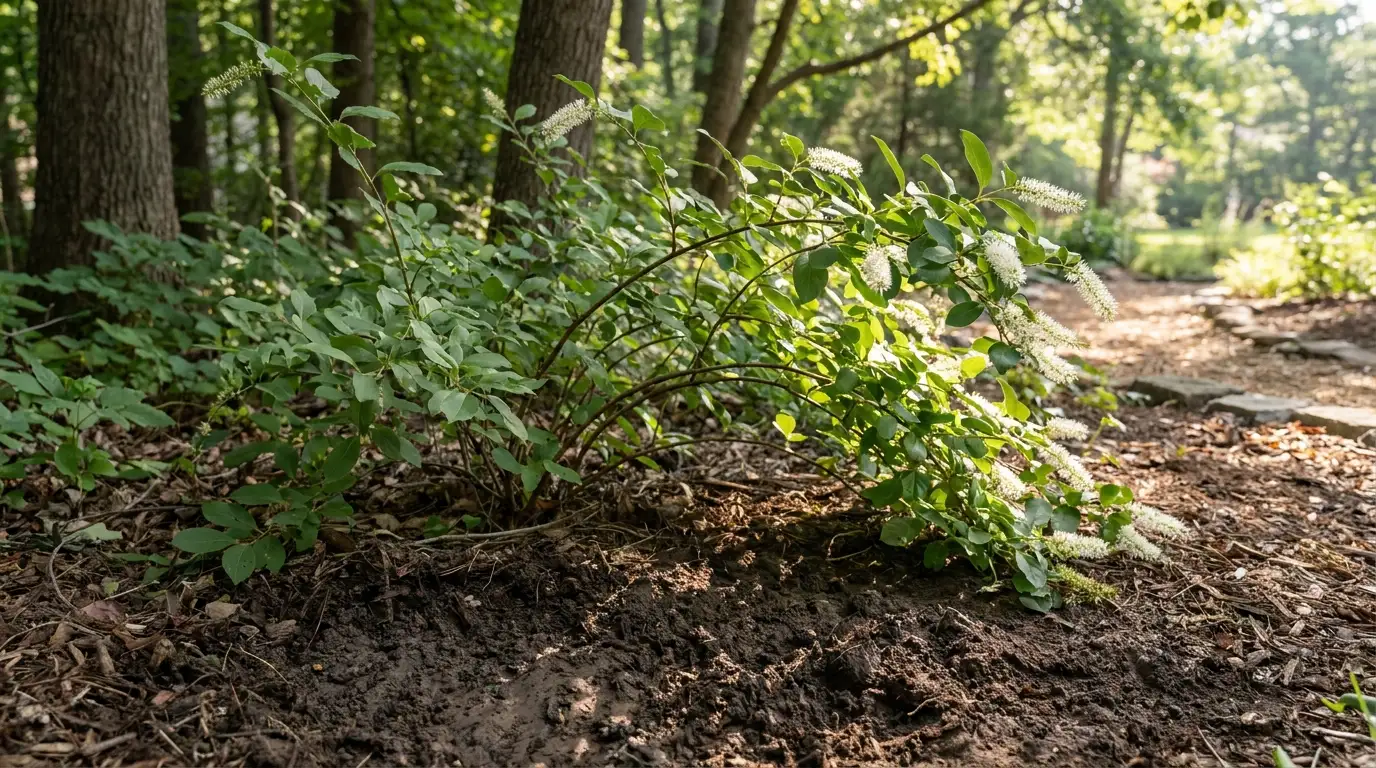
Virginia sweetspire tolerates shade, but more sun generally produces heavier flowering, denser growth, and stronger fall color. It ranks among the top shrubs for shade in yards with limited direct sun. In hot regions, afternoon shade can reduce heat stress.
It prefers moist, humus-rich, slightly acidic soil, yet tolerates clay, average soil, wet ground, and brief dry periods. It grows in USDA Zones 5 to 9, with possible tip dieback (branch tips dying back) in colder areas.
2. Planting, Watering, and Spacing
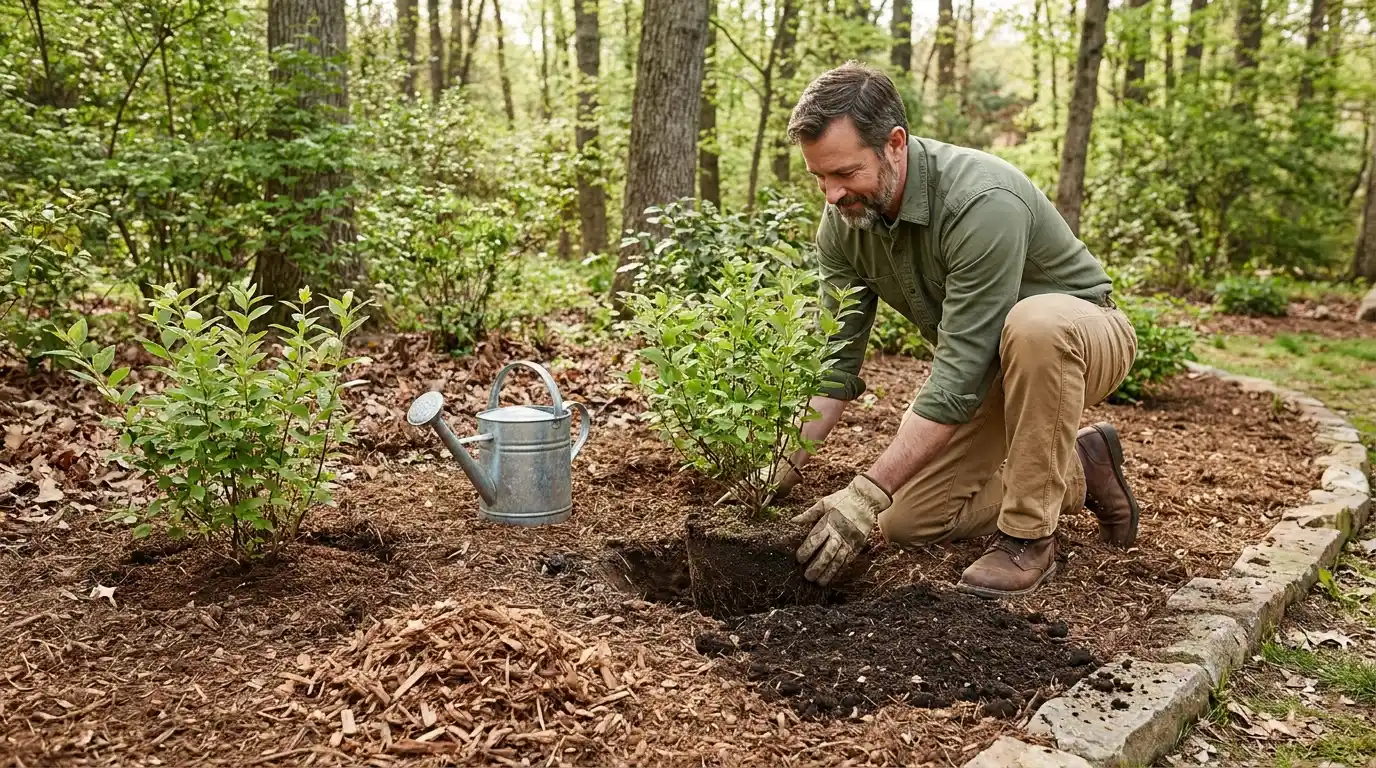
Plant in spring or fall. Dig a hole twice as wide as the root ball, but no deeper, and keep the root crown (where the stem meets the roots) level with the soil.
Water well after planting, then add two to three inches of mulch without touching the stems.
Keep the soil evenly moist while roots form. Space plants by mature cultivar width, usually about three to six feet apart.
3. Pruning, Feeding, and Spread Control
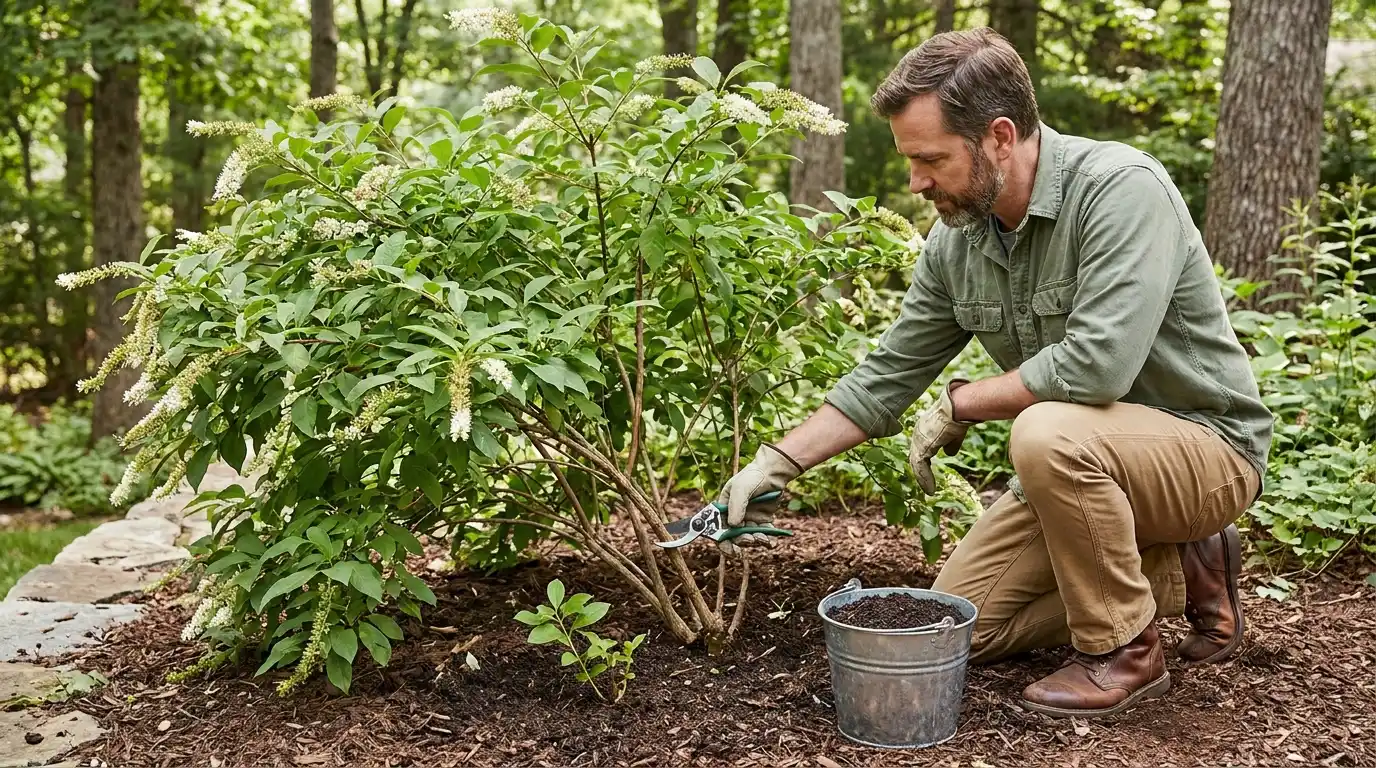
Flowers form on wood grown during the prior season, so prune right after blooming, not in fall or early spring. Remove dead, damaged, or oldest stems only when needed.
Established plants usually need little fertilizer; amend poor soil only when needed. Cut unwanted root suckers at their base. Where you want natural growth or erosion control, leave selected suckers and let them fill the open ground.
Watering tip: Check soil moisture before watering instead of following a fixed schedule. Damp soil rarely needs more water, while dry soil during establishment can slow root growth.
Virginia Sweetspire Landscape Uses and Ecological Value
Virginia sweetspire works best where its spreading roots and arching stems can serve a clear purpose. It suits wet, shaded, and erosion-prone spaces, such as bioswales (shallow, planted channels that filter and direct stormwater runoff), while also supporting insects and birds.
- Wet areas: Rain gardens, bioswales, and sites that flood occasionally, per the NC State Extension plant toolbox.
- Slopes and woodland edges: Its suckering roots help hold soil on moist slopes and woodland edges with filtered light.
- Garden structure: Plant it in informal hedges, shrub borders, or foundation beds for a soft, rounded look.
- Wildlife value: Flowers feed bees and butterflies, dense stems offer birds cover, and the seeds provide food.
- Best planting style: Groups or mass plantings often suit its spreading form better than one isolated shrub.
Give the planting enough room to spread naturally, since narrow beds will need more frequent shoot removal than wider ones.
Which Virginia Sweetspire Cultivars Should You Know?
Wild Virginia sweetspire has a loose, spreading shape. At the same time, named cultivars (plants selected and named for a specific trait, like size or flower color) were chosen for smaller size, fuller flowers, stronger scent, or richer fall color. Your space and preferred seasonal feature should shape which form you plant in your own garden.
1. Full-Size Selections
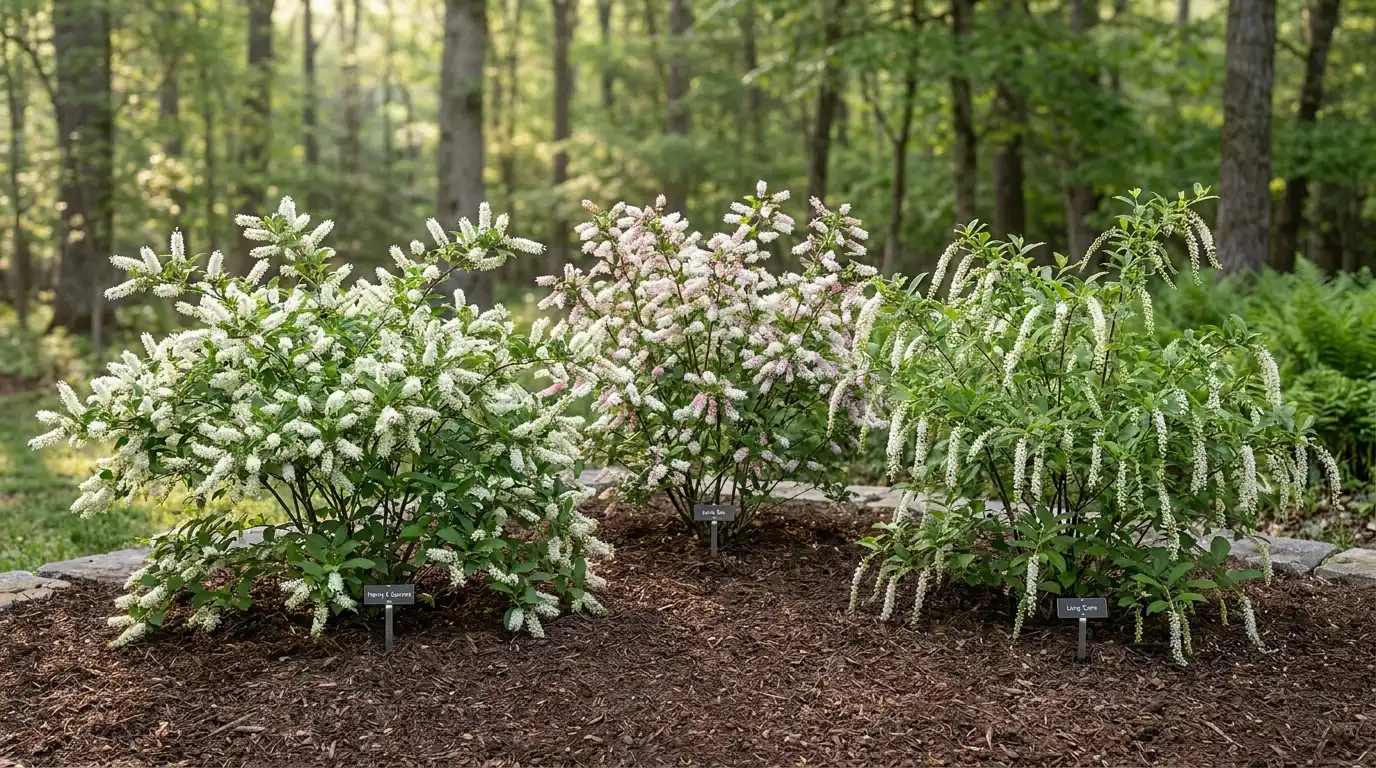
Henry’s Garnet grows about 4 to 6 feet tall and wide, with prominent white flowers and reddish-purple fall leaves. Sarah Eve reaches a similar size and has white flowers held on pink-toned stalks. Long Spire grows about 3 to 5 feet tall and bears longer flower clusters.
These larger forms suit hedges, shrub borders, mass plantings, and open natural areas where their broad form has room to settle and spread.
2. Compact Selections
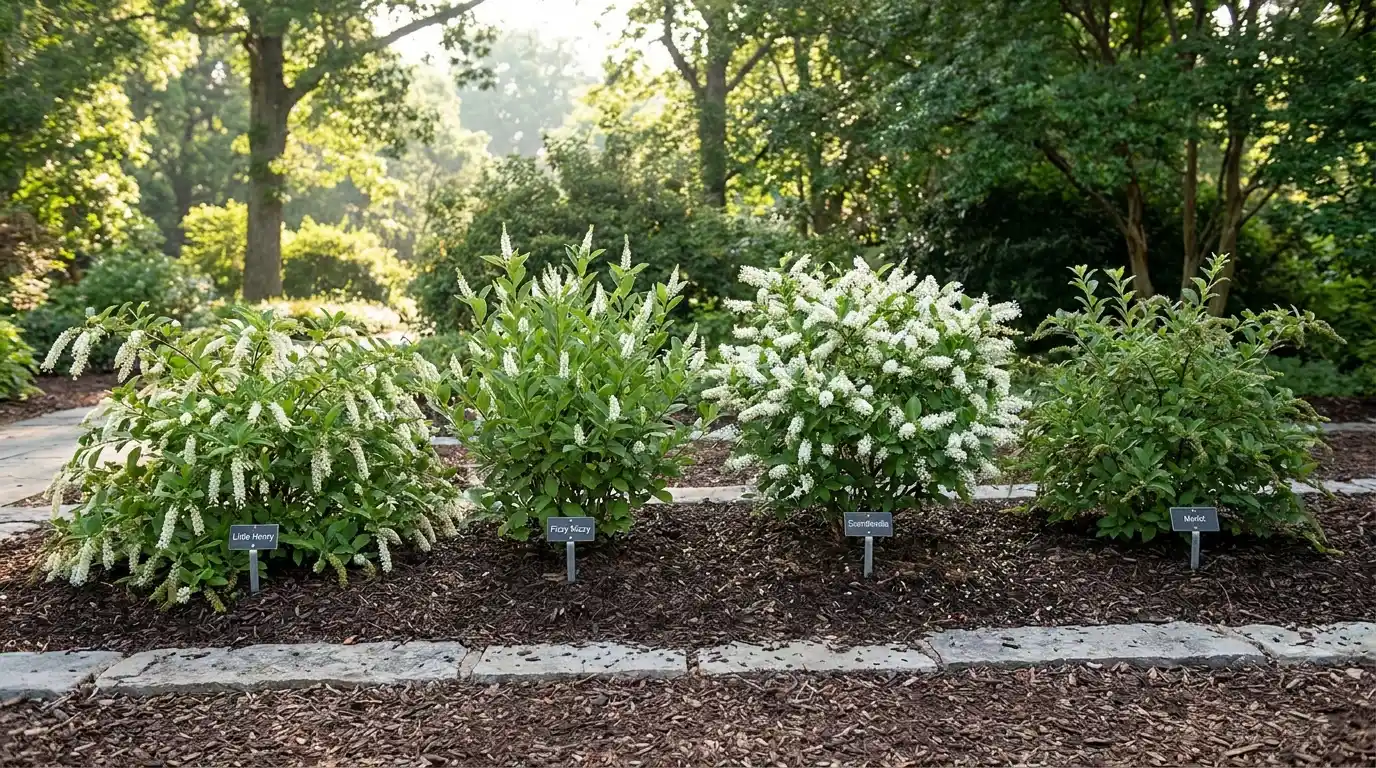
Little Henry stays near 2 to 3 feet and offers red-orange fall leaves. Fizzy Mizzy is also about 2 to 3 feet, but its flower spikes stand upright instead of drooping. Scentlandia has a compact shape and a strong scent, while Merlot grows about 3 to 4 feet with burgundy-red fall leaves.
These choices suit smaller beds, paths, and foundation spaces without taking over a narrow bed or walkway edge.
Sizing tip: Measure the planting area before buying, then compare mature width rather than pot size. A compact name does not always mean a tiny shrub, so matching the final spread to your bed can prevent crowding, blocked paths, and repeated trimming.
Common Problems and What Should You Watch For
Virginia sweetspire has few serious pest or disease problems, and most issues come from soil pH, shade, pruning timing, cold, or excessive spreading. Spotting the cause early can help you correct it before the shrub loses vigor.
- Yellow leaves: Chlorosis can appear in overly alkaline soil, with leaves fading while veins stay green.
- Few flowers: Deep shade can reduce blooming, even when the shrub looks healthy and keeps growing.
- Missing blooms: Pruning at the wrong time can remove flower buds and reduce the following bloom.
- Leaf spots: Bacterial or fungal spots may mark foliage but are usually just cosmetic.
- Cold damage: Branch tips may die back in colder zones, though lower growth often returns.
- Fast spreading: Constantly moist soil can lead to more root suckers and wider colonies than expected.
Before reaching for a treatment, check where the shrub is growing. Yellow leaves, weak bloom, tip damage, or extra suckers often point to soil pH, shade, cold, or constant moisture. Fixing the site issue first can prevent the problem from returning.
Frequently Asked Questions
Is this shrub deer resistant?
Yes, though not completely. Virginia sweetspire is considered moderately deer resistant rather than deer-proof. NC State Extension notes it usually resists deer, drought, wet soil, and fire, but hungry deer may still browse young plants.
Can it grow in a container?
Yes. Compact cultivars such as Fizzy Mizzy and Little Henry can grow in large containers for several years, although they need dependable moisture and may eventually require repotting or root pruning as the roots fill the pot.
How is this shrub typically propagated?
Division is usually easiest, since rooted suckers form naturally along the spreading roots. You can also divide clumps in spring or fall, take stem cuttings from healthy growth, or start new plants from collected seed.
Is this plant toxic to dogs or cats?
Virginia sweetspire is not commonly cited as a poisonous landscape shrub, but authoritative pet-toxicity databases do not appear to provide a specific clearance for Itea virginica. Contact a veterinarian if a pet eats a large amount or develops symptoms.
Is this shrub considered invasive?
No. Itea virginica spreads by suckers and can turn weedy in ideal, consistently moist conditions, but it is not classified as an invasive species. Removing unwanted shoots as they appear can help manage its spread in smaller beds.
Final Thoughts
So, is Virginia sweetspire worth adding to your yard? That’s really a question only you can answer, based on what you’re hoping to get out of it and how much time you want to spend fussing over a shrub.
Every yard has its own quirks, and every gardener has a different amount of patience for upkeep, so take what fits your situation and leave the rest.
If you’re still on the fence, there’s no harm in starting with just one and seeing how it settles in before deciding whether to add more.
And if you do take the plunge, we’d love to hear how it works out in your yard in the comments below.