Between school runs, work calls, and everyone needing a table at the same time, most homes have quietly turned one room into a shared battleground for laptops, textbooks, and tangled chargers. If that sounds familiar, it might be time to stop treating your home office as a single-person setup and start designing it as a genuinely flexible home office — one that can flex between a parent’s workday and a child’s homework hour without a daily negotiation over desk space.
The good news is that building a proper family study space doesn’t mean knocking down walls or buying a house full of new furniture. It mostly comes down to choosing pieces that adapt, and organising the room so more than one person can use it without getting in each other’s way.
Why One Fixed Desk Rarely Works for a Family
A single, fixed-height desk is designed around one person, one task, one posture. The moment a second person needs it — whether that’s a teenager doing revision or a younger child colouring at the same table — that setup starts to break down. Chairs get swapped, the desk is either too high or too low, and someone inevitably ends up working from the sofa with a laptop balanced on their knees.
A flexible home office solves this by building in adaptability from the start: furniture that adjusts, storage that can be reshuffled, and a layout that doesn’t assume only one type of work happens there.
Build the Room Around an Adjustable Desk
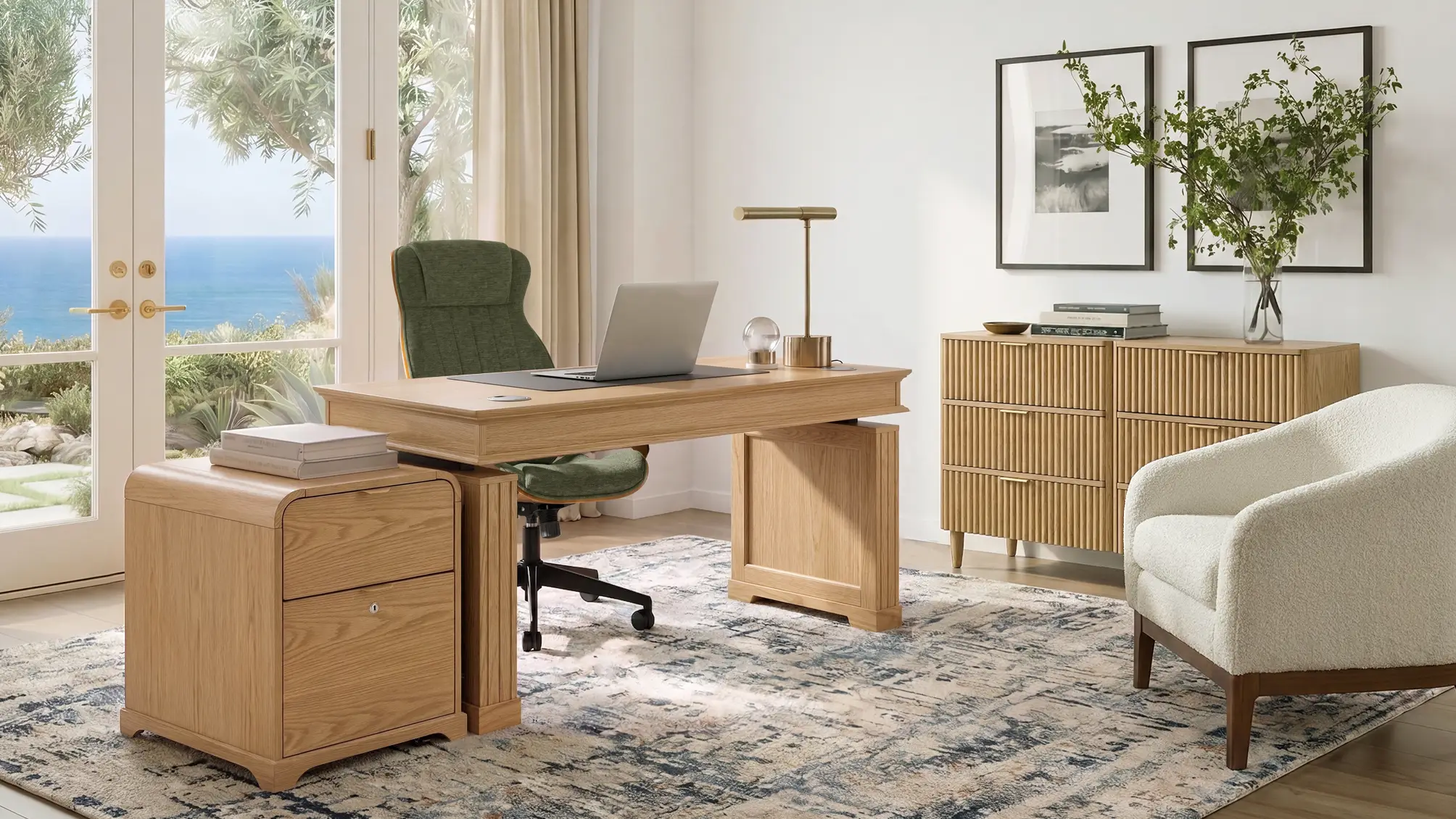
If you’re only going to change one thing, change the desk. A desk that adjusts in height is the single most useful upgrade for a shared space, because it lets the same surface work for a tall adult typing through a full workday and a shorter child doing an hour of homework after school.
This is exactly why so many households are switching to an adjustable standing desk instead of a traditional fixed desk. Beyond just accommodating different heights, a sit-stand desk gives whoever’s using it the option to stand for a while during a long call or a study session, which can help with focus and posture over a full day. When choosing one for a family setup, look for:
- A wide height range, so it comfortably suits both kids and adults
- Memory height presets, useful if multiple people share the same desk at different times of day
- A stable, sturdy build, since it’ll likely be carrying a laptop, monitor, books, and the occasional dropped water bottle
Design for More Than One User
Once the desk itself is sorted, think about how the rest of the room supports multiple people using it across the day. A few practical adjustments make a bigger difference than most people expect:
- Two smaller work zones instead of one big desk. If space allows, a secondary table or a fold-down surface gives a second person somewhere to work without waiting for the main desk to free up.
- Personal storage bins. Give each family member their own labelled tray or drawer for stationery, chargers, and school supplies, so nothing gets mixed up or lost.
- Shared supply station. Keep printer paper, spare pens, and shared tech (like a printer or a set of headphones) in one central spot everyone can access.
- Cable management. With more devices charging at once, a simple cable tray or clip-on organiser keeps the desk from turning into a tangle of wires by Wednesday.
Lighting That Works for Everyone

Good lighting matters more in a shared study space, because different tasks need different things. Reading a textbook, staring at a spreadsheet, and sketching a poster for a school project all benefit from slightly different light. A mix of natural light where possible, plus an adjustable desk lamp, gives everyone the flexibility to dial in what works for them — especially as evenings get darker later in the year.
Keep the Layout Reconfigurable
One thing families often overlook: a home study space shouldn’t be treated as finished once it’s set up. Kids grow, school subjects change, and a work-from-home schedule this term might look completely different next term. Choosing furniture that’s easy to move, adjust, or reconfigure — rather than built-in or overly fixed — means the room can keep up with those changes instead of needing another full makeover every year.
A height-adjustable desk helps here too, since it isn’t tied to one specific user. As kids grow taller or a different family member takes over the space, the desk simply adjusts rather than becoming the wrong size for the room’s new occupant.
Pulling the Room Together
A flexible home office isn’t about cramming more furniture into a small space — it’s about choosing pieces that can do more than one job. Start with a desk that adjusts to the person using it, add storage that keeps everyone’s things separate but accessible, and build in enough lighting flexibility to support different kinds of work throughout the day.
If you’re planning the refresh, Hulala Home UK has a solid range of adjustable desks and home office pieces that are well suited to exactly this kind of shared, multi-purpose setup — a useful starting point whether you’re furnishing the room from scratch or just swapping out the one piece of furniture causing the most friction.