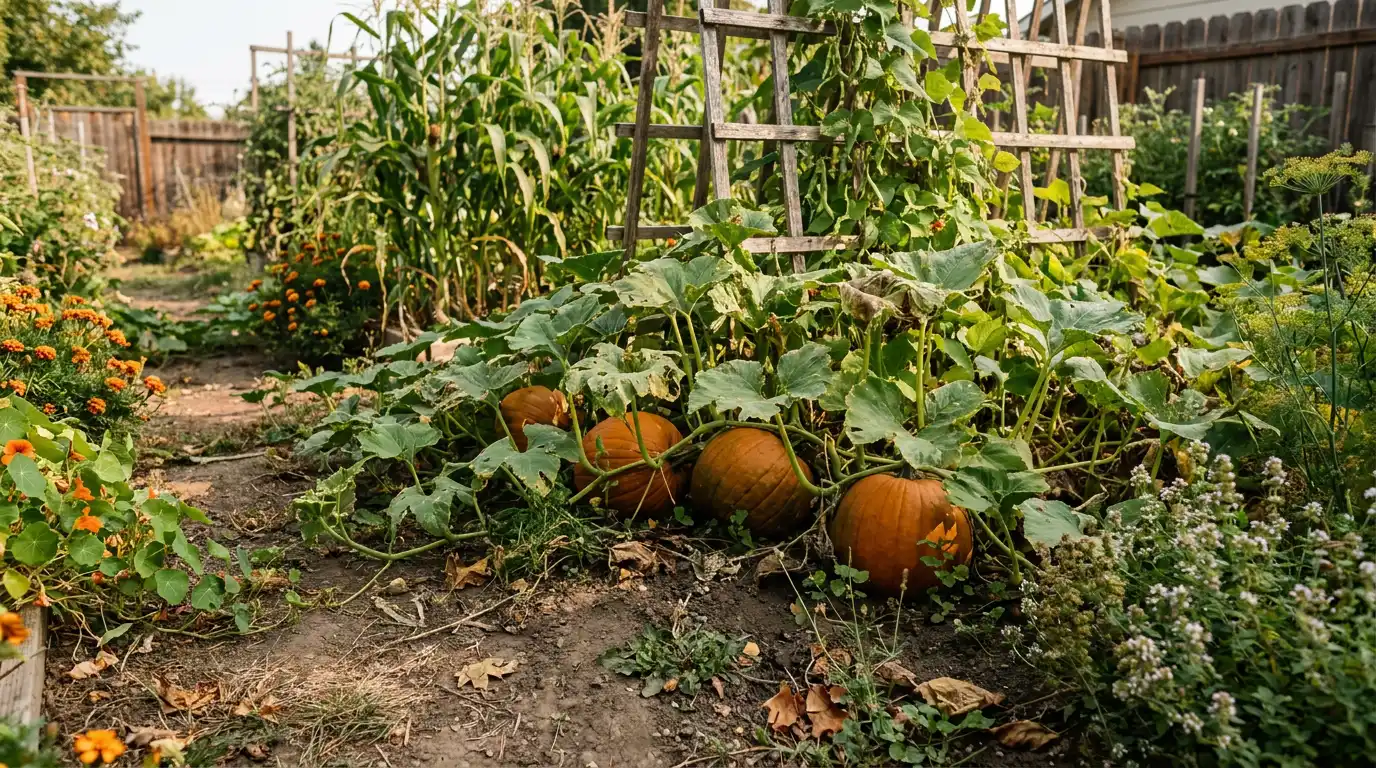
Pumpkins need plenty of sunlight, rich soil, and enough space to spread their vines across the garden. Nearby plants can also affect their growth, pest control, and overall garden health.
Choosing the right pumpkin companion plants helps you plan a better growing space. Some plants support pumpkins, while others compete for nutrients, water, or sunlight.
Learning about bad companion plants for pumpkins can help you avoid common planting mistakes. Below, you’ll find which plants grow well beside pumpkins and which ones should stay away.
You will also find simple tips for arranging your garden, improving plant growth, and creating a healthier pumpkin patch throughout the growing season with careful planning and smart choices for your home garden.
Why Companion Planting Matters for Pumpkins
Companion planting means growing plants together because they can support each other in simple, practical ways. Some plants attract bees, while others shade bare soil and help hold moisture.
Pumpkins are heavy feeders with broad leaves and long vines. Without enough space, they can block sunlight, crowd nearby crops, and compete for water.
Choosing the right pumpkin companion plants can improve pollination, airflow, and garden use. It can also make watering, checking leaves, and harvesting easier.
Still, companion planting cannot replace healthy soil, steady watering, or proper spacing. Knowing which companion plants are bad for pumpkins helps you avoid crowding and plan a more balanced bed.
Best Pumpkin Companion Plants
The best companions support pumpkin growth without fighting for the same space. Each plant should have a clear purpose in your bed, whether you’re growing a classic jack-o’-lantern type or one of the many other pumpkin varieties suited to smaller gardens.
1. Corn
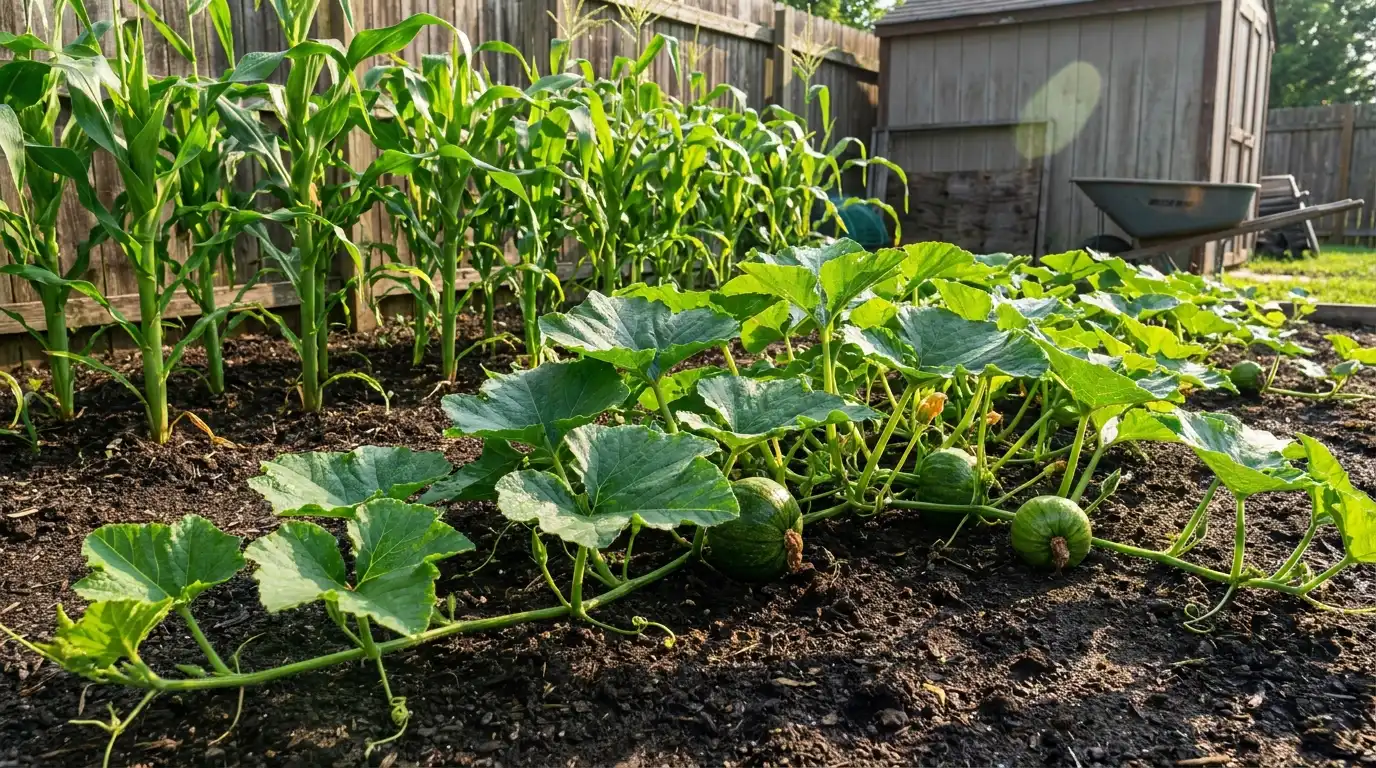
Corn grows upward, while pumpkin vines spread across the ground. This growth pattern helps both plants use different spaces. Pumpkin leaves may shade the soil and slow moisture loss during hot weather. Corn can also offer light shelter from strong winds.
According to Oregon State University Extension, this pairing traces back to the traditional “Three Sisters” planting of corn, beans, and squash, where the corn stalks give climbing beans a natural support.
Leave enough space between corn rows and pumpkin roots. Too much shade may reduce flowering and fruit growth. This pairing works best in large beds with rich soil and steady watering.
2. Beans
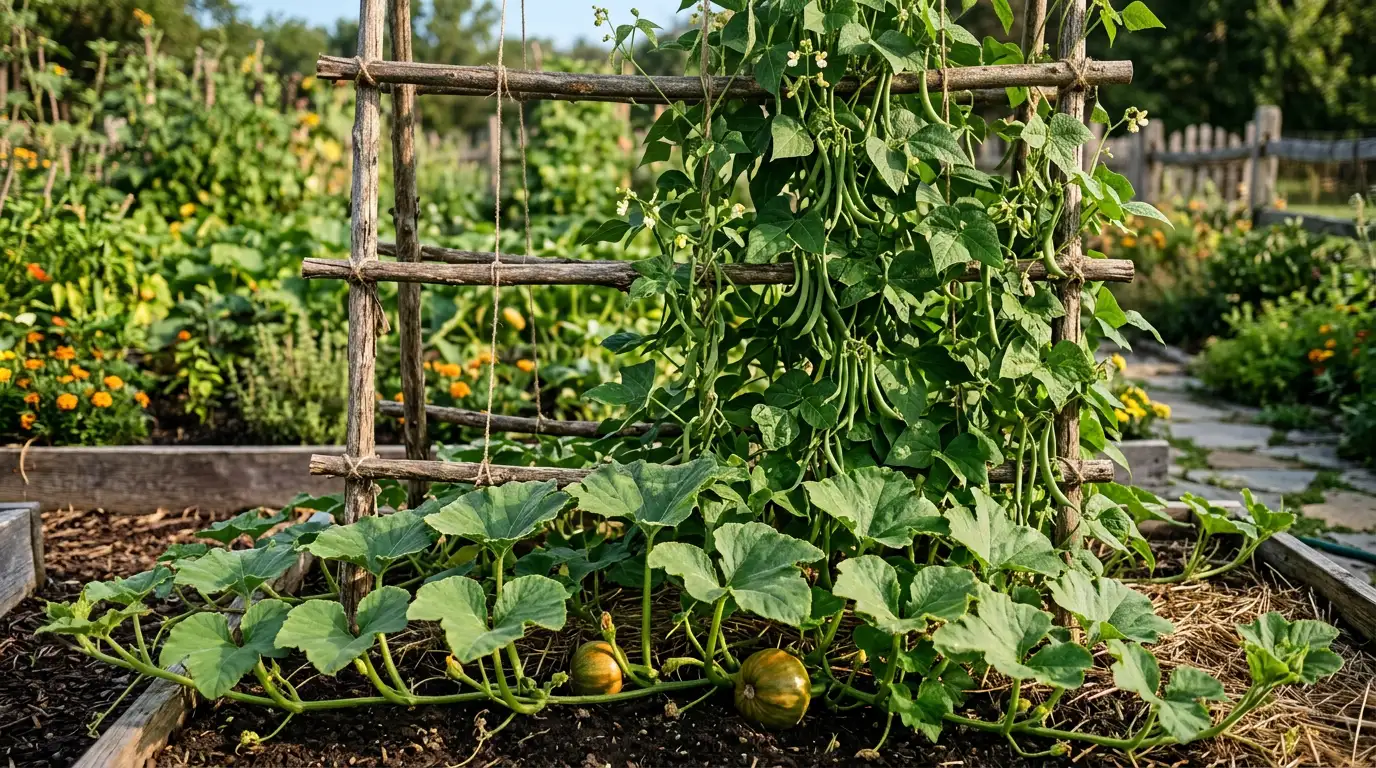
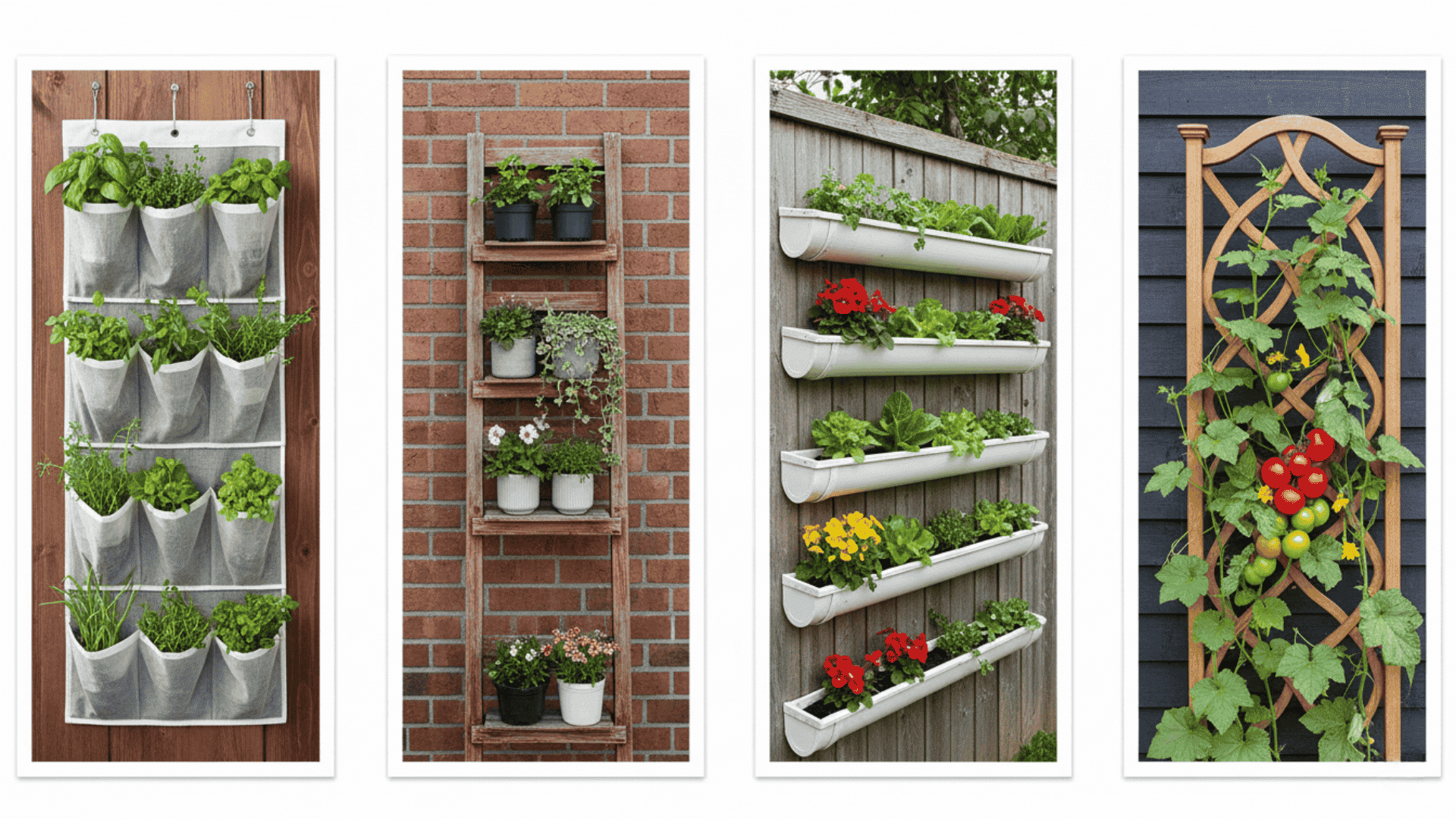
Beans can support soil health by working with bacteria that hold nitrogen near their roots. However, pumpkins still need added compost. Pole beans grow upward and use less ground space than bush types. They work well near strong supports or corn stalks.
Keep bean vines away from young pumpkin plants until both are well established. Tangled vines can make harvesting harder. This combination suits gardeners who want to use vertical space more wisely.
3. Marigolds
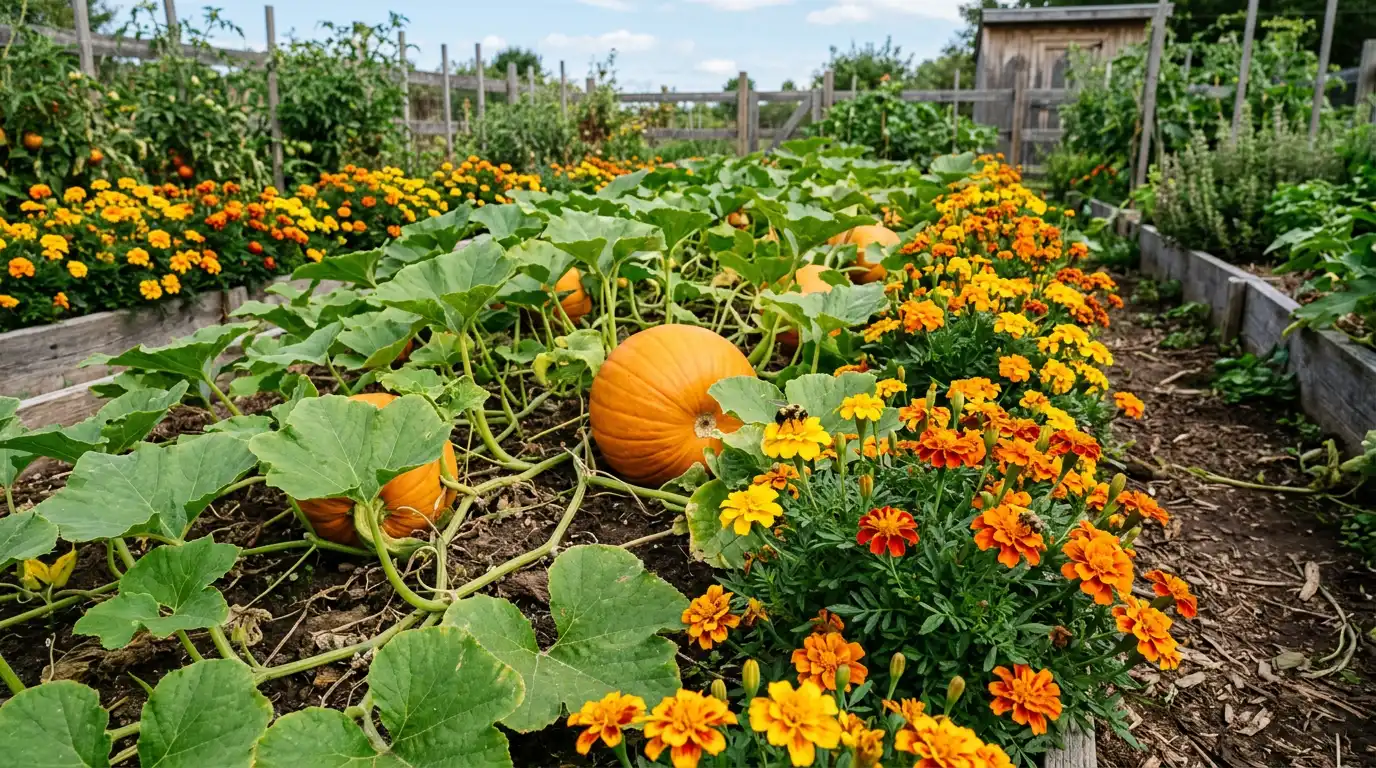
Marigolds add bright flowers near pumpkin beds and may attract helpful insects. Their small size also limits competition with pumpkin roots. Plant them around the bed edges instead of placing them beneath thick vines.
A study cited by the University of Arizona Extension found that planting marigolds around squash-family plants meaningfully reduced damage from squash bugs and cucumber beetles.
They need sunlight to flower well. Edge planting also makes watering and pruning much easier, while keeping the flowers visible to bees. Marigolds work best as part of pest planning, not as a complete solution.
4. Nasturtiums
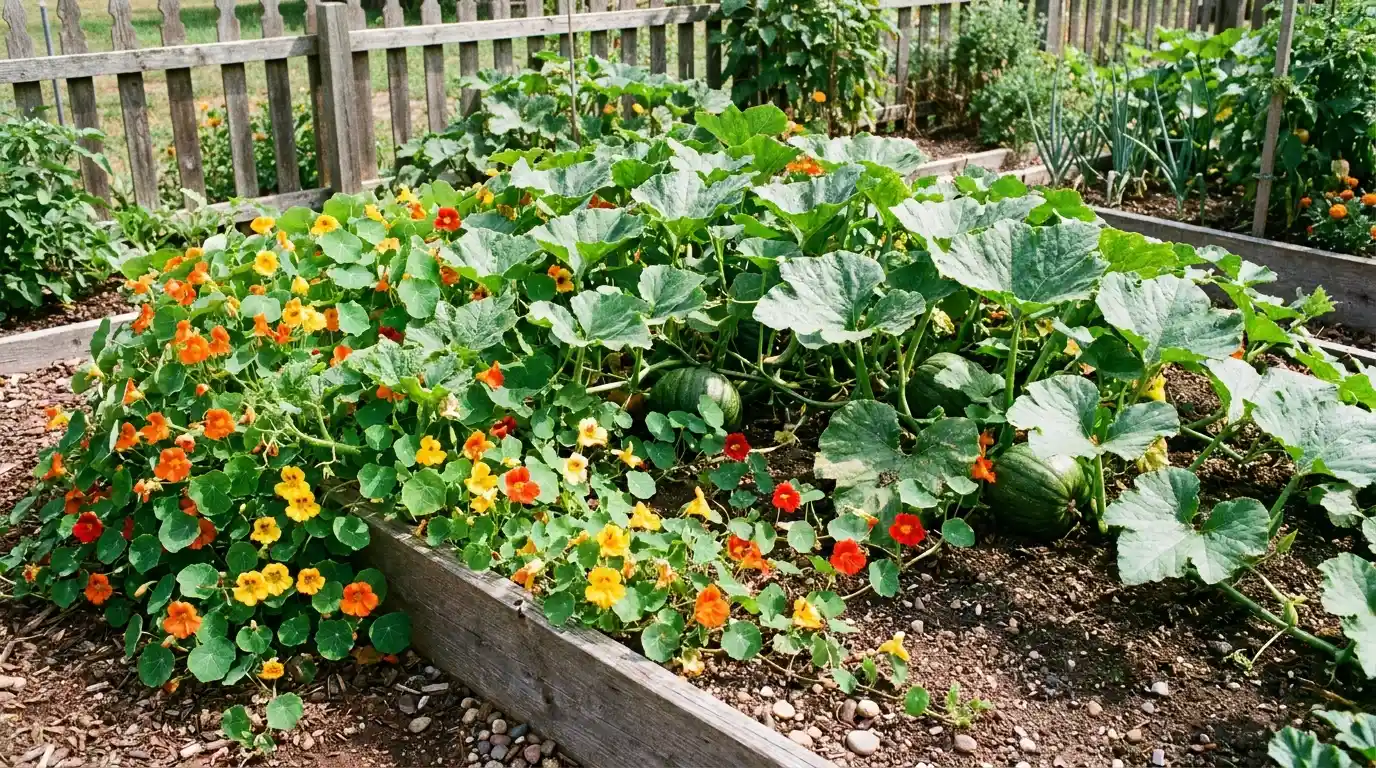
Nasturtiums spread low across the soil and produce flowers that attract bees. Their leaves may also draw some pests away. Place them near the outer edge of the pumpkin patch. This keeps both vines from becoming too tangled.
Nasturtiums grow well in average soil and usually need little feeding. Rich soil can produce more leaves than flowers. Check both plants often, since dense growth can hide insects or damaged leaves.
5. Radishes
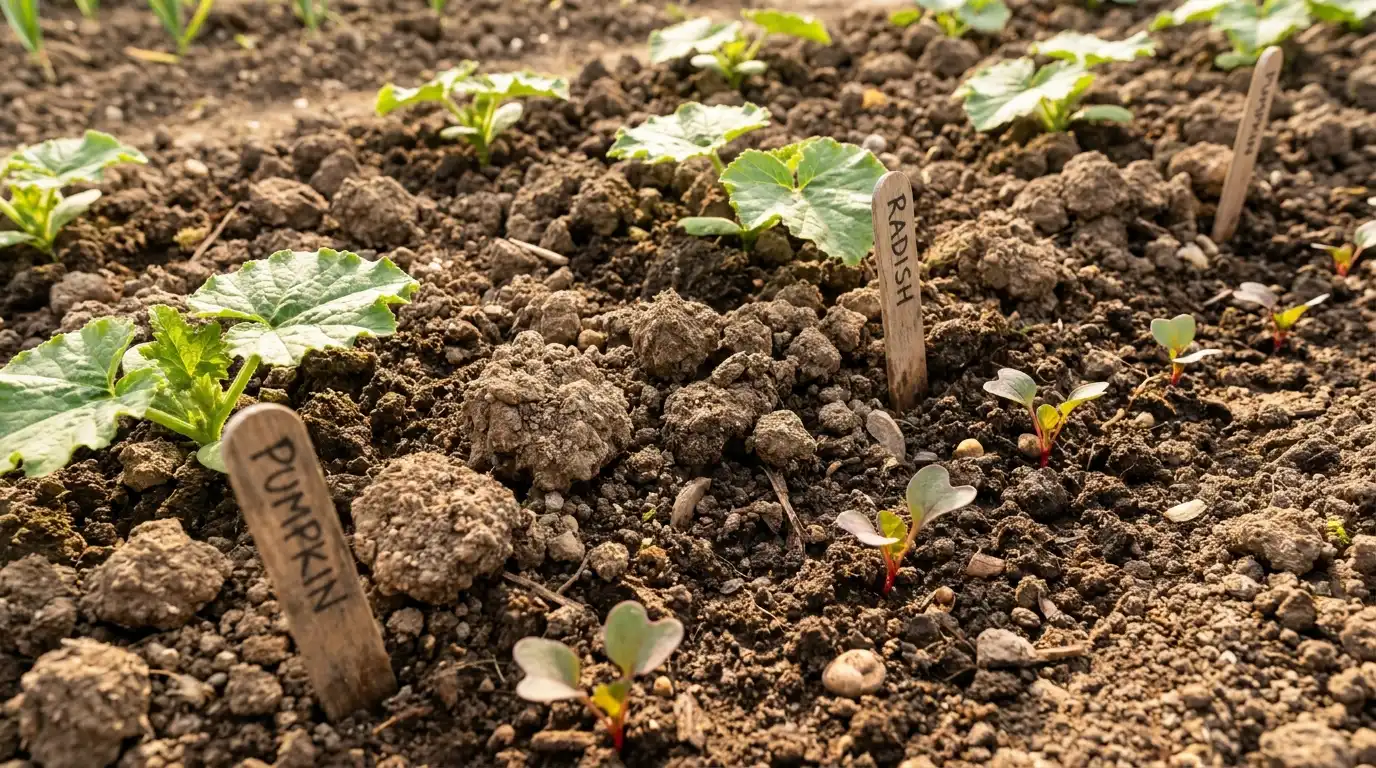
Radishes grow quickly and can be harvested before pumpkin vines cover the bed. This makes good use of early garden space. Their small roots usually create less competition than larger root crops. They also work well between young pumpkin plants.
Plant radishes early, before the pumpkin leaves form heavy shade. Remove mature roots on time to free more space. This pairing is useful when your growing season starts with cool spring weather.
6. Herbs
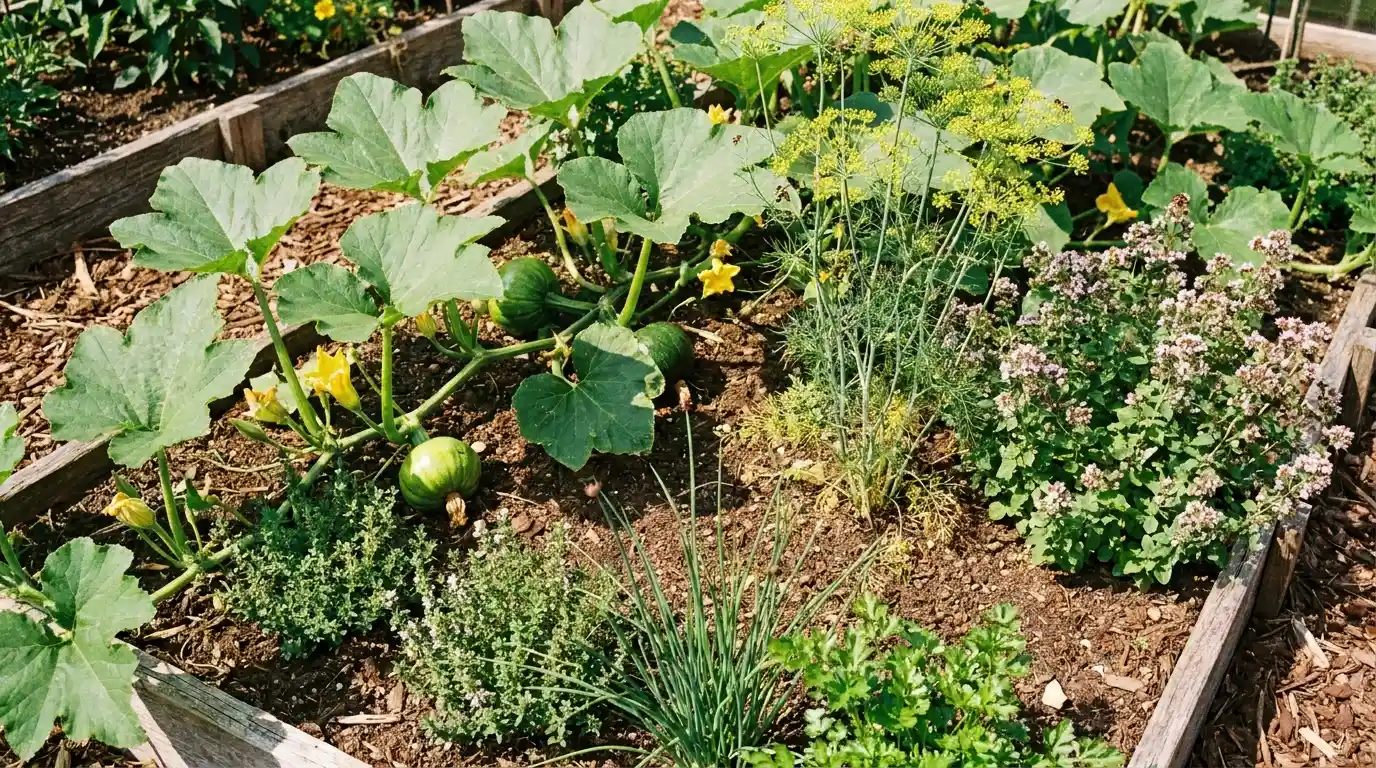
Flowering herbs may bring bees, hoverflies, and other helpful insects near pumpkin plants. Dill and oregano are practical choices. Mint can also attract insects, but it spreads quickly through garden soil. Keep mint inside a pot near the bed.
Avoid placing large herbs directly under pumpkin leaves. Thick shade may slow their growth and reduce flowering. Choose compact herbs that handle sun and do not need constant digging around their roots.
Quick Companion Plant Comparison:
| Companion plant | Main benefit | Best placement | Main concern |
|---|---|---|---|
| Corn | Uses vertical space | Behind pumpkin vines | May create too much shade |
| Pole beans | Supports soil activity | On a strong trellis | Vines may become tangled |
| Marigolds | Attracts helpful insects | Around bed edges | Needs direct sunlight |
| Nasturtiums | Draws pollinators | Along outer borders | Can spread across paths |
| Radishes | Uses early open space | Between young plants | Must be harvested early |
| Dill or oregano | Attracts insects | Near sunny bed edges | May struggle under vines |
Choose two or three companions instead of filling every open area. Pumpkins still need space, water, light, and moving air.
How Companion Plants Help Pumpkins
Companion plants may improve a pumpkin bed in several simple ways. Their value depends on plant choice, spacing, and local conditions.
- Pest support: Flowers can attract insects that feed on common garden pests.
- Pollination: Blooming plants may bring more bees near male and female pumpkin flowers.
- Soil cover: Low plants can shade bare soil and reduce fast moisture loss.
- Space use: Upright crops leave more ground room for long pumpkin vines.
- Early harvests: Fast crops can grow before pumpkin leaves cover the bed.
These benefits work best when plants are healthy and properly spaced. Crowded planting may create more problems than it solves.
Bad Companion Plants for Pumpkins
Some plants compete with pumpkins for space, water, sunlight, or soil nutrients. Keeping these crops apart can make your garden easier to manage.
1. Potatoes
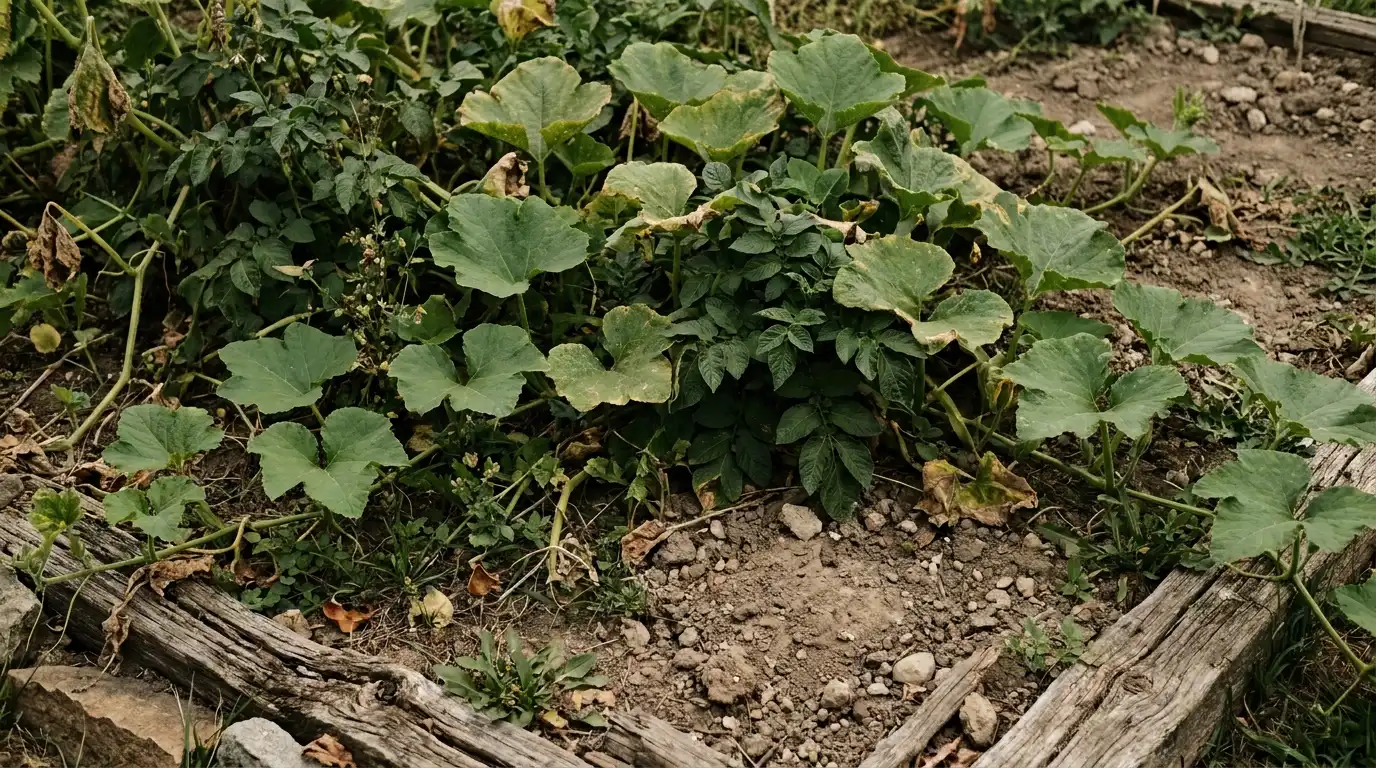
Potatoes and pumpkins both need rich soil, steady water, and regular feeding. Growing them together can leave both crops underfed. Potatoes also need digging during harvest, which may damage pumpkin roots and trailing vines. Dense leaves can reduce airflow near the soil.
Potatoes are usually kept in another bed for easier care. This separation makes watering, feeding, harvesting, and checking for pest problems less disruptive.
2. Cabbage Family Crops
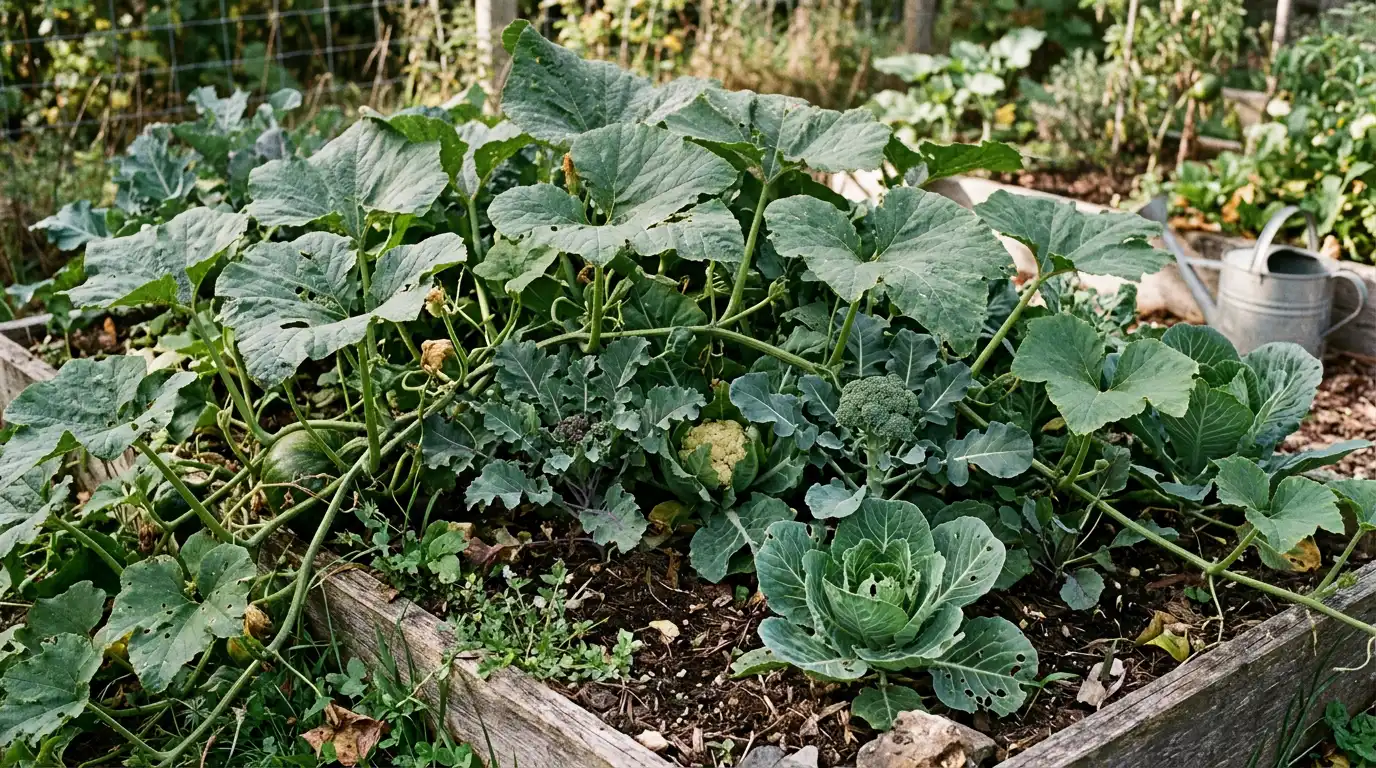
Cabbage, broccoli, cauliflower, and kale need fertile soil and regular watering. These needs can create strong competition beside hungry pumpkin plants. Their broad leaves may also become hidden under spreading pumpkin vines.
Reduced sunlight can slow growth and make pest checks harder. Place these crops in a separate bed whenever possible. You will have better control over spacing, feeding, airflow, and harvesting throughout the season.
3. Fennel
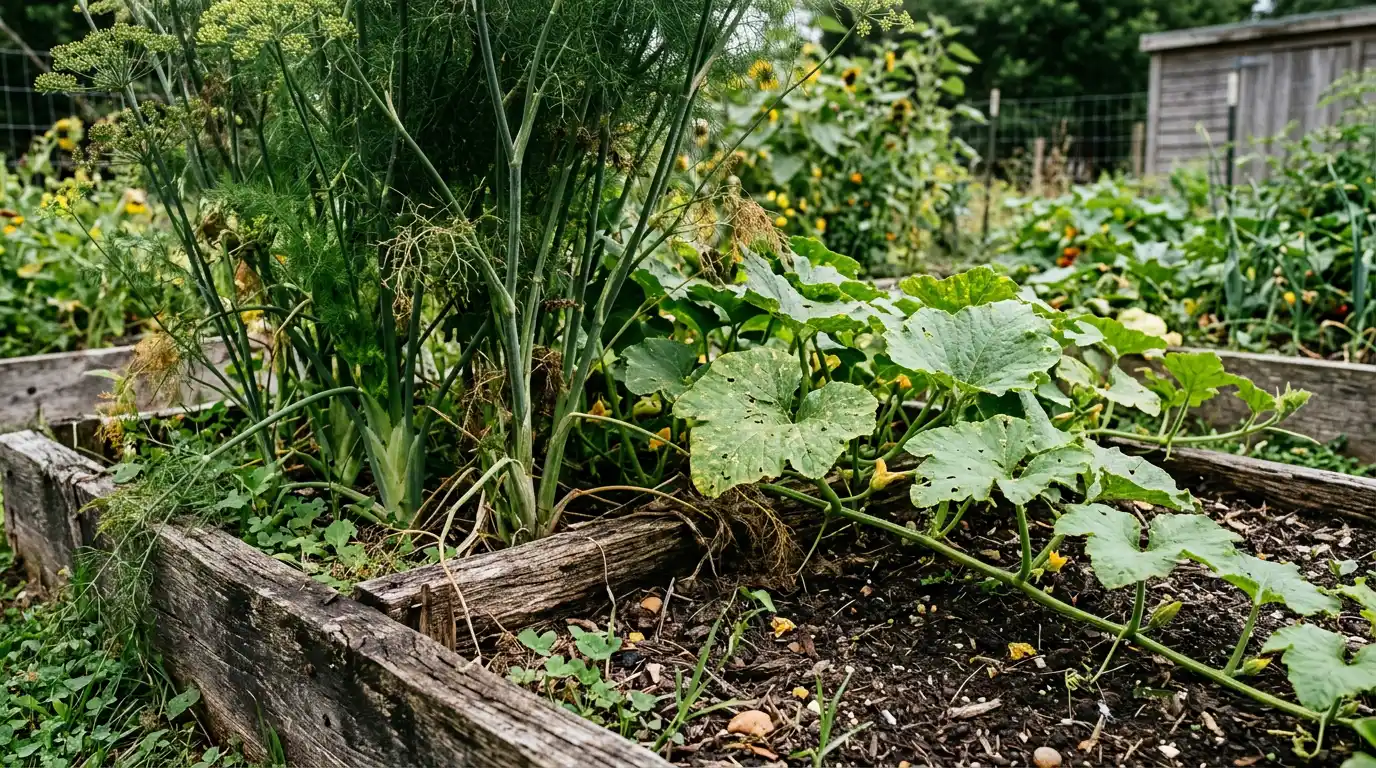
Fennel grows tall and develops a wide root area. It may compete with young pumpkin plants for water, sunlight, and growing space. Its height can also cast shade across smaller vines during early growth.
Mature fennel may become difficult to reach once pumpkin leaves spread. Keep fennel in its own garden area or a large container. This gives both plants enough room without creating crowding around the pumpkin crown.
4. Carrots and Beets
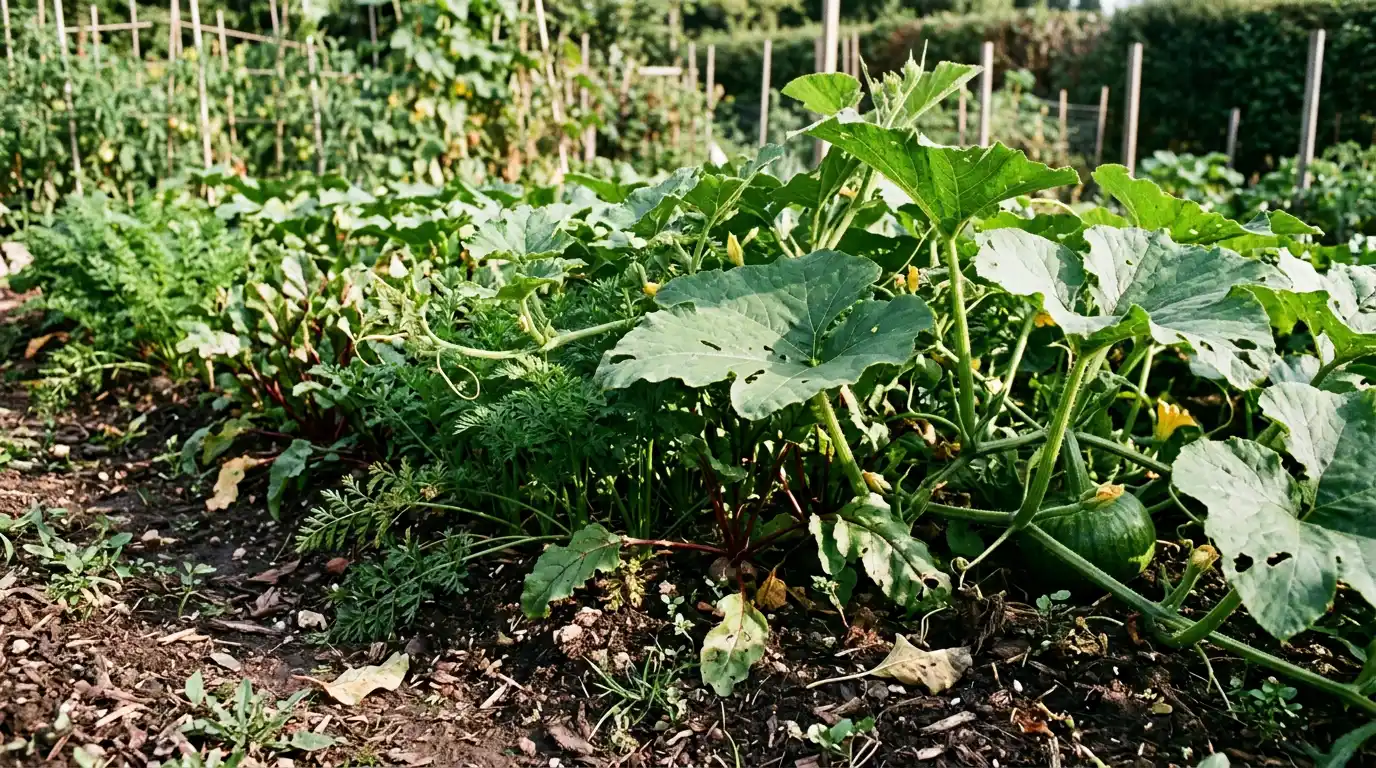
Carrots and beets may grow well before pumpkin vines become large. However, mature vines can cover their leaves and limit sunlight. Harvesting root crops also requires digging near the soil.
This can disturb shallow pumpkin roots or damage vines resting across the bed. Grow these crops in separate rows or harvest them early. Clear spacing makes watering, digging, and checking both crops much easier.
5. Melons and Other Squash
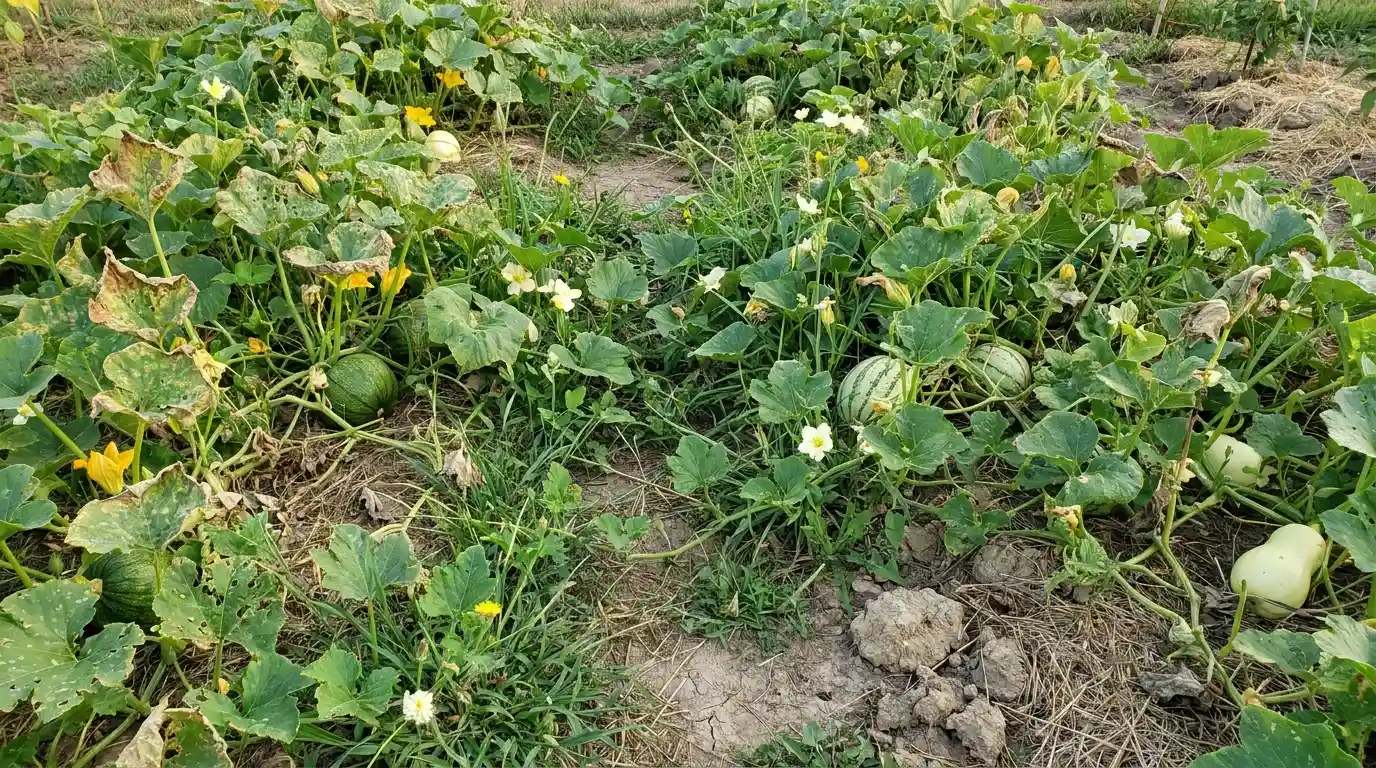
Melons, cucumbers, and other squash plants produce long vines like pumpkins. Their growth can quickly create tangled leaves and crowded garden paths. These plants also share similar water, feeding, and space needs. Zucchini in particular runs into the same crowding issues, as covered in zucchini companion plants.
Crowded vines make pest checks, pruning, and harvesting much harder. Separate large vine crops when your garden space allows. This reduces competition and helps you track each plant’s health more clearly.
Other Companion Plants to Consider
Beyond the main plants already covered, a handful of others are worth knowing about, some for the small benefits they add along the bed edges, and others for the competition they create.
| Companion Type | Other Plants to Consider |
|---|---|
| Other Helpful Companions | Borage: attracts bees and beneficial insects; Chamomile: attracts hoverflies that feed on aphids; Lavender: brings in pollinators and may deter some pests; Catnip: may deter squash bugs and cucumber beetles; Spinach: grows early and can be harvested before vines spread. |
| Other Plants to Keep Away | Onions & Garlic: harvesting can disturb pumpkin roots; Sunflowers: can shade vines and compete for water when too close; Eggplants & Peppers: compete with pumpkins for nutrients. |
None of these need a dedicated bed or a wide separation to matter; a little distance for the crops to avoid and a few plants tucked along the edges for the good ones is usually enough to strike the right balance.
Common Companion Planting Mistakes
Choosing the right companion plants is only part of the process. How you space, arrange, and care for them matters just as much, so avoiding a few common mistakes can help your garden stay healthier and easier to manage.
- Planting Too Closely: Young plants may look small, but pumpkins and other vines expand quickly. Space plants for their full-grown size, not their seedling size.
- Ignoring Mature Size: Wide leaves can cover herbs, flowers, and root crops as they grow. Check each plant’s mature spread before placing shorter crops nearby.
- Mixing Heavy Feeders: Several hungry crops planted together can quickly drain the soil. Pair heavy feeders with light feeders, or add extra compost.
- Using Spreading Herbs: Mint and similar herbs can take over a bed without a barrier. Grow spreading herbs in pots or buried containers instead.
- Forgetting Airflow: Thick, crowded leaves can hold moisture and raise disease risk. Thin plants or space rows so air can move through freely.
- Relying Only on Companions: Plants still need watering, feeding, and pest checks on their own. Keep up regular care even with helpful companions in place.
Once these basics are in place, companion planting becomes much easier to manage and more useful as part of your overall garden care.
How to Plan a Pumpkin Companion Garden
Start with the pumpkin plant, then build the bed around its mature size. Small seedlings can become very large within weeks.
Use these steps before planting your companions.
- Choose full sun: Give pumpkins at least six hours of direct daily sunlight.
- Prepare rich soil: Mix finished compost into the bed before planting.
- Plan vine direction: Guide vines toward paths or unused open ground.
- Use bed edges: Place flowers and compact herbs around the outer area.
- Add vertical plants carefully: Keep corn and trellises from blocking afternoon sun.
- Leave open space: Allow room for airflow, watering, checking leaves, and harvesting.
Watch the bed as plants grow. You may need to redirect vines or remove a struggling companion.
Frequently Asked Questions
Can Tomatoes Grow Next to Pumpkins?
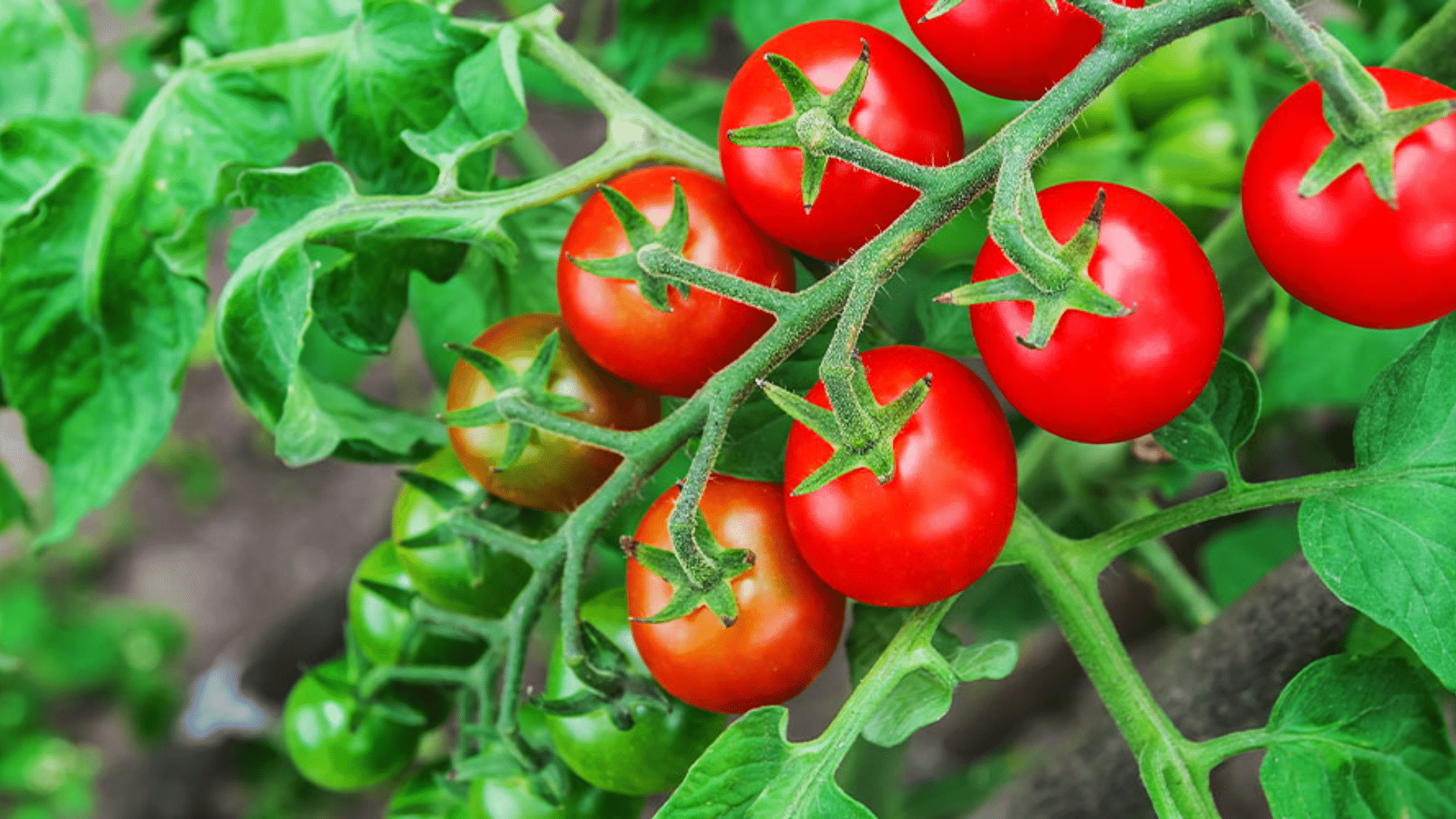
Tomatoes and pumpkins can grow near each other, but both need rich soil and strong airflow. Large pumpkin leaves may shade tomato plants, while crowded growth can make pest checks and harvesting difficult.
Can Cucumbers and Pumpkins Grow Together?
Cucumbers and pumpkins have similar vine growth, feeding needs, and pest risks. They may grow together in a large space, but separate beds usually make watering, airflow, and vine control easier.
Are Sunflowers Good Pumpkin Companion Plants?
Sunflowers may attract pollinators and provide vertical interest near pumpkins. Place them north of the pumpkin bed, since tall stems and large leaves can block sunlight during important flowering and fruit growth stages.
Can Pumpkins Grow With Watermelons?
Pumpkins and watermelons both need wide growing areas, rich soil, and regular water. Their vines often become tangled, which makes pruning, pest control, and harvesting harder in small garden beds.
Do Pumpkins Grow Well Near Herbs?
Pumpkins may grow well near compact flowering herbs such as dill, oregano, or thyme. Keep herbs near sunny bed edges, since large pumpkin leaves can quickly block their light.
Final Thoughts
Growing pumpkins successfully depends on more than choosing the right seeds and planting them at the correct time. A well-planned garden uses helpful companions while avoiding plants that compete or crowd.
Corn, beans, marigolds, nasturtiums, radishes, and selected herbs can work as useful pumpkin companion plants when they have enough space. At the same time, understanding which plants are bad companions for pumpkins helps you prevent problems before they appear.
Simple garden layouts are often easier to maintain and more productive. With careful choices, you can create a balanced pumpkin patch that supports healthy vines, strong flowers, and better harvests throughout the growing season.
Regular checks of soil, leaves, and spacing will help you adjust your garden as the plants grow. Which pumpkin companion plants have worked best for you? Share your experience in the comments.