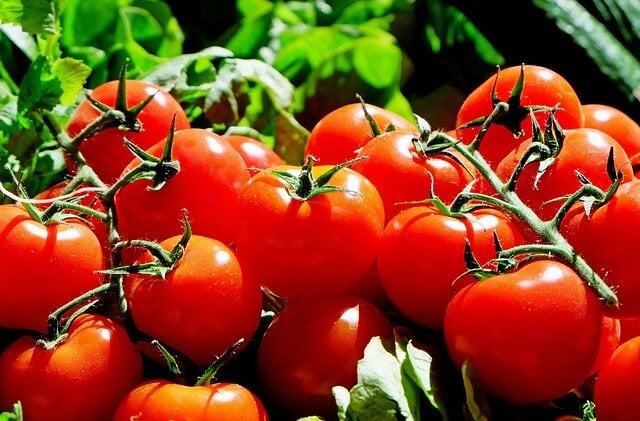
Pruning can grow you bigger, earlier tomatoes. But cut the wrong stems, and you’ll shrink your harvest instead of growing it.
Knowing how to prune a tomato plant the right way comes down to three things: what kind of plant you have, how old it is, and where you’re growing it.
Most vining tomatoes do best with one or two main stems, no leaves touching the soil, and small suckers pinched off before they take hold. Bush tomatoes need almost no pruning at all. Most of their stems are already doing exactly what they should.
This guide walks through the whole process: when to start, what to cut, how much leaf cover to leave behind, and how to adjust your approach for your climate and growing season.
Before You Learn How to Prune a Tomato Plant
Pruning is not required for every tomato plant. Its value depends on your variety, climate, spacing, and growing season, and it pairs naturally with healthy tomato growing habits you build all season. In crowded or humid gardens, pruning can improve airflow and help leaves dry faster.
In hot or widely spaced gardens, keeping more foliage may protect fruit from sunscald and support a larger fruit count.
It also helps to define what “maximum yield” means for you. A heavily pruned plant may produce fewer but larger, earlier-ripening tomatoes.
A plant with more supported stems may produce more fruit when it has enough space and time. The best approach is the one that gives you the healthiest usable harvest from your available growing area.
Understanding the Tomato Yield Trade-Off
Pruning changes how a tomato plant uses its growth. A heavily pruned plant often produces fewer tomatoes, but the remaining fruit may grow larger and ripen sooner because the plant is supporting fewer stems and fruit clusters.
Keeping extra stems can increase fruit count, but only when the plant has enough space, support, and time to ripen the added crop. Pruned single-stem plants also grow more upright, so you can place them closer together. This may increase the total harvest from the whole garden bed, even when each plant produces less.
The best choice depends on whether your priority is larger fruit, earlier ripening, more tomatoes per plant, or greater yield from limited space.
Benefits and Trade-Offs of Pruning Tomatoes
Pruning can make tomato plants easier to manage, but removing too much growth may create new problems.
- Airflow and disease control: Removing low or crowded leaves helps air move through the plant. It also reduces soil splash and helps wet foliage dry faster.
- Support and plant care: A less tangled plant is easier to tie, inspect, water, and harvest. You can also spot pests, damaged leaves, and disease sooner.
- Shade and plant health: Healthy foliage protects fruit from strong sun and supports growth. Heavy pruning can increase the risk of sunscald and stress plants in hot weather, so it pays to stay familiar with preventing tomato sunscald damage as the season heats up.
How to Prune a Tomato Plant Step by Step
Once you know your plant type and have your tools ready, pruning comes down to a handful of repeatable steps, from clearing the base to topping the plant at season’s end.
Tools and Materials You’ll Need
- Hand pruners, scissors, or a sharp knife
- Rubbing alcohol (for disinfecting tools)
- Tomato cage, stake, string, or trellis
- Hand sanitizer or soap and water
Step 1: Identify the Tomato Plant Type
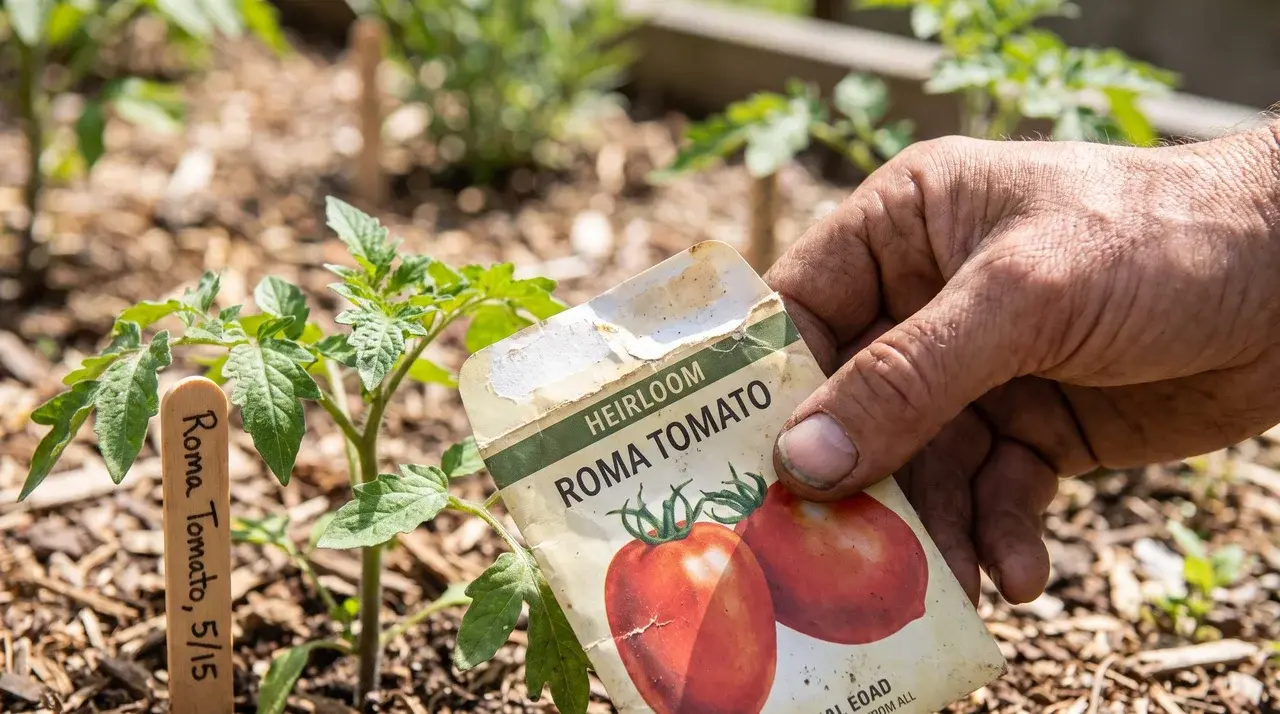
Check the seed packet, plant label, or variety description first. Indeterminate, cordon, or vining tomatoes get regular pruning. Determinate, bush, dwarf, or mini-dwarf types don’t. Just remove leaves that are damaged, diseased, touching the soil, or affected by yellowing tomato leaf causes.
Step 2: Prepare Clean Tools and Strong Support
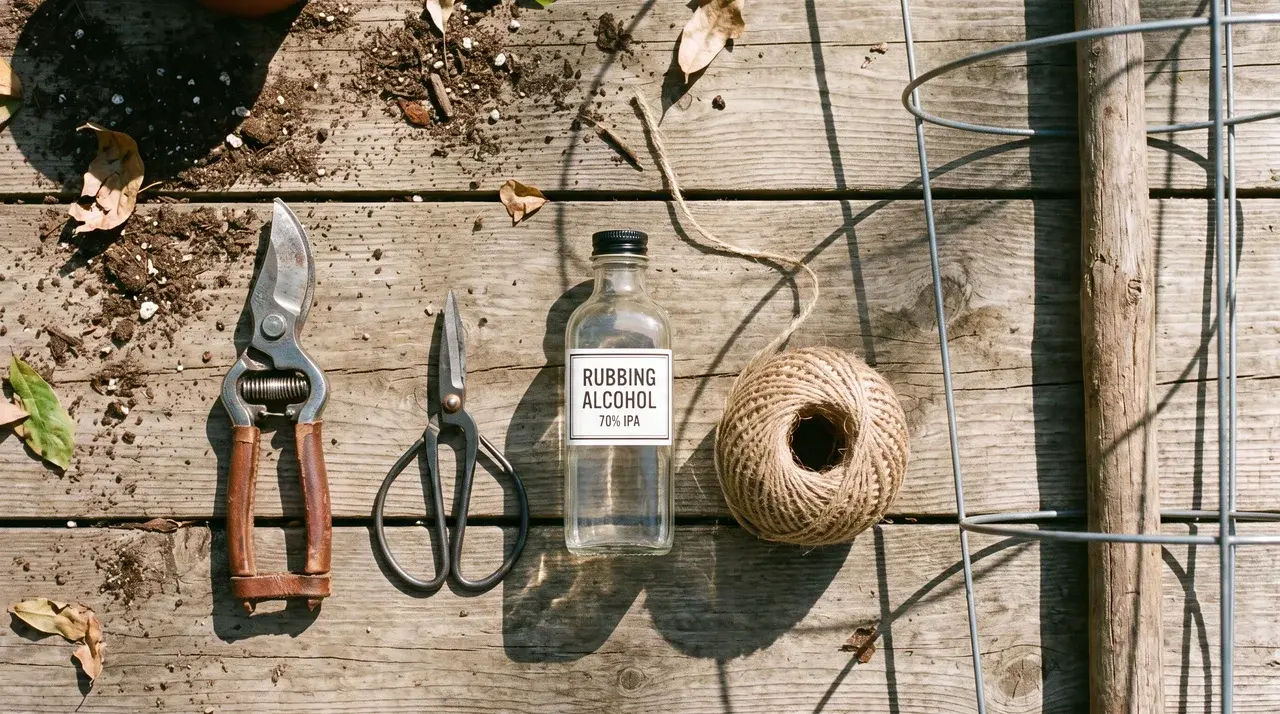
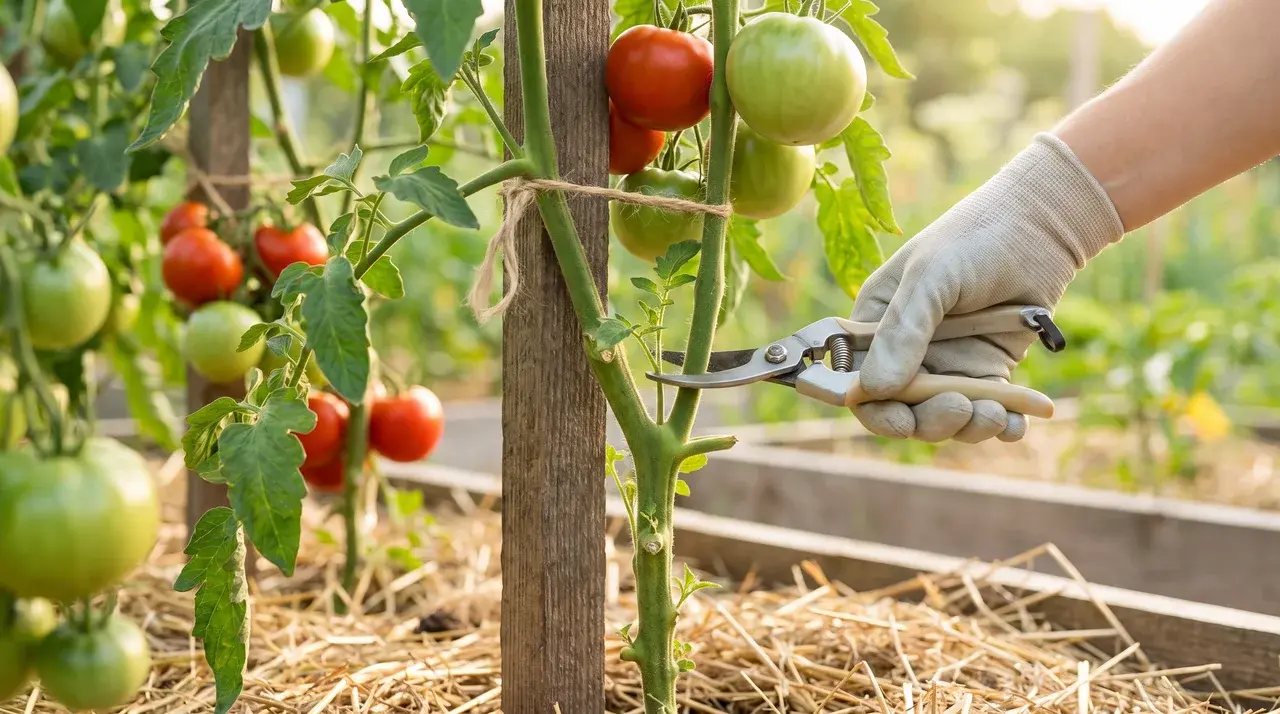
Pinch small, soft suckers with your fingers. Switch to sharp scissors, a knife, or hand pruners once a stem thickens. Clean tools before you start, and again between plants if disease is around, using rubbing alcohol for at least 30 seconds.
Wash your hands or use hand sanitizer too. Set up a cage, stake, string, or trellis early, before the plant gets too big to manage.
Step 3: Remove Early Flowers and Ground-Level Leaves
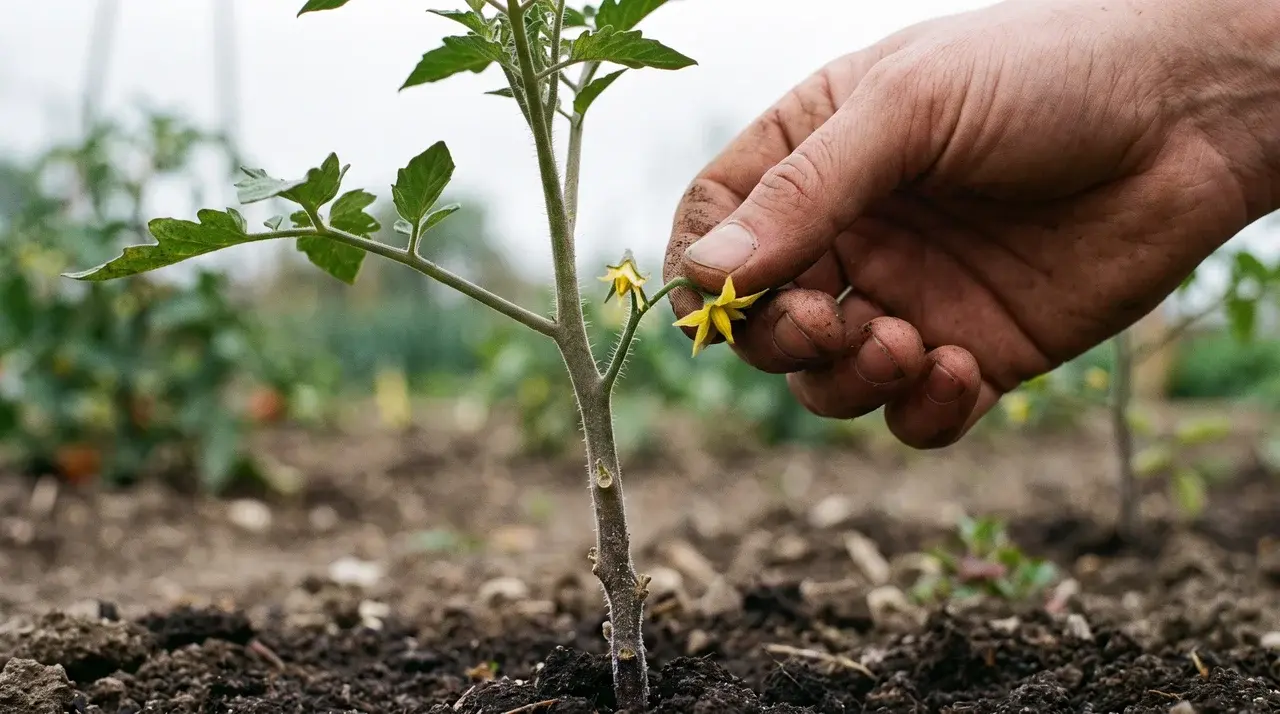
Pinch off early flowers on young transplants so energy goes into roots, until the plant reaches 12 to 18 inches.
Then clear any leaves that touch the soil, working up the stem to the lowest fruit cluster. On mature plants, clear the bottom 12 inches, stretching to 18 inches where disease pressure is high.
Do this gradually rather than stripping the whole lower canopy at once.
Step 4: Find the Main Stem, Suckers, and First Fruit Cluster
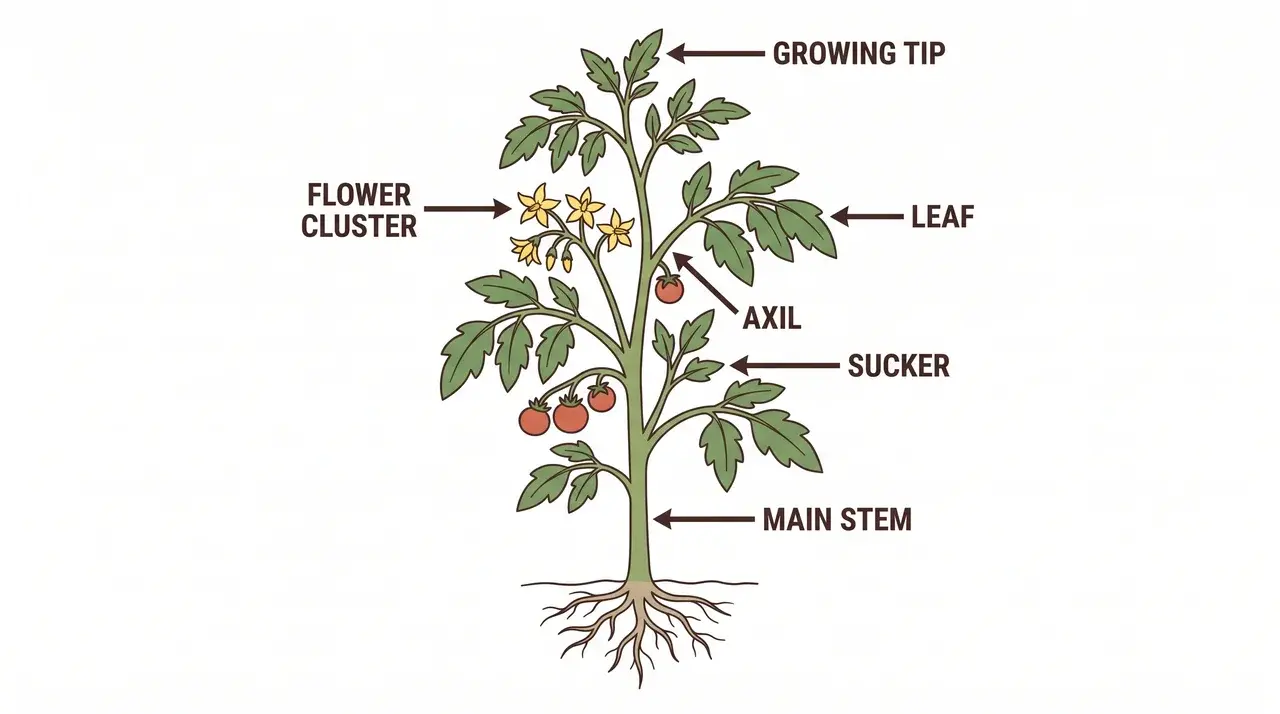
Locate the main stem, then the leaf branches growing off it. Suckers grow in the axils, where leaf branches meet the main stem. Find the lowest flower or fruit cluster too.
A labeled plant diagram helps here, since it shows exactly where the growing tip, axil, main stem, leaf, flower cluster, sucker, and root sucker each sit.
Step 5: Choose One or Two Productive Stems
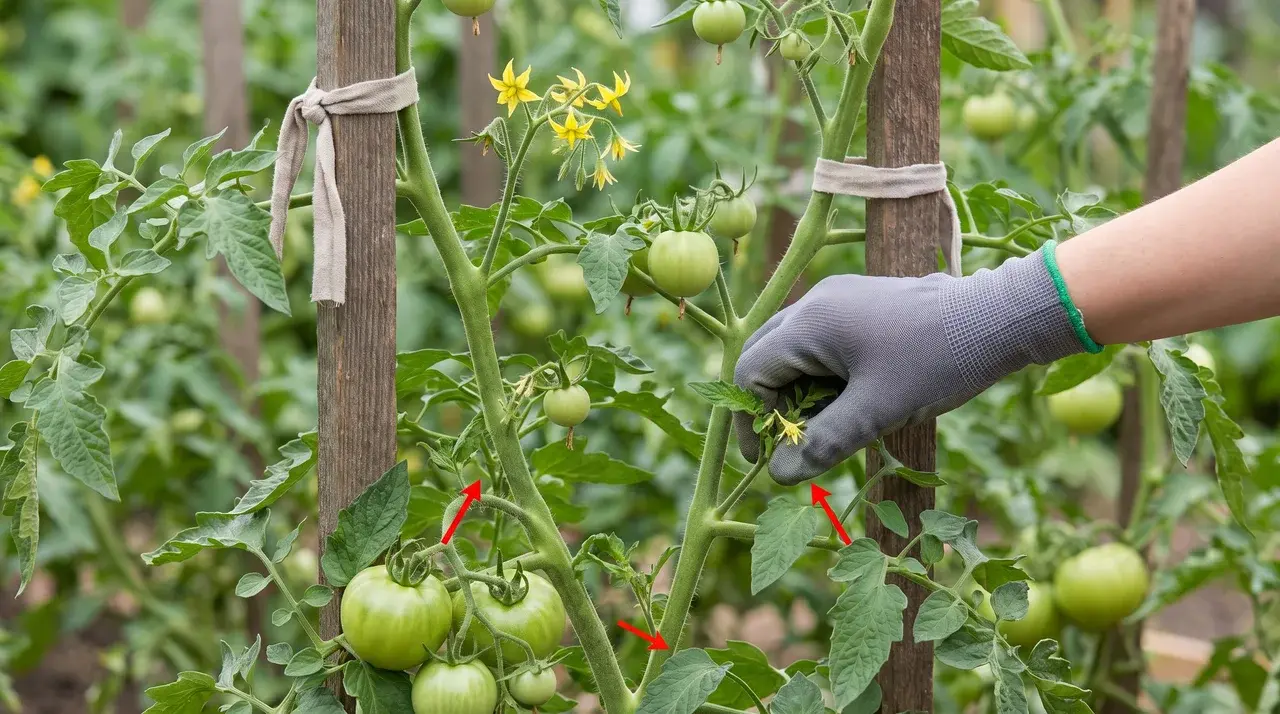
Keep just the main stem for a single-stem plant, or add the strong sucker below the lowest fruit cluster for two stems.
Give each stem its own support. Use one stem in tight spaces or where airflow is limited, two where you have more room, support, and growing time. Only keep additional stems beyond that in long, warm seasons with wide plant spacing.
Step 6: Remove Unwanted Suckers and Root Shoots
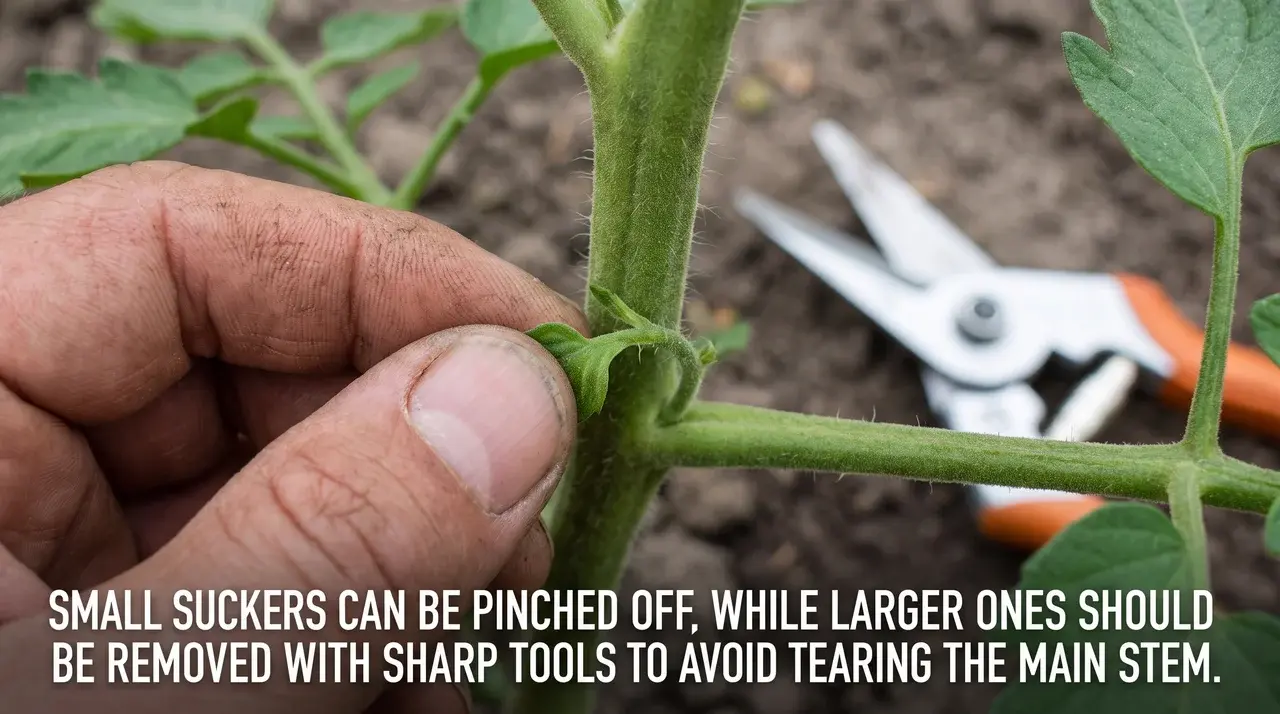
Pinch small suckers close to the stem, bending sideways instead of pulling down. Switch to sharp pruners once they’re too thick for fingers. Remove root suckers at the base too.
Check fast-growing plants every few days and avoid tearing large suckers off, as that leaves a larger wound than a clean cut.
Step 7: Keep the Leaves That Feed and Shade the Fruit
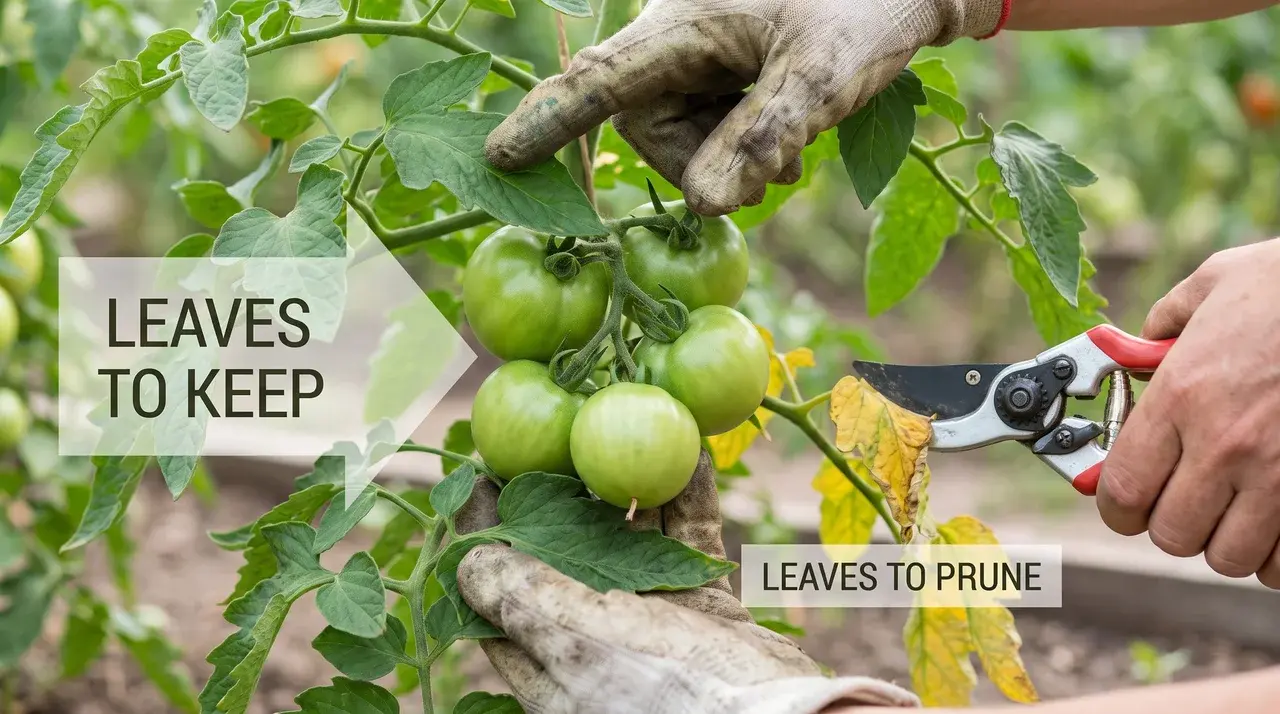
Don’t strip the plant bare. Keep healthy leaves directly above and below fruit clusters, since they feed the fruit and preserve enough foliage for photosynthesis.
In hot, sunny climates, leave extra shade cover. Remove only leaves that are diseased, yellow, damaged, crowded, or blocking airflow.
Where sunscald is a concern, try Missouri pruning: pinch off the sucker’s growing tip but leave its two lowest leaflets. Those leaves limit further stem growth while still shading the fruit nearby.
Step 8: Tie New Growth and Top the Plant at the Right Time
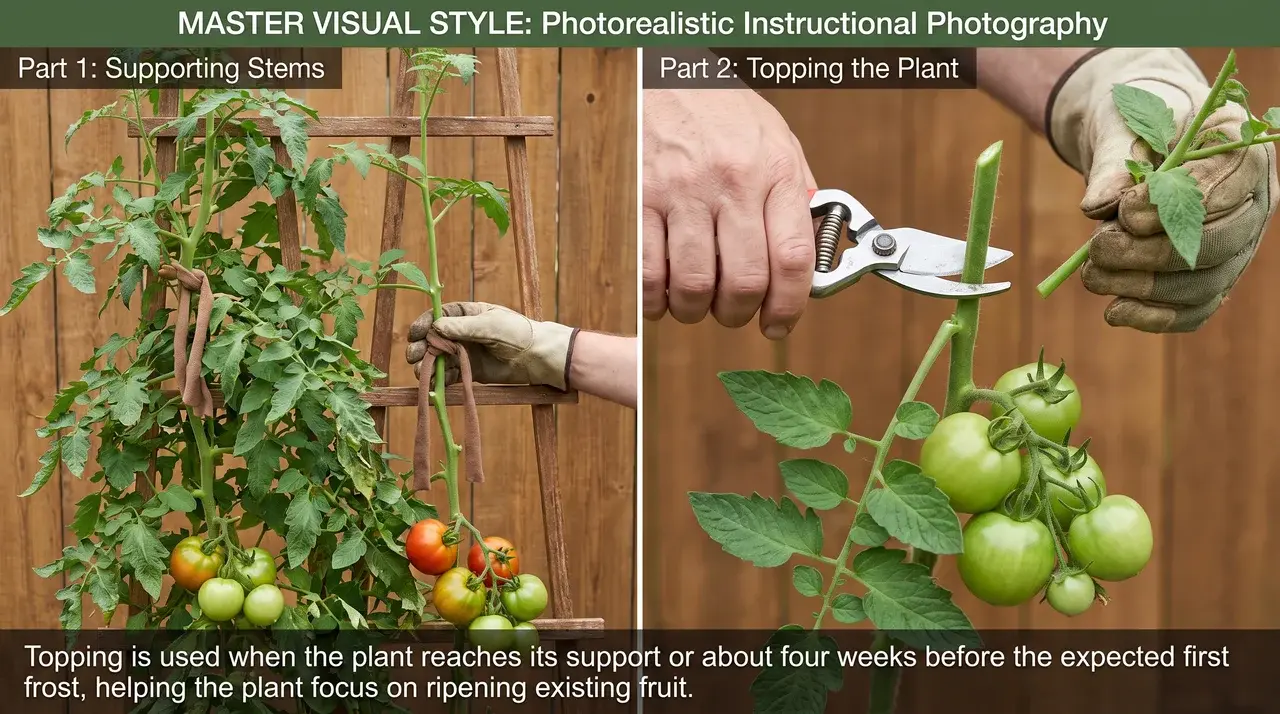
Tie each stem to its support as it grows, keeping stems separated so light and air can move through the canopy.
Top the plant once it reaches the top of its support, or about four weeks before first frost, leaving healthy foliage above the highest fruit cluster where possible.
Topping stops new stem and flower production and directs the plant’s energy into ripening the fruit already there.
When Should You Prune Tomato Plants, and How Often?
How much you prune shifts as the plant grows, from light cleanup at planting to regular upkeep during active growth, then a pause before harvest. The table below breaks down what to do at each stage and why.
| Growth Stage | What to Do | Why It Matters |
|---|---|---|
| At planting | Remove leaves that are buried or touching the soil. | Prevents early disease from soil contact. |
| 12 to 18 inches tall | Begin structural pruning. Use the first flower cluster to choose which sucker to keep as a second stem. | Plant is established enough to handle pruning without stress. |
| Active growth | Check for suckers every few days, or prune every 10 to 14 days on a lighter schedule. Remove yellowing lower leaves. Tie stems before they get heavy. | Keeps growth manageable and prevents disease from crowding. |
| 1 to 2 weeks before harvest | Ease off regular pruning. | Lets the plant rebuild canopy to protect fruit from sunscald. |
| Anytime you prune | Work when leaves and stems are dry. Avoid midday heat, rain, or overhead watering right before or after. | Wet conditions and fresh wounds together increase the risk of disease. |
Tips to Adjust Pruning for Plant Type and Growing Conditions
- Know your plant type: Prune indeterminate tomatoes to one or two supported stems and remove suckers regularly. Prune determinate tomatoes only when leaves are damaged, diseased, or touching the soil.
- Match pruning to your climate: Prune more in cool or humid areas to improve ripening and airflow. In hot, sunny climates, keep more foliage to shade the fruit.
- Consider your growing season: Short seasons benefit from fewer stems and late-season topping. Long, warm seasons can support a few extra fruiting stems.
- Adjust for support: Stakes and strings suit one or two stems, while cages can hold more growth with light thinning.
- Protect container plants: Use firm support and watch soil moisture closely, especially on hot or windy balconies.
Common Tomato Pruning Mistakes and How to Fix Them
Even careful gardeners make pruning mistakes. Here’s what to watch for and how to correct them.
- Over-pruning: Avoid removing healthy suckers from determinate tomatoes, stripping all the leaves around fruit clusters, or cutting the main growing tip too early. If you have already pruned too much, stop cutting and allow new foliage to grow back.
- Cutting large stems incorrectly: Do not snap or pull off thick suckers, since this can tear the stem and leave a larger wound. Use sharp shears, prune overgrown plants in stages, and support the remaining stems before removing more growth.
- Spreading disease: Avoid pruning wet plants or using dirty, dull tools, especially when disease is present. Clean your tools between plants and remove all clippings, placing diseased material in the trash rather than the compost.
Frequently Asked Questions
Can I grow new tomato plants from the suckers I prune off?
Yes. If your suckers are healthy and not too large, remove most of the leaves, then either place the cutting in water or plant it directly into potting mix. Once you see roots or new growth, you can plant it like any other tomato, and it will grow quickly into a full plant.
What should I do if I notice fasciated or fused blossoms on my plant?
Fasciated blossoms are a genetic mutation where several flowers fuse together, often leading to the large, oddly shaped, crevice-filled tomatoes some gardeners see on heirloom varieties. These fruits can rot in the fused areas and pull a lot of energy from the plant. Pinching off fasciated blossoms when you spot them gives you a more even, usable harvest.
Can I grow other plants in the space freed up by removing lower tomato leaves?
Yes. Once the bottom of the stem is cleared, that space at the base of the plant can be used for lower-growing companions like salad greens, basil, or marigolds, making better use of the same growing area.
Does pruning make it easier to grow several tomato varieties in a small space?
Yes. Because pruned, single-stem plants take up less room and grow more vertically, some gardeners use this to fit multiple varieties side by side in a small greenhouse or bed without sacrificing airflow.
Key Takeaways
That’s how to prune a tomato plant the right way: selectively, not severely. The goal isn’t to strip the plant bare. It’s removing growth that works against your harvest while keeping what works for it.
Focus mainly on indeterminate tomatoes. Keep the plant to one or two supported stems, clear away lower leaves and small unwanted suckers, and leave healthy foliage near your fruit clusters alone. Adjust this to your climate and season, and only top the plant once it reaches its support or the season is ending.
A few small habits- checking for suckers every few days, clearing the stem base, and pruning only when leaves are dry- usually separate a plant that struggles with disease from one that produces all season steadily.
So grab your pruners, walk out to your tomatoes today, and start with the lower leaves. Then share how your harvest turns out in the comments below.