Toys can take over a room faster than you think, right? One minute the playroom looks fine, and the next, blocks, books, stuffed animals, and art supplies are everywhere.
If you have ever stepped on a toy car or searched for missing puzzle pieces, you know the struggle. That is where smart playroom storage ideas can help.
In my work, you will find ways to arrange toys, create zones, save space, set a budget, avoid common mistakes, and build a cleanup routine kids can actually follow. Ready to make the playroom easier to use and easier to reset each day?
Start With the Playroom Layout Before Adding Storage
Before you add bins or shelves, look at the room the way your child uses it. In many U.S. homes, the playroom is also a shared space, such as a living room corner, basement, bedroom, or family room, so the layout needs to prioritize the play space.
Keep the center open because young kids do much of their play on the floor, whether they are building, reading, crawling, sorting, or pretending. Place storage along the walls so toys have a home without taking over the room.
Daily toys should sit at child height, while messy supplies, tiny pieces, and anything that needs adult help should stay higher. Safety also matters.
The American Academy of Pediatrics highlights the importance of safe, supportive spaces for children, so it makes sense to keep playroom pathways clear, keep daily toys within reach, and keep higher shelves for items that need adult help.
Sort Toys Into Storage Groups
I like to think of toy sorting as giving every toy a “family.” When similar toys stay together, kids can find what they want faster, and you are not left digging through one giant mixed bin every day.
Once the toys are grouped clearly, choosing the right storage becomes much easier.
- Large toys: Keep bulky items like trucks, big blocks, playsets, and larger dolls together so they do not crowd smaller toy categories.
- Small sets: Group tiny pieces, figures, puzzle parts, and mini collections so important parts do not get lost inside bigger bins.
- Books: Keep books in their own group because they are easier to use when not mixed with toys or craft supplies.
- Art supplies: Gather crayons, paper, stickers, paint, glue, and markers together, but keep messy items separate from everyday drawing tools.
- Dress-up items: Keep costumes, hats, bags, scarves, and pretend accessories in one group so kids can build pretend play faster.
- Soft toys: Store stuffed animals and plush toys together because they take up space and need a simple, roomy home.
Playroom Ideas for Toy Storage and Arrangement
A good playroom does not need to look perfect. It needs to make playing easier. When toys have clear places and the room has a simple flow, kids can find what they want faster. These ideas mix toy storage and room arrangement, so the space works better every day.
1. Playroom with Different Activity Zones
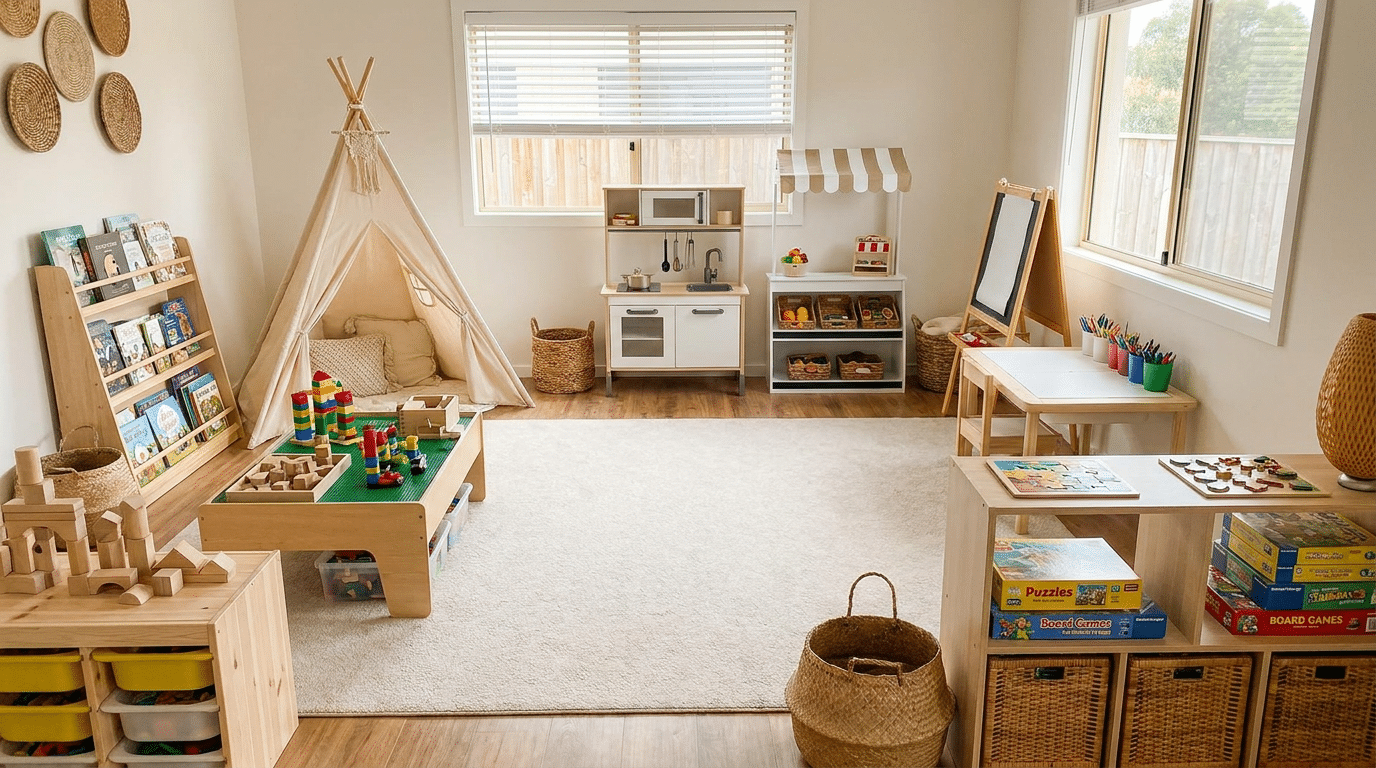
A playroom with distinct activity zones gives the room a clear, easy-to-follow layout. Instead of keeping all the toys in one place, you can divide the space into reading, building, pretend-play, art, and quiet-game areas.
This multi-use playroom layout works well because it supports how kids naturally play while keeping the room calmer and more organized.
- Storage: Each zone can have its own bins, shelves, or baskets, so books, blocks, craft items, and toys stay close to where they are used.
- Kids: Clear zones help children move from one type of play to another without mixing all the toys together.
2. Rolling Toy Carts for Movable Playroom Storage
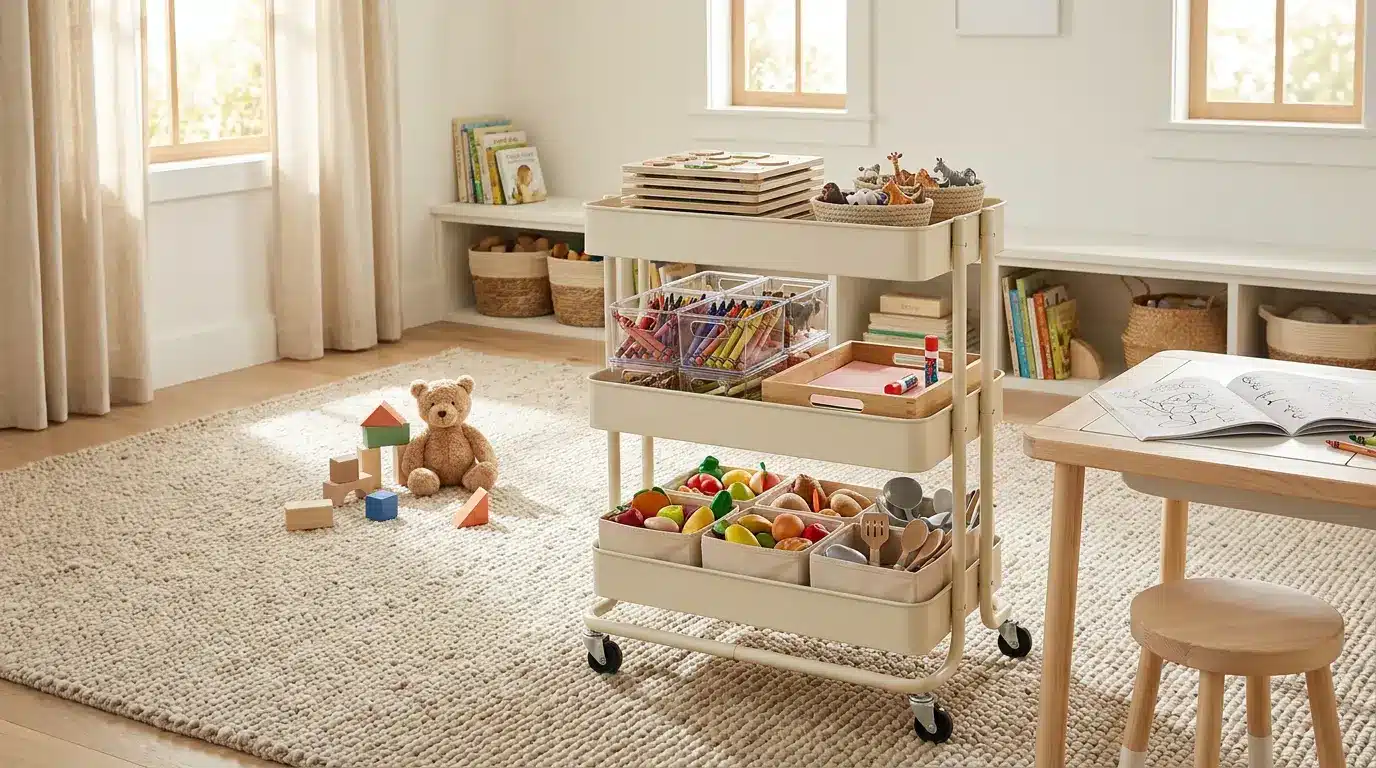
Rolling toy carts are useful in playrooms because they give kids easy access to toys without keeping everything spread across the room.
They work well for items used in different play areas, such as craft supplies, puzzles, building blocks, or pretend-play pieces. The cart can move from the art table to the floor and then return to one storage spot when playtime is over.
- Storage: Use each shelf for one toy group, so small items stay sorted and easy to put away.
- Kids: A rolling cart helps children move activities around the playroom without carrying too much at once.
3. Clutter-free Playroom with Toy Rotation
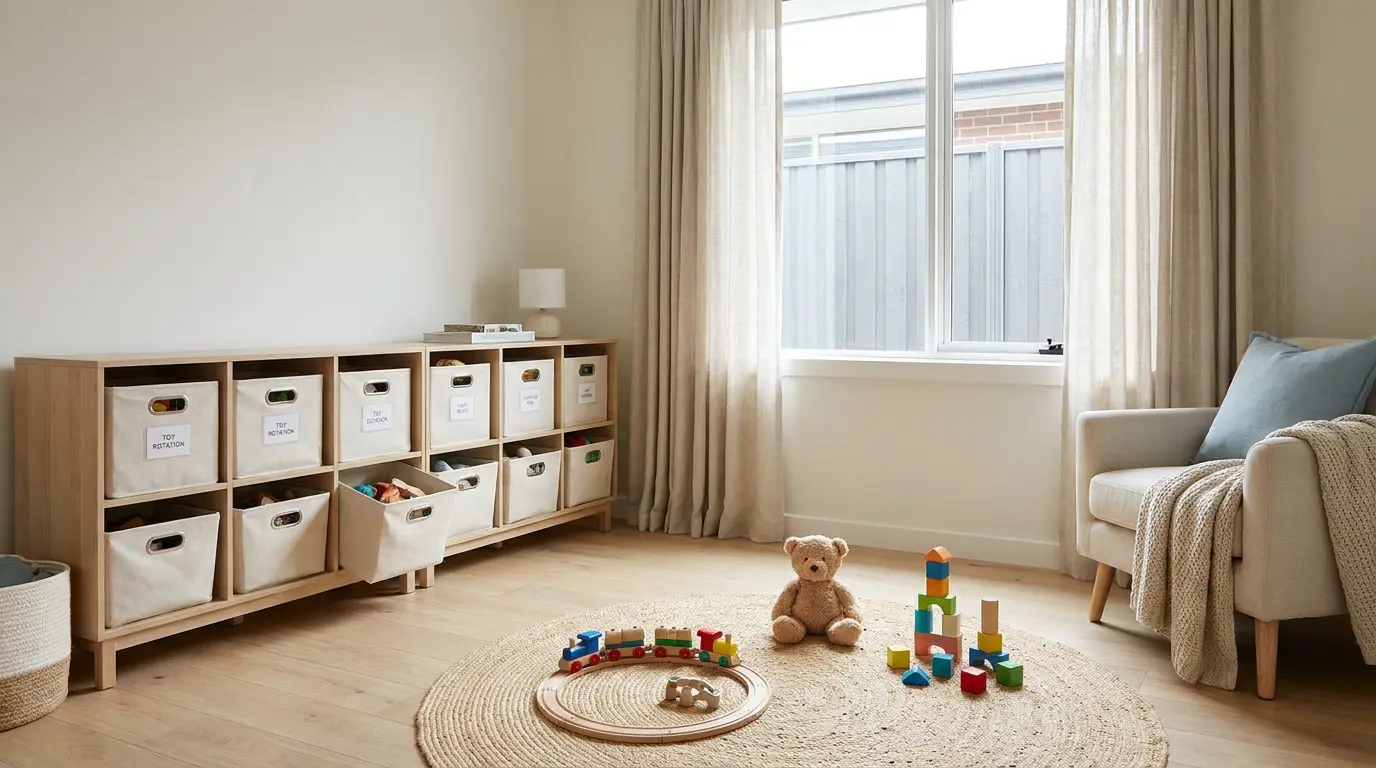
A toy rotation system is a helpful playroom storage idea when too many toys are out at once. Instead of keeping every toy available, you can store some away and bring them back later.
This setup works well because it gives kids fewer choices, makes cleanup easier, and helps old toys feel new again without adding more clutter.
- Storage: Keep a small group of favorite and current-interest toys out, then store the rest in bins, baskets, or a closet for later use.
- Kids: Fewer toys can help children focus better, play longer, and clean up with less stress.
4. Long Playroom with Wall Storage
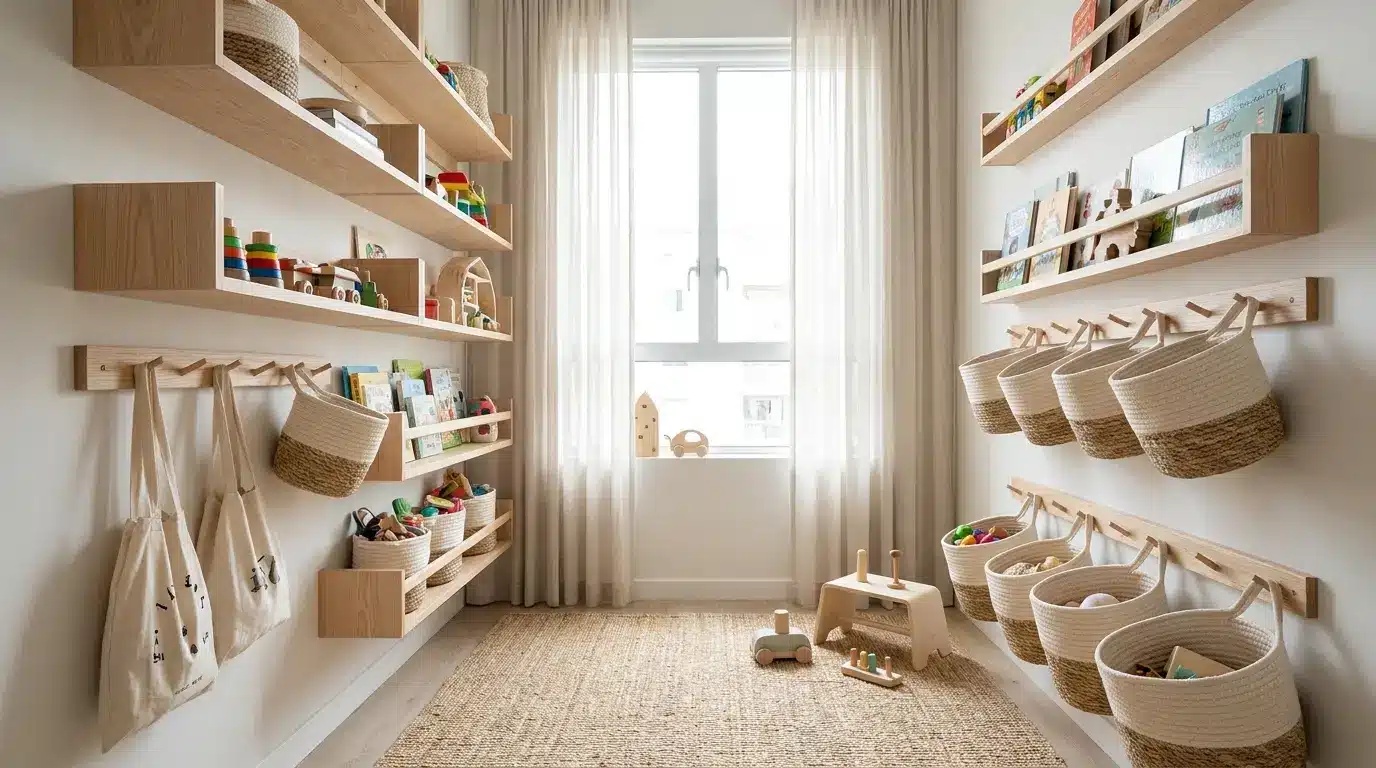
A long playroom with wall storage makes better use of narrow space without crowding the floor. Instead of adding extra cabinets or toy bins, you can use shelves, hooks, baskets, or book ledges along the walls. This keeps the room open for play while still giving toys, books, and small items a clear place.
- Storage: Keep daily-use toys on lower shelves and lighter items higher up, so the setup stays neat, safe, and easy to reach.
- Kids: Wall storage helps children see where things belong while leaving more floor space for building, pretend play, and movement.
5. Playroom with a Reading Corner
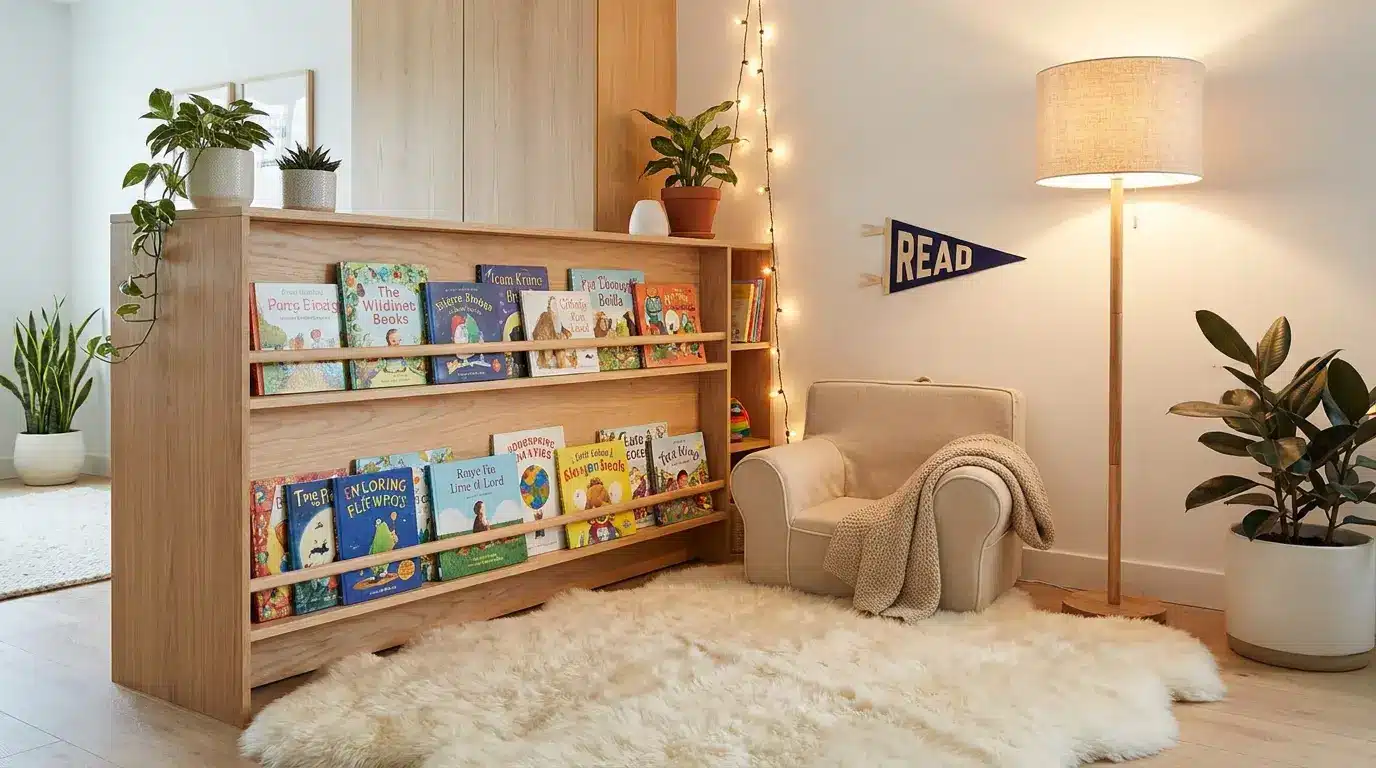
A playroom with a reading corner gives books their own quiet spot away from toy clutter. It does not need much space. A soft chair, a floor cushion, a small shelf, or a book basket can turn an unused corner into a calm reading area. This design works well because it adds a slower activity zone inside the playroom without taking over the room.
- Storage: Use a low shelf, book ledge, basket, or front-facing display so books stay visible and easy to put back.
- Kids: A clear reading corner helps children choose books on their own, slow down, and keep books separate from toys.
6. Play/Study Room with Pegboards and Supplies
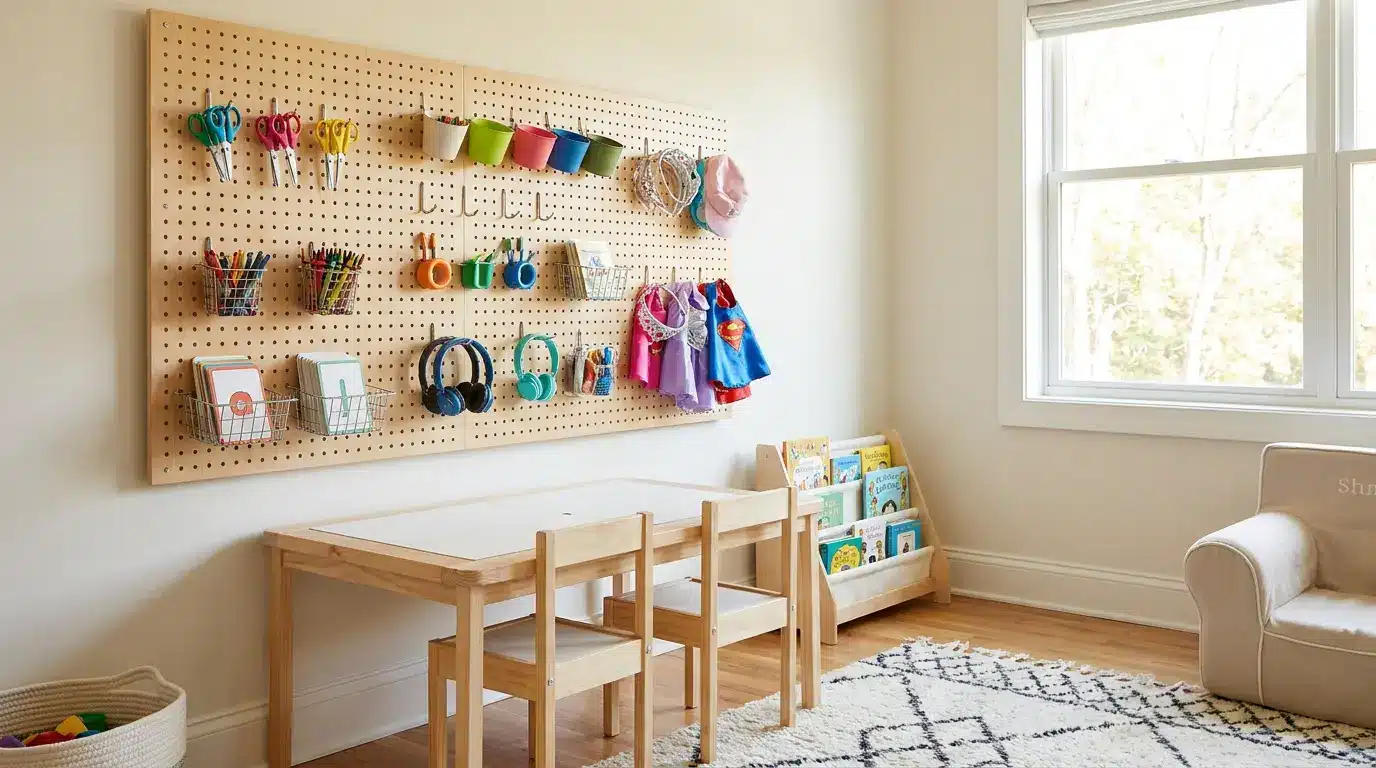
A play/study room with pegboards works well when kids use lots of small supplies for crafts, homework, and creative play.
The pegboard turns an empty wall into useful storage, so the desk or activity table stays clearer. It is a good design for a small home learning setup because supplies stay visible without taking over shelves, drawers, or floor space.
- Storage: Use hooks, cups, and small baskets for scissors, crayons, headphones, craft tools, and learning supplies.
- Kids: Pegboards make it easier for children to find what they need, put items back, and switch between play and study time.
7. Washitsu-Inspired Playroom with Shelves
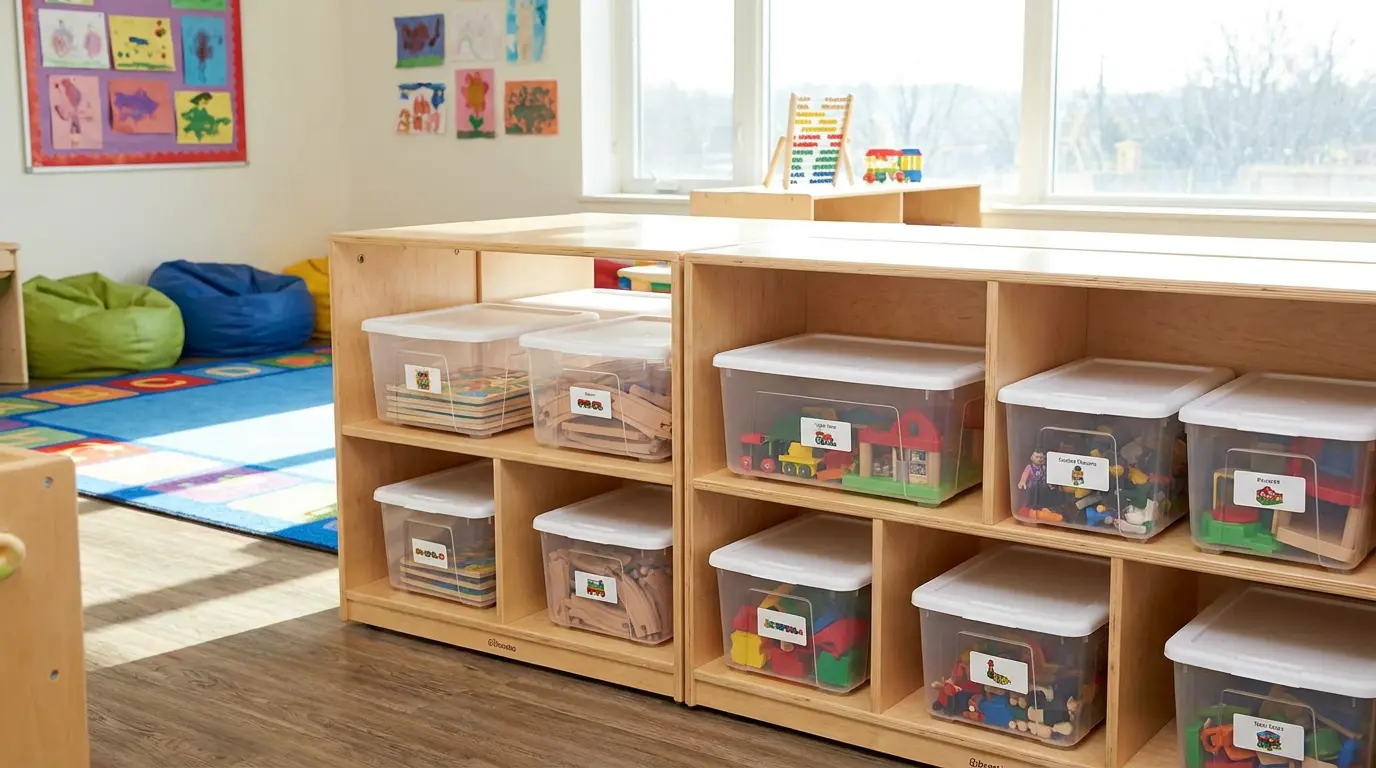
A Washitsu-inspired playroom creates a calm, low-to-the-floor space for reading, quiet games, and simple play. This idea works well because kids can sit, stretch out, and use the room without tall furniture making the space feel crowded. The low layout also helps the playroom feel open, soft, and easy to reset after playtime.
- Storage: Use low shelves, baskets, or simple containers to keep books, puzzles, blocks, and quiet toys within easy reach.
- Kids: This setup helps children play closer to the floor, choose items independently, and put things back without help.
8. Art Room with Paintings on Walls
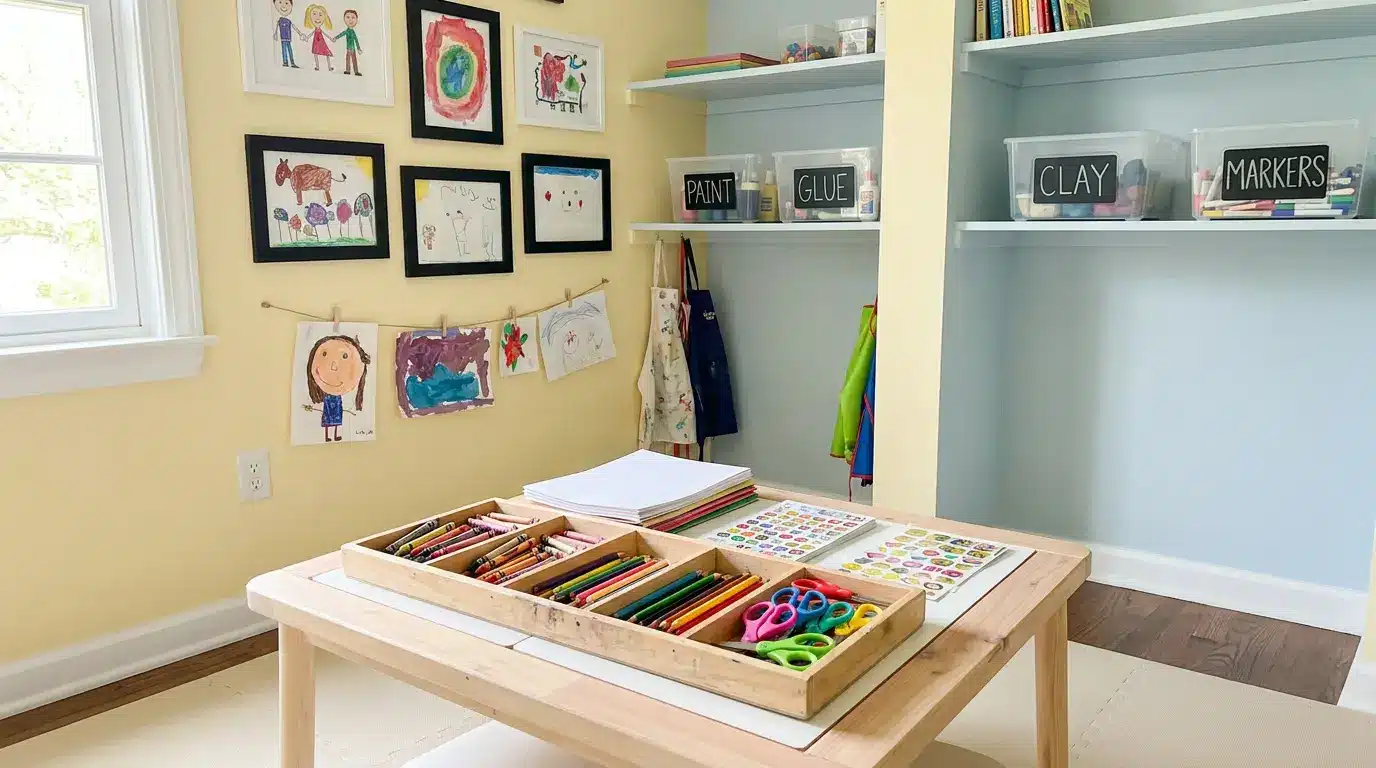
An art room with paintings on the walls makes the playroom feel creative, personal, and ready for hands-on projects.
The wall art can show your child’s own work, simple framed prints, or a rotating display of recent crafts. This idea works well because it gives the room a clear creative purpose and makes beginner art projects feel more inviting.
- Storage: Keep everyday items like crayons, paper, and safe scissors near the table, then store paint, glue, clay, and markers separately for adult-led use.
- Kids: A clear art setup helps children feel proud of their work, choose creative activities more easily, and clean up with less mess.
9. Playroom with Visual Markers for Sensory Learning
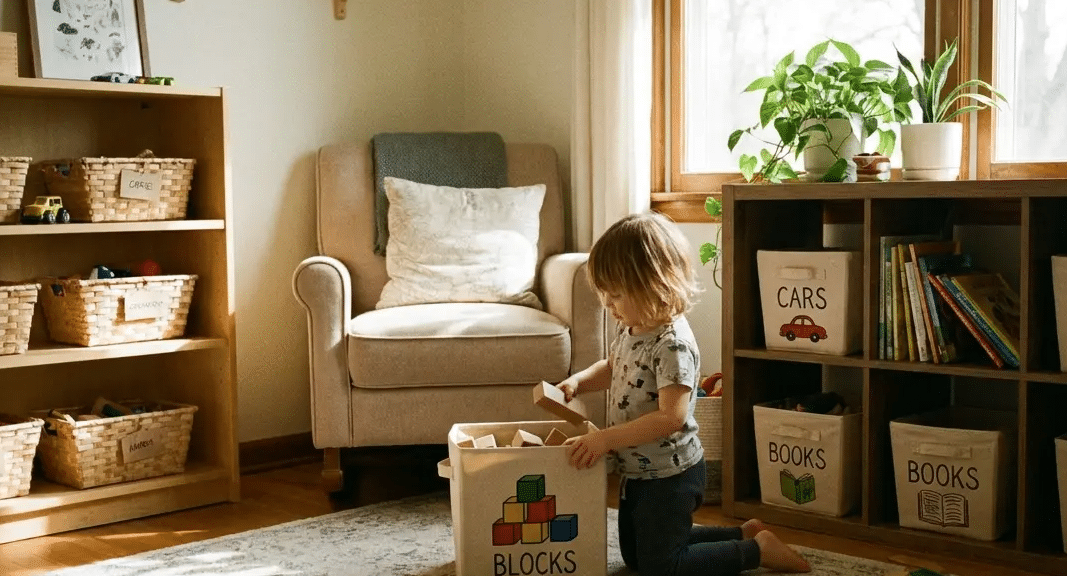
A playroom with visual markers for sensory learning helps kids understand the room through pictures, colors, and clear cues.
Instead of relying only on words or verbal reminders, you can use photo labels, simple icons, or matching colors to show where each activity belongs. This idea works well for toddlers, preschoolers, early readers, and children who feel more confident with visual guidance.
- Storage: Add picture labels to bins, shelves, or baskets so each toy group has a clear and easy-to-follow place.
- Kids: Visual markers help children choose activities, follow cleanup routines, and use the playroom with more independence.
10. Living Room Turned Playroom with Hidden Storage
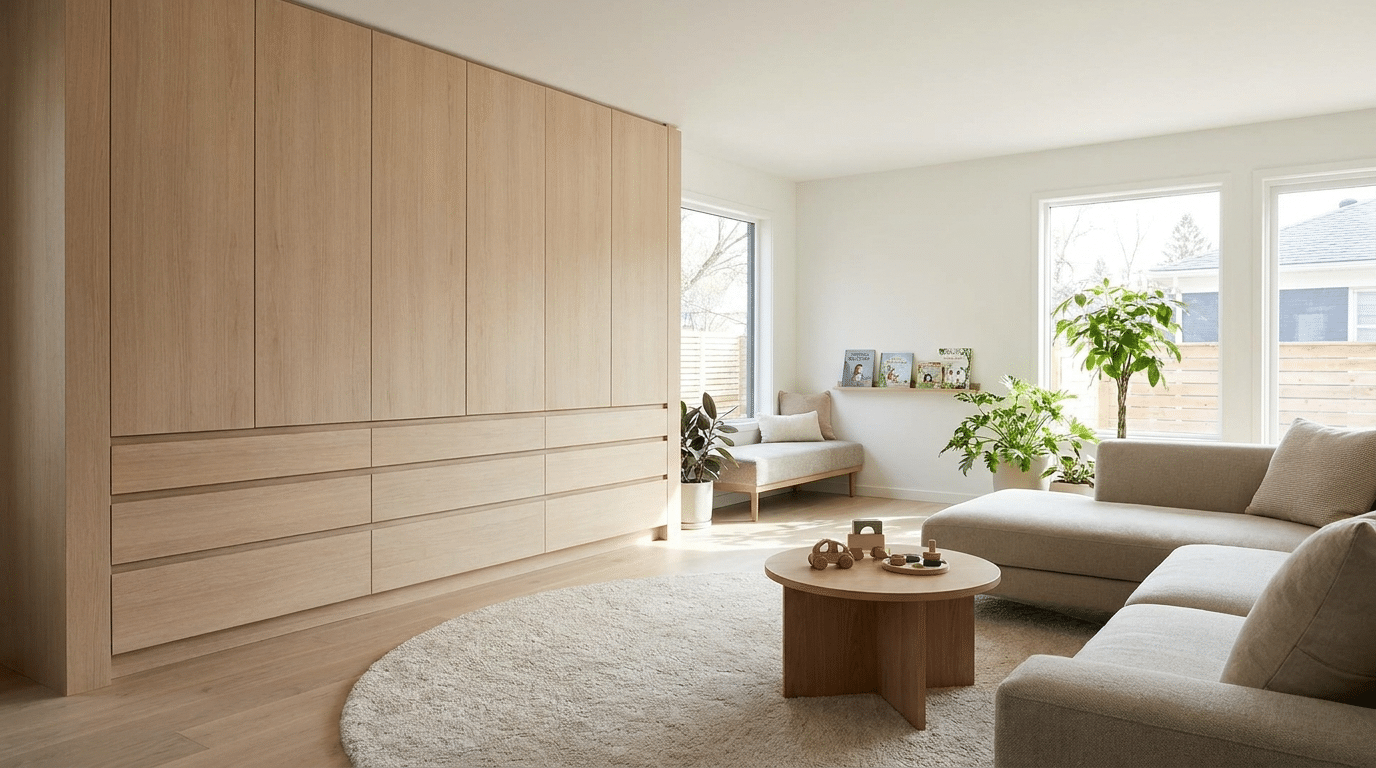
A living room turned playroom needs to feel useful for kids without losing its main-room feel. Hidden storage works well here because it lets toys stay nearby while keeping the space calm after playtime.
This idea is helpful for shared family rooms where the same area may be used for relaxing, guests, screen time, and everyday play.
- Storage: Use cabinets, benches, baskets, or closed bins for extra toys, larger sets, and items your child does not use every day.
- Kids: Hidden storage keeps the room calmer while still giving children access to toys when they want a different activity.
11. Vanity in Playroom for Budding Actors
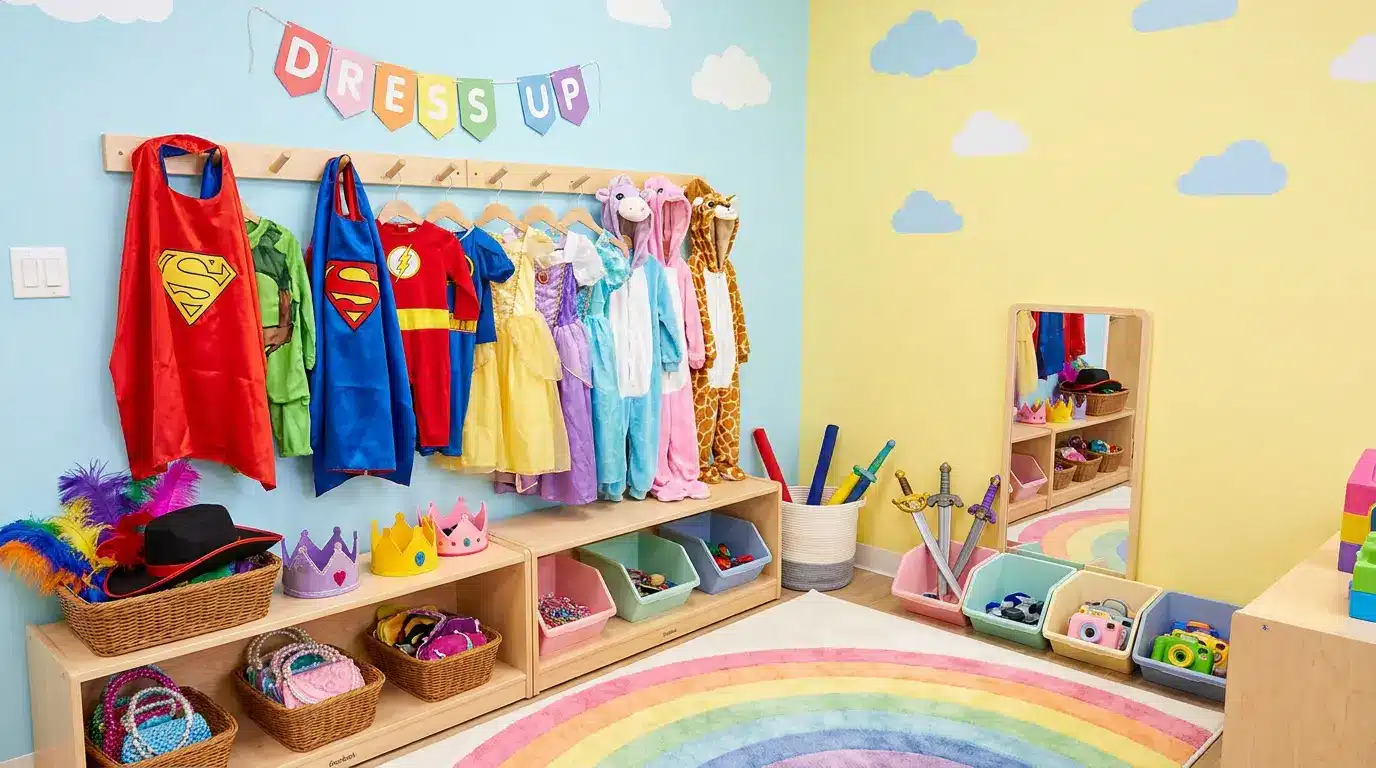
A vanity in the playroom gives kids a small stage-like spot for dress-up, pretend play, and character games.
It can hold a mirror, stool, costume rack, and a few playful accessories, so the area feels special without taking over the whole room. This idea works well for children who enjoy acting, role-play, fashion games, or make-believe stories.
- Storage: Use hooks, bins, baskets, or a small rack for costumes, scarves, hats, bags, and pretend-play accessories.
- Kids: A vanity area helps children choose characters, start pretend play faster, and return dress-up items to one clear place.
12. Building Room for Creative Minds
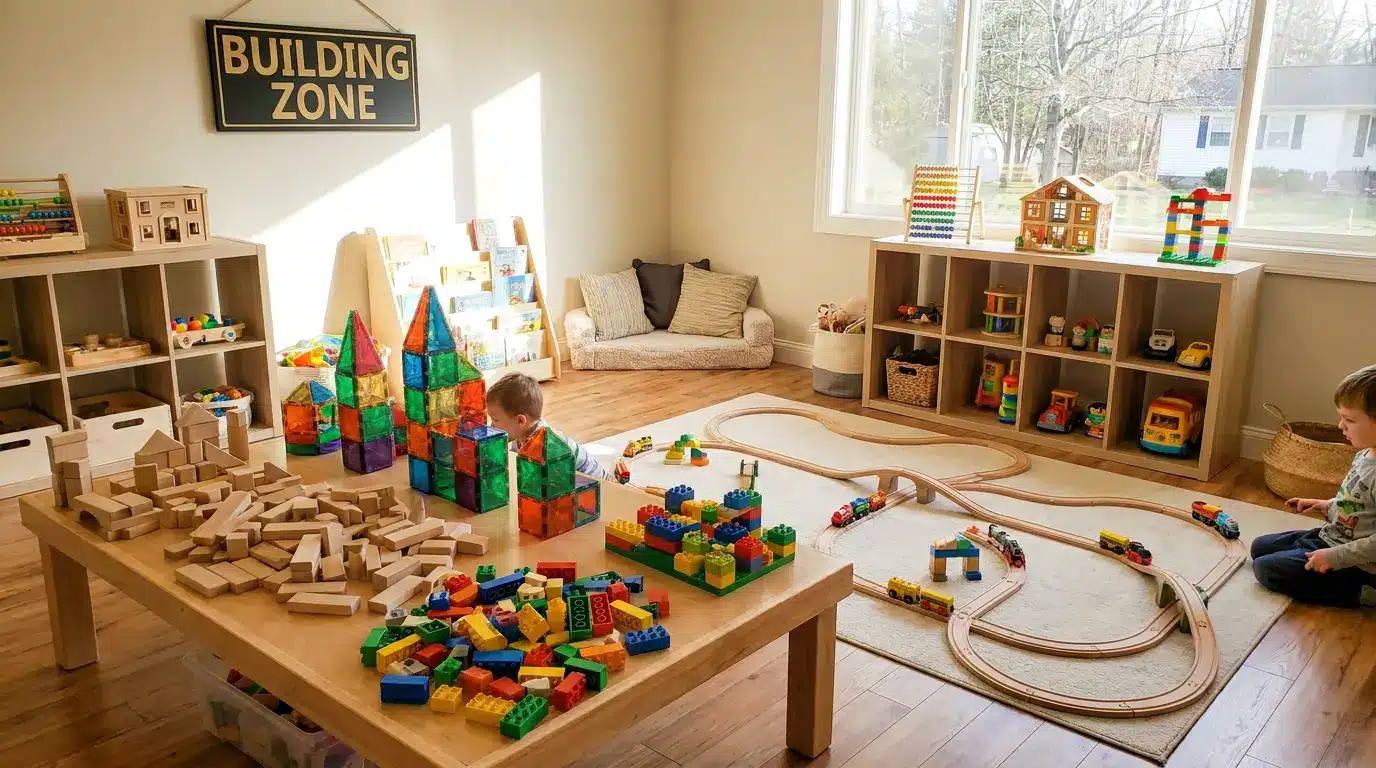
A building zone is a practical playroom storage idea for blocks, LEGO, train tracks, magnetic tiles, and construction toys. These toys need room to spread out, so they work best near open floor space.
This setup works well because kids can build without having to carry pieces across the room or block walkways.
- Storage: Keep building toys near a clear rug or floor area, so pieces stay close to where they are used and cleanup feels more direct.
- Kids: A building zone helps children start projects, pause them, and return to play without needing to move every piece across the room.
13. Small Hallway Corner Ready for Playdates
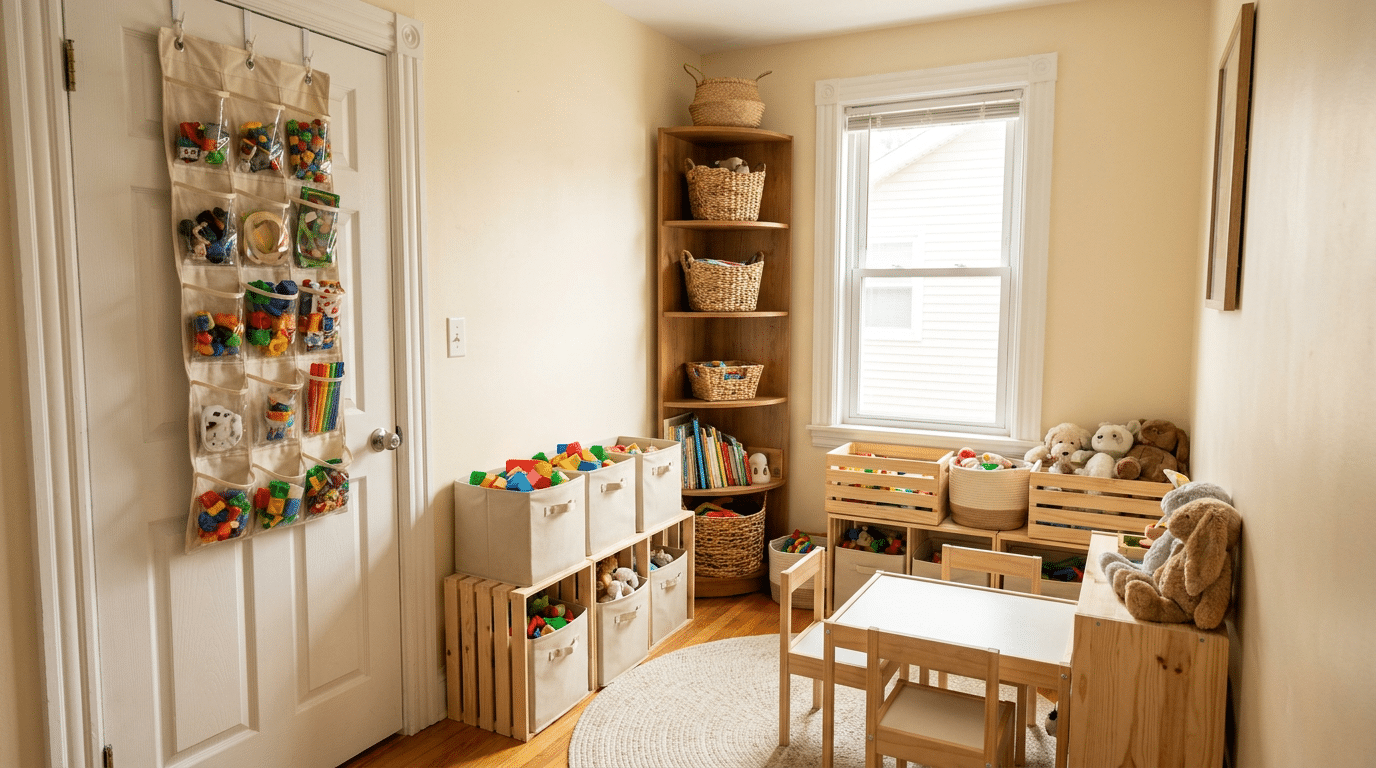
Small corners can become useful playroom storage ideas when the room feels tight. Doors, low wall areas, corners, and under-table spaces can hold light items without adding bulky furniture.
This setup works well because it uses ignored space while keeping the main play area open.
- Storage: Add small shelves, hooks, baskets, or door storage for lightweight toys and quick-access items that do not need a full cabinet or large bin.
- Kids: Clear corner storage helps children find small toys faster while leaving more open space for play, movement, and shared activities.
14. Bay Window Corner With Storage and Seating
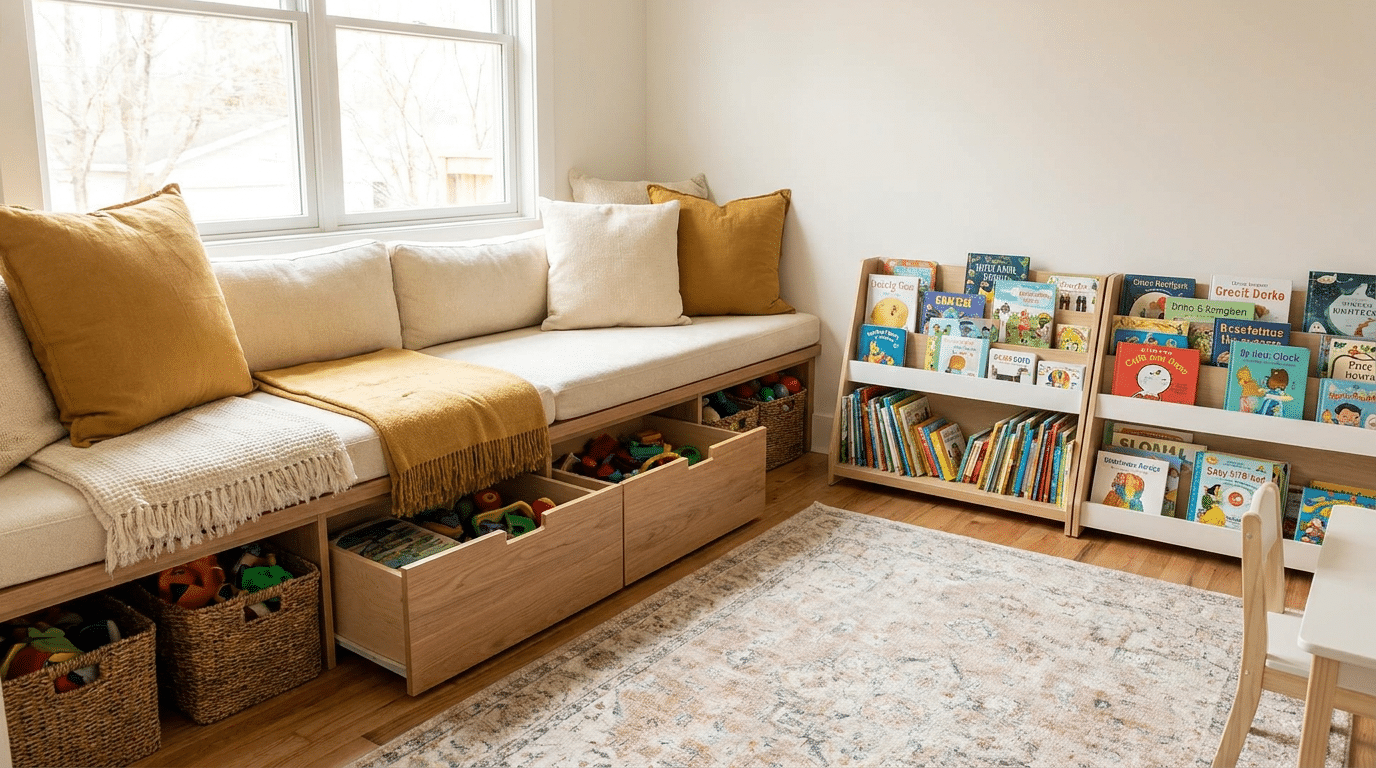
A bay window corner with storage and seating can turn an unused part of the playroom into a cozy spot for reading, resting, or quiet play.
The built-in shape already feels separate from the main activity area, so it works well as a softer zone inside the room. This idea is useful when you want the playroom to feel calm without adding extra furniture.
- Storage: Use the seat base or nearby baskets to store plush toys, blankets, cushions, dress-up clothes, and other soft items.
- Kids: A window seat gives children a comfortable place to sit while keeping bulky playroom items easy to put away.
15. Minimalist Playroom Setup
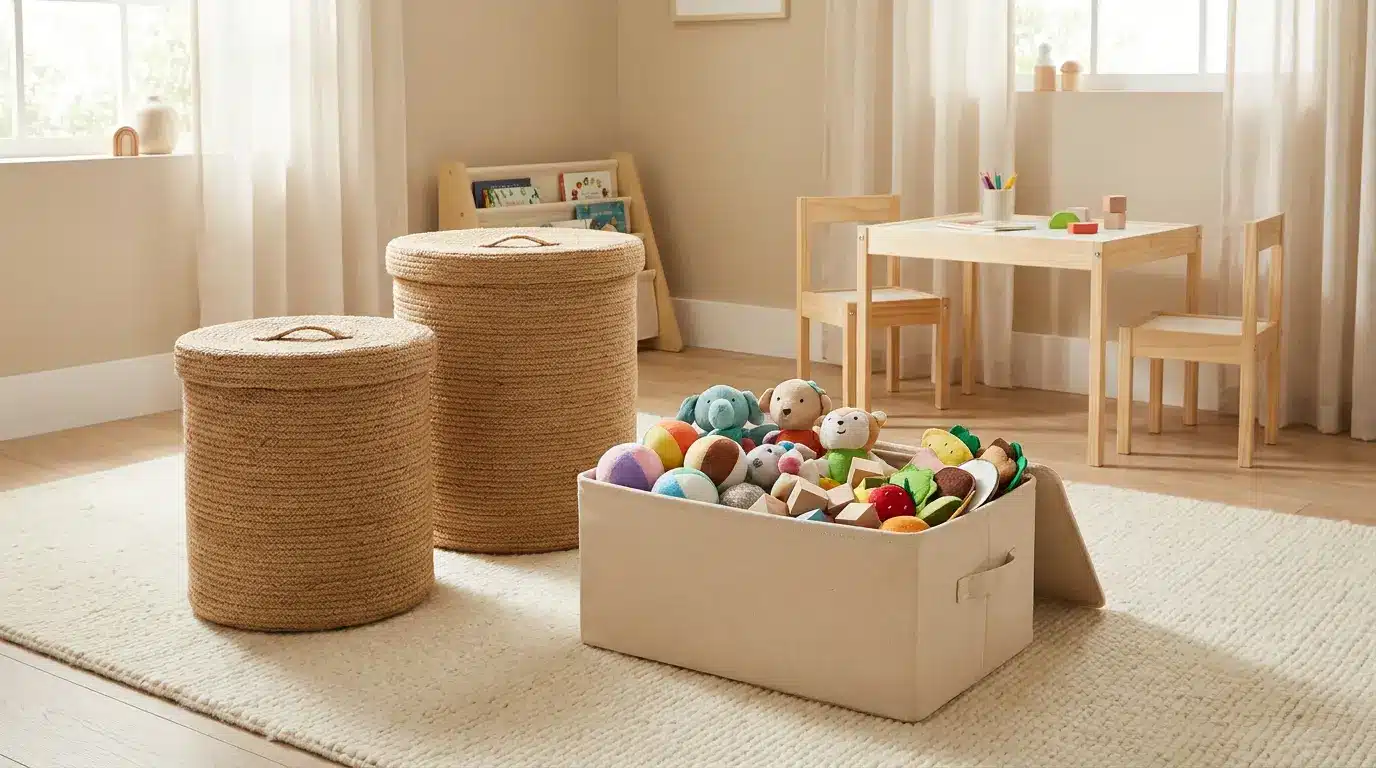
A minimalist playroom setup keeps the room simple, open, and easy for kids to use. Instead of filling the space with too many shelves, toys, and decorations, this idea focuses on fewer items, clear surfaces, and enough floor space for play. It works well when you want the playroom to feel calm but still practical for everyday use.
- Storage: Use lidded baskets for plush toys, balls, pretend food, large blocks, or mixed daily toys that need quick cleanup.
- Kids: A simple setup helps children focus on fewer choices and reset the room without feeling overwhelmed.
Budget Playroom Storage Plan
Budget playroom storage ideas work best when you match the fix to the mess. Start with free changes, then spend only where it saves space or time on daily cleanup. This keeps the room useful without having to buy furniture before you need it.
Use this table to clearly place budget choices under a single section.
| Budget Level | Storage Choices | Typical Budget | Best Use |
|---|---|---|---|
| Free fixes | Sort toys, reduce extras, reuse jars, boxes, baskets, or tubs | $0 | First step before buying anything |
| Low-cost fixes | Labels, baskets, shoe organizers, clear boxes | $5–$40 each | Small toys, art supplies, blocks, stuffed toys |
| Mid-cost fixes | Cube shelves, rolling carts, plastic drawer units | $30–$150 each | Daily-use toys and grouped storage zones |
| Higher-cost fixes | Cabinets, storage benches, built-ins | $100–$1,000+ | Long-term storage, hidden clutter, custom spaces |
This keeps spending in the right order. Buy labels first, then bins, then shelves, and add furniture only when the room still needs more storage. That way, you avoid waste and build a setup that grows with your child.
Common Playroom Storage Mistakes
A playroom can look organized and still feel hard to use. Small storage mistakes often show up during daily cleanup, not when the room is freshly arranged. These issues can make toys harder to reach, harder to return, or less safe for kids to manage on their own. Use this table as a quick check before changing the whole room.
| Mistake | Why It Fails | Better Fix |
|---|---|---|
| Ignoring traffic flow | Kids need clear paths to move and play. | Keep walkways open. |
| Skipping safety anchors | Tall furniture can tip if pulled. | Anchor tall pieces. |
| Storing heavy toys high | Heavy items are harder to handle safely. | Keep heavy toys low. |
| Overfilling bins | Full bins are hard to use. | Leave room inside. |
| No project space | Unfinished builds get cleared too soon. | Save one project spot. |
| Using sharp-edged storage | Hard corners can hurt during active play. | Choose smoother edges. |
| Forgetting growth | Toys need to change as kids grow. | Pick flexible storage. |
Fixing these mistakes does not mean starting over. You can adjust one shelf, move one heavy toy, or clear one path and still make the room work better. Small changes often make the biggest difference in a busy playroom.
Frequently Asked Questions
What should you keep out of a playroom?
Keep fragile decor, cords, sharp craft tools, loose batteries, heavy items, and choking hazards out of easy reach. A playroom should feel useful without giving children access to things that need close supervision. Store messy supplies, tiny parts, and breakable items higher up or in closed containers so the room stays safer for everyday play.
How do you make playroom cleanup easier for young kids?
Make cleanup easier by reducing choices and giving each toy group one simple home. Young kids do better with open bins, picture labels, low shelves, and short cleanup routines. Instead of asking them to clean the whole room, start with one category, such as books, blocks, or stuffed animals, so the task feels clear and manageable.
How can a playroom grow with your child?
Choose flexible pieces that can change as your child’s interests change. Low shelves, cube units, carts, baskets, and pegboards are easier to adjust than fixed furniture. A toddler play space may need soft toys and board books, while an older child may need room for crafts, building sets, reading, games, or homework supplies.
How do you stop a playroom from feeling overstimulating?
Limit how many toys, colors, and open bins are visible at once. Too many choices can make the room feel busy and harder to clean. Use closed storage for extra items, leave some blank wall space, and create quieter zones for reading or puzzles. A calmer layout can help kids focus and move through activities more easily.
Wrapping Up
A playroom works best when it supports real play, not just a neat photo. I hope these playroom storage ideas help you see the room more simply.
Start with the layout, group toys clearly, and choose storage that fits your child’s play. Keep daily toys easy to reach, use labels, rotate extras, and leave open space for movement. Budget matters too, so use what you have before buying more.
The goal is not a perfect room. It is a space you and your child can use, enjoy, and reset without stress. Try one idea this week, then share what worked for you or check out more simple home organization tips next.