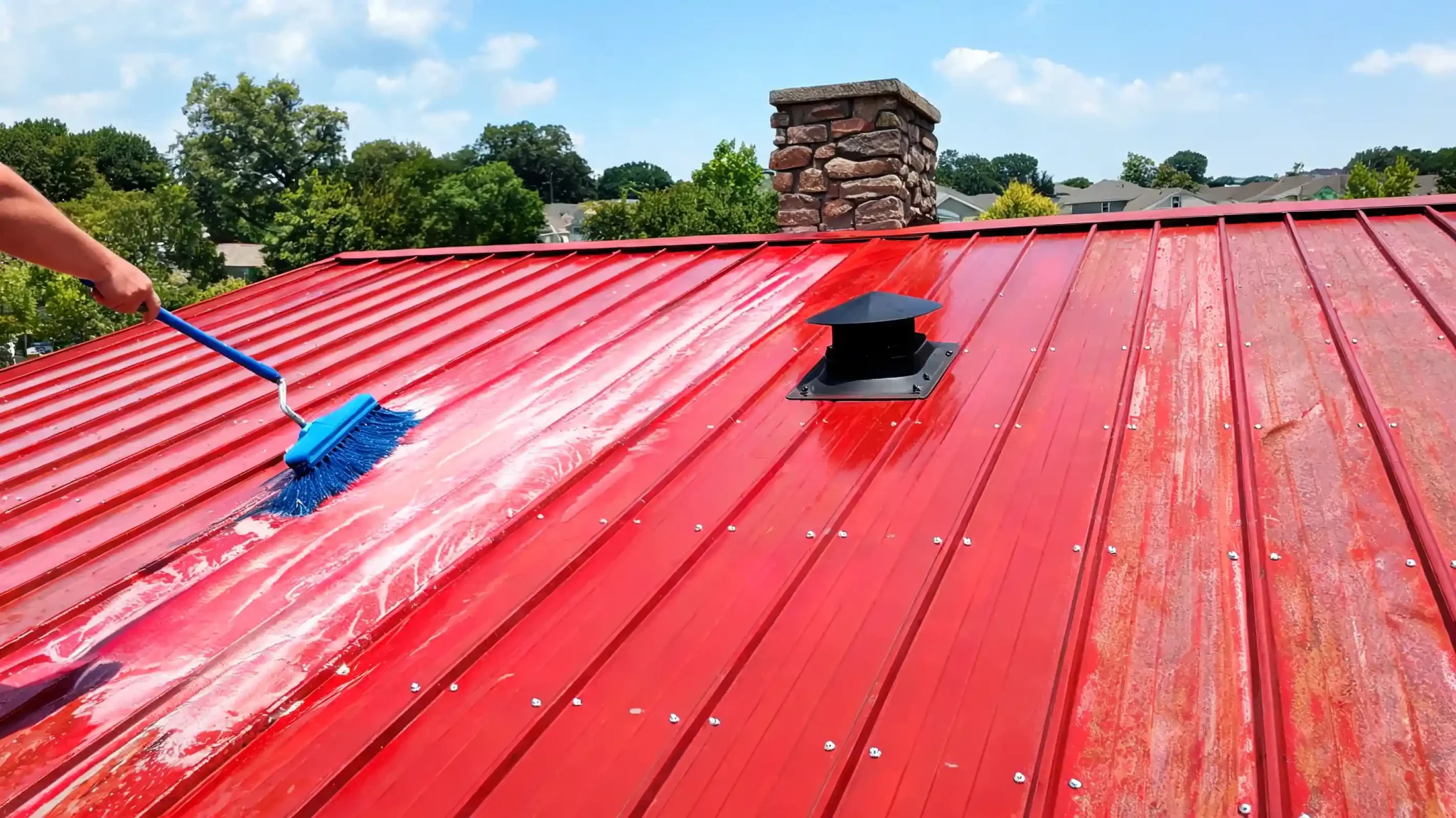
Most metal roofs do not fail all at once. They usually start with small signs you can catch early.
It is easy to miss loose fasteners, clogged gutters, or tiny scratches until they turn into leaks or rust. That is why metal roof maintenance matters.
It is important to learn how to inspect, clean, and care for your roof in a simple way. I’ll walk you through the right tools, safe cleaning steps, common problems, climate-based tips, roof-type care, and mistakes to avoid.
You’ll also learn when a task is safe to handle yourself and when it is better to call a roofer. By the end, you should feel more confident about protecting your roof and helping it last longer.
How Often Should You Maintain a Metal Roof?
Metal roof maintenance should occur at least twice a year to keep your roof clean, strong, and ready for changing weather conditions.
For most homes, spring and fall are the best times because you can check for damage after winter and prepare the roof before colder months return.
You should also inspect the roof after hail, strong wind, heavy rain, snow, or wildfire ash, since these events can loosen fasteners, damage coatings, or leave debris behind.
A professional inspection is also smart every 1 to 2 years, depending on your climate, roof type, roof age, and how exposed your home is.
Common Issues that Degrade Metal Roof Life
Its always easier to care for a roof when you know what early trouble looks like. Metal roofs are strong, but small issues can still turn into leaks, rust, or costly repairs if you ignore them.
- Rust and corrosion: Rust usually starts when coating damage, standing water, salt air, or trapped debris exposes the metal, so watch for orange stains, bubbling paint, or rough patches and repair them early.
- Loose fasteners and failed washers: Loose screws and worn washers are common on exposed-fastener roofs because expansion, contraction, age, and weather can weaken them over time, creating small leak points.
- Scratches, scuffs, chalking, and fading: Branches, foot traffic, hail, tools, and poor cleaning can damage the roof finish, so check whether the issue is only cosmetic or if the coating is broken and needs repair.
- Seam separation or lifted panels: Seam separation or lifted panels often occur after strong winds or poor installation and require professional review, as they can allow water to enter the roof system.
- Damaged flashing around roof penetrations: Flashing around chimneys, skylights, vents, pipes, solar mounts, and satellite mounts should remain tight and sealed, as these are common leak points.
- Dents, punctures, and hail damage: Small dents may only affect appearance, but punctures or sharp impact marks can weaken the roof. Take photos and keep records for repairs or insurance claims.
The key is to treat visible changes to the roof as early warning signs. When you catch rust, loose parts, or storm damage quickly, you have a much better chance of avoiding bigger repairs later.
How to Maintain a Metal Roof Step by Step
Metal roof maintenance does not have to feel complicated. I’ll break it down into simple steps you can follow a few times a year, especially in spring and fall, and after rough weather.
Tools and Supplies You Need
- Garden hose
- Soft brush or sponge
- Mild dish soap or approved roof cleaner
- Leaf blower or soft broom
- Ladder with stabilizer
- Binoculars for ground inspection
- Soft-soled shoes if roof access is safe
- Camera or phone for inspection records
Step 1: Inspect the Roof From the Ground First
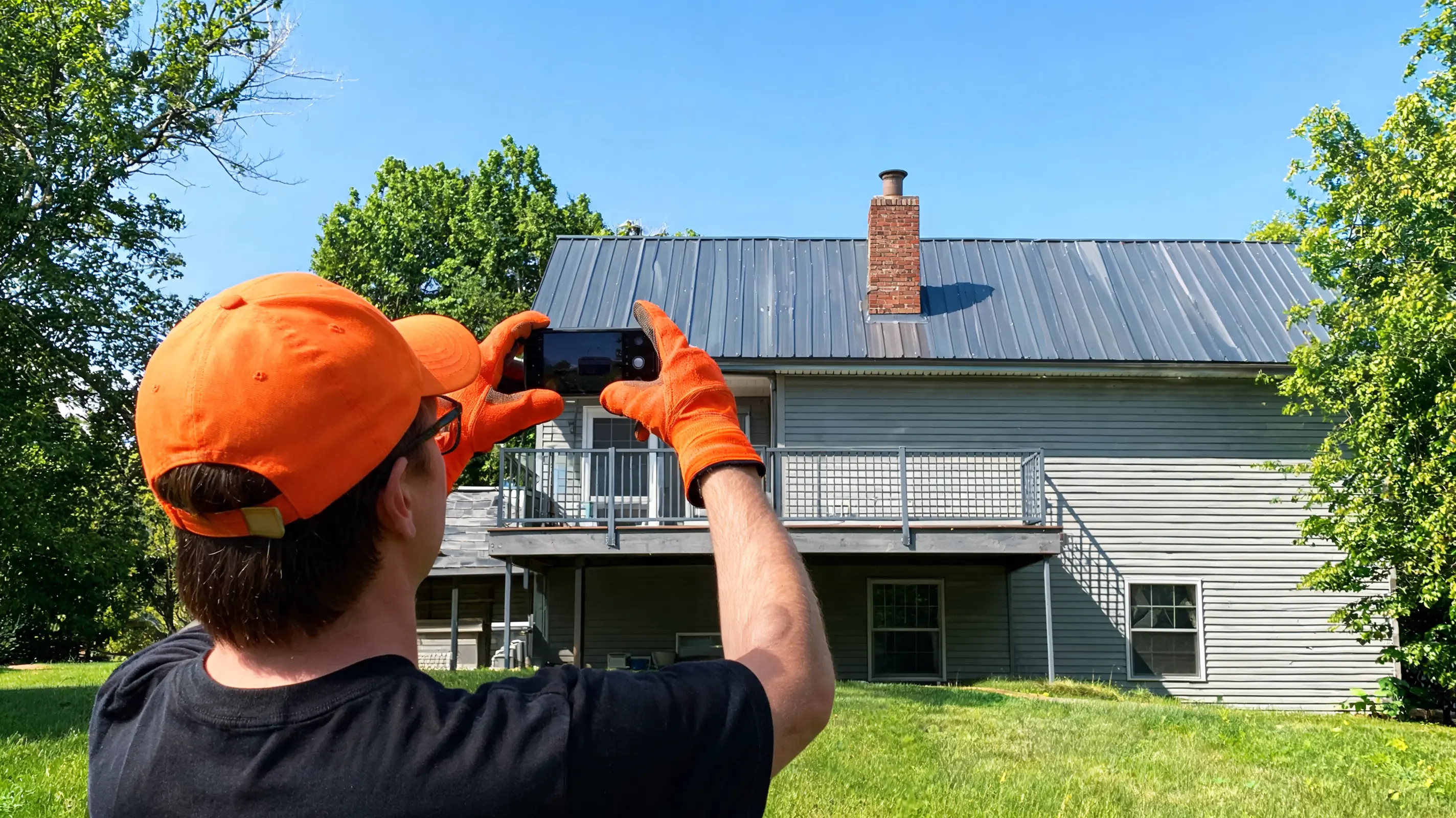
Start with a ground-level inspection before you think about using a ladder. Walk around the home and look for visible rust, loose panels, dents, scratches, bent flashing, or uneven areas on the roof. Use binoculars to check seams, valleys, roof edges, skylights, vents, and chimney areas from a safe spot.
This simple step helps you catch warning signs without walking on a slick or steep metal roof. Take photos of anything that looks damaged, even if it seems minor. Those photos make it easier to track changes and explain the issue to a roofer later.
Step 2: Remove Leaves, Branches, and Roof Debris
Leaves, twigs, branches, and dirt can trap moisture on a metal roof, especially in valleys, low-slope areas, and spots behind chimneys. Debris can also collect around skylights, vents, solar mounts, and other roof details. Remove loose material with a leaf blower, soft broom, or gentle rinsing when it is safe to do so.
Never scrape the roof with sharp tools, as this can scratch the coating and expose the metal underneath. If debris is stuck in a hard-to-reach area, it is better to call a professional than risk damaging the roof or getting hurt.
Step 3: Clean Gutters, Drains, and Downspouts
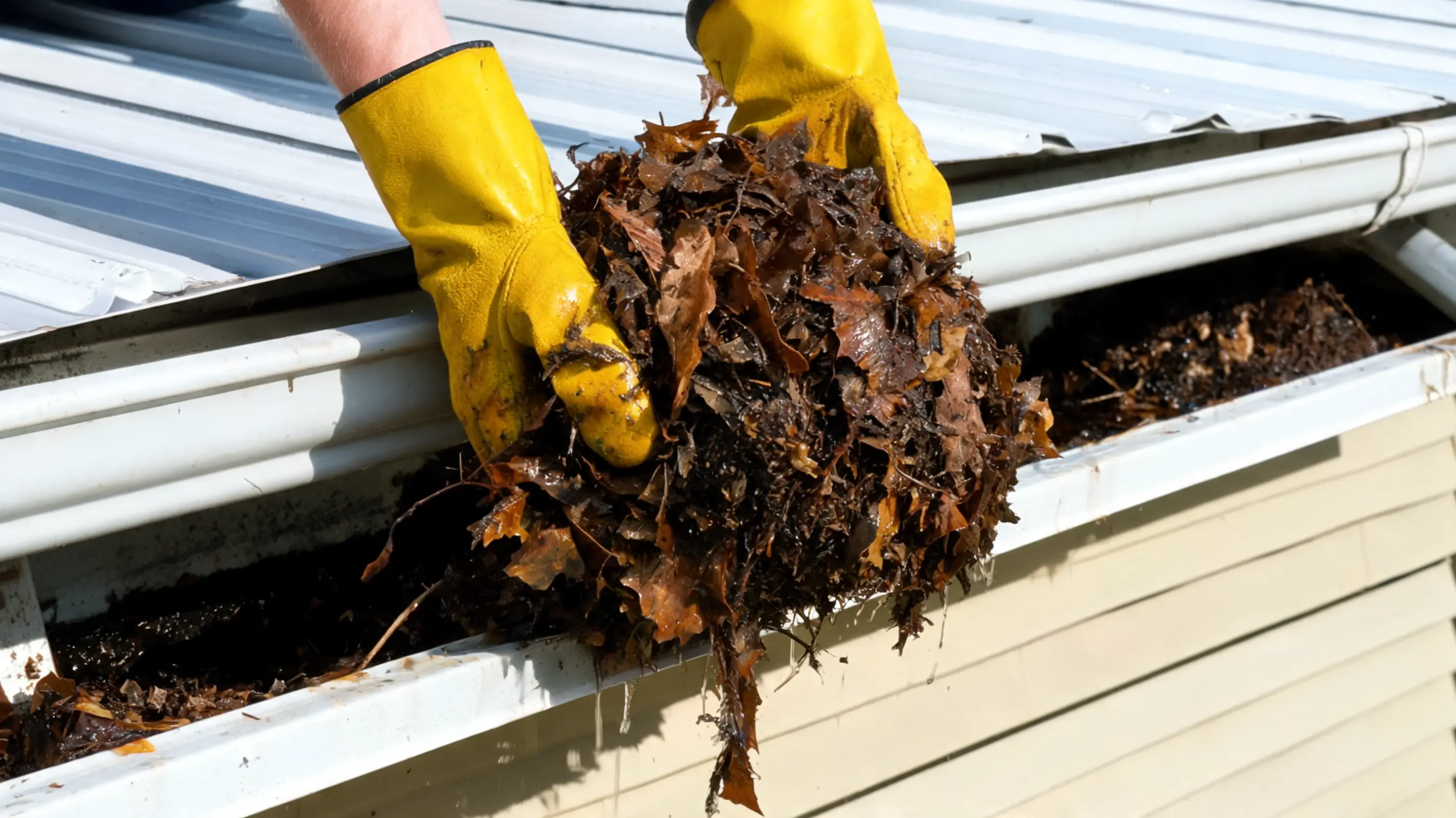
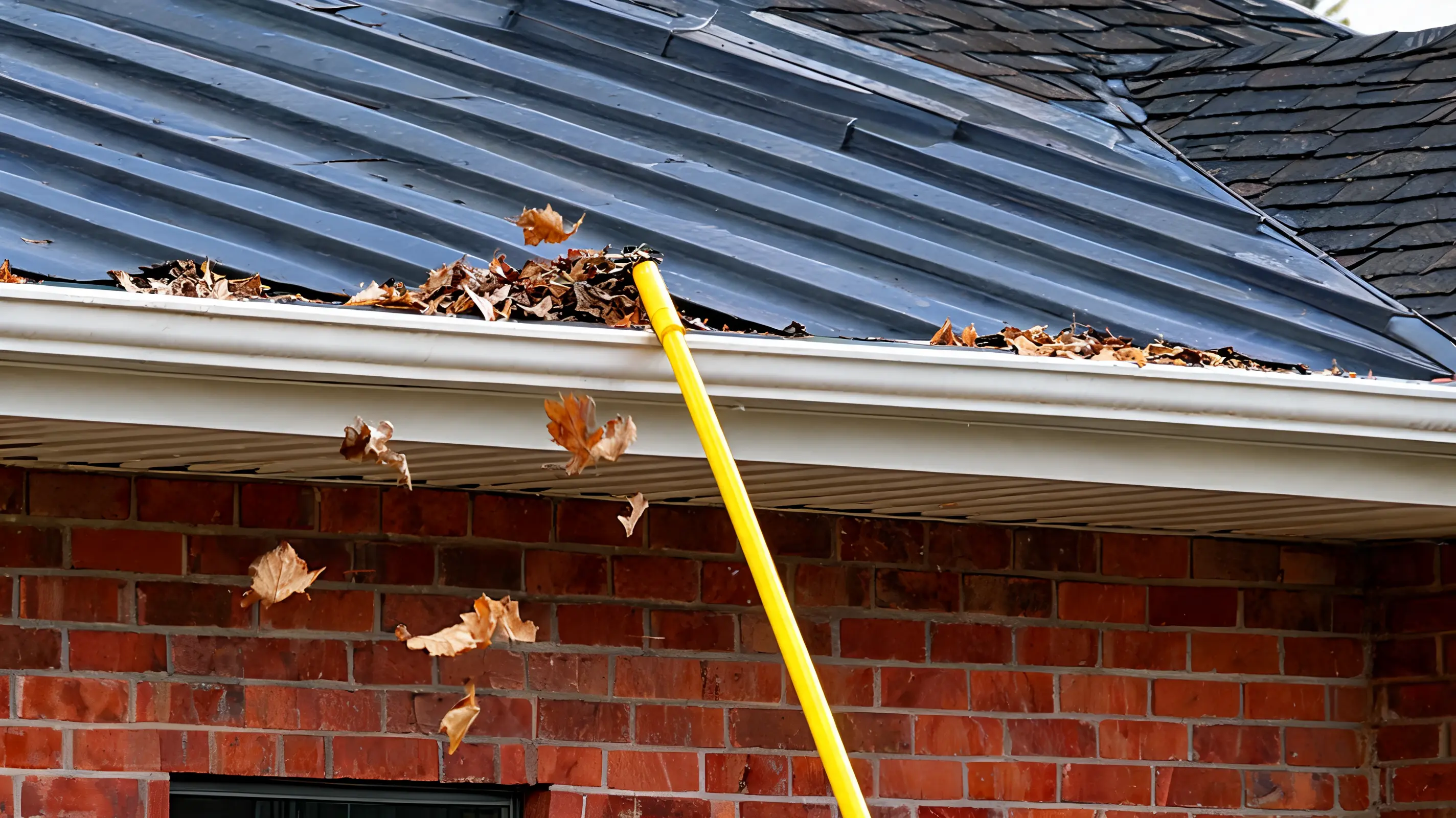
Clean gutters are a big part of metal roof care because they help water move away from the roof and home. Remove leaves, mud, and other clogs that can cause water to back up under roof edges or sit against metal surfaces. While cleaning, check for sagging gutters, loose brackets, cracks, or downspouts that are not draining well.
After rinsing, confirm that water flows away from the roof, siding, and foundation. If you see overflow, pooling, or water stains near the roofline, fix the drainage issue quickly before it leads to rust, leaks, or fascia damage.
Step 4: Wash the Roof Surface Safely
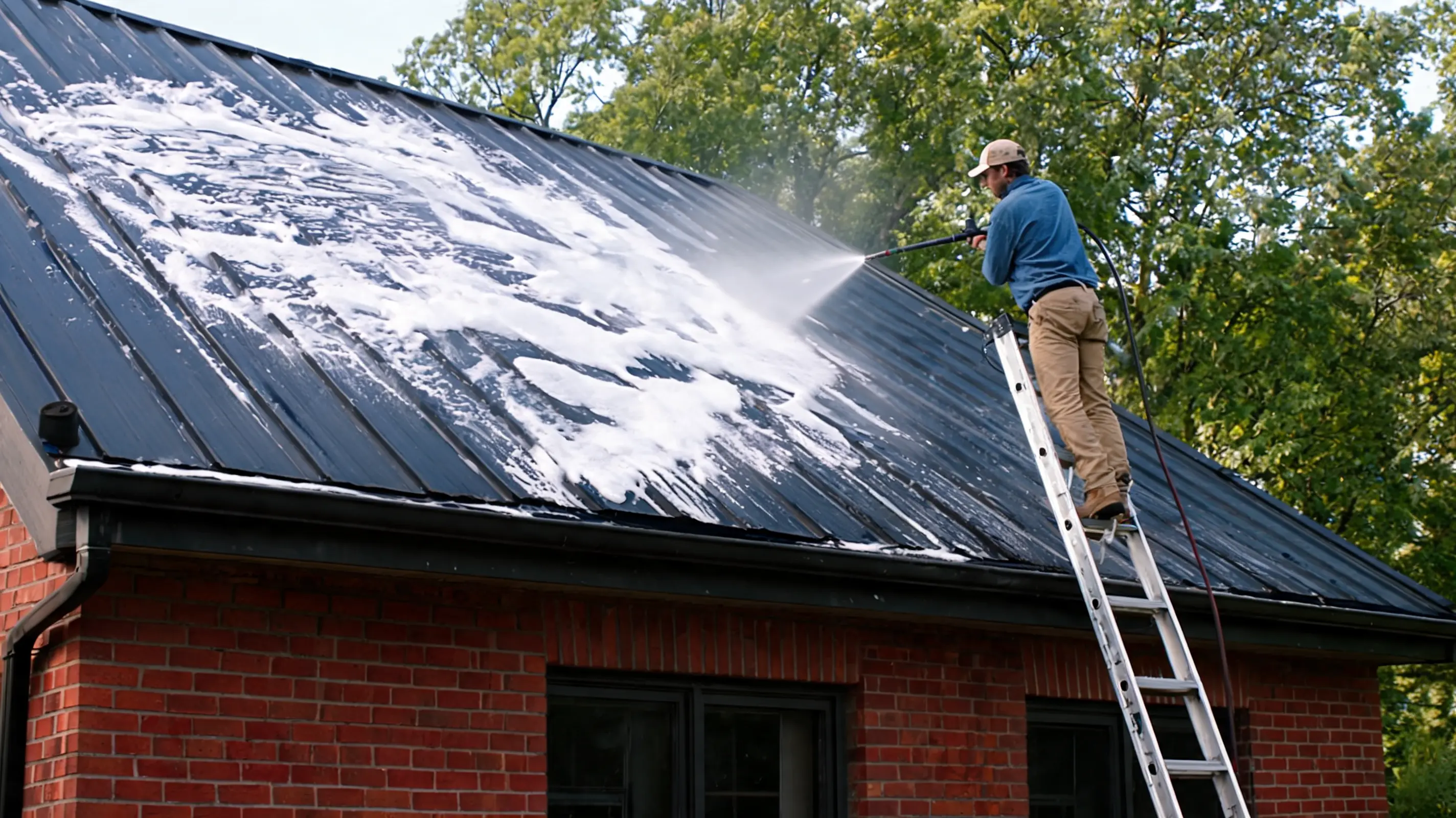
Use mild dish soap mixed with water or a cleaner approved for your metal roof. Apply it with a soft cloth, sponge, or soft-bristle brush, then clean gently in small sections. Rinse each area with a garden hose so the soap does not dry on the surface.
Avoid high-pressure washing, abrasive pads, bleach-heavy mixes, and harsh chemicals unless the roof manufacturer says they are safe. Cleaning in small sections gives you better control and helps prevent streaks or missed spots. Try to clean during cooler parts of the day so the surface is safer and easier to rinse.
Step 5: Check Fasteners, Screws, and Washers
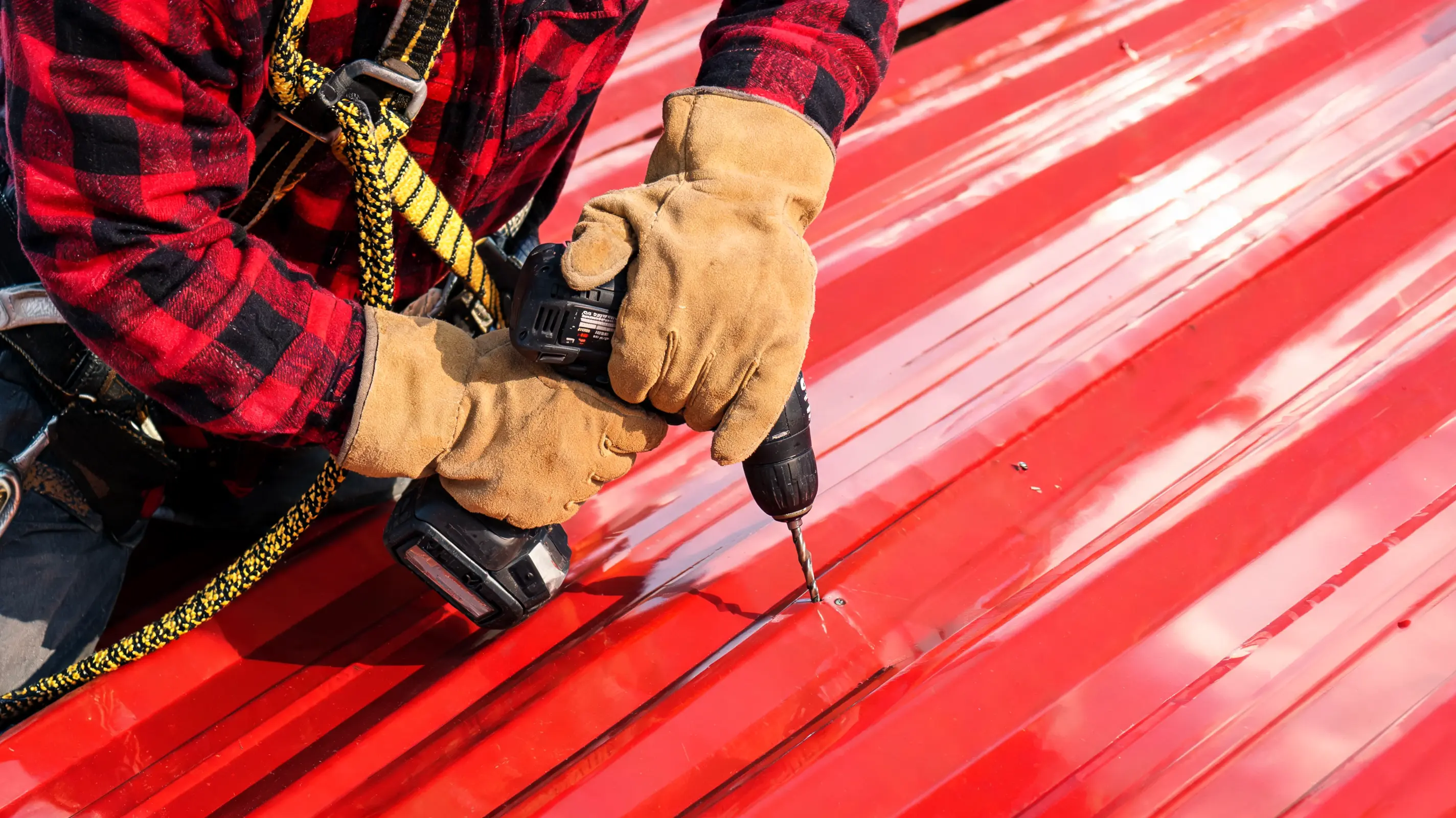
Fasteners, screws, and washers help keep the roof secure, so they deserve a careful look during maintenance. Check for raised, missing, crooked, rusty, or backed-out fasteners, especially on exposed fastener metal roofs. Look closely at rubber washers because they can crack, shrink, or wear out over time.
Damaged washers may let water enter around screw holes. Do not over-tighten screws, as this can crush the washer or damage the panel. If several fasteners look loose or worn, contact a roofer. Replacing them correctly helps prevent leaks and keeps the roof system tight.
Step 6: Inspect Seams, Flashing, and Sealant
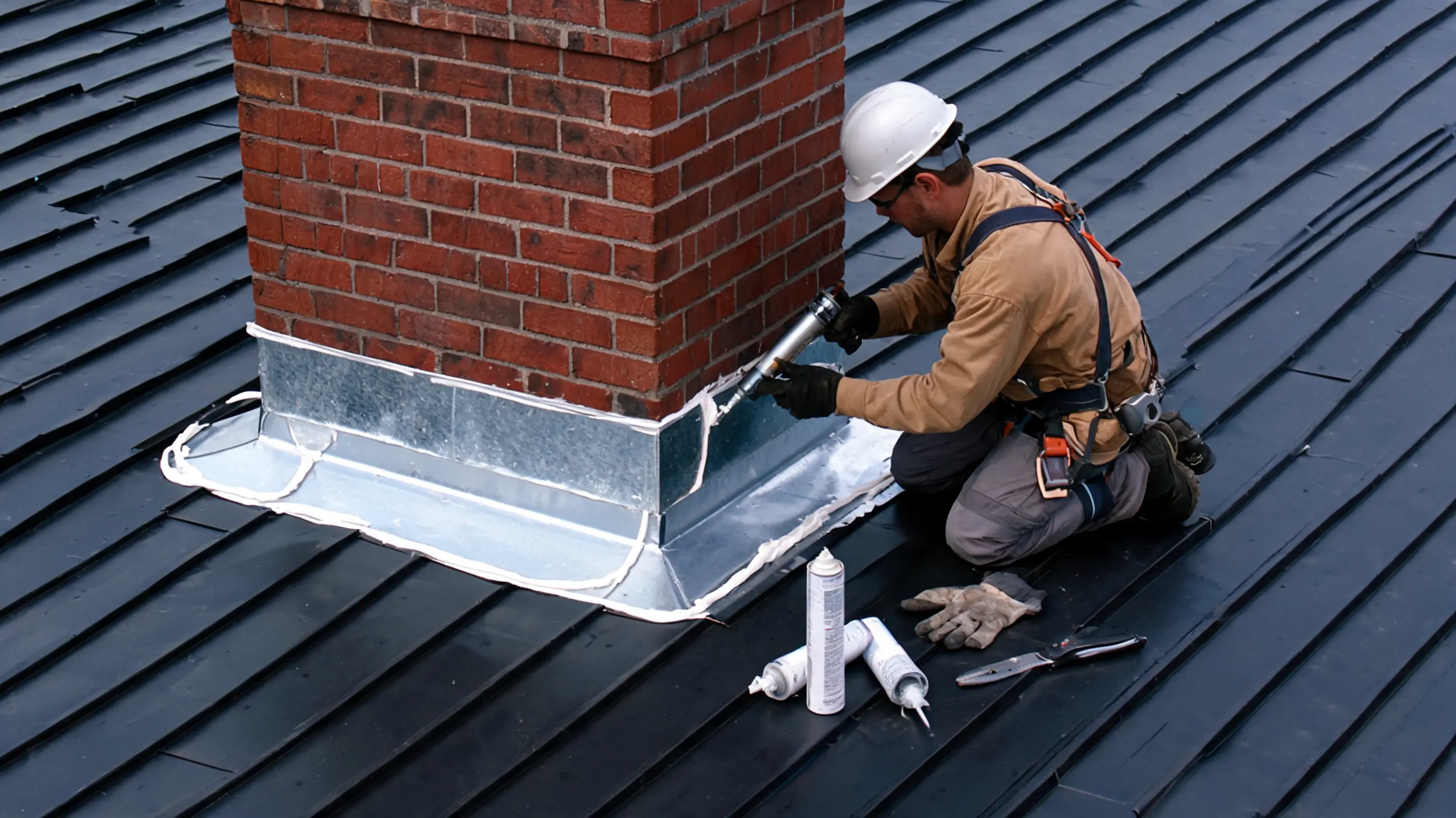
Seams, flashing, and sealant protect the areas where water is most likely to enter. Check around chimneys, skylights, vents, valleys, roof edges, pipes, and other roof penetrations. Look for gaps, cracks, lifting, loose pieces, dried sealant, or areas where flashing no longer sits flat.
These problems can let water move under the panels and into the home. Do not simply cover a suspicious area with random sealant. The real source of the leak may be nearby but not obvious. If you find damaged flashing, open seams, or major sealant failure, call a roofer for the right repair.
Step 7: Look for Rust, Scratches, and Coating Damage
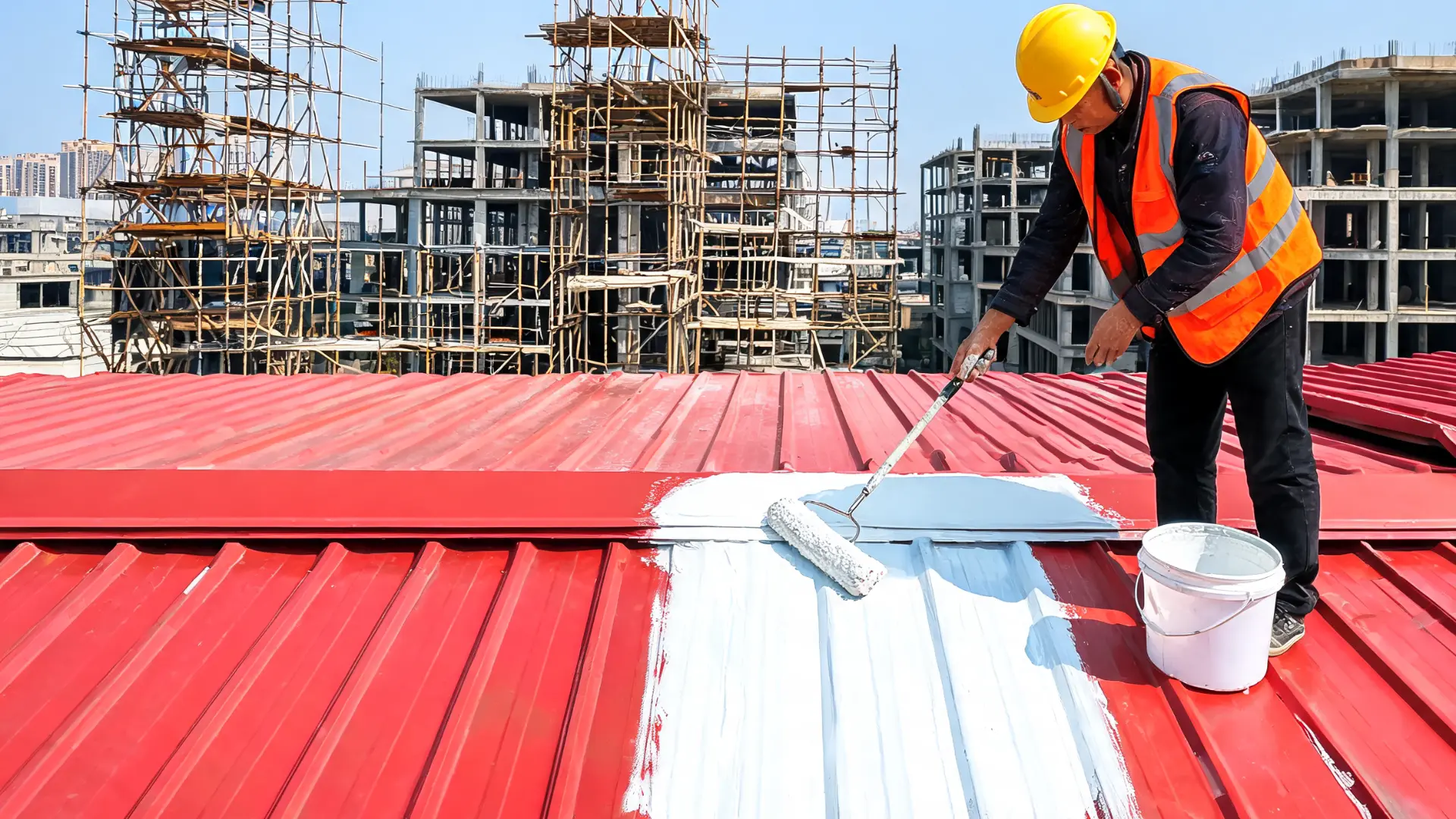
Finish by checking the roof surface for rust, scratches, fading, chalking, bubbling paint, or areas where the coating has worn away. Small coating damage can turn into corrosion if water reaches the exposed metal. Use only manufacturer-approved touch-up paint or repair products, and do not apply random paint, caulk, or sealant.
Before making any repairs, take clear photos and note where the damage is located. This helps with warranty records and future inspections. If rust covers a large area or keeps coming back, have a professional inspect the roof before the damage spreads.
Try These Metal Roof Cleaning Methods
Cleaning a metal roof is not hard, but you do need to be gentle. To remove dirt, stains, leaves, and light growth without scratching the surface or wearing down the coating. I always suggest starting with the mildest method first, then using stronger cleaners only when the roofer says they are safe.
Best Cleaning Solution for Metal Roofs:
- Mild dish soap and water for basic cleaning
- Approved metal roof cleaner for stains
- White vinegar mix for light algae or mildew, if allowed by the manufacturer
1. How to Clean a Metal Roof with Soap and Water
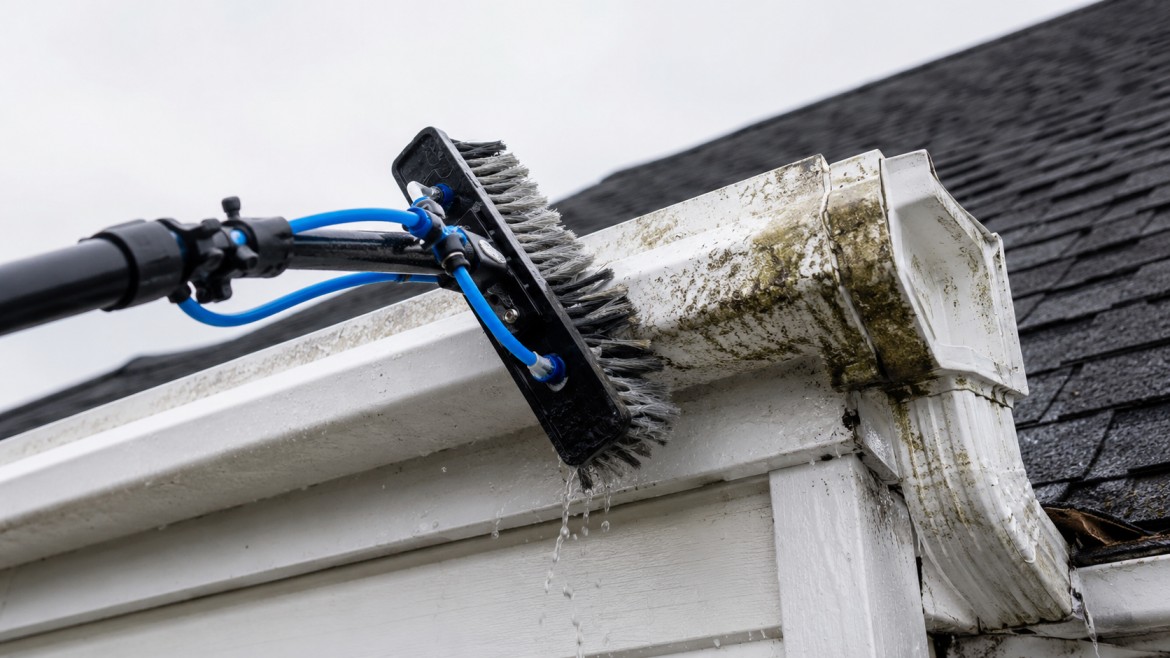
A gentle cleaning process is the safest way to protect the roof surface while removing dirt, stains, and light buildup. Work slowly, use soft tools, and rinse well so no cleaner stays on the metal.
Step-by-Step Instruction:
- Rinse loose dirt first: Use a garden hose to wash away dust, pollen, and small debris before adding any cleaner.
- Apply the cleaning solution gently: Use mild soap and water or an approved cleaner, and spread it with a soft sponge, cloth, or soft brush.
- Let it sit briefly if needed: For stains, let the cleaner rest for a short time so it can loosen the dirt, but do not let it dry on the roof.
- Wipe with a soft tool: Clean the area gently with a soft sponge, cloth, or soft-bristle brush to avoid scratching the roof surface.
- Rinse thoroughly with clean water: Wash away all soap or cleaner with a garden hose to ensure no residue is left behind.
Tip: Avoid high-pressure washing, wire brushes, steel wool, harsh chemicals, rough pads, unapproved cleaners, and bleach-heavy mixes unless your roof manufacturer says they are safe.
2. How to Remove Moss, Algae, and Mildew
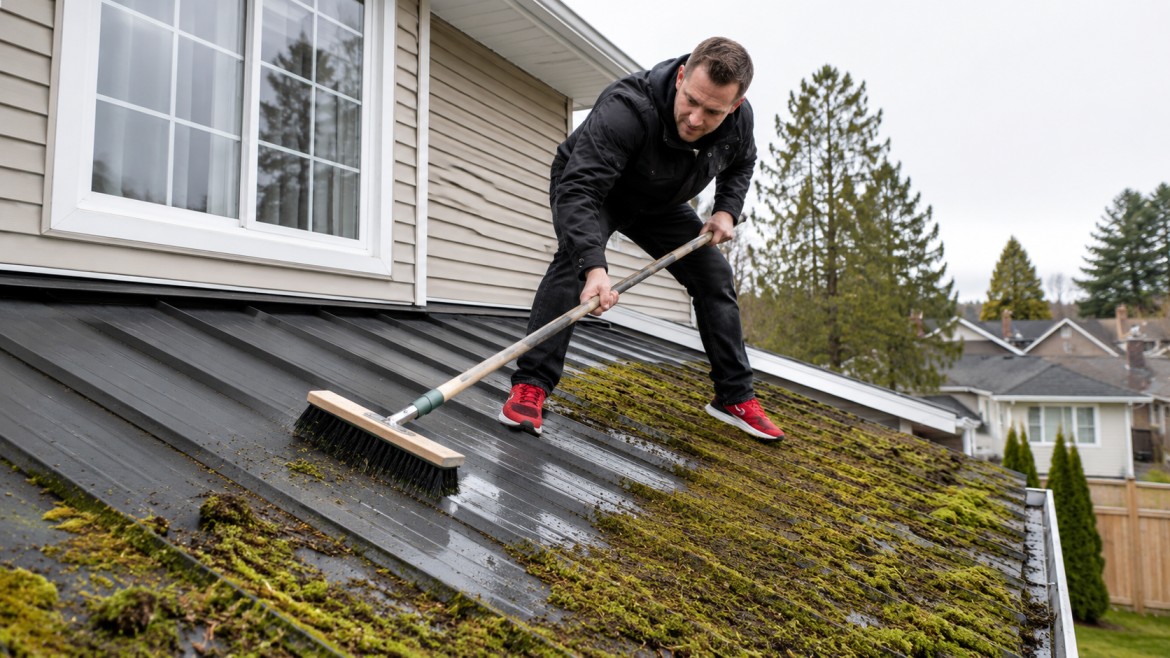
Moss, algae, and mildew usually show up where the roof stays damp, shaded, or covered with leaves. A small patch may only need gentle cleaning, but repeated growth can mean moisture is getting trapped on the roof.
Step-by-Step Instruction:
- Start with a gentle rinse: Use a garden hose to loosen light growth and remove dirt before applying any cleaner.
- Use an approved cleaner: Choose a cleaner made for metal roofs, or use a mild soap mix if the roof manufacturer allows it.
- Try a light vinegar mix only if approved: White vinegar and water may help with light algae or mildew, but check the roof care guide first.
- Clean with a soft tool: Use a sponge, cloth, or soft-bristled brush to avoid scratching the roof coating.
- Watch for trapped moisture: If moss or mildew keeps coming back in the same spot, check for leaves, poor drainage, or heavy shade.
- Prevent future growth: Trim branches, clear valleys, clean gutters, and keep shaded areas as dry and open as possible.
The safest approach is to clean early and gently. If the growth is thick, widespread, or keeps returning, have a roofer check the area for a drainage or coating problem
3. How to Clean Bird Droppings, Tree Sap, and Stains
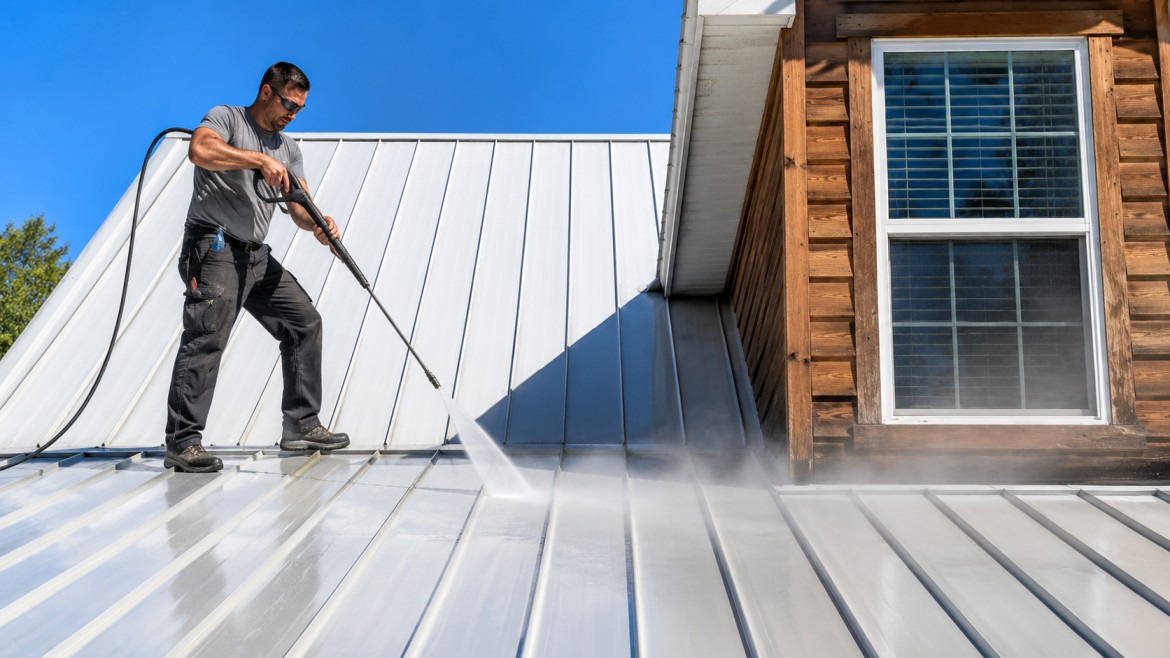
Bird droppings, tree sap, and dark stains should not sit on a metal roof for too long. Some stains can be acidic or sticky, which means they may wear down the roof finish or trap dirt if left in place.
Step-by-Step Instruction:
- Remove stains as soon as you notice them: Bird droppings and sticky sap can damage the coating over time, so early cleaning is best.
- Rinse the area first: Use a garden hose to soften the stain and wash away loose dirt.
- Apply mild soap or approved cleaner: Use a soft sponge or cloth with mild dish soap and water, or a roof-safe cleaner for tougher marks.
- Let the cleaner sit briefly: Give it a short time to loosen the stain, but do not let it dry on the roof.
- Wipe gently: Avoid scrubbing hard because rough pressure can dull or scratch the roof surface.
- Rinse fully: Wash away all cleaner so no residue is left behind.
- Call a pro for stubborn stains: If sap, dark stains, or buildup will not come off with gentle cleaning, a roofer can clean it without damaging the finish.
Quick spot cleaning helps protect both the look and the coating of your roof. If a stain seems stuck, it is better to get help than to risk damaging the metal with harsh scrubbing.
Maintenance Tips by Metal Roof Material and Finish
Different metal roofs age at different rates, so the right maintenance routine depends on the material and finish you have. If you know what your roof is made of, you can clean it more effectively, catch damage earlier, and avoid products that cause problems.
| Metal Roof Type | What to Watch For | Maintenance Tip |
| Painted Steel Roofs | Scratches, chalking, fading, and worn coating | Check the painted surface during routine inspections and use only manufacturer-approved touch-up paint on damaged areas. |
| Galvalume or Galvanized Metal Roofs | Corrosion near fasteners, cut edges, scratches, and areas touching incompatible materials | Keep these roofs away from materials that can react with the metal, and inspect exposed edges and fastener points closely. |
| Aluminum Metal Roofs | Coating wear, loose fasteners, salt buildup, and surface stains | Aluminum works well in coastal areas, but it still needs regular washing and close checks around fasteners and seams. |
| Copper and Zinc Roofs | Natural patina, surface changes, and damage from harsh cleaning | Let the natural patina form, and avoid strong cleaners or abrasive tools that can strip away the protective surface. |
The safest approach is to follow the care instructions for your exact roof material. When you use the right cleaner, touch-up product, and repair materials, your metal roof can keep its protective finish much longer.
Climate-Based Metal Roof Maintenance
Your local weather plays a big role in how you care for a metal roof. I would not maintain a roof in a hot, dry area the same way I would care for one near the coast or under heavy trees. Once you match your maintenance routine to your climate, your roof has a much better chance of staying clean, dry, and long-lasting.
- Hot and sunny climates: Strong sun can fade paint and dry out sealants, so inspect the roof for fading, cracking, and heat-related panel movement, and clean it during the morning or evening.
- Coastal and salt-air areas: Salt can accelerate corrosion, so wash the roof more often, check edges, fasteners, and any scratches closely, and use corrosion-resistant materials for repairs.
- Snow and ice regions: Snow and ice can strain the roof and create ice dams near the eaves, so check for heavy buildup and avoid sharp tools that can scratch or puncture the metal.
- Tree-covered or humid areas: Leaves, algae, and mildew accumulate faster in shaded or damp areas, so remove debris regularly, clean organic growth promptly, and trim branches hanging over the roof.
- Wildfire-prone areas: Ash, soot, dry leaves, and debris can collect on the roof and in gutters, so clear them quickly and check vents, edges, and valleys for buildup.
- High-wind and hail areas: Wind and hail can lift panels, loosen flashing, and dent the surface, so inspect after storms and take clear photos for repair records or insurance claims.
A climate-based routine helps you focus on the risks that matter most for your home. Instead of doing random roof checks, you can focus on the specific problems your weather is most likely to cause.
DIY vs. Professional Metal Roof Maintenance
Some metal roof care is simple enough to handle on your own, but not every task is worth the safety risk. I like to separate the easy checks from the jobs that need a trained roofer, so you know when to grab basic tools and when to make the call.
| Category | Tasks | When It Matters |
|---|---|---|
| Safe DIY Maintenance | Ground-level visual inspection, light debris removal, gutter cleaning if safely reachable, gentle rinsing, basic photo documentation | These tasks help you spot early issues, keep water moving, and track roof changes without walking on the roof. |
| Roofing Professional Needed | Walking on steep or slick roofs, replacing fasteners, repairing seams, fixing flashing, treating rust, replacing sealant, leak diagnosis, and structural inspection | These jobs involve safety risks, leak-prone areas, or repair details that need the right tools and experience. |
| When to Call a Roofer Right Away | Active leak, interior water stains, large rust spots, loose or lifted panels, missing flashing, storm damage, sagging roof area | This can indicate water entry, structural issues, or damage that may worsen quickly. |
A simple rule works well here: handle only the tasks you can do safely from the ground or a stable ladder. For roof walking, leaks, rust repair, or structural concerns, a professional inspection is the safer choice.
Metal Roof Maintenance Checklist by Roof Age
A metal roof does not need the same care at every stage of its life. A newer roof needs basic checks and good records, while an older roof needs closer attention to seams, coatings, and repair costs. I suggest this approach because it keeps your maintenance simple and realistic.
- New roof, 0 to 5 years: Focus on confirming the roof was installed correctly, keep all warranty and service records, and watch areas around vents, solar mounts, chimneys, trees, and other possible damage points.
- Mid-life roof, 5 to 20 years: Inspect fasteners, sealants, coatings, and flashing more carefully, clean the roof on a regular schedule, and touch up minor coating damage before rust starts.
- Older roof, 20+ years: Look closely for widespread corrosion, loose seams, worn panels, and repeat leaks, then compare repair costs with the value of a full replacement.
When you care for your metal roof based on its age, you avoid both under-maintaining and overreacting. The goal is simple: handle small issues early, protect the roof’s surface, and know when repairs are no longer the smartest option.
Frequently Asked Questions
How often are you supposed to replace the screws in a metal roof?
Check screws yearly. Most last 10–15 years but should be replaced sooner if they’re loose, rusty, or leaking.
How often should you coat a metal roof?
Most metal roofs need recoating every 10–20 years, depending on climate, wear, and roof condition.
Why do insurance companies not like metal roofs?
Some insurers are concerned about denting, repair costs, or aging fasteners, though many still provide coverage.
What is the average cost to replace screws in a metal roof?
Small repairs typically cost $150–$1,000, while full fastener replacement can cost more depending on roof size.
Do metal roofs affect WiFi?
Usually no. Most WiFi issues are caused by router placement, walls, or weak equipment rather than the roof itself.
Final Words
Good metal roof maintenance comes down to steady care, not hard work. When you inspect your roof, clean it gently, clear debris, and watch for early damage, you give the roof a better chance to do its job for many years.
I would focus on the basics first: keep gutters clear, remove leaves, check fasteners, look for scratches, and document anything that changes. These small steps help you catch problems before they become expensive repairs.
Your roof type, climate, age, and finish all affect how often you should check things. So use this guide as a practical routine, not a one-time task.
If you see leaks, rust, lifted panels, or storm damage, call a roofer early. A quick repair now can prevent bigger trouble later.