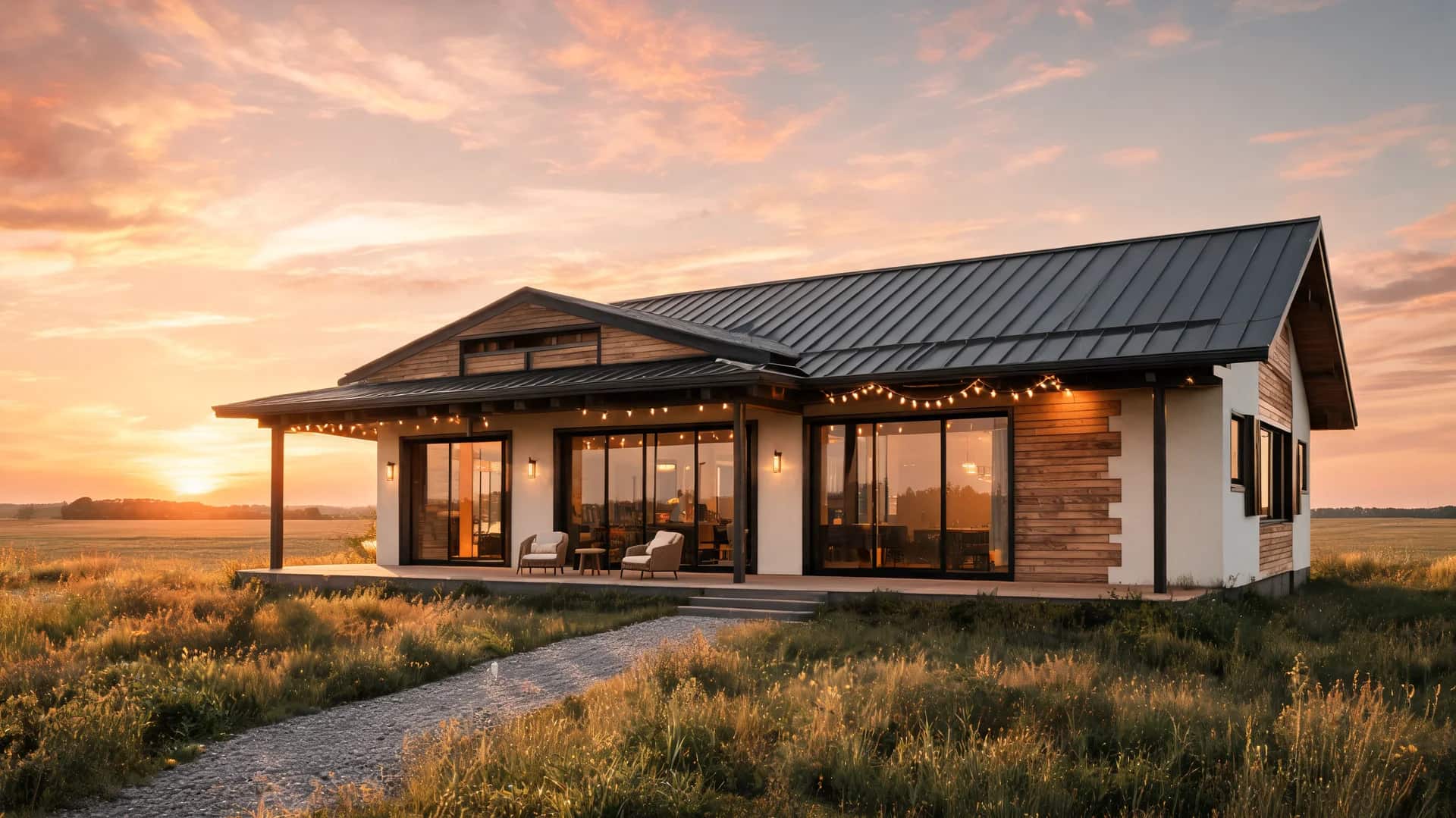
A modern farmhouse exterior earns its name only when it holds up against real land and real weather. I started paying attention to that gap after walking enough job sites to see what actually holds up.
Pinterest boards rarely show how a roofline behaves during monsoon rain or how glass performs when facing the west sun over a decade.
This piece pulls together farmhouse exterior ideas built for that kind of field-facing reality, not just photographs. I’m covering the architectural elements, layout logic, material choices, color palettes, common mistakes, and fifteen buildable concepts a builder can use directly.
What Defines a Modern Farmhouse Exterior?
A modern farmhouse exterior blends rural warmth with restrained, contemporary geometry, stripping away ornamentation so the house reads as one clear form. Traditional farmhouses lean on decorative trim, multiple rooflines, and wraparound porches built for a different era of construction and budget.
Four traits set a modern farmhouse exterior apart from its traditional counterpart, and each appears consistently in builds that age well over time.
- Clean massing – one or two simple volumes instead of multiple intersecting rooflines.
- Large glazing – oversized windows and sliding glass replace small punched openings.
- Natural materials – wood, stone, and metal stay visible instead of hidden under trim.
- Gable or barn-style roofs – steep, simple rooflines that shed water and snow fast.
Livability drives every one of these choices. A modern farmhouse exterior prioritizes how a family actually uses the house over how many decorative details it can display.
Modern Farmhouse Forms
These farmhouse exterior ideas represent the core architectural expressions that define how modern farmhouse design adapts to land, climate, and visual intent. Each form below reflects a distinct spatial logic, ranging from linear field-facing layouts to enclosed courtyard compositions and hybrid barn-inspired structures.
1. Field-Facing Linear Glass Farmhouse
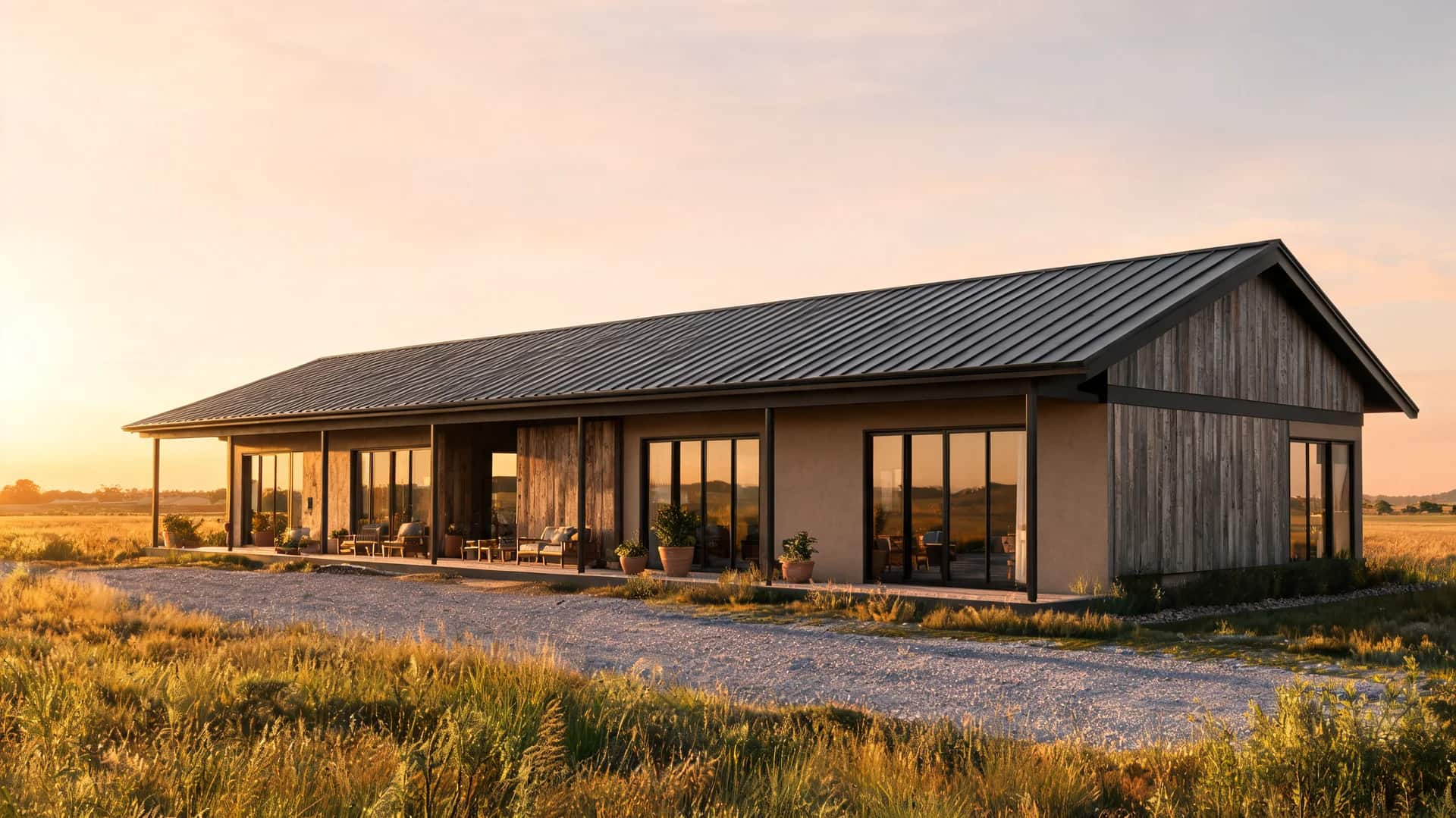
A single-story bar runs parallel to the field, turning the entire long wall into glass instead of a row of separate windows. This layout suits flat, open lots where the view is the property’s strongest asset.
The road-facing side stays mostly solid, keeping the entry private, while the back wall opens completely toward the field. Wood cladding and a black standing-seam roof keep the form quiet, letting the glass carry the visual weight instead of competing with other materials.
- Layout: linear footprint, single story, long axis facing the field
- Glazing: floor-to-ceiling glass on field-facing wall only
- Best fit: flat, unobstructed lots where the view is the main feature
2. Courtyard Enclosed Farmhouse
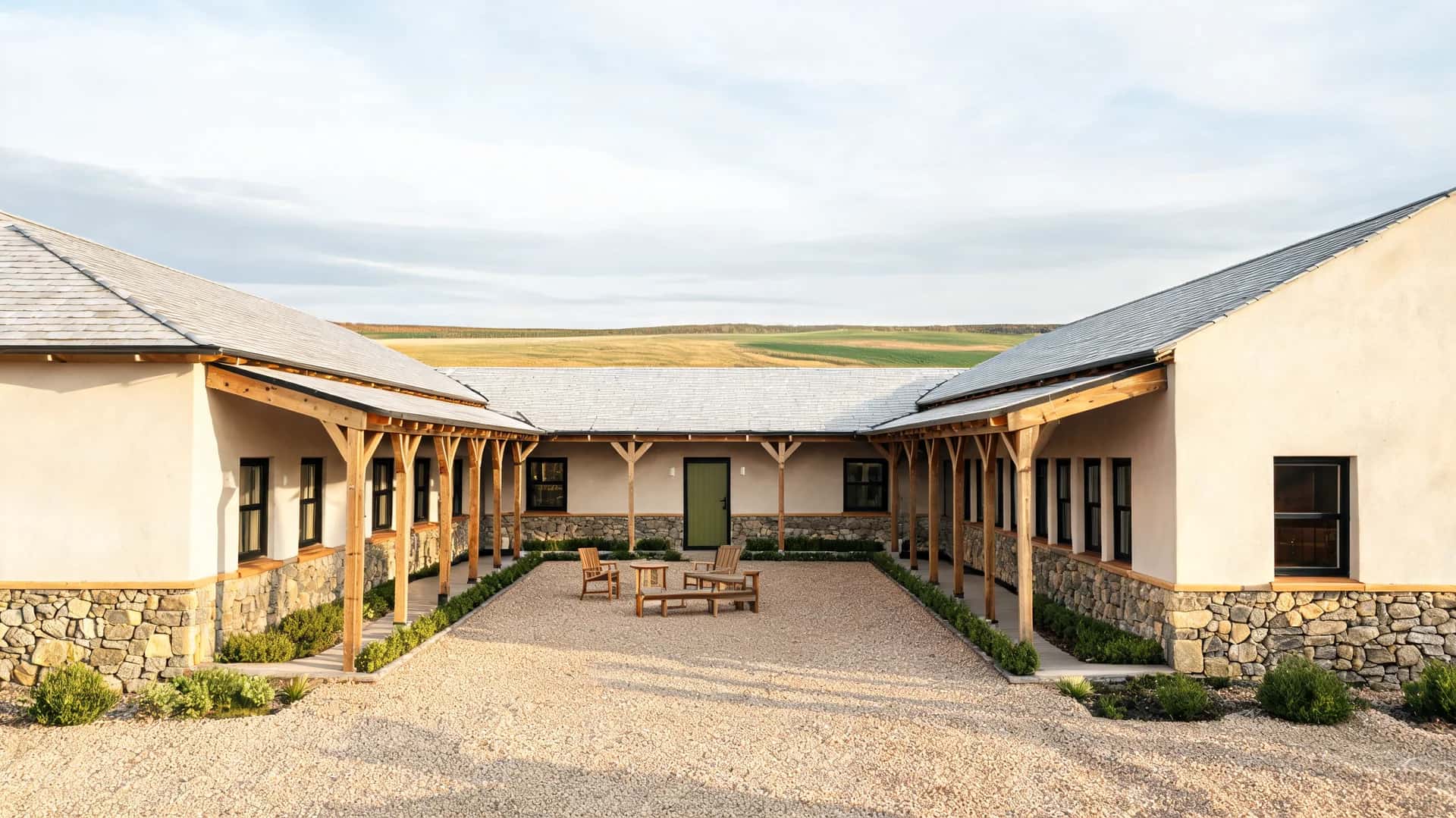
Three wings wrap around a central courtyard, turning the outdoor space inward instead of exposing it to the road or neighboring lots. This layout works well on smaller or busier sites where privacy matters more than open field exposure.
A stone base on the lower walls adds thermal mass, helping regulate indoor temperature swings, while plaster on the upper walls keeps the form lighter. The courtyard becomes the primary outdoor living zone.
- Layout: three-wing courtyard plan
- Materials: stone base, plaster upper walls
- Best fit: smaller or road-facing lots needing privacy
3. Twin Barn Volume House
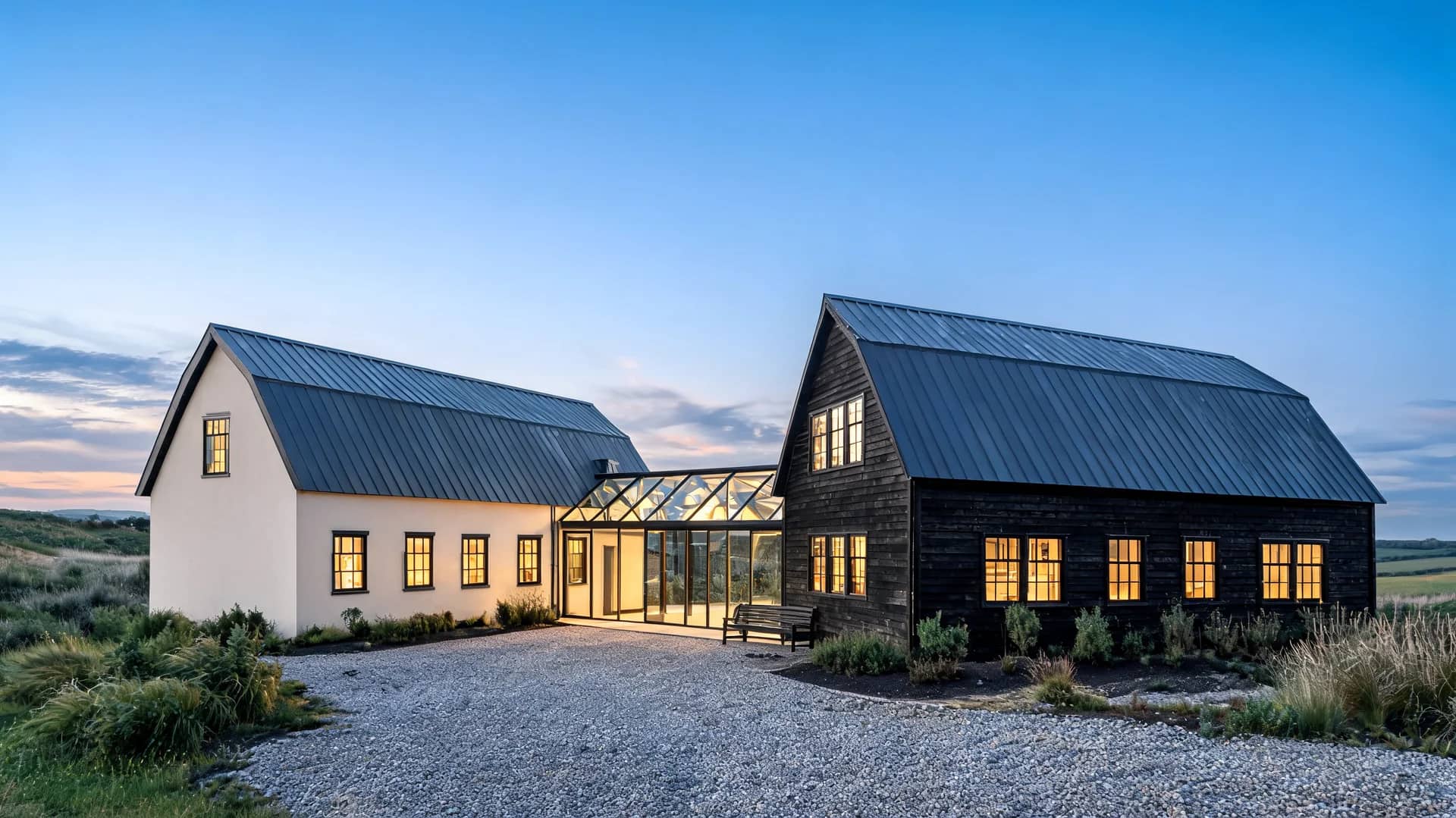
Two gable-roofed volumes sit side by side, connected by a glazed link that separates living and sleeping zones into distinct structures. This works on larger rural lots with enough room to spread horizontally.
Board-and-batten wood siding reinforces the barn identity while the glass connector acts as a transition space between functions.
- Layout: two separate gable volumes joined by glass link
- Materials: board-and-batten wood siding
- Best fit: large rural sites needing clear zoning separation
4. A-Frame Barn Farmhouse
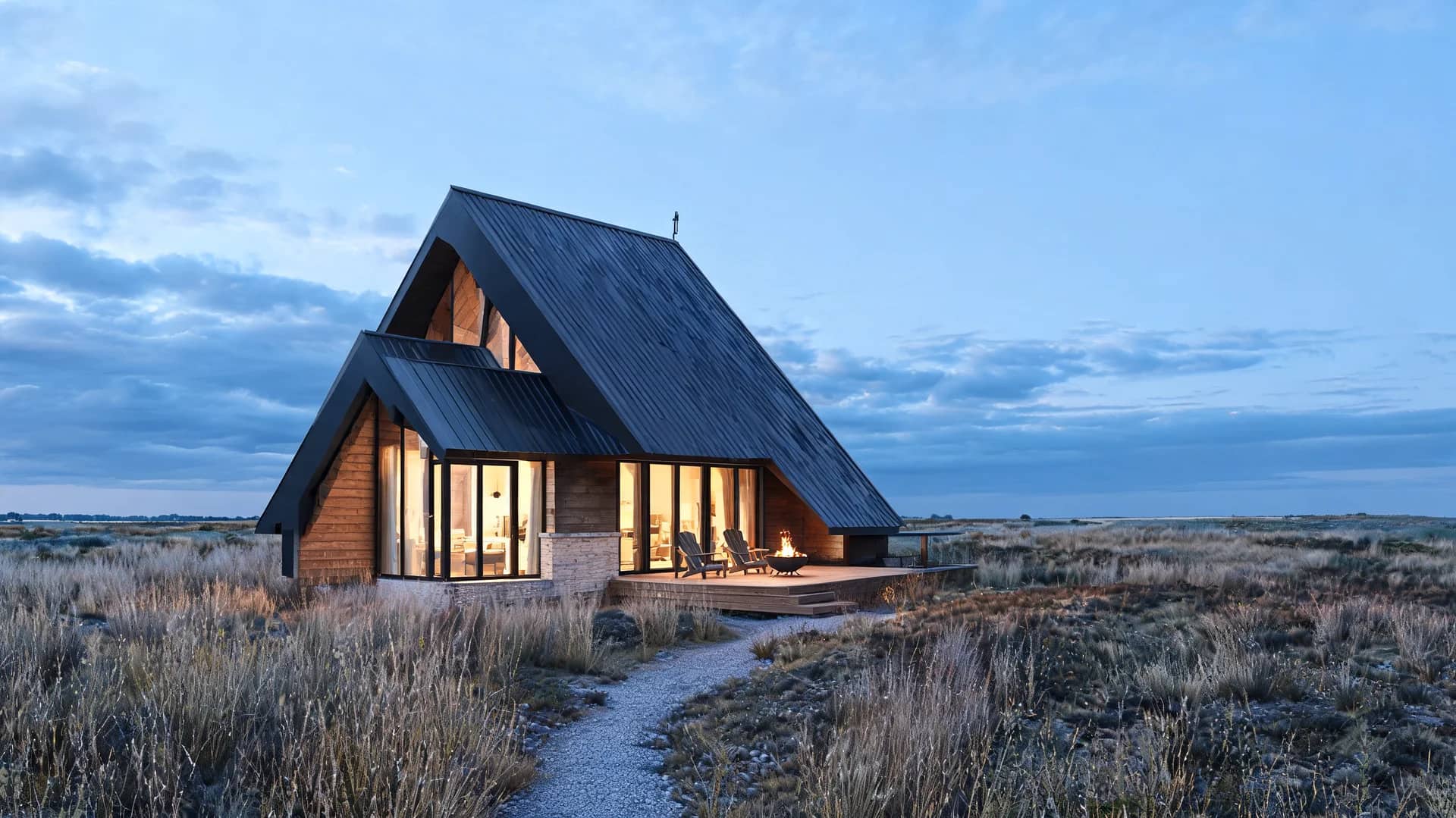
A steep A-frame roofline drops close to the ground on both sides, shedding snow quickly while creating tall interior volumes without structural complexity.
A simple rectangular footprint works best under this form. Wood cladding on the lower section pairs with a metal roof for durability in heavy snow regions.
- Layout: rectangular footprint with steep A-frame roof
- Materials: wood lower walls, metal roof
- Best fit: heavy snow climate regions
5. L-Shaped Field Embrace
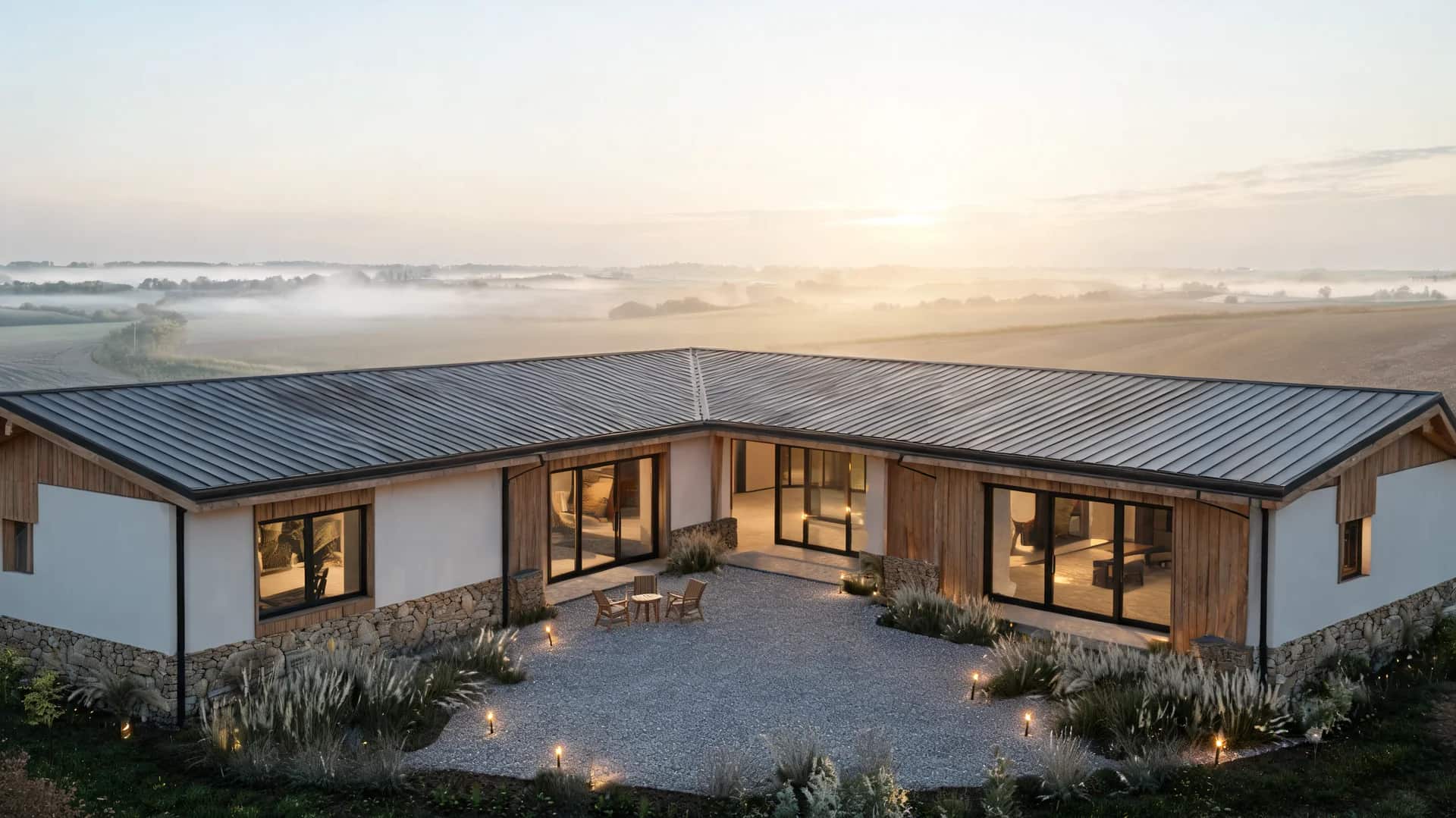
An L-shaped layout creates a sheltered outdoor corner facing the field while blocking wind from one side. The result is a protected outdoor zone integrated into the main structure.
Wood cladding with stone accents keeps the exterior grounded and natural in tone.
- Layout: L-shaped massing with sheltered corner
- Materials: wood with stone accents
- Best fit: windy rural sites needing protection
6. Split-Level Field Farmhouse
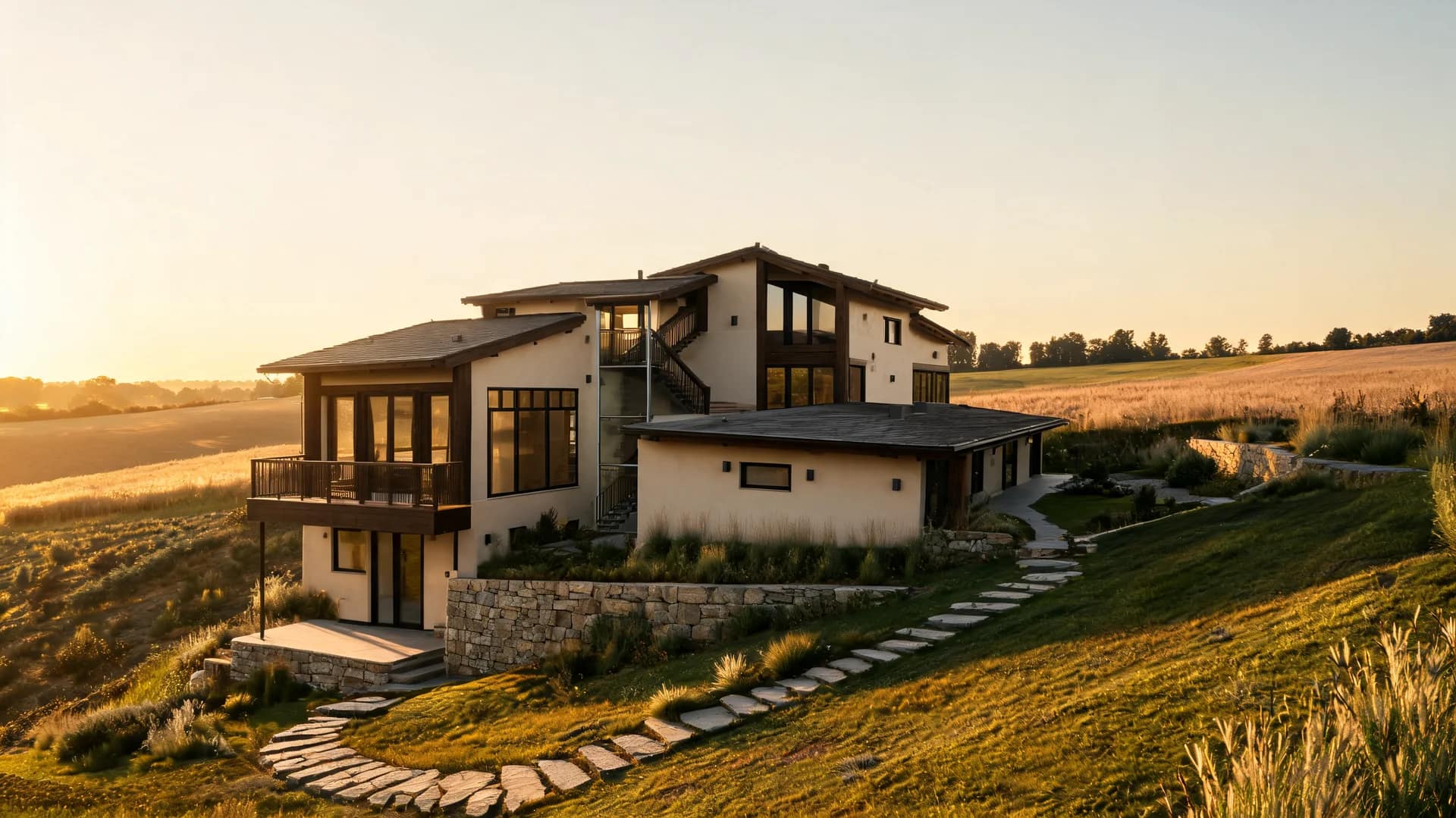
The structure follows natural slope instead of flattening the site, creating stepped levels that reduce excavation needs and improve site integration.
Stone retaining walls stabilize grade changes and become part of the architectural expression.
- Layout: stepped massing following terrain slope
- Materials: stone retaining walls
- Best fit: sloped rural sites
7. Classic Gabled Modern Farmhouse Exterior
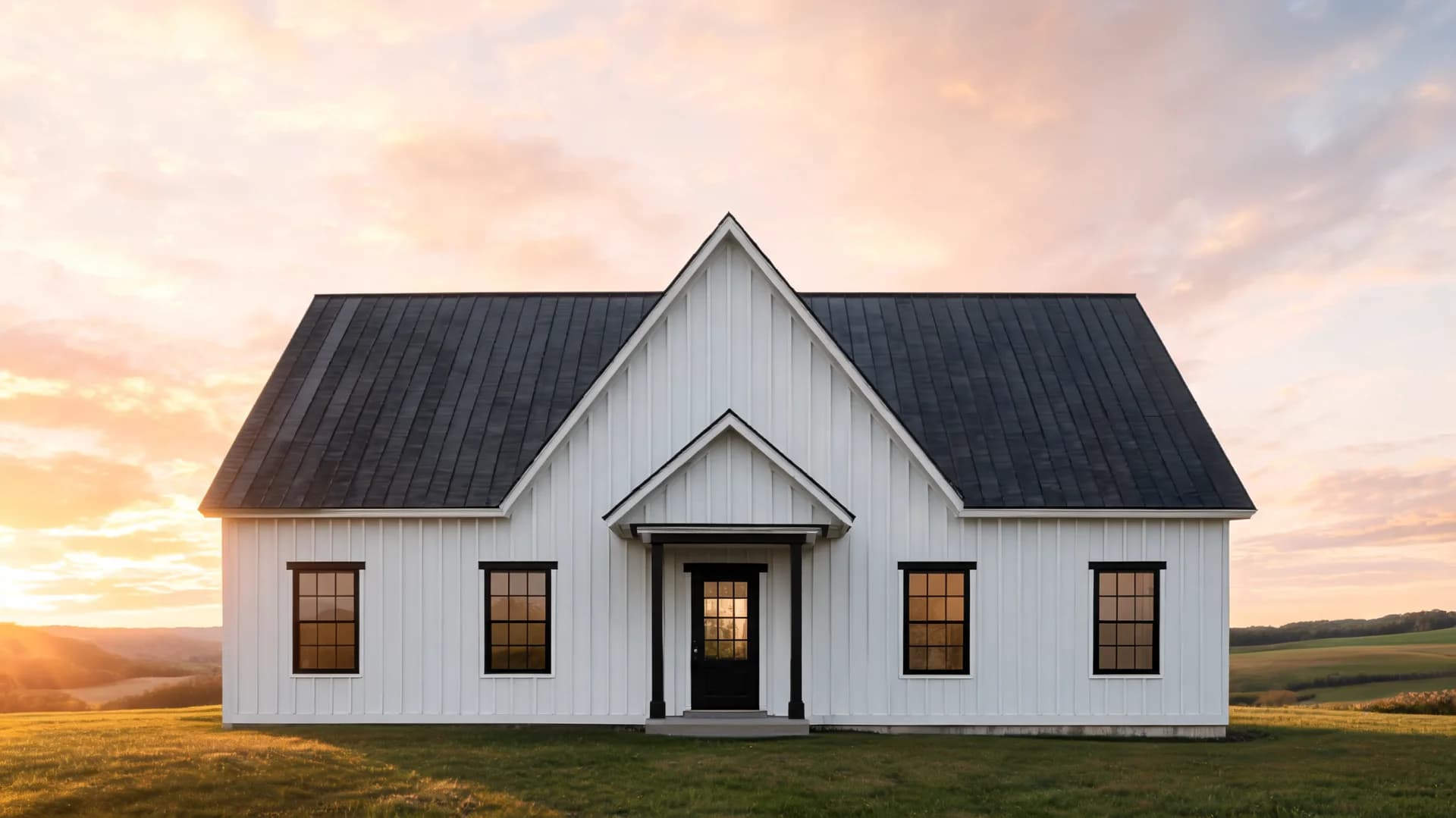
A symmetrical gable roof defines the façade with balanced window placement and a centered entry, creating a clean and recognizable farmhouse identity.
White or neutral siding paired with black-framed windows reinforces a timeless modern farmhouse look.
- Layout: symmetrical rectangular footprint
- Materials: neutral siding, black-framed windows
- Best fit: traditional residential lots
Modern Farmhouse Material Palettes
This section focuses on material-driven exterior identities where the farmhouse expression is defined primarily by surface treatment, texture, and color composition rather than structural form alone. These palettes shape how the exterior reads in different light conditions, climates, and landscape settings.
8. Black Metal + Wood Hybrid
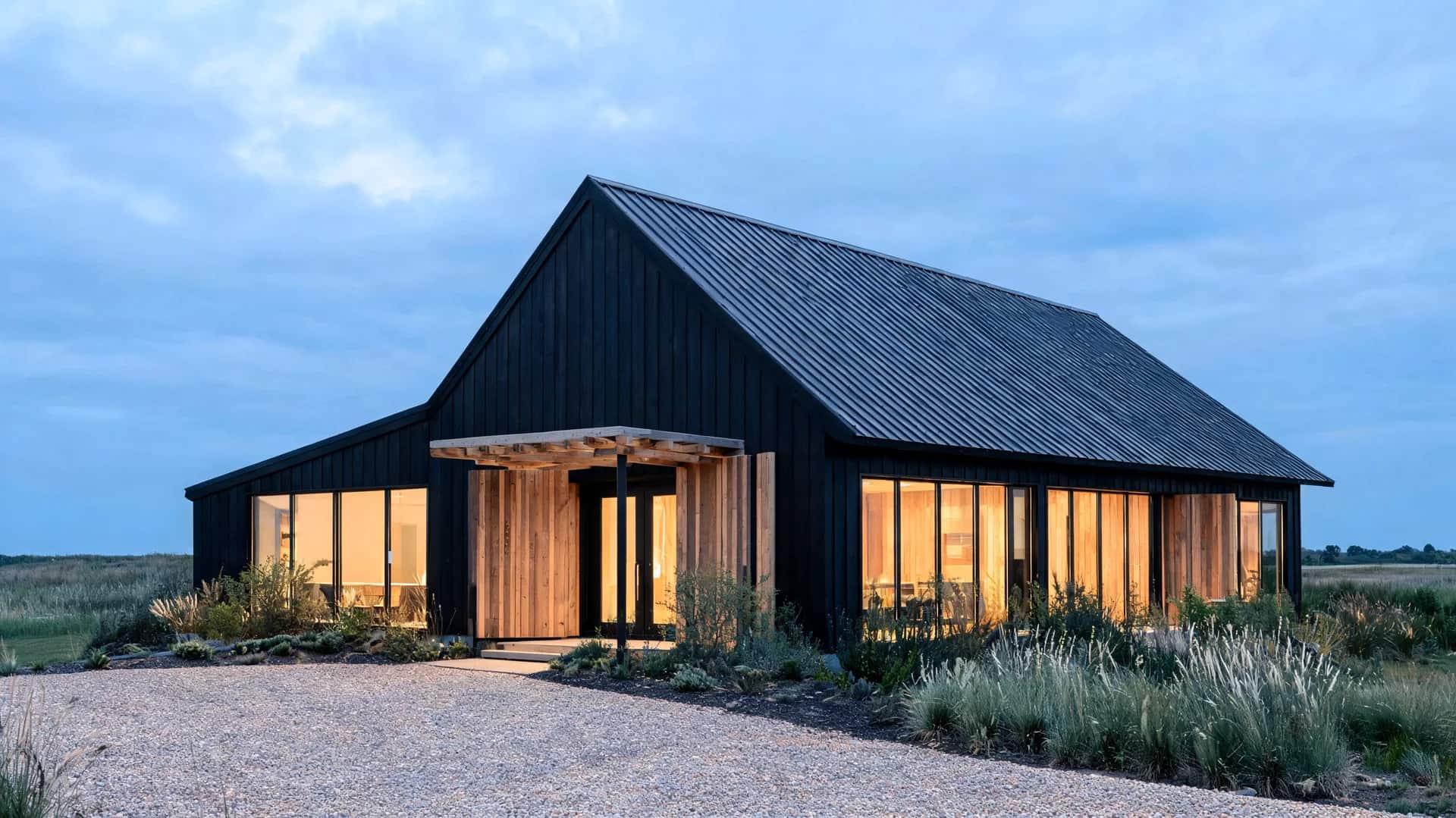
A black standing-seam roof combined with matching black window frames creates a sharp modern contrast against warm wood cladding. This palette works across both linear and L-shaped farmhouse forms without structural change.
The contrast between dark metal and natural wood creates a strong visual identity that reads modern immediately in rural landscapes.
- Layout: linear or L-shaped footprint with simple massing
- Materials: black metal roofing, black window frames, wood cladding
- Best fit: high-impact visual design with low structural complexity
9. Stone Base Farmhouse
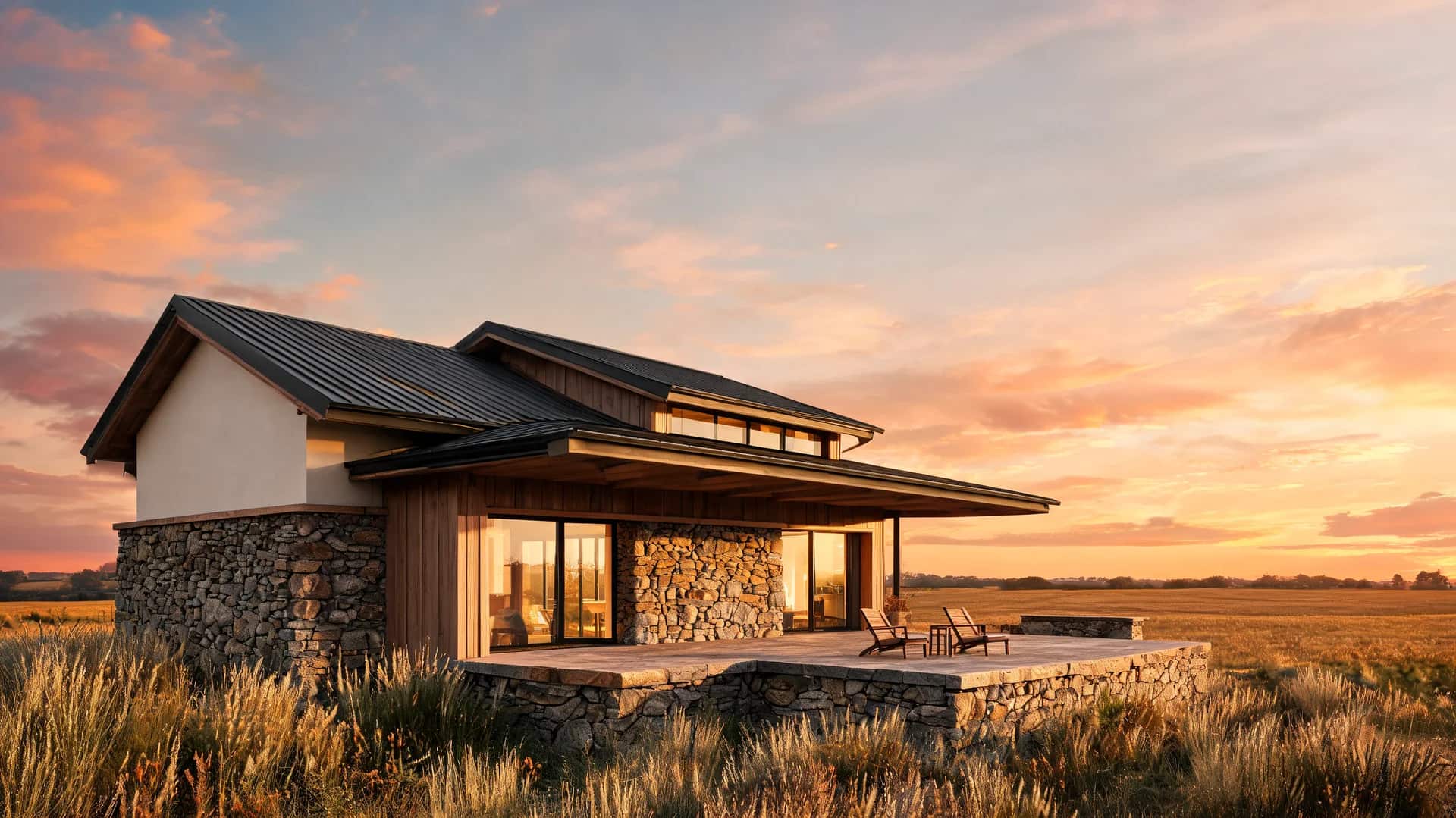
A full stone base anchors the lower portion of the structure, while lighter materials such as wood or plaster rise above to reduce visual heaviness. This creates a grounded yet balanced farmhouse exterior.
Stone improves durability at ground level, especially in high-rainfall or high-traffic areas.
- Layout: linear or L-shaped footprint
- Materials: stone base with wood or plaster upper cladding
- Best fit: durable base protection in exposed environments
10. Rammed Earth Farmhouse
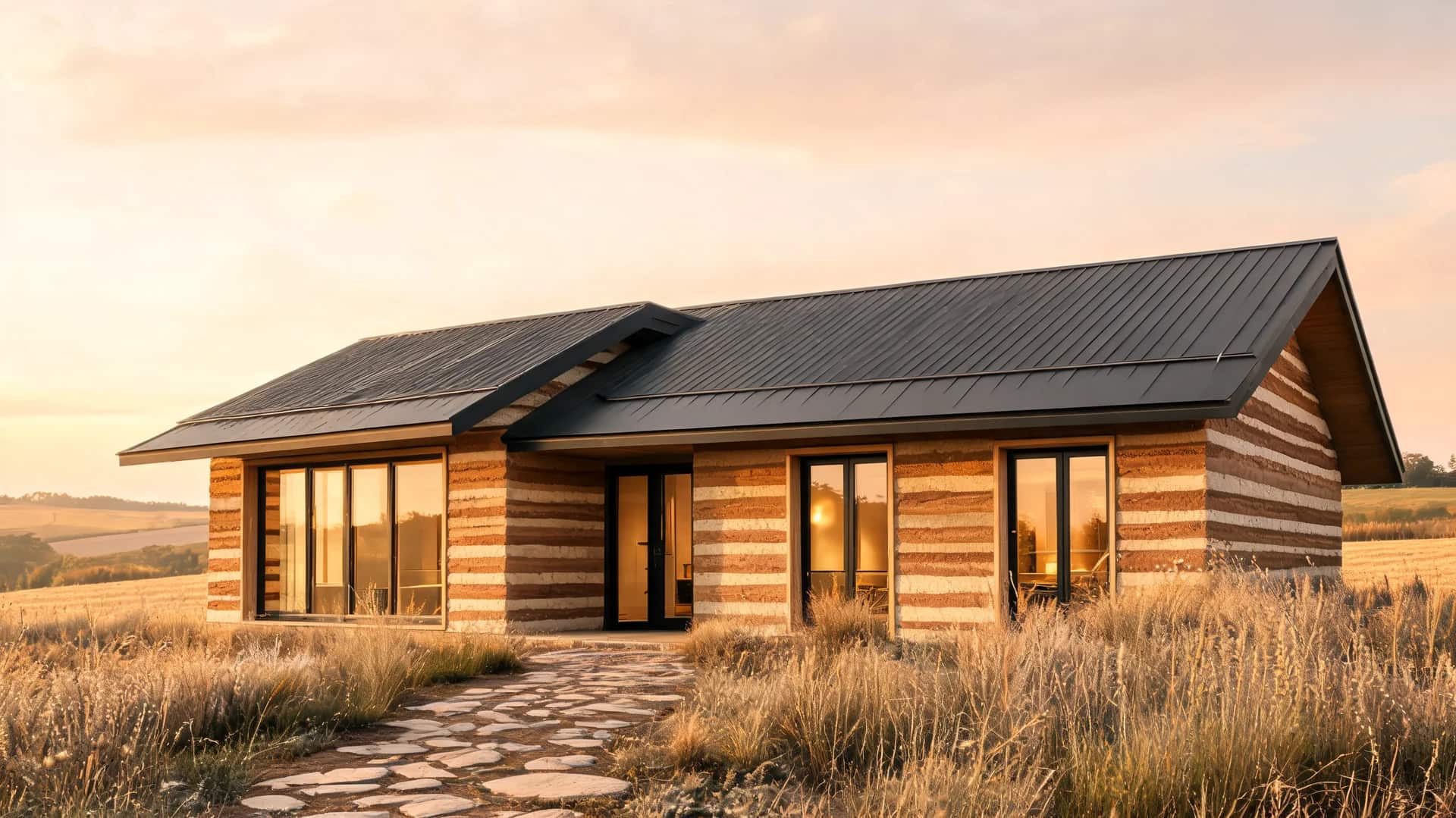
Rammed earth walls create a highly textured, natural exterior that regulates indoor temperatures through thermal mass. The material works best in warm, dry climates where temperature swings between day and night are significant.
Wood and metal accents soften the heavy earthen appearance while maintaining a modern expression.
- Layout: linear footprint with structural simplicity
- Materials: rammed earth walls with wood/metal accents
- Best fit: hot, dry climates with strong thermal variation
11. Dark Modern Farmhouse Exterior
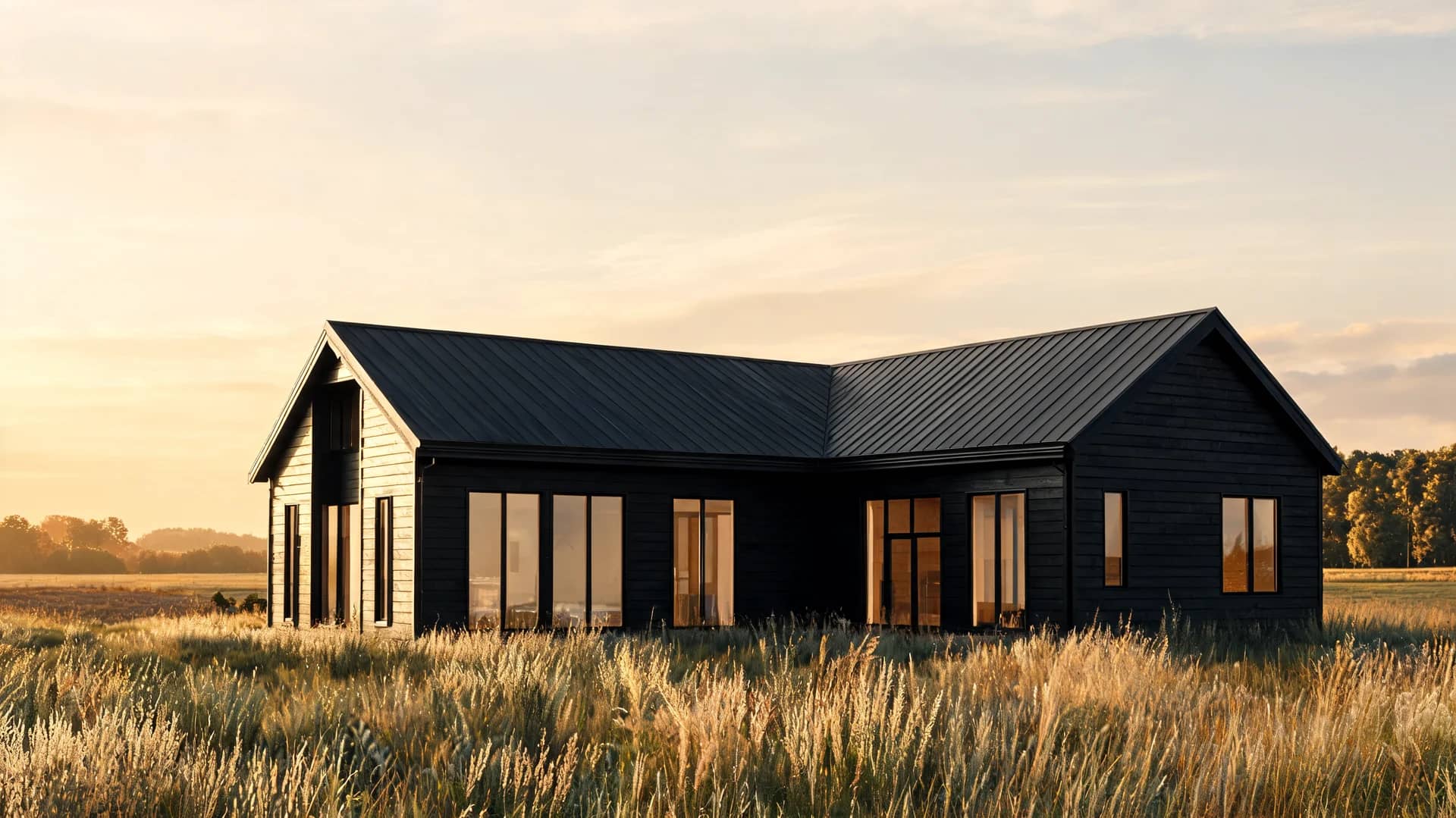
This exterior uses deep charcoal or matte black cladding to create a bold, minimal farmhouse identity. The darker palette reduces visual noise and allows surrounding landscapes to stand out more strongly.
It is often paired with simple rooflines and minimal detailing to maintain a clean architectural expression.
- Layout: linear or compact L-shaped form
- Materials: dark metal or stained wood cladding
- Best fit: wooded or open-field sites needing strong contrast presence
Modern Farmhouse Exterior Features
This section focuses on architectural features that shape how a modern farmhouse exterior behaves in daily use. These are not full structural forms or material palettes, but design elements that influence light, ventilation, outdoor connection, and environmental performance.
12. Veranda Spine Layout
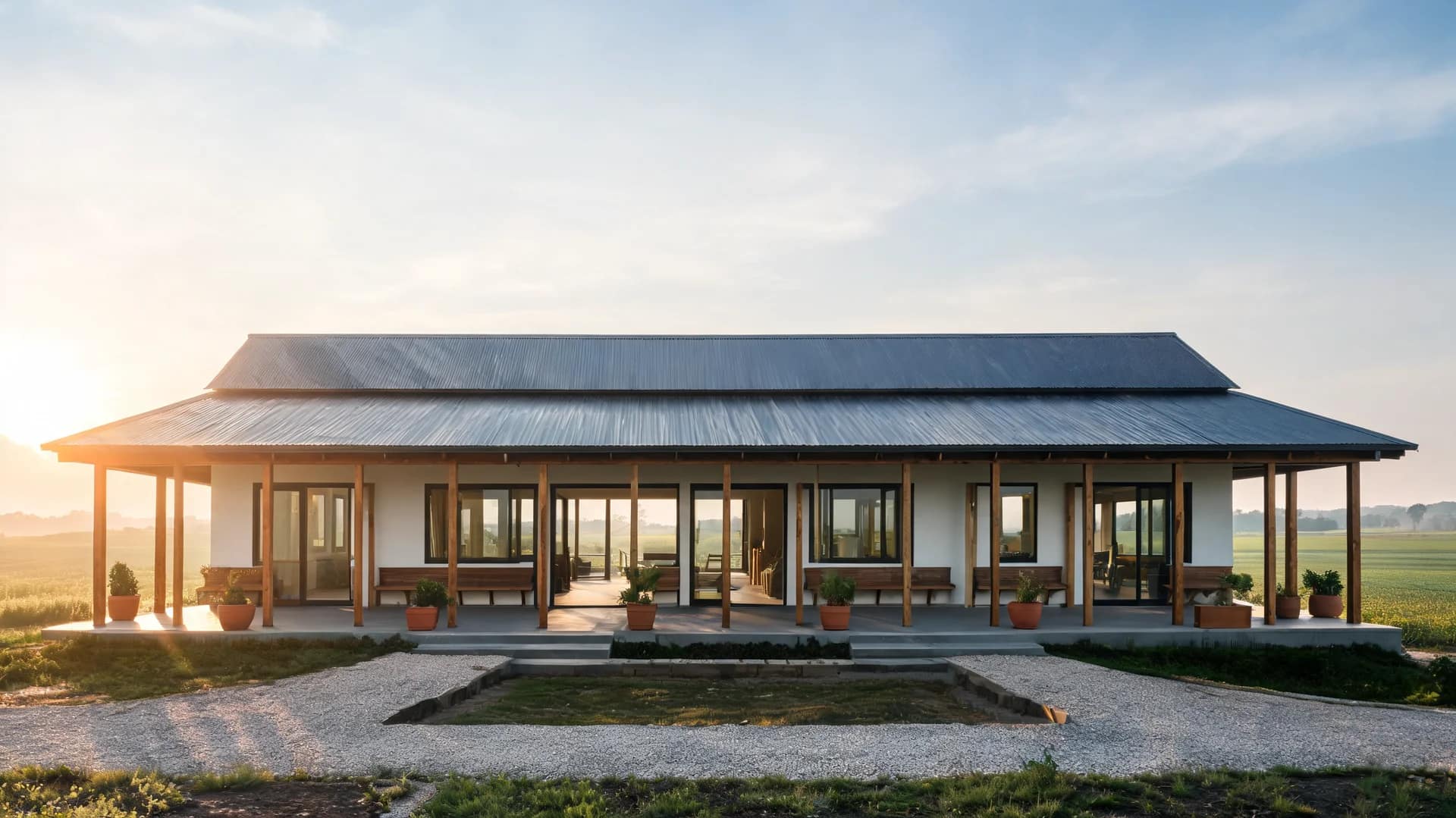
A continuous veranda runs along the full length of the house, acting as an outdoor circulation spine that connects rooms without fully enclosed corridors.
This feature improves outdoor engagement while providing shade and reducing heat gain along the field-facing elevation.
- Layout: linear footprint with continuous veranda edge
- Materials: wood decking with extended roof overhang
- Best fit: hot climates requiring shaded outdoor circulation
13. Floating Roof Minimal Form
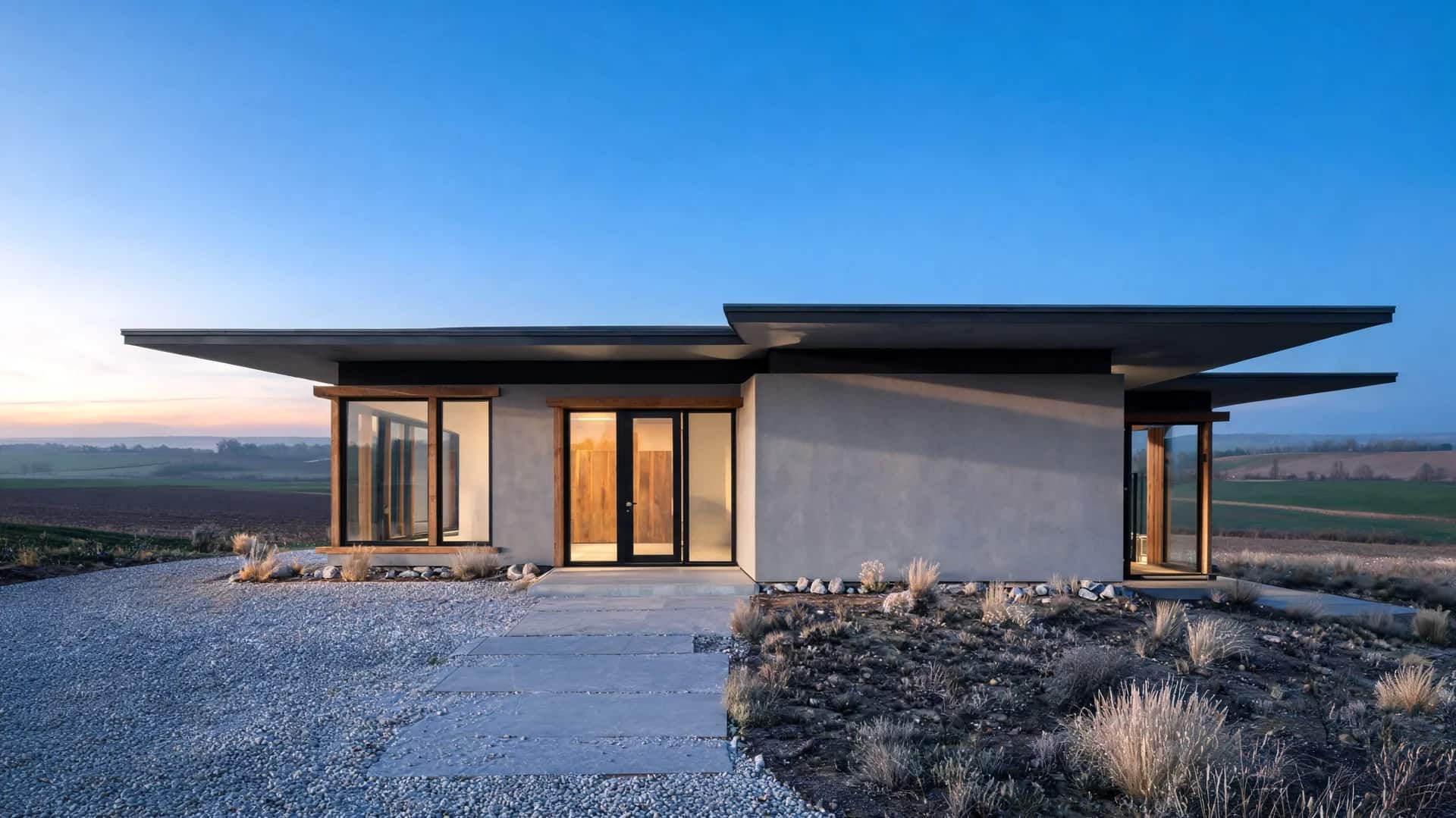
A floating roof design creates the illusion of separation between roof and walls by using recessed structure or slim supports, giving the farmhouse a lighter visual profile.
This feature enhances modern aesthetics while maintaining simple structural geometry.
- Layout: linear footprint with recessed structural base
- Materials: steel framing with glass or plaster walls
- Best fit: modern minimalist farmhouse exteriors
14. Corner Glass Panorama
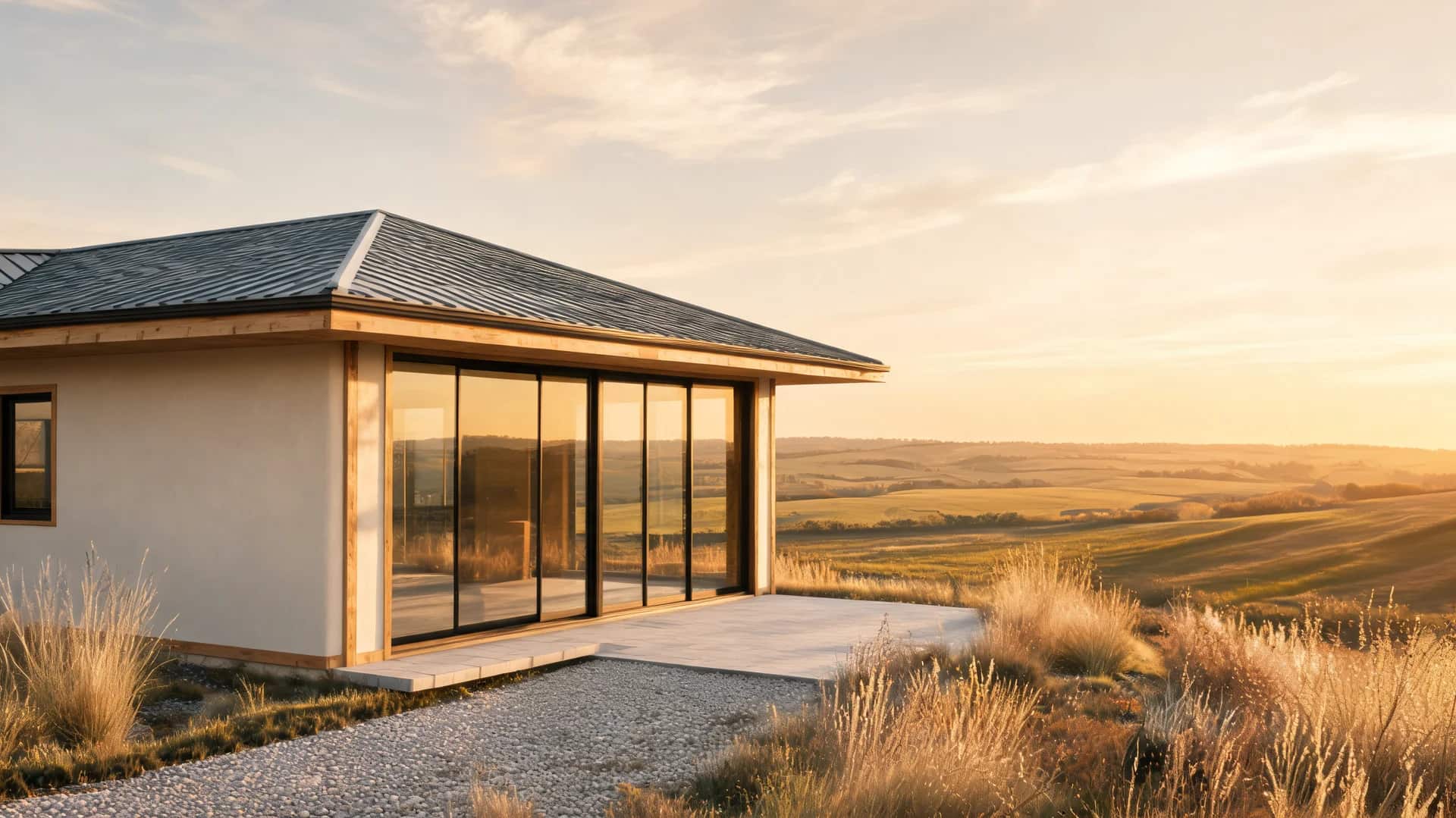
Corner glass removes structural interruption at building edges, allowing panoramic views from two directions and increasing natural light penetration.
This feature works best in open landscapes where sightlines extend across multiple directions.
- Layout: linear or L-shaped footprint with exposed corner
- Materials: structural glass corner with minimal framing
- Best fit: view-oriented farmhouse designs
15. Rainwater Harvest Roof Design
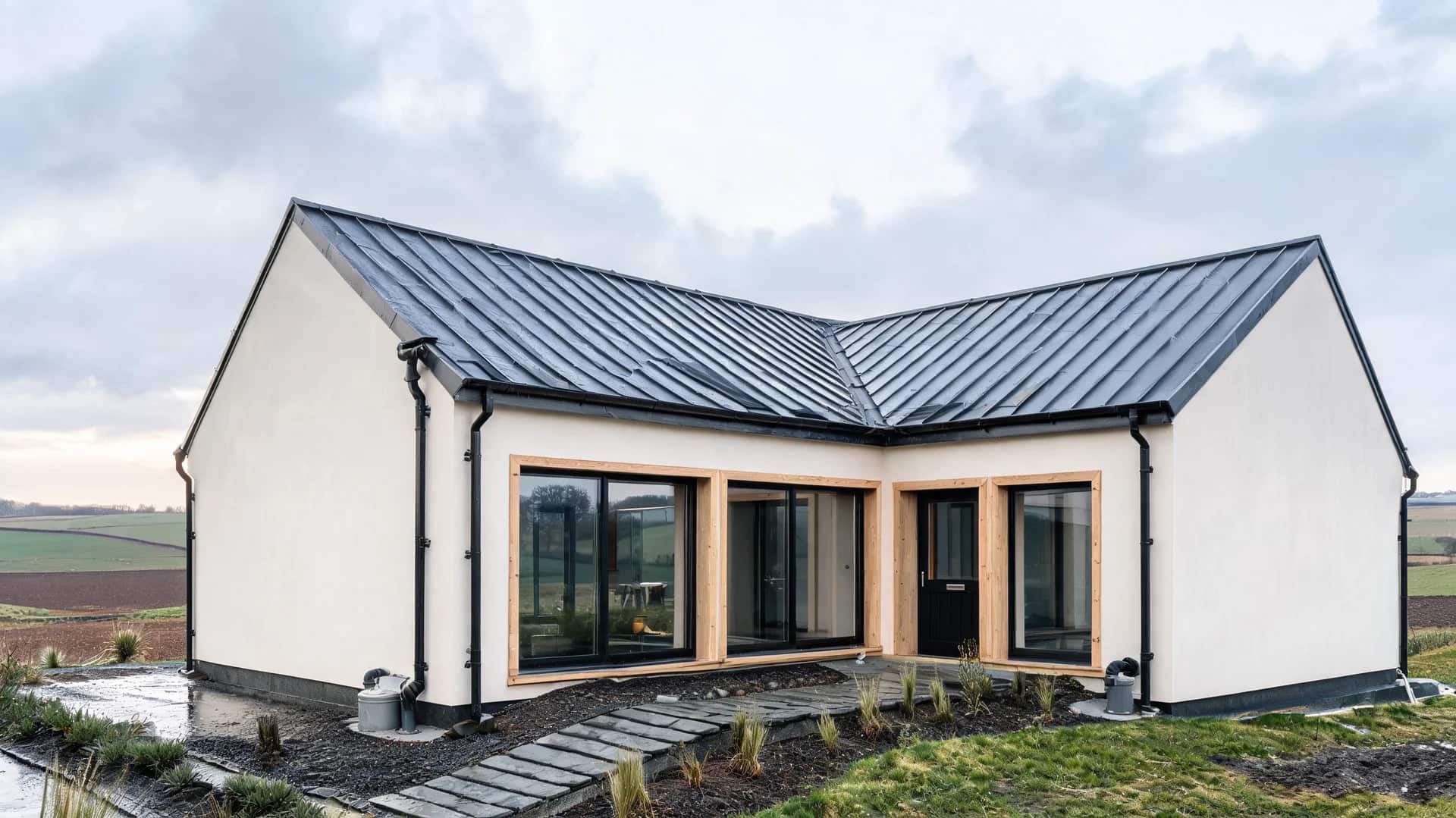
A rainwater harvesting roof system channels water into storage tanks through continuous guttering, integrating sustainability directly into the building envelope.
This feature is especially effective in dry or off-grid environments where water efficiency is critical.
- Layout: flexible layout with continuous drainage system
- Materials: metal roofing with integrated gutter flow
- Best fit: water-conscious or drought-prone regions
Contemporary Farmhouse Hybrids
This section brings together experimental and concept-driven farmhouse exterior ideas where structure, form, and outdoor usability merge into hybrid architectural expressions. These designs often push beyond traditional farmhouse boundaries by combining cantilevers, terraces, glass volumes, and layered spatial planning.
16. Cantilevered Glass Bridge Wing
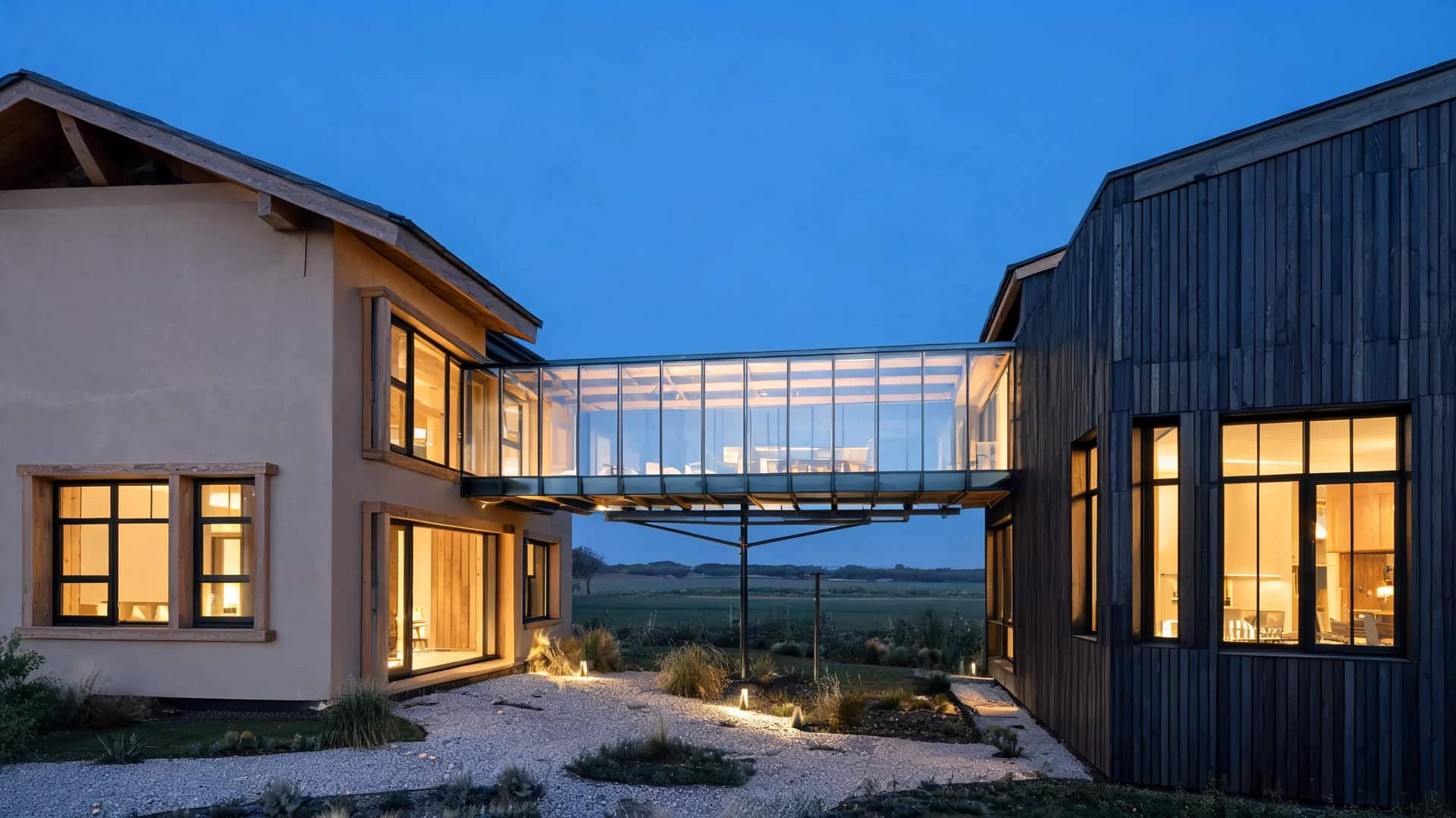
A cantilevered glass bridge connects two structural volumes, creating a floating architectural element that extends usable space without ground support.
This hybrid form enhances visual lightness while maintaining structural efficiency in larger farmhouse layouts.
- Layout: split-level or dual-volume structure
- Materials: steel framing with full glass enclosure
- Best fit: large plots requiring connected multi-volume planning
17. Rooftop Terrace Farmhouse
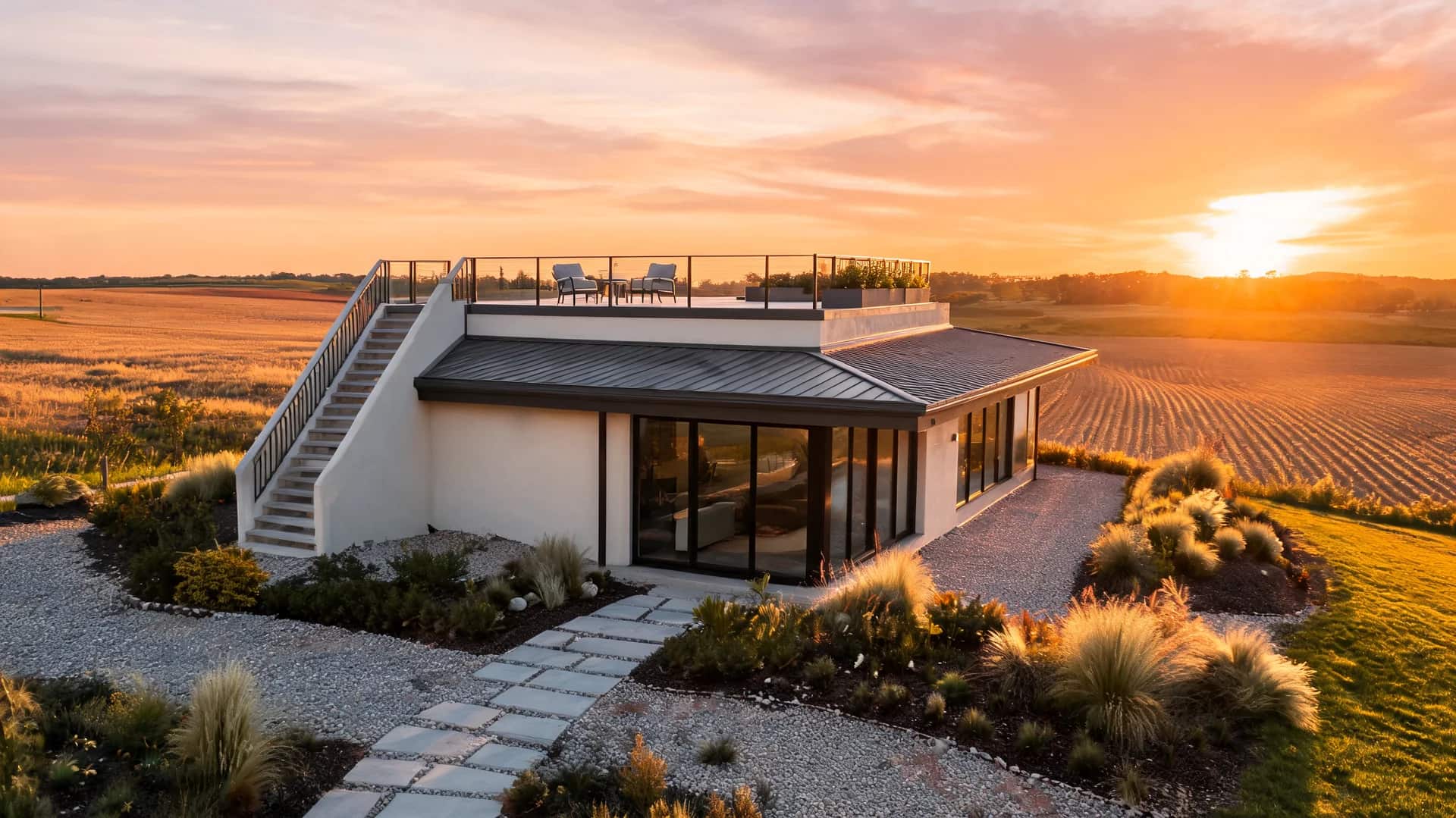
A rooftop terrace transforms the roof plane into usable outdoor space, extending living areas vertically without increasing the building footprint.
This hybrid solution is ideal for sites with limited ground-level outdoor area but strong demand for open-air living.
- Layout: flat roof or stepped volume design
- Materials: composite decking with metal railing systems
- Best fit: compact or urban-adjacent farmhouse sites
How Climate and Land Shape the Design
Climate and topography dictate more than any style preference for a modern farmhouse exterior, since a roofline that works in Vermont can fail outright in Arizona.
- Heat response: Deeper overhangs and lighter cladding in hot zones (IECC 1–3) reduce surface temperatures.
- Wind direction: Prevailing wind data should set porch orientation and entry placement, not just curb appeal.
- Rainfall control: Steeper pitches and continuous gutters matter more in zones with over 40 inches of annual rainfall.
- Site integration: Grading and terrain response decide whether a linear or split-level layout fits the lot.
I once specified a south-facing glass wall outside Phoenix without enough overhang, and the surface temperature inside that room hit dangerous levels by early afternoon.
Materials That Define a Modern Farmhouse Exterior
Five materials show up across most modern farmhouse exteriors, each chosen for a specific climate or durability reason rather than appearance alone in most builds.
| Material | Purpose | Benefit | Real Use Case |
|---|---|---|---|
| Stone | Foundation and base cladding | Resists moisture, impact, and splash-back | Mountains or high rainfall build |
| Wood cladding | Upper-wall texture and warmth | Ages naturally, easy to repair in sections | Temperate-climate farmhouse exteriors |
| Metal roofing | Primary roof surface | Sheds snow, resists fire, lasts 40+ years | Wildfire-prone or heavy-snow regions |
| Cement plaster | Smooth wall finish | Handles heat, low maintenance, and crack-resistant when reinforced | Hot, arid climate zones |
| Glass panels | Field-facing walls and doors | Maximizes light and view without structural bulk | Linear and courtyard layouts |
Durability under real climate stress matters more than trend appeal here, since the wrong material in the wrong zone shows damage within a few short years.
Color Palettes That Work Best
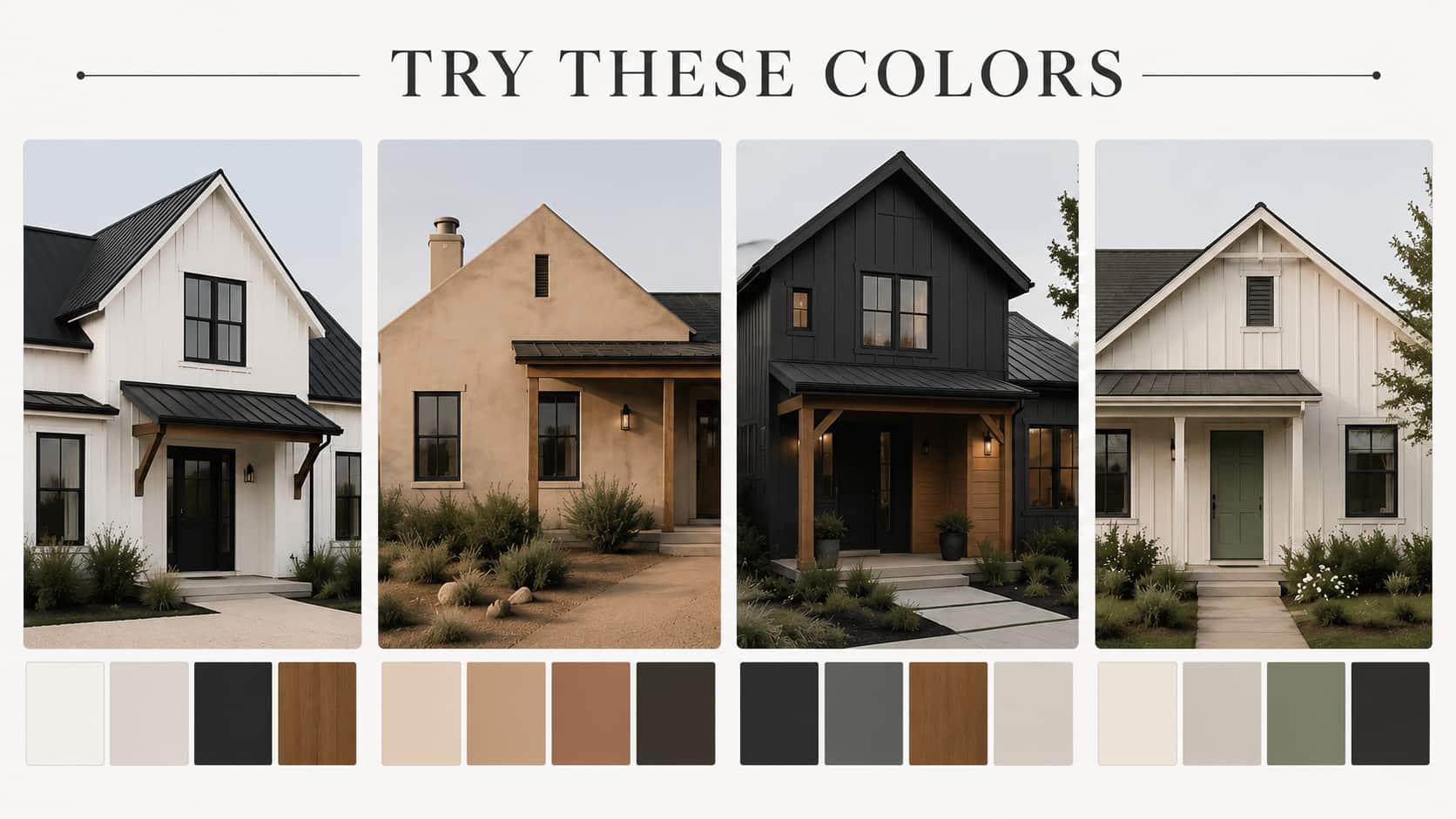
Color choice on a modern farmhouse exterior affects how the house reads against open land, and four palettes consistently outperform trend-driven alternatives over time.
- White + black contrast: Crisp trim against dark window frames or a black metal roof.
- Earth tones: Sand, clay, and beige blend the structure into surrounding farmland or desert terrain.
- Charcoal + wood: Dark cladding paired with warm wood accents softens a heavier color.
- Muted green accents: Used sparingly on doors or trim to echo nearby fields without overwhelming the facade.
Palette matters because a modern farmhouse exterior that clashes with its surroundings entirely loses the rural identity the style is built around.
Common Design Mistakes in Modern Farmhouse Exterior Projects
Even a well-designed modern farmhouse exterior can fail in the field when these five mistakes go unaddressed during the planning, permitting, or construction phases.
- Over-glazing without shading: Large windows without overhangs or deep-set frames lead to significant heat gain and glare.
- Poor roof drainage planning: Skipping continuous gutters or a proper pitch leads to splashback and moisture damage to the foundation.
- Excess material mixing: Using more than two or three primary materials creates a busy, unintentional-looking facade.
- Wrong-site orientation: Ignoring the sun path when placing the main glazing wastes the view and increases cooling costs.
- Ignoring wind/sun path: Skipping a basic site analysis before finalizing layout leads to exposed entries and uncomfortable outdoor zones.
Most of these mistakes surface only after move-in, when fixing a drainage or orientation problem costs far more than planning it correctly upfront.
Frequently Asked Questions
How much does a modern farmhouse exterior renovation typically cost in the US?
Costs vary widely by region, but exterior-only renovations on an existing 2,000-square-foot home typically range from $40,000 to $90,000, depending on material choice. Metal roofing and stone add cost upfront but reduce long-term maintenance, often balancing the higher initial investment within 10 to 15 years.
Which exterior materials need the most long-term maintenance?
Wood cladding needs the most attention, requiring re-staining or sealing every 3 to 5 years depending on climate exposure. Cement plaster and metal roofing need the least, often going a decade or more between major maintenance tasks. Stone needs almost none beyond occasional joint repair.
Does a modern farmhouse exterior affect resale value?
It generally helps in suburban and rural markets where the style has strong buyer demand, often appraising slightly above traditional exteriors of similar size. In dense urban-adjacent markets, the effect is more neutral, since buyers there weight location and layout above exterior style choices.
How should exterior lighting be planned for this style?
Lighting should emphasize form rather than decoration, using recessed soffit lights along rooflines and warm uplighting on stone or wood texture. Avoid ornate fixtures that clash with clean massing. Path and step lighting matter most for safety, especially on sites with grade changes or long driveways.
Conclusion
Building a modern farmhouse exterior comes down to a handful of repeatable decisions: roof geometry sized to climate, materials layered for durability, and layouts that put the field view where it belongs.
I’ve tried to ground these farmhouse exterior ideas in something a builder can actually price, not just admire.
The concepts, the material table, and the mistakes section all point toward one goal: a house that performs as well as it photographs.
If one of these matches your site, I’d genuinely like to hear which direction you’re leaning toward in the comments below.